Tag: ads

  • Businesses face conundrum image when placing ads on Youtube

    Businesses face conundrum image when placing ads on Youtube

    After the streaming website blocked the accounts of online gangster Kha Banh for violating its terms of service on April 3, YouTube also terminated the account of the god of profanity Duong Minh Tuyen, another self-proclaimed gangster, due to repeated violations of YouTube’s policies on violence.

    Kha and Tuyen are two YouTubers who were recently condemned by the general public for uploading videos promoting gang culture, gambling and crudeness, but are adored and given superstar status by many Vietnamese youths.

    The public outcry in the country against YouTube channels promoting violence, profanity, and repulsive material is worrying businesses who advertise on the platform.

    Only recently Vietnam Maritime Bank (MSB) announced it was pulling out all its ads from YouTube. It would conduct a review with YouTube so that its ads would only appear on content compatible with “regulations, ethics and positivity,” it said.

    The private bank’s ads have appeared in clips of internet gangster phenomenon Ngo Ba Kha (Kha Banh). Last week he was arrested and charged with gambling and organising gambling.

    In 2017 many major companies such as Vinamilk and Ford Vietnam also demanded that YouTube should pull out their ads, voicing concern over its lack of content control causing their ads to be associated with dubious channels.

    “Responsibility first lies with the content managers, or multi-channel networks authorised by YouTube if dubious channels register with them to make money,” Vo Do Thang, a cyber-security expert, said.

    “Let’s also not rule out the possibility these content managers overlooked or even promoted negative content on purpose to make money off views.

    “Some advertising agencies working with YouTube guarantee they will use tracking and filtering programmes using keywords and search terms to prevent enterprises’ ads appearing along with negative content.

    “However, this cannot be 100 percent guaranteed by anyone, the risk to the brand image is still there.”

    Viet Phuong, who works for an advertising agency, said: “When uploading ads, there is an option not to post on specific channels. However, this job is tedious, and it is difficult for an advertising agency to cover everything unless the client hands their own list of channels. Sometimes this step is skipped, because it is more effective to run ads everywhere.”

    He revealed however that his company had been working vigorously on channel filters since Kha Banh’s arrest.

    YouTube’s mechanism prioritizes ads for videos with more views. Most agencies in Vietnam have successfully filtered political videos well, but entertainment channels are difficult to control because they garner much more viewership and are traditionally considered harmless.

    However, agencies say their job is getting harder as videos with violent content are being uploaded in response to the general public finding them popular.

    “Brands should cooperate closely with agencies or choose only to run ads in the mid-range of popularity, videos which do not fall into the ‘top/hot’ categories on YouTube,” Phuong said.

    But despite these risks, it is hard for businesses to abandon the website and lose a large audience.

    In 2017 the Authority of Broadcasting and Electronic Information estimated that Google and Facebook accounted for 80 percent of the online advertising market share in Vietnam.

    The director of a major online business, who asked not to be named, said this ratio had probably not changed by much.

    In other countries too, major businesses have withdrawn their ads from YouTube. In March 2017 Walmart and PepsiCo terminated their advertising contracts with it after their commercials were featured on videos featuring racist content.
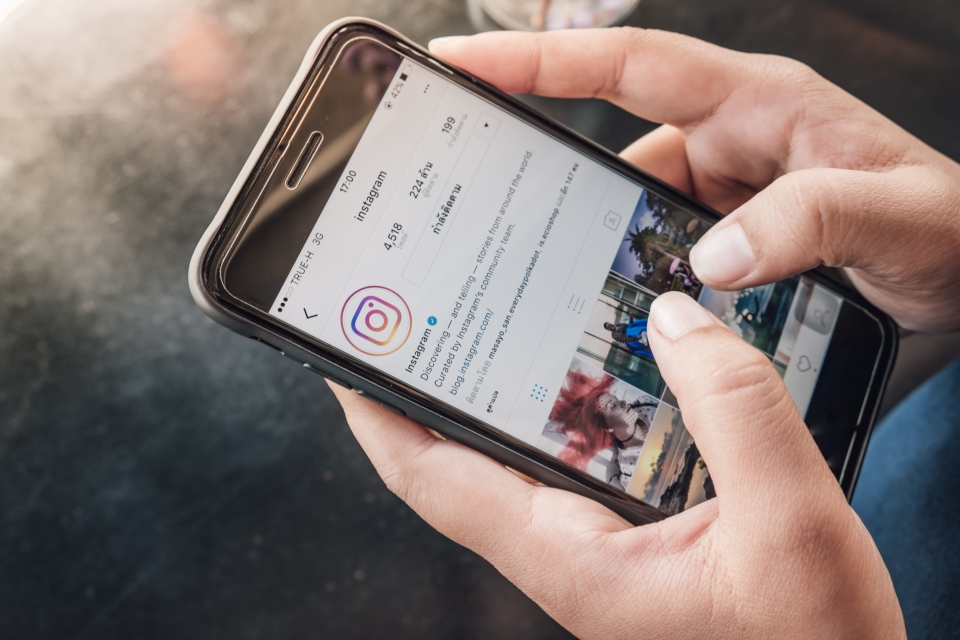

  • Instagram users can now buy items from ads inside the App

    Instagram users can now buy items from ads inside the App

    Instagram is taking its Shopping ads one step further by making it possible for people to buy the products in the ads without leaving the app.

    The feature, called Checkout on Instagram, is currently being tested in a closed beta program by nearly two dozen businesses and is only available to users in the US.

    Retail News has asked for details about if and when the feature will be available outside the US but had not received a reply at the time of this writing.

    Adidas, Burberry, Dior, H&M, Michael Kors, Nike, Outdoor Voices, Uniqlo and Zara are among the 23 fashion, beauty and accessories brands now rolling out the feature. Others will be added in future, according to Instagram, which is owned by Facebook.

    When users tap on a product in a Shopping ad from one of these businesses, they now see a “Checkout on Instagram” button. By tapping the button, they can select the size and colour of the item they want and enter their payment and shipping details to purchase.

    Users receive notifications about shipment and delivery within the Instagram app, and the platform saves all their information for future purchases.

    In the past, if users wanted to purchase a product linked to a Shopping ad, they were redirected to the brand’s website. The new feature removes this step and – crucially for Instagram – keeps consumers in the app.

    “Social selling is really taking shape both in Australia and globally and it’s great to see Instagram leading the way through the next stage of the social selling journey. Giving consumers the option to complete a purchase right then and there in the app will simplify the shopping process and allow brands to connect more easily with shoppers,” said Jordan Sim, group product manager at BigCommerce, an e-commerce platform that has been active in offering integrations with Shopping on Instagram to its users.

    “We’ve seen our merchants both globally and locally in Australia have a great deal of success using BigCommerce’s integration with Shopping on Instagram and are looking forward to unlocking the power of this new integration for our Aussie retailers in the near future. We know the value of simplifying the checkout process to drive sales and this new function on Instagram will facilitate just that.”

    Many brands have said that Shopping ads drive sales, but there’s a trade-off: visibility and control over their customer data. As Instagram continues to make the purchasing process more seamless – that is, takes control of the process – some businesses will undoubtedly question whether the trade-off is worth it.

    It is unclear whether the Checkout feature applies to Shopping posts in Instagram Stories, or only to posts in the feed. Last June, Instagram revealed that of the 500 million people using Instagram every day, 300 million use Stories every day.

  • APAC mobile advertising market booming

    APAC mobile advertising market booming

    The Asia Pacific region is leading in mobile ad request with a growth of 44%. This is almost twice the average growth of the Americas and EMEA regions, both of which are pegged at 23%.

    This was the conclusion of the Global Trends in Mobile Advertising H2 2018 report by Smaato, which offers programmatic insights designed to help publishers and advertisers with their decision-making on ads.

    Among others, the report investigated in-app growth, advertising spending, mobile video and advertising fraud.

    The mobile ad market is healthy, according to Smaato, with significant growth across all key advertising metrics, including ad request volume and eCPMs. Demand and supply both increased year-over-year, as advertisers direct more money into mobile advertising.

    In the APAC, India stood out from the pack with a 425% growth in mobile ad requests. This was more than twice the growth rate of the fastest growing markets in EMEA and the Americas, which were led by Spain at 152% and the USA at 170% respectively.

    Smaato says India’s meteoric ad request growth is characteristic of an emerging mobile market in which the number of mobile device owners, their time spent on mobile, and overall app downloads all rise quickly.

    When it comes to the top countries for eCPM growth, Singapore (154%), Japan (125%), Australia (111%), Hong Kong (99%) and Indonesia (96%) topped the charts. As comparison, eCPMs increased in the United States by 79% and in Canada by 70%, while Switzerland (92%) and the United Kingdoms (66%) topped the chart in the EMEA.

    “The impressive ad request and eCPM growth in APAC are driven by app developers finding new ways to better monetize their content even as consumers are spending more time on apps. Advertisers from all verticals are realizing that apps are where consumers are — and they are directing more funds into this channel,” Smaato APAC managing director Alex Khan said.

    “With app usage increasing across the region, there will also be more monetization opportunities for mobile publishers.”

    The full report can be downloaded here (free registration).

  • Instagram famous Baby Chanco is now a testimonial for Pantene

    Instagram famous Baby Chanco is now a testimonial for Pantene

    A one-year-old baby with an incredible mane of hair has been signed by Pantene as one of the faces of the brand in Japan. Instagram starlett Baby Chanco has stunned social media users over the last six months as her mother uploads images of her incredible, thick hair. Baby Chanco, who lives in Japan, was born with a full head of hair in December 2017 and it has continued to sprout as she has grown.

    Chanco’s mother updates her 300,000 followers on the platform with weekly photos of the little girl’s full bouffant. Every photo shared receives around 10,000 likes from her adoring fans.

    In one of the images from the campaign, Baby Chanco, whose Instagram account is managed by her mother, Mani Kano, poses alongside Japanese TV presenter Sato Kondo, known for her grey tresses.

    Fast forward to 2019 and Baby Chanco is following in the footsteps of celebrities such as Selena Gomez as a Pantene spokesperson.

  • Online printing startup Gogoprint raises $7.7m to prepare new markets

    Online printing startup Gogoprint raises $7.7m to prepare new markets

    Gogoprint, a startup that’s modernizing the printing industry, has raised US$7.7 million in series A funding to fuel its expansion into new markets like Australia, New Zealand, and South Korea in the next 12 months.

    Gogoprint is an online service for printing things like business cards, flyers, and leaflets. It uses algorithms that take into account parameters such as paper type, quantity, and delivery, and then aggregates those orders into a “print-run” or a batch of prints.

    This enables printers to make the most out of one printing sheet. Because each sheet carries fixed costs, maximizing it helps reduce prices and turnaround time for customers. It also allows printers to take in small orders from budget-conscious firms, instead of only focusing on large volume orders.

    Printers that partner with the company are able to tap new customers, helping offset the cost of any unused capacity.

    Gogoprint is active in four countries: Thailand, where it started, as well as Singapore, Malaysia, and Indonesia. In Indonesia, it faces competition from another online printing startup, Prinzio.

    To date, Gogoprint has experienced a 200 percent year-on-year growth in customer base, attracting more than 45,000 customers with over 250 million products printed. Its clients include Honda, Lazada, Lion Air, Yamaha, Singapore’s Nanyang Technological University, and Booking.com.

    Retail News reached out to the company for more financial details, but it declined to disclose figures.

    The series A round was led by its existing backer OPG (Online Printing Group), an investor and partner of Brazil-based Printi.

  • Telstra wins $12.3m outdoor advertising contract

    Telstra wins $12.3m outdoor advertising contract

    Australian operator Telstra has secured an A$17 million ($12.3 million) contract with fleet operator P2P Transport to provide connectivity for a mobile digital advertising solution.

    Telstra will provide access to its mobile and IoT network and its digital media capabilities to support the project to provide advertising on 900 P2P vehicles as they travel throughout the nation, starting with an initial 300 taxis.

    P2P Transport leases vehicles including taxis and limousines to individual taxi drivers, ride-sharing drivers and limousine operators.

    The advertising solution will allow advertisers to deliver specific messaging for particular times and locations, such as by pushing out messages advertising food options during lunchtime.

    It uses Australian-developed GPS-enabled screens purpose built for the taxi industry, that use integrated power to prevent the need to drain the vehicle’s battery.

    “It’s getting more difficult for organizations to cut through the noise in the market today and P2P Transport’s solution is a fantastic example of forward-thinking that capitalizes on technology to create a smarter, more targeted way of reaching potential customers,” Telstra Enterprise chief customer officer John Ieraci said.

    “We’re really excited to work with P2P Transport to support this next generation mobile advertising solution using our comprehensive IoT offering and business-grade mobile network.”

  • Blockchain, AI the next big thing for advertisers

    Blockchain, AI the next big thing for advertisers

    The integration of analytical and data-driven technologies with AI and Blockchain can help businesses better understand customers’ behaviors, habits, interests, and needs. Thus, direct advertisements are easy to access consumers at the right time and the right situation, experts say.

    “Blockchain can be a game changer when it comes to marketing. The technology will create transparency, reliability, and positive values,” said blockchain consultant David Lang.

    “While users can better manage their personal information, blockchain can help brands not only reach the right customers more effectively but also more accurately measure the performance of each advertising campaign,” he added.

    At present, certain weaknesses have become apparent in the advertising industry. Studies have shown that fraud in digital advertising costs $1 for every $3 in advertisement expenditure. Online advertisers estimate that total losses from fraudulent activities in the industry will reach $19 billion in 2018.

    Bigbom, an online advertising solution built on the blockchain platform, has clearly identified three major issues that the advertising industry needs to address.

    Second, manual advertisement management takes too much time and is inefficient.First is the building of trust between the advertisers and ad platforms or publishers. It takes a huge amount of time for advertisers to find and establish a partnership with absolute strangers.

    Third, the budget for advertisement campaigns is still poorly allocated.

    Bigbom, a Singapore company has rolled out Bigbom Ads, Bigbom Contract and Bigbom Marketplace as the promising solution to soothe the mentioned sore of this industry. The first one is a tool which helps advertisers optimize their ads in such an efficient and simple manner. Through their innovative algorithm, this is the flagship product in the journey to change the conversation of digital advertising and make the one-click optimization come true. Bigbom Marketplace powered by Bigbom Contract creates a transparent economy for advertising community to join by harnessing the power of blockchain technology.

    Those are Bigbom’s trinity force to revolutionize the online advertising industry. Currently, their products have been launched with the very first attributes and received positive feedback from the interested audience. According to their plan, these services will be up and running in the first two quarters of 2019 with more advanced features.

    More information regarding the project is available at bigbom.com as well as their whitepaper.

  • Facebook fighting a war against clickbaiting posts

    Facebook fighting a war against clickbaiting posts

    Facebook will this week begin demoting news feed posts from people and pages that use clickbaiting to get greater reach.

    In what it describes as an effort to promote more meaningful and authentic conversations on the platform, Facebook staff have detected different types of clickbaiting – or in social media lingo, “engagement baiting” – to show spammy and sensational content less on the news feed. But the clampdown will exclude posts that ask people for help, advice, or recommendations.

    Facebook warns that business pages and publishers that use engagement baiting will get less engagement, and more significant drops in reach if they repeatedly use the tactic.

    As a result, pages should continue to focus on posting relevant and meaningful stories that do not use engagement bait tactics.

    To learn more about clickbaiting and how to avoid using it on Facebook guidelines.

  • Catch spends millions on trust play

    Catch spends millions on trust play

    Catch Group’s first foray into the world of TV advertising has cost the e-commerce company millions, as it looks to bolster its brand awareness ahead of the imminent arrival of Amazon.

    It’s first TV campaign, which has been airing for two-weeks, is part of a long-term marketing play to first establish Catch’s new marketplace image in the local market before beginning to communicate price and range later down the line.

    Catch Group’s head of marketing, Ryan Gracie, told that the campaign was initially designed alongside the company’s re-brand to drive awareness and begin building trust – something pureplay retailers have struggled with in recent years.

    “Building a brand online is very hard and you have to really take yourself above the line if you want to be a trusted, credible brand,” Gracie said.

    “We’re a pureplay, we don’t exist physically so it’s important for us to exist on these other channels.”

    Gracie was unable to say what the return looks like so far, but said a decision was taken by management on TV knowing that assessing the benefits wouldn’t be clear cut.

    “The hard costs of the media spend is a major inhibitor, because you can’t explicitly measure the impact of it,” he said.

    “What do you get when you advertise on TV? You get a warm and fuzzy feeling, but you have to trust it’s going to work.”

    The ads themselves depict Australians in various scenarios screaming “catch” – in line with the company’s “screaming good deals” philosophy.

    Catch is investing in marketing on both sides of the market at the moment, having also stepped up its B2B marketing since its brand relaunch to encourage more suppliers to jump on its platform.

    Catch Group co-founder Gabby Leibovich told sister site Internet Retailing in August that more than 200 brands have signed up to the marketplace, with 25,000 new SKUs recently added across several new categories.

    Nati Harpaz, CEO of Catch Group, is the chairman of Octomedia, Inside Retail’s parent company.

  • Video ads a menace to brand safety in Vietnam

    Video ads a menace to brand safety in Vietnam

    Regional rankings place Vietnam as the second-most at risk country from harmful content in Southeast Asia. Video advertisements in Vietnam, mostly on YouTube, are a serious threat to brand safety, and the second most dangerous in Southeast Asia after Indonesia, according to global technology and data company Integral Ad Science (IAS).

    Indonesia’s video ads were at the highest risk, with 15.3 percent of ad impressions flagged for appearing alongside content deemed unsafe, while its display ad risk was second highest in the region at 5 percent after Malaysia, citing IAS data on brand risk in the online environment during the second half of 2016.

    Following closely behind Indonesia for video brand safety risks was Vietnam, with 13.2 percent of video ads dubbed as a risk to brand safety, while its display ad risk was relatively low at 4.2 percent, the report said.

    Malaysia’s brand safety risk was the highest for display ads at 6.7 percent, while its brand safety risk for video ads was also relatively high at 7.1 percent.

    Thailand’s online environment posed the lowest threat to brand safety in Southeast Asia, with only 1.6 percent of display and 2.2 percent of video ads appearing on unsafe websites.

    Singapore had the second safest online environment after Thailand, with only 2.7 percent of its display ads and 4.6 percent of its video ads featuring in unsafe environments.

    In February, Vietnam’s Ministry of Information and Communications found more than 8,000 videos containing distorted historical facts about the country on YouTube. These videos featured advertisements for several major Vietnamese brands but the companies in question said they did not control where there ads appeared.

    The government subsequently called on all companies doing business in the country to stop advertising on YouTube, Facebook and other social media until they find a way to halt the publication of “toxic” anti-government information.

    “We withdrew our ads from YouTube as soon as we were being warned by the authorities. We do not want our brands to appear alongside toxic content,” Nguyen Tran Hung Long, senior media manager at Masan Group Corporation, told VnExpress.

    These warnings have reminded businesses to pay more attention to brand safety on the internet, said Vinamilk marketing manager Pham Minh Tien.

    Nearly 49 million people in Vietnam, or more than half of the country’s population, are online. A Nielsen survey released last September found that 92 percent of them watch online videos at least once a week, and 64 percent are daily viewers.

    YouTube and Facebook account for two-thirds of the digital media market share in Vietnam, according to Nguyen Khoa Hong Thanh, operations director at digital marketing agency Isobar Vietnam.

  • Failed Pepsi, Nivea ads show industry’s diversity problem

    Failed Pepsi, Nivea ads show industry’s diversity problem

    ‘Between Nivea’s ‘white is purity’ ad and Pepsi’s ‘Black soda matters’ ad, I think it’s time to open my ‘Ask a Black person’ consulting firm.’ Recent high-profile advertising missteps by Pepsi and skin-care company Nivea underscored anew Madison Avenue’s awkward relationship with racial diversity at a time when the United States is becoming less white.

    PepsiCo’s ill-fated “Moments” spot, featuring model Kendall Jenner, was quickly pulled with an apology after being vilified for trivializing the “Black Lives Matter” movement.

    Nivea also apologized and withdrew an ad for a deodorant after its “White is Purity” pitch was embraced by white supremacists.

    Social media had a field day with the botched campaigns, which seemed to suggest scant progress from the white male bubble of the 1960s depicted in the popular television series “Mad Men.”

    “Between Nivea’s ‘white is purity’ ad and Pepsi’s ‘Black soda matters’ ad, I think it’s time to open my ‘Ask a Black person’ consulting firm,” comedian Travon Free said on Twitter.

    In fact, data shows a diversity deficit in a sector that both reflects and molds public sentiment.

    Only 4.1 percent of advertising industry employees in the country are African Americans, well below their 13.3 percent of the overall population. Latinos account for 12.3 percent of the industry, compared with 17.6 percent of the population.

    Nearly half of respondents among advertising employees said the industry was “terrible” or “not great” at hiring diverse professionals, with another 25 percent describing it as “mediocre,” according to a survey released last September by the American Association of Advertising Agencies.

    The trade group’s outgoing president Nancy Hill made publicly calling out “racist and misogynistic behavior” her New Years resolution for 2017.

    “I have realized given the current climate in our country and our industry, that doing that privately is tantamount to condoning the behavior,” Hill said in a column on a marketing industry website.

    “Others involved need to know that this industry does not tolerate this kind of thinking and its resulting behavior any longer.”

    Some major advertisers, such as Verizon, General Mills and Hewlett-Packard have threatened to fire firms that aren’t diverse enough.

    Pepsi misfires

    The demise of the Pepsi spot has especially provoked intense discussion throughout the industry. The company is led by Indian-born chief executive Indra Nooyi, a vocal proponent of diversity.

    A poll showed 40 percent on respondents blamed the debacle on lack of diversity or diversity of thought, while 25 percent said it reflected an overzealous approach to attracting millennials and 13 percent blaming the fact that it was made by Pepsi’s in-house creative team and did not involve an outside firm.

    The spot follows Jenner as she is stirred from a fashion shoot by a handsome Asian cellist to join an unspecified but peaceful street protest with people of all ethnicities, including African American street dancers.

    The two-and-a-half minute short film culminates with Jenner handing a Pepsi to a handsome grinning police officer, a move that draws wild applause from the crowd, including from a hijab-wearing photographer who nods in agreement as she records the moment.

    The spot spurred instant ridicule, most witheringly from Bernice King, who posted a picture of her father, Martin Luther King, being apprehended at a civil rights march by police.

    “If only Daddy would have known about the power of #Pepsi,” King wrote on Twitter.

    History repeating?

    Kelly O’Keefe, a professor of brand strategy at Virginia Commonwealth University, said the spot was shockingly heavyhanded in its constant hawking of cola.

    It reflected a “cloistered view of the world and distorted view of diversity,” he said, adding that the spot has dominated discussion in class this week.

    Jake Beniflah, executive director of the Center for Multicultural Science, thought the ad was a spoof when he first saw it because of the omnipresence of the product and in its creation of “utopian” world where every race is shown.

    “Perhaps they thought diversity on camera was enough, but obviously it wasn’t,” Beniflah said. “In fact, it backfired.”

    For Judy Davis, a marketing professor at Eastern Michigan University, the controversy stirred memories of Barbara Gardner Proctor, one of the women she profiled in her book, “Pioneering African American Women in the Advertising Business: Biographies of MAD Black WOMEN.”

    Proctor was fired in the 1960s from a large firm when she refused to work on a campaign that showed black women clamoring in the street for a hair product. The ad was a tasteless allusion to the civil rights movement, she said.

    “It was the same kind of trivialization of a serious social movement and taking that to promote some brand,” Davis said.

    “You would think in 2017 things would be different. But here we are seeing some of the same problems that were present 50 years ago, and I think that’s pretty amazing.”

  • REV Asia looking for partners in Indonesia, Philippines to grow overseas businesses

    REV Asia looking for partners in Indonesia, Philippines to grow overseas businesses

    Digital media group REV Asia is on the lookout for local partners for its operations in Indonesia and the Philippines, says managing director Voon Tze Khay.

    The group’s initial plan, which was to grow its market share in social media advertising revenue in those markets, hit a snag one-year into operations, leading it to seek home-grown partners.

    “We thought if we could run Malaysia at such a successful pace over the last three years, why not try it ourselves? However, after 12 months, we realised that the opportunities in these markets are plenty but the right way and more strategic way to do it is through a local partner, either in the form of merger and acquisition (M&A) or joint venture (JV),” Voon told in an interview.

    He said the group faced operational challenges in both markets, in terms of understanding the local business culture, dealing with local advertising agencies and brands as well as challenges in working style and expectations in the delivery of campaigns.

    “Running a business in these two countries is very different to how we run it in Malaysia simply because the understanding of local and business culture is a fairly important tool. We have not seen it grow in the way that we expected,” he added.

    Voon said it has identified certain players that could be potential partners but talks have not begun as it is still mapping out how to grow with a local partner. The group entered both markets in 2015 with their Says.com and 8share.com brands. These markets contribute about 5% to total group revenue and there are no plans to expand its other brands there in the immediate term.

    “In the next 24 months, we are looking at international revenue (contributing about) 5-8% because our focus is going to be Malaysia. We are expecting Malaysia to grow in the double digits year-on-year in both revenue and bottom line.

    “For international markets, there’s still a lot more groundwork to be done for local business understanding and a lot more research to be done from data point of view. That doesn’t mean we are not putting in efforts to grow it. But growth compared with Malaysia will be a lot smaller,” said Voon.

    In 2017, the group aims to grow in terms of audience and revenue in Malaysia, through organic growth and M&As, by shifting its focus to videos and small and medium enterprises (SMEs).

    Voon said consumption of videos on mobile has grown tremendously and will continue to grow. It also aims to tap into the 700,000 SMEs in Malaysia by offering them specific packages to promote their services across the group’s platforms.

    In 2016, total video revenue contributed 10% while total SME revenue contributed only 2%. This year, it aims to grow contribution from these two products to 25% and 12% respectively.

    In terms of M&A, Voon said, REV Asia is always on the lookout for opportunities within the three main languages in Malaysia.

    “We will continue to seek out M&A opportunities but we will be selective. It has to be a digital media product with a sizeable audience already visiting the site and we will look at how that particular brand fits within the entire REV Asia set-up,” he said.

    Recall that the group acquired two Chinese websites, Viralcham and Rojaklah, in 2015 and last year it acquired three Malay-language websites, namely Siraplimau.com, Myresipi.com and Kongsiresepi.com.

    Meanwhile, REV Asia Bhd (holding company of REV Asia) saw its shareholding in iCar Asia Ltd diluted to 17.28% in September last year and in November shareholders approved the transfer of its shareholding into a special purpose vehicle (SPV).

    “The process is underway, we are waiting for the finalisation of a court order to reduce the share capital and to fully formalise the transfer of the shares of iCar Asia out from REV Asia Bhd into an SPV. We hope to complete the transfer by first quarter this year,” said Voon.

  • Many businesses stop advertising on YouTube

    Many businesses stop advertising on YouTube

    Some major brands in Việt Nam had to stop advertising on the world’s largest online video site, YouTube, when these brands’ advertisements were linked to clips containing poor content.

    According to information from the Authority of Broadcasting and Electronic Information under the Ministry of Information and Communications, the authority received official dispatches from Vietnam Airlines, Mead Johnson Nutrition Việt Nam and Vinamilk explaining an incident in which their brands appeared in clips with pornographic, slanderous or anti-government content on YouTube.

    At the same time, businesses have also confirmed that they stopped advertising on the online video site.

    A Vinamilk’s representative told media that the company signed a co-operation contract with WPP Media Company Limited (Mediacom) to promote the brand to consumers through mass media.

    According to a commitment between the two parties, Mediacom has to conduct communication services in compliance with Vietnamese laws, as well as take responsibility in monitoring and reporting for Vinamilk, if there are problems affecting its images and reputation.

    After receiving the dispatch from the Authority of Broadcasting and Electronic Information regarding the incident, Vinamilk asked Mediacom to coordinate with YouTube to remove advertisements on clips with unwanted content, at the same time, suspending all advertisement plans on YouTube until the media partner and the site send reports to Vinamilk to find solutions for the problem.

    Earlier, the Authority of Broadcasting and Electronic Information sent dispatches to several large enterprises in Việt Nam asking for reports about these brands or their products appearing in clips with improper contents posted on YouTube.

    The authority found 17 clips with advertising inserted into videos on YouTube that had contents violating the country’s law.

    Additionally, the Ministry of Information and Communications has coordinated with the Ministry of Culture, Sports and Tourism to decide upon a fine for YouTube for not obeying the regulations on advertising for cross-border advertising activities on websites in Việt Nam.

    The ministry also invited YouTube and Google representatives to cooperate in resolving these violations.

  • The Trade Desk launches in Indonesia to capitalise on digital ad potential

    The Trade Desk launches in Indonesia to capitalise on digital ad potential

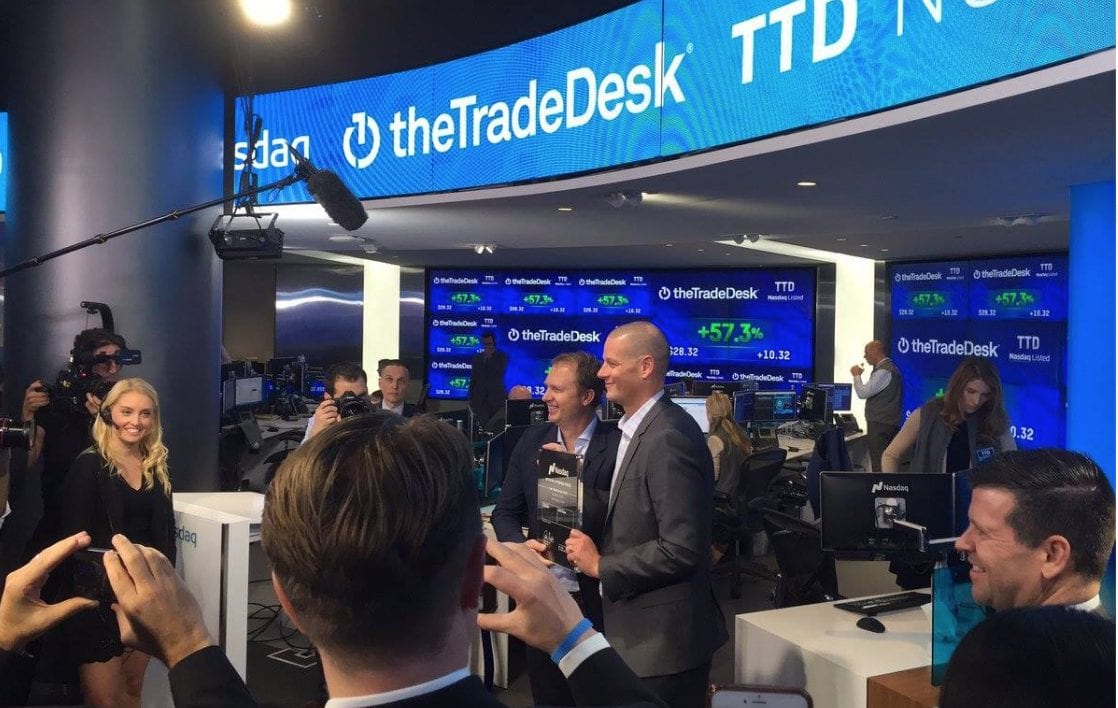
    The Trade Desk has launched into Indonesia, a market it believes has huge potential for growth in programmatic ad trading. The company has launched alongside partnerships secured with Unruly, Grapeshot, Spotify, Tapad and Mobilewalla.

    Matt Harty, SVP of Asia and Australia at The Trade Desk, told The Drum that with Zenith numbers claiming that Indonesia will be in the top 10 ad markets in the world within the next three years, it was important to establish local operations.

    “It’s compelling stuff, there’s a huge growth in middle class and it’s a boat I can’t see us wanting to miss. Boston Consulting figures suggest there will be 141 million Indonesian middle class by 2020, adding 8 or 9 million consumers buy big ticket items each year. I don’t think other markets will see a demand for 9 million new bikes each year, as first time buyers. It couldn’t be more exciting as a market,” he said.

    The office, which will be located in Jakarta’s central business district, will be the sixth for the ad tech company in Asia Pacific region. The office will launch with two members of staff, with the Singapore office still acting as its regional headquarters.

    The timing of the launch has been set to ensure that brands and agency planners have strategies in place ahead of Ramadan, which takes place in late May this year. Harty said that after taking a year to work out the Indonesian market last year, ahead of launch, a key learning was how important it was to plan ahead of the religious holiday.

    “Last year was the first year of real scale doing business in Indonesia, but from Singapore. We were taken by surprise about key things around Indonesian planning, so now we have boots on the street and are very well prepared and we time to be in place for Ramadan,” he added.

    The office marks one of the first new Asian markets for the company since it publicly floated on the stock markets last year. The company hit the headlines after its IPO was widely considered to have been a success.

  • InMobi sees gold in Indonesian ad market

    InMobi sees gold in Indonesian ad market

    InMobi, an India-based mobile advertising platform provider, will invest up to US$50 million within the next five years to expand its business in Indonesia.

    InMobi founder and chief executive officer Naveen Tewari said in Jakarta on Monday that the company would focus its investment on developing a mobile video advertisement and customer-relationship management platforms.

    “We are going to expand our business, also use the money for team resources, product customization, and partnerships,” Naveen told a media briefing.  “We are also going to bring our team from India, as well as hire local [human] resources in Indonesia,” he added.

    The mobile advertisement market in Indonesia is quite promising because of the shift in advertisement placement from conventional media such as television to mobile devices and the increasing number of smartphone users, according to InMobi.

    The company’s survey showed that in 2016, video-based advertisement on mobile devices in Indonesia rose by 380 percent.  InMobi is a mobile advertising platform, which was established in Indonesia in 2008, marking its first office outside India.

    “By 2016, our platform has reached 90 percent of smartphone users, or approximately 69 million users in Indonesia. We offer an ads platform that can reach a larger scale than television advertising,” Naveen added.