Retail News CRM

Tag: AI

  • Retail trends for 2017: AI shopping, mini stores

    Retail trends for 2017: AI shopping, mini stores

    Today’s consumers are increasingly looking for specific and engaging experiences while shopping, according to an analysis from Lotte Department Store’s research team for retail trends. The team proposed a set of guidelines to help retailers prepare next year’s business strategies.

    “For modern customers, shopping is not only about buying products, but a complex experience,” said Na Hyun-jun, head of Lotte Department Store’s retail research team. “The key would be how successfully retailers provide new shopping experiences while catering to the increasingly segmented needs of consumers.”

    The first is the trend for smaller department stores that focus on catering to tastes of specific demographics. Mini department stores are frequent in Japan. Tokyo-based retail giant Isetan Mitsukoshi has more than 120 small and midsized stores nationwide near airports and train stations. Lotte Department Store opened three “el CUBE” stores in a similar concept this year, and their contents slightly differ according to visitors’ demographics.

    Personal curation for shoppers is another target selected by the team. Item choice is becoming more difficult for consumers as new products are constantly released. In the past retailers used personal shopping assistants, but recently shoppers have been using new technology like artificial intelligence and big data. In March, KT released the app Shodoc, which recommends products according to consumer demographics.

    Lotte also pointed out that consumers are more impulsive due to the development of technology related to shopping, like easy payment methods via apps. This has helped consumers purchase items immediately after seeing them online or via smartphones. The human-less supermarket Amazon Go launched this month, marked the start of a trend of moving offline.

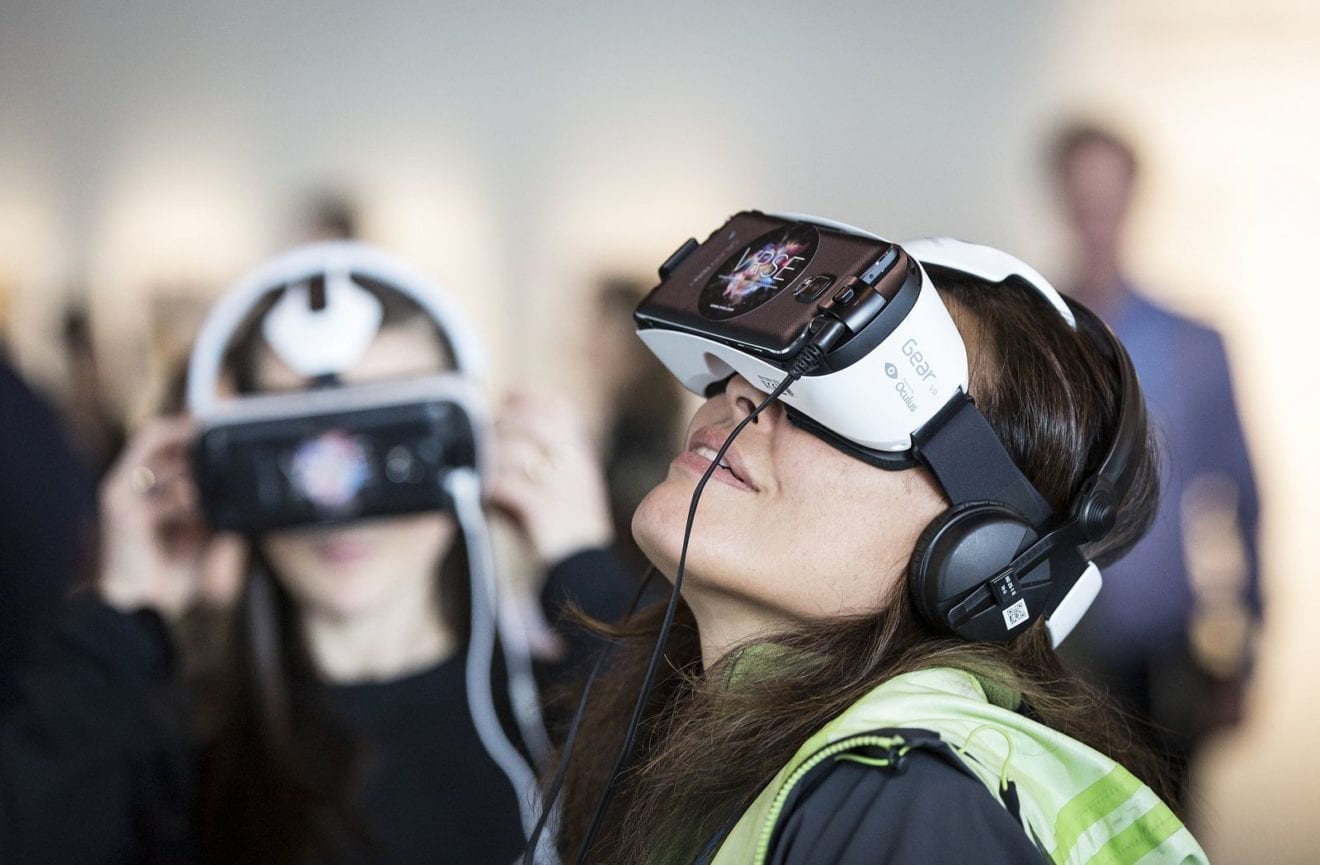
    Retailers are providing virtual reality services at brick-and-mortar stores. Virtual reality is a field especially favorable in the fashion industry. In May, eBay and U.S. retail brand Myer launched a VR department store that is accessible by a VR headset and an app. For luxury or high-end brands, however, expanding contact with consumers and providing the chance to experience products will become a core task in establishing brand image. In the past, companies had the image of being too difficult to relate to due to their premium images. This year, high-end car brand Bentley set up a showcase “studio” in a London mall just for brand image rather than sales.

    In terms of product category, retailers are slowly expanding their reach outside industrial goods to products they have not carried in the past. This year, Harrods Department Store in London had a pop-up store to display Emaar Properties’ real estate in Dubai.

  • AI, Gamification and Blockchain at DBS Hong Kong Accelerator

    AI, Gamification and Blockchain at DBS Hong Kong Accelerator

    Showcasing innovative fintech solutions that leverage artificial intelligence, blockchain technology, gamification and more, the founders of seven startups from Hong Kong and around the world met with hundreds of potential investors at DBS Accelerator Demo Day, the finale of the second DBS Accelerator programme in Hong Kong.

    Accelerators play a vital role in the Asian startup ecosystem and in supporting innovation. Providing vast resources, mentor support and dedicated work and office space, DBS Accelerator aims to create opportunities for innovators from across Asia and globally.

    Financial Innovation Evolving Rapidly

    The seven startups in this year’s programme are Flowcast, FOMO Pay, Hampen Technology, Mindlayer.io, NetGuardians, Playbasis and XinGuo Technology. They were selected from more than 150 applicants from around the world, including Hong Kong, Singapore, China, Thailand and the U.S.

    «We believe FinTech has the ability to go beyond mere disruption and make a tangible difference to the experiences customers have in using financial products and services,» said Lawrence Morgan, CEO of Nest.

  • Ciena aims to usher in age of self-driving network

    Ciena aims to usher in age of self-driving network

    Ciena has unveiled WaveLogic Ai, a programmable coherent modem that aims to serve as a  foundational enabling technology for a self-driving network.

    WaveLogic Ai sets new performance benchmarks designed to improve transport network economics and flexibility across a broad set of network applications.

    In metro and DCI applications, it drives 400G single carrier transmission with power and density metrics. In regional and long-haul networks, WaveLogic Ai establishes 200G and 300G as the new reference line rates for backbone transmission, doubling capacity and dramatically lowering cost per bit. In submarine networks, it provides maximum capacity with ultimate reach at distances up to 14,000 kilometers.

    WaveLogic Ai offers enhanced intelligence for new levels of visibility into the network that enables autonomous decisions to further improve network performance.

    Through open interfaces, it monitors and gathers critical networking data, including embedded real-time link measurements, to make intelligent capacity decisions in real time. For instance, WaveLogic Ai helps determine the optimal capacity for any path across the network and can tune to different capacity levels from 100G to 400G in 50G increments.

    WaveLogic Ai uses an advanced 400G-optimized technology engine with a higher baud rate to drive twice the capacity per channel, three times the distance at the equivalent capacity, and four times the service density at less than half the power. This scalability supports 400GE and flexible client services to best match service throughput to flexible line capacity.

    WaveLogic Ai is designed to calculate and then make available massive amounts of optical networking performance data through open interfaces that can be mined to build on-demand, programmable networks.

    To better match capacity to system margin, WaveLogic Ai provides unprecedented tweakability via open software interfaces that help drive automated and intelligent decisions to reduce operational expense and avoid manual errors.

    WaveLogic Ai provides access to real-time link monitoring information, thereby giving operators new levels of network visibility and the ability to accurately engineer the network for optimal capacity and maximum efficiency.

    The company says WaveLogic Ai will be available in the second quarter of 2017.

  • Hangzhou to harness Alibaba Cloud’s AI, analytics tools

    Hangzhou to harness Alibaba Cloud’s AI, analytics tools

    Alibaba Cloud announced at its recent Computing Conference that it will provide its AI, deep learning and data analytics capabilities for two new cutting-edge developments in China.

    Initiated by the Hangzhou government, the “Hangzhou City Brain” is set to address the city’s urban living challenges. As the hub to consolidate data and provide real-time analysis, the “Hangzhou City Brain” will rely on Alibaba Cloud’s AI program ET and big data analytics capabilities to perform real-time traffic prediction with its video and image recognition technologies.

    The project will support transportation departments’ efforts to ease traffic congestion and provide users with real-time traffic recommendations and travel routes.

    “By establishing the Hangzhou City Brain, Hangzhou is taking the lead in harnessing artificial intelligence and deep learning technologies to promote greater sustainability and improve the quality of urban living for Chinese citizens. Alibaba Cloud is proud to support and be part of this important development, “said Dr Jian Wang, chairman of Alibaba Group’s technology steering committee.

    With automated traffic system capabilities, intelligent adjustments of traffic lights will be performed on the spot; when a vehicle changes direction, the green light will automatically be extended. The pilot of world’s most advanced smart traffic management system in the Hangzhou’s Xiaoshan District, which started in September this year, has since seen an increase in traffic speed by 11%.

    The project is being led by the Hangzhou government in coordination with 13 firms including Alibaba Cloud. As part of the project, a research and development team of scientists from various companies has been formed.

    Forming the backbone of the “Hangzhou City Brain” data processing and analysis capabilities is Apsara, Alibaba Cloud’s large scale computing operating system, which is able to cluster millions of servers into a super computer and to support a multitude of cloud-based services by analyzing terabytes of data points. This computational engine is one of the largest of its kind in the world and uses propriety algorithms.

    Paving the way for astronomical data storage and analytics

    Aiming to leverage its technologies for astronomical data collection and analysis, Alibaba Cloud also announced at the Computing Conference its research collaboration with the National Astronomical Observatory of China (NAOC) on deep space exploration.

    The plans are to set up a data and research centre for astronomy, as well as a virtual solar observatory which will be supported by Apsara’s massive scalability and advanced capabilities to process astronomical data.

  • Alibaba Cloud AI aims to predict singing contest winner

    Alibaba Cloud AI aims to predict singing contest winner

    Alibaba Cloud’s “Ai,” an artificial intelligence program was put on the spot to predict the winner at the grand finale of “I’m a Singer,” the popular Chinese reality television produced by Hunan TV.

    The competition is major annual event and attracts significant public participation in China. Ai predicted the winner by using neurological networks, social computing and emotional perception.

    Min Wanli, chief scientist for AI at Alibaba Cloud said the result was jointly created by TV audience, public judges, as well as the seven contestants.

    “It is very random and almost impossible to predict using human intelligence, and we aim to achieve real-time prediction by Ai,” said Min.

    “In a previous round, Ai predicted two of the top three winners on April 1,” said Min. “We believe that it will achieve a better performance after learning and evolving over the past week.”

    The program has the potential to understand human emotions, gather insights in real-time, and evolve through strong computing and machine-learning capacity.

    With this capability, Ai identified and assessed factors that may affect the result, including popularity of the songs, the singers’ voice pitch and energy, audience response and online discussions, to name a few.

    The program created and used a dynamic computer model to predict the result by computing both fact-based logical data and subjective emotion-based data.

    Ai’s prediction and the judges’ voting were processed independently and did not affect each other.

    In the future, Ai will be applied to areas such as personal assistance, weather analysis, smart cities and social trend predictions.