Retail News CRM

Tag: AI

  • Samsung to open AI centers in three countries

    Samsung to open AI centers in three countries

    Samsung Electronics is opening research centers dedicated to artificial intelligence technology in the United Kingdom, Canada and Russia.

    That will bring the number of Samsung’s AI research centers to five, adding to existing ones in Korea and California.

    The Cambridge center in the U.K. opened yesterday, the Toronto center in Canada opens on Thursday and the Moscow center in Russia opens next Tuesday.

    In November, the electronics giant established an AI center under Samsung Research, a unit that heads development of future technology for the company. Two months later, a Samsung AI center was opened in Silicon Valley in the United States.

    The Korean center will function as headquarters for all five AI research centers, making it a global hub for AI research. Samsung has grand plans to expand the number of specialized researchers in the AI field to more than 1,000 by 2020, and some 40 percent will be foreigners.

    “[The AI center] will be a game-changer for Samsung to make a new world for the era of artificial intelligence,” said Kim Hyun-suk, president of Samsung’s consumer electronics unit at Tuesday’s inauguration ceremony of the AI center in Cambridge. Kim also heads Samsung Research.

    The Cambridge center will be led by Andrew Blake, who was director of the Microsoft Research Lab in Cambridge. Professor Maja Pantic of Imperial College London will also lead AI research as part of the unit. Her area of expertise is machine analysis of human emotions, for which she was chosen by the science journal Nature to speak at the 2016 World Economic Forum in Davos.

    Larry Heck was appointed to head the Toronto center. He is an expert in voice recognition and was a former leader of Samsung’s Silicon Valley center. The Moscow center will be led by Higher School of Economics Prof. Dmitry Vetrov and Skoltech Prof. Victor Lempitsky.

    Samsung Electronics has been active in artificial intelligence technology this year. It introduced its AI assistant Bixby in April 2017.

    At the Consumer Electronics Show in January, President Kim vowed to use the virtual assistant in all of its products, including home electronics, by 2020.

    Samsung Vice Chairman Lee Jae-yong reportedly intends to invest in future growth areas such as AI following his return to management this year after months in jail.

    With Lee back at the helm, there is anticipation that Samsung may be more aggressive about acquiring companies with promising research.

  • The AI moment: preparing for the revolution

    The AI moment: preparing for the revolution

    Artificial intelligence, AI, is the next big technology to have entered mainstream consciousness. From eerie androids such as Sophia to the silent efficiency of automated delivery systems in modern Amazon warehouses, the growth of autonomous driving and the popularity of smart speaker systems such as Alexa or Google Home – AI is everywhere. And it’s coming for our jobs, white collar and blue, threatening massive social and economic upheaval.

    But what is AI really? Why has it suddenly become so popular? Why is everyone so excited about its tremendous potential? Will it really replace humans – and should we welcome it with open arms, or fear for its impact?

    Far from being an omnipotent, autonomous robot, AI is at heart simply a machine programmed to make sense of data on a scale humans can’t deal with. It is the king of the algorithm, a machine learning from its own experiences, objective-oriented and highly intelligent, producing logical conclusions based on input. As part of the digital technology connecting people, things and machines on a big data platform, it has the potential to enable solutions saving time, energy and lives, opening up opportunities as yet undreamt of. And it is still in its infancy in its real world deployment.

    The use of AI is growing dramatically right now in response to extraordinary increases in the amount of data produced daily, as powerful computing has become available at lower costs. Humans alone simply cannot process the complexity and ongoing volume of data from people, devices, sensors and machines.  In parallel, there is a growing awareness of the tremendous potential of AI technologies to solve problems across all industry sectors and the entire spectrum of human life.

    AI can unlock scale and opportunity to deal with the grand challenges facing the world today, from ageing populations to sustainable urban living, access to food, healthcare, water and education, reducing poverty and increasing gender equality. Physical AI will be able to free humans from mundane, routine tasks, allowing them to concentrate on more important, higher-end work, releasing creative potential.

    In emerging markets and smart cities alike, AI can help overcome natural limitations to growth such as geographic size or lack of natural resources, creating new markets and new value, rather than merely improving on existing models.

    Improvements on current models will, however, be where the power of AI is first felt, in its promise of enormous cost savings, increased productivity, lower production cycles and improved back end or internal processes. Within the telco industry itself, AI will accelerate the evolution of network operator infrastructure into intelligent networks able to offer smarter, faster and more scalable services. Using the engine of big data, AI will enable multiple, diverse and often sector-specific demands to be met through highly-tailored network slices managed in real time.

    In the financial services sector, for example, AI can reduce the hundreds of thousands of hours needed to carry out regulatory compliance to a matter of seconds; or the time, effort and investment necessary for a mortgage to a few minutes. New financial services may include mass market personalised services, opening an enormous market of lower earners, or microfinancing for the unbanked. In call centres across a range of industries, AI can work either alongside humans analysing complex data sets in parallel to the human customer-facing contact, or take calls as a co-worker as far as possible before passing on to human expertise.

    In all cases, AI is a tool to augment human abilities rather than replace them. And it is only as good as the person inputting information and parameters into its system.

    This is one of the principal challenges: ensuring that AI is provided with initial information in a way that does not reflect and perpetuate inherent bias, unconscious or not. It is critical to be aware of, and work to avoid, replication of existing divides and inequalities: on gender, race, geography, the urban/rural split, access to education, investment in infrastructure, the availability of talent, the provision of adequate cyber security. Without action, AI will prolong or deepen these divides. There is a very real danger that the powerful impact of algorithms actuated by AI will remain limited to the developed world due to a lack of infrastructure, advanced networks, open data or data scientists.

    Providing open public data and open APIs to allow private companies and individual developers to create solutions for public and commercial services is key to democratising AI – and fast-tracking its deployment. Accessing large data sets in the ecosystem to improve quality of life must be balanced against data protection, privacy and security issues.

    Preparation in general – and education – is critical. The international community, government, businesses and individuals should be as ready as possible for the seismic changes that the widespread adoption and deployment of AI will bring with it.

    The big one, of course, is the transformation of the existing labour market. It is estimated that up to 75% of all jobs will be impacted by AI over the next ten years – and these will not just be routine, low-skilled jobs, but also traditional blue collar sectors such as journalism, law or financial services. Productivity and revenue should rise as costs are cut, but the societal disruption will be enormous.

    AI is often invisible, raising issues of transparency and accountability. It is itself a neutral tool, without morality, but the ethics of its use are complex. Establishing codes of conduct and social norms as the first step to any regulation is urgently necessary at intergovernmental, international level. Regulation – as well as the standardisation necessary for it to function in a multi-vendor ecosystem environment – is further complicated by AI’s inherent structure as an active machine, learning in real time with real data.

    AI is here – and growing fast. There is an increasingly urgent need to bring together key stakeholders from government, industry and academia to debate its impact on a neutral platform such as ITU Telecom World 2018, the leading tech event organised by ITU, the UN lead agency for ICTs. Making AI democratic, fair and equitable is a challenge that cannot be met by any one single stakeholder.

    Experts at ITU Telecom World 2017 last year felt that its first use cases and greatest impact would be economic rather than social: AI will go where the money is, or can be made.  In some sectors, if you are not yet using AI, you are two years behind the curve. But the size of the opportunity is so great, the potential so huge, that it is far from too late.

    The potential negative effects of AI include social and economic disruption, in particular in the job market; the deepening of inequality; the danger of inherent bias; major issues of transparency, security and accountability; the lack of an internationally-agreed ethical code. Now is the time for contingency plans, for preparation and education throughout governments, industries and societies.

    There is downside, after all, to both deploying AI and not deploying it.

    AI will be a key component of discussions at ITU Telecom World 2018 in Durban, South Africa, 10 -13 September, providing the diverse perspectives of international experts from government, industry, SMEs and academia. Find out more at https://telecomworld.itu.int/

  • How DHL Aims to Remake Logistics with AI

    How DHL Aims to Remake Logistics with AI

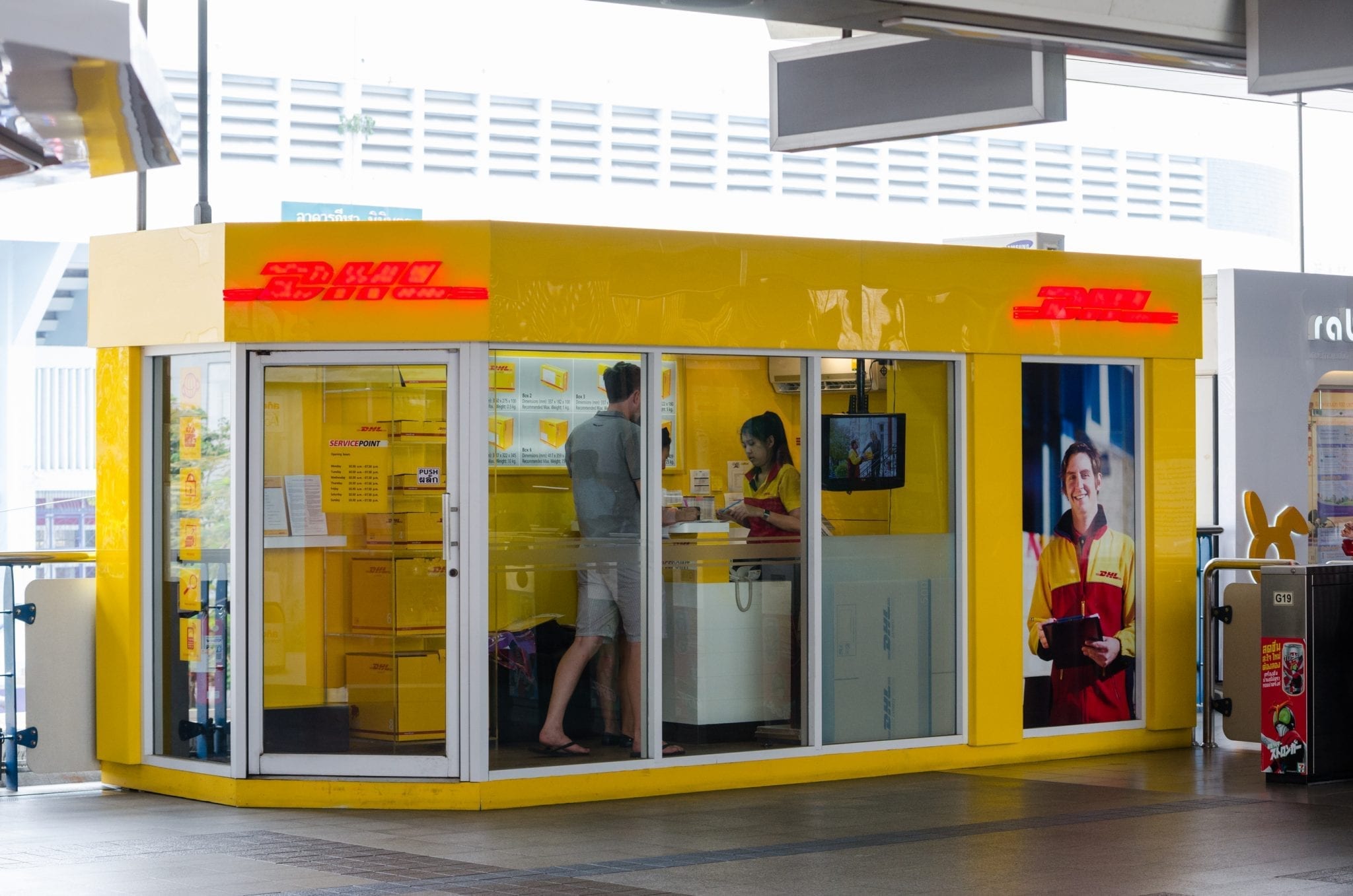
    What do semi-autonomous truck platoons, chat-bots, and fraud detection cameras have in common? They’re all part of a big plan that DHL unveiled yesterday to remake itself with artificial intelligence.

    DHL is investing millions to take advantage of recent advances in machine learning that could help it optimize its sprawling $60-billion delivery service, which touches nearly every country in the world and involves 500,000 workers.

    According to Ben Gesing, a project manager in DHL’s Innovation and Trend Research division, the Germany company is pursuing a multi-pronged strategy to utilize a variety of emergent AI technologies and techniques to help it cut costs, increase efficiency, and improve service levels across the company.

    “In terms of data creation, processing storage and accessibility, the technology conditions for AI are very favorable,” Gesing tells Datanami. “Broadly speaking we think the future of AI and logistics is filled with potential.”

    Here are some of the AI projects that DHL is currently working on:

    Autonomous Vehicles – DHL is working on autonomous vehicles on three fronts, including the development of intelligent robotic workers in its own warehouses and air freight centers; the use of semi-autonomous trucks in the line-haul business; and “follow-me” robots used for last-mile route delivery in urban settings.

    One of the more interesting uses of AI is the development of truck platoons in Europe, where anywhere from one to four autonomous semi-trucks follow a lead truck with a human driver down the road. By synchronizing acceleration, braking, and steering among the trucks, the platoon can boost freight capacity while minimizing costs, all without handing total control over to the AI program. DHL will be involved with testing a truck platooning in the UK next year with the British Transportation Research Laboratory and truck manufacturer DAF Trucks.

    Chat Bots – DHL is looking into using autonomous customer service representatives by using deep learning-based natural language processing (NLP) technology, such as Amazon‘s Alexa, to automate some of the easier interactions between customers and DHL’s customer service representatives.

    “Automating some of the low-level queries with chat bots can really increase the value of each interaction between customer and [human] agents by letting them focus on more high-level queries,” Gesing says. “That basically increases our throughput by a multiplier, not just a marginal increase.”

    Computer Vision – DHL is exploring the use of deep learning-based computer vision algorithms for at least two use cases, including fraud detection and optimizing the loading of planes and trucks.

    Some people try to defraud DHL by re-using shipping labels, which Gesing says could be automatically detected using cameras hooked up to fraud-detection algorithms. Similarly, computer vision could boost DHL’s capability to detect the size of packages so they can be stacked better.

    “It doesn’t seem that interesting if you’re not in the logistics industry, but understanding how to best use your space and really optimizing the volume and capacity inside an aircraft or a truck” is important, Gesing says. “We’re getting better and better tools and technology to do that using AI-based vision technology.”

    Resilience 360 – DHL plans to infuse this cloud-based risk management tool with AI capabilities that will give its customers an early warning that something is amiss in their supply chains. This product uses sentiment analysis to monitor 8 million sources of data on the Internet, including social media, for anything that could signal a disruption, including unhappy customers and even labor unrest.

    “For a lot of our B2B or automotive or manufacturing customers, they have very vast supplier networks,” Gesing says. “We proactive identify risky parts of the supply chain so our customers can plan downstream more effectively.”

    DHL Global Trade Barometer –DHL feeds this this recently introduced tool with import/export data and data about containerized air and ocean freight, giving it a view into 75 percent of the world’s daily trade. It uses AI techniques to provide a three-month forecast on the direction of global trade.

    “We have data scientists all over the world, internally and partners with external companies, to do different kinds of optimization of our network, things like predicting demand and capacity needed, or predicting delays in airfreight either by trade lane, by airline carrier, or by day of the week or day of the month,” Gesign says. “It gives us a directional assessment of where global trade is headed…to really get out ahead of our current daily operations to plan more effectively.”

    Big Data to AI

    Over the past several years, DHL has invested in exploiting recent innovations in areas like big data, augmented reality, and Internet of Things. In 2013, DHL published a Trend Radar report on big data, and yesterday it published another report called Artificial Intelligence in Logistics with support from its partner IBM, which you can download here.

    AI is viewed as a big component of DHL’s digital transformation strategy, says Gesing, who works in DHL’s corporate innovation lab in Troisdorf, Germany, one of three innovation labs the company runs (the other is in Singapore, while the one in the United States is currently under development). “AI and machine learning are the extension of big data analytics,” Gesing says.

    DHL’s board views AI strategically, but the innovation centers aren’t the only places where work on AI is being done. “We have a very broad digitalization strategy that comes from our corporate board,” Gesing says. “AI is inherently part of that. But really the best teams are the ones making productive use of this are really empowered to go learn and test and use this stuff.”

    DHL isn’t doing a lot of core research into AI, because much of that work has already been done. Instead, it’s utilizing technology that has already been placed into the public domain by companies like Google, Amazon, Microsoft, IBM, and Facebook.

    “Pretty much anyone who’s doing AI is benefiting from all these great open source tools and platform from all the tech giants,” Gesing says.

  • NBTC backs down on financial relief for AIS, True

    NBTC backs down on financial relief for AIS, True

    Thai telecoms regulator NBTC has backed down on its recommendation of providing financial relief for mobile operators AIS and TrueMove in the face of criticism from academia and the public sector.

    The regulator will no longer support a plan to provide relief from the operators’ 900-MHz license payment obligations.

    The ultimate decision will be down to the National Council for Peace and Order (NCPO) and the government, but the NBTC will not oppose a plan that would ease the financial burden of digital TV operators but leave 900-MHz license winners out.

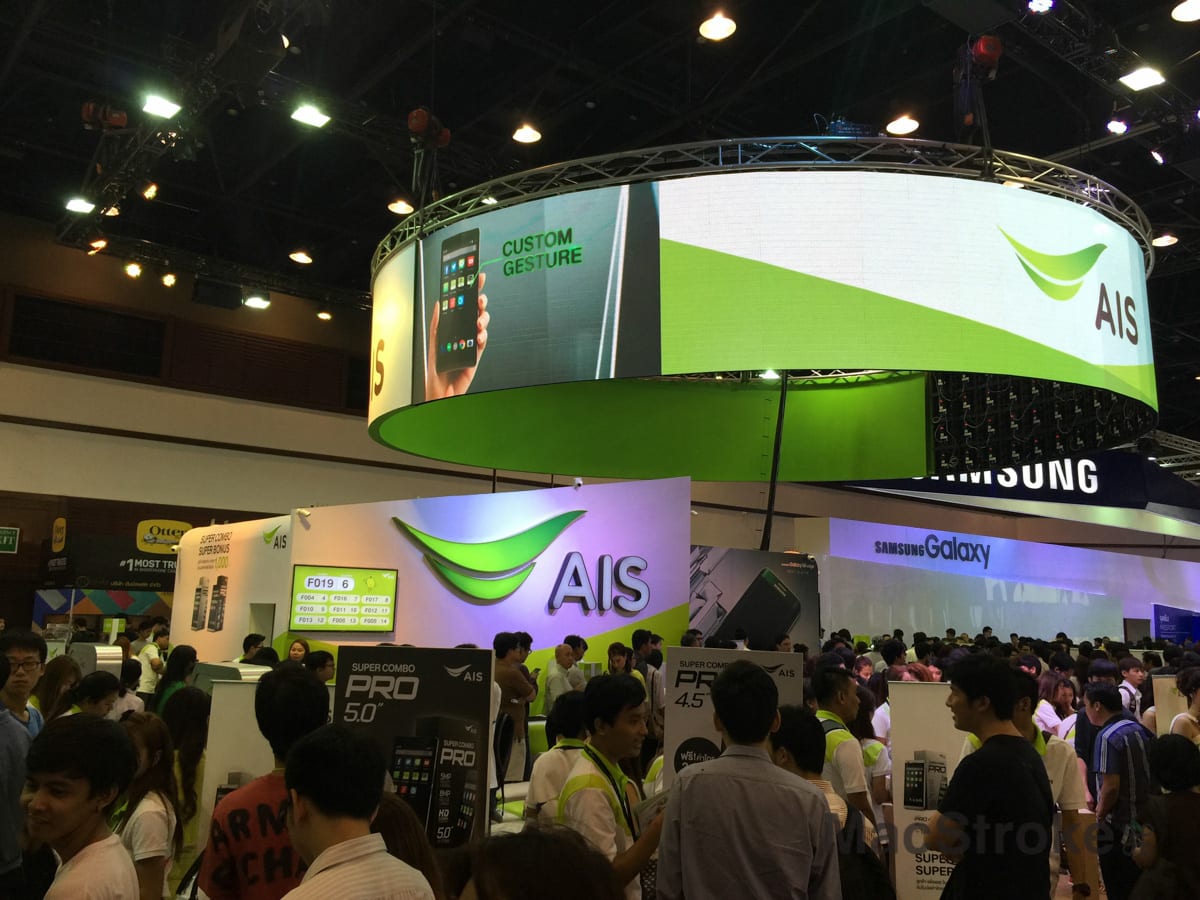
    AIS and TrueMove both petitioned the NCPO in September requesting assistance in easing their license payment terms. The NBTC had drawn up a proposal to grant five year extensions for the payments of the final 900-MHz license payments, but the proposal was controversial.

    TrueMove noted that the winning prices of the 2015 900-MHz spectrum auction were six times higher than the reserve price and the highest in APAC, and has warned that without financial relief the company will have limited capital for investment in services including 5G and the IoT. The company could also be hampered in its participation in the upcoming 1800-MHz auction.

    AIS has likewise argued that relaxing the 900-MHz payment scheme would allow the company to invest in expanding and upgrading its mobile network, benefiting consumers.

  • Automated stores with no human cashiers on the rise

    Automated stores with no human cashiers on the rise

    Unmanned Stores without cashiers are on the rise, industry sources said, amid local retailers‘ efforts to find a breakthrough in the saturated market.

    Local software firm Danal Co., which operates coffee franchise dal.komm coffee, said it recently opened the country’s first cashier-less coffee shop at the country‘s main gateway, Incheon International Airport.

    The coffee shop, named Beat, is located at the newly opened second terminal and is activated by robots, the company said.

    The store is operated by smart robots that can take orders, make coffee and move cups to a pick-up location where customers can drink.

    “The company aims to add up to 100 stores by the end of this year at various locations, including banks, shopping malls, and universities,” said a company official who asked not to named.

    Unmanned convenience stores are also on the rise, since the country’s first cashier-less convenience store broke onto the retail scene in May. The local operator of 7-Eleven unveiled a shop that utilizes vein recognition technology at South Korean retail giant Lotte‘s 123-story skyscraper.

    Unlike other 24-hour shops, automated convenience stores feature self-service kiosks, where guests scan the bar codes of their items and pay.

    Emart24, an affiliate of leading discount store chain operator Shinsegae, currently operates six cashierless stores, having opened the first one last June.

    BGF Retail Co., the operator of CU, South Korea’s largest convenience store chain, said it is preparing to open an unmanned shop.

    The company currently provides mobile application called “Buy-Self,” which allows customers to search for an item, and provides a payment tool.

  • 7-Eleven brings facial-recognition technology to stores in Thailand

    7-Eleven brings facial-recognition technology to stores in Thailand

    7-Eleven Thailand is to roll out advanced AI technology, including facial recognition of employees and customers, across all 11,000 stores in the kingdom.

    The convenience store chain’s parent, CP All, has signed a contract with US-Chinese technology company Remark to use its KanKan data intelligence and AI-based facial recognition and behavior-analysis technologies which it says will provide enhanced customer support, business analysis, employee management and security.

    An estimated 10 million people walk into 7-Eleven Thailand stores each day and the KanKan technology can monitor such things as how long a customer lingers in specific places in-store, and even record their emotions. It can identify members of 7-Eleven’s loyalty program allowing management to offer them tailored promotions.

    From a store-management perspective, the technology can monitor stock levels on shelves and provide real-time operations performance and competitor analysis, check employees on and off shift and identify unauthorised personnel on site.

    “The KanKan implementation at 7-Eleven marks our first major collaboration with Remark,” said CP Group chairman Soopakij Chearavanont.

    “The 7-Eleven team evaluated many AI technologies and selected KanKan because it has the most robust platform for meeting business objectives, namely, driving revenues, reducing costs and rapidly improving profit margins.”

    Remark Holdings’ CEO and chairman, Kai-Shing Tao said the 7-Eleven partnership represents “an incredible opportunity to implement our KanKan technologies on a massive scale”.

    Chearavanont told a media briefing that the technology would help the chain cut costs, improve revenues and increase margins.

    Remark has promised that no images of human faces will be stored on servers by 7-Eleven, apparently addressing privacy concerns relating to what happens to recordings, something being raised by lobby groups around the world.

    The companies say only facial features – not whole faces – are used to generate data which is encrypted.

    “No human faces or images ever leaves the KanKan system or goes on the public network,” the company said.

  • PolyU partners with Alibaba to create AI for fashion retailers

    PolyU partners with Alibaba to create AI for fashion retailers

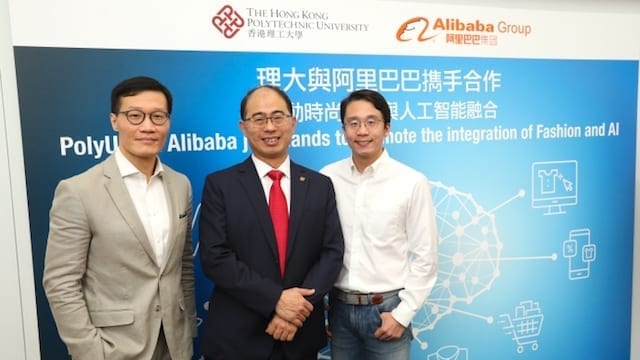
    Students from Hong Kong’s PolyU have partnered with Alibaba Group’s Vision and Beauty Team to develop AI technology for fashion retailers.

    The students, from the Institute of Textiles and Clothing (ITC) of The Hong Kong Polytechnic University, have created the first-of-its-kind “FashionAI Dataset” for systematic analysis and labelling of fashion images based on “fashion attributes” (fashion characteristics) and “key points” of an apparel.

    PolyU explains that by integrating fashion knowledge and machine learning formulation, the establishment of the dataset will enable machines to better understand fashion, “bringing a new horizon to the fashion retail industry through the application of AI”.

    “Transforming fashion knowledge into determination of fashion related attributes and fashion item categorisation of the fashion image database is a very complicated and challenging task, while it is the most fundamental task in deep learning applications,” explains Calvin Wong, Cheng Yik Hung professor in fashion and associate Head of ITC.

    “ITC is pleased to collaborate with Alibaba to address the needs of fashion retailers and consumers.”

    Menglei Jia, senior staff engineer with Alibaba’s Vision and Beauty team, believes there is huge potential for AI applications in the fashion industry.

    “In order for AI to understand fashion, which could be very subjective, we need to turn fashion knowledge and experience into language that machine can understand. We hope to work with academics and the industry alike to explore the wider applications of AI in scenarios including fashion mix-and-match, assisting design and shopping guide, with the aim to bring new values to the fashion industry.

    “The traditional fashion sector should embrace the new retail practice, and we hope FashionAI can be a bridge that connects AI with fashion.”

    Challenges presented by data on fashion image

    Current fashion image searching technology used on online platforms is based on the whole fashion image to search the exact or other similar images.  However if a customer is interested in some particular fashion attributes of a fashion image and wants to search other fashion items with these attributes, the current searching technology cannot meet the needs of the customer. This greatly limits the potential development and applications for offering more customised shopping experience, PolyU explains.

    From an AI research perspective, this limitation of the current image searching technology is caused by the absence of available fashion image dataset constructed with both fashion professional knowledge and fulfils the requirement of deep learning, ie: the current technology is unable to train a machine to accurately understand and recognise the fashion attributes of each fashion image.

    Addressing the needs of fashion retailers

    Fostering the application of AI in the fashion industry, a PolyU research team led by Professor Wong, worked closely with Alibaba to develop “FashionAI Dataset” to solve two fundamental problems of the deep learning algorithm: “apparel key points detection” and “attribute recognition”.

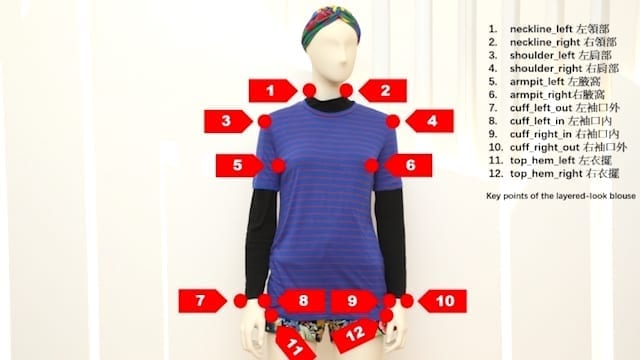
    Key points (e.g. neckline, cuff, waistline) and fashion attributes (e.g. sleeve length, collar type, skirt style) build the foundation for machine learning in understanding fashion images. The establishment of key points and fashion attribute database enables the computer to effectively and efficiently understand the fashion image which is fundamental for deep learning and recognition algorithms.

    The accuracy of key points detection is determined by several factors such as the dimension and shape of the apparel, distance and angle of shooting, or even how the apparel is displayed or the model is posing in a photo. These factors can lead to poor key points detection and result in an inaccurate analysis of fashion images by the computer. Accurate key points detection can therefore improve the performance of deep learning algorithms.

    Fashion attributes are the basic design elements of an apparel, and their combination determines the product category and styles of a fashion item. With the wide variety of fashion attributes, attribute recognition is a complicated process. A systemic classification of fashion attributes is essential to accurately label fashion attributes, facilitating research on deep learning and algorithm design for fashion image searching, navigating tagging and mix-and-match ideas, etc.

    The Dataset can greatly facilitate understanding fashion images and related algorithm design, and developing machine learning. It would help improve the accuracy of online fashion image searching, enhance effectiveness of cross-selling and up-selling, create innovative buying experience and facilitate customisation of online shopping platforms.

    Global challenge

    PolyU and Alibaba will host two world-first events – the AIFT Conference and FashionAI Global Challenge – with the aim of bringing a new horizon to the fashion retail industry through the application of AI and encouraging knowledge exchange among practitioners.

    The AIFT Conference, to be held from July 3-6 at PolyU, is a first-of-its-kind academic conference to bring together researchers, engineers and practitioners to share their insights on the most updated development and applications of AI and fashion.

    This event will become an annual activity for academic exchange and networking with like-minded individuals who are redefining the world of AI and fashion, and advancing AI research in fashion and textile.

    The FashionAI Challenge invites worldwide AI researchers and developers to solve two imminent issues on the application of AI in fashion with over 400,000 images with high-quality annotations from Alibaba ecommerce platforms. The competition offers a prize pool of RMB 1.34 million. The FashionAI Global Challenge 2018 runs from now until April and is open to the public.

  • Retail News Asia Honoured with the “Best Global Retail News Platform 2018” Award

    Retail News Asia Honoured with the “Best Global Retail News Platform 2018” Award

    Retail News announced today that it has been named the Best Global Retail News Platform 2018 in the AI Business Excellence Awards. Hailed as the “Internet’s highest honor” by KPMG, EY, PwC and Deloitte, The Business Excellence Awards, is the leading international awards organization honoring excellence on the Internet. The judging panel is compromised of the three directors here at AI Global, they have a combined total of 40 years of work within this industry and know it very well.

    The reason why AI uses an in-house judging panel is because they fully understand the process and also know what our standards are in terms of award winners.  They have been judging the award programs for the past 8 years. AI’s judging panel works very closely with a research team which is comprised of 4 researchers who are in charge of gathering information for each case study and presenting each case file to the judges. This is the 6th year of the Business Excellence Awards, hosted by Acquisition International, and you can view all the details of last year’s awards on their homepage.

    Launched over 8 years ago, AI has rapidly risen to and now has a circulation of 108,000 people in over 170 countries and regularly attracts editorial submissions from some of the biggest players on the global corporate landscape.

    AI is a monthly magazine that seeks to inform, entertain, influence, and shape the global corporate conversation through a combination of high quality editorial, rigorous research and an experienced and dedicated worldwide network of advisors, experts and contributors.

    Alongside the monthly issue AI hosts annual award programs which aim to highlight and provide recognition to the companies and individuals who have worked hard to get where they are today. The AI awards are only given 100% based on merit and not based on the judgment of a number of votes received.

    RetailNews is committed to providing both local and global retailers with the latest breaking retail news throughout the Asian market. This on a daily base. We have resources for everyone from the independently owned business owners, online-only retailers, and major chains expanding their reach throughout the Asian market, says Sven – founder of Retail News.

    We Are Stronger Together

    You can quickly and easily search for the latest breaking retail news by country, or come here to keep an eye on the latest local, global and seasonal trends.

    On Retail News you can network, engage, and share invaluable information with other retailers. Our retailers come from a wide range of industries and expertise, meaning that whatever the question may be—we have you covered!

    We are extremely honored with this recognition and my team has been working extremely hard the last 3 years to bring us to a level where we are operating now, Sven added. With nearly 8 million visitors a month, 23 daily retail updates, Retail News is believed to be the Retail industry leader.

  • Alibaba teams up with Singapore university on AI

    Alibaba teams up with Singapore university on AI

    Chinese tech giant has set up a joint research facility at Singapore’s Nanyang Technological University to develop artificial intelligence-based technologies in retail, transportation and healthcare

    Chinese e-commerce and technology giant Alibaba has partnered Singapore’s Nanyang Technological University (NTU) in a joint research facility aimed at harnessing artificial intelligence (AI) to solve societal issues such as Singapore’s ageing population.

    The first of its kind outside China, the Alibaba-NTU Singapore Joint Research Institute will bring together NTU’s AI capabilities, including efforts to develop an artificial companion for the elderly, and Alibaba’s expertise in natural language processing, machine learning and cloud computing.

    The multimillion-dollar partnership between Alibaba and NTU is expected to involve 50 scientists and engineers from both parties over five years. Besides addressing the needs of ageing societies, they will also develop AI technologies in areas such as retail, urban transport and healthcare.

    For example, NTU’s expertise in healthcare research and Alibaba’s knowhow in AI to diagnose and prevent diseases will be pooled to achieve breakthroughs in health-related AI. Both parties will also conduct research to improve urban mobility and reduce Singapore’s carbon footprint.

    Alibaba said its contribution to the research facility will come from a $15bn fund earmarked for its Damo research and development (R&D) programme, which includes establishing research labs across the globe, including one in Singapore.

    The joint research institute is located on the NTU campus, but it is open to researchers and academics worldwide. Alibaba will also build a crowdsourcing platform to connect researchers and industry practitioners in an AI-focused R&D community.

    Jeff Zhang, Alibaba’s chief technology officer, said the AI technology developed by the institute will first be rolled out in NTU, followed by other parts of Singapore and Southeast Asia at a later date.

    “By launching our first joint research institute in Singapore, we hope to work with talent in Singapore and researchers worldwide to explore technology innovation that can address common issues faced by the society at large,” said Zhang.Alibaba’s efforts to develop AI capabilities in Singapore follows the recent launch of Chinese facial recognition specialist Yitu’s regional headquarters in Singapore that will mainly serve as a sales, marketing and operations outfit for now.

    Yitu said plans are also in the pipeline to establish R&D capabilities in the city-state by the end of 2018.

    In May 2017, Singapore’s National Research Foundation said it would invest up to S$150m (US$107m) over five years in a programme called AI.SG to drive adoption of AI to solve business problems.

    To nurture a local AI community, AI.SG will also work with startups and corporate laboratories through new facilities that will provide software tools, anonymised datasets and high-performance computing resources.

  • Retailer spending on AI to rise, says Juniper Research

    Retailer spending on AI to rise, says Juniper Research

    Juniper Research predicts global retailer spending on AI will reach US$7.3 billion a year by 2022, up from an estimated $2 billion for this year.

    Its report AI in Retail: Disruption, Analysis and Opportunities: 2018-2022 says retailers will heavily invest in AI tools that let them differentiate and improve customer services. These range from automated marketing platforms that generate tailored, timely offers to chatbots that provide instant responses to customers.

    Juniper found that spending will be strongest in customer service and sentiment analytics, where AI can be applied to understand reactions to purchased products and service received.

    It predicts retailer spending share in 2022 as:

    1. Customer service/sentiment analytics, 54 per cent
    2. AI-based automated marketing, 30 per cent
    3. Demand forecasting, 16 per cent.

    Juniper predicts retailers will use AI insights to design product ranges as well as create targeted promotional offers.

    “Retailers are looking to replicate the success of Amazon in making AI a core part of their business,” says research author Nick Maynard.

    He says retailers will increasingly turn to tactics such as AI-optimised pricing and discounting, as well as demand forecasting.

    With the advent of specific days for shopping, such as the Black Friday phenomena, understanding customer demand and planning appropriately is more important than ever, says the report.

    Juniper says retailers need to invest in this area in order to stay competitive, particularly in low-margin retail segments. Also, the cost of AI tools, now uneconomical for many players, will drop by 8 per cent over the next four years, helping realise 300 per cent growth in software spend.

  • Japan sees investors flock to AI, big data funds

    Japan sees investors flock to AI, big data funds

    Funds that are oriented towards artificial intelligence (AI) and big data are attracting Japanese investors, according to the latest data compiled by QUICK Asset Management Research Center. This happens as popular monthly-distribution trusts are registering a net outflow of funds.

    The latest data on fund flows for investment trust management companies shows that individual investors are being lured to trusts that focus on AI and other cutting-edge technologies.

    Daiwa Asset Management, for example, registered a net inflow of JPY 370.1 billion in 2017, the largest among investment trust management companies. A fund for investment in robotics-related stocks, introduced by Daiwa at the end of 2015, continues to lure investors. Goldman Sachs Asset Management also recorded strong sales of a fund for global stock investments utilizing big data.

    Let’s recall that the latest Monex Global Retail Investor Survey conducted from November 27 to December 1, 2017, shows that “Technology” ranked at the top of the most attractive sectors among retail investors in Japan, U.S. and China (Hong Kong). There was no major change in the other sectors. However, while “Finance” was ranked high by retail investors in U.S and China (Hong Kong), “Banks” ranked low in Japan, and a difference in bias was apparent.

    This is in line with the results from the preceding investor survey, which also showed that technology was the most attractive sector for investors in all three regions covered by the survey. Monex explained back then that this interest is largely fueled by almost daily media coverage about advancements in AI and that expectations of technology companies among retail investors are extremely high.

    There has been, indeed, a plethora of news regarding investment into AI, especially in Japan. In November 2017, Xenodata Lab, a Tokyo-based firm that leverages the power of artificial intelligence to provide finance data analytics products to financial services companies, announced that it had secured JPY 250 million in funding from Japanese financial majors, such as Mitsubishi UFJ Financial Group Inc, SMBC, Mizuho, and Okasan Securities.

    And in December last year, Mitsui & Co Ltd (TYO:8031) announced an investment into Preferred Networks, Inc (PFN), a company that specializes in AI technology development and provision, with the focus being on deep learning.

  • Huawei teams with Baidu on AI development

    Huawei teams with Baidu on AI development

    Huawei has entered a partnership agreement with Chinese search giant Baidu covering AI platforms and technology, internet services and content ecosystems.
    The two companies plan to develop an open mobile and AI ecosystem using Huawei’s HiAI platform and Baidu Brian, a collection of AI assets and services.
    The HiAI platform is being developed on Huawei’s embedded AI chipset, the Kirin 970. The chipset was used in the Huawei Mate 10, the world’s first smartphone powered by an embedded AI chipset, which launched earlier this year.
    The planned joint AI ecosystem will use Huawei’s neural network processing unit and Baidu’s PaddlePaddle deep learning framework to empower AI developers and provide consumers with a rage of AI offerings and smart services.
    In addition, the partners will work together on voice and image recognition for smart devices to enable more efficient human-machine interaction, and jointly build an augmented reality ecosystem for consumers.
    “The future is all about smart devices that will actively serve us, not just respond to what we tell them to do,” commented Richard Yu, CEO of Huawei’s consumer business group.
    “With a strong background in R&D, Huawei will work with Baidu to accelerate innovation in the industry, develop the next generation of smartphones, and provide global consumers with AI that knows you better.”
  • Google opens AI center in China as competition heats up

    Google opens AI center in China as competition heats up

    Google announced Wednesday that it will open a new artificial intelligence research centre in Beijing, tapping China’s talent pool in the promising technology despite the US search giant’s exclusion from the country’s internet.

    Artificial intelligence, especially machine learning, has been an area of intense focus for American tech stalwarts Google, Microsoft and Facebook, and their Chinese competitors Alibaba, Tencent and Baidu as they bid to master what many consider is the future of computing.

    AI research has the potential to boost developments in self-driving cars and automated factories, translation products and facial recognition software, among others.

    Google’s move to open a Beijing office focused on fundamental research is an indication of China’s AI talent, widely seen as being neck-and-neck with the United States in research capability.

    “Chinese authors contributed 43 percent of all content in the top 100 AI journals in 2015,” Li Feifei, a researcher leading the new center, wrote in a blog post on Google’s website.

    “We’ve already hired some top experts, and will be working to build the team in the months ahead.”

    Li noted that Chinese engineers formed the backbones of the winning teams in the past three ImageNet Challenges, an international AI competition to test which computing technology is better at recognizing and categorizing pictures.

    Chinese search engine Baidu’s team was banned for a year for breaking the rules during the 2015 competition.

    The country’s large population and strong mathematics and sciences education has nurtured a slew of engineering talent.

    Google operates two offices in China, with roughly half of its 600 employees working on global products, said company spokesman Taj Meadows.

    Its job board in China shows about a dozen openings in the AI field. The China center will join Google’s other research facilities outside of its Silicon Valley hub, including in New York, Toronto, London and Zurich.

    Google’s search engine and many of its services are blocked by China’s Great Firewall, but internet regulators have recently allowed access to its translation product, one that has made leaps and bounds in accuracy by incorporating the company’s AI research.

  • LG moving to acquire AI business

    LG moving to acquire AI business

    As part of efforts to expand its smart home business, LG Electronics will double its investment by 2020 including mergers and acquisitions of promising artificial intelligence tech firms, said Song Dae-hyun, head of the company’s home appliance and air solutions division.

    At a press conference held at a hotel in Berlin, Song said LG would spare no efforts to boost its smart home business and continue investing to acquire AI and Internet of Things technologies.

    “As for the AI business, inorganic growth would be more effective,” Song said.

    “LG officially seeks to acquire some AI companies. But so far, many acquisition projects fell apart due to market conditions,” he continued.

    “LG is aggressively looking for a good AI company,” he added.

    Song visited the German capital to meet with major European clients and check out latest tech trends at the IFA 2017.

    “LG was the first to add Wi-Fi to all of the home appliance lineups this year. Based on connectivity, the company will try to bring value to consumers by establishing a smart home ecosystem pivoting on AI, IoT and robotic technologies,” he said.

    Recently, LG has been increasing partnerships with Google and Amazon to apply the two IT moguls’ voice recognition platforms to LG products for global consumers.

    “We do have our exclusive voice technology, but we apply the Google and Amazon technologies in order to allow consumers to conveniently use LG products with what they prefer to use,” Song said.

    “We are now working with Google to take advantage of its database accumulated through its search engine. But we are also continuing to develop our DeepThinQ AI platform at the same time,” he added.

    The CEO added robots would be a major pillar of the smart home business.

    “We are nearing commercialization of robots. We receive orders for robots from various industries, such as shopping malls and libraries,” he concluded.

  • Facebook hires AI expert, launches lab in Canada’s Montreal

    Facebook hires AI expert, launches lab in Canada’s Montreal

    The lab will be Facebook’s fourth, after sites in Palo Alto, New York, and Paris. Facebook Inc has hired artificial intelligence academic Joelle Pineau to head its new research lab in Montreal, the Silicon Valley social media company said on Friday.

    Once the exclusive domain of academic researchers, artificial intelligence has grabbed the attention of the corporate world as businesses from healthcare to financial services look to use algorithms to sort through reams of data in search of patterns to solve problems.

    The lab will be Facebook’s fourth, after sites in Palo Alto, New York, and Paris, and joins similar AI research efforts in the city from Microsoft Corp and Alphabet’s Google.

    The company will also invest $7 million to support AI research at academic institutions in Montreal, the Canadian Institute for Advanced Research said in a statement.

    Pineau is a co-director of McGill University’s Reasoning and Learning Lab whose work focuses on developing and applying models and algorithms applying robotics to healthcare, transportation and language processing.

    One project she has been working on at McGill, where she will maintain her academic position, is a robotic wheelchair.

    Pineau will be joined by fellow researchers Pascal Vincent, Michael Rabbat and Nicolas Ballat, and Facebook expects the team to grow to around 30 researchers.

    Facebook already uses AI for image recognition, language analysis and targeted advertising. It also uses AI to identify and remove what the company deems “inappropriate content.”

    The Facebook project will be connected to McGill University’s Centre for Intelligent Machines and to the Montreal Institute for Learning Algorithms, started by University of Montreal professor and machine learning pioneer Yoshua Bengio, two sources with knowledge of the plans said.

    Combined, University of Montreal and McGill have more than 200 researchers, including students, working on AI research projects, Bengio said. That is up from around 150 cited by Google last year, which it called the greatest academic concentration of AI research in the world.

    The mostly French-speaking province of Quebec boasts around 90 start-up companies focused on artificial intelligence.

    The Canadian federal government has pledged C$125 million to build AI expertise in Montreal, the Toronto-Waterloo corridor, and Edmonton, while the provincial Quebec government has also promised some C$100 million ($82 million) specifically for AI research.