Retail News CRM

Tag: AI

  • Huawei tantalizes users with AI flagship phone

    Huawei tantalizes users with AI flagship phone

    Huawei aims to use artificial intelligence-powered features such as instant image recognition to take on Samsung and Apple when it launches its new flagship phone in October 2017, a top executive said on Saturday 2 September.

    Richard Yu, chief executive of Huawei’s consumer business, on Saturday 2 September 2017 revealed a powerful new mobile phone chip the company is betting on for its upcoming flagship Mate 10 and other high-end phones to deliver faster processing and lower power consumption.

    Huawei will launch the Mate 10 and its sister phone, the Mate 10 Pro, in Munich on October 16 2017, Yu confirmed.

    He declined to detail new features, but the phones are expected to boast large, 6-inch-plus full-screen displays, tech blogs predict.

    Artificial intelligence built into its new chips can help make phones more personalized, or anticipate the actions and interests of their users, Yu said.

    As examples, he said AI can enable real-time language translation, heed voice commands, or take advantage of augmented reality, which overlays text, sounds, graphics and video on real-world images phone users see in front of them.

    Yu believes the new Kirin 970 chip’s speed and low power can translate into features that will give its phones an edge over the Apple iPhone 8, set to be unveiled on September 12 2017, and Samsung’s range of top-line phones announced this year.

    Huawei is the world’s No. 3 smartphone maker behind Samsung and Apple.

    “Compared with Samsung and Apple, we have advantages,” Yu said in an interview during the annual IFA consumer electronics fair in Berlin.

    “Users are in for much faster (feature) performance, longer battery life and more compact design,” Yu added.

    The company asserts its newly announced Kirin 970 chip will preserve battery life on phones by up to 50 percent.

    Huawei describes the new chip as the first Neural Processing Unit for smartphones.

    It brings together classic computing, graphics, image and digital signal processing power that have typically required separate chips, taking up more space and slowing interaction between features within phones.

    Most importantly, Huawei aims to use the Kirin chips to differentiate its phones from a vast sea of competitors, including Samsung, who overwhelmingly rely on rival Snapdragon chips from Qualcomm, the market leader in mobile chip design.

    Among major phone makers, only Apple and Huawei now rely on their own core processors.

    The 970 is designed by Huawei’s HiSilicon chip design business.

  • AI to be in almost all new software by 2020

    AI to be in almost all new software by 2020

    Market hype and rising interest in artificial intelligence (AI) are compelling established software vendors to introduce AI into their product strategy, creating significant confusion in the process, according to Gartner.

    Analysts predict that by 2020, AI technologies will be virtually pervasive in almost every new software product and service. Gartner believes that by 2020, AI will be a top five investment priority for more than 30% of CIOs.

    “As AI accelerates up the Hype Cycle, many software providers are looking to stake their claim in the biggest gold rush in recent years,” said Jim Hare, research VP at Gartner.

    “AI offers exciting possibilities, but unfortunately, most vendors are focused on the goal of simply building and marketing an AI-based product rather than first identifying needs, potential uses and the business value to customers,” said Hare.

    To successfully exploit the AI opportunity, technology providers need to understand how to respond to three key issues.

    First is the lack of differentiation is creating confusion and delaying purchase decisions. More than 1,000 vendors with applications and platforms describe themselves as AI vendors, or say they employ AI in their products.

    This widespread use of “AI washing” — using the term indiscriminately — is already having real consequences for investment in the technology.

    A second key issue is that proven, less complex machine learning capabilities can address many end-user needs.

    Advancements in AI, such as deep learning, are getting a lot of buzz but are obfuscating the value of more straightforward, proven approaches. Gartner recommends that vendors use the simplest approach that can do the job over cutting-edge AI techniques.

    Third is that organizations lack the skills to evaluate, build and deploy AI solutions. More than half the respondents to Gartner’s 2017 AI development strategies survey indicated that the lack of necessary staff skills was the top challenge to adopting AI in their organization.

    The survey found organizations are currently seeking AI solutions that can improve decision making and process automation. If they had a choice, most organizations would prefer to buy embedded or packaged AI solutions rather than trying to build a custom solution.

  • Alibaba launches low-cost voice assistant amid AI drive

    Alibaba launches low-cost voice assistant amid AI drive

    The Chinese device costs significantly less than counterparts by Amazon and Google. China’s Alibaba Group Holding Ltd launched on Wednesday a cut-price voice assistant speaker, similar to Amazon.com Inc’s “Echo”, its first foray into artificially intelligent home devices.

    The “Tmall Genie”, named after the company’s e-commerce platform Tmall, costs 499 yuan ($73.42), significantly less than western counterparts by Amazon and Alphabet Inc’s Google, which range from $120 to $180.

    These devices are activated by voice commands to perform tasks, such as checking calendars, searching for weather reports, changing music or control smart-home devices, using internet connectivity and artificial intelligence.

    China’s top tech firms have ambitions to become world leaders in artificial intelligence as companies, including Alibaba and Amazon, increasingly compete for the same markets.

    Baidu, China’s top search engine, which has invested in an artificial intelligence lab with the Chinese government, recently launched a device based on its own siri-like “Duer OS” system.

    The Tmall Genie is currently programmed to use Mandarin as its language and will only be available in China. It is activated when a recognized user says “Tmall Genie” in Chinese.

    In a streamed demonstration on Wednesday, engineers ordered the device to buy and deliver some Coca Cola, play music, add credit to a phone and activate a smart humidifier and TV.

    The device, which comes in black and white, can also be tasked with purchasing goods from the company’s Tmall platform, a function similar to Amazon’s Echo device.

    Alibaba has invested heavily in offline stores and big data capabilities in an effort to capitalize on the entire supply chain as part of its retail strategy, increasingly drawing comparisons with similar strategies adopted by Amazon.

    It recently began rolling out unstaffed brick-and-motor grocery and coffee shops, using QR codes that users can scan to complete payment on its Alipay app, which has over 450 million users. Amazon launched a similar concept of stores in December.

  • Tech giants all-out to secure more data for AI leadership

    Tech giants all-out to secure more data for AI leadership

    Big data is all the rage as the key building block to prop up the emerging artificial intelligence (AI) industry. For this reason, tech giants here and abroad have gone all-out to become more data-rich to embrace the next AI era.

    This is true for almost all the tech industries including smartphones, internet and e-commerce as shown in the latest steps taken by leaders of these tech platforms.

    Apple and Samsung, for example, are turning their eyes to the autonomous vehicles market as their next growth area, which requires massive datasets for full-fledged services. Google and its Korean counterpart, Naver, are intensifying their rivalry for language translation service. This is also cited as a war of data, as those with enough datasets can offer more accurate and natural translation outcomes.

    One thing they have in common is that they have their own voice recognition platforms combined with big data. The smartphone leaders are equipping their flagship devices with voice assistant services, while Naver and Google are seeking leadership in the AI speaker industry.

    The AI home speaker is particularly drawing keen attention from the global tech sector, with industry-leading IT giants such as Google, Amazon and even Alibaba tapping into the data-driven hardware market.

    Observers point out that the AI speaker is not serving as a key revenue generator for those leading tech titans, but plays an important role in collecting datasets.

    Amazon and Google are two leading players in the industry, with the former launching its wireless speaker, Echo, in 2015. The latter followed suit with Google Home in 2016.

    Amazon’s Chinese e-commerce counterpart, Alibaba, is also set to unveil its own AI speaker this week.

    In Korea, Naver is cited as the most influential AI player, backed by its unmatched amount of datasets from its internet search portal that has more than a 70 percent market share here.

    The internet giant is boosting its AI presence in Asia where Google and Amazon have yet to achieve notable success.

    Naver plans to launch its AI speaker called Wave this year. Its AI voice assistant app, Clova, will operate the device.

    “Wave is targeting Japan at the initial stage, as no AI speaker competes in the market seriously as of now,” a Naver spokesman said. “After securing a sizable market there, we are going to expand the business into other Asian countries.”

    The company said it is seeking to take advantage of its AI expertise and massive language-related datasets.

    “The language-learning process may come as a hurdle for overseas AI firms like Amazon and Google in tapping into Asian markets,” he said. “But we have strong footholds in both brand value and language datasets in major Asian markets.”

    The company, teaming up with its Tokyo-based subsidiary LINE, is also planning to launch its Champ portable AI speaker in Japan and other Asian nations. It vies to take advantage of its presence as a dominant messaging app player especially in Southeast Asia.

  • A Chinese unicorn backed by Google ready to take on the Amazon Alexa

    A Chinese unicorn backed by Google ready to take on the Amazon Alexa

    China’s Google-backed artificial intelligence (AI) start-up, Mobvoi, could soon take on the world’s leading smart voice assistant technologies, according to the firm’s founder and CEO. Speaking at the Consumer Electronics Show in Shanghai, Mobvoi’s Li Zhifei told that the firm could “absolutely” compete with the likes of Amazon in the digital voice assistant market space.

    “We are just like Amazon‘s Echo … We are making our own device and putting the technology into this device but gradually we are also going to open this AI service into third parties so that we can empower more devices,” Li Zhifei told on Thursday.

    In Western markets, Google Assistant, Amazon Alexa, Apple’s Siri, and Microsoft’s Cortana are the dominant voice assistants. Amazon has continued to push Alexa across numerous products, while Google has rolled out Assistant across Android devices and its own Google Home device. Even Apple came out with its own smart speaker called HomePod this week.

    Though Mobvoi’s CEO acknowledged his signature chatbot device still has long way to go in order to improve its sophistication and compete on a global scale, he stressed the company was making a “huge amount of progress” in its development.

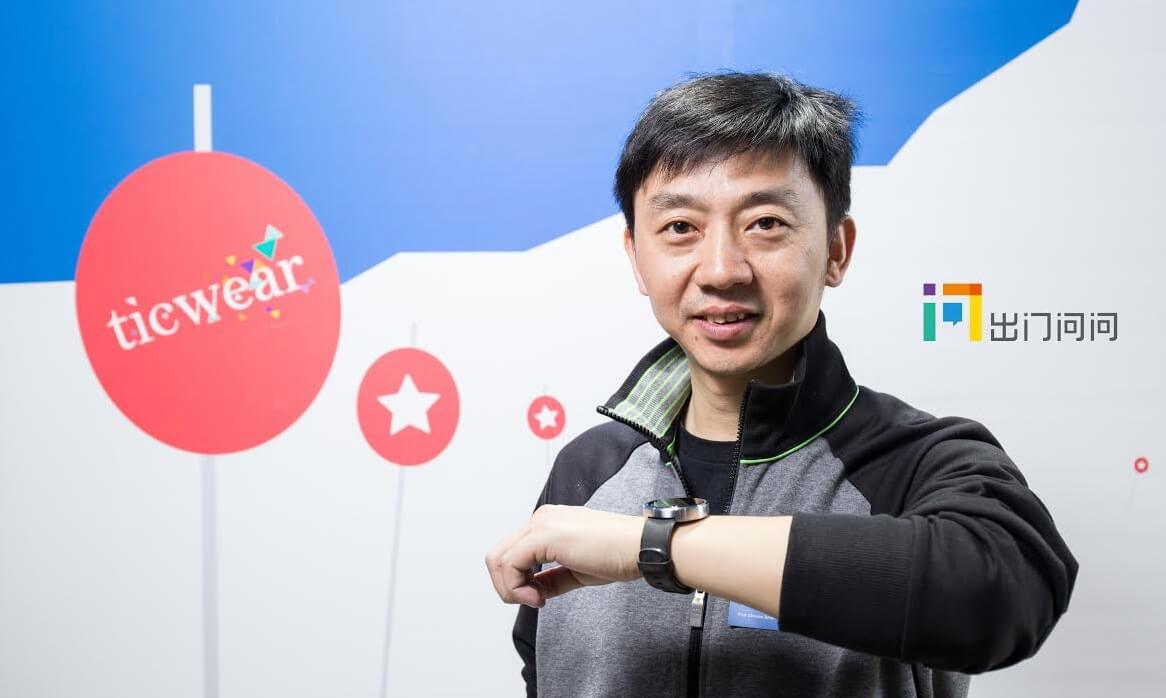
    The Beijing-based start-up was founded by a group of former Google research scientists five years ago and gained prominence after launching its flagship smartwatch, Ticwatch, in June 2015. The watch’s success led to a direct investment from Google and by May 2017, Mobvoi unveiled Tichome, its Chinese language chatbot designed to facilitate human-machine interaction.

    “In the last few years we have made a huge amount of progress in speaker recognition but we haven’t made much progress in natural language understanding, which makes the device not that smart (yet),” he added.

  • Nvidia says Toyota will use its AI technology for self-driving cars

    Nvidia says Toyota will use its AI technology for self-driving cars

    Nvidia announced a partnership with Toyota Motor Corp on Wednesday, saying the Japanese car maker would use Nvidia’s artificial intelligence technology to develop self-driving vehicle systems planned for the next few years.

    Toyota will use Nvidia’s Drive PX artificial intelligence platform for its autonomous vehicles planned for market introduction, Nvidia Chief Executive Jensen Huang said in his opening keynote at the company’s GPU Technology Conference in San Jose.

    Nvidia came to prominence in the gaming industry for designing graphics processing chips, but in recent years has been a key player in the automotive sector for providing the so-called “brain” of the autonomous vehicle.

    Nvidia, which also has partnerships with Audi and Mercedes, is among the more popular technology partners in the self-driving car race. Its partnership with Toyota is the latest in a string of alliances between tech companies, automakers and suppliers in the fast-growing sector.

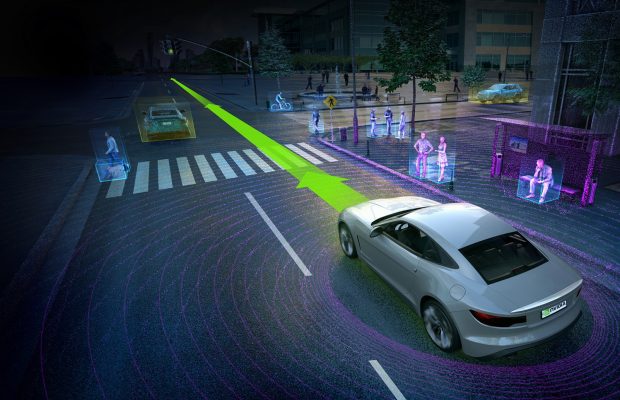
    Nvidia’s Drive PX supercomputer fuses incoming data from the car’s hardware such as cameras and radar and uses artificial intelligence to help the car understand and react to its environment.

    “We’re talking about not just development now but the introduction of vehicles into the market,” said Danny Shapiro, Nvidia’s senior director of automotive. “Now we have the biggest (automaker) in Japan using our Drive PX platform.”

    In January, Nvidia and Audi (VOWG_p.DE) said the German automaker would use the Drive PX to help it put autonomous vehicle on the road starting in 2020. Nvidia is also co-developing with Mercedes a project to come to market within the next 12 months, both companies said in January.

    Toyota, which last year set up a U.S.-based Toyota Research Institute (TRI) to focus on AI and robotics, envisions a dual-track development of autonomous technology. It is simultaneously developing full self-driving cars while also working on what it calls “guardian angel” partially autonomous technology that may still require involvement from drivers.

  • NVIDIA, Facebook team up on AI

    NVIDIA, Facebook team up on AI

    NVIDIA and Facebook are working together to advance artificial intelligence with Caffe2, a new AI deep learning framework contributed by Facebook to the open-source community.

    Facebook is developing new AI systems to help manage this information so people can better understand the world and more effectively communicate, even as the volume of information increases.

    Caffe2 allows developers and researchers to create large-scale distributed training scenarios and build machine learning applications for edge devices.

    Increasingly, the processing of lightning-fast AI services requires GPU-accelerated computing, such as that offered by Facebook’s Big Basin servers, as well as highly optimized deep learning software that can leverage the full capability of the accelerated hardware.

    “NVIDIA and Facebook are delivering AI acceleration through our work on the Caffe2 deep learning framework,” said Kristin Bryson, PR director for the data center business at NVIDIA.

    “Thanks to our joint engineering, we’ve fine-tuned Caffe2 from the ground up to take full advantage of the NVIDIA GPU deep learning platform,” said Bryson.

    Caffe2 uses the latest NVIDIA Deep Learning SDK libraries — cuDNN, cuBLAS and NCCL — to deliver high-performance, multi-GPU accelerated training and inference.

    Bryson said Caffe2 is designed to be a fast, scalable and portable deep learning framework. It delivers near-linear scaling of deep learning training with 57x throughput acceleration on eight networked Facebook Big Basin AI servers with 64 NVIDIA Tesla P100 GPU accelerators. This means developers can train and iterate AI models faster than ever.

    As part of the two companies’ collaboration, the NVIDIA DGX-1 AI supercomputer will be the first AI system to offer Caffe2 within the optimized software stack for deep learning. Together, DGX-1 and Caffe2 deliver high performance and fast training.

    “Through NVIDIA’s Deep Learning Institute, we’ve helped more than 10,000 developers worldwide learn to use frameworks to design, train and deploy neural network-powered machine learning for a variety intelligent applications and services,” said Bryson.

  • Using artificial intelligence in the supply chain

    Using artificial intelligence in the supply chain

    Leveraging artificial intelligence (AI) for supply chains is an important next step to lower costs, improve productivity and drive growth by helping businesses reduces time-to-market.

    There are many opportunities to utilize AI along the chain from buying raw materials/components, converting them into finished products, selling to customers and delivering to end customers. Supply chains, generally, still comprise large amount of repetitive manual tasks and this is where AI can offer the most value.

    AI can be used in selling to customers using an AI-driven software platform, warehouses, transport, analysis of data and many other areas. AI allows companies to reallocate time and resources to their core business, and other high value, judgment-based jobs by using AI for low value, high frequency activities.

    In an AI-driven selling platform, the chat bots handle many of the sales, customer services and operations tasks traditionally done by humans, for example, interacting with buyers, taking down their orders and passing them on along the supply chain. This way, there is significant reductions in staff costs and also can help to overcome manpower shortage. Moreover, this solution is very applicable to green-field markets where there is explosive growth and multiple languages are required.

    In warehouses, distribution and fulfillment centers, AI can be seen in the use of robotics and sensors for conveying, stacking and retrieval systems, order picking, checking on stock level and re-ordering when stock is low. Furthermore, powerful algorithms also allow AI to automatically adapt in real-time to events in the supply chains, for example the arrival of new orders over the Internet for delivery in a few hours, changes in manufacturing schedules, or even a hiccup in the transportation schedule.

    Amazon is using robotic shelves in warehouses where robots the size and shape of a footstool carry shelves on top. These robots can glide quickly across the floor to rearrange the shelves in neatly arranged rows or bring them over to human workers, who stack them with new products or retrieve goods for packaging.

    Amazon’s robotic shelves also allow more products to be packed into a tighter space. They also make stacking and picking more efficient by automatically bringing empty shelves over to packers or the right products over to pickers. The process is more efficient than having humans walk around, so it also a good example of how automation can be combined with human labor to increase productivity.

    Autonomous vehicles and drones, for example, deploy a combination of sensors and algorithms to perform the complex work of driverless navigating. DHL is using autonomous forklifts and other self-driven equipment in warehouse operations. The next step for autonomous vehicles in logistics is to overcome regulatory and security challenges to deploy them on public roads for goods delivery operations. In the US, the use of drones is governed by the Federal Aviation Administration’s regulation known as Part 107 that went into effect on 29 August 2016.

    Supply chains are generating a huge amount of data and rather than let them go to waste, AI can help businesses make sense of them so that better decisions can be made. AI is able to quickly analyze and organize this data to enable users to see trends, and gain a better understanding of the many variables in the supply chains. Users are thus able to anticipate future scenarios and plan accordingly for uncertainties.

    Driving force of AI

    Powerful algorithms are fueling the rise of using AI in supply chains. Algorithms are instructions to the robots, drones, and autonomous vehicles etc. for calculations, data processing and automated reasoning. In a nutshell, algorithms give instructions on what and how to do in order to reach a specified end goal. More advanced algorithms, rather than follow only explicitly programmed instructions, can even go a step further in allowing AI to learn on its own in what is known as machine learning.

    Using algorithms that continuously and repeatedly learn from new data, machine learning allows AI to find hidden insights without being explicitly programmed where to look. Machine learning is a method of data analysis that automates analytical model building.

    The pioneering technology within machine learning is the neural network, which mimics the pattern recognition abilities of the human brain by processing thousands or even millions of data points. This technology is not just about optimization

    Take the example of supply chains. The algorithms are able to engage in forward thinking to predict all the volatility in the industry, come up with solutions for different scenarios and then base on the available data, choose and execute the most efficient solution. Whenever the AI is faced with a new situation, the algorithms are also adept at making real-time adjustment to pre-programmed instructions. Moreover, compare to humans, the speed and decisiveness of making decisions for AI is so much faster, because for one thing, AI is void of emotion and biasness.

    As a final testament to the power of AI, consider the following example. In January, two researchers from Carnegie Mellon University developed an AI poker player that beat four world champions and won US$1.77 million in poker chips. This is groundbreaking as it signals the ability to deal with incomplete information and to deal with situations that require bluffing and an opponent that generates misinformation.

    AI can process huge amount of possibilities and can outthink humans in terms of unpredictability if the algorithms are programmed correctly.

    AI is the future of supply chains. AI strengthens a company’s core business and opens up new opportunities that can even lead to a new business model.
  • Shinsegae Department Store uses AI in marketing push

    Shinsegae Department Store uses AI in marketing push

    Shinsegae Department Store has become the first South Korean retailer to deploy a marketing strategy using AI technology.

    A wave of artificial intelligence (AI) is sweeping the nation’s retail industry, as major department stores and online shopping malls rush to adopt the latest technology to attract consumers.

    From this week, Shinsegae Department Store is introducing a personalisation service called “S Mind”, which will analyse each customer’s brand preferences and come up with product suggestions.

    Using a database of some 5 million existing customers, S Mind will take into consideration around 100 factors including the purchase history, gender, age, and location.

    The results, which will include suggested brands and related shopping information, will be sent to customers through Shinsegae’s mobile application.

    AI Korea

    Shinsegae predicts its latest move will generate additional sales revenue of 100 billion won annually.

    The new system, established solely with South Korean developers and data analysts, was four years in the making before its completion.

    Shinsegae Department Store’s rival, Lotte Department Store, teamed up with IBM Korea last December to develop a new mobile app AI feature that is expected to be released by the end of this year.

    Lotte’s new ‘Recommendation Bot’ will work as a shopping advisor to make suggestions through voice messages or texts, and will give app users information on the latest trends and celebrity fashion news.

    Kim Myeong-gu, who is responsible for omni-channel marketing at Lotte, said, “With the overload of information today, many customers find it tiresome to make a choice.

    “Our new AI-based recommendation feature will differentiate our marketing strategy with that of our competitors,” he added.

    As the major retail chains are beginning to embrace AI technology that will redraw the landscape of how we shop, the industry as a whole and the government are also backing the trend.

    A new alliance was formed yesterday which will see the retail and distribution industry work closely with IT and manufacturing companies to adopt the fourth industrial revolution.

    Dubbed the “Retail Industry Convergence Alliance,” the cross-industry coalition will help spread the use of new technologies in various fields including research and development.

    The fourth industrial revolution, typified by advanced technology such as AI, IoT, robots, augmented reality and virtual reality is rapidly being incorporated into the retail and distribution industry around the world.

    An official from the Korean Ministry of Industry said: “For our retail industry to be acknowledged as a global platform, it’s important to emphasise having the right business environment for innovation and cooperation.

    “The government will help with subsidies to make sure the collective effort between various industries leads to new business opportunities and markets.”

  • ITU to hold summit on AI for social good

    ITU to hold summit on AI for social good

    Can artificial intelligence (AI) help resolve global challenges such as poverty, hunger, health, education, equality and environmental protection?

    The International Telecommunications Union (ITU) is hosting the AI for Good Global Summit in Geneva this June.

    The summit, to be held in partnership with UN agencies, including OHCHR, UNESCO, UNICEF, UNICRI, UNIDO, UNITAR and UN Global Pulse, will evaluate opportunities presented by AI and how it can benefit humanity.

    It seeks to convene representatives of government, industry, UN agencies, civil society, and the AI research community to explore the latest developments in AI and their implications for regulation, ethics and security and privacy.

    Breakout sessions will invite participants to collaborate and propose strategies for the development of AI applications and systems to promote sustainable living, reduce poverty and deliver citizen-centric public services.

    “As the UN specialized agency for information and communication technologies, ITU aims to guide AI innovation towards the achievement of the UN Sustainable Development Goals,” said ITU Secretary-General Houlin Zhao. “We are providing a neutral platform for international dialogue to build a common understanding of the capabilities of emerging AI technologies.”

    Some of the confirmed speakers include Peter Norvig, Director of Research at Google; Peter Lee , Corporate Vice President of Microsoft AI and Research at Microsoft; Jing Wang, Senior VP and Head of Research at Baidu; Manuela Veloso, Professor in Computer Science and Robotics at Carnegie Mellon University; and Gary Marcus, Professor of Psychology and Neural Science at New York University.

    Marcus Shingles, CEO of XPRIZE, said that with the acceleration and democratization of AI, the organizers recognize the tremendous opportunity for an emerging generation of problem solvers to tackle global challenges.

    “We are seeing teams use AI as an underlying tool across a variety of domains, from creating personalized learning experiences for children with no access to formal education in Tanzania, to empowering consumers to make healthcare decisions with a medical Tricorder device, to guiding advanced and autonomous robotic vehicles to explore the deep sea or to find their way to the lunar surface,” he said.

  • SmarTone developing AI-powered mobile security

    SmarTone developing AI-powered mobile security

    SmarTone plans to soon launch its innovative anti-cyberattack software, ST Protect, to enterprises in Hong Kong in anticipation of growing security threats targeted at smartphones.

    “One of the interesting trends last year is that we started to see ransomware going through mobile,” said Zuk Avraham, founder and chairman of Zimperium, which specializes in providing mobile security solutions.

    The US-based company has invented the world’s first on-device artificial intelligence (AI) and machine learning behavioral engine, which enables ST Protect to detect in real time known and unknown attacks on smartphones.

    SmarTone is rolling out the enterprise version of ST Protect eight months after it introduced the service, which is delivered via an app, to its subscribers’ iOS and Android device.

    Using AI for mobile security

    Based on data collected over the last six months since the launch of ST Protect, the AI and machine-learning engine has been successful in detecting 100% of known and unknown mobile threats, according to SmarTone CTO Stephen Chau.

    “The AI engine learns very quickly. By understanding the behavior of the OS platform, they have the knowledge to predict and understand when there is something is going on here that it shouldn’t. The beauty of ST Protect with the solution from Zimperium is that it is able to detect zero-day attacks. And while it is good that we can detect the known problems, it is even more important to actually detect that something bad will happen and we are still able to protect ourselves,” Chau said.

    In order to use AI to secure the mobile platform, Zimperium had to invent a new approach.

    “We had to because the traditional approach used with the PC does work on mobile. In the PC, you can see that attack and you can see the traffic. We cannot do that on mobile because the app sandboxing is very strong and there are permission separations,” Avraham said.

    He explained: “Let us say, I am drinking water and I am raising my glass. The traditional approach is that you use your eyes to see that I am raising my glass. On mobile, we cannot see because we do not have the permission to sniff packets, etc. So what we are doing is instead of looking at the glass, we measure the vibes of the table, and then we can tell you this table as moved and the temperature has changed because it is hot water. Then we can tell based on these behavioral data what happens here.

  • AS Watson to inject $70m in Canadian AI startup

    AS Watson to inject $70m in Canadian AI startup

    Hong Kong-based retailer A.S. Watson Group said on Thursday it will spend $70 million over the next three years in big data technologies, including investment in a Canadian artificial intelligence venture company.

    A.S. Watson will consolidate its customer data holdings into a big data analysis system for retailers developed by Rubikloud to optimize sales promotion activities and business operations.

    Rubikloud has an app designed to analyze customer characteristics and their purchase history using AI. The information will then be used for individual marketing and prediction of future sales.

    When A.S. Watson introduced the app at European stores on a trial basis starting in 2015, sales from personalized promotion activities increased by more than 8% over 10 months, hence the latest tie-up decision.

    “We are investing in big data amid global economic uncertainties because we believe that technology is a critical enabler for successful retailing in today’s world,” said Malina Ngai, chief operating officer of A.S. Watson Group, in a statement. Ngai added that Rubikloud’s technology will enable the company to “focus our resources, from back-end support to the shop floor, on building a better customer experience.”

    Kerry Liu, CEO of Rubikloud, said the company aims to enhance A.S. Watson’s capabilities to personalize customer offers through advanced targeting by “applying machine learning and flexible big data architectures in practical applications.”

    A.S. Watson is a subsidiary of conglomerate CK Hutchison Holdings, led by Li Ka-shing, a Hong Kong-based billionaire.

    A.S. Watson has more than 13,000 retail stores, including the company’s drugstore chain, in 25 countries and regions such as Asia and Europe. Li’s venture fund Horizons Ventures has also invested in Rubikloud.

  • Naver AI platform recommends travel options

    Naver AI platform recommends travel options

    South Korean internet giant Naver has launched Context Recognition AI (ConA), an artificial intelligence platform that automatically recommends travel destinations overseas.

    According to Naver, parent of messaging app Line, amongst other things, ConA uses ‘deep-learning technology’ and makes use of big data from online tour sites or restaurant information to come up with travel themes and ideas based on different travel purposes.

    For instance, if one were to search for tour packages in Singapore, the Naver AI technology would suggest themes like “travelling with family,” “best nightscapes,” or “exotic”.

    ConA has the ability to read data on the web to extract the most useful information, hence the name context recognition, said a company spokesperson.

    The new Naver AI platform is based on some 12.2 million travel-related posts from Naver’s massive online communities, and it even provides ratings based on traveler reviews, in addition to other essential travel information including the time and total distance of travel required for recommended routes.

    “ConA can analyse travel data written in other languages as well, including English and Chinese, and it has potential to be developed into a global service platform,” the Naver spokesperson said.

    “We’re also considering its implementation in Naver Place (a recommendation platform for domestic news and activities), so it can automatically recommend things like festivals, attractions, and cultural events (in Korea).”

  • AI to fuel smartphone sales rebound in 2017

    AI to fuel smartphone sales rebound in 2017

    Consumer purchases of smartphones dropped to a three-year low in 2016, but Accenture believes sales will rebound this year, fueled by demand for new capabilities including AI-driven digital assistants.

    A new global Accenture survey finds that the expected resurgence will be also fueled by the introduction of better security, new functions, improved performance and device refresh schedules.

    Accenture polled 26,000 consumers in 26 countries. Results show that more than half (54%) of consumers surveyed said they plan to buy a smartphone in the next year, up from 48% in last year’s survey.

    Chinese consumers are the main drivers of this upturn, with three-quarters (74%) of respondents in China saying they intend to purchase a smartphone in the coming 12 months, up from less than two-thirds (61%) in last year’s survey.

    The number of respondents in India and the United States who said they plan to buy a smartphone in the coming 12 months also increased by double digits over last year, to 79% in India (from 68% last year) and 52% in the United States (from 38% last year).

    Among all consumers surveyed, the leading driver of purchase intent is the ability to access the newest and most innovative features and functions, cited by 51% of respondents in this year’s survey, compared with only 41% last year.

    Another reason consumers are opting to buy new smartphones is the inadequate performance of their existing devices, cited by 45% of customers this year – up from 33% last year.

    “Improved features and falling prices are key reasons consumers around the world are signaling a desire to buy new smartphones,” said David Sovie, global managing director for Accenture’s Electronics and High-Tech business.

    “Growing acceptance of services powered by artificial intelligence, such as voice assistants, is also fueling this market upswing. 2017 will be the year when artificial intelligence goes mainstream in consumer devices.”

    For the first time, the annual survey polled consumers about their intentions to buy digital voice-enabled assistants such as Amazon Echo and Google Home. Powered by artificial intelligence, the products recognize a human’s voice commands, such as ‘Turn on the light’ and ‘Play music’ and answer questions such as ‘What time is it?’ and ‘What is the temperature outside?’

    While only 4% of the respondents said they own such a device today, two-thirds (65%) of these said they use their device on a regular basis, showing strong acceptance of this new technology.

    Voice assistants on smartphones are also becoming increasingly popular as the AI technology powering these services has improved dramatically. Younger consumers are leading the adoption, with more than four in five (84%) of 14-to-17-year-olds saying they either use this technology today or are interested in doing so.

    Consumers are also willing to embrace a wide array of potential AI-powered, personalized services, with a majority of respondents saying they are interested in personal health assistants (cited by 60%), smart trip assistants (59%) and entertainment advisors (51%).

  • Nvidia launches AI-focused incubator in India

    Nvidia launches AI-focused incubator in India

    American graphics processing unit (GPU) technology giant Nvidia has launched the Nvidia Inception program in India, in recognition of the country’s budding innovation ecosystem surrounding Artificial Intelligence (AI).

    Inception is a virtual incubator program to support startups with revolutionary ideas in AI. Members will receive a custom set of benefits, from hardware grants and marketing support to access to the latest Nvidia deep learning technologies and training with deep learning experts.

    The Inception Program was launched in India at the inaugural Nvidia Emerging Companies Summit India, part of the GPU Technology Conference (GTCx).

    The momentum around AI among Indian innovators is so significant that, at launch, the Inception Program already has close to 100 Indian startups as members.

    “Artificial Intelligence has gone from science fiction to reality thanks to a new computing model: GPU-accelerated deep learning,” Nvidia MD for South Asia Vishal Dhupar said.

    “We believe the next generation of breakthroughs in technology and business will be driven by the AI startup community. Young India’s aspirations, ideas and potential are global in scale, and we are excited to amplify the imagination and intelligence of the country’s brightest minds.”