Tag: AI

  • Samsung buys Spanish AI firm Zhilabs in prep for 5G

    Samsung buys Spanish AI firm Zhilabs in prep for 5G

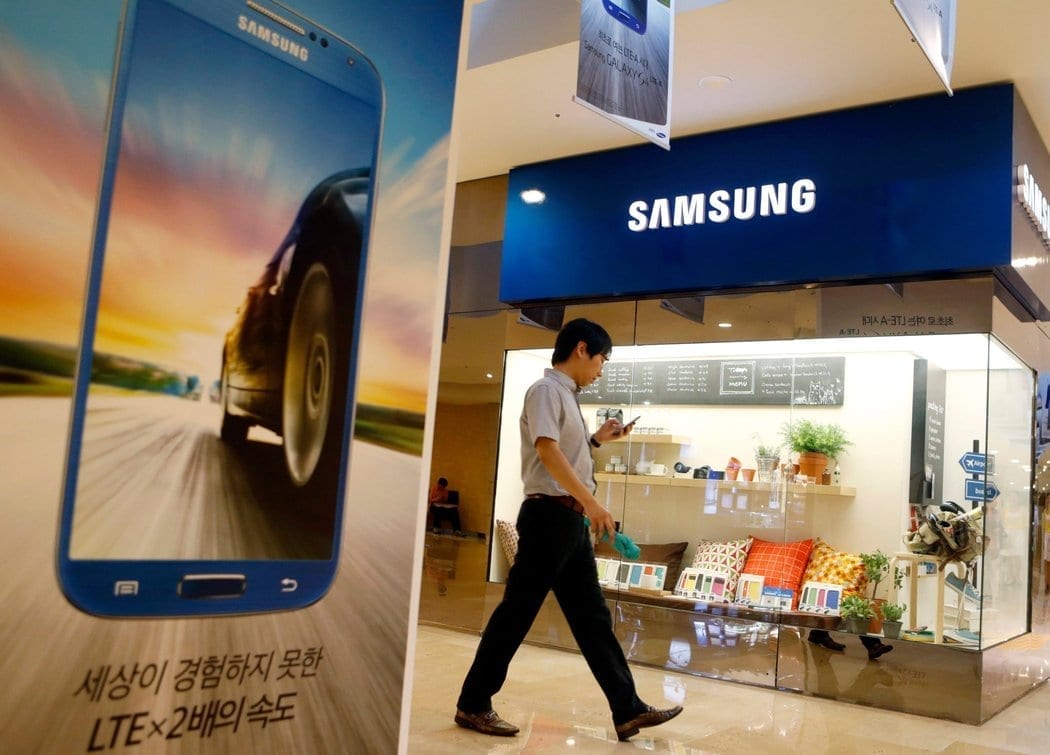
    Samsung Electronics announced that it has acquired Barcelona-based artificial intelligence startup Zhilabs in a bid to further enhance its 5G capabilities.

    Financial details of the deal were not disclosed.

    Zhilabs will be fully owned by Samsung, but it will continue to operate independently under its own management, the South Korean vendor said in a statement.

    Zhilabs provides AI-based network and service analytics solutions and its products are used by telecoms carriers including Celcom, Maxis, NTT East, Telenor, O2, Vodafone, TIM, and Telefonica.

    Samsung said AI-based automation will play a central role in the introduction of new services driven by 5G, such as industrial Internet of Things (IoT) and connected cars, as carriers seek to implement new automated solutions and network virtualization features.

    “5G will enable unprecedented services that generate exponentially greater data traffic, for which automated and intelligent network analytics tools are vital,” said Youngky Kim, president and head of networks business at Samsung Electronics.

    “The acquisition of Zhilabs will enable Samsung to help carriers meet these demands to measure and ensure the quality of each subscriber’s service experience.”

    The acquisition of Zhilabs is also part of the company’s pledge, announced in August, to invest 25 trillion won ($22 billion) in AI, 5G, automotive electronics components and biopharmaceuticals technologies.


  • Unstaffed shop to open in Tokyo on trial basis

    Unstaffed shop to open in Tokyo on trial basis

    A Japanese railway network operator is testing an unmanned store in a Tokyo railway station. The store will use artificial intelligence in place of cashiers to transact with customers in a trial expected to last about two months. The venture was opened by East Japan Railway, otherwise known as JR East, this week at the Akabane Station in Tokyo’s north.

    It has some 80 cameras mounted in the ceiling and on shelves recording customer behaviour before the AI software detects which items customers select.

    Customers pay using stored value cards issue by railway companies for transit.

    If the concept proves a success, JR East says it will begin rolling the technology out in stations across the city.

    The store is loosely modelled on unmanned stores opened in Mainland China, along with the Amazon Go concept in the US.

  • KT expands reach of AI-powered smart city solution to SEA

    KT expands reach of AI-powered smart city solution to SEA

    South Korea’s KT has announced plans to expand the reach of its self-developed AI technology with the launch of services for hotels and smart cities in Southeast Asia.

    The operator will introduce customized AI solutions for the market, starting with Vietnam.

    KT last month entered an agreement with Vietnam’s largest construction company Hoa Binh Construction Group (HBC) JVC for the provision of AI-powered hotel and apartment services in Southeast Asia. The partners have also agreed to subsequently co-operate on smart building and city projects in major metros in the region.

    KT used its platform to launch the first hotel in South Korea to offer AI-assisted room services in July – a Novotel Ambassador hotel in Seoul – and plans to open three more smart hotels across Seoul by 2020.

    The company’s hotel AI service platform is a customization of KT’s GiGA Genie AI powered smart home media hub, which launched in 2017 and now has more than 1 million subscribers in South Korea.

    “It’s a big first step for KT’s AI platform to reach out to the world, thanks to the partnership with HBC,” KT marketing group senior vice president Lee Pil-Jai said. “With great success in South Korea, we will step up efforts to localize our AI hotel service and smart city solutions for Southeast Asia and beyond.”

  • Huawei lays out AI roadmap

    Huawei lays out AI roadmap

    AI has disrupted many industries and enterprises in recent years.  Huawei believes AI will soon become a “general-purpose technology”, which combines different technologies like cloud, IoT, and big data to help tackle existing and future problems.

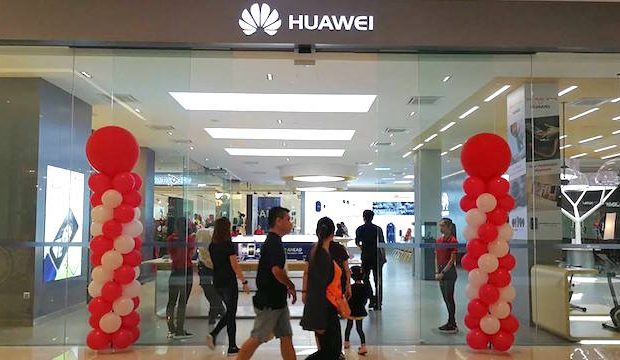
    The ICT solutions provider unveils its AI strategy and AI portfolio at the recent Huawei Connect conference in Shanghai.

    “AI offers new business opportunities, strengthens our products and services to become more competitive and future-oriented, and improves our internal operational management and efficiency,” said Eric Xu, rotating chairman at Huawei.

    10 changes shaping the future

    Huawei has identified 10 changes that will help shape the future of AI. They are faster model training; abundant and affordable computing power; AI deployment in different scenarios and the protection of user privacy; data-efficient, energy-efficient, and explainable algorithms; AI automation especially during processes like data labeling, data collection, and model design; practical applications to meet the needs of real-world execution; real-time and closed-loop system; multi-tech synergy between AI and other technologies; one-stop platform; and talent availability.

    Five areas of AI focus

    To pave the way for these changes, Huawei has unveiled its AI strategy in five areas of focus—AI research investment, full-stack AI portfolio, open ecosystem and talent, existing portfolio enhancement, and operational efficiency in Huawei.

    “Our AI strategy is to invest in basic research and talent development, build a full-stack and all-scenario AI portfolio, and foster an open global ecosystem,” said Xu.

    Huawei’s full-stack AI portfolio includes chips, chip enablement, a training and inference framework, and application enablement. Its portfolio can be deployed in various scenarios including public clouds, private clouds, edge computing in all forms, industrial IoT devices, and consumer devices, according to Huawei.

    On the chip level, Huawei announced the launch of two chips—Ascend 910 and Ascend 310, which are touted to accelerate AI adoption in different industries. Xu touted that Ascend 910 has the world’s greatest computing density in a single chip, which can be applied in large-scale distributed training system. Ascend 310 is an efficient AI chip for low-power computing. The chips will be deployed to offer cloud services to customers next year. Its AI portfolio also includes an AI acceleration card, AI server, and AI appliance.

    To foster an open global ecosystem, Huawei aims to develop industry and business alliances with one million AI developers and partners over the next three years. “We believe this target can be achieved through our talent training program, full-stack AI portfolio, and technical collaboration,” said William Xu, chief strategy marketing officer at Huawei.

  • Blockchain, AI the next big thing for advertisers

    Blockchain, AI the next big thing for advertisers

    The integration of analytical and data-driven technologies with AI and Blockchain can help businesses better understand customers’ behaviors, habits, interests, and needs. Thus, direct advertisements are easy to access consumers at the right time and the right situation, experts say.

    “Blockchain can be a game changer when it comes to marketing. The technology will create transparency, reliability, and positive values,” said blockchain consultant David Lang.

    “While users can better manage their personal information, blockchain can help brands not only reach the right customers more effectively but also more accurately measure the performance of each advertising campaign,” he added.

    At present, certain weaknesses have become apparent in the advertising industry. Studies have shown that fraud in digital advertising costs $1 for every $3 in advertisement expenditure. Online advertisers estimate that total losses from fraudulent activities in the industry will reach $19 billion in 2018.

    Bigbom, an online advertising solution built on the blockchain platform, has clearly identified three major issues that the advertising industry needs to address.

    Second, manual advertisement management takes too much time and is inefficient.First is the building of trust between the advertisers and ad platforms or publishers. It takes a huge amount of time for advertisers to find and establish a partnership with absolute strangers.

    Third, the budget for advertisement campaigns is still poorly allocated.

    Bigbom, a Singapore company has rolled out Bigbom Ads, Bigbom Contract and Bigbom Marketplace as the promising solution to soothe the mentioned sore of this industry. The first one is a tool which helps advertisers optimize their ads in such an efficient and simple manner. Through their innovative algorithm, this is the flagship product in the journey to change the conversation of digital advertising and make the one-click optimization come true. Bigbom Marketplace powered by Bigbom Contract creates a transparent economy for advertising community to join by harnessing the power of blockchain technology.

    Those are Bigbom’s trinity force to revolutionize the online advertising industry. Currently, their products have been launched with the very first attributes and received positive feedback from the interested audience. According to their plan, these services will be up and running in the first two quarters of 2019 with more advanced features.

    More information regarding the project is available at bigbom.com as well as their whitepaper.

  • Bharti Airtel buys AI startup AuthMe

    Bharti Airtel buys AI startup AuthMe

    Indian telecoms operator Bharti Airtel has acquired AuthMe ID Services (AuthMe), a Bengaluru-based start-up focused on artificial intelligence (AI) based solutions, in a bid to bloster its AI portfolio.

    Financial details of the deal were not disclosed.

    As part of the deal, the core team of AuthMe will join Airtel and be a part of Airtel X Labs in Bengaluru.

    Airtel set up Airtel X Labs to drive innovation in the areas of AI, IoT, AR and VR and is “building a world-class team” for the facility, the operator said in a statement released on Wednesday.

    “We are thrilled to bring on board a bunch of highly talented people who share our passion for building exciting digital solutions that benefit our customers,” Bharti Airtel global CIO Harmeen Mehta said.

    “We are rapidly scaling up Airtel X Labs, our digital innovation factory, and these new solutions will accelerate our journey towards rolling out intuitive digital products, particularly in vernacular languages, for our 430 million plus customers.”

    In addition, Airtel has acquired the intellectual proprietary rights for two flagship solutions developed by AuthMe.

    One of the solutions is called Callup AI, which has created a chat and voice assistant that uses AI to quickly and effectively resolve customer queries over email, chat and phone calls. The solution is used by 10 companies across three countries in banking, finance, payments and housing domains.

    The other solution, the “Fintech OCR”, is an end to end Optical Character Recognition (OCR) pipeline built for financial documents. The application is designed for processing KYC docs, bank/credit card/loan statements, mark sheets, and can be customized to process known formats of other documents. It can pick up any language with standard fonts, Airtel said.

    In a separate announcement, Airtel said it has launched its VoLTE services to Bengal and Sikkim to enable customers in all towns across the two states to enjoy HD quality voice calls with faster call setup time.

  • SK-II opens ‘shop of the future’ in Shanghai

    SK-II opens ‘shop of the future’ in Shanghai

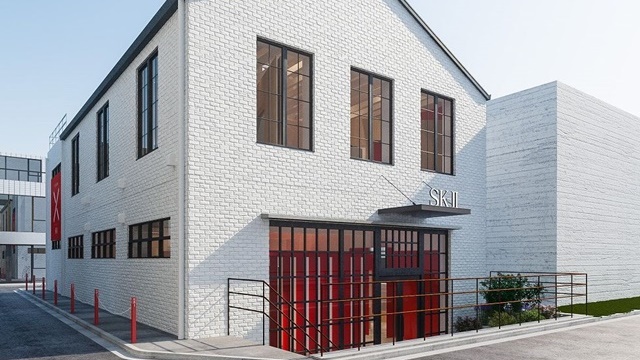
    An SK-II smart store has opened in Shanghai, an enhanced version of the global beauty brand’s technology-packed showcase which opened in Tokyo in May.

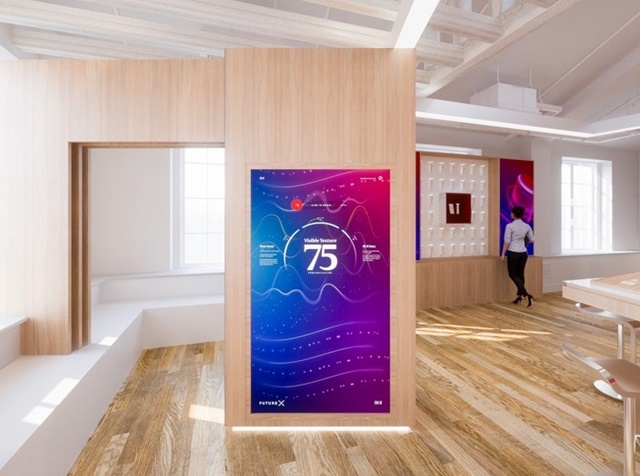
    The SK-II Future X Smart Store features facial recognition, computer vision, and AI technology augmented by the brand’s proprietary skin science and diagnostics. The store employs an algorithm that supports self-service shopping to provide consumers with a personalised and immersive experience.

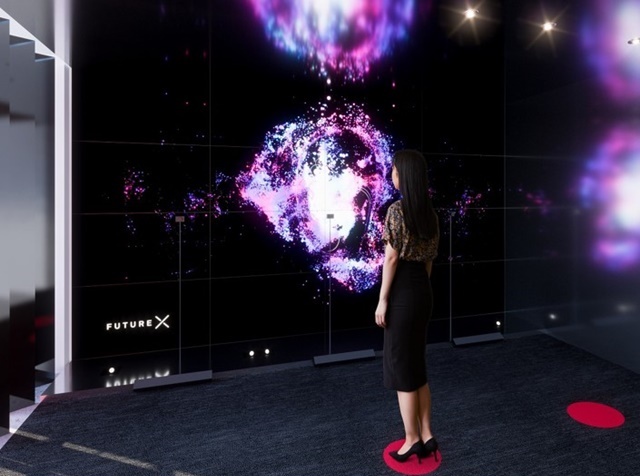
    The experience begins with a large-scale digital wall that reads visitor’s facial expressions as well as head, eye and mouth movements. Each expression correlates to a different colour scheme, while eye blinks trigger energy lines to pass across the screen.

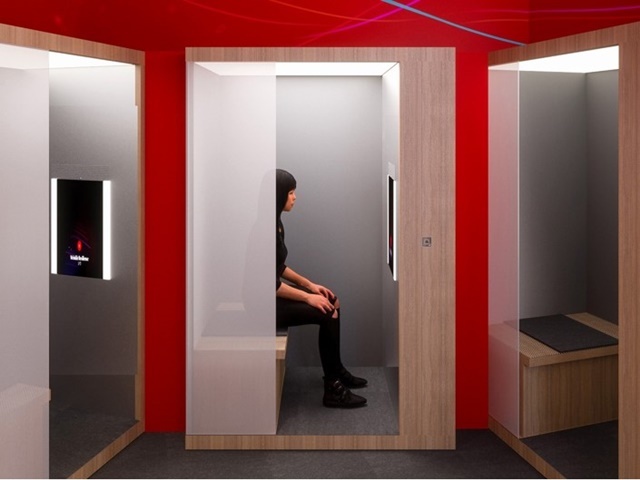
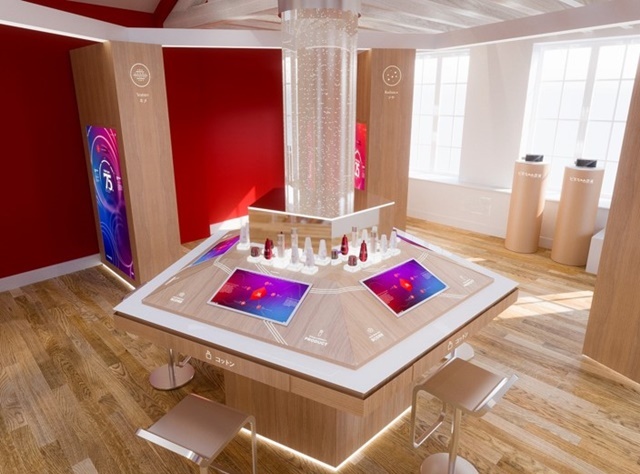
    Visitors can also explore the “Miracle Water” Lab, which offers an immersive experience of how SK-II Facial Treatment Essence works on the skin. They can also use a proprietary skin scan that performs its analysis while customers sit in a booth. An interactive skincare wall will then display a comprehensive analysis of each user’s skin condition, together with a set of tailored recommendations based on the results.

    Using a special bracelet designed in cooperation with e-commerce channel One Jingdong, consumers can purchase the products they need by just waving their wrists on a scanner, without the need for a mobile application on-site.

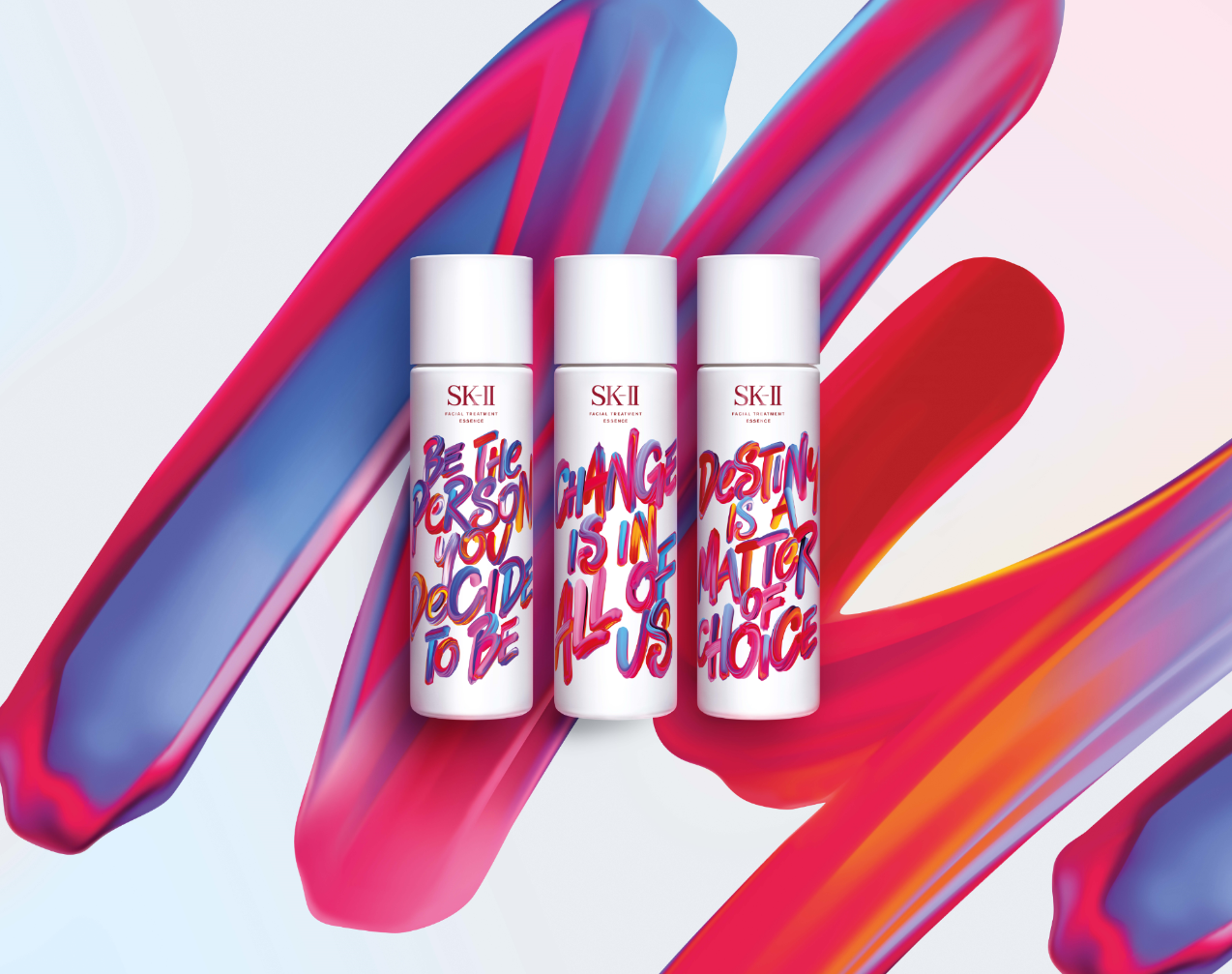
    The Shanghai store will also see the debut of the Facial Treatment Essence Smart Bottle, a new packaging feature that interacts with a companion app to enhance consumers’ skincare regimen at home.

    CEO Sandeep Seth said the role of retail in driving how consumers experience products in today’s post-digital world is vastly different than when the company started, especially in the rapidly evolving Chinese beauty market.

    “In shifting our focus to bring innovation to consumers around the shopping experience versus product technology, SK-II is leading the way to create a new model for how we build and evolve our relationship with our consumers in China and globally.”

  • In Ratio Shanghai, robot can create the perfect drink

    In Ratio Shanghai, robot can create the perfect drink

    A retail concept harnessing the power of technology to deliver personalised coffee and cocktails has opened in China.

    Ratio uses robots to craft personalised espresso coffee during the day and cocktails at night.

    Launched with a pop-up store at Shanghai’s K11 Art Mall, the concept is about to find a permanent home at Raffles City, People’s Square. Dozens more stores are in the pipeline at hotels and co-working spaces in Asia.

    “With Ratio, bespoke drinks and service, previously available only at high-end hotels and lounges are now accessible to everyone,” says co-founder and chairman of Chinese luxury retailer Mei.com,Thibault Villet, who is a cornerstone investor in Ratio.

    “The Ratio experience is a journey towards self-exploration and it and empowers individuals to live brilliantly.”

    At ratio, drinks are made to order, in the exact ratio customers prefer. For example, a 1.2 shot of espresso in a cappuccino, or an extra strong 120ml bourbon in an Old Fashioned cocktail.

    Ratio uses science to come up with the perfect blends.

    “An individual’s sensory capacity for bitter, sweet, and umami is determined by genetics,” explains founder Gavin Pathross. “The distribution of taste buds is also genetically programmed. That’s why no two taste palates are identical.”

    Using robotic technology and software, Ratio has developed a system that can put together ingredients according to the exact ratio that will satisfy individual tastes.

    Harnessing the accuracy and consistency of a cobot – that’s short for “collaborative robot” – each drink is prepared precisely to order and speed; a latte takes less than one minute.

    Using AI, Ratio stores customers’ orders, learns their preferences and even makes recommendations during future visits.

    Pathross promises humans will not be replaced, however. “Cobots are just better than humans in performing repetitive work. They’re great at executing orders, freeing up our team of Ratiologists, assembled from Asia’s best baristas and mixologists, so that they can do what they do best – provide personalised service and have great conversation with our guests.”

    The team of Ratiologists Pathross has assembled have a combined 50 years of food and beverage industry experience.

    “We’re literally raising the bar on beverage service,” says chief Ratiologist Steve Teo.

    “Our team will help guests discover their individual preferences and customise their own Ratio. We want you to be particular about your G&T and select precisely 20 ml of lime and 60 ml of gin, for example. Bartenders elsewhere will be too busy to have that kind of conversation. That’s why Ratio is unique.”

  • Half of smartphones sold in 2018 will have AI assistant

    Half of smartphones sold in 2018 will have AI assistant

    Half of smartphones sold globally this year will have an artificial intelligence (AI) assistant, a report by an industry consulting firm showed Sunday.

    According to Strategy Analytics (SA), 47.7 percent of smartphones sold on the global market in 2018 will be equipped with some kind of on-device AI assistant, up from 36.6 percent last year.

    The report further finds that on-device AI is growing fast among smartphone vendors and by 2023, 89.9 percent of smartphones will have a built-in AI assistant.

    In 2017, Google Assistant rose to be the top AI assistant with a 46.7 percent market share, followed by Apple’s Siri with 40.1 percent, it said.

    The report said the market share of Google’s AI assistant is expected to climb to 51.3 percent this year and 60.6 percent by 2023.

  • H&M introduces interactive mirrors in US stores

    H&M introduces interactive mirrors in US stores

    Swedish clothing brand H&M has introduced an interactive mirror with speech and face recognition features that kicks into gear automatically as a customer walks up to it. It has been developed by Microsoft.

    The mirror is programmed to take selfies if directed and interact with customers.

    “For starters, you can talk to it and it’ll talk back. Ask it to take a selfie, for example, and it will happily oblige, capturing your graceful pose before immortalising your beauty on the front cover of a virtual fashion magazine,” Microsoft said in a blog post.

    The mirror, designed for H&M’s flagship store at Times Square in New York, can provide fashion advice and allow QR code scanning for discounts, offers, automated shopping lists and newsletter subscription options.

    “With the interactive mirror, we want to showcase new opportunities for voice assistants and inspire how to interact with their customers in a creative, modern and fun way,” said Linda Pimmeshofer, Business Developer at Microsoft.

    The mirror has been created using Cloud computing platform Microsoft Azure.

    “We are delighted with our collaboration with Microsoft, where we learn how fashion and technology create new ways of interacting with customers,” said Daniel Kulle, President, H&M North America.

  • Hyundai Mobis finds a job for AI

    Hyundai Mobis finds a job for AI

    Auto parts maker Hyundai Mobis announced Sunday that it has developed artificial intelligence-based software and a chatbot equipped with a deep learning algorithm to speed up its research in smart car technology.

    The artificial intelligence-based software is called Maist, short for Mobis Artificial Intelligence Software Testing, and has been co-developed by a research team at the Korea Advanced Institute of Science & Technology led by Professor Kim Moon-zoo.

    Maist is designed to test different software that is to be installed in cars. According to Hyundai Mobis, installing Maist will double the efficiency of the software development process.

    “About 50-70 percent of the testing process will be done by Maist from now on, allowing researchers to engage in more creative works,” an official at Hyundai Mobis said.

    The chatbot is called Maibot, short for Mobis AI Robot, and is able to search through the lab’s cloud, home to more than 200,000 research cases, to find material that a user is looking for. The algorithm will allow Maibot to become more advanced, Hyundai Mobis said.

  • Alibaba Says Its AI Copywriting Tool Passed the Turing Test

    Alibaba Says Its AI Copywriting Tool Passed the Turing Test

    Alibaba’s digital marketing arm Alimama has unveiled an artificial intelligence-powered copywriting tool.

    Tapping the huge pool of content on Alibaba’s e-commerce sites Tmall and Taobao, the AI copywriter uses deep learning and natural language-processing technologies learn from millions of top-quality existing samples to generate copy for products. Brands and advertisers can insert a link to any product page, and click the “Produce Smart Copy” button to see multiple copy ideas.

    Currently, the AI copywriter technology has passed the ‘Turing test’ and is capable of producing 20,000 lines of copy in a second, said Alimama. Brands using the new tool, such as Hong Kong-listed fashion chain Esprit and Texas-born clothing brand Dickies, can adjust the length and tone of their copy, such as dictating whether they want the tone to be “promotional, functional, fun, poetic or heartwarming.”

    The tool is used on average nearly a million times per day, by merchants and marketers on Alibaba-owned sites such as Taobao, Tmall, Mei.com (a fashion flash sale website) and 1688.com (Alibaba’s Chinese-language wholesale buying site).

    “For merchants, from today onwards, AI can take care of a portion of their copywriting needs. And it significantly changes the way [copywriters] work: They will shift from thinking up copy – one line at a time – to choosing the best out of many machine-generated options, largely improving efficiency,” Alimama said in a statement.

    As with design, copywriting involves a certain degree of repetitive, low-value work that can be made made more efficient, Alimama added. A single product might require up to 10 versions of copy for different ad formats, like posters, web banners, product pages and other special event pages.

    “All the content produced by the AI Copywriter is the result of applying deep learning models, trained with large volumes of quality content created by humans. Human creativity is the cornerstone for the machine, which isn’t able to replace the creativity of people,” said Christina Lu, GM of Alimama marketing. “AI for marketing… allows people to devote more energy to richly creative work.”

    “The AI copywriter is a really amazing tool,” said Shaozhang Ding, head of e-commerce for the Asia Pacific market at Esprit. “Based on a massive database of existing copy and advanced AI technologies, the tool can reduce the repetitive and tedious copywriting workload for our teams.

    The AI Copywriter is the latest in a suite of technologies Alimama has developed to assist small to mid-sized businesses on Alibaba’s e-commerce platforms, including a “smart banner designer” released in April that can resize and reformat promotional website banners with the slide of a mouse (drag a corner of the banner to change the shape of the box, and the system automatically reproportions the images and copy to fit the new format). In the same vein, Alibaba released an AI-powered video-editing tool for brands to generate – in less than a minute – 20-second videos to use for promotion on Taobao.

  • 11Street Shopping Mall to get US$449 million investment

    11Street Shopping Mall to get US$449 million investment

    South Korean mobile carrier SK Telecom has announced a US$449 million investment into a subsidiary’s e-commerce platform, 11Street Shopping Mall.

    In a decision yet to be approved by shareholders, SK will use the investment, sourced from the H&Q Korea private equity fund, to establish a new business entity. An SK spokesperson said that further reshuffling among its subsidiary firms will be aimed at seeking a new growth engine with a view to expanding its presence in the country’s online retail market.

    The move directly follows a joint venture set up earlier this month between an SK subsidiary and the country’s largest convenience store chain, CU.

    The improvements to 11Street’s operations will draw on artificial intelligence technologies, among other information and communications developments, to build new services – including improvements to its mobile payment system.

    A representative from SK Telecom said that the company’s new business structure is ready to promptly and flexibly respond to the fourth industrial revolution.

  • Huawei launches intent-driven network solution

    Huawei launches intent-driven network solution

    Huawei has launched a new industry-oriented intent driven network (IDN) solution at CEBIT 2018, targeted at vertical industries including ISPs, retailers and government customers.

    The new solution aims to drive in-depth integration of ICT infrastructure, AI and industry-specific production systems to help customers accelerate digital transformation.

    Huawei’s IDN solution is customized to the needs of various verticals and applications. For high-performance AI computing, the solution incorporates an ultra-high-speed lossless Ethernet AI fabric to shorten AI training times by up to 40%.

    For the finance industry, the solution has been designed to help financial services organizations build ultra-large cloud data center networks scalable to up to 100,000 servers per cluster system.

    For retailers, the solution converges Wi-Fi and IoT technology to allow all-wireless support for both networks, while for government and enterprise campus networks, the solution provides full lifecycle cloud based management leveraging big data analytics and AI.

    Meanwhile Huawei has also announced an upgrade to its CloudFabric solution designed to make it easier for customers to adopt intent-driven networking for their data centers.

    The intent-driven networking for CloudFabric solution helps enterprises identify intent to implement automatic network configuration, predictive analysis, and intelligent operations and maintenance with continuous verification and optimization, the company said.

  • SK-II experiential concept store features AI and face authentication

    SK-II experiential concept store features AI and face authentication

    An experiential concept store opened by beauty brand SK-II in Tokyo incorporates face authentication technology and AI.

    The Future X Smart Store by SK-II will trade in the trendy Harajuku district until June 28. (Scroll down for a video of the store from BuzzFeed).

    According to SK-II, customers can look into and touch digital screens which recognise them and help recommend beauty treatments based on their specific skin tones and types.

    “We aim to offer comprehensive skincare experiences that connect customers and SK-II in a bi-directional manner at the time of customer’s choosing,” said an SK-II executive in a Japanese press release.

    SK-II believes the technology and AI can create “a unique dialogue” between store and customer.

    At the pop-up’s entrance, customers are welcomed by digital art that changes according to the facial expressions and body movements of the customer.

    They can then move into a cubicle where they sit before a mirror which analyses their skin condition in an instant. But unlike ordinary skin analysis machines, the machine does not touch the skin directly – it simple scans the skin and uses AI to calculate treatments.

    On the store’s second floor, a Smart Beauty Wall with a digital touch screen automatically recognises the customer from the earlier scanning process below. It displays the results of the skin analysis and provides skin care advice.


    And a Smart Beauty Counter in the centre of the floor reacts to the customer, automatically displaying suggested products according to the analysis result. Customers can then try as many products as they wish while watching product information on screen.