Tag: AI

  • Saudi Arabia – The Global Investment Powerhouse for AI and Automation

    Saudi Arabia – The Global Investment Powerhouse for AI and Automation

    The Kingdom of Saudi Arabia’s Vision 2030 plan explicitly spells out the nation’s ambitious attempt to radically overhaul its economy. With carefully curated programs and clear-cut themes that are designed to deliver impact against strategic objectives, Saudi Arabia is intensely working towards becoming an international trade hub connecting three continents: Africa, Asia and Europe. KSA seems to be shifting from its major dependency on oil revenue to a more diversified economy by maximising its investment capabilities including emerging technologies from around the world through the Public Investment Fund. According to a global study conducted by PWC in 2017, AI could contribute to US$135 billion (12.4%) to Saudi Arabia’s GDP by the year 2030 that is the second-highest share in the region after the UAE.

    As a part of its Vision 2030 plan, Saudi Arabia has earmarked billions of dollars in robotics and artificial intelligence, making it a pillar of the nation’s economic development strategy. According to a report by McKinsey & Company, routine-task intensive sectors such as manufacturing, transportation and logistics have a technical automation potential greater than 50%. Similarly, 41% of existing work activities in Saudi are theoretically automatable today.

    In line with Saudi Arabia’s Vision 2030 plan, the Riyadh edition of World AI & RPA Show organized by ALAGAT in collaboration with international business events and consulting firm Trescon, is taking place on 16 and 17 September 2019 at the Riyadh Marriott Hotel. The show will demonstrate AI, ML, Robotics, Cyber Security, Analytics, and Automation solutions from top AI & RPA influencers and leaders to give impetus to the ambitious reform program. World AI & RPA Show is also supported by Arab Robotics & AI Association.

    Saudi Arabia’s Vision 2030 initiatives in AI and Automation

    • Improving visa application procedures with the aim of full automation
    • Streamline import/export processes through automation, with a 54% reduction in import dwell times at ports
    • The US$ 500 billion mega-intelligent city project ‘NEOM’ will allow for a new way of life built around the best technologies of the future such as AI, big data, and IoT

    With an estimated impact of US$ 320 billion by AI in the Middle East, the opening day will see focused discussions on AI and ML, Robotics, and Intelligent and Cognitive Automation with an active participation from experts, Saudi Arabia’s top government authorities, and decision-makers from global enterprises. Experts attending the show include, Dr Esam Alwagait, CEO of National Digitization Unit, Government of Saudi Arabia; Abdulmajeed Alomrani, Innovation Director, Small & Medium Enterprises General Authority (Monsha’at), Saudi Arabia; Hisham Hammami, Chief Information Officer for the Ministry of Hajj and Umra; Atif Zaidi, Chief Information Officer of NEOM, Saudi Arabia; Sabri Skhiri, Chief Visionary Officer of Digazu, Belgium; Gary West, Managing Director of Future Mobility for General Motors Middle East, UAE and Dr Satyam Priyadarshy, Chief Data Scientist, Halliburton, United States among other top speakers.

    When asked about the upcoming event, VP – Head of Digitalization and Automation of Bank Aljazira, Faisal Alrashoudi had said, “I believe in the future of AI changing the world. The question is, who is changing AI? It is really important to bring diverse groups of students and future leaders into the development of AI.”

    As the RPA market embraces an explosive growth globally, the show will also focus on discussing ground level applications, use-cases and challenges from international subject matter experts and business leaders who are currently assessing RPA in their businesses. “World AI & RPA Show unequivocally aligns with Saudi Arabia’s Vision 2030 plan to empower its economy with advanced technologies. Our mission is to provide momentum to the Vision roadmap by attracting startups, investors and AI experts from all over the world”, said CEO and Founder of Trescon, Mohammed Saleem.
  • Hisense launches ‘Social TV’ with an interactive menus

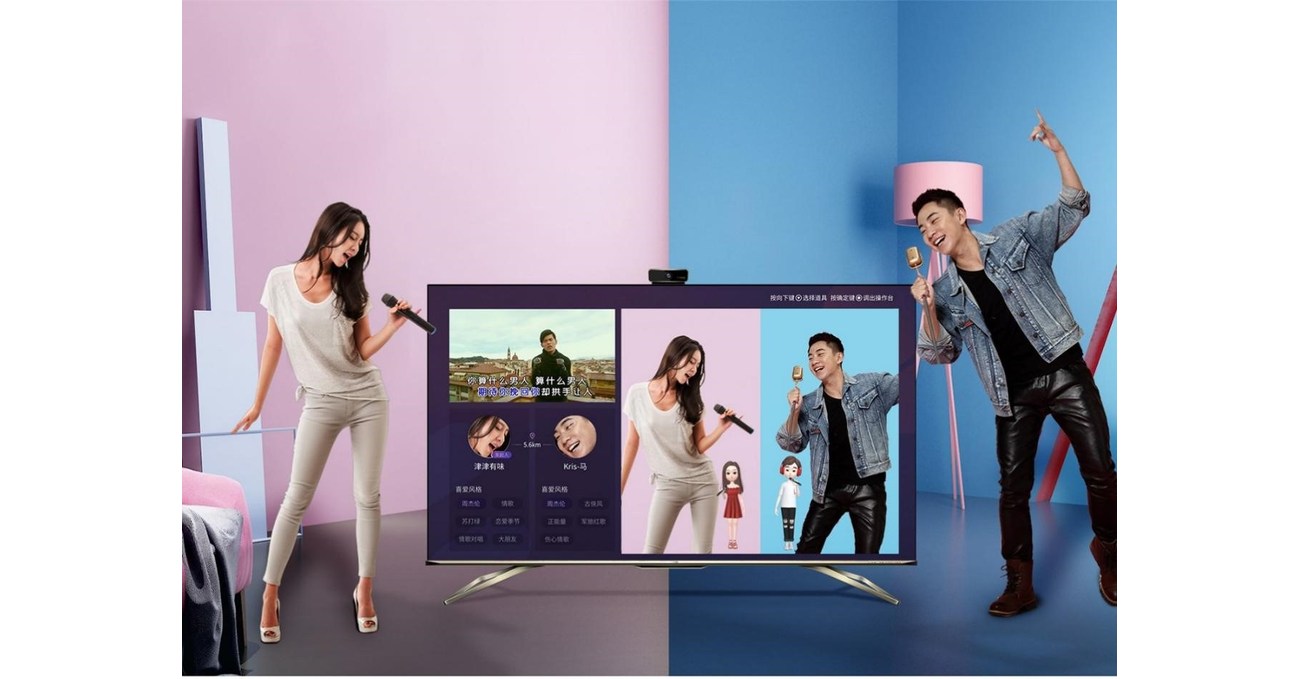
    Hisense launches ‘Social TV’ with an interactive menus

    Television and appliance manufacturer Hisense has launched its brand-new interactive system for large-screen social scenarios in the Chinese market.

    Hisense’s Social TV with Hi Table will provide users with interactive scenarios such as six-party video chat, cinema sharing, 3D Avatar Karaoke, AI fitness, AI visual recognition, and multi-screen communication, among others.

    One application of the device is 3D Avatar karaoke, which employs 5G technology to allow users to sing karaoke together with online friends in virtual scenarios such as Tokyo or Paris.

    The six-party video chat and cinema sharing functions allow real-time chat with family and friends while watching TV shows and sports matches together.

    With its AI fitness function, the social TV allows users to exercise in their living room under the guidance of AI body posture.

    Hisense’s new 55-inch flagship social TV has a recommended retail price of RMB6499 (US$920).

  • Refinitiv Launches Cloud-Based Data Access in Asia

    Refinitiv Launches Cloud-Based Data Access in Asia

    Major financial data provider Refinitiv has launched a new service providing real-time data through cloud-based delivery in Asia, leveraging Amazon Web Services.

    The service, named Elecktron, is designed to simplify access to real-time price information and eliminate the need to invest in physical infrastructure. In addition, delivery through Amazon Web Services enables greater flexibly in how the data is used.

    «It’s clear to us that Asia-based firms are starting to aggressively accelerate their cloud plans as they realize how leveraging the cloud across their market data infrastructure can help them move faster, grow their business, reduce their costs and better manage their risks,» said Alfred Lee, APAC managing director at Refinitiv.

    According to a Refinitiv survey with senior tech and market data managers, investments in the public cloud are expected to increase with 86 percent of firms in Asia claiming to use it for the majority of market data needs in less than four years.

    The initial success of our Elektron real-time cloud delivery shows the benefits of combining high quality data with simple access across a broad range of innovative use cases,» added Brennan Carley, global head of enterprise at Refinitiv, which is onboarding an increasing number of clients in the region including Hong Kong-based global payments and FX platform Currenxie.

    We believe the cloud is transformational for how the financial community consumes data.

  • DBS Inks India Startup Partnership

    DBS Inks India Startup Partnership

    DBS has established a partnership with tech business incubator Social Alpha to mentor enterprises that focus on socially impactful deliverables such as inclusion, healthcare or environmental solutions.

    As part of the partnership, DBS will mentor and support three firms focused on the aforementioned areas over the next 18 months in addition to an annual grant of one crore rupee ($141,000).

    The three firms include women-focused e-commerce firm Even Cargo; mental healthcare startup Trust Circle, which leverages mobile AI tech for emotional resilience; and affordable medical device startup Incredible Devices.

    We have been working with social enterprises for several years. But our experience showed that some of these entrepreneurs could not scale their businesses or remained somewhat sub-optimal in their ability to grow, said Surojit Shome, CEO of DBS Bank India.

    So, we want to encourage social entrepreneurs who are sustainable by generating enough returns to build scale, and we decided to look for a partnership with somebody who was working with scaled or scaleable social entrepreneurs.

  • L’Oreal and Shopee partner to launch AI(R) powered beauty tools

    L’Oreal and Shopee partner to launch AI(R) powered beauty tools

    Shopee, the leading e-commerce platform in Southeast Asia and Taiwan has teamed up with L’Oréal the world leader in beauty and skincare to roll out artificial intelligence (AI) and augmented reality (AR) powered tools on Shopee’s platform. The joint partnership demonstrates both Shopee’s and L’Oréal’s commitment to continuously innovate and power Southeast Asia’s beauty and skincare categories into the future, and to provide shoppers a convenient and personalised online shopping experience. The AI and AR powered tools will also benefit millions of users across Southeast Asia, especially digitally-savvy millennials who are drawn to innovation, creativity and a sense of self-discovery.

    With L’Oréal’s AI and AR powered tools, Shopee BeautyCam by ModiFace and the Effaclar Spotscan by La Roche-Posay, Shopee users are able to digitally try on different shades of L’Oréal’s lipsticks as well as receive personalised advice on the best L’Oréal skincare treatments to tackle acne. Users only need Shopee’s app and a front-facing camera on a mobile device to access these tools. The partnership also sees L’Oréal tapping into Shopee’s key interactive entertainment features such as Shopee LIVE and Shopee Slice to deepen consumer engagement.

    Ian Ho, Regional Managing Director, Shopee said, “We are excited to partner L’Oréal to bring these AI and AR powered tools to our platform. This partnership demonstrates our joint commitment to transform Southeast Asia’s beauty and skincare market with innovation and technology. With more consumers purchasing their beauty and skincare essentials with Shopee, we are confident that shoppers will enjoy a more personalised and seamless shopping experience with these digital innovation tools.”

    With more consumers entrusting mobile self-diagnostic tools to help uncover what best suits them,  the digital innovation tools, Shopee BeautyCam and Effaclar Spotscan on Shopee, will help consumers better understand their individual beauty and skincare needs as they shop online. With more than 95% of Shopee’s transactions occurring on mobile across the region, the partnership promises shoppers a seamless mobile shopping experience, from the use of L’Oréal’s mobile AI and AR powered tools to discover products, to delivering the products right to their doorstep. The launch of these digital innovation tools is done in collaboration with both of L’Oréal’s make-up and skincare divisions.

    The Shopee BeautyCam employs AR simulation to allow Shopee users to try different shades of make-up, resulting in photo-realistic results in the form of a video or a selfie. To achieve this, ModiFace by L’Oréal uses AI-enabled shade calibration, AI-powered analysis of information provided by makeup brands, as well as images and descriptions available on social media. The Shopee BeautyCam will launch on Shopee Singapore during L’Oréal’s campaign, ‘International Lipstick Day’, from 27 to 29 July and in conjunction with International Lipstick Day on 29 July. Shopee users will be able to try the feature first with L’Oréal lipsticks. The proprietary technology will eventually be extended across other L’Oréal make-up products in the future across Southeast Asia.

    L’Oréal’s other AI-powered digital innovation tool, Effaclar Spotscan, harnesses artificial intelligence technology to offer users instant, personalised and professional acne analyses. Users are awarded an acne score and are given a personalised Effaclar routine with specific skin care tips to best tackle their acne spots. Featured during selected campaigns, the tool was launched in conjunction with other in-app activations such as in-app dermatologist consultations. Effaclar Spotscan was launched successfully on Shopee Singapore in March this year, and will be incorporated in the upcoming L’Oréal campaign, ‘Your Best Skin Yet’, from 12 to 15 August.

    Ninell Sobiecka, Vice President, Active Cosmetics Division, APAC said, “We are pleased to partner Shopee to make our first acne diagnostics tool, the Effaclar Spotscan by La Roche-Posay, available to users across Southeast Asia. This AI-powered tool helps users make more educated skin care choices based on their own unique skin type, all in the comfort of their own homes with the Shopee app. Together with Shopee, we are committed to empowering users and making lives better with innovative technology.”

    Chris Driver, Commercial General Manager, Consumer Products Division, APAC adds, “We are thrilled to partner Shopee to bring the Shopee BeautyCam by ModiFace to millions of users across the region and to reinvent the beauty industry. This technological innovation gives consumers the freedom and creativity to explore L’Oréal’s wide array of lipsticks and helps users learn more about which lipstick suits them best. All done within Shopee’s app, this provides users a convenient, effective and simple way to discover more make-up products as they make their next make-up purchase online.”Coupled with L’Oréal’s digital innovation tools, the partnership sees L’Oréal tapping into Shopee’s key interactive entertainment features such as Shopee LIVE, Shopee’s in-app live streaming feature, and Shopee Slice, a popular in-app game, to deepen engagement with consumers for a more personalised online retail experience. Through this, Shopee and L’Oréal are able to provide users higher entertainment value and benefits, as they learn more about L’Oréal’s extensive array of products, digital innovation tools, as well as make-up and skincare tips.

    All L’Oréal make-up and skincare products can be found via their respective official stores on Shopee, under Shopee Mall, which offers 15-days free returns, 100% authenticity, and free shipping.

    Download the Shopee app for free on the App Store or Google Play Store.

  • How to use and unleash the power of artificial intelligence

    How to use and unleash the power of artificial intelligence

    Artificial intelligence has been a buzzword in the retail industry for some time now. But rather than just talk about it, retailers are now at a stage where they are putting words into action and starting on their first AI projects.

    Over the last year, an increasing number of retailers have started to adopt the technology. Uniqlo, for instance, uses machine learning to power a digital assistant on its app, which is able to give highly personalised recommendations. In Hong Kong, convenience-store operator Circle K unveiled an AI-driven checkout solution last year that uses image-recognition technology in the self-checkout process.

    While there are clear benefits to implementing artificial intelligence – improving operational efficiencies and gaining a better understanding of the customer are just two – it can also be a daunting task to embark on. Here we identify three key considerations for retailers that are looking to unleash the power of AI…

    Quality of data

    Through machine learning, retailers are able to take data from multiple channels and turn that into actionable predictions and recommendations. But the biggest success factor is not the algorithm behind these insights, but rather the quality of the data that feeds into it. Retailers that do not have their data estates in order risk having underwhelming outcomes from their AI investment. This is something that must be considered beforehand.

    Choosing which areas to focus on

    There is a multitude of areas in which artificial intelligence can be deployed in a retail setting. Aside from the different applications of AI technology – for instance, machine learning, natural language processing and robotics – there is also a choice to be made in terms of the operational area, be that the customer-facing side of the business or processes that run behind the scenes.

    AI initiatives that help to improve the customer experience can be an ideal starting point as this is an area that benefits from a wealth of data and can provide a quick win for a retailer.

    Bringing in external expertise

    Many retailers will lack the skills and expertise to confidently start leveraging AI technology. The solution is often a combination of recruiting talent to bridge the skills gap and working with credible technology partners. The advantage of both these approaches is that retailers can hit the ground running and be able to accelerate their first move. Speed is critical if a retailer wants to be a disruptor rather than disrupted.

    Digital Transformation Survey

    Is your organisation looking at emerging technologies such as artificial intelligence, augmented reality and automated deliveries? And how do technology partnerships form part of your digital strategy?

    Tofugear is conducting its annual digital transformation survey and is asking C-level executives and senior managers across Asia about their approach to innovation.

  • Apple Buys Self-Driving Car Startup Drive.ai

    Apple Buys Self-Driving Car Startup Drive.ai

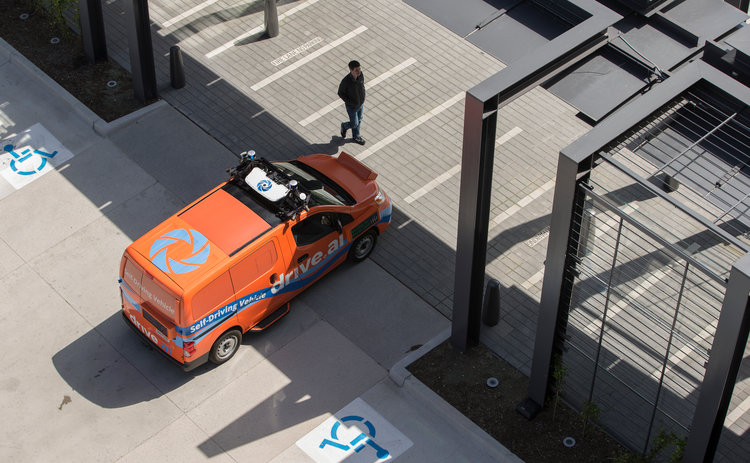
    Apple Inc on Tuesday confirmed that it has acquired self-driving shuttle firm Drive.ai.

    Technology news website The Information reported earlier this month that the iPhone maker was considering acquiring the firm as a move to bring aboard some of its engineering talent to boost Apple’s own self-driving efforts.

    One of hundreds of startups pursuing autonomous vehicles, Drive.ai had been running a small fleet of test shuttles in Texas, The Information reported. But the startup told California regulators that it plans to lay off 90 people in a permanent closure. The San Francisco Chronicle earlier reported the closure.

    In Silicon Valley, it is common for larger companies to acquire struggling startups primarily to hire their engineers, a move known in the industry as an “acqui-hire.”

    Apple is vying against rivals such as Alphabet Inc’s Waymo to develop self-driving vehicles. In the past year, Apple has revamped its efforts, bringing former Tesla Inc engineering chief Doug Field to oversee the operation, which includes more than 5,000 workers.

    Apple is also working on key components such as sensors in addition to holding talks with potential suppliers.

  • GreyOrange to showcase Flexible Automation solutions at the India Warehousing Show 2019

    GreyOrange to showcase Flexible Automation solutions at the India Warehousing Show 2019

    GreyOrange, a global  distribution automation software and robotics company will showcase its family of Flexible Automation solutions, including the new mobile and modular sortation system, FlexoTM and the AI-powered goods-to-person system, Butler, at the 9th edition of the India Warehousing Show 2019 from June 20-22 in New Delhi.

    The retail sector in India is expected to grow to US $1.2 trillion by 2021, up from US$795 billion in 2017. Modern supply chains must deliver the advanced productivity, efficiency and sophistication to handle omnichannel distribution models, exponential growth in the variety and volume of products shipped, and increasing volatility and unpredictability in order patterns. GreyOrange Flexible Automation solutions are specifically designed to help businesses master these complexities to optimize fulfilment performance while also controlling costs.

    Vivekanand, Country Manager- India and SAARC, GreyOrange said, “We are proud to associate with the India Warehousing Show, a leading event for the logistics and supply chain industry. We are excited to showcase our advanced solutions, technical expertise and innovation live at this event; and help customers understand the complexities of modern distribution, including those created by omnichannel pressures. With our multi-industry expertise and robust portfolio of products and services, we are leading Flexible Automation across the globe. At IWS, we invite everyone to visit our booth and witness our solutions in action and learn more about how they optimize performance and throughput.”

    Vivekanand will speak at IWS 2019 on 20th June at 12:30pm IST on “Flexible Automation: The Future of Fulfillment.” During the session, he will highlight how Flexible Automation solutions future-proof supply chains to create and extend operating advantages.

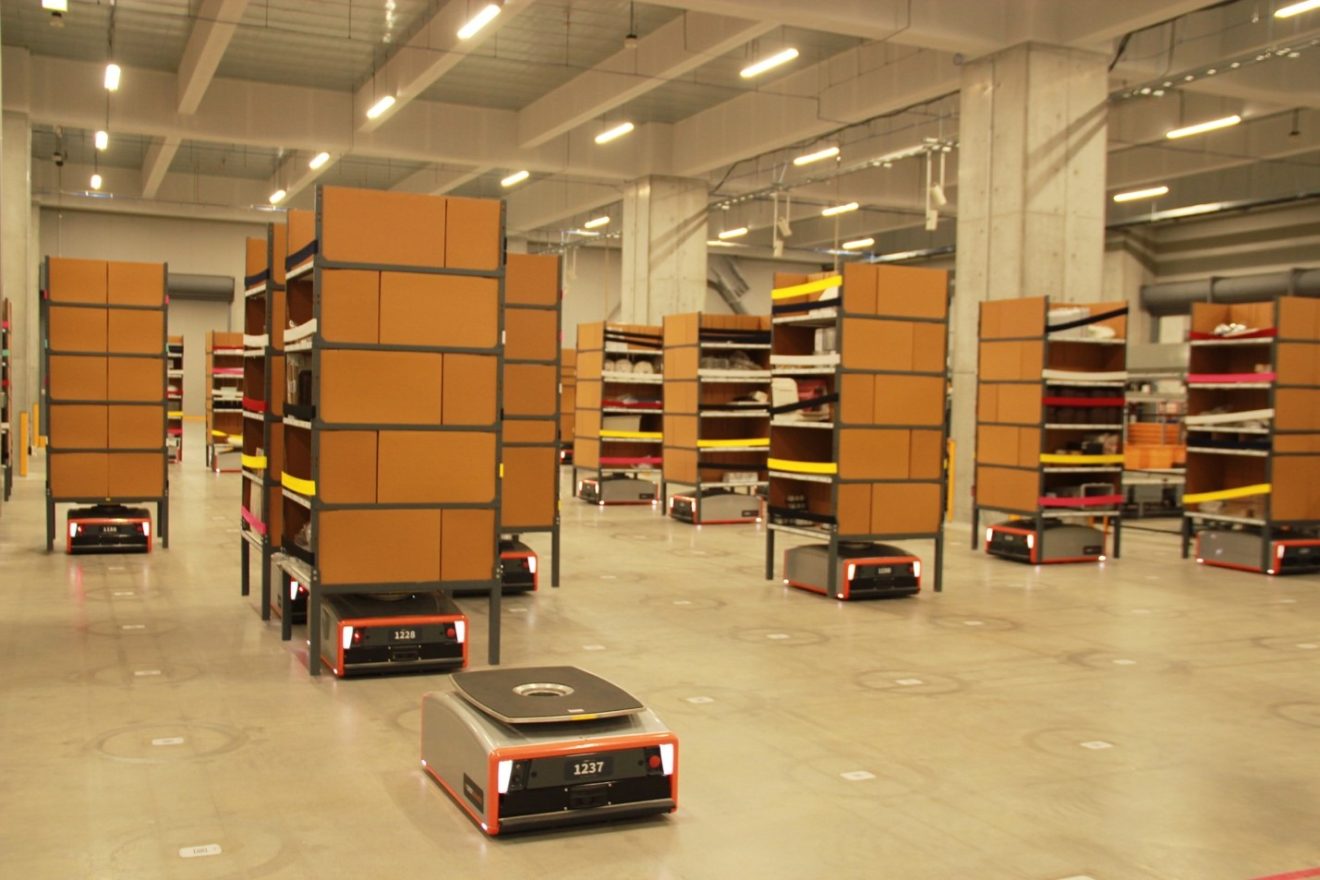
    The GreyOrange booth will showcase live demonstrations of its mobile and  modular sortation system, FlexoTM. Companies can deploy Flexo to enable inbound and outbound destination sortation  in fulfillment, distribution and logistics centers to better utilize space, reduce operating costs and flexibly adapt sortation to handle seasonal order patterns and spikes. This AI-enabled robotics system, which is capable of running 24/7, can be easily scaled making it investment-friendly and usable for a range of applications. GreyOrange also will showcase its globally deployed AI-enabled ButlerTM goods-to-person system, designed to handle high volumes, changing inventory profiles and fluctuating demand.

    Both the Butler and Flexo solutions are powered by GreyOrange’s warehouse execution software GreyMatter, which integrates multiple automation systems and drives higher efficiencies by leveraging Artificial Intelligence and Machine Learning in real-time.

    Visit GreyOrange at the India Warehousing Show 2019, stand C27, Hall 12, Pragati Maidan, from 20th to 22nd June 2019 to meet with Solutions Experts and experience a hands-on demo of GreyOrange high-performance solutions.

  • AI-powered retail store We9go opens

    AI-powered retail store We9go opens

    Accrelist-owned AI retail store We9go has fully launched after an eight-month trial.

    The Geylang Road shop uses AI, facial recognition and radio frequency identification to track inventory, collect data on shopper preferences, facilitate payment processes and recognise product movements.

    When it soft launched last October it was open only to invited customers, so as to test and demonstrate its features.

    Accrelist says it will now focus on strengthening AI solutions and facial-verification services.

    “The company intends to move beyond smart retail-technology solutions,” said Terence Tea Yeok Kian, Accrelist’s executive chairman and MD.

    “We aim to offer a wider range of smart-and-secure cloud-based solutions as a systems integrator through its collaboration with technology companies to broaden the group’s revenue stream.”

    After its full launch, the 24/7 We9go store has an AI-powered robot that greets shoppers and assists them with product information and availability.

  • Volvo Cars and Varjo Launch Mixed Reality Application For Car Development

    Volvo Cars and Varjo Launch Mixed Reality Application For Car Development

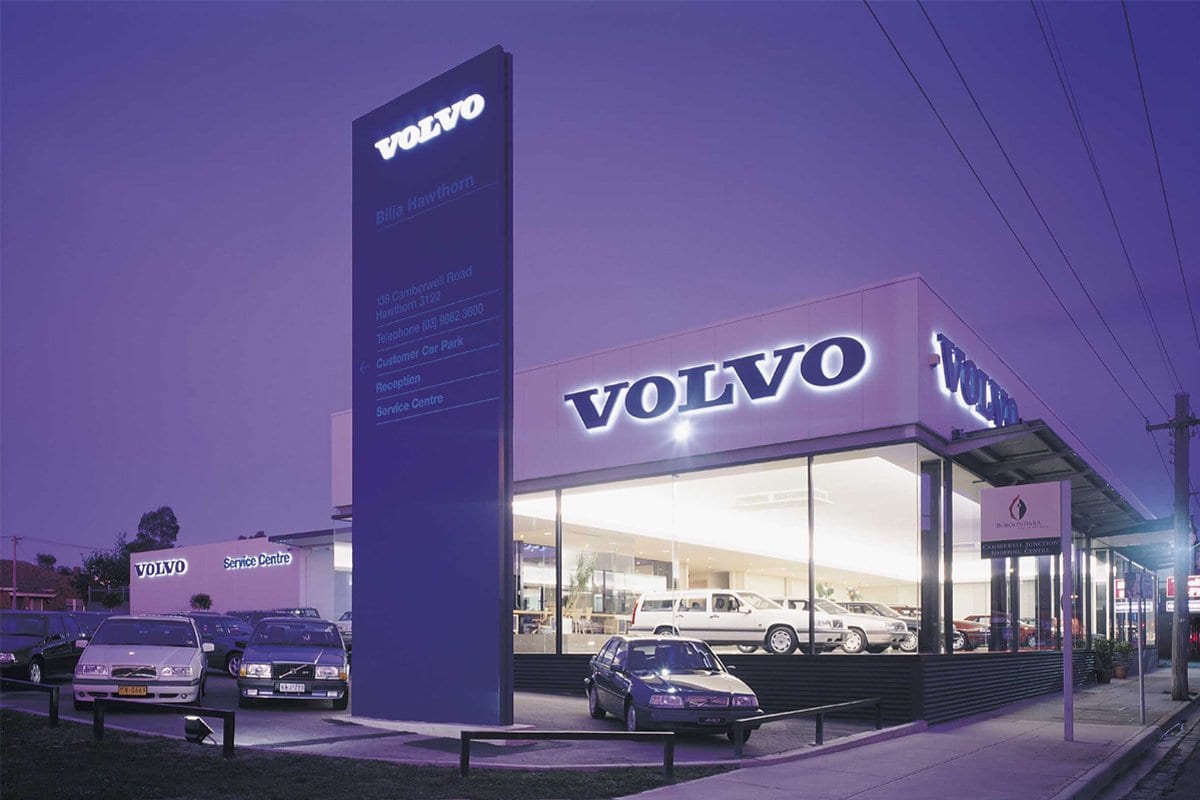
    Volvo Cars and Varjo, the maker of high-end augmented reality headsets, have created a world-first mixed reality approach to evaluating prototypes, designs and active safety technologies. The collaboration will be further strengthened by the Volvo Cars Tech Fund’s decision to invest in Varjo. With these new augmented reality headsets, it will be possible for the first time to drive a real car while wearing a mixed reality headset, adding virtual elements or complete features that seem real to both the driver and the car’s sensors, for development purposes.

    The Varjo XR-1 headset, provides photorealistic mixed or virtual reality at a high-definition resolution and the big claim is that it’s better than anything out there in the market currently. With the XR-1 Volvo Cars can radically reduce development timeframes by creating the new ability to evaluate features and designs almost immediately. Volvo Cars designers and engineers will be able to ‘drive’ future cars and evaluate all features in a simulation environment many years before they exist, enabling the company to develop the safest cars as also a refined user experience.

    Henrik Green, Chief Technology Officer, Volvo Cars, said, “With this mixed reality approach, we can start evaluating designs and technologies while they are literally still on the drawing board. Instead of the usual static way of evaluating new products and ideas, we can test concepts on the road immediately. This approach offers considerable potential cost savings by identifiying priorities and clearing bottlenecks much earlier in the design and development process.”

    With the XR-1 Volvo engineers will be able to develop and evaluate active safety solutions much easier. Safety experts are able to drive real cars while wearing the XR-1 headset at Volvo’s research facilities in Sweden, testing virtual active safety systems imposed via augmented reality on the real-life environment. Highly accurate eye-tracking technology embedded inside the XR-1 makes it easy to assess how drivers use a new functionality and whether they are distracted in any way. This technology-based approach to measuring distraction levels ensures that Volvo Cars can develop new features without causing additional distraction.

  • Google is still working on an exciting AI feature

    Google is still working on an exciting AI feature

    Tweets sent by Google Photos product lead David Lieb indicate that the company has not given up on the Colorize feature it unveiled at Google I/O last year. The feature uses machine learning tools to add colors to old black and white photos. He said that Google hopes to have Colorize out in beta form soon and said that he’d love to hear feedback from Android users. The Colorize feature, when it does get pushed out, will show up as a filter in the Google Photos app.

    Lieb did say that Colorize needs some more work, and for proof of that, he showed a black and white photo taken during his grandparents’ wedding day (his grandmother is 104!). While Colorize did add color to the image, it also added a pink tinge to his grandfather’s pants. The Googler assures us that his grandfather did not wear pink pants at his wedding.

    Meanwhile, another feature that Google introduced at its 2018 developers conference, Color Pop, was pushed out just a week after the feature was unveiled. Using AI, Color Pop takes the background of a photo shot in Portrait mode and changes it to black and white; the subject matter remains in color. The stark difference between the two makes the subject pop, or stand out. Color Pop appears as a filter option in the Google Photos app after you snap a Portrait.

  • SK Telecom unveils AI smart speaker

    SK Telecom unveils AI smart speaker

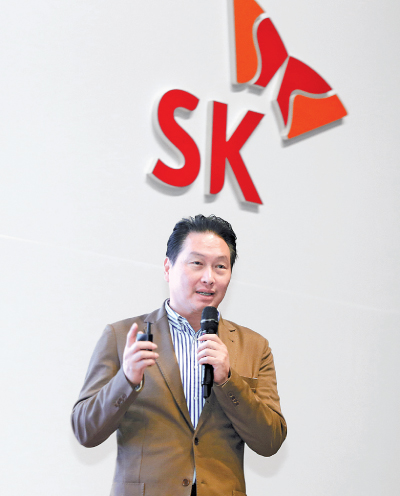
    SK Telecom has revealed plans to launch a new AI voice activated digital assistant named NUGU Nemo.

    NUGU Nemo is an AI speaker with a 7-inch display that contains a range of free video and learning content for children.

    This includes Pinkfong from SmartStudy, which comes with a range of video and audio content as well as games aimed at helping kids learn Korean, English and mathematics.

    The device uses video recognition technology to protect children’s’ eyesight by advising them to move back from the screen if they move within 15cm of it.

    For adults, the device displays information on its screen including stock information, real-time foreign exchange rates and a Korean-English dictionary to enhance user experience.

    The device will be priced at 199,000 won ($175) and be available to preorders from April 23, SK Telecom said.

  • Lululab unveils the first AI Beauty Store at Dubai Mall

    Lululab unveils the first AI Beauty Store at Dubai Mall

    Beauty AI startup Lululab has unveiled its unmanned virtual retail space “AI Beauty Store” in the giant Dubai Mall.

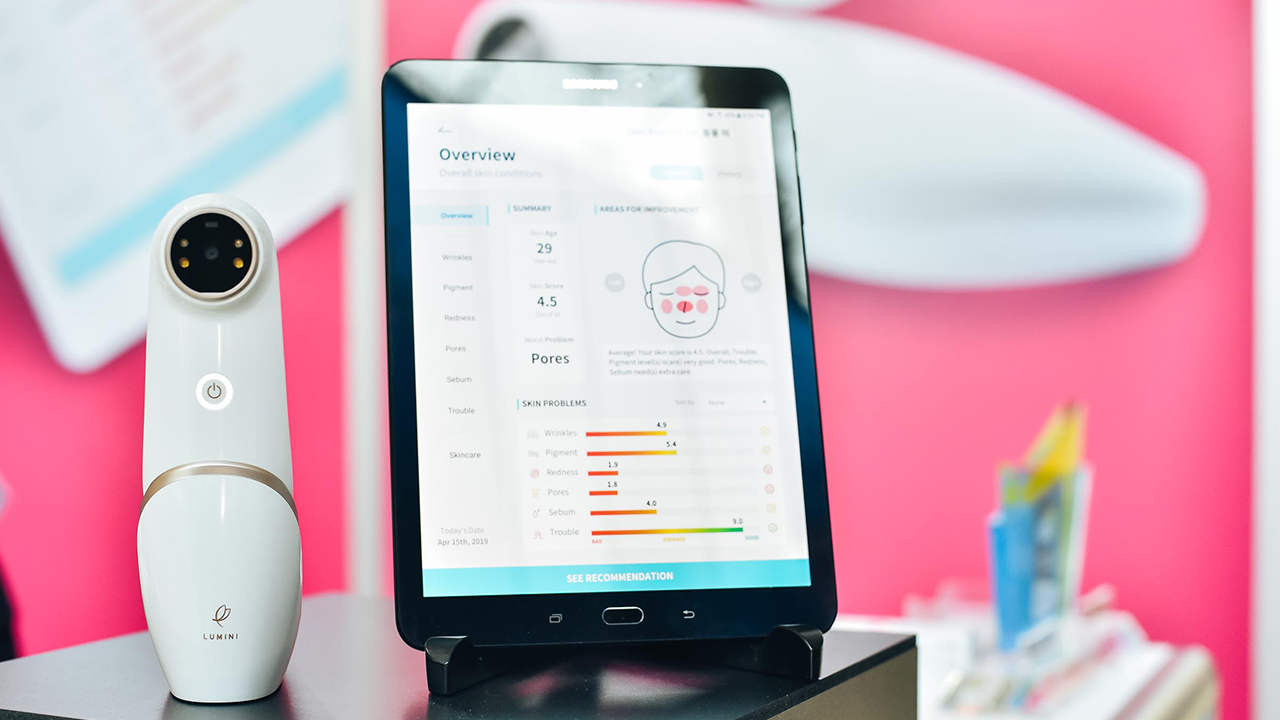
    Lululab is the developer of Lumini, an AI-based skincare assistant that provides individually tailored skin-care solutions. It offers a smart-shopping experience through the store, which combines AI and big-data technology, on the ground floor of the popular French department store Galeries Lafayette.

    The service is made up of three steps: self-skin analysis by the customer; recommendation of products that best satisfy the customer’s skincare needs; and provision of an outcome report via mobile.

    By taking a single selfie with the multispectral camera at the Lumini kiosk, customers can receive an accurate analysis of their skin’s top layer condition and a list of recommended skin care products based on the result, making it unnecessary for them to wander around the shopping mall searching for random skin care products. They can also receive discounts for the recommended products.

    “AI Beauty Store offers many tourists from all over the world who visit Dubai Mall the opportunity to enjoy a revolutionary shopping experience,” said Lululab CEO Yongjoon Choe. “By establishing skincare-related big data, we will be providing sophisticated and individualised services.”

    Based on its collaboration with Galleries Lafayette, Lululab plans to accelerate its entry into the Middle Eastern and global beauty markets.

  • Retail spend on AI services to Multiply by 2023

    Retail spend on AI services to Multiply by 2023

    Global spending by retailers on AI services will reach US$12 billion by 2023, according to Juniper Research.

    That figure is more than three times the amount expected to be spent this year, of $3.6 billion and represents investment by more than 325,000 retailers expected to adopt the technology during the next four years.

    According to Juniper Research’s report, AI in Retail: Segment Analysis, Vendor Positioning & Market Forecasts 2019-2023, AI use by retailers will unlock efficiencies across back office operations. Advanced analytics employed in functions such as demand forecasting and automated marketing will make retailers more agile and improve margins.

    Juniper forecasts that retailers will face an AI adoption race, where AI-equipped retailers, which have adopted systems as early movers, will displace slower moving retailers, offering superior service at optimised price points.

    Demand forecasting crucial

    The use of machine learning in demand forecasting will prove to be a key market for AI vendors, with associated service revenues reaching $3 billion by 2023, up from $760 million in 2019.

    Juniper Research says demand forecasting will be essential to enable an effective omnichannel experience and drive higher margins.

    “With the rise of collect-in-store and one-off events such as Black Friday, understanding demand and supply chains is more crucial than ever with AI playing the central role,” said research author Nick Maynard.

    The research also found that smart checkouts, largely powered by AI technologies such as computer vision, will have a strong future in the convenience area; leading to annual transaction volumes of more than 1.4 billion by 2023, compared with just 42 million this year.

    While Amazon is currently highly visible with its Go model, China will be the biggest driver of future growth. This reflects the rapidly growing Chinese market, as well as the backlash Amazon has had recently due to its cashless model.

    Juniper Research provides research and analytical services to the global hi-tech communications sector, providing consultancy, analyst reports and industry commentary.

  • Audi To Showcase AI:Me Concept At The Shanghai Auto Show

    Audi To Showcase AI:Me Concept At The Shanghai Auto Show

    Audi will be presenting the AI:ME concept at the Shanghai Auto Show 2019. Beside this car, the company will also showcase the Q2L e-tron, which was designed especially for China and is built in the Foshan plant. The compact SUV, which will be delivered to the first customers in the summer of 2019, will make its world premiere in Shanghai.

    The body of the Audi Q2L e-tron is 33 millimeters longer than that of the basic model. The car is powered by an electric motor on the front axle that mobilizes 100 kilowatts and 290 newton meters. With a battery capacity of 38 kilowatt hours, it has a range of up to 265 kilometers.

    But the big concept car that will make its world premiere is the AI:ME concept car which shows the company’s vision for the future of urban mobility. The Audi AI:ME shows the ideas of Audi designers and developers for a compact car of the future. The show car offers a roomy, futuristic interior and capability for level 4 automated driving. This allows the occupants the freedom to do what they like with their time on board. The Audi AI:ME offers high-tech features for communication, entertainment, or simply relaxation.

    There’s just one design sketch of the interior and that shows an interesting layout. There’s a massive screen that dominates the cars instrument cluster and is placed behind the steering wheel and the wooden trims. Considering that the company says it is a level 4 autonomous car, the AI:ME gets a steering wheel too but we expect it to be retractable given the autonomous driving function of the car.