Tag: AI

  • $2.5 billion Japanese AI startup taps Vietnam market

    $2.5 billion Japanese AI startup taps Vietnam market

    AI Inside, a $2.5-billion Japanese artificial intelligence startup, has entered Vietnam through a partnership with a local company as part of its global expansion strategy.

    The company will partner with OCG Technology, a joint venture between a unit of state-owned Vietnam Posts and Telecommunications Group (VNPT) and Japan’s Nippon Telegraph and Telephone, to sell its software to the Vietnam market.

    AI Inside’s software converts paper documents into electronic data using artificial intelligence, and its target customers are companies that want to automate manual tasks like typing handwritten forms into spreadsheets.

    The five-year-old startup, which claims a 64 percent market share in Japan’s market for AI-based optical character recognition (OCR) software, has seen its number of contracts for the software double between July and September last year, according to a report.

    Its share price has increased fivefold since its initial public offering in December 2019, giving it a market capitalization of $2.5 billion.

    The company is also planning to expand to other Asian markets like Thailand and Taiwan.

  • Real-World Examples of Text Analysis and AI-Driven Market Research

    Real-World Examples of Text Analysis and AI-Driven Market Research

    AI and text analysis is being incorporated into every aspect of life. On social media, entertainment, work, marketing, and sports, automation is becoming more “human.” The result is less time spent doing tedious tasks and more energy to focus on developing ideas and drafting new strategies. The following are examples of where AI and text analysis is creating an impact.

    Real Estate

    AI-driven market research and text analysis are making it easier to find and sell properties/ There is a significant amount of data to analyze before making a real estate investment, including the potential value of the property, market in the area, KPIs, and characteristics of the property. Getting the data together isn’t difficult, but the challenge is analyzing it to inform investment decisions.

    Property managers are discovering the benefits of AI in calculating assets, finding information about a property’s environmental footprint, and updating portfolios. An AI algorithm predicts future market value by looking at recent numbers and considering other factors such as changing prices in the area, crime rates, transportation, and schools.

    The number of data points required for analyzing property can be overwhelming.  AI technology organizes the information, sorts of relevant points, analyze the data, and updates existing information. AI also assists in creating in-depth property analysis for clients. It also makes property management easier with automatic updates on when things should be repaired, tenant information, and price trends.

    Real estate agencies and sites use chatbots to directly interact with potential buyers and sellers and collect useful information. For instance, if a visitor to a website or a social media page clicks on a link, they can immediately interact with a chatbot that answers questions and requests email addresses or  Whatsapp numbers of potential buyers and sellers.

    Market Research

    The amount of consumer data available online is a boon to market research. However, given the sheer enormity of social media updates and reviews, gathering and analyzing this information creates a significant challenge. AI-driven market research tools take unstructured user-generated content and create actionable data.

    AI and text analysis tools perform sentiment analysis, evaluating social media updates and reviews for emotional coloring, tone, and word choice. Machine learning associates certain words and phrases with emotions and gives each text a rating from very positive to very negative and in-between. These ratings are combined and compared to provide an overview of how consumers feel about a product or brand.

    The advantage of AI and text analysis is that it deals with direct feedback from customers rather than second-hand data from financial reports or company-generated resources. The main focus is the customer, and information about their preferences is the most relevant information. Market forecasts attempt to predict what consumers will want. Text analytics allows customers to customers to say they want directly to companies.

    Workplace

    AI in the workplace is at its early stages but is poised to grow rapidly. According to a Deloitte survey, 41% of businesses replied they are using automation extensively throughout their operations. Some examples of these tasks are ones that involve simple decisions, such as customer service chatbots that respond to specific queries according to set FAQ responses.

    In many cases, these automated tasks are not meant to replace the workforce. Still, they eliminate routine tasks so employees can spend their energy on tasks that require complex thinking or intricate decision making. For instance, a loan agency may use automated tools to calculate simple loans, but those that involve multiple factors are still dealt with by humans.

    Sentiment analysis is also used in the workplace to gauge how employees feel about their jobs, areas where they may need assistance, and where their morale is at its highest and lowest point. Public company chats and forums can yield user-generated data that can be evaluated by the human resource department using sentiment analysis tools. Besides, responses to memos can uncover between the lines how employees really feel about a new policy or launch.

    Sports

    Given the affection for numbers and statistics in sports, it is a natural area for AI to flourish. The success of data-driven strategies was seen in the 20 game-winning streak of Oakland Athletics in 2002 as depicted in the film Moneyball. The team applied data-driven strategies to players’ individual statistics and, through analytical tools, positioned each player according to his attributes. The result was an overwhelming success against rivals who had much larger budgets.

    AI is tremendously useful in scouting and recruitment. Statistics about players, such as the number of home runs or other performance data, can be calculated with AI tools to measure potential. AI also monitors training regimens and can personalize a diet, workout, and practice schedule suited to each player. AI uses performance indicators to evaluate how players are improving and where they need to improve.

    AI and Text Analysis Are Everywhere

    Smart AI technology is powering everything from the chatbot at a favorite website, communications at work, real estate investors’ calculations, and even draft picks for a favorite team. These tools aim to complete tasks more quickly and efficiently and offload monotonous jobs to automation to concentrate on the main task. Since automation saves money and time, it is being adopted rapidly and will continue to create value.




  • Korean startup translates dog barks using AI

    Korean startup translates dog barks using AI

    A South Korean startup has developed an AI-powered dog collar that can detect five emotions in canines by monitoring their barks using voice recognition technology.

    The Petpuls collar can tell pet owners through a smartphone application if their dogs are happy, relaxed, anxious, angry or sad. It also tracks dogs’ physical activity and rest.

    “This device gives a dog a voice so that humans can understand,” Andrew Gil, director of global marketing at Petpuls Lab said.

    The company began gathering different types of barks to analyse dogs’ emotions in 2017. Three years later, they developed a proprietary algorithm based on a database of more than 10,000 samples from 50 breeds of dogs.

    “I thought she was just happy when she played and felt sad and anxious when I wasn’t home…actually she felt angry when she lost a game she played with me, like how humans feel,” said Moon Sae-mi, who has a six-year-old Border Collie.

    The collar has a 90 percent average accuracy rate of emotional recognition, according to Seoul National University, which tested the device the company says is the first of its kind to be powered by AI voice recognition technology.

    Petpuls Lab started marketing the collar online in October last year at $99.

    The global pet care market was worth $138 billion in 2020, up 34 percent, Euromonitor data showed, as more people spent time at home with their pets or adopted pets during the COVID-19 pandemic. The global dog population also grew 18% the same year to 489 million.

    “More people began to adopt dogs, but unfortunately some of them abandoned their dogs due to miscommunication,” Gil said. “Petpuls can have an important role in the pandemic…it helps owners understand how dogs feel and increase their bonding.”

  • UOB Deploys AI-Powered AML Solution

    UOB Deploys AI-Powered AML Solution

    The bank’s new artificial intelligence (AI) solution was developed in collaboration with Singapore-based regulatory technology company Tookitaki, after more than two years of validation and evaluation.

    UOB has pioneered an AI solution that is highly accurate in identifying suspicious transactions and connected parties as it combats the increased sophistication in financial crime, it announced on Thursday in a statement.

    The bank’s use of AI enables it to pinpoint higher-priority cases from the 5,700+ average monthly suspicious transaction alerts flagged and to deploy the necessary resources to investigate potential money laundering attempts. The new solution can spot more sophisticated transaction patterns and is more effective at connecting data points with entities using the financial system, UOB said.

    The AI solution, which complements the traditional rules-based method, is being used to screen all customers and transactions involving Singapore-based UOB accounts and will be expanded to cover all UOB accounts globally.

    Our AI solution works concurrently on two AML risk dimensions, which is technically more difficult, but also more fruitful as it helps us to pinpoint criminals trying to pose as customers. UOB will continue to invest in advanced technology to strengthen our AML system to deal with emerging risks,» Victor Ngo, UOB’s head of group compliance, said.

    According to the bank, the new solution has proven an overall true positive prediction rate of 96 percent among high priority cases, which includes transactions and accounts that are deemed most likely to be suspicious and are therefore subject to earlier and more thorough investigations.

    Tookitaki is a graduate of UOB FinLab’s second accelerator program in 2017.

    Going live with UOB is a testament to our ability to develop and to harness the benefits of new-edge technologies such as machine learning to mitigate real-world problems of money laundering,» Abhishek Chatterjee, founder and CEO of Tookitaki, said.

    Founded in 2014, Tookitaki’s revenue growth has surpassed 300 percent over the last two years. It raised $19.2 million in Series A funding in 2019, which the startup said would be used to grow its presence across the U.S. and Asia-Pacific.

  • DBS to Train Staff in AI and Machine Learning

    DBS to Train Staff in AI and Machine Learning

    The bank hopes to equip its employees with skills in these areas, under a partnership with cloud services provider Amazon Web Services (AWS).

    DBS Bank will accelerate the use of artificial intelligence (AI) and machine learning (ML) across its business by training its staff in these skills with the launch of the AWS DeepRacer League, the bank announced on Tuesday.

    As part of the program, DBS staff will learn the basics of AI and ML through hands-on online tutorials and will use their knowledge in programming an autonomous model race car to compete in a virtual racing environment. The bank hopes to train some 3,000 employees, including its senior leadership, by the end of the year. The league is the largest among Asian-headquartered enterprises and one of the first in the world to be organized at scale by a financial institution, the announcement said.

    Employees are also encouraged to develop their talent beyond the bank’s league and compete globally – the bank said six of its employees have already qualified for the AWS DeepRacer Championship Cup to be held in Las Vegas later this year.

    We have never believed in limiting digital expertise to a small team. Instead, we passionately believe in democratizing technology skillsets among all employees, so that they can run alongside the company as we advance on our digital transformation together, Paul Cobban, DBS chief data and transformation officer, said.

    DBS said it is preparing for the next stage of its digital transformation efforts and has been leveraging AI and ML in areas such as advanced credit risk management, and to provide accurate self-service digital options to its retail customers based on their digital footprint.

  • Apple Glass could put you anywhere in the world

    Apple Glass could put you anywhere in the world

    Apple is considering a system that will allow the wearer of Apple Glass or another Apple-made headset to choose the background that will appear when someone is standing in front of them. The technology is similar to the “green-screen” used on television shows and movies that make it look as though an actor is somewhere else rather than standing in front of a screen on a studio lot.

    Unlike the 2D system used by Skype and Zoom, Apple’s patent application envisions the use of a 3D system that lets the Apple Glass user replace the background of a subject while he or she is moving and walking around. As Apple’s patent application notes, “Low latency is a key element required to achieve great immersion (often called “Presence”). The color keying processing which is embedded in the Head-mounted display (HMD) detects the selected range of color and mixes in the virtual content coming from the HMD itself or from an external source such as a connected computer. Virtual content can also be composited on top of the color-keyed area to allow mixed-reality content occluding real-life objects.”

    The patent application was filed in February and published today by the U.S. Patent and Trademark Office (USPTO). It is titled “Low latency chroma keying embedded in a head-mounted display for mixed reality.” The low latency used with this system is important because it allows the processing to be done at a speed that prevents users from getting ill when viewing the fake backdrop stutter and lag. And the low latency is made possible by embedding the processor inside the HMD.

    Interestingly, the current thought is that at least in the early days of Apple Glass, users will need to pair the wearable with an iPhone and allow the handset’s processor to do the heavy lifting. That is what Apple first did with the Apple Watch; the latter originally required the processor from a user’s iPhone to run most features before Apple released a standalone version of the timepiece. As a result, the technology mentioned in the patent might not be employed on Apple Glass until the third-generation of the AR glasses or later.

    The patent application explains that “The system achieves mixed reality by having a user look at a display through wide-angle lenses (with a field-of-view of 110 degrees or more). Two cameras located behind the HMD display capture the environment from viewpoints located a few centimeters in front of each eye.”

    If you don’t mind the patent jargon, Apple says, “While chroma keying is usually a post-production effect or done live with dedicated equipment/software, it can be applied in the context of augmented reality (AR) headsets, also referred to as mixed reality (MR), where virtual elements are composited in real-time into the real-world environment seen by the user through the head-mounted display. One example is a crane simulator where the controls would be real objects and where a color screen would be replaced by a virtual crane and a virtual environment. Another example would be a social MR experience using a color screen that covers the whole field of view and only the user’s hands and/or body are not replaced by virtual content (unless their color is the same as the screen). This example application is sometimes classified as virtual reality (VR) but for simplicity, we here consider it as augmented reality (AR).”

    As with any patent application filed by the company, or even with a patent received by the tech giant, there is no guarantee that Apple will actually use the patented technology. Apple applies for and receives a large number of patients each year and while some are for innovative technologies actually employed by the firm, some ideas are just patented to protect Apple from the competition.

  • Ikea acquiring AI innovator Geomagical Labs

    Ikea acquiring AI innovator Geomagical Labs

    International furniture and homewares retailer Ikea’s investment arm Ingka has bought US-based AI innovator Geomagical Labs, known for its hi-tech solutions that inspire consumers shopping for furnishings.

    The 3D and AI technology developed by Geomagical Labs will be used to help customers to take 3D photos of their rooms and experiment with home furnishing solutions to fit their individual needs.

    “With Geomagical Labs on board, we can bring our home furnishing expertise to many people in new ways and assist them in their unique design needs,” said Ikea Retail chief digital officer Barbara Martin Coppola. “In a time when people spend more time at home, we can support our customers with their everyday life through an enhanced digital meeting.”

    Customers can access the platform via the Ikea app and on Ikea.com, where they can also purchase items directly online.

    “Our work has focused on using technology and magical experiences to enable people’s creativity,” said Geomagical Labs founder and CEO Brian Totty. “We are thrilled to join one of the world’s most beloved brands and are excited to work together to transform the way people interact and purchase home furnishings by bringing together inspiration, imagination and world-class design.”

  • AI fashion-tech firm Odd Concepts receives $6 million

    AI fashion-tech firm Odd Concepts receives $6 million

    South Korean AI-based fashion-tech firm Odd Concepts has raised US$6 million in Series B funding, taking the company’s accumulated investments to about US$10 million.

    The funding is expected to allow the business to expand its growth into Asia-Pacific markets, applying its proprietary machine learning technologies to other industries.

    Fashion-tech firm Odd Concept’s fashion-styling service PXL is based on the firm’s own algorithms for recognizing, analyzing and searching images and recommends personalized fashion products based on an analysis of products that interest consumers. Around 100 e-commerce firms in Korea and other countries in the region use the service, with about 9 million unique users.

    Participants in the funding round included KB Securities, HB Investment, Kiwoom Investment-Shinhan Capital, Korea Development Bank and SBI Investment Korea.

    “We decided to invest in Odd Concepts because the company’s own technology clearly verifies the class of excellence in the popular field of fashion commerce,” said KB Securities assistant manager Jeong Seong-hoon.

    “I expect Odd Concept’s proprietary machine-learning technologies would be applied to other industries extensively.”

  • Chinese fruit-vending machines driven by AI

    Chinese fruit-vending machines driven by AI

    AI-run fruit-vending machines are offering Chinese consumers a new way of buying fruit and vegetables.

    The machines, developed two years ago by Beijing Kuo’an Science and Technology, are providing an alternative channel for residents of China’s tier-one and tier-two cities, who traditionally rely on relatively distant large-scale supermarkets and community stores for fruit purchases.

    “Every unit of AI fruit vending machines has 24 smaller sections with different types of fruit or vegetables,” said Beijing Kuo’an Science and Technology chairman Guan Luanjun. “Every section has a built-in set of scales. When customers select their fruit, they can use WeChat or AliPay to scan the QR-code on the Chinese fruit-vending machines to open the relevant section. The section automatically slides out to present the customer with its content. The customer can select and take their fruit or vegetables, and then the section automatically calculates the weight that was removed. The customer can then pay for their fruit or vegetables with WeChat or Alipay.”

    The vending machines feature cameras on both sides, allowing them to monitor customers who operate them, minimising abuse of the service. In addition, WeChat and Alipay provide payment methods that both vendor and customer trust.

    “The main advantage of Convenient E-Fresh machines over traditional, large-scale supermarkets and community stores is the low cost,” said Guan, who adds that the model allows vendors to source fruit at low cost from wholesale markets. “In addition, our automated vending machines only occupy a small area, which means that we save on rent and labour cost in comparison with large-scale supermarkets and community stores that occupy large terrains and employ large numbers of people.”

    The firm currently operates 50 AI Chinese fruit-vending machines in Suzhou, and intends to expand operations across the entire Yangzi River Delta area within two years.

    “We hope to improve consumer knowledge and consumer recognition of the Convenient E-Fresh brand,” adds Guan. “And we plan to scale our operations within two years with AI vending machine units in 500–1000 districts. Furthermore, we are in negotiations with a number of domestic and overseas suppliers to make sure consumers have a broad choice of beautiful and delicious fruits for low prices. We sincerely hope that our efforts help to improve the entire supply chain.”

  • China Should Boost AI Regulation in Finance

    China Should Boost AI Regulation in Finance

    A regulatory framework specifically designed for artificial intelligence in China’s financial sector and better tech for supervision should be introduced, according to policy advisors from a leading think tank.

    We should not deify artificial intelligence as it could go wrong just like any other technology,» said Xiao Gang, senior researcher at China Finance 40 Forum and the former chief of the China Securities and Regulatory Commission.

    The point is how we make sure it is safe for use and include it with proper supervision.

    A report from the forum based in eastern China’s Qingdao city underlined that technology to regulate «intelligence finance» largely lagged development. Existing technology deployed in the sector to improve sales and investment returns, the report added, ranged from facial recognition to big data analysis.

    Onlookers not only underline the potential tech risks which China could face in the future but also recent track record, most notably a failed attempt to create a sustainable peer-to-peer financial ecosystem. What was originally intended to be a source of financing for entities that lacked access to major state-owned lenders resulted in regulators being forced to shut down large parts of the industry with recent data showing that just 427 P2P platforms remained – a 59 percent drop compared to 2018-end.

    Evaluation of emerging technologies and industry-wide contingency plans should be fully considered, while authorities should draft laws and regulations on privacy protection and data security, the report added.

  • Huawei powers AI technology in Singapore with opening of ground-breaking AI lab

    Huawei powers AI technology in Singapore with opening of ground-breaking AI lab

    “In response to the Singapore government’s call for industry transformation, Huawei is extending its 5G, Cloud and AI capabilities to local government agencies, SMEs, and Institutes of Higher Learning, to help accelerate Singapore’s 5G application and nation-wide intelligent transformation,” said Nicholas Ma, Chief Executive of Huawei International.

    Globally acknowledged to be the next big leap in mobile and wireless communications, 5G technology is widely touted to enable the development of new business models and advanced applications, fostering business innovation and spurring economic growth. Communities, businesses, and industries are expected to benefit from the transformative impact that 5G enables.

    Singapore has earmarked S$40 million to build an open, inclusive 5G ecosystem, where the funds will be used to support 5G tech trials for enterprise use, create new open testbeds and for R&D in areas like cybersecurity for the next-generation mobile network, across six strategic clusters.

    Huawei is launching its AI lab on the back of Singapore’s National AI Strategy announced on 13 November, which maps out how Singapore will develop and use AI to transform the economy and improve people’s lives.

    Through this lab, Huawei aims to nurture a flourishing local AI ecosystem with its 5G, Cloud and Intelligent Computing capabilities, enabling Singapore’s industry players, with a focus on local SMEs, to boost Singapore’s AI capabilities towards its smart future, and the digital economy. Huawei is also launching its talent, innovation, and Singapore-China bridging programs through this lab.

    In line with the three programs, the lab includes trainings and workshops opportunities for hands-on practice, with testing and integration facilities, and serves as an open and advanced platform to industry players for ecosystem development and industry collaboration.

    “At Huawei, we believe that AI and its solutions should be accessible to everyone, and that the convergence of AI, Cloud, and 5G, lays the foundation of the technology ecosystem for the digital economy of the future,” said Neo Teck Guan, Chief Marketing Officer of Huawei Cloud Asia Pacific Region.

    The lab launch program includes artificial intelligence case studies by Huawei key customers DIGI and Ulearning, as well as the signing of five memoranda of understandings (MoU), between Huawei and several local institutions and companies across various industries – Nanyang Polytechnic; MI Robotic, Navinfo Datatech, OTSAW and Neolix Technologies; Shanghai Zhenhua Heavy Industries Company (ZPMC) and Shanghai Enfon Robotics Co; and local Augmented Reality and Virtual Reality (ARVR) companies, Hiverlab and Hellohold – to solidify Huawei’s commitment in supporting 5G deployment and enablement towards industry transformation in Singapore.

    The program also paired with a 5G technology panel discussion joined by a few of Huawei’s partners – MI Robotic and the National University of Singapore (NUS), and PSA Singapore and Capitaland – to discuss 5G capabilities and solutions and how they will change industries and businesses, followed by an immersive technology workshop using the lab’s facilities.

    This launch marks another step towards Singapore’s Smart Nation initiative and its potential of becoming a 5G hub for the region and the world.

  • UOB Launches AI-Driven Financial Planner

    UOB Launches AI-Driven Financial Planner

    UOB leverages artificial intelligence to launch what it claims to be an industry-first financial planning solution.

    The bank launched «Mighty Insights» to better track customers’ savings and expenses in order to improve financial planning. The new solution will leverage data analytics, machine learning and pattern recognition algorithms to determine the best course of action, accounting for the various life stages, needs and lifestyle priorities of the user.

    Gone are the days of worrying about a duplicate charge, whether refunds have been made, paying for a subscription you have forgotten about or wondering why your account has less money than usual, said Aaron Chiew, UOB’s head of digital and mobile, group retail.

    Instead of having to call the bank or to go down to the branch, our customers can rely on Mighty Insights’ daily prompts to track their finances with greater peace of mind and to have better control in the way in which they spend and save.

    According to the bank, the Mighty Insights solution borrows from existing technology at the bank that is used by TMRW, UOB’s mobile-only bank and the first such lender in ASEAN, as well as its predictive analytics engine.

    TMRW was launched in March this year to tap into Thailand’s sizeable digital market which is estimated to make up one-third of its total population. According to the bank, TMRW is powered by various solutions provided in partnership by fintech firms, such as Personetics and Meniga, alongside the in-house capabilities of its regional innovation lab.

  • Google creates the App Defense Alliance to guard against malware-laden Android apps

    Google creates the App Defense Alliance to guard against malware-laden Android apps

    It almost seems like we have been writing more stories about malicious Android apps than ever before. Many of these play video ads in the background, sign up for premium services without the phone owner’s knowledge, share personal information and more. And some of these apps have icons that disappear from the app drawer making them incredibly hard to uninstall. The majority of these apps are designed to generate revenue for the bad actor(s) behind them.

    Yes, most of these apps were sourced from the Google Play Store which might have surprised a number of Android users. After all, Google runs a safety check on apps before they are downloaded. This feature, Google Play Protect, is also supposed to warn users if it has discovered a harmful app and remove any malware-laden apps it finds on an Android device. But a number of infected apps do make it through.

    Google says that “fighting against bad actors in the ecosystem is a top priority.” To prove this, Google announced today that it teaming up with mobile security firms ESET, Lookout, and Zimperium to create the App Defense Alliance. Google says that it picked these firms because of their past successes in finding potentially harmful apps, their dedication to improving the Google ecosystem, and the recognition they have received from analysts.

    The main priority for the Alliance is to prevent bad apps from getting installed on users’ devices. So Google will integrate its Google Play Protect detection system with the scanning engines used by the other Alliance members. Google says that this will “generate new app risk intelligence as apps are being queued to publish. Partners will analyze that dataset and act as another, vital set of eyes prior to an app going live on the Play Store.” But the main question is whether these extra eyes will help to tighten things up in the Play Store. The partners look for Potentially Harmful Applications (PHAs) both inside and outside the Play Store. By starting the Alliance, members will share their information with Google in a more timely fashion helping the members detect malware earlier than before.

    Google says that by working as a team to share information with each other, the App Defense Alliance will help secure Android from attacks around the world. The company adds that it is the best way for it to stay one step ahead of the bad actors and keep malware out of the Google Play Store. The Alliance even has a mission statement that reads, “Our number one goal as partners is to ensure the safety of the Google Play Store, quickly finding potentially harmful applications and stopping them before they ever make it onto Google Play.”

    As we’ve pointed out before, one of the best ways to avoid loading malware on your Android device is to look at the comments section on an app’s Google Play Store listing. You’ll be surprised at how many times an app full of malware is outed by a poor review. For example, take this review for an app that contained adware: “I thought I’d try this app by downloading it and that was a nightmare, couldn’t find it in my apps nowhere and then the app just started running ads flashing them on and off, couldn’t make them stop until I restarted it, then had to go back to Play Store just to find it again and I’m deleting it.” Check out the comments section before installing an app from an unknown developer and you might save yourself a headache.

    As we mentioned, some of these malicious apps are designed to disappear from the app drawer after installation and sometimes a factory reset is the only option available to get rid of a particularly pesky piece of malware. But late last month, we told you about malware that re-installs itself even following a factory reset. Hopefully, as Google says, the creation of the App Defense Alliance will keep Android users one step ahead of the bad guys.

  • AI for India’s BFSI & NBFC Sectors Move Beyond Experimentation

    AI for India’s BFSI & NBFC Sectors Move Beyond Experimentation

    As the global race for Artificial Intelligence (AI) leadership intensifies, India has begun to catch up with countries like United Arab Emirates, South Korea, the United States, Germany, Singapore and Japan in the mainstream adoption of AI-based technologies. The Indian BFSI & NBFC sectors are undergoing a dramatic change with the growing realization of AI’s importance among business leaders and have put them at the forefront of exploring the full enterprise potential of AI use-cases for their businesses.

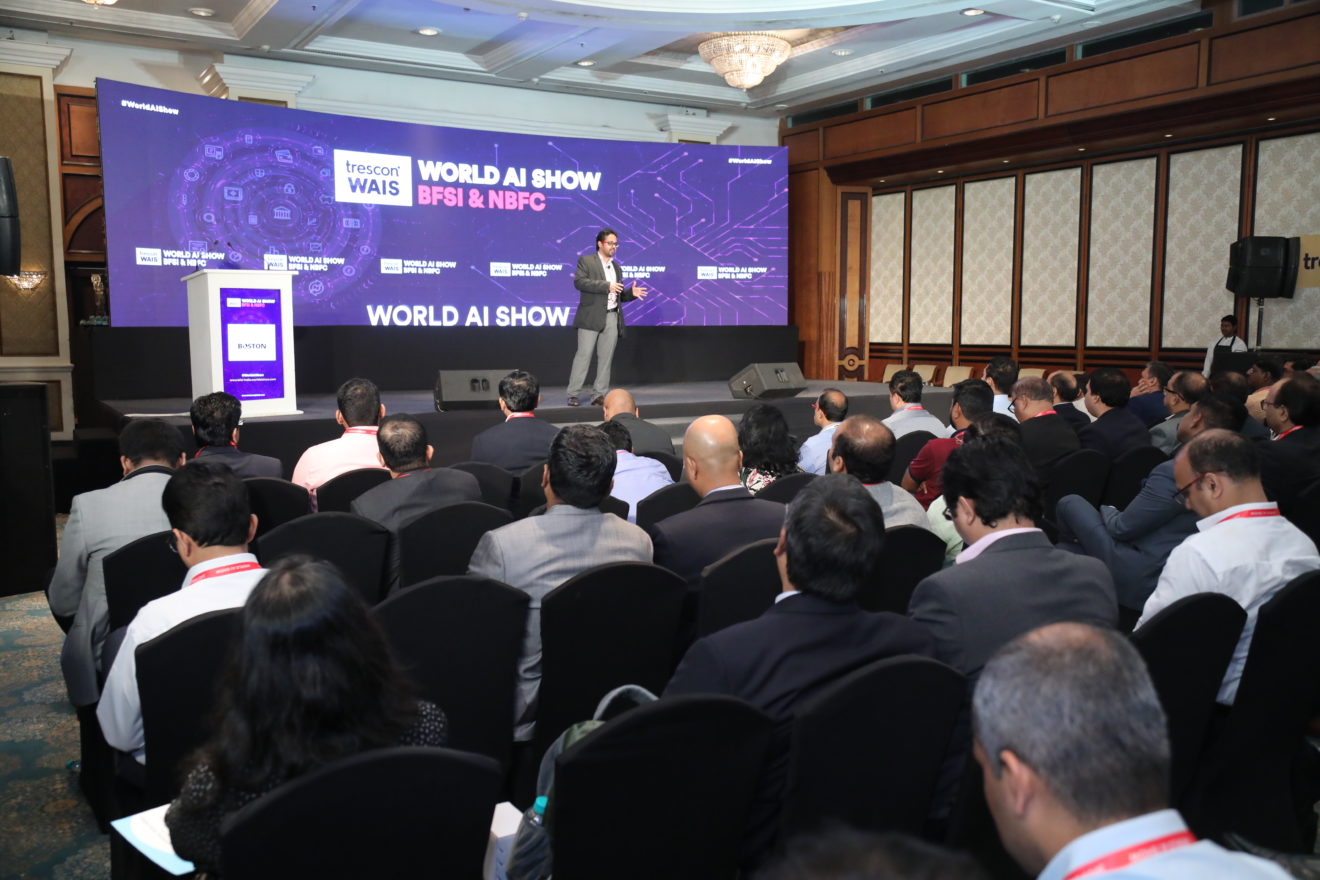
    The applications of emerging technologies in the banking and non-banking sectors has become a critical topic of discussion today. Given that India is serious about digitization, Trescon hosted its 11th global edition of World AI Show which was a dedicated spin-off of the global AI series that focused on business applications of AI in BFSI and NBFC. The conference was held in Mumbai – ‘Financial Capital of India’ to hear what industry leaders had to say about the progress in AI adoption across India’s BFSI & NBFC sectors. On Friday, Mumbai saw top C-level executives such as Inderjit Sehrawat, Managing Director for Kryon; Vivek Zakarde, Head – Analytics, BI & DWH at Reliance General Insurance Company Limited; Dr. Puneet Kaur Kohli, CTO of Manappuram Finance Limited and Sunit Vakharia, CIO for Bank of Baroda Financial Services Limited among other top speakers who came together to break down real-world industry use-cases, workshops and discussions on adoption challenges of AI & RPA for enterprises.

    The theme for the conference revolved around “Enabling the Use of AI for the Future of Finance“, especially AI’s significant application in areas such as customer experience, automation, fraud and risk management and enterprise digitization growth in the Indian BFSI and NBFC industry.

    Few key high-level takeaways from the conference:

    • A Tech Talk from Amod Kabade, Head SSG (Specialist Solutions Group) at Boston Limited on how the challenge of digital transformation is leading to an explosion in technology opportunities.
    • Inderjit Sehrawat, Managing Director for Kryon gave a tech talk on automation at scale and the right way for organizations to accelerate its digital journey.
    • A comprehensive workshop was conducted by Rajkumar Devulapalli, Head of Professional Services and Support APAC at Spirent Communications on proactive Cybersecurity training which covered the Cyber Range as an important tool to effectively evaluate network elements and train cybersecurity professionals across enterprises and organizations.
    • Ramprakash Ramamoorthy, Product Manager – AI & Machine Learning for ManageEngine which is a division of Zoho Corp, delivered a tech talk on how to build an AI-powered IT infrastructure.
    • Maneesh Jhawar, Founder & CEO of QualityKiosk Technologies; Prateek Kapoor, Director Transformation & Automation COE for Aon and Ankit Goenka, Head of Customer Experience at Bajaj Allianz General Insurance Company Ltd, were part of a panel discussion that highlighted how AI is radically changing customer experience by creating human-centric digital services in the BFSI Sector.
    • Discussions at the conference also centred on how NBFCs can adopt AI into their current digital infrastructure to reduce time-to-decision and boost pro-active risk management.
    • AI’s ability to detect patterns in data to help identify fraudulent claims in the insurance industry.

    World AI Show (BFSI & NBFC) also featured the Big BFSI & NBFC Awards that honoured the top thought-leaders who are bringing about a significant change in their organisations and industries through technology implementation and strategies in applying future technologies.


  • McDonald’s to buy AI voice-technology company Apprente

    McDonald’s to buy AI voice-technology company Apprente

    Fast-food restaurant giant McDonald’s is underscoring its increasing focus on technology by acquiring AI voice-technology company Apprente.

    The company says the investment will expand its presence in the Bay Area technology sector and allow the company to integrate new teams with advanced technology skillsets into its business.

    Apprente is described as an “early-stage leader” in voice-based conversational technology.

    “The agreement marks another bold step in advancing employee and customer-facing innovations while further strengthening McDonald’s technology capabilities,” the company said in a statement.

    The Apprente team will be the founding member of a new, integrated, internal group within McDonald’s Global Technology team called McD Tech Labs. McDonald’s says it expects to grow its presence in Silicon Valley with the hiring of additional engineers, data scientists and other advanced technology experts to join McD Tech Labs to meet future business needs and support deployment.

    Before signing the deal, McDonald’s extensively trialled Apprente’s solutions in test restaurants, along with evaluating products from other companies in the voice-technology space.

    Apprente was founded in 2017 in Mountain View, California, to create voice-based platforms for complex, multilingual, multi-accent and multi-item conversational ordering.

    “In McDonald’s restaurants, this technology is expected to allow for faster, simpler and more accurate order taking at the Drive Thru with future potential to incorporate into mobile ordering and kiosks,” the company said.

    “Building our technology infrastructure and digital capabilities are fundamental to our Velocity Growth Plan and enable us to meet rising expectations from our customers, while making it simpler and even more enjoyable for crew members to serve guests,” said Steve Easterbrook, president and CEO at McDonald’s Corporation.

    “Apprente’s gifted team, and the technology they have developed, will form McD Tech Labs, a new group integrated in our global technology team that will take our culture of innovation one step further.”

    Dr Itamar Arel, co-founder of Apprente and VP of McD Tech Labs, said it was quite clear from various engagements that McDonald’s is leading the industry with technology.

    “Apprente was borne out of an opportunity to use technology to solve challenging real-world problems and we’re thrilled to now apply this to creating personalised experiences for customers and crew.”

    Previously, McDonald’s acquired Dynamic Yield, a leader in personalisation and decision-logic technology, which is now deployed in more than 8000 US restaurants and will be integrated into nearly all drive-thru restaurants in the US and Australia by the end of this year. McDonald’s will use the decision technology to provide a more personalised customer experience by varying outdoor digital Drive Thru menu displays to show food based on time of day, weather, current restaurant traffic and trending menu items. The decision technology can also instantly suggest and display additional items to a customer’s order based on their current selections.

    Earlier this year, McDonald’s also invested in Plexure, a mobile app vendor, to further advance the development of McDonald’s Global Mobile App.