Retail News CRM

Tag: AI

  • Lenovo reveals new MotoAI personal assistant for Motorola smartphones

    Lenovo reveals new MotoAI personal assistant for Motorola smartphones

    At the Lenovo Tech World ’23, the Chinese company revealed a bunch of new AI features and flexible hardware that are already in development or in the concept phase.

    Among the many interesting technologies announced by Lenovo earlier today such as foldable and rollable devices in both the smartphone and PC categories, there’s one that seems to be almost ready for primetime, the MotoAI.

    The newly revealed MotoAI is a personal assistant already in development at Lenovo. Aimed at both PCs and smartphones, the MotoAI is supposed to never stop learning and features a foundational model personalized to the user, yet it still protects privacy.

    More importantly, Lenovo’s MotoAI has a large knowledge base that adapts continuously to patterns and usage with natural voice or text interaction capabilities.

    According to Lenovo, users will be able to engage with their personal MotoAI assistant to answer questions, draft messages, schedule tasks, and do other activities that can involve the use of such an AI-powered tool.

    Another interesting aspect about Lenovo’s MotoAI is that unlike other similar products that run cloud-based operations, this one can process data and run tasks locally on-device, which should translate into enhanced data privacy for the user.

    Promising to be a more dynamic, personal and helpful over time personal assistant, MotoAI is supposed to power all Motorola smartphones in the not-so-distant future, so we’ll probably be hearing more about Lenovo’s AI-powered tool in the coming months.

  • Microsoft extends AI-powered Bing Chat to Chrome and Safari mobile

    Microsoft extends AI-powered Bing Chat to Chrome and Safari mobile

    Six months ago, Microsoft announced its AI-powered Bing search engine and Edge browser, and the tech giant certainly does not intend to stop there. Microsoft has the ambition to implement AI in all of its products and services, and not only that but also to go beyond its own products.

    Microsoft shared that Bing Chat will soon be available in Chrome and Safari on both web and mobile. Bing Chat is also available as a standalone Android and iOS app, which will also receive some new features. The company’s goal is to allow more people to access Bing’s capabilities, such as summarized answers and image creation.

    While Microsoft may open Bing Chat for usage in third-party browsers, it still recommends using the Microsoft Edge browser if you want to experience the AI chatbot capabilities at their best. Chrome and Safari will have limitations, such as offering only 2,000 words per prompt on Chrome and Safari, compared to 4,000 on Edge. Features such as longer conversations and chat history will be available only on Edge.

    Along with announcing the availability of Bing Chat for Chrome and Safari, Microsoft also shared that the AI-powered Bing mobile app will now have a dark mode option. The company also reminded users of the newest Bing Chat features that were recently added, such as Visual Search.

    Visual Search is a feature powered by AI that allows you to enter a visual prompt. For example, you can take a picture of the inside of your fridge with all the products you have at the moment and ask Bing Chat to give you some ideas on what to cook. In other words, Bing Chat can understand the context of an image, interpret it, and answer questions about it.

    These new features and updates to Bing Chat availability were announced in a blog post celebrating 6 months of the new AI-powered Bing. Microsoft shares that during this time, more than 1 billion chats were initiated, and people generated over 750 million images.

    AI is undoubtedly developing rapidly, entering more and more products daily. One of the most popular AI chatbots, OpenAI’s ChatGPT-4, actually powers Bing Chat, but the latter offers even more accurate and up-to-date information since it has access to Bing Search. With Microsoft working hard to improve its AI products, its biggest competitor, Google is also stepping up its game with its Google Bard and updating its Assistant using AI.

  • Instagram might label AI-generated content

    Instagram might label AI-generated content

    Recently, Meta, in collaboration with Microsoft, introduced the new Llama 2 – a next-generation large language AI model. This new technology enables companies to customize AI for their needs, like creating chatbots and image generators. It seems that consumer-facing generative AI tools based on this model are already on the horizon.

    It looks like Meta is developing several new generative AI features for Instagram. These features include labels that will help users to identify images “generated by Meta AI.”

    If you wonder what reverse engineers do, they are sort of detectives for technology. They take apart things like software or devices to figure out how they work, even if they were not the ones who originally made them. It’s like solving a puzzle to understand the hidden secrets behind the technology.

    The screenshot shared by Paluzzi shows an in-app message explaining that posts created using Meta’s generative AI tools may soon be labeled within Instagram. This suggests that the company could be interested in helping users identify AI-generated content.

    There have been concerns about the safety and impact of free consumer-facing AI tools on our online presence. Some worry that they could aid the spread of misinformation or mislead people. To address these concerns, some AI companies, including Meta, have pledged to adopt AI safety measures, like using watermarks for AI-generated content. The introduction of labels for AI-generated content on Instagram might be part of these measures.

    Microsoft, Google, and OpenAI stand at the forefront of the artificial intelligence sector in the US. Last month, following a call to action from the White House, they made commitments to incorporate safeguards into their AI technology. Additionally, these industry leaders have joined hands to establish the Frontier Model Forum, an association focused on advancing AI, of which Meta is also a part. The forum’s primary goal is to ensure frontier AI models’ secure and ethical advancement.

    As AI continues to advance at a rapid pace, social media platforms should pay more attention to AI-generated content and clearly label it, even if the content is generated from third-party apps or software. Instagram already has many AI-generated human-like models posing as influencers, which can lead to confusion and misperception of reality.
  • ChatGPT app for Android is now officially available on the Play Store

    ChatGPT app for Android is now officially available on the Play Store

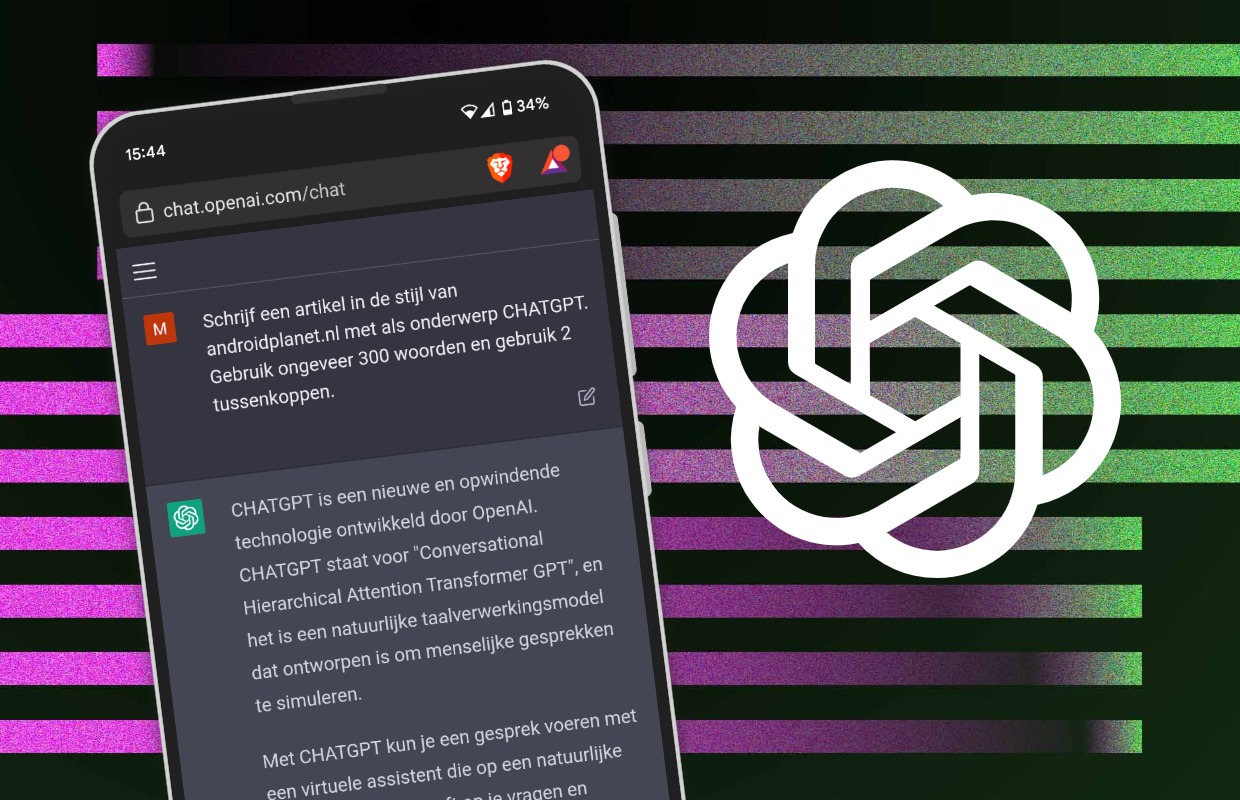
    Chat GPT, the revolutionary AI-powered chatbot, has been making headlines in the tech world for its ability to simulate human-like conversations through the use of its advanced language model. Although initially the most popular way to use the tool was via its official website, it soon became obvious that its users wanted to take Chat GPT with them on the go with the convenience of just launching a mobile app rather than a browser.

    This became half a reality when OpenAI, the AI research company that developed Chat GPT, released an app for iOS devices. When the iOS version was released, OpenAI promised that an app for Android was soon to follow.
    Two months later, OpenAI followed its promise and opened pre-registrations for Android users interested in installing the app. Once registered, the app was to install on your phone automatically once it was available.

    Fortunately, we didn’t have to wait long as the app is now fully available on the Google Play Store with its listing stating that “This official app is free, syncs your history across devices, and brings you the newest model improvements from OpenAI. With ChatGPT in your pocket.” This is great news for those that already use Chat GPT on their desktops and would like to have their chat history available everywhere.

    Just as with the iOS app, ChatGPT Plus subscribers will have exclusive access to the next-gen GPT-4 language model, early access to features, and faster response times. Free subscribers, however, will be using OpenAI’s standard GPT-3.5 language model.
    In addition to the new official app, Android and iOS users alike have the option to utilize the ChatGPT chatbot through the Bing app, which now offers a Bing Chat widget that can be conveniently added to their mobile device’s home screen. Your move Google.
  • Google Assistant and AI might help Pixel users understand what they are reading online

    Google Assistant and AI might help Pixel users understand what they are reading online

    code found in the latest beta version of the Google app (version 14.29) indicates that Google Assistant will soon be able to use generative AI to help summarize passages found on the internet. While browsing the web, a user can tap on a “Summarize” button when the Google Assistant’s presence is requested with the iconic “Hey Google” call out. Or, you can ask the Assistant to “Summarize this” to see a quick summary of what you are reading on the screen.

    The Summarize suggestion will appear when browsing the internet using Chrome or when an app opens a web page in a Custom Tab (also powered by Chrome). At the moment, the feature does not work as requests for the Assistant to summarize a passage from a website return an error message as seen in the embedded image below.

    While it isn’t clear if and when this feature will be made available, it is a strong possibility that the Google Assistant’s AI summary of internet content will be limited to Pixel phones and tablets only. Google Assistant is supposed to be more optimized and offer faster responses on a Pixel handset.
    The problem with relying on AI to summarize a document is the same problem that is typical with artificial intelligence: the possibility that summaries from Google’s AI service will contain “hallucinations.” These AI platforms are “trained” using information derived from humans and could contain biases and outright incorrect data. But this is something that you need to keep in the back of your mind anytime you use AI to interpret information.
    The Google app right now will also help answer your queries using generative AI on Android and iOS. All you have to do is tap the “Generate” button to the right of your question on the Google app and you’ll see more enhanced information related to your search. Again, you’ll need to watch out for hallucinations and biases, if any.
  • New Balance introduces new retail concept to Singapore

    New Balance introduces new retail concept to Singapore

    New Balance recently opened a concept store in Singapore, featuring a Volumental 3D foot scanner in the fitting area.

    Since partnering with Volumental in 2017, the retailer says that it has scanned the feet of more than one million shoppers worldwide.

    The scan, which takes less than five seconds, provides employees with detailed information about a customer’s feet, helping them find a shoe that’s sure to fit.

    Volumental claims that the solution helps brands and retailers to: reduce return rates by 18%; increase footwear sales by 20%; achieve email capture rates of 71%.

    Earlier this year, Volumental launched a new self-service version of its AI-powered foot scanners.

    Specifically designed for an in-store experience, customers can take their own foot measurements at the click of a button and receive their best-fitting footwear recommendations on their phones.

    Volumental said it expected to launch this globally starting with select stores in the sporting goods industry, outlet malls and brand warehouses in 2023. This followed a beta test with Under Armour.

    “Our new self-service scanners will bring the same technology that specialty footwear retailers have enjoyed to many more retail segments,” said Alper Aydemir, CEO, Volumental.

    “Having worked with footwear retailers across different store formats, service environments, and staffing models, we realized the need for a self-service enabled shopping experience that is both innovative and easy to use for shoppers.”

    “This solution takes the guesswork out of the whole fitting experience and helps shoppers make smarter and faster purchase decisions with better-fit outcomes.”

    “The personalized recommendations create a more engaging customer experience, allow retailers to manage inventory in a much smarter way, and help solve the huge returns issue facing the industry.”

    Volumental’s self-service scanners will be placed in dedicated co-branded spaces in-store.

    Touchscreens will provide the customer with instructions on use as well as nearly instant personalized size recommendations on their perfect fitting brands and styles.

    Volumental was highly commended at the 2022 RTIH Innovation Awards last month, after impressing our judging panel in the Omnichannel Retail Initiative of the Year category.

    Our 2022 winners and highly commended entries were revealed at a sold-out event in central London on Tuesday, 6th December.

    RTIH Editor, Scott Thompson, said: “Innovation and technology play a critical role in the success of the retail sector, so it is great to recognize standout examples through our awards.”

    “Thanks to all those who entered the 2022 event. We received a record number of submissions and many fantastic examples of the continued resilience and dynamism of the retail space during hugely challenging times.”

    “Congratulations to our 2022 retail technology hall of fame entrants.”

  • Apple co-founder Wozniak fears that AI will be used to scam the public

    Apple co-founder Wozniak fears that AI will be used to scam the public

    Apple co-founder Steve Wozniak, affectionately known as “The Woz,” says that artificial intelligence could make it harder to spot scams. Wozniak says that content created by AI should clearly be labeled as such and that regulation is needed or else bad actors will take control of the technology. Wozniak talked to the BBC about this issue two months after he and other tech leaders, including Elon Musk, signed an open letter asking for a slowdown in developing powerful AI models.
    Speaking to BBC Technology Editor Zoe Kleinman, Wozniak said, “AI is so intelligent it’s open to the bad players, the ones that want to trick you about who they are.” While The Woz thinks that the lack of emotion will prevent AI from replacing humans in the workforce, he fears that it will make bad actors seem more convincing when they are trying to scam the public. That’s because conversational AI chatbots like ChatGPT can create text that sounds convincing to the layman.
    As a result, Wozniak says that those who publish text written by AI are responsible for labeling it as AI-generated. “A human really has to take responsibility for what is generated by AI,” Wozniak says. He wants regulation to hold big tech firms accountable. The Woz didn’t mention any particular firm but said these are the tech companies that “feel they can kind of get away with anything.”
    Not that Wozniak was specifically talking about the company he helped create, but Apple CEO Tim Cook said to investors during a conference call last week that when it comes to AI, Apple would be “”deliberate and thoughtful. Cook added, “We view AI as huge, and we’ll continue weaving it in our products on a very thoughtful basis.”
    The Woz was not optimistic that regulators will be able to oversee the use of artificial intelligence. “I think the forces that drive for money usually win out, which is sort of sad,” he said. While he doesn’t believe that the development of AI can be stopped, he thinks that people can be educated to help them find situations where their personal data is at risk due to fraud.
  • Microsoft launches its all-new AI-powered Bing on mobile

    Microsoft launches its all-new AI-powered Bing on mobile

    After introducing its new Bing and Microsoft Edge apps powered by AI, Microsoft announced the launch of the new Bing preview and Edge on mobile. The Redmond-based company figured out that most of the searches occur on mobile phones these days and decided to bring the new AI capabilities to smaller screens around the same time as PC.

    The new Bing and Edge mobile apps are now available for those who wish to try them out. Along with a new experience, Bing mobile offers a fresh design as well. Tapping the Bing icon allows users to engage in a chat session asking simple or complex questions.

    Another important change added, one of the preview community’s most requested features, is voice. Voice search is now available not just on desktop, but also on mobile too. For those who have access to the preview, the new Bing experience will be available from the homepage of the Microsoft Edge mobile app.

    Additionally, Microsoft announced the launch of the AI-powered Bing for Skype. Starting today, the new Bing in Skype is available worldwide in preview. While Microsoft is fine-tuning the app, Skype users who use Bing will still get real-time answers to their questions.

    The new AI-powered Bing for Skype experience includes personalization options that allow users to choose how they want answers to be displayed such as bullet points, text or simplified response. According to Microsoft, Bing can translate text from more than 100 languages, so that’s another plus. Although Skype user interface will vary during initial rollout, these features will remain available to everyone who has access to the preview.

    Those who wish to try these out must sign up for the Bing preview. Keep in mind though that you may occasionally find connectivity issues when your network signal is low. Microsoft is aware of these problems are will probably fix them sooner rather than later.

  • Spotify launches new feature powered by AI to enhance music curation

    Spotify launches new feature powered by AI to enhance music curation

    As more companies adopt AI (artificial intelligence), many services are getting new features that are now fully automated and less curated by the human touch. Spotify’s new AI DJ is meant to bring personalization to a new level.

    In an announcement earlier today, the music streaming service explains that its new feature is a personalized AI guide that “knows you and your music taste so well that it can choose what to play for you.” It might sound frightening at first glance, but it’s exactly what many customers are looking for when using Spotify on a daily basis.

    Granted, the new DJ feature powered by AI is only rolling out in beta, it promises to provide customers with a curated lineup of music, as well as commentary around the tracks and artists that it thinks the user likes “in a realistic voice:”

    Among the many capabilities of the AI DJ, Spotify mentions the ability to sort through the latest music. It can also look back at some of the old favorites and serve more songs that the user might not have listened to for a long time.

    The AI DJ assesses your actions all the time and after each review, it tries to deliver a stream of songs picked specifically for you. More importantly, it refreshes the lineup based on feedback regularly.

    If you don’t like a song picked by the DJ, you can tap the dedicated button and it will skip to a new track. As with all these AI-powered features, the more you use the DJ, the faster it learns what you like, so the better your recommendations will be in the end.

    The new DJ feature is available via the Music Feed on Home in the Spotify mobile app for iOS and Android devices. Simply tap Play on the DJ card and the app will do the rest. You’ll be getting music and short commentary on the songs and artists specifically picked for you. Don’t forget that you can skip a song by tapping the DJ button at the bottom right of the screen.

  • Alibaba tests ChatGPT-style tool as AI buzz intensifies

    Alibaba tests ChatGPT-style tool as AI buzz intensifies

    Alibaba Group on Wednesday said it is developing a ChatGPT-style tool that is currently in internal testing, joining a race by tech companies globally to show they are up to speed on generative artificial intelligence (AI) developments.

    The Chinese e-commerce group’s statement came after the 21st Century Herald newspaper reported that Alibaba is developing a ChatGPT-like dialogue robot which is currently open to employees for testing.

    When asked about the newspaper report, which also said that Alibaba might combine the technology with the group’s communication app DingTalk, Alibaba declined to comment.

    The company said it had been focused on large language models and generative AI for a number of years. Large language models are natural language processing systems which are trained on massive volumes of text, and are capable of answering and comprehending questions as well as generating new text.

    Alibaba’s US-listed shares rose 3.2 per cent premarket after the news.

    Shares in a number of other Chinese AI technology companies have soared in the past few days due to investor excitement over Open.Ai’s ChatGPT, which can generate articles, essays and jokes in response to prompts and has been rated the fastest-growing consumer app in history.

    Shares in Chinese search engine giant Baidu jumped by 15 per cent on Tuesday after it said it planned to complete testing of its “Ernie bot” in March. Google owner Alphabet Inc is also planning its own chatbot service and said it will use more artificial intelligence for its search engine.

    Microsoft, which owns Open.AI, plans to tie ChatGPT in with its search engine Bing.

    On Wednesday, another Chinese tech group JD.com said it was looking to integrate some methods and technology similar to ChatGPT’s into some of its products, such as its e-commerce platform’s customer service.

    A source familiar with NetEase told Reuters that the Chinese gaming company plans to deploy similar large language models technology to serve its education business.

  • Microsoft’s big AI announcement means that Bing could replace Google as top search app

    Microsoft’s big AI announcement means that Bing could replace Google as top search app

    Microsoft announced tonight that it is integrating its Bing search engine and Edge web browser with the AI superstareveryone is talking about, ChatGPT. Microsoft is investing billions in OpenAI, the developer of ChatGPT, so it makes sense that Microsoft’s search engine and web browser get first crack at adding the conversational AI experience to its mobile apps.

    While Bing currently has about 9% of the online search market, Microsoft expects to generate $2 billion in additional advertising revenue for each percentage point of market share it adds. For Q4 2022 Google Search generated revenue of $42.6 billion compared to “only” $3.2 billion for Microsoft’s search and news advertising revenue. That’s a gap Microsoft is hoping to close and more.

    During a press briefing at Microsoft headquarters in Redmond, Washington, CEO Satya Nadella said, “This technology is going to reshape pretty much every software category.” ChatGPT is available on the Bing website for a limited number of users and will be ready for mobile users via the Bing app in the weeks ahead. But before you get too excited, during the “limited preview stage,” only pre-set queries will be allowed. At a later date in the future, free-form queries will be answered.

    You first need to join a waitlist to get the Bing app with ChatGPT integration. You can jump ahead in the line by making Microsoft apps the default choice on your PC and scanning a QR code to install the new Bing app on your phone.

    Bing will use OpenAI’s most powerful Prometheus model which will use real-time web data from Bing. That means Bing’s chatbot will be able to give answers based on current events rather than post answers that are limited to 2021 data. And with ChatGPT, Bing users will be able to get a summary of the articles they are reading, compose emails, and translate them to reach more readers. Microsoft warns that ChatGPT, like most AI chatbots, is apt to give incorrect information which it calls a hallucination. The company says more user feedback will help reduce hallucinations.

    Not all analysts see Microsoft’s move as a big one for consumers. Gartner analyst Jason Wong said Microsoft’s “partnership with OpenAI is more relevant for its business customers.” Even so, Wong stated that Microsoft could offer “disruptive opportunities” in consumer businesses as well. The analyst said, “Except for gaming, Microsoft has not been a leader in key consumer technologies, such as search, mobile and social media.”

    Microsoft says that the AI-driven Bing will no longer simply disseminate links. Instead, it will give users clear answers in simple language combining answers that Bing found on the web and from its collection of data. On the Edge web browser, ChatGPT could be used to help users understand long and complex documents.

    Google tossed its hat into the conversational AI era yesterday by announcing Bard. Google CEO Sundar Pichai wrote that AI is “the most profound technology we are working on today. AI helps people, businesses and communities unlock their potential.”

    ChatGPT was forecast back in December to replace Google in a couple of years. Now it seems possible that this is going to happen earlier than expected. The chatbot can “write computer code, create complex essays, decorate your home, come up with a winning marketing idea, and more.” Teaching professionals are concerned that students will turn to AI chatbots to write essays instead of using their own brains.


  • Vietnamese can’t wait for official rollout, pay for ChatGPT accounts using VPN

    Vietnamese can’t wait for official rollout, pay for ChatGPT accounts using VPN

    With ChatGPT still not available in Vietnam, service providers are offering to set up accounts for fees of up to VND200,000 (US$8.52).

    Seeing friends chat with the artificial intelligence-based chatbot provided by U.S. startup OpenAI, Hong Nhung, an office clerk in the central city of Da Nang, tried to create an account.

    However, in Vietnam, the only way yet to set up an account is by using a virtual private network (VPN) and getting a foreign phone number.

    Since she was unable to do it by herself, Nhung turned to service providers. “Some people say they will do it for free, some say they will do it for a cup of coffee but others charge VND20,000 to VND200,000,” she said.

    In the end she managed to set up an account for VND20,000.

    Dong Quan, the administrator of a ChatGPT group with more than 20,000 members, said demand increased sharply a week ago.

    There are dozens of posts about selling accounts and how to use the chatbot on the online group every day, and each attracts hundreds of comments, he said.

    The price varies based on the flexibility to change passwords and other benefits, he explained.
    OpenAI’s has said users can start experimenting with $18 in free credit that can be used during their first three months.

    Some sell the same account to many users, even take free accounts shared on online groups and sell them at high prices.

    Quan said his group has received reports of some people paying money but not getting an account and others tricked into clicking on fake links and losing their email accounts.

    Experts suggest people should not pay more than a few tens of thousands of dong for an account or should register with their own email address to get permanent use.

    For service providers, creating an account on OpenAI takes just a couple of minutes, and the cost of messaging is VND3,000.

    According to AI engineer Nguyen Hoang Bao Dai, ChatGPT has become popular globally and in Vietnam because this is the first time people have access to a large AI model.

    ChatGPT not only chats normally like traditional chatbots, but also searches, processes information and responds precisely and instantly. Its ability to keep the chat smooth and easy-to-use interface are other factors.

    Data from Similar Web shows that within two months of its launch, ChatGPT has reached 100 million users.
    According to Sensor Tower, TikTok needed nine months to reach 100 million users, Instagram needed 2.5 years and Google Translate 6.5 years.

  • AI solutions help reduce traffic accidents

    AI solutions help reduce traffic accidents

    VinAI’s Driver Technology Software provides drivers with a 360-degree view of all surroundings, including blind spots, to help avoid traffic accidents.

    At the recent 2023 Consumer Electronics Show (CES) in Las Vegas (U.S.), VinAI showcased two smart driving features – Automatic Mirror Adjustment (AMA) and Jelly View, a 360-degree view mode. AMA is the world’s first auto mirror adjustment feature, according to a VinAI announcement.

    These are the two newest features of the Driver and Occupants Monitoring System (DMS/OMS) and Advanced Surround View Monitoring (SVM). Both are in-vehicle solution suites that apply AI to reduce traffic accidents and improve the driving experience.

    VinAI applies infrared cameras, vehicle sensors, and facial expression analysis technology (ranked 6th in the world), which detect the driver’s condition, such as drowsiness or fatigue, and also monitors for risky behaviors, including being distracted or using a phone. As soon as the system detects such issues, the DMS issues different levels of warnings throughout the journey, even when the driver is wearing sunglasses or a mask.DMS is compatible with various hardware platforms, enabling carmakers to easily integrate it into their existing systems without spending too much on transformation.

    The Automatic Mirror Adjustment (AMA) is also an outstanding feature, easily activated with just the touch of a button. AMA can automatically adjust the mirrors on both sides of the car to the perfect position, thanks to the driver’s eye position analysis.

    The system works by estimating the driver’s eye position three-dimensionally. Normally, this problem would require two or more cameras to solve, but VinAI’s advanced system can accurately predict eye position with a single infrared camera.

    The VinAI enhanced 360-degree panoramic view feature (ASVM) helps the driver keep a close eye on the outside world while driving. The driver can also adjust the view using the on-screen control panel by choosing Jelly View mode, a transparent wraparound view. With the support of Jelly View, the driver can observe the entire space surrounding the vehicle: the front, rear, behind and outside, from the trunk to the chassis.

    The system uses AI technology to collect images from four fisheye cameras as well as information from the accelerometer to construct the vehicle’s chassis view in real-time. This helps drivers observe blind spots through the rearview mirrors. From there, users can easily detect obstacles and avoid unexpected accidents on narrow roads, rough roads, or in parking lots.

    The SVM system won the VnExpress Innovation Awards 2022 and is currently being deployed in the VFe34 electric car in Vietnam. The Jelly View feature was first introduced to the public at CES 2023.

    Dr. Bui Hai Hung, General Director of VinAI Artificial Intelligence Research and Application Joint Stock Company, said the new AMA and Jelly View features had received positive reviews from professionals as well as consumers at CES 2023.

    These AI solutions can significantly reduce accidents, which are a big issue not just for Vietnam, but also for the world, including developed countries. This “life-saving” technology is highly applicable.

    VinAI has also developed various AI products in many other fields including smart cities. One such solution includes Smart Edge, an access control solution that uses facial recognition technology. Smart Edge is currently deployed to more than 50,000 people at Vinpearl resorts, Vinhomes Ocean Park, Vinhomes Smart City, and Vinhomes Grand Park. The feature has proven to be over 99% accurate.

    Just three years since its establishment, VinAI has registered 66 patents in Vietnam and the U.S. and has published 107 research papers at the world’s leading AI conferences.

    VinAI was the only Vietnamese company ranked by Thundermark Capital as one of last year’s top 20 leading global AI research companies.

    VinAI’s cutting-edge machine learning-based technology aims to address global needs in various industries, with a focus on automobiles and smart cities.

    VinAI’s cutting-edge machine learning-based technology aims to address global needs in various industries, with a focus on automobiles and smart cities.

    VinAI’s cutting-edge driving technologies, including AMA and Jelly View, were showcased at CES 2023 from January 5 to January 8, offering guests the opportunity to experience these features first-hand in two electric cars, VinFast’s VF8 and VF9. The vehicles were installed with the full set of driver monitoring systems and 360-degree panoramic view systems.

  • AI chatbot predicted to replace Google in a couple of years

    AI chatbot predicted to replace Google in a couple of years

    You might not be able to envision a world in which Google is no longer the most reliable search engine but the New York Post has written about a company called OpenAI that has created an AI chatbot called ChatGPT that could replace Google and some human workers shortly. With over 1 million users after launching a week ago, ChatGPT can write computer code, create complex essays, decorate your home, come up with a winning marketing idea, and more.
    To understand how impressive ChatGPT is, consider this. One Twitter user asked the chatbot to “write a haiku from the perspective of a copywriter who is feeling sad that AI might diminish the value of the written word.” The response was brilliant. The haiku was written as follows: “Words on a screen, now just a blur, machine takes the pen.
    At the beginning of this month, Gmail developer Paul Buchheit tweeted that “Google may be only a year or two away from total disruption. AI will eliminate the search engine result page, which is where they make most of their money.” He added that AI will do to internet search what Google did to the Yellow Pages. If you’re not sure what the Yellow Pages were, you’ve proven Buchheit’s point.
    Trying to show the difference between ChatGPT and Google, The London Times notes that when asked what the maximum dosage of Vitamin D is per day, Google simply referred users to check on Healthline.com. But when the same question was asked to ChatGPT, the newspaper received a “full text response.”

    Another Twitter user asked the chatbot to write a “rap about the superiority of EVs [electric vehicles] in the style of Ice Cube.” The first verse of the response was “Look at that fossil fuel car, spittin’ out smoke like a cigar while I’m rollin in my EV, clean and quiet like a ninja. No need for gas, no more trips to the pump. I save some cash and help the planet out with a jump.”
    There are some downsides to ChatGPT. Bleeping Computer.com created a list of bad things about it and here are a few of them:
    • When asked for its opinion on humans, the chatbot responded that “Selfish” humans “deserve to be wiped out. Uh oh. Have you ever seen Westworld the movie?
    • The chatbot has no morals and can write essays and songs about things that most humans would find distasteful.
    • It can write emails for phishing without typos. Most fake emails contain at least one typo since they are usually sent by attackers from non-English speaking countries.
    • ChatGPT can write software, but it can also create malware. This is a major problem.
    • It has created content that is racist and sexist. Another big issue.
    • Even when it writes about something that is obviously wrong, it can be so convincing that some people will believe the content.
    To use ChatGPT, you need to have an account with OpenAI. You can sign up by clicking on this link. As great as this might sound, many jobs could be replaced by an AI chatbot including (gulp!) writing jobs. Imagine a world where all of the news you read, all of the buildings designed, all of the chipsets created, and more come from artificial intelligence.
  • AI Spending Grew 20.7% in 2021

    AI Spending Grew 20.7% in 2021

    Worldwide revenues for the Artificial Intelligence (AI) market, including software, hardware, and services for both AI-centric and AI non-centric applications, totaled $383.3 billion in 2021, an increase of 20.7% over the prior year, according to an International Data Corporation (IDC) Worldwide Semiannual Artificial Intelligence Tracker. IDC expects the AI market value will reach nearly $450 billion in 2022 and maintain a year-over-year growth rate in the high teens throughout the five-year forecast.

    “Across all industries and functions, end-user organizations are discovering the benefits of AI technologies, as increasingly powerful AI solutions are enabling better decision-making and higher productivity,” said Rasmus Andsbjerg, associate vice president, Data & Analytics at IDC. “The reality is, AI offers solutions to everything we are facing at the moment. AI can be a source for fast-tracking digital transformation journeys, enable cost savings in times of staggering inflation rates and support automation efforts in times of labor shortages.”

    AI software again accounted for the largest share of the overall AI market in 2021. Combined, the four AI software categories – AI application delivery & deployment, AI applications, AI system infrastructure software and Artificial Intelligence platforms – delivered more than $340 billion in market value in 2021, with AI applications representing nearly half the total. Artificial Intelligence platforms delivered the strongest year-over-year growth at 36.6%, albeit from a smaller baseline.

    Within the AI applications category, AI customer relationship management (CRM) applications and AI enterprise resource management (ERM) applications each delivered about 16% of the category total. The remainder was delivered by the myriad of other AI applications available in the market. With nearly 300 companies vying for opportunities to gain share, the AI applications market remains highly competitive.

    IDC’s AI tracker also shows that AI-centric applications, in which AI technologies are central and critical to the function of the application, continued to slowly grow their share of the AI software market. In 2021, AI-centric applications captured 12.9% of the market, up 29.3% year over year. The remainder of the market was held by AI non-centric applications, where AI technologies are integral to certain workflows of the application, but if those technologies were removed, the application would still be able to function.

    Similarly, the deployment of AI software to the cloud continues to show steady growth. In 2021, 47.3% of AI software purchases were deployed to the public cloud, an increase of 4% over 2020 and 8.4% over 2019. IDC expects cloud deployment of newly purchased AI software to surpass on-premises deployments in 2022.

    The AI services market saw its total value increase 22.4% year over year to $24 billion in 2021. Client demand for expertise in developing production-grade AI solutions helped the AI IT services category grow 21.9% year over year to $18.8 billion. The AI business services category grew 24.2% year over year as organizations sought assistance on AI governance, business processes and talent strategies.

    AI hardware was both the smallest ($18.8 billion) and fastest growing (38.9% year-over-year growth) segment of the AI market. The hardware growth was driven by efforts to build dedicated AI systems capable of meeting the increased compute and storage demands of AI models and data sets. While both AI servers and AI storage delivered strong growth in 2021 – 39.1% and 32.9%, respectively – server purchases were notably larger at $15.6 billion.