Retail News CRM

Tag: AI

  • AirAsia India becomes the first airline in India to use the revolutionary AI-powered CAE Rise Training System

    AirAsia India becomes the first airline in India to use the revolutionary AI-powered CAE Rise Training System

    AirAsia India and CAE have announced their collaboration to integrate the CAE Rise Training System into the airline’s simulator training program. AirAsia India is the first airline in India to adopt a data-driven training program using CAE Rise™.

    CAE Rise leverages analytics to deliver a higher quality of training, providing real-time data during training sessions while giving instructors insights that enable them to assess a pilot’s technical competencies and performance objectively. As long-time collaborators, AirAsia and CAE have worked together since 2014 on pilot training at CAE network training centers.

    “This collaboration uniquely incorporates CAE’s distinct features, which enable a more robust data-driven training program for our pilots,” said Capt. Manish Uppal, Head of Operations, AirAsia India. “At AirAsia India, we continue to be at the forefront of integrating technology and ensuring that safety is paramount in every aspect of our training and operations.”

    “With Indian regulator DGCA aiming to make Evidence-Based Training (EBT) implementation mandatory, CAE Rise will be a key tool in collecting data to support a smooth EBT implementation and practice,” said Capt. Arun Nair, Chief Pilot Training & Standard, AirAsia India.

    “We are thrilled that AirAsia India will leverage the benefits of CAE Rise™ for their pilot training,” said Nick Leontidis, CAE’s Group President, Civil Aviation. “With CAE Rise™, AirAsia India is investing in the development of their pilots and the safety of their passengers.”

    Launched in 2018, the CAE Rise training system is a technological innovation that enables the translation of simulator training data into valuable insights for instructors and training managers. This new training system compares independent sources to provide increased confidence in grading data quality. In addition to monitoring SOP compliance, CAE Rise augments each instructor’s capability to identify pilot proficiency gaps and evolve training programs to the most advanced aviation safety standards including AQP, ATQP, and EBT methodologies.

  • Stop Making “Personalized” Content that Still Feels Generic

    Stop Making “Personalized” Content that Still Feels Generic

    Personalization – you’re doing it wrong.

    There are only a handful of trends or innovations in the world of loyalty marketing that can cause as much global stir as personalization does. And even though most companies have a pretty common understanding of what it is – an act of tailoring an experience or communication to your clients’ needs and preferences, that is – many of them still have troubles with implementing it correctly. The big question is: why?

    Presumably, the biggest reason for that is – personalization is hard; especially, when you have thousands of clients in your database. For real, how are you supposed to address each and every one of them while also paying attention to what they buy, watch, read (or whom they follow on Instagram)? Exactly.

    And so, hundreds of companies decide to lower the bar and opt for sending their clients “personalized” messages, which usually include a Hi-[name]-type greeting, and some bits of information regarding their activity (“Is it summer already? You’ve bought 10 bottles of anti-sweat lotion this month!”) – the rest remains the same for all.

    But is that personalization, really? To say it’s selective would be an overstatement. Anyone can notice that those are but cosmetics changes made to help create an impression that a given message is personalized. Some people fall for that, sure, but most clients – the ones that have seen hundreds of newsletters and special-offer signs in their lives – can tell it’s not real personalization (and so would you if you were in their shoes). That’s because the e-mails and notifications they receive don’t correspond with their needs and personal interests.

    Does that mean that personalization, as it is discussed and promoted by today’s marketers, is impossible to pull off? Nothing could be further from the truth. Think about it – do you actually believe that, with all the technology available to us, we cannot provide each customer with content they can relate to?

    We can, but it requires the right IT tools and… data. This is where modern loyalty management platforms enter the conversation.

    How well do you know your customers?

    Let’s start with the obvious – if you have a loyalty program, you are sitting on a gold mine right now. Why? Because you’re literally drowning in data concerning your customers. Not only can it tell you what, when, and how they usually buy, but it can also reveal what their hobbies, passions, interests, needs, and preferences are; how they perceive the world around them.

    Of course, with the amount of data we’re dealing with here, it is impossible for a human mind to process all of that information and produce findings that could help you improve your communication with your customers. For that, you must use an artificial one.

    In other words, what you need in this scenario is a modern AI-powered loyalty management system that can analyze insane amounts of customer data, identifying trends, interests, needs, and dreams within your clients’ shopping and loyalty program behavior in the process. Not only will a loyalty marketing platform (like the one that Comarch provides, for example) allow you to learn what your customers’ preferences are, but it will also help you craft the right message and send it over the right communication channel at the right time and place.

    How? Well, have you heard about customer segmentation? If you have, then you must know that AI-driven loyalty marketing platforms are now being designed to help you divide clients from your database into groups based not only on demographics but also on their hobbies and preferences. What it means is that the system can suggest creating specific messages for dedicated groups of individuals who feel the same way about particular products and how they want to be approached by a given brand. Because of its power, the system can identify thousands of such customer groups (or clusters, as we tend to call them) and help you automate your communication processes to make sure no client is left unsatisfied. Now, that’s an innovation.

    The important thing is that with AI, you can stop trying to create meaningful content and actually start creating it. Establishing strong customer relationships no longer feels like a job based on a gut feeling. Instead, you know exactly what you’re supposed to do – be genuine.

  • SK Telecom to Help Upgrade Palau’s Communication Infrastructure

    SK Telecom to Help Upgrade Palau’s Communication Infrastructure

    SK Telecom (SKT) announced that its Vice Chairman Park Jung-ho and CEO Ryu Young-sang met with Surangel Whipps. Jr., the president of the Republic of Palau, to discuss cooperation to upgrade Palau’s communication infrastructure.

    SK Telecom also asked the Palauan government to support Busan’s bid to host the “World Expo 2030”.

    At the meeting, Vice Chairman Park Jung-ho said, “The World Expo 2030 Busan highlights the seriousness of the global climate change and the need for each country to take an active response. It will also serve as a great opportunity for Palau to experience Korea’s innovative technologies and methodologies to respond to climate change.”

    SKT CEO Ryu Young-sang also suggested cooperation with the Palauan government to upgrade Palau’s current 4G LTE infrastructure to 5G. “Based on SKT’s technologies and experience accumulated through the world’s first commercialization of 5G, we can work together to build 5G infrastructure in Palau,” said      Ryu Young-sang.

    According to SK’s press release, President Whipps showed great interest in SKT’s formidable 5G infrastructure built across Korea as well as other advanced technologies including AI, metaverse, IoT and cloud services. There was also discussion about renewable energy, another industry that SKT has much experience in.

    Meanwhile, in June this year, SKT has become the first Korean mobile operator to provide LTE roaming service to customers traveling to Palau, a popular tourist destination for Koreans.

  • Elon Musk Says Tesla AI Day Pushed To September 30

    Elon Musk Says Tesla AI Day Pushed To September 30

    “Tesla AI Day pushed to Sept 30, as we may have an Optimus prototype working by then,” he wrote on Twitter, almost two weeks after he announced the date of Aug. 19.

    Optimus is a humanoid robot that Tesla is working on priority. Musk has previously said that it could be launched next year.

    “Optimus could eventually address global shortages of labor, and in the short term might be able to carry items around a factory,” Musk had said in January.

    This is Tesla’s second AI (artifical intelligence) Day, the first happened on Aug. 19, 2021.

    Musk, in one of his tweets in May, also said that the purpose of the AI day is to convince great AI/software/chip talent to join Tesla.

  • Zurich Buys Estonian AI Chat Start-Up

    Zurich Buys Estonian AI Chat Start-Up

    The Swiss insurer is buying an Estonian start-up for conversational artificial intelligence. The move is a bid to improve the digital capabilities of its customer services.

    The Zurich-based insurer it is buying Alphachat, a four-year-old Tallinn-based company with a messaging automation product that understands natural language, authenticates users, and provides personalized responses, it said in a statement on Thursday. Zurich didn’t disclose the financial details of the deal.

    The insurer said it wants to use Alphachat’s conversational artificial intelligence to try and meet increasing demand from customers for personalized products and services, 24/7. Alphachat represents a considerable reinforcement of Zurich’s AI capabilities.

    The start-ups’ CEO, Indrek Vainu, said Zurich will launch a hub for intelligent automation in Estonia in order to create AI-powered messaging automation solutions for its customers.

  • Gap buys AI tech business

    Gap buys AI tech business

    Gap is investing on AI and machine learning technology through the acquisition with the New York and Tel Aviv-based start-up Context-Based 4 (CB4).

    CB4’s technology has been implemented by several fashion retailers, including Levi’s, Urban Outfitters, Lidl, and Kum & Go. Gap says the acquisition will help it transform its retail operations and improve the customer experience by enhancing predictive analytics and demand sensing.

    “We believe artificial intelligence and machine learning will shape the future of our industry,” said Sally Gilligan, chief growth transformation officer and head of the strategic growth office at Gap.

    “We understand the impact and the wide applications their science can have across sales, inventory and consumer insights, as well as its potential to unlock value and enhance the customer experience.”

    Since moving to the cloud last year, Gap has increased its investments in technology to enable growth and innovation that can impact its entire portfolio of brands. The value of the CB4 deal has not yet been disclosed.

    Before acquiring CB4, Gap bought e-commerce startup Drapr, which powers 3D-fit technology and virtual fitting rooms to reduce returns of online sales. Its strategic growth office also participated in the latest funding round for Obe Fitness, a digital fitness platform that partners with Gap’s Athleta Brand to bring entertainment, pop culture and design to fitness.

  • DBS Announces More Tech Job Openings

    DBS Announces More Tech Job Openings

    DBS continues to add tech talent with plans to hire around 150 related positions via a virtual hackathon.

    DBS will hire for around 150 technology positions through a virtual hackathon, Hack2Hire, an annual program in its fourth edition, according to a statement.

    The positions will be for 14 developer and engineering roles across artificial intelligence (AI), machine learning and blockchain technologies.

    Successful candidates from the hackathon will be invited for a final interview during the event.

    The latest expansion follows 140 job openings previously announced in May during the bank’s female-focused virtual career fair.

    With Covid-19 greatly accelerating the pace of digital adoption, it is now more important than ever to ensure that our digital offerings continue to stay ahead of our customers’ needs, said DBS’ group head of big data/AI and consumer banking technology Soh Siew Choo.

  • UBS Takes Stake in AI Advisor Platform

    UBS Takes Stake in AI Advisor Platform

    UBS is taking a stake in an artificial intelligence platform that matches institutional clients with investment experts.

    UBS has invested $5 million in Lynk in its latest funding round, taking the technology company’s total funding to $35 million, Lynk said in a press release Wednesday. Lynk says it has a network of more than 840,000 global experts. Its proprietary technology is driven by an AI data engine that indexes individuals based on their experience and expertise to match users with subject matter experts on its platform.

    Lynk was founded by Peggy Choi in 2015. The firm has eight offices, including New York, Hong Kong, Singapore, Mumbai, Shanghai and Toronto.

    UBS announced a global alliance with Lynk in May for its institutional investor clients and subscribed to the platform in 2020. The collaboration is run via UBS Investment Bank’s principal investment team.

  • Nokia trials AI technology in Melbourne to keep streets clean and safe

    Nokia trials AI technology in Melbourne to keep streets clean and safe

    Nokia the City of Melbourne have conducted a trial using Nokia Scene Analytics artificial intelligence (AI) technology to develop a deeper understanding of waste disposal behaviour. This will allow the city to tackle the issue of waste dumping more efficiently keep laneways – the busy and narrow city streets and pedestrian areas – even more clean, safe and free of garbage.

    To decrease the frequency of waste contractor visits to busy areas, the City of Melbourne has offered local residents and businesses subscription-based access to the large-capacity compactor facilities. With the compactor in place, Council then wanted to understand how the service was being utilised and how to mitigate illegal waste dumping, which can quickly create safety and hygiene issues in the area.

    Under its ‘emerging technology testbed’ initiative, the City of Melbourne worked with Nokia to leverage an existing network of installed cameras as internet of things (IoT) sensors to monitor one of the compactors. The Nokia Scene Analytics solution employed an AI-powered algorithm to filter and collate data from the cameras, while also combining other data sources, such as operational data on the compactor itself, to create real-time alerts and produce reports. Initial trial results demonstrate that Scene Analytics can support the City’s objectives for better, safer citizen experiences while simultaneously lowering maintenance and down time costs for waste management services.

    This innovative use of Scene Analytics has been recognized on a national stage as the partnership between Nokia and the City of Melbourne was shortlisted for the Communications Alliance’s ACOMMS awards in the Artificial Intelligence category.

    Lord Mayor Sally Capp, City of Melbourne, said:“This is a great example of using new technology to help remove illegal waste more quickly, make our city cleaner and protect the environment. Our partnership with Nokia is another way we are gathering data to make Melbourne a safer, smarter and more sustainable city. This innovative project will help to avoid hazards and make our streets even cleaner by allowing our waste services to better understand behavior trends related to the illegal and dangerous dumping of waste.”

    Rob Mccabe, Head of Enterprise of Australia and New Zealand,Nokia,said: “The City of Melbourne is using robust AI technology to offer its citizens, visitors and businesses a greener and more liveable community. In helping the City of Melbourne monitor and enhance services with real-time driven actions, Nokia Scene Analytics is supporting the safety, security and operational continuity of this city in a proactive and automated way.”

  • FedEx To Test Package Deliveries With Self-Driving Startup Nuro

    FedEx To Test Package Deliveries With Self-Driving Startup Nuro

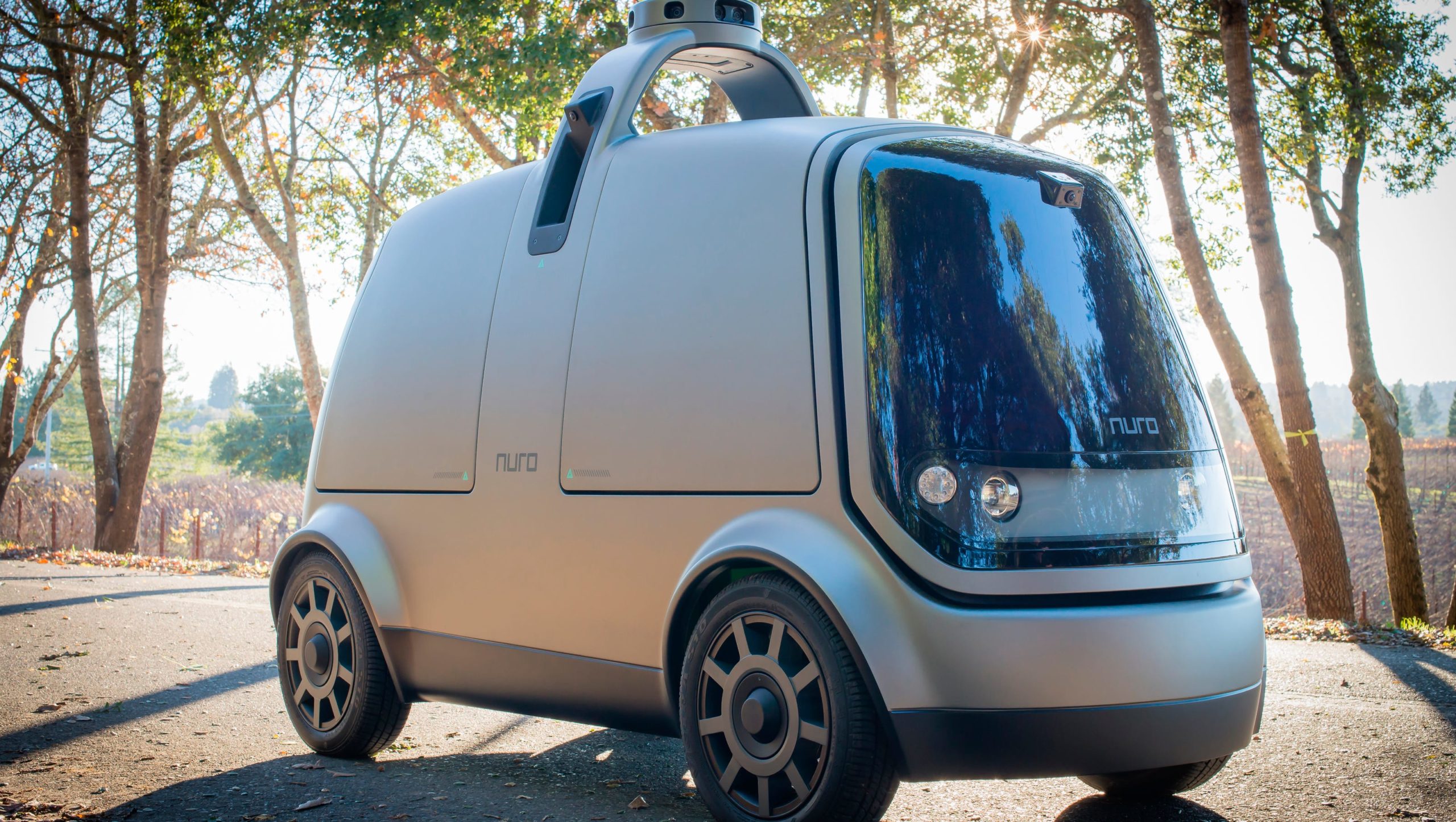
    FedEx Corp and robotics company Nuro on Tuesday announced a multi-year agreement to test self-driving vehicles in the package delivery company’s network, starting with a pilot program in Houston. The partnership comes as parcel companies race to reduce the cost of last-mile delivery, which surged during the pandemic. The companies will target delivery scenarios where Nuro’s low-speed, unmanned vehicle can provide “the biggest bang for your buck,” Cosimo Leipold, Nuro’s head of partnerships, told Reuters in an interview.

    That will likely include inefficient tasks like late-night pickups in out-of-the-way places, said Rebecca Yeung, FedEx vice president for advanced technology and innovation. “Instead of dispatching a driver to get those packages, a device like Nuro could be super helpful,” said Yeung, who called the FedEx/Nuro tie-up a “very serious, long-term commitment” that aims to reduce headaches, not human drivers.

    Nuro vehicles are already making deliveries for U.S. supermarket operator Kroger Co and Domino’s Pizza Inc in the Houston area. Nuro continues to test its technology in Arizona. Nuro, whose R2 unit has space for delivery cargo but not a human driver, said last year it has raised $500 million. In a separate project, FedEx is using DEKA Research & Development Corp’s smaller robot, dubbed “Roxo,” for on-demand, same-day deliveries in Plano, Texas.

    Nuro vehicles are already making deliveries for U.S. supermarket operator Kroger Co and Domino’s Pizza Inc in the Houston area.

    Rival United Parcel Service Inc is centering its unmanned delivery efforts on drones. UPS has ordered electric delivery vans from British startup Arrival. Those vehicles are fitted with sensors and cameras that should gradually enable autonomous features, but will still require a human driver.

    Transporting people via self-driving taxis is proving more difficult and expensive than delivering packages and food. As a result, freight and logistics companies are exploring ways to roll out the technology on predictable and simple routes, including on highways.

  • Singaporean retailer opens three AI-powered unmanned grocery stores

    Singaporean retailer opens three AI-powered unmanned grocery stores

    Cheers, a sub-brand of Singapore’s largest Convenience store chain FairPrice recently launched an AI-powered cashierless store with Cloudpick. This is not the first unmanned convenience store opened by Cheers. The company piloted its first “unattended” store in Nanyang Technological University (NTU) in 2017, followed by two more at the National University of Singapore.

    Unlike the first three stores, the new unmanned and cashless store is equipped with Cloudpick,the world’s leading AI digital retail technology solution provider, replacing self-checkout counters and creating a completely frictionless shopping experience powered by its patented AI system and computer vision technology.

    Cashierless checkouts have been evolving for years. With the ongoing global pandemic, retailers are seeking new ways to enhance the shopping experience, including reducing in-store human-to-human contact by eliminating the checkout lines.

    Cloudpick has empowered many retail chains in more than 11 countries around the world, and has landed more than 130 AI-powered cashierless stores. Other players providing computer vision checkout solutions such as Aifi, Zippin and Standard Cognition, which announced recently that it has raised $150 million in Series C funding led by Japan Softbank.

    The grab-and-go Cheers store sells a variety of drinks, prepackaged food and snacks. When entering the Cheers store for the first time, the customers can download the Cheers SG app and add their payment method. They can use facial recognition or scan the QR code from App to enter the store. The customers then can just walk in, grab any items they want and simply walk out. The AI system track which products customers pick up and return; virtual baskets are updated accordingly by the algorithms, and customers’ digital accounts are automatically charged after exiting the stores. Consumers can quickly purchase their favored products even during peak hours.

    In addition to ‘fast billing speed’, the store can also enrich the customer’s shopping experience through smart bar screens in the store, this is also the first of its kind in the world. The smart bar screens can be used to effectively communicating with customers, such as displaying product information, suggestions, invoking coupons, and even playing competing advert campaigns if brands are willing to do so. The AI system is accurately identifies the audience standing in front of the screen, and play only the advert that is relevant and most efficient in creating conversion and facilitate customers’ decision-making process.

    On the other hand, Cheers cashier-less convenience store has gotten rid of its high dependence on human resources. The automated cashier-free solution allows store operator to save on labor costs and allow 24/7 store operations, it removes the repetitive and tedious checkout work and provides more in-person services for customers. Meanwhile, the Cloudpick AI system completely digitizing ‘people, product and place’, it makes the operations and management process easier and more effective.

    For instance, no more store inspection is needed for store operators, they will be notified in real-time when a product needs restocking. The real-time inventory check function allows the clerk to replenish products without spending countless times counting each of the items and verify the inventory. In terms of product selection, the business intelligent reports enable operating personnel to accurately grasp the most popular brands and product categories to make the best product selection decision, thus increasing sales based on improving customer satisfaction.

    Mr.Seah Kian Peng, CEO of FairPrice Group mentioned, once the AI system adopted by Cheers autonomous convenience store is proven successful, the system may be rolled out to more sub-branches in the future.

    With Cloudpick’s advanced technology and experience, the company will help FairPrice stores to break through manpower constraints, and through digital transformation, comprehensively enhance the customer shopping experience.

  • ZTE launches i5GC to support private 5G networks for vertical industries

    ZTE launches i5GC to support private 5G networks for vertical industries

    The solution introduces 5G capabilities such as large bandwidth, low latency, high reliability and multiple connections into various industries, and integrates technologies such as AI, IoT, cloud computing, big data and MEC to enable the digitalisation of whole industries and build fully-connected intelligent private 5G networks for vertical industries.

    At present, public 5GC is oriented to consumer applications, so it cannot meet industry users’ ultra-high requirements for security, latency, reliability, network control rights, energy consumption and usage environment. ZTE i5GC addresses this by deeply integrating and optimising 5GC functions. It uses 2U general servers to achieve the integration of multiple network functions (NF) and a plug-and-play one-stop deployment mode to achieve minimal space, minimal energy consumption and minimal operation and maintenance (O&M).

    This solution provides non-professional industry users with rapid and accurate 5G network access deployment and excellent service experience. In addition, ZTE i5GC can be flexibly customised according to a user’s diversified requirements for security, traffic processing and autonomy, and provide different function combinations and deployment forms for different scenarios. For instance, the user plane function (UPF) is deployed to the edge, traffic is forwarded nearby, and user data is locally managed. In addition, ZTE i5GC employs a 3GPP service-based architecture (SBA) to seamlessly interconnect with a 5G public network. It can integrate third-party multi-access edge-computing (MEC) applications through open interfaces to achieve flexible expansion and rapid iteration of edge applications, so as to explore and breed 5G killer applications in the vertical field.

    Towards the construction of business-grade 5G networks, ZTE has implemented in-depth 5G applications for use in vertical fields such as mines, medical treatments and ports. For example, for a 5G smart mine project, ZTE uses i5GC to deploy a complete set of 5G networks underground, meeting the mine’s compact space and explosion-proofing requirements, and achieving full coverage from key 5G networks. ZTE i5GC will continue to focus on industry projects, promote the understanding of industry requirements, work with enterprises and operators to build a 5G application ecosystem, help expand the ‘blue ocean market’ opportunity for 5G for business, and drive 5G large-scale commercial use and value monetisation.

  • $2.5 billion Japanese AI startup taps Vietnam market

    $2.5 billion Japanese AI startup taps Vietnam market

    AI Inside, a $2.5-billion Japanese artificial intelligence startup, has entered Vietnam through a partnership with a local company as part of its global expansion strategy.

    The company will partner with OCG Technology, a joint venture between a unit of state-owned Vietnam Posts and Telecommunications Group (VNPT) and Japan’s Nippon Telegraph and Telephone, to sell its software to the Vietnam market.

    AI Inside’s software converts paper documents into electronic data using artificial intelligence, and its target customers are companies that want to automate manual tasks like typing handwritten forms into spreadsheets.

    The five-year-old startup, which claims a 64 percent market share in Japan’s market for AI-based optical character recognition (OCR) software, has seen its number of contracts for the software double between July and September last year, according to a report.

    Its share price has increased fivefold since its initial public offering in December 2019, giving it a market capitalization of $2.5 billion.

    The company is also planning to expand to other Asian markets like Thailand and Taiwan.

  • Real-World Examples of Text Analysis and AI-Driven Market Research

    Real-World Examples of Text Analysis and AI-Driven Market Research

    AI and text analysis is being incorporated into every aspect of life. On social media, entertainment, work, marketing, and sports, automation is becoming more “human.” The result is less time spent doing tedious tasks and more energy to focus on developing ideas and drafting new strategies. The following are examples of where AI and text analysis is creating an impact.

    Real Estate

    AI-driven market research and text analysis are making it easier to find and sell properties/ There is a significant amount of data to analyze before making a real estate investment, including the potential value of the property, market in the area, KPIs, and characteristics of the property. Getting the data together isn’t difficult, but the challenge is analyzing it to inform investment decisions.

    Property managers are discovering the benefits of AI in calculating assets, finding information about a property’s environmental footprint, and updating portfolios. An AI algorithm predicts future market value by looking at recent numbers and considering other factors such as changing prices in the area, crime rates, transportation, and schools.

    The number of data points required for analyzing property can be overwhelming.  AI technology organizes the information, sorts of relevant points, analyze the data, and updates existing information. AI also assists in creating in-depth property analysis for clients. It also makes property management easier with automatic updates on when things should be repaired, tenant information, and price trends.

    Real estate agencies and sites use chatbots to directly interact with potential buyers and sellers and collect useful information. For instance, if a visitor to a website or a social media page clicks on a link, they can immediately interact with a chatbot that answers questions and requests email addresses or  Whatsapp numbers of potential buyers and sellers.

    Market Research

    The amount of consumer data available online is a boon to market research. However, given the sheer enormity of social media updates and reviews, gathering and analyzing this information creates a significant challenge. AI-driven market research tools take unstructured user-generated content and create actionable data.

    AI and text analysis tools perform sentiment analysis, evaluating social media updates and reviews for emotional coloring, tone, and word choice. Machine learning associates certain words and phrases with emotions and gives each text a rating from very positive to very negative and in-between. These ratings are combined and compared to provide an overview of how consumers feel about a product or brand.

    The advantage of AI and text analysis is that it deals with direct feedback from customers rather than second-hand data from financial reports or company-generated resources. The main focus is the customer, and information about their preferences is the most relevant information. Market forecasts attempt to predict what consumers will want. Text analytics allows customers to customers to say they want directly to companies.

    Workplace

    AI in the workplace is at its early stages but is poised to grow rapidly. According to a Deloitte survey, 41% of businesses replied they are using automation extensively throughout their operations. Some examples of these tasks are ones that involve simple decisions, such as customer service chatbots that respond to specific queries according to set FAQ responses.

    In many cases, these automated tasks are not meant to replace the workforce. Still, they eliminate routine tasks so employees can spend their energy on tasks that require complex thinking or intricate decision making. For instance, a loan agency may use automated tools to calculate simple loans, but those that involve multiple factors are still dealt with by humans.

    Sentiment analysis is also used in the workplace to gauge how employees feel about their jobs, areas where they may need assistance, and where their morale is at its highest and lowest point. Public company chats and forums can yield user-generated data that can be evaluated by the human resource department using sentiment analysis tools. Besides, responses to memos can uncover between the lines how employees really feel about a new policy or launch.

    Sports

    Given the affection for numbers and statistics in sports, it is a natural area for AI to flourish. The success of data-driven strategies was seen in the 20 game-winning streak of Oakland Athletics in 2002 as depicted in the film Moneyball. The team applied data-driven strategies to players’ individual statistics and, through analytical tools, positioned each player according to his attributes. The result was an overwhelming success against rivals who had much larger budgets.

    AI is tremendously useful in scouting and recruitment. Statistics about players, such as the number of home runs or other performance data, can be calculated with AI tools to measure potential. AI also monitors training regimens and can personalize a diet, workout, and practice schedule suited to each player. AI uses performance indicators to evaluate how players are improving and where they need to improve.

    AI and Text Analysis Are Everywhere

    Smart AI technology is powering everything from the chatbot at a favorite website, communications at work, real estate investors’ calculations, and even draft picks for a favorite team. These tools aim to complete tasks more quickly and efficiently and offload monotonous jobs to automation to concentrate on the main task. Since automation saves money and time, it is being adopted rapidly and will continue to create value.



  • Korean startup translates dog barks using AI

    Korean startup translates dog barks using AI

    A South Korean startup has developed an AI-powered dog collar that can detect five emotions in canines by monitoring their barks using voice recognition technology.

    The Petpuls collar can tell pet owners through a smartphone application if their dogs are happy, relaxed, anxious, angry or sad. It also tracks dogs’ physical activity and rest.

    “This device gives a dog a voice so that humans can understand,” Andrew Gil, director of global marketing at Petpuls Lab said.

    The company began gathering different types of barks to analyse dogs’ emotions in 2017. Three years later, they developed a proprietary algorithm based on a database of more than 10,000 samples from 50 breeds of dogs.

    “I thought she was just happy when she played and felt sad and anxious when I wasn’t home…actually she felt angry when she lost a game she played with me, like how humans feel,” said Moon Sae-mi, who has a six-year-old Border Collie.

    The collar has a 90 percent average accuracy rate of emotional recognition, according to Seoul National University, which tested the device the company says is the first of its kind to be powered by AI voice recognition technology.

    Petpuls Lab started marketing the collar online in October last year at $99.

    The global pet care market was worth $138 billion in 2020, up 34 percent, Euromonitor data showed, as more people spent time at home with their pets or adopted pets during the COVID-19 pandemic. The global dog population also grew 18% the same year to 489 million.

    “More people began to adopt dogs, but unfortunately some of them abandoned their dogs due to miscommunication,” Gil said. “Petpuls can have an important role in the pandemic…it helps owners understand how dogs feel and increase their bonding.”