Retail News CRM

Tag: AI

  • Yahoo News gets smarter with AI-powered makeover

    Yahoo News gets smarter with AI-powered makeover

    Yahoo News has recently unveiled a significant update to its news app, incorporating artificial intelligence (AI) to enhance the user experience. This revamp comes after Yahoo’s acquisition of Artifact, an AI-powered news app founded by Instagram’s co-founders. With this update, Yahoo aims to streamline news consumption for its massive user base of over 180 million monthly visitors in the US.

    The most notable feature of the updated app is its personalized news feed. Users can select topics and publishers of interest, allowing the AI algorithms to tailor the feed accordingly. Additionally, a “Key Takeaways” feature provides a concise summary of an article’s main points, saving users time by offering a quick overview. This is akin to Artifact’s “Summarize” feature, highlighting the integration of Artifact’s technology into Yahoo News.

    Customization options go beyond topic selection. Users can block specific keywords or publishers they wish to avoid, further refining their news consumption experience. A particularly intriguing feature is the app’s ability to identify clickbait headlines. The AI can rewrite misleading, sensationalized, or incomplete headlines to provide more accurate and informative summaries.

    Yahoo’s AI-powered enhancements extend beyond the app itself. The company is also revamping its homepage layout, emphasizing top news, personalized recommendations, and real-time trending topics. This updated interface is designed to evolve and adapt over time, promising an ever-improving user experience. Yahoo plans to introduce new AI-powered features gradually, allowing users to opt in and explore these changes as they become available.

    The AI-powered update to the Yahoo News app represents a significant step in personalizing news consumption. By leveraging AI algorithms and user preferences, Yahoo aims to deliver a more relevant and engaging news experience. While currently available for mobile users in the US, the update is expected to roll out on desktop platforms soon, further expanding its reach.

    It’s worth noting that this integration of AI into news delivery raises questions about the potential for algorithmic bias and the need for transparency in how news is selected and presented. As AI plays an increasingly prominent role in shaping our information landscape, these are important considerations for both news providers and consumers. You can download the new Yahoo News app from the App Store or the Google Play Store.

  • DHL Express adds innovative feature on AI-powered platform to help businesses access new markets

    DHL Express adds innovative feature on AI-powered platform to help businesses access new markets

    DHL Express, the world’s leading international express service provider, has further enhanced its AI-powered platform, “My Global Trade Services” (MyGTS), with a new “trade lane comparison” feature. This feature enables businesses of all sizes to find references to existing trade lane regulations and requirements between the exporting and importing country or territory. With this, companies planning a market expansion strategy can leverage the solution to make well-informed decisions to maximize efficiency and gain competitive advantage.

    MyGTS is an online self-serve portal that helps users easily retrieve customs information to pre-plan shipments as they access new markets or launch new products. The new feature uses artificial intelligence and machine learning to provide an overview of the trade agreements in place and estimated duties/taxes which are included in the landed cost of the different trade routes. Landed costs can be defined as the total cost of getting a product from the factory to a customer’s door. Besides shipping fees and insurance, it includes estimated customs duties and taxes for cross-border shipments.

    On the platform, users will simply need to indicate the product they are shipping and the desired exporting and importing country or territory. This is especially useful to small and medium enterprises (SMEs), often challenged by a lack of internal resources, knowledge, and expertise to navigate a complex landscape of customs regulations and procedures.

    “Companies including SMEs are doing what they can to boost business resilience and global presence. However, SMEs tend to be impeded by the intricacies of trade regulations and processes, slowing down their expansion plans,” said Yung C. Ooi, Asia Pacific Senior Vice President for Commercial, DHL Express. “The new trade lane comparison capability helps SMEs enhance the understanding about customs requirements and landed cost. It aligns with our commitment to providing innovative solutions to help SMEs lower major trade barriers and become more confident in cross-border trade activities.”

    With this information, businesses can analyze and identify routes that offer the most favorable import and export conditions, leading to potential cost savings and increased profitability. When sourcing or procuring materials from different factories or vendors, importers can identify references of where import license or permits are required for entry. On the other hand, exporters will be informed about the import customs requirements for the products that they want to ship to the destination country or territory. This valuable insight helps businesses to define their go-to market strategy, strategically positioning themselves in new markets.

    With a heightened focus on risk mitigation and resilience, companies can leverage this feature to reduce reliance on single-sourcing locations. Moreover, businesses can tap into the burgeoning Asia market, which presents immense market opportunities fueled by many manufacturing powerhouses and emerging consumer markets. The latest DHL Global Connectedness Report shows that corporate globalization is rising, as companies invest in overseas markets, and expand their international presence.

    MyGTS is part of DHL’s Global Trade Services, which contains a suite of capabilities that help shippers easily navigate the increasingly complex customs regulations and requirements. Besides the new trade lane comparison feature, MyGTS also includes a pre-shipment planner tool that helps businesses know the import/export requirements regulations and calculate landed costs.

  • AI skills fetch IT engineers 11% higher incomes

    AI skills fetch IT engineers 11% higher incomes

    IT engineers with AI skills earn around 11% higher than those without, a study has found.

    The report by Levels.fyi, a platform that provides salary data in the U.S., shows that AI engineers make 8.57% more at the entry level than non-AI ones. The gap widens to 11.08% at the staff engineer level.

    The median salary for AI engineers in the U.S. was US$300,600 as of March, the highest ever. Some companies pay much more than the median level.

    Self-driving car company Cruise, for example, offers its senior-level AI engineer $450,000, and Amazon pays $427,500.

    “As AI shakes up much of the industry, it also raises the bar for engineering compensation in 2024,” Levels.fyi analyst Alina Kolesnikova said.

    “It’s a testament to where businesses are choosing to invest and where they aim to compete for top talent.”

    A report by professional services firm PwC says U.K. employers are prepared to pay an average 14% wage premium for jobs that require AI skills, with legal and tech sectors seeing the highest premiums of up to 58%.

    This puts the U.K. in second place behind only the U.S., which is prepared to pay on average 25% more for AI skills.

    Companies are making big plans to train the next generation of AI workers.

    J.P. Morgan has invested an unspecified amount in establishing an AI research center at Carnegie Mellon University in the U.S. and Amazon has pledged to educate two million people worldwide on generative AI by 2025.

    In April U.S. tech billionaire Elon Musk said salaries for engineers must be increased to prevent them from being lured away by OpenAI with huge sums.

  • Microsoft’s Copilot AI chatbot arrives on Telegram

    Microsoft’s Copilot AI chatbot arrives on Telegram

    Microsoft’s popular AI chatbot, Copilot, is making an impact in the tech world once again by expanding its reach to the messaging app Telegram. This strategic move allows users to integrate AI interactions into their daily conversations seamlessly. Telegram, known for its privacy-centric approach, now hosts the official Copilot bot, complete with a verification checkmark and the username @CopilotOfficialBot

    Accessing Copilot on Telegram is straightforward, requiring users to search for the bot and share their Telegram phone number with Microsoft. This step, while necessary for functionality, might raise some eyebrows among Telegram users who value the app’s strong emphasis on privacy.

    While Copilot for Telegram mirrors many features of its counterparts, it does come with certain constraints. Unlike some other AI chatbots, it currently focuses on text-based interactions and does not support image generation. However, its capabilities are far from limited. Microsoft highlights Copilot’s ability to perform internet searches, provide movie recommendations, generate workout routines, assist with coding tasks, translate conversations, and offer quick facts.

    Users should note that there is a daily limit of 30 conversational turns, which means the user and Copilot can only exchange 30 messages back and forth within a 24-hour period. This limitation aims to manage resource allocation while ensuring fair access for all users.

    This expansion into Telegram aligns with Microsoft’s overall strategy to integrate Copilot into various products and services. The company has already introduced Copilot for business applications, PCs with built-in Copilot functionality, Copilot for Microsoft 365, and a premium version offering access to cutting-edge AI models for a monthly subscription according to Microsoft is not alone in its efforts to bring AI chatbots to messaging platforms. Other companies, such as Meta and Google, have also integrated their AI models into their respective messaging apps. This trend points to AI’s growing importance in shaping how people communicate and access information in the digital age. It will be interesting to see how this move impacts the adoption and evolution of AI chatbots in the future.

  • For complex iPhone AI tasks, Apple will use cloud-based servers running M-series chips

    For complex iPhone AI tasks, Apple will use cloud-based servers running M-series chips

    Apple is planning on having more complex AI tasks for iPhones, iPads, and Macs get sent through the cloud to data centers using servers powered by Apple’s powerful in-house chips. Less complicated AI tasks will be handled directly on-device which will make them faster and more secure. According to a report in Bloomberg written by the news agency’s chief Apple correspondent Mark Gurman, the first chips to be used to power the servers in the data centers will be the M2 Ultra. That chip is currently used to run the Mac Pro and Mac Studio.
    The scuttlebutt calls for Apple to eventually develop an M4 Ultra chip to power the servers in the data centers. Apparently Apple had come up with a plan to use its own chips and cloud-based servers to run complex AI tasks three years ago but decided to accelerate the timeline once OpenAI kicked off the latest AI craze with the ChatGPT chatbot. In December 2022, when ChatGPT first started to become known to the public, Gmail developer Paul Buchheit said that AI will do to internet search what Google did to the Yellow Pages. Namely, make the older technology obsolete.
    On June 10th Apple will kick off WWDC 2024 and the keynote held on that day will preview the AI changes that Apple is planning for iOS 18 and Siri. It is being billed as the largest iOS update ever and we could see things like text summarization, AI-based search options, and document analysis on Safari, Siri, Messages, Mail, and Spotlight Search.
    If you’re like me, you can’t wait to see how Siri is affected by Apple’s AI initiative. The virtual digital assistant, originally launched with the iPhone 4s in 2011, soon found itself not as useful as Google Assistant with too many responses consisting of excepts from three websites. Hopefully the use of AI will help Siri deliver more precise responses to queries.
  • Amazon Music takes on Spotify with Maestro, an AI-powered playlist generator

    Amazon Music takes on Spotify with Maestro, an AI-powered playlist generator

    Spotify’s AI DJ raised the bar for music streaming, and now Amazon Music is throwing its hat into the ring with Maestro. This new AI-powered playlist feature is currently rolling out in beta to select Amazon Music users in the US on iOS and Android.

    If you’re part of the rollout, you’ll spot Maestro either on your home screen after updating the app, or by hitting the plus button to create a new playlist. However, where things get interesting is how you create them. Maestro uses natural language, meaning you don’t need technical terms to build your playlists.

    With Maestro, everything starts with a simple prompt telling it what you want to hear. Want a playlist bursting with energy? Type “songs to get me pumped!” or maybe “upbeat summer jams”. Maestro even understands emojis, in case you’re struggling to find the words to describe your mood best.

    However, Amazon is clear: this is a beta feature. Maestro, like any new AI tool, will probably have some hits and misses as it learns what you like. They’ve even built-in safeguards to try to block offensive language or prompts that are just too inappropriate.

    As a brand-new feature, Maestro is currently accessible to a limited number of Amazon Music users across Free, Prime, and Unlimited tiers. If you’re in the beta, you’ll see the option front-and-center in the app. While Unlimited subscribers can instantly listen to and save their generated playlists, Prime and free-tier users get 30-second previews to help them decide if the playlist is a good fit.

    The battle for your ears is getting interesting. Spotify jumped ahead with its AI DJ, but Amazon’s Maestro signals that the competition isn’t far behind. Soon, generating playlists based on moods, vibes, or even bizarrely specific requests might become the standard way we listen to music.

  • Samsung adds more language availability within Galaxy AI

    Samsung adds more language availability within Galaxy AI

    Samsung is taking a big leap forward today in its AI ambitions. Galaxy AI, the company’s on-device intelligence engine, just got closer to overcoming language limitations across the world with a huge expansion in language support.

    This spring, Arabic, Indonesian, and Russian support will be added to the thirteen available languages. Additionally, Australian English, Cantonese, and Canadian French dialects are now supported.

    But Samsung is not stopping there as later this year the company plans to bring Romanian, Turkish, Dutch, Swedish, and both traditional Chinese and European Portuguese support as well to Galaxy AI. This is a huge step in bringing AI capabilities to everyone globally, just like TM Roh, President and Head of Mobile eXperience Business at Samung, said: “Committed to democratizing mobile AI for all, Galaxy AI’s language expansion this year will allow even more Galaxy users to communicate beyond language barriers on a scale that is completely unique to Samsung.”

    As a reminder, these are the things that Galaxy AI can do for you:

    • Live Translate: If you make phone calls to another country or to someone who speaks another language, Galaxy AI can act as your own interpreter.
    • Interpreter: In-person chats can now be a breeze, even when they take place in different languages, with split-screen translations.
    • Chat Assist: Helps you tone down work emails and write snappy social posts with grammar and tone check.
    • Note Assist and Transcript Assist: Get summaries, formats, and even translations for those long meeting notes.

    You’ll be able to add these additional languages to your Galaxy device by downloading the new language packs that can be grabbed right from the Settings app. Right now, newer devices such as the Galaxy S24 series, Galaxy S23 series, Galaxy S23 FE, Galaxy Z Flip 5, and Galaxy Tab S9 series. However, more devices will be joining the Galaxy AI family soon.

  • WhatsApp will reportedly let you use Meta AI straight from its search bar

    WhatsApp will reportedly let you use Meta AI straight from its search bar

    Artificial Intelligence (AI) is everywhere these days, and we’d be pretty naive not to admit that it is transforming how we use our devices on a daily basis. Meta is one company that has been at the forefront of integrating AI into its platforms, and WhatsApp, Messenger, and Instagram users in the US already have a taste of what it can do. But soon, interacting with Meta AI might become even more seamless.

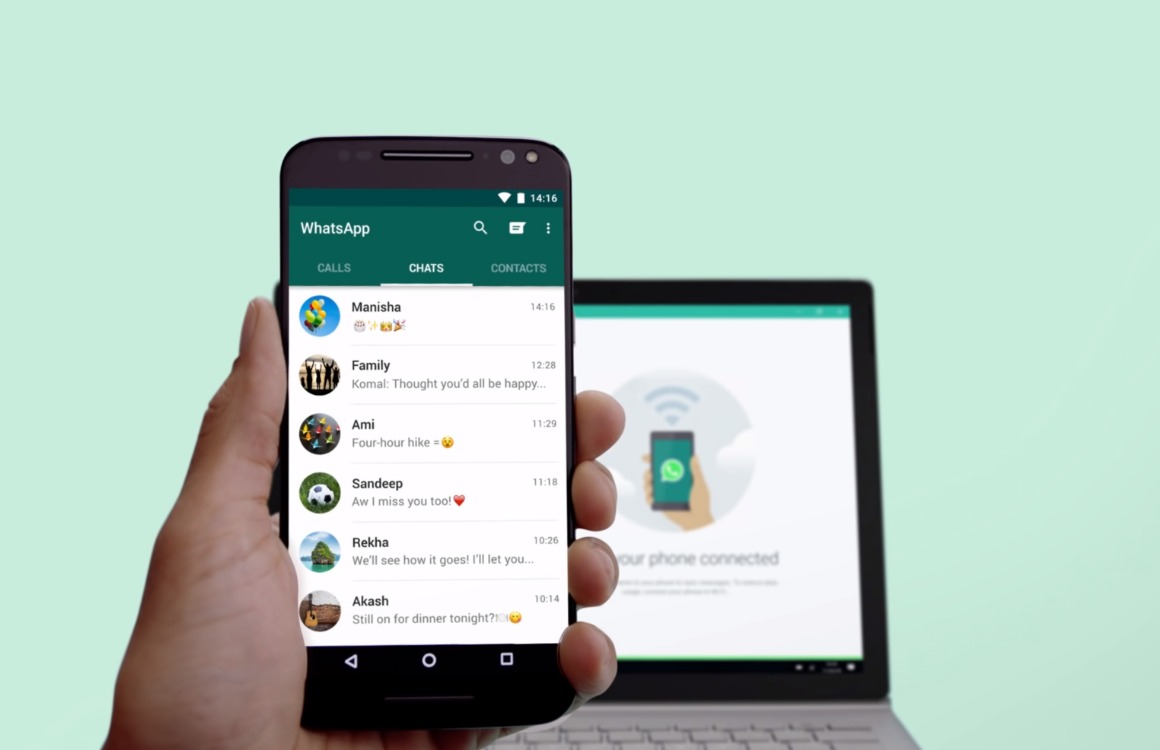
    According to WABetaInfo, Meta is working on a new feature for WhatsApp that allows you to ask Meta AI questions directly from the app’s search bar. This means that it will no longer be necessary to manually start separate AI chats.

    We can see a new prompt that reads “Ask Meta AI” beneath the search bar in the screenshot above from WABetaInfo. This prompt would reportedly eliminate extra steps, make interacting with the AI incredibly more convenient, and wouldn’t require that unsightly Meta AI shortcut that got in the way of accessing your messages.

    In fact, if you’ve ever used ChatGPT, Meta AI will feel familiar, as it is designed as an all-around assistant. However, one advantage that this chatbot will have is that instead of having to hunt it down, you’ll simply type your question into the search bar. WhatsApp is even planning suggested prompts to get your creative AI juices flowing.

    This feature is still under development and will likely appear in a future version of the app. In the meantime, WhatsApp is showing us that it is clearly all in on AI, as it is reportedly also working on implementing AI-powered image editing tools into its platform.

    WhatsApp’s new features are a glimpse into a future where AI is woven deeply into our everyday apps. It’s likely just the beginning, and I’m excited to see what other innovations Meta and other tech giants have in store.

  • Apple in talks to license Google’s Gemini AI to improve Siri, add new iOS features

    Apple in talks to license Google’s Gemini AI to improve Siri, add new iOS features

    The upcoming iOS 18 update is expected to be one of the biggest-if not the biggest-in iOS history. Part of that is due to the myriad AI features that Apple will be adding to the operating system including possible improvements to digital assistant Siri. While the date has not yet been announced, many iPhone users are looking forward to this June’s WWDC 2024 developer conference to see what changes Apple plans for its digital assistant.

    When Siri first hit the scene in 2011 with the introduction of the iPhone 4s, it appeared that Apple was on to something big. But eventually, Siri’s capabilities and performance were surpassed by Google Assistant and Amazon’s Alexa and a shot of AI could be the cure for what ails the old gal. Apple is talking with Google about licensing the latter’s Gemini AI. The talks between the two tech giants have progressed to the negotiating stage.

    Besides improving Siri, Apple hopes to use Gemini to add new AI-based features to iOS 18. Apple and Google already have an agreement to make Google the default search engine on Safari, a deal that reportedly pays Apple nearly $20 billion annually. Because the DOJ is investigating this deal, any deal involving Apple and Google, including one that would allow Apple to use Gemini, would probably have to be agreed to by the Justice Department or some other regulatory agency in the U.S.

    On Android, users can install the Gemini app and opt-in to have Gemini replace the Google Assistant although some features, such as reminders, controlling media, and routines will not work with Gemini. If you opted in to replace Google Assistant with Gemini and want to switch back, go to the Gemini app, tap the profile icon, go to settings, tap on “Digital assistants from Google” at the bottom, and select Google Assistant. On iOS, Gemini can be accessed from the Gemini tap in the top center of the Google app, right under the digital assistant.

    Should Apple and Google agree to license Gemini, we should see a greatly improved Siri, which is what all iPhone users have been hoping for.

  • Microsoft Copilot app can now be your next default assistant app on Android

    Microsoft Copilot app can now be your next default assistant app on Android

    Android users currently have a slew of options for choosing an assistant app on their devices. Where previously Google Assistant and Bixby were the ones that reigned, the rise of AI-powered chatbots saw these evolve as more than just text fields you can use on a browser. Currently, depending on the apps you have installed, you have fresh new options, and Microsoft’s Copilot is shaping up as one of them.

    As reported by Android expert Mishaal Rahman on X (Twitter), the newest beta version of the Microsoft Copilot app (v. 27.9.420225014) now gives you the ability to set it as your default assistant app. This makes the chatbot accessible from anywhere on your device with a simple swipe or button press.

    While this is a nice addition for Android users, don’t expect a seamless experience yet. Currently, activating Copilot mainly opens the app, meaning that it won’t immediately start listening like some other assistants, nor will it offer to analyze what is on your screen.

    However, this doesn’t mean that feature won’t be as helpful as Google Assistant or Bixby currently are, or perhaps even what Gemini could be. It’s still in beta, and Microsoft is likely to continue working on the app in order to make Copilot a truly integrated Android assistant. Microsoft has yet to officially announce this, but our guess is that by the time it moves on to the stable version of the app, more capabilities will be in tow.

  • Luxury airline plans to give select passengers a Vision Pro to use as in-flight entertainment

    Luxury airline plans to give select passengers a Vision Pro to use as in-flight entertainment

    At least one airline is planning on offering the Apple Vision Pro to some passengers as part of its in-flight entertainment offerings. Beond is a Maldivian airline that flies to five destinations and calls itself the world’s first “premium leisure airline” with business class service that includes gourmet meals, seats that fold down completely allowing passengers to sleep more comfortably during a flight, and soon, in-flight entertainment led by the Apple Vision Pro.

    In a press release dated Thursday, Beond said that it will start  offering the Vision Pro to select customers on its flights to the Maldives. Beond’s fleet has just doubled to two after the airline took possession of its second jet and in the middle of this year, it will start flights from Milan, Dubai, and Bangkok to the Maldives.

    Tero Taskila, Beond’s Chairman and CEO, said, “The Apple Vision Pro will transform the inflight entertainment experience, and we will be first to offer it to select passengers. In addition to our existing and ever-growing library of inflight content such as movies and games, Beond will showcase stunning resort destinations and activities in the Maldives. We are working now with partners in the Maldives to prepare truly amazing footage.”

    The executive continued, “The inflight experience will build anticipation for passengers before they arrive in the Maldives. Offering the Apple Vision Pro is another step in our vision of delivering a premium travel experience to our customers, from the start to finish of their journey. We’re proud to be the first airline to deploy the technology.” The press release didn’t mention how many Vision Pro units would be aboard each flight, nor did it mention how the airline would determine which passenger(s) would get the opportunity to don the headset.

    Now that Beond has become the first airline to announce plans to offer the Vision Pro to passengers, we could see the larger commercial airlines add the Vision Pro to their in-flight entertainment offerings. Considering the number of larger capacity planes that airlines could order the headset for, Apple could get a windfall.

  • Getting ready to embrace AI, Grammarly lays off 230 employees

    Getting ready to embrace AI, Grammarly lays off 230 employees

    If you write for a living, or you’re a student, Grammarly is probably one of your best friends online. Grammarly will help you find and correct grammatical and spelling mistakes and the paid version of the app and website will give you real-time writing suggestions to improve your report. For $12 a month, the paid version of Grammarly will even alert you to accidental plagiarism.

    With many analysts talking about a future where generative AI bots replace human writers, it makes sense for Grammarly to use AI to help subscribers improve their writing skills. This week, Grammarly announced that it is laying off 230 employees to focus on “the AI-enabled workplace of the future,” according to the company. Grammarly said, “This decision supports Grammarly’s vision of bringing responsible AI writing assistance to people and workplaces everywhere. Millions of people and thousands of businesses use Grammarly to achieve more through better writing.”

    In a memo to employees shared in a blog post, Grammarly CEO Rahul Roy-Chowdhury wrote, “As we strengthen our focus toward driving the AI-enabled workplace and deepen our technical investments in AI, we will need a different mix of capabilities and skillsets. We also need to redesign our organization to improve the quality and speed of collaboration — and that means, among other things, restructuring roles and co-locating certain teams.”

    The executive made it clear that the layoffs were not a cost-cutting measure and said that Grammarly’s financial position remains “strong.” Instead, reducing the headcount is being done to get Grammarly prepared for the coming AI future. Those leaving the company will receive a minimum of 3 months’ base pay. That increases for team members who have been with the company longer. U.S.-based team members leaving the company will have an option to continue receiving their health insurance benefits for up to six months.

    Grammarly is also helping those leaving the firm find a new position by offering “stipends or access to services for individualized career coaching, resume review, and other transition services.” The company will also create an “available talent” list that the public will be able to see. The list will include names, specialties, and “key results” that future employees can view. And those leaving Grammarly can keep their company-issued laptop for personal use.

    Looking ahead, it’s easy to see that Grammarly is hanging its hat on AI. CEO Roy-Chowdhury wrote, “We see massive opportunity as every individual and business begins to harness the power of AI. For nearly 15 years, we’ve been building a product that helps millions of people every day, makes teams measurably more productive, and is already used by employees in 96% of the Fortune 500. We’ll build on this foundation to bring even more value to our customers. AI will fundamentally change the workplace for the better—and Grammarly will play a leading role in driving that change.”

  • Google renames Bard to “Gemini” and launches Google One AI Premium plan with advanced access

    Google renames Bard to “Gemini” and launches Google One AI Premium plan with advanced access

    Google Bard is now Gemini, just “Gemini.” As announced today by Google, Bard — the company’s web-based chatbot — has now been improved, rebranded, and expanded by adding a new Advanced tier bundled into Google One. This is in addition to the new Gemini Android app launched today.

    Google One, the company’s cloud storage subscription service, now has a new tier called “AI Premium.” This tier includes access to Gemini Advanced — the new version of Gemini, formerly called “Bard”, which includes the latest Ultra 1.0 AI model — for $19.99 a month. Additionally, this new Google One tier gives you 2TB of storage, as well as other Google One benefits currently found in the Premium tier.

    Google states that Gemini’s Ultra 1.0 LLM model brings new advancements to the world of AI interaction, such as superior processing efficiency, advanced comprehension of instructions and programs, and innovative problem-solving abilities. The model is said to be capable of analyzing and explaining information, and it can even generate high-quality code in multiple programming languages.

    Additionally, Google is set to bring Gemini to a range of services including Gmail and Docs. This will allow users to enjoy automated text writing, create unique images, and even enhance video quality in Google Meet.

    With the Google One AI Premium plan, users can try out Gemini Advanced free for two months before the $19.99 subscription kicks in. This should allow users to fully explore Gemini’s capabilities before committing. If you’re someone who heavily relies on Google services and craves advanced functionality, the higher price point of these Google One plans might just be worth it, especially when you consider the 2TB of storage it includes and the upcoming integration with Gmail, Docs, and other Workspace apps.

    Gemini Advanced is currently only available in English and can be accessed through the web at gemini.google.com or the old bard.google.com URL, which automatically redirects. It is also worth mentioning that Gemini is currently in the development phase, and its overall effectiveness in the long run is yet to be determined. In addition, the plan’s emphasis on AI capabilities may not be suitable for all users, especially those who prefer straightforward cloud storage solutions.

  • Meet Rufus, Amazon’s new AI shopping assistant

    Meet Rufus, Amazon’s new AI shopping assistant

    Amazon is among the companies that has iterated a lot when it comes to artificial intelligence. The US-based giant continues to develop new AI tools, especially now that AI is the main buzzword in the tech world.

    The latest AI-powered feature introduced by Amazon is Rufus, an AI assistant that’s supposed to help users with their shopping sprees. As the biggest retailer in the United States, it’s only fitting for Amazon to launch such a product.

    According to Amazon, Rufus has been trained on its product catalog, customer reviews, community Q&As, as well as information from the web. The AI shopping assistant has been specifically designed to answer customer questions on a wide range of shopping needs and products. Rufus can even provide comparisons and make recommendations based on conversational context.

    Rufus is now available in beta, but Amazon will be starting to roll it out to customers in waves, beginning with a small subset of customers in the United States via the mobile app. Rufus will eventually be rolled out to the rest of the US customers in the coming weeks, Amazon says.

    If you’re interested in checking this one out, here are some of Rufus’ key features:

    • Learn what to look for while shopping product categories
    • Shop by occasion or purpose
    • Get help comparing product categories
    • Find the best recommendations
    • Ask questions about a specific product while on a product detail page

    To start using Rufus, simply start typing or speaking your question into the search bar in Amazon’s mobile app and the shopping assistant chat dialog box will pop up at the bottom of the screen. Keep in mind that this is only available for select customers in the US while it’s in beta.

  • Upgraded version of Siri with AI capabilities rumored to debut at WWDC 2024

    Upgraded version of Siri with AI capabilities rumored to debut at WWDC 2024

    Looking to play catch up with Google, Apple is expected to unveil some new AI-based features in iOS 18. “X” tipster @Tech_Reve recently posted a tweet in which he said that Apple will use an LLM (Large Language Model) to make Siri “the ultimate virtual assistant and is preparing to develop it into Apple’s most powerful killer AI app.” LLM, used on chatbots like ChatGPT, is a language model with a huge amount of data, allowing it to understand a broad range of conversations and respond correctly to them.

    We said yesterday that based on the weekly Power On newsletter written by Bloomberg’s Mark Gurman, Apple plans on adding new features and designs to iOS 18hoping that the software can help sell the iPhone 16 series which will feature very small hardware changes compared to this year’s models. This dovetails perfectly with @Tech_Reve’s tweet in which he says that the new Siri, using Apple’s own in-house LLM, will debut at the Worldwide Developers Conference (WWDC) next June and will be available on the iPhone 16 series and future models.

    This might be how Apple plans on selling uninspired hardware using iOS 18. The new version of Siri should be able to understand natural language and patterns of speech better. Whether the virtual assistant will ecome more of a challenger to the Google Assistant in terms of giving correct answers is unknown.

    Siri has disappointed many Apple device users since the virtual assistant was first introduced with the iPhone 4s in 2011. If I may digress, I find that using the iOS Google Assistant app will give you more direct answers to your queries instead of making you read a paragraph from Wikipedia. You can also set alarms and timers using the ios Google Assistant app.

    Gurman says that other areas where Apple could introduce AI functionality include the Pages app by helping users write letters, the Keynote app by helping users construct their presentation decks, and Apple Music by creating AI-generated playlists. To make this happen, Apple will need to beef up the AI capabilities of the A18 Pro chipset. When you think about it, this could explain why Apple is rumored to be packing all four 2024 iPhone models with the latest A18 Pro application processor (AP) next year.

    One big question is whether Apple plans on offering new AI features to older models that will be compatible with iOS 18. Apple is in a tough situation here since it wants to include as much on-device processing as possible. And adding new AI features only for the iPhone 16 line and up might improve hardware sales. But it also could leave many angry iPhone users who can’t easily upgrade next year or even the year after.

    Apple might have to allow some of the new features to be processed off-device. However, it might wait for a few months after the 2024 iPhones are released to give iPhone 15 Pro and other older Pro units some of the same AI functionality that we could see with the iPhone 16 series. This is what Google does with its Pixel phones. The Magic Eraser is a good example.

    The Magic Eraser debuted on the Pixel 6 line and helps erase unwanted and distracting items (including people and pets) from processed photos using AI. Earlier this year, Google added the feature to older Pixel models, other Android devices, and even iOS phones that are subscribed to Google One cloud storage.

    For those wondering how Apple would use a game-changing upgrade in iOS 18 to help sell the iPhone 16 line with its uninspiring changes, improving Siri and adding new AI capabilities tot he new phones is the answer.