Tag: airasia

  • AirAsia increases some flight frequencies from Cebu, Clark

    AirAsia increases some flight frequencies from Cebu, Clark

    AirAsia said Friday it was increasing flight frequencies out of its Clark and Cebu hubs to meet travel demand.

    Starting in January, the following will be flown daily from 3 times weekly: Clark to Iloilo (Z2 931) and Iloilo to Clark (Z2 932). The following will be flown 4 times weekly from 3 times: Cebu to Kuala Lumpur (Z2 7110) and Kuala Lumpur to Cebu (Z2 7111), AirAsia said.

    Starting March 29, the following will be flown 4 times weekly from 3 times: Clark to Tacloban (Z2 975) and Tacloban to Clark (Z2 976). Also on March 29, the following will be flown daily from 3 times weekly: Cebu to Puerto Princesa (Z2 543) and Puerto Princesa to Cebu (Z2 544), AirAsia said.

    “We are pleased to welcome the new year with additional flights, offering guests more options when flying with us as they accomplish their travel goals this 2020. Our adjustments are well guided by data, and I am very optimistic about the tourism boost this will bring to our country in the summer months,” said AirAsia Philippines CEO Ricky Isla.

  • AirAsia starts exclusive route from Kuala Lumpur to Da Lat, Vietnam

    AirAsia starts exclusive route from Kuala Lumpur to Da Lat, Vietnam

    AirAsia has unveiled its maiden flight to Da Lat, capital of Lam Dong province in the central highlands of Vietnam. The inaugural flight made history as the first international airline to offer direct services between Kuala Lumpur and Da Lat.

    Nattinee Tawanchulee, regional commercial head of AirAsia said: “We now add our latest destination to further expand footprint in Vietnam. This new direct service will provide additional air connectivity to the people in the central highlands of Vietnam to travel across the region, as well as introducing Da Lat as a holiday destination to the world. Also known as the city of eternal spring for its pleasant weather, it welcomes visitors all year round.”

    Da Lat is AirAsia’s seventh destination in Vietnam after Hanoi, Ho Chi Minh City, Da Nang, Nha Trang, Can Tho and Phu Quoc.

  • AirAsia names new boss in Japan

    AirAsia names new boss in Japan

    AirAsia has appointed Jun Aida as representative director and COO to lead AirAsia Japan, effective 1 January 2020.

    Jun will take over from Jenny Mayuko Wakana who will be stepping down 31 December.

    As a member of AirAsia’s senior leadership team, Jun will be responsible for the company’s airline operations in Japan and its future growth.

    AirAsia Group CEO Tony Fernandes said: “Jun brings with him extensive management experience across various industries. We see tremendous potential in Japan and now is the time to catapult AirAsia Japan into its next phase of growth and success.”

    Jun joined AirAsia Group as a senior advisor in 2017. Prior to joining AirAsia, he was managing director for Phoenix Resort Co Ltd besides holding senior management roles in various multinational companies.

  • AirAsia launches bundle deals

    AirAsia launches bundle deals

    AirAsia Group Bhd has continued its journey to becoming the fastest-growing travel and lifestyle platform in Asean with the launch of AirAsia Bundle Deals, through its airasia.com platform.

    AirAsia group chief executive officer (CEO) Tan Sri Tony Fernandes said this launch would further diversify the group’s offerings apart from selling airline tickets, restaurant business Santan, hotel platform, as well as its own music label Red Records.

    “AirAsia has grown a lot from becoming a one-trick pony,” he told reporters at the launch here today.

    With over 100 merchants for the AirAsia Bundle Deals in the Klang Valley currently, he said this would be expanded to other cities and countries including Penang, Singapore, Thailand, and beyond starting next year.

    Fernandes said customers would be able to unlock various lifestyle deals comprising food and beverages (F&B), beauty and services through bundled deals by geo-location for a 90-day pass at only RM20, or easily redeemable with only 2,500 BIG Points.

    Airasia.com CEO Karen Chan said the AirAsia Bundle Deals was not only limited to the general public who visit airasia.com, but in the next phase, it would have a corporate reward solution and corporate purchases for organizations that would like to reward employees.

    “We are pleased to introduce another new lifestyle product as part of our journey in becoming a lifestyle brand. As AirAsia envisions to being beyond just an airline, we are now offering travel, lifestyle, logistics, financial services and more to cater to your lifestyle needs.

    “Customers can indulge with deals such as free hair cut, free facial, free manicure and many buy-one free-one deals made available in different locations,” she added.

    Meanwhile, in conjunction with the launch, airasia.com is offering a 24-hour launch promo of only RM1 from midnight tonight for purchases of AirAsia Bundle Deals. Simply log on to airasia.com/deals to grab the deals.

  • Ankur Garg appointed as chief commercial officer at AirAsia India

    Ankur Garg appointed as chief commercial officer at AirAsia India

    AirAsia India on Sunday announced the appointment of Ankur Garg as its chief commercial officer (CCO), a role in which he will be in-charge of areas such as network and revenue management, marketing and sales, and cargo.

    Garg had quit as the vice-president of revenue management at IndiGoNSE -1.82 % a few weeks back. “Ankur Garg takes over from Mr Sanjay Kumar, AirAsia India’s Chief Operation Officer (COO)…Garg will report to Sunil Bhaskaran, MD and CEO, AirAsia India,” the airline said in a statement.

  • Inmarsat has high hopes for fitting GX to carriers across Asia-Pacific

    Inmarsat has high hopes for fitting GX to carriers across Asia-Pacific

    Even as Indian carriers lag behind in introducing inflight connectivity for passengers, there is action in the Asia-Pacific region, which is expected to account for roughly 40% of new commercial aircraft deliveries over the next 20 years.

    Inmarsat, which has high hopes for the region, says six AirAsia aircraft have been fitted with its GX Aviation Ka-band connectivity system.

    The service offers an improved experience over the Inmarsat SwiftBroadband-powered texting solution on offer at AirAsia.

    Passengers can avail of MB packages of data for the GX service, a model that is being increasingly adopted by airlines but which is not without its detractors. A 200MB package for MYR58 (roughly $14US) is positioned by AirAsia as being the “best for streaming”.

    For its part, AirAsia is thrilled to be offering GX on half-a-dozen aircraft. The company’s RedBeat Ventures subsidiary, ROKKI, manages the service, which has been integrated into its broader entertainment and e-commerce platform.

    “Some people are noticing what we are doing,” enthused AirAsia Group CEO Tony Fernandes in a tweet. He added: “Making products affordable and increasing quality. Bravo!”

    The service is slated to be implemented fleet-wide across AirAsia’s Airbus A320 and A330 models in 2020. This requires installation of the Honeywell JetWave terminals atop AirAsia’s fuselages, a time-consuming endeavor. But AirAsia may be compelled to quickly equip, as passengers are eager to get online.

    Other GX Aviation airline customers in the Asia-Pacific region include Air New Zealand, Singapore Airlines and Philippine Airlines.

    But new business opportunities abound. The Asia-Pacific region is expected to become the largest single market for broadband-enabled services in the next two decades, says Inmarsat regional vice president APAC Chris Rogerson, and Inmarsat believes it is in the right position to help them realize the full potential of a fully connected fleet today.

    “We foresee that by 2021 the majority of airlines will be offering inflight connectivity,” Rogerson tells RGN.

    Whether these carriers will ultimately offer free Internet browsing remains to be seen. Air New Zealand has already done it, and passengers are pleased. Inmarsat Aviation president Philip Balaam tells RGN that when a free WiFi service first goes live, passengers tend to push the system hard, but that “usage tends to settle back into more normal usage” thereafter.

    Regarding the free model, he says, “I strongly suspect that that’s a trend that we will see in general over time” or at least “a component of free. Now whether you provide full free and full free to everyone is something else. That’s more of a segmentation issue than anything else. But the idea of having ubiquitous free service to some level of SLA [service level agreement], I think we are on that journey.”

    In addition to supporting cabin connectivity and connected IFE, airlines are adopting GX for operational benefits, including real-time mapping for pilot electronic flight bags (EFBs) as well as other real-time crew and health monitoring applications.

    But GX is not the only service on offer for Asia-Pacific carriers. Among competitors in the space, Panasonic Avionics has an entrenched position in the region, counting several Chinese airlines as customers for its eXConnect-branded Ku-band connectivity solution, in addition to All Nippon Airways, Cathay Pacific Airways, Garuda Indonesia, Japan Airlines, Singapore Airlines, and Thai Airways.

    Last year, Panasonic further bolstered its connectivity portfolio by becoming a strategic value-added reseller for GX. Intriguingly, Rogerson tells RGN that the deal also enables Inmarsat to offer Panasonic’s NEXT IFE solutions to Inmarsat’s commercial aviation customers.

    “Over the past year, Inmarsat and Panasonic have made significant progress with aligning our processes and systems. This has been our core focus… [covering] important areas such as sales process, contracts, technology, and operations processes,” he says.

    India, meanwhile, one of the fastest-growing countries in civil aviation, is still in a huddle over inflight connectivity. Last year, licenses for In-flight and Maritime Communications (IFMC) were cleared by regulators.

    Inmarsat’s Indian teleco partner, state-owned telco BSNL, holds approval to offer connectivity to Indian airlines operating within and outside India, as well as foreign airlines transiting through Indian airspace. “As a result, Inmarsat will be set to begin offering GX Aviation services over Indian skies from early 2020,” assures Rogerson.

    Some carriers are already primed to offer the GX service to passengers. Indian budget carrier SpiceJet, for instance, has GX equipment installed on 13 Boeing MAX 737s. But these, like the rest of the MAX world fleet, have been grounded since last March.

    Even when the MAX is recertified, a hurdle awaits. Clearances are required from the Indian Space Research Organisation (ISRO) for a foreign satellite to be used.
  • Bali gears up for the holiday season with extra AirAsia seats

    Bali gears up for the holiday season with extra AirAsia seats

    The Christmas and New Year holidays always see a spike in both local and foreign visitor arrivals to Bali. And this year is expected to be no different.

    In anticipation of more traffic, local news wires are reporting AirAsia Indonesia would be adding an additional 65,000 seats from December 1 to January 5, 2020.

    Speaking to reporters in Jakarta, Head of Communications at Indonesia’s Transportation Ministry, Baskoro Adiwiyono, said AirAsia Indonesia would also be bringing in an additional fleet of Airbus A320s and adding extra flights for several domestic routes to and from Jakarta.

    The Ministry is expecting a significant increase in seat occupancy rates for flights in mid-December 2019 to early 2020, especially to favorite holiday destinations such as Singapore, Lombok, Bali, and Surabaya. The Jakarta to Bali route, for example, will have an additional two flights per day until December 14.

    “Towards the Christmas and New Year holiday period we plan to increase the frequency of flights from the Jakarta to Denpasar to 13-times per day for the period December 15 to January 5,” said Baskoro.

    Prices tend to increase significantly as the major holidays approach and the Transportation Ministry is encouraging prospective passengers to book early to get the best prices while tickets are still available.

    AirAsia is also suggesting customers check the company’s social media accounts to take advantage of any holiday promotions.

  • This airline is opening a restaurant that only serves plane food

    This airline is opening a restaurant that only serves plane food

    Out of the many repulsive things about air travel, airline food probably ranks high. But not for AirAsia.

    Asia’s largest low-cost carrier is betting people love its food so much that it opened its first restaurant on Monday, offering the same menu it sells on flights. It’s not a gimmick, either: AirAsia, based in Malaysia, said it plans to open more than 100 restaurants globally within the next five years.
    The quick-service restaurant’s first location is in a mall in Kuala Lumpur. It’s called Santan, meaning coconut milk in Malay, which is the same branding AirAsia uses on its in-flight menus.
    “We have seen a significant appetite for our in-flight menu offerings beyond our flights across the region and this is our answer to that demand,” the brand’s general manager Catherine Goh said in a press release.
    AirAsia hopes its Asian-specific food will attract people over its western competitors. It’s also part of the company’s broader plan to become a lifestyle brand, according to a recent interview CEO Tony Fernandes gave.
    AirAsia is also the first airline to bring its in-house food offerings to the ground. Typically, airlines attract high-end chefs from restaurants to craft in-flight menus. For example, JetBlue partnered with New York-based Saxon and Parole for its meals, and British Airways offers items for sale on some of its flights from regional retailer Marks and Spencer.
  • AirAsia restaurant concept brings its inflight menu down to earth

    AirAsia restaurant concept brings its inflight menu down to earth

    A new AirAsia restaurant opened in a Kuala Lumpur shopping mall is serving inflight meals on the ground.

    The Malaysian-headquartered budget carrier has opened its first restaurant Santan and T&CO in Kuala Lumpur, marking its footprint in the retail food business. More outlets are already being planned along with an offshore foray.

    Located at the Mid Valley Megamall, the AirAsia restaurant offers dishes from its existing inflight menu, including Pak Nasser’s nasi lemak, Nyonya curry laksa and signature Malaysian rice dish with chili condiment.

    Santan and T&CO feature a smart menu to recommend popular dishes based on time, past ordering patterns as well as demographic taste. Customers also can order directly from the restaurant’s website and mobile app.

    “We have seen a significant appetite for our in-flight menu offerings beyond our flights across the region and this is our answer to that demand,” says Catherine Goh, general manager of Santan and T&CO restaurant.

    Believing in the potential success of the new concept, Group CEO of AirAsia Tony Fernandes is already planning to franchise the brand internationally.

    The company plans to open five outlets this year and 100 outlets over the next five years with expansions in global markets.

  • Australian Authorities Ask AirAsia To Re-evaluate Safety Briefing

    Australian Authorities Ask AirAsia To Re-evaluate Safety Briefing

    AirAsia has been asked to re-evaluate its safety briefing after an incident on a flight between Perth and Denpasar in October 2017. During the incident in which oxygen masks were deployed, not all masks did so and not all masks worked, causing a degree of confusion in the cabin and for passengers to ignore seatbelt lights as they searched for working oxygen masks.

    As reported in Australian Aviation, an AirAsia A320 was flying from Perth to Denpasar on October 15, 2017. Shortly after takeoff, there was a high cabin altitude master warning. The Australian Transport and Safety Bureau (ATSB) who investigated the incident determined there was an “intermittent rare fault” with the cabin pressure controller 1 circuit board. This caused an incorrect control of the outflow valve, leading to over-pressurization of the aircraft cabin and activation of the cabin safety valves and alerts of excess cabin altitude.

    Following the alerts, the pilots asked ATC for an emergency descent from 34,000 feet to 10,000 feet, informed the passengers and deployed oxygen masks.

    According to the ATSB report, not all masks deployed and some of those that did deploy did not work properly. Some of the passengers ignored crew instructions, getting out of their seats and looking for oxygen masks that did work.

    At the time the seatbelt light was on and the crew was shouting instructions such as “brace”,“sit down”, “get down,” and  “grab the mask, fasten the seatbelt, breathe normally”. According to the ATSB, these could have had the effect of furthering fear and confusion amongst the passengers.

    The aircraft landed in Perth safely. The crew appears not to have handled the disembarkation process particularly well. The ATSB report says;

    It was also noted that some passengers had put on life jackets.

    The ATSB investigation revealed over half of the passengers were “unsure” if their masks were working correctly. Many passengers were also unclear about how to operate the oxygen masks. The ATSB investigation found when the release pin was removed, the oxygen canister did not work in six seats. In another six seats, the oxygen masks did not deploy. In a further three seats, no lanyards were pulled to commence the flow of oxygen.

    The ATSB investigation found that both the pre-flight safety briefing and the safety card did not clearly demonstrate how to activate the flow of oxygen. The ATSB report said;

    “The ATSB recommends that AirAsia Indonesia take further action to review its current passenger pre-flight safety briefing and safety information card to ensure passengers are provided with clear instructions on how to activate the flow of oxygen from the passenger oxygen masks and that the bag may not inflate when oxygen is flowing.” 

    The ATSB found the contributing factors to the incident was a minor intermittent fault with the active cabin pressure controller. Airbus has reviewed its A320 emergency procedures when an incident like this occurs. Airbus now recommends and has implemented a manual cabin pressure controller changeover in case of abnormal cabin altitude.

    The ATSB found the lack of clear instructions in both the pre-flight safety briefing and in the safety cards, combined with inappropriate commands from the cabin crew for a rapid descent and depressurization, along with a failure to deal with non-compliant passenger behavior were factors that increased risk.

    AirAsia flies to several Australian cities, including Melbourne, Perth, Brisbane, Adelaide and Sydney. The airline told the ATSB that it was adhering to Indonesian regulations and that it would “consider” including the requirements in its safety demonstration announcements.

  • AirAsia boosts third-quarter profit 5% amid strong revenue rise

    AirAsia boosts third-quarter profit 5% amid strong revenue rise

    AirAsia Group‘s third-quarter profit rose 4.6% to more than MYR264 million ($63.3 million) as revenue and passenger numbers increased.

    Revenue for the quarter ended 30 September was up 18% at MYR3.07 billion. Group-wide traffic likewise grew 18%, slightly lower than the 19% increase in capacity. This resulted in a two-point load-factor decline, to 84%.

    Expenses related to staff, maintenance and user charges rose amid expansion. Depreciation costs meanwhile grew, reflecting the adoption of a new accounting standard on leases.

    AirAsia made a net loss of MYR67.5 million as it took hits from foreign exchange and fair-value losses on derivatives. The previous year, it had made a MYR804 million net profit in the third quarter.

    On a nine-month basis, AirAsia‘s operating profit halved to MYR707 million, despite a 17% lift in revenue to MYR9.09 billion. Net profit shrunk 96% to MYR99.5 million.

    Across the airline operations, third-quarter EBITDA more than doubled to MYR662 million. The group’s overseas units in Indonesia, Philippines and Thailand all improved their performance, while the one in India narrowed its losses.

    Thai AirAsia‘s EBITDAR rose 20.5% to Bt1.32 billion ($43.7 million), while revenue grew 5.3% to Bt9.42 billion. The airline attributes a Bt761 million loss after tax to exchange-rate effects and notes that unit revenue is under pressure as a result of competitors’ low pricing.

    Indonesia AirAsia‘s third-quarter EBITDA was narrowly positive at Rp415 million ($29,000); revenue swelled 72% to Rp1.83 trillion. Net profit came in at Rp61.2 billion, reversing a Rp214 billion net loss in the same period last year.

    Philippines AirAsia‘s EBITDA came in at nearly Ps1 billion ($19.7 million), reversing a Ps1.32 billion loss in the same quarter of 2018. Revenue jumped 40% to Ps6.23 billion, and the operation’s net loss narrowed to Ps367 million.

    AirAsia India narrowed its EBITDA loss to Rs1.2 billion ($16.8 million), as revenue climbed 58% to Rs7.24 billion. Loss after tax was flat at Rs3.1 billion. AirAsia says the unit’s costs grew in line with capacity increases.

    Meanwhile, AirAsia Japan made a net loss of Y3.71 billion ($33.9 million).

    As of 30 September, the AirAsia Group had MYR2.18 billion in cash and cash equivalents – some MYR4.43 billion less than it had on the same date last year.

    AirAsia Group says newly delivered Airbus A321neos will be deployed on routes with high demand and constrained infrastructure, in an effort to reduce unit cost.

    In 2020, the group will make a net addition of 12 aircraft to its fleet. Malaysia AirAsia will not take any aircraft, while Thai AirAsia will remove three jets. Indonesia AirAsia and AirAsia Japan will each receive three jets, and Philippines AirAsia two. The bulk of the growth will be at AirAsia India, which will add seven aircraft.

    The airline group foresees a “positive… core performance” during the fourth quarter. It says: “As the group repositions the business to adapt to the evolving business environment along with new accounting treatment and restructured aircraft ownership, we look forward to a better year in 2020.”

  • AirAsia birthday extend to Thailand

    AirAsia birthday extend to Thailand

    Following on from the launch of low-fares and holiday deals in Kuala Lumpur earlier this week, Thai AirAsia is marking the group’s 18th birthday with more promotions.

    Promotional fares are as low as THB318 for BIG members and THB361 for a non-member on domestic routes from Bangkok to Ubon Ratchathani, Udon Thani, Chiang Mai, Phuket, Krabi, and Khon Kaen.

    On international routes, the deals include bargain fares to Can Tho, Danang, Ho Chi Minh, Macau, Jaipur and Shantou.

    A return flight plus a two-night hotel package has a starting price of THB1,999 per person.

    Other deals include 8% off all add-on baggage selections and an 8% discount on a comprehensive insurance plan.

    The special fares are available on airasia.com and the AirAsia mobile app until 1 December for travel from 27 April 2020 to 1 March 2021. All-in fares including taxes and fees

  • AirAsia Receives Its First Airbus A321neo by

    AirAsia Receives Its First Airbus A321neo by

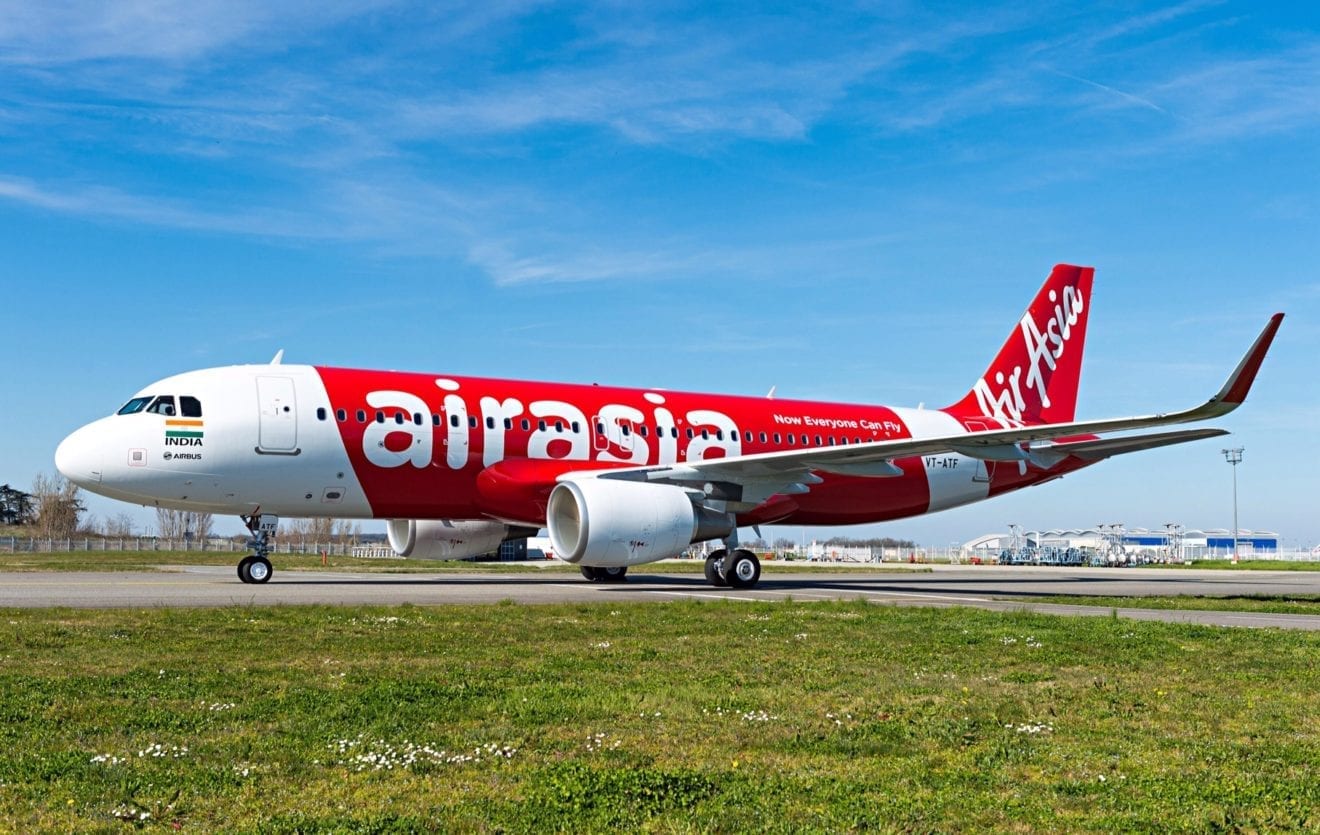
    At a delivery ceremony in Hamburg, Germany, budget airline Air Asia took delivery of its very first Airbus A321neo. The event took place on Wednesday under grey skies and wet conditions. The narrowbody long-haul jet will begin operating this week from AirAsia’s hub in Kuala Lumpur to cities across Asia. Destinations already identified include Kuching and Kota Kinabalu

    The Star also reports that it had its ferry flight back home after the ceremony, with over 30 media personnel from the Southeast Asian region as well as AirAsia staff. According to sources included FlightRadar24 and Planespotters, the airplane has been assigned the registration 9M-VAA and includes a unique and ‘funky’ livery.

    “We could not be more thrilled that it will be the new backbone of our operations across the AirAsia Group. With the 25% increase capacity and 10% reduction in cost per seat, the A321neo will enable us to maintain low fares so ‘Everyone Can Fly!’…This new generation aircraft delivers significant capacity and cost benefits which we can pass on to our guests in the form of great value fares and it also unlocks exciting network expansion opportunities allowing us to fly the aircraft for an additional one and a half hours longer.” -AirAsia Indonesia chief executive officer Veranita Yosephine

    A recent Twitter post about the delivery (shown below) mentions that this is the first aircraft out of the 353 ordered from Airbus. In fact, the delivery of this particular model is part of AirAsia’s plan to move from its existing fleet of A320neo aircraft to the larger A321neo.

    AirAsia revealed the order for the A321neo at the Paris Air Show this year. The airline announced the conversion of 253 A320neos to the larger A321neos. This will make AirAsia the largest customer in the world for this type.

    The larger A321neo offers 50 seats more over the current A320neos. Furthermore, it also provides 40% more cargo space as well as “expanded seating capacity with optimized use of cabin space”.

    The upscaling of the order back in June was welcomed news for Airbus. Although the quantity of aircraft ordered stayed the same, all of them being converted from existing A320 orders marks the biggest order for the larger variant of the narrowbody to date. It also signifies a massive vote of confidence for the type.

    The A321neo is the longest variant of the popular A320 family of aircraft. In fact, with the new improvements of the neo (new engine option), there is an expected 20% increase in fuel efficiency from the A321ceo (conventional engine option). Efficiency features include new generation engines and fuel-saving Sharklets.

  • AirAsia and AirAsia X have been named best low-cost airline in Asia again

    AirAsia and AirAsia X have been named best low-cost airline in Asia again

    AirAsia and its partner airline AirAsia X have been jointly named the best low-cost airline in Asia Pacific again at this year’s Airline Excellence Awards by AirlineRatings.com.

    The award is judged by the Australia-based aviation website through a five-star rating system considering factors such as in-flight entertainment, cabin space and comfort, beverages, food, and seat recline.

    This is the second time the Malaysian low-cost carrier has bagged the award, after taking the title from Scoot in 2018.

    Geoffrey Thomas, editor-in-chief at AirlineRatings.com, said that the AirAsia win was “richly deserved” and that the airline is in a “dominant market position”

    “These airlines have made travel affordable for tens of millions throughout Asia, and they offer outstanding value and a great experience,” he added.

    In June, AirAsia has also named the world’s best low-cost airline at the Skytrax World Airline Awards.

    AirAsia Group chief executive Tony Fernandes said in a statement that the airline will continue to focus on “delivering the very best value airfares for short, medium and long haul travel throughout Asia Pacific”.

    The airline is currently looking at slashing fuel burns to help keep airfares low through the new additions of Airbus’ A330 neo wide-body and A321 Xtra Long Range aircraft.

    Benyamin Ismail, AirAsia X’s chief executive officer, said that the two aircraft will provide the carrier with the “lowest possible operating costs to expand its network and enable even more people to fly further for less”.

    This will allow AirAsia X to further expand into markets like Australia, and “explore new longer haul markets including Europe, which are currently under review,” he added.

    The two Kuala Lumpur-based airlines have 272 total aircraft today, flying to more than 150 destinations in 25 markets.

  • AirAsia to start selling competitor flights on website

    AirAsia to start selling competitor flights on website

    AirAsia has expanded its online offering to include flights on other airlines as it transforms airasia.com into Asia Pacific’s leading travel and lifestyle platform. This was done in partnership with leading travel technology company Kiwi.com. Powered by Kiwi.com, AirAsia’s website users will be able to book travel on more than 100 airlines to destinations currently not served by AirAsia, including Europe, Australia, New Zealand, the Middle East, and the Americas.

    airasia.com head of airline distribution Rajiv Kumar said in addition to the strategic partnership with Kiwi.com, which is focused on content and technology sharing, AirAsia is also exploring opportunities to partner directly with airlines and companies who complement our existing network and travel services beyond Asia Pacific.

    airasia.com CEO Tony Fernandes said, “Today is an unbelievable day. When we started AirAsia as a low-cost airline back in 2001, I never thought one day we would be selling our competitors. But if there’s one thing I’ve learned, it never says never. Never say never and believe the unbelievable. Today, with the help of Kiwi.com, we are reinventing ourselves as more than just an airline, bringing to life our vision for airasia.com to be the region’s one-stop travel shop.”

    Kiwi.com CEO Oliver Dlouhý said, “I’m extremely proud that Kiwi.com has been selected to power AirAsia’s transformation and its ambition to make airasia.com a leading travel and lifestyle platform. We have an abundance of airlines and ground carriers at our disposal and together with AirAsia and its enormous customer base, we are proud to be able to open their platform to the rest of the world.”

    To celebrate the announcement and its partnership with Davis Cup by Rakuten, which takes place on 18-24 November 2019 in Madrid, Spain, AirAsia has kickstarted a global marketing campaign featuring its very own Spanish Allstar, airasia.com. The campaign was launched at AirAsia’s global headquarters RedQ in Kuala Lumpur to much fanfare with a promotional all-in return fare to Madrid from Kuala Lumpur, Bangkok, Jakarta, and Sydney.

    The campaign comes off the back of the company’s reorganization, which separates AirAsia’s airline operations from its travel and lifestyle arm, airasia.com. Since the reorganization was announced in August this year, more than 700 Allstar staff have been recruited, and in addition to being based across Asia Pacific, a new airasia.com campus will open in central Kuala Lumpur early next year.