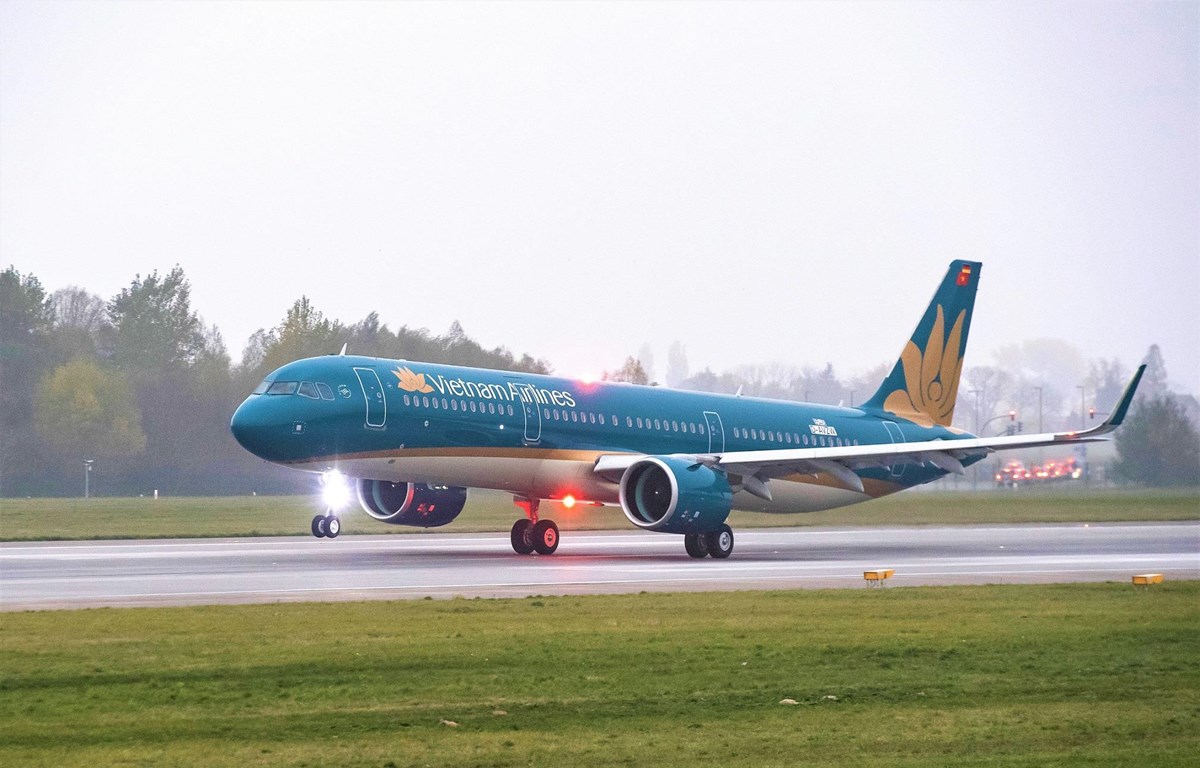
Tag: airline

  • Vietravel Airlines to start flying next Monday

    Vietravel Airlines to start flying next Monday

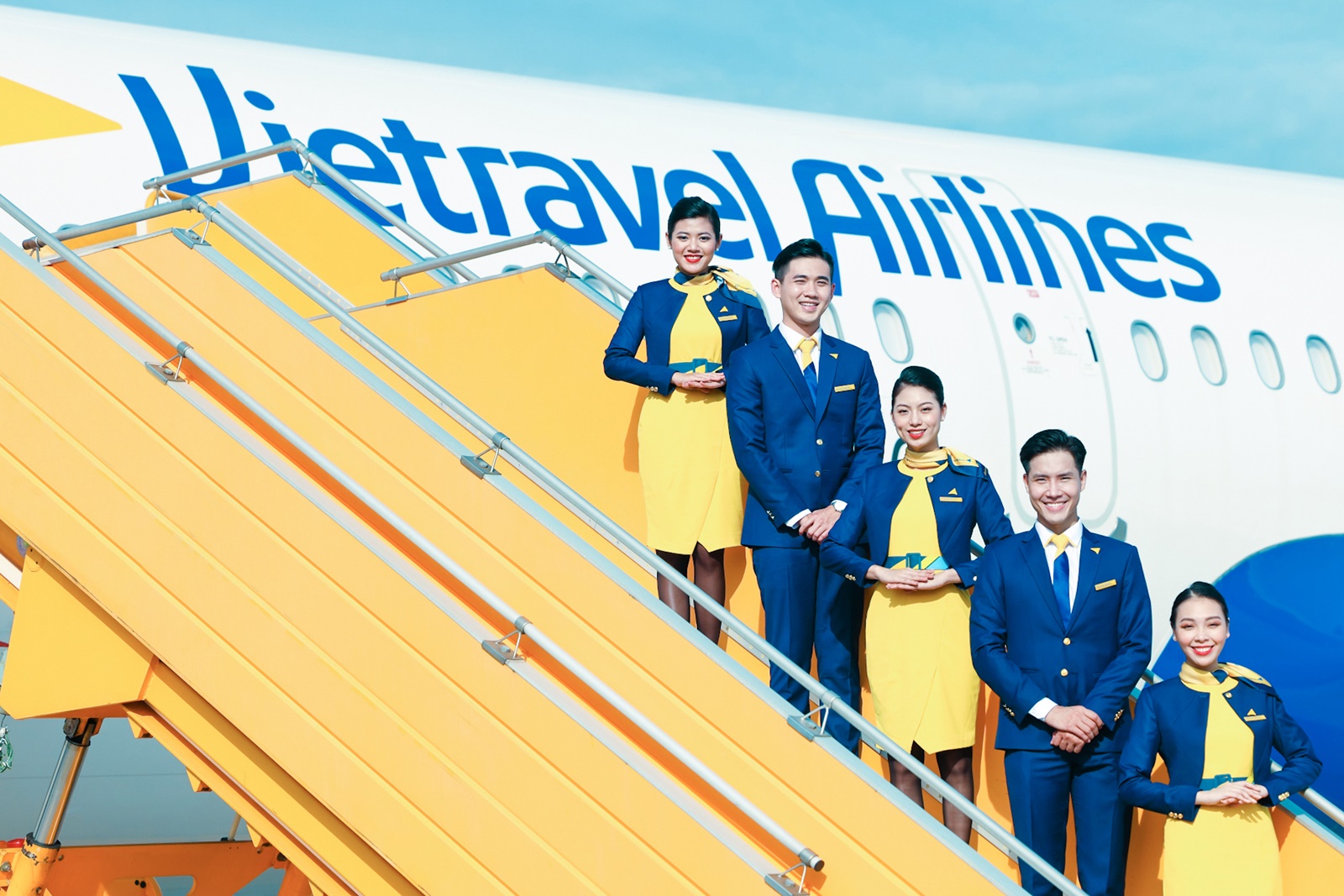
    Vietravel Airlines is scheduled to make its maiden flight on January 25, and began ticket sales on Tuesday, its CEO, Vu Duc Bien, said.

    Vietnam’s newest carrier will operate one or two flights a day each from HCMC and Hanoi to major tourist destinations like Nha Trang, Phu Quoc, Da Nang, and Hue.

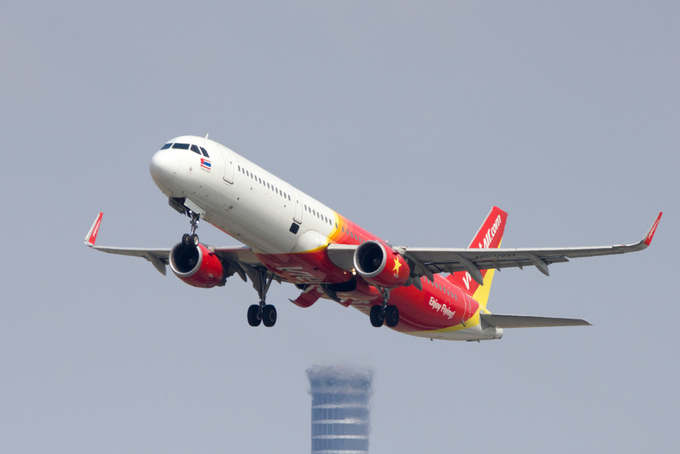
    It has a fleet of two Airbus A321CEO aircraft and a third is expected to arrive on January 21 to meet the increased travel demand during the Lunar New Year Tet in mid-February.

    The carrier hopes to break even in its second year of operations.

    Vietravel Airlines has hired some 200 pilots and flight attendants and is looking to expand its fleet to 30 to prepare for international operations, flying to Southeast Asia, especially Thailand, the Middle East, and Northeast Asia, markets that Vietravel, the travel company that owns it, serves.

    It is the sixth carrier in what is a fiercely competitive aviation market after Vietnam Airlines, Vietjet, Jetstar Pacific, Vietnam Air Services Company, and Bamboo Airways.

  • Government to invest $345 million to bail out Vietnam Airlines

    Government to invest $345 million to bail out Vietnam Airlines

    The State Capital Investment Corporation said it is in discussions with Vietnam Airlines to invest VND8 trillion ($345.49 million) in the carrier through a rights issue.

    It follows a government resolution to resolve the difficulties faced by the airline due to the impact of the Covid-19 pandemic, Nguyen Chi Thanh, general director of the sovereign fund, said at a press conference late last week.

    The resolution requires the State Bank of Vietnam to reimburse loans of up to VND4 trillion to credit institutions that have lent to Vietnam Airlines and allow the carrier to make rights issues to existing shareholders to supplement its capital.

    Thanh said: “Vietnam Airlines will issue shares worth VND8 trillion to existing shareholders, accounting for 25 percent of the carrier’s charter capital. SCIC, acting on behalf of the Government, plans to buy these shares.”

    The government-owned 86.16 percent in Vietnam Airlines on December 31, 2019.

    Thanh said the airline is making plans for a rights issue, and SCIC’s task is to determine a reasonable issue price close to the market price and is working with Vietnam Airlines on this.

    “In order to do that, Vietnam Airlines must be valued, and this requires at least a five-year business plan if we use the discounted cash flow method.”

    The SCIC would appoint a “globally reputed auditing company,” and the latter would identify the most appropriate valuation method possibly within a month, he said.

    Vietnam Airlines expects losses of VND12 trillion for 2020 compared to a VND3.37 trillion profit in 2019.

    It presently flies an average of 300 flights a day on more than 60 domestic routes. It has resumed flights to Japan, though not from that country, and plans to resume flights soon to mainland China, Taiwan, Laos, and Cambodia.

    In November, the National Assembly approved a bailout that could see the carrier get VND12 trillion and allows it to sell more shares to existing shareholders to boost cash reserves.

  • AirAsia founder Tony Fernandes claims governments ’ Covid-19 coordination ‘horrific’

    AirAsia founder Tony Fernandes claims governments ’ Covid-19 coordination ‘horrific’

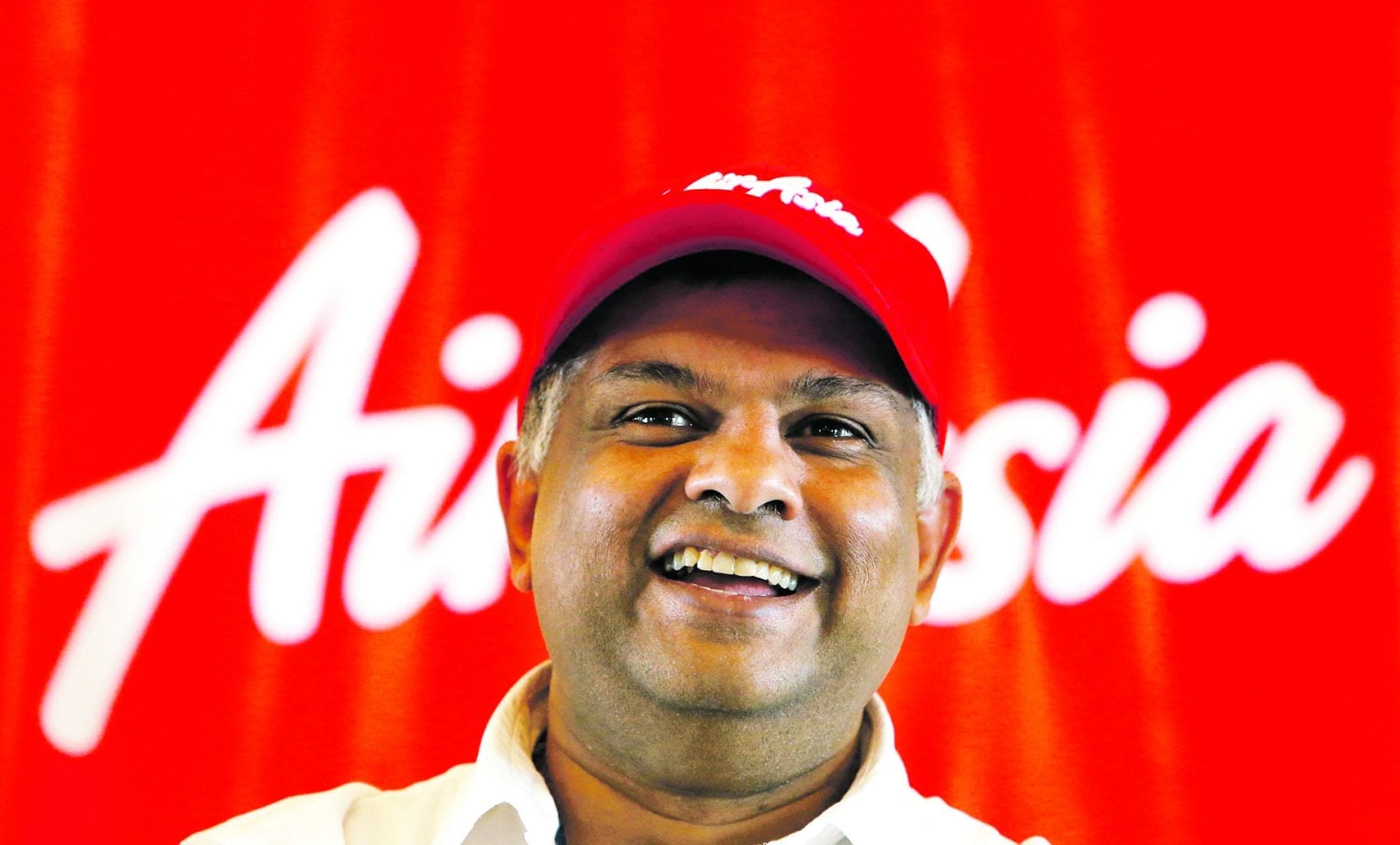
    “The coordination on Covid-19 is horrific,” AirAsia Group Bhd founder and group chief executive officer Tan Sri Tony Fernandes laments and claims in a direct swipe at world governments’ on how the global pandemic has been managed and its impact on the travel and aviation industries.

    BBC has today quoted Fernandes as saying that in his history of running an aviation business, he has never seen something so poorly coordinated.

    “It’s like nothing I’ve ever heard,” he said. “The United Nations, with the travel industry, should have come up with some standard protocols” earlier in the pandemic, but politics had got in the way, according to him.

    “Governments are petrified of their people, and they’re taking a very, very, very conservative view. They all want to be in control.

    “I just think that everyone’s… scared and just reacting in a very jingoistic and nationalistic way. I think countries are going to say, unless you’re vaccinated they’re not going to let you in without quarantine,” Fernandes said.

    The BBC report, which also quoted International Air Transport Association (IATA) director-general Alexandre de Juniac, said the world’s airlines need another US$70 billion (about RM283.5 billion) to US$80 billion of government support to get through the crisis caused by the coronavirus pandemic.

    de Juniac was quoted as saying the figures were “on top of the US$170 billion already granted”.

    It was reported that June 2021 is when he expects the first significant easing of travel restrictions, as the impact of vaccines begins to be felt.

    “Government travel restrictions and a huge fall in passenger confidence meant global demand for flights fell about 60% last year, according to IATA figures.

    “That means 2020 saw about 1.8 billion passengers fly, instead of the 4.5 billion in 2019. In an industry where profit margins were already thin it means airlines are estimated to have already lost US$118 billion, with worse set to come,” BBC reported.

  • Vietjet eyes aircraft purchases as it relies on vaccine rollouts to revive air travel

    Vietjet eyes aircraft purchases as it relies on vaccine rollouts to revive air travel

    Budget carrier Vietjet Air plans to expand its investment in new aircraft and technical facilities this year after reporting a small profit in 2020 despite the Covid-19 pandemic.

    “In 2021, we expect to continue to receive new modern planes and will invest in maintenance and training facilities, and the investment will be higher than in 2020,” Vietjet CEO Nguyen Thi Phuong Thao said in an interview recorded on Jan. 9 and broadcast on Thursday at the Reuters Next conference.

    Vietjet said separately on Wednesday it raised $28 million via a bond issuance last month to fund its development plans in 2021. It did not provide further details about the bond sale.

    Vietnam has been successful in containing the coronavirus with a series of quarantine and tracking measures. With just over 1,500 infections and 35 deaths in total, it has resumed economic activities earlier than much of Asia.

    While all international commercial flights have been suspended since late March, domestic air travel has been subjected to few restrictions.

    Vietjet’s cargo transport in 2020 rose 75 percent from 2019, she said, adding that its overall domestic operations recorded positive growth in 2020, without giving comparative figures.

    With the early Covid-19 vaccine roll-out around the world, Thao expects the global aviation industry to recover rapidly.

    Vietjet’s Thai unit increased its aircraft fleet to 15 last year, while its market share there also increased, she added.

    “Air travel demand is extremely high for business, investment, education and healthcare purposes, and we have been actively conducting flights to repatriate Vietnamese people from overseas,” Thao said.

    She said the company is considering options to raise funds for its investment plans for this year, though she did not name an amount.

    “Our debt-to-equity ratio is 1.0, compared with over 3.0 for the aviation industry, so we have room to mobilize funds for our development,” Thao said.

    The airline continued to take delivery of Airbus SE narrow- body jets last year despite some supply chain interruptions at the manufacturer but Boeing Co did not meet its delivery schedule, she said.

    Vietjet has 200 737 MAX jets on order, according to Boeing, but the plane has not yet returned to service in Asia following a near two-year global grounding.

  • AirAsia Wants Half Of Its Revenue To Come From Outside Flights

    AirAsia Wants Half Of Its Revenue To Come From Outside Flights

    Low-cost airline AirAsia had a tough 2020. But its CEO, Karen Chan, is taking a glass half full approach. She says the travel downturn and subsequent fallout for AirAsia was a blessing in disguise. It forced AirAsia to look outside its comfort zone and at a new way of doing business. Now, Ms Chan plans to transform AirAsia into a lifestyle brand. As a result, by the mid-2020s, she expects 50% of AirAsia’s revenue will come from non-aviation sources.

    Speaking at a CAPA Live event on Wednesday, Karen Chan spoke about her vision for AirAsia and what it would mean for the airline.

    “We anticipate in five years time, basically by the end of 2024, that 50% of (AirAsia’s) revenue would be coming from non-flight-related, non-aviation-related revenue.”

    As a low-cost carrier, AirAsia already has handy ancillary revenue streams. Their base fares are cheap, but checked-in luggage on short sectors starts from US$12, seat selection starts from just under $3, and a reheated container of AirAsia’s pretty good nasi lemak costs just over $4. In 2018, ancillary revenue made up 22% of AirAsia’s total revenue. Around half of that 22% came from baggage charges.

    Last year, AirAsia Group chief executive Tony Fernandes, said his airline group was diversifying.

    “AirAsia.com is more than just selling airline tickets,” he said. “We now have the same potential to sell hotel rooms. I can do some crazy things. I can say I can buy hotels, book a hotel room with us and I can give you a free flight. Hotels can be as large as AirAsia tickets.”

    Yesterday, Karen Chan spoke about AirAsia’s ambitions to become a fully-fledged online travel agency that offers not just hotels but also a range of travel and lifestyle products and experiences.

    “Not all the flights are always full, and the load factor will not be 100%,” said Ms Chan.

    “So the unsold infantry, and because they are so perishable, even as an 85% load factor for an Airbus A320, I still have about 20 to 25 seats unsold. I will now be able to bundle that unsold inventory for one ringgit or 25 cents with the hotel’s direct inventory. And I will be able to go into the market with a best buys guarantee.

    “We can go and expand into where other airlines are just not able to do so. We actually want to go and be seen as basically a lifestyle partner.”

    AirAsia’s ancillary revenue plans are not restricted to the travel basics of hotels, transfers, and side excursions. The airline wants to build its delivery and e-commerce business. AirAsia sees itself as a future Asian e-commerce giant. But it’s not just Amazon parcels AirAsia wants to ferry around. AirAsia has detailed data on 75 million former passengers in its database. They know you purchased a nasi lemak on your last three AirAsia flights. Ms Chan wants to get down to the nitty-gritty. She wants to be able to deliver that meal to your home.

    “Data is basically the new black gold for us,” Ms Chan said.

    With AirAsia’s fortunes taking a hammering in 2020, there’s a good reason why the airline wants to expand its ancillary revenue sources. Whether a cheap and cheerful low-cost carrier out of Southeast Asia can successfully transform into a lifestyle brand is another issue. Whatever the result, but it will be interesting to watch.

  • Thai AirAsia says latest virus outbreak has dented business

    Thai AirAsia says latest virus outbreak has dented business

    Thai AirAsia Co Ltd (TAA) said the latest Covid-19 outbreak in Thailand has dented the already weak travel sentiment in the country after the company witnessed a whopping 50% plunge in its domestic flight booking numbers this month.

    “Travel sentiment has plunged lower than last year. This is different this time because people are voluntarily skipping their travel plans even without a nationwide lockdown order from the government,” TAA largest shareholder Tassapon Bijleveld was quoted by the Bangkok Post as saying.

    Tassapon is also an executive chairman of Asia Aviation, a company that owns a 51% stake in TAA, while the remaining 49% stake is held by AirAsia Investment, an investment arm of AirAsia Group Bhd.

    Accoring to him, TAA’s domestic flight numbers shrank by more than 50% as it had to merge and cancel many flights, with the average load factor taking a nosedive this month.

    He added that some flights had only 20 to 30 passengers, a sharp contrast to the resurgent market two months ago.

    “We were just rebounding from the first lockdown last year. Despite hardly any profits, at least we could have had a consistent revenue stream from the domestic market. But this outburst of new cases destroyed us,” said Tassapon.

    Tassapon said most airlines expect the market will continue to be severe in February. He warned that the weak travel sentiment could cause some airlines to cease operations.

    He said the pessimistic outlook for next month is despite the Chinese New Year holidays, citing that “travellers may not increase domestic trips if people are worried about the outbreak”.

    “This could be the quietest Chinese New Year we’ve ever had,” he noted.

    Reuters previously reported that Thailand, which had largely controlled the virus by mid-2020, saw a second wave of outbreaks beginning in December.

    “The government has declared 28 provinces, including Bangkok, as high-risk zones and asked people to work from home and avoid gathering or travel beyond provincial borders, as infection numbers climbed after an outbreak was detected last month at a seafood market near the capital,” said the report dated Jan 4.

    The pandemic-battered aviation industry has adversely impacted most airlines in Thailand financially, as they have received no financial support from the government, particularly the soft loans they have been requesting since last year.

    Eight airlines that teamed up to send the financial aid proposal to the government last year do not have plans to discuss the progress of that proposal as they have already clearly stated their concerns, said Tassapon.

    He said the group conveyed all information to the Thailand’s prime minister and three finance ministers, as well as banks that were assigned to help airlines. But, there has not been any response since.

  • Tata grabs bigger slice of AirAsia India

    Tata grabs bigger slice of AirAsia India

    A number of bids have been put forward for India’s loss-making national carrier, including one on behalf of its employees. The Indian government had tried to offload its stake in Air India in 2018 but failed to attract a single bid. One group is representing employees and plans to offer them a controlling stake in the struggling airline. Another bid is reported to have been put forward by the Tata Group, which originally founded the airline in 1932.

    Tata, which owns Jaguar Land Rover, sold its stake to the government in the 1950s. India’s Prime Minister Narendra Modi is keen to sell the government’s entire interest in the airline, which has been kept aloft by a bailout and racked up billions in debts. The airline has many assets, including prized slots at London’s Heathrow airport, a fleet of more than 100 planes and thousands of trained pilots and crew. One of the bids put in ahead of this week’s deadline was from US-based investment firm, Interups.

    Under its plan, Interups will hold 49% of Air India while a controlling stake of 51% will be held by its employees.

    “We are giving an open offer to employees of Air India to substantially own the airline,” Interups chairman Laxmi Prasad told the BBC.

    “Our group will invest the entire monies required for the airline, with no capital requirement from employees to contribute into the acquisition effort.”

    Calling them the “backbone to run the airline”, Mr Prasad added that the 51% stake would be “in exchange for the deep intangible contribution you all would be making for the airline.”

    “No-one knows Air India better than its employees and management.”

    “Any new owners will need to invest heavily in Air India, improving its technology and customer services operations,” said Jitendra Bhargava, former Executive Director of Air India and author of the book, The Descent of Air India.

    “But India is a growing market and offers huge potential. My take is that Air India is better run as a private company than by bureaucrats.”

    Interups, which specialises in turning companies around, says it has also targeted another Indian airline, and if successful, will merge it with Air India. They have not specified which airline that could be.

    “The combined operations will make Air India a global leader for passenger traffic to and from India,” said Mr Prasad.

    He described the potential battle with Tata for the airline as David versus Goliath. “But David mastered the winning, and we are equally confident.”

    The Indian government is expected to notify the qualified bidders in early January 2021.

  • Vietnam Airlines set to perform better than expected

    Vietnam Airlines set to perform better than expected

    National carrier Vietnam Airlines expects 2020 losses of VND12 trillion ($521.11 million), about 17 percent lower than it had forecast in August.

    The carrier’s consolidated revenue this year is estimated at VND42.5 trillion, with parent company revenues reaching VND33 trillion, exceeding targets set earlier this year by 4.8 percent and 1.4 percent respectively, Vietnam Airlines chairman Dang Ngoc Hoa said Tuesday at an extraordinary general shareholders’ meeting.

    This allows the company to undershoot the VND14.45 trillion loss figure forecast at the annual general meeting in August, he said.

    This year’s loss could be reduced further by VND2.86 trillion after completing adjustments for amortization of repair, maintenance and ground services costs in accordance with government policy that allows delayed payments to help support airlines, Hoa said.

    In 2020, Vietnam Airlines operated about 96,500 flights, down more than 48 percent over last year. The airline transported 14.23 million passengers and about 195,000 tons of cargo, down 51 percent and 47 percent respectively over 2019, he said.

    Hoa said that for the next five years (2021- 2025), Vietnam Airlines will focus on restoring production and business activities, undertaking a comprehensive restructuring plan which will overhaul areas such as capital ownership and finance, assets and portfolios. It will strive to ensure lean production, and improve business efficacy with the sale and leaseback of aircraft.

    The national carrier will also wholly or partly divest its capital in a number of high-performing enterprises in the air-transport service supply chain to improve cash flow, offset accumulated losses, and create funds for investment and development, he added.

    Vietnam Airlines currently operates more than 60 domestic routes with an average of 300 flights per day. It has resumed one-way flights to Japan and plans to reopen routes soon to mainland China, Taiwan, Laos and Cambodia.

    In mid-November, Vietnam’s National assembly approved a bailout for the carrier that can see it get up to VND12 trillion in funds and will be allowed to sell more shares to existing shareholders to boost cash reserves.

  • Vietnam Airlines seeks shareholder loans

    Vietnam Airlines seeks shareholder loans

    Vietnam Airlines Group has called an extraordinary shareholders’ meeting next week to source low-interest loans to accelerate Covid-19 recovery.

    At the meeting, to be held on Dec. 29, the flag carrier will seek loans from its shareholders that comprise the government with an over 86 percent stake, Japanese aviation company ANA Holdings with 8.7 percent, and other organizations and individuals.

    The National Assembly in November approved a plan for the central bank to refinance Vietnam Airlines and rollover loans. The airline had earlier asked for a relief package of VND12 trillion.

    The group will also seek shareholder approval to issue more shares to existing stakeholders and so increase its capital.

    Vietnam Airlines Group, consisting of the carrier and subsidiaries Pacific Airlines and Vietnam Air Services Company (VASCO), posted a loss of VND10.75 trillion ($464 million) for January-September as the Covid-19 pandemic slashed its number of flights.

    It has forecast the figure would rise to VND15.2 trillion for the whole year.

    All Vietnamese airlines have fallen victim to Covid-19 this year with the number of flights plunging 36 percent year-on-year to 19.

  • AirAsia Reduces Stake In Indian Subsidiary

    AirAsia Reduces Stake In Indian Subsidiary

    AirAsia is scaling back its investment in AirAsia India as the group continues to face financial difficulties. The group will reportedly cut its stake to just 13%, giving the Tata Group significantly more stake in the airline. The change in ownership is unlikely to affect the AirAsia India brand but could see the airline separate from AirAsia’s operations.

    Questions over the future of AirAsia India have been swirling for a few months now, with both Tata and AirAsia considering an exit. Eventually, the AirAsia group stopped funding the airline and left Tata to decide the carrier’s future.

    According to a report, Tata has bought out most of AirAsia’s stake, leaving the group with only 13% of the airline. This means Tata now owns 87% of the carrier, making AirAsia more of an investor than a joint-venture partner. While the “AirAsia India” brand will survive, Tata is making some changes to the company.

    Tata is reportedly working on a new booking website for AirAsia India, which is currently integrated into the AirAsia group’s website. Additionally, a new crew scheduling software will also be put in place for the airline. While there are unlikely to be many changes on the surface, the Tata Group does have big plans for Indian aviation at large.

    AirAsia India first began flying in 2014, with 51% owned by Tata and 49% by AirAsia. The carrier hoped to capture the fast-growing low-cost market in India, similar to the model AirAsia had replicated in other regions. The partnership with Tata provided the airline with funding and strong name recognition in India.

    However, the airline struggled to make its mark in the Indian market, facing stiff competition from established players like IndiGo, SpiceJet, and GoAir. As of November 2020, the airline only has a market share of 6.6%. This places AirAsia India second-last on the list of major domestic airlines. The carrier currently operates a fleet of 33 aircraft, consisting of 30 A320-200s and three A320neo aircraft.

    All of this has resulted in AirAsia India being a loss-making airline for nearly all of its existence. Following a relatively better 2019, the pandemic has once again pushed AirAsia India deep into the red. The airline reported a 69% drop in revenue during the second fiscal quarter and losses of nearly $45 million in the first.

    This isn’t the first subsidiary AirAsia is exiting this year, with both its Indonesia and Japan arms being axed. The carrier has faced significant financial concerns this year, as flight traffic across Asia remains low. While traffic has been picking up slightly recently, the group continues to face existential crises as the pandemic drags on.

  • Headwinds buffet Vietnamese carriers through 2020

    Headwinds buffet Vietnamese carriers through 2020

    The Vietnamese aviation industry has gone through one of its most challenging years ever as the Covid-19 pandemic restricted flights and caused airlines huge losses. The number of flights the country’s five commercial airlines operated fell 36 percent year-on-year in the first 11 months to 196,600, according to the Civil Aviation Authority of Vietnam (CAAV).

    They carried 29.4 million passengers, down 41.7 percent, according to the General Statistics Office.

    Vietnam Airlines was the worst hit. Duong Tri Thanh, its CEO, said that the pandemic has set back the aviation industry by three or four years, and has brought down his company’s cash holdings to near zero.

    Vietnam Airlines Group, consisting of the carrier and its subsidiaries Pacific Airlines and Vietnam Air Services Company (VASCO), posted a loss of VND10.75 trillion ($464 million) for January-September.

    The number of passengers it served in the period fell by 41 percent to 10.2 million.

    It has cut sales and management expenses and reduced the salaries of pilots and cabin crew. It has increased the number of repatriation flights bringing Vietnamese nationals home from other countries.

    But these efforts cannot save the company from suffering one of its worst years in nearly three decades as a commercial airline, with its losses this year forecast to rise to VND15.2 trillion. Budget carrier Vietjet is in a similar situation, with losses of nearly VND925 billion in the first nine months and the number of flights falling by 43 percent to 58,300.

    The airline was forced to cut managers’ salaries by half as revenues plunged, and it would take three years for the industry to recover to pre-pandemic levels, a Vietjet spokesperson said in November.

    In contrast, 2019 saw new carrier Bamboo Airways enter the Vietnamese skies, Vietnam Airlines achieve all-time high profits and the number of air passengers continues to grow in double digits.

    The tough times began in March when the government ordered the suspension of all international flights to curb the spread of the novel coronavirus and domestic travel demand slumped amid fears of the pandemic.

    “The impact of Covid-19 has been unprecedented for the aviation industry,” Dinh Viet Thang, head of the CAAV, told the media in June, pointing out there were times when only 1-2 percent of Vietnam’s 250 aircraft were operating.

    The second and third quarters were the most challenging period for the industry as a three-week nationwide social distancing campaign in April caused airlines’ revenues to plummet and the second outbreak in July halted their attempts to boost domestic travel and achieve recovery.

    Aviation expert Nguyen Thien Tong said it would take at least until 2022 for the industry to recover to pre-pandemic levels because the fear of contagion remains globally.

    Air travel demand would rise slowly even after Covid-19 is contained globally because many business people have learned to conduct meetings online to keep their companies running during the pandemic and people’s incomes have shrunk, he said.

    One major factor in any possible recovery will be government support. The National Assembly in November approved a plan for the central bank to refinance Vietnam Airlines and rollover loans. The airline had earlier asked for a relief package of VND12 trillion.

    Lawmakers also cut environmental tax on jet fuel by 30 percent from August this year until the end of next year.

    Tong said: “More low-interest loans should be given to airlines based on how much tax they have contributed in recent years, not how much ownership the government has in them.”

    The tourism industry needs to offer more promotions to foster domestic aviation since it is unclear when regular international flights would resume, he said.

    The newly licensed Vietravel Airlines should wait until the market recovers in 2022 before it begins flying since its entry would only worsen things for existing airlines, he added.

  • AirAsia X plans stock issue to raise funds while cutting share capital

    AirAsia X plans stock issue to raise funds while cutting share capital

    Long-haul budget carrier AirAsia X is planning to broaden the extent of a planned capital reduction, and raise additional funding through a new share issue. AirAsia X aims to raise RM300 million from current shareholders plus another RM200 million from new investors – a total of RM500 million ($123 million).

    It describes the new share issue as a “critical component” of a restructuring program for the airline.

    “There are several scenarios envisaged within our business plan and the funds to be raised are adequate for each of these scenarios,” says the carrier.

    As part of the financial restructuring, the carrier is to broaden a planned capital reduction, reducing the issued share capital by 99.9% – rather than the previously-proposed 90%. This will involve cutting the share capital to RM1.53 million.

    “Credit arising from the proposed share capital reduction will be used to offset part of the accumulated losses,” says the carrier.

    AirAsia X is also intending to consolidate its stock with a conversion of every 10 shares into a single share.

    Shareholders’ funds after the capital reduction will remain negative, it says, but the consolidation will “provide a platform to seek fresh funding” from current shareholders.

    The company admits it has faced objections from “several” lessors who are among creditors from which AirAsia X needs to obtain approval for its debt restructuring plans.

    AirAsia X points out that this restructuring is necessary for the recapitalization. “A comprehensive reset of the airline is required to provide a platform to rebuild, and a vehicle attractive enough for investors to invest in,” it adds.

    It says it will “continue to engage” with its creditors in an effort to “allay their concerns”, stressing that the alternative is the liquidation of the carrier.

    AirAsia X argues that a “reset” with fresh equity and repositioning of the airline as a regional, medium-haul low-cost carrier will provide the “best economic returns” to creditors.

  • A Japanese First: Japan Airlines to Offer Complimentary COVID-19 Coverage for International Passengers

    A Japanese First: Japan Airlines to Offer Complimentary COVID-19 Coverage for International Passengers

    Japan Airlines (JAL) today announced that the carrier will provide a new service called JAL Covid-19 Cover, as part of its JAL FlySafe program to provide reassurance and support to passengers with essential travel needs during the global pandemic. The new service provided by Allianz Travel—the first of its kind for a Japanese carrier—includes coverage of up to €150,000 in total medical costs resulting from the initial COVID-19 testing fee and subsequent medical treatment for those that test positive during their travels.

    Additional coverage for isolation costs and repatriation is also included for those requiring such after a positive diagnosis. A global 24-hour support line in English and Japanese will also be available to assist customers exhibiting symptoms, providing further peace of mind throughout their journey. Services related to the coverage will be offered from December 23, 2020.

    “As international flights gradually return to service, the JAL Group has implemented key measures against COVID-19 to provide customers a safe and secure travel experience. While it may take time to welcome back customers on a global scale, we hope this coverage with Allianz Travel will provide reassurance to those that need to travel today,” said Hideo Ninomiya, Managing Executive Officer of Passenger Sales, Japan Airlines.

    “AWP Japan is very proud to support JAL in this service. Our assistance teams will help provide peace of mind to JAL’s passengers in these challenging times. Allianz Travel is the specialized travel-related insurance and services brand from Allianz Partners, and we will leverage our vast experience in emergency assistance to travelers and our global medical network to support passengers affected by COVID-19,” said Patricia Moon, CEO of AWP Japan Co., Ltd., member of the Allianz Partners Group.

    The JAL Group has implemented key measures against COVID-19 at the airport and throughout the travel experience. For details on the JAL FlySafe initiative, click here.

  • How low-cost airline AirAsia is transforming itself into a publisher

    How low-cost airline AirAsia is transforming itself into a publisher

    Sumit Ramchandani, the chief executive of AirAsia Media Group, explains to The Drum why the low-cost airline has pivoted to e-commerce, fintech and lifestyle pillars. With international business travel and the tourist industry on hiatus for much of 2020 (and surely 2021), AirAsia has had to alter the way it does business to keep itself flying.

    It has formed the AirAsia Media Group to consolidate its adtech, content and media-related solutions. AirAsia is keen to offer brands a new way of integrating adtech and data, focused on travellers and pop-culture in Asean.

    AirAsia is therefore able to play an important role in engaging travel consumers. It owns a wide variety of omnichannel media assets, its own first-party data and can rely on a workforce of over 20,000 employees, known affectionately as Allstars; more than 1,000 of whom are influencers in their own right.

    “It made sense for us to come up with a unique set of media offerings under AirAsia Media Group for marketers and unify them under a single group so as to maximize leverage from our ecosystem,” says Ramchandani.

    “With the AirAsia Media Group we intend to help solve the challenges related to media efficacy and attribution while offering solutions that eventually drive business results for our advertising partners.”

    He continues: “We see the media group as the engine to collate all our omnichannel advertising assets with our self-service adtech platform and enrich it with our intent-driven first-party data to create a results-oriented proposition for our advertising partners, from online to in-the-air, from origin to destination.”

    AirAsia’s target customers are diverse, from locals to international travelers to the pop-culture scene, says Ramchandani. This diversity is on display in the airline’s core market of Association of Southeast Asian Nations (ASEAN), where it partners with both agencies and brands, looking to drive transparency and measurable business outcomes from their marketing investments in this region.

    “Our partnership is either through direct buys based on campaign briefs or partnering for growth through our RedCarpet Channel Partnership. We believe that, as a publisher, we are in a unique position to drive full-funnel marketing and offer a strong conversion platform to showcase business results,” he explains.

    “Some of the clients we are currently partnering with include leading e-commerce players in fashion and lifestyle, established travel technology platforms, a rapidly growing local upstart in the automotive space and more.”

    From the ad inventory standpoint, AirAsia claims to have quadrupled its stock of quality media assets, all enriched with its targeted audience solution.

    Its RedCarpet channel partnership allows the airline to connect the dots across its online and offline ecosystem, inflight announcements and Allstars, to drive marketing results for advertising partners.

    “We are also progressing on a series of exciting new initiatives to enrich our engagement from our community base via content, chat and games,” says Ramchandani. “In addition to the above, in partnership with Universal Music Group (UMG), we are in the initial stages of a unique offering that combines fans, travel and talent in a manner that’s never been done before.”

    The partnership with UMG has seen the birth of RedRecords, a music label which will sign new artists from Asia. The label recently concluded an integrated campaign for singer Jannine Weigel, with the debut of her first single Passcode. The aim was to expand awareness for her first single through AirAsia Media Group’s ecosystem within Asean and establish Wiegel as an Asean star.

    The channel mix included digital media, which included homepage mastheads to that provided the volume and quality impressions, in-flight media, which included a slew of assets from branded livery on one of AirAsia’s Airbus A320 aircraft to meal tray backs, & in-flight music and announcements.

    Customer relationship management tools were also utilised as emails, airasia.com super app push notifications, while a branded channel used ‘Connect’, AirAsia’s in-app interactive chat and community channel.

    “In under a month, we managed to over-deliver on our reach target by 140% with a total of 2.9 million impressions at an engagement rate of 1.3% (36% above the category benchmark). During the campaign, Passcode owned 18.9% share of voice (SOV) on airasia.com, which was highest compared to any other campaigns running at that time,” Ramchandani claims.

    The focus for AirAsia now is to grow across Thailand, Indonesia, Philippines and Singapore. While ad inventory continues to remain as a hygiene, AirAsia is increasingly looking at redefining ads through its RedCarpet channel partnerships as the core of its 2021 strategy.

    Through the airasia.com super app ecosystem, the airline wants to look at creating more avenues for brands to find business growth, says Ramchandani.

    “After successfully forming channel partnerships with coffee brand ChekHup in Malaysia and Walch (hand washed and disinfectants) in Singapore, we are now in advanced discussions with some exciting brand solutions with regional partners in the fashion beauty and FMCG verticals,” he explains.

    “We also look forward to partnering with marketers and showcase how the AirAsia ecosystem can help achieve their marketing goals around quality data and leading up to conversion.“
  • Vietnam jet fuel tax cut to continue through 2021

    Vietnam jet fuel tax cut to continue through 2021

    Lawmakers have decided to continue the 30-percent cut in environment tax on jet fuel through next year to support the aviation industry.

    It will remain at VND2,100 (9.1 U.S. cents) per liter until the end of next year before returning to VND3,000 in 2022, the National Assembly Standing Committee decided on Thursday.

    Deputies had originally approved the cut from August until the end of this year.

    The government’s loss of revenues is estimated at VND360-400 billion this year, but it expects the tax break to reduce airlines’ costs and help them recover from the crisis caused by the Covid-19 pandemic.

    Airlines have gone through major difficulties due to travel restrictions and limited international flights.

    Vietnam Airlines forecasts a loss of VND14.8 trillion this year, while for budget carrier Vietjet it is likely to be VND3 trillion.

    The aviation industry served 29.4 million passengers in the first 11 months, down 41.7 percent year-on-year, according to the General Statistics Office.