Tag: airline

  • Vietnam rejects five new airport proposals

    Vietnam rejects five new airport proposals

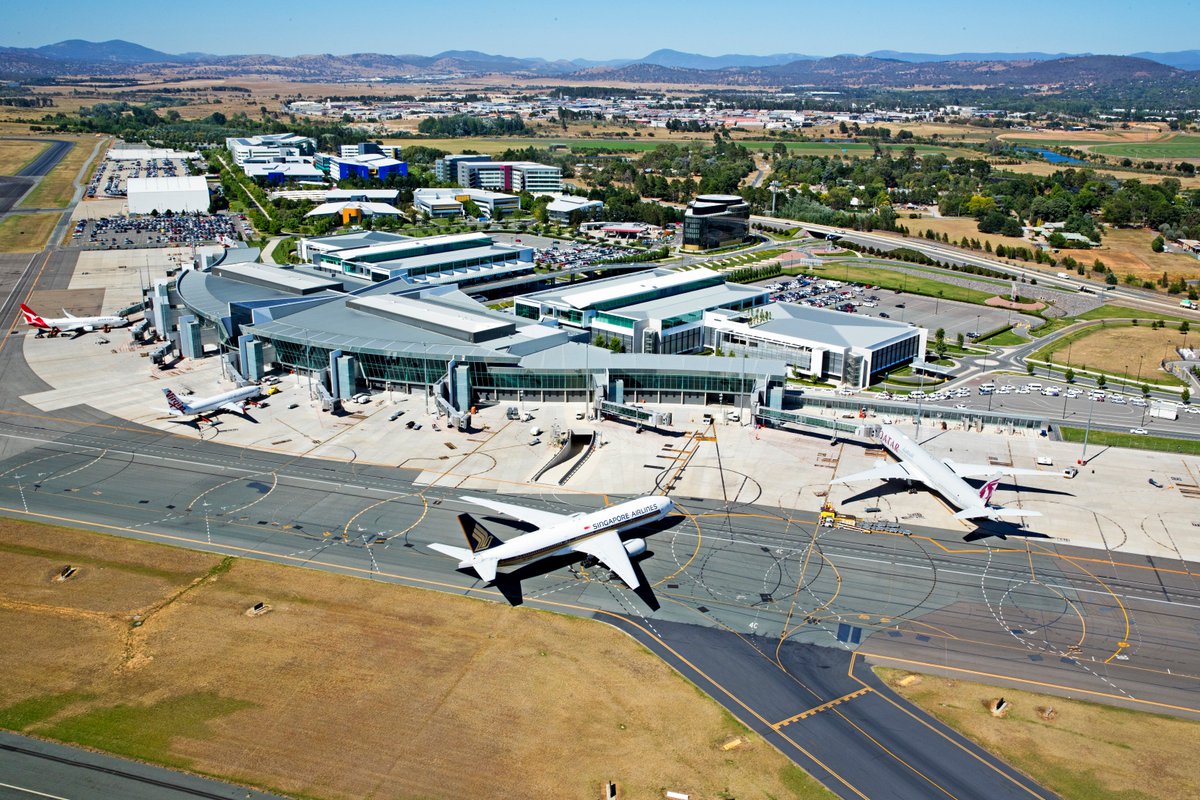
    Aviation authorities have rejected the proposal of five localities to build their own airports and suggested that only one be added to the current master plan.

    Airport proposals by the northern provinces of Ha Giang, Bac Giang and Ninh Binh as well as the central provinces of Binh Phuoc and Ha Tinh have been rejected by the Civil Aviation Authority of Vietnam (CAAV).

    The CAAV has proposed to the Ministry of Transport that the number of airports in the country stays at 28 by 2030, and just one more airport in the northern province of Cao Bang be built by 2050, bringing the total nationwide to 29.

    Vietnam has 22 airports operating at present and six more approved for construction by 2030, including the Long Thanh International Airport in the southern province of Dong Nai and Sa Pa Airport in the northern province of Lao Cai.

    Officials and experts have expressed concern over an airport glut in the country.

    Nguyen Anh Dung, deputy head of the Department of Planning and Investment under the Transport Ministry, said that all airports with annual traffic of under two million passengers a year are recording losses.

    Airports built within 100 kilometers of each other are likely to result in low efficiency, according to case studies done in other countries, he added.

    Aviation expert Nguyen Bach Tung said that some of the proposals have been rejected because of unsuitable topography, like the mountainous terrain in Ha Giang and the vast rice fields in Ninh Binh that are the main source of livelihood for the locals.

    Other proposals have been rejected because the airports would be too close to existing ones. For instance, residents of Ha Tinh and Ninh Binh can use the Vinh International Airport or the Tho Xuan Airport, respectively, because these two are within 100 kilometers of the localities.

    Pham Van Toi, deputy chairman of the Vietnam Association on Aviation Science and Technology, said that many proposals have been made without a thorough examination of their merits and demerits.

    Ha Giang, for example, proposed an airport for both military and civilian purposes, even though it has limited land and airspace, he said.

    The CAAV has also identified a possible land area for a second international airport in the northern city of Hai Phong, which had been planned by the government in 2011.

    The airport is set to be located in Tien Lang District, around 120 kilometers to the southeast of Noi Bai International Airport, and will serve to absorb overflow at the Hanoi’s airport and the existing Cat Bi International Airport in Hai Phong.

    Tung said that Tien Lang has a land fund of 4,000-6,000 hectares available for building an airport with a capacity of up to 100 million passengers a year, which is four times that of the Noi Bai airport in Hanoi.

    This location is also within 100 kilometers from four other northern provinces – Ha Nam, Thai Binh, Nam Dinh and Hai Duong, he said.

    Toi also said that Tien Lang was a suitable location because it has good road connectivity with Hanoi, while the existing Cat Bi airport cannot be expanded as it is located near a river.

    A spokesperson for construction company Tedi, which is advising authorities on the construction of the Tien Lang airport, said existing airports in the north can still meet demand from now until 2040, and authorities should take a call on whether the airport is needed later.
  • Thai AirAsia plans IPO for capital injection by new investor

    Thai AirAsia plans IPO for capital injection by new investor

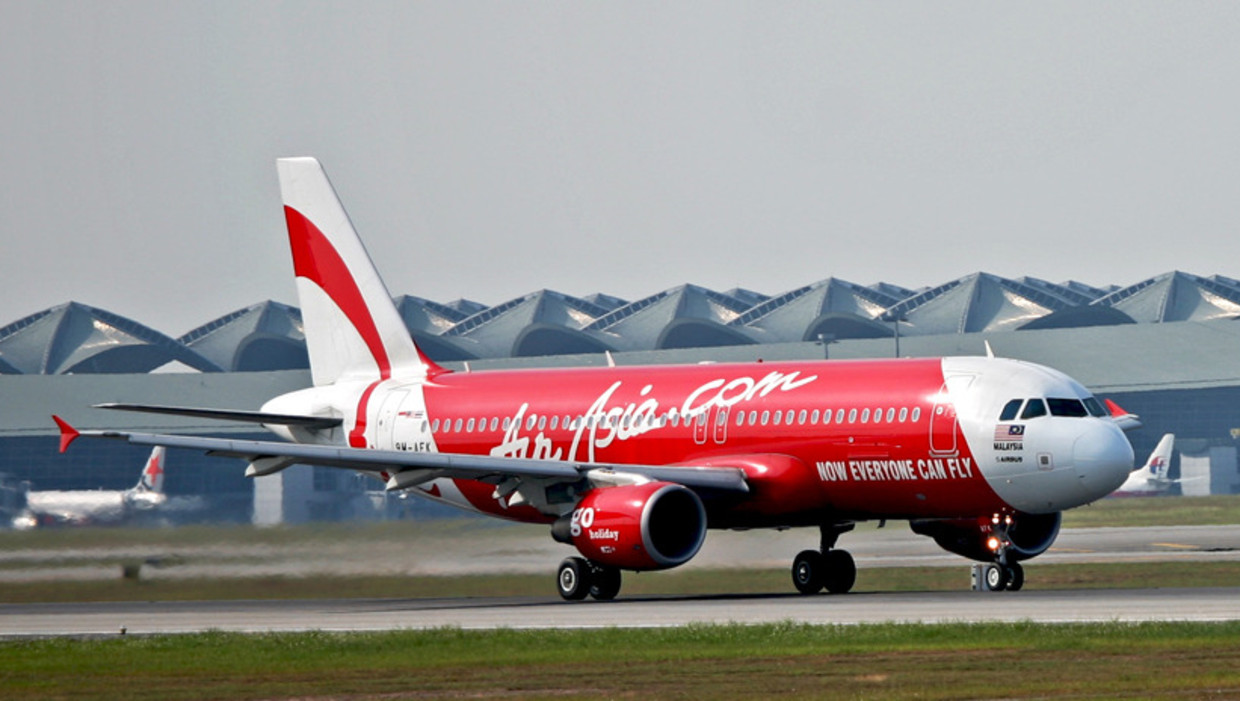
    Thai AirAsia’s parent company has disclosed a corporate and capital restructuring plan for the airline, which involves listing it on the Stock Exchange of Thailand (SET) to accept a Bt3.15 billion ($100 million) loan from a new investor.

    Asia Aviation’s board approved the plan on 26 April, it says in a 27 April SET filing.

    The new investor is not connected to Asia Aviation or Thai AirAsia and will provide the funds in the form of a convertible loan agreement or convertible bonds with zero-coupon issued at par, with an approximately three-year term.

    This will be convertible to ordinary shares in Thai AirAsia at an agreed conversion price of about Bt20.4 per share. The conversion period is expected to be after Thai AirAsia receives approval for an initial public offering.

    Should the investor opt not to convert the loan or bonds into shares, it will hold the investment, which bears 3% interest, until maturity as a creditor.

    Asia Aviation says the investor is currently conducting due diligence and expects to complete the process in mid-May.

    It states that the investor wishes to invest directly in Thai AirAsia rather than through holding shares in Asia Aviation. Taking the airline public would also “increase the opportunities for Thai AirAsia to raise funds by itself rather than being dependent on [Asia Aviation] for fundraising”.

    Concurrently, Asia Aviation plans to convert its shareholders into direct shareholders of Thai AirAsia. This entails dissolving and liquidating Asia Aviation and the company says its board has yet to approve this.

    Asia Aviation holds shares equivalent to 55% of Thai AirAsia’s paid-up capital while AirAsia Investment, which is also the airline’s major creditor, holds shares representing 45%.

    Asia Aviation expects the new investor to hold 11.4% of Thai AirAsia X’s expanded shares issued after it goes public.

  • Bamboo Airways hikes capital yet again

    Bamboo Airways hikes capital yet again

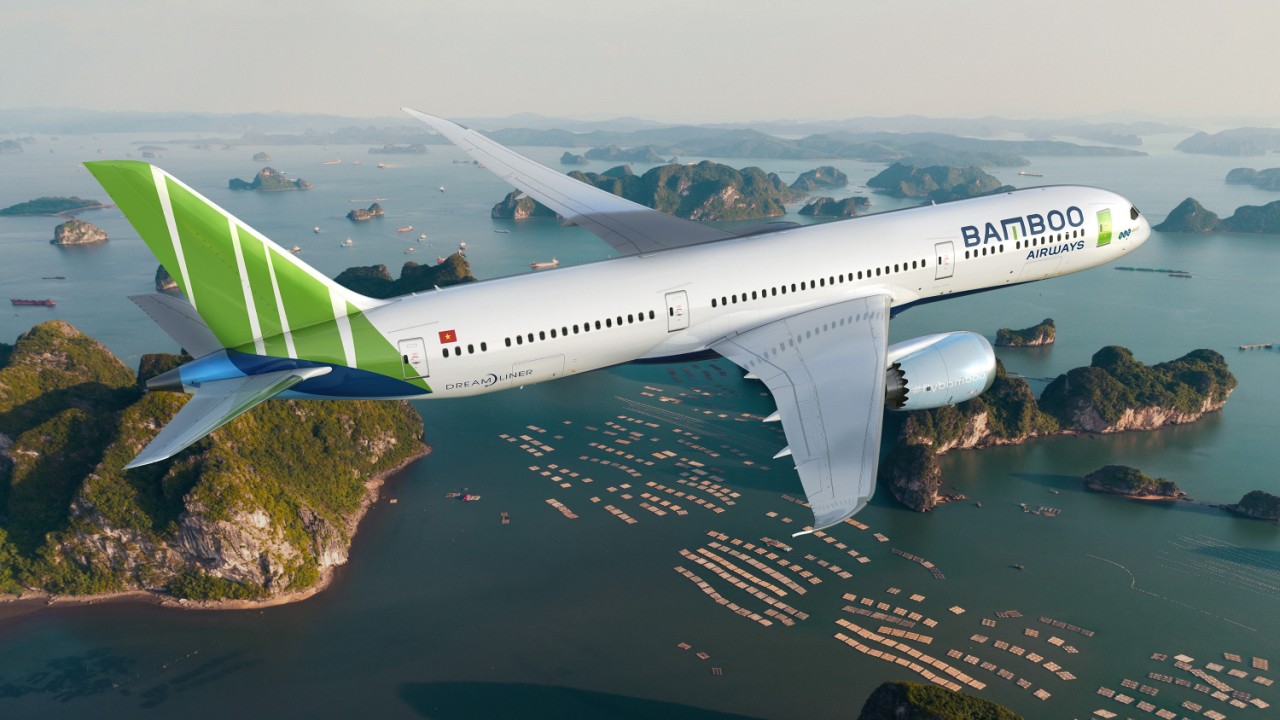
    Private carrier Bamboo Airways has increased its charter capital by 28 percent to VND16 trillion ($695 million), the highest in the industry.

    Since it was set up in May 2017 with a capital of VND700 billion, this is the airline’s seventh hike.

    Its chairman, Trinh Van Quyet, said this month the airline is considering an initial public offering of shares in the U.S. this year to raise $200 million.

    It is expected in the third quarter, with the company likely to offer a 5-7 percent stake.

    It also plans to expand its fleet from 30 aircraft to 40.

    Last year, Bamboo Airways carried over seven million passengers to account for a 20 percent market share, and hopes to increase it to 30 percent this year.

  • AirAsia announces free rescheduling on all flight bookings till May 15

    AirAsia announces free rescheduling on all flight bookings till May 15

    AirAsia India has announced free rescheduling on all flights for bookings till May 15, 2021.

    In a statement, the airline said that guests can now make unlimited changes for all bookings and changes made till May 15, irrespective of the travel dates, without incurring any flight change fees.

    “To ensure that its customers continue to have the greatest flexibility if their travel plans change with increased uncertainty and travel restrictions, the airline has extended this offer on its new website www.airasia.co.in as well as other major booking channels,” it said.

    The airline said that it left no stone unturned in adopting a multi-layered approach to offering safe and seamless travel for guests from booking to check-in and arrival.

    All aircraft undergo deep cleaning and sanitation, while cabin disinfection takes place before each flight, it said.

  • AirAsia to invest heavily in digital business

    AirAsia to invest heavily in digital business

    AirAsia Group plans to raise USD300 million to expand its digital business arm, AirAsia Digital, as it intensifies the diversification of its business to offset the COVID-19 crippling effect on aviation.

    Bloomberg, quoting “people with knowledge on the matter”, reported the low-cost carrier was negotiating with prospective investors for a fundraising deal that would involve the issuance of new shares in the digital unit.

    In March 2021, founder and Chief Executive Officer, Tony Fernandes, said the airline’s so-called “super app”, launched in October 2020, would turn over USD250 million this year. The app can be used for shopping, booking flights, and ordering food. Services are predominantly in Malaysia at the moment with “airasia Shop” having expanded to the Philippines and Indonesia, while “airasia Food” has launched in Singapore. In 4Q2020, order amounts with “airasia Food” grew more than five times quarter-on-quarter, the company said in its Fourth Quarter and Full Year 2020 financial results.

    As part of the group’s diversification push, AirASia also aims to launch an air taxi service and drone delivery service, state news agency Bernama reported earlier this month.

    Facing a record net loss of MYR2.7 billion ringgit (USD653 million) in the October-December 4Q2020, Fernandes recently told the South China Morning Post the carrier would be returning 22 aircraft to lessors in 2021 and 2022.

    The airline’s revenue decreased by 92% year-on-year (YoY) due to partial lockdown in Malaysia in October and November 2020, while non-airline revenue declined by 46% in the same period. The company said the weaker YoY performance was due to the shortfall in revenue and several one-off costs, including a fuel hedging loss of MYR391 million (USD77.2 million), impairment of right-of-use assets, receivables, finance lease receivables of MYR1.5 billion (USD363 million), and bankruptcy costs for AirAsia Japan (DJ, Nagoya Chubu) of MYR20 million (USD4.8 million).

    Meanwhile, AirAsia Digital’s performance for the quarter grew by 13% YoY in terms of EBITDA (Earnings Before Interest, Taxes, Depreciation, and Amortisation). Launched in October 2020, the AirAsia “super app” increased revenue by 15% YoY to MYR12 million (USD2.9 million), while the “BigPay” mobile payment app narrowed EBITDA loss by 41%. The company’s cargo and logistics arm, “Teleport”, reported a positive EBITDA of MYR17 million (USD4.1 million) despite a decline in revenue from impacted cargo capacity due to closed borders. Its loyalty programme, “BIG Rewards”, also reported positive EBITDA for the quarter.

  • Nepal to debut Internet and telecom services on international airlines

    Nepal to debut Internet and telecom services on international airlines

    The Nepal Telecommunications Authority (NTA), an autonomous telecommunications regulatory body, together with the Civil Aviation Authority of Nepal has approved international airlines to use Nepal’s Internet and telecom services for its passengers.

    Airlines would need to apply to NTA, on top of obtaining permission from the International Civil Aviation  Organisation to tap into internet and telecom services above 10,000 feet in Nepal.

    Nepal is the latest country in South Asia to allow such services to passengers, following the footsteps of India and Afghanistan. Last September, Vistara was India’s first airline to offer in-flight Wi-Fi Internet connectivity onboard international flights.

  • Bamboo Airways warned for overselling tickets

    Bamboo Airways warned for overselling tickets

    Vietnam’s aviation authorities have ordered Bamboo Airways to stop selling tickets for the wrong flight slots after many passengers complained of canceled and delayed flights.

    Each airline has an allocated number of flight slots, meaning a specific period of time wherein an aircraft can take off or land at an airport depending on the latter’s capacity, but Bamboo Airways has sold tickets for slots that it does not have, according to the Civil Aviation Authority of Vietnam (CAAV).

    In recent weeks customers have been complaining about Bamboo Airways frequently canceling or delaying flights, especially on the Hanoi-Da Nang route.

    On March 4, the budget carrier published a public apology over its changing of schedules, blaming it on maintenance work happening at the Noi Bai International Airport.

    However, a representative of Noi Bai airport said the maintenance work had finished earlier and that flight schedules were not affected by it.

    The CAAV has informed Bamboo Airways that if it ignored the warning and continued to offer tickets for the wrong flight slots, the carrier will not get more slots for six months.

    In January, Bamboo Airways, Vietjet, and Vietnam Airlines all received warnings for selling tickets for the wrong slots for the annual Tet (Lunar New Year) holiday.

  • Vietnam allows Boeing 737 Max to enter its airspace again

    Vietnam allows Boeing 737 Max to enter its airspace again

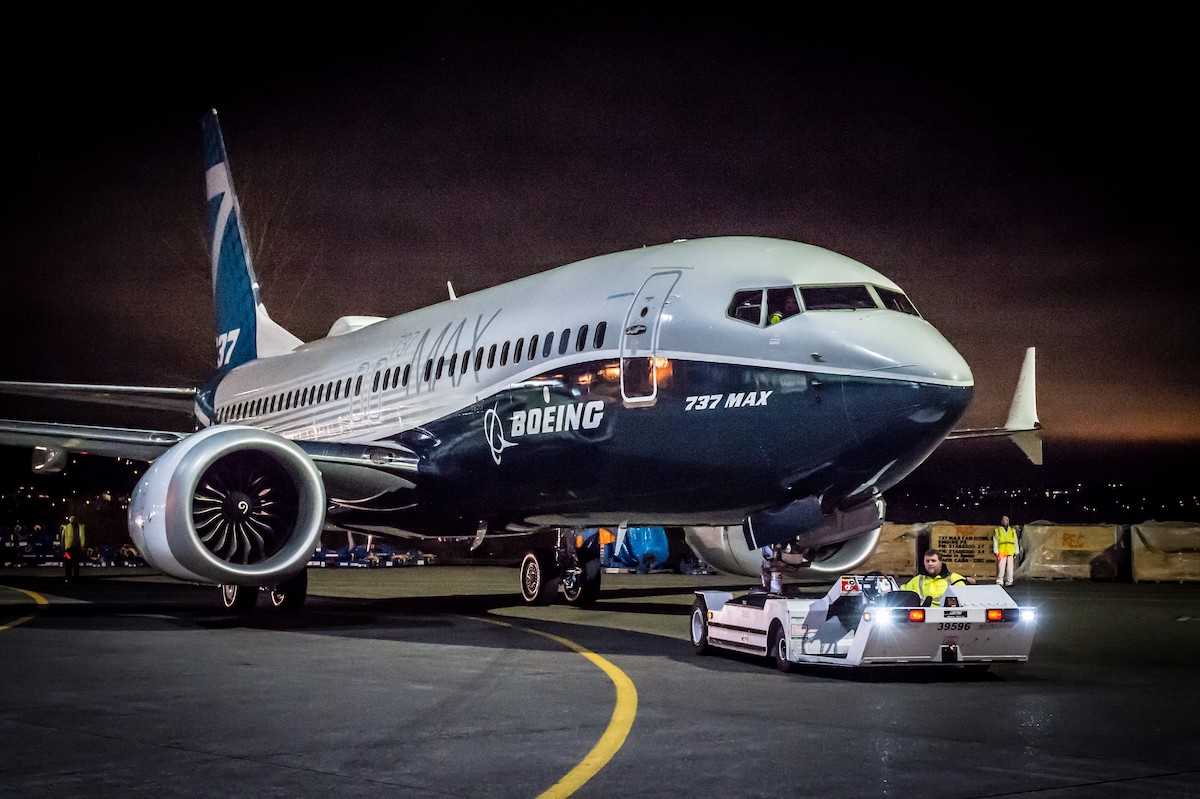
    Vietnam’s Transport Ministry has allowed the Boeing 737 Max aircraft to pass through the country’s airspace after two years.

    The decision was taken following a proposal made by the Civil Aviation Authority of Vietnam (CAAV) last month, citing Boeing’s efforts to address technical issues of the aircraft and assessments by aviation authorities in the U.S. and Europe.

    However, the ministry has ordered CAAV to continue monitoring related issues and updating itself with information from peers in China, Australia, and Russia, countries that have not yet opened up their airspace for this aircraft model.

    The ministry also said that after these countries lift their respective bans on the aircraft and if it meets Vietnamese regulations, the CAAV can report it for the ministry to consider permission for the aircraft to operate in and be imported into Vietnam.

    The U.S. allowed the Boeing 737 Max to resume operations in December and Europe did so in January.

    The Boeing 737 Max aircraft was grounded worldwide in March 2019 after 346 people were killed in two crashes in the space of a few months in Indonesia and Ethiopia.

  • AirAsia Group airlines anticipate strong recovery in 2Q

    AirAsia Group airlines anticipate strong recovery in 2Q

    The AirAsia group is something of a bellwether for the Southeast Asian airline industry due to its footprint in a range of countries in the region. So the widely varying rates of recovery for the group’s members give important indicators of the outlook for both the AirAsia empire and the broader Southeast Asia region.

    The brutal period that AirAsia has endured during the COVID-19 pandemic is highlighted by the RM5.9 billion ($1.4 billion) annual loss it reported for 2020.

    But looking ahead, the airline believes there is reason for near term optimism, as demand is projected to improve in its most important domestic markets. Some are bouncing back strongly towards pre-COVID levels, while others are in weaker condition as they prepare to emerge from the latest lockdowns.

    But the general trend is upward in the second quarter. The group’s view is that there is even light at the end of the tunnel for its international operations, which have suffered most during the pandemic.

    Granted, it is in AirAsia’s interests to paint a positive picture as it seeks to reassure financial markets during what is still a pivotal period for the airline. Nevertheless, it certainly has grounds to predict general improvement as it moves towards midyear and beyond.

  • Vietnamese carriers restart direct US flight race

    Vietnamese carriers restart direct US flight race

    Bamboo Airways and Vietnam Airlines are locked in a race to become the first Vietnamese carrier to establish a direct route to the U.S. The race has been re-triggered by the large demand for such flights amid the Covid-19 pandemic.

    Trinh Van Quyet, chairman of Bamboo Airways, said that the global vaccination campaign will help create a boom in the aviation industry by the end of this year. This is why the airline wants to fly directly to the U.S. in the last quarter of this year, he said.

    He had earlier announced a plan to make Bamboo Airways the first Vietnamese carrier to conduct regular direct flights to the U.S. However, it failed to meet its own deadline last year.

    The board of directors of flag carrier Vietnam Airlines has also approved a plan to launch direct flights to the U.S. early next year, saying it was the right time to do it. Since May last year, the airline has conducted 12 repatriation flights from the U.S. It has used up the number of repatriation flights allowed by U.S. authorities and is now seeking permission for regular flights.

    Such flights will help utilize its wide-body fleet, which has been in low demand due to the pandemic. Vietnam has considered regular direct flights to the U.S. since 2003, but profitability concerns have made carriers hesitant. Vietnam Airlines leaders have said earlier that low demand and fierce competition could lead to annual losses of $30 million in the first five years.

    American carriers have faced the challenges that Vietnamese carriers face now, and stopped direct flights between the two countries long ago. United Airlines launched a direct service in 2007 but pulled the plug on it in 2012, while Delta Air Lines flew its direct service for a mere six months in 2008. No American carrier has launched a direct flight since.

    The market entrance of Bamboo Airways in 2019 stirred up the race again, with its leadership expressing confidence that it was possible to make a profit with direct flights to the U.S.

    Bamboo Airways chairman Quyet had calculated that the airline could earn VND8 billion ($346,700) a month from direct flights with a return ticket price of $1,300.

    Without direct flights, people have to transit in East Asia while traveling between Vietnam and the U.S., and the journey can take 18-21 hours. A direct flight would shorten the travel time to 15-17 hours.

  • Another huge loss for AirAsia in 2021

    Another huge loss for AirAsia in 2021

    AirAsia Group is expected to report another huge loss in its 2021 earnings on prolonged closure of borders and a slower-than-expected recovery in tourism.

    Affin Hwang Capital said AirAsia had posted a record headline net loss of RM2.44 billion in the fourth quarter (Q4) of 2020.

    This was due to weak revenue, large impairment charges on right of use assets/receivables, fuel hedging losses and the recognition of deferred tax, partly cushioned by forex, disposal, and derivatives fair value gains.

    The firm expects AirAsia to report core net loss of RM1.4 billion this year due to the reimplementation of movement control order during the first quarter (Q1) 2021, prolonged closure of borders, and longer-than-expected timeframe for the Covid-19 immunization program.

    “We now anticipate AirAsia to report net loss of RM92 million in 2022 earnings (from net profit of RM238 million) due to slower-than-expected recovery in international tourism,” it said.

    Sequentially, Affin Hwang said AirAsia’s Q4 revenue from Malaysia’s airline operation had slipped by 68 percent quarter on quarter to RM113 million.

    This was after the reimplementation of movement control orders while the revenue from Indonesia and the Philippines had improved by 413 percent and 60 percent respectively.

    While the results were grossly below expectations, the airline’s management made good progress in private placements, Affin Hwang said, adding that AirAsia would have sufficient liquidity for 2021.

    The firm maintained a “Sell” call on AirAsia with a higher target price of 75 sen from 50 sen previously.

  • Bamboo Airways secures flight slots in London

    Bamboo Airways secures flight slots in London

    Bamboo Airways has got a slot allocated at London’s Heathrow Airport to fly six times a week from Hanoi and HCMC starting in May.

    The flights would be operated using the airline’s long-haul Boeing 787-9 Dreamliner aircraft.

    The carrier had stated its intention to fly to the British capital and Frankfurt in Germany in the first quarter of 2021, but was delayed due to the closure of Vietnamese borders to keep out Covid-19.

    It has announced plans to make an initial public offering this year and raise VND6.3 trillion ($2.73 million).

  • AirAsia Rounds Out Punishing Year With Record Loss

    AirAsia Rounds Out Punishing Year With Record Loss

    AirAsia was under pressure even before Covid-19 plunged aviation into crisis. Auditor Ernst & Young had questioned the ability of the airline and long-haul unit AirAsia X Bhd. to continue as going concerns, based on their 2019 financial reports. At the time, the carrier — a major buyer of Airbus SE’s A320 aircraft — was struggling with excess capacity in Southeast Asia as airlines rapidly added planes and competition intensified. More recently, AirAsia’s Japanese unit collapsed and it sold its stake in AirAsia India Ltd.

    The company has sought to raise up to 2.5 billion ringgit through debt and equity. In February, Hong Kong financier Stanley Choi increased his stake to almost 9% for about $27 million. Choi told Bloomberg News he was confident that AirAsia could recover from the challenges facing the industry.

    The airline said Monday it is close to finalizing commitments from banks for loans and is in talks with “a number of parties” for investments, including joint ventures.

    AirAsia has branched out into other businesses, with a strong emphasis on digital operations. Chief Executive Officer Tony Fernandes said this month the company’s so-called super app would have a turnover of $250 million this year. The app can be used for things such as shopping, booking flights and ordering food.

    Logistics arm Teleport will soon start delivering vaccines in Malaysia and the region, AirAsia said. It plans to convert two A320 aircraft into cargo planes.

  • Cebu Pacific operator lists convertible preferred shares at stock exchange

    Cebu Pacific operator lists convertible preferred shares at stock exchange

    Cebu Air the listed operator of budget carrier Cebu Pacific, announced on Monday that 328.95 million of its convertible preferred shares with a par value of P1 per share are now ready to be traded on the main board of the Philippine Stock Exchange (PSE).

    “Despite the numerous challenges that airlines are currently facing, Cebu Pacific was able to raise approximately P12.49 billion ($256 million) from existing shareholders,” Cebu Air said in a disclosure to the stock exchange on Monday.

    The listed company added that the success of its fund-raising activity is “reflective of the belief that shareholders have, not only in the long-term prospects of Cebu Pacific, but also its vital role in the economic recovery of the Philippines.”

    The company has said the amount raised would help it address financial liabilities, including repayment of an advance by JG Summit Philippines Ltd., aircraft operating lease payments, principal debt repayments, and passenger refunds, among others.

    Cebu Air recently announced that its board approved a P16-billion, 10-year loan from local banks.

    The loan would be used to fund its capital expenditures and other general corporate purposes.

    The loan should also provide a cushion against “unexpected working capital requirements that may stem from fuel price and foreign exchange rate volatility,” Cebu Air said in an announcement.

  • AirAsia to swap stock for full ownership of loyalty programme

    AirAsia to swap stock for full ownership of loyalty programme

    Malaysia’s AirAsia Group and Aimia Holdings UK II have signed a memorandum of understanding (MoU) for a $25 million stock-swap deal, for the latter’s 20% equity interest in the airline group’s loyalty program.

    The parties inked a share sale and purchase agreement for Aimia to sell 1.67 million ordinary shares in BigLife to AirAsia Group for a $25 million consideration. This will be satisfied by 85.9 million new ordinary shares in AirAsia Group, issued at MYR1.20 ($0.29) each, the company said in a 22 March Bursa Malaysia disclosure.

    AirAsia Group and Aimia Holdings UK II have signed a memorandum of understanding (MoU) for a $25 million stock-swap deal, for the latter’s 20% equity interest in the airline group’s loyalty program.

    If it materializes, the deal will increase Aimia’s stake in AirAsia Group to approximately 3.1%, the investment holding company said in a separate, same-day statement.

    AirAsia Group recently raised over MYR330 billion for short-term cash needs, from a private placement of 470 million new shares. These were issued across two tranches in February and March, at MYR0.675 and MYR0.865 per share, respectively.

    A stock exchange filing shows the company had over 3.8 billion issued shares as at 17 March, upon the conclusion of the private placement, with MYR8.36 billion in issued share capital.

    Under the MoU with Aimia, the consideration shares issued by AirAsia Group will rank pari passu with existing shares at the point of completion. The issue price reflects the company’s recent volume-weighted average market prices and represents a 0.84% premium over the last close on 19 March, before the signing of the MoU.

    AirAsia Group states that the purchase consideration takes into account, among others, a 2014 valuation that Aimia paid for its initial stake, which put a 100% equity interest in BigLife at $109 million.

    The MoU is governed by the laws of Malaysia, AirAsia Group states. The terms have yet to be finalized.

    While the company can execute the MoU without shareholder or regulatory approval, the requisite resolutions to complete the deal will need to be passed at a general meeting. Issue of the consideration shares is subject to approval by AirAsia Group shareholders as well as Bursa Malaysia.

    The remaining 80% stake in BigLife is held by AirAsia Digital, a wholly-owned subsidiary of AirAsia Group.

    The company states in its filing: “BigLife is principally engaged in the business of managing customer loyalty schemes whilst its subsidiaries are involved in the marketing and distribution of loyalty programs.”

    It envisages greater synergies across the group from full ownership of BigLife, which it says will give it better control of the entity.