Tag: airport

  • Changi to strengthen SEA and China network in H2

    Changi to strengthen SEA and China network in H2

    Changi Airport is looking to strengthen its connectivity to more points in Southeast Asia and China in the second half of the year as the airport regained more than 80 percent of capacity in the month of June.

    On a quarterly basis, Changi Airport saw 14.6 million passenger movements from April to June 2023, which was 87 percent of what was registered for the second quarter of 2019. Meanwhile, airfreight throughput from April to June 2023 totalled 418,000 tonnes, sliding 10.8 percent year-on-year.

    Changi said air cargo demand remained weak due to softening demand amid inflationary pressures. In Q2, Changi’s top five air cargo markets comprised Australia, China, Hong Kong, India and US with India emerging on the top 5 for two consecutive quarters since the start of 2023.

    In June, the airport’s passenger movements crossed the 5-million mark for the first time since January 2020, or 88 percent of the baseline passenger numbers back in June 2019, before the pandemic. Air cargo volumes stood at 135,000 tonnes for the month, representing a year-on-year decline of 17 percent.

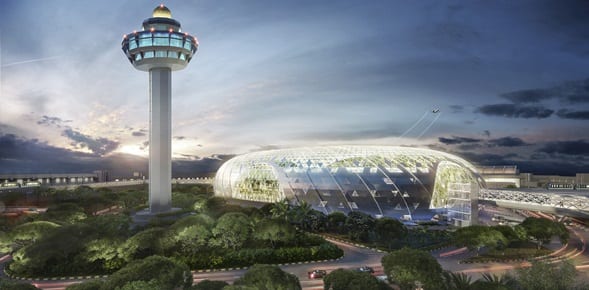
    Regaining more than 80 percent of its capacity before Covid, the airport said it plans to strengthen connectivity to more points in Southeast Asia and China in the second half of the year. As of 1 July, 99 airlines operate over 6,300 weekly scheduled flights at Changi Airport, connecting Singapore to 148 cities in 49 countries and territories worldwide.

  • Changi Airport outlines top priorities for cargo

    Changi Airport outlines top priorities for cargo

    Singapore Changi Airport saw muted cargo volumes in March compared to the same period last year, as the Asia Pacific hub recorded 152,000 tonnes. For the first quarter, air freight movements at Changi totalled 417,000 tonnes, sliding 9 percent year-on-year. The group said demand remained soft, especially in the first two months of the year, no thanks to global economic uncertainty and inflationary pressures. Collegues talk to Lim Ching Kiat, executive vice president for air hub and cargo development, to find out more about the group’s top priorities for cargo.

    What are Changi’s top priorities for cargo? What’s the group’s overall direction?
    While global air cargo demand has weakened, Changi Airport remains optimistic on long-term growth, especially in Southeast Asia. Despite the recent economic headwinds, Southeast Asia’s air trades with the rest of the world continued to expand over the past four years. Given the expectation of strong long-term progress with urbanisation and industrialisation, Southeast Asia is primed for growth in manufacturing, trade and logistics. Singapore, being in the heart of Southeast Asia, will have a critical role to play in global supply chains, contributing to the flow of international goods.

    Towards this end, while cargo connectivity remains critical for Changi Airport to anchor its position as a leading air cargo hub, our other priorities are to raise service quality in cargo handling and unlock capacity for long-term sustainable cargo growth by leveraging automation and digitalisation. At the same time, we are also putting in place steps to reduce the carbon impact of cargo activities in order to strengthen our resilience and secure our competitiveness as an air cargo hub.

    To raise service quality in cargo handling, we firmly believe in taking a collaborative approach by working closely with our partners in the air cargo community. One key development is Changi Airport Group’s introduction of a cloud-based community data-sharing platform—the Changi Air Cargo Community System (ACCS). This is an open ecosystem of collaborative and community-based applications that aggregates data from all parties involved in the cargo handling process. Within that system, we developed a truck dock slot booking (TDSB) application, which aims to even out cargo lodgement and collection at our cargo handler’s air freight terminals, thereby reducing waiting time, optimising resources, and providing greater insights to airport landside activities. This move to digitalise provides greater predictability for forwarders, trucking companies, and cargo handlers. It also supports Changi Airport’s sustainability efforts to reduce carbon and tailpipe emissions. We have since completed the pilot and plans are underway for community-wide implementation later this year.

    In the area of automation, CAG, together with our partners, has been investing in resources to trial autonomous solutions like autonomous tractors to reduce the manpower resources required for point-to-point transportation of baggage and cargo. Ongoing trials are promising and we expect to trial fully driverless operations for baggage delivery by 2024. On the digital front, solutions such as the tracking of all motorised ground support equipment will help optimise equipment deployment, boosting productivity and improving the quality of cargo handling capabilities. Additionally, we are working closely with our cargo handlers on warehouse automation and digitalisation projects to improve productivity and efficiency, as well as increase capacity.

    Can you share more about the recent partnership on cargo with Brussels Airport? What are the opportunities in the Asia-Europe market?
    In 2022, Europe remained Changi’s second largest region by air trades. Belgium-Singapore is a key air trade lane for high-value cargo such as biopharmaceuticals. Both countries place strong importance on international trades and advanced manufacturing, and have been established as key trusted pharmaceutical hubs in Asia and Europe respectively. Changi Airport and Brussels Airport share similar ambitions in shaping our air cargo hub and place strong priorities in areas such as cargo operations excellence and digitalisation.

    Under the MOU signed on 2 March 2023, Changi Airport and Brussels Airport will jointly drive initiatives to enhance capabilities in pharmaceutical logistics, undertake studies and trials in the fields of digitalisation and sustainability, as well as exchange best practices in the handling of special cargo segments and community-wide cargo initiatives to transform the air cargo supply chain.

    On the environmental sustainability front, under the ambit of Pharma.Aero, both airports will be actively participating in the Green Air Pharma Logistics project. Together with other Pharma.Aero members, we aim to define the parameters and framework for a green air pharma lane and develop a set of standards and measurements to quantify and qualify the lane.

    How important is the refinery expansion by Neste for Changi and Singapore?
    To enable the adoption of sustainable aviation fuel (SAF), CAG had been working closely with industry and regulatory partners on stakeholder engagement, as well as facilitating trials. Neste’s refinery expansion will provide for up to one million tonnes of annual SAF production capacity in Singapore. Having domestic SAF production will enable Changi Airport’s airline partners to achieve their sustainability objectives with lower carbon footprint compared to importing SAF from other production locations. In addition to building this production capability, Neste has established an SAF supply chain to Changi Airport to offer blended SAF directly to airlines operating at Singapore Changi Airport.

    Since July 2022, Singapore Airlines and Scoot flights out of Changi Airport have been using a blend of regular jet fuel and SAF as part of a year-long trial. With Neste’s refinery expansion, we look forward to working with more airline partners to promote the acceleration of SAF uplift in Changi Airport.

    How has the concept of sustainability evolved from an airport perspective? Can ‘sustainable’ be ‘profitable’ in the long run?Over the past years, sustainability has evolved into a license to grow for many businesses and industries. Although airports account for only about 2 percent of global aviation emissions, we form the common platform upon which a multitude of aviation partners operate. As such, it is a priority for us to work hand in hand with the airport community to achieve responsible and sustainable growth.

    Over 99 percent of CAG’s Scope 1 and Scope 2 emissions come from the use of electricity in operating our passenger terminals. As such, we concentrate our efforts in raising building energy efficiencies through constant upgrading of our systems to the best-in-class energy efficient models. For example, past upgrading of our chiller plants has seen up to 30 percent savings in energy consumption, which achieves not only cost savings but also carbon emissions reduction. We are also expanding on-site generation of solar energy, which offers energy resilience against the backdrop of fluctuating energy prices and volatile macro-economic conditions.

    Most of our efforts in reducing Scope 3 emissions centre around working with airline partners and ground handling agents at Changi Airport. Our recent development on SAF (detailed above) is one example. As an industry, more work has to be done to address the SAF price premium through balancing supply and demand. Different types of policy levers are being employed around the world, ranging from mandates to incentives. We are in close engagement with the Civil Aviation Authority of Singapore in its development of a Singapore Sustainable Air Hub Blueprint, which will set out tangible pathways to achieve sustainability goals for the Singapore aviation industry.

    To decarbonise ground operations including those pertaining to air cargo, we started working with our ground handling agents in 2017 to transition towards electric baggage tractors. Today, we have installed a network of more than 100 EV charging points to support a 100 percent electric baggage tractor fleet at Changi Airport. Moving forward, all new airside light vehicles, tractors and forklifts will have to be electric from 2025. This target was developed with cost parity and availability of viable electric variants in mind. In the longer term, we aim to have all airside vehicles running on cleaner energy by 2040. In tandem, we are working towards a community roll-out of the TDSB initiative, which aims to reduce truck waiting time, hence reducing carbon and tailpipe emissions.

    CAG is committed to zero carbon growth up to 2030, with absolute emissions to be capped at 2018 levels even as we continue to grow our business and strive for cost parity while stepping up our sustainability efforts. At the same time, we will aspire for net zero carbon emissions by 2050 as Singapore transitions towards renewable energy and through technological advancement.

    What can you say about Singapore’s status as a major logistics hub? Do you see any opportunities with intermodal operations?
    In today’s highly dynamic environment, intermodal transport has emerged as an alternative and risk mitigation transportation strategy. The utilisation of intermodal operations can provide companies with more transportation options. It provides a middle ground between cost, transit time and efficiency. It could also help overcome geographical challenges, enable cost efficiencies in transporting products to new markets, while also securing supply chain resilience.

    Singapore is home to the world’s 2nd busiest container port and 10th busiest international air cargo airport. Changi Airport has been working closely with PSA Singapore to drive intermodal transportation cargo flows through Singapore. Singapore’s modern port infrastructure, state-of-the-art air cargo facilities and close proximity between the air and sea ports allow seamless intermodal transshipments. During the Covid-19 pandemic which saw different transportation disruptions, Singapore’s uninterrupted operations and ability to handle intermodal transportation was a source of helpline for global shippers and logistics players.
  • Airport operator targets record revenue

    Airport operator targets record revenue

    The Airports Corporation of Vietnam (ACV) has set a revenue target of VND19.36 trillion ($823.92 million) this year, exceeding pre-pandemic levels and the highest since its establishment.

    ACV, which operates 22 airports in Vietnam, expects the aviation industry to see a strong recovery in both domestic and international flights.

    The company plans to serve 118 million passengers this year, up 20% on 2022.

    The number of takeoffs and landings are expected to hit 777,000, up 17%.

    These figures are set to bring the company a revenue of VND19.36 trillion, an increase of nearly 40%.

    This is VND1 trillion higher than in 2019, before the pandemic affected the industry.

    ACV, however, set a modest profit target of VND8.49 trillion, down 3% from 2022 and 16.5% from 2019.

    This is due to high input costs and overloaded airports, which are set to put pressure on operations.

  • Changi Airport’s retail sales start steady post-Covid recovery

    Changi Airport’s retail sales start steady post-Covid recovery

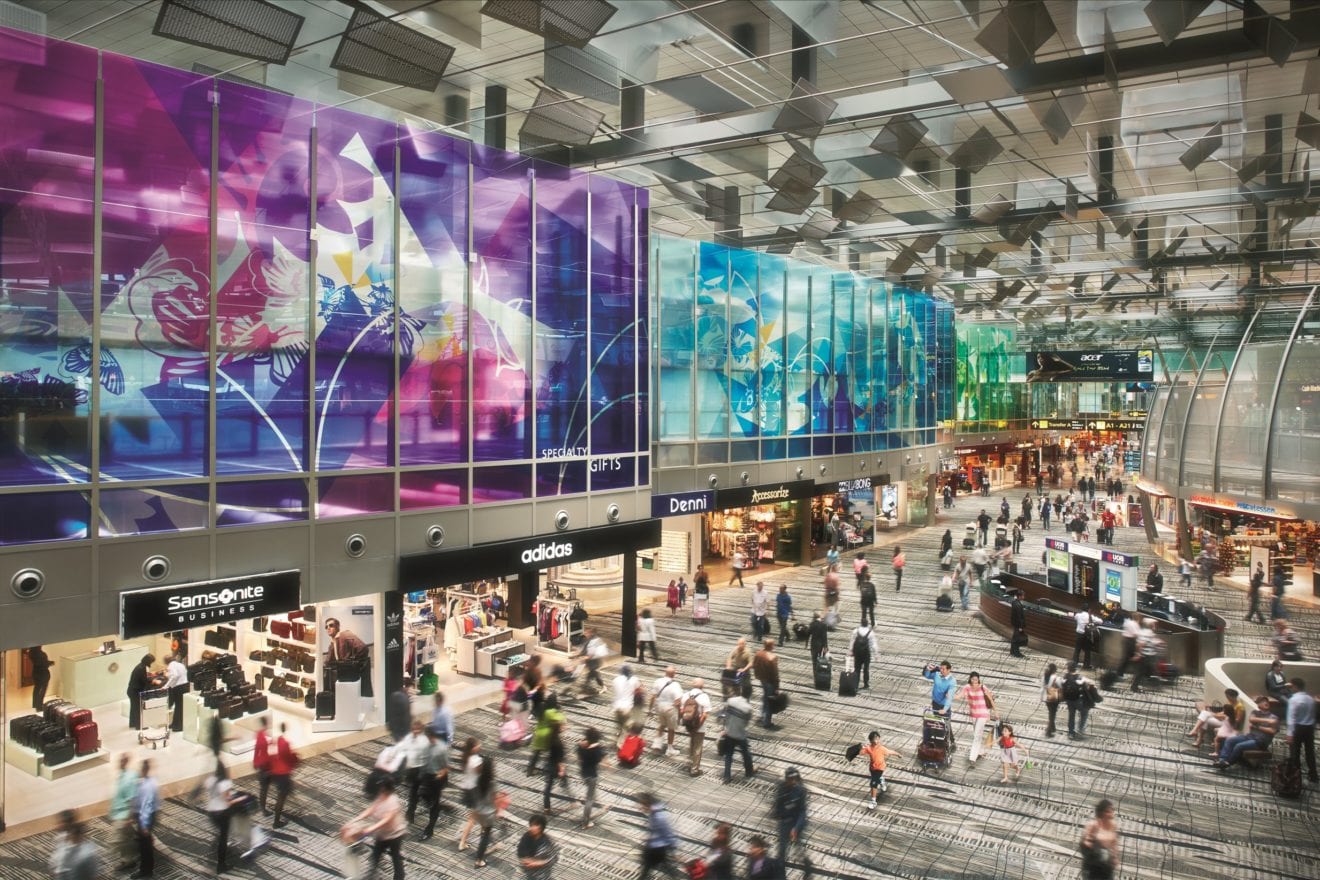
    However, concession sales last year represented just 37 percent of sales in 2019, the last full year without border closures. Retail revenue in December was at 58 percent of the pre-Covid levels on the back of a passenger traffic recovery to 72 percent.

    The biggest spenders at Changi Airport are from Indonesia, India and Thailand, as the prolonged Covid-19 situation in China – its major market – caused the near absence of travelers from this market. Liquor & tobacco, perfumes & cosmetics and luxury were among the most popular product categories.

    Changi Airport recorded more than 13 million transactions during the year with an average of 35,000 transactions daily.

    As Changi Airport has seen more traffic since the Covid-19 restrictions were lifted, the airport has increased its promotional activities to lure customers and enhance their shopping experience, including the ‘Be A Changi Millionaire’ campaign.

    Last year, Changi Airport teamed up with Lotte Duty-Free to host the the ‘World of Wines and Spirits’ event, which brought together products from 75 brands, including Bowmore, The Macallan, Midleton, The Singleton and Penfolds. The company plans to launch the second installation of ‘World of Wines and Spirits’ this year.

  • Airports serve more than 9.8 million passengers in January

    Airports serve more than 9.8 million passengers in January

    Airports across Vietnam handled more than 9.8 million passengers in January, an increase of 13.8% compared to the previous month, according to the Civil Aviation Authority of Vietnam (CAAV).

    Of the total, the number of international passengers reached 2.3 million, a 10% rise month on month, while the number of domestic passengers was 7.5 million, an increase of 15% month on month.

    Domestic airlines carried 4.85 million passengers, up 13.4% including 1.1 million international passengers and 3.75 million domestic ones.

    About 112,000 tonnes of cargo were handled at the airports in the first month of 2023, up 11.6% compared to December 2022.

    During the 7-day Lunar New Year (Tet) holiday, airports across the country served more than 1.9 million passengers, an increase of 58%, and more than 7,600 tonnes of cargo, down 11.6% compared to the same period of the Lunar New Year in 2022.

    Particularly, Vietnamese airlines transported more than 967,000 passengers and 1,550 tonnes of cargo, an increase of 60.7% and 28.4% respectively compared to the same period last year.

    Tan Son Nhat International Airport in Ho Chi Minh City saw 20,975 flights, an increase of about 26.5% over the same period in 2022, and 3,147,014 passengers, up 61%.

    Noi Bai International Airport from January 19 to 29 (or the 28th day of the 12th lunar month to the 8th day of the first lunar month) saw 5,618 flights, an increase of 49% compared to the same period of last year. Nearly 900,000 passengers traversed the airport during the festive time, up 71%.

    According to the CAAV, although the number of passengers increased during the Tet holiday, there were no congestions at airports, especially Noi Bai and Tan Son Nhat airports.

    “Airports proactively prepared for the festive time and worked closely with airlines and ground service units to provide maximum support for passengers, especially large groups and last-minute guests,” said the agency.

  • 7-Eleven unveils 7Cafe concept store at Jewel Changi

    7-Eleven unveils 7Cafe concept store at Jewel Changi

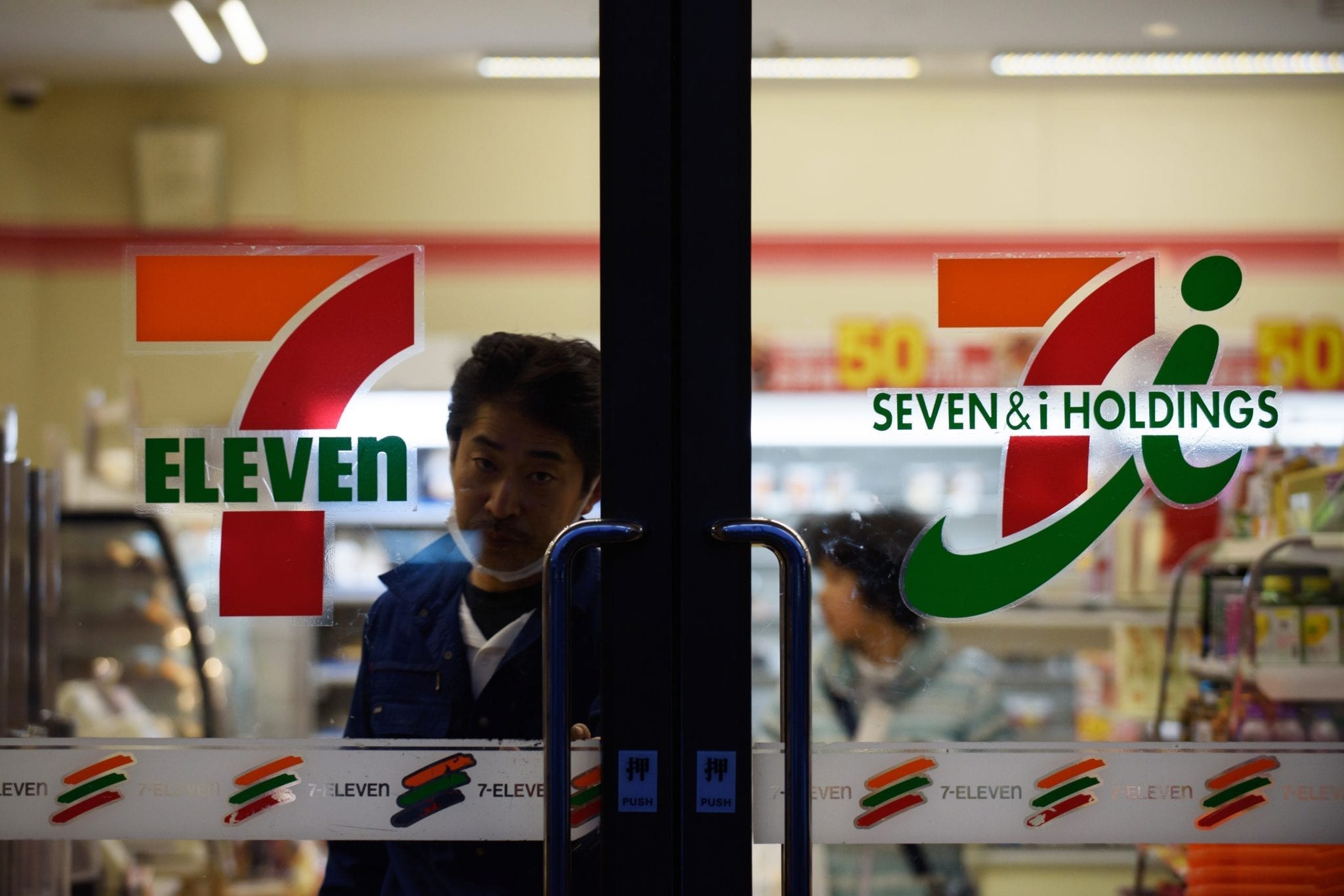
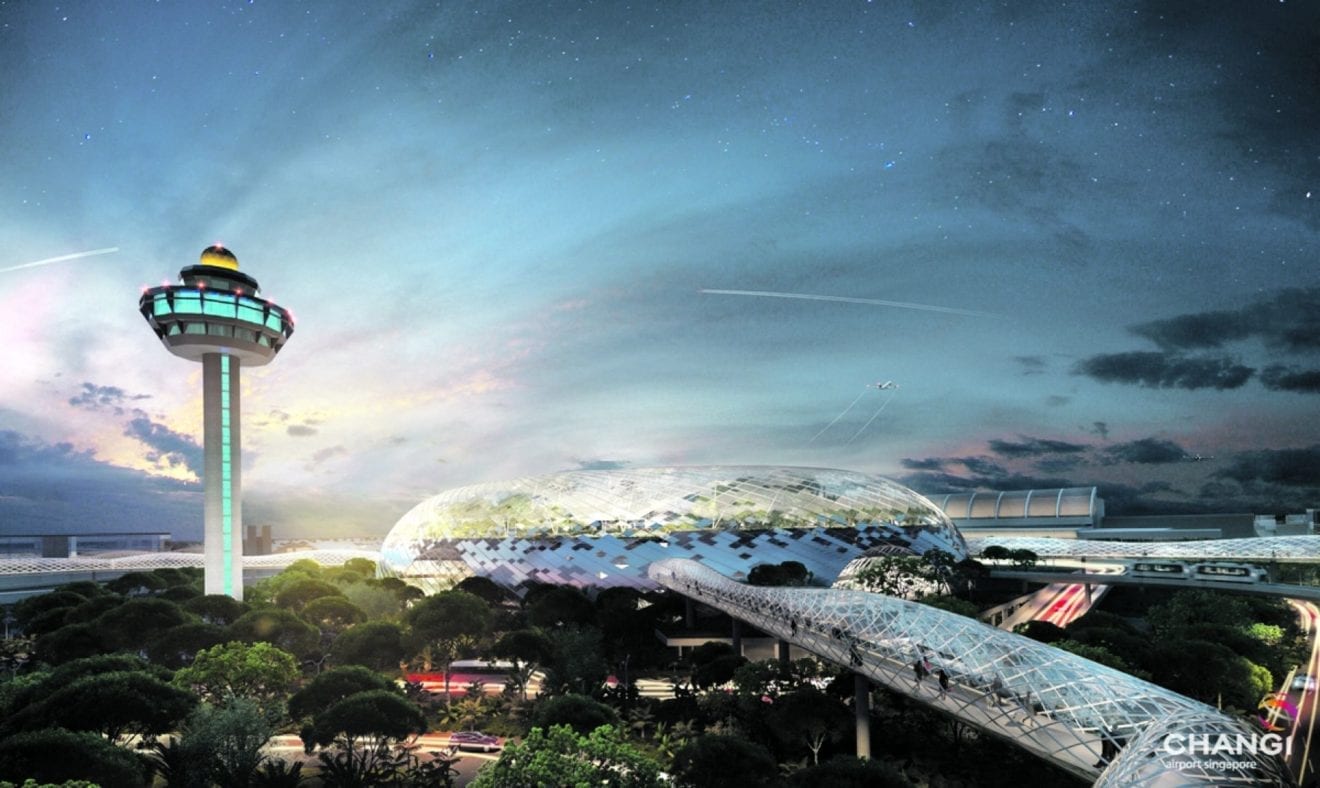
    7-Eleven is usually a place where people pop in and out in a jiffy. However, this isn’t the case at the convenience stores’s first 7Café concept store at Jewel Changi Airport. The 7Café concept store at Jewel Changi Airport is located in Basement 2.

    It has an extended range of 7Café items, including Salted Caramel Coffee, Mocha, and Matcha Frappés priced at $5.50 each. There are also offerings featuring the local flavors of Singapore – Banana Caramel Smoothie inspired by Goreng Pisang and Pandan Lemonade cooler.

    Those who love cheesecakes can try several flavors, including Yuzu, Lychee, or Cookies & Cream all priced at $5.50 each.

    Warm pastries and finger food will be available at the hot food counter. Savoury hot food items include a range of fried chicken favorites including Hot and Spicy Drumlets, Chicken bites with a choice of Red Pepper or Garlic Herb seasoning, Chicken Drumsticks, Nuggets, and Wings.

    Other light options include sandwiches, burgers, and onigiri. There will also be Ready-To-Eat meals too.

    The grand opening of the Jewel 7-Eleven outlet will take place from 25 to 27 November 2022, 11 am to 9 pm daily. Over the weekend, customers can enjoy a sampling of drinks and snacks, free cotton candy floss and 7-Eleven balloons. There will also be chances to walk away with Spin and Win rewards, with a minimum spend of $10, and freebies for completing Jewel Challenge card activities.

    “At 7-Eleven, we always broaden our horizons and create innovative offerings for our customers. The 7-Eleven Jewel Changi store seeks to provide a first-of-its-kind mini café experience with food being served at the counter for the convenience of our customers. We have also expanded our well-loved product range by adding a slew of new options. From items highlighting the iconic local flavors of Singapore to delectable ready-to-eat food options, there’s something for everyone! We hope that everyone will be able to enjoy our new concept store with its unique design and exclusive menu,” said Mr. Steven Lye, Managing Director of 7-Eleven Singapore.

  • Auckland Airport to build outlet mall with 100+ stores

    Auckland Airport to build outlet mall with 100+ stores

    Auckland International Airport has posted an after-tax profit of $464.2m for the year to June 30, while also announcing plans to build a retail precinct with 100 stores that is expected to create 500 new jobs.

    Although its after-tax profit was up 139 percent on the previous year’s $194m profit, the airport made an underlying loss of $41.8m, its first full year underlying loss in history. The underlying loss was in line with the guidance the airport gave at the start of the year.

    The airport says underlying profit is how it measures its financial performance because it removes revaluation changes that can distort financial results or where one-off transactions, both positive and negative, can make it difficult to compare profits between years.

    The airport also recorded its lowest number of international arrivals and departures since 1972, with just 600,000 passengers, including transits, down 93 percent on the previous year.

    Total passenger numbers were 6.4 million, down 59 percent on the previous financial year.

    Shares in Auckland Airport closed at $7.10 on Wednesday. During New Zealand’s alert level 4 lockdown at the start of the Covid-19 pandemic, they dropped to about $5 per share.

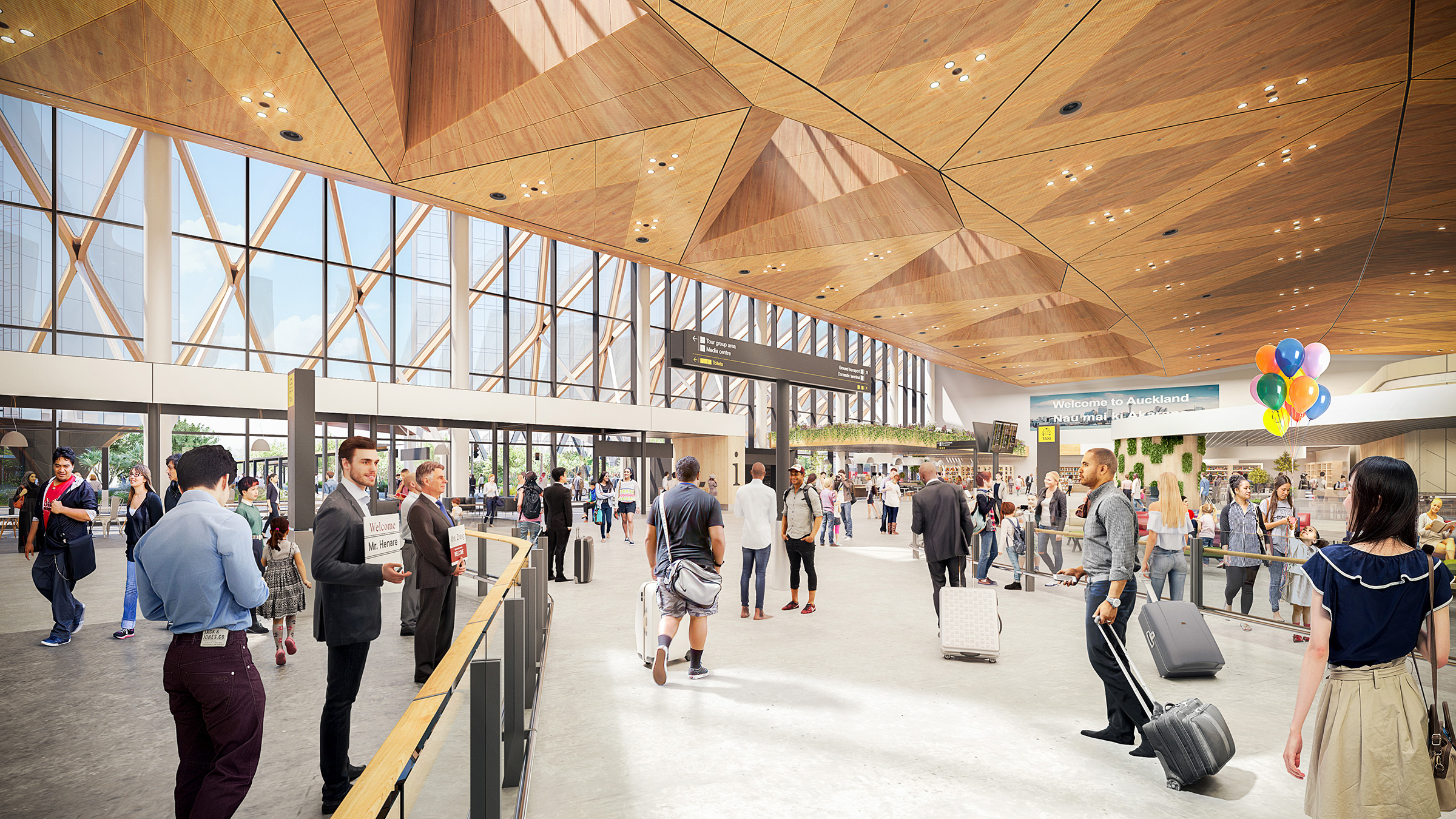
    The new retail precinct would involve the development of a 23,000 square metre-plus outlet centre on undeveloped land at the north-eastern edge of the airport.

    “Premium and lifestyle brands” will be sold “at often heavily discounted prices”, the company said.

    The airport’s general manager of property and commercial Mark Thomson said there was a gap in the market for a purpose-built fashion outlet centre and the airport had been exploring the concept for several years.

    “It will be the first of its kind in New Zealand, offering an exciting new shopping experience for Kiwis and travellers arriving at and departing from the airport,” Thomson said.

    “Many New Zealanders will be familiar with visiting this type of bespoke fashion outlet shopping centre on trips overseas.”

    A start date for construction was not given.

    Thomson said development would be influenced by the strength of the retail market and the recovery of aviation.

    Auckland Airport chief executive Adrian Littlewood said the 2021 financial year had been a year like no other for the company, and it was giving permanent staff $1500 in airport shares to thank them for their efforts over the past year.

    “Covid-19 changed our business overnight bringing constant upheaval to almost every part of our operation,” Littlewood said.

    “But throughout all the uncertainty of the past 18 months, our team’s determination to get the job done and go the extra mile for New Zealand has never faltered.”

    The airport had taken steps to strengthen its financial position including reducing operating expenses, repaying $425m in US private placement borrowings, and getting bank approval to renew a $700m loan, he said.

    The airport last week said it would start work on a $1 billion-plus project to merge its domestic jet operations with its international terminal early next year as one of four anchor projects being advanced.

    Four major projects are still on hold including its expanded international airfield and taxiway capacity, new cargo precinct, new international arrivals area and a second runway.

    Auckland Airport held more conservative assumptions than those of the International Air Travel Association, which was forecasting global travel to fully recover and exceed pre-pandemic levels in 2023.

    Littlewood said a full recovery may take longer.

    “Our financial performance is strongly linked to passenger volumes, so our recovery will be greatly influenced by the return of domestic and international travel and changes in border settings.”

    There were encouraging signs with vaccination programs ramping up in New Zealand and around the world, he said.

    “But we expect to see further volatility in domestic and international travel in the short term, with the global aviation market gradually rebuilding in 2022.”

    Due to uncertainty in the market, Auckland Airport would not provide underlying earnings guidance for the 2022 financial year, Littlewood said.

    Investment in transport infrastructure projects and upgrades would continue and was expected to cost between $250m and $300m in the 2022 financial year.

  • Airport ground service firm reports $1.4 mln loss

    Airport ground service firm reports $1.4 mln loss

    Taseco Air Service JSC, owner of restaurants, duty-free shops, and advertising contractor at several airports across Vietnam, has posted a VND31.8 billion ($1.4 million) loss in Q1.

    This is the fourth consecutive quarter that the firm has reported a loss as it goes through one of the most challenging times for the aviation industry. International flights remain restricted after more than a year and the Covid-19 outbreak triggered late January hampered domestic travel recovery.

    The firm’s revenue fell 70 percent year on year to VND58.3 billion.

    It currently operates over 100 restaurants and souvenir shops at seven international airports nationwide.

    The firm has targeted VND317 billion in revenues this year, down 12 percent from last year. It expects to suffer a VND83.87 billion loss this year.

  • Airport ground services firm targets $4.1 mln profit

    Airport ground services firm targets $4.1 mln profit

    Its revenue target is VND795 billion, a 7 percent rise. The targets were announced at the company’s annual general meeting on Tuesday.

    It is set to benefit from the start of the new Vietravel Airlines by leading tour company Vietravel last January and the gradual resumption of international flights from July.

    “Many countries including Vietnam are considering issuing vaccine passports to resume international flights, which will enable the aviation industry to recover,” the company’s chairman Dang Tuan Tu, said.

    Last year the company reported revenues of VND746 billion, a 53 percent decline, and profits of VND88 billion, down 74.5 percent as international flights were grounded and tourism came to a standstill.

    The average number of flights it served per day last year was 70 percent down from the normal 350.

  • Government greenlights Long Thanh International Airport

    Government greenlights Long Thanh International Airport

    The first phase of the Long Thanh International Airport project, costing over $4.6 billion, has been approved by the government. The decision approving the airport, designed to become an important regional international air transit hub, was signed Wednesday by Deputy Prime Minister Trinh Dinh Dung.

    The first phase will have one 4km long runway with a width of 75 meters and a system of taxiways and apron, and a 373,000 sq.m passenger terminal designed to serve 25 million passengers and 1.2 million tons of cargo per year. The work is expected to be completed in 2025.

    The work will be divided into four sub-projects: the headquarters of state management agencies, flight management services, essential airport facilities, and other items.

    Essential airport facilities will include buildings, airport apron, passenger terminals, and cargo terminals. This task has been assigned to the Airport Corporation of Vietnam (ACV), which operates 21 airports in the country. ACV will raise its own capital for the construction, the decision says.

    The Long Thanh International Airport will apply modern and open technologies so that they can be easily updated with the most advanced construction, management and operational technologies in accordance with international standards.

    The project’s investment plan was approved by the National Assembly in mid-2017. The parliament also issued a resolution on compensation, support and resettlement for land clearance to build the airport.

    Early last month, the government had directed Dong Nai Province to urgently hand over building sites so that construction can begin early next year.

    The airport will have three phases that are expected to be completed in 2040. By then, it will have four runways, four-passenger terminals and auxiliaries to accommodate 100 million passengers and 5 million tons of cargo every year.

    Lying 40 kilometers east of HCMC, the airport is expected to take up the overflow from the largest existing airport in the country, the Tan Son Nhat International Airport.

  • 2nd airport proposed for Hanoi as air travel boom looms

    2nd airport proposed for Hanoi as air travel boom looms

    The Hanoi Department of Planning and Architecture has recommended the construction of a second airport in the city to cope with the rising demand for air travel. The new airport should be built in the southern district of Ung Hoa, 40 kilometers from the downtown, while the existing Noi Bai International Airport should be upgraded and have its capacity doubled to 100 million passengers a year, it said.

    Ung Hoa has several advantages such as good transport links with the city center since it is served by roads, rail, and waterway, and a large area of 1,300 hectares available for the airport, it explained.

    It could become a satellite town with an industrial zone and a logistics complex in the future, it said. Consultancy Transport Engineering Design Inc (TEDI) has said the number of air passengers could reach 150 million a year in the future, and a second airport should be built starting in 2035.

    The number of passengers and cargo passing through Noi Bai Airport has been growing by 10 percent a year reaching 29 million in 2019.

    Its designed capacity is for 25 million passengers. Vietnam generally saw demand for air travel rise before the Covid-19 outbreak, with its airports handling 116 million passengers last year, up 12 percent from 2018, according to the Airports Corporation of Vietnam (ACV).

  • Hong Kong Airport extends relief period to retail tenants

    Hong Kong Airport extends relief period to retail tenants

    Hong Kong airport is extending its rent-relief package to tenants and other stakeholders in recognition of the prolonged impact of the coronavirus pandemic.

    The airport implemented a waiver or reduction of various fees for the aviation industry and partners in March this year. The reductions are now scheduled to continue through July and August.

    The measures include a rental relief for retail and catering tenants and a full rental waiver for temporarily closed shops and restaurants.

    In addition, the airport has instituted a full waiver of parking and airbridge fees for idle passenger aircraft, a reduction for passenger aircraft landing charges and a full waiver on fixed charges for inflight catering services amongst a range of other relief measures for the industry.

  • Changi Airport further consolidates terminals

    Changi Airport further consolidates terminals

    Following the suspension of operations in Terminal 2, Changi Airport is to further consolidate operations and indefinitely close more retail stores.

    The airport will temporarily suspend Terminal 4 (T4) operations and move T4-based airlines to Terminal 1 and 3 instead. That means stores and restaurants in T4 will close its doors this week until the terminal resumes operation.

    According to the company, the move will help Changi Airport and its partners save on running costs such as utilities and cleaning.

    At Jewel Changi Airport, non-essential services, including Canopy Park and the HSBC Rain Vortex, are not allowed to operate until June 1.

    Restaurants and coffee shops in the shopping center remain open for takeaways only.

    Details of stores still open in the two terminals which continue to operate and at Jewel Changi can be accessed online.

  • Changi Airport to consolidate terminal operations from May 1st

    Changi Airport to consolidate terminal operations from May 1st

    Singapore’s Changi Airport will close its Terminal 2 from May onwards, consolidating its operations in response to a steep decline in passenger traffic caused by the coronavirus outbreak.

    Given the unlikelihood of a return to normal passenger numbers in the near future, Changi will shutter the terminal, allowing ongoing upgrade work to be accelerated.

    The move will enable stakeholders to save on running costs and optimize resources across the airport’s terminals to better match the low travel demand and airlines’ flight operations.

    The suspension of operations will allow the current Terminal 2 expansion works, currently scheduled for completion in 2024, to be brought forward by up to one year.

    Additionally, the airport’s Terminal 4 operations have been scaled down, with a small number of aircraft boarding gates kept in use and shops allowed to close early. Changi may also consider suspending operations at the terminal until normal flights resume.

    “Even as our airport capacity is being optimized for the current situation, we will have the flexibility and we stand ready to ramp up operations quickly once the recovery takes place,” said Changi’s executive VP of airport management Tan Lye Teck.

    Rentals for retailers operating in D4 have been waived for two months due to very low passenger traffic in the terminal.

  • Tokyo Tokyo store opens at Haneda Airport

    Tokyo Tokyo store opens at Haneda Airport

    Tokyo Metropolitan Government has launched a souvenir shop, Tokyo Tokyo, at Haneda Airport.

    Located in a retail strip at the airport’s international terminal, Edo Ko-ji, Tokyo Tokyo offers a wide selection of souvenirs including traditional dolls Daruma, maneki-neko lucky-cat charms and models of the iconic Tokyo Tower.

    The store’s wall features drawings of the Asakusa and Shibuya neighborhoods which reflect the merger of “cutting-edge modern culture and centuries-old tradition”.

    The Tokyo Tokyo shop is part of the Tokyo Omiyage project which is a collaboration between Tokyo Metropolitan Government and local businesses to create a lineup of souvenirs promoting Tokyo as a travel destination to both domestic and international tourists.