Retail News CRM

Tag: airport

  • Iconic Jewellery Brand Fabergé Sold For $50m: Gemfields Shifts Focus Back To Core Mining Operations

    Iconic Jewellery Brand Fabergé Sold For $50m: Gemfields Shifts Focus Back To Core Mining Operations

    Gemfields, the mining group, has disclosed the sale of its entire ownership in the esteemed jewellery brand Fabergé. The purchaser, U.S.-based SMG Capital, procured the brand for a sum of US$50 million – a cost that many in the industry have described as unusually low for a brand with such a rich history.

    Financial Breakdown

    As of December, Fabergé had net assets amounting to $50.35 million. Nevertheless, the brand had experienced operating and net losses totaling $5.7 million and $11.3 million, respectively. These financial results likely influenced the final sale price.

    Fabergé, renowned for its extravagant creations, boasts the Third Imperial Easter Egg amongst its portfolio. Created in 1887, this masterpiece, featuring a solid gold case adorned with sapphires and diamonds, and containing a women’s watch with diamond-set gold hands, was once valued at $33 million. The egg remains in the hands of an unidentified private collector.

    Deal Details

    Gemfields is set to receive $45 million upon the deal’s closure, which is anticipated by the end of August. The remaining $5 million will be dispersed in the form of quarterly royalties, equivalent to 8% of Fabergé’s revenue. Notably, the deal does not necessitate any regulatory approvals or additional authorizations.

    The sale enables Gemfields to concentrate its efforts on its fundamental operations in coloured gemstone mining. These activities encompass the launch of a new ruby processing facility in Mozambique and the growth of emerald mining in Zambia.

    End of an Era for Gemfields

    Sean Gilbertson, CEO of Gemfields Group, referred to the sale as signifying the conclusion of an era. He stated, “Brands as iconic and beautiful as Fabergé do not change hands very often. We wish the team and Mr. Mosunov every success.”

    SMG Capital, under the proprietorship of tech entrepreneur and venture capitalist Sergei Mosunov, plans to maintain Fabergé’s focus on jewellery, accessories, and timepieces. Mosunov also expressed his eagerness to offer exceptional service to existing customers while attracting new brand enthusiasts.

    A Historical Overview of Fabergé

    Established in 1842 in St Petersburg, Russia, Fabergé is famed for its intricate, gem-encrusted eggs, which were originally manufactured for the Russian imperial family during the late 19th and early 20th centuries.

    Questions & Answers

    What is the essence of the deal between Gemfields and SMG Capital?
    The deal entails the sale of Gemfields’ entire stake in Fabergé to SMG Capital for US$50 million.

    What are the future plans for Gemfields following the sale of Fabergé?
    Gemfields plans to focus on its core operations in coloured gemstone mining, including the launch of a new ruby processing plant in Mozambique and the expansion of emerald mining in Zambia.

    What will be the future focus of Fabergé under the new ownership of SMG Capital?
    Under the ownership of SMG Capital, Fabergé will continue to concentrate on its jewellery, accessories, and timepieces.

  • Thousands Stranded at Major Airport, Impacting Singapore-Bound Travelers Amidst Ongoing Travel Disruptions

    Thousands Stranded at Major Airport, Impacting Singapore-Bound Travelers Amidst Ongoing Travel Disruptions

    Travelers heading to Singapore faced an unexpected ordeal at Hamad International Airport in Doha, Qatar, where many reported a lack of communication and support from airline representatives following their flight cancellations. Among the stranded passengers was Melodie Yip, who was transiting through Doha before her scheduled Qatar Airways flight was abruptly canceled.

    After enduring nearly eight hours queuing to rebook her flight, Yip learned that her newly assigned departure for Tuesday afternoon had also been scrapped. “When I heard the second flight was cancelled, I was very, very anxious because I didn’t want to go through that … eight-hour queue again,” she admitted, sharing that the camaraderie among fellow Singaporeans waiting in line provided a sliver of comfort. With hopes pinned on a potential Wednesday exit, she remains wary of potential further disruptions, questioning how a “world-class, award-winning airline and airport” could be so ill-prepared for the crisis.

    Chaos in the Skies: The Ripple Effect

    The turmoil wasn’t confined to Doha; Dubai International Airport, the world’s busiest airport, also felt the impact, with around 145 flights canceled and over 450 delays reported by FlightRadar24. The operational slowdowns at both airports followed a sudden closure of airspace in Qatar, Bahrain, and Kuwait as tensions escalated after an attack on a U.S. military base in Doha.

    This unprecedented shutdown prompted airlines to cancel or divert hundreds of flights, leaving a severe backlog of passengers stranded across airports in the region. Amanda Tate, a nurse from Adelaide returning home from a conference in Italy, described her surreal experience at Hamad International Airport. With uncertainty filling the air, she recounted, “We started looking on the internet and seeing there had been some missiles launched. At that time, we didn’t know what had happened.” It’s a reminder that the skies are not as calm as they might seem.

    Airlines in Crisis Mode

    In the aftermath of the chaos, Qatar Airways announced efforts to restore its flight schedule, but also cautioned travelers about potential disruptions extending through Thursday. Meanwhile, Dubai International confirmed it had resumed operations after a brief pause but advised travelers to anticipate further delays and cancellations as the effects of the crisis continue to ripple through the region.

    Airports in the Middle East frequently serve as critical hubs for global travel, particularly between Europe and Asia. In 2024, Dubai alone processed a staggering 92.3 million travelers, averaging over 250,000 passengers daily. As airlines scramble to manage the aftermath of this incident, the ongoing situation serves as a stark reminder of the vulnerabilities in modern air travel.

    Questions & Answers

    What caused the disruptions at Hamad International and Dubai International airports?
    The disruptions were triggered by the abrupt closure of airspace in Qatar, Bahrain, and Kuwait following a strike on a U.S. military base in Doha, leading to numerous flight cancellations and delays.

    What was the experience of passengers like during this crisis?
    Passengers reported long waits with little information or support. Melodie Yip, for instance, faced an eight-hour line to rebook her canceled flight, only to find her new departure also canceled.

    How are airlines responding to the ongoing flight cancellations?
    Qatar Airways is working to restore its flight schedule, warning passengers of possible disruptions through Thursday, while Dubai International has resumed operations, albeit with continued delays and cancellations expected.

  • Vietnam Airlines to Refund Passengers Amid Six-Month Closure of Vinh Airport for Major Expansion

    Vietnam Airlines to Refund Passengers Amid Six-Month Closure of Vinh Airport for Major Expansion

    Vietnam Airlines has announced ticket refunds for all flights affected by the closure of Vinh International Airport in Nghe An Province, which is undergoing a six-month expansion.

    Vinh Airport Set for Major Upgrades

    Commencing July 1, Vinh International Airport will shut its doors for a thorough six-month renovation. The state-owned airline confirmed in a statement that it will not only refund tickets for canceled flights but will also permit passengers to change their itineraries free of charge, alleviating some of the travel disruptions.

    Boosting Connectivity Amid Closure

    In a bid to maintain connectivity within northern and central Vietnam, Vietnam Airlines plans to enhance its service to other airports, including Noi Bai in Hanoi and Tho Xuan in Thanh Hoa Province. Travelers are likely to appreciate these adjustments, particularly during the busy holiday season when air travel traditionally surges.

    Vietjet Air’s Response to the Situation

    While Vietjet Air has not yet announced specific refund procedures, travel agents indicate that passengers will have the option to either hold onto their ticket value for up to 365 days—allowing them to fly to or from Vinh once the upgrades are complete—or to reroute to a different airport on their original travel date, adding an extra layer of flexibility.

    What’s on the Horizons for Vinh International Airport?

    The ambitious expansion project, estimated at VND1 trillion (approximately US$38 million), aims to significantly enhance airport facilities, including a revamped terminal, upgraded runways, improved taxiways, and expanded aircraft parking areas. As the saying goes, “good things come to those who wait,” and the anticipated upgrade promises to make air travel through Vinh much more efficient and enjoyable in the near future.

    Questions & Answers

    How long will Vinh International Airport be closed?
    The airport will be closed for six months starting July 1 for expansion and renovations.

    What are Vietnam Airlines’ options for affected passengers?
    Vietnam Airlines is offering ticket refunds and free itinerary changes for passengers whose flights are canceled due to the airport closure.

    How is Vietjet Air handling the situation?
    Vietjet Air has yet to provide specific refund details but is expected to offer passengers the choice to retain ticket value for up to a year or to switch flights to different airports on their original dates.

  • Bangkok’s Suvarnabhumi Airport Stays Open Amid Taxi Drivers’ Protest Warnings

    Bangkok’s Suvarnabhumi Airport Stays Open Amid Taxi Drivers’ Protest Warnings

    Thailand’s Ministry of Transport has affirmed that Bangkok’s Suvarnabhumi Airport will remain operational despite threats from traditional taxi drivers planning to stage a blockade in response to the rising popularity of ride-hailing services.

    Taxi Drivers Voice Their Concerns

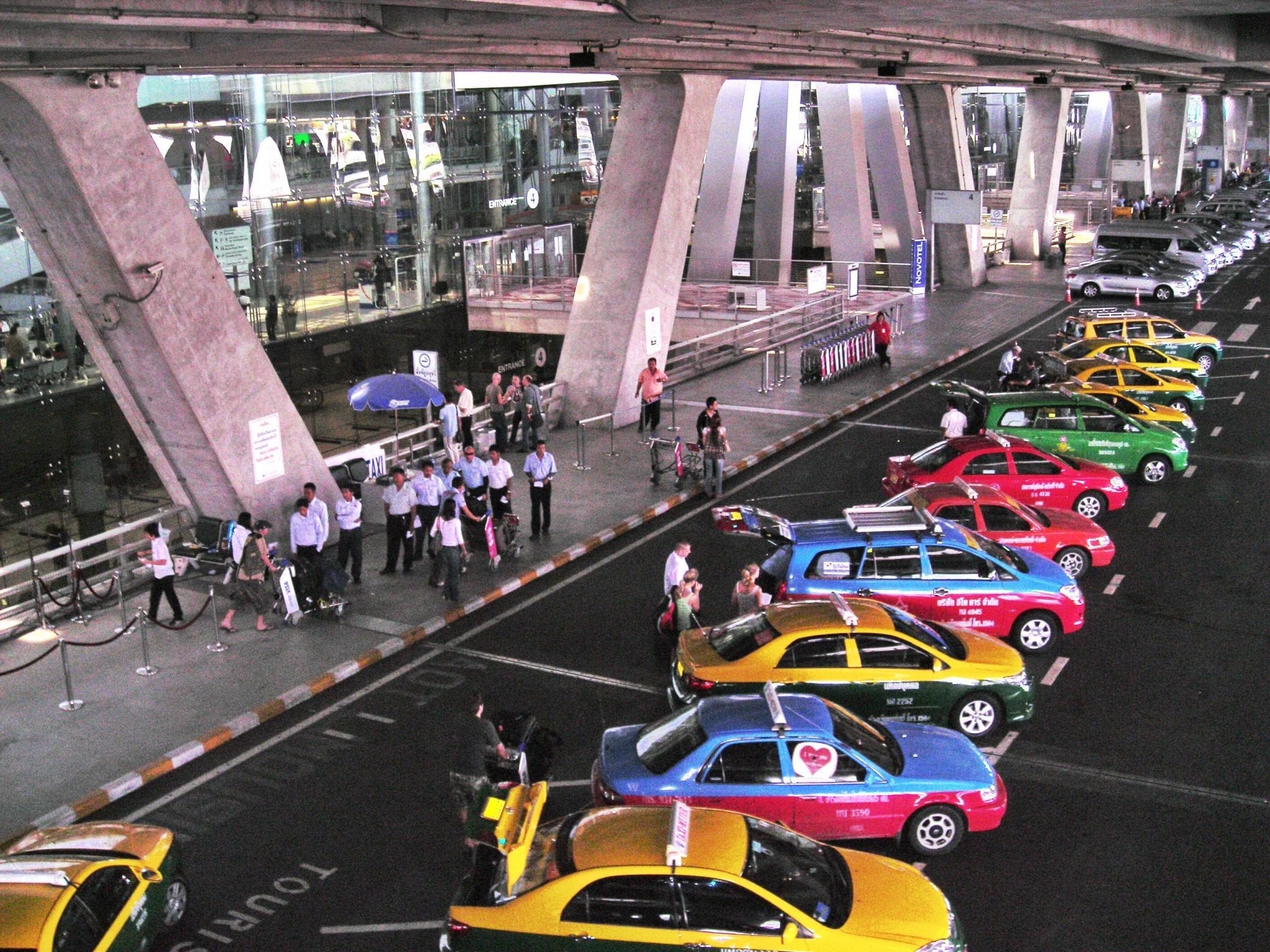
    Frustrations among taxi drivers have bubbled to the surface, as they argue that app-based platforms like Grab and Bolt are distorting the market with lower fares and lighter regulations, which they claim seizes a significant portion of their income. On May 21, a crowd of taxi drivers converged near Government House, issuing a stark warning: they would take drastic measures unless the government mandated a ban on these app-based services at the airport.

    In a firm rebuttal, the Department of Land Transport made it clear that any interference with airport access would not be tolerated, stating, “There cannot be any blockage of airports. Any wrongdoers will face legal action,” declared Director-General Chirute Visalachitra, as reported by Bangkok Post.

    Statistics Speak Volumes

    Currently, Suvarnabhumi records about 6,000 traditional metered taxi trips every day, compared to approximately 5,000 rides provided by ride-hailing apps, many of which operate using conventional taxis. Chirute emphasized the need for traditional taxi drivers to embrace the technological shift, saying, “Technology is undeniable. Taxi drivers must adapt.”

    Public Sentiment Shifts

    Tourists and locals have expressed long-standing grievances with traditional taxi services, spotlighting frequent issues such as meter refusals, inflated prices, and confusing routes, as highlighted by Pattaya Mail. One exasperated tourist remarked, “Even when they use the meter, they take the longer way—do they not know about Google Maps?” Another visitor stated that they immediately downloaded the Bolt app upon arriving at the airport, clearly favoring its reliability.

    The tide is turning, with many Thai passengers opting for ride-hailing services due to their perceived dependability, transparent pricing, and enhanced safety.

    And let’s be honest—between the taxi wars and tech transformations, one can’t help but wonder if we’re witnessing the dawn of a vehicular soap opera at Suvarnabhumi!

    Questions & Answers

    Will Suvarnabhumi Airport be affected by the taxi drivers’ protests?
    No, the Ministry of Transport has confirmed that the airport will remain open despite the protest threats.

    What are the main concerns expressed by traditional taxi drivers?
    Drivers are worried that ride-hailing services create an “unfair competition” by offering lower prices and operating under lighter regulations.

    How do passengers feel about traditional taxis compared to ride-hailing services?
    Many passengers prefer ride-hailing services for their reliability and clear pricing, as they have faced frequent issues with traditional taxi services, including inflated fares and longer routes.

  • Changi Airport’s operating indicators for Q1 2025

    Changi Airport’s operating indicators for Q1 2025

    Singapore Changi Airport handled 17.2 million passenger movements from January to March 2025 (Q1), exceeding 2024 levels for the same period by 4.3%. This is 4.8% more than what was recorded in the first quarter of 2019, before the Covid-19 pandemic in Q1 2020.

    On a rolling twelve-month basis, Changi Airport’s passenger traffic surpassed pre-Covid levels, reaching an all-time one-year high of 68.4 million passenger movements, an increase of 9.5% compared to the previous 12 months. For the quarter, aircraft movements, which include landings and takeoffs, totalled 94,000, representing an increase of 5.2% compared to last year.

    Among the regions, North America registered the highest growth with a year-on-year (yoy) increase of 15.8% for Q1. Changi Airport’s top five markets for the quarter were China, Indonesia, Malaysia, Australia, and Thailand. Continuing the growth momentum from last year, traffic between Singapore and China posted a 10% yoy increase. Among Changi’s top markets, Japan also saw a strong performance in Q1, recording a 16% increase yoy.

    From January to March 2025, Changi Airport registered 480,000 tonnes of airfreight throughput, a 1.0% increase compared to the same period last year. Despite macroeconomic uncertainties, Changi registered growth in imports, with a slight decline in exports. For this quarter, Changi’s top five air cargo markets were China, Australia, the United States, Hong Kong and India.

    Mr Lim Ching Kiat, Changi Airport Group’s Executive Vice President for Air Hub and Cargo Development said, “Changi Airport’s 12-month passenger traffic surpassed pre-Covid levels for the first time, reflecting positive trends in air travel and continued appeal of Changi as a key air hub. We are seeing encouraging growth across all regions and key markets, supported by the collective effort of our airline partners.

    “In recent months, we have expanded Changi Airport’s connectivity with more flights to cities in China and Indonesia, and we are excited to welcome direct services to Vienna in June, operated by Scoot. We will work closely with our current and potential airline partners to expand Changi’s network, both regionally and on long-haul routes.”

    New and reinstated services

    During the quarter, Changi Airport welcomed several new city links, offering travellers even more destination choices. Three new China cities were added to Changi’s network – Harbin, operated by Shenzhen Airlines with 3x weekly services, Lanzhou, operated by Hainan Airlines with 4x weekly services, and Yichang, operated by Hainan Airlines with 3x weekly services. Services to Ningbo and Shantou also resumed during the quarter.

    Changi’s connectivity to Indonesia was further strengthened with the launch of new services to Padang and Labuan Bajo. Scoot has introduced 4x weekly services to Padang operated by its Embraer E190-E2 fleet, while Jetstar commenced 2x weekly flights to Labuan Bajo, with the latter representing a first-time link for Changi.

    Firefly began operating flights to Sultan Abdul Aziz Shah Airport (Subang Airport) from Changi Airport on 24 March, enhancing travel options between Singapore and Kuala Lumpur. Qantas also expanded its Australia-Singapore network with the launch of 4x weekly flights to Darwin on 30 March, making it the fifth Australian city directly connected to Changi by the carrier.

     As at 1 April, some 100 airlines operate over 7,200 weekly scheduled flights at Changi Airport, connecting Singapore to about 170 cities in 49 countries and territories worldwide.

  • The Peninsula Boutique reopens at Hong Kong Airport

    The Peninsula Boutique reopens at Hong Kong Airport

    The Peninsula Boutique has reopened a revamped retail space at Hong Kong International Airport’s passenger departure area.

    The redesigned boutique features a minimalist aesthetic with green tones and Champagne chrome accents, aiming to offer a modern and approachable retail experience.

    Travellers can find various gift items, including palmiers, egg rolls, signature teas and chocolates, and travel essentials and children’s products such as colouring mats and play sets.

    “At Hong Kong International Airport, a gateway that connects millions of travellers to the world, our boutique stands as a proud ambassador of Hong Kong’s rich culture and craftsmanship,” remarked Benjamin Vuchot, CEO of The Hongkong and Shanghai Hotels.

  • Thailand tightens disease control measures at Suvarnabhumi Airport

    Thailand tightens disease control measures at Suvarnabhumi Airport

    The Department of Disease Control (DDC) under Thailand’s Ministry of Heath has tightened disease control measures at Suvarnabhumi International Airport regarding an outbreak of an unknown illness in Congo, its Director General Doctor Panumas Yanwetsakul has said.

    Currently, no suspected cases of this disease have been identified in Thailand. Nevertheless, the DDC has enhanced surveillance, prevention, and control measures, including stricter screening protocols at the Suvarnabhumi International Airport.

    Travelers arriving from Congo are required to undergo temperature checks and provide their addresses and contact numbers in Thailand, along with details of their departure from Congo.

    Additionally, those who have traveled from Congo within the last 21 days must complete a health reporting form and adhere to the guidelines on the Health Beware Card issued by health officials.

    People who have been in Congo within the past 21 days should monitor for initial symptoms such as fever exceeding 38 degrees Celsius, headache, sore throat, muscle pain, fatigue, or exhaustion. If these symptoms worsen, they must seek medical attention immediately and inform doctors of their travel history for diagnosis and treatment to prevent disease transmission, Dr. Panumas advised.

    As of Feb. 19, the World Health Organization (WHO)’s data indicated that the outbreak in Boloko and Bomate villages in Equateur province of Congo had resulted in 955 cases and 60 fatalities, reflecting a 6.3% fatality rate.

    Laboratory tests confirmed that the illness was not caused by the Ebola or Marburg viruses.

  • Changi Airport reports handling 67.7 million passengers in 2024

    Changi Airport reports handling 67.7 million passengers in 2024

    Singapore Changi Airport handled 67.7 million passenger movements in 2024, registering a 14.8% year-on-year increase. This was 99.1% of the passenger movements recorded in 2019, prior to the Covid-19 pandemic. Aircraft movements, totalled 366,000 in 2024, up 11.5% compared to 2023. A total of 1.99 million tonnes airfreight throughput was recorded in the year, surpassing 2023’s level by 14.6%.

    For the fourth quarter (Q4) of 2024, Changi Airport handled 17.8 million passenger movements. This was a 10.7% increase compared to the same period in 2023, and marked a full traffic recovery compared to Q4 of 2019. Aircraft movements, which include landings and take-offs, totalled 95,300, up 9.3% year-on-year. For the quarter, 521,000 tonnes in airfreight throughput was recorded, an increase of 15.0%.

    December 2024, with 6.4 million passenger movements, was the busiest month in the year, the first time monthly traffic has exceeded six million since December 2019. The busiest day of the year was 21 December 2024 – the Saturday before Christmas – when 226,000 passengers passed through Changi’s terminals.

    While all regions witnessed growth, North Asia was the fastest growing in 2024, registering an increase of 40% compared to 2023. Changi Airport’s top five passenger markets for the year were China, Indonesia, Malaysia, Australia and Thailand.

    China was Changi’s largest source market of the year, with passenger traffic almost doubling 2023’s level and surpassing the pre-Covid level by 6%. Hong Kong and Japan also recorded significant growth of more than 20% year-on-year.

    Kuala Lumpur, Bangkok, Jakarta, Denpasar (Bali) and Hong Kong were Changi Airport’s busiest routes during the year. Shanghai entered Changi’s top 10 cities list for the first time since 2011, registering a 94% growth compared to the previous year.

    On the cargo front, growth was seen across all cargo flows – exports, imports and transshipments, contributed by major improvements in cargo flows between Singapore and China, as well as the United States. Growth was also driven by the recovery of Singapore’s electronics exports and re-exports, strong global demand for cross-border e-commerce shipments and the modal shift from ocean to air freight arising from disruptions in maritime transport. For the year, Changi’s top five air cargo markets were China, Australia, the United States, Hong Kong and India.

    Mr Yam Kum Weng, Chief Executive Officer of Changi Airport Group, said, “We witnessed a year of strong growth in passenger and cargo traffic as well as connectivity in 2024. Changi added a bumper crop of 11 new city links, strengthening the air hub’s network and opening up a world of new destinations to support business ties and for travellers to explore. We are deeply grateful for the close partnership with our airline partners and are pleased to welcome the new airlines to Changi. Their collaboration has been instrumental in driving this growth.

    “Looking ahead, we are optimistic of another year of growth in passenger traffic.Operating a major air hub in Asia-Pacific, Changi Airport Group will continue to invest in our airport’s infrastructure, systems and processes to augment our handling capacity, so as to be well-placed to support the rising demand for air travel in the coming years.”

    Enhancing connectivity
    In 2024, Changi Airport welcomed eight new passenger airlines – Aero Dili, AirAsia Cambodia, Air Canada, Air Japan, Loong Air, Peach Aviation, Tianjin Airlines and West Air. As Changi expanded its connectivity to the world, it added 11 new passenger city links to its network, connecting Singapore to Broome, Brussels, Guiyang, Kertajati, Lhasa, Linyi, Malacca, Phu Quoc, Quanzhou, Vancouver, and Wenzhou.

    During the year, Changi also established flights to London Gatwick Airport and Subang Airport, providing more options for travels to London and Kuala Lumpur. More exciting new routes are already on the horizon, and travellers can look forward to new destinations including Labuan Bajo from March, and Vienna from June this year.

    Changi Airport also welcomed two new freighter airlines in 2024 – Shandong Airlines, which also resumed passenger services during the year, and Air Incheon. Two new freighter city links were added, connecting Singapore to Haikou and Nagoya.

    As of January 2025, 100 airlines operate over 7,400 weekly scheduled flights at Changi Airport, connecting Singapore to 163 cities in 49 countries and territories worldwide.

  • Changi Airport reports robust growth in Q2 2024 operating indicators

    Changi Airport reports robust growth in Q2 2024 operating indicators

    Singapore Changi Airport handled 16.5 million passenger movements from April to June 2024, an increase of 13.4% compared to a year ago. This was 98.2% of passenger movements for the same period in 2019. Aircraft movements, including landings and take-offs, totalled 89,300 for the quarter, up 9.7% year-on-year, and was 94.5% compared to the second quarter of 2019.

    Changi Airport’s top five markets for the second quarter of 2024 were Indonesia, China, Malaysia, Australia and India. China saw the highest growth among Changi’s top markets, with traffic doubling compared to the same period last year, and surpassing pre-Covid numbers. For the period, North Asia was the fastest growing region, registering a 40.8% increase year-on-year, and also exceeding pre-Covid levels.

    From April to June 2024, Changi Airport registered 486,000 tonnes of airfreight throughput, surpassing the same period last year by 16%. Growth was registered across all cargo flows – exports, imports and transhipments, led by strong cargo flows between Singapore and China, as well as the United States of America. For this period, Changi’s top five air cargo markets were Australia, China, Hong Kong, India and United States of America.

    Mr. Lim Ching Kiat, Changi Airport Group’s Executive Vice President for Air Hub and Cargo Development said, “Changi Airport continues to expand its global network, having added more flights in the second quarter. Travellers can now explore more destinations with Changi’s connectivity to cities such as Broome, Brussels, Quanzhou and Vancouver, and enjoy more options to evergreen favourites like Tokyo and London. Together with our airline partners, we are striving towards full travel recovery by the end of this year.”

    As of 1 July, 94 airlines operate over 6,900 weekly scheduled flights at Changi Airport, connecting Singapore to 158 cities in 50 countries and territories worldwide.

  • HKIA reports continuous growth in passenger and cargo volume in May

    HKIA reports continuous growth in passenger and cargo volume in May

    Airport Authority Hong Kong (AAHK) released the air traffic statistics for Hong Kong International Airport (HKIA) for May 2024. During the month, HKIA handled 4.07 million passengers and 29,855 flight movements, marking year-on-year increases of 30.8% and 34.5%, respectively.

    Mainland China’s Labour Day “Golden Week” holidays starting at the end of April had contributed a significant traffic growth among all passenger segments in May. Traffic to and from Southeast Asia, Mainland China, and Japan recorded the most notable boosts during the month.

    Cargo throughput saw a year-on-year increase of 19.0% to 416,000 tonnes in May. HKIA has continued to record double-digit year-on-year growth in cargo volume each month this year. Export traffic remains the main driver of the growth, recording a 30.1% increase compared with the same month last year. Among key trading regions, cargo traffic to and from North America, Europe and the Middle East increased most significantly during the month.

    For the first five months of this year, the airport handled 21.0 million passengers or 58.9% higher than the low base during the same period in 2023. Flight movements also increased 50.5% year-on-year to 145,140, while cargo volume rose by 18.0% year-on-year to more than 1.9 million tonnes.

    On a 12-month rolling basis, passenger volume was 47.3 million, marking an increase of 157.9% comparing with the previous comparable period. Flight movements increased by 76.3% year on year to 324,805, as cargo throughput also grew 13.1% year-on-year to 4.6 million tonnes.

    In terms of route development, HK Express Airways inaugurated a new direct flight service linking HKIA and Sanya Phoenix International Airport, Hainan on 10 May. With four pairs of flights each week, the new route provides more choices for travellers visiting Hainan.

    Meanwhile, HKIA’s “Marine Ecology and Fisheries Enhancement Strategy” project won the highest Platinum Award in the ACI Green Airports Recognition 2024, in the biggest airport capacity category of over 35 million passengers per annum. Organised by the ACI Asia-Pacific & Middle East, the award recognises airports with outstanding achievements in biodiversity and nature-based solutions.

    Peter Lee, General Manager, Sustainability of AAHK said, “We are honoured to receive this award, which commends our voluntary and continuous efforts to explore and enhance local marine biodiversity and fisheries resources around HKIA and North Lantau waters.  The efforts, namely eco-enhancement of seawall designs, deployment of artificial reefs and shellfish reefs, and fish restocking, were first investigated by experts, with pilot tests following on intended to determine the viability and real-world value of promising enhancements.  With positive biodiversity impacts identified, we are in the process of scaling up these initiatives around HKIA, and importantly, these nature-based efforts will serve as a useful reference for future implementation by others across broader Hong Kong waters.”

  • Decathlon opens first-ever airport retail pop-up at Changi

    Decathlon opens first-ever airport retail pop-up at Changi

    Decathlon has launched its first global duty-free pop-up at Singapore’s Changi Airport, featuring a curated range of sports and travel goods.

    The pop-up will be open for customers to visit until September 1, located at the Terminal 3 Departure or transit hall.

    The brand says the launch also presents its new logo, “The Orbit,” symbolising its dedication to circularity and progress toward new heights.

    Exclusive Decathlon x Changi branded products, such as sleek travel bum bags, comfortable hiking backpacks, and lightweight microfiber towels, will be available at the pop-up. Trekking pouches and an Easybreath Surface Mask are also featured.

    The brand has also arranged a series of sports challenges from the June 19 to 26, including a Bike Trainer Challenge, Resistance Band Squat Challenge, and Push-Up Challenge.

    Stephan Veyret, CEO of Decathlon Singapore, said: “Decathlon Singapore will be the first in the world to launch a Decathlon pop-up within an airport transit area at the renowned Changi Airport.

    “This hands-on pop-up reflects our commitment to innovation, providing travellers with a unique opportunity to explore and engage with our range of sporting goods.

    “We aim that our collaboration with the Changi Airport Group will encourage and prepare more people to embrace the joys of sports, even while on the move,” Veyret concluded.

  • Inside the first made-in-China jet to arrive in Vietnam

    Inside the first made-in-China jet to arrive in Vietnam

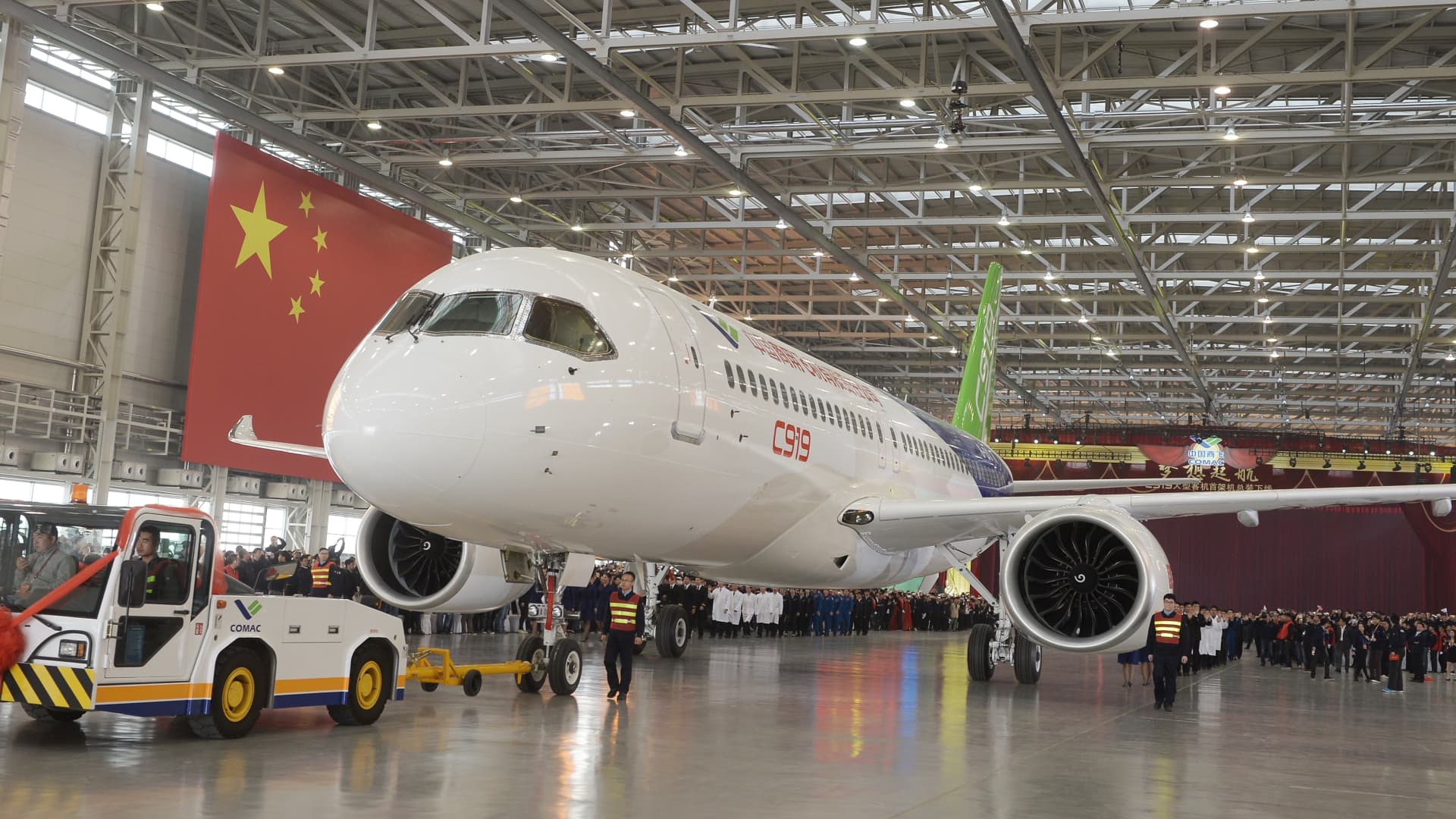
    At 10 a.m. Van Don International Airport in the northern province of Quang Ninh opened its doors for any visitors to look inside the C919 and another Comac aircraft ARJ21 in an exhibition of the company.

    Comac showcased its jets at Singapore last week but limited entry to only some business representatives.

    Comac chairman He Dongfeng said at the exhibition opening ceremony that the appearance of Comac at Van Don is an important step for its jets to reach the global market.

    C919 is a narrow-body jet with a capacity of 168 passengers and flight range of over 4,000 kilometers. The aircraft’s seat configuration is similar to the Boeing 737 Max and A320/321 models. With the jet China eyes to break the domnance of the U.S. and France in making passenger aircraft.
    A C919 costs around $99 million, cheaper than Airbus A320neo and Boeing 737.

    It is 2.25 meters from floor to ceiling, and the lighting color can be changed between 10 presets.

    The aisle is more spacious than other passenger jets of the same category. Behind each seat is a safety instruction written in Chinese and English.

    The communication and navigation system uses parts from U.S. manufacturer Rockwell Collins.

    Some other parts are made by U.S. companies. Tires and brakes are manufactured by Honewell, the aluminum body by Acronic, and the black box by GE Aerospace.

    The two engines were covered during the exhibition. Comac has announced earlier that it uses the LEAP turbofan engines produced by CFM International, a joint venture between American GE Aerospace and French Safran Aircraft Engines. The same engines are used on the Airbus A320neo.

    The ARJ21 jet, the first to be designed and manufactured by Comac, was placed nearby. It uses two engines made by an U.S. company and other key equipment from a German firm.

    ARJ21 seats up to 97 passengers and can fly 3,700 kilometers. Chinese airlines have used the aircraft on many domestic routes and have served 13 million passengers. Comac delivered the first ARJ21 to an international buyer in Indonesia in 2022.

    ARJ21 has similar luggage design as other medium-range jets such as ATR72 and Embraer 190. It can also be modified as a private jet.

  • Philippines’ Clark airport makes pitch as aviation hub

    Philippines’ Clark airport makes pitch as aviation hub

    Last week, Philippine delegates pitched Clark International Airport’s viability as an attractive regional hub for global aerospace and aviation companies

    Airport developer Berthaphil is calling on maintenance, repair and overhaul (MRO) companies to consider setting up at Clark, where SIA Engineering has already established its own airframe maintenance operations. 

    Located 80 kilometres north of the capital Manila, the international airport can be accessed via the expressway and is situated within the free trade zone. This means interested parties can get favourable tax concessions, including up to a 7-year tax holiday and then a 5 percent corporate income tax rate.

    Berthaphil, which also built the first bonded warehouse and logistics centre at Clark, is offering a 10-hectare airfield site, with access to the primary runway, which can accommodate large widebody aircraft. The developer said the vacant property is available ‘as is’ or for a ‘a build to suit’ project.

    Apart from MRO companies, the groups are also targeting cargo airlines, logistics companies, fixed-based operators, business aviation companies, original equipment makers, regional and international airlines, and training organisations.

    Companies that have established operations at Clark include Singapore-based SIA Engineering and Hong Kong-based MetroJet. With a new terminal building, the airport has capacity for 80 million passengers, It is also an air cargo gateway for UPS, DHL and FedEx.

  • Changi to strengthen SEA and China network in H2

    Changi to strengthen SEA and China network in H2

    Changi Airport is looking to strengthen its connectivity to more points in Southeast Asia and China in the second half of the year as the airport regained more than 80 percent of capacity in the month of June.

    On a quarterly basis, Changi Airport saw 14.6 million passenger movements from April to June 2023, which was 87 percent of what was registered for the second quarter of 2019. Meanwhile, airfreight throughput from April to June 2023 totalled 418,000 tonnes, sliding 10.8 percent year-on-year.

    Changi said air cargo demand remained weak due to softening demand amid inflationary pressures. In Q2, Changi’s top five air cargo markets comprised Australia, China, Hong Kong, India and US with India emerging on the top 5 for two consecutive quarters since the start of 2023.

    In June, the airport’s passenger movements crossed the 5-million mark for the first time since January 2020, or 88 percent of the baseline passenger numbers back in June 2019, before the pandemic. Air cargo volumes stood at 135,000 tonnes for the month, representing a year-on-year decline of 17 percent.

    Regaining more than 80 percent of its capacity before Covid, the airport said it plans to strengthen connectivity to more points in Southeast Asia and China in the second half of the year. As of 1 July, 99 airlines operate over 6,300 weekly scheduled flights at Changi Airport, connecting Singapore to 148 cities in 49 countries and territories worldwide.

  • Changi Airport outlines top priorities for cargo

    Changi Airport outlines top priorities for cargo

    Singapore Changi Airport saw muted cargo volumes in March compared to the same period last year, as the Asia Pacific hub recorded 152,000 tonnes. For the first quarter, air freight movements at Changi totalled 417,000 tonnes, sliding 9 percent year-on-year. The group said demand remained soft, especially in the first two months of the year, no thanks to global economic uncertainty and inflationary pressures. Collegues talk to Lim Ching Kiat, executive vice president for air hub and cargo development, to find out more about the group’s top priorities for cargo.

    What are Changi’s top priorities for cargo? What’s the group’s overall direction?
    While global air cargo demand has weakened, Changi Airport remains optimistic on long-term growth, especially in Southeast Asia. Despite the recent economic headwinds, Southeast Asia’s air trades with the rest of the world continued to expand over the past four years. Given the expectation of strong long-term progress with urbanisation and industrialisation, Southeast Asia is primed for growth in manufacturing, trade and logistics. Singapore, being in the heart of Southeast Asia, will have a critical role to play in global supply chains, contributing to the flow of international goods.

    Towards this end, while cargo connectivity remains critical for Changi Airport to anchor its position as a leading air cargo hub, our other priorities are to raise service quality in cargo handling and unlock capacity for long-term sustainable cargo growth by leveraging automation and digitalisation. At the same time, we are also putting in place steps to reduce the carbon impact of cargo activities in order to strengthen our resilience and secure our competitiveness as an air cargo hub.

    To raise service quality in cargo handling, we firmly believe in taking a collaborative approach by working closely with our partners in the air cargo community. One key development is Changi Airport Group’s introduction of a cloud-based community data-sharing platform—the Changi Air Cargo Community System (ACCS). This is an open ecosystem of collaborative and community-based applications that aggregates data from all parties involved in the cargo handling process. Within that system, we developed a truck dock slot booking (TDSB) application, which aims to even out cargo lodgement and collection at our cargo handler’s air freight terminals, thereby reducing waiting time, optimising resources, and providing greater insights to airport landside activities. This move to digitalise provides greater predictability for forwarders, trucking companies, and cargo handlers. It also supports Changi Airport’s sustainability efforts to reduce carbon and tailpipe emissions. We have since completed the pilot and plans are underway for community-wide implementation later this year.

    In the area of automation, CAG, together with our partners, has been investing in resources to trial autonomous solutions like autonomous tractors to reduce the manpower resources required for point-to-point transportation of baggage and cargo. Ongoing trials are promising and we expect to trial fully driverless operations for baggage delivery by 2024. On the digital front, solutions such as the tracking of all motorised ground support equipment will help optimise equipment deployment, boosting productivity and improving the quality of cargo handling capabilities. Additionally, we are working closely with our cargo handlers on warehouse automation and digitalisation projects to improve productivity and efficiency, as well as increase capacity.

    Can you share more about the recent partnership on cargo with Brussels Airport? What are the opportunities in the Asia-Europe market?
    In 2022, Europe remained Changi’s second largest region by air trades. Belgium-Singapore is a key air trade lane for high-value cargo such as biopharmaceuticals. Both countries place strong importance on international trades and advanced manufacturing, and have been established as key trusted pharmaceutical hubs in Asia and Europe respectively. Changi Airport and Brussels Airport share similar ambitions in shaping our air cargo hub and place strong priorities in areas such as cargo operations excellence and digitalisation.

    Under the MOU signed on 2 March 2023, Changi Airport and Brussels Airport will jointly drive initiatives to enhance capabilities in pharmaceutical logistics, undertake studies and trials in the fields of digitalisation and sustainability, as well as exchange best practices in the handling of special cargo segments and community-wide cargo initiatives to transform the air cargo supply chain.

    On the environmental sustainability front, under the ambit of Pharma.Aero, both airports will be actively participating in the Green Air Pharma Logistics project. Together with other Pharma.Aero members, we aim to define the parameters and framework for a green air pharma lane and develop a set of standards and measurements to quantify and qualify the lane.

    How important is the refinery expansion by Neste for Changi and Singapore?
    To enable the adoption of sustainable aviation fuel (SAF), CAG had been working closely with industry and regulatory partners on stakeholder engagement, as well as facilitating trials. Neste’s refinery expansion will provide for up to one million tonnes of annual SAF production capacity in Singapore. Having domestic SAF production will enable Changi Airport’s airline partners to achieve their sustainability objectives with lower carbon footprint compared to importing SAF from other production locations. In addition to building this production capability, Neste has established an SAF supply chain to Changi Airport to offer blended SAF directly to airlines operating at Singapore Changi Airport.

    Since July 2022, Singapore Airlines and Scoot flights out of Changi Airport have been using a blend of regular jet fuel and SAF as part of a year-long trial. With Neste’s refinery expansion, we look forward to working with more airline partners to promote the acceleration of SAF uplift in Changi Airport.

    How has the concept of sustainability evolved from an airport perspective? Can ‘sustainable’ be ‘profitable’ in the long run?Over the past years, sustainability has evolved into a license to grow for many businesses and industries. Although airports account for only about 2 percent of global aviation emissions, we form the common platform upon which a multitude of aviation partners operate. As such, it is a priority for us to work hand in hand with the airport community to achieve responsible and sustainable growth.

    Over 99 percent of CAG’s Scope 1 and Scope 2 emissions come from the use of electricity in operating our passenger terminals. As such, we concentrate our efforts in raising building energy efficiencies through constant upgrading of our systems to the best-in-class energy efficient models. For example, past upgrading of our chiller plants has seen up to 30 percent savings in energy consumption, which achieves not only cost savings but also carbon emissions reduction. We are also expanding on-site generation of solar energy, which offers energy resilience against the backdrop of fluctuating energy prices and volatile macro-economic conditions.

    Most of our efforts in reducing Scope 3 emissions centre around working with airline partners and ground handling agents at Changi Airport. Our recent development on SAF (detailed above) is one example. As an industry, more work has to be done to address the SAF price premium through balancing supply and demand. Different types of policy levers are being employed around the world, ranging from mandates to incentives. We are in close engagement with the Civil Aviation Authority of Singapore in its development of a Singapore Sustainable Air Hub Blueprint, which will set out tangible pathways to achieve sustainability goals for the Singapore aviation industry.

    To decarbonise ground operations including those pertaining to air cargo, we started working with our ground handling agents in 2017 to transition towards electric baggage tractors. Today, we have installed a network of more than 100 EV charging points to support a 100 percent electric baggage tractor fleet at Changi Airport. Moving forward, all new airside light vehicles, tractors and forklifts will have to be electric from 2025. This target was developed with cost parity and availability of viable electric variants in mind. In the longer term, we aim to have all airside vehicles running on cleaner energy by 2040. In tandem, we are working towards a community roll-out of the TDSB initiative, which aims to reduce truck waiting time, hence reducing carbon and tailpipe emissions.

    CAG is committed to zero carbon growth up to 2030, with absolute emissions to be capped at 2018 levels even as we continue to grow our business and strive for cost parity while stepping up our sustainability efforts. At the same time, we will aspire for net zero carbon emissions by 2050 as Singapore transitions towards renewable energy and through technological advancement.

    What can you say about Singapore’s status as a major logistics hub? Do you see any opportunities with intermodal operations?
    In today’s highly dynamic environment, intermodal transport has emerged as an alternative and risk mitigation transportation strategy. The utilisation of intermodal operations can provide companies with more transportation options. It provides a middle ground between cost, transit time and efficiency. It could also help overcome geographical challenges, enable cost efficiencies in transporting products to new markets, while also securing supply chain resilience.

    Singapore is home to the world’s 2nd busiest container port and 10th busiest international air cargo airport. Changi Airport has been working closely with PSA Singapore to drive intermodal transportation cargo flows through Singapore. Singapore’s modern port infrastructure, state-of-the-art air cargo facilities and close proximity between the air and sea ports allow seamless intermodal transshipments. During the Covid-19 pandemic which saw different transportation disruptions, Singapore’s uninterrupted operations and ability to handle intermodal transportation was a source of helpline for global shippers and logistics players.