Tag: Alibaba

  • Alibaba-controlled Lazada Readies Itself To Battle Amazon

    Alibaba-controlled Lazada Readies Itself To Battle Amazon

    For now, eMarketer pointed out, Lazada Group dominates the eCommerce activity and web traffic in the markets it serves, which includes mainly in Indonesia, Malaysia, the Philippines, Singapore, Thailand and Vietnam.

    Last December, Lazada’S online properties attracted the largest number of page views among B2C retail sites in Thailand, Indonesia, Singapore, Malaysia and Vietnam, data from SimilarWeb confirmed.

    However, eCommerce estimates point to an expected growth by double digits for online B2C spending in Southeast Asia through 2020, which is sure to attract more competitors for Lazada.

    Amazon is reportedly considering a launch in Southwest Asia sometime this year, eMarketer stated, starting with Singapore.

    Chinese companies are also setting their sights on Southeast Asia as a new market for growth, especially considering the region is home to nearly 620 million people.

    According to a report last year, companies like Alibaba, Tencent, Didi Chuxing and JD.com, are expanding in Southeast Asia, moving beyond the slowing economy in China.

    WSJ noted Alibaba and Tencent have led deals with a value of $1 billion combined to expand their businesses in Southeast Asia, which is the third-largest region for technology mergers and acquisitions by Chinese technology companies in 2016. The deal values combined were $1.9 billion compared to $193 million in the year earlier, WSJ reported, citing data from Dealogic. What’s more, industry watchers said in the report they think that investments on the part of Chinese tech companies will accelerate next year.

    “What we have learned in China, we can apply the fastest in Southeast Asia,” Poshu Yeung, Tencent’s vice president of its international business, said in the report. “Everything in Southeast Asia, particularly in Indonesia, you will experience a pretty good growth rate.”

    EMarketer is projecting that the number of smartphone users will surpass 257 million by 2020, presenting a big opportunity for companies. What’s more, the incomes in the region are growing at the same time smartphone ownership is, noted the report.

  • Aldi China opening store on Tmall

    Aldi China opening store on Tmall

    Aldi China plans to open a flagship store on Tmall, Alibaba’s B2C marketplace platform, within the next few months.

    The German supermarket chain has just launched a corporate website in China to signal its upcoming entry into Asia. This features a market-specific logo and Chinese name 奥乐奇, with the slogan “Handpicked for you”.

    Aldi shares which product categories it will offer the Chinese market: breakfast, snacking, wine, organic and cooking. Some of these products will be directly imported from Aldi’s suppliers in Australia.

    It was initially thought Aldi would launch its own independent website, reports Retail Analysis. Other grocery retailers that sell through Tmall include Sainsbury’s and Waitrose from the UK. Waitrose sells through Royal Mail’s Tmall site.

    While China’s online market is competitive, Aldi’s approach will give it time to understand Chinese shoppers and adapt its offer if necessary. And though many products will come from Australia, Aldi has a strong focus on local sourcing in many of its other markets.

  • Closing shop on China’s e-commerce platforms

    Closing shop on China’s e-commerce platforms

    The closures of a number of retail and luxury brand giants on China’s e-commerce platforms indicate that retail competition is no less fierce online than offline.

    It is old news that the Chinese market is highly competitive and unlike any other market in the world. What may sell on the high street in London is not guaranteed to sell in China. The rainbow-lensed promises of e-commerce seem to be an easy way to access China’s 770.4 million working population, 0.2 per cent or over 1.5 million of which have an average income of US$500,000.

    Political concerns and falling sales: Lotte

    In 2015, Lotte Group Retail opened a Tmall store, hoping to widen its reach in China, where over 60 per cent of its overseas stores are located. The large South Korean multinational conglomerate has had a presence in China for over 20 years, with 115 supermarkets and five shopping malls.

    But on January 12 this year, Lotte closed its Tmall store – along with three brick-and-mortar stores in Beijing – after rising political tension between China and South Korea. In December, Lotte’s China headquarters admitted that the company was facing investigations for tax, fire control and safety issues. However, the closure of its Tmall store seems to have stemmed also from the fact that China is Lotte’s only international market where growth is stymying. Sales fell during the last three months of 2016, year-on-year.

    While Lotte remains in the market through its physical shopping malls and supermarkets, and on the JD.com website, the company has not announced whether it will be reopening its Tmall store at any future date.

    Heavy local competition: Asos

    Asos, the UK’s largest online fashion retailer, entered China in 2013 with high expectations. The company announced it was investing RMB 100 million (US$14.5 million) towards the market, importing British styles and developing a sales force. Its business model relied exclusively on e-commerce, with its own website, as well as a Tmall store.

    However, Asos failed to attract enough customers and was running a loss of GBP 4 million (US$5 million) by April of 2016, when it announced that it was shutting down its China operations.

    Asos faced a number of problems in the Chinese market, from operations to marketing. When it first started, the company encountered issues with shipping though China Post, with customers paying import taxes on clothes. Eventually, Asos obtained a local warehouse, but then it encountered complex clothing trade regulations in China, particularly in regards to correct labelling. As a result, Asos had to spend additional funds on restitching to comply with local code, contributing to higher than expected start-up costs.

    Effective marketing was also a major issue for Asos, with the company failing to distinguish itself from local, more affordable brands. While it may be a major player in the US and Europe, Asos was relatively unknown to Chinese millennials, its target consumer base.

    Tmall concerns for luxury brands: Coach

    Coach was one of the first US luxury handbag brands to launch a Tmall store, creating a pop-up store from December 2011 to January 2012, and then an official one in 2015. However, citing a shifting operational strategy, Coach announced that it was leaving the platform just one year later in September 2016.

    China is a critical market for luxury goods, as sales in the US and Europe steadily decline. Many brands see e-commerce as a way to directly access customers and receive greater exposure, which is why many have moved onto online platforms en masse. Despite this, online platforms have always been a concern for luxury brands, who fear appearing too mass market. Moreover, Alibaba has been criticised by brands for not doing enough to remove fake goods, despite a counterfeit removal program. In 2016, Gucci and Michael Kors quit the anti-counterfeit coalition as protest against the program’s inefficacy.

    Coach still remains in the Chinese market through its WeChat account, an avenue that is growing in popularity amongst luxury brands. Cartier, Longchamp, and Montblanc all have WeChat shops with WePay functions. Some companies believe that WeChat offers a more personalised shopping experience, as well as greater control over its brand.

    For many luxury brands, online platforms are more for marketing and building brand image, rather than sales. However, official Tmall flagship stores do not receive priority listing on searches. In fact, according to a 2016 study by L2, only 12 per cent of first page Tmall search results were through the official Coach shop. The only luxury brands that controlled more than 80 per cent of first page search results were Ports 1961, Burberry, Tommy Hilfiger, Calvin Klein, and Tumi.

    Key Takeaways

    E-commerce is a high-growth sector, with online retail sales totaling US$581.61 billion in 2015, and it is estimated to grow 20 per cent annually by 2020. China is now the biggest online retail market in the world, and Chinese consumers make up almost half of all online sales globally.

    Companies looking to take advantage of China’s market size and sell to Chinese consumers often mistakenly believe that e-commerce offers a shortcut to success. While a misconception, this idea is understandable. There are fewer licensing requirements to operate through e-commerce, and customs clearance is faster.

    However, as has been demonstrated through high-profile store closures in 2016, e-commerce requires extensive pre-entry knowledge of current regulations, a realistic logistics plan, and a local marketing strategy. Those who enter the market blindly do so at the risk of expensive learning curves and wasted efforts.

    • This article was first published on dezshira.com.  Since its establishment in 1992, Dezan Shira & Associates has been guiding foreign clients through Asia’s complex regulatory environment and assisting them with all aspects of legal, accounting, tax, internal control, HR, payroll, and audit matters. For inquiries, email info@dezshira.com.
  • Chinese ‘Taobao villages’ turning poor communities into huge online retail hubs

    Chinese ‘Taobao villages’ turning poor communities into huge online retail hubs

    Thanks to the rapid development of China’s e-commerce industry, over 1,000 “Taobao villages” across the country are turning poor communities into huge online retail hubs, creating more than 840,000 job opportunities.
    These villages are so-named because at least 10 per cent of the population living in these rural communities makes its living by selling products online-mostly on Taobao.com, the Alibaba-owned consumer-to-consumer marketplace. The e-commerce annual turnover of each village is no less than 10 million yuan.

    By selling crafts online from their hometown of Wantou Village, Boxing county in east China’s Shandong Province, villagers made online sales of over 300 million yuan ($43.5 million) last year.

    Similarly, villagers of the Shuanglongqiao Village in Nanchong, southwest China’s Sichuan province, have allured flocks of tourists, including foreigners, to stay and experience the star-level accommodation at their houses, via e-commerce platforms.

    These villages offer a glimpse into how e-commerce industry spurs the rural economic growth and the farmers’ benefits.

    Online retail sales of China’s farm produce are estimated at 220 billion yuan ($32 billion) in 2016, up over 46 per cent over the previous year, the Ministry of Agriculture said.

    The latest figures from Aliresearch showed that there were 1,311 Taobao villages across China, and over 840,000 jobs were created by the clusters.

    Experts said that popularity of Internet and improvement of rural infrastructure have to some extent removed the bottlenecks restraining their information communication and logistics. The market potential and demands of the central and western part of China, especially those remote areas, was leveraged as a result.

    They added that rural areas have been constrained by labour outflow, poor infrastructure, low incomes and lack of competitive advantages, while an e-commerce development will help optimise market environment, upgrade industrial structure and absorb more labours.

    The profitability of e-commerce has attracted a rising number of rural residents to return home, according to statistics. Thanks to the development of e-commerce, about 12 million people left for brighter futures have come back to build up the local economy.

    The development of e-commerce, as experts believe, can be attributed to favourable policies and the rising market demand.

    The recently-released first policy statement from the central authorities for 2017, usually an indicator of policy priorities, emphasised the importance of supply-side structural reform in the agricultural sector, urging the development of e-commerce industry in rural areas.

    At the same time, e-commerce and traditional businesses have cast their eyes to the rural areas. So far, Alilbaba has expanded its services to over 23,000 villages nationwide.

    Days earlier, a strategic cooperation agreement to boost rural e-commerce was inked by Sichuan province, Alibaba Group and Ant Financial Services Group, the mobile payment affiliate of Alibaba.

    Alibaba CEO Jack Ma said that his company hopes to offer a training on e-commerce and Taobao villages to those county officials of the province, explaining that their rising awareness to develop e-commerce will guarantee the business success of the province.

    – Du Yifei

  • Alibaba seeks tougher penalties for counterfeit goods

    Alibaba seeks tougher penalties for counterfeit goods

    Alibaba Group has called for tougher laws, stricter enforcement and stiffer penalties to crack down on purveyors of counterfeit goods in China.

    At a press conference at its headquarters in Hangzhou, Alibaba said China’s “ambiguous counterfeiting laws” were hampering authorities’ ability to build legal cases against counterfeiters, resulting in a low conviction rate that is “the fundamental reason for the inefficiency in combating counterfeiting and protecting intellectual property”.

    “Current regulations are no longer able to cope with the need to fight counterfeiting,” according to the company’s public appeal, which is published in full below. “Criminals can escape any legal consequence, leaving law enforcement agents and consumers feeling helpless, and society bearing the damage.” The company urged authorities to strengthen laws, boost enforcement and impose more punitive penalties to deter counterfeiters.

    Alibaba has long faced criticism over the sale of counterfeits by independent vendors in its giant e-commerce marketplaces, which host some 1.5 billion product listings at any given time.

    “Alibaba Group is itself a victim of counterfeiting,” the note says. “The manufacturing industry and business environment of China suffers even more. Counterfeiting is damaging, not only to consumers and legitimate merchants, but also to innovation and the long-term economic development of our nation, hindering China’s growth as a responsible economic power.”

    To maintain the trust of consumers and legitimate merchants selling on its platforms, the company has been waging an escalating war to control the problem, employing a range of tactics to combat fakes and put counterfeiters out of business. Alibaba screens and monitors product listings using manpower and advanced search, image-recognition and big-data technology. The company also works with authorities in China to track down the source of counterfeits and prosecute offenders. Recently, Alibaba has also used China’s courts to cause pain for fake-goods sellers.

    Alibaba officials stressed the company remains firmly committed to continuing its anti-counterfeiting battle, but its ability to remove merchants and products from its marketplaces will be much less-productive in the long run without the support of more legally enforceable sanctions.

    The full Alibaba Group statement is below:

    In the ongoing war against counterfeiting, society is currently faced with an impasse. In Alibaba Group’s view, progress against this illegal activity is negligible because the costs and risks of producing and selling counterfeits are too low. The only way out of this is to impose tougher criminal sanctions on every individual involved in the chain of operation. Only by doing this, can China’s manufacturing industry return to the path of originality and innovation that ultimately leads to sustainable development.

    In 2016, our Platform Governance Department identified and handled 4495 leads related to counterfeiting. Each involved a value of goods exceeding the statutory minimum of RMB 50,000 for criminal investigation. Of these, law-enforcement departments followed up 1184 leads, which led to just 33 convictions, according to public information, representing a conviction rate of only 0.7 per cent.

    Alibaba came up with the 4495 leads via proactive big-data screening by its Platform Governance team, brand owners’ reports, consumer complaints and random checks. But law-enforcement agencies often found it difficult to classify and quantify incidences of counterfeiting and also had difficulties building legal cases due to ambiguous counterfeiting laws. As a result, public security agents were only able to build 469 cases from 1184 leads.

    The extremely low conviction rate is the fundamental reason for the inefficiency in combating counterfeiting and protecting intellectual property. Current regulations are no longer able to cope with the need to fight counterfeiting. Criminals can escape any legal consequence, leaving law-enforcement agencies and consumers feeling helpless and society bearing the damage.

    Alibaba established its own 2000-member-strong anti-counterfeiting force and has invested over RMB 1 billion each year to proactively combat counterfeiting with the most advanced technology and data models. For the 12 months ended August 2016, Alibaba took down 380 million product listings and shut down 180,000 Taobao stores and 675 operators as a result of its anti-counterfeiting action. As a private enterprise, Alibaba has no law-enforcement power. We can only uncover irregularities, take down the product listings, report the cases to the regulators and wait for law enforcement to handle the cases.

    We do our best to stop counterfeit goods from landing on our platform but cannot entirely stop them from proliferating offline and moving to other platforms. We identify and handle irregularities according to the highest standard of platform-management rules, but cannot impose penalties on the criminals.

    Alibaba Group is itself a victim of counterfeiting. The manufacturing industry and business environment of China suffers even more. Counterfeiting is damaging, not only to consumers and legitimate merchants, but also to innovation and the long-term economic development of our nation, hindering China’s growth as a responsible economic power.

    We therefore call for further development of our laws and regulations, stricter law enforcement and harsher punishments to strengthen the efforts to combat counterfeiting. Counterfeiters are our arch-enemy and we will stop at nothing to fight them.

    The criminalisation of drunk driving once delivered a clear message to society that violators will have to face serious consequences for their actions. Such a message served as a deterrent. We hope our society can reach a consensus to collectively increase the resources and efforts towards combating counterfeiting to no lesser extent than was done with drunk driving. To stamp out counterfeiting in China, all of us should play our part.

    Enlightenment-era criminologist Cesare Beccaria once said, “crimes are more effectually prevented by the certainty of punishment.”

    There is no way to root out counterfeiting with a conviction rate of 0.7 per cent. Only through stricter law enforcement and appropriate punitive measures can we stop criminals from evading responsibility for their actions. Only when counterfeiters get the punishment they deserve will the interests of consumers be properly protected.

  • Alibaba innovation will transform Shanghai Bailian

    Alibaba innovation will transform Shanghai Bailian

    Alibaba Group’s collaboration with Shanghai Bailian Group, one of China’s biggest general store and retail chains, is driven by Jack Ma’s push to use innovation to shake up outdated retail.

    “Alibaba wants to help update some of Bailian’s 4700 stores the nation over, coordinating everything from client relations to installment and coordinations in a way like its tie-ups with different players, for example, gadgets chain Suning Commerce Group,” says Oliver Johnson, director of corporate equities with Woori Bridgewater Brokerage.

    The online big-hitter that vanquished eBay and Amazon in China has set its sights on using its arsenal of information and innovation to change the $4 trillion universe of household physical retail. In its greatest old-economy bargain, Alibaba is driving an offer to purchase retail chain Intime Retail Group for as much as $2.6 billion.

    “Their billionaire fellow founder needs to assemble a system that will permit stores and brands to screen exchanges as they happen, freeing layers of merchants so that retail outlets can put orders online progressively,” says Johnson.

    Daniel Zhang, Alibaba’s CEO, described the association with Bailian as “a critical breakthrough in the advancement of Chinese retail”, where the qualification amongst physical and virtual business is getting to be distinctly out of date.

    Amazon.com is likewise quick to show how innovation can change the deeply rooted shopping background. It launched Amazon Go in December, permitting Seattle customers to get staple goods without being held up in checkout lines as their purchases are electronically charged when they exit the store.

    “Like Alibaba, the U.S. web based business titan has broad experience working with reams of important client and inventory network information and shopping designs,” observes Johnson.

    “With Bailian, Alibaba will tap a system of 4700 stores crosswise over 25 Chinese regions. Aside from Intime, the Hangzhou, China-based organisation has as of now put resources into retail administrators including Suning and Sanjiang Shopping Club to further its alleged new retail analysis,” added David Fraser, head of corporate trading at Woori Bridgewater Brokerage.

    Alibaba won’t take a stake in Bailian.  In any case, the match will coordinate their participation databases and use facial acknowledgment innovation to enhance customers’ encounters, Alibaba said. Alibaba’s online installments framework, Alipay, will be accessible at all Bailian stores. The web-based business mammoth’s conveyance member – Cainiao Smart Logistics Network – will work with Bailian to substance out conventions that make the framework more effective.

    Woori Bridgewater Brokerage is an advisory investment company.

  • Tag Heuer on Tmall

    Tag Heuer on Tmall

    Swiss watchmaker Tag Heuer has launched a flagship store on Tmall.

    The opening of Tag Heuer on Tmall takes to five the number of LVMH units to have a presence on the Alibaba-owned site.

    The launch is the latest sign of luxury goods makers, faced with slower sales in the once-hot China market, embracing new sales channels and digital marketing in an attempt to reach the country’s internet savvy younger generation.

    Leo Poon, Tag Heuer’s GM for Greater China, called the move “a right decision, since Tmall is the largest B2C platform in China and can help us to reach our target customers.” More than 75 per cent of Alibaba users are 35 years old or younger. The company’s China retail marketplaces had a total of 443 million annual active buyers as of December 31.

    China’s share of the global luxury goods market declined slightly from 31 per cent to 30 per cent in 2016, according to a recent report released by consulting firm Bain. But the country remains an engine of growth for luxury goods as China’s middle class continues to increase in size and purchasing power. Tighter government controls on “grey market” imports are bolstering domestic consumption through legitimate sales channels; meanwhile, online shopping in China grew a brisk 26 per cent last year, according to China’s National Bureau of Statistics.

    Against this backdrop, luxury good makers are targeting a younger demographic through digital sales and marketing strategies.

    “If you want to win the future, you should establish a relationship with the young generation early,” said Liu Xiuyun, general manager of Tmall’s apparel division. “Confronted with the internet and e-commerce, conservative luxury brands will lose the future in China.”

    Tmall is not only a sales channel, Liu added. Because it is part of Alibaba’s online ecosystem, which includes mobile apps, social media and entertainment portals, merchants can engage consumers where they live online. Alibaba also has a wealth of data allowing merchants to more precisely target and cultivate individual customers as well as predict general consumption trends, “and this is exactly what luxury brands are looking for,” Liu said.

    In addition to Tag Heuer, other LVMH flagship stores on Tmall are cosmetics brands Make Up For Ever and Guerlain, beauty brands retailer Sephora and premium luggage brand Rimowa.

    LVMH’s venerable Louis Vuitton label has also partnered with Alibaba. Last year, Louis Vuitton invited members of Alibaba’s exclusive Apass Club – online shoppers who spend an average of $45,000 a year in Alibaba marketplaces – to visit the company’s headquarters in France. In addition, Louis Vuitton became one of the first international brands to join Alibaba’s recently launched Big Data Anti-Counterfeiting Alliance, an organisation set up to share industry and technical know-how in order to combat the online sale of counterfeit goods.

    At a February 13 ceremony marking the opening of their Tmall store, Tag Heuer unveiled a pair of his-and-her watches, priced at $,852 for both, as a special Valentine’s Day promotion in China. The launch ceremony, broadcast via Tmall’s mobile app, featured a livestream of Chinese actress Song Jia.

    -Susan Wang

  • Alibaba Cloud boosts capacity of Hong Kong data center

    Alibaba Cloud boosts capacity of Hong Kong data center

    Alibaba Cloud has more than doubled the capacity of its data center in Hong Kong to help the company meet glowing demand for cloud services in Asia-Pacific.

    The expanded Hong Kong data center will be used to meet enterprises’ demand for high availability and data recovery and provide greater access to services such as data storage and analytics, enterprise-level middleware and cloud security services.

    The expansion forms part of Alibaba Cloud’s efforts to expand its global network coverage, and follows recent data center openings in Australia, Japan, Germany and the UAE.

    Alibaba Cloud said Hong Kong was selected due to its status as the gateway to China’s economy for international businesses and its region-leading role in terms of cloud adoption – the city scored the highest in the Asia Cloud Computing Association’s Cloud Readiness Index 2016.

    “Since our entry into Hong Kong in 2014, Alibaba Cloud has become one of the largest public cloud providers in the market in less than two years. More companies have come to realize the importance of changing their traditional IT mind-set to embrace the new data technology,” Alibaba Cloud Global general manager Ethan Yu said.

    “We are confident that the expanded data center facility, together with our scalable and secure cloud offering, will better meet the needs of the digital transformation in key local sectors such as hospitality and financial services.”

    Alibaba Cloud’s Hong Kong operations has customers in sectors including financial services, retail, hospitality and media. The company also recently launched anti-DDoS security products together with PCCW Global.

  • Wal-Mart Stores boosts JD.com stake

    Wal-Mart Stores boosts JD.com stake

    American retail giant Wal-Mart Stores has further increased its stake in China’s second-largest eCommerce firm JD.com.

    It now has a 12.1 per cent shareholding, up from 10.8 per cent, and comes about three months after the Arkansas-based retailer disclosed it had almost doubled its holding in JD.com from 5.9 per cent.

    Like Amazon, a large part of JD.com’s income comes from selling products it holds in its own inventory. Its logistics network has also helped it win more users through speedy shipping, says Deal Street Asia.

    With about 400 physical stores in China, Wal-Mart struck a swap deal with JD.com last June, selling its fully owned Chinese eCommerce player Yihaodian to JD.com in return for a 5 per cent stake in JD.com, worth around $1.5 billion. This gave Wal-Mart access to JD.com’s nationwide logistics and warehousing networks, as well as its 150 million users.

    Meanwhile, JD.com is better able to compete with Alibaba in the online grocery business, which is expected to grow to nearly $180 billion by 2020, according to data from food research body IGD.

    In October, Wal-Mart invested $50 million in Chinese online grocery and delivery firm New Dada. This will help it gain more foothold by offering shoppers faster delivery times. At the time, New Dada had more than 25 million registered customers. It delivers in more than 300 cities.

  • Chinese businessman Jack Ma reveals what China really wants from Australia

    Chinese businessman Jack Ma reveals what China really wants from Australia

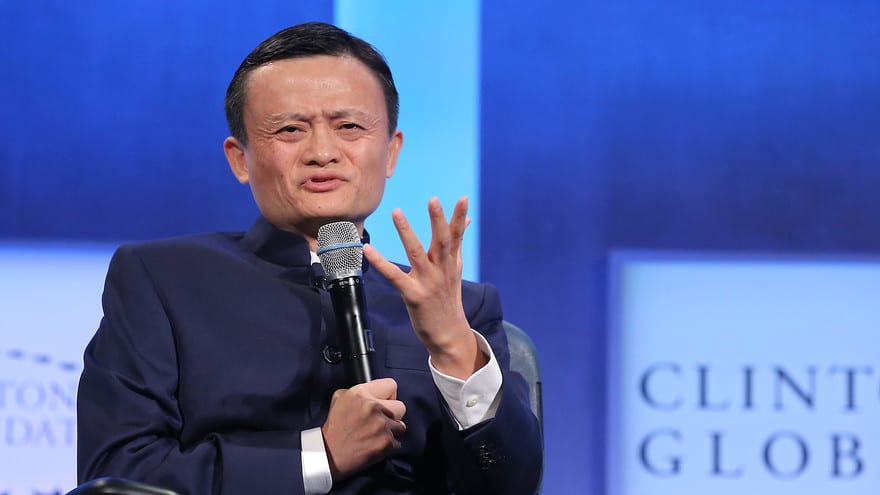
    Alibaba chairman Jack Ma was the guest of honour at an opening ceremony for a regional headquaters of the Chinese e-commere company, in Melbourne on Saturday. “We succeed by helping others, by being helped by others. We succeed because we empower the small business,” Jack Ma told the audience.

    “So our vision in the next 20 years, we want to create 100 million jobs for the world and we want to serve two billion population of the world and we want to make 10 million small businesses profitable on our platform,” he added. He stressed that Alibaba had a global vision for its business, saying “we believe globalisation is the future.” The newly opened office in Melbourne will serve as Alibaba’s Australian and New Zealand headquarters.

    China’s second richest man, Jack Ma, who is the founder of online retail giant Alibaba, said at the opening of the first Australian and New Zealand branch of his company in Melbourne that Australia had something “unique” that China was willing to spend big bucks on.

    “Australia is a gold mine. The next gold mine,” Mr Ma said in Melbourne on Saturday.

    “The clean water, the soil and the air, this is what you have, the most unique asset.”

    With China’s pollution problem, there’s no question as to why China would want to suck up some of Australia’s environment.

    China’s “airpocalypse” has seen the country’s pollution hit toxic levels and a blanket of smog the size of Victoria covered Beijing at the end of last year.

    People are seeing this as an opportunity in Australia to export our air to China.

    Currently New Zealand uses Alibaba, basically the Chinese version of Amazon, to sell fresh air to Chinese consumers.

    Oxygen Air bottles the air in aerosol cans and sells them for about $25.

    In Australia, up to $1 million worth of air has been bottled and Alibaba could be another opportunity for air farmers to expand their business.

    Air is being bottled in the Blue Mountains, Bondi Beach and the Yarra Valley.

    Green and Clean company director John Dickinson told the Herald Sun there was a high demand from people in China and India, who hoped the fresh air might clear their lungs.

    “A lot of people see the product as a supplement to clean their lungs out with fresh Australian air,” he said.

    There are also a number of other Australian products high in demand on the Alibaba site. One of them belongs to Gold Coast woman Brynly King, who expanded her business in her garage — turning it into a multi-million dollar company.

    Banaban Virgin Coconut Oil products are now on the shelves in some department stores in China and a number of other countries, all because she started selling on Alibaba.

    Alibaba has become the world’s largest retailer since 1999 and debuted on the New York Stock Exchange in 2014, becoming the biggest IPO in history.

    Mr Ma went from a struggling schoolteacher to a man who is worth $43.6 billion and he said all it took was hard work and created his company to give small businesses the opportunity to put their products in front of consumers.

    Whether you’re a mum and dad making soaps in the garage or a millennial with an invention, Mr Ma aims to give people a place where they can sell, and gives people a chance to buy.

    Ma has a long interest in Australia, it started when he was a 15-year-old living in China, and he would hang around western hotels so he could practise his English with tourists.

    He met an Australian family from Newcastle and from there realised what the country had to offer, particularly in a business sense.

    Many Australian small businesses have put their products on Alibaba to sell to China, and made a motza, like Ms King.

    Mr Ma said China has been long known for making products but he said the country needed high quality products and service and didn’t think China today could produce that.

    He said China will work with other nations, like Australia, to move from manufacturing to domestic consumption.

    There have been concerns that Alibaba could accelerate globalisation, the process of countries integrating into one because of an interchange of world views, culture and products.

    Mr Ma doesn’t buy into that.

    “Globalisation does not create problems, it shares culture and should always be inclusive. It is the future,” he said.

    Australia is the fourth highest seller on Alibaba and Mr Ma believes the Australian office will connect more people to consumers in China and boost our exports.

    Alibaba accounts for 60 per cent of China’s sales and Australian shoppers would have most likely heard of Aliexpress, which is one of Alibaba’s market places that is English and rivals eBay.

    It sells everything from fast fashion, phone accessories and camping gear.

    Mr Ma believes the Australian branch of Alibaba will boost trades in both Australia and China.

    The Australian and New Zealand branch of Alibaba will be headed by Maggie Zhou, who was the 48th person employed at the company which now gives jobs to millions.

    Ms Zhou said she would introduce new Australian brands to the Alibaba platform.

    “A physical Alibaba headquarters is a key step in ensuring Australian businesses have the support and information they need to succeed in China and the rest of the world,” she said.

    “Longer term, Alibaba Group’s vision for the ANZ region is to build the entire operating infrastructure needed to enable local businesses to expand globally.”
  • Direct access to China’s online market through Alibaba’s Mr. Fresh

    Direct access to China’s online market through Alibaba’s Mr. Fresh

    The online retail market in China is booming, as are sales of perishables. Ahead of the curve is Tmall (part of the Alibaba Group) which, through Tmall Fresh and Mr. Fresh, has created some of the first B2C platforms that caters for fresh produce online sales and delivery.

    Alibaba’s Tmall is the biggest domestic online B2C retailer. It is a platform for international and Chinese brands to sell goods directly to consumers in Mainland China, Hong Kong, Macau and Taiwan, and has a reach of millions of consumers. Tmall Fresh is the organisation’s new portal for perishable products.

    Usually, due to high subscription costs, only large brands have online ‘flagship stores’ on Tmall and Tmall Fresh. Tmall Fresh currently only hosts Chinese online stores. Most of the existing flagship stores are importers or large distributors, that have been selling products on Tmall in the past before switching to Tmall Fresh.

    Tmall Fresh and Mr. Fresh

    “Tmall Fresh has been launched to meet the growing demand for fresh produce. It is becoming the online sales channel for perishables in China. Products include seafood, meat, dairy and, increasingly, fresh fruits,” says He Chunlei, CEO of Tmall Fresh.

    To assist rookie foreign fresh produce exporters in overcoming difficulties that come with market entry, Mr. Fresh was introduced alongside Tmall Fresh.

    Mr. Fresh is an online flagship store for foreign products on Tmall Fresh, entirely run by the Tmall Fresh Team. It aims to support foreign brands entering China. Mr. Fresh takes care of customers, marketing, sales, logistics and customer services. As such, it provides foreign suppliers with a low-cost entry to the Chinese market, whilst also avoiding the investment costs it takes to open a store on Tmall.

    Supporting foreign exporters

    “For foreign fruit exporters, Tmall offers two solutions. Foreign exporters can either cooperate with Chinese flagship stores, and sell their products through these existing portals on Tmall Fresh. Or, the second option, is that foreign exporters can join Mr. Fresh. Through cooperation with Mr. Fresh, foreign fruits can easily be sold into the Chinese market. We introduced the concept to solve trade barriers that foreign companies are facing entering China as a new market. The idea is that, after having sold their products on Mr. Fresh for a couple of years, foreign exporters are well positioned to open a flagship store on Tmall Fresh,” according to He Chunlei.

    “Mr. Fresh is designed to meet both the needs of the supplier and the consumer. Fruit varieties that are currently sold are New Zealand kiwifruit, Thai durian, Chilean cherries and Vietnamese mangoes. Our mission is to help foreign companies enter the B2C market in China by providing them with a complete solution package. At the same time, we provide the consumer with product and company information. We use our sales data and marketing information to help our suppliers understand the needs and preferences of Chinese consumers. The market for online fresh produce sales is growing at 7% a year. So far, fruits make up a small share of total sales of perishables, but we see huge potential.”

    PMA Fresh Connections China

    From March 15 to 17, the PMA Produce Marketing Association (PMA) is organising Fresh Connections China, a yearly summit taking place in Shanghai. He Chunlei, CEO of Tmall Fresh, will be one of the speakers at the conference organised on the second day.

  • Top 30 Chinese global brands: Lenovo, Huwaei, Alibaba rank first

    Top 30 Chinese global brands: Lenovo, Huwaei, Alibaba rank first

    Lenovo is the most powerful Chinese global brand builder, followed by Huawei and Alibaba, according to new research released this week.
    The first “Brand Top 30 Chinese Global Brand Builders”, released by WPP and Kantar Millward Brown in collaboration with Google, said the personal computer and mobile technology firm is the most powerful Chinese export brand with a Brand Power score of 1,682. Lenovo was followed by consumer electronics brand Huawei (1,256) the e-commerce marketplace giant Alibaba (1,047).

    Kantar Millward Brown calculated the Brand Power (the BrandZ measure of consumer predisposition to choose a particular brand) of Chinese brands outside of China across seven countries, supported by research conducted using Google Surveys in September 2016, to find the ranking. The evaluation looked at 167 Chinese brands, the median Brand Power score of which is 85.

    The biggest find was how the Made in China brand is shifting. While established brands currently have an edge over the emerging internet-lead brands, with 57% of the total Brand Power in the ranking, digital brands were the biggest winner.

    Collectively, consumer electronics and mobile gaming lead the ranking, both in terms of the number of brands in the ranking (17) and combined Brand Power (59%). The result reflects the transformation of Chinese brands, which consumers abroad increasingly associate with innovative digital devices and services.

    One challenge facing Chinese brands is that international consumers are generally less aware of, and less likely to consider purchasing, a Chinese brand than a local or globally recognised one, said the research.

    However, awareness and consideration gaps vary, with consumers in France, Germany and Spain more aware of and likely to consider Chinese brands than consumers in Japan, Britain or America, said report authors.

    “The study shows that the movement of ideas and product leadership has expanded globally, with consumers increasingly looking to China as a potential source for the newest and most innovative products and brands,” said David Roth, CEO of EMEA & Asia, The Store WPP.

    “This is the opportune time for Chinese brands to expand abroad, despite the many obstacles and this is why in collaboration with Google we have produced the ground-breaking “BrandZ Top 30 Chinese Global Brand Builders 2017” report. By analysing consumer perceptions of Chinese and non-Chinese brands, we have been able to identify gaps in Chinese brand performance and provide recommendations for brand building strength.”

  • Four strategies of China’s top 10 e-commerce apps

    Four strategies of China’s top 10 e-commerce apps

    Pushing advertisement online and offline has been the typical strategy of China’s e-commerce giants to bring in customers, explaining why e-commerce sector is one of the toughest battlegrounds for freshly born startups since they have little money to spend on advertising. However, the trend is changing.

    As startups like Bolome, combining live streaming into cross-border e-commerce, and Yitiao, a WeChat public account-based e-commerce platform with high-quality content and storytelling around their handmade products, even the e-commerce behemoths are following the trend of live streaming and content marketing. Of course, Chinese e-commerce giants were not lazy on their investment and M&A to consolidate the market.

    Seeing the ranking, Alibaba stayed competitive in its forte, e-commerce sector. Alibaba’s C2C e-commerce platform Taobao ranked first, its B2C e-commerce platform Tmall ranked second, its second-hand retailer ranked seventh, and its electronics retailer Suning ranked the eighth. The report was jointly published by Cheetah Global Lab, Cheetah’s big data platform libra and 36kr.

    China’s e-commerce market will get even bigger, with a boost from the Chinese government. Online retail sales could reach 10 trillion yuan in 2020 as the country’s online population will pass 1 billion, growing by 7.8 percent a year from 2015, according to the 2016-2020 e-commerce development plan released by the Ministry of Commerce and other government departments. The e-commerce market will employ over 50 million people by the end of 2020, according to the plan.

    Screen Shot 2017-01-26 at 10.01.45 AM

     1. Live Streaming

    Taobao, JD and Mogujie added live streaming to their platform. Online celebrities live stream and recommend products on the video, and shoppers can click on the link while watching the video to buy the featured product.

    Online celebrities, mainly female broadcasters in their 20s and 30s, try on brand cosmetics and clothing at home. Online celebrities in overseas countries visit the local supermarket and explain each product while putting them in the cart and visit the local cosmetic shop to get further explanation of the cosmetic product from the clerk.

    2. Content is king

    Some e-commerce platforms added content-reading features to their apps, such as Taobao Headlines (淘宝头条) and JD Findings. Since Alibaba’s content cannot go on WeChat public accounts, Alibaba had no option but to come up with a content service on its e-commerce platform to encourage their customers to get to know more about their products.

    Vipshop is a Guangzhou-based online discount retailer for brands in China. After listing on New York Stock Exchange, the company reported its revenue up 38.4% YoY to 12 billion RMB (1.8 billion USD) in the third quarter of 2016.

    3. Consolidating the market using M&A and investment

    Some e-commerce companies showed consolidation. Hangzhou-based Mogujie now takes control of its previous rival Meilishuo (ranking 20th in the list) through a stock swap in January last year. Ranking 5th in the list, Mogujie was founded in 2011 by a former Alibaba engineer.

    Suning is an electronic product focused retailer in China. The company invested in Eight Days, an e-commerce startup targeting university students to get a grip of post-95 consumers in April 2016.

    4. Focusing on the second-hand market

    Xian Yu (meaning Idle Fish), a second-hand e-commerce has risen from no.10 to no.7. Alibaba spent 15 million USD to acquire Xianyu in March 2016. The customers can use their smartphones to run their stores, and add promotional voice recordings to sell their products, which makes the app more like a social app.

    Other e-commerce companies include Zhe800 and Juanpi. Pinduoduo is an e-commerce company invested by James Mi, the co-founder and managing director of Lightspeed China Partners.

  • Alibaba boosts Q4 revenue by 54%

    Alibaba boosts Q4 revenue by 54%

    Chinese e-commerce giant Alibaba Group reported a 54% increase in revenue for the quarter ended December 31.

    Revenue for the quarter reached 53.25 billion yuan ($7.66 billion). This was mainly attributed to the strong growth of its China e-commerce retail business and Alibaba Cloud division, as well as the consolidation of newly acquired businesses (mainly Youku Tudou and Lazada).

    “Our robust December quarter demonstrates the strength of the Chinese consumer and Alibaba’s ability to create value across our vast ecosystem,” said Daniel Zhang, Chief Executive Officer of Alibaba Group.

    The Alibaba chief said the 11.11 Shopping Festival showcased Alibaba’s expertise at integrating commerce, entertainment and social engagement.

    “We are driving the age of ‘New Retail,’ which leverages big data and innovation to provide a seamless online and offline experience for nearly half a billion mobile monthly active users. This retail transformation will make it even easier and more efficient for brands and retailers to engage with these consumers anywhere, anytime,” he said.

    For fiscal year 2017, Alibaba expects revenue to increase 53% year-over-year. “With three quarters of the year coming in ahead of expectations, we are adjusting up our 2017 fiscal year revenue guidance from 48% to 53% year-over-year growth,” said Maggie Wu, Chief Financial Officer of Alibaba Group.

    She disclosed that the company generated $4.9 billion in free cash flow on a non-GAAP basis during the quarter, which enabled it to continue investing in growth areas such as cloud computing (115% revenue increase year-over-year), digital media and entertainment (273% increase year-over-year), and other innovation initiatives (61% revenue increase year-over-year).

    Meanwhile, revenue from core commerce jumped 45% year-over-year to $6.71 billion.

    The Taobao marketplace added 43 million monthly active users (MAU) from September, with relevant content in the app reportedly continuing to drive mobile user growth. Small, on the hand, had another record breaking 11.11 sales with a record $17.4 billion in gross merchandise volume (GMV) settled through its own payment platform Alipay, 82% of which was generated from mobile.

    The company disclosed that its “New Retail” strategy will enable it to tap into the entire $4.8 trillion retail sector in China by eliminating the distinction between online and offline commerce. It also bared plans to partner with brick-and-mortar retailers in different verticals through equity investments and deeper operational integration.

  • Alibaba posts strong third quarter results

    Alibaba posts strong third quarter results

    E-commerce giant, Alibaba, posted a 54 per cent rise in third quarter revenue ending December 31, 2016, raised its outlook and announced it would step up investments to expand its cloud and digital ventures.

    Alibaba reported a revenue of RMB53.2 million (US$7.67 million), an increase of 54 per cent year-over-year. Revenue from core commerce increased 45 per cent year-over-year to RMB 46.6 million (US$6.7 million). Revenue from cloud computing increased 115 per cent year-over-year to RMB1.7 million (US$254 million). Revenue from digital media and entertainment increased 273 per cent year-over-year to RMB4.1 million (US$585 million). Revenue from innovation initiatives and others increased 61 per cent year-over-year to RMB845 million (US$122 million).

    “Our robust December quarter demonstrates the strength of the Chinese consumer and Alibaba’s ability to create value across our vast ecosystem,” said Daniel Zhang, Alibaba Group CEO.

    “The 11.11 Shopping Festival featured Alibaba at its best, integrating commerce, entertainment and social engagement, all happening globally at record scale,” Zhang said. “We are driving the age of ‘New Retail,’ which leverages big data and innovation to provide a seamless online and offline experience for nearly half a billion mobile monthly active users. This retail transformation will make it even easier and more efficient for brands and retailers to engage with these consumers anywhere, anytime.”

    Maggie Wu, Alibaba Group CFO, said with the three quarters of the year coming in ahead of their expectations, they have adjusted their 2017 fiscal year revenue growth outlook from 48 per cent to 53 per cent year-over-year.

    “This quarter we generated US$4.9 billion in free cash flow on a non-GAAP basis1, enabling us to continue investing in growth areas globally, including cloud computing, digital media and entertainment and innovation initiatives, as well as core commerce,” Wu said.

    Håkon Helgesen, retail analyst at Conlumino, said while Alibaba’s revenue numbers are flattered by the integration of the Lazada business, this was, nonetheless, another robust quarter for the online giant, and one that exceeded initial forecasts.

    “All parts of the business pulled their weight, although the international division stormed ahead with stellar growth of 288 per cent over the prior year,” Helgesen said.

    The 11.11 Global Shopping Festival, which is a giant day-long online sale, made a healthy contribution to growth: this year $17.8 billion of merchandise was sold over 24 hours.

    “In our view, the event is a testament not only to Alibaba’s reach within China and, increasingly, the wider world – but also to its ability to create engaging experiences which excite and stimulate consumers,” Helgesen said. “In essence, the day was as much a social event – with online and virtual reality games – as it was an opportunity to sell product.”

    Helgesen said part of Alibaba’s efforts to create a more holistic shopping experience involve going beyond one-dimensional e-commerce by tying their platforms to physical retail.

    “We welcome this initiative and liken it to Amazon’s push into bricks and mortar,” he said. “However, like Amazon, Alibaba does not just want to play in the physical space – it wants to reinvent the shopping experience by using data and technology. So far, good progress has been made with an equity stake being taken in Sanjiang Shopping Club (a neighborhood grocery chain in China), and an offer to acquire a controlling stake in Intime Retail Group (which runs department stores and owns shopping centers in China).”

    Away from the domestic business, Alibaba’s international side continues to do well.

    “Here, Alibaba’s role as a facilitator for Western brands wanting to sell into China continues to be a major advantage and a significant source of growth,” he said. “In short, Alibaba provides a shortcut for retailers looking to expand and grow in China. The opportunities for Alibaba to expand its operations and platforms into foreign markets is also sizeable, although we maintain our view that over the next year the company will stick to countries where e-commerce is less developed. This will help it to maximize returns.”

    “In summary, we retain our opinion that Alibaba is a solid, and highly disruptive, retailer.”