Tag: Alibaba

  • Alibaba denies links to luxury e-tailer Yoox Net-A-Porter

    Alibaba denies links to luxury e-tailer Yoox Net-A-Porter

    the Chinese conglomerate, led by founder and chairman Jack Ma, had contacted Yoox Net-a-Porter over possible capital cooperation or even a takeover, adding it had not ruled out buying shares. This news was quickly denied by sources in the company, who stated this was “not true”.

    The suggested tie-up between Alibaba and YNAP comes just days after a mega deal that saw JD.com spend a whopping US$397 million on luxury fashion e-commerce site Farfetch.

    Dubbed by some the Amazon of fashion, YNAP saw its shares jumped 9.24 per cent on Monday and Tuesday on the back of the Alibaba rumour – its biggest two-day rise since last September.

    The rally was just in time to mitigate investor concerns over mounting short interest in the stock, as the luxury e-commerce market became increasingly crowded.

    “Alibaba should still be looking into cultivating its luxury e-commerce businesses at home,”said Tang Xiaotang, founder of luxury retail consultancy Nofashion. “The market is overwhelmed by noise right now.”

    YNAP is the result of a merger between Yoox and Net-A-Porter, two of the biggest Western online luxury fashion retailers, boasting of a client base of more than 2.9 million high-splenders.

    It booked a 16 per cent increase in adjusted net profit of €69 million (US$77.6 million) last year, with a market capitalisation of 3.48 billion euros.

    Online luxury sales are predicted by Bain & Co to be the fastest-growing channel for retailing of premium goods, and top luxury fashion houses such as Prada and Burberry have been scrambling to ramp up their own online offerings.

    The most notable of all is 24 Sevres, a multi-brand online retailer launched in June by LVMH, the world’s largest luxury conglomerate that owns Louis Vuitton and Dior.

    Competition has also heated up with an influx of new market share grabbers including Shopbob and Zalando, both of which are gaining popularity for their designer fashion clothing offerings.

    However, analysts believed Alibaba could still be eyeing overseas deals in an attempt to build up a global logistics network, following the move to set up an e-hub in Kuala Lumpur as well as the buyout of Southeast Asian e-commerce operator Lazada, last year.

    “After all, Alibaba still has a ‘go global’ agenda, which can be pursued through M&As”said Ray Zhao, an analyst with Guotai Junan Securities.

  • China’s Alibaba boosts stake in SE Asia online sales

    China’s Alibaba boosts stake in SE Asia online sales

    Chinese e-commerce giant Alibaba said Wednesday it would inject another $1 billion into Southeast Asia’s Lazada, as the cashed-up company increases its stake in the region’s nascent online shopping market.

    The investment will raise Alibaba’s holding in Lazada to 83 percent from 51 percent and take its total outlay on the company so far to more than $2 billion.

    “The e-commerce markets in the region are still relatively untapped and we see a very positive upward trajectory ahead of us,” said Alibaba chief executive Daniel Zhang, estimating only three percent of Southeast Asia’s retail sales are conducted online.

    Alibaba, founded by China’s richest man Jack Ma, is a dominant player in the fast-growing online commerce market as shoppers increasingly shun bricks-and-mortar stores.

    Earlier this month Alibaba forecast annual revenue growth of 45-49 percent. That followed an almost doubling in its net profit in the quarter ended March 31, on a 60 percent surge in revenue.

    Alibaba’s Taobao platform is estimated to hold more than 90 percent of China’s consumer-to-consumer market, while its Tmall platform is believed to handle over half of business-to-consumer transactions.

    But its international commerce business accounted for only 10 percent of revenue in the last quarter.

  • Alibaba launches new sales channels in Singapore, Malaysia

    Alibaba launches new sales channels in Singapore, Malaysia

    Chinese e-commerce giant Alibaba Group Holding Ltd on Monday said it is launching new sales channels in Singapore, Malaysia, Hong Kong and Taiwan as China’s deep-pocketed e-commerce firms vie for new users in the region. The new service, branded Tmall World, will allow overseas Chinese users to buy goods from Alibaba’s Tmall, its popular brand-to-consumer retail site, the company said in a statement.

    “Alibaba will provide end-to-end solutions including logistics, payment, and localization support catering to each local market’s needs,” the statement said.

  • Equinix expands collaboration with Alibaba Cloud

    Equinix expands collaboration with Alibaba Cloud

    Equinix has expanded its partnership with Alibaba Cloud  to cover interconnection in Hong Kong, Silicon Valley, Sydney and Washington DC.

    Equinix ptovide direct, scalable access to the Alibaba Cloud via its Equinix Cloud Exchange in its international business exchange (IBX) data centers in the four markets.

    Alibaba Cloud and Equinix first entered a partnership in 2015, initially to provide already provide access to the Alibaba Cloud from the Equinix Singapore IBX.

    The Equinix Cloud Exchange offers direct and private access to multiple cloud service providers. The service launched in Hong Kong in 2014.

    The US International Trade Administration predicts that the Chinese cloud computing market will grow at a 40% CAGR though to 2020, when it will reach US$20 billion.

    “The global reach of Equinix Cloud Exchange makes it simple for Alibaba Cloud to access new markets, Alibaba Cloud deputy GM Yeming Wang said. “We are pleased to provide greater value and bring our services closer to enterprises by leveraging Equinix’s powerful, on-demand cloud connectivity, and in particular to provide greater connectivity to the Chinese market.”

    Equinix VP of global technology partners and alliances Greg Adgate added that “Alibaba Cloud represents a significant partnership for Equinix as we continue to empower businesses around the globe to build secure, private clouds, without compromising network and application performance.”

  • Alibaba’s Tmall expands in Hong Kong and Southeast Asia to non-Chinese speaking consumers

    Alibaba’s Tmall expands in Hong Kong and Southeast Asia to non-Chinese speaking consumers

    Alibaba Group, the world’s largest e-commerce operator, is beefing up its presence in online shopping by further expanding in Hong Kong and tapping more English and non-Chinese speaking consumers in Southeast Asia.

    The group has officially launched its Tmall online supermarket in Hong Kong this week, and teamed up since March with Southeast Asian e-commerce operator Lazada – which it acquired last year – to sell selected Taobao products under the “Taobao Collection” direct to shoppers in Singapore.

    The English-language Lazada site also operates local sites in Indonesia, Malaysia, the Philippines, Thailand and Vietnam, where some of them are in local languages.

    The Malaysian platform will be launched on June 13, where shoppers will be able to take advantage of lower prices from Chinese sellers, said Elaine Hu, director of Tmall World on Monday.

    In Hong Kong, Tmall sells daily necessities from food to household products imported from the mainland to local Hong Kong consumers. With its warehouse in Shenzhen – the group’s largest in South China region – consumers will be able to receive the products within the next day after placing the order on the Hong Kong supermarket, Hu said.

    She said mainland foodstuff and snacks not easily available in Hong Kong were the most popular products.

    Household supplies, especially paper products were also selling well as consumers look for cost-saving products from the mainland, Hu said, based on data obtained from the trial run of the platform in the city since late April.

    “The average value of orders on Tmall HK’s supermarket is surprisingly high so far. It is the highest compared to any other regions in China and shows the strong spending power of local Hong Kong consumers,” Hu said, without giving specific figures.

    The variety of goods available to Hong Kong consumers pales in comparison to those on the mainland platform as fresh products and heavy goods are generally not included. Products imported to Hong Kong are also subject to rules of local regulations.

    Unlike on the mainland where the group faces fierce competition from rivals including the Tencent-backed JD.com, Hu said Alibaba was a dominant e-commerce player in the Hong Kong market.

    In 2012, the group said it had 1.4 million registered users in Hong Kong. Hu said the figure was higher now but she didn’t give any figures.

    According a survey released by Mastercard in April this year, topping the most popular category list for Hong Kong online consumers is clothing and accessories, with 41.7 per cent out of more than 8,000 consumers surveyed. Supermarket products came second, with 37.5 per cent. Other popular categories: airlines – 36.7 per cent; travel – 36.2 per cent; and hotels – 36.0 per cent.

    The strengthening of retail business in Hong Kong and other overseas markets is seen to serve as a part of Alibaba long-term plan that aims to provide services to as many as 2 billion consumers worldwide by the year of 2036, Alibaba founder Jack Ma Yun told the investors in Hangzhou last week.

    In response to the recent dispute between Alibaba and logistics firm SF Express, Hu said SF remained a partner of Tmall and for overseas transactions, downplaying the impact.

  • Alibaba to open data center in Indonesia amid tighter controls on local storage

    Alibaba to open data center in Indonesia amid tighter controls on local storage

    Alibaba Cloud, the cloud computing arm of Alibaba Group, announced today that it plans to establish a new data center in Jakarta, Indonesia. It’s scheduled to open before the end of Q1 next year.

    “Alibaba Cloud will significantly increase its computing resources in Asia, allowing greater support for small and medium enterprises,” the company said in a statement.

    It’s also opening a new center in India and recently announced similar plans for Malaysia.

    Alibaba Cloud operates globally. Other Asian countries like China, Japan, and Singapore already have similar facilities.

    Demand for local storage
    In Indonesia, international giants like Alibaba Cloud are answering the growing demand for reliable, scalable data storage.

    The entire industry is experiencing a boom. NTT Indonesia, a subsidiary of Japanese NTT Data Corporation, told trade publication Data Center Dynamics that it’s seeing “significant growth” since 2014 on the back of developments such as e-commerce and more frequent internet use.

    Amazon Web Services is popular with Indonesian companies, even though the firm does not operate data centers in the archipelago.

    But a 2012 government regulation (PDF) has recently been tightened – especially in the fintech sector. Indonesia’s Financial Services Authority at the end of last year introduced its own sub-regulation that says Indonesian’s financial data must not be stored outside the country without prior approval. This could encourage companies and startups to consider working with Indonesia-based servers.

    We’ve reached out to Alibaba Cloud to learn more about the location of the Indonesia-based center and when it will start operating.

  • Young Li is Alibaba’s head of international business

    Young Li is Alibaba’s head of international business

    Alibaba’s Mobile Business Group on Thursday said Young Li has been elevated as the head of International Business Department, and in his new role he will be in charge of the overseas business of UCWeb.Young has previously headed the UC News where he spearheaded the product in markets such as India and Indonesia.
    ”Young and his team have been an integral driver of our strategy of moving ‘From Tool to Content’, addressing the key challenge faced by users and partners, that is, content discovery and navigation for users and content distribution by publishers and partners,” said Jack Huang, President, Alibaba Mobile Business Group, in a statement.

    Jack said the demand for diverse digital content is set to explore and UC News is at the forefront of that revolution, with an initial investment plan of Rs 2 billion and a monthly active user base of 100 million. “In his new role, Young will help us in consolidating all businesses of International Business Department, including our key overseas markets of India, Indonesia and Russia. He will also take lead in product strategy and business for our strategic products like UC News,” he added.

  • Alibaba sues maker of fake Wuliangye spirits for RMB 123,000

    Alibaba sues maker of fake Wuliangye spirits for RMB 123,000

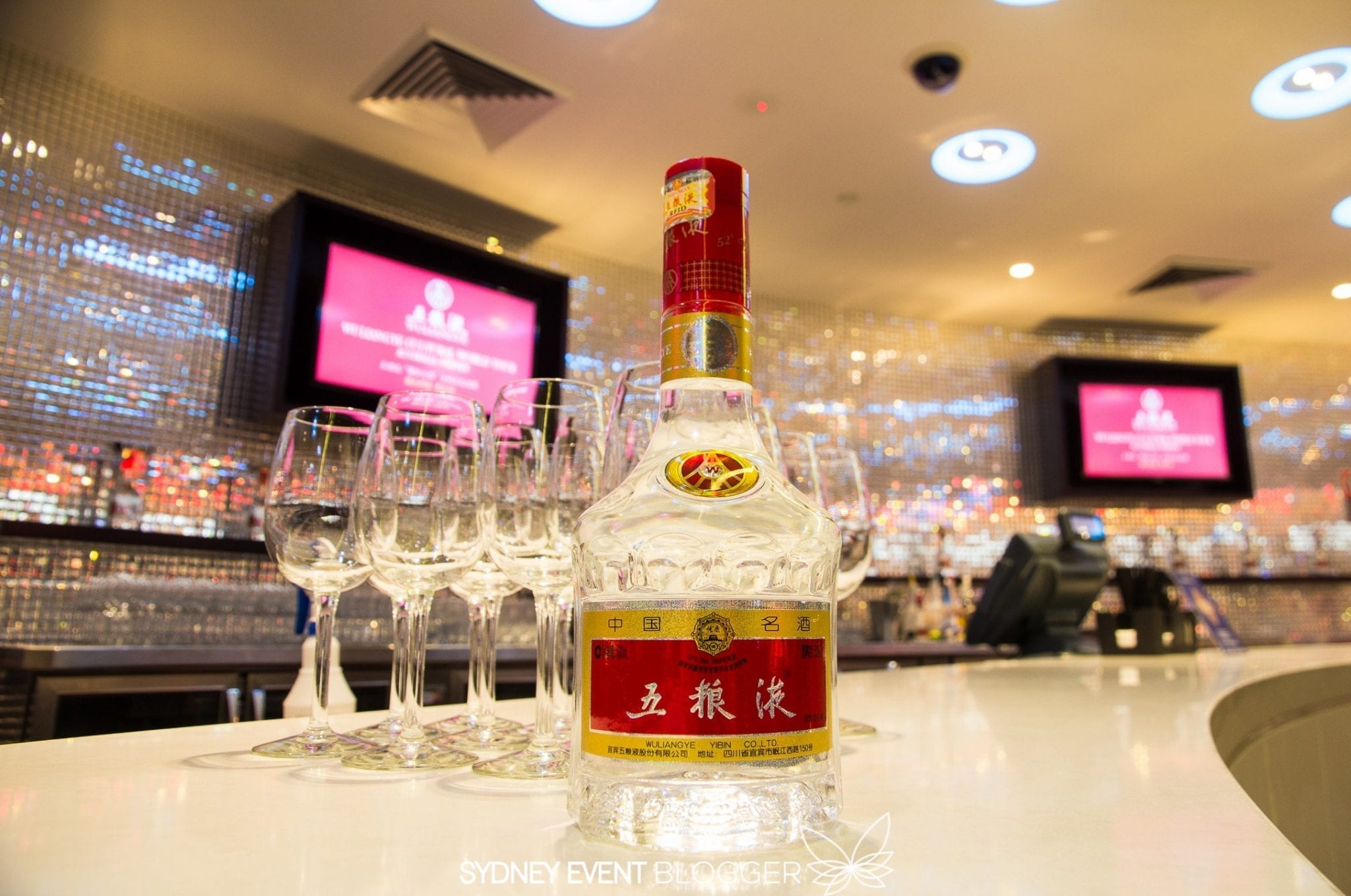
    Alibaba Group said Wednesday it has sued a seller of fake spirits, seeking RMB123,000 (US$17,835) in damages.

    The Shanghai Xuhui District People’s Court previously found defendant, Xu Wenqiang, had violated Yibin Wuliangye Group Co. Ltd.’s “Wuliangye” liquor trademark and ordered him to pay the brand owner RMB70,000 (US$10,150) for economic losses and expenses.

    Alibaba’s civil suit comes on top of that, with the group saying Xu violated trading rules on its Taobao e-commerce platform by infringing on the intellectual property rights of a trademark owner. The complaint also seeks damages for economic losses, legal and other costs and loss of goodwill.

    According to the lawsuit, Xu, who first registered to sell on Taobao in 2009, was nabbed after the trademark owner recently bought a bottle that claimed to be 52 percent Wuliangye crystal liquor for RMB508 ($73.65) from the vendor online. Upon inspection, Yibin Wuliangye Group determined from the quality of the logo, packaging, bottles and anti-counterfeiting labels that the product was fake.

    Wuliangye, literally “Five Grains Liquid” in Chinese, is a premium spirits brand made from millet, corn, wheat and two kinds of rice. A 500-milliliter bottle in the company’s Taobao storefront starts at RMB299 (US$43.36) and can run up to RMB1,798 (US$260).

    Alibaba Executive Chairman Jack Ma recently called for tougher counterfeiting laws, stronger enforcement and stiffer penalties.

    The Alibaba lawsuit is the latest in its drive to protect brands and cause pain for counterfeiters by seeking heavy damages through the court system. The group previously sued makers of fake Swarovski watches and a Mars brand of cat food.

    In its latest legal filing in the Shanghai Songjiang District People ‘s Court, Alibaba showed the same fervor for protecting domestic brands and trademarks. The lawsuit also dovetails with a rise in purchases of wine and spirits on Alibaba platforms, as China’s burgeoning middle class seeks premium spirits, both imported and domestic.

    Last year, Alibaba held its first-ever 9.9 Global Wine & Spirits festival, an online shopping promotion that proved wildly popular among consumers.

    And earlier this month, Alibaba’s Ma signed a memorandum of understanding with Argentina to bring the countries foods and wines to China via Alibaba e-commerce platforms.

  • Alibaba sales beat estimates, plans $6m share buyback

    Alibaba sales beat estimates, plans $6m share buyback

    Alibaba Group’s first-quarter revenues surpassed industry estimates for the three-month period ending March, as the Chinese e-commerce giant witnessed strong growth in new business lines beyond online shopping.

    Total revenues for the last quarter reached 38.6 billion yuan (US$5.6bil), well above an average forecast of 36 billion yuan according to Thomson Reuters.

    “Our revenue base is now more diversified,” chief financial officer Maggie Wu said. The finance head added that Alibaba’s cloud and entertainment sectors became “more meaningful growth drivers” during the quarter.

    Despite the sales high, earnings fell flat for the three months, with profits adversely affected by tax increases after the expiration of a local tax reduction linked to Alibaba’s investment in Chinese electronics retailer Suning Commerce Group Co Ltd.

    Alibaba’s adjusted earnings per share (EPS), therefore, came in at 4.35 yuan (US$0.63), below estimates of 4.48 yuan.

    Coinciding with the results, Alibaba announced plans to buy back shares worth up to US$6bil over two years.

    The operator of online market place Tmall and financial payments system Alipay said the share repurchase scheme would replace its existing buyback program.

    For the last few years, Alibaba has been targeting news business lines such as cloud computing, big data, entertainment and offline retail as it expands beyond e-commerce.

    However, online shopping remains the firm’s bread and butter. In March, Alibaba said it plans to open a regional distribution hub in Malaysia to cater to its fast-growing business in the region. It also launched its Alipay business in the Asian nation last week, following a debut in the US earlier in the year.

  • Alibaba posts strongest sales quarter since 2014 IPO, helped by China’s online shoppers

    Alibaba posts strongest sales quarter since 2014 IPO, helped by China’s online shoppers

    Alibaba Group’s 2016 net profit missed analysts’ estimates, even as revenue soared to a record, as a larger tax bill and investments in cloud computing weighed on results and crimped income from China’s growing preference for online shopping.

    Net income fell 42 per cent to 41.23 billion yuan in the year ended March 31, even as revenue jumped 56 per cent to 158.27 billion yuan (US$22.96 billion). Fourth-quarter profit jumped 85 per cent to 9.85 billion yuan, while sales soared 60 per cent to 38.58 billion yuan in the same period.

    Alibaba’s shares fell for the second day after results were announced, dropping as much as 5.6 per cent to an intraday low of US$114 in New York trading.

    “The core metrics that we care about in terms of segment results show very good momentum across the board”. “Some non-operating lines pinched the earnings and that’s likely what the stock’s reacting to, but there’s lots of variability and lack of predictability that make it difficult for analysts to understand what contributions and other income might come from ads.”

    China’s embrace of the smartphone in the past decade – as well as economic activities related to the internet – has turned Alibaba, Tencent Holdings and other Chinese technology companies into some of the largest enterprises in the industry. Tencent, operator of China’s biggest social network, reported a 55 per cent jump in first-quarter sales on Wednesday.

    “We reported another excellent quarter, with revenue growth accelerating to 60 per cent, the highest growth rate we’ve achieved since our IPO,” Alibaba’s chief financial officer Maggie Wu said in a phone conference announcing the Hangzhou-based company’s results.

    Alibaba, which also owns the South China Morning Post, operates four major business segments, divided into e-commerce, digital media and entertainment, innovation initiatives and cloud computing.

    The company, whose Singles’ Day on November 11 every year is the biggest online shopping festival on earth, reported 3.8 trillion yuan of gross merchandise volume last year. Up to 507 million customers used Alibaba’s China retail platforms on their mobile devices in March, an increase of 14 million from December.

    “The traditional thinking that pits e-commerce against physical commerce no longer holds,” said Alibaba’s co-founder and executive vice chairman Joseph Tsai Chung-hsin. “The distinction between online and offline retail is going away because of the mobile phone. Traditional commerce is buying stuff on a desktop computer, but Chinese consumers now have mobile phones which allow them to buy anything, anytime, anywhere.”

    The number of paying customers in cloud computing rose 14 per cent during the quarter. Still, the company made an operating loss of 505 million yuan in cloud computing during the three months.

    Alibaba has been making large investments into its digital media and entertainment businesses to compete with Tencent and Baidu for a share of the digital content market.

    In October 2016, Alibaba’s film production arm Alibaba Pictures invested in Hollywood director Steven Spielberg’s production company Amblin Partners to produce, distribute and market films both in China and around the world. Alibaba’s founder and chairman Jack Ma Yun has also said that the firm will invest 50 billion yuan over the next three years in Hollywood films.

    The segment reported a loss of 9.9 billion yuan for the year, more than double the 4.1 billion yuan loss a year earlier.

    “In the near term, there will be fierce competition for licensed content [in the entertainment market], but like other players we have moved to develop proprietary content,” Tsai said. “ Over time, the cost of content should come down.”

    Alibaba’s stock has risen 52 per cent in 12 months, boosting the company’s market value to exceed US$300 billion, in the process making Ma the wealthiest man in China, according to a Forbes ranking.

    The company, which operates the Taobao and Tmall platforms, announced a US$6 billion share buyback programme over two years.

    “Alibaba’s Taobao platform is a clear leader in the C2C e-commerce sector, and its Tmall platform is the largest player in the B2C e-commerce sector in 2016 with a 57.5 per cent market share, followed by JD’s 26.2 per cent and VIPShop’s 3.6 per cent share,” Nomura’s analyst Shi Jialong wrote in a research note before the company released its results.

    The Chinese e-commerce giant has also set its sights on expanding globally. In March, Alibaba and the Malaysian government jointly launched the first electronic world trade platform (EWTP) in Malaysia, an internet-based platform that will allow small and medium-sized businesses in Malaysia and China to trade with each other.

    “Internationalisation is a core strategy [for Alibaba] for the next five to 10 years, and we are happy to see concrete progress in Southeast Asia,” said chief executive Daniel Zhang, adding that Singapore-based e-commerce platform Lazada has seen its business grow “very well” since Alibaba’s US$1 billion investment in the company last year.

    Alibaba decided to focus on Southeast Asia as the first step to internationalisation because it is an “important region” with a large population, according to Zhang. “Chinese products are very popular in this market. We will continue to invest in international markets but there is still a long way to go,” he said.

  • Lazada loyalty program link to other ecommerces

    Lazada loyalty program link to other ecommerces

    A Lazada loyalty program for Singapore shoppers looks set to be expanded to other Asian markets.

    Alibaba-owned Lazada has teamed up with Netflix and Uber Technologies – the first time the companies have jointly created an online rewards program, according to Lazada CEO Maximilian Bittner.

    The program is aimed at consumers who primarily go online for shopping, entertainment, transportation and food delivery.

    Alibaba acquired a controlling stake in Singapore-based Lazada for US$1 billion last year. The “LiveUp” program links their online services, from Netflix and UberEats to grocer RedMart and Taobao marketplace.

    Consumers pay S$28 (US$20) a year for such benefits as six months of Netflix streaming, discounts on Uber rides and free delivery on Lazada or Taobao purchases. A mobile app will be rolled out in the second half of the year.

    “Singapore is the market on the cutting edge of validating what we think consumers might want, so we will focus on Singapore first,” says Bittner, who expects to add more partners.

    E-commerce in Singapore, which accounted for 0.9 per cent of total retail there in 2003, has grown from 2.4 per cent in 2013 to 4.8 per cent last year, according to Euromonitor data.

    Bittner and RedMart co-founder Vikram Rupani hatched the loyalty program over breakfast on Christmas Eve before approaching Netflix and Uber. “Their decision to do it was very fast because they have the same goal,” says Bittner.

    Uber, which entered Singapore four years ago, will offer members benefits including free rides and promotions. “This is just the beginning,” says Uber Singapore GM Warren Tseng.

  • Alibaba’s Singapore unit enlists Uber, Netflix to lure customers

    Alibaba’s Singapore unit enlists Uber, Netflix to lure customers

    Alibaba Group Holding has created a loyalty program for online shoppers in Singapore that it may expand to other markets, teaming up with Uber Technologies Inc. and Netflix to lure customers.

    It’s the first time Uber and Netflix have jointly created an online rewards program, said Maximilian Bittner, chief executive officer of Lazada Group SA, the Singapore-based e-commerce operator Alibaba acquired for $1 billion in 2016.

    The trio’s LiveUp programme starts Thursday and links their services, from UberEats and Netflix to online grocer RedMart and Alibaba’s Taobao online marketplace.

    Consumers pay S$28 ($20) a year to get benefits such as six months of Netflix streaming, discounts on Uber rides and free delivery on Taobao or Lazada purchases. A mobile app will be rolled out in the second half of the year.

    “Singapore is the market on the cutting edge of validating what we think consumers might want, so we will focus on Singapore first,” said Bittner, who expects to add more partners. He drew a comparison with code-sharing among carriers, which gives consumers a range of benefits like flight redemptions.

    Alibaba and its US partners are betting on the growth of online retail in Singapore.

    The city-state’s internet retailing market, which accounted for just 0.9% of total retail there in 2003, went from 2.4% in 2013 to 4.8% in 2016, according to data compiled by Euromonitor.

    Faced with the prospect of Amazon making a big push into Southeast Asia, Lazada has been seeking ways to defend its slice of the region’s e-commerce market.

    Bittner and RedMart co-founder Vikram Rupani hatched the loyalty programme over breakfast on Christmas Eve before approaching Netflix and Uber to get involved. “Their decision to do it was very fast because they have the same goal,” Bittner said.

  • China’s new cross-border e-commerce rules explained

    China’s new cross-border e-commerce rules explained

    The Chinese government has issued updated guidance on rules for cross-border e-commerce in the world’s second-largest economy, giving stakeholders much-needed clarity on potential changes in policy that have hung over the sector for the past year.

    China’s Ministry of Commerce said in a statement on March 17 that overseas goods purchased online and distributed through bonded warehouses would continue to receive some preferential treatment, avoiding quarantine and quality checks that could have brought the import of many popular foreign products to a halt.

    “We believe this policy move injects confidence into China’s [cross-border e-commerce] industry as it demonstrates the authorities’ determination to provide regulatory clarity and spur growth for the industry,” Fung Global Retail & Technology MD Deborah Weinswig said in an email.

    Dennis Zhang, CEO of Los Angeles-based e-commerce service provider Voyage One, agreed, saying, “It gives everybody, including our clients, peace of mind to let them know that this is something the Chinese government continues to support.”

    Pilot program refined

    Last April, Beijing announced changes to a pilot program meant to bolster Chinese consumers’ ability to buy online directly from overseas merchants via cross-border e-commerce. At the centre of the program are bonded warehouses, where international brands shipped merchandise for sale to Chinese consumers without being subject to normal import duties or rules for quarantine and quality checks on goods such as food, cosmetics and health supplements. The proposed changes would have increased the tariffs paid on that merchandise and removed the preferential regulatory treatment. This caused significant upset among international brands because some of the most popular foreign goods purchased online – the food, health supplements and cosmetics – are also the most tightly regulated by Chinese authorities.

    According to reports, cross-border e-commerce orders plummeted as much as 60 per cent in major trading hubs such as Shenzhen, Zhengzhou, Ningbo and Hangzhou a week after the announcement. A month later, apparently in response to industry concerns, regulators said they would suspend the rollout of the new quarantine and quality check restrictions until the end of this year while leaving in place the higher import tax. In its March 17 announcement, regulators extended that suspension indefinitely, saying that all goods shipped through bonded warehouses would be considered “personal items” and therefore exempt from the stricter regulations.

    The government said it might issue further guidance on cross-border e-commerce before the current rules are formalised on January 1, but the announcement at least gives stakeholders a longer runway with which to prepare for any potential changes.

    “Everything is pretty much business as usual for the rest of this year,” said Ron Wardle, the Shanghai-based China CEO of Export Now, a company that helps retailers sell online in China.

    For Alibaba, by far China’s largest e-commerce player, the news means that the online purchase of overseas goods will continue unabated, with marketing research firm eMarketer predicting the sector will reach $157.7 billion by 2020 from about $86 billion last year.

    Pumping water into pools to raise fish

    Cheng Ouyang, a director at Alibaba’s Cross-Border E-Commerce Research Center, called the announcement a “positive signal” for the sector. Using a popular Chinese idiom to describe the new announcement, Ouyang said the government was “pumping water into pools to raise fish,” which means that Beijing is allowing space for cross-border e-commerce to grow. At the same time, the government will continue to fine-tune its regulations for the sector, while stakeholders are able to take advantage of a burgeoning sales channel for foreign goods.

    Part of the ministry’s announcement also included the addition of five more pilot zones, or testing areas for bonded warehouses, in Dalian, Hefei, Chengdu, Qingdao and Suzhou, bringing the total number to 15. Wardle said the additional zones would allow for faster delivery and reduced shipping costs, “which is great for consumers”.

    Alibaba’s logistics affiliate Cainiao Network said it welcomed the news. “We already have a strong network and will work closely with our partners in the newly announced pilot zones to continuously provide seamless cross-border logistics service and better serve both merchants and consumers,” said James Zhao, director of import logistics at Cainiao.

    While the government’s statement has lent stability to the sector for the moment, Fung Global’s Weinswig said there was still no guarantee about what updates to the policy may look like if they are indeed issued later this year.

    “There are still some unanswered questions,” she said. “Will there be some imports that do not fall within personal items? Is registration for imports required which would slow down [cross-border e-commerce] imports?”

    Wardle, meanwhile, expects that any updates to policy will be a hybrid of those already in place along with recommendations from major players in cross-border e-commerce, such as Alibaba’s cross-border shopping site Tmall Global. Any such model “would benefit both consumers and brands,” he said.

    Whatever the changes, Wardle said he doubts that regulators will backtrack on the progress that has been made in China’s cross-border e-commerce sector. Stakeholders have already made significant investments in infrastructure and resources, while consumers have come to expect access to foreign goods they can’t otherwise get.

    “The floodgates are already open,” he said. “That’s going to be hard to pull everything back.”
  • Japanese retailers to accept bitcoin payments

    Japanese retailers to accept bitcoin payments

    Two Japanese retail groups are about to start accepting bitcoin payments, a move that is likely to promote wider use of the virtual currency by domestic consumers.

    Electronics chain Bic Camera has teamed up with Tokyo-based BitFlyer, which runs the largest Japanese bitcoin exchange, for a trial run of the payment system at Bic Camera’s flagship shop in Tokyo’s Yurakucho district, and at Bicqlo Bic Camera, the hybrid outlet with Uniqlo in Shinjuku.

    Customers can pay up to ¥100,000 (US$900) using the cryptocurrency, as well as earn reward points at the same rate as for cash payments. Bic Camera may roll out the payment system to other locations depending on its support.

    Meanwhile, Recruit Lifestyle, the retail support arm of human resources conglomerate Recruit Holdings, is partnering with another Tokyo bitcoin exchange company, Coincheck. The virtual currency will become a payment option at shops with the AirRegi POS app developed by Recruit Lifestyle.

    By using tablets or other devices provided by the store, or their own smartphone, customers can deduct the amount on the bill from the designated bitcoin account. Coincheck will convert the bitcoins into yen and transfer the funds to the store.

    AirRegi is used at 260,000 eateries and other retail locations throughout Japan. Businesses can choose to install the bitcoin payment system alone.

    The app is also compatible with Alipay, the payment platform developed by Alibaba Group and used by many Chinese tourists visiting Japan.

    Only about 4500 stores in Japan accept bitcoin payments. Rakuten’s Edy and Suica are leading electronic payment methods in Japan. The addition of AirRegi and Bic Camera outlets will multiply the number of bitcoin-compatible stores to around 260,000, nearing the 380,000 outlets that accept Suica and the 470,000 locations where Edy can be used.

    More than 20 million people worldwide use bitcoin, with the monthly trading volume reaching ¥12 trillion. But more than 80 per cent of users are in North America and Europe. Bitcoin has mainly been traded for investment purposes because its value fluctuates, but it is also increasingly used by overseas travellers as it saves them the need to exchange currencies.

    Japan has just started classifying virtual currency as a payment method, and cryptocurrency exchanges must register with the government. From July, purchases of virtual currency will be exempt from consumption tax.

  • K+N and Alibaba.com join hands to offer global logistics services

    K+N and Alibaba.com join hands to offer global logistics services

    Kuehne + Nagel announced a memorandum of understanding (MoU) with Alibaba.com, the B2B business arm of Alibaba Group, to offer global logistics services to customers of the Chinese e-commerce leader’s B2B business unit. Under the MoU, Kuehne + Nagel’s global logistics network and comprehensive capabilities will combine with Alibaba’s expertise in B2B e-commerce, to offer China-based shippers leading e-commerce logistics solutions.

    Since more than a year, Alibaba.com’s paid members in China have been able to instantly obtain quotations, book pickup and destination delivery services for airfreight consignments via Kuehne + Nagel’s digital solution KN FreightNet on Alibaba.com. The e-commerce relationship has already been extended to include less-than-container-load (LCL) solutions as well. Now, the strategic partnership will draw closer cooperation between the e-commerce giant and Kuehne + Nagel with intent to expand the scope of logistics services on offer in the near future to cover the various modes of transportation (air, sea, rail, overland) and contract logistics outside China.

    Steve Su, director of logistics at Alibaba.com, said: “We are pleased to partner with Kuehne + Nagel to offer our SME customers comprehensive logistics services, enabling them to capitalise on cross-border trade opportunities.”

    Wong Siew Loong, president North Asia Kuehne + Nagel, said: “We are excited to enter this MoU with Alibaba.com bringing together Alibaba’s e-commerce penetration with Kuehne + Nagel’s worldwide logistics capabilities. For Kuehne + Nagel, the establishment of this relationship is in line with our global strategy to digitalise logistics services in order to meet the evolving needs of customers today. We look forward to further developing this cooperation by expanding the scope of our e-commerce logistics offering to Alibaba customers in the future.”