Tag: Alibaba

  • Alibaba to open its first physical mall

    Alibaba to open its first physical mall

    Alibaba, the pioneer of Chinese e-commerce, is reportedly embarking on its first brick-and-mortar mall.

    The five-floor center, to be called “More Mall,” is being built near Alibaba‘s headquarters in the eastern Chinese city of Hangzhou, according to Caixin, a Beijing-based financial news group.

    Caixin first reported on the news Tuesday 2 September in the morning.

    A representative from Alibaba did not immediately respond to CNBC’s request for comment.

    The mall is being constructed on a 40,000-square-meter plot of land, Caixin said, and is scheduled to open in April 2018. Construction crews are believed to be finishing the building’s interior on time.

    Meantime, the internet giant has been making other moves in China to break into physical retailing.

    Alibaba CEO Jack Ma has said he wants to blend the online world with that of offline. One example is the company rolling out its own grocery concept, known as Hema.

    “More Mall” will feature unique brands from Alibaba’s e-commerce platform, Taobao, along with conventional retail brands, Caixin wrote.

    It will also have a Hema supermarket store, the publication said. Hema was first launched in 2015 as an app that allows shoppers to order groceries via a cellphone, using Alibaba’s Alipay to ring up purchases.

    In the U.S., Amazon is also encroaching on the physical world of retail — especially hurting grocery stores, after it bought Whole Foods.

    There are no reports of Amazon constructing its own mall, though. At least for now.

  • Boom time for Thailand internet shopping

    Boom time for Thailand internet shopping

    As consumers become more tech savvy, Thailand internet shopping has boomed.

    Online retail sales in Thailand are more than doubling annually, whereas traditional stores are seeing only about 10 per cent growth.

    This is attributed to a combination of stronger and faster internet speeds in Thailand plus the success of online merchants such as Lazada.

    Thailand mobile-phone company Total Access Communication estimates Thais spend up to six hours a day on social media websites like Facebook and Youtube.

    Corporate financial services company Maybank Kim Eng Holdings says Thailand is the only Southeast Asian country that includes an online category for retail sales data.

    While online sales in Southeast Asia have been growing strongly, they still account for less than 4 per cent of overall retail purchases, according to a Maybank report by economists Chua Hak Bin and Lee Ju Ye.

    Larger markets, like China and South Korea, already have higher penetration rates of online retailing at 16 and 18 per cent respectively. They say this shows the potential for Southeast Asia, where e-commerce sales could reach 5 to 10 per cent of overall retail purchases over the next five years.

    Meanwhile, Alibaba Group Holding founder Jack Ma has joined a government panel in Indonesia that has the task of steering the e-commerce industry in Southeast Asia’s most-populous nation. Macquarie Research estimates online retailing in the country could reach $65 billion by 2020.

  • CapitaLand links with Alibaba, Lazada Singapore

    CapitaLand links with Alibaba, Lazada Singapore

    CapitaLand is advancing its omni-channel strategy by forging an alliance with Lazada Singapore, and has also signed an agreement to manage Alibaba Shanghai Center, comprising four office towers and a retail podium.

    Its China project is the start of a strategic collaboration between the Singapore-based real estate group and Alibaba Group, Asia’s largest e-commerce company, to reinvent modern retail through the seamless integration of offline and online (O&O) channels.

    CapitaLand’s Singapore deal involves an agreement to launch an exclusive online mall on Lazada Singapore, which is part of Lazada Group, Southeast Asia’s largest e-commerce platform, now essentially controlled by Alibaba. The shop-in-shop on Lazada.sg will position CapitaLand as Singapore’s first omni-channel retail landlord connecting retailers to shoppers both offline and online, complemented by a world-first in-mall collection service for shoppers.

    “Even as new technologies disrupt traditional business models, real estate remains an important part of a holistic customer journey, as affirmed by leading digital players who are seeking to gain a foothold in the physical space,” says CapitaLand president/group CEO Lim Ming Yan.

    He says he foresees win-win outcomes for all parties as strategic alliances are forged to future-enable properties and support retailers in embracing an omni-channel business model.

    “The key to unlocking the next stage of growth lies in blending physical and digital channels to create a seamless O&O experience for the customer.

    “We will continue to leverage digital tools and partner disruptors to strengthen our customer engagement, embrace smart building technologies to uplift the quality of our built environment, and harness data to enhance customer experience at our properties.”

    Supports Smart Nation

    The Lazada deal supports the Smart Nation push to reinvent retail. CapitaLand will launch a shop-in-shop aggregating the offerings of retailers in its Singapore malls on Lazada.sg by the end of the year.

    Shoppers at the CapitaLand official store on Lazada.sg will have the option to collect their purchases in CapitaLand malls, and in so doing so will be rewarded with membership points in the CapitaStar loyalty program.

    Initially CapitaLand will roll out two unmanned click-and-collect lounges at Plaza Singapura and Bugis+ for shoppers to collect purchases or make returns. As well as collection lockers, the lounges will have fitting rooms and a product-testing bench.

    “As the owner and manager of Singapore’s largest network of shopping malls, we have embarked on creating a digital channel that supports our mall tenants in tapping the growth potential of e-commerce,” says CapitaLand Mall Asia CEO Jason Leow.

    By enabling shoppers to collect online purchases in its malls, last-mile delivery costs for retailers will be reduced in the long run.

    “Also, our retailers will enjoy comprehensive marketing support in the physical and digital space and get a leg-up in their e-commerce business.”

    Shoppers will not only have the option of click-and-collect, but benefit from free delivery and have 14 days to make returns, says Lazada Singapore CEO Alexis Lanternier.

    “This partnership is an important step for Lazada to expand our network of partners as we evolve the e-commerce ecosystem in Singapore.”

    Both CapitaLand and Lazada will help onboard retailers and promote the platform to shoppers, with the intention of rapidly scaling up the initiative in the next two years.

    ‘Bricks and clicks’

    Under its contract with Alibaba, CapitaLand will oversee the pre-opening and management of the shopping podium and one of the four office towers in Alibaba Shanghai Center, which has a total gross floor area (GFA), excluding car park, of about 80,000 sqm. The four-storey shopping podium – three levels above ground and one basement level – takes up about 20,000 sqm.

    Alibaba Shanghai Center is strategically located in the northern core of Shanghai’s Hongqiao CBD, less than 2km from Hongqiao Transportation Hub. Scheduled to open next year, the retail component serves working professionals and residents of the mid- and high-end housing zones nearby.

    Leow says the company and Alibaba will jointly explore the possibilities of combining “bricks with clicks”, starting with Alibaba Shanghai Center, and creating O&O experiences.

    Alibaba Group’s head of intelligent building, Wang Tao, says Shanghai is an important platform and the group’s headquarters there will serve as a strategic nerve centre for rolling out Alibaba’s New Retail strategy.

    “We believe our collaboration will chart new frontiers in integrating online, offline, logistics and data across a single value chain to meet the needs of consumers.”

  • Alibaba to invest $1bn in Indonesia e-commerce platform

    Alibaba to invest $1bn in Indonesia e-commerce platform

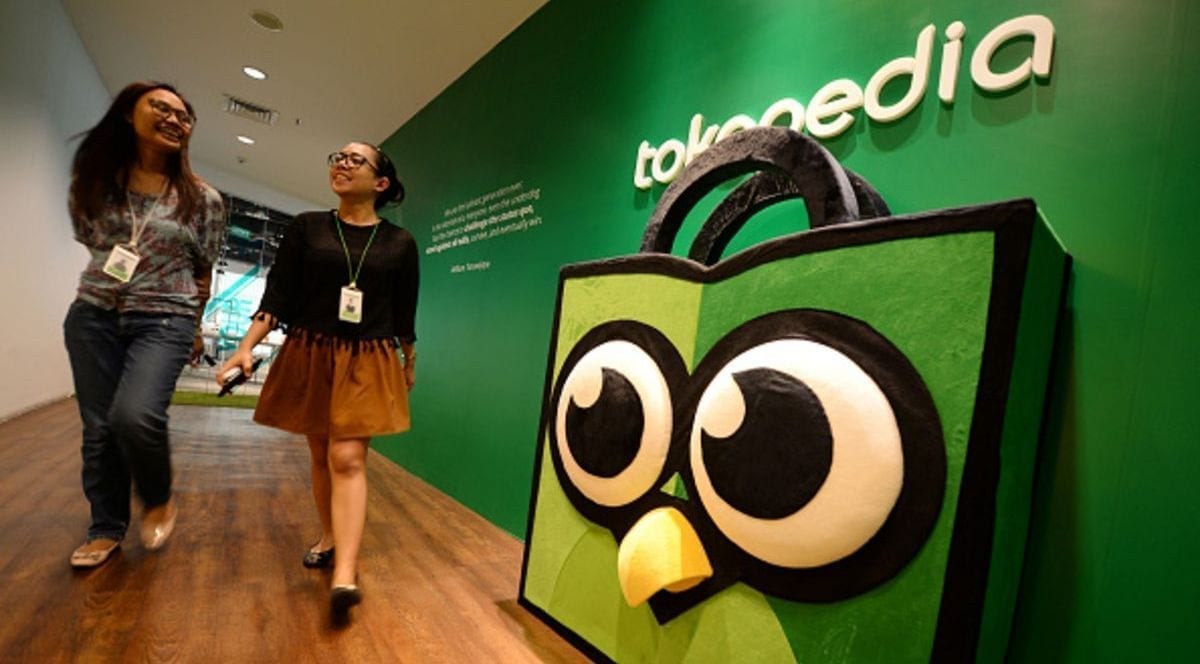
    Alibaba Group has led a $1.1 billion investment round for financing into Indonesia’ Tokopedia to become a minority shareholder.

    A number of undisclosed existing Tokopedia investors also participated in the round, the Chinese e-commerce giant said.

    “We have always thought of Alibaba as our teacher and role model. Today, we are excited to welcome them as a shareholder and we believe that our partnership will further accelerate Tokopedia’s mission, to democratise commerce through technology,” said Tokopedia CEO and co-founder William Tanuwijaya, in a statement.

    “The partnership with Alibaba will enhance the scale and quality of Tokopedia’s offerings to its customers and make it easier for merchants and partners to do business across the archipelago and beyond.”

    Alibaba first showed interest in Tokopedia in July where it was in reported talks to lead a funding round in the Indonesian unicorn.

    “Alibaba and Tokopedia have a shared mission of helping small and medium enterprises in achieving success in its business,” said Daniel Zhang, CEO of Alibaba Group.

    “We are very delighted to partner with Tokopedia in serving Indonesian customers.”
    The start-up first announced an investment round in 2014, where it received $100 million from SoftBank and Sequoia.

    In 2016, Tokopedia raised $147 million in an undisclosed round from several venture capital firms including Amasia, which brought the total amount raised to $247 million. The funding round valued the company at one billion dollars.

  • Alibaba’s quarterly results show massive customer growth

    Alibaba’s quarterly results show massive customer growth

    The pace of growth of Chinese online juggernaut Alibaba Group shows no sign of slowing, with both online marketplace customer numbers and mobile shoppers growing markedly between March and June.

    Alibaba’s quarterly results released today show the company had 529 million active customers on mobile shopping platforms, and 466 million on its online marketplaces – increases of 22 million and 12 million respectively.

    And a record number of merchants using its platform enjoyed “robust growth” in the average spend.

    Consolidated Alibaba Group sales growth hit 56 per cent in the quarter to June 30,  turnover reaching RMB50.2 billion (US$7.4 billion).

    “Alibaba had a strong start to fiscal 2018, reflecting the strength and diversity of our businesses and the value we bring to customers on our platforms,” said CEO Daniel Zhang. “Our technology is driving significant growth across our business and strengthening our position beyond core commerce.”

    Core e-commerce business activities grew by 58 per cent to RMB43.027 billion (US$6.347 billion), while the cloud computing business posted 96 per cent to RMB2.431 billion.

    Net income was RMB14.0 billion (US$2 billion) with adjusted EBITDA of RMB25.124 billion (US$3.7 billion) and an operating margin of 35 per cent.

    Alibaba says its Taobao platform drove mobile sales growth, aided by the launch of a new mobile user interface that integrates personalisation technology to improve user experience and enhance engagement.

    Tmall recorded 49 per cent year-over-year growth for physical goods gross merchandise volume in the quarter, with fashion, consumer electronics and FMCGs among the key growth categories.

    Alibaba’s cross-border and international consumer businesses achieved 136 per cent growth, reaching RMB2.638 billion, driven by its Southeast Asian platform Lazada and China outbound platform AliExpress.

    The other outstanding division was digital media and entertainment. Alibaba broadened its access to quality content, developing Youku’s subscription based business, and expanding the products and services of UCWeb.

    The daily average subscribers of Youku video subscriptions increased by more than 100 per cent year-on-year during the quarter.

    “We believe a strong pipeline of content, especially with a focus on original content with visibility of content availability and broadcast timing flexibility, will bring us sustainable long-term advantages in video entertainment,” the company said.

  • Alibaba to help transform Macau into a smart city

    Alibaba to help transform Macau into a smart city

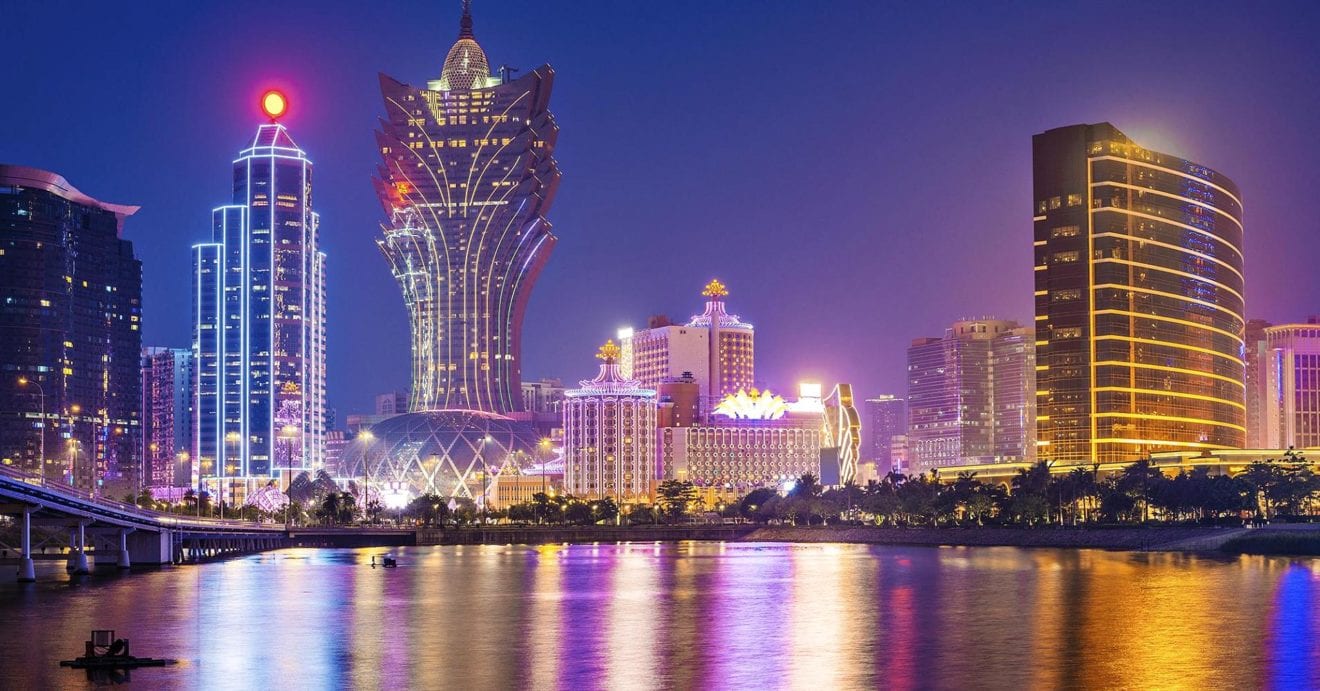
    Alibaba Group has entered a partnership with the Macau SAR government to help transform Macau into a smart city.

    The collaboration will focus on using cloud technologies to bring benefits to residents and tourists visiting the city.

    Under the four-year partnership, the parties will work together to upgrade the IT infrastructure in Macau to foster developments in tourism, transportation, healthcare, governance and talent development.

    The project will involve developing a dedicated smart technology platform to help promote cloud technologies in Macau, building a smart transport network to optimize the management of road, water and air traffic and the development of smart tourism capabilities using analytics and targeted consumer marketing.

    The project will also focus on smart healthcare – enhancing Macau’s electronic medical system and assisting healthcare decision-making through the use of online medical information.

    In addition, the project will involve collaborating on smart city governance by developing a centralized cloud-based platform connecting different government departments, and talent development through the launch of the Alibaba Cloud IT Certificate program and B2B e-commerce training program.

    “After setting the goal to turn Macau into a smart city, Macau Government has studied the experience of other cities in developing their own versions of smart cities. After thorough study and research, we have decided to collaborate with Alibaba Group to foster the development of cloud computing and big data technologies,” Macau chief executive O Lam said.

    “By leveraging the power of these technologies and connecting resources of different government departments, the project is expected to enhance the model of socio-economic operation in Macau, expediting the city’s transformation into a smart city.”

  • Alibaba cafe without cashier attracts queue

    Alibaba cafe without cashier attracts queue

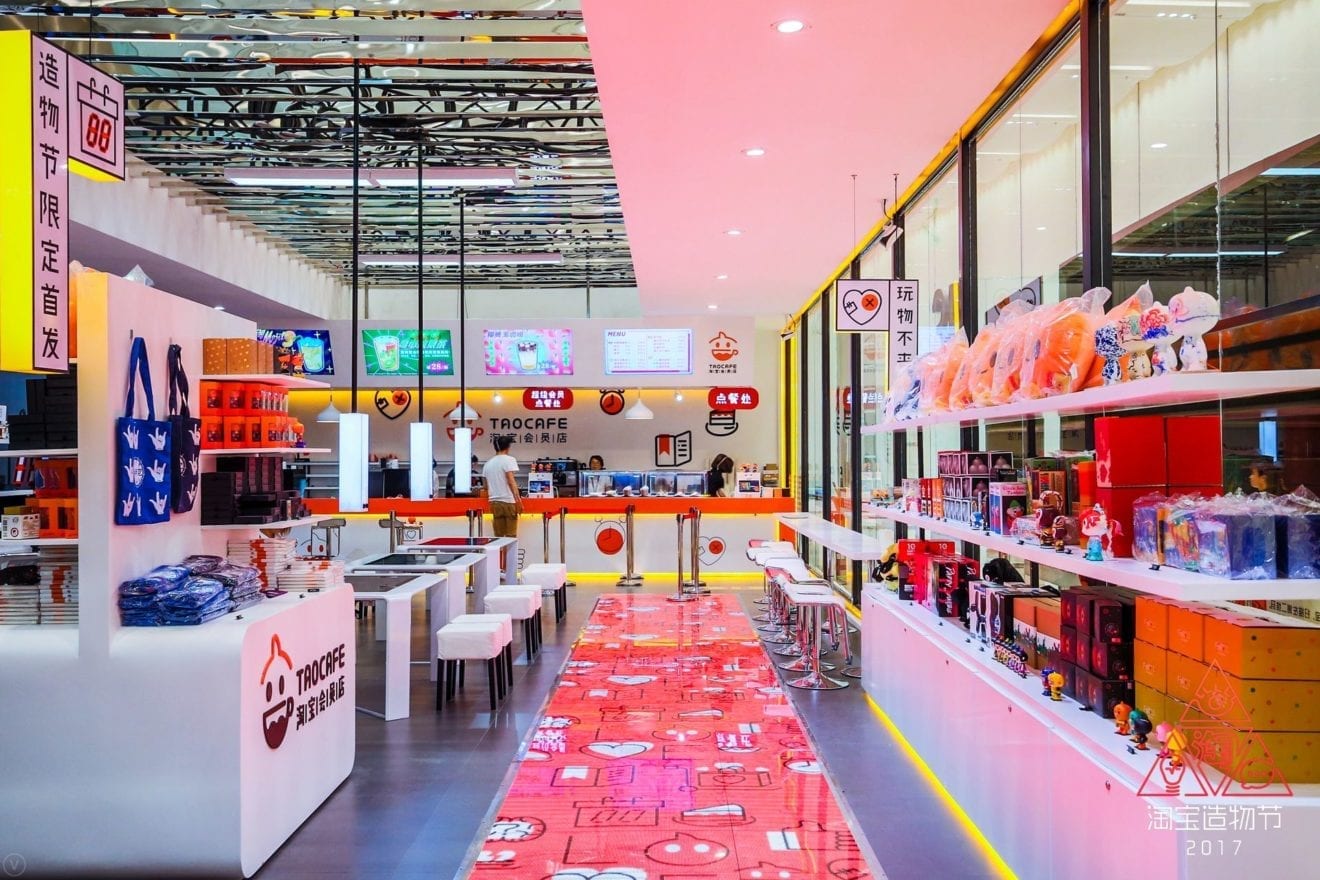
    An Alibaba cafe without a cashier attracted a queue of shoppers for its opening in Hangzhou. Entry into Tao Cafe is via smartphone scan through ticket gates similar to those at subway stations.

    Offering drinks, fast food and snacks, the 200 sqm store can accommodate 50 customers. To enter and make a purchase, shoppers need only a smartphone with Alibaba’s Taobao e-commerce app. The store’s e-shopping system developer, Alibaba subsidiary Ant Finance, has assigned a team to help customers.

    A woman shopper says she enjoyed the experience of buying a cup of coffee in the store. “Your profile picture is shown on the screen after you place an order. It also shows the wait time. There is no hassle of waiting for your name to be called like in ordinary cafes.”

    A tourist from Shenzhen says helpers told him to pick up goods slowly from the shelf so the system has time to confirm his selection. “We need to learn – it is a whole new shopping experience.” As he walked out of the cafe, his bill was automatically paid via the e-payment account on his smartphone.

    Ant Finance senior technical advisor Zeng Xiaodong says the cafe combines automated visual sensors and facial recognition to reduce error rates.

    All goods in the cafe are digitalised, he says. Each commodity, its placement on the shelf and its purchase are subject to digital recognition.

    “This store is our endeavour to explore new modes of brick-and-mortar retail combined with e-commerce,” says Alibaba CEO Zhang Yong.

    Theft test

    The system has been tested by technicians pretending to steal items, but the checkout machines recognised their selections and processed the charge.

    “It’s not about Alibaba wanting to open cafes, it’s about digitalising the footprints of visitors to an offline store,” says Alibaba Group chief marketing officer Chris Tung.

    He says offline retailers can improve by adopting online data capabilities to link the identity of the customers and optimise their shopping experience. “The more a user browses, the better the system understands their interests, and the better it can provide more relevant and personalised messages for them – it’s a healthy cycle.”

    Once retailers understand what their customers need online, the products can be allocated to the physical store.

    “The cafe is just a demonstration of what can be done for retail,” says Tung.

    Smart shopping has attracted attention after an unmanned 24-hour BingoBox convenience store opened in Shanghai last month. Customers must register in advance using social-media app WeChat or Alibaba’s mobile wallet app Alipay, then scan a QR code to enter the 10 sqm store, where goods are about 20 to 30 per cent cheaper than those in other convenience stores.

    Once customers have completed their purchase they scan another QR code to exit the store.

    BingoBox has raised US$15 million in funding to expand its business, and says only four staff members are needed to run about 40 stores.

  • Alibaba opens cashier-free retail store in China

    Alibaba opens cashier-free retail store in China

    Alibaba Group has opened its first cashier-free retail store in China.

    The Chinese e-commerce and tech giant has opened its first Tao Café, an experimental cashless cafe, empowered by artificial intelligence and data technologies through the use of the Alipay e-payment service.

    Located in Hangzhou, capital of east China’s Zhejiang Province, the 200-square-metre store offers beverages, fast food and snacks and can accommodate 50 customers at a time.

    “The Tao Cafe, an experimental cashier-less and cashless coffee shop, is another feature for Alibaba to outline its technology capability bridging the world of offline and online shopping,” Chris Tung, chief marketing officer of Alibaba Group, told reporters.

    At the café, customers use their Taobao app to scan a QR code in front of the shop where a camera set with face recognition detects their identity.

    The data links to their Taobao accounts so they can buy a cup of coffee using voice-recognition technology. From here, the beverage will be brought to their table and users can shop online using their smartphone to access Taobao while they wait.

    Alibaba joins other retail chains and tech start-ups flooding the market with their own offering of staff-less retail. This includes mega rival Amazon and its Amazon Go store, which debuted last year via tracking cameras, utilising a facial and voice recognition system.

    And it’s a trend that looks set continue in retail, according to experts.

    Neil Wang, president of global consulting firm Frost & Sullivan China, told local media that staff-less stores will bring the “next spring” to the retail industry.

    “Staff-less stores are a combination of digital payments, radio frequency identification technology, biological recognition, big data and AI,” Wang told China Daily.

    “They will lower the risk of shop lifting, optimize the goods and reduce costs, from running and maintenance costs to human labour.”

    China’s banking institutions handled more than 25.7 billion mobile payments last year with a transaction volume of 157.55 trillion yuan (23 trillion U.S. dollars), according to a report by the People’s Bank of China, the central bank.

  • Hema supermarket offers new retail experience

    Hema supermarket offers new retail experience

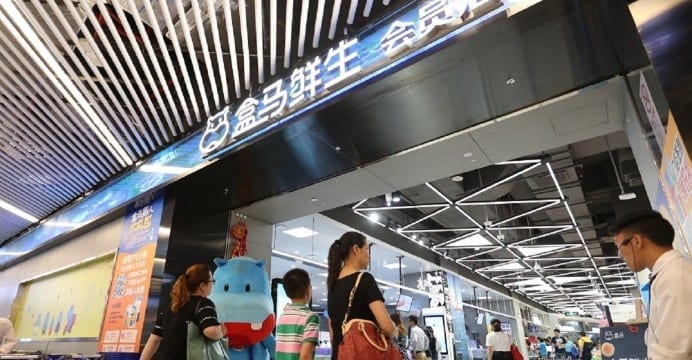
    Hema supermarket is what you get when you imagine a seamless blend of the online and offline shopping experience, Alibaba Group CEO Daniel Zhang said Monday.

    Zhang toured one of the 10 neighborhood stores in Shanghai with Executive Chairman Jack Ma last week and held up the fresh-food focused Hema as an example of the “New Retail” model, which Alibaba has successfully incubated for the past two years. “New Retail” uses technology and data to merge online and offline shopping, offering consumers a more-efficient and more-flexible shopping experience.

    The Hema experience starts with a download of the mobile app. That links right up to a customer’s Taobao or Alipay account. Customers who don’t have accounts yet can easily sign up. And then the shopping begins, wherever the customer is.

    “Hema leverages data and smart logistics technology to seamlessly integrate online-offline systems, built to provide the unparalleled service of fresh food deliveries in 30 minutes,”  Zhang said.

    Since 2015, Alibaba has opened 13 Hema markets. Apart from the 10 in Shanghai, there are two in Beijing and one in Ningbo. Each aims to serve a customer base within a three-kilometer radius to ensure fast, high-level service. Hema stores are fully mobile-powered and allow customers to use Alipay. The stores’ sales per unit area are three-to-five times those of other supermarkets. They’ve also cracked a key problem of how to scale local deliveries, with each store able to fulfill thousands of orders a day.

    The hyper-local business allows customers to shop from the comfort of their homes, using a mobile app. They can order fresh food to cook it at home or have it prepared by the Hema chefs and delivered within 30 minutes. Customers who prefer the in-instore experience, can visit the supermarket to hand-select their fresh food, such as seafood, and can choose to have it cooked for carry-out, delivered to their nearby home or office, or they can eat it on the spot the store’s dining area.

    Hema’s game-changer, as far as Chinese consumers are concerned, is the fresh seafood section. Shoppers can pick out their own lobster or other shellfish, but it right away and have it cooked up and ready for them to eat in the restaurant area when they complete the rest of their shopping.

    The stores, themselves, look like normal neighborhood supermarkets, with a selection of packaged foods, produce, beverages and other goods. Every item has a scannable bar code, which yields price and product information, including origin and any backstory on the item, if there is one. Customers scan the code and complete their electronic purchase through Alipay at a checkout register before leaving the store.

    User experience is enhanced through big data. Because customers shop through the Hema mobile app, every purchase is logged, and preferences are saved. On the customer side, analytics offer up a personalized product page, and on the delivery side, machine algorithms plan delivery routes. The bar codes not only let customers trace product origin and track delivery, but are also a means for Hema to employ a smart supply-chain management system.

    Hema’s innovative fulfillment model is what allows it to deliver orders within a half-hour. The store doubles as warehouse, and order-fulfillment specialists can be seen moving up and down the aisles with a scanner, reusable shopping bag and a special bar code for each order. They scan and pack up goods, putting the bags on a conveyor belt that carries orders to a delivery center adjacent to the store. Hema aims to be a zero-waste company, recycling containers used for delivery.

    Zhang noted that Alibaba doesn’t intend to operate a large grocery chain. As with Alibaba’s investments in the Intime department store chain, the aim is to create showcases that demonstrate the benefits of “New Retail” to customers and other businesses that want to digitally transform themselves. E-commerce currently accounts for around 15% of total retail in China. Alibaba has said its goal is not to make incremental progress on that 15%, but to digitally transform the 85%.

    “We believe the future of New Retail will be a harmonious integration of online and offline, and Hema is a prime example of this evolution that’s taking place,” Zhang said. “Hema is a showcase of the new business opportunities that emerges from online-offline integration.”

    While it’s still early days for Hema, the first two years of store operations have yielded some promising results. Customers each make 4.5 purchases a month on average and 50 times a year.  Among users who open the Hema app, the conversion rate for making a purchase is as high as 35%. On average, online orders account for more than 50% of total orders. For mature stores like the one in Shanghai Jinqiao, online orders are as high as 70% of total orders.

    Hema is a membership-based shop, with customers registered the first time they pay for an order through the mobile app.

  • Grana expands into Mainland China, opens store on Alibaba’s Tmall

    Grana expands into Mainland China, opens store on Alibaba’s Tmall

    Today Grana, one of Asia’s fastest growing eCommerce disruptors in the apparel industry, with US $16 million in funding, announced its official launch into mainland China opening an online store on Alibaba’s Tmall – the largest business-to-consumer (B2C) retail platform in Asia.

    The Hong Kong-based startup has also announced global shipping, adding more than 50 new countries across Asia Pacific, Southeast Asia and Europe to introduce its obsession with high-quality fabrics and bring affordable luxury basics to millennial consumers. This expansion comes from direct consumer demand to ship Grana’s modern essentials cross-border into their countries.

    With today’s official entry into the Chinese market, the young startup aims to meet demand from the emerging middle-class seeking trusted quality goods at a lower price-point from online luxury and fast-fashion retail brands currently in the market.

    To drive its market penetration, Grana’s increasing brand awareness in the US – it’s biggest growth market and traction with celebrities including Gigi Hadid, Jessica Alba and Lily Collins, wearing its products for everyday looks to red carpet appearances, will be important factors to attract the Chinese consumer.

    “We appreciate the strong and strategic partnership with Alibaba supporting our expansion plans onto Tmall. It’s a pinnacle time for the company right now and it’s promising to see Chinese millennial consumers and online shoppers around the world becoming more sophisticated in how they shop, encouraging brands to disrupt the cost of quality goods across all sectors.

    It’s great, since this is our sweet spot. We now ship cross-border to over 60 countries and are well positioned to further drive the projected total revenue of eCommerce in Asia to double, over the next five years to US $1.4 trillion”, said Luke Grana, CEO & Founder at Grana.

    Grana’s flagship store on Tmall has been localised to provide the Chinese consumer with detailed information on product description pages that focus on its trusted and best-selling fabrics, garment production and key styles.

    Given the consumer preference for more guidance on size and fit, online shoppers will soon have access to customised size guides with measurement details sharing recommended sizing to purchase its modern essentials. This customised size guide is different to the size guide available on grana.com and more tailored for Chinese consumers.

    “We’ll be introducing our unique value proposition to Chinese consumers focused on sourcing the finest luxury fabrics from around the world, affordable pricing and direct shipping from Hong Kong.

    This will be crucial to break out amongst fast-fashion and luxury brands. On the Hong Kong front, our team can now introduce Grana to Chinese tourists who already visit our showroom and communicate that we ship to their city. It means they can try items offline, place an order and have it delivered by the time they get home – the aim is to bring these offline customers, online for their second purchase”, says Grana.

  • Alibaba project in Thailand to support Asean e-commerce

    Alibaba project in Thailand to support Asean e-commerce

    Alibaba Group has pledged to build an e-commerce park in Thailand’s Eastern Economic Corridor (EEC) to serve the burgeoning Asean e-commerce market, says Industry Minister Uttama Savanayana.

    Covering 300 rai (50ha), the park will serve as the centre of Alibaba’s logistics business in Asean, he says.

    The Chinese e-commerce giant expects to sign the project’s first-phase contract with local developers within the next few months and start construction before the end of the year.

    The second phase will include an R&D unit and a business development centre tailored to cater to small and medium-sized companies, says Uttama, who is in talks with top-level executives of Alibaba subsidiary Lazada.

    He says the group will give more details about the project soon.

    “Alibaba is investing in the EEC because it is the most attractive investment project in Asean. Also, Thailand is the region’s most promising and best located e-commerce market.”

    Uttama says Alibaba wants to use Thailand as a stepping stone to the global market, and as a production base for Cambodia, Laos, Myanmar and Vietnam.

    The government has allotted more than 18,000 rai for the EEC project, adding to 30,000 rai already allocated.

  • Ant Financial aims for ‘cashless’ cities in China

    Ant Financial aims for ‘cashless’ cities in China

    Alibaba’s financial arm Ant Financial is looking to create more “cashless” cities across China, with the latest agreement inked with Tianjin municipality in North China.

    The city-wide “cashless” campaign pushed by the e-commerce giant is the fourth installment to hit China, following similar initiatives in Hangzhou — where Alibaba is based — followed by Wuhan and Fuzhou.

    As with the other “cashless” cities, Tianjin residents will soon be able to pay for an array services and goods using their mobiles when paying bus fares and medical bills, as well as school tuition and social security.

    It will be officially rolled out by the end of 2017, as reported by the China Economic Times.

    However, going “cashless” does not mean money will become obsolete. It will simply allow customers to decide on the way of payment, Jing Xiaodong, the company’s CEO, said

    Tianjin was chosen, said Jiang, as it has a good foundation for Internet Plus to make it the first cashless city in the north.

    With a resident population of 155 million, sone 69 million are real-name registered Alipay users, according to China Economic Times. The city ranks 10th nationwide by mobile payment activities.

    Ant Financial was a leading sponsor of a cashless alliance set up in April. The company earlier vowed to make mobile payment accessible in the whole country in the coming five years.

    2017 has proven a busy year for Alibaba. Last week, the world’s largest e-commerce platform operator said it plans to enter Macau with a bevy of products and services. Last month, the group acquired an 18% stake in Lianhua Supermarket. Before that, the Chinese giant said it had invested US$1 billion in Southeast Asian online retailer Lazada Group, increasing its stake to more than 80%.

    Looking ahead, said that in fiscal 2018 sales may increase by up to 49 per cent, 10 percentage points higher than estimates.

  • Alibaba launches low-cost voice assistant amid AI drive

    Alibaba launches low-cost voice assistant amid AI drive

    The Chinese device costs significantly less than counterparts by Amazon and Google. China’s Alibaba Group Holding Ltd launched on Wednesday a cut-price voice assistant speaker, similar to Amazon.com Inc’s “Echo”, its first foray into artificially intelligent home devices.

    The “Tmall Genie”, named after the company’s e-commerce platform Tmall, costs 499 yuan ($73.42), significantly less than western counterparts by Amazon and Alphabet Inc’s Google, which range from $120 to $180.

    These devices are activated by voice commands to perform tasks, such as checking calendars, searching for weather reports, changing music or control smart-home devices, using internet connectivity and artificial intelligence.

    China’s top tech firms have ambitions to become world leaders in artificial intelligence as companies, including Alibaba and Amazon, increasingly compete for the same markets.

    Baidu, China’s top search engine, which has invested in an artificial intelligence lab with the Chinese government, recently launched a device based on its own siri-like “Duer OS” system.

    The Tmall Genie is currently programmed to use Mandarin as its language and will only be available in China. It is activated when a recognized user says “Tmall Genie” in Chinese.

    In a streamed demonstration on Wednesday, engineers ordered the device to buy and deliver some Coca Cola, play music, add credit to a phone and activate a smart humidifier and TV.

    The device, which comes in black and white, can also be tasked with purchasing goods from the company’s Tmall platform, a function similar to Amazon’s Echo device.

    Alibaba has invested heavily in offline stores and big data capabilities in an effort to capitalize on the entire supply chain as part of its retail strategy, increasingly drawing comparisons with similar strategies adopted by Amazon.

    It recently began rolling out unstaffed brick-and-motor grocery and coffee shops, using QR codes that users can scan to complete payment on its Alipay app, which has over 450 million users. Amazon launched a similar concept of stores in December.

  • The Alibaba Group is ready to do business in Macau

    The Alibaba Group is ready to do business in Macau

    Alibaba Group Holding Limited has had its application for trademark protection accepted in Macau, enabling the Chinese e-commerce giant to enter the MSAR with a series of products.

    Brands Ant Star, Ant Star Bank, Alimebot, 阿里蜜,星匯,星安,智惠,星匯銀行,智惠銀行, are now able to create and commercialise in Macau products ranging from newspapers and magazines to credit and debit cards, scientific and nautical instruments, file sharing software and GPS equipment. But also advertising, execution and supervision of loyalty programmes and incentives, business consulting to traffic optimisation of websites, large warehouse retail services or even insurance, financial and monetary businesses.

    In total, many hundreds of products and services that the company – based in Hangzhou and founded in 1999 by Jack Ma and Peng Lei – is now allowed to conduct here.

    With over 50,000 employees, Alibaba provides consumer-to-consumer, business-to-consumer and business-to-business sales services via web portals.

    Recently, the Chinese giant invested US$1 billion (MOP8 billion) in Southeast Asian online retailer Lazada Group increasing its stake to more than 80 per cent and making is presence even stronger in the region.

    According to Forbes magazine, over the past year Ma has spent more than 800 hours flying to dozens of countries, meeting business leaders and heads of state to introduce his grand vision: small businesses from all corners of the world trading freely and securely on the Alibaba platform.

    Highly reported Jack Ma’s ambition is to see his company reach the US$1 trillion mark in gross merchandise value by 2020.

  • Can Alibaba realize its global ambitions?

    Can Alibaba realize its global ambitions?

    Jack Ma, the man who turned Alibaba into China’s dominant e-commerce platform, now has his sights set on global domination.

    Over the past year, Ma met business leaders and head of states in many countries to introduce his grand vision: small businesses from all corners of the world trading freely and securely on Alibaba’s platform. His goals are equally ambitious: Ma wants Alibaba to hit $1 trillion in gross merchandise value by 2020. By 2036, the company sees itself serving two billion customers, effectively becoming the world’s fifth largest economy, with sales eclipsed only by the GDP of the U.S., China, Japan and the EU.

    But to sustain the near continuous 40% growth rate of Ma’s $300 billion empire, which centers on a marketplace connecting brands with buyers, globalization is seen as key. At home it faces heightened competition with the country’s second-largest shopping site, JD.com, which just posted record sales of $17.6 billion for its 6.18 shopping festival. Alibaba’s e-commerce dominance isn’t under threat but it nonetheless sees a “growth bottleneck” and feels “globalization is better done now than later,” said Teng Bingsheng, a professor of strategic management at the Cheung Kong Graduate School of Business in Beijing.

    Alibaba’s global footprint has grown through investments in local partners. As part of a $21 billion-acquisition spree over the past two years, the company has stakes in India-based marketplaces Paytm and Snapdeal, as well as Southeast Asia’s top shopping site, Lazada, which it now holds a 83% stake after investing another $1 billion. Its financial affiliate Ant Financial has investments in payment platforms in Thailand, South Korea and the Philippines, and is expanding in further afield in South Africa.

    Some analysts however question whether Ma might be painting an overly rosy picture for small business owners. While it is true that China has a growing appetite for niche brands from cosmetics to baby food, competition on Alibaba’s shopping sites is cutthroat.

    Already thousands of brands are selling on Tmall and the number of foreign brands on Tmall Global grew 169% last year — while total sales only grew 30%, according to Mark Tanner, founder of Shanghai-based consultancy China Skinny.

    This means another part of Alibaba’s strategy has brighter prospects. Outside the U.S., through the likes of Lazada, and its own cross-border commerce platform AliExpress, Alibaba wants to find fresh customers for Chinese manufacturers. On Lazada, for example, Taobao has opened a shop, offering a curated selection of Chinese-made clothes, gadgets and toys to tap Southeast Asia’s $22 billion e-commerce market.

    Compared with facilitating exports to China, this strategy may ultimately take on more importance. Southeast Asia, for example, is an ideal market for Chinese products, whose price advantages can win over more customers, CKGSB’s Teng said.

    What’s more, Alibaba will not only create more revenue streams by selling globally but fit itself nicely into Beijing’s vision. Through grandiose projects such as the One Belt, One Road initiative, Beijing wants to restore demand for Chinese goods along the ancient Silk Road trading route, which stretches all the way from its middle west provinces to Europe.

    But it isn’t a smooth ride either. The Electronic World Trade Platform (eWTP), Ma’s version of the World Trade Organization and a web-based approach to lowering trade barriers for small businesses in the region, is moving slowly. One year after its announcement, only Malaysiajoined the initiative, establishing in March a trading hub near Kuala Lumpur International Airport— a reflection of how stalling trade talks worldwide might be affecting Alibaba.

    That means, for now, international business remains a small part of Alibaba — contributing less than 10% of the group’s revenues in the last year. Evans said the company is on track to reaching its goal, eventually generating 40% of its revenues from international businesses over the next decade.

    The company has identified its chance of success. Aside from e-commerce, Alibaba’s payment, entertainment and cloud computing units are also expanding globally. AliCloud, for example, is wooing international customers with a price 85% cheaper than Amazon Web Services, according to CSLA analyst Elinor Leung. And Ant Financial, despite recent hurdles such as opposition to its acquisition of U.S. payment company Moneygram, has installed its service at millions of retailers in the U.S. through a partnership with payment processor First Data.