Tag: Alibaba

  • Alibaba, Auchan, Sun Art partnership goal in China market

    Alibaba, Auchan, Sun Art partnership goal in China market

    A new Alibaba, Auchan, Sun Art partnership will further strengthen Alibaba’s efforts to integrate online and offline, say analysts.

    China’s Alibaba Group Holding, France’s Auchan Retail and Taiwan’s Ruentex Group have formed a strategic alliance to bring together their online and offline expertise to explore opportunities in China’s food-retail sector.

    As part of the deal, Alibaba is investing HK$22.4 billion (US$2.8 billion) to obtain an aggregate direct and indirect stake of 36.16 per cent in Chinese food retailer Sun Art Retail Group by acquiring shares from Ruentex.

    Auchan Retail is also increasing its stake in Sun Art, with the transaction giving it, Alibaba and Ruentex about 36.18, 36.16 and 4.67 per cent economic interest respectively in the multi-format offline food retailer.

    Sun Art had a total gross floor area of about 12 million sqm in China at June 30. It has 446 hypermarkets as large as 17,000sqm across China under the Auchan and RT-Mart banners. It also has superstores and unmanned stores under the Auchan Minute brand.

    Alibaba says the alliance reflects its “new retail” concept, while Auchan Retail says it aligns with its “Auchan changes lives” vision.

    Alibaba Group CEO Daniel Zhang says the move aims to redefine traditional retail through digital transformation. “Physical stores serve an indispensable role in the consumer journey, and should be enhanced through data-driven technology and personalised services in the digital economy.”

    ‘Positive impact’

    “Bringing together the leaders of instore retail and of online retail will allow us to offer hundreds of millions of Chinese consumers a fully integrated, world-class shopping experience,” says CEO Wilhelm Hubner of Auchan Retail, which has a presence in 17 countries with 3715 points of sale.

    “Consumer demands have changed tremendously with the rapid growth of the mobile internet, and Sun Art is also trying to move from offline to online,” says Ruentex Group vice-chairman Peter Huang.

    “I think this deal will have a positive impact for all involved,” says OC&C Strategy Consultants associate partner Veronica Wang.

    “It will further strengthen Alibaba’s efforts to integrate online and offline,” says Wang. “Alibaba has been quite aggressive in investing offline in the past two to three years with its continuous investments in the likes of retailer Suning and mall company Intime, as well as its own launch of Hema supermarkets.”

    She says the alliance could help Sun Art build digital capabilities, with the company trying to tap into e-commerce and build an O2O business since 2014, but with limited success. “Feiniu.com was the first attempt, which is still losing money after three years, and Sun Art launched cashier-free self-service convenience stores this year which are still in the stage of trial and error.”

    OC&C associate partner Steven Kwok says the move is no surprise “especially when retailers in general are finding that grocery retailing, unlike other categories thus far, has encountered greater barriers to the shift online”.

    He says Sun Art’s reach across China not only gives Alibaba an enhanced distribution network, but also serves as a testing ground for digital initiatives.

  • Alibaba seeks approval to buy stake in India’s BigBasket

    Alibaba seeks approval to buy stake in India’s BigBasket

    Chinese internet giant Alibaba is seeking Competition Commission of India (CCI) approval to acquire a stake in online grocery startup BigBasket.

    Financial details have not been disclosed in the CCI filing, which relates to “the acquisition and purchase of shares” of BigBasket parent Supermarket Grocery Supplies by Alibaba Singapore.

    Alibaba Group Holding and its Indian associate PayTM E-Commerce were reported in July as having a 60-day exclusive pact with BigBasket. There were also reports of BigBasket being in merger talks with rival Grofers.

    BigBasket has a presence in Bengaluru, Hyderabad, Pune, Mumbai, Chennai, Delhi-NCR, Kolkata, Jaipur, Punjab and Lucknow as well as four other cities, and has raised more than $200 million from investors.

  • Alibaba’s Singles’ Day Sales Hit $10 Billion in one hour

    Alibaba’s Singles’ Day Sales Hit $10 Billion in one hour

    the frenzied annual celebration of consumption and commerce that is China’s much larger version of Black Friday — began as a protest of sorts against Valentine’s Day, propelled by college students in the 1990s.

    The event’s date, written numerically as 11/11, was associated with unattached singles, known as “bare sticks.”

    This year’s shopping festival entered new territory, blazing past $1 billion within two minutes of the holiday, starting at midnight on 11 November.

    Singles’ Day is now inextricably linked with Alibaba, the Chinese e-commerce leviathan that in recent years has turned the holiday into an online — and occasionally brick-and-mortar — mercantile extravaganza. It routinely eclipses Amazon’s yearly Prime Day promotional event.

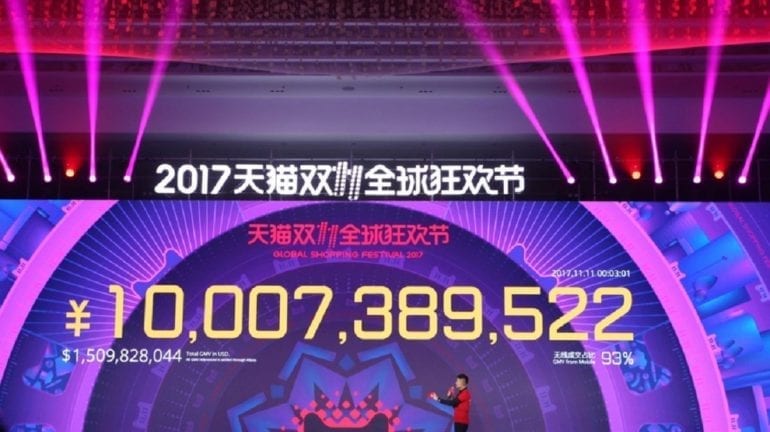
    In July 2017, Prime Day generated an estimated $1 billion in revenue during its 30-hour sale window, resulting in what Amazon called its “biggest day ever.” A little more than an hour into this year’s Singles Day, sales had already exceeded $10 billion.

    The event has evolved into a cultural phenomenon. On Friday night, Alibaba hosted a lavish gala in Shanghai, directed by one of the producers behind the 2016 Academy Awards.

    Celebrities such as Nicole Kidman, Pharrell Williams and Maria Sharapova helped count down the moments before the 60,000 participating global brands released their Singles’ Day deals to shoppers.

    One offer, from the Chongqing-based online alcohol brand Jiang Xiao Bai, allowed 33 fast-moving customers to make a single payment of 11,111 yuan, or $1,673, for a lifetime supply of a grain liquor known as baijiu.

    Singles’ Day, which is largely powered through Alibaba’s Tmall marketplace, will test the company’s logistics network. The company promised delivery within an hour for certain products and, in advance of the shopping festival, converted nearly 100,000 stores across China into “smart stores” capable of processing payment using facial recognition and other advanced technologies.

  • Singles’ Day trumps Black Friday and Cyber Monday combined

    Singles’ Day trumps Black Friday and Cyber Monday combined

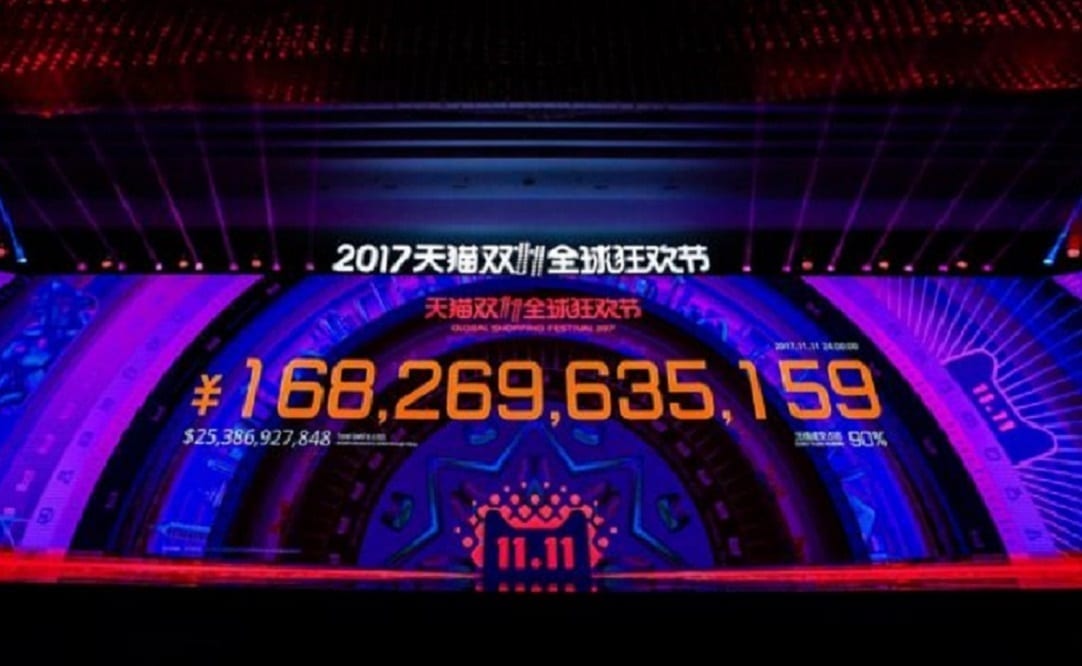
    Alibaba, the Chinese e-commerce giant, said on 11 November 2017 its Singles’ Day sales extravaganza hit $25.4 billion, smashing its own record from last year and cementing it as the world’s biggest shopping event.

    Once a celebration for China’s lonely hearts, Singles’ Day has become an annual 24-hour buying frenzy that exceeds the combined sales for Black Friday and Cyber Monday in the United States, and acts as a barometer for China’s consumers.

    As tills shut midnight on Saturday, Alibaba’s live sales ticker registered 168.3 billion yuan, up 39 percent from 120.7 billion yuan in 2016. The dollar figure was up more steeply due to the strength of the yuan against the greenback in 2017.

    The event began soon after a star-studded event in Shanghai late on 10 November 2017. As midnight hit, a deluge of pre-orders helped drive a billion dollars of sales on Alibaba’s platforms in the first two minutes and $10 billion in just over an hour.

    “In terms of scale it just dwarfs any other event out there,” said

    Ben Cavender, Shanghai-based principal at China Market Research Group.

    At just past the halfway mark, the headline gross merchandise volume swept past last year’s dollar total just shy of $18 billion. Shortly afterward, sales surpassed the 2016 total in the local currency.

    The event gets shoppers around China scouting for bargains and loading up their online shopping carts, while delivery men – and robots – brace for an estimated 1.5 billion parcels expected over the next six days.

    “This is a big event for China, for the Chinese economy,” Joseph Tsai, Alibaba’s co-founder and vice chairman, said. “On Singles Day, shopping is a sport, it’s entertainment.”

    Tsai said rising disposable incomes of China’s “over 300 million middle-class consumers” was helping drive the company’s online sales — and would continue. “This powerful group is propelling the consumption of China,” he said.

    The final total — more than the GDP of Iceland or Cameroon — leaves other shopping days in the shade. Cyber Monday in the United States saw $3.45 billion in online sales last year.

    Investors closely watch the headline number, though some analysts say the way it is calculated is too opaque. The U.S. Securities and Exchange Commission launched a probe into Alibaba‘s accounting practices in 2016, including into its Singles’ Day data. That investigation is as yet unresolved.

    Last year, the sales number rose by nearly a third at the eighth iteration of the event – though that was slower than the 60 percent increase logged in 2015.

    Slower growth?

    At Alibaba’s Friday night gala on 10 November 2017, the company’s co-founder and chairman, Jack Ma, hosted guests including the actress Nicole Kidman, singer Pharrell Williams and Chinese musicians and film stars such as Zhang Ziyi and Fan Bingbing.

    Singles' Day trumps Black Friday and Cyber Monday combined 5

    The excitement around the shopping blitz, however, masks the challenges facing China’s online retailers such as Alibaba and JD.com Inc., which are having to spend more to compete for shoppers in a broader economy where growth is slowing.

    “A lot of the lower hanging fruit has been picked and there’s increased competition for a share of consumer spending,” said Matthew Crabbe, Asia Pacific research director at Mintel. The sale did though beat his forecast of 20 percent growth.

    Online retailers were being forced to push offline as well as overseas to attract new shoppers, and the overall online retail market was close to “saturation,” raising questions about whether current rapid growth could be sustained.

    “They’re having to spill over out of the purely online realm into the wider consumer market,” Crabbe said.

    This has sparked deals to buy bricks-and-mortar stores in China, and overseas tie-ups, especially in Southeast Asia. Technology, too, has been key, with virtual reality dressing rooms and live fashion shows to attract shoppers.

    Alibaba also said it had turned 100,000 physical shops around China into “smart stores” for this year’s event. Goods perused by people at the stores, but then bought and paid for on Alibaba’s platforms, were added towards the sales total.

    China Market Research Group’s Cavender said brands were also increasingly making smaller price cuts to avoid “margins getting killed,” and were often asking for deposits in advance. In previous years, prices were often halved.

    Fu Wenyue, a 23-year-old dresser in Shanghai, said offers this year were smaller but more “personalized” as brands used big data to hone their targets. Fu spent 4,000 yuan on clothes, cosmetics and kitchen utensils in pre-event sales, and kept shopping on the day.

    “In actual fact, I think I spent even more than I did last year,” she said.

  • The best quarter ever for Alibaba sales

    The best quarter ever for Alibaba sales

    In an “outstanding quarter” to September 30, Alibaba sales have grown 61 per cent to US$8.3 billion.

    That’s the tech and e-commerce giant’s strongest quarterly performance since its IPO and a result the company says reflects the strength of the business beyond its core activities.

    “We had an outstanding quarter,” said CEO Daniel Zhang. “Our consumer insights and technology innovation were the key drivers behind our customer value proposition across the Alibaba economy.

    “We are seeing the early results from our efforts to integrate online and offline with our New Retail strategy, and consumers have benefited from access to high quality products, improved customer experience and the tremendous convenience of shopping anytime, anywhere.”

    Maggie Wu, CFO, said the group generated about $3.4 billion in free cash flow during the quarter, “which enables us to invest in our future growth areas of core commerce, including logistics, cloud computing, digital entertainment and other innovation initiatives.”

    E-commerce remained the backbone of the business despite its rapidly growing diversification. Mobile monthly active users on China retail marketplaces reached 549 million in September, an increase of 20 million over June 2017. Annual active consumers on China retail marketplaces reached 488 million, up 22 million users from the 12 months to June 30.

    Cloud revenue grew 99 per cent year-on-year to $447 million, driven by robust growth in paying customers and an improving revenue mix of higher value-added services.

    Revenue from digital media and entertainment increased 33 per cent to $721 million and the daily average subscribers of Youku video increased by more than 180 per cent, attributed to a strategy of offering a mixture of licensed and original content.

  • Alibaba’s 11.11 sale to showcase brand new Retail concepts

    Alibaba’s 11.11 sale to showcase brand new Retail concepts

    In its sixth year, the online 11.11 Global Shopping Festival will introduce Alibaba Group’s New Retail concept which integrates online and offline shopping experiences.

    With the event bringing together consumers, retailers, logistics companies, financial institutions and online as well as offline stores and shopping centres internationally, Alibaba Group CEO Daniel Zhang says it is a “grand stage” for showcasing the New Retail initiative.

    During the festival, Alibaba will collaborate with 52 shopping malls to set up 60 New Retail-powered pop-up stores across 12 cities in China. Consumers can visit a pop-up store of a cosmetics brand, for example, to experience an augmented-reality (AR) lipstick trial.

    Nearly 100,000 stores in 31 provinces and 334 cities throughout China will also be converted into “smart stores” with a range of New Retail experiences such as facial-recognition payment and scan-and-deliver O2O shopping.

    New Retail will also be rolled out for community stores such as Rural Taobao service centres and neighbourhood convenience stores.

    In the lead-up to the November 11 event, Alibaba is running an array of promotional initiatives. The 24-hour online sale involves more than 140,000 brands and 15 million product listings globally, with more than 60,000 international brands available to Chinese consumers them across the Alibaba marketplaces, including Adidas, Bose, La Mer, L’Oreal, Mac, Mattel, Mondelez, Nike, P&G, Shiseido, Siemens, Unilever, Uniqlo, Wyeth, Zara, and more.

    Through a new Tmall initiative inaugurated in June this year, 100 Chinese brands can sell globally, with a focus on the Southeast Asian markets at the initial stage. Free shipping will be introduced to 10 countries during this year’s Festival to extend the global reach.

    This year, Alibaba will continue to leverage its media and entertainment assets to drive online consumption. Chris Tung, Alibaba Group’s chief marketing officer, says this year’s event “brings consumers around the world a step closer to realising the aspirational life where entertainment and retail become one”.

    “Regardless of their physical location, consumers will be able to participate in more experiences than ever before this year, all showing the reality of New Retail. We start today but this is a festival with nearly two weeks of celebration and so many different ways to participate.”

    Entertainment components include:

    • An AR game on Mobile Taobao App called Catch the Cat will drive online traffic to offline locations. Consumers will use their mobile device to catch the virtual Tmall Cat mascot at a number of retail partner locations to win special perks, discounts and coupons for use at online and offline stores.
    • Red envelopes of more than RMB250 million will be shared among Chinese consumers through various interactive games. One of which shoppers can invite friends to form special teams, and once their team’s purchases reach a certain amount collectively, all team members will be able to get discounts and coupons.
    • The 11.11 Countdown Gala Celebration will be held on November 10 in Shanghai’s Mercedes Benz Arena. Directed by Hollywood producer David Hill for the second year in a row, the gala will be broadcast live on three of the leading satellite TV channels Zhejiang TV, Shenzhen TV and Beijing TV, and will feature top-tier singers and movie stars who will be announced in the weeks ahead.
  • Alibaba Macau trademark registrations lodged

    Alibaba Macau trademark registrations lodged

    Alibaba Group Holding has applied for new trademark registrations in Macau, according to the Official Gazette.

    Alibaba has applied for the protection of 14 sets of commercial services and products under two brandnames, Alisports and 阿里體育. Overall, Alibaba Macau is seeking commercial protection for the provision of scientific services, cloud computing and IT applications, games and toys, advertising, data processing, information, telecommunications and broadcasting, online training and education, as well juridical and legal services.

    With more than 50,000 employees, Alibaba Group provides C2C, B2C and B2B sales services via web portals. Its main businesses comprise core commerce, cloud computing, digital media and entertainment.

    In early July, the group had several applications for trademark protection approved in the city for products including media, e-payment systems, nautical instruments and file-sharing software.

    On August 4, the Macau SAR government and Alibaba co-founder/CEO Jack Ma signed a framework agreement to implement services linked to the development of Macau as a “smart city”, including medical services, transport logistics and encouraging talent to return to the city.

  • Alibaba Cloud teams up with Red Hat

    Alibaba Cloud teams up with Red Hat

    Alibaba Cloud and Red Hat are joining forces to bring Red Hat’s open source solutions to Alibaba Cloud’s customers around the globe.

    Alibaba Cloud is now part of the Red Hat Certified Cloud and Service Provider program, joining a group of technology industry leaders who offer Red Hat-tested and validated solutions that extend the functionality of Red Hat’s broad portfolio of open source cloud solutions.

    The partnership extends the reach of Red Hat’s offerings across the top public clouds globally, providing a scalable destination for cloud computing and reiterating Red Hat’s commitment to providing greater choice in the cloud.

    In the coming months, Red Hat solutions will be available directly to Alibaba Cloud customers, enabling them to take advantage of the full value of Red Hat’s broad portfolio of open source cloud solutions. Alibaba Cloud intends to offer Red Hat Enterprise Linux in a pay-as-you-go model in the Alibaba Cloud Marketplace.

    Launched in 2009, the Red Hat Certified Cloud and Service Provider Program is designed to assemble the solutions cloud providers need to plan, build, manage and offer hosted cloud solutions and Red Hat technologies to customers.

    The Certified Cloud Provider designation is awarded to Red Hat partners following validation by Red Hat. Each provider meets testing and certification requirements to demonstrate that they can deliver a safe, scalable, supported and consistent environment for enterprise cloud deployments.

    In the coming months, Red Hat customers will also be able to move eligible, unused Red Hat subscriptions from their data center to Alibaba Cloud. Red Hat Cloud Access is an innovative “bring-your-own-subscription” offering that enables customers to move eligible Red Hat subscriptions from on-premise to public clouds.

  • Alibaba sets up global research academy

    Alibaba sets up global research academy

    Alibaba Group has established a global research academy which aims to increase collaboration on cutting-edge technology development.

    Through the academy the company expects to invest more than $15 billion in R&D over the next three years.

    The new Alibaba DAMO Academy — the Academy for Discovery, Adventure, Momentum and Outlook — will oversee the development of R&D labs worldwide to seek to recruit talented scientists and researchers to join the program. It will be led by Alibaba Group CTO Jeff Zhang.

    “Over the past 18 years of establishment, we have gained robust growth in our business, profit and have accumulated lots of data. Now is the right time to set up our own research academy,” said Jack Ma, executive president of Alibaba Group at the company’s Computing Conference 2017 in Hangzhou.

    He added, “Our academy is not just for making profit or for fun. We aim to focus on research for solving society and people’ problems. We will learn from IBM, Intel and Microsoft research labs, and target to surpass them.”

    Initially the academy will focus on opening research labs in China – in Beijing and Hangzhou – as well as two in the US and one each in Russia, Israel and Singapore.

    The seven labs will focus on research into disruptive technologies including data intelligence, the internet of things, fintech, quantum computing and human-machine interaction.

    Areas of focus within these broad domains will include machine learning, network security, visual computing and natural language processing (NLP).

    The academy will also seek to recruit 100 talented researchers from around the world to assist with the research efforts, and form partnerships with luminaries in the technology sector and educational institutions.

    “The Alibaba DAMO Academy will be at the forefront of developing next-generation technology that will spur the growth of Alibaba and our partners. We aim to discover breakthrough technologies that will enable greater efficiency, network security and ecosystem synergy for end-users and businesses everywhere,” Alibaba Group’s Zhang said.

    “Over the past 18 years, we have developed a robust technology infrastructure that supports the rapid growth of our business. With our global expansion, we have grown and refined our technology manifold. We are now looking for talented and driven researchers to join us in the quest for new disruptive technologies that would advance our every-day lives, benefit small businesses and narrow the technology gap to make our world a more inclusive place.”

    The company also plans to use the research lab to help fulfill its ambition of serving 2 billion customers and creating 100 million job opportunities in 20 years.

    The research academy will include advisers like educators and researchers from universities globally who will provide guidance and advice on key research areas.

  • Inside Alibaba’s Home Store of the future

    Inside Alibaba’s Home Store of the future

    Home Times, a furniture store supported by Alibaba Group technology, has opened for business in the Chinese city of Hangzhou.

    Attracting between 1,500 and 3,000 daily visitors since opening, the furniture store is another example of Alibaba’s  New Retail model. In recent months, Alibaba has expanded that model out to a variety of sectors, following the success with its hyperlocal Hema Supermarkets, which have shown how analytics and technology can transform traditional grocery stores into a seamless online-offline customer experience.

    Over 20,000 items are available for purchase at Home Times, including furniture, kitchenware, home décor, stationery and travel essentials—a majority of which are sourced from merchants already selling through Alibaba’s B2C shopping platform Tmall.

    And a phone in hand is all it takes for seamless shopping. Shoppers scan each item’s QR code with their smartphones to see the product name, price, description, and instantly purchase using Alibaba’s mobile payment service Alipay.

    “We have the hardware and know-how to build New Retail-driven stores, and we work with partners that have access to offline channels and expertise in operating physical storefronts,” said William Chen, who heads the Home Times project at Alibaba’s Cloud Retail division. “We provide the technology and Tmall’s pool of consumer insights.”

    Tmall analyzes the behavior and preferences of users within a five-mile radius of the shop. Products are then handpicked from these users’ top preferred categories and added to store shelves. This system cuts the time required to source products worldwide for traditional retailers down to a single day, while store offerings will change every 10 to 15 days, added Chen.

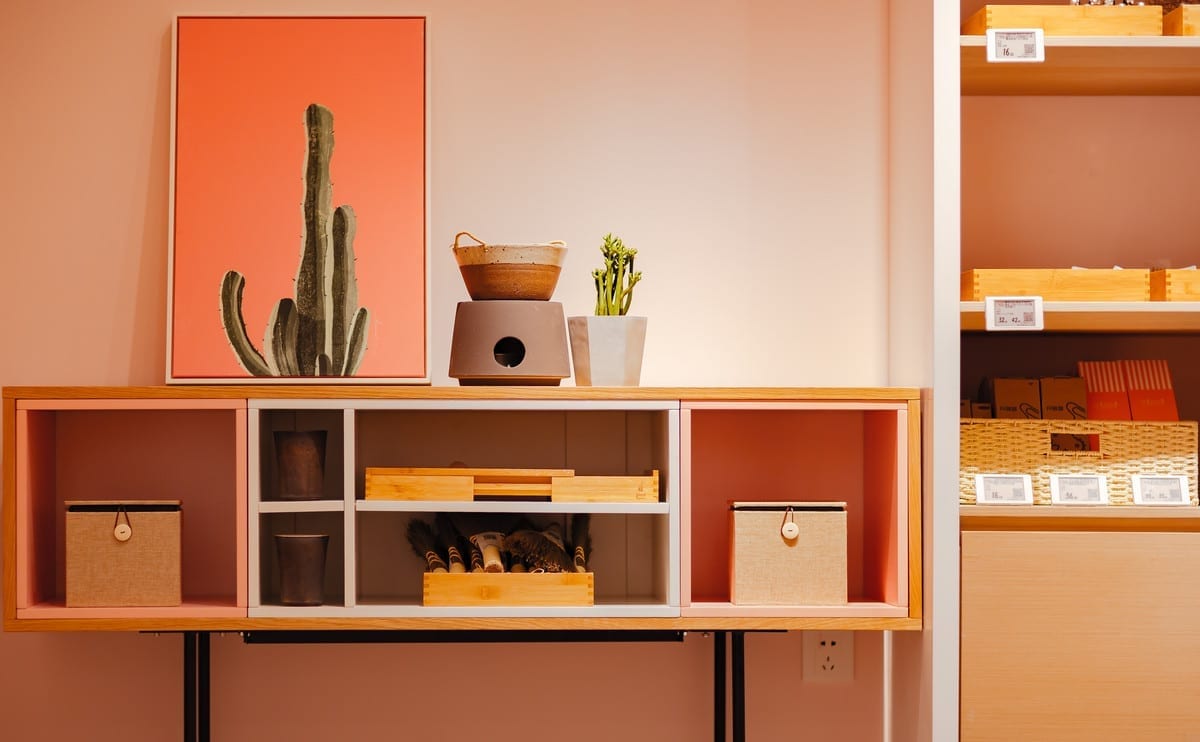
    Each product has an electronic price tag that can automatically sync prices with the latest seen online, removing the need for staff to manually print and replace the labels.

    Large screen displays on the wall allow customers to see their desired furniture and décor in a virtual home setting. This also indicates that Home Times requires significantly less display space, compared to traditional furniture sellers, since products can be displayed virtually.

    Home Times is set to open two new branches in Hangzhou by the end of 2017, including one at the In77 shopping center in the Hubin business district and another at an undecided location in West Hangzhou. It plans to open 15 to 20 new stores in 2018.

    “We definitely want to open this system to more businesses. Plans to apply our New Retail infrastructure to industries beyond home furnishing are underway,” said Chen.

  • Alibaba chairman Jack Ma to speak at e-payment forum in Hanoi

    Alibaba chairman Jack Ma to speak at e-payment forum in Hanoi

    Now in its third year, the forum is the country’s biggest e-payment event. World famous billionaire and Alibaba chairman Jack Ma is expected to visit Hanoi next month to attend a forum on e-payment services.

    Now in its third year, the annual Vietnam E-Payment Forum, provides an opportunity for the government, experts and businesses to sit down together and discuss the latest trends in e-payment services and the best ways to apply them in Vietnam.

    This year, mobile payment will be in the spotlight.

    As a speaker at the event, Jack Ma, founder and executive chairman of Chinese e-commerce giant Alibaba, will talk about his experiences of developing e-commerce and mobile payment services in China.

    According to iResearch, the leading provider of online audience measurement and consumer insights in China, the mobile payment market was valued at $5.5 trillion last year in China, nearly 50 times greater than that of the U.S., and Ant Financial Service, a subsidiary of Alibaba, contributed a lion’s share of 54 percent.E-payment has gradually replaced cash in Vietnam’s northern neighbor, and these days, most Chinese people pay for products and services using their smartphones.

  • Alibaba, New Hua Du supermarkets forming JV

    Alibaba, New Hua Du supermarkets forming JV

    To accelerate its roll-out of new high-tech retail, Alibaba Group is establishing a JV company with supermarket chain New Hua Du Supercenter.

    It will be a co-operative platform to pool their resources and respective advantages in the supply chain.

    The controlling shareholder of New Hua Du Supercenter, Newhuadu Industrial group, has transferred 10 per cent equity at lower than market price to Alibaba (Chengdu) Software Technology Company in concert with Hangzhou Hanyun Xinling Equity Investment Fund Partnership, and signed a co-operation framework agreement with Hangzhou Alibaba Zetai Information Technology Company.

    After the deal, the proportion of shares held by Newhuadu Industrial Group will decline to 45.8 per cent, and Alibaba (Chengdu) Software Technology and Hangzhou Hanyun Xinling Equity Investment Fund Partnership will own 5 per cent equity of the company respectively.

    Newhuadu Industrial Group hopes to introduce strategic investors to advance resource integration and expand business channels through taking advantage of Alibaba’s resources in e-commerce.

    New Hua Du Supercenter has also signed a co-operation framework agreement with Alibaba Zetai Information Technology. The two parties have proposed to establish a JV company to invest, open and run innovative stores under the tentative name Fujian New Box Network Technology Company, with a registered capital of RMB200 million (US$30 million). Its business scope will include technical development, technical consulting and technical service in the field of computer networks.

    New Hua Du Supercenter and Alibaba Zetai Information Technology will make capital contributions in cash, each by RMB100 million, accounting for 50 per cent of the stake.

  • Similar to Ikea, but it’s Alibaba

    Similar to Ikea, but it’s Alibaba

    Alibaba has opened a colourful, all-inclusive home-furnishing flagship store in Hangzhou similar to Ikea, but fully augmented by Alibaba’s e-commerce technology.

    The Home Times store is the Chinese e-commerce giant’s second major offline push into the US$130 billion Chinese home-furnishing market (it launched designer home-product store House Selection in Hangzhou in December).

    Alibaba is reportedly planning to open three more Home Times stores by the end of the year and 15 next year, reports China Money Network.

    More than 20,000 items are available in the store, including furniture, kitchenware and stationery – all the most popular items from Alibaba’s online shopping channels. Each item has an electronic price tag that allows staff members to match the price to the online retail price if necessary. The barcode on each tag also allows customers to check and order the item on Tmall.com if they chose, rather than taking bulky products home by car or mass transit. Tmall.com also shows the products in different colours and formations via a touch screen.

    More than 30 per cent of customers in China buy their furniture in a furniture shop or at malls, while 21 buy online, according to a report by Chinese real-estate portal Fang.com.

  • Alibaba Cloud launches MaxCompute in HK

    Alibaba Cloud has launched a new big data processing service named MaxCompute in Hong Kong to help meet rising demand for scalable computing services.

    The new platform will allow enterprise customers to store and process up to a petabyte of structured and unstructured data, with a single MaxCompute cluster scalable up to 10,000 servers.

    The platform is capable of CPU and GPU based machine learning and offers built-in security protection as well as disaster recovery capabilities.

    Alibaba Cloud has already launched MaxCompute in mainland China and Singapore, and last year the platform set a new record with the lowest computing cost at $1.44 per TB in the CloudSort category of the 2016 Sort Benchmarkcompetition.

    “As industry demand increases and evolves, data processing and analysis remains a major service for cloud providers,” Alibaba Cloud AI scientist Wanli Min said.

    “The launch of MaxCompute in Hong Kong, combining with our current products and services, allows us to lift our offering to the next level – to provide our clients with total cloud solutions to meet the rising demand for secure and scalable computing services.’

    Alibaba Cloud set up its first data center in Hong Kong in 2014, and has since doubled its data storage and processing capacity with a second facility. The company is now one of the largest public cloud providers in the local market.

  • Alibaba and Mexico forge digital deal

    Alibaba and Mexico forge digital deal

    Alibaba and Mexico have signed a deal to promote the nation’s products online and help tap into the Chinese economy though e-commerce.

    In a ceremony at Alibaba Group’s headquarters, Alibaba Group’s executive chairman Jack Ma and Mexico’s President Enrique Peña Nieto witnessed the signing of a Memorandum of Understanding (MoU). Alibaba Group president Mike Evans and Undersecretary of Industry and Commerce of the Ministry of Economy of Mexico José Rogelio Garza were the signatories of the MoU.

    Under the agreement, Alibaba will work closely with the Ministry of Economy of Mexico to help Mexican SMEs to expand into international markets, in particular China, starting with a tailored program for them to benefit from the company’s B2B trading platform, Alibaba.com. Alibaba, together with its ecosystem partners, will also share expertise in logistics and payment platforms in order to enhance the cross-border e-commerce capabilities of Mexican SMEs and to attract Chinese tourists to Mexico.

    Alibaba will also share with Mexican SMEs international best practices related to digital transformation and e-commerce trends. Specialised training will focus on key areas including e-commerce, digital payments, logistics and analytics that drive consumer insight, product innovation and rural development in China. This is an effort to create a more inclusive world by helping SMEs and entrepreneurs to better reap the benefits of globalisation by leveraging e-commerce and learning from Alibaba’s experience in China.

    “Alibaba is one of the world´s largest technology companies with a sophisticated e-commerce ecosystem and a remarkable reach of more than 500 million active annual consumers globally,” said President Peña Nieto. “By partnering with Alibaba, we can expand Mexico’s export options in China and in Asia more broadly, while enhancing Mexican SMEs’ knowledge of e-commerce and cross-border trade.”

    “Alibaba is committed to inspiring, motivating and enabling SMEs from around the world to grow and thrive through e-commerce and the use of technology,” said Ma. “We are delighted to help promote cross-border trade with Mexico through this MoU. We view our cooperation as a way to energise economic development in both countries.”

    Ma travelled to Mexico last May and met with Nieto to discuss how technology plays a critical role in economic development and competitiveness. Discussions regarding the signing of this MoU began during that visit. Alibaba says the deal demonstrates Alibaba’s interest in, and commitment to, facilitating the entry of Mexican SMEs into the large Chinese consumer market.

    China is Mexico’s third largest trading partner globally, with much room for growth. Today, well-known Mexican products, ranging from agricultural products to packaged food and tourism, are already being sold in Alibaba’s ecosystem.