Tag: Alibaba

  • Citiesocial to expand in Asia after the funding boost

    Citiesocial to expand in Asia after the funding boost

    Following series-A funding of US$2.75 million, Taiwan online retail platform Citiesocial seeks to expand into other parts of Asia.

    Its funding round was led by the Taiwan fund of Alibaba Group Holding.

    Citiesocial, which sells items such as water bottles and kitchenware from emerging brands, plans to use the funds to bolster services and technology to help rising designers grow their presence in Asia, says founder Eric Wang. This will start in the next few months with strategic partnerships with e-commerce channels in China, Japan and Korea, he says.

    Citiesocial curates branded goods as a point of difference from other platforms that offer mainstream brands. It revenue last year reached $20 million, with monthly sales valued 130 times more than at the beginning of 2014. It has 600,000 customers and a staff of 42, including Wang, who describes his customer demographic as “leaning slightly” toward a more mature, well-educated male consumer.

    “We curate goods globally to sell at least in Taiwan and Hong Kong,” he says. “A third of our revenue comes from goods that no-one else sells in Taiwan and Hong Kong.”

    One of Citiesocial’s top performing brands is British men’s accessories maker Vanacci, while it has just sold more than 1000 travel jackets from Kickstarter graduate Baubax.

    Taiwan’s fragmented e-commerce market allowed Citiesocial to be able to pivot many times in its seven and half years with only $700,000. Elsewhere he would have burned that money within the first six months, says Wang, who worked in the US for 18 years.

  • Alibaba’s Taobao has launched a special version of its app for elder people

    Alibaba’s Taobao has launched a special version of its app for elder people

    Alibaba’s C2C e-commerce site Taobao aims at seniors and their families on a newly launched shopping channel on its platform.

    Taobao for retirees aims to be easier for seniors to register an account and browse products, delivering an improved user experience that includes personalised recommendations and after-sales service, says Taobao head of development Ding Jian.

    It also includes a peer-to-peer chat service, allowing family members to share products and consult or help one another in one click, as well as a new “pay-for-me” option to pay for another’s purchases.

    It is the first move by Taobao this year to refine services based on a particular consumer group. “We want Taobao to become a bridge that helps them strengthen relationships with the younger generation, brings them closer together,” says Ding.

    The channel also expands Taobao from being “a tool for individuals” to a more-social “shopping destination for our relatives, partners and children…a shared place where we can seamlessly exchange product information and interact with each other as a unit,” says product manager Zhang Xiaoyu.

    “Great to see”

    “For middle-aged to elderly people, the website layout is too loud with too much information. Things we don’t need to see can be removed,” says retired teacher Liu Yanping, quoted on Alibaba Group’s Alizila news service. “And they did it – they simplified the website and made it cleaner. It’s great to see that.”

    Former engineering professor Li Lu says the channel will have a major impact on seniors. “In my social circle, most of us stay home and rely on Taobao. Retirement would be impossible without Taobao. Groceries can be too heavy to carry,” says the 83-year-old.

    Alibaba is recruiting two “senior experience officers”, senior citizens who are influential in their social circles, to provide user feedback and help further improve the channel.

    China’s population of over-60s is expected to exceed 255 million by 2020, up from 230 million in 2016 and equivalent to 16.7 per cent of the nation’s overall population, according to the National Health and Family Planning Commission.

    Alibaba figures show that more than 30 million Taobao users are 50 years or older, with more than 75 per cent falling in the 50-59 range, and nearly 20 per cent 60-69. More than 1000 livestream shows aimed toward this consumer group are broadcast on Taobao daily.

  • Alibaba to thank New Retail for Its record sales

    Alibaba to thank New Retail for Its record sales

    Continuing momentum in Alibaba Group’s New Retail business helped drive a 56 per cent year-on-year growth in sales for the quarter to December 31.

    The performance of the New Retail category – which combines its online (non-marketplace) and fast-growing offline retail businesses, including investments in Sun Art Retail and other established businesses – was a core highlight of the quarter, according to CEO Daniel Zhang.

    “Alibaba had another great quarter driven by the continued strength of the Chinese consumer and the wide and innovative range of services we provide for merchants and consumers,” he said.

    “We are excited by the continued momentum in New Retail, which came to life during another record-breaking 11.11 Global Shopping Festival. We expanded the scale and footprint of our New Retail initiatives with the vision of delivering true convergence of the online and offline consumer experience through mobile and enterprise technology.”

    Maggie Wu, CFO, said the group’s core business generated significant free cash flow of US$7.1 billion during the quarter, “enabling us to invest in New Retail, cloud computing, digital entertainment and globalisation”.

    Revenue from core online commerce (marketplace) activities rose 57 per cent to US$11.257 billion and from cloud computing by 104 per cent to $553 million. Digital media and entertainment sales rose 33 per cent to $832 million.

    The number of annual active consumers on Alibaba Group’s China retail marketplaces reached 515 million, an increase of 27 million from the year to September 30.

    Net income was $3.586 billion with operating margin was 31 per cent and adjusted EBITA margin for the core e-commerce business 53 per cent.

    Group highlights

    Alibaba summarised group highlights in its earnings statement, including:

    Taobao: Artificial Intelligence (AI) drove user engagement, with the Taobao app’s intelligent personal recommendations and innovative content formats continuing to drive strong growth in user engagement, conversion and annual active consumers. “We continue to invest in machine learning technologies which we apply to use cases that match consumer intent and product selection to deliver the best consumer experience.”

    Tmall: Tmall recorded 43 per cent year-on-year growth in physical goods GMV during the quarter, reflecting robust growth across all major categories including apparel and accessories, consumer electronics (mobile phones) and FMCG. “Tmall continues to be the platform of choice for the world’s top brands, with Givenchy, Giorgio Armani Beauty and Volvo establishing Tmall flagship stores and Longines, Hennessy, Dom Perignon and Baccarat joining our Luxury Pavilion in this quarter.”

    11.11: Last year’s annual November 11 Global Shopping Festival exceeded the previous year’s records, with GMV settled through Alipay on Alibaba’s marketplaces up 39 per cent year-on-year to $25.9 billion. “The continuous success of this record-breaking event is enabled by our resilient and scalable technology, as well as payments and logistics infrastructure that is capable of operating at massive scale.”

    New Retail: Rapid expansion through partnerships and innovative technologies included the opening of five new Hema fresh grocery stores in Shanghai, Beijing, Ningbo and Suzhou, taking the network to 25 at year end. “Hema exemplifies the convergence of online and offline retail by leveraging our in-store proprietary technology, digitised supply chain system, consumer insights and mobile ecosystem to provide a seamless experience for consumers.”

    In November, Alibaba formed a strategic alliance with Sun Art Group, the leading hypermarket and supermarket chain by revenue in China with over 440 stores nationwide. “Through this partnership, we aim to equip traditional retailers with our proprietary technology and know-how in online offline convergence to implement their digital transformation. In addition, the partnership with Sun Art will also enable us to accelerate the expansion of our New Retail offerings with national scale.

    International:  Alibaba’s cross-border and international retail businesses continue to show strong growth. Revenue from international commerce retail business reached $727 million in the, representing 93 per cent year-on-year growth, driven by its Southeast Asian platform Lazada and its global retail marketplace AliExpress. “While the markets for Southeast Asia and cross-border commerce remain very competitive, they are in the early innings of the game. We are optimistic about the long-term secular growth prospects of our international markets and will therefore continue to make significant investments for market share growth and focusing on the best customer experience.”

    Cainiao Network: Alibaba’s logistics division, Cainiao Network, processed 812 million orders during the 11.11 event. Cainiao Network operates an electronic shipping label system that standardises shipping data into structured formats, which enables efficient pick-and-pack operations for merchants and sorting and routing operations for delivery partners. “The advantages of this system have resulted in broad adoption by merchants and logistics service providers, both on and off our platforms, putting us in position to serve the growing consumption economy in China and roll out our New Retail strategy.”

    Cloud Computing:  Cloud computing revenue grew 104 per cent year-over-year to $553 million, driven by both robust growth in paying customers and revenue mix toward higher value-add product.  “In the December quarter, Alibaba Cloud launched 396 new products and features and continued to introduce proprietary AI technologies to tackle real-world challenges, such as traffic planning and optimising efficiency in manufacturing and airport operations. Alibaba Cloud continues to expand its customer base across a variety of industries.”

    Alibaba Cloud customers include Watsons China, carmaker Geely, and Beijing Capital International Airport.

    Digital Media and Entertainment: During the quarter, Youku video’s daily average subscribers more than doubled year-on-year, driven by several original drama series and shows that became popular hits with users.

    AI and innovation: Alibaba says its AI-powered voice assistant, Tmall Genie, surpassed 1 million unit sales since its official launch in July and the end of the year. “Tmall Genie is supported by a growing collection of sales and services and is an effective vehicle for offering a comprehensive set of every-day living applications within the Alibaba ecosystem,” the company said.

    In January, Alibaba’s Institute of Data Science Technologies (iDST), its AI research arm, developed a deep-learning neural network for natural language processing that scored higher than humans on a Stanford reading-comprehension test, the first time a machine has outperformed humans on such a test. “This development underscores Alibaba’s commitment to technology research which we believe builds the foundation for our growth in the long run.”

    Ant Financial: Alibaba Group agreed to take a 33 per cent equity stake in Ant Financial that will strengthen its strategic relationship pursuant to the series of agreements reached with Ant Financial in 2014. “We believe deepening our relationship through an equity stake in Ant Financial will bring key strategic benefits to us, including advancing our New Retail strategy with mobile payments, increasing user acquisition and retention through collaboration with the Alipay digital wallet (Alipay Wallet), and enhancing the execution of our international expansion.”

    The number of Alipay Wallet’s daily active users more than doubled during the quarter on a year-on-year basis.

  • Alibaba and Kroger in talks

    Alibaba and Kroger in talks

    Looking to fight back against Amazon’s move into the grocery business, Cincinnati-based Kroger is reportedly eyeing an alliance with the Seattle juggernaut’s nemesis: China’s Alibaba.

    Industry speculation has Kroger exploring everything from a technology alliance to an outright acquisition by the Hangzhou-based tech company. Such an epic takeover – which could easily top $50 billion – would be four times larger than last year’s acquisition of Whole Foods by Amazon that sent traditional grocers scrambling to boost their digital capabilities.

    Senior Kroger executives met with senior Alibaba officials last month in China, the New York Post and Reuters reported, citing unnamed sources. While details of a potential partnership were not revealed, an arrangement of some type was disclosed by of all sources, China’s Ministry of Commerce.

    “Alibaba has teamed up with Kroger … to speed up the integration of online and off-line sales,” the Chinese agency said in a statement on Jan. 13.

    Kroger shares rose Thursday as investors pondered the merits of a pact or a takeover of Kroger by Alibaba. Kroger stock climbed as high as $30.46 on Thursday, up 3.3 percent. Shares closed at $30.26, up 2.7 percent.

    Alibaba at the least could provide a digital payment platform to create stores that would not need cashiers or checkout stations. That’s something it has done in China and which Amazon introduced earlier this week in Seattle with a new Amazon Go store.

    With 2,800 stores across the U.S., Kroger could provide Alibaba a massive American platform to compete against Amazon. The Cincinnati-based grocer is the U.S.’s largest supermarket chain. Further, Kroger could direct some business to Alibaba’s site for general merchandise, sources told the paper.

    But while Alibaba’s annual sales last year were only $25 billion versus Kroger’s more than $100 billion, it has pockets nearly as deep as Amazon. The company is worth 10 times Kroger. If Alibaba wants to enter Western markets via an acquisition, it could make a credible offer.

    Wall Street analysts were intrigued at the possibility of a takeover, but seemed to think a partnership was more likely to result from the talks.

    “If these articles are in fact true, we applaud Kroger for thinking outside the box – because a Kroger/Alibaba partnership would be a superior solution… and would meaningfully alter the competitive landscape in the US,” wrote Barclays analyst Karen Short in a Thursday note to investors. “Alibaba could certainly provide Kroger with the most – if not all – of the e-commerce solutions.”

    Wells Fargo analyst Edward Kelly also leaned toward a possible alliance.

    “A partnership with a player like Alibaba would seem to make a lot of sense, as it could provide an attractive opportunity to advance Kroger’s technology platform and digital knowledge without significant upfront cost,” Kelly wrote in a Thursday note to investors.

    Andy Stout, managing director of investments at Simply Money in Symmes Township, said a takeover might be hard to pull off as regulators might resist a foreign ownership for a Fortune 500 company. He noted regulators early this year helped kill the acquisition of Moneygram by Alibaba subsidiary Ant Financial.

    “Regulators would look very closely at a Chinese company buying the third-largest retailer in the US,” Stout said. “In this age of populism, I think regulators probably would not allow Alibaba to buy Kroger.”

    Kroger officials declined to comment Thursday, labeling the reports “rumor or speculation.”

    Speculation of possible Kroger acquisitions or partnerships are in overdrive this month with news outlets suggesting the grocer was eyeing potential takeovers of digital wholesaler Boxed as well as online retailer Overstock.com. The common thread to all these reports besides unnamed sources and Kroger silence was avenues for the retailer to beef up its digital abilities.c


  • Alibaba’s Hema supermarket chain to open more stores

    Alibaba’s Hema supermarket chain to open more stores

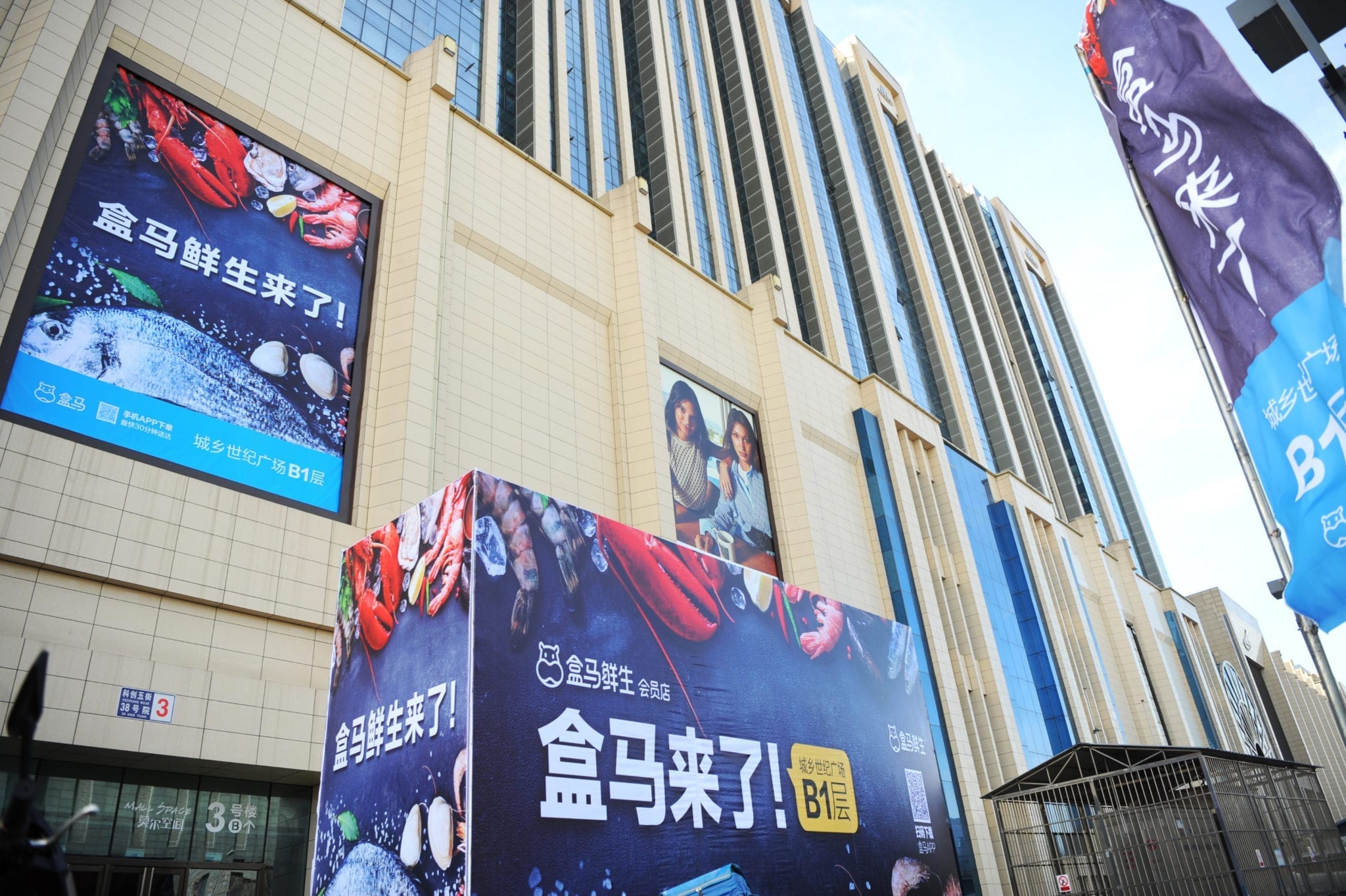
    Alibaba’s Hema supermarket says it will open three stores in the Chinese city of Xian by the end of this year.

    The offline supermarket’s expansion into the northwestern Chinese city follows an announcement that it will add 30 locations in Beijing by year-end, rapidly expanding its store count in the capital to 35 from the current five.

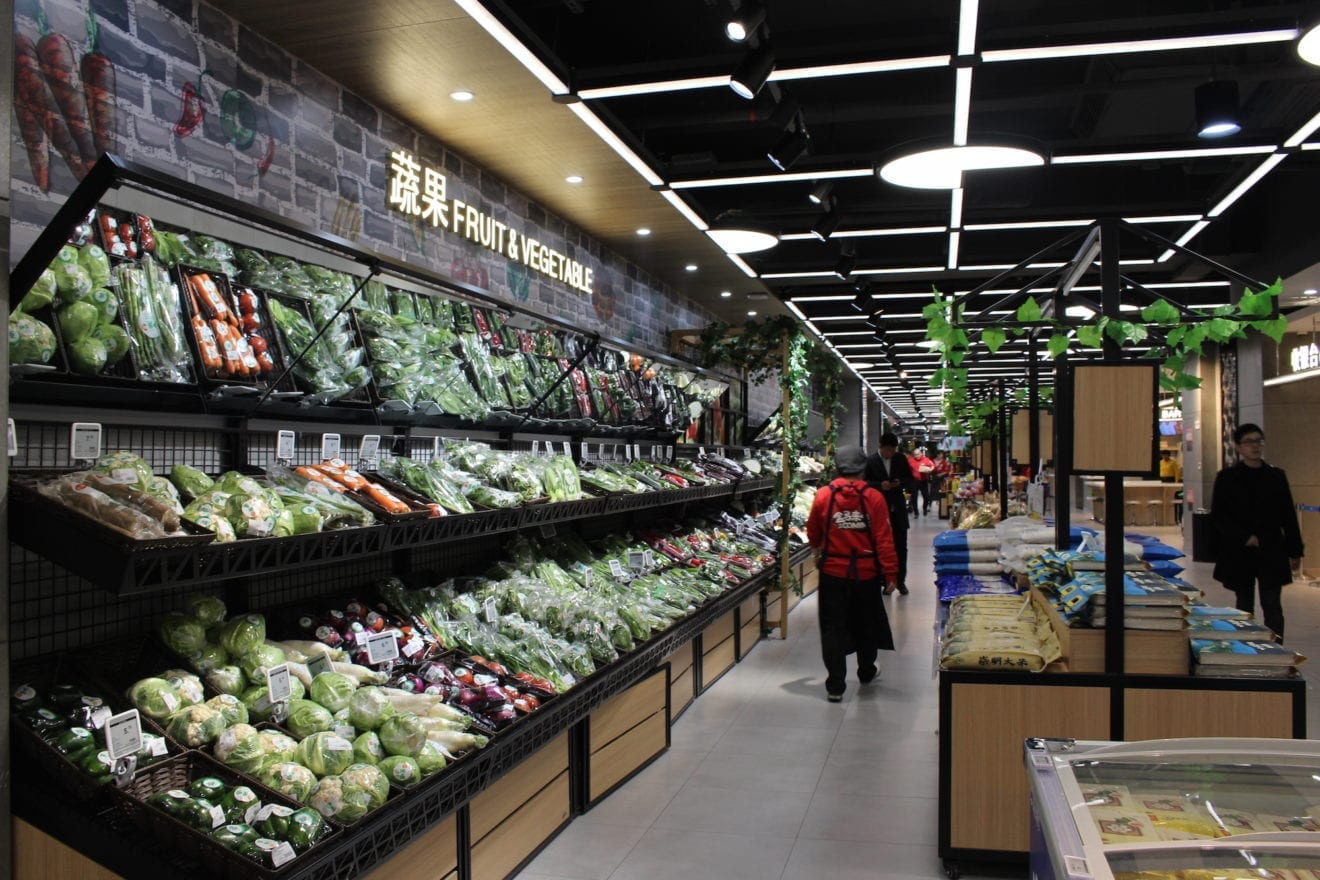
    The Beijing and Xian expansion, together, more than doubles Hema’s presence – currently 26 stores in seven Chinese cities, including 14 in Shanghai, five in Beijing, two in Ningpo, two in Hangzhou, and one each in Shenzhen, Suzhou and the Southwest city of Guiyang.

    Launched in March 2015, the ‘new retail’-driven supermarket is the purest manifestation of Alibaba’s ambitions to marry online with offline, offering consumers a “more-efficient and flexible” shopping experience.

    It starts with a mobile app that allows for researching of products while consumers browse the store. All payments are handled through Alipay, the mobile-payments platform owned by Alibaba’s related company Ant Financial. To improve consumers’ experience, the data collected from transactions is used to personalise recommendations, while geographic data helps to plan the most efficient delivery routes. Residents living within a 3km radius of a Hema store can have their groceries delivered to their doors as quickly as 30 minutes after ordering.

    Government partnership

    Expanding Alibaba’s Hema supermarket in Xian is part of a series of pacts Alibaba Group signed with the city government on Tuesday, including a memorandum of understanding for Alibaba’s new Silk Road headquarters, which the company will build in the city in the next few years. The two parties signed a total of 11 strategic partnership agreements spanning cloud computing, smart logistics, New Retail and financial services.

    Tianhua Zhong, vice president of Alibaba Group, said the partnership with the city government has been progressing smoothly since talks began last summer, adding that the next stage of collaboration will focus on five areas: e-commerce and new retail, City Brain projects, accessible financial services, smart logistics and culture and entertainment.al

    In addition to being the historic gateway to the Silk Road, “Xian is an important part of the ‘Belt and Road’ initiative, and building our Silk Road headquarters [in the city] will help to expand Alibaba’s reach in the midwest, in addition to economic zones along the [modern-day] Silk Road,” added Zhong.

    The Belt and Road Initiative, announced by Chinese President Xi Jinping in 2013, is an ambitious, US$90-billion infrastructure project to connect Asia, the Middle East, Europe, and Africa through global trade.

    Earlier this year, Xian became the first city in China to have its entire subway system accept mobile payments via Alipay – passengers can pass through subway gates simply by scanning a QR code. Upcoming collaboration projects with Ant Financial, Alibaba’s related company and operator of Alipay, include allowing cabs throughout the city to receive payments using the digital wallet, as well as providing accessible credit and financing options to the thousands of small and midsized businesses based in Xian.

    “With this agreement, Cainiao will work with Xian City to build a smart logistics hub for the northwestern region, which would serve the needs of the Belt and Road Initiative. Delivery speed in the midwest has a chance of becoming on par with eastern regions,” said Zhong.

    Alibaba’s logistics arm, Cainiao Network, is expected to invest RMB1 billion in the logistics hub, which would house the unit’s cutting-edge technologies such as automated production lines, AGV robots and robotic arms. Constructions are slated to begin this year and to be put into use before the 11.11 Global Shopping Festival comes around in 2019.

  • Fonterra launches new milk product with Hema Fresh

    Fonterra launches new milk product with Hema Fresh

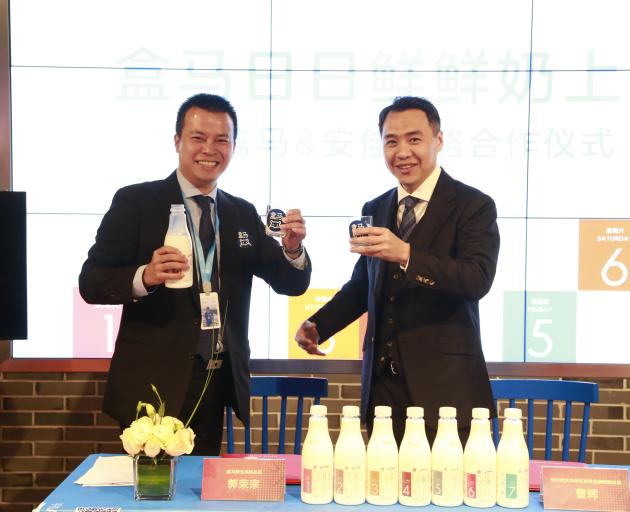
    Hema Fresh is Alibaba’s new retail concept, which combines traditional shopping with a digital experience.

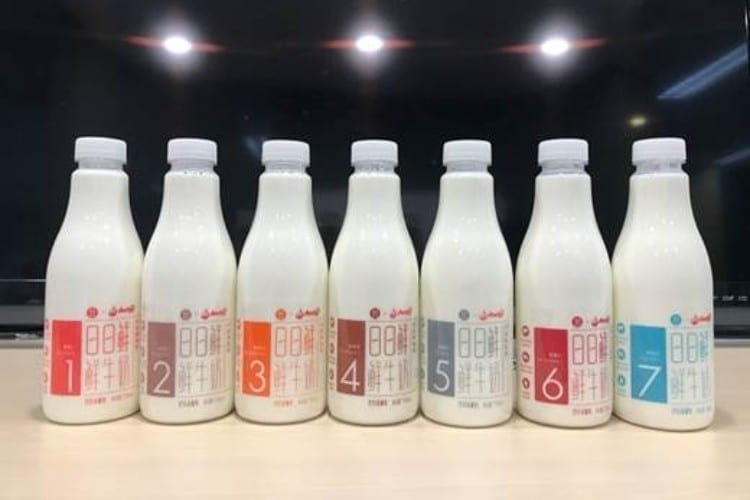
    The new ‘Daily Fresh’ milk range is now available in Hema’s 14 stores in Shanghai and Suzhou in 750ml bottles, sourced from Fonterra’s farm hub in Hebei province.

    The product has product labels to match each day of the week, which it says highlights and emphasizes freshness, with stock being replenished every night.

    Initial volumes are currently around three metric tonnes daily, with plans to scale-up over time and expand with the retailer as it grows its footprint of stores across China.

    Increased income

    President of Fonterra Greater China Christina Zhu said shoppers in China are becoming increasingly sophisticated in terms of their tastes and preferences, which are being driven by rising household incomes.

    “More than ever before, consumers are consciously seeking products that are fresh, nutritious and safe, and our new product for Hema caters to this,”​ Zhu said.

    According to figures from global management consulting company McKinsey, it is expected that more than 75% of China’s urban consumers will earn RMB 60,000 to 229,000 annually ($9,450 to $35,620) by 2022.

    This is up from just 4% in 2000, prompting a shift in consumer behavior and purchasing power.

    The Hema model

    Linked to this trend is the rise of Hema, which emerged in early 2016.

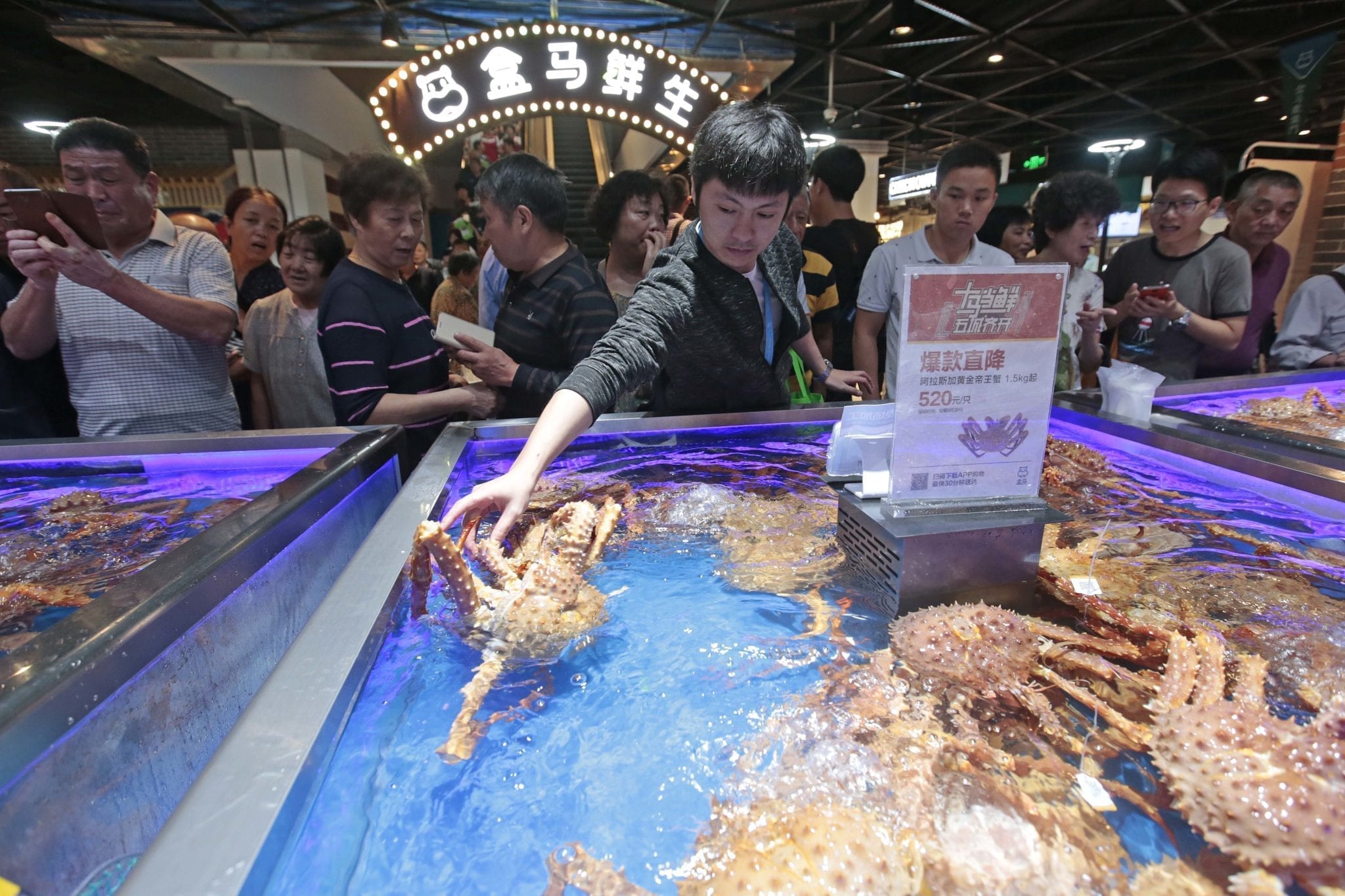
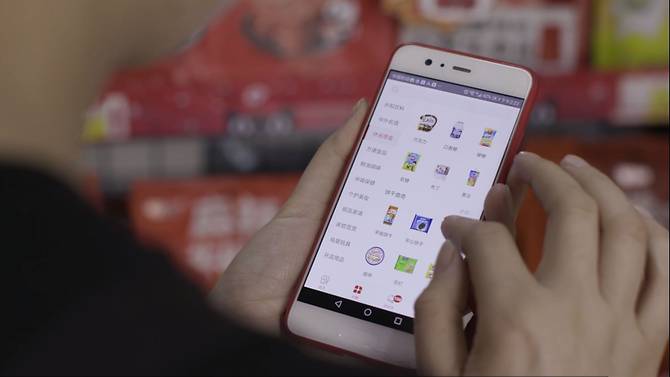
    The shopping experience at Hema is driven by a downloadable app, through which customers can scan barcodes to get information on the product.  Food can also be picked, cooked by staff, and eaten in store.

    The stores are also ‘fulfilment centers’ where customers can order online through the app, workers collect the items and they are delivered within 30 minutes within a 3km radius.

    Hema is also linked to payment options, and is a membership club: the app personalizes shopping for the consumer based on previous purchases.

    Other products

    In addition to the new fresh milk range, Anchor UHT milk products and the Anchor Dairy Foods range of butter, cream and cheese items are sold through Hema.

    The retailer is also a foodservice customer, using Fonterra’s Anchor Food Professionals products in its in-store bakery.

    Hema Fresh CEO and founder Hou Yi said the co-operation between the two companies is set to redefine the concept of fresh milk in the new retail era.

    Zhu says the new product highlights how Fonterra’s business in China is leveraging its local milk pool, spread across three farming hubs.

    “No other multinational dairy company in China has a local milk pool to draw from, so we are in an advantageous position,”​ said Zhu.

    “This milestone with Hema is a sign of things to come and indicates that our push to shift more of our local milk into higher-yielding consumer and foodservice products is well-and-truly under way.”​

    Reducing waste

    While replenishing stock on a daily basis has the potential to lead to waste as it is replaced daily, a Fonterra spokesperson told DairyReporter the volumes are initially quite small, and the whole model of Hema is that everything is fresh, so the company would rather run out than have stock left over.

    The spokesperson said, however, that sales have been going well, with the vast majority of bottles selling out each day.

    “For any that are left over, that’s where the uniqueness of the Hema model comes into play to keep waste at an absolute minimum​.

    “As well as being styled like a grocery store, Hema also has a range of bakderies and restaurants in-store which can utilize surplus product that doesn’t sell on the day.”​

  • Taobao Again on U.S. Blacklist for Counterfeit Products

    Taobao Again on U.S. Blacklist for Counterfeit Products

    Taobao has been added to the USTR counterfeit blacklist for the second successive year for selling suspected fake items on its shopping platform.

    However, the Chinese e-commerce giant says the listing does not reflect its IP-protection efforts.

    Owned by Alibaba Group, it is one of 25 online markets along with 18 physical markets to make the annual USTR (US Trade Representative) list of “the world’s most notorious markets” for selling pirated and counterfeit goods.

    Taobao managed to stay off the list from 2012 to 2015, but was included in 2016 and now again for last year.

    “A high volume of infringing products reportedly continues to be offered for sale and sold on Taobao.com, and stakeholders continue to report challenges and burdens associated with IP enforcement on the platform,” says the USTR. While the agency acknowledges Alibaba’s efforts to curb the sale of fake products on Taobao, it says the prevalence of infringements is still a challenge.

    Alibaba says it has made its IP protection programs easier to use, leading to an 11 per cent increase in registries plus a 25 per cent drop in takedown requests as infringing listings were removed even before reaching its marketplaces.

    “In light of all this, it is clear that no matter how much action we take and progress we make, the USTR is not actually interested in seeing tangible results,” says Alibaba Group president Michael Evans.

    The USTR says Alibaba’s data does not directly reflect the scope and status of the counterfeiting problem on Taobao, but is “merely suggestive of progress” in its anti-counterfeit efforts. It also says those efforts appear to be more toward addressing the concerns of global brands rather than small and medium businesses.

    “It is incumbent upon Alibaba to develop more effective means to address the concerns of the full range of US businesses that continue to find infringing versions of their products for sale on Taobao.com.”

  • Alibaba’s plan to revamp mom-and-pop stores ‘innovative’, but Singapore ‘not ready’

    Alibaba’s plan to revamp mom-and-pop stores ‘innovative’, but Singapore ‘not ready’

    Ahead of its annual online shopping extravaganza, popularly known as Singles Day, last November, Chinese tech titan Alibaba unveiled its Ling Shou Tong retail strategy.

    Ling Shou Tong’s idea is simple: To connect convenience stores, often mom-and-pop stores, to the e-commerce giant’s network of supply chain, logistics and data analytics – and by doing so, revamp how these shops operate.

    As it said on its news portal Alizila: “The programme doesn’t just give a cosmetic update to convenience stores. It’s also an extreme tech makeover, injecting modern analytics to improve, streamline and automate operations that have long relied on elbow grease and intuition.”

    In practical terms, this means when shopowners order goods via the Ling Shou Tong app, analytics of their stores would suggest to them the products that are most in demand. They are also able place their orders online, in a centralised manner, without having to negotiate with multiple distributors.

    Alibaba said a large number of mom-and-pop stores in China are owned by those over 45, who “log long hours and do everything themselves”, and these are characteristics that could apply to small retailers here in Singapore too.

    LING SHOU TONG IN SINGAPORE?

    But could Alibaba bring the Ling Shou Tong concept to Singapore?

    IDC’s lead analyst for Future of Commerce Lawrence Cheok said in an email that this retail strategy provides similar benefits for consumers and small merchants here, such as greater supply chain efficiencies and, hopefully, competitive prices.

    However, he noted that Ling Shou Tong is similar to the tech titan’s other rural commerce initiatives in that it is an effort to more deeply penetrate the local domestic market, given that e-commerce is mostly saturated in the top tier cities. With that in mind, he questioned if bringing this retail concept here is the “lowest lying fruit” for the Singapore market.

    Other analysts also downplayed the possibility of Ling Shou Tong being brought here, with Forrester Research’s senior analyst Xiaofeng Wang saying that Singapore is not ready for the retail concept as consumers or small merchants are not prepared for it.

    Ms Wang pointed out that mobile payment in China is already so dominant, with the majority of consumers and small merchants, even street stall owners, using this method on a daily basis. So upgrading to Ling Shou Tong and using digital means to order and manage inventory “wouldn’t be that far away” for these mom-and-pop shopowners.

    “In Singapore, there’s still a long way to go,” the analyst said in an email. “Majority of consumers and merchants still use cash in hawker centres even after QR code payment is launched.”

    Gartner’s research director Adrian Lee also said that while the concept is “innovative”, he does not see it “playing out well” here.

    Mr Lee said in his email that Ling Shou Tong needs several conditions to be successfully implemented: A near ubiquitous digital payment channel and point-of-sale management to facilitate seamless checkout, a robust and integrated logistics network and fulfillment partners such as Cainiao and sufficient number of store owners who believe in the value of tapping into the company’s massive inventory to gain cost savings when stocking up.

    “For the above reasons, I do not believe that Ling Shou Tong is viable in Singapore.”

    NEW RETAIL METHODS “A MATTER OF TIME”

    That said, IDC’s Cheok is of the opinion that Alibaba’s New Retail strategy, which Ling Shou Tong is a part of, will spread to the rest of Asia. Chairman Jack Ma had said last October that New Retail will “bring about a restructuring of the global supply chain and change the complexion of globalization from the domain of big businesses to small businesses”.

    The imported retail concept would be a variation of the China model “in order to cater to local requirements” and would likely entail partnerships with local players who can provide value, the analyst explained.

    “For instance, Alibaba would require local consumer data and insights to provide the same benefits they are providing to the Chinese merchants. In addition, new supplier relationships would be required to cater to local merchandising preferences,” he said.

    Should this happen, it will “definitely impact the bottom line for competitors caught unawares”, Gartner’s Lee suggested.

    “Amazon will have an advantage in that they’ve launched similar converged retail initiatives and is also sufficiently funded to scale up,” he said. “The capital investment required to carry out Ling Shou Tong will prove an obstacle for local supermarket chains and players like honestbee.”


  • Alibaba opening more fresh food stores

    Alibaba opening more fresh food stores

    Alibaba Group Holding Ltd announced on Wednesday the opening of another 30 Hema Xiansheng fresh food supermarkets throughout Beijing this year, as internet giants focus increasingly on the lucrative fresh-food retail sector.

    The announcement came right before JD’s first fresh food supermarket 7Fresh started its official operation on Thursday, an indication of the increasingly intense competition and rapid expansion of the two e-commerce giants.

    With Hema opening in major commercial districts across Beijing including Xizhimen, Guang’anmen and Shuangjing, consumers in major urban areas of Beijing can have their groceries delivered to a location within a radius of three kilometers from the store in 30 minutes.

  • China’s Alibaba on road to deliver $100 million to XpressBees

    China’s Alibaba on road to deliver $100 million to XpressBees

    China’s online commerce giant Alibaba Group Holdings is in advanced talks to pick up a significant minority stake in logistics company XpressBees by making an investment of up to $100 million, said three persons with knowledge of the matter.

    The transaction, which is in the final stages of negotiations, will be Alibaba’s sixth investment in the Indian market as it builds a string of assets to take on homegrown market leader Flipkart and global rival Amazon.

    “The deal is likely to close in the next two-three weeks,” said one of the persons mentioned above. The exact stake Alibaba is picking up in XpressBees could not be determined. Alibaba and XpressBees didn’t respond to queries.

    XpressBees is the logistics business spun out of baby and maternity products retailer FirstCry, known for its acquisition of Mahindra’s Babyoye in 2016. The company competes with other online retail-focused logistics services providers like Delhivery and Ecom Express.

    Talks between XpressBees and Alibaba have been on for about 18 months.

    ET had reported in June 2016 that Alibaba was looking to buy, or invest in, an Indian logistics company specialising in deliveries for online retailers, and toward this end had held talks with Delhivery and XpressBees Logistics.

    If the XpressBees investment goes through, it will help Alibaba build what founder Jack Ma calls the “iron triangle” of businesses in ecommerce (Paytm Mall, Bigbasket), payments (Paytm) and logistics, which can feed off each other.

    In China, the Alibaba Group has online retail businesses called Tmall (B2C, focusing on brands) and Taobao (C2C) and a payments business under affiliate Ant Financial, popularly known as Alipay.

    In September, it increased its stake to a majority in one of China’s largest techenabled logistics companies, Cainiao, which is valued at close to $20 billion. At the time, Alibaba had said it plans to invest over $15 billion in the next five years to develop its global logistics network.

    “Alibaba wants to make Xpress-Bees the Cainiao of India, and over time logistics operations for all companies like Paytm Mall and Bigbasket may get consolidated under it giving it a larger captive customer base,” said the second person mentioned above.

    The impending deals in Bigbasket and XpressBees will take total investments in India by Alibaba along with its payments affiliate Ant Financial to about Rs 11,000 crore, or $1.7 billion, out of which over two-thirds is invested in Paytm. In addition, Ant Financial is also said to be in talks to invest up to $200 million in restaurant discovery and food delivery platform Zomato.

    Shifitng Kaurndia as the portfolio in India grows, Alibaba Group is also likely to move one of its key executives from Hong Kong, senior director Kshitij Karundia, to the country to work more closely with the businesses and look for more investments, said the third person familiar with matter.

    FirstCry entered logistics in 2012 when it decided to start express deliveries of its products and began third-party logistics (3PL) at the beginning of 2015. The company was spun off as Busybees in September 2015 and has ramped up orders significantly since then.

    The business has been built by FirstCry founders Supam Maheshwari and Amitava Saha. After the demerger, Saha has been leading the logistics business as CEO while Maheshwari has been heading First-Cry. XpressBees investors include SAIF Partners, IDG Ventures India, NEA, Vertex Ventures and Valiant Capital, some of which may sell a part of their stake in this deal.

    The company saw revenue go up by 121% in FY17 to Rs 185.42 crore while losses grew 61% to Rs 57.71crore, according to filings with Ministry of Corporate Affairs (MCA).

    Owned by Busybees Logistics Solutions, XpressBees has built the business on about Rs120 crore of capital till now, which is in contrast with competitors Delhivery which has raised Rs 1,600 crore, and Ecom Express, which has racked up around Rs1,000 crore in capital.

    With capital coming in from Alibaba, experts said an XpressBees deal could trigger consolidation. While industry sources pegged Delhivery as the market leader with around 300,000 shipments a day, XpressBees is currently logging 170,000-200,000 while Ecom Express has 120,000-130,000. Large players like Flipkart and Amazon India have also built their own logistics operations, which handle most of their shipments.

    The market for logistics-technology businesses, which include delivery startups, truck aggregators and warehousing firms, is expected to surge to $9.6 billion by 2020 from $1.4 billion in 2015, according to a report by investment bank Avendus Capital. Online retail logistics startups will dominate this space with a market size of $6.6 billion by then.

  • Luxury cosmetic brand Giorgio Armani Beauty to Join Tmall

    Luxury cosmetic brand Giorgio Armani Beauty to Join Tmall

    Giorgio Armani Beauty will launch a flagship store on Alibaba-owned B2C shopping platform Tmall next month as part of the brand’s latest campaign to capture China’s fast growing appetite for high-end beauty products, Alibaba said Monday.

    The luxury beauty and skin care brand, owned by the world leading cosmetic giant L’Oreal, will hold a series of pre-sale events on Tmall for the next three weeks ahead of its official launch on Jan 16. As part of the rev-up, the brand is offering 4,000 cases of its iconic “My Armani To Go” cushion foundation exclusively to be sold on the platform during the period.

    On the day of the launch, the brand will also open a store on the Luxury Pavilion, the invite-only section within the shopping site for premium and luxury brands. Brands including Burberry, Hugo Boss, La Mer, Maserati and Guerlain (LVMH) have joined since the platform was first introduced in August this year.

    China’s beauty product sector has seen a boom in recent years in tandem with the rapid development of the Chinese economy. According to China’s National Bureau of Statistics, retail sales of cosmetic items in the first 11 months of this year notched a 13.5% on-year growth, amounting to RMB $228.5 billion ($34.87 billion).

    Recognizing China’s fast-growing demand for high-quality cosmetic products and Tmall’s expansive reach with its 500 million active users, many top beauty names such as Lancome, La Mer, MAC, Bobbi Brown, Fresh and Kiehl’s have opened up shops on Tmall in recent years.

    In a recent interview with China Daily, Veronique Gautier, global president of Giorgio Armani Fragrances & Beauty, said Armani Beauty has seen stellar growth in China, at twice the speed of the rest of the markets combined.

    On Jan 12, several of the Giorgio Armani Beauty’s high-ranking executives will appear at an event in Beijing to announce the official launch of the flagship store on Tmall. The brand will also introduce a high-tech showcase of its 2018 spring-summer collection.

    As part of tie-up, the brand and Tmall will introduce interactive digital experiences for consumers to book offline make-up sessions with beauty advisors, explore its product offerings — from the latest Ecstasy Shine lipstick crafted specifically for the Asian market to its iconic fragrances and Lip Maestro lip gloss.

    Entertainment and gamification will also play a major role in attracting customers to Giorgio Armani Beauty’s new online store. By using their mobile phones, users can use the AR-powered interactive feature—Unlock Armani Codes—to scan anything that contains any of the six-letters in the word “Armani.” Those who have collected all six letters will have the chance to win sample kits priced at RMB 260 each.

  • Ford Partners With Alibaba to sell Cars In China

    Ford Partners With Alibaba to sell Cars In China

    Online retail giant Alibaba has signed a deal to sell Ford’s electric vehicles in China using gigantic vending machines. Shoppers scan the vehicle they’re interested in  purchasing, using Alibaba’s Taobao app. They then pick a color and other customized options. Next, they snap a selfie that is used to match them with their order. The system then arranges for a test drive of the car, using facial recognition as a way to unlock access to the vending machine.

    The multi-floor vending machine rotates the cars in stock until the one the customer selected is found.  Alibaba customers pay a deposit and are given three days to test the vehicle to determine whether they want to purchase it. Once they decide, they can use the smartphone app to pay for the car or to return it and arrange another test drive.

    Customers are limited to five test periods every two months. They also must qualify as Alibaba Super Members, and have reached a certain level on the company’s credit scoring service.

    Alibaba plans to open two facilities in January 2018 in Shanghai and Nanjing, followed by dozens more across China next year if the concept proves a success.

  • Is e-commerce taking over sales in Indonesia?

    Is e-commerce taking over sales in Indonesia?

    The growth rate for retail stores is now at single-digit levels, falling from above 10% in recent years. Online shopping is shouldering part of the blame, but the main culprit is a slowdown in overall consumer spending — long the driver of Indonesia’s economy — due to sluggish wage growth.

    Since the busy Ramadan shopping season ended in the summer, Indonesian consumers apparently have tucked away their wallets, at least at brick-and-mortar establishments. Retail store sales in October 2017 grew by an anemic 1.3% from a year earlier, according to preliminary data released by Bank Indonesia, the country’s central bank.

    This is causing store closures across the country, where the modern retail business model had entrenched itself over the years. At the end of June, all Indonesian 7-Eleven convenience stores closed their doors. In September 2017, Matahari Department Store, the nation’s largest department store chain, shuttered two southern Jakarta stores.

    Same-store sales of the chain over the first nine months of the year fell 2.7% from the same period last year.

    The recent lack of foot traffic at a major Jakarta department store typified the trend. As some 40 clerks stood idly chatting away, a nearby supermarket swarmed with shoppers.

    Many of the vacant store fronts in the country’s commercial centers are due to the increase in e-commerce. According to one survey, online sales surged 22% in 2017 from the previous year to around $7 billion.

    A bevy of powerful e-commerce sites — among them Tokopedia, one of Indonesia’s largest online marketplaces, and Alibaba Group Holding’s Lazada — are siphoning shoppers away from stores, a trend that shows no sign of abating. Online sales are projected to keep climbing at a brisk annual rate of around 20% for the foreseeable future.

    The growth in smartphone usage has also spurred online shopping, especially in rural areas where modern retail shops are still few and far between.

    But the rise in online shopping tells only part of the story. The main reason for tepid consumer spending is weak wage growth. The minimum wage growth rate will slow to 8.71% in 2018, the lowest in recent years, according to the government, noting that relatively low-income earners will be hit particularly hard.

    As recently as 2013, minimum wages had soared more than 40%, fueling the country’s free-spending ways. Now, consumers are being forced to cut back in order to save for future outlays, such as on housing and education. This has put a crimp on spending for even daily products.

    With a population of over 250 million, Indonesia is the largest consumer market in Southeast Asia. Many economists say the country’s consumption will continue to rise over the long term.

    There is little doubt, however, that Indonesian’s retail industry is facing a crisis of sorts, and the government is not helping with the situation.

    If this trend continues, the ensuing shock waves may hit other sectors of the economy, possibly dampening foreign direct investment in the country’s consumer market.

  • T2 opens Alibaba Tmall store

    T2 opens Alibaba Tmall store

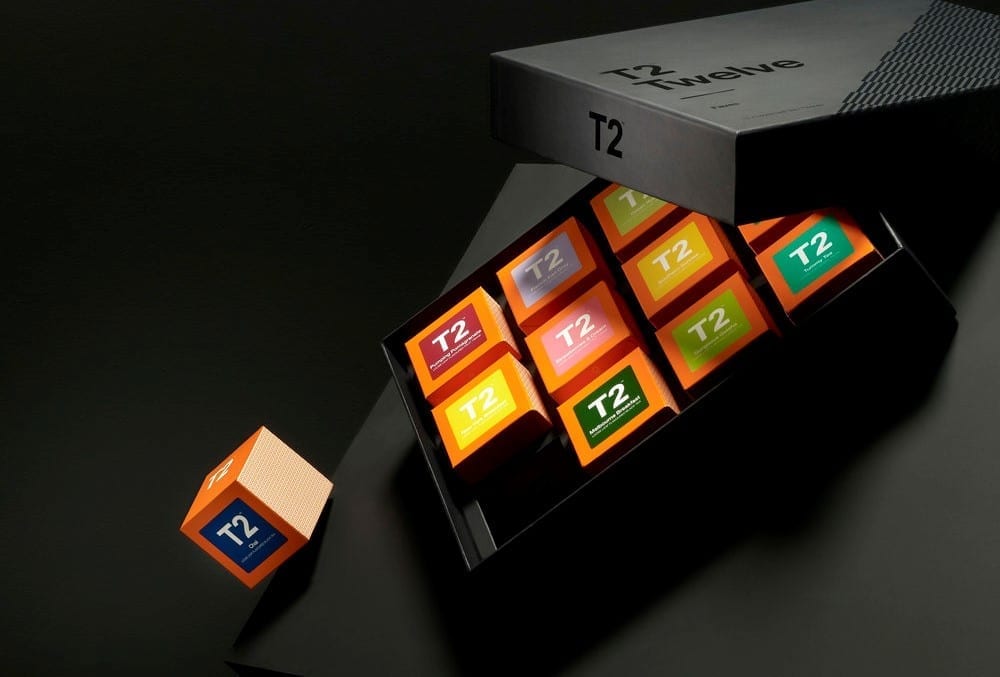
    Australian tea retailer T2 Tea has opened an online storefront on Alibaba’s Tmall Global marketplace to cash in on Chinese demand for Australian products.

    Tmall Global enables international brands to sell to Chinese consumers online, simplifying the export and retail process.

    A curated range of products will be available to Chinese shoppers at t2tea.tmall.hk including homegrown tea blends such as T2 Tea’s Bondi tea, which includes lemon myrtle and native berries.

    “It’s T2’s curiosity for taking the ancient tradition of tea culture in China and giving it a modern twist that we think is both intriguing and exciting for the Chinese consumer,” said Nicole Sparshott, T2 Global CEO.

    First launched in Melbourne 20 years ago, T2 now has 100 stores across five markets. It entered the Asia market in January 2017 and now has four stores in Singapore.

    “For a company that came from humble beginnings in Melbourne, launching on Tmall Global marks a key milestone in our mission to build a generation of tea lovers on every continent,” Sparshott said.

    According to Alibaba, more than 14,500 international brands from 63 countries and regions sell on Tmall Global. For more than 80 per cent of those brands, their Tmall Global virtual store was their first foray into the China market.

    The number of imported product categories on Tmall Global climbed nearly 50 per cent to 3,700 this year.

    “The opening of T2 Tea’s Tmall Global store reflects the growing diversity in demand for premium Australian products,” said Maggie Zhou. “We’re excited to be working with such an iconic Australian brand to help them expand on the success they’ve already seen in Australia.”

    So far there are 1,300 Australian and 400 New Zealand brands on Tmall and Tmall Global. The Chinese demand for Australian products was demonstrated during the company’s 11.11 sale last month.

    Australia recorded its best performance to date ranking as the third highest selling country (outside of China) behind the United States and Japan. Last year, Australia ranked fourth, and fifth in 2015.

  • Alibaba all set to put $300 million in BigBasket

    Alibaba all set to put $300 million in BigBasket

    Chinese e-commerce giant Alibaba Group Holding plans to invest about US$200 million in India’s online supermarket Bigbasket.

    This leads a $280 million funding round and would give it a stake of about 25 per cent in the startup, insiders say. The deal is awaiting approval from the Competition Commission of India.

    Based in Bangalore, the grocer has previously had investment discussions with Amazon.com, which was given government approval this year to invest $500 million into food retailing. Founder Jeff Bezos has said he will invest $5 billion in India.

    Meanwhile, Alibaba has invested in One97 Communications, which runs digital payment and e-commerce businesses.

    Owned by Innovative Retail Concepts, Bigbasket has TV commercials featuring Bollywood actor Shahrukh Khan. The company offers delivery in more than 25 cities and offers 18,000 products from 1000-plus brands.