Tag: Alibaba

  • Alipay Launches “Double 12” Global Shopping Festival in Hong Kong

    Alipay Launches “Double 12” Global Shopping Festival in Hong Kong

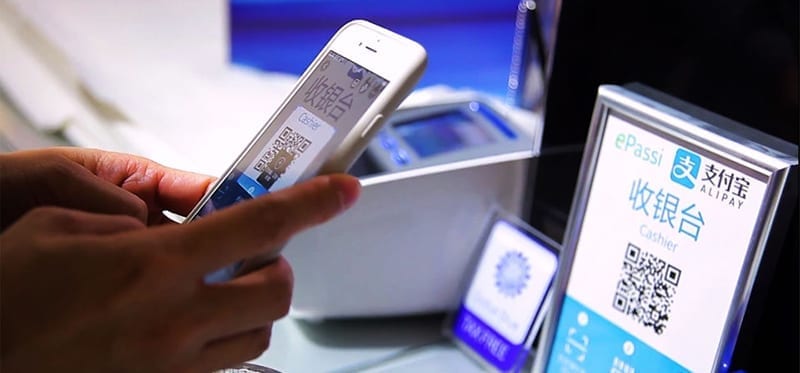
    Alipay, the world’s largest online, mobile payment and lifestyle platform operated by Ant Financial Services Group, today launched this year’s “Double 12” Global Shopping Festival in 15 countries spanning across four continents. In addition, Ant Financial’s strategic partners in Hong Kong, India, Thailand and the Philippines will introduce campaigns for their local e-wallet users for the first time. These partners include Paytm in India, TrueMoney in Thailand, and GCash in the Philippines. Together with CK Hutchison Holdings (“CK Hutchison), AlipayHK was launched in Hong Kong earlier this year to further develop local service offerings in the city.

    In short, we call it ‘glocalization.’” Douglas Feagin, President of International Business, Ant Financial Services Group said at the launch ceremony. “This concept is about developing Alipay globally while also developing localized service offerings.”

    “Working with our global merchants network, we also continue to focus on enhancing the Alipay mobile payment experience for Mainland Chinese tourists wherever they travel,” he added. “In particular, some of our most attractive Double 12 promotions are in the Greater Bay Area, where millions of Chinese travellers regularly visit.”

    As part of this year’s Double 12 Shopping Festival, almost 10,000 merchants in Hong Kong and Macau will offer exclusive discounts throughout December to Alipay users from Mainland China. This year, a key feature of this year’s Double 12 offering is focused on Hong Kong delicacies to attract Mainland China users. In Hong Kong’s Mongkok district, a promotion of “Hong Kong snacks for 1 RMB” can be enjoyed by Alipay users. In the Guangdong province, Alipay users will receive a cashback for every payment made in over 2 million stores.

    Venetia Lee, General Manager of Alipay Hong Kong, Taiwan & Macau said, “Our aim is to provide a seamless payment and travel experience to millions of Alipay users who constantly travel to the Greater Bay Area. We will plan to launch more integrated campaigns to further enhance our user experience and bring more value to our merchant network in the region.”

    Jennifer Tan, CEO designate of the joint venture between CK Hutchison and Ant Financial that offers AlipayHK separately commented on plans for Hong Kong. “Building on Alipay’s success in mainland China, we are rolling out a creative, localized payment experience for our Hong Kong users. Participating in this year’s Double 12 Festival is a first step towards that, and we are very excited to be partnering with so many local merchants to bring this festival to life by providing exclusive offerings to AlipayHK users.”

    CK Hutchison and Ant Financial first announced the strategic partnership in September 2017. The joint venture remains subject to regulatory approval, and is expected to complete in the first quarter of 2018.

    AlipayHK has partnered with over 8,000 brick-and-mortar stores to offer exclusive gifts, discounts and rewards throughout December. In addition, vendors in the Po Tat Market will offer “1 Dollar Groceries” flash sale on December 12.

    Alipay is also working with partners across Southeast Asia to launch localized versions of Double 12 shopping festival. In Thailand for example, more than 10,000 merchants will be participating in the 1212 D-day Deals for TrueMoney users while 3,000 merchants will offer exclusive discounts on 1212 GCash Day in the Philippines.
  • Alibaba plans massive expansion for Hema supermarkets

    Alibaba plans massive expansion for Hema supermarkets

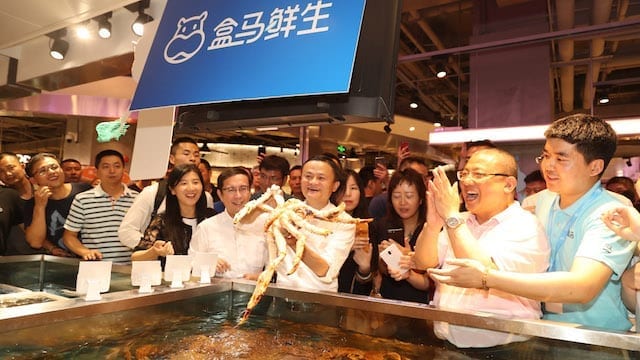
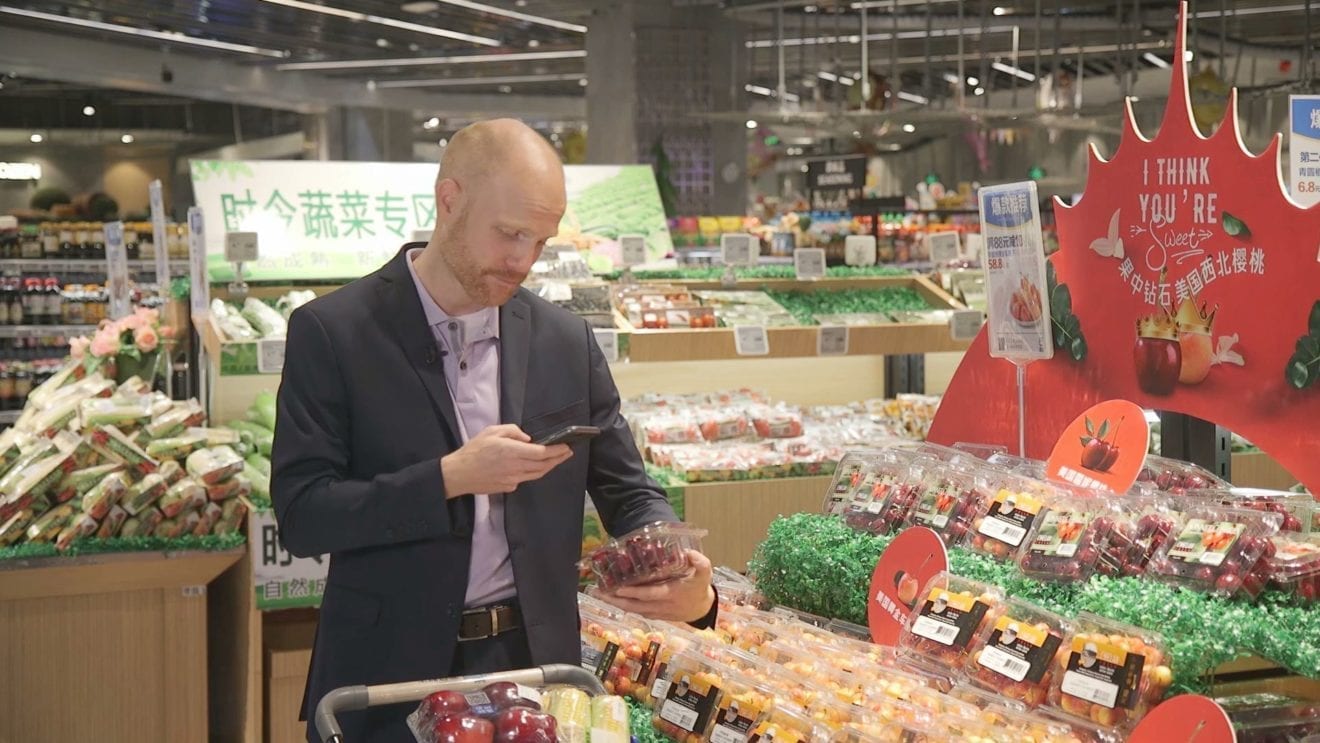
    Alibaba Group plans to open 2000 branches of its Hema supermarket, which aims to merge online and offline shopping, in China over next three to five years.

    It opened its first Hema last year and will end with year with 22 stores. Its latest outlets are in Beijing, Guiyang, Hangzhou, Shanghai and Shenzhen, and this month it opened its second store in Ningbo to be followed by one in Suzhou next week.

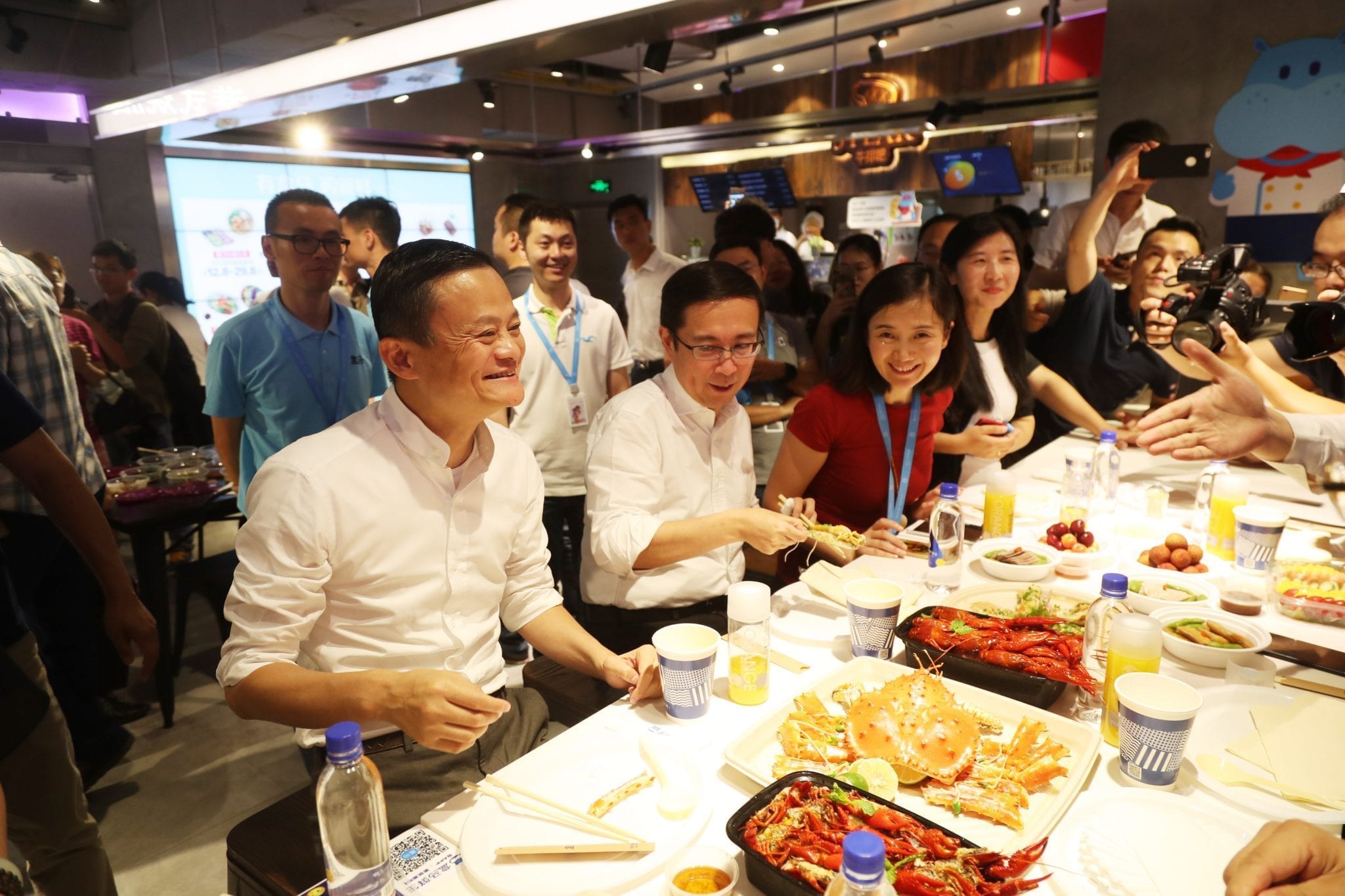
    Hema stores are part of Alibaba’s “new retail” strategy that enables customers to shop, order groceries for home delivery and eat in-store. Purchases can be made through the Hema mobile app, which is linked to Alipay.

    The stores focus on a wide assortment of food, and the brand places an emphasis on fresh – and live – seafood. Moreover, the business model combines supermarket, restaurant and e-commerce, complete with mobile app. This means customers can buy items in the supermarket for the restaurant staff to cook for them.

    At the moment, about half of sales at Hema stores take place online. The company claims that customers within a 3km radius of a store can have their shopping delivered within 30 minutes.

    Alibaba CEO Daniel Zhang says Hema draws on data and smart logistics technology to seamlessly integrate online/offline systems.

    “Hema’s goal is to broaden the new retail model by working with retail partners like Sanjiang Shopping Club and Xingli Department Store,” says Hema CEO Hou Yi. “As our model becomes more established, it can be shared with other traditional retailers to help them transform in the digital age.”

  • Ford China partnership possibility with Tmall

    Ford China partnership possibility with Tmall

    Ford Motor China may soon be selling cars through Alibaba’s Tmall and via an “auto vending-machine” concept.

    The US automaker yesterday signed a three-year agreement signed with Alibaba Group to expand its footprint in China. It is the latest partnership in a series in China in recent months, and follows a visit to Hangzhou, where Alibaba has its headquarters, by Ford CEO Jim Hackett and executive chairman Bill Ford Jr.

    Last month the company announced a $756 million partnership with Anhui Zotye Automobile Co to build electric vehicles, and earlier this week Hackett and Ford announced plans to bring 50 new vehicles to market in China by 2025, and to build five new models in China.

    Hackett says Ford is collaborating with technology leaders to build on its vision for smart vehicles in a smart world.

    Meanwhile, the Alibaba partnership is based on the companies jointly finding new ways to sell vehicles, which could include an online component. They aim to “redefine” the retail experience and explore sustainability concepts, working together in the fields of mobility, connectivity, cloud computing, AI and digital marketing.

    Their first priority is to come up with new ways for people to buy, maintain and own vehicles using the internet, computers or other technology.

    The partnership will be part of Ford’s efforts to overhaul its China strategy to revive the growth momentum it has lost in recent months, Reuters reports. The agreement could mean that cars bought online are delivered to buyers by franchised Ford retail stores, which would maintain and repair the vehicles.

    Ford could also use Tmall’s new retail concept, the “Automotive Vending Machine”, a multi-storey parking garage that partly resembles a giant vending machine. Alibaba says buyers can use their phones to browse through the cars and choose to either immediately test drive or buy a vehicle, which would be delivered to them on the ground floor.

    Shoppers with good credit would be able to drive away after a 10 per cent down payment, then make monthly payments through Alibaba’s affiliate Alipay.

  • Shanghai is home for world’s largest Starbucks Reserve Roastery

    Shanghai is home for world’s largest Starbucks Reserve Roastery

    The world’s largest Starbucks Reserve Roastery opens in Shanghai tomorrow, a store the company also describes as its “most beautiful”.

    At 2700sqm (nearly 30,000sqft) the store is twice the size of the Seattle Starbucks Reserve Roastery flagship. It features three coffee experience bars, the largest 27m long. The coffee bar was handcrafted by premiere Chinese artisans and references the unique roasting curve of individual coffee beans.

    Starbucks Reserve Roastery - Shanghai 1

    China is Starbucks’ fastest-growing market with a new store opening every 15 hours. The US coffee chain has been in China for more than 18 years and now has more than 3000 stores across 136 cities. More than 600 of those  are in Shanghai.

    Starbucks Reserve Roastery - Shanghai 2

    Starbucks Reserve Roastery - Shanghai 11

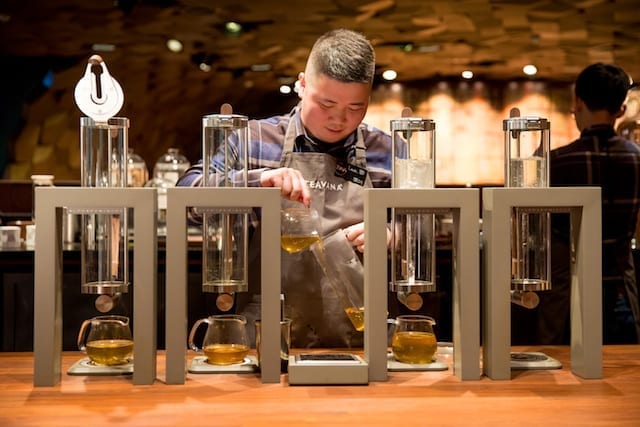
    The ambitious store expands Starbucks’ core offer, with more than 100 beverages on the menu, including Teavana tea infused with nitrogen and a new take on tea brewing with the Steampunk, which uses steam to extract unique flavors from each tea leaf.

    Starbucks Reserve Roastery - Shanghai 3

    Starbucks says the design is unique and will not be repeated elsewhere. Key design features include a ceiling consisting of 10,000 handmade wooden hexagon-shaped tiles inspired by the locking of an espresso shot on an espresso machine.

    Starbucks Reserve Roastery - Shanghai 4

    At the store’s entrance, mirroring the signature copper cask at the inaugural Starbucks Reserve Roastery in Seattle, customers will be greeted by the sight of a two-story, 40-ton copper cask adorned with more than 1000 traditional Chinese chops, or stamps, hand-engraved to narrate the story of Starbucks and its Reserve concept. The cask has a practical purpose, as well – connecting to the three coffee bars with pneumatic copper piping, replenishing all the roasted Starbucks Reserve coffee silos.

    Starbucks Reserve Roastery - Shanghai 8

    New bars and AR

    Besides the coffee experience bars, the new store features Asia’s first Princi bakery and cafe, with more than 30 Chinese bakers and chefs baking 80-plus menu items fresh onsite daily, based on artisanal recipes created by Italian baker Rocco Princi.

    Starbucks Reserve Roastery - Shanghai 9

    And it features China’s first Teavana Bar. Made entirely from 3D printed recycled material, the bar’s light jade colouring was inspired by ancient green clay teapots and the stains formed by brewing over time. Starbucks will continue China’s brewing tradition alongside tea curators as they practice mixology with the help of the Steampunk system’s nitrogen flavor extraction.

    Starbucks Reserve Roastery - Shanghai 10

    Designed by Starbucks, and powered by Alibaba, the Shanghai Roastery will become the first Starbucks location, and the first-of-its kind in China, to seamlessly integrate a real-time, in-store and online customer experience. Roastery customers are invited to immerse themselves in the first Starbucks augmented reality (AR) experience by simply pointing their phones at key features around the Roastery to bring to life information about the Starbucks bean-to-cup story. Guided through the space by a custom-designed AR “tour-guide,” customers can unlock virtual badges and a unique Roastery filter to commemorate their visit.

    “The affinity we have built with our partners (employees) and customers over the past 18 years in China is special and we knew we must bring the Reserve Roastery, our boldest, most premium store ever, to Shanghai, China’s bustling metropolitan hub and one of the world’s most dynamic retail destinations, as well as a gateway to customers from across Asia and the world,” said Howard Schultz, executive chairman of Starbucks Coffee Company. “We’ve created a space that both recognises and celebrates our 46-year history of coffee leadership and retail innovation with China’s rich, diverse culture.”

    Here’s a video from Starbucks showing some of the interior (no sound):

  • Alibaba betting on long-term gain from eSports investment

    Alibaba betting on long-term gain from eSports investment

    The booming eSports industry may not yet attract the sponsors and television rights of real life sports, but Chinese e-commerce conglomerate Alibaba believes it is only a matter of time before its bet on competitive video gaming comes up big.

    Alibaba’s sports arm Alisports was opened in 2015 with the aim of cashing in on the rapidly growing world of electronic sports, where players square off in lucrative video game tournaments that draw millions of viewers online.

    “We are prepared to lose money. We can accept the losses now as we hope to promote this sport,” Alisports CEO Zhang Dazhong told AFP in an interview at the European final of the second edition of Alisports’ World Electronic Sports Games (WESG) in Barcelona, which wrapped up on Sunday.

    “For a sport that has a lot of participation, it must have a bright future. Even if for now you don’t make a lot of money, in the future, you’ll definitely be rewarded. This is something we firmly believe in.”

    In 2016, Alisports entered into an agreement with the International e-Sports Federation (IeSF) to create the WESG, a market-leading international tournament.

    The first edition of the WESG saw 63,000 participants from 125 countries battle for a share of the $5.5 million prize pot.

    Yet the results weren’t so lucrative for Alisports, who lost 70 percent of their investment.

    “We estimate that we will be losing money for the next five years,” admitted Zhang.

    Long-term returns

    Alisports’ strategy, though, is a long-term one.

    “We estimate that in five to ten years…the business model will be more complete. On top of the competitions, we have to bear in mind the electronics business and marketing related to eSports,” added Zhang.

    Participation in eSports has soared as virtual games gain traction with a worldwide fan audience now estimated at 400 million people according to a study by Deloitte, more than that for baseball or American football’s National Football League.

    The size of the eSports market will more than double to $696 million this year from $325 million in 2015, according to Deloitte’s study. It predicts the market will be worth $1.5 billion in 2020.

    But the market is fragmented, with different operators staging their own tournaments, and sales of television rights and merchandising remain weak.

    An eSport fan brings only three euros to the table annually on average, according to a recent study by market research group Nielsen Sports, compared to 30 euros for a football fan.

    Yet, Alibaba believes its position as the market leader in China, the worldwide powerhouse of eSports, ensures the return on eSports will be plentiful.

    “In China we have 1.8 million eSport fanatics and 65 percent of those are between 18 and 25,” continued Zhang.

    “They play video games, but they also buy all sorts of products from Alibaba. We understand them very well.”

    Olympic dream?

    The leap in popularity has helped fuel talk that professional gaming could become an Olympic discipline, but not everyone is convinced.

    “I think we have to differentiate eSports and gaming in general,” Zhang said when he was asked about the controversy.

    “Gaming of course isn’t a sport, but eSports involve high-level confrontation, teams, individual resistance, so I think it’s a sport. And I think that sport in general is evolving towards a combination of technology and physical activity.”

    Zhang said he hopes eSports will be part of the 2024 Olympics in Paris or the 2028 Olympics in Los Angeles.

    “It could happen, because at this year’s Asian Indoor and Martial Arts Games, we already gave a demonstration of games. In the Asian Games in Hangzhou in 2022, it’s already an official event,” he said.

    The director of the Paris 2024 Olympics committee said earlier this month that the door to the Games was “not closed” to eSports.

  • Alibaba and JD in a war of words via lawyers over claims of dominating China’s e-commerce

    Alibaba and JD in a war of words via lawyers over claims of dominating China’s e-commerce

    China’s two dominant e-commerce platforms in the world’s largest online retail market are under the spotlight in an online debate via their legal representatives about their duopoly in the industry.

    On one side is Alibaba Group Holdings, owner of the South China Morning Post and operator of the world’s largest online shopping platform, claiming that it has been the target of an organised series of chat room postings and blogs aimed at tarnishing its reputation.

    On the other side is JD.com, China’s second-largest online retailer, which said it too had been the target of more than 100 attacks to cast aspersions on its reputation, as recently as during the November 11 online shopping gala.

    The attacks on Alibaba were designed to “manipulate public opinion,” and made “groundless accusations,” the company’s legal department said in a Friday post on its Weibo social media account. “We believe the authorities should investigate and punish the criminal groups who we believe have illegally profited from propagating such rumours,” the Weibo post said, without naming the perpetrator.

    Chat room posts and blogs have surged in the past month, accusing Alibaba of using its dominance of China’s e-commerce consumer market to force merchants to choose side, or be squeezed out of business.

    As many as 9,700 articles emanating from more than 500 social media accounts were posted on various online platforms in China to attack Alibaba, mostly before the Singles’ Day online shopping gala on November 11, according to a WeChat post on Wednesday by Alibaba’s legal adviser. Up to 4,600 of these accused Alibaba of forcing merchants to choose sides or accusing it of monopolising China’s e-commerce market.

    At stake is an e-commerce industry that has dwarfed every other country in the world, and is being dominated by two large companies.

    Alibaba’s Tmall platform has 80 per cent share of China’s online clothing sales, while JD holds 10 per cent, according to research by Analysys.

    Even though Alibaba hadn’t named the perpetrator of the online campaign, the company’s legal adviser had forwarded Weibo posts that claimed JD as the client behind a 2.6 million yuan (US$394,000) contract to hire ChinaLabs, a Beijing-based consulting services provider, to attack Alibaba of monopolising the market.

    JD paid ChinaLabs 600,000 yuan to initiate research and host media seminars to discuss Alibaba’s monopoly in China’s e-commerce market, according to the posts, which cited a contract between the two parties between August 1 and December 31.

    Another contract showed that ChinaLabs was receiving 2 million yuan from JD to instigate China’s antitrust regulators to investigate on Alibaba for monopolistic practices.

    The contracts in the Alibaba legal adviser’s posts could not be independently verified.

    Spokespersons at JD, an online retail platform whose market value is about a tenth of Alibaba’s capitalisation, did not respond to text messages and phone calls soliciting their comment.

    Jincheng Tongda Law Firm, acting on behalf of JD, issued a statement on Saturday denying any association with ChinaLabs.

    Separately, ChinaLabs’ chairman Fang Xingdong denied through a Weibo post that his company had ever signed the contracts with JD, saying that it will continue to conduct investigations and research on the antitrust situation in China’s e-commerce industry.

    Alibaba’s shares have doubled this year as the Hangzhou-based company broke its November 11 retail festival record and deepened its push to marry online and physical shopping. The company this month agreed to buy a 36 per cent stake in Hong Kong-listed Sun Art Retail Group, which runs one of the biggest hypermarket chains in China.

  • Trading house Itochu taking on Alibaba and JD.com

    Trading house Itochu taking on Alibaba and JD.com

    Itochu and two partners are investing roughly 7.6 billion yen ($67.6 million) in an e-commerce venture selling Japanese goods to the Chinese market in hope to enhance its own forays into China’s internet sector.

    The Japanese trading house is investing around 4 billion yen into the Tokyo-based startup Inagora, with telecom KDDI and financial services company SBI Holdings providing the rest.

    Itochu previously invested around 100 million yen in the company and will now hold a roughly 20% stake, making it the second-largest shareholder behind founder and CEO Weng Yongbiao.

    Founded in 2014, Inagora operates Wandou, a Chinese-language e-tailer with some 3 million users.

    The site boasts around 40,000 offerings, with a focus on cosmetics, clothing and foods from brands including Japanese fashion label Samantha Thavasa, Swiss lingerie maker Triumph International and Japanese food producer Ajinomoto.

    China’s cross-border e-commerce market is growing rapidly. The market for goods from Japan is seen nearing 2 trillion yen in 2020. The country’s overall e-commerce leaders currently have a strong grip on the cross-border segment: Top player Alibaba Group Holding commands a roughly 40% share, while second-place JD.com and major internet player NetEase control shares in the 10-20% range.

    Itochu has already taken its first step into the cross-border market, launching a high-end site in spring 2017 with Chinese state-owned conglomerate Citic, a major partner.

    But the trading house has realized breaking Chinese heavyweights’ grip will require savvy marketing that can respond nimbly to consumer tastes — hence its turn to Inagora, which excels at creating videos highlighting the appeal of Japanese products for local consumers.

    The trading house will supply products for Inagora’s site through units including food wholesaling arm Nippon Access and Edwin, Japan’s largest maker of jeans. In addition, Itochu will have the site carry local specialty items from across Japan stocked by convenience store chain FamilyMart, another member of the Itochu group.

    Itochu Logistics, with over 100 locations in China, will also cooperate with Inagora, which plans to add warehouses to its own distribution network using money from the latest round of investment.

    The startup will also hire more sales staff to encourage companies to list their products. Forays elsewhere in Asia are on the agenda as well: The company plans to bring its business to Taiwan, Malaysia and elsewhere in 2018.

    Inagora anticipates around 15 billion yen in transactions this year, six times the 2016 level. With help from Itochu and others, the startup targets 100 billion yen in transactions in 2019 and 176 billion yen a year later.

  • Alibaba And Singles Day Make Black Friday Look Small And Show The Future Of Retail

    Alibaba And Singles Day Make Black Friday Look Small And Show The Future Of Retail

    Singles Day may be an invented holiday, but Nov. 11 in China gives an indication of how retail will evolve globally over the next decade. And Alibaba is the company to watch. The numbers posted by e-commerce giant Alibaba on Singles Day — a holiday created as an antidote to China’s Valentine’s Day, which has caught on big time — in 2017 are mind-boggling. Alipay, the company’s payments system, processed $25B of payments, more than four times what the entire U.S. spent on Black Friday weekend and Cyber Monday in 2016.

    That is 1.5 billion individual transactions, 325,000 orders per second, at the day’s peak. Cainaio, the logistics company owned by Alibaba, processed 812 million delivery orders. The opportunity for brands is clear, and Alibaba said 167 companies each generated more than $15M in sales, 17 companies surpassed $75M, and six companies surpassed $150M.

    But as important as the numbers Alibaba posted was the way it posted them, because this gives an insight into how the worlds of online and physical retail will intertwine. “More than $25B of orders in one day is not just a sales figure,” Alibaba Chief Executive Daniel Zhang said in a statement. “It reflects how merchants and consumers alike have now fully embraced the integration of online and offline retail.”

    Ahead of Singles Day, Alibaba, founded by Chairman Jack Ma, sent an army of technicians across China to help more than 600,000 independent retailers — mom-and-pop stores, convenience stores and independents selling everything from clothes to hardware  — upgrade their computer systems.

    Those stores were able to sell goods through one of Alibaba’s online platforms, Tmail.com, and now serve as delivery and storage centres for goods sold on Alibaba. Wikimedia Commons Alibaba Chairman Jack Ma Convenience stores use an Alibaba app that helps manage these sales and deliveries, but also gives store owners advice on what they should be stocking to maximise profits and how their wares should be displayed. This is part of Alibaba’s wider effort to have deeper links into the world of physical retail.

    It is also working on the conversion of 100,000 retail stores into Alibaba-linked smart stores. If customers go into a shop and cannot find a product, they can find other stores nearby that might sell it, or have it delivered at home. “Alibaba plans to use these retailers to reach the elderly and children, who largely aren’t engaging with Tmail online,” said Henry Mason, managing director of consumer insights firm Trend Watching.

    “This move demonstrates that the future of retail is not a simple battle between online and offline. It is far more nuanced than that. As Alibaba in China and Amazon in the U.S. have noted, a purely online presence is not enough. “Because despite the proclamations of many online-obsessed, future-focused trend watchers, there are still hundreds of millions of consumers who aren’t pressing Amazon Dash buttons or using WeChat to order toilet paper via drone delivery on a daily basis.”

    Courtesy of Trend Watching Henry Mason Alibaba also has a chain of department stores called Intime, which double as fulfilment centres. Alibaba’s Singles Day numbers also highlight how smartphones will play an increasing role in retail, both online and offline — 90% of the payments Alibaba took were from mobile phones. “In major Chinese cities you hardly see cash machines anywhere,” Value Retail Chairman Scott Malkin said. “You pay for goods using your phone everywhere, whether it is at the street food stall or in the store.”

    Of course, the innovations being pushed by Alibaba will not be replicated exactly in other markets. The company has the advantage of working in a market which, because of the rapid pace of economic development and recent political history, does not have the pre-existing infrastructure and methodology of Western countries. “If you don’t have legacy companies like Marks & Spencer operating then you can go straight to what people want,” Malkin said. Its methods will not be adopted wholesale, but the way Alibaba is creating a platform that connects physical stores and online retailing is a development that will surely be replicated around the globe.

  • Another Alibaba major step in China retail

    Another Alibaba major step in China retail

    This week’s Alibaba-Sun Art deal is a major step in the development of a new retail landscape in China, write Wai-chan Chan and Jacques Penhirin of Oliver Wyman.

    This is not a “real estate play” with Alibaba buying 446 grocery stores, but shows how serious Alibaba are in developing the “new retail” model combining the strengths of online and offline retail.

    The first winners from this alliance are likely to be consumers.  Alibaba will use its investment in Sun Art to improve its price, service levels and the range of products available. In addition, expect to see Alibaba add the ability to deliver a wide range of goods from these stores to consumers’ homes in super quick times. Today delivery time is the new battlefield but performance is still highly dependent on physical networks.

    In the context of retail this alliance is more important than Amazon’s acquisition of Whole Foods in the US.  Sun Art is the largest, and one of the most respected grocery players in China, while Alibaba already has a large grocery business, making it an alliance between two leading players in retail.

    Unlocking fresh

    Despite the huge advances in e-commerce in China, fresh food has been one of the areas that has been most difficult to convert to e-commerce.  Freshness is the key driver for consumers in grocery shopping. According to a survey of 1500 consumers Oliver Wyman conducted in August, consumers purchase fresh products 4.9 times per week on average, and ‘fresh’ is the number one criterion in grocery retailer selection regarding range, product quality, and value for money. However, 81 per cent of respondents do not think e-commerce provides good quality fresh products compared with offline hypermarkets.

    As one of the top two hypermarkets receiving the highest rating from consumers on their fresh offering, Sun Art has strong expertise in operating fresh categories, which will greatly unlock Alibaba’s capabilities.

    Ally or die

    It is becoming clearer that the endgame of two eco-systems being established by Alibaba and JD.com is inevitable in the retail landscape of China, which poses pressure on those ‘unallied’ retailers such as China Resources, Carrefour, WuMart, etc. For retailers, capturing traffic through their own e-commerce platform will become even more challenging. Traditional retailers must understand that they are competing with giants with unlimited abilities to invest and the ambition of integrating online and offline retail. O2O orders already contribute 30 per cent of sales of Alibaba’s Hema Fresh Supermarket – it is indeed transforming the economics of the offline shopping cart, which is challenged by the declining like-for-like growth over the past 12 successive quarters.

    Traditional retailers need to choose their battlefield very quickly, but expect compromise on bargaining power and decision-making in the long term.

    Bad news for second-tier brands

    The two ecosystems are not pure retailers anymore but integrated media and branding platforms. It does not leave Consumer Packaged Goods brands much of a choice but to closely coordinate with Alibaba and JD.com and learn their rules. Niche brands which understand both the ecosystem and consumers will take this opportunity to grow, and top-tier brands will continue to flourish if they learn how to effectively partner with Alibaba or JD, to have both parties learn from each other. By comparison, weak brands will suffer because the traditional retail stores they rely on are losing ground. Furthermore, as O2O develops, the terms and conditions will become more transparent within the two ecosystems. Promotional pressure will likely increase, requiring more diligence on the return on investment.

    Despite the prospects for this alliance, Alibaba and Sun Art need to start thinking how to effectively realise its potential. Operationally, there is huge complexity in integrating the two businesses and overcome barriers of management and culture. After all, it is more difficult to manage shoppers than to manage mobile devices.

  • Jack Ma : the internet rock star

    Jack Ma : the internet rock star

    In 1999, when Alibaba was founded, the first association people would make was “Ali Baba” from the Arabian literature masterpiece “One Thousand and One Nights”. Jack Ma said he chose it for this reason, it was a name able to resonate in people’s mind all over the world.

    In less than 3 years, the name Alibaba populated media all over the world and like the Arabian literary work acquired appeal internationally.

    How Jack Ma build his internet empire can be summarized in 4 pillars.

    1. The rock star billionnaire

    It is hard to find the words to describe the scale of Alibaba Group, the Chinese e-commerce business founded in 1999. It is probably best exemplified by the numbers: Every single day, 200 million people shop on Alibaba’s mobile sites and it sold $550 billion worth of merchandise in its last fiscal year.

    In May 2017, Alibaba Group announced annual revenues had gone up 56 percent to almost $23 billion, and in June investors literally gasped as it upped its growth forecast for 2017 from 45 percent to 49 percent. Its 2014 initial public offering (IPO) was the largest in history, raising $25 billion on the New York stock exchange.

    At the head of it all is Ma Yun, the 53-year-old entrepreneur known as Jack Ma, who started the company with 17 others and $50,000 in his apartment in Hangzhou, a mid-sized city near China’s east coast, known for its green hills and West Lake.

    But Ma’s childhood was frugal: he was born to a family that had very little, sharing an income of just $7 a month between six. He was 6-years-old when President Richard Nixon met Chairman Mao Zedong in 1972, a “geopolitical earthquake” event ,which opened up China to the U.S. and led to it becoming the world power it is today. It was also the start of Ma’s Chinese dream.

    His journey from rags to rock star billionaire – Ma appeared on stage dressed as Michael Jackson at Alibaba’s 18th birthday party in September 2017 in front of an audience of 40,000 – is beset with failure and rejection. Ma said he was a “loser” in his thirties, insists he is not a tech expert and was rejected from a job at KFC and as a hotel waiter and was turned down three times when he applied to university. He also claims to have little tech expertise.

    Ma’s secret? His understanding of the power of the internet in putting buyers and sellers together, and his obsession with helping small companies, via eBay-like marketplace Taobao, bulk supplier 1688.com and Alibaba.com, a business-to-business site for wholesalers. The group also has marketing services and a financial lending affiliate including PayPal-like Alipay, which has 520 million users around the world.

    Other ventures include a 51 percent stake in delivery company Cainiao, which ships an astonishing 55 million packages a day, and Alibaba Pictures, a joint venture with Steven Spielberg’s Amblin Partners.

    2. A small business vision 

    The first time Jack Ma went online was in 1995. He was at a friend’s home in Seattle and he approached the computer gingerly.

    So Ma — then an English teacher — read U.S. business books to learn about GE, Microsoft, IBM and Wal-mart. “I was so interested in English. People read books, my school mates, they read English just for learning English. I read English, because I learned so many interesting American ideas,” Ma told CNBC’s “The Brave Ones.”

    Four years after his first U.S. trip he founded Alibaba, but only three of his coworkers knew anything about technology. “I called myself at that time like a blind man riding on the back of blind tigers. Without knowing anything about technology or computer(s), we start the first company,” Ma said, speaking at an Asia Society event in 2009.

    Ma would travel across China on road shows where 100 or 200 people would turn up to listen to him, in a kind of “mass movement” to talk to business owners about why they needed to get online.

    3. Ma’s Chinese Dream

    Jack Ma was long inspired by Yahoo founder Jerry Yang and the two met when Ma was assigned by his then government employer to show him around Beijing in the 1990s.

    Ma built his vision on the American companies he saw succeeding like Yahoo and eBay, and moved its main operations to Silicon Valley around the year 2000 because he had been convinced that was the best way to build a global business.

    “Because it is so difficult to hire people who know trade in the Silicon Valley, San Francisco. So instead we hire people from New York, Miami, all arriving in San Francisco. After one month or two months, we realized that something (was) wrong …. because those people, they know trade, but they don not know anything about internet. Those people that do not know internet, they do not know anything about trade,” Ma said in an interview.

    That moment was one of the hardest for Ma. He realized as an English teacher you almost never have to say no. But as a CEO, you need to make the tough decisions. And in that case, bringing the company back to China was the tough decision that Jack Ma had to make.

    In 2003, Alibaba decided to launch an eBay-type marketplace: Taobao. To start with, it was a defensive move to slow down the American company’s march to China.

    Taobao’s major difference was that it did not charge sellers or buyers commission, so did not have a revenue model to start with. But Ma was convinced that if you put buyers and sellers together, and the sellers made money, then the site itself would too.

    4. The global dream

    Search for “lobster” on Alibaba.com and more than 1,200 products come up, from a red Canadian variety costing upwards of $1,100 per metric ton that ships live from the U.S., to frozen lobster tails for $195-plus. If a Chinese customer wants fresh cherries, they can get them sent from a company in Maryland for $300-$500 a ton.

    Ma sees a sea change in the way goods are consumed around the world. “I say, past 30 years, the domestic consumption of the United States drives the global economy and supports so many small businesses in America or China to sell things globally. Today, next 30 years, the domestic demand and power of China is going to drive millions and millions of small businesses globally,” he told Faber.

    But Ma is also worried about a world where artificial intelligence and robots take people’s jobs – and businesses must adapt. He is likely to fly for 1,000 hours next year, he said. “This is why I am traveling, talking to all the government and state leaders and telling them move fast. If they do not move fast, there’s going to be trouble. When we see something is coming, we have to prepare now. My belief is that you have to repair the roof while it is still functioning.”

    He warned that while large businesses currently dominate industry, the next century will be more about smaller companies. “So how we can empower the small businesses? You know, the small businesses, not only (can) they only sell things to their village or their own country or even their city. With the power of the internet, we can help them sell across the board,” he added.

    For Alibaba, as for Amazon, the future is not just about e-commerce. Alibaba’s cloud computing division made a modest $968 million in revenue in the year to the end of March 2017, up 121 percent year-on-year, while its digital media and entertainment businesses including YouTube-style site Youku Tudou and event ticketing agency Damai took $2.1 billion, up 271 percent.

    The aim is for people to spend more of their waking moments on the platform, according to Alibaba’s digital and entertainment chair and CEO Yu Youngfu. “To put it simply, our mission is to allow those who have fun shopping at Alibaba to truly live at Alibaba. So in addition to shopping, we would like them to spend more time watching videos with us, getting information from us and listening to music with us, to come and game with us, among many other things,” he said at an investor day in June 2017.

    Alibaba also announced a partnership with Steven Spielberg’s movie production company Amblin Partners in October 2016. Alibaba Pictures is 49.5 percent owned by Alibaba Group, and will be creating its own content as well as distributing it in China.

    Other types of business may follow, such as a QVC-style shopping site that might combine with a Netflix-type offering.

    Alibaba sees its scope far more broadly than, Amazon and eBay would. They see their scope as more like the combination of of Amazon, Facebook, Google and Netflix.

  • Is Watsons ripe for a spin-off?

    Is Watsons ripe for a spin-off?

    Hong Kong billionaire Li Ka-shing’s business empire Cheung Kong has been able to get the best price when offloading some assets. For instance, the Centre, its Grade A office building, was sold for over HK$40 billion early this month on the back of soaring land prices. Some buyers offered about HK$30 billion late last year.

    When Cheung Kong planned to spin off its retail outlets including Watsons and Parknshop in 2013, the deal was shelved as the company was unhappy with the price. The wind has shifted in recent years, and leading brick-and-mortar retailers are becoming desirable again. Cheung Kong owns more than 14,000 outlets worldwide.

    On Monday, Alibaba said it would invest 22.4 billion yuan for a 36.16 percent stake in the top Chinese hypermarket operator Sun Art.

    Sun Art operates 446 hypermarkets across China. The deal marks the internet giant’s move into offline retail. Omnichannel is essential in offering the new retail experience. The transaction values Sun Art at 62 billion yuan, which roughly puts each hypermarket at above 100 million yuan.

    It’s worth noting how Alibaba will transform classic retail by integrating technology in order to provide a seamless online and offline experience to customers. In fact, the deal marks Alibaba’s latest acquisition of a traditional retailer after Suning Commerce, Intime Retail Group and Lianhua Supermarket.

    Nonetheless, we have yet to see any major reform in these newly joined partners, although customers can make payment with Alipay or collect online orders.

    It’s obvious that the retail experiment has to connect online and offline realms. Market players are still trying out the system. Amazon spent US$13.7 billion to acquire Whole Foods in August, but it has yet to start an overhaul of the latter’s 500 outlets. Currently, Amazon has designated one shelve in each Whole Foods store to sell Echo or Kindle, and move some of the goods in-store to the online platform.

    The deep-pocketed e-commerce giants are aggressively acquiring offline retailers. But it remains unclear who will be able to integrate online and offline realms successfully.

    Certainly, the traditional retailer with massive outlet network will become sought-after. Walmart, the world’s largest retailer, has shown that it can hold on its own in a challenging retail environment. Its share price has soared nearly 80 percent over the past 12 months, and the retailer’s market value tops US$300 billion.

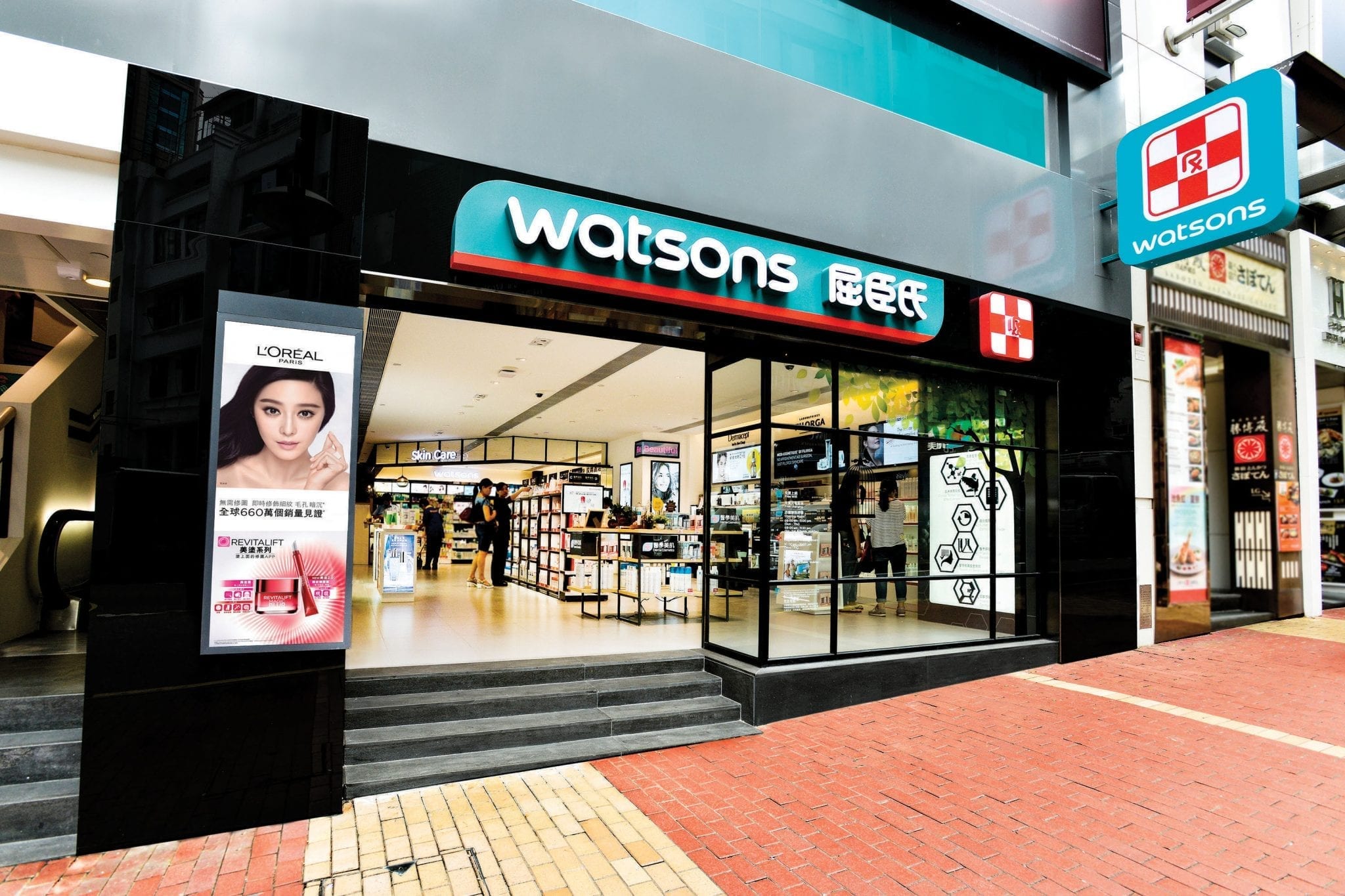
    In fact, Watsons Group is the world’s largest retailer in terms of the number of outlets. It operates more than 14,000 shops worldwide, including supermarkets and drug stores. Over 3,000 shops are in mainland China, and most of the rest are in Europe.

    Cheung Kong has put on hold a plan to spin off or sell the retail group after failing to fetch a good price in 2013. Back then, global offline retailers were struggling.

    The scale of Watsons is more than 10 times that of Whole Foods or Sun Art. And Cheung Kong would definitely try its best to get the best price. Therefore, it’s more likely that the conglomerate might cooperate with internet giants to leverage its massive network of offline stores.

    In September, CK Hutchison Holdings, Li’s flagship conglomerate, formed a joint venture with Ant Financial Services Group, an affiliate of Alibaba Group, to integrate online and offline Hong Kong dollar payments under the AlipayHK brand.

  • More online super sales for Asia online market

    More online super sales for Asia online market

    While the US formulated online super sales, such as this week’s Black Friday, Asia has adopted the concept with a vengeance.

    In fact, China has increasingly been exporting Alibaba’s Singles Day (11.11) event, which this month racked up a massive US$35 billion in sales. November is the favoured month for this new consumer mania, offering the Singles Day, Black Friday and Cyber Monday sales.

    Both Black Friday and Cyber Monday themselves have been catching on in the Asia Pacific, growing by 29 per cent last year, according to global payments company WorldPay.

    It says that despite forking out $17.8 billion on Singles Day last year, Chinese consumers still went hunting Black Friday bargains, with overall spending on the day up by 37 per cent from the previous year. In Hong Kong, the rate of growth was 32 per cent, and in Singapore 21 per cent.

    While retailers are among the biggest Black Friday winners, new WorldPay data suggests this year could also be a great opportunity for savvy APAC businesses in the travel and digital sectors. In Hong Kong, spending with travel and airlines saw a 30 per cent surge last year, with Singapore figures up 20 per cent as travellers jumped online to search for flight and hotel deals.

    Not just retailers

    Shoppers are also increasingly seeking out bargains for digital content such as subscriptions, e-books and on-demand box sets. Black Friday spending in this sector last year grew 62 per cent in Hong Kong and 14 per cent in Singapore.

    Not just retailers can benefit from Black Friday, but also a range of e-commerce businesses, says WorldPay Asia Pacific GM Phil Pomford.

    “While Black Friday and Cyber Monday have typically been the realm of retailers, a more diverse range of businesses are now recognising they can also take can take advantage of this special online opportunity.

    Shoppers during this time are highly engaged, proactive and looking for a wide range of online deals, so the potential to reach new customers and strengthen brand loyalty is huge, regardless of sector.

    “E-commerce businesses should set themselves up for success by ensuring their websites are prepared for heavy traffic, and offer simple payment options to drive shopping-cart conversions. They might also consider following the example of Amazon and kickstart Black Friday deals a week early.”

    Black Friday online sales surpassed $3 billion last year and are expected to rise this week, says Adobe Digital Insights, as buyers seek to avoid long queues and lost hours in retail stores.

    In Southeast Asia, Google searches for “Black Friday” have surged over the past five years, and 12 months ago major offline/online retailers like Robinsons, Sephora and Zalora offered generous discounts for the event.

    “Many industries rely on this event to make up a large portion of their fourth-quarter sales, in particular toys and games,” says Euromonitor International senior toys and games analyst Matthew Hudak.

    ‘Sure to jump on’

    Digital campaign company RTB House says Black Friday last year attracted 106 per cent more people to online stores, with 204 per cent more transactions.

    “We anticipate conversion rates surging this time,” says RTB House Southeast Asia country director Chandra Kuncara. “Customers who missed out on Singles Day will be sure to jump on this event.”

    He says personalised retargeting is an important selling tool during Black Friday. With AI technology and deep-learning algorithms, marketers can highlight most-desired products for each individual customer.

    More purchases mean more packages being shipped, and international courier service FedEx is again expecting to handle a record number of packages over the peak holiday shopping period, which starts on Monday and runs to December 24. This year it is expecting 380 to 400 million packages.

    The growth of cross-border e-commerce is turning the peak shipping season into a global phenomenon, says FedEx. For instance, 37 per cent of Singles Day purchases in China last year were from international brands or merchants. Cross-border shopping is expected to make up 20 per cent of e-commerce sales by 2022, led by Asia Pacific.

    “While an online purchase takes just a few clicks, logistics providers are working hard behind the scenes powering every moment,” says FedEx Express AsiaPacific president Karen Reddington. “Our business is the backbone of the e-commerce market.”

    Meanwhile, while shoppers scramble for Black Friday bargains this week, outdoor retailer REI is closing its 154 US stores for the third consecutive year, offering its nearly 12,000 employees a paid holiday. It is truly going against the tide by also putting a hold on online orders.

  • Alibaba to buy major stake in Taiwan’s RT-mart business in China

    Alibaba to buy major stake in Taiwan’s RT-mart business in China

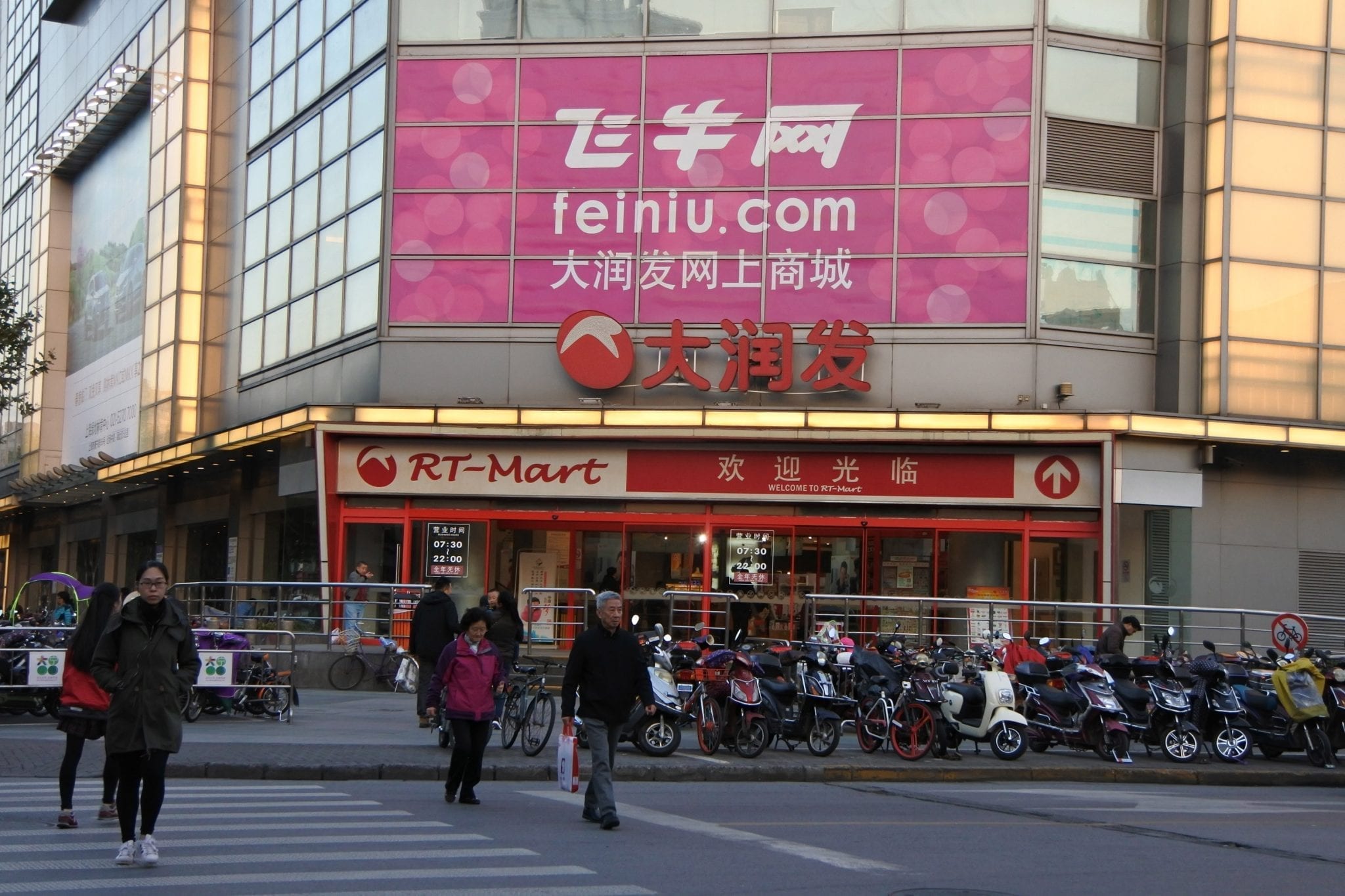
    Alibaba Group Holding Ltd., China’s biggest e-commerce company, agreed to acquire a stake in a hypermarket chain partly owned by the Taiwan-based company Ruentex Group in its effort to push into offline retail.

    Alibaba said on Monday that it would invest US$2.87 billion for a 36.16 percent stake in China’s top hypermarket operator, the Hong Kong-based Sun Art Retail Group, which operates more than 440 RT-Mart and Auchan stores in China, reported CNA.

    Under the agreement between the three companies, the deal would give French retailer Groupe Auchan, China’s Alibaba Group and Taiwanese conglomerate Ruentex 36.18 percent, 36.16 percent and 4.67 percent stakes respectively in Sun Art.

    According to Financial Times, the investment is the latest in a series of deals by Alibaba designed to blur the lines between online shopping and physical stores and explore new opportunities in China’s food retail sector.

    Ruentex, meanwhile, said the deal will help the three partners to create a strategic alliance in the retail market in China.

    Ruentex Vice Chairman Peter Huang said in a statement: “Ruentex is delighted to see the win-win collaboration between Sun Art and Alibaba with high synergies in online and offline that will meet the needs of consumers for a better life with better products and services and higher efficiency.”

    Ruentex Group is a Taiwan-based company principally engaged in the manufacture of textile products, the wholesales of commodities and investment businesses.

  • Vietnam approves Alibaba’s online payment platform

    Vietnam approves Alibaba’s online payment platform

    Chinese e-commerce conglomerate Alibaba has signed an agreement with the National Payment Corporation of Vietnam (NAPAS) that will allow Chinese tourists to use its online payment platform in Vietnam.

    The agreement with Ant Financial, Alibaba’s financial services arm, will enable Chinese travelers to use the Alipay platform throughout Vietnam via NAPAS member banks and its intermediary payment service networks, according to business technology websites.

    Under the agreement, people with cards issued by NAPAS member banks in Vietnam will be able to use Alipay to make purchases on Alibaba’s websites, such as AliExpress and Taobao.

    NAPAS is the only intermediary payment service provider licensed by the central bank to provide electronic payment services in Vietnam. The corporation operates an inter-bank connection system with tens of thousands of ATMs run by 43 banks, including Vietnam’s top lenders Vietcombank, Vietinbank and BIDV.

    “The collaboration with Alipay is part of our strategy to expand international cooperation and to explore new payment solutions,” NASPAS chairwoman Nguyen Tu Anh said.

    Official figures showed that more than 3.2 million Chinese tourists visited Vietnam in the first 10 months this year, up 45.6 percent from a year ago and accounting for nearly a third of foreign arrivals. Alipay, which has more than 520 million daily users globally, has been expanding its global presence along with China’s rising outbound travel. A Bloomberg report last December, citing Credit Suisse figures, said a 30 percent increase in spending by Chinese tourists would boost Vietnam’s gross domestic product by nearly 1 percentage point.

    The payment service entered the Australian market late last year under a similar agreement with the Commonwealth Bank of Australia.

    News of the deal with NAPAS comes a week after Alibaba founder Jack Ma visited Hanoi and spoke at a prominent e-payment forum co-hosted by NAPAS.

    At a meeting with Vietnamese Prime Minister Nguyen Xuan Phuc, Ma said he would consider establishing a store for Vietnam on Alibaba’s e-commerce app.

  • Grana Group bulks up with venture debt

    Grana Group bulks up with venture debt

    After raising US$16 million in venture funding from backers including Alibaba, online apparel brand Grana Group has boosted its coffers with an undisclosed amount in venture debt.

    The three-year-old online fashion startup will use the funds, from Hong Kong asset manager STI Financial Group, to improve its cash-flow management and advance its use of artificial intelligence for customer engagement. Using venture debt means the company can grow its business without having to dilute its share capital while working toward series-B funding at the end of next year, reports Deal Street Asia.

    Based in Hong Kong, the startup was founded by Australian entrepreneur Luke Grana. Its earlier funding included $6 million in seed money and $10 million as a series-A round.

    The company has an 18,000sqft (1700sqm) global distribution centre that ships to 67 markets. It has also opened 15 pop-up showroom-experience centres across Hong Kong, Singapore, the US and Australia.