Tag: Alibaba

  • Alibaba to quietly dominate retail

    Alibaba to quietly dominate retail

    While Australian retailers fret about the impact of American online retail behemoth Amazon, China’s Alibaba looms as an equal threat, according to Russell Zimmerman, Executive Director at the Australian Retailers’ Association.

    Speaking to A’n’Z of Economics on podcast, Zimmerman said the changes underway in retail brought by online retail giants were leading to a complete “revamping and re changing” of the sector – but warned Alibaba’s impact was being underrated.

    “I think Australian retailers have been very focused on Amazon and there’s certainly been a lot of hype,” he said. “[But] I think the biggest sleeper in the online space is Alibaba. I think we’ll actually need to move our focus away from Amazon and realiZe Alibaba is out there.”

    Zimmerman was a guest on the podcast alongside Richard Li, the Chief Operation Manager for Miniso, a Tokyo-based retailer which has recently opened stores in Australia. You can click below to hear an edited version of the comments – or go to the A’n’Z of Economics Soundcloud page to listen to the full podcast.

    Zimmerman said AliBaba is slightly different to Amazon in that it owns a large portion of the value chain, including not just sales but elements like data collection and AI-assisted marketing. On Single’s Day – China’s version of Valentine’s Day – in 2017, the company recorded record sales $US25.3 billion, a 40 per cent jump on the previous year’s figure.

    “I think Amazon is a very interesting case study because they really haven’t spent a dollar on advertising but everyone’s talking about it,” he said.

    “I know there are some retailers in Australia already dealing with Alibaba and they’re doing very well but I think [more need] to at least look at it. They may or may not wish to go on that platform, but at least look at it.”

    Miniso customers are currently unable to shop online in Australia but Li said the company had a strategy in the works.

    “We find there are two things stopping us launching our online strategy in Australia,” he said. “The first is there is no landmark website or something [in Australia] like an Amazon or Alibaba.”

    “The second thing is the lack of logistics. We find Australia is one of the most-expensive in the world when we’re selling different commodities. We need to find different ways to move product at the most-efficient cost. The good thing is right now things change very fast.”

    The conversation also touched on why overseas retailers were moving into Australia and the surprising true size of the Australian online retail market. Listen to the podcast above to find out more.

  • Here’s how BigBasket is riding on Alibaba’s offline retail strategy

    Here’s how BigBasket is riding on Alibaba’s offline retail strategy

    After raising $300 million last month, Indian online grocery startup BigBasket is entering the offline sector. The company is looking to transform its core online business to offline centres that will store daily moving consumer goods, groceries, fruits and vegetables. These offline stores will be placed in apartments and various office complexes. The Bengaluru based firm has already rolled out a new app called BB Instant. To increase offline purchases it is also planning to start subscription based services on FMCG goods.

    Founded by Abhinay Choudhari, Hari Menon, Vipul Parekh and VS Sudhakar in 2011, BigBasket is an online grocery company, which now is looking to exploit the brick-and-mortar space. The company recently raised $300 million in a round led by Chinese giant Alibaba, which contributed $146 million. The company has raised close to $885.7 million in total disclosed investments.

    BigBasket claims to have an average of 3 orders per user every month with the average ticket size ranging from Rs 1,400-1,500. Further the company claims to have monthly sales of over Rs 200 crore.

    This investment comes in at a time when Indian and foreign behemoths are heavily investing in the sector. Recently, Flipkart restarted its grocery business, with the like of Amazon planning to enter the offline stores in India.

    This is not the first time Alibaba has invested in an offline strategic move. The Chinese giant has been looking into physical stores for years, now, in an effort to engage customers to its ecommerce platforms by helping to digitize traditional merchants. It has pumped billions into investments including its own grocery chain, a shopping mall group, Walmart-like chains, among others.

    With the move, BigBasket may be following the footsteps of Hema, the first digital supermarket incubated in China by Alibaba. Consumers shopped using an app, either in person or remotely. Shopping options included buying food to carry out, purchasing in store and buying online with a 30-minute delivery. Similarly, BigBasket has launched a 60-120 minute express delivery through its stores.  

  • China’s Sun Art Retail to go digital with Alibaba

    China’s Sun Art Retail to go digital with Alibaba

    China’s largest offline hypermarket chain Sun Art Retail Group is going full speed on digital retailing, with plans to transform more than 400 outlets within this year to become a member of Alibaba Group Holding’s ecosystem.

    The nationwide store revamp plan came after the e-commerce conglomerate acquired a 36.16% stake in the chain from Taiwanese shareholder Ruentex Group for about $2.86 billion last November, effectively making Alibaba’s control equal to Sun Art’s French owner, Auchan Retail.

    Under the “digital transformation” initiative, all Sun Art’s brick-and-mortar stores, under the RT-Mart brand, will be equipped with point-of-sale machines and automation facilities developed by Alibaba, as well as big data systems that track and analyze customer behavior, according to Peter Huang Ming-Tuan, chairman of RT-Mart China.

    Huang said the adoption of Alibaba’s technologies would cost about 5 million yuan ($790,000) for each store, but business would not be affected as it would not be necessary to close shops during the renovations. With the help of Alibaba’s digital and customer resources, Huang expects the share of online sales to increase from less than 3% of the group’s total at present to between 10% and 20% in the next few years.

    The wider adoption of products offered by Alibaba, however, means the largest player in China’s hypermarket industry — which, as of the end of December, owned 461 complexes in more than 200 Chinese cities — will significantly reduce collaborations with the e-commerce conglomerate’s key rivals, especially Tencent Holdings.

    Huang admitted that it was not clear whether WeChat Pay, the digital wallet developed by Tencent, would be available after the Alibaba-style makeover.

    “Now we are part of Alibaba’s ecosystem, we will have more and more cooperation with Alibaba, and less and less with others,” said Ludovic Holinier, CEO at Sun Art Retail, adding that the group would gradually reduce the use of other companies’ services and products.

    Like Sun Art Retail, many traditional merchants have teamed up with internet companies to retain Chinese customers who are increasingly accustomed to the digital world. And the dominance of big players like Alibaba and JD.com have made it difficult for retail chains to start their own digital services.

    The online-offline alliances come at a time when Tencent and Alibaba are locked in a fierce competition to gain the bigger share of China’s lucrative online payments market, with transactions reaching $5.5 trillion in 2016, according to iResearch. The pair are also trying to recruit traditional retailers with a large number of brick-and-mortar stores as a way to expand their last-mile delivery capacities, and those in the fresh food sectors — which have been the most difficult segment to convert to e-commerce.

    Last December, Tencent purchased a 5% stake in one of China’s largest supermarket chains, Yonghui Superstores, following the announcement of the Alibaba-Auchan-Ruentex alliance. The social media company announced a deal to take a stake in French department chain Carrefour’s China unit. Most recently it teamed up with JD.com, an e-commerce platform rival to Alibaba, to take minority stakes in Chinese retail chain Better Life. Tencent and JD.com agreed to pay $140 million and $117 million respectively for stakes in the chain, which operates about 600 stores in China.

    Besides adopting Taobao Dao Jia, a system that enables customers to buy RT-Mart products on Alibaba’s flagship online marketplace Taobao, Sun Art Retail is also exploring other areas for collaborations with Alibaba, such as offering consumer loans.

    Holinier said the company had been looking into a potential collaboration with Tmall, a business-to-customer e-commerce platform under Alibaba, since December. Taobao and Tmall together had 580 million actively monthly users by the end of December and controlled over 70% market share of online transactions in China.

    Other areas they are currently looking into include co-operations with Hema Xiansheng, Alibaba’s own fresh food grocery unit, and the possibility to jointly roll out customer loans with Alibaba’s financial unit.

    “We have plenty of projects. We have to examine them,” Holinier said.

    However, Sun Art’s latest result seems to be a disappointment for the market. Its Hong Kong-listed shares dropped by 9.7% to close at 9.72 Hong Kong dollars, its steepest drop in more than a year, and outpacing the fall in the benchmark Hang Seng index which lost 2.3% to close at 29,886.29 points on Monday. The drop came in spite of the hypermarket operator announcing an 8.6% increase in net profit for the full year in 2017 to 2.79 billion yuan. Revenue was 102.32 billion yuan, a mere 1.9% increase on the year.

  • Alibaba said to buy out Baidu

    Alibaba said to buy out Baidu

    Alibaba Group Holding Ltd. plans to buy out Baidu Inc. and other investors in Chinese startup Ele.me to shore up its delivery network, a person familiar with the matter said, placing its biggest bet yet in online food and local services.

    An acquisition would hand Alibaba the biggest chunk of Chinese online food delivery and pit it directly against Meituan Dianping, backed by Tencent Holdings Ltd. Ele.me – which means “hungry yet?”. Meituan runs an army of delivery people on motorbikes across the country that could enhance Alibaba’s last-mile ability to get parcels to customers’ doorsteps and complement its Koubei neighbourhood services business.

    Alibaba, which owned 23 per cent of Ele.me as of May, plans to buy the stock from existing investors including Baidu, the person said, requesting not to be named because the matter is private.

    It is unclear how much Alibaba agreed to pay, but Ele.me was said to have been valued at between US$5.5 billion (S$7.23 billion) to US$6 billion in a May fundraising last year.

    The startup then bought Baidu’s delivery business at a US$500 million valuation in August 2017, a person familiar said at the time. The current talks are ongoing and it’s possible terms may change or the deal may not be completed.

    Alibaba, Ele.me and Baidu declined to comment.

    Alibaba shares rose 0.47 per cent to US$194.19 Monday in New York, the highest in four weeks. Baidu rose 2.2 per cent to US$256.25, the highest in more than a month.

    If the deal goes through, Alibaba and Meituan will dominate a Chinese food delivery market that Analysys estimates reached 67.7 billion yuan (S$14.1 billion) in 2017’s final quarter, up 16.2 per cent from the previous three months.

    For Baidu, it is another exit from a business considered peripheral to its core operations in search and artificial intelligence.

    “With its online traffic and Koubei business, Alibaba could create a lot of synergy with this acquisition,” said Steven Zhu, a Shanghai-based analyst with Pacific Epoch.

    “This would be a drag on the margin, because Alibaba now owns more delivery men and inventory, but it has no choice because long-term wise most consumption still takes place offline.”

    Alibaba has taken steps to shore up its logistics in recent months, taking over longtime delivery affiliate Cainiao and drawing up plans to invest in warehouses.

    Unlike e-commerce rival JD.com Inc. however, which builds and runs its own fleet of delivery people, Alibaba’s last-mile capabilities have been confined mainly to third-party partners. Its investments in so-called “new retail,” such as brick-and-mortar stores and grocery chain Hema, also help shore up the network, by providing delivery points and warehousing for parcels.

  • Alibaba teams up with Singapore university on AI

    Alibaba teams up with Singapore university on AI

    Chinese tech giant has set up a joint research facility at Singapore’s Nanyang Technological University to develop artificial intelligence-based technologies in retail, transportation and healthcare

    Chinese e-commerce and technology giant Alibaba has partnered Singapore’s Nanyang Technological University (NTU) in a joint research facility aimed at harnessing artificial intelligence (AI) to solve societal issues such as Singapore’s ageing population.

    The first of its kind outside China, the Alibaba-NTU Singapore Joint Research Institute will bring together NTU’s AI capabilities, including efforts to develop an artificial companion for the elderly, and Alibaba’s expertise in natural language processing, machine learning and cloud computing.

    The multimillion-dollar partnership between Alibaba and NTU is expected to involve 50 scientists and engineers from both parties over five years. Besides addressing the needs of ageing societies, they will also develop AI technologies in areas such as retail, urban transport and healthcare.

    For example, NTU’s expertise in healthcare research and Alibaba’s knowhow in AI to diagnose and prevent diseases will be pooled to achieve breakthroughs in health-related AI. Both parties will also conduct research to improve urban mobility and reduce Singapore’s carbon footprint.

    Alibaba said its contribution to the research facility will come from a $15bn fund earmarked for its Damo research and development (R&D) programme, which includes establishing research labs across the globe, including one in Singapore.

    The joint research institute is located on the NTU campus, but it is open to researchers and academics worldwide. Alibaba will also build a crowdsourcing platform to connect researchers and industry practitioners in an AI-focused R&D community.

    Jeff Zhang, Alibaba’s chief technology officer, said the AI technology developed by the institute will first be rolled out in NTU, followed by other parts of Singapore and Southeast Asia at a later date.

    “By launching our first joint research institute in Singapore, we hope to work with talent in Singapore and researchers worldwide to explore technology innovation that can address common issues faced by the society at large,” said Zhang.Alibaba’s efforts to develop AI capabilities in Singapore follows the recent launch of Chinese facial recognition specialist Yitu’s regional headquarters in Singapore that will mainly serve as a sales, marketing and operations outfit for now.

    Yitu said plans are also in the pipeline to establish R&D capabilities in the city-state by the end of 2018.

    In May 2017, Singapore’s National Research Foundation said it would invest up to S$150m (US$107m) over five years in a programme called AI.SG to drive adoption of AI to solve business problems.

    To nurture a local AI community, AI.SG will also work with startups and corporate laboratories through new facilities that will provide software tools, anonymised datasets and high-performance computing resources.

  • Alibaba Cloud Expands Europe Offering With Eight New Products

    Alibaba Cloud Expands Europe Offering With Eight New Products

    Alibaba Cloud on Tuesday launched eight of its products in Europe, covering areas from big data and artificial intelligence to infrastructure and security, as it targets new business in an important market for cloud services.

    Announced during the Mobile World Congress, underway in Barcelona, Spain, the products aim to deliver efficiencies in online-offline retail integration, smart manufacturing and smart-city development for European businesses.

    “Alibaba Cloud wants to be an enabler for technology innovation in Europe helping enterprises do business,” said Wang Yeming, general manager of Alibaba Cloud Europe, in a statement. “These advanced solutions will enable organizations in a wide range of sectors and will bring them true connectivity, both locally and globally.”

    Previously, these products were available only to Alibaba Cloud clients in China. The company pointed to three that may prove popular among enterprises, including Image Search, a chatbot called Intelligent Services Robot and Dataphin, a smart data engine used to link businesses working together from different sectors.

    According to Alibaba Cloud, Image Search, which allows for research both online and offline using pictures, is used widely in China, including in sectors such as New Retail. The chatbot for businesses served more than 40 million customers in a single day during last year’s 11.11 Global Shopping Festival, the company said. Dataphin is now managing 95% of Alibaba Group’s data and being used to drive improvements and new applications in retail, finance, logistics, transportation and health.

    In addition, Alibaba Cloud launched the ECS Baremetal Instance; the Super Computer Cluster; its next-generation Cloud Enterprise Network; the Vulnerability Discovery security service; and the Apsara Stack, a cloud-services platform adopted by 120 clients so far in China. These infrastructure and security products are typically used by enterprises undertaking important tasks, such as migrating data and applications to the cloud.

    Alibaba Cloud said the product launches were a sign of continued commitment to the European market that build on other initiatives already underway there. The company opened its first availability zone in Frankfurt Germany in November 2016 and recently began operating a second one in the same region. It has partnered with Vodafone in Germany, as well as the U.K.’s Met Office and Station F, an innovation hub in France.

    “The Mobile World Congress in Barcelona is a great opportunity for us refresh our European strategy and consider how we can make an increasing contribution to the digital transformation of enterprises in this market from different sectors with our offerings and expertise,” Wang said.

    Alibaba Cloud, the leading cloud provider in China, services both Alibaba Group’s operations and other enterprise clients. The company has expanded overseas in recent years to Singapore and Malaysia in Southeast Asia, Frankfurt, London and Paris in Europe, New York and San Mateo in the U.S., Dubai in the Middle East, as well as Seoul, Tokyo and Sydney. It currently has over 2.3 million customers worldwide.

  • Renault partners with Chinese online retail giant

    Renault partners with Chinese online retail giant

    China, a strategic market for Groupe Renault, is the top priority in the company’s new mid-term plan, “Drive the Future.” The Chinese joint venture, Dongfeng Renault Automotive Company, has set a target of 400,000 passenger cars sales by 2022 based on nine local models.

    “One of the key objectives of returning to Formula 1 was to leverage its global platform for Groupe Renault,” said Cyril Abiteboul. “China has been identified as a market of strategic importance and partnering with high-profile companies like Alibaba’s Tmall will provide opportunities to significantly improve Renault brand awareness and opinion in China, with a strong presence over the Chinese Grand Prix in April, but also throughout the year.”

    “We are excited to partner with the Renault Sport Formula One Team to make our activity around the Chinese Grand Prix a success and to be working closely together to bring one-of-a-kind experiences with the Renault Sport Formula One Team to our customers,” added Wei Yu, General Manager of Tmall Auto.”

    Alibaba Group’s mission is to make it easy to do business anywhere. The company aims to build the future infrastructure of commerce. It envisions that its customers will meet, work and live at Alibaba, and that it will be a company that lasts at least 102 years.

    Launched in 2008, Tmall caters to consumers looking for branded products and a premium shopping experience. A large number of international and Chinese brands and retailers have established storefronts on Tmall. According to iResearch, Tmall was China’s largest third-party platform for brands and retailers in terms of gross merchandise value in 2016. Tmall is a business of Alibaba Group.

  • Alibaba, Tencent rally troops amid $10 billion retail battle

    Alibaba, Tencent rally troops amid $10 billion retail battle

    China’s tech giants Alibaba Group Holding Ltd and Tencent Holdings Ltd, worth a combined $1 trillion, are on a retail investment binge, forcing merchants to choose sides amid a battle for shoppers’ digital wallets.

    Since the start of last year, the two companies have between them spent more than $10 billion on retail-focused deals, boosting their reach online and in brick-and-mortar stores.

    The aggressive drive, supported by large cash piles and soaring share prices, is part of a battle to win over consumers and store operators to the two firms’ competing payment, logistics, social media and big data services.

    The result: fewer and fewer retailers left without allegiance to either Tencent or Alibaba.

    “All of the retailers in the brick-and-mortar world are very worried. They have to take a side,” said Jason Yu, Shanghai-based General Manager of market research firm Kantar Worldpanel.

    “Otherwise they are afraid they will be eaten alive in the future.”

    Alibaba is China’s top e-commerce player and its affiliate Ant Financial leads in mobile payments. Tencent’s strengths lie in social media, digital payment and gaming. It also has a major stake in the second-largest online retailer, JD.Com.

    Tencent and JD.com have a growing range of allies, including French grocer Carrefour SA, which has announced a potential investment from Tencent, and U.S. retail giant Walmart, which has a stake in JD.com.

    Tencent also bought a stake in Yonghui Superstores Co Ltd, apparel retailers Vipshop Holdings Ltd and Heilan Home, mall operator Wanda Commercial, and this month snagged a strategic tie-up with grocer Bubugao.

    In the other corner is Alibaba, which has invested even more heavily in Suning.com>, Intime Retail, Sanjiang Shopping Club, Lianhua Supermarket, Wanda Film and IKEA-like home
    improvement store Easyhome.

    Key to the battle is China’s nearly $13 trillion mobile payment market, where Alibaba and Tencent are going head-to-head. Alibaba took a 33 percent stake in its payment affiliate Ant Financial this month ahead of an expected mega IPO.

    Ant operates China’s top mobile payment platform, Alipay, while Tencent’s payment system on its hugely popular Weixin chat app is catching up fast. Both firms are also making a big push in cloud computing and data.

    “I think for payment (the retail push) is a very critical part because it’s almost a gateway,” said Yu. Brick-and-mortar stores in China account for about 85 percent of retail sales, creating a huge lure for tech giants.

    “That’s the pot that Alibaba, JD.com and even Tencent want a slice of,” Yu added. “That’s the majority of the business where they can actually look for future growth.”

    In return, the physical stores get access to payment systems, logistics networks and other services – not to mention the reams of data on consumers that the tech firms control.

    Alibaba invested $486 million this month in a retail-focused big data firm, saying the deal meant it could better “help brick-and-mortar retailers succeed in the digital age.”

  • Disney And Alibaba’s Youku Sign Licensing Deal For Animation Shows

    Disney And Alibaba’s Youku Sign Licensing Deal For Animation Shows

    Chinese online retail giant Alibaba and U.S. media and entertainment giant Walt Disney have inked a licensing deal which will see animation series from the latter become available on the Youku online video streaming service owned by the former. The multi-year agreement was signed by a unit of Disney, Buena Vista International, and Alibaba Digital Media and Entertainment Group.

    Besides subscribers of the Youku streaming service, Chinese households numbering nearly 30 million who use the set-top boxes of Alibaba as well as SmartTV platforms will access the Disney content. Episodes numbering over 1,000 are expected to be streamed on Youku. Besides the television shows Disney films such as Mulan, Frozen, Beauty and the Beast, and Pirates of the Caribbean are also part of the deal.

    More international content

    “We look forward to further cooperation with global entertainment companies, which will help increase our penetration in the family entertainment segment and strengthen Youku’s position as a leading multi-screen entertainment and media platform in China,” Youku’s president, Yang Weidong, said in a statement.

    Other U.S. entertainment companies that Youku has previously struck licensing deals with include NBCUniversal, Fox, Paramount and Warner Bros. Youku also has a licensing deal with Sony Pictures Television. Last year in November Youku inked a licensing agreement with Netflix allowing its subscribers to view the show Day and Night on its platform. Per Alibaba, about 580 devices are reached by Youku daily and this translates to about 1.2 billion views.

    Joint venture

    Two years ago Walt Disney and Alibaba launched a joint venture known as DisneyLife which gave the Chinese online access to content from the media and entertainment giant. However regulators shut down DisneyLife after months after launch. Last year in May Walt Disney set up an online store on the Alibaba-owned e-commerce website, Tmall, to sell its merchandise in China.

    The deal with Youku comes at a time when Walt Disney is preparing to unveil an online video streaming service in the United States as consumers increasingly abandon traditional cable and satellite services for platforms such as Netflix. The chief executive officer of Walt Disney, Bob Iger, has indicated that the planned online streaming platform won’t be expensive to start since the media and entertainment giant already has lots of existing content.

    Alibaba’s licensing agreement with Disney coincides with the Chinese online retail giant acquiring a 15% in retail firm Easyhome as it expands on its ‘click and mortar’ retailing strategy. Easyhome has a total of 223 brick and mortar stores in China.

  • Alibaba reports solid Q3 growth, increases FY guidance

    Alibaba reports solid Q3 growth, increases FY guidance

    Alibaba Group Inc. said revenues reached 83 billion yuan ($12.8 billion) in the third quarter – soaring 56% on last year – pushed on by China retail growth.

    For the three-month period ending December 31, Alibaba said China recorded the highest revenue growth, up 57%, counteracting a dull consumer confidence in the Asian nation. Annual active consumers on Alibaba’s China retail marketplaces reached 515 million, an increase of 27 million from the previous quarter, representing the largest growth in 12 quarters.

    The hometown result was helped by a strong Singles Day 2017 performance. The massive sales event clocked 168.2 billion yuan ($25.39 billion) in gross merchandising value.

    The Chinese e-commerce giant said the quarterly period was its seventh-consecutive quarter for growth.

    “We delivered another outstanding quarter and our business is performing stronger than ever,” said Daniel Zhang, Alibaba’s chief executive officer.

    Zhang went on to praise the firm’s pioneering technology in the online sphere and its intelligent move toward offline, in particular, its Hema supermarket chains.

    “It’s the direct result of our long-term, forward-looking approach to new user acquisition, new technology and creation of new user experiences. We have demonstrated what new retail looks like through innovations such as Hema and inspired a global wave of experimentation in new retail. We believe the future of retail is much more than just connecting online and off-line, our new retail strategy is a combination of creating new and transforming old.”

    Looking ahead, Alibaba said it has revised its outlook for full-year revenue growth up to 55 to 56%, from its earlier estimate of 49 to 53%

    In addition to the financial reporting, Alibaba said it would acquire a 33% in Ant Financial, its digital payment partner. The move highlights Alibaba’s new retail strategy, which includes enabling digital payments in brick-and-mortar stores.

  • Alibaba buys US$866 million stake in Chinese furniture retailer Easyhome

    Alibaba buys US$866 million stake in Chinese furniture retailer Easyhome

    Alibaba Group Holding will pay about 5.45 billion yuan (US$866 million) for a 15 per cent stake in Beijing Easyhome Furnishing Chain Store, the operator of China’s second largest home improvement supplies and furniture chain.

    It is the latest move in the e-commerce titan’s online-to-offline strategy, following its US$2.9 billion investment in Sun Art Retail, which runs one of China’s largest hypermarket chains, in November.

    Alibaba said on Sunday it will support the digital transformation of Easyhome’s 223 stores in 29 Chinese provinces, autonomous regions and municipalities, through its cloud and enterprise systems, and logistics platform. It will also be able to provide “consumer insights”.

    “From home design to refurbishment projects, the two parties will provide customers with end-to-end home improvement solutions,” it added.

    Beijing Easyhome said in a separate statement it has received a combined 13 billion yuan from a group of investors, including Alibaba, Chinese insurer Taikang Group, Yunfeng Capital – which is backed by Alibaba’s founder Jack Ma – and Beijing Harvest Capital.

    The retailer said it plans to fully integrate its online and offline operations by 2022. By then it aims to have over 600 stores nationwide and gross merchandise volume – total sales through its platforms – of more than 100 billion yuan.

    Alibaba has prioritised its efforts to expand into physical retail in recent years, investing billions in grocery chains and shopping malls. Part of the “New Retail” strategy is to attract customers to its online platform by bringing enhanced digital capabilities to the brick-and-mortar stores.

    The transformation echoes that of US e-commerce behemoth Amazon.com, which in June surprised shoppers with its US$13.7 billion acquisition of high-end American grocery store Whole Foods.

    “We want to redefine the physical retail experience and transform from physical to digital, ” said Alibaba CEO Daniel Zhang after last year’s Sun Art Retail acquisition.

    In January 2017, the company led a US$2.5 billion bid to buy out Chinese department store chain Intime Retail.

    In 2015, it bought a 20 per cent stake in Chinese electronics retailer Sunning Commerce Group for US$4.6 billion.


  • Alibaba platform receives registration from 2,000 SMEs

    Alibaba platform receives registration from 2,000 SMEs

    More than 2,000 SMEs have registered with the Alibaba group platform under the the Digital Free Trade Zone initiative.

    International Trade and Industry Minister Datuk Seri Mustapa Mohamed said it is targeting for 10,000 SMEs to be on the platform by this year.

    At the Malaysia Digital Economy Forum here this morning, he said Malaysia’s digital economy has seen exponential growth.

    To date, 58,824 online businesses have registered with the Companies Commission of Malaysia. The digital economy accounted for 18.2% of the country’s gross domestic product (GDP) in 2016.

  • Alibaba Throws $486 Million Behind Big Data

    With plans to expand its offline presence, Alibaba Group Holding Ltd. will be investing $486 million in a China-based big-data firm centered on the hotel, catering and retail industries.

    A filing to the Shenzhen stock exchange today shows that the company is set to buy a 38 percent stake in Beijing Shiji Information Technology Co. Ltd. through its subsidiary Alibaba Investment Ltd. The e-commerce giant is shifting into what it calls a “New Retail” strategic cooperation and intends to leverage big data as part of a bigger push to restructure the domestic retail market, which has seen troubling times over the past few years.

    Led by Chinese billionaire Jack Ma, Alibaba reported 61 percent growth in quarterly revenue last November, beating retail and financial analysts’ expectations. “We are seeing the early results from our efforts to integrate online and offline with our New Retail strategy, and consumers have benefited from access to high-quality products, improved customer experience and the tremendous convenience of shopping anytime, anywhere,” CEO Daniel Zhang said at the time.

    Already dominating the country’s online shopping market, the e-commerce and technology giant has been experimenting with brick-and-mortar retail, reportedly investing billions in physical stores as it faces growing competition with rival company Tencent Holdings Ltd. Ma also announced a plan last fall to spend $15 billion on research and development within three years, with the goal of serving 2 billion customers and creating 100 million job opportunities over the next two decades.

  • Alibaba Revamping Ladies’ Rooms To Make Waiting More Fun

    Alibaba Revamping Ladies’ Rooms To Make Waiting More Fun

    Alibaba’s Tmall and shopping centre operator Intime have partnered to create a New Retail-driven model for restrooms.

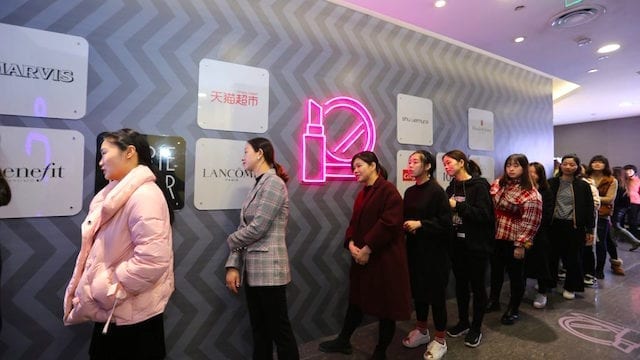
    Last week, the two unveiled the first “Smart Ladies’ Room” at the West Lake Intime Shopping Mall in Hangzhou City. It’s the latest extension of New Retail by Tmall and Intime, after they last month showed off a smart nursing room for mothers shopping at malls.

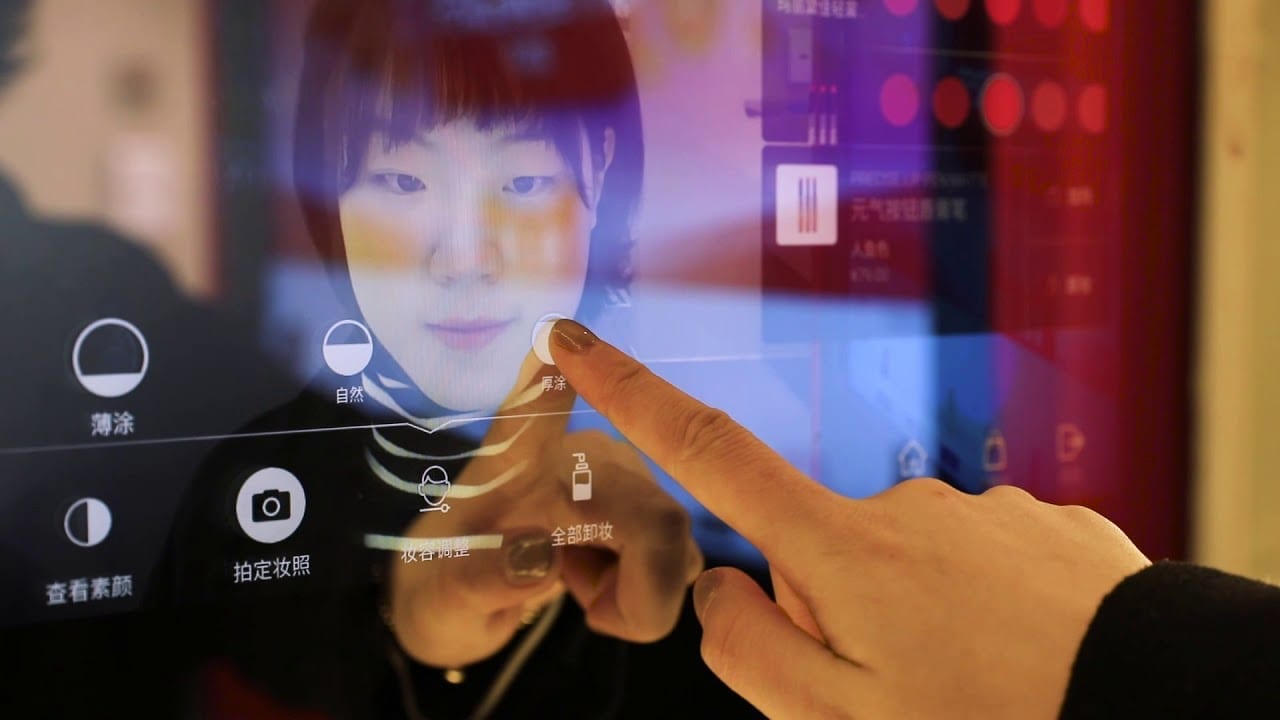
    Consumers waiting in line can make use of technologies like a pair of ‘magic mirrors’, an augmented-reality-powered digital screen that lets shoppers virtually try on and purchase cosmetics, including a wide array of lipstick, blush, eyeliners and eyeshadow, and a vending machine offering beauty and feminine products from nearly 10 brands, including Shu Uemera, Lancome, Elizabeth Arden and Benefit, to lighten the load for ladies out shopping. All products can be purchased for RMB 0.01 each through the Alipay mobile wallet.

    The Smart Ladies’ Room at West Lake Intime Shopping Mall is already open to the public, while one at Hangzhou’s Wulin Intime is under construction. The company said its next steps involves reworking more restrooms at tourism sites, shopping malls and hotels.

    Alibaba’s plans to expand the model to more public restrooms coincides with China’s continued push for a “toilet revolution,” a national drive to improve sanitation and build more clean restrooms across the country.

    China intends to build or renovate 64,000 toilets at tourist sites between 2018 and 2020, by the end of which the country aims to raise tourism revenue to RMB 7 trillion – up from RMB 3.9 trillion in 2016, according to the Xinhua News Agency.

  • Apple Retail Stores in China to Accept Alipay Mobile Payments

    Apple Retail Stores in China to Accept Alipay Mobile Payments

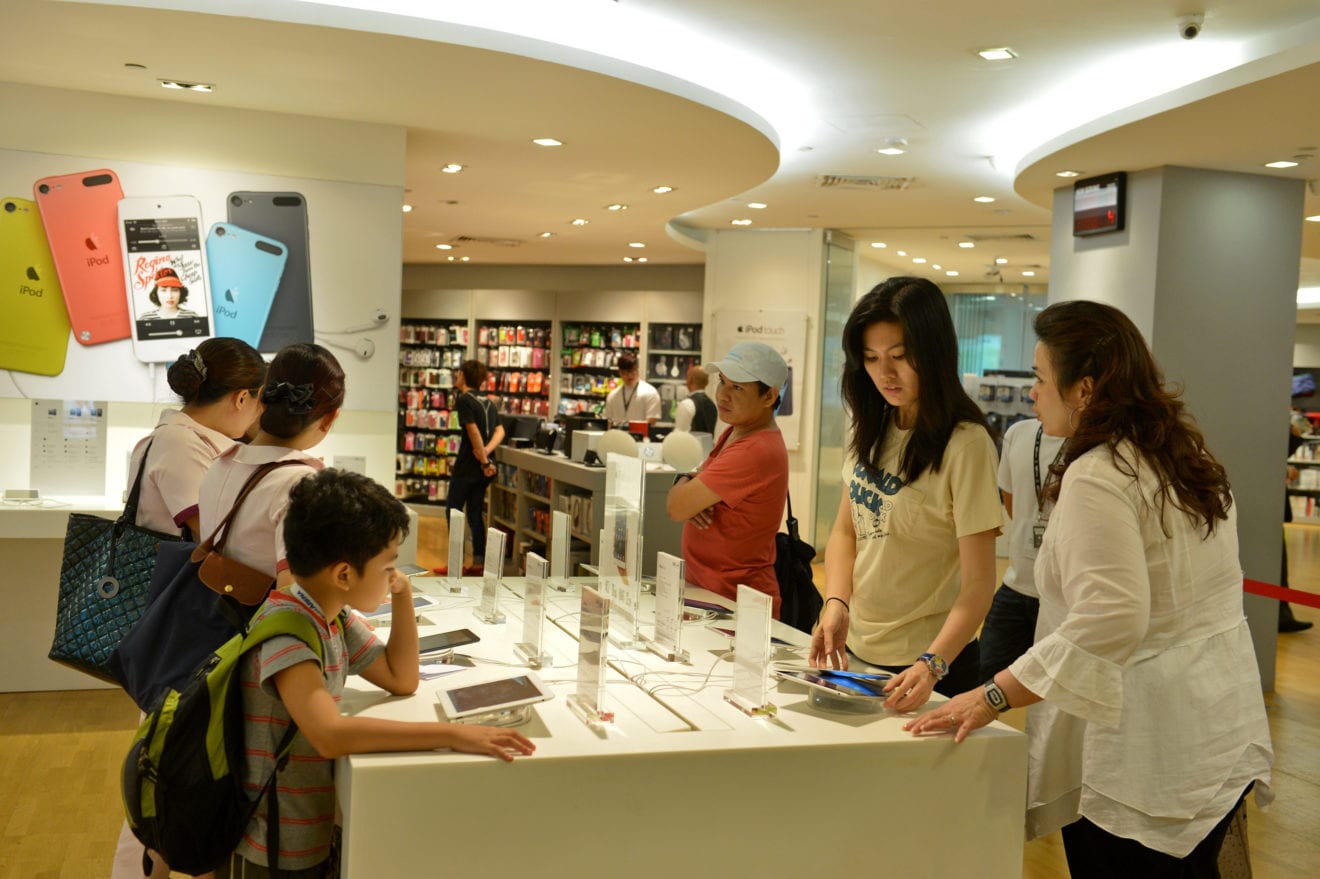
    Apple China will accept Alipay in its stores – the first third-party mobile payment system to be accepted at any Apple store worldwide.

    This follows lukewarm reception in China for Apple’s own payment system, says Reuters.

    The IT giant will accept Alipay payments across its 41 brick-and-mortar retail stores in China, says Ant Financial, which runs the system for Alibaba.

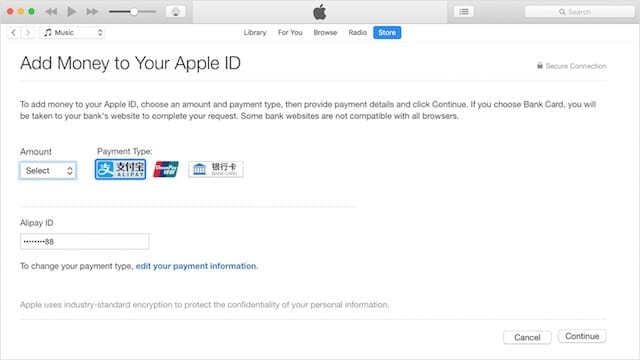
    Meanwhile, Apple China’s website, iTunes store and App Store have been accepting Alipay for more than a year.

    Apple is shifting user data to China-based servers this month to meet local rules, and last year removed dozens of local and foreign VPN apps from its Chinese app store.

    China’s official Xinhua news agency says Apple will build its second data centre in China, in the Inner Mongolia Autonomous Region, after setting up a data centre in Guizhou.