Tag: Alibaba

  • Alibaba plans massive 3-year expansion of Rural Taobao network

    Alibaba plans massive 3-year expansion of Rural Taobao network

    Alibaba Group’s rural initiative – Rural Taobao – plans to expand its coverage to 1000 counties and 150,000 villages across China during the next three years.

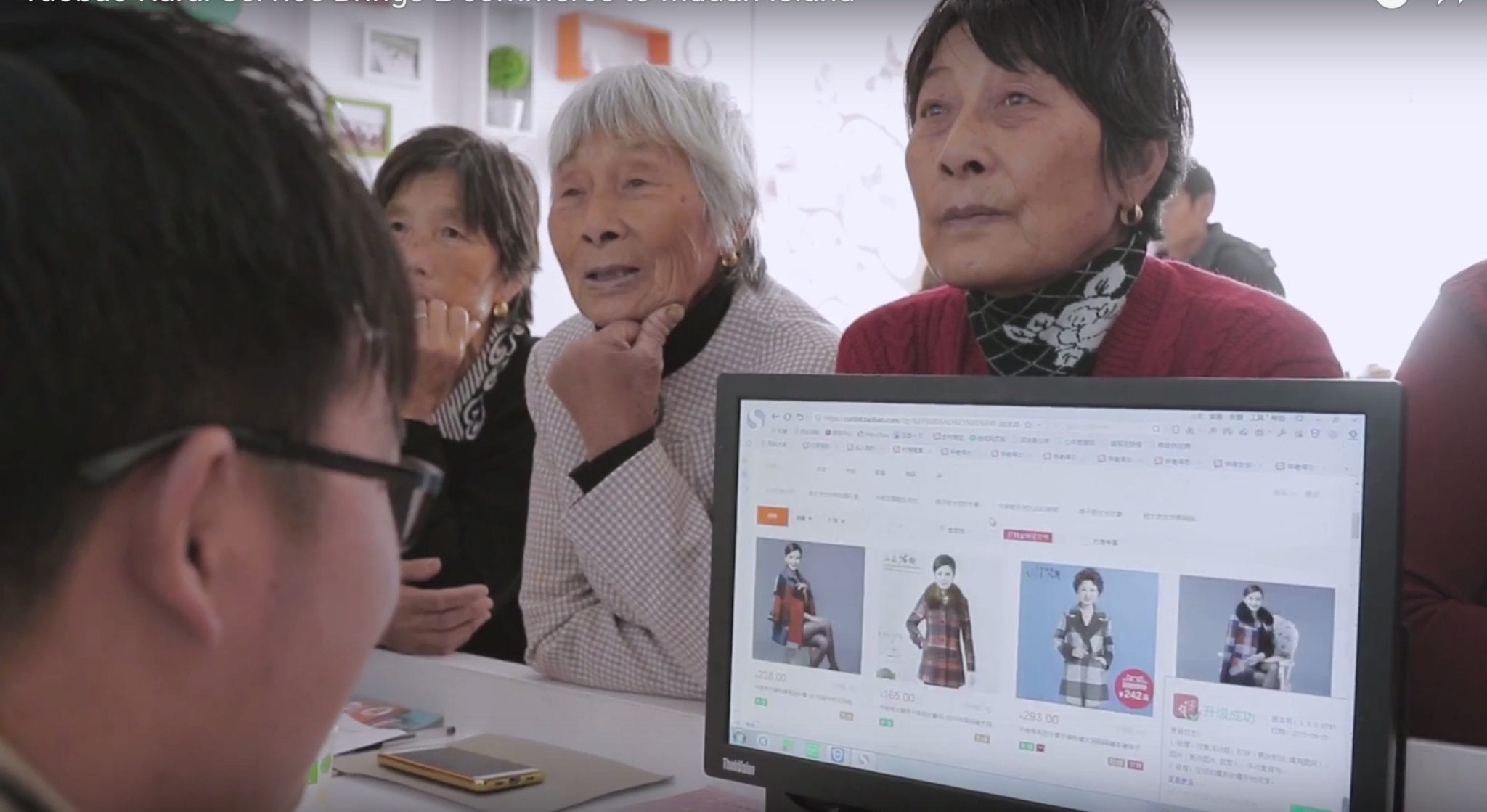
    Launched in October 2014, Rural Taobao is one of Alibaba’s three main strategic projects in addition to globalisation and cloud computing. It aims to buttress trade between China’s remote regions and urban areas. Presently, around half of China’s 1.3 billion population reside in rural areas.

    “Our mission is clear: We want to improve the living conditions of China’s rural regions. To do so, we need to provide high-quality goods, personalised services, smart logistic solutions and prices comparable to that of the cities,” said Bill Wang, VP of Alibaba Group and GM of Rural Taobao.

    As part of the project, a network of e-commerce service centres has been created at the county and town level to provide services that enable villagers to purchase products online, as well as sell their goods via Rural Taobao’s dedicated online marketplace and other Alibaba e-commerce platforms. This way, villagers can enjoy a wider range of products and promote their own products beyond the village borders.

    Currently, the initiative covers 700 counties with over 30,000  service centres.

    Speaking at 2018 Rural Taobao Merchant Summit at Alibaba’s Hangzhou headquarters, Alibaba executives emphasised the consumption power of China’s rural population, though weaker than in urban centres, is gradually becoming a force to be reckoned with.

    According to the latest report from National Bureau of Statistics, in 2017, the average disposable income per capita in China’s rural region increased by 8.6 per cent year-on-year to RMB 13,432 (US$2066). Consumption per capita also climbed 8.1 per cent year-on-year to RMB 10,955.

    The amount of online retail shopping in rural areas is also booming. In 2017, sales reached RMB 1.24 trillion ($194 billion), representing an on-year surge of 39 per cent, said the Ministry of Commerce.

    One of the short-term goals is to offer next-day delivery of any goods and at-home installation of large electronic products, Wang added. Alibaba has also recently opened a number of “Taobao Select Service Stations,” where villagers can purchase an array of products, from food, to clothes and electronic items, at a physical location, without having to place the orders online.

    An integral part of the initiative is empowerment of the merchants, said Wang. By sharing insightful analytics about customer preferences and market trends with the brands, companies can develop products or craft marketing campaigns that are more befitting rural consumers.

    For example, Germany-based skincare and personal hygiene giant Beiersdorf Group recently sent a team of researchers on a three-month fact-finding trip in China’s villages to learn about their hair-washing habits. From the information they’ve gathered, the parent company of iconic brands such as Nivea and Eucerin is able to design a shampoo that best meets the local needs and demands.

    “Even though rural regions constitute a small portion of our total revenue, we treat it as an important market, not merely a sale channel,” said John Zhang, GM of Beiersdorf China, who has personally visited more than 50 villages in the country.

    In cooperation with brands, Rural Taobao also conducts frequent training sessions for service station managers to equip them with the necessary know-how and skill to deliver the best service to their customers, said Wang.
  • Alibaba, JD.com race toward faster delivery

    Alibaba, JD.com race toward faster delivery

    Alibaba holds a controlling stake in smart logistics company Cainiao, a relationship that has drawn much scrutiny from the SEC, so it has been moving toward this concept of a vast smart logistics network for a while now. Its efforts to ramp up faster delivery are not only about making that happen throughout China, but internationally as well.

    Alibaba has also been facing growing competition from JD.com, its biggest e-commerce rival in China, and in recent years the companies seem to have been pursuing similar growth strategies, with frequent investments in brick-and-mortar retail. Alibaba, for its part, invested more than $1 billion in two different firms to feed it brick-and-mortar expansion, while JD.com has deepened a partnership with Walmart, and committed to building hundreds of unmanned convenience stores.

    Now, the rivals are shifting their attention to logistics, perhaps taking a page from Amazon’s book of how to expand retail dominance by building a network capable of reliable express delivery. That being said, Alibaba  and JD.com have much more vast canvases to work with, though they could face similar regulatory scrutiny being placed on technologies like drone delivery in the U.S.

    The big question is just how far both Chinese companies will look to extend their logistics reach. JD.com has already reportedly been considering a fulfillment center in Los Angeles as an outpost for a U.S. logistics expansion. Meanwhile, Alibaba has dabbled in the U.S. market, mostly focusing on Chinese tourists and immigrants through Alipay, although at one point it was rumored to be in talks with Kroger about a partnership.

  • Alibaba Digitizes 100 RT-Mart Stores with New Retail Solutions

    Alibaba Digitizes 100 RT-Mart Stores with New Retail Solutions

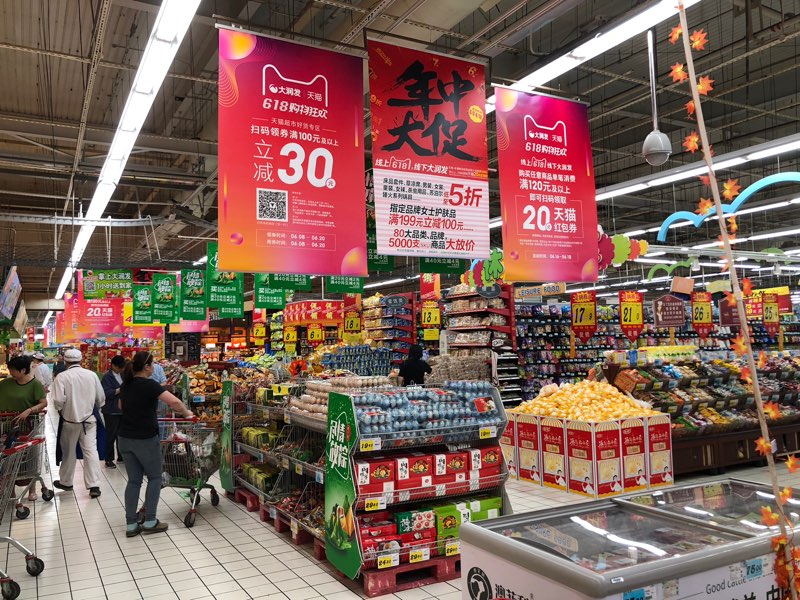
    Alibaba Group Holding Ltd. today announced a New Retail makeover for 100 RT-Mart stores, offering Chinese customers a seamless experience, whether they’re shopping online or offline.

    The hypermarkets, operated by Sun Art Retail Group, include 41 stores in eastern China and others in small cities across the country. The digital makeover underscores Alibaba’s commitment to empowering its partners to move up the value chain.

    The digitized RT-Mart stores will leverage Alibaba’s New Retail infrastructure, offering store operators customer insights, supply chain management, retail technologies, smart logistics and electronic payment.

    Customers will benefit from wider variety of products and better services. They’ll enjoy a frictionless shopping experience, whether buying through the Taobao app, which offers most of what’s on the RT-Mart shelves, or at a brick-and-mortar store.

    The upgraded RT-Mart stores will offer one-hour delivery for customers living within a three-kilometer radius. Delivery is powered by Hema supermarkets’ cutting-edge logistics and resources.

    Hema’s innovative fresh food supermarket and local delivery concept – introduced by Alibaba in 2015 – is the inspiration for the RT-Mart makeover. Hema has also partnered with RT-Mart on its supply chain, helping it source high-quality fresh produce directly from suppliers. This ensures RT-Mart shoppers find a host of Hema’s “Daily Fresh”-labeled products, including fruits and vegetables, meats and dairy products refreshed every morning.

    The new RT-Mart stores also join Tmall’s 6.18 Mid-year Shopping Festival, offering coupons for either online or offline shopping.

    The upgrade of the 100 RT-Mart stores kicked off in March and is fully underway. By year-end, Alibaba intends to introduce its New Retail solution to an additional 300 RT-Mart stores. And there may be more to come.

    “RT-Mart is using the Hema business model to explore this new path of New Retail. If this proves to be successful, we will share our experience with our peers,” said Peter Huang, the chief executive of RT-Mart.

    In its ongoing push into the retail space, Alibaba late in 2017 invested US$2.88 billion to acquire a 36% stake of Sun Art Retail Group, which operates over 400 hypermarkets under the Auchan and RT-Mart banners.

  • Youku Provides “Around-the-clock” Experience for 2018 FIFA World Cup

    Youku Provides “Around-the-clock” Experience for 2018 FIFA World Cup

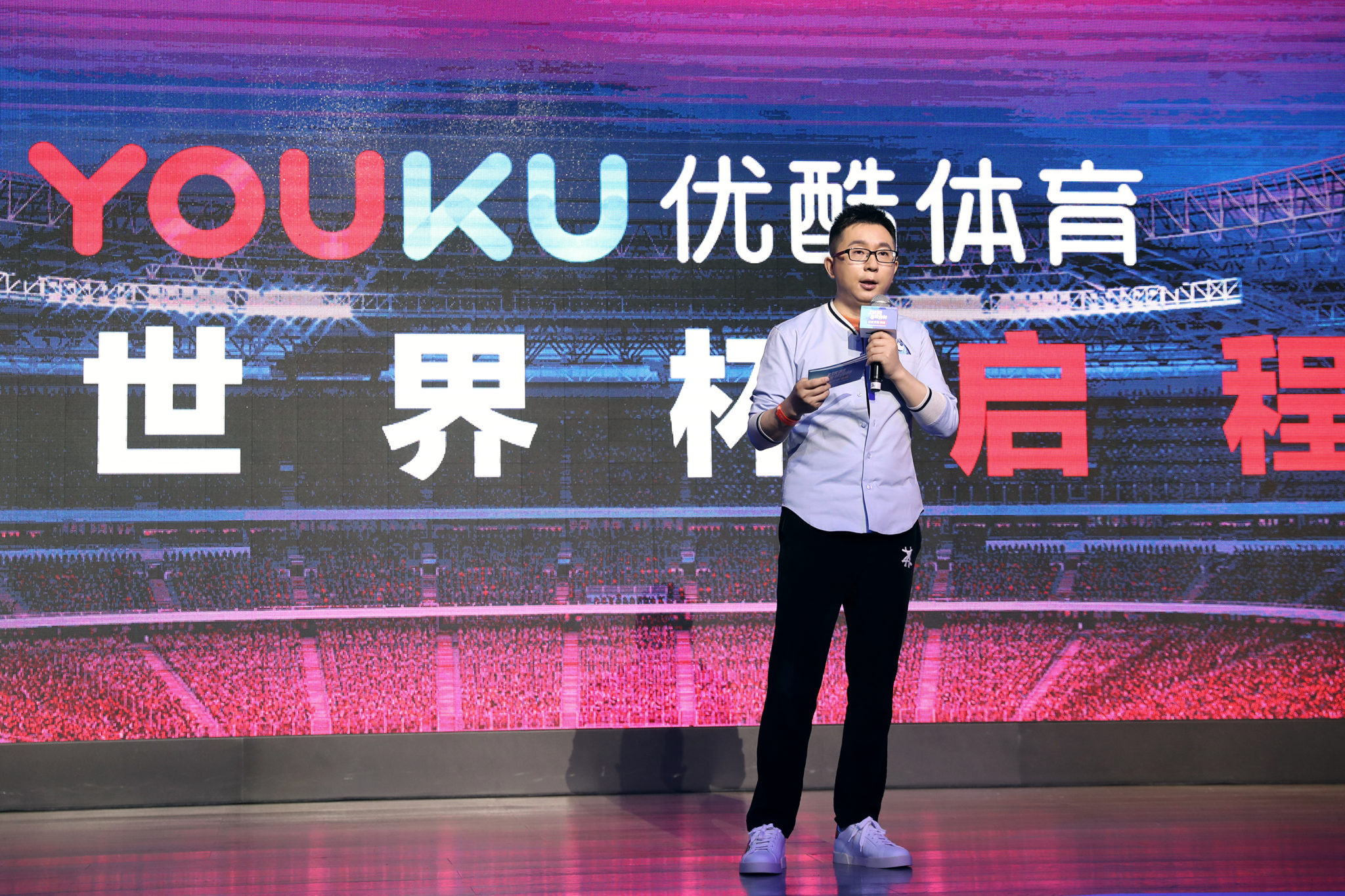
    Youku, the Alibaba Group-owned online video hub, is set to provide China’s most-comprehensive coverage of the FIFA 2018 World Cup with live streaming of all 64 games together with a number of programs produced exclusively to celebrate one the world’s most-watched sporting events. In addition, Youku will join hands with leading brands and business units from the Alibaba ecosystem including Taobao, Alipay, Hema, UC Web, Tudou, Xiami Music and Damai, to provide viewers an “around-the-clock” integrated experience that will bring the enjoyment of the famous sports spectacle to the next level.

    “Given its level of popularity, sports content in China is an effective tool in implementing Alibaba Group’s ‘Double H’ strategy, which aims to promote ‘Health’ and ‘Happiness’,” said Weidong Yang, CEO of AliMusic and President of Alibaba Digital Media & Entertainment Group and Youku. “Not only are we streaming soccer matches, but we’re also leveraging this leading sports event to showcase the power of the Alibaba ecosystem and how Youku can lead the industry and capture opportunities in the China sports market by building relevant content and excitement.”

    Tailored Programs and Contents to Celebrate the Soccer Spectacle

    Youku is partnering with China Central Television (CCTV) to stream all 64 games, along with on-demand videos and post-game highlights*, marking the first time that the Chinese audience will be able to enjoy live broadcasts of the entire World Cup tournament on their mobile phones. As the official new media partner of CCTV in this event, Youku and CCTV will co-produce a talk show called “Qi Tan Shi Yi Ren” 《奇谭十一人》, featuring celebrity guests and soccer fans. “This is World Ball” 《这就是世界波》, a sports program under Youku’s successful “This is” 《这就是》 franchise and hosted by well-known commentators in China, will go live from June 14. Tailoring to the needs of younger audiences, Youku will produce a specialized soccer education program “Play football with Peppa Pig” 《佩奇给你讲足球》. In addition, Youku has acquired distribution rights for more than 20 online World Cup programs to enrich its lineup this summer.

    Apart from Youku, UC Web, Tudou, Xiami Music and Damai, the business units from Alibaba’s Digital Media and Entertainment Group, will work together to create an omni-media matrix covering various types of content, including short videos, music, as well as text and graphics.

    Synergy with the Alibaba Ecosystem

    Following the success of “Street Dance of China”《这就是街舞》and “This is Fighting Robots” 《这就是铁甲》, Youku and a number of leading brands and businesses from the Alibaba ecosystem are joining hands to provide a wide range of promotions and specials that cover ecommerce, restaurant and takeaway food orders, travel and entertainment content consumption.

    On Youku, audiences in China can not only watch the exciting soccer matches, but also enjoy innovative interactions and games. Red envelopes of coupons worth over RMB200 million will be set aside as prizes for an online campaign, where customers collect the cards of soccer stars. Youku, Taobao, Alipay and UC Web are sponsoring the campaign. Red envelops will also appear during the live streaming of every match. They can be redeemed for purchases on Taobao.

    Also, Tmall Genie, the AI-powered smart speaker will continue the prediction game that was traditionally started by Paul the Octopus, but this time, it will compete with a Boston lobster from Hema. All predictions and results will be announced in the “This is World Ball” 《这就是 世界波》program.

    “The extensive offerings from Youku around the 2018 FIFA World Cup reaffirm our commitment to bring the world’s best sports events to Chinese audiences. The widespread support from the Alibaba ecosystem also empowers Youku to deliver a superb experience for users to enjoy the popular month-long tournament in many new and innovative ways,” added Yang.

    *CCTV has exclusive streaming rights in China.

  • Alibaba to sell more Korean stuff

    Alibaba to sell more Korean stuff

    Chinese e-commerce giant Alibaba Group announced Monday that it will expand partnerships with Korean brands in line with a Chinese government initiative to increase imports over the next few years.

    “During international forums such as Davos or Boao, President Xi Jinping has announced multiple times that China will expand exports – [the government] plans to import $8 trillion in the next five years and the China International Expo will take place in Shanghai this year,” said Angel Zhao, the group’s vice president, at a seminar held by the company on Monday at COEX in Gangnam, southern Seoul.

    “Under such import policy, Alibaba’s platforms like Tmall, Tmall Global, Taobao and others will be a useful tool for our partners to introduce their products to Chinese consumers.”

    Established in 1999, Alibaba Group is an IT giant that runs multiple e-commerce sites like Tmall, Taobao, Alibaba Express and the payment service Alipay. In 2014, it launched a Korean office aimed at expanding partnerships in Korea, but Monday’s event was the largest event it has ever held here, with some of its top executives from the China headquarters attending.

    Korean brands in Tmall Global, a website that mainly sells products from foreign companies, saw an annual sales growth rate of 45 percent between 2015 and 2017. This placed Korea as the No. 4 exporter to the website last year, following Japan, the United States and Australia.

    Alvin Liu, a general manager of Tmall’s import and export business, said he still sees potential for Korea’s beauty products to grow through Chinese e-commerce, which is currently dominated by jiulinghou, meaning consumers born in the 1990s.

    “Over 90 percent of Tmall Global’s users are jiulinghou, and in China there are 174 million people in this generation, which as a country would rank the eight largest in the world by population,” he said.

    “Data analysis [from our platform] indicates that this generation is particularly interested in expressing themselves in front of others and they’re starting to look for beauty products on a global scale – this is a big opportunity for Korea because it has an advanced market in the sector.”

    As an incentive for potential partners, both executives suggested that a partnership with Alibaba will offer opportunities to tap into both online and brick-and-mortar stores in China, including its in-house offline retailers like the grocery store Hema. Alibaba has been investing in a “New Retail” strategy, which is to expand offline services to create synergy with its online business. Earlier this year, Tmall opened its first store exclusively comprised of imported goods in Hangzhou.

    Zhao added that Alibaba could be the gateway to Southeast Asian countries as well through Lazada, a leading e-commerce website in the region which the Chinese company acquired shares of in 2016.

    “A priority for us [in the search for Korean suppliers] is to export products that are unique and trendy,” said Danny Chung, Alibaba Group Korea’s general manager. “From that perspective, diversification of product sectors apart from beauty and fashion is also important.”

  • Alibaba Hosts Taobao Maker Festival in September

    Alibaba Hosts Taobao Maker Festival in September

    China’s millennial generation is the driving force behind the shift from “Made in China” to “Created in China.” To celebrate this new generation of makers, and the consumers who are increasingly looking for unique, niche brands and products to express themselves, Alibaba Group (NYSE: BABA) will host its Taobao Maker Festival from September 13-16, 2018 at the iconic West Lake in Hangzhou. Founded in 2016, this year’s event will be the biggest yet, bringing together hundreds of Taobao creators to showcase their innovations.

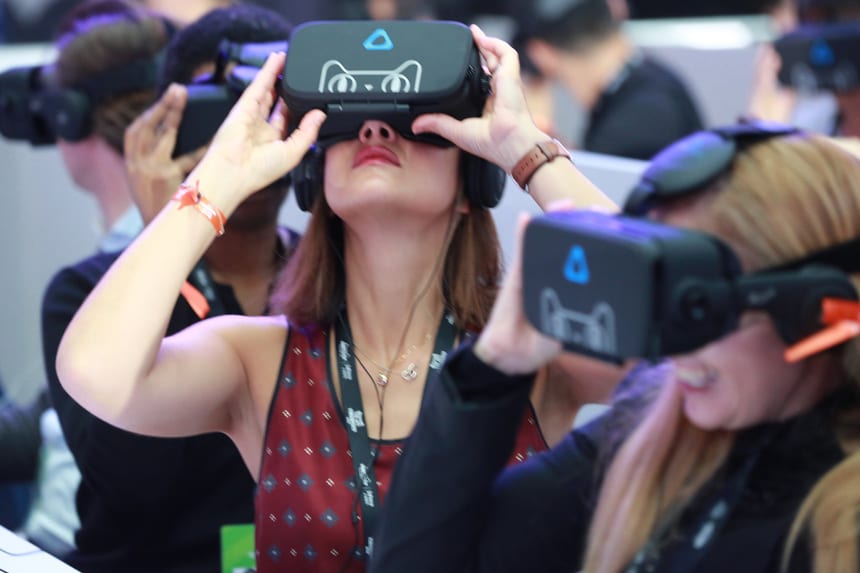
    The four-day event will draw inspiration from the city’s rich heritage and folklore and transform the picturesque West Lake into an exciting offline bazaar, featuring innovative products, cutting-edge technologies, indie designer fashion shows, live concerts, and more. Centered around the intersection of tradition and innovation, the festival will spotlight unique millennial merchants such as Chinese costume brand Kongxuansi, which sells clothes inspired by the embroidered uniforms of Ming dynasty imperial guards. The venue will also feature a 300-square-meter “futuristic shopping area” powered by AR, where thousands of visitors can discover brands, visualize in-home decor, and enjoy animated virtual companions as they shop using headsets.

    Taobao is the world’s largest mobile shopping destination and more than half of its 610 million mobile active users are in their 20s and 30s. According to KPMG, millennials will become the biggest spenders in China in the next five years. Now in its third year, the Taobao Maker Festival has not only become an annual gathering for entrepreneurs to demonstrate their creativity, but also a window for the world to better understand China’s aspirational young consumers.

  • These Chinese giants make Facebook and Google look tame

    These Chinese giants make Facebook and Google look tame

    The technology world’s most bruising battle for supremacy is taking place in China. And it could point to Big Tech’s future everywhere else, too.

    Tencent Holdings and the Alibaba Group are ratcheting up their no-holds-barred contest to dominate the ways 770 million internet users communicate, shop, get around, entertain themselves and even invest their savings and visit the doctor.

    The two titans long ago branched out from their core businesses — games and social media for Tencent, e-commerce for Alibaba — to duke it out in ever more realms of Chinese life. They have competed in messaging, microblogging and delivering takeaway food. They go head-to-head in video streaming and cloud computing.

    Today, their fiercest fight is over digital money kept on smartphones. Mobile payments have transformed the Chinese economy. Both giants, plus Ant Financial, an Alibaba sister firm, are spending big to gobble up pieces of the action.

    China’s internet powerhouses stand at the forefront of the nation’s galloping high-tech progress — a surge that has been brought into sharp focus by the Trump administration’s efforts to counter it. On one hand, the standoff over the Chinese telecom equipment-maker ZTE has exposed, to many in China, the degree to which the country still lags in core technologies such as microchips.

    But in the internet realm, China still offers a spooky potential vision of the future, one in which online behemoths like Tencent and Alibaba become the gatekeepers to the entire economy, wielding immense power over traditional industries and becoming very, very rich in the process.

    At a conference in December in the Chinese city of Guangzhou, Tencent’s chief executive Pony Ma said he felt the two companies were competing in “too many” areas.

    “Sometimes I think, ‘Ah, we’re competing in this now, too? All right then,’” Ma said, chuckling. “It’s a little frustrating.”

    A duopoly this broad could not be easily replicated in other countries,  for example the United States. Entrenched competitors and the threat of government intervention generally keep the likes of Apple, Amazon, Google and Facebook from expanding pell-mell into adjacent businesses. All of them have sprawled and overlapped mightily, but Amazon, with its forays into groceries, pharmacies, health care and more, might be the furthest along towards creating an inescapable commercial universe.

    Still, with the European Union enacting tough new privacy laws, and some in the United States eager to follow, Google and Facebook could soon be forced to find ways to make money beyond selling users’ personal information to advertisers, said Raj Rajgopal, president of digital business strategy at Virtusa Corp, a consulting firm.

    “As profitability reduces, they’ll say, ‘Now I need to monetise my customer base,’” Rajgopal said. “The innovation we’re seeing in China could be seen in the US in the next three to five years,” he added. “Customers are demanding that.”

    China’s internet titans have a powerful ally found nowhere else, though: the Chinese government. Tencent and Alibaba have avoided anti-monopoly clampdowns by staying in Beijing’s good graces, said Hu Wenyou, a partner at the Beijing law firm Yingke. Their sheer size also makes them easier for authorities to control. They simply have too much to lose.

    “If you can become so big, and so successful in so many areas, this in itself shows that you must have maintained very good, very friendly relations with the government,” Hu said.

    Neither giant is done getting bigger.

    Each has a market capitalisation of close to $US500 billion ($663 billion), making them among the most highly valued technology firms on the planet. Google and Facebook still claim more users, but the Chinese heavyweights arguably do more — and more, and more — for theirs.

    The latest battleground? Brick-and-mortar stores. Alibaba has spent great sums — $US2.9 billion on a supermarket chain, $US2.6 billion on a department store and mall operator — to conquer the real world. Tencent has followed suit with its own retail partnerships and investments.

    Once the companies have locked people into their payment systems, they can become the enablers of commerce and financial services of even more kinds. In a sign of investors’ excitement about the possibilities, Ant Financial is making plans to go public, in a blockbuster stock offering that could give the company a market value larger than Goldman Sachs.

    China has become a model for tech’s world-swallowing tendencies partly out of circumstance.

    With the country’s high-speed churn of well-funded startups, planting flags on new turf is often the only way for large players not to be constantly losing ground.

    Also, both Alibaba and Tencent have struggled to make much money outside their home market. That means their surest way to keep growing is to get more deeply involved in more areas of their Chinese users’ lives.

    Those lives are riper for tech disruption than lives in the West. In China, small stores dominate retail. Hospitals are crowded and doctors overworked. Most people do not have credit cards. These are easier business opportunities for Alibaba and Tencent than they would be for Amazon or Facebook.

    In a report this week, Morgan Stanley predicted that by 2027, the total market in China in which Alibaba could be making money will be worth $US19 trillion — more than Amazon’s potential market worldwide.

  • Wanda and Tencent join forces for omnichannel retail

    Wanda and Tencent join forces for omnichannel retail

    Dalian Wanda Group and Tencent Holdings Ltd will join forces to set up an internet technology firm, strengthening their position in retail.

    Dalian Wanda, which Is the largest property developer in China, will own 51% of the venture and Tencent 42.48%, with the remaining 6.52% going to Gaopeng, a joint venture between Groupon and Tencent.

    The project combines technology and brick-and-mortar retail and it is hoped that developing an omnichannel offering will help the businesses compete in New Retail, a space in which Alibaba is currently the world leader.

  • Alibaba shows off automated wine store in Hong Kong

    Alibaba shows off automated wine store in Hong Kong

    Alibaba’s Tmall, China’s leading B2C online marketplace, wants to give wine selection and consumption a 21st century upgrade.

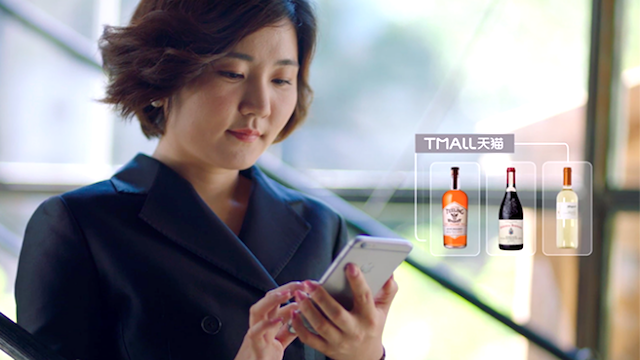
    At Vinexpo Hong Kong this week, Tmall unveiled a host of new technologies for the industry, including an automatic wine store, initiatives far from the grape-stomping and oak barrels of old.

    Tmall showcased a “Future Bar,” which included facial-scanning for entry, a robot waiter, RFID technology to enhance browsing, touch-screen displays for product research and a “Smart Wine Cooler.” The technologies are part of a larger trend in “New Retail,” an initiative in China led by Alibaba to merge the best of online and offline commerce for the benefit of both consumers and merchants.

    Mike Hu, a senior director at Tmall, said the goal of New Retail is to make shopping more personal, more engaging and more convenient – even in traditionally stodgy industries such as wine.

    “China really is at the forefront of consumer engagement right now,” Hu said. “Shopping here is mobile, it’s fun, it’s interactive, and the wall between e-commerce and brick-and-mortar stores is coming down. This kind of comprehensive shopping experience is what Chinese consumers have come to expect, so wine sellers need to adapt if they want to be successful here.”

    Upon arriving at Alibaba’s booth, attendees were greeted by the Tmall Robot Waiter, who asked, “Hey, don’t you want to have a drink?” – in multiple languages. The advanced human-computer interaction offered a glimpse of the future for wine merchants and their customers, Hu said.

    Facial scanning

    Facial scanning, meanwhile, offered entry to the booth and pointed a still-growing but soon-to-be important part of the consumer experience in China: facial-recognition payments, Hu noted. Already, Alibaba’s supermarket chain, Hema, has implemented the technology in one of its Shanghai stores. It is being tested in a cashierless store at Alibaba’s Hangzhou headquarters as well.

    The RFID technology was embedded in the foil wrapping that covers the cork so that when they were picked up from a shelf, their product information was displayed on a nearby screen. So, too, were recommendations for food pairings.

    Touchscreens at the booth allowed visitors to research a wine’s home chateau and place orders through the brand’s Tmall flagship store. This kind of setup would save much-needed stock and shelf space for retailers, Hu said, while providing greater selection for consumers visiting the shop and offering delivery direct to their homes.

    Users of Tmall’s Smart Wine Cooler scanned a QR code to open the cooler door, after which they could choose their favorite bottle and then simply close the door again to pay automatically. Or, as Tmall put it, “close the door, the deal is done.”

    Ecommerce marketplaces, such as Tmall, are playing an important role in China’s wine market, said Guillaume Deglise, CEO of Vinexpo. Not least because the brick-and-mortar retail business is not on par with other markets.

    “It’s very difficult to find very good shops in China, especially in tier-two and tier-three cities,” Deglise said. “So, e-commerce is changing this.”

    Also, younger consumers in China are more used to online shopping than their peers in the US and Europe, he said, “so the distribution will be different in China than the rest of the world.”

    Asia, overall, is driving global growth in the wine market, according to a new report from Vinexpo. And China is leading that trend. The country was the world’s third-largest importer in 2017 by value, at $16.41 billion, behind only the US and UK By 2021, however, China will overtake the UK in the number-two spot with $22.97 billion – a near 40 per cent jump.

    Deglise points to the middle class for these increases, especially those in urban centers, such as Beijing and Shanghai. An uptake among women is also playing a role, as is a general trend toward wellness in China that has people reaching for vino instead of the country’s traditional “baijiu” hard liquor.

    Then, there’s travel to markets where wine is already popular, such as the US, Europe and Australia, which gives Chinese consumers the chance to try new varieties.

    “When they come back home they tend to drink more wine than before,” Deglise said.

    This means that wine-producing countries will benefit, he added. Vinexpo expects almost all producing countries to increase their exports to China over the next five years, making China the only market to prompt such demand.

    “All producing markets are depending on China,” Deglise said. “It’s a huge market with tremendous potential.”

    Alibaba signed two memoranda of understanding at Vinexpo on Wednesday, with governmental organisation Wine Australia and French wine critics Bettane & Desseauve. Tmall will work to market Australian wines on the platform and support Wine Australia’s marketing efforts around major events such as the 11.11 Global Shopping Festival. For Bettane & Desseauve, Tmall will use their reviews to complement its wine listings while also hosting their annual top wine lists as they are released. They will also partner on offline wine events in China.

  • Jack Ma at the Global Smart Logistics Summit 2018

    Jack Ma at the Global Smart Logistics Summit 2018

    Cainiao’s 2018 Global Smart Logistics Summit was held 31 May 2018 in Hangzhou.

    Alibaba Group will invest over 100 billion yuan to build the technical backbone for a smart logistics network aimed at improving delivery reach and efficiency, as well as sharply driving down logistics costs, said Jack Ma, Executive Chairman of Alibaba Group at the 2018 Global Smart Logistics Summit.

    The network mainly aims to push 24-hour delivery across China and push logistics costs down to less than 5% of China’s gross domestic product from around 15% at present, and thereby increasing profit margins for the manufacturing industry and logistics sector. It also aims to push 72-hour delivery to the rest of the world.

    Over the past five years since its establishment, Cainiao Network, Alibaba’s logistics affiliate, has witnessed an increasingly intelligent logistics industry as a result of the joint efforts of Cainiao and its partners. Through technology innovation and open collaboration, Cainiao has currently reduced cross-border shipping time from an average of 70 days to less than 10 days for some countries.

    The number of B2C parcels that go through customs clearance is now one million every day. Within China, Cainiao’s same-day and next-day delivery now covers 1,500 counties and districts.

    “This network is not only national, but global. This is what we will work closely with our partners to achieve and bring benefits to all,” said Ma. “As the industry will increasingly become tech-driven, Cainiao aims to be the ‘brain’ of the logistics industry. Since the first day of its birth, Cainiao’s mission is not to deliver goods, but to help delivery firms to deliver goods by building a network that links all logistics elements and connects every deliver person, every warehouse, every hub, every city, and every house.”

    Today, about 100 million parcels are processed through Cainiao’s logistics platform every day. What has made it possible is Cainiao’s efforts in driving industry digitalization. For example, the electronic bills and labels have helped digitize and standardize the industry infrastructure.

    China’s logistics landscape has undergone massive change in recent years, reaching unprecedented scale. Ma noted the industry started from zero ecommerce parcels and is now delivering 130 million parcels per day, while there are about five million people working at courier and food-delivery companies in the country, and seven delivery companies have gone public.

    With that pace of change, it’s not unreasonable that the peak handling during the company’s 11.11 megasale will become the daily average a decade later.

    “We want to build this network to help the industry to meet the future needs,” said Ma. “Today, the industry can process 100 million packages a day. In the future, we will need to process 1 billion packages a day. The logistics industry need to get prepared for that with a robust infrastructure.”

  • Tmall and Intersport launch interactive megastore in Beijing

    Tmall and Intersport launch interactive megastore in Beijing

    Tmall and Intersport unveiled a co-branded store in Beijing yesterday, complete with interactive features that offer consumers in China a more engaging and informative shopping experience.

    Under the new name “Tmall x Intersport,” the two-story, 1300sqm space that sits in Beijing’s tourist hotspot Qianmen has been transformed into a futuristic megastore. The revamp underscores that more global brands are recognising the power of New Retail—tech-driven retail model pioneered by Alibaba that captures the best of online and offline shopping experiences.

    “We believe Tmall is the ideal partner in our endeavour to further our engagement with Chinese consumers by providing them the best-quality and most-fashionable sports goods in the market,” said Victor Duran, CEO of the Switzerland-based sportsgoods retailer Intersport.

    Established in 1968, Intersport has more than 5000 branches in 44 countries. It sells sports brands such as Nike, Puma, Reebok, Adidas, North Face and Dynatour. Intersport made its foray into China in 2013 and opened its Tmall flagship store in September 2016.

    “These new in-store technologies provide consumers in China an unprecedented shopping experience that is both entertaining and educational so they can have fun while shopping for the exact products that meet their unique demand,” the CEO said.

    Currently, Intersport has 24 stores in China with the goal of expanding to at least 100 – a combination of larger flagship stores in major cities and smaller specialty stores – during the next couple of years. “It makes sense to have Tmall technologies to be the link to connect all the stores together,” Duran said.

    New Retail is the new solution

    Many industry watchers have pointed to New Retail as the solution for brick-and-mortar retailers feeling the squeeze from e-commerce. By harnessing engaging technologies, store owners can attract more customers through both online and offline channels. Moreover, these technologies can generate insights to help businesses gain a more-precise view of China’s market trends and customer preferences.

    “We are excited to see an extensive range of Tmall’s New Retail technologies and features under one roof in Intersport’s store,” said Jessica Liu, president of Tmall Fashion and Luxury. “What’s even more encouraging is to see our merchants embracing the New Retail concept and exploring its potential. When customers try out these features firsthand, we are confident that they will see the convergence of online and offline shopping as the future of retail.”

    The Tmall and Intersport store is the latest example of how Alibaba’s New Retail technology is helping brands build up and reimagine their business in China since the push began in late 2015. To date, Tmall Fashion has collaborated with over 400 brands, including top names such as Burberry and Zara, and upgraded more than 50,000 storefronts all over China. Liu said the goal is to increase the collaboration to 1000 brands and help digitise 200,000 storefronts nationwide in the next year.

    Educate your customers

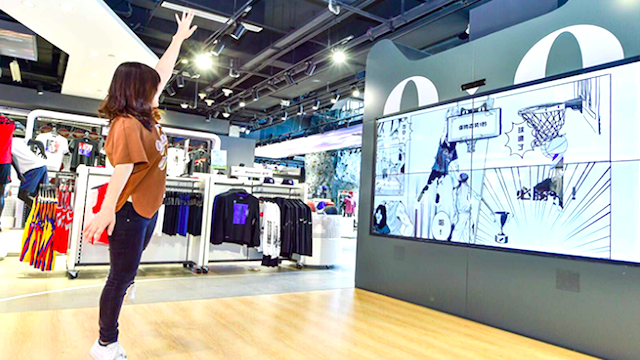
    At the grand reopening yesterday, customers were welcomed by an array of state-of-the-art technologies and augmented reality-powered interactive games. For example, the Smart Shelf and the Smart Shoe Mirror can instantly tell customers all the information they need about a certain shoe they pull from the shelf. This way, the customer can make a more-informed decision on whether or not the products fit their individual demands.

    Education on how a product suits an individual’s needs is an especially crucial element in the sportswear and gear market in China, said Tom Birtwhistle, director of China digital strategy at PricewaterhouseCoopers.

    With a government-led mandate to become more physically fit, and as China gears up to host the 2020 Summer Olympic and the 2022 Asia Games, Chinese customers are becoming more interested in adopting an active lifestyle, he added.

    “Chinese consumers are massively curious in learning about new brands and products. For new sports they want to be educated on the activity and understand how technical features can enhance their performance,” said Birtwhistle.

    His research indicates growth in the athletic fashion category is outpacing China’s overall fashion market. The segment is forecast to see 9 per cent growth annually in sales between 2017 to 2020, versus just 4 per cent for men’s and women’s fashion.

    At the smart megastore, shoppers can also get wardrobe tips from an AI Shopping Assistant – an interactive mirror that recommends related accessories or items that complement the article of clothing they are trying on.

    Can’t find what you want in the store? No problem. The megastore is equipped with Cloud Shelf technology, a virtual shelf that quadruples the volume and production selection customers can choose by simply tapping on the touchscreens, according to Tmall.

    A 24-hour interactive window display at the store’s main entrance means people can shop at the megastore around the clock. By using motion-sensor technology, the giant screen wall can distinguish the gender and approximate age of the passersby and recommend the best type of shoes for that person.

    Those who don’t want to lug heavy shopping bags or bulky shoe boxes around the streets of Beijing can opt to have their purchases delivered to a designated address anywhere in the country. Cainiao, Alibaba’s logistics service, can make the delivery in as quickly as two hours for locations within 5km of the store. Next-day delivery is also available for locations outside of Beijing.

    By scanning the QR code of a product on their phones, customers of the Tmall and Intersport store can also place the products in their Virtual Shopping Bag, so they can still buy the item online after they leave the store.

  • Alibaba demonstrates smart ordering in cafe and restaurants using voice AI

    Alibaba demonstrates smart ordering in cafe and restaurants using voice AI

    Alibaba Machine Intelligence Technologies has unveiled an intelligent speech interaction technology aimed at “smart ordering” in cafes and restaurants. The new technology lets buyers order their food item or coffee by speaking to a smart ordering machine.

    The Alibaba DAMO Academy unit, which focuses on fundamental AI research, said the machine will understand the customer order requests and display the order onscreen in a split second.

    Buyers can modify their orders as many times as they want, and the machine is expected to catch all the changes and update immediately. For example, a customer might say: “I want to order two large cups of cappuccino. Oh, please make them with less sugar and decaf. To go. And sorry. That should be three cups of cappuccino, two large and one small.” The smart ordering machine will then display the full order as two large cups and one small cup of decaf cappuccino, all with less sugar than usual and note that it’s for takeout.


    Smart ordering is possible through the team’s latest research in spoken language understanding (SLU), a field that involves both speech processing and natural language processing. First, the team develops a multi-modal speech interaction solution that can capture both voice and visual features, taking into account such things as the speaker’s pace, pauses between words, pronunciation, breaths and facial expression. Next, the team builds a reinforcement-learning model that allows for revisions and intent detection. All are important in the SLU field, making it possible to apply the latest SLU technology into commercial use.

    The solution is currently only for Chinese-speaking customers. The smart ordering machine is expected to roll out to the market in the next few months, and the technology solution will be available on Alibaba Cloud to benefit small and medium-size enterprises.

    Zhijie Yan, Head of Intelligent Speech Interaction at Alibaba Machine Intelligence Technologies said, “Our multi-modal speech interaction solution, underpinned by our insights in spoken language understanding, can be used in different scenarios including food and beverage ordering, customer service, voice commands for home appliances and in smart cars, and voice response to inquiries in shopping malls or airports.” “With the smart ordering machine as a perfect example, we believe the solution would greatly enhance the customer experience and make running a business more efficient,” added Yan.

    In December last year, Alibaba introduced far-field voice-recognition technology to ticketing kiosks in Shanghai metro stations, allowing passengers to use their voices to tell the kiosks their destination, and the machines will recommend the best route.

  • Alibaba backs virtual showroom startup Ordre

    Alibaba backs virtual showroom startup Ordre

    Alibaba Group has bought a minority stake in Ordre, a European online luxury wholesale platform.

    Ordre, launched in 2015, allows fashion designers to show off their collections via 360-degree photography and virtual reality to interested wholesale buyers. The technologies make it more convenient for buyers, who aren’t always able to travel due to time and distance constraints, to build inventory each season. The reduced travel translates into lower carbon emissions at a time when sustainability is increasingly important to the industry, said Ordre.

    Dianne Von Furstenberg, Vivienne Westwood and Jason Wu are among the world’s leading designers who have established digital showrooms on Ordre. They also work with fashion brands such as Joseph.

    For Alibaba, the investment is a further push into the luxury sector, which is among its top strategic priorities, given the rising spending power and increasingly sophisticated tastes of Chinese consumers. The Hangzhou, China-based company plans to leverage Ordre’s technologies for consumers, however, delivering a more-enhanced shopping experience on platforms such as B2C marketplace Tmall.

    “Matching Ordre’s technology with Alibaba’s unique data insights and capabilities – of which our recently launched Luxury Pavillion is a great illustration—we can provide our consumers with a personalised and differentiated experience, helping brands develop a deeper engagement with them,” said Jessica Liu, president of Tmall Fashion and Luxury.

    The Luxury Pavillion, which lives within Tmall, was launched last August to deliver to China’s high-end consumers the same kind of brand exclusivity and tailored shopping experience online that they would expect at a brick-and-mortar store. About 50 brands, including l, offer products ranging from apparel and cosmetics to watches and luxury cars.

    The pavillion is driven by Alibaba’s New Retail technologies, which blend online and offline commerce to deliver a better buying experience for consumers. Simon Lock, founder and CEO of Ordre, said the company’s digital assets, including 360-degree images, 360 video and VR fashion shows and designer interviews, are in line with this strategy and could serve Tmall shoppers and brands.

    “Our 360-view allows consumers to understand every aspect and every view of a garment,” he said. “When you’re purchasing online, as much detail as can be provided is going to make your purchasing decision much more confident,” which can help drive down the product return rates.

    The companies are currently discussing a number of potential initiatives that would expand on these technologies. One of which would create new direct-to-consumer channels for Ordre’s partner brands by leveraging content to communicate their brand story and provide more information about products. For example, Ordre’s VR technology was able to recreate Stella McCartney’s Coachella-inspired 2018 fall show and the theatrical experience of Thom Browne’s latest showcase in Paris, so that buyers could watch fashion shows from the front row.

    Other potential collaborations include “fit avatars,” which allow buyers to see collections on models in 360-view and technology that allows buyers to remotely feel fabrics on a touch pad.

    Lock said he was also interested in Alibaba’s “See Now, Buy Now” technology, as well as the company’s artificial intelligence and cloud-computing capabilities.

    “We can work together to create the ultimate global fashion cloud,” he said.

  • Who’s who of retail CEOs at Consumer Goods Forum

    Who’s who of retail CEOs at Consumer Goods Forum

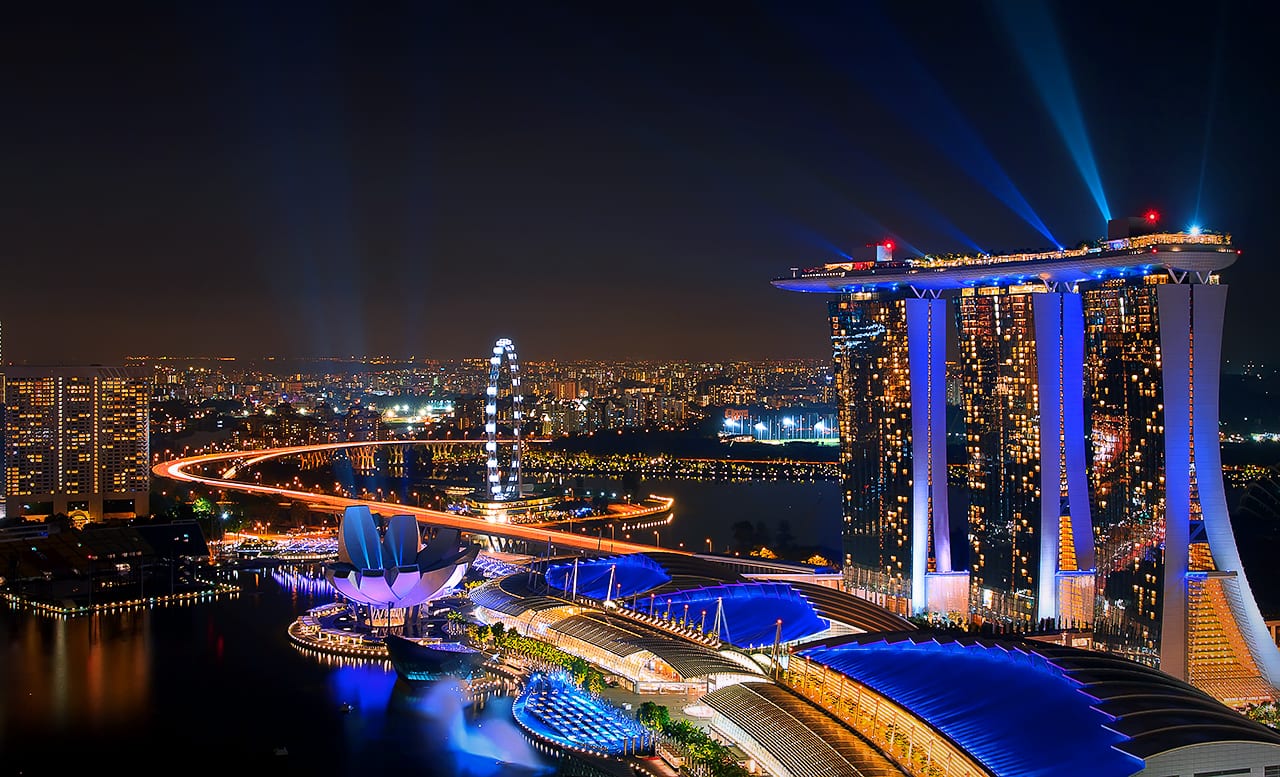
    Next month’s Consumer Goods Forum to be held at the Marina Bay Sands will feature a ‘who’s who’ of international retail leaders.

    This year marks the first time in a decade the event is being held in Asia. Running from June 12-15, it is themed Consumer Centricity in a Data-Driven World.

    Industry leaders including Alibaba CEO Daniel Zhang, Dairy Farm International CEO Ian McLeod, Coca-Cola Company CEO James Quincey, Majid Al Futtaim Holding CEO Alain Bejjani, Ahold Delhaize CEO Dick Boer, JD international president Winston Cheng, Central Retail CEO Nicolo Galante, Carrefour China president and CEO Thierry Garnier and Metro AG CEO and chairman Olaf Koch are all on the speaking roster.

    Former US Secretary of State Madeleine Albright will deliver a keynote address.

    Consumer Goods Forum MD Peter Freedman says the summit is often described as the most important leadership event on the consumer goods industry’s calendar.

    “The key focus of this year’s conference will be on how to ensure that we continue to keep consumers at the centre of the digital transformation in our industry. In that context we will also be discussing how we can accelerate our work on global positive change, which millennials and younger consumers are so concerned to see. We are delighted to be holding the event in Singapore, one of the world’s leading smart cities, with some of the most digitally sophisticated consumers, and geographically close to so many Asian digital innovations.”

    More than 1000 delegates, from more than 400 leading retailers and consumer goods companies will engage with this year’s theme through sessions focused on stories such as:

    • Investing in the age of disruption;
    • Evolving retail for the smart consumer;
    • The future of work: people & technology;
    • Positive change in action: driving a circular economy;
    • New Retail: creating new value for consumers;
    • Global millennials: the data-driven facts;
    • Executing a digital and omni-channel growth strategy; and
    • Transforming customer experiences through big data.
  • Alibaba supports Thailand’s TrueMoney

    Alibaba supports Thailand’s TrueMoney

    Chinese e-commerce giant Alibaba Group Holding is backing Thai conglomerate Charoen Pokphand’s TrueMoney payment service, which will expand to Bangkok’s train services as early as September.

    Passengers will be able to pay fares and shop at station kiosks by scanning a QR code on their smartphone screen.

    Alibaba’s Ant Financial owns about 20 per cent of TrueMoney, which aims to expand its network 10-fold to 100,000 locations by the end of this year. Users can charge their accounts at Thailand’s more than 10,000 7-Eleven convenience stores, which are run by the Charoen Pokphand group in Thailand, or link them to a credit card or bank account. The group also has 27 million subscribers of its telecom company True.

    Next, say industry observers, cafes and fast-food chains, including KFC, are on the radar for TrueMoney, which aims to overtake Rabbit Line Pay, the market-leading service from Japanese messaging app provider Line and elevated train service BTS Group Holdings. About 60 per cent of Thailand’s population uses the Line chat app, with users of the mobile pay service now numbering about 3 million.

    Alibaba partnered with Philippine conglomerate Ayala last year and launched mobile payments mainly at shopping malls and supermarkets.