Tag: Alibaba

  • Robots replace waiters in Alibaba diners

    Robots replace waiters in Alibaba diners

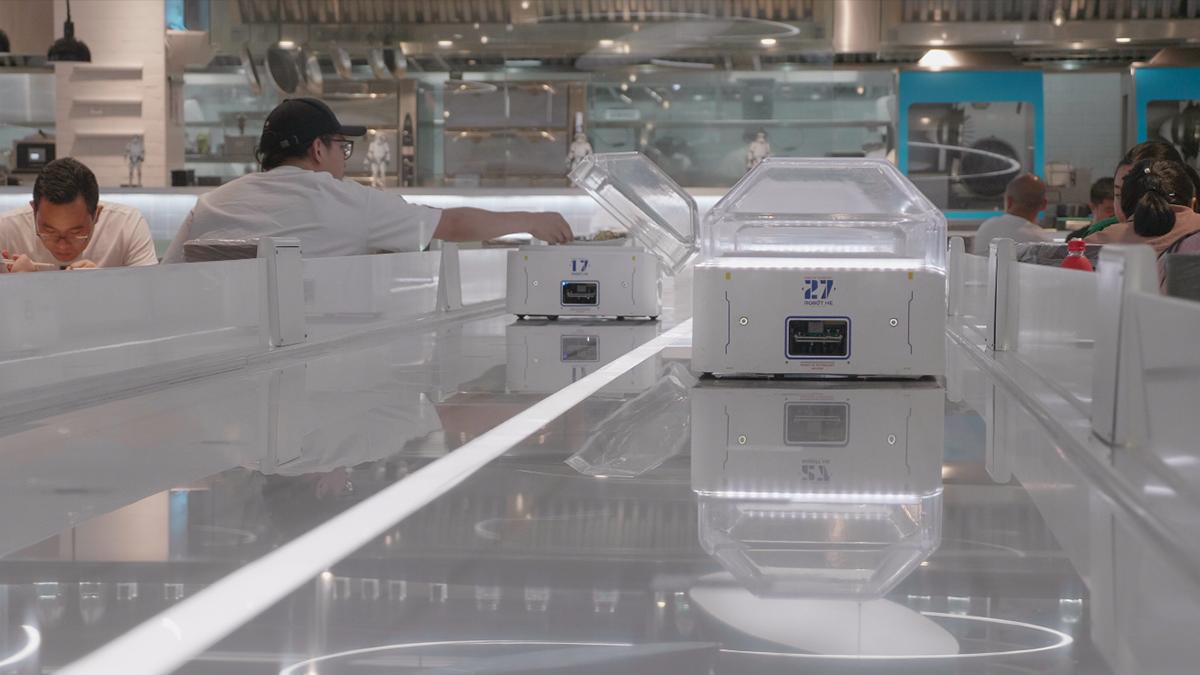
    Alibaba has launched a series of diners staffed by robotic waiters.

    The initiative is designed to offer a restaurant service with higher efficiency and lower overheads on staff.

    Alibaba product manager Cao Haitao, who brought the concept to fruition, said, “In Shanghai, a waiter costs up to 10,000 yuan (US$1465) per month. That’s hundreds of thousands in cost every year. And two shifts of people are needed. But we don’t need two shifts for robots and they are on duty every day.”

    The diners are linked to another Alibaba-backed semi-automated business concept, Hema supermarkets, in which goods are brought to customers on a conveyor track when ordered in-store via a mobile app. There are currently 57 Hema supermarkets throughout China, and all of these will eventually launch diners with robotic waiters.

    The serving robots are comparable in size to a microwave oven and navigate the restaurants on purpose-built tracks at table height.

  • Starbucks and Alibaba form New Retail Partnership in China

    Starbucks and Alibaba form New Retail Partnership in China

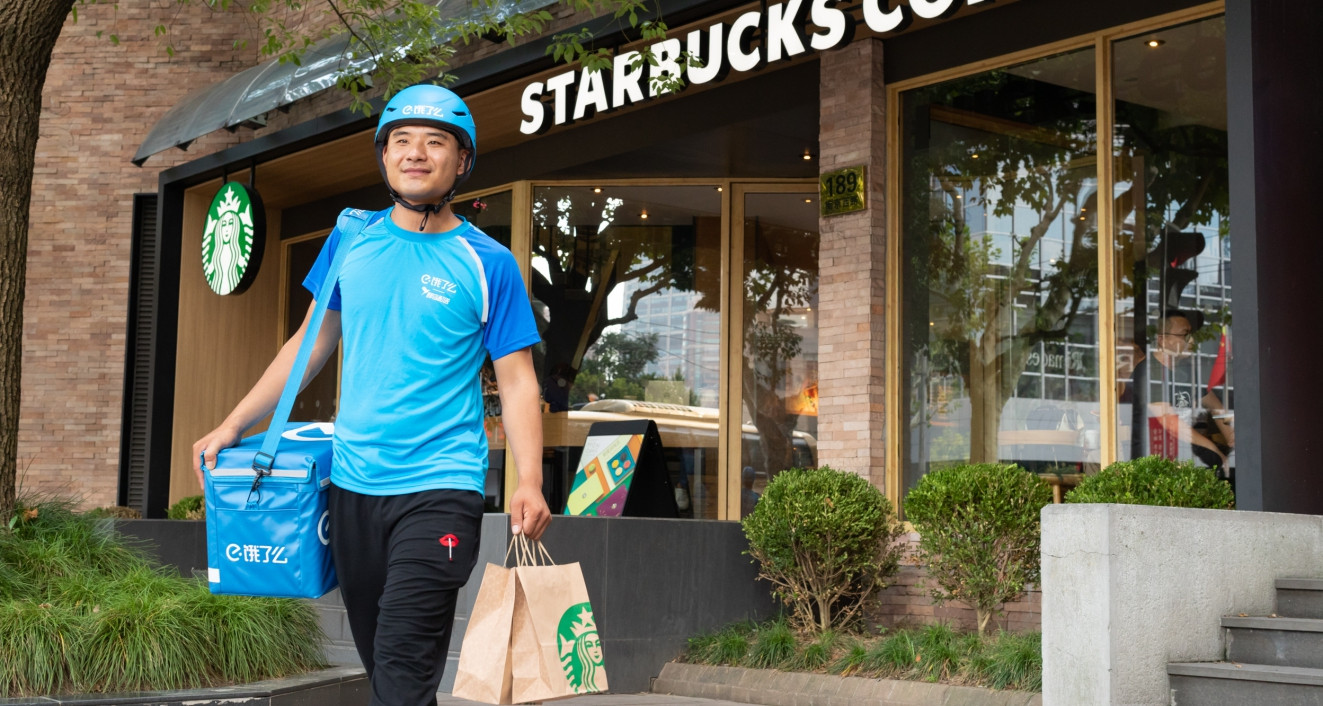
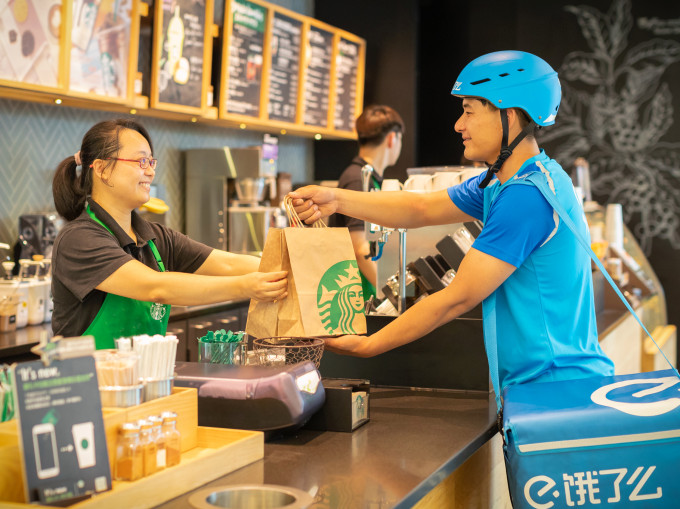
    Starbucks China and Alibaba have announced an alliance that stretches way beyond the latter’s online delivery platform Ele.me.

    The two companies describe their pact as “a deep, strategic New Retail partnership” that will enable a seamless Starbucks experience and transform the coffee industry in China.

    The partnership spans Ele.me, the food delivery platform acquired by Alibaba last month, Hema supermarkets, Tmall, Alipay and Taobao. Pilot delivery services by Starbucks China will start next month with the coffee company opening delivery kitchens to fulfil orders and “co-create an unprecedented virtual Starbucks store”.

    Starbucks China CEO Belinda Wong says the partnership with Alibaba breaks the physical and virtual barriers between the home, office, in-store and digital space.

    “It will make China the first Starbucks market to deliver a seamless Starbucks experience across all facets of our customers’ lives.”

    Alibaba CEO Daniel Zhang said Starbucks is more than a destination for premium coffee “and we share the same vision to pioneer a new coffee culture and lifestyle through innovation and technology”.

    It starts with Ele.me

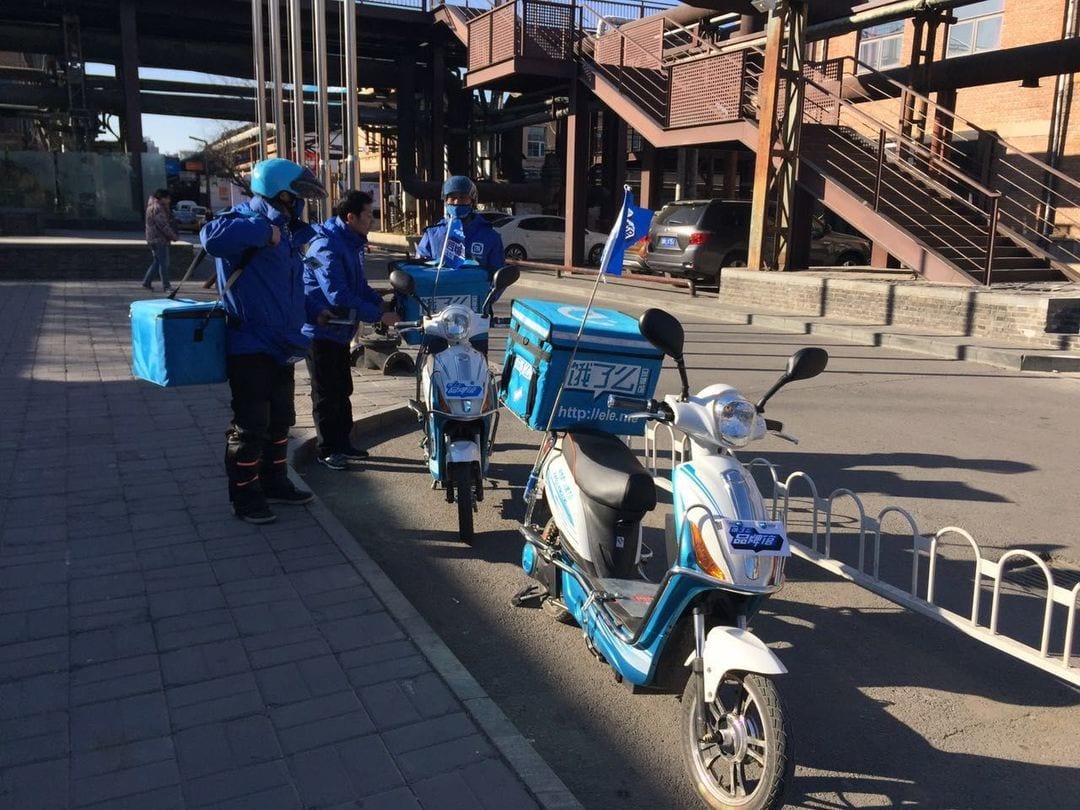
    Ele.me, China’s largest on-demand food delivery platform with 3 million registered delivery riders, will start delivering Starbucks orders from 150 stores in key trading zones in Beijing and Shanghai next month. By the end of the year, that service is expected to expand to more than 2000 Starbucks stores across 30 Chinese cities.
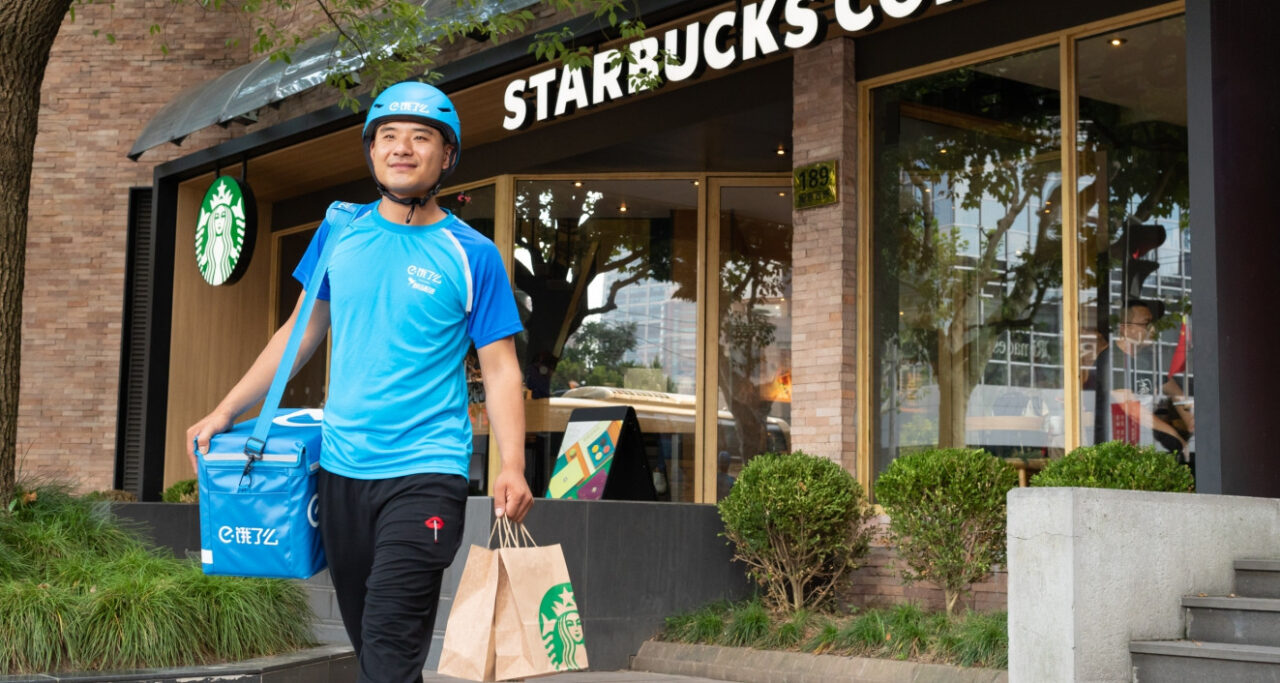
    The two companies have worked together to develop what they describe as “a unique, customised delivery infrastructure” including dedicated delivery riders, precise delivery times, and custom carriers. They believe they will be able to offer “a best-in-class coffee delivery service standard for Chinese customers” which could well be interpreted as a challenge to local startup Luckin Coffee which has grown into a US$1 billion company in less than a year, based on a mixed delivery and in-store model.

    Starbucks will partner with Hema supermarkets to open dedicated “Starbucks Delivery Kitchens” within stores. The kitchens will use Hema’s fulfillment and delivery capabilities to complement the delivery of Starbucks beverages offered through existing Starbucks stores. Starbucks will also use Hema’s consumer insights and fulfillment expertise to reach more communities across China.

    Data from Hema stores will be used to help plan the location of future Starbucks cafes, combined with delivery kitchens. The first delivery kitchens will open in selected Hema supermarkets in Shanghai and Hangzhou next month.

    Digital transformation

    Starbucks China and Alibaba say the creation of a ‘virtual Starbucks store’ in China is a key strategic initiative under the partnership.

    Alibaba will develop a centralised online management hub, with the capability to integrate and deliver a consistent Starbucks experience across multiple digital platforms. “This innovation will transcend the traditional limitations of a single-app visit by providing the consumer an elevated, and even more personalised Starbucks digital experience across the Starbucks app and Alibaba’s customer-facing mobile apps, including Taobao, Alipay, Tmall and Koubei,” the companies said in a statement.

    “This latest innovation will revolutionise the traditional offline-to-online model by effectively extending the reach of the Starbucks experience into the everyday lifestyle ritual of the Chinese consumer, regardless of time or place. Whether it is at home or in the office, within a Starbucks store or online, Starbucks customers will be able to access and enjoy a one-stop Starbucks experience when purchasing merchandise online, buying a Starbucks handcrafted beverage to be delivered to a friend or sending a Starbucks gift of love on the “Say it with Starbucks” social gifting platform.”

    Starbucks will progressively integrate its Starbucks Rewards membership platform onto the centralised system to use its consumer insights to deliver a personalised experience to customers.

    “Starbucks China and Alibaba are trusted business partners who share common values in the spirit of innovation and the unrelenting pursuit of product and service excellence,” the statement said.

    “Thanks to the elevated customer experience delivered by our more than 45,000 partners, Starbucks is growing and innovating faster in China than anywhere else in the world,” said Kevin Johnson, president and CEO at Starbucks Coffee Company. “Our transformational partnership with Alibaba will reshape modern retail, and represents a significant milestone in our efforts to exceed the expectations of Chinese consumers. Starbucks China is one to watch, and I have full confidence in the team that will bring the new innovation behind the Starbucks Experience to life.”
  • Alibaba invests in digital advertising with recent acquisitions

    Alibaba invests in digital advertising with recent acquisitions

    In a matter of days, Alibaba is investing in two separate China-focused digital advertising firms, as the e-commerce giant continues to increase the span of its company portfolio in 2018.

    Alibaba confirmed that it has agreed to acquire a minority stake in China’s Focus Media Information Technology, effectively tapping into the online marketing sector with the news.

    The transaction will see Alibaba take a 6.63% stake in Focus Media, costing the Chinese firm some 9.63 billion yuan (US$1.4 billion) in the process. In a filing, the Shenzhen-listed firm said the deal would see Alibaba become Focus Media’s strategic investor.

    Founded in 2003, Focus Media operates in China’s interactive digital and advertising landscape.

    In the latest move into digital marketing, media reports were released over the weekend outlining Alibaba’s acquisition of WPP’s Chinese unit.

    Sky News reported on Saturday that Alibaba has partnered with Tencent and China Media Capital Holdings for early-stage talks to buy a minority stake in the advertising giant’s local subsidiary.

    For an estimated 20% minority stake, which is much higher than Alibaba’s share in Focus Media, the deal is said to be worth approximately $2.5 billion.

    Alibaba looks collate its Chinese agency operations into a new holding company and retain majority ownership and control, said Sky News.

    WPP is the world’s leading advertising group. The group has been facing headwinds in recent months, with the news that company founder, Martin Sorrell, has left his post at the helm back in April, on misconduct allegations.

    His replacement is yet to be disclosed.

    Alibaba continues to ramp up its investments in 2018, a continuum from the year prior. The spending comes as Alibaba fights increased competition from Chinese rival JD.com. The latter this year has partnered with social media giant Tencent on offline retail, marketing and payments.

    For the last fiscal fourth quarter, Alibaba said in May that March-quarter revenue grew 61% to 61.9 billion yuan ($9.73 billion) from a year earlier, beating analyst estimates of a 53% increase.

  • Ele.me big ambition ready to dominate China’s food-delivery market

    Ele.me big ambition ready to dominate China’s food-delivery market

    Ele.me aims to grab a majority share of China’s food-delivery market in the near future, CEO Wang Lai, (pictured), said this week.

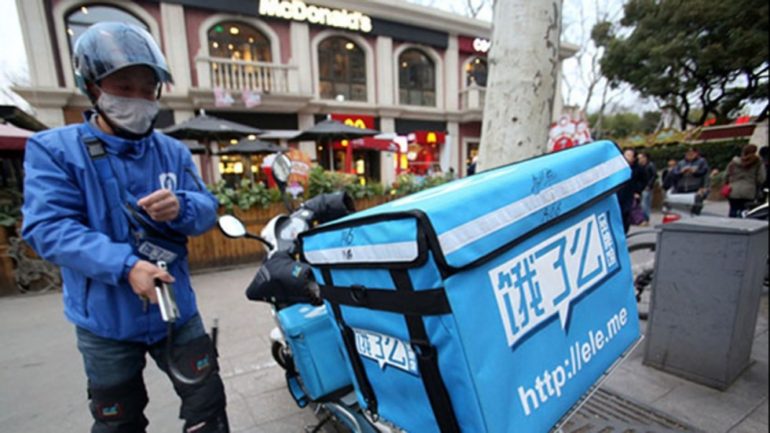
    Moving into Alibaba’s ecosystem has already created new and immediate opportunities for Ele.me and the 3 million-strong delivery force registered through its platform, Wang said. While core food delivery is likely to provide strong growth longer-term, insights offered by various Alibaba apps and platforms, coupled with a growing need for last-mile delivery in Alibaba’s overall New Retail strategy, offer hints of what’s to come.

    Alibaba took control of Ele.me in May. In June, after plugging the delivery company into its ecosystem, Ele.me delivery orders for categories including supermarkets, convenience stores under Alibaba’s Ling Shou Tong program, fresh fruits and flowers climbed 110 per cent from a year earlier. In the future, Wang said there’s the chance for tie-ups with other Alibaba business units and collaboration with nationwide food chains as a delivery partner.

    Ele.me has already begun benefiting from consumer insights derived from Taobao, Tmall, Alipay, Youku and other platforms and apps in the Alibaba ecosystem, which drives traffic to Ele.me and helps it understand the needs of Chinese consumers.

    As for Ele.me’s core food-delivery market, the Alibaba unit recently launched a RMB3 billion summer promotion campaign that’s already starting to show results in several Chinese cities. In Hangzhou, Ele.me added 100,000 customers to its membership program early this month. In Changsha, during just the first two weeks of July, gross transaction volume climbed by almost 15 per cent over the same period in the previous month.

    The summer campaign kicked off with discounts and coupons for late-night snacks delivered during the recently ended FIFA World Cup 2018 tournament. The World Cup deals spurred what Ele.me said was a “rapid rise in food delivery” in early July, with momentum sustained since then.

    But it is the sector’s longer-term prospects that excite Ele.me’s CEO. Chinese customers spent around RMB4 trillion on food in 2017, according to China Cuisine Association data. Less than 10 per cent of that went toward food delivery, which has become one of the fastest-growing and most-competitive areas in China.

    “We view the limited penetration of delivery in the food and beverage sector to-date as a tremendous opportunity for growth,” Wang said.

    Ele.me also complements Koubei, Alibaba’s local services platform. By combining Ele.me’s on-demand delivery service with Koubei’s consumer-acquisition and in-store engagement capability for restaurants and service establishments, Alibaba can offer an integrated online/offline experience to consumers, in line with the group’s overall New Retail strategy.

    “The local-services market is a must-win for Alibaba as part of its New Retail strategy, and we look forward to Alibaba’s continued financial and technological support to win this market,” said Wang. “As the spending power of Chinese shoppers continues to grow, the local-services sector becomes critical for Alibaba to build customer and merchant engagement and fulfill its mission of accelerating the digital transformation of traditional retail.”

  • Innisfree teams up with Alibaba to open new concept store in China

    Innisfree teams up with Alibaba to open new concept store in China

    South Korean cosmetics giant Amorepacific’s cosmetics brand Innisfree has opened a new concept store in Hangzhou, China, in collaboration with Alibaba’s Tmall, the company said Thursday.

    According to Innisfree, its new concept store features a technology-based shopping experience, backed by Tmall’s new retail technology.

    Tmall is China’s largest B2C platform for brands and retailers, in terms of GMV.

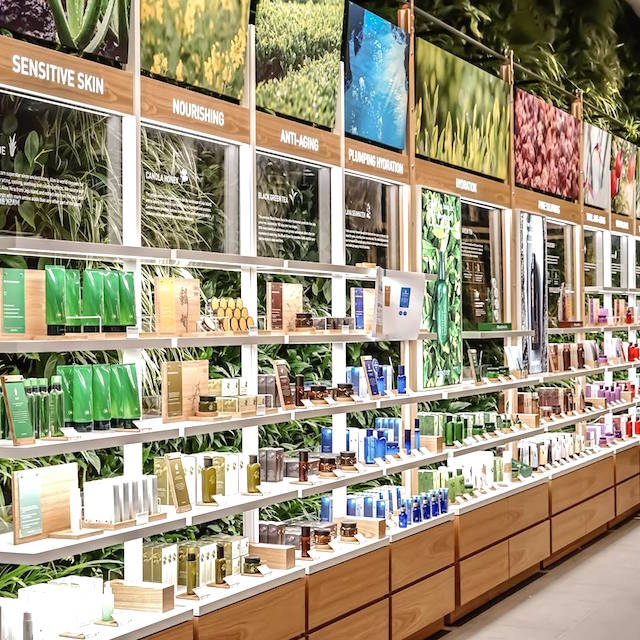
    At the store, customers can test makeup products by using Magic Mirror, which has adopted Tmall’s augmented reality technology. An automated vending machine that sells mask sheets and sample products will allow customers to easily purchase items at lower prices, the company said.

    In addition, smart shelves are installed to show each product’s information on interactive screens.

    “With the South Korean cosmetics brand acing in the Chinese market, especially with Innisfree being the only brand to have hit 1 billion RMB ($148 million) of sales, our trial with Innisfree to provide a new retail and interactive experience based on big data technology will strengthen customers’ brand experience and increase their satisfaction,” said Mike Hu, head of Tmall’s retail business division.

    Tmall also plans to collect information on real-time product availability at 61 stores in Shanghai and Hangzhou through big data technology to boost online sales and help stores digitize their operations and upgrade the supply-chain operation and offer shoppers an integrated online and offline experience.

    “Tmall is one of the most innovative and leading retail platform operators globally. We will strive to adopt digital technology and interactive content marketing from Tmall for Innisfree’s brand value,” said Filipp Cai, head of Innisfree China.

    Innisfree, which means “pure island” in Korean, is based on the philosophy of introducing beauty products with natural ingredients sourced from the Korean island of Jeju. It opened its first store in China in 2012.

  • Alipay and Singapore Tourism Board join hands to boost Chinese tourist spending

    Alipay and Singapore Tourism Board join hands to boost Chinese tourist spending

    Alipay, the world’s leading mobile and online payment and lifestyle platform operated by Ant Financial Services Group, together with the Singapore Tourism Board (STB), have launched a series of joint marketing initiatives aimed at raising destination awareness of Singapore and driving tourist spending among Chinese visitors.

    Alipay and STB signed a Memorandum of Understanding (MOU) in September 2017 to enhance Chinese tourists’ overall experience in Singapore. Under the MOU, both parties agreed, among other things, to explore co-investing in joint-marketing initiatives to encourage Chinese tourists to spend with Alipay while in Singapore.

    Since signing the MOU, Alipay has experienced double-digit growth in user spending. China has also become Singapore’s top market in 2017 for both tourism receipts and visitor arrivals, contributing S$4.2 billion in tourism receipts and 3.2 million visitor arrivals.

    The marketing activities are designed to incentivize Alipay users, through rewards and discounts, to spend across different types of tourism businesses such as retail, F&B and attractions, further boosting their spending in Singapore. Alipay and STB will also create tailored itineraries that are aligned with STB’s new Passion Made Possible brand. These itineraries will encourage Alipay users to pursue their passions by exploring and discovering new attractions, dining and shopping experiences. It will also give them more reasons to visit and spend more in Singapore.

    Additionally, the partnership will deepen STB’s understanding of Chinese visitors’ consumer behavior and spending patterns, leveraging Alipay’s insights.

    “With China being Singapore’s top source market for both visitor arrivals and tourist spending last year, we are pleased to partner with Alipay as their keen insights and deep understanding of Chinese consumers will help us to continue to grow in this critical market.

    We hope to continue to broaden over time our partnership with Alipay to explore more innovative marketing initiatives in the areas of content, digital and technology to further enhance the Chinese visitor experience,” said Ms Jacqueline Ng, Director, Marketing Partnerships & Planning, STB.

    “Singapore is a favorite destination for Chinese travelers. According to research released by Nielsen last year, it is one of Chinese tourists’ top ten preferred travel destinations in the world. Alipay is very pleased to be working together with the Singapore Tourism Board to ensure the consistent smart lifestyle for Chinese travelers in Singapore that they experience at home. At the same time, we are excited to connect more merchants in Singapore with Chinese tourists and be discovered by them through the app.” Said Cherry Huang, General Manager, Cross-border Business for South and Southeast Asia, Alipay.

    Alipay is committed to helping more local merchants be discovered by Chinese tourists and better supporting the needs of the Chinese travelers by providing a more efficient and convenient payment method via its platform.

    Mobile payment is gaining momentum among Chinese travelers overseas. According to the recent Nielsen reporti, 65% of Chinese tourists used mobile payment platforms during their overseas travels, more than six times in comparison to non-Chinese tourists (11%). Over 90% of Chinese tourists would consider using mobile payments when traveling overseas if more overseas merchants accepted them.

  • China’s e-commerce explosion is creating massive cultural change in its rural areas

    China’s e-commerce explosion is creating massive cultural change in its rural areas

    The good leap ahead: China’s lack of big-box shops has allowed the nation to leapfrog the age of brick-and-mortar retail and head straight to on-line ordering. In america, “e-commerce is a desert,” says Jack Ma, cofounder of Alibaba. “In China, it’s turn into the primary course.”

    Reaching all of China: The Chinese language authorities and e-commerce giants like JD.com are investing closely in creating infrastructure to ship to rural areas of the nation. By drawing on locals to supervise deliveries and function model ambassadors, corporations can encourage potential clients to embrace the brand new applied sciences.

    The air supply community: Drones have been key in serving to JD.com get its merchandise to rural clients. Based on the New Yorker, small cities like Zhangwei now get about 4 drone deliveries a day. Demand for drone piloting courses is hovering, too, as folks look to capitalize on the pattern.

    By the numbers: China might need the most important e-commerce market on this planet—twice the dimensions of the US—however lots of of hundreds of thousands of individuals in rural areas aren’t but procuring on-line. As giants like JD.com attain into far-flung areas, that’s altering quick: China’s e-commerce market is predicted to double within the subsequent two years.

  • China’s E-Commerce Giants Aren’t Worried About Trade War

    China’s E-Commerce Giants Aren’t Worried About Trade War

    How does the CEO of China’s second largest e-commerce company feel about the escalating U.S.-China trade war?

    Richard Liu, founder and CEO of JD.com–an online retailer with 300 million annual active customers, $56 billion in revenues in 2017, and investors including Tencent, , and –doesn’t like it. But he’s not worried either.

    “I can tell you it’s okay, ” Liu said on Monday. If his customers think the price of American goods has become too high, JD.com can find products, whether it be meat, apparel, or some other item, from Europe or Japan or Korea (among other places) to sell to them instead. “We can find another choice,” he said, adding that he didn’t think the trade war would benefit either party.

    Whatever the case, Liu noted that consumer experience–which comes down to quality, price, and service–remains JD.com’s top priority. It’s that focus that motivated his company’s early and significant investment in drone delivery; it currently uses a daily fleet of 500 drones that has over 100,00 hours of flying time.

    Whatever the product (so long as it costs at least roughly $10) and wherever the customer, JD.com delivers it for free and in less than 24 hours. Competing in Chinese retail–and against its chief rival Alibaba–without that sort of service, said Liu, would be a “disaster.” Liu hinted that may be struggling to achieve that speed in China.

    JD.com, which thrives partly because of “shopping circles”–social media-enhanced shopping–on China’s leading social platform WeChat, plans to enter the American retail market soon.

  • Alibaba’s Ele.me to further expand into the food delivery business

    Alibaba’s Ele.me to further expand into the food delivery business

    Ele.me’s announcement comes three months after Alibaba acquired full control of the food delivery app, for an undisclosed price, valuing the business at US$9.5 billion.

    “The determination of Alibaba gives Ele.me confidence,” Alibaba vice-president Wang Lei, who is also Ele.me’s CEO, said in the statement. “Ele.me is not only going to win this summer’s battle [in food delivery], it will also take the crown in the local services and new retail sector. We have sufficient capital and traffic,” he added.

    Alibaba is not the only player eyeing the food delivery business. Meituan-Dianping, China’s on-demand service giant that filed for a Hong-Kong IPO two weeks ago, controls 59.1 per cent of the market, according to the China-based market research firm iResearch.

    Didi Chuxing, China’s ride hailing giant, is the latest entrant in the already competitive food delivery business with a stand-alone platform called “Didi Foodie” launched in April. Didi Foodie currently operates in four mainland Chinese cities, including Nanjing, Taizhou and Chengdu, using heavy subsidies to reduce the cost of a customer order of rice to as low as two yuan (US$0.3), including delivery.

    Ele.me’s pledge to invest billions of yuan also demonstrates Alibaba’s ambition to amass more bricks-and-mortar assets and further develop its short-distance logistics system. Fengniao, Ele.me’s logistics system, has established around 3,000 distribution stations across the country. Ele.me’s supply chain will also be connected with Tmall, one of the two Alibaba’s e-commerce sites, according to the company statement.

    The cash injection would provide every delivery employee with a monthly salary increase of about 1,000 yuan (US$149), the company said. The average monthly salary for food delivery workers in China’s first-tier cities was 6,829 yuan in 2016, according to a report by 58.com, a local job listing website.

  • E. & J. Gallo Winery to Launch Tmall Flagship Store

    E. & J. Gallo Winery to Launch Tmall Flagship Store

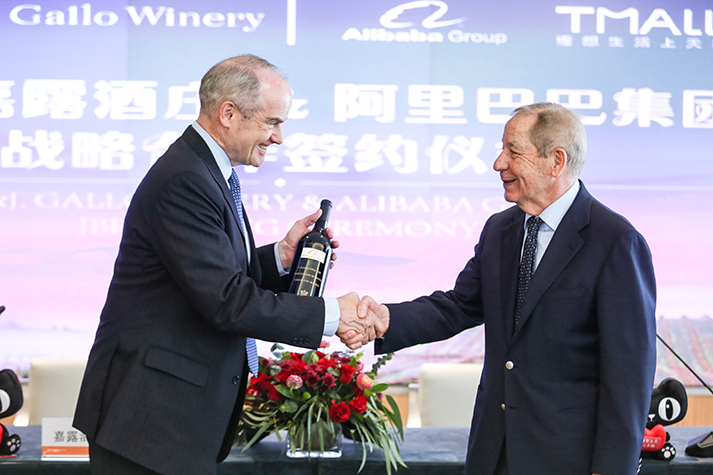
    E. & J. Gallo Winery, the world’s largest family-owned winery has signed a three-year strategic partnership with Alibaba Group.

    As part of the partnership, Gallo will open a flagship store this September on Alibaba’s Tmall, China’s largest B2C platform for both international and Chinese brands and retailers. Gallo and Tmall have partnered together in the past for some of Gallo’s entry-level wine brands, but the new flagship store will feature more than 20 of Gallo’s premium wine brands in order to meet the growing demand from China’s increasingly sophisticated consumers for high-quality wine.

    According to a new report from Vinexpo, China was the world’s third largest importer by value at $16.41 billion in 2017. By 2021, the wine market in China is expected to grow 40% to $22.97 billion which would make it the second most valuable wine market in the world.

  • Tmall Fashion, Eurovet to Support Global Lingerie Makers

    Tmall Fashion, Eurovet to Support Global Lingerie Makers

    The fashion unit of Alibaba Group-owned B2C marketplace Tmall and Eurovet, the world’s leading organiser of trade shows for lingerie, swimwear and active brands, are teaming up to help industry players sell into China.

    Tmall and Eurovet signed a memorandum of understanding in Paris on Saturday, pledging to “leverage the respective expertise and international reach to explore innovative ways to collaborate”. The partnership will also work to educate trade-show participants to better understand the unique characteristics and preferences of shoppers in the world’s second-largest consumer market.

    Headquartered in Paris, Eurovet is the largest trade show company in the global undergarment and swimwear industry, with shows in its home city, New York and Las Vegas. It has had a presence in China for 15 years, and two shows are planned, in Shanghai in late September and Hong Kong in March next year.

    “Together, our two companies will explore joint initiatives to accelerate the local and international underwear business and ultimately support companies and brands accessing and thriving in the Chinese market,” said Anita Lu, VP of Tmall Fashion.

    With the expansion of China’s middle class and its growth in purchasing power, analysts say many of the country’s consumers, especially women, are getting choosier about their undergarments. Instead of seeing bras and underwear as just functional pieces, women are buying them to feel both comfortable and sexy. According to Euromonitor, China’s retail undergarment market is likely to reach $33 billion by 2020, an estimated 32 per cent jump from 2017.

    Chinese consumers’ growing love affairs with high-end bras and panties have also stoked global brands such as Victoria’s Secret, La Perla, Maidenform, Wolford, Aubade and Zimmerli to open their own Tmall flagship stores in recent years.

    “At the end of the day, lingerie is more than an outfit. It’s a way to express inner desire,” Lu said. “The younger generations of Chinese women, in particular, are looking to be more independent and free in their choices and lingerie is a good way for them to express themselves but also to take care of their body.”

    The Tmall and Eurovet partnership will also allow trade-show participants to harness Tmall’s insights to better engage with Chinese consumers, streamline the shipping and logistic process, improve supply-chain management and communicate with their local partners, said both companies. This know-how will better empower foreign brands to run a smoother and more efficient operation in China, they said.

  • Alibaba Says Its AI Copywriting Tool Passed the Turing Test

    Alibaba Says Its AI Copywriting Tool Passed the Turing Test

    Alibaba’s digital marketing arm Alimama has unveiled an artificial intelligence-powered copywriting tool.

    Tapping the huge pool of content on Alibaba’s e-commerce sites Tmall and Taobao, the AI copywriter uses deep learning and natural language-processing technologies learn from millions of top-quality existing samples to generate copy for products. Brands and advertisers can insert a link to any product page, and click the “Produce Smart Copy” button to see multiple copy ideas.

    Currently, the AI copywriter technology has passed the ‘Turing test’ and is capable of producing 20,000 lines of copy in a second, said Alimama. Brands using the new tool, such as Hong Kong-listed fashion chain Esprit and Texas-born clothing brand Dickies, can adjust the length and tone of their copy, such as dictating whether they want the tone to be “promotional, functional, fun, poetic or heartwarming.”

    The tool is used on average nearly a million times per day, by merchants and marketers on Alibaba-owned sites such as Taobao, Tmall, Mei.com (a fashion flash sale website) and 1688.com (Alibaba’s Chinese-language wholesale buying site).

    “For merchants, from today onwards, AI can take care of a portion of their copywriting needs. And it significantly changes the way [copywriters] work: They will shift from thinking up copy – one line at a time – to choosing the best out of many machine-generated options, largely improving efficiency,” Alimama said in a statement.

    As with design, copywriting involves a certain degree of repetitive, low-value work that can be made made more efficient, Alimama added. A single product might require up to 10 versions of copy for different ad formats, like posters, web banners, product pages and other special event pages.

    “All the content produced by the AI Copywriter is the result of applying deep learning models, trained with large volumes of quality content created by humans. Human creativity is the cornerstone for the machine, which isn’t able to replace the creativity of people,” said Christina Lu, GM of Alimama marketing. “AI for marketing… allows people to devote more energy to richly creative work.”

    “The AI copywriter is a really amazing tool,” said Shaozhang Ding, head of e-commerce for the Asia Pacific market at Esprit. “Based on a massive database of existing copy and advanced AI technologies, the tool can reduce the repetitive and tedious copywriting workload for our teams.

    The AI Copywriter is the latest in a suite of technologies Alimama has developed to assist small to mid-sized businesses on Alibaba’s e-commerce platforms, including a “smart banner designer” released in April that can resize and reformat promotional website banners with the slide of a mouse (drag a corner of the banner to change the shape of the box, and the system automatically reproportions the images and copy to fit the new format). In the same vein, Alibaba released an AI-powered video-editing tool for brands to generate – in less than a minute – 20-second videos to use for promotion on Taobao.

  • Alibaba and Guess’ FashionAI Concept Store unveiled in HK

    Alibaba and Guess’ FashionAI Concept Store unveiled in HK

    GUESS is global strategic partner of Alibaba’s FashionAI project, an initiative to give shoppers a glimpse of what the future of fashion retail will look like.

    Alibaba rolled out a pilot FashionAI concept store on the Hong Kong Polytechnic University (PolyU) campus pairing GUESS’ retail knowledge and latest collections with advanced Alibaba AI and other technology.

    “By partnering with Alibaba, a dominant technology leader, we are changing the retail experience as our customers also evolve,” said José Blanco, CEO of Greater China for GUESS. “It is important that we continuously invest in new technology and platforms. This entire project came together in just five months thanks to a strong partnership between our two companies. At GUESS, we believe in the need to innovate in real time. We plan to extend this project in the region as the future of retail.”

    Besides the FashionAI concept store’s futuristic appeal, the project is aimed at providing a better retail experience for shoppers and to use analytics to help brands be smarter in ordering and maintaining inventory.

    “GUESS and Alibaba share the same vision to understand customer behaviors through technologies, ” said Zhuoran Zhuang, Vice President, Alibaba Group. “With GUESS’ retail expertise, we are able to train and refine our FashionAI system, and marry technology with fashion in a way that’s never been done before. We are looking forward to deepening our partnership to innovate personalized services offered in retail shops.”

    The FashionAI concept store features smart racks, smart mirrors and next-generation fitting rooms.

    Alibaba’s FashionAI system underpins the stores, offering up mix-and-match clothing and accessory suggestionsfor customers from the GUESS line, as well as items sold by others on Tmall and Taobao, China’s biggest B2C and C2C platforms, respectively.

    GUESS launched its store on Tmall at the end of 2013 and the brand has been one of the most popular brands in the fashion apparel category. GUESS’ store has achieved more than 100% growth over the last 3 consecutive years.

    GUESS collaborates with Alibaba closely in the New Retail concept since 2016 with the
    implementation of the O2O project in both online and offline stores.

    The FashionAI concept store, located at the Logo Square of PolyU campus, will be open to the public from July 5-7. It is being set up on the sidelines of the Artificial Intelligence on Fashion and Textile Conference 2018, co-hosted by Alibaba and PolyU.

  • Stripe enlists Alibaba for ‘smart store’

    Stripe enlists Alibaba for ‘smart store’

    Japanese clothing chain Stripe is partnering with online retail giant Alibaba to open a “smart store”.

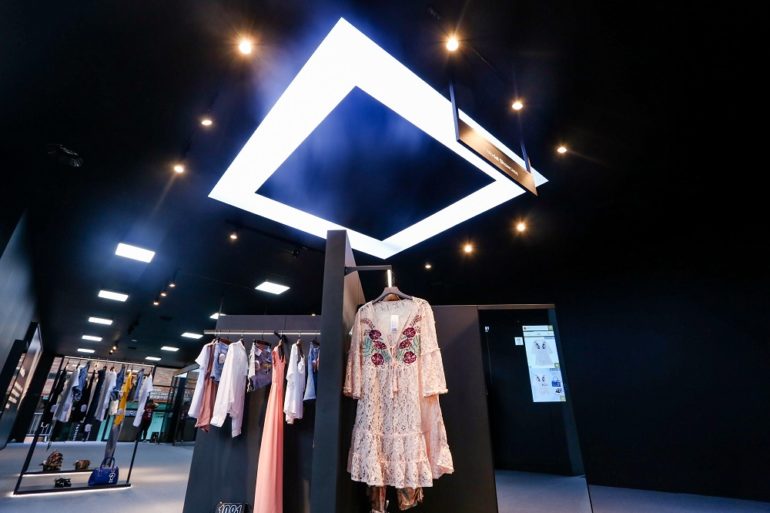
    The 60sqm physical store, stocked with Stripe’s Earth Music & Ecology branded garments, will feature enhanced technologies to use pooled customer data collected from online stores to equip staffers with information about shop visitors. The data, which could potentially include a store visitor’s online purchasing history, could help device-wielding workers make product recommendations and assist a customer in finding garments they are more likely to prefer. Purchases will be made via digital payment services.

    Data collected from the store could influence Stripe’s future product lineup, including information from “smart hangers” that can detect when an item is purchased or just shown interest in. Smart mirrors allow customers to see garments in alternative colours while facial recognition systems will be parsing for gender and age.

    Alibaba’s Tmall digital storefront, combined with its mobile payment platform Alipay, serves 550 million customers annually. The provision of the technology will allow Alibaba a unique opportunity to gather data from the physical retail realm.

    Stripe International, which runs 1400 stores worldwide, is predicting total sales this year of around RMB100 million (US$15 million) from the 20 stores it operates in China.

  • L’Oreal China and Alibaba team up on green packaging

    L’Oreal China and Alibaba team up on green packaging

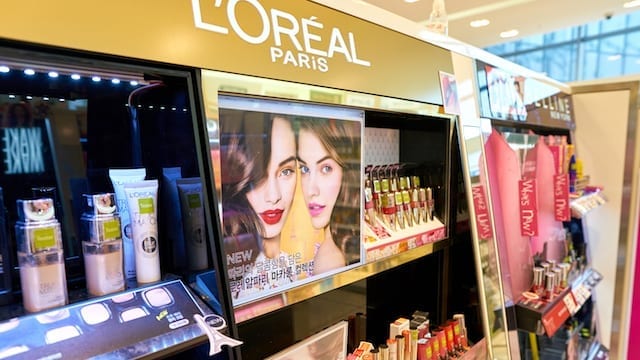
    L’Oréal China and Alibaba Group signed an agreement committing to using environmentally packaging in order to reduce waste in China.

    The agreement, which will be rolled out over the next five months, includes a pledge from L’Oréal to switch to FSC-certified sustainable paper, zipper paper, zipper paper cartons, or paper adhesives to decrease the use of plastic materials for its brand portfolio, according to the joint announcement.

    For Chinese multinational retailer Alibaba, the move highlights their strategy called new retail. As entrepreneur and author Ashley Galina Dudarenok explained, Alibaba seeks to redefine commerce by enabling seamless engagement between the online and offline world. Alibaba’s consumer-facing marketplace Tmall formed a partnership last month with the Marine Stewardship Council. Tmall’s goal is to have 20% of their sales carry the MSC label by 2020.

    The new partnership with L’Oréal China provides customers with high quality products and helps create “green, healthy, and sustainable social values,” said Jet Jing, the head of Tmall. “The upgrade of consumption is both an upgrade in quality of life as well as consumer awareness.”

    In May, Alibaba’s smart logistics arm Cainiao formed an alliance with 13 L’Oréal brands where participants commit to sustainable measures such as the use of biodegradable packaging materials. That same month, L’Oréal and sustainability consulting firm Quantis co-founded the Sustainable Packaging Initiative for Cosmetics (SPICE), aiming to reduce the environmental footprint of cosmetics products.

    Also in May, Cainiao announced plans to replace traditional paper stickers on 40 billion parcels by 2020 through the use of e-shipping labels, a measure that could save more than 3 million trees.

    Last year, as L’Oréal China celebrated its 20th anniversary, the company said they had made progress in several areas of sustainable development. “Substantial efforts have been made to reduce packaging weight,” the company reported. That meant a reduction in plastic used, changes in the composition of plastics used, the use of refillable glass containers as well as the elimination of paper instruction leaflets.