Tag: Alibaba

  • Target China learning fast as it gains momentum

    Target China learning fast as it gains momentum

    Target China is continuing to learn about the vast mainland market as it builds brand awareness in the region in preparation for a major push.

    Vincent Lau, GM China with Target Corporation, told the Omni-Channel Retailing Conference half-year seminar yesterday that China represented a steep learning curve for the US$73.8 billion US-headquartered value retail business.

    “We had to forget everything we know. Being number two in the US market doesn’t resonate into anything in China.”

    Lau said that while 96 per cent of Americans recognised the distinctive red circles of the Target logo, it was probably the opposite in China. “They just see a bullseye.”

    Target believes its US brand promise “Expect more, pay less” is relevant to Chinese. But the stock range had to be adjusted to local market expectations. To date, Target is strong in mother and baby products and dry grocery lines, where it has localised sourcing and range.

    “We keep an open mind. We test and we learn. We want to see what [Chinese consumers want] and why.”

    Partnering with Alibaba has been crucial for Target in building the brand there. On Singles Day, or 11.11, Target was one of the US retailers to sign on to Alibaba’s Buy+ Virtual Reality shopping experience where shoppers online could ‘walk the aisles’ of a target store in Harlem.

    Lau declined to reveal sales figures but said every product on the digital shelf had sold multiple numbers during the 24-hour online sales.

  • Cross-border eCommerce ‘set to skyrocket’ in China

    Cross-border eCommerce ‘set to skyrocket’ in China

    Cross-border eCommerce (CBEC) is set to skyrocket in China according to a new report from international think tank Fung Global Retail & Technology.

    To capitalise on this, international retailers need to complement their existing expansion strategy with online sales platforms, says Fung Global MD Deborah Weinswig.

    Cross-border eCommerce is the most efficient platform to reach increasingly affluent and sophisticated Chinese shoppers seeking products from overseas, says the report, The International Retailers’ Guide to Cross-Border E-Commerce in China.

    With Chinese authorities relaxing the rules, online purchases of overseas products are expected to increase to US$285 billion in value in 2018, up from US$136 billion last year.

    As well as authenticity being less of a concern, eCommerce purchases attract less taxes so are cheaper for consumers, writes Weinswig. As a result, it is projected that a quarter of the population will shop on foreign sites or through third parties in 2020, up from 15 per cent this year.

    “We expect CBEC will drive the next leg of eCommerce growth as Chinese eCommerce companies and international retailers launch globalised versions of their portals. By selling through CBEC, international retailers can reach Chinese shoppers regardless of whether or not they have a physical presence in China.”

    China is already the largest eCommerce market in the world, with the use of CBEC via such marketplaces as JD Worldwide and Tmall Global being attributed to the continuing rise of the upper middle class with its growing use of the internet and belief that international brands are of higher quality.

    Regulations formalised

    Most shoppers seek items related to wellbeing such as cosmetics and organic foods, expensive or hard to find domestically, says the report. Many foreign eCommerce companies have launched Chinese websites, and since late 2014 authorities have been formalising regulations including tax reforms and expediting customs clearances.

    Japanese companies in particular are targeting Chinese CBEC shoppers, using mobile apps such as Rakuten and China’s Wandou.

    Choosing the right platform is crucial, writes Weinswig. Options include…

    • Online marketplaces such as Alibaba’s Tmall Global, a third-party eCommerce platform that lets brands open a storefront. International distributors using this platform include Macy’s, Metro, Shiseido and Uniqlo.
    • Online direct sales such as Amazon.cn, Jumei Global Store, Kaola.com (for smaller brands) and Vipshop. Distributors buy from the retailers to resell to consumers.
    • Hybrid eCommerce platforms such as JD Worldwide that combine elements of an online marketplace and online direct sales. JD Worldwide partners include eBay, Lotte, Rakuten and Unilever.
    • Overseas shopping platforms.

    “To succeed in the Chinese market, international retailers are advised to have a strategic plan for CBEC that complements their China strategy,” writes Weinswig. “International retailers will need to decide which cross-border channels to sell on, driven by considerations of each platform’s targeted clientele and product category, costs, track record and suite of value-added services.”

    Fung Global Retail & Technology is based in Hong Kong, London and New York.

  • Alibaba and ecommerce festivals: Europe’s gateway to China

    Alibaba and ecommerce festivals: Europe’s gateway to China

    This year China has moved closer to becoming the world’s largest retail market, with the total retail sales of consumer goods in the country reaching 30.1 trillion yuan (£3.39 trillion) in 2015, as cited by China Internet Watch.

    To put that into perspective, according to Retail Economics the UK’s total retail sales reached £339 billion in the same year – just 10 per cent of China’s retail figures.

    One important factor stimulating this growth has been the ability of brands outside of mainland China to connect with consumers in what is the world’s most populous country. Businesses around the globe are responding to the increasing demand for foreign brands by Chinese consumers. Indeed, in 2015 alone the number of overseas companies operating in China’s free trade zones doubled.

    In today’s highly competitive global market, the ability of a brand to gain exposure in new regions is invaluable and more essential than ever before.

    This constant search for international expansion options is why shopping festivals in China have become so important to a brand’s success in the country. Not only do the festivals expose consumers to new products and allow them to experience new brands, but they provide businesses with the ideal platform to increase trade within a new market. They are gateways to the exciting, high-potential parts of this constantly evolving country that brands want to work, and compete, within.

    One example is Tmall Global’s annual 8.8 Shopping Festival in China, focused on showcasing top-selling products from global brands to Chinese consumers. The platform, which is a subsidiary of e-commerce company Alibaba Group, offers foreign brands access to 434 million Chinese consumers. The recent 2016 event featured more than 2,000 quality products from a variety of overseas markets and include fashion, cosmetics and even nutrition supplements. A series of live broadcasts also ran to connect consumers with the brands in real-time while they were watching from home and on the Tmall mobile app.

    Major British retailer Sainsbury’s was just one of more than 100 brands to exploit the 8.8 opportunity, following an announcement earlier in the month that the British retailer was expanding its offering of branded products on the Tmall platform to over 100. A variety of new products were introduced such as their mixed nuts, Fairtrade Italian-style coffee and chargrilled vegetable pasta sauce

    Looking at the level of interaction Sainsbury’s experienced on the day clearly shows the benefits of the 8.8 festival. For example, its live stream during the day received over the 50K Weibo ‘likes’, whilst the number of customers with Sainsbury’s bookmarked in their Twitter favourites rose from 110k to 155k.

    Brands should always be exploring new growth opportunities beyond their borders. Research is just the first step – appropriately leveraging an opportunity is the key.

    Shopping days provide an ideal virtual shop window and best way to do just that, giving brands the chance to start leaving their mark on new places in the world. The growing appreciation of their modern relevance can be understood further by acknowledging the general breadth of major shopping festivals that now exist; from the Korea Grand Sale, to Black Friday and Cyber Monday in the UK and US, as well as the USA Outlet Shopping Festival.

    Take Alibaba’s 11.11, or ‘Singles’ Day’, for example – the biggest shopping festival in the world, four times the size of Black Friday and cyber Monday combined. During Singles’ Day 2015, a third (33 per cent) of all purchases were international products, with consumers from 232 regions and countries completing transactions.

    The benefits of shopping festivals are twofold – product accessibility for consumers and massive exposure for brands, enabling them to expand into previously unknown territories to grow and improve brands need new territories. Shopping festivals offer them exactly that.

  • SingPost strengthens collaboration with Alibaba in eCommerce logistics

    SingPost strengthens collaboration with Alibaba in eCommerce logistics

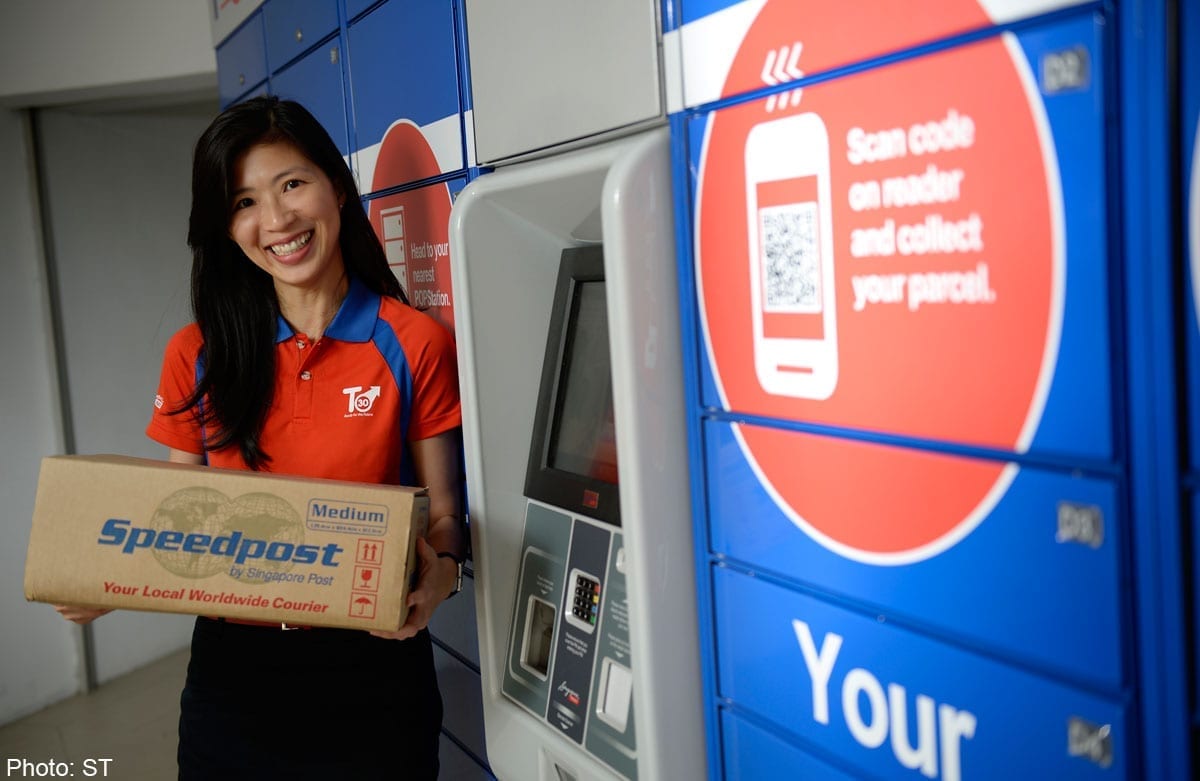
    Singapore Post Limited’s (SingPost) eCommerce logistics collaboration with Alibaba Group Holding Limited (Alibaba) was strengthened as Alibaba’s S$86.2 million investment in SingPost’s logistics subsidiary Quantium Solutions International (QSI) was completed, and regulatory approval for Alibaba’s second investment in SingPost was obtained.

    Joint venture to strengthen eCommerce logistics network

    SingPost completed the joint venture with Alibaba in which Alibaba has invested S$86.2 million for new QSI shares making up 34 per cent of QSI, with SingPost owning the remaining 66 per cent.

    First announced on 8 July 2015, the joint venture is the culmination of deepening business ties between SingPost and Alibaba. Beginning as a customer of SingPost, Alibaba became a SingPost shareholder in 2014, and today, SingPost is a strategic logistics partner for Alibaba.

    QSI, the joint venture between SingPost and Alibaba, will be a common platform to grow and enhance eCommerce logistics capabilities in Southeast Asia and Oceania, to better serve the region’s rapidly growing online retail markets.

    The collaboration will focus on strengthening QSI’s end-to-end eCommerce logistics network, building scale for future profitability. QSI currently operates in 11 markets, providing a full suite of end-to-end eCommerce solutions that includes warehousing, fulfilment, and last mile delivery.

    Mr Simon Israel, Chairman of SingPost said, “The completion of the QSI joint venture underscores the deepening relationship and commitment between both companies to build a leading eCommerce logistics platform together across the region. Both Alibaba and SingPost are confident in the long-term value of collaborating to serve the region’s fast rising eCommerce logistics needs.”

    Mr Daniel Zhang, Chief Executive Officer of Alibaba Group, said, “Our enhanced collaboration with SingPost is another strategic step towards strengthening the fundamental infrastructure for digital commerce that will empower brands and retailers to sell globally through the Alibaba ecosystem. A robust logistics network is vital to helping our merchants successfully serve the vast population across Southeast Asia and Oceania, and realise Alibaba’s vision to ultimately serve two billion consumers worldwide.”

    Update on second share placement

    Approval from the Info-communications Media Development Authority (“IMDA”) has been obtained for Alibaba to increase its interest in SingPost to 14.4 per cent, from 10.2 per cent currently. Alibaba’s further investment of S$187.1 million into SingPost is targeted to be completed by 28 February 2017, in light of the timeline required to obtain the remaining approvals from SingPost’s shareholders at an Extraordinary General Meeting and from the Singapore Exchange for the listing, quotation and trading of new shares on the Main Board of the SGX-ST.

  • Thai univeristy opens Alibaba e-commerce training center

    Thai univeristy opens Alibaba e-commerce training center

    The University of the Thai Chamber of Commerce (UTCC) has become an authorized Alibaba e-commerce training center in Thailand.

    Both organizations said they will work to accelerate e-commerce growth in Thailand and help Thai SMEs position themselves in the global market.

    Several collaborative programs, including training the trainers, have already been implemented. A team of Alibaba personnel has coached UTCC faculty members in the School of Business and the School of Science and Technology, among others, to become certified Alibaba trainers.

    These trainers, in turn, are now ready to train Thai SMEs, entrepreneurs and UTCC students to run businesses on Alibaba.com.

    UTCC said it can train more than 5,000 individuals per year, which would help create more e-commerce-minded entrepreneurs and allow more SMEs to expand their businesses internationally.

    “Thai SMEs can potentially drive Thailand’s economy. They just need opportunities to do so. UTCC is now taking the lead to open the door of opportunities for those who aim to take their B2B businesses to another level,” said UTCC President and Associate Professor Dr. Sauwanee Thairungroj.

    Jerry Wu, Alibaba’s country manager in Thailand, said the company sees great potential in products from Thailand and hopes to train Thai SMEs to compete effectively on the global stage through e-commerce.

  • Meet China’s online super-consumers

    Meet China’s online super-consumers

    Like many college students in China, Song Yang buys most of the things she needs for daily life by shopping on the internet. But while her peers have to satisfy the urge to splurge with the occasional new smartphone or pair of branded sneakers, Song doesn’t worry much about living on a student’s budget.

    A finance major at Beijing’s prestigious Peking University who says she made a “pot of gold” in the stock market after being staked by her parents, Song, 21, spends upwards of $15,000 a year shopping on Alibaba Group’s Taobao e-commerce website. Her purchases range from high-end imported cosmetics, fashion apparel and consumer electronics, to Japanese snacks and organic produce, to furnishings for her family’s new apartment, to parts and gadgets for her father’s car.

    “As long as I have free time, I am on Taobao,” says Song, adding that her binge-shopping habit has resulted in up to 30 packages delivered to her home in a single day. “Whenever I have a new idea, I will search on Taobao,” she said.

    Song is the kind of China super-consumer that retailers dream of connecting with—and Alibaba Group is happy to oblige. In 2014, Alibaba recognized that out of the millions of consumers that shop in the company’s China retail marketplaces, a small percentage had adopted online shopping as a significant part of their daily lives. The company created a membership program called APASS (Alibaba Passport) to cater to their needs by assigning them personal account managers and organizing special events like wine tastings and automobile test drives.

    Alibaba top shoppers

    APASS shoppers are mostly young, internet-savvy and increasingly affluent members of China’s rising middle class. To qualify for the program, consumers must spend a minimum of nearly $15,000 a year online. That’s just the minimum. In fact, the average annual spend among current APASS members is about $45,000. In contrast, American’s millennials—defined as aged 18 to 34 with higher consumption than other demographic groups—spend about $2,000 a year online, according to a recent study conducted by BI Intelligence. During Alibaba’s recent 11.11 Global Shopping Festival, a 24-hour online sale, APASS members spent nearly eight times as much as the average consumer shopping on Alibaba’s platforms.

    Alibaba identifies candidates based on an algorithm that takes into account not only how much e-shoppers spend, but how often they shop online, the range of products purchased, credit record, and engagement in online communities.  If you think this screening limits membership to a very exclusive few, think again: There are about 100,000 APASS members.

    Fostering relationships with top customers is a time-honored marketing tactic. To Alibaba, APASS members are vanguards of an emerging consumer lifestyle in China. “They are opinion leaders who drive the consumption trend among China’s middle class,” said Zheng Dongyang, senior manager of the APASS program. To stay on their radar and cultivate loyalty, Alibaba recently upgraded APASS to foster online communities and to offer members exclusive daily deals from more than 100 top brands including Maserati, Burberry, Fissler and Estee Lauder.

    An APASS member who has recently enjoyed the perks of belonging is Hong Degang, a self-described “consumer electronics geek” who runs a wedding photography studio in the city of Wuhan. Hong, 27, was selected as one of 10 APASS members for a nine-day, all-expenses-paid trip to Italy. The mini-holiday included visits to the venues of eight top Italian brands including wine producer Mezzacorona and luxury carmaker Maserati.

    Alibaba livestreamed parts of these visits on the company’s Tmall app and video site Youku over a nine-day period. A trip to a Mezzacorona vineyard generated 400,000 views, 200,000 likes and 120,000 comments, but it wasn’t just social sharing that was inspired. According to Tmall, total sales of the online shops of the eight featured brands jumped more than fivefold over the livestreaming period compared with sales during the nine days preceding the event.

    Despite his recent exposure to Italian brands, Hong says he’ll likely remain enamored mainly with electronics gear. He says that he owns up to 20 computers and tablets at any given time, and stays immersed in his passion by reading electronics blogs on Mobile Taobao’s news channel every day while spending more than $3,000 a pop to acquire the latest cameras from Sony and Canon. He trades his used cameras and computers in Alibaba’s flea market app, Xianyu.

    “I celebrate 11.11 every day,” Hong jokes, referring to Alibaba’s giant annual online sale.

    Not every APASS member shops purely for the joy of it. Wu Xiaofang, a 41-year-old interior designer who lives in Lishui, a small city located in southern Zhejiang Province, says she is a big online spender and APASS member because she sources products for clients on Taobao.

    Wu designs exclusively for themed country inns and guesthouses that are popular in her mountainous province, so before she shops she determines whether customers want rooms done up in Chinese ancient style, American country style, French classic style or other themes. Everything is purchased online: toilets, shower kits, bathroom faucets, customized beds and wardrobes, curtains, lamps and other furnishings.

    “Taobao can always fill my specific demands,” Wu says. “I can buy second-hand antique French or German furniture on Taobao, and classic, floral-pattern tiles from ancient Chinese buildings. You won’t be able to find this unique stuff elsewhere.”

    She says she has so far finished five “Taobao inns” at a total cost of about $270,000 on all the furnishing—but admits that APASS perks encourage her to shop not just for business but for herself and her family.

    “I think everyone goes through the same journey,” she said. “When you first start online shopping, you are just curious. Later on, you kind of get addicted to it.”

  • Alibaba Cloud to open new data centers

    Alibaba Cloud to open new data centers

    Alibaba Cloud has announced plans to open four new data centers by the end of 2016 in the Middle East, Europe, Australia and Japan.

    The new centers are expected to boost its data center network to 14 locations, covering key economic centers around the world. The data center in the Middle East, located in Dubai in the United Arab Emirates, commenced initial operations today.

    Alibaba Cloud’s expansion aims to provide customers in Asia and worldwide with improved latency and greater access to diverse offerings, including data storage and analytics services, enterprise-level middleware, and cloud security services. The new data centers are expected to support Alibaba Cloud’s growing client base beyond the current 2.3 million.

    Extending its global footprint in the Asia-Pacific, Alibaba Cloud will open a new data center in Sydney, Australia by the end of 2016.

    Alibaba Cloud will bring its most popular cloud services in data storage and processing services, enterprise-level middleware, and cloud security services to the Australian market. A dedicated team will be based in Australia, and build up a cloud ecosystem with local technology partners to drive cloud and big-data business in the region.

    The planned new Japan Data Center, hosted by SB Cloud Corporation, a joint venture between Softbank and Alibaba Group, will meanwhile provide Japanese enterprises with public cloud computing services from Alibaba Cloud.

    With the joint venture, Alibaba Cloud will further expand its cloud computing service platform by leveraging SoftBank’s extensive enterprise customer base in Japan.

    “Alibaba Cloud has contributed significantly to China’s technology advancement, establishing critical commerce infrastructure to enable cross-border businesses, online marketplaces, payments, logistics, cloud computing and big data to work together seamlessly,” Alibaba Cloud president Simon Hu said.

    “We want to establish cloud computing as the digital foundation for the new global economy using the opportunities of cloud computing to empower businesses of all sizes across all markets.”

  • Alibaba eyes young, savvy Indonesia market

    Alibaba eyes young, savvy Indonesia market

    Chinese e-commerce giant Alibaba Group sees “huge potential” in the Indonesian market as the government, through a recent e-commerce road map, pushes efforts in developing the sector to make the country the biggest digital economy in Southeast Asia by 2020.

    Alibaba Group vice chairman Joseph Tsai said the diversified company — which has assets in e-commerce, technology, payment systems and logistics — saw “huge potential in Indonesia” for two reasons: The young population and a mobile phone savvy public.

    “We acquired (Southeast Asia e-commerce platform) Lazada so that we could be in Indonesia as well as five other Southeast Asian countries — Malaysia, the Philippines, Singapore, Thailand and Vietnam, with Indonesia obviously being the largest market,” Tsai told a press briefing on the sidelines of the 11.11 Global Shopping Festival on Nov. 11. The 11.11 Alibaba Group Global Shopping Festival, more commonly known as Singles’ Day, is the world’s largest shopping event.

    Alibaba Group acquired Lazada for US$1 billion earlier this year, its largest international investment ever. Lazada, which operates its own logistics and networks, is currently one of the fastest growing online shopping platforms in Indonesia.

    “We see that consumers in Indonesia are even younger than consumers in China. Indonesia is very much a “mobile first” e-commerce environment. People are enthusiastic about mobile phone use,” Tsai said.

    A survey of smartphone owners in Indonesia, who account for 43 percent of the population, showed that up to 57 percent of online shopping in the country is done on mobile phones, with average time spent on smartphones reaching more than two hours (136 minutes) per day, according to recent Google research.

    “They’re skipping computers and instead using mobile phones as their premier technology device. That growth is extremely fast, and we’re extremely excited about that,” Tsai said of the Indonesian market.

    Emerging Middle Class

    Indonesia’s e-commerce transactions are expected to reach US$24.6 billion this year, three times the US$8 billion recorded in 2013, thanks to emerging numbers of internet users and middle class Indonesians.

    The government even expects e-commerce transactions to reach US$130 billion in 2020 as it introduced the 14th economic stimulus package on an e-commerce roadmap covering support for funding, human resources training, logistics and telecommunication infrastructure, among other elements.

    In tapping into the growth potential in Indonesia, Alibaba Group aims to localize its operations to make them relevant in serving domestic consumption, which accounts for more than half of the country’s gross domestic product (GDP).

    “We want to be as local as possible to understand consumers locally through the Lazada platform,” Tsai said.

    In doing so, Alibaba Group may introduce the 11.11 Global Shopping Festival in local platforms to capture more transactions from Southeast Asia.

    “The service will also roll out to other markets, such as Southeast Asia, leveraging Alibaba Group’s investment in Southeast Asia e-commerce site Lazada, and markets that have a sizeable Chinese community,” the company’s press statement explained.

  • Boycott China? Dragon now angel for Indian startups

    Boycott China? Dragon now angel for Indian startups

    ‘Boycott China’ messages may have become routine on WhatsApp in India. But in the startup world, India and China are drawing closer.

    Chinese firms and funds have become big investors in Indian startups , and they are becoming particularly useful now as US funds slow down. Beijing Miteno Communication Technology, a Chinese tech conglomerate, made this year’s biggest acquisition in the technology startup space — the $900 million buyout of Media.net, a subsidiary of Mumbai-based Directi, founded by brothers Bhavin and Divyank Turakhia.

    Ecommerce giant Alibaba has made large investments in Paytm and Snapdeal. Didi Chuxing, the equivalent of Uber in China, has invested in Ola. Internet giant Tencent recently led a $175 million funding in messaging app Hike; prior to that, it led a $90 million round in healthcare solutions firm Practo and, through its joint venture with South Africa’s Naspers, invested in online travel firm Ibibo Group.

    “There are demographic similarities and both countries are seeing consumer growth for digital firms. Also, Chinese players have experience in market creation and running successful digital companies, so they can play a bigger role than being just financial investors,” says Ashish Kashyap, founder of Ibibo, which last month merged with rival MakeMyTrip. Alibaba, for instance, is seen to be actively helping Paytm in various aspects.

    Bhavin Turakhia says the Chinese understand the Indian market better than US companies do as the Indian market is on the same evolution path as that of China, but about 5 to 10 years behind.

    Chinese companies and funds have become big investors in Indian startups . Cheetah Mobile, which owns products like Clean Master, invested in fitness app GOQii late last year.

    Ctrip, one of China’s largest online travel companies, invested $180 million in MakeMyTrip in January. China-based investment firm Hillhouse Capital has invested in CarDekho. Smartphone maker Xiaomi led a $25-million funding round in content provider Hungama Digital Media Entertainment in April.

    Web services company Baidu has said it is scouting for investment opportunities in Indian startups.

    Even other Asian companies are nowhere close to investing as much as the Chinese in Indian startups. Japan’s SoftBank and Singapore’s Temasek are among the few non-Chinese ones that have made investments. Taiwan’s Foxconn has also made several investments, like in Qikpod, Hike and Snapdeal, but some see Foxconn as practically a Chinese company, given that much of its operations is in China.

    What’s pushing the Chinese tech companies to make large investments are two things: one, many of them are making big profits in their home market, thanks partly to the restrictions on foreign competition; and two, the Chinese economy is slowing down.

    So they want to use their surpluses to expand into what is potentially the world’s third largest digital market.

    “There are only two big growing markets where they can invest: India and the United States. Silicon Valley does not respect Chinese capital. So the Indian tech sector becomes attractive to them,” says Mohan Kumar, executive director at Norwest Ventures, a US-based venture fund that has operations in India. Kumar also notes that Chinese investors often value Indian startups at three to five times more than what other seasoned investors do. “So entrepreneurs naturally prefer them,” he says.

    Higher valuations mean the Chinese investors take lower stakes for the same amount of investment, and founders can hope for an even higher valuation in their next round of fund raising.

    Language and politics are a challenge. May be for that reason, the Chinese are for now preferring partnerships and not outright buys. Even investment firms are building partnerships. Chinese VC fund Incapital has tied up with Indian fund IvyCap Ventures to enable its partner investors to have a closer look at potential investment opportunities in Indian startups.

    China is showing interest in traditional industries too. In July, Chinese pharma company Shanghai Fosun Pharmaceutical Co acquired Indian injectables manufacturer Gland Pharma for $1.27 billion, and in August, Chinese conglomerate Jiangsu Longzhe Technology and Trade Development Co acquired Diamond Power Infrastructure, Vadodara-based manufacturer of cables, conductors, transformers and other power sector equipment, for $125 million. But digital technology looks to be where the biggest action is.

  • Alisports invests $100 million to popularize Rugby in China

    Alisports invests $100 million to popularize Rugby in China

    Alisports is to invest US$100 million over the next 10 years in an effort to popularise rugby in China, World Rugby announced on Wednesday.

    The company – the sporting division of e-commerce giant Alibaba – revealed its plans at a launch in Shanghai.

    The cash will be used to set up the first professional leagues for men and women, and national sevens programmes.

    And a massive mass participation programme will be launched in 10,000 universities and schools in an effort to attract one million new players over five years.

    Development programmes aim to recruit and train 30,000 coaches and 15,000 match officials by 2020, while the firm will launch a nationwide marketing programme and broadcast rugby on its TV and digital channels.

    “Rugby is a great Olympic team sport with strong values, which is why we are so excited about its undoubted potential in China,” said Zhang Dazhong, CEO of Alisports in a statement issued by World Rugby.

    “We have a great partner in World Rugby and together we will work tirelessly to promote the development of rugby in China with a goal of inspiring one million new players in five years.

    “With the support of World Rugby and a strong strategic plan, we believe that rugby in China will take off as an attractive, inclusive mass-participation sport of sportsmanship and character.”

    The country is making a major effort to increase sporting participation at all levels, and businesses have been rushing to get involved.

    And rugby is seen as a sport with huge potential in Asia, especially after its inclusion in the Olympics.

    “World Rugby’s strategic mission is to grow the global rugby family,” said World Rugby chief executive Brett Gosper in the statement.

    “China is central to that mission and we are delighted to be announcing further details of our ground-breaking plans in partnership with Alisports and the China Rugby Football Association.

    “Driven by a common vision, ambitious but attainable goals and an unprecedented investment programme, we are confident that we can build a strong and sustainable platform from which to ensure that China is in the best-possible position to become a major force on the international stage with strong men’s and women’s sevens and 15s teams, sustainable leagues, model development and participation programmes and real major event hosting potential.”

    According to World Rugby, participation in the sport in China has increased by 40 per cent in the past year with 76,000 players.

  • Retail decline in China, says Fitch report

    China’s traditional retail industry is continuing to decline with demand likely to “remain muted” into next year, according to a new Fitch report.

    The credit rating agency’s report covers shops and and department stores.

    “Not only are shopping preferences changing, but declining consumer sentiment affected retail sales in several categories this year,” analysts Yee Man Chin and Cathy Chao say in the report. “We think the rapid change in shopping formats will increase competition, and therefore expect persistent weak sales for traditional retailers as consumer preferences evolve.”

    In the first nine months of this year, the top 50 domestic retailers saw sales fall 1.9 per cent, representing a slowdown in growth of 2.6 per cent compared to the same period last year, according to the China National Business Information Centre.

    Despite the country’s middle class expanding, sentiment has been dampened by a devalued renminbi and the economic slowdown, says Chin and Chao. Shoppers are now increasingly favouring eCommerce, which makes up 20 per cent of the country’s retail sector, and shopping malls over traditional channels such as department stores and street-level stores.

    This is reducing profitability for retailers who run their own stores with a fixed cost base for rent and staff, the analysts say.

    While the retail sector expanded 10.4 per cent in the first-three quarters of the year, the growth was largely from online sales, which surged 26.1 per cent year-on-year to 3.5 trillion yuan (US$513.8 billion), according to data from the National Bureau of Statistics (NBS).

    Same-store sales for Parkson Retail Group fell 9.7 per cent in the first half, while for the Golden Eagle Retail Group the drop was 8.7 per cent. Chinese shopping centre group Intime Retail, which is backed by Alibaba, had a 3.7 per cent fall in sales in the first nine months of the year.

    More competitive

    Weakness in the industry is making the retail environment increasingly competitive, say Chin and Chao. “Retailers can gain an edge by improving their product mixes, because certain industry segments such as sporting goods are continuing to grow.”

    Sports companies went through consolidation in 2012, and with consumers becoming more health-conscious, suppliers like 361 Degrees International “should benefit accordingly from sales growth,” says the Fitch report. A Chinese athletics brand, 361 Degrees has seen same-store sales growth rebound by more than 5 per cent since 2013.

    Traditional retailers are also resorting to new tactics to attract customers. These include “experimental shopping” whereby outlets increase their F&B, lifestyle and entertainment options, as well as linking online-to-offline shopping capabilities, the analysts say.

    Through “gimmicks” and technology adoption, retailers can draw millennial and middle-class shoppers by offering digital and personalised shopping, says Colliers International (Hong Kong) associate director of research Joanne Lee.

    “We believe technology will come into the market, and artificial intelligence or virtual reality will enhance the shopping experience,” she says.
    Her colleague director Daniel Shih says social media will be a focal point for the future, for both retailers and shopping centres.

    These strategies have been evident in the roll-out of the annual Singles Day shopping event hosted by Alibaba, reports the South China Morning Post.

    While retailers can take steps to reduce costs, such as reducing inventory or closing stores, Fitch says the structural challenges facing the retail sector are likely to persist.

  • Apple, Nike and Playboy among most popular US brands on Alibaba’s Singles Day

    Apple, Nike and Playboy among most popular US brands on Alibaba’s Singles Day

    Alibaba Group Holding Ltd. says sales from its massive Singles Day shopping event totaled $17.8 billion, up more than 24% from the record $14.3 billion sold last year.

    (This year’s total is RMB 120.7 billion, up 32% year-over-year due to fluctuations in the Chinese currency.)

    The most popular U.S. brands as of about 10:30 p.m. CST were, in order: Apple Inc. Nike Inc. New Balance, Playboy, and Skechers USA Inc.

    “Alibaba is using this year’s Singles Day to showcase the number of international brands participating, everyone from Apple, Victoria’s Secret, Burberry, Gap, [and] Nike, acting as the gateway to China for these brands and fulfilling Chinese consumers’ insatiable demand for Western products,” said Danielle Bailey, head of Asia-Pacific research for L2 Inc.

    Victoria’s Secret is in the L Brands Inc.  portfolio.

    Singles Day started strong, with sales of $1 billion recorded in the first five minutes.

    Alibaba Offers Virtual-Reality Shopping on Singles’ Day

    Alibaba is hoping to boost sales from China’s biggest annual online-shopping event–Singles’ Day–with what it claims is the world’s first virtual-reality shopping experience.

    Many U.S. brands have tried and, so far, failed to find success in the Chinese market. Recently, Netflix Inc. said it would abandon efforts to launch a full-service offering in China.

    Wal-Mart Stores Inc.  announced in June that it would partner with Alibaba rival JD.Com Inc. to grow its China business. The partners announced new initiatives in October.

    Apple and Nike are popular in China irrespective of the day, with Nike reporting 21% revenue growth in China in fiscal first-quarter 2017. The U.S. and China are Nike’s two biggest basketball markets, Trevor Edwards, Nike brand president, said on the Sept. 27 earnings call, according to a FactSet transcript.

    The Playboy brand is also popular in China, with items like jewelry and fragrances selling well.

    Starbucks Corp. seized the opportunity to get into the Singles Day festivities, offering a Cocoa Java Mocha beverage exclusively for the day at locations across China. The company also sold gift sets, exclusively-designed gift cards, and limited-edition My Starbucks Rewards Cards 11/11.

    Forty-seven million users purchased international brands, led by U.S. brands, according to L2 data, and 82% of sales were made on a mobile device.

    “With Alibaba distributing different deals across different devices, they have encouraged devoted savings seekers to keep separate shopping carts on their desktops and mobile phones,” said Tim Barrett, retail analyst at Euromonitor International. “Alibaba is grooming a generation of mobile-first shoppers, a move which will pay off greatly when the entire world is addicted to their mobile devices.”

    For Alibaba Chief Executive Daniel Zhang, this integration of sales across different platforms is critical.

    “If you look at this as an online game, people see you will have less margin in the future,” Zhang said, according to the Alibaba live blog of the Singles Day event. “But when we look at the entire landscape, only 10% of China’s total retail is online. What we believe is that at the end of this, online and offline… should be fully integrated.”

    This year, Alibaba introduced virtual reality into the 11.11 experience, as well as games, with 2.6 billion games played, according to L2.

    “Alibaba is blurring the lines between entertainment and e-commerce and extending technologies thought to be simply gimmicks in the West,” said Bailey.

    Even with the eye-popping sales numbers, popular brands and new technologies, Alibaba shares are down 1.4% in Friday trading.

    “In keeping with the de-emphasis of GMV [gross merchandise value] as a reported metric, we expect sales volume to become but one of many focuses of the event, with others being new mobile functionality, innovations and improvements in logistics, new partnerships,” said Deutsche Bank in a note published Tuesday, which calls Singles Day “a PR exercise.” Analysts there expected 35% year-over-year growth.

    Deutsche Bank rates Alibaba shares buy with a $138 price target.

    Alibaba shares are up 14.4% for the year so far while the S&P 500 is up 5.7% for the same period.

  • #Double11 2016 Singles Day Record Proves China’s E-Commerce Might

    #Double11 2016 Singles Day Record Proves China’s E-Commerce Might

    Chinese e-commerce giant Alibaba Group has tallied more than US$1 billion in the first five minutes and US$5 billion in transactions in the first hour of its annual Singles Day sales blitz. That means China’s 2016 Singles Day shopping fest—aka Shuangshiyi or Double Eleven, since it takes place each November 11—retains its title as the world’s biggest online shopping event.

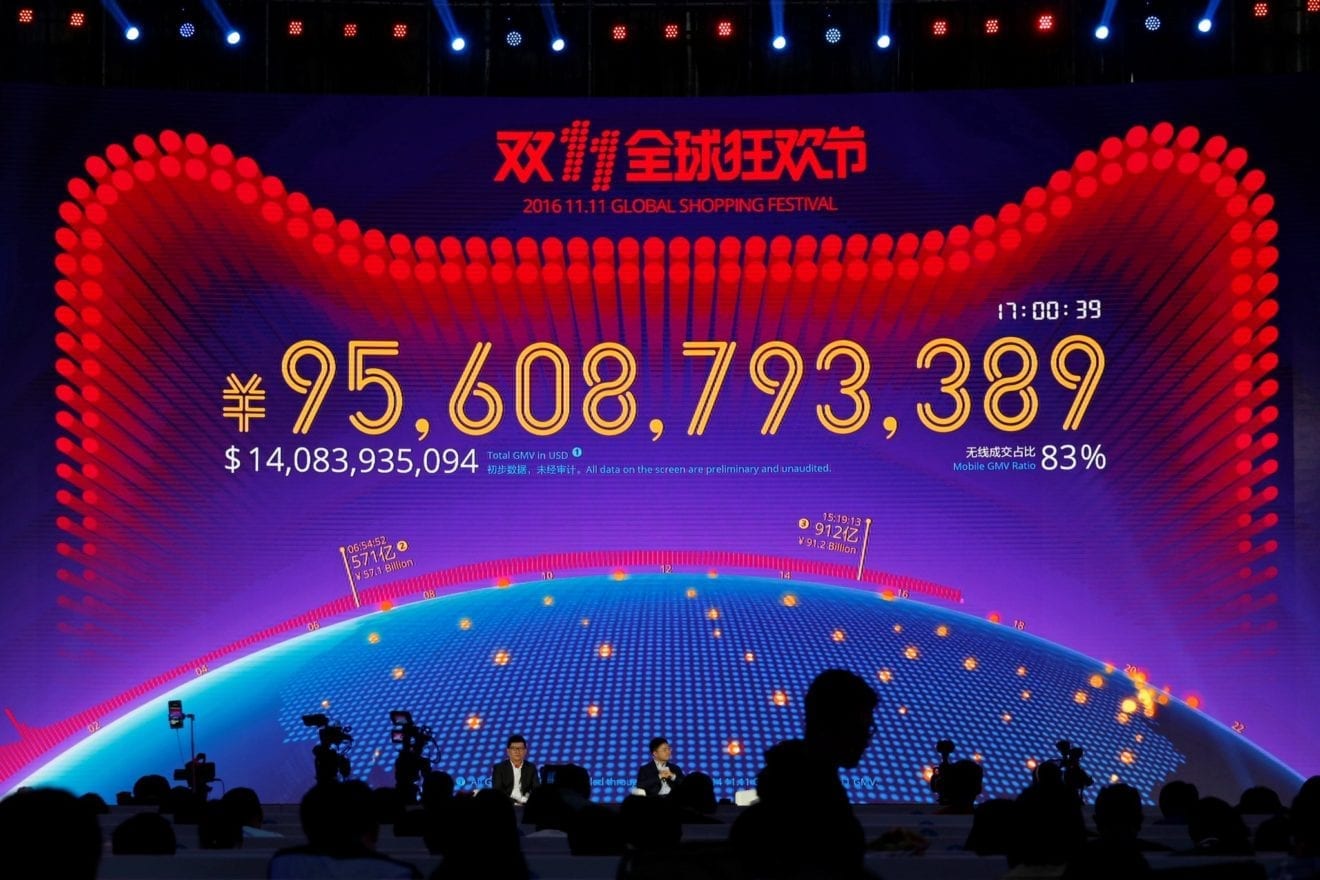
    The final sales tally for the 24 hour global shopping spree: US$17.8 billion in GMV (gross merchandise volume) sales, or in China’s yuan or renminbi currency, RMB 120.7 billion. The vast majority (82%) of that shopping frenzy took place on mobile phones and devices, with $14.6 billion (RMB 98.97 billion) on mobile.

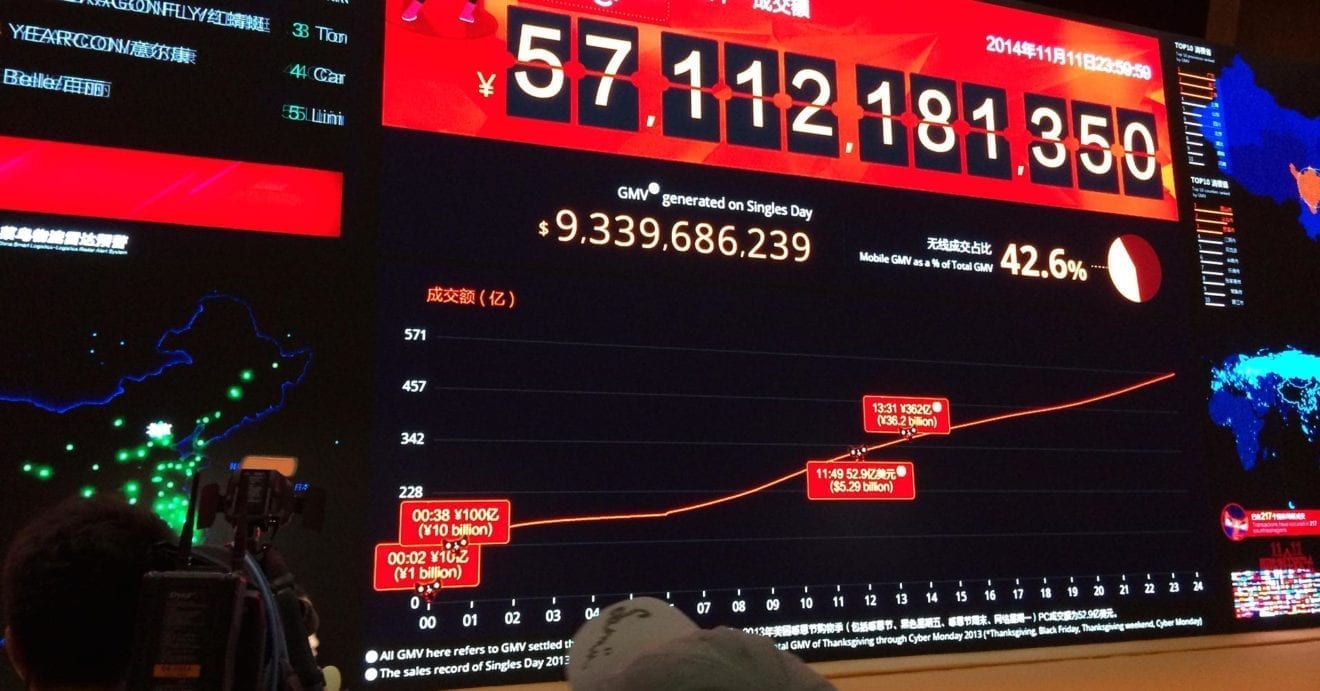
    Last year, Alibaba’s digital shopping platforms racked up a total US$14.3 billion in sales, bypassing the $9.3 billion in #Double11 Singles Day sales in 2014 — meaning the 24-hour shopping spree has almost doubled in two years.

    It’s also a proof point for Ant Financial Services Group, Alibaba’s fintech arm that operates its Alipay mobile payments platform. “The excitement around online shopping continues to build year after year, and it’s emblematic of the way that e-commerce is changing, giving consumers incredible access to products around the world,” said Ant Financial SVP Douglas Feagin to the South China Morning Post.

    Ant Financial this year says it processed 1.05 billion transactions, an increase of 48 per cent from last year. At the peak of the madcap shopping within the first hour, as many as 120,000 transactions per second were processed, Feagin said. Ant brought innovation and speed to the online sales crush. Just as importantly, it helped finance merchants and consumers alike.

    As SCMP reports, “Before the start of the so-called Singles’ Day shopping gala on November 11, Ant Financial’s MYbank unit granted over 50 billion yuan of loans to 1.33 million merchants to help them put their products online.Ant Financial’s Ant Credit Pay was also on hand to grant more than 100 million customers credit to finance their online shopping, Feagin said.”

    At the half-way mark, it was clear that 2016’s event would surpass last year’s record, according to Alizila’s coverage:

    At the 12 hour, 29 minute mark of the sale, total GMV had exceeded RMB 82.4 billion ($12 billion), with mobile accounting for 83.55 percent of the total.  Alibaba Group President Michael Evans had this to say: “With roughly 11 hours to go, we’re in a good place.” More than 14,000 international brands are participating in the sale, he said, and sales from international brands have so far accounted for about 30 percent of total GMV.

    Alibaba #Double11 Singles Day sale

    Virtual reality also played a role this year, with Tmall’s Buy+ billed as the world’s first virtual reality shopping experience. For the price of a 15 cent cardboard VR headset, shoppers could slip their smartphone into the headset and browse products from handbags to shoes to lingerie, and even have virtual models showcase the apparel and accessories on a catwalk.

    Shoppers could browse eight digital stores using VR to assess the goods before buying them. Participating retailers include Macy’s, Target, Costco, P&G, Chemist Warehouse, Freedom Foods, Tokyo Otaku Mode and Matsumoto, part of the over 11,000 international brands that join in the fair.

    The global online shopping event also introduced interactive games and partnerships with over one million brick-and-mortar shops, including a Pokemon Go-like mobile application to catch the Tmall cat mascot in offline locations of Tmall merchants in shopping malls to spur foot traffic to the merchants. In return, consumers can earn special prizes such as free subscriptions to Alibaba’s Youku TV.

    It also teased this year’s 11.11 with teasers including an eight-hour live-streamed “see now buy now” fashion show from Shanghai, where consumers can order anything they see on the catwalk in real time from brands including Victoria’s Secret.

    The goal of this technology is to “improve [the] consumer retail experience, I would say you’re looking at the future of retail. The future of retail is in China, not anywhere else,” Alibaba Group’s co-founder and vice chairman Joseph Tsai told a media briefing on Thursday in Shenzhen, China.

    Leading the 11.11 international sales brigade this year were merchants from the US, Japan, South Korea, Australia and Germany. Most countries have already exceeded the volume of sales recorded for the entire sale last year.

    It’s another astonishing Singles Day,  an annual promotion inviting consumers who are not in relationships to cheer up with some retail therapy — an anti-Valentine’s Day “treat yourself” event invented by Alibaba’s Tmall head, Daniel Zhang, in 2009 to rival America’s Black Friday and Cyber Monday shopping events, and now surpasses both of them combined.

    While 11.11 started with discounts, it has morphed into an event featuring global brands such as Apple and luxury brands such as Burberry and Maserati, which both operate branded Tmall stores.

    As Teng Bingsheng, Associate Professor of Strategy at the Cheung Kong Graduate School of Business (CKGSB) in Beijing, stated in a pre-event press release, “To some extent, people remember that Alibaba initiated the 11.11 shopping festival. However, other brands are quickly gaining their fair share as well. But as long as the whole pie – and Alibaba’s own business – both get bigger, it’s still good news.”

    CKGSB Associate Professor of Accounting Zhang Weining added, “Double Eleven used to last for 24 hours, but this year it will stretch for 24 days. I think Alibaba foresaw that the sales growth rate would slow down this year, in part because more and more e-commerce platforms are running these campaigns and consumers are increasingly attracted to promotions offered prior to the day itself. This new strategy will also ease the pressure on delivery logistics, since sales will be more spread out.”

    Jack Ma Kobe Bryant Alibaba Singles Day 11.11Chairman Jack Ma—who welcomed David and Victoria Beckham and Kobe Bryant (while Katy Perry dropped out for a family emergency) as ambassadors for this year’s event at its countdown gala—said Alibaba’s cloud computing system is “[by] far the most advanced that human beings can realize.”

    Last year, the company processed 140,000 transactions per second via its cloud arm Aliyun during the shopping peak, while payment arm Alipay processed an additional 86,000 transactions per second at peak sale time.


    The company reportedly plans to list in 2017 in either Shanghai or Hong Kong, making it China’s largest IPO since 2010 when the state-owned Agriculture Bank of China offered $22.1 billion worth of shares.

    Brand partners were also vocal about what propelled Single’s Day sales this year: mobile (as Gap attested), personalization (such as Oreo) and virtual reality:

    For its part, Walmart kicked off its Black Friday sales event today, along with Target, in a bid to attract shoppers in the mood for deals. Both retailers’ official in-store Black Friday sales begin at 6 p.m. on Thanksgiving, reprising last year’s schedule despite murmurings that consumer interest in deal blitzing on Turkey-day may be waning.

    While Office Depot and Mall of America announced they’ll be closed on Thanksgiving, Macy’s, Kohl’s and Toys R Us are joining Walmart and Target. Walmart will be “dramatically increasing” inventory to offer nearly 50 percent more Black Friday merchandise this year online than last year.

    Walmart US CMO Steve Bratspies said that “We really pride ourselves on not being the retailer who advertises a great price but then only has a few available for the customers.”

    Walmart deals include a Samsung 50-inch 4K television for $398 and movies that cost $1.99. Target is touting deals like an iPad Air 2 for $274 and 30 percent off apparel and the giant teddy bear for $10 that hijacked social media last year is back with 20 percent more bears!

    Both big-boxers will start with offers over the next two weeks seeding the way for customer engagement as holiday spirit.

    Target returns to its “10 days of deals” program, touting a single big promotion daily starting the weekend before Thanksgiving, while Walmart is offering limited-time Black Friday discounts and holding further price cuts for into December.

    Still, some rang a cautionary note about Alibaba’s sales reporting, as the BBC reported: “Some have questioned the accuracy of the numbers, amid claims of inflated sales data at online retailers across China. Merchants passing off counterfeit goods as genuine is also an industry problem. Alibaba reported 85% of purchases had been made on mobile phones during Singles Day.”
  • US$1 billion in first five minutes of 11.11

    US$1 billion in first five minutes of 11.11

    Alibaba Group says more than US$7 billion (RMB 47.5 billion) of gross merchandise volume (GMV) was settled through Alipay on Alibaba’s China and international retail marketplaces within the first two hours of the 2016 11.11 Global Shopping Festival.

    And more than $1 billion was transacted in the first five minutes – from 12 midnight.

    “Chinese consumers purchased more in the first hour of 11.11 this year than the entire 24 hours in 2013, reflecting the incredible evolution of our global shopping festival,” said Daniel Zhang, Alibaba Group CEO. “This unprecedented level of engagement demonstrates both the consumption power of Chinese consumers and their embrace of online shopping as a lifestyle.”

    In the hours leading up to the official midnight start of November 11, millions of viewers watched the Alibaba Group 11.11 Global Shopping Festival Countdown Gala live online and on mobile devices via Youku Tudou, and the Tmall and Taobao apps. The gala was televised live across China through Zhejiang Satellite TV, as well as in Hong Kong and Macau for the first time.

    “This year, we innovated new ways for consumers watching the live broadcast of our countdown gala. Viewers were able to influence the production of the show in real-time through their mobile phones,” said Chris Tung, chief marketing officer, Alibaba Group. “Consumers in front of their televisions were shaking, tapping, scanning, chatting, browsing and buying with their mobile devices, creating a seamless and truly immersive entertainment experience.”

    VR drives surge

    International think tank Fung Global Retail & Technology predicts sales of $20 billion during the full 24 hours, up an extraordinary 40 per cent over last year’s total of $14.3 billion, thanks in part to the introduction of Buy+, the world’s first-ever end-to-end virtual reality (VR) shopping experience.

    “Buy+ will enable global retailers (even those without a physical presence in China) to offer an engaging, virtual in-store experience to Chinese consumers,” writes Fung Global Retail & Technology MD Deborah Weinswig in Singles’ Day Online Shopping Festival Could Also Benefit Retailers’ Physical Stores, a new report.

    The platform features eight virtual stores: Macy’s, Target, Costco, P&G, Chemist Warehouse, Freedom Foods, Tokyo Otaku Mode and Matsumoto Kiyoshi. Using cardboard VR headsets distributed in October, consumers can virtually walk around Macy’s Herald Square flagship in New York City to find products and, with just a nod of the head, confirm payment to purchase an item they see.

    “One of Alibaba’s strategies for Singles’ Day is to merge gamification with online shopping. The company will leverage its media and entertainment assets to drive increased online consumption,” says Weinswig.

    These include a televised countdown gala event and fashion show that was held last evening. In addition, the company is promoting products on TV screens, allowing viewers to scan QR codes for a real-time purchase.

    The concept has expanded beyond Alibaba, with chief rival JD.com, Gome and Suning also creating promotions. International retailers will target Chinese shoppers, and Chinese retailers target international shoppers. In 2015, Newegg, OTTE New York and Nasty Gal, all launched Singles’ Day promotions.

    “A year ago, Alibaba promised that Singles’ Day will be a true omni-channel event, and this year the company seems dedicated to continue delivering on the promise, armed with more technological innovations that bridge the gap between the virtual and physical worlds,” Weinswig writes.

  • Alibaba’s Singles Day sales reach $17.8b

    Alibaba’s Singles Day sales reach $17.8b

    Alibaba Group Holding Ltd.’s Singles’ Day shopping festival (now known as the 11.11 Global Shopping Festival) broke sales record this year with a reported 120.7 billion yuan ($17.79 billion) in gross merchandise volume in just 24 hours.

    The figure represents a 32% jump over last year’s 91.2 billion yuan ($14.3 billion) in transactions over Alibaba’s e-commerce platforms – B2C site Tmall.com and C2C site Taobao Marketplace.

    Alizila, the news portal of the Chinese e-commerce giant, also reported that the festival saw a number of other new records set, including 98.97 billion yuan ($14.6 billion) in GMV generated on mobile devices and 657 million delivery orders, compared with $9.8 billion and 467 million, respectively, in 2015.

    “There were also 1.04 billion payment transactions processed compared with 710 million last year,” the report noted.

    Daniel Zhang, chief executive officer of Alibaba Group, was quoted as saying that this year’s 11.11 shopping festival is a preview of the future of retail.

    “11.11 showcased how online and offline retail will be reinvented to offer brand new shopping experiences to our hundreds of millions of mobile, digitally savvy active users,” he said.

    The shopping marathon started on November 11 at midnight China Standard Time (CST).

    An IMAX-sized data screen at the media center at the Shenzhen Universiade Sports Center in Shenzhen, China continuously flashed updates all throughout the day, complemented by live blogging reports from Alizila.

    The first report at 12:017 showed that total GMV blew up to 10 billion yuan ($14.6 billion) just six minutes and 58 seconds after the sale began. Total GMV exceeded $100 million in just 40 seconds.

    During the first hour of the sale, order volume also reached a record-breaking peak of 175,000 orders in one second, while 120,000 payments were settled per second at the peak.