Tag: Alibaba

  • #Double11 2016 Singles Day Record Proves China’s E-Commerce Might

    #Double11 2016 Singles Day Record Proves China’s E-Commerce Might

    Chinese e-commerce giant Alibaba Group has tallied more than US$1 billion in the first five minutes and US$5 billion in transactions in the first hour of its annual Singles Day sales blitz. That means China’s 2016 Singles Day shopping fest—aka Shuangshiyi or Double Eleven, since it takes place each November 11—retains its title as the world’s biggest online shopping event.

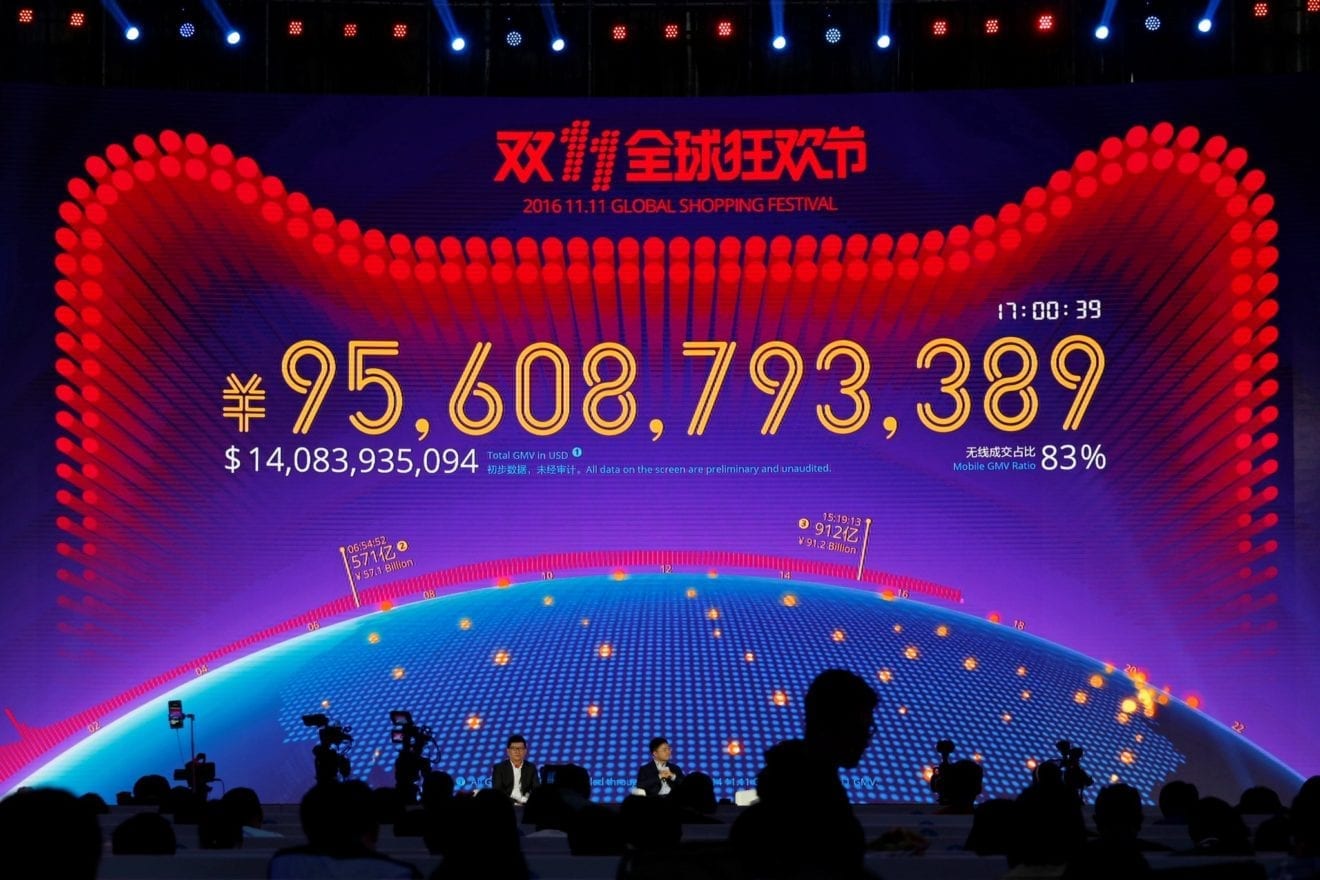
    The final sales tally for the 24 hour global shopping spree: US$17.8 billion in GMV (gross merchandise volume) sales, or in China’s yuan or renminbi currency, RMB 120.7 billion. The vast majority (82%) of that shopping frenzy took place on mobile phones and devices, with $14.6 billion (RMB 98.97 billion) on mobile.

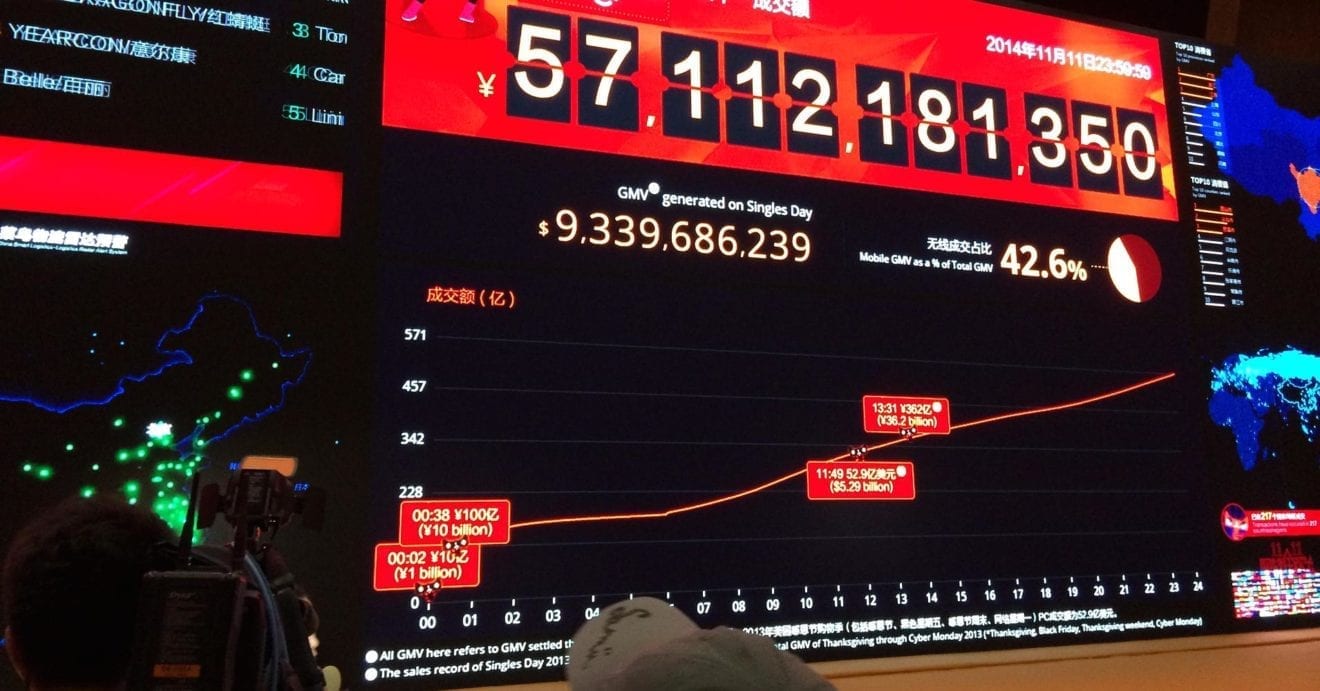
    Last year, Alibaba’s digital shopping platforms racked up a total US$14.3 billion in sales, bypassing the $9.3 billion in #Double11 Singles Day sales in 2014 — meaning the 24-hour shopping spree has almost doubled in two years.

    It’s also a proof point for Ant Financial Services Group, Alibaba’s fintech arm that operates its Alipay mobile payments platform. “The excitement around online shopping continues to build year after year, and it’s emblematic of the way that e-commerce is changing, giving consumers incredible access to products around the world,” said Ant Financial SVP Douglas Feagin to the South China Morning Post.

    Ant Financial this year says it processed 1.05 billion transactions, an increase of 48 per cent from last year. At the peak of the madcap shopping within the first hour, as many as 120,000 transactions per second were processed, Feagin said. Ant brought innovation and speed to the online sales crush. Just as importantly, it helped finance merchants and consumers alike.

    As SCMP reports, “Before the start of the so-called Singles’ Day shopping gala on November 11, Ant Financial’s MYbank unit granted over 50 billion yuan of loans to 1.33 million merchants to help them put their products online.Ant Financial’s Ant Credit Pay was also on hand to grant more than 100 million customers credit to finance their online shopping, Feagin said.”

    At the half-way mark, it was clear that 2016’s event would surpass last year’s record, according to Alizila’s coverage:

    At the 12 hour, 29 minute mark of the sale, total GMV had exceeded RMB 82.4 billion ($12 billion), with mobile accounting for 83.55 percent of the total.  Alibaba Group President Michael Evans had this to say: “With roughly 11 hours to go, we’re in a good place.” More than 14,000 international brands are participating in the sale, he said, and sales from international brands have so far accounted for about 30 percent of total GMV.
    Alibaba #Double11 Singles Day sale

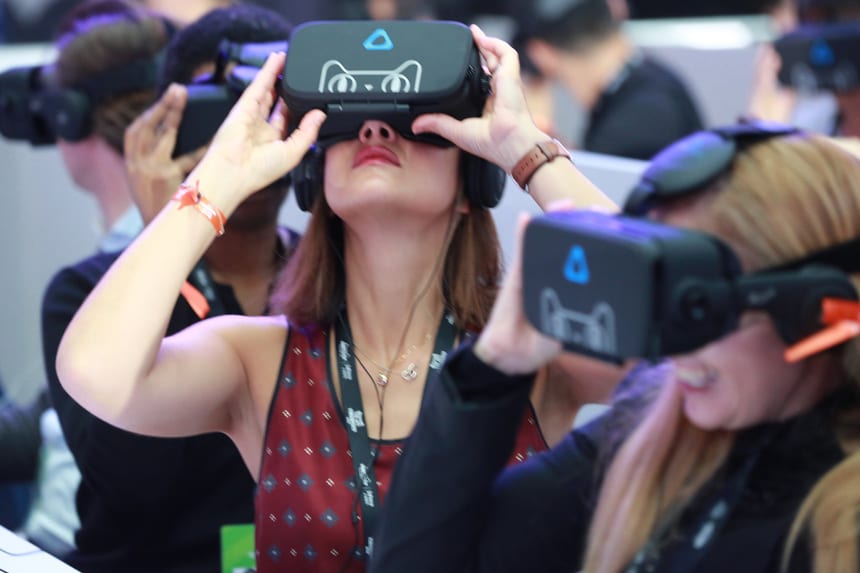
    Virtual reality also played a role this year, with Tmall’s Buy+ billed as the world’s first virtual reality shopping experience. For the price of a 15 cent cardboard VR headset, shoppers could slip their smartphone into the headset and browse products from handbags to shoes to lingerie, and even have virtual models showcase the apparel and accessories on a catwalk.

    Shoppers could browse eight digital stores using VR to assess the goods before buying them. Participating retailers include Macy’s, Target, Costco, P&G, Chemist Warehouse, Freedom Foods, Tokyo Otaku Mode and Matsumoto, part of the over 11,000 international brands that join in the fair.

    The global online shopping event also introduced interactive games and partnerships with over one million brick-and-mortar shops, including a Pokemon Go-like mobile application to catch the Tmall cat mascot in offline locations of Tmall merchants in shopping malls to spur foot traffic to the merchants. In return, consumers can earn special prizes such as free subscriptions to Alibaba’s Youku TV.

    It also teased this year’s 11.11 with teasers including an eight-hour live-streamed “see now buy now” fashion show from Shanghai, where consumers can order anything they see on the catwalk in real time from brands including Victoria’s Secret.

    The goal of this technology is to “improve [the] consumer retail experience, I would say you’re looking at the future of retail. The future of retail is in China, not anywhere else,” Alibaba Group’s co-founder and vice chairman Joseph Tsai told a media briefing on Thursday in Shenzhen, China.

    Leading the 11.11 international sales brigade this year were merchants from the US, Japan, South Korea, Australia and Germany. Most countries have already exceeded the volume of sales recorded for the entire sale last year.

    It’s another astonishing Singles Day,  an annual promotion inviting consumers who are not in relationships to cheer up with some retail therapy — an anti-Valentine’s Day “treat yourself” event invented by Alibaba’s Tmall head, Daniel Zhang, in 2009 to rival America’s Black Friday and Cyber Monday shopping events, and now surpasses both of them combined.

    While 11.11 started with discounts, it has morphed into an event featuring global brands such as Apple and luxury brands such as Burberry and Maserati, which both operate branded Tmall stores.

    As Teng Bingsheng, Associate Professor of Strategy at the Cheung Kong Graduate School of Business (CKGSB) in Beijing, stated in a pre-event press release, “To some extent, people remember that Alibaba initiated the 11.11 shopping festival. However, other brands are quickly gaining their fair share as well. But as long as the whole pie – and Alibaba’s own business – both get bigger, it’s still good news.”

    CKGSB Associate Professor of Accounting Zhang Weining added, “Double Eleven used to last for 24 hours, but this year it will stretch for 24 days. I think Alibaba foresaw that the sales growth rate would slow down this year, in part because more and more e-commerce platforms are running these campaigns and consumers are increasingly attracted to promotions offered prior to the day itself. This new strategy will also ease the pressure on delivery logistics, since sales will be more spread out.”
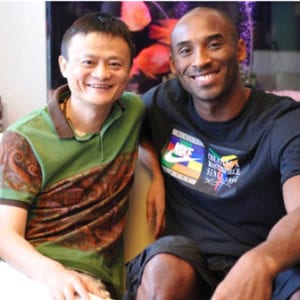
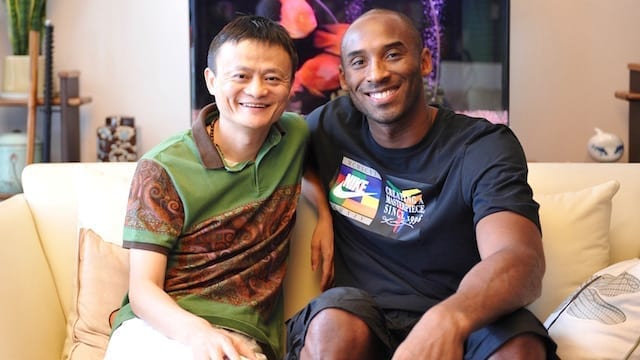
    Jack Ma Kobe Bryant Alibaba Singles Day 11.11Chairman Jack Ma—who welcomed David and Victoria Beckham and Kobe Bryant (while Katy Perry dropped out for a family emergency) as ambassadors for this year’s event at its countdown gala—said Alibaba’s cloud computing system is “[by] far the most advanced that human beings can realize.”

    Last year, the company processed 140,000 transactions per second via its cloud arm Aliyun during the shopping peak, while payment arm Alipay processed an additional 86,000 transactions per second at peak sale time.


    The company reportedly plans to list in 2017 in either Shanghai or Hong Kong, making it China’s largest IPO since 2010 when the state-owned Agriculture Bank of China offered $22.1 billion worth of shares.

    Brand partners were also vocal about what propelled Single’s Day sales this year: mobile (as Gap attested), personalization (such as Oreo) and virtual reality:

    For its part, Walmart kicked off its Black Friday sales event today, along with Target, in a bid to attract shoppers in the mood for deals. Both retailers’ official in-store Black Friday sales begin at 6 p.m. on Thanksgiving, reprising last year’s schedule despite murmurings that consumer interest in deal blitzing on Turkey-day may be waning.

    While Office Depot and Mall of America announced they’ll be closed on Thanksgiving, Macy’s, Kohl’s and Toys R Us are joining Walmart and Target. Walmart will be “dramatically increasing” inventory to offer nearly 50 percent more Black Friday merchandise this year online than last year.

    Walmart US CMO Steve Bratspies said that “We really pride ourselves on not being the retailer who advertises a great price but then only has a few available for the customers.”

    Walmart deals include a Samsung 50-inch 4K television for $398 and movies that cost $1.99. Target is touting deals like an iPad Air 2 for $274 and 30 percent off apparel and the giant teddy bear for $10 that hijacked social media last year is back with 20 percent more bears!

    Both big-boxers will start with offers over the next two weeks seeding the way for customer engagement as holiday spirit.

    Target returns to its “10 days of deals” program, touting a single big promotion daily starting the weekend before Thanksgiving, while Walmart is offering limited-time Black Friday discounts and holding further price cuts for into December.

    Still, some rang a cautionary note about Alibaba’s sales reporting, as the BBC reported: “Some have questioned the accuracy of the numbers, amid claims of inflated sales data at online retailers across China. Merchants passing off counterfeit goods as genuine is also an industry problem. Alibaba reported 85% of purchases had been made on mobile phones during Singles Day.”
  • US$1 billion in first five minutes of 11.11

    US$1 billion in first five minutes of 11.11

    Alibaba Group says more than US$7 billion (RMB 47.5 billion) of gross merchandise volume (GMV) was settled through Alipay on Alibaba’s China and international retail marketplaces within the first two hours of the 2016 11.11 Global Shopping Festival.

    And more than $1 billion was transacted in the first five minutes – from 12 midnight.

    “Chinese consumers purchased more in the first hour of 11.11 this year than the entire 24 hours in 2013, reflecting the incredible evolution of our global shopping festival,” said Daniel Zhang, Alibaba Group CEO. “This unprecedented level of engagement demonstrates both the consumption power of Chinese consumers and their embrace of online shopping as a lifestyle.”

    In the hours leading up to the official midnight start of November 11, millions of viewers watched the Alibaba Group 11.11 Global Shopping Festival Countdown Gala live online and on mobile devices via Youku Tudou, and the Tmall and Taobao apps. The gala was televised live across China through Zhejiang Satellite TV, as well as in Hong Kong and Macau for the first time.

    “This year, we innovated new ways for consumers watching the live broadcast of our countdown gala. Viewers were able to influence the production of the show in real-time through their mobile phones,” said Chris Tung, chief marketing officer, Alibaba Group. “Consumers in front of their televisions were shaking, tapping, scanning, chatting, browsing and buying with their mobile devices, creating a seamless and truly immersive entertainment experience.”

    VR drives surge

    International think tank Fung Global Retail & Technology predicts sales of $20 billion during the full 24 hours, up an extraordinary 40 per cent over last year’s total of $14.3 billion, thanks in part to the introduction of Buy+, the world’s first-ever end-to-end virtual reality (VR) shopping experience.

    “Buy+ will enable global retailers (even those without a physical presence in China) to offer an engaging, virtual in-store experience to Chinese consumers,” writes Fung Global Retail & Technology MD Deborah Weinswig in Singles’ Day Online Shopping Festival Could Also Benefit Retailers’ Physical Stores, a new report.

    The platform features eight virtual stores: Macy’s, Target, Costco, P&G, Chemist Warehouse, Freedom Foods, Tokyo Otaku Mode and Matsumoto Kiyoshi. Using cardboard VR headsets distributed in October, consumers can virtually walk around Macy’s Herald Square flagship in New York City to find products and, with just a nod of the head, confirm payment to purchase an item they see.

    “One of Alibaba’s strategies for Singles’ Day is to merge gamification with online shopping. The company will leverage its media and entertainment assets to drive increased online consumption,” says Weinswig.

    These include a televised countdown gala event and fashion show that was held last evening. In addition, the company is promoting products on TV screens, allowing viewers to scan QR codes for a real-time purchase.

    The concept has expanded beyond Alibaba, with chief rival JD.com, Gome and Suning also creating promotions. International retailers will target Chinese shoppers, and Chinese retailers target international shoppers. In 2015, Newegg, OTTE New York and Nasty Gal, all launched Singles’ Day promotions.

    “A year ago, Alibaba promised that Singles’ Day will be a true omni-channel event, and this year the company seems dedicated to continue delivering on the promise, armed with more technological innovations that bridge the gap between the virtual and physical worlds,” Weinswig writes.

  • Alibaba’s Singles Day sales reach $17.8b

    Alibaba’s Singles Day sales reach $17.8b

    Alibaba Group Holding Ltd.’s Singles’ Day shopping festival (now known as the 11.11 Global Shopping Festival) broke sales record this year with a reported 120.7 billion yuan ($17.79 billion) in gross merchandise volume in just 24 hours.

    The figure represents a 32% jump over last year’s 91.2 billion yuan ($14.3 billion) in transactions over Alibaba’s e-commerce platforms – B2C site Tmall.com and C2C site Taobao Marketplace.

    Alizila, the news portal of the Chinese e-commerce giant, also reported that the festival saw a number of other new records set, including 98.97 billion yuan ($14.6 billion) in GMV generated on mobile devices and 657 million delivery orders, compared with $9.8 billion and 467 million, respectively, in 2015.

    “There were also 1.04 billion payment transactions processed compared with 710 million last year,” the report noted.

    Daniel Zhang, chief executive officer of Alibaba Group, was quoted as saying that this year’s 11.11 shopping festival is a preview of the future of retail.

    “11.11 showcased how online and offline retail will be reinvented to offer brand new shopping experiences to our hundreds of millions of mobile, digitally savvy active users,” he said.

    The shopping marathon started on November 11 at midnight China Standard Time (CST).

    An IMAX-sized data screen at the media center at the Shenzhen Universiade Sports Center in Shenzhen, China continuously flashed updates all throughout the day, complemented by live blogging reports from Alizila.

    The first report at 12:017 showed that total GMV blew up to 10 billion yuan ($14.6 billion) just six minutes and 58 seconds after the sale began. Total GMV exceeded $100 million in just 40 seconds.

    During the first hour of the sale, order volume also reached a record-breaking peak of 175,000 orders in one second, while 120,000 payments were settled per second at the peak.

  • China Singles Day: a retail goldmine

    China Singles Day: a retail goldmine

    China Singles Day is an entertaining festival widespread among young Chinese people, to celebrate the fact that they are proud of being single.

    To celebrate these singletons like to shop, for some reason.

    Regardless of motive, the opportunities an event like this presents is vast, and global retailers should be taking advantage.

    Delivering an effective online shopping in China is a challenge for outside retailers, but the benefits are worth investing in overcoming this.

    In a market with 600 million internet users, sales last year hit $14.3 billion, in comparison to the $1.35 billion taken on Black Friday. This is predicted to rise to $20 billion this year, which is absurd. But profitable.

    With a rapidly expanding population, China is by far the largest e-commerce market in the world, forecast to reach $1.1 trillion by 2020. China Singles Day is the largest retail day of the year, by some margin.

    Digital performance specialist Dynatrace has tested the websites of retailers around the world to see how geared up they are to maximise their revenue potential on the biggest shopping day of the year, and found that global retailers need to be doing more to tap into this market.

    Chinese retailers are outperforming the global competition, with an average time of 3.4 seconds before their websites become usable for Chinese customers (compared to 7.7 seconds for global retailers).

    H&M stood out as a shining light amongst the global retailers; with an average time of just 2.4 seconds before customers could start interacting with its website from China.

    Lean website design is critical to success in the Chinese e-commerce market; the best performing sites have minimal third-party host integrations, lighter pages with a low object count, and are hosted locally, in China or Hong Kong.

    Dave Anderson, VP Marketing EMEA and APAC for Dynatrace explained that by “digging a little deeper, we can see that the better performing sites are typically designed for speed. They use minimal third party hosts and keep objects in check. Page weight is also an important consideration – the lighter the better. Another fundamental, strategic decision is to host content locally or in HK.”

    Anderson went on to suggest that “user experience is fundamental to e-commerce success today, so retailers must be ready to tackle new markets with a localised site strategy. You can’t just replicate a site from another country, attach a local URL and assume it will work. This is especially the case in China.”

    “You need to be careful about how you use Google APIs, YouTube, marketing automation software or cart abandonment tools. Big images, video and pop up ads also create complexity that result in a poor experience for Chinese consumers. Best starting point is to strip the site back and measure the performance of everything very closely.”

    Alibaba is providing stats from the ‘festival’ in real-time.

  • AsiaInfo strengthens cloud computing portfolio

    AsiaInfo strengthens cloud computing portfolio

    Chinese telecoms IT software company AsiaInfo has signed a strategic co-operation agreement with Alibaba Cloud, the cloud computing arm of Alibaba Group.

    The two companies said they will work together on projects and jointly promote China as a center of excellence for cloud computing services and innovation.

    The partnership will also see the pair share a wide range of resources and jointly build a more open cloud ecosystem to form the basis of a comprehensive portfolio of cloud-based services.

    AsiaInfo said the company is stepping up its transition from a supplier of IT solutions to telco service providers, to a specialist in enabling digital business transformation for operators, their partners and other enterprises.

    Cloud-based delivery platforms and exchanges play a key role in the company’s vision of the industrial and business-led Internet, and the partnership with Alibaba Cloud will enable the company to continue to develop and deliver advanced operator and business solutions, the company added.

    “We are entering a new era of the internet. An era where people and things become customers, where service providers and businesses become operators, and where cloud-based business technology platforms will form both the backbone and the brains of the digital network,” said AsiaInfo CEO Michael Wu.

    “Our partnership with Alibaba Cloud will ensure we stay at the forefront of developments and provide innovative and ground-breaking solutions to our customers.”

  • Kobe Bryant joins Katy Perry in 11.11 launch

    Kobe Bryant joins Katy Perry in 11.11 launch

    Legendary Los Angeles Laker Kobe Bryant will join Katy Perry as the headline celebrities in Alibaba’s 11.11 Countdown Gala Celebration on November 10.

    US pop-rock band OneRepublic has also been confirmed, likely to perform its hit song Counting Stars

    11-11

    Alibaba had earlier named Katy Perry as a “global ambassador” for the gala, which is being held in Shenzhen in the hours leading up to the eCommerce giant’s 11.11 Global Shopping Festival’s midnight kickoff. The American singer will perform a number of her chart-topping singles, including her most recent, Rise.

    Mixing sports stars, singers and actors is a variety show formula that has been long dormant in the West as broadcast entertainment, Alibaba’s eclectic event – a way to warm up online shoppers for the world’s largest online sale – drew 100 million Chinese viewers in its debut last year.

    Alibaba Group chief marketing officer Chris Tung called the gala “a global carnival, a world-class performance that involves the audience throughout the event with many touch points and is like nothing else you have experienced”.

    It’s those touch points that Alibaba is focusing on in order to make the four-hour broadcast something viewers can participate in instead of just watch. One interactive feature planned for the show will give the audience a chance to win prizes by shaking their phones with the Mobile Taobao and Tmall apps open during key moments. Alibaba will also offer a sort of “choose your own adventure” feature where viewers can vote to decide how some segments of the gala play out.

    While the Hangzhou, China-based company did not release the full roster of celebrities expected to appear on the live broadcast, choosing instead to tease out names over the coming week, Alibaba did say that Beth Behrs, star of US sitcom 2 Broke Girls, which is wildly popular in China, and German footballer Thomas Muller are on the list.

    Alibaba has recruited Hollywood talent to produce the gala. David Hill, who is known for his work on the Oscars, NFL Super Bowls and reality show American Idol, was brought on board earlier this month to oversee the event. “Combining Alibaba’s technology with my experience at other global events we are going to develop a spectacle like no other,” Hill said in the statement.

    In addition, four one-minute time slots will be awarded to those merchants, consumers and charities who submit the best advertisements or promotions to Alibaba. Those winning videos will be aired during the gala.

  • Alibaba-backed Lazada acquires online grocer RedMart

    Alibaba-backed Lazada acquires online grocer RedMart

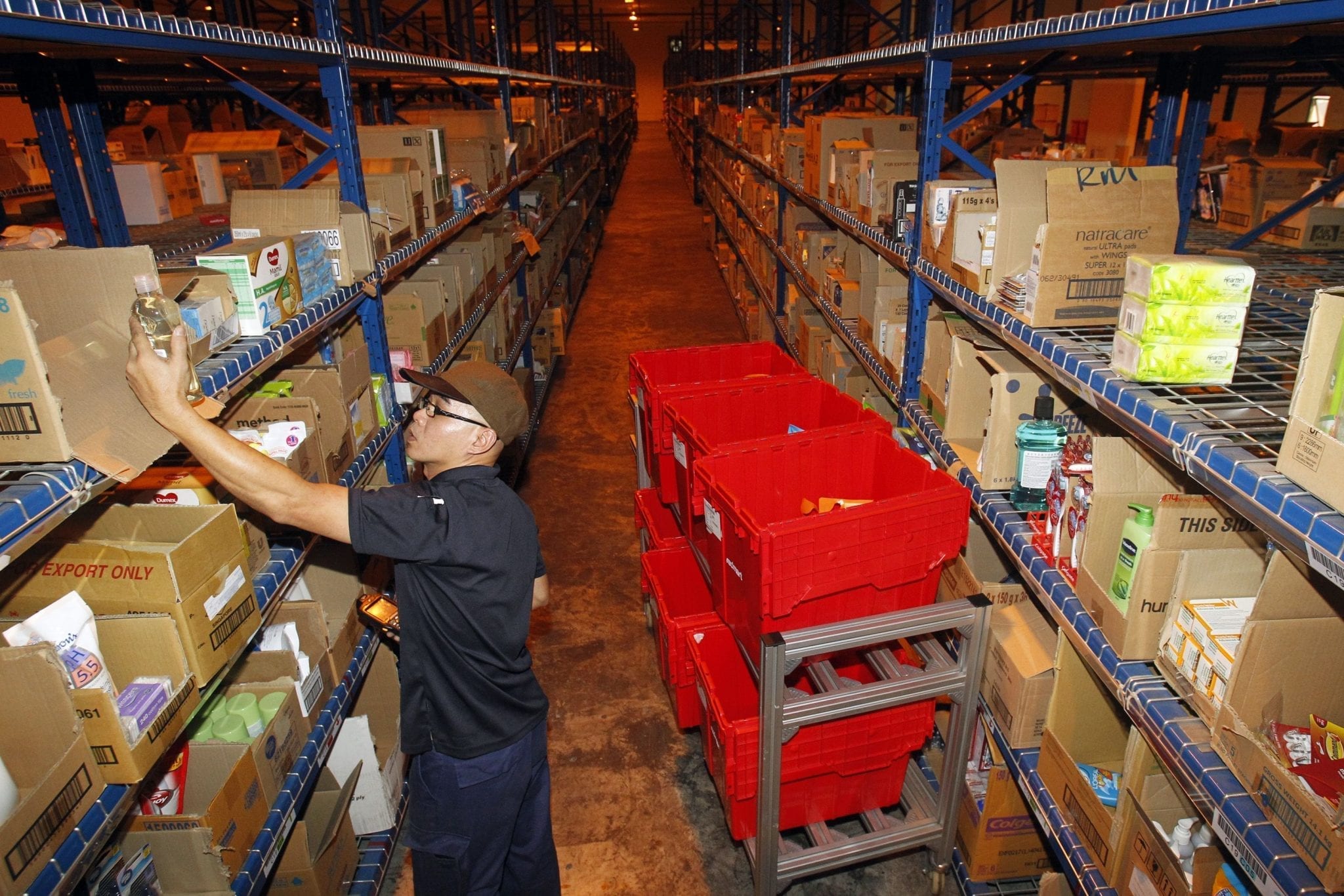
    On Wednesday, Singapore-based e-commerce company Lazada announced that it will acquire Redmart, an online grocery retailer.

    Singapore startup Lazada, whose platforms sell goods from smartphones to baby products throughout the region of 600 million people, said in a statement it would buy Redmart to benefit from its operational and technological capabilities. It did not reveal financial details involved in the deal.

    Lazada said it expects the transaction to be completed in the fourth quarter of this year, adding that RedMart will be led by its current management and will “continue to operate independently” after the transaction. RedMart now operates in Singapore but it has long harbored expansion ambitions.

    Lazada Group CEO Maximilian Bittner said that RedMart’s strong management team and relentless focus on putting the customer first has resulted in customers loving them in Singapore. The capital flexibility provided through this deal will go towards innovating to delight our customers.

    The acquisition come months after Japanese e-commerce operator, Rakuten, shuttered its online stores in Singapore, Indonesia, and Malaysia.

    Amazon has plans to expand to South-east Asia, and there are signs the online retail giant is entering the region through Singapore, Techcrunch reported on Wednesday (Nov 2).

    More specifically, China, which can leverage its manufacturing hub and market size. The company said that this alignment will help it expand into new product categories faster.

    Amazon has also been preparing for the local launch by quietly acquiring new assets such as refrigerated trucks, and hiring new staff.

    According to reports, Amazon plans to roll-out selected services in Singapore within the first quarter of 2017. Chinese e-commerce leader Alibaba bought a controlling stake in Lazada in April this year in a US$1 billion deal.

    However, the research firm noted that while the region presented significant growth opportunities, market players would be challenged by low credit card ownership, which now stood at lower than 7 percent in all Southeast Asian markets except Singapore and Malaysia.

  • Alibaba momentum builds ahead of Singles Day

    Alibaba momentum builds ahead of Singles Day

    Despite its already significant scale, Alibaba continues to grow rapidly, thanks in part to its acquisitions of Chinese video site Youku Tudou and e-commerce business Lazada. Much like Amazon, the e-marketplace’s success this quarter was tethered by strong support from its cloud computing operations, which increased 130% year-over-year to RMB1,493 million (US $224 million).

    “Beyond the strong performance of our core commerce business, we are pleased with the continued rapid growth of our cloud computing business,” Alibaba Group CEO Daniel Zhang said in a statement. “We also see huge potential in our newly integrated digital media and entertainment unit. By combining engaging online experiences with highly relevant content, we delivered impressive financial and operational results in the quarter across the company.”

    The company said it will continue with acquisitions that it believes will contribute to its growth, and Alibaba Group executive vice chairman Joe Tsai told investors that Alibaba’s patience with such companies will eventually pay off, according to Alibaba spokesperson Erica Matthews. Alibaba’s investment in Lazada, and Lazada’s reported acquisition of RedMart, is part and parcel of that strategy.

    “The investment cycle for incubating businesses that eventually become massive value drivers can take seven to 10 years,” Matthews said. “This is a pattern that was repeated with Taobao, Alipay and Alibaba Cloud, all of which were developed organically in-house. We believe Alibaba’s ability to remain patient and invest with a long-term view is a huge competitive advantage.”

    The conglomerate’s strong quarterly results come just ahead of its blockbuster Singles Day event. While the online shopping bonanza won’t take place until Nov. 11, the e-commerce goliath rolled out deals three weeks early, much in the same way that retailers like Amazon have launched early Black Friday promotions well ahead of the holiday.

  • Amazon coming to South-east Asia via Singapore, says report

    Amazon has plans to expand to South-east Asia, and there are signs the online retail giant is enteringhe region through Singapore, Techcrunch reported on Wednesday (Nov 2).

    Amazon is acquiring assets, and hiring new employees in Singapore, the tech news website said, citing two sources close to the company.

    There has been no official announcement by Amazon.

    The report said that Amazon may debut its Prime delivery service and its AmazonFresh grocery service, perhaps as soon as early 2017.

    Amazon’s possible South-east Asian foray comes soon after aggressive moves to enter India and China. In China, it started offering its Prime free-shipping service last month.

    Prime gives members in the US perks like free delivery and access to a growing library of videos and music.

    The US company has also pumped $3 billion more into its Indian e-commerce operation.

    Amazon’s entry to the region, if it materialises, may heat up competition in the online retail market.

    On Wednesday, Singapore-based e-commerce company Lazada announced that it will acquire Redmart, an online grocery retailer.

    Sometimes called South-east Asia’s Amazon, Lazada was started by Rocket Internet. Chinese e-commerce leader Alibaba bought a controlling stake in Lazada in April this year in a US$1 billion deal.

  • Alibaba tipped to record solid quarterly revenue growth

    Alibaba tipped to record solid quarterly revenue growth

    Alibaba Group Holding, the world’s largest e-commerce company, is expected to report another strong quarter of sales in the three months to September 30, as its preparations intensify for the Singles’ Day online shopping festival next week.

    Analysts estimated New York-listed Alibaba’s total second-quarter revenue for its fiscal year that ends March would increase about 50 per cent year on year.

    “We model total revenue to grow 51.7 per cent to 33.64 billion yuan (HK$38.55 billion) versus [market analysts’] consensus estimate of 33.94 billion yuan,” Alicia Yap, the head of regional internet research at Citi Research, said in a report published ahead of Alibaba’s earnings announcement on Wednesday.

    Yap estimated Alibaba’s gross merchandise volume, the total amount of goods sold through the company’s vast online retail platforms, to have grown 22 per cent year on year to 872 billion yuan in the past quarter.

    Citi maintains a “buy” rating on Alibaba shares, and has raised its target price to US$133, up from the previous US$112.

    In an open letter to shareholders early this month, Alibaba chief executive Daniel Zhang Yong said: “During fiscal year 2016, our China retail marketplaces reached a historical milestone when annual gross merchandise volume transaction surpassed 3 trillion yuan, making Alibaba Group the largest retail ecosystem in the world.”

    In the three months to June, Alibaba reported a 59 per cent year on year jump in revenue to 32.15 billion yuan. The gross merchandise volume transacted on its China retail platforms rose 24 per cent to 837 billion yuan.

    Alibaba, which owns the South China Morning Post, runs four business segments – core commerce, cloud computing, digital media and entertainment, and innovation initiatives.

    Citi estimated Alibaba’s revenue from its core commerce business would reach 28.18 billion yuan in the quarter to September, up from 27.24 billion yuan in the quarter to June.

    That segment comprises the China and international online marketplaces operating in retail and wholesale commerce, including Taobao Marketplace, Tmall.com, Juhuasuan, 1688.com, AliExpress and Lazada.

    Citi predicted Alibaba’s cloud computing revenue would reach 1.56 billion yuan in the three months to September. Led by subsidiary Alibaba Cloud, it had revenue of 1.24 billion yuan in the quarter to June.

    Digital media and entertainment revenue was estimated by Citi to have reached 3.35 billion yuan in the past quarter. This segment, which includes UCWeb and Youku Tudou, had revenue of 3.13 billion yuan in the June quarter

    Alibaba’s innovation initiatives segment was forecast by Citi to have posted revenue of 550 million yuan in the three months to September, compared with 535 million yuan in the June quarter. This segment includes the YunOS mobile operating system and web mapping and navigation software AutoNavi.

    We want to offer a large variety of daily necessities to the city’s consumers

    Daniel Zhang Yong, Alibaba chief executive

    Last week, Alibaba said its introduction of the Singles’ Day shopping extravaganza and the Tmall.hk platform to Hong Kong would ramp up e-commerce services outside the mainland.

    “We want to offer a large variety of daily necessities to the city’s consumers,” Zhang said at the launch of Alibaba’s 11.11 Global Shopping Festival in Hong Kong.

    That kicked off a flurry of activities ahead of Singles’ Day, an annual event held on November 11 that will see billions of dollars of goods transacted on Alibaba’s online retail platforms within 24 hours, making it the world’s biggest online shopping event.

    At last year’s 11.11 festival, Alibaba posted a 60 per cent year on year increase in gross merchandise volume to 91.2 billion yuan.

    Daiwa Capital Markets analyst John Choi said in a report that sentiment on Alibaba was positive as “most investors now seem to have a better understanding of Alibaba’s ecosystem”. Daiwa has a “buy” rating on Alibaba.

  • Hong Kong’s NOSH by Secret Ingredient Wins Investment with Alibaba Entrepreneur Fund

    Hong Kong’s NOSH by Secret Ingredient Wins Investment with Alibaba Entrepreneur Fund

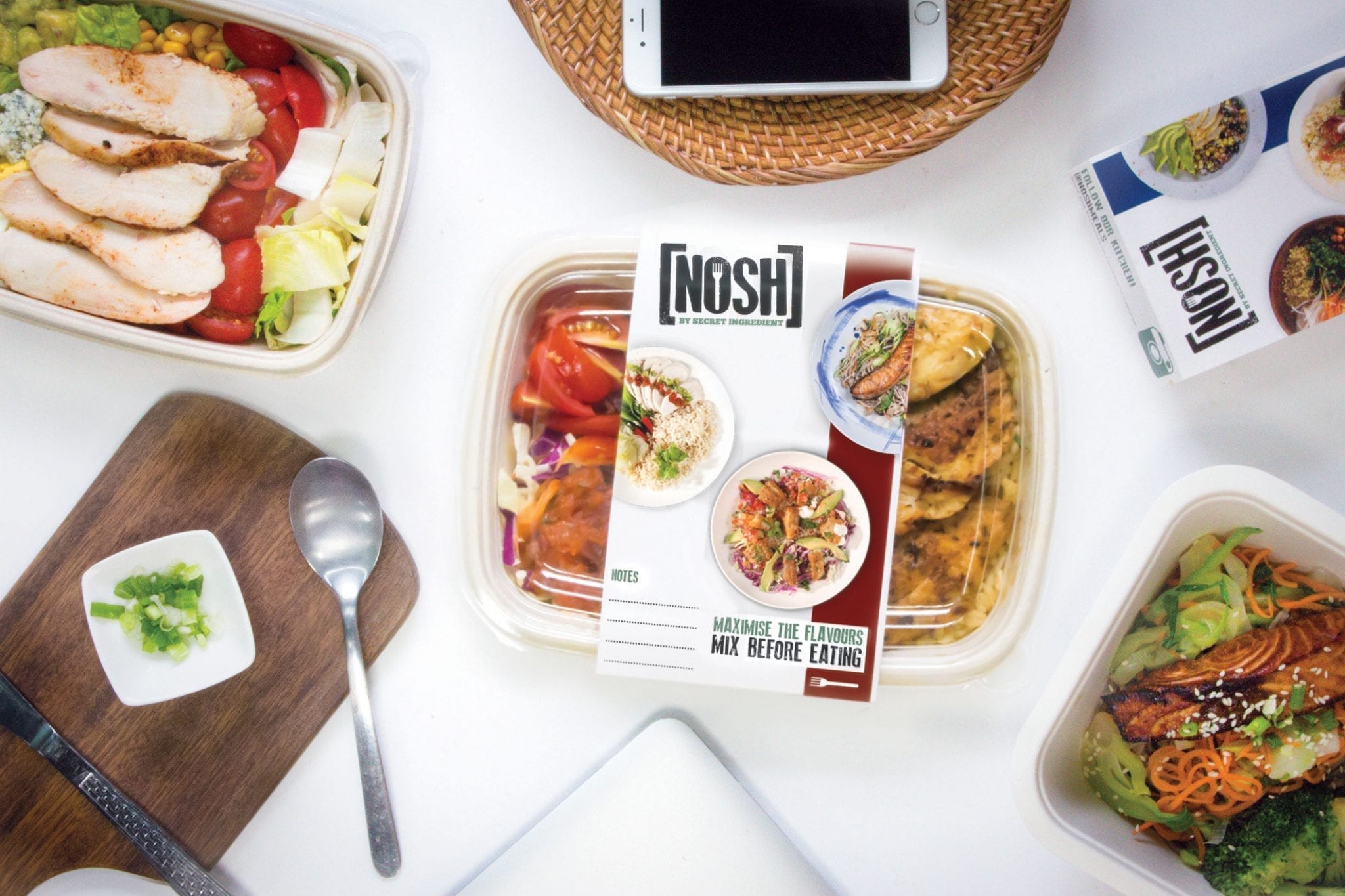
    Hong Kong’s first online to offline (O2O) healthy meal delivery concept, NOSH announced its latest round of fund-raising with the Alibaba Entrepreneur Fund. The investment will support NOSH in further revolutionising the food delivery and takeaway industry, meeting Hong Kong’s fast-growing market demand for convenient and affordable healthy meals.

    Created by the entrepreneur and chefs behind the award-winning Secret Ingredient, NOSH designs healthy meal options and uses cooking methods backed by a unique operation model specifically tailored for delivery. All chef-prepared nutritional meals contain less than 550 calories and are formulated to travel well, delivering to customers within 30 minutes.

    Alibaba Entrepreneur Fund, a not-for-profit fund launched by Alibaba Group, focuses specifically on finding opportunities with start-ups in Hong Kong.  Its financial investment will support NOSH in network expansion, sales & marketing and securing future partnerships. Alibaba’s international network and eco-system will also help the company grow its focus on inventory management and customer data.

    Founder Max Von Poelnitz shares, “We are extremely excited to work with Alibaba to change the game in the food delivery market in Hong Kong and abroad, making healthy, delicious and responsibly sourced food conveniently accessible and more affordable to our Hong Kong customers.”  

    “Without a restaurant space, we have created a unique meals-to-your-door concept that enables our delivery and retail partners to meet the evolving demands of our time-constrained, quality-conscious and price-sensitive consumers.”

    In line with the investment, the business is diversifying their offering by developing a complete Chinese-cuisine series that will use sustainable produce.  NOSH also has a full corporate business line that caters to companies across Hong Kong, giving their staff healthy and fresh meal options. Currently partnering with over 50 corporates, they are working towards joining forces with schools and hospitals. 

    Partnering with Food Panda, Deliveroo and Mai Dan, NOSH is available for individual orders between Kennedy Town and Chai Wan, while delivering corporate orders to Hong Kong Island and Kowloon.  In mid-November, the company will soon expand its service to Olympic and Tseung Kwan O to cover customers in Kowloon and the New Territories.

  • ‘Astonishing growth’ for Chinese FMCG market

    ‘Astonishing growth’ for Chinese FMCG market

    The Chinese FMCG market online has shown “astonishing growth” according to a report by global consulting firm OC&C Strategy Consultants.

    In 2010, the market was worth just US$1.4 billion – today it has exceeded $25.3 billion according to data from Euromonitor. It has far surpassed any other country in the world and is about twice as big as the US.

    But while large, FMCG still has a relatively lower online penetration than other categories in China, providing ample opportunities going forward especially given favourable tailwinds, believes OC&C.

    The report Bits & Bytes: FMCG’s shift to eCommerce in China aims to help FMCG brands understand eCommerce trends in China and thus to derive the best strategy for their target segments in the market.

    “The post-80s and 90s generation in China, who grew up with the internet, are coming of age and entering the workforce, forming families and increasing their need for FMCG. It is unquestionable that they will become an important customer segment and driving overall growth of FMCG eCommerce,” comments the report.

    “Moreover, growth is not only coming from the younger generations. In fact, more people aged between 30 and 50 intend to devote more of their FMCG spending to online channels next six months (Figure 1), suggesting the universality of growth of FMCG eCommerce.

    Figure 1

    “Price and convenience related factors are consistently placed as the top reasons for buying FMCG online in China. Growing middle class want to save money on everyday consumables so they can use these savings towards a better lifestyle including for dining out or buying international fashion brands,” said Jack Chuang, Hong Kong-based partner, Greater China, OC&C Strategy Consultants.

    He says consumers’ need for convenience is fuelling the demand to buy FMCG online anywhere, anytime.

    “All these are favourably fulfilled in China given the rapid development in infrastructure and logistics across the country, with leaps and bounds in both intra-country movement of goods as well as last-mile delivery to consumers. These make online shopping of FMCG easy, inexpensive and fast,” said Chuang.

    When respondents were asked to rate various eCommerce platforms based on their experience, Alibaba’s platforms were neither the most highly rated, nor are they frequently ranked among the top five across selected FMCG categories.

    Figure 2

    However, interestingly, when the survey asked about brand awareness and actual purchases, Tmall and Taobao, under Alibaba, received highest brand awareness and shopper penetration across the major FMCG categories explaining Alibaba’s dominating market share.

    Figure 3

    A third of survey respondents ranked ‘familiarity’ as being the key reason on why they rely so much on a particular online platform. Beyond benefiting from being an early entrant, Alibaba is also able to provide competitive prices, a convenient one-stop shopping destination, as well as a ubiquitous payment system.

    Figure 4

    “Online platforms in China are always fighting for customer traffic and market share, yet consumers often perceive buying on Alibaba a bargain, thanks to its promotions,” added Chuang. “Selling online in China is rewarding yet not easy. Brands can benefit and achieve their online objective through partnering with strategically-aligned platforms and by customising their offerings to cater to various needs of different market segments. In addition, brands need to figure out the level of control and capability which an online store demands, so as to determine whether to establish in-house operations or to rely solely on platforms. Choosing the right model and strategy can definitely make it much more effective.”

    Though Alibaba’s dominance remains undeniable, the online FMCG market is relatively more fragmented than retail in general. Alibaba commands a 52 per cent share in FMCG as compared to 70 per cent of the overall online retail market.

    “Just as you would not depend entirely on one particular store format (e.g. hypermarkets or mom-and-pop stores) as you formulate your offline channel strategy, the same applies to online whereby brands should leverage each platform’s unique strengths, be it its large traffic flow, strong authenticity and quality, more personalised customer service, etc.,” commented, Chuang.

    “At the same time, companies should treat eCommerce not only as a sales channel but also as a platform to build their brand. For example, premium players can build brand awareness to a wide audience by opening a flagship store, while other companies who lacks physical presence in China, can use cross-border platforms to ‘test the water’ prior to their full market entrance. They should also integrate offline and online channels to create a win-win proposition, either through leveraging existing offline infrastructures, such as distributor networks, to facilitate online sales; they may also consider using e-commerce to facilitate offline strategies,” concluded Chuang.

    The study canvassed 4600 respondents from 16 cities across China, looking into 13 selected sub-categories across infant milk formula, packaged food and soft drinks, alcoholic beverages, and beauty and personal care, from August to September 2016.

  • Can This British Retailer Conquer China?

    Can This British Retailer Conquer China?

    New Look, a fast-fashion retailer bearing a striking similarity to Forever 21, is aiming to boldly go where many chains have gone before but few have succeeded.

    The British retailer’s chief executive officer, Anders Kristiansen, has made no secret of his intentions in China, announcing plans in June to open 50 more stores there by March, which would bring its total number of locations in the Asian nation to 150. That’s 10 times the number of stores it had in China in 2015. But a Reuters report last Thursday revealed that New Look’s owner, South African billionaire Christo Wiese, has a more ambitious expansion in mind—500 stores within three years.

    New Look currently has more than 850 stores around the world, two-thirds of which are in the U.K. Despite a challenging first quarter that saw revenues fall 4.2% to 354.2 million pounds ($431.9 million), Kristiansen insisted the retailer would stay the course in China, where there had been a “strong local reaction to our affordable, fast-fashion offer.”

    According to Reuters, Wiese plans to conquer the Chinese market using a local-for-local manufacturing model, meaning most of the clothing it will sell in China will be made there to ensure locally relevant products are delivered to stores quickly. It’s a sourcing strategy that Zara owner Inditex has down to a tee and many other companies, including Under Armour, are trying to replicate around the world.

    “South Korea and Japan drive a lot of the trends that the Chinese customer seeks, so our ability to be able to identify those trends, source them locally and get them into our stores quickly is key,” Sven Gaede, managing director of New Look’s international business, told Reuters, adding that 85 percent of what the retailer already sells in China is made there.

    Local sourcing aside, some experts are skeptical about the retailer’s bullish growth plans. Franklin Yao, managing partner at strategy consultants Smith Street, described them as “virtually impossible,” noting that New Look is unlikely to find 500 empty retail stores, given the fact that H&M and Uniqlo also want to open hundreds more locations in China in the coming years.

    That being said, Chinese consumers are notoriously fickle and several big-name brands have failed to gain a foothold there, including Gap, Marks & Spencer and Walmart. In an effort to test the waters before committing to a brick-and-mortar presence, most international retailers first launch on the likes of JD.com or Alibaba’s Tmall and Taobao.

    But New Look appears to be covering all its bases in China: After opening its first locations in Shanghai and Beijing in February 2014, it launched an online store on Tmall seven months later and debuted on JD.com earlier this year.

  • Alibaba Group promises to redefine retail as it sets the clock ticking for Singles Day shopping festival

    Alibaba Group promises to redefine retail as it sets the clock ticking for Singles Day shopping festival

    Alibaba Group has started the clock on the Global Shopping Festival it will hold on November 11, which is known as Singles Day in the Chinese market where it dominates online shopping.

    The retailer, which trades through marketplace sites including Alibaba.com and TMall, has unveiled its plans for a festival that’s set to include a countdown gala, an eight-hour live streamed fashion show, virtual reality shopping, interactive games and more.

    These are all innovations aimed at enabling almost 100,000 merchants to build their brands, as well as engage with and sell to the hundreds of millions of Chinese consumers it predicts will shop on its marketplaces during the festival.

    Last year’s event, saw goods worth £9.3bn sold via the group’s websites.

    The press launch alone was attended by brands from Macy’s and Costco through to Swisse and eMart. There, Daniel Zhang, chief executive officer of Alibaba Group, said, “11.11 Shopping Festival has become the global retail benchmark over the past seven years, and we have raised the bar again this year to redefine the retail experience for consumers together with our merchants from around the world.”

    Zhang continued, “11.11 has evolved far beyond a 24-hours sales event. From today through November 11, consumers will discover, explore, play, watch, comment, share, recommend and shop across our entire ecosystem with our merchants both online and offline. Leveraging our robust infrastructure, global merchants have been empowered with unprecedented capability to seamlessly engage and serve customers through new technology and new environments.”

    Highlights of the Global Shopping Festival will include a Tmall eight-hour fashion show in Shanghai in which 50 international brands and 160 models will take part. It will be streamed live via Tmall and Taobao mobile apps that viewers can use to pre-order items as they appear on the catwalk.

    Shoppers will be able to use virtual reality to buy, as Alibaba pilots Buy+, billed as the world’s first complete virtual reality (VR) shopping experience. Those who use it will be virtually transported to select retail stores internationally, where they can experience the entire shopping process from product selection to payment, all via VR.

    In the run-up to the event, more than 600 international brands are streaming live broadcasts on Tmall to tell consumers about their brand and the deals and products they’ll be offering on 11.11.

    Katy Perry will headline the 11.11 Global Shopping Festival Gala on November 10.

    The event will link online and offline: Alibaba believes the future of commerce is not online only but will integrate the online and offline experience. A location-based augmented reality mobile, to be released two weeks ahead of the festival, will enable consumers to follow the Tmall Cat across the online and offline retail ecosystem: offline partners include shopping malls in Beijing and Shenzen, Shanghai Disneyland, KFC and Starbucks. Alibaba is also working with more than a million offline shops to present consumers with a joined-up experience.

    The retailer also promises each consumer a personalised shopping experience, thanks to the use of big data that will drive tailored product recommendations, search results, and user-generated content.

    The retailer is also focusing on going global, and aims within 10 years to serve two billion consumers, while supporting 10m small businesses, brands and retailers. The 2016 11.11 Global Shopping Festival includes a ‘buy globally, sell globally’ initiative that focuses on making Alibaba a gateway for international brands and merchants to sell to consumers in China. Meanwhile, it is also piloting approaches to supporting global retailers and brands as they sell beyond China. It is taking its infrastructure, including logistics and payments to Hong Kong and Taiwan – the first steps in its expansion strategy.


  • ‘Tremendous challenges’ for Chinese eCommerce

    ‘Tremendous challenges’ for Chinese eCommerce

    Chinese eCommerce companies could face “tremendous challenges” as Alibaba aims to transform the the mainland’s traditional retail industry, worth an estimated US$4.5 trillion.

    In a letter to shareholders, CEO Daniel Zhang says the company hopes to “upgrade” traditional retailers through improvements to distribution, service and product manufacturing.

    “The most important opportunity on the horizon is not growing online sales in isolation but rather helping traditional retailers upgrade into a brand-new retail model,” he writes. “The consumer retail industry as a whole is experiencing radical disruption driven by digital transformation.”

    Alibaba chairman Jack Ma has set a target of 20 years to attain 2 billion customers and support 10 million profitable businesses globally.

    Zhang cites cloud-based infrastructure and data as two areas where Alibaba sees future growth.

    “Cloud computing and big data will become ubiquitous,” he says. “Data has already become the new ‘natural resource’ that is as vital as oil and electricity. Cloud computing is the new ‘engine’ powering commerce.”