Tag: Alibaba

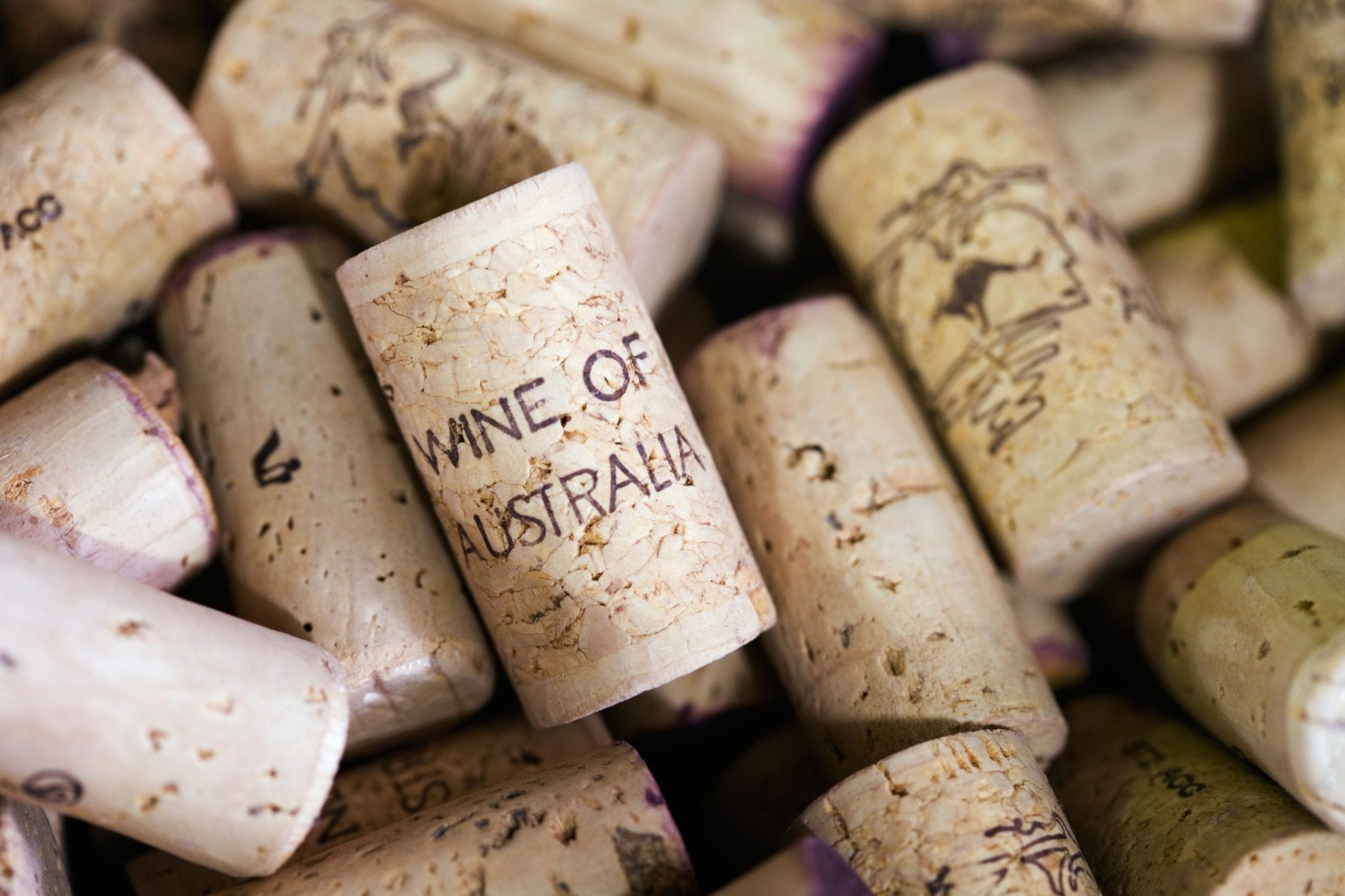
  • Wine Australia store launched on Alibaba

    Wine Australia store launched on Alibaba

    Australian wines are set to get a big boost in China from e-commerce giant Alibaba Group’s latest venture.

    An online “flagship store” featuring Australian wine has been launched on Alibaba’s business-to-consumer platform Tmall.com.

    Alibaba’s online retail sites cater to 434 million Chinese consumers, and the group generates half of China’s online wine sales.

    The new store on Tmall, supported by Wine Australia and operated by Chinese online retailer Vinehoo.com, will initially stock 10 brands from eight Australian wine regions, followed by another 20 brands in coming months. The first brands to be featured include Brokenwood, Coriole, John Duval, Pikes and Voyager Estate. Wine Australia does not select the brands. Wine Australia chief executive Andreas Clark said Alibaba was a significant player in Chinese e-commerce — a massive company with great reach. “The muscle they can bring, potentially, to further increasing Australian wine sales is vitally important,” Mr Clark said.

    China’s food and wine culture is still evolving, he said, and more Chinese consumers are looking online for premium products.

    “Our support of Tmall’s flagship Australian wine store helps us capitalise on this growing interest in Australian wine and gives us the opportunity to further reinforce the message with consumers that wines of Australian provenance are of the highest quality,” Mr Clark said.

    Alibaba’s managing director for Australia and New Zealand, Maggie Zhou, said Australian wines are considered world-class, and come at varied price points, so the opportunity to sell to China’s growing middle class is significant. Mainland China is now Australia’s second most valuable export market after the US.

    Total Australian wine exports to mainland China in fiscal 2016 rose 50 per cent to $419 million. Exports of wine priced at $10 or more per litre grew 71 per cent to $169m.

  • Indonesia asks Alibaba’s Jack Ma to advise its e-commerce development

    Indonesia asks Alibaba’s Jack Ma to advise its e-commerce development

    Indonesia has asked the chairman of China’s Alibaba Group Holding Ltd, Jack Ma, to act as adviser in the development of the Southeast Asian country’s nascent e-commerce industry, according to a video released by the government.

    Indonesia has the world’s fourth-largest population, boasting a young, internet-savvy demographic, and a thriving e-commerce market that is increasingly attracting global investors.

    Earlier this year, Alibaba bought a controlling stake in Southeast Asian online retailer Lazada Group for around $1 billion, while a group of investors led by private equity firms KKR & Co LP and Warburg Pincus LLC poured more than $550 million into Indonesian ride-hailing start-up Go-Jek.

    To promote growth in the e-commerce industry, the government is setting up a “steering committee” consisting of 10 ministers for which it has asked Alibaba’s Ma to be an adviser, Communication and Information Minister Rudiantara said.

    “The thinking behind this is to make Indonesia’s positioning in the international marketplace more prominent,” Rudiantara said in a video released by the state secretariat. The minister, like many Indonesians, only uses one name.

    Rudiantara is part of President Joko Widodo’s delegation attending the G20 summit in the Chinese city of Hangzhou.

    An Alibaba spokeswoman confirmed that Ma was asked to be adviser to Indonesia’s e-commerce steering committee, but declined to say whether he had accepted the offer.

  • Alibaba Cloud, IIPL to support Singapore startups

    Alibaba Cloud, IIPL to support Singapore startups

    Alibaba Cloud and Infocomm Investments (IIPL) have announced plans to collaborate to drive technology innovations in Singapore, built upon Alibaba Cloud’s support network and suite of cloud infrastructure services.

    The announcement was made at the Create@Alibaba Cloud Start-up Contest (CACSC).

    The collaboration will combine Infocomm Investments’ existing initiatives for local startups and technology innovations and Alibaba Cloud’s cloud computing resources.

    It will focus on extending sophisticated networking solutions and big data intelligence to a broader base of Singaporean start-ups under Alibaba Cloud’s first global startup program, Create@Alibaba Cloud.

    Alibaba Cloud will also pave way for start-ups in Singapore to leverage Alibaba Cloud’s ecosystem and to gain access to the China market as well as multiple business network resources and funding opportunities.

    In addition, the collaboration will foster innovative exchanges between Singapore and China’s startup ecosystems by inviting accelerators, incubators, and start-ups in Singapore to participate in startup activities in China and vice versa.

    This marks the start of a long term collaboration between both ecosystems to drive innovation, the companies said.

    “We are very proud to work with Infocomm Investments to build a more robust start-up ecosystem in Singapore,” said Sicheng Yu, vice president of Alibaba Group and general manager of Alibaba Cloud Global.

    “This underscores our on-going commitment to drive technology innovation in Singapore, as well as to support local start-ups in their business growth through our cloud capabilities and extensive support network in both local and global markets.”

    The Create@Alibaba Cloud Start-up Contest (CACSC), organized in partnership with Infocomm Investments, is Alibaba Cloud’s first ever global start-up competition, which is aimed at championing start-ups and maximizing their potential.

  • How brands are using VR to improve customer experience in China

    How brands are using VR to improve customer experience in China

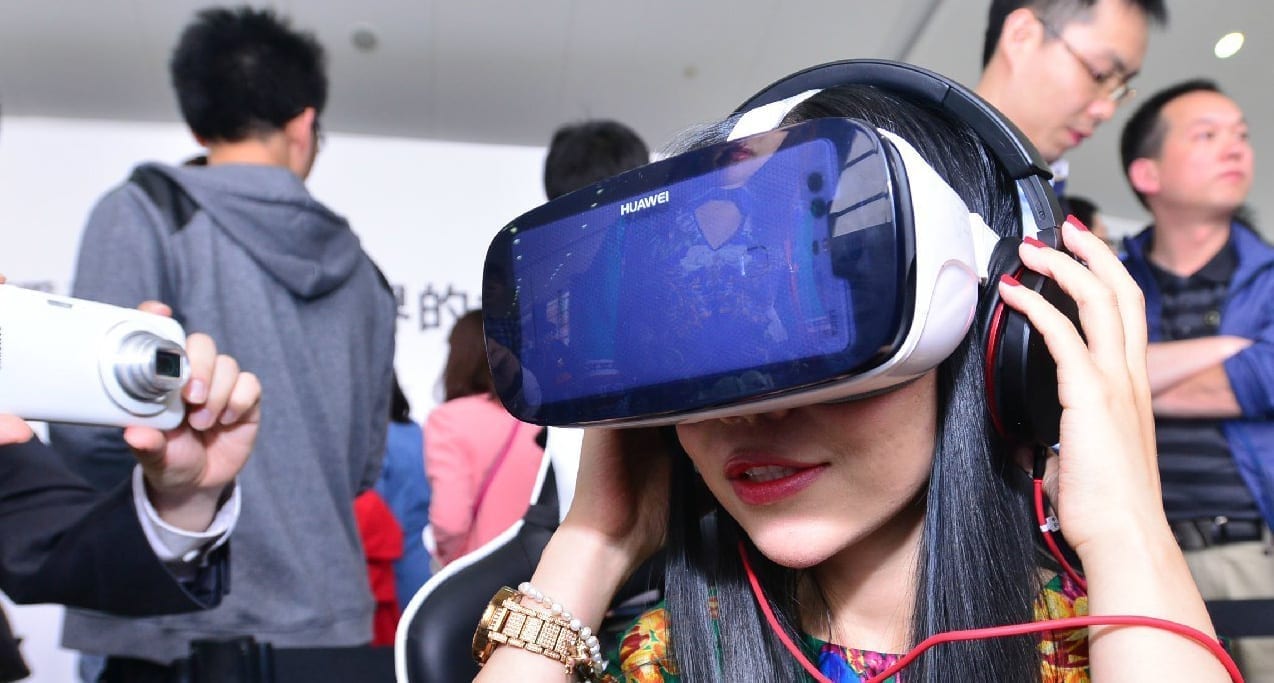
    Tech-enhanced customer experiences have always had a very receptive audience in China, and as a result, VR technologies are being widely embraced by both brands and platforms.

    China has the world’s biggest ecommerce market and by 2020, it will dominate the retail sector also, according to PwC. The sheer size of the country’s retail consumer market is one reason why the rest of the world sits up and takes notice when China adopts new technologies in this sector.

    And while the rest of us have been dipping our toes in the VR pool, trying out Oculus Rift headsets at trade shows and testing the low-tech, low-cost Google Cardboard on the relatively limited VR apps available via smartphone, China has been forging ahead with this new technology, putting it to practical use and building a market for virtual retail experiences.

    It’s no coincidence that China’s big three Internet platforms (Alibaba, Tencent and Baidu) have all invested significantly in VR, in what is expected to become a market worth $8.5 billion by 2020. these figures suggest that VR is no mere novelty to the businesses that shape the country’s economy.

    Alibaba

    Alibaba’s Buy+, launched last month, is a virtual reality shopping programme, which allows users to choose clothes and accessories via the headset, assisted by a virtual shopping assistant. It will give Alibaba’s 400 million users access to a VR shopping experience with 3D renderings for hundreds of products, and will eventually allow retailers to create their own VR stores.

    China_VR_Alibaba_Buy+_Alizila_600

    *Source: Alizila

    While it’s still in concept mode, Alibaba anticipates that the technology will become as central to the shopping experience as smartphones are today, picking up on and exploiting consumers’ appetite for ever-evolving and exciting experiences.

    Tencent

    Tencent has taken a different approach in its quest to dominate the VR market by launching its own operating system (Tencent OS) and VR console project – the miniStation. Tencent is focused on China’s gaming community to kick start user interest, and plans to integrate all of its services and apps into the platform, including WeChat and QQ. This will undoubtedly open up all kinds of opportunities for retailers to engage with customers in entirely new ways.

    China_VR_Tencent_miniStation_600

    *Source: Tencent’s miniStation for QQ and WeChat.

    As these ecommerce giants lay the foundations for a vibrant and viable VR market, physical retailers also have their sights set on the growing interest in this technology and how it can work for them.

    Suning + Gome

    For example, Chinese electronic retailers Suning Commerce Group and Gome Electrical Appliances Holding Ltd have done a deal with HTC to set up around 10,000 VR experience sites across China by the end of this year, including virtual rollercoasters and other adventurous in-store experiences.

    OnePlus

    Another example is smartphone manufacturer OnePlus. It developed a VR space station to launch its latest handset. As part of the campaign, 60,000 people were ‘beamed up’ to the space station where they learnt about the phone and its features. Within six hours, the conversion rate was an impressive 30%, giving a very promising return on investment.

    Takeaways

    What these pioneering retailers and retail platforms have learned is that VR has a number of advantages as an experience mechanism:

    • It allows them to showcase multiple products in a very cost-effective way – around 80% of the cost of building a traditional, brick-and-mortar showroom

    • There’s no physical limit to what VR can do – it’s possible to develop truly innovative and extraordinary experiences which would usually be out of reach. Going into space, on a rollercoaster, under the sea or any one of an almost endless list of scenarios can be developed and delivered to customers

    • There’s a huge appetite for VR experiences in China – according to industry analysts Canalys, the country will account for 40% of all VR headset shipments this year, and people are queuing up to try out local offerings from DeePoon, Pico, Pimax, Idealens and, most recently, Xiaomi.

    China_VR_DeePoon_600

    *Source: DeePoon homepage.

    As the market continues to develop, industry insiders say VR in China is reaching a game-changing tipping point. Yang Tao, general manager of Beijing-based VR startup SweetTech, told the China Daily in March: “The market feels like it did on the eve of the first iPhone when it was unveiled in 2007”. Given what happened to the smartphone market in the years since then, this is something retailers can’t afford to ignore.

  • Alibaba making moves to buy ShopClues

    Alibaba making moves to buy ShopClues

    Chinese internet giant Alibaba has been discussing the acquisition of Indian online marketplace ShopClues, which is valued at more than US$1 billion.

    Alibaba wants to merge the marketplace of Paytm, in which it has a stake, with larger rival ShopClues, reports The Times of India. The newspaper says Alibaba has several acquisition targets as it aims to firm up its presence in India against Amazon.

    Based in Gurgaon, ShopClues has raised about $250 million with investors including GIC of Singapore, Helion, Nexus Venture Partners and Tiger Global. It is positioned as an online flea market, selling cheaper and mostly unbranded merchandise.

    Former Zynga and Yahoo executive K Guru Gowrappan, who has been mandated to chart Alibaba’s growth in Asian markets (excluding China), is driving the merger-and-acquisition talks with the senior management of ShopClues, sources say.

    Meanwhile, Alibaba group, which holds a stake of about 40 per cent in Paytm, has started the process to separate the Noida-based company’s core payment business and smaller commerce business into two separate entities.

  • Laura Ashley to expand to China

    Laura Ashley to expand to China

    After several attempts at cracking the market, Laura Ashley will finally launch in China.

    The British retailer, owned by Malaysia-based MUI Group, will open a website via the Alibaba-owned Tmall website and will have a concession within the first House of Fraser store in China set to open this autumn.

    Laura Ashley finance director Seán Anglim said its long-term aim was to find a Chinese franchise partner.

    “China is not easy as evidenced by how many have got in and how many have come out,” Anglim said.

    “It is all about finding the right partner and doing it at the right time.”

    Laura Ashley currently has franchise partners in 30 countries outside the UK and an online store in six.

    The company also has ambitions to establish new online stores in Hungary and the Czech Republic in coming months.

    The Chinese move comes after the retailer this week reported a £25.8 million profit before tax and exceptional items for the 74 week period to June 30 – a 12.6 per cent increase on the 2015 figure.


  • Alibaba revenue grows 59% in June quarter

    Alibaba revenue grows 59% in June quarter

    The Alibaba Group reported a 59% revenue growth (reaching $4.84 billion) for the quarter ended June 30.

    Revenue from its China retail marketplaces ($3.51 million), including Taobao and TMall, also rose 49% from a year earlier.

    It is, however, in the area of mobile that the e-commerce giant had made huge strides.

    Alibaba Group’s Chief Financial Officer Maggie Wu reported that mobile monetization – the commission the group charges for each transaction –  reached 2.80% this quarter, surpassing the non-mobile monetization rate for the first time since the company commenced mobile monetization in the fourth quarter of 2013.

    Mobile monthly active users (MAUs) on the China retail marketplaces also grew to 427 million in the month ended June 30, compared to 410 million in the month ended March 31. This represents a net addition of 17 million MAUs in the quarter and a 39% increase from 307 million a year earlier.

    The company attributes its strong growth in mobile users to the increased adoption of mobile devices by consumers as the primary method of accessing its platforms. Daily and monthly active users ratio of the Taobao App, for example, was 40% in June 2016.

    Joe Tsai, co-founder and vice chairman of Alibaba Group, said during the earnings conference call, that the company overall growth was unprecedented since Alibaba became a public company.

    He noted the tremendous value proposition of the e-commerce platform with 434 million highly engaged customers in China that even its China retail marketplaces have done well against the backdrop of economic headwinds and reduced expectations from the industry.

    He said features that focus on community, sharing,  originality, immediacy, and data-driven customization are capturing the imagination of today’s generation of young consumers. Around 75% of users on the Taobao app, for example, are below 35 years of age.

    “Taobao has fully evolved from a transactional platform to a social commerce platform driven by China millennials,” said Daniel Zhang, Chief Executive Officer of Alibaba Group. “Mobile Taobao enjoyed daily active users (DAU) versus MAU ratio of 40% in June, which points to a high degree of stickiness among our mobile user base.”

  • Alibaba sales soar on international expansion

    Alibaba sales soar on international expansion

    Alibaba sales have soared in the first quarter of its new fiscal year, with overall revenue growth pushing even higher than last quarter’s stellar result.

    Streaming entertainment and cloud computing boosted the business, driving revenue up 59 per cent in the June quarter to 32.15 billion yuan (US$4.8 billion).

    In a contrast to the last reporting period, it is international that has shown the most growth, with revenues rising by 123 per cent. Although this figure is aided by the consolidation of the Lazada business, it is also the result of some good numbers from AliExpress.

    That said, China retail remains the largest part of the group, accounting for just over 73 per cent of revenues. Here performance was strong, with revenues rising by 49 per cent – partly thanks to a combination of the addition of 11 million more active buyers and higher average transaction values over the prior quarter. A sharp increase in marketing spend by those brands and merchants using Alibaba’s various sites also made a significant contribution to the hike in revenues.

    Alibaba’s role as a facilitator for Western brands wanting to sell into China continues to be the company’s main commercial advantage. Its ability to work closely with those merchants to improve performance will benefit the revenue streams of both parties, as well as creating a more attractive and compelling offer for consumers.

    Despite its success at home, Alibaba has struggled to gain traction in already established markets like the US. While this was once a stated ambition, and perhaps remains a long term goal, it is off the agenda for the short term. This is the correct strategy: chasing lower margin, profit eroding international gains for the sake of vanity makes little sense.

    That said, this does not mean that Alibaba’s international ambitions are entirely on hold – as the latest results show. Tactically, Alibaba has decided to focus on high growth markets where commerce is more embryonic. The acquisition of a controlling interest in Lazada, the Southeast Asian eCommerce group, is testament to this.

    While Lazada has grown into a sizeable business, it has a number of challenges including on the delivery, payment and fulfilment front, where it has struggled to optimise the offering. Alibaba, through its expertise and financial muscle, should be able to remedy this. It will also, over the medium term, strengthen the international brands available making the site more compelling and interesting for shoppers.

    The Lazada model represents the approach Alibaba is likely to take to international growth and expansion, and this will yield good long term results.

    With both international and domestic sales forging ahead, and with new areas like cloud computing making a better contribution, Alibaba is firmly on an upward trajectory.

  • China’s Alibaba Q1 revenue leaps 59%, best since IPO

    China’s Alibaba Q1 revenue leaps 59%, best since IPO

    Chinese e-commerce giant Alibaba saw revenues leap 59 percent year-on-year for the quarter ended in June, it said Thursday, its strongest growth since it listed on the New York Stock Exchange in 2014.

    Revenue for the company, seen as a proxy for China’s increasingly crucial consumer sector, reached 32.15 billion yuan ($4.83 billion) in the June quarter, it said in a statement.

    Alibaba is China’s dominant player in online commerce, with its Taobao platform estimated to hold more than 90 percent of the consumer-to-consumer market, and its Tmall platform is believed to have over half of business-to-consumer transactions.

    But according to the company net income plunged 77 percent year-on-year to $1.08 billion in the quarter, the first of its financial year.

    Still, Alibaba’s chief financial officer Maggie Wu described the results as “excellent”.

    “The 59 percent revenue growth for the company overall and the 49 percent revenue growth of our China retail marketplaces represent the highest growth rates we’ve achieved since our IPO,” she said in the statement.

    The company’s gross merchandise volume (GMV) — a measure of value for online sales — rose 24 percent year-on-year to $126 billion in the June quarter, the statement said, matching the growth of the previous three months.

    The company, often compared to eBay or Amazon of the United States, has expanded outside its core e-commerce business, in sectors ranging from sports to entertainment.

    “Our results show the scale and leverage of our ecosystem, as we strengthen our competitive positions in core commerce, cloud computing and digital media and entertainment,” Alibaba chief executive officer Daniel Zhang said in the statement.

  • Sainsbury’s taps into China’s love of British products through Tmall

    Sainsbury’s taps into China’s love of British products through Tmall

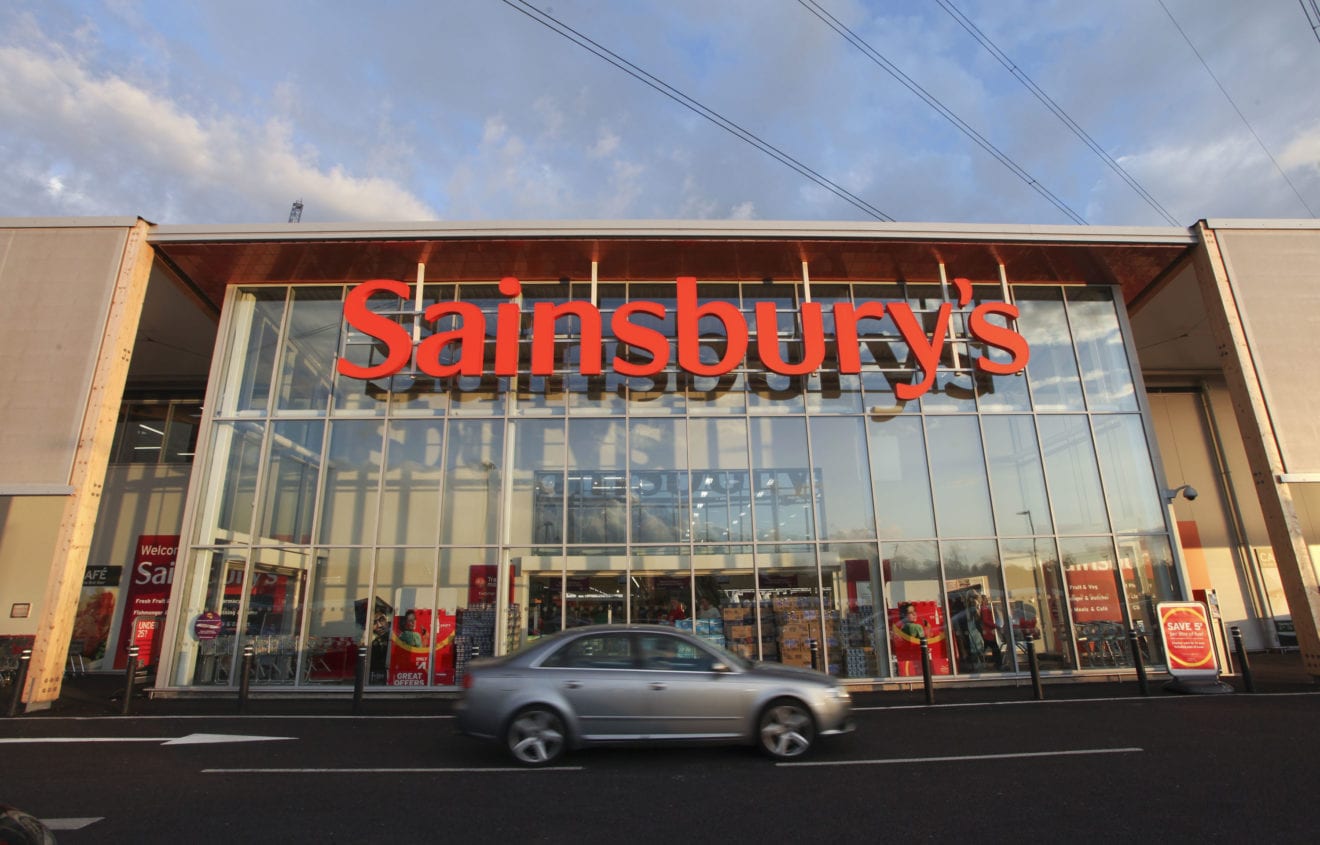
    The move comes after the British retailer trialled the web marketplace for less than a year and claimed the test was a success. It will now sell over 100 own-label products across four categories—British breakfast, drinks, organic and baby—on Tmall, and has plans to add further ranges later this year.

    With online Chinese sales dominated by key promotional sales events, Sainsbury’s was the only international retailer to be given a “Super Brand Day” on Tmall during the annual 8.8 Tmall Global Shopping Festival on August 8.

    “Many customers want to replicate tastes and occasions that they have enjoyed or heard about through international travel. Products to make a British breakfast and English afternoon tea have therefore proved hits,” said John Rogers, chief financial officer of Sainsbury’s,

    Rogers added that granola, tea, shortbread and UHT milk have been among the sales channel’s top-selling lines to date.

    “Our trial with Tmall has enabled us to learn a lot about China’s huge digital market, including the importance of sales events such as Singles’ Day and 8.8,” he added..

    “Alibaba’s expertise in the rapidly growing Chinese digital consumer market will be a huge asset to us as we grow and develop our business in China.”

    Amee Chande, Alibaba’s managing director in Britain and Ireland, said that a famous British brand like Sainsbury’s was “a key addition to our ecosystem” as it built brand awareness, directly engaged a new audience and met the evolving food demands of Chinese consumers.

    “Our collaboration is introducing the large and growing Chinese consumer class to a new range of products to enhance their daily lives,” said Chande.


  • Sainsbury’s China doubling product range

    Sainsbury’s China doubling product range

    With the success of its trial with Tmall Global, Sainsbury’s China is doubling its product range.

    Citing “increasing demand”, the British supermarket retailer is about to release 100 more items, such as tea bags, coffee and pasta.

    “Chinese online shoppers are increasingly demanding high-quality international products,” says Sainsbury’s CFO John Rogers.

    “Many customers also want to replicate tastes and occasions they have enjoyed or heard about through international travel. Products to make a British breakfast and English afternoon tea have therefore proved hits.”

    Sainsbury’s started with Tmall last September, joining such British retailers as Asos, Burberry and fellow grocer Waitrose, which sell products on Alibaba’s Royal Mail online outlet.

    Rogers says the trial with Tmall has taught the company much about China’s digital market, including the importance of sales.

  • AXA, Alibaba, Ant Financial enter global partnership

    AXA, Alibaba, Ant Financial enter global partnership

    AXA, Alibaba and Ant Financial Services have agreed jointly explore opportunities to distribute AXA’s insurance products and services through Alibaba’s global e-commerce ecosystem.

    The deal is expected to benefit the businesses and consumers that transact via Alibaba’s marketplaces. The companies will work together to co-innovate and to develop value-added products and services to customers around the world and mutually support each other in developing and exploring new markets and segments.

    The first phase of the collaboration will see AXA develop various insurance products for users of AliExpress, Alibaba’s wholesale marketplaces and Ant Financial Services.

    AliExpress is a global retail marketplace targeted at consumers worldwide. AXA will develop and provide insurance products for AliExpress’ global customers, including extended warranties for repairs and/or damaged goods and enhanced online payment protection.

    On Alibaba’s wholesale marketplaces (Alibaba.com,1688.com), AXA will provide insurance products to small and medium businesses globally who are trading on these platforms.

    AXA will offer travel insurance products for Chinese travelers going overseas through Ant Financial Services, an Alibaba-affiliate.

    These insurance products and services will be developed by AXA’s local entities according to the customers’ local requirements.

    “Our collaboration with industry-leader AXA is a key part of Alibaba’s globalization strategy and our vision to enable small businesses and consumers alike to enjoy the convenience and benefits of e-commerce in a safe trading environment,” Alibaba Group president Michael Evans said.

    “As cross-border e-commerce grows rapidly, it is critical that we evolve our services and offerings to the businesses and consumers that conduct trade on our platforms. The collaboration between AXA and Alibaba will enable us to create new solutions and ultimately improve the overall customer experience.”

  • Nippon Express, Alibaba to team up in China-bound shipping

    Nippon Express, Alibaba to team up in China-bound shipping

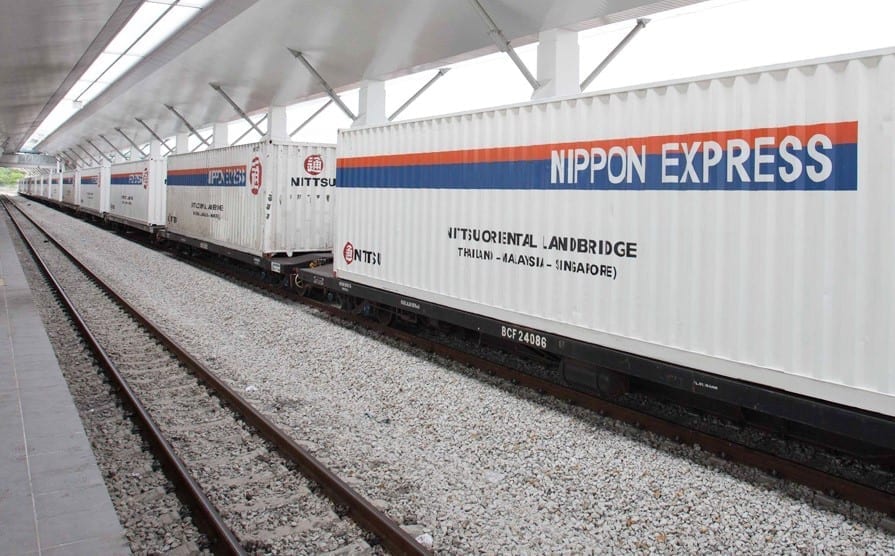
    Nippon Express will work with e-commerce giant Alibaba Group Holding to ship Japanese goods to China for around 30% less than current prevailing rates.

    The Japanese shipper will transport goods from companies doing business on Alibaba’s TMall.com platform to China, while an Alibaba affiliate will handle home delivery. Goods can either be flown across the sea when ordered or shipped by surface in advance and stored in warehouses.

    Nippon Express is Japan’s largest business-to-business and international shipper, enabling it to hold down costs by purchasing space on ships and aircraft in bulk. In teaming up with TMall, which controls 60% of China’s online retail market, the shipper aims to handle half of all online purchases headed there from Japan.

    Currently, Japan Post ships 90% of online purchases traveling to China via airmail with its express-mail service. But a fee hike of around 30% in June to 1,400 yen ($13.68) for packages up to 500 grams has raised headwinds to the service’s use. Nippon Express will keep fees for similar items around 1,000 yen, aiming to pick up customers put off by the increase. Both services take four to six days for delivery in China.

    Nippon Express and Alibaba will also take on the complex business of dealing with customs for companies on TMall. China updated rules on cross-border e-commerce in April and now requires such information as what is being shipped, prices and logistics to be submitted electronically. Nippon Express will be the first Japanese logistics company to create a digital link with Alibaba allowing this data to be combined and submitted in one neat package.

    China’s cross-border e-commerce retail market is expected to grow roughly twelvefold from 2014 levels to $245 billion in 2020, according to U.S. professional services company Accenture.

    A number of Japanese companies are competing to offer better and cheaper shipping options to China, creating new chances for even smaller businesses here to access that enormous market. Yamato Holdings inked a partnership in April with companies including JD.com, TMall’s smaller rival, to offer international shipping and home delivery. ANA Holdings plans to offer a service handling everything from customs procedures to delivery starting in September.

    Such Japanese products as cosmetics and household goods have gained a sterling reputation for safety and quality in China. Consumers there are on track to buy 2.33 trillion yen ($22.8 billion) in goods from Japan online in 2019, according to the Japanese trade ministry. This is roughly triple the 2015 level.

    E-commerce is growing more important to Japanese companies as a source of continuous demand from China. This stands in contrast to consumption by Chinese tourists in Japan, who have been spending less per capita of late.


  • Millennials driving force behind Taobao Marketplace

    Millennials driving force behind Taobao Marketplace

    Millennials are the driving force behind Taobao Marketplace, with more than 70 percent of buyers in their 20s and 30s, according to Chris Tung, chief marketing officer at Alibaba Group.

    “As users continue to engage with the platform in more meaningful ways, we are fostering next-generation consumption features, such as virtual reality, to transcend the overall user experience,” he said in a media statement during the Taobao Maker Festival held recently at the Shanghai World Expo Exhibition Center.

    The festival celebrates Taobao merchants by showcasing creative ideas and designs to the world, including gadgets, fashion and high-tech products. The festivities also include various performances by artists, music groups and celebrities from across Asia.

    Created in 2003 as an online shopping destination for Chinese consumers, Taobao Marketplace has evolved into an interactive lifestyle platform driven by a young consumer population who wants to do more than just shop.

    “It is a destination for innovators, entrepreneurs and creatives to showcase and experiment amongst a community of 423 million Chinese consumers on our China retail marketplaces that come to Mobile Taobao to explore, discover and be entertained,” explained Daniel Zhang, chief executive officer of Alibaba Group.

    In 2010, Alibaba Group launched the Mobile Taobao app to transition its flagship C2C shopping platform to more a interactive platform to explore opportunities in mobile commerce.

    Today, the Taobao platform supports millions of entrepreneurs across China with user engagement across e-commerce, digital media, travel, social and local services. On average , it has around 150 million daily active users on Mobile Taobao. Users launch the Taobao app an average of seven times per day and spend more than 20 minutes each day on the app. They browse an average of 19 products during a 24-hour period,

    Moreover, mobile Taobao users post more than 20 million reviews and comments every day.

    “We hope the Taobao Maker Festival will inspire young makers to continue innovating and reaching the world through the Taobao ecosystem,” Tung said.

  • Social Commerce blossoms on mobile Taobao

    Social Commerce blossoms on mobile Taobao

    On the way to becoming the world’s largest e-tailing market (US$590 billion in 2015), online shopping in China has become a highly social activity.

    Wary Chinese consumers don’t swallow advertising at face value and they don’t take vendors at their word – they check the internet for product reviews, swap links to favoured products and seek out third-party opinions, especially those of people they trust. According to a recent McKinsey report, two-thirds of China’s consumers cite recommendations from families and friends as the most important factor in purchasing decisions. In the US, only one out of three people say the same.

    In other words, in China, shopping is also sharing. So pronounced is this trend that Alibaba Group, owner of China’s largest online marketplaces, insists it’s not so much in the e-commerce business these days as it is in the social commerce business. And since more sharing equals more sales, the company is doing everything it can to make it easier for users to interact with one another when shopping online – going beyond offering the standard eCommerce fare of user-generated product recommendations and ratings by establishing online communities, encouraging shoppers to share photos of their latest online purchases and even adding monetary incentives to encourage greater social participation.

    The tip of the social-commerce spear is Mobile Taobao, Alibaba’s hugely popular mobile shopping app. With 369 million monthly active users, Mobile Taobao is “not only China’s, but the world’s largest social commerce platform,” according to Jiang Fan, who leads Mobile Taobao’s business at Alibaba.

    The app, which offers access to Alibaba shopping sites Taobao Marketplace, Tmall.com and Juhuasuan, generates up to 20 million product reviews every day, and involves 5 million users sharing content with friends. Users “like to share whatever they find- fun things, fun merchandise – with their friends through social media,” Jiang said last month during an investor conference at Alibaba headquarters in Hangzhou, China. “We don’t view ourselves [merely] as a shopping app,” he said. “Our community is not only about us serving the consumers, but consumers themselves helping each other.”

    To drive greater customer engagement, Mobile Taobao has been developing new social commerce features within the app. One such addition is the hosting of special interest groups calledquanzi(circles) where hobbyists and other like-minded individuals can talk about their pastimes and favourite products. Taobao says it now hosts more than 1000 circles covering interests such as wedding planning, fishing, infant care and many others.

    “We want to get people together to allow them to discuss and generate content that can serve more people,” said Zhang Jiehan, a Taobao product manager.

    Photo sharing is also a hit with users, said Jiang. “Every day after [mobile shoppers] complete their transactions they like to share what they’ve bought,” he said, “so we have a specific app for buyers to show off their products.” This feature currently generates about 1.5 million daily reviews, he added.

    One of the most popular social functions on Mobile Taobao is a Q&A feature called Wendajia (ask others) that lets shoppers with questions about a particular product get answers from members of the Taobao community. Wendajia helps free consumers from the drudgery of combing randomly through product reviews or resorting to asking sometimes biased and unhelpful vendors for answers. “The essence here is mutual assistance,” Zhang said. “The new feature builds a direct and effective communication channel between people who have purchased and people who want to purchase.”

    Crowdsourced Q&As have been around for a while, of course. But Wendajia is innovative in the way Taobao identifies and proactively reaches out to users who can provide feedback. When a buyer submits a question, Taobao employs big data and a sophisticated algorithm to spot members of the online community who are most likely qualified to answer the question, typically those who have recently purchased the product. After zeroing in on up to 12 potential candidates, the system then sends out messages to their smartphones soliciting responses.

    Wendajia has proven to be a boon to buyers because they don’t have to wait hours or days for fellow shoppers to stumble on their questions and provide answers. One-fourth of all questions are answered within one minute and 60 per cent of questions within 10 minutes, Jiang said.

    “This greatly optimises the pre-shopping decision process,” he said. Every day, it receives as many as 1 million questions, and 2 million consumers participated in answering.

    China’s widespread adoption of smartphones and the reach of the mobile internet has undoubtedly contributed to the growth of social commerce by making participation easy, ubiquitous and dynamic. Still, Mobile Taobao isn’t relying solely on user enthusiasm and social goodwill to foster greater user involvement.

    Last year, Alibaba rolled out a program to encourage bloggers, writers and noteworthy online expertsto post content on Mobile Taobao by paying them small sales commissions for product recommendations that lead to purchases. More recently, Taobao began offering similar incentives for the general public to encourage social participation.

    Through an upgrade to Taobao’s existing membership program, which previously awarded points only for online spending, users can earn additional points by posting product reviews and links, answering consumer questions and interacting with the Taobao community in other ways. While there are no cash awards, amassing points entitles users to benefits such as coupons for car-hailing app Didi Chuxing and service upgrades such as late check-out times at participating hotels.

    In social-media-crazed China, such perks may not be necessary. Just being part of the conversation seems to be enough to keep people involved. According to media research firm ComScore, the average Mobile Taobao user spends more than 25 minutes a day on the app, compared with Amazon Mobile’s nine minutes.

    As Taobao shopper Cici Wang notes, social-commerce features like Wendajia have value “because of the volunteer work offered by ordinary users, which makes it trustworthy.” Indeed, having armies of consumers keeping each other informed and vendors honest is seen as a positive development as e-commerce morphs into social commerce, says Zhang, the Taobao product manager. Digital word-of-mouth provides merchants with continuous feedback and compels them to maintain quality products and services.

    “In the long term, it drives healthy growth of the platform,” Zhang said.