Tag: Alibaba

  • Baidu Wallet launches Southeast Asia foray

    Baidu Wallet launches Southeast Asia foray

    China’s Baidu Wallet has launched its mobile payment service in Thailand, on the eve of the traditional Thai new-year celebration Songkran.

    Part of the Baidu search-engine group, the digital payment service is now connected to more than 400 merchants in four Thai cities – Bangkok, Chiang Mai, Pattaya and Phuket. It covers restaurants, shopping malls and spas.

    Baidu Wallet is also set to launch in South Korea and Japan, with plans to also expand into Hong Kong, Macau and Taiwan.

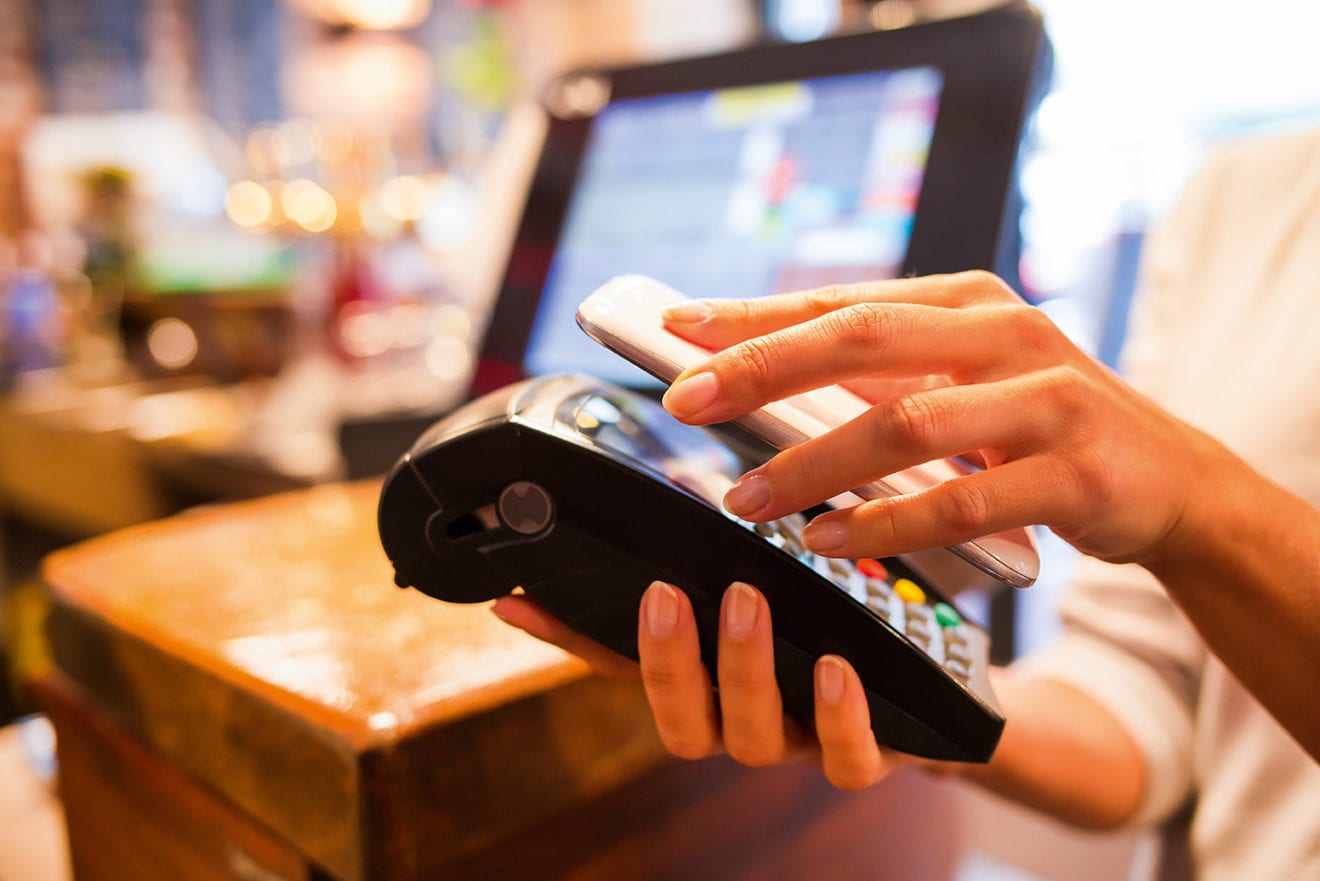
    Baidu Wallet’s smartphone app means Chinese travellers can avoid the bother of exchanging currency. They need only scan the QR codes of partnered merchants and enter the amount of Thai baht they need. The app converts the figure to yuan based on real-time exchange rates.

    China has the highest adoption rate in the world for technology-enabled payment systems, according to a new survey by market data company Nielsen. With information from 13,000 respondents across 26 countries, the survey shows that 86 per cent of Chinese respondents paid for online purchases over a six-month period, while the global average rate was half that at 43 per cent.

    A report by consultancy iResearch shows that China’s mobile payment transactions reached $373.2 billion in the third quarter of last year, a 64 per cent increase year-on-year.

    China has been the biggest source of international tourists since 2012, says the Tourism Authority of Thailand. There were 7.9 million Chinese tourists last year – 27 per cent of total international arrivals.

    Chinese travellers spent 6400 baht (US$180) a day each on average, with most tourists spending 5690 baht.

    A report from Forrester Research says the rapid growth of smartphones is driving an eCommerce boom across Southeast Asia, the world’s third-largest digital marketplace after China and India. This boom is being paralleled by strong payment growth via mobile. Companies are boosting their investments in online and mobile platforms such as Carousell in Singapore and Tarad in Thailand, where 35 per cent of purchases are made via a mobile device.

    Alipay, from Alibaba, has introduced an online shopping service Thailand duty-free shop King Power, and the WeChat app payment option launched in Thailand at the beginning of this year.


  • Alibaba fake fight targets Taobao vendors

    Alibaba fake fight targets Taobao vendors

    Alibaba is tightening the rules for traders selling luxury goods on its popular online platform Taobao.

    It’s one of several measures in the ramping up of the Alibaba fake fight, which is being conducted in conjunction with Washington, DC-based International AntiCounterfeiting Coalition (IACC).

    From May 20, vendors selling luxury products on taobao will have to upload an invoice or authorisation letter from the luxury brands, for examination by Taobao, as proof it has the rights to sell the products. Otherwise the goods will be removed from the website and Alibaba says payments received for such goods can be frozen.

    “To create a healthy shopping environment with a high level of integrity and to protect the legal interests of consumers and brand owners, Taobao is gearing up to regulate sales of luxury brands’ products,” the company said in a letter to traders on May 4.

    The letter coincides with reports that Chinese government agencies plan to clean up the eCommerce market, targeting counterfeit goods and trademark violations. A campaign will run from May through November with stiff penalties for offenders caught.

    Meanwhile, the IACC MarketSafe Program, an initiative started in 2013, is being opened up so that more brands and companies can participate. The MarketSafe program provides companies with an expedited process for working with Alibaba to target and take down online listings for counterfeit goods, reports Alibaba news site Alizila.

    Set to debut later this year, the expanded MarketSafe program will be free of charge to IACC members and non-members, according to Alibaba and the IACC. In addition, brands will no longer be required to provide evidence to support intellectual-property infringement complaints. The changes “will enable a greater number and diversity of rights holders to benefit from a fair, simple, and effective IP enforcement platform,” Alibaba said in a statement.

    Accused by some Western companies of not doing enough to keep listings for counterfeit products off its shopping websites, Alibaba has been trying to enlist greater industry support, arguing the problem is too pervasive and complex for any single company to fight on its own. The Chinese eCommerce giant has for several years been working with the IACC, which has members from a wide range of industries and includes brands such as Burberry, 21st Century Fox and Apple.

    Alibaba last month became the first e-commerce company to join the IACC as an official member. Its admission to membership prompted the walkout of Michael Kors and Kering-owned Gucci.

    IACC President Bob Barchiesi said the expansion of the MarketSafe program is the result of “significant contribution and commitment from both parties.”

    “Collaboration across industries is key to addressing the issue of counterfeiting at a broader level, and this is one of the first steps towards the IACC’s goal of creating a holistic model for tackling online counterfeiting around the world,” Barchiesi said.

    Since the MarketSafe program’s launch, nearly 5000 sellers’ storefronts have been closed and banned from Alibaba’s marketplaces, and more than 180,000 infringing product listings have been removed, even through a “limited number” of brands have been participating, according to Alibaba.

    “This program exemplifies the tangible and mutual success that can be achieved when brands, trade associations, governments and intermediaries work together to combat counterfeiting,” said Matthew Bassiur, VP and head of global IP enforcement at Alibaba Group, in a statement.

    “Alibaba and the IACC, together with the rest of industry, have a shared interest in building a safe and trusted internet environment and marketplace for consumers, rights holders, and sellers,” he added.

  • Vietnam electronics retailer Nguyen Kim buys Zalora’s local operations

    Vietnam electronics retailer Nguyen Kim buys Zalora’s local operations

    Zalora, one of Southeast Asia’s biggest online fashion marketplaces, has completed a deal to sell its Vietnamese operations electronics retailer Nguyen Kim, reported Sunday, quoting Zalora Group.
    The subsidiary of Germany’s Rocket Internet has also sold its unit in Thailand to Thai retail giant Central Group, the website said, adding that the value of the deals has not been revealed.
    Last month news website TechCrunch cited multiple sources as saying that Central Group would acquire them for US$10 million each.

    Central owns a 49 percent stake in Nguyen Kim, which has 21 stores around Vietnam, through its subsidiary Power Buy.

    The selloff in Vietnam and Thailand is part of Rocket’s efforts to reduce costs and focus on other markets where Zalora has a better chance to make profits, according to TechCrunch.

    With a presence in 11 countries across the Asia Pacific, including Australia and Indonesia, Zalora’s revenues rose 78 percent last year to around $234 million, but its net loss increased 36 percent to $105 million, it said.
    Last month, the German company, which has been struggling to cash on the Southeast Asian market, sold more than half of its stake in Lazada, which it founded in 2012 to target the regional e-commerce market, to China’s Alibaba for $137 million. Rocket retains an 8.8 percent stake.
    In December Rocket sold off food ordering website Food Panda for an undisclosed price to local competitor Vietnammm after three years of operations, citing financial issues.
  • China still driving Alibaba sales

    China still driving Alibaba sales

    In posting its strongest revenue growth for the past four quarters, Alibaba has rounded off its fiscal year on a positive note.

    Although growth at the international division picked up strongly, it is China that has underpinned the group’s success.

    Alibaba sales jumped 39 per cent to 24.2 billion yuan (US$3.7 billion) in the three months ended March. Net income rose 85 per cent to 5.3 billion yuan.

    Despite the more challenging economic headwinds in China, Alibaba’s revenue from its various retail platforms in the country surged by 41 per cent over the quarter. Part of this is down to the growing audience, with active buyers across the various marketplaces growing by 16 per cent to an astonishing 423 million customers. Mobile platforms also saw growth with the number of monthly active users rising by 17 per cent to just over 410 million.

    This uplift was boosted by the rise in average revenue per buyer which increased by almost 11 per cent over the same period in the prior year. For mobile users the increase was even sharper, up by just under 109 per cent on the prior year.

    Much of this success can be attributed to three main factors:

    The first is reach. Here, Alibaba’s investment is allowing it to reach large swathes of the Chinese population – including in rural areas through its Rural Taobao platform – in a way that other eCommerce firms struggle to do. That it now has a presence in over 14,000 rural villages is a major advantage when it comes to growing its user base.

    The second factor is customer engagement and understanding. While many of its platforms are based around eCommerce, they are much more than just distribution systems. Taobao, for example, has a strong community element where consumers can look for news, understand trends, and interact with brands. This helps to drive up activity and user engagement which, in turn, aids sales conversion.

    The third factor is the group’s continued success with Western brands expanding into China. Arguably Alibaba is now the Chinese partner of choice for foreign firms, both because of its distribution network and its capability in providing intelligence and insight into consumer trends and habits. This ability to attract Western brands has made Tmall the destination for many Chinese shoppers. It is notable that in March alone, more than 100 new international brands joined the Tmall Global platform.

    As successful as Alibaba is in China, it has found international more challenging. However, the group is now taking a more selective approach to expansion, focusing on embryonic or underdeveloped eCommerce markets where its expertise can drive growth. The stake acquired in Lazada, an eCommerce platform in Southeast Asia, is typical of this strategy. Expect more such investments over the coming year.

    Despite its dominance in China, Alibaba’s growth prospects remain good – especially as it builds its content and entertainment business, and expands into services like cloud computing.

  • Gucci America follows Michael Kors out of IACC

    Gucci America follows Michael Kors out of IACC

    Gucci America has become the second brand to quit the International Anti-Counterfeiting Coalition(IACC) since the US-based group allowed Chinese eCommerce giant Alibaba to become a member last month.

    Describing Alibaba as “our most dangerous and damaging adversary”, Michael Kors left the IACC just after the Washington, DC group let Alibaba on board.

    Gucci, along with other Kering Group brands like Balenciaga, is suing Alibaba in New York, accusing it of knowingly encouraging and profiting from the sale of counterfeit goods on its eCommerce platforms. Alibaba has dismissed the suit as “wasteful litigation”.

    “The IACC stands by its decision and is committed to lean into the future and lead a coalition of the willing,” IACC president Robert Barchiesi says. “Whether it’s payment processors or online marketplaces, the choice is clear, they must be an integral part of the solution.”

    Alibaba’s membership is in a special category without voting rights, originally created when eBay asked to join the coalition, which it has not done as yet.

    Alibaba says its membership will allow it to work more closely and effectively with brands to enforce intellectual property rights.
    There are more than 250 members of the IACC including Apple, Chanel and Cisco Systems.

    Meanwhile, Alibaba Group boss Jack Ma has been confirmed as the IACC’s spring conference speaker.

  • LF Logistics opens giant Singapore e-commerce facility

    LF Logistics opens giant Singapore e-commerce facility

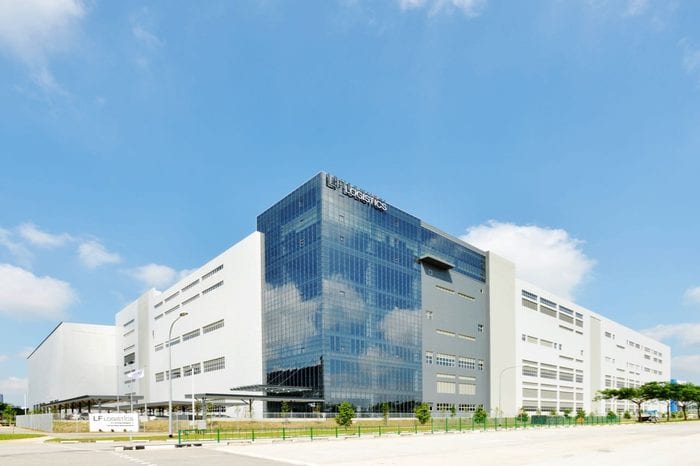
    LF Logistics has opened a 1-million-square-foot logistics facility in Singapore, the largest automated and customs bonded distribution warehouse in the city state that will target surging e-commerce growth in Asia.

    The nine-story center is located in West Jurong and is the company’s largest distribution facility in Southeast Asia, able to store up to 130,000 pallets with a throughput of 550 pallets per hour, aimed at meeting the fast-changing needs of brands and retailers in the region.

    “Our logistics business has been a bright spot with double-digit growth,” said Spencer Fung, the CEO of Li & Fung group. He did not provide an investment amount.

    According to the recent Asia Pacific Online Retail Forecast, 2015 To 2020, total online retail revenue will nearly double in Asia Pacific from $733 billion in 2015 to $1.4 trillion in 2020, a compound annual growth rate of 14.3 percent over the next five years.

    The total online retail revenues in just five markets of Asia Pacific — China, India, Japan, South Korea and Australia — surpass the combined figure for online retail in the U.S. and Western Europe combined.

    Joseph Phi, president of LF Logistics, said cross-border trade was expected to rise even faster with the establishment of the Association of Southeast Asian Nations Economic Community and the pending Trans-Pacific Partnership.

    “Our new logistics facility is well positioned to serve Singapore, as well as the broader Asia region and beyond. We see this facility as a gateway to the world,” he said.

    Although China dominates the e-commerce headlines, Southeast Asia is one of the markets of the future, said Steven Li, director of strategic partnerships for Cainiao, the logistics platform of Chinese online giant Alibaba Group.

    “Alibaba merged with Lazada recently, the largest online marketplace in Southeast Asia, and we believe the e-commerce market in the Philippines, Indonesia and Thailand will explode in two or three years,” he said at the Cargo Facts Asia conference in Hong Kong.

    Following the opening of the LF Logistics facility, Beh Swan Gin, chairman of the Singapore Economic Development Board, also highlighted the potential of the region.

    “The burgeoning middle class in Southeast Asia will drive consumer demand for more sophisticated products and services,” he said. “This new LF Logistics facility in Singapore is well-placed to address this opportunity. It will also enable the company to harness Singapore’s strong base of supply chain expertise to build differentiating competencies in e-commerce and omni-channel logistics.”

    Singapore Post has been quick to jump on the e-commerce train, and over the past two years, the group has been ramping up its regional logistics capabilities with new or expanded facilities, including the development of a $145 million fully integrated regional e-commerce logistics hub in Singapore that is expected to start operating in mid-2016. SingPost currently has more than 20 warehousing and fulfilment centers in the region.

    Alibaba Group has invested more than $200 million in a partnership with SingPost through a series of initiatives aimed at expanding its e-commerce logistics platform across Asia-Pacific. Alibaba increased its equity stake in the group to 14.51 percent.

    In a second initiative, Alibaba last year acquired a 34 percent stake in SingPost subsidiary Quantium Solutions International for $68 million, with SingPost holding the majority 66 percent share. QSI is a provider of end-to-end e-commerce logistics, warehouse and fulfilment services in Asia Pacific with a network spanning 10 countries.

  • AWS still dominates cloud infrastructure market

    AWS still dominates cloud infrastructure market

    Amazon Web Services (AWS) continues to dominate the cloud infrastructure services market with a 31% worldwide market share, dwarfing the chasing pack, according to new Q1 data from Synergy Research Group.

    The big three followers – Microsoft, IBM and Google – in aggregate accounted for 22% of the market, while the next 20 top-ranked cloud providers accounted for another 27%. The good news for Microsoft and Google is that they both achieved growth rates of well over 100% so they are at least slowly gaining some ground on the market leader.

    Outside of the big four, the next 20 cloud providers are growing at an average 41% per year, but in a market that is growing at over 50% that means that most of them are losing market share.

    The next 20 providers include Alibaba, CenturyLink, Fujitsu, HPE, NTT, Oracle, Orange, Rackspace, Salesforce, and Vmware.

    With most of the major operators having now released their earnings data for Q1, Synergy estimates that quarterly cloud infrastructure service revenues (including IaaS, PaaS and private & hybrid cloud) have now comfortably passed the $7 billion milestone.

    Growth rates remain somewhat similar across the major regions meaning that the United States continues to account for around half of the worldwide market.

    “This is a market that is so big and is growing so rapidly that companies can be growing by 10-30% per year and might feel good about themselves and yet they’d still be losing market share,” said John Dinsdale, a Chief Analyst and Research Director at Synergy Research Group.

    “The big question for them is whether or not they are building a sustainable and profitable business. This can be done by focusing on specific regions or specific services, but the bulk of the market demands huge scale, a broad footprint, very deep pockets and a long-term corporate focus.”

  • Singapore Pavilion on Alibaba’s Tmall helps access China market

    Singapore Pavilion on Alibaba’s Tmall helps access China market

    Local food manufacturers looking to expand into China will now have an easier time with the help of a new initiative by IE Singapore and the Singapore Food Manufacturers’ Association (SFMA).

    Dubbed “Singapore Pavilion”, it is an online store on Alibaba’s Tmall, a major Chinese website for business-to-consumer online retail.

    The initiative will “provide companies with a plug-and-play model, so they can export their products to China more quickly and easily”, said Ms Liane Ong, IE Singapore’s China group director.

    The trade agency said it sees e-commerce as an “important retail channel for Singapore companies to access the huge China market”.

    Ms Ong added that the Singapore brand commands a premium in China, amid rising affluence of Chinese consumers and food safety concerns.

    Despite this, companies wanting to export to China have always faced obstacles, with issues such as product registration and marketing to consumers being key problems, according to Mr Chong Ka Wee, chief executive of Kino Biotech, which owns proprietary brand Kinohimitsu.

    Kino Biotech is one of 45 firms to have signed up under Singapore Pavilion to sell its products and that has helped it save time and cut costs.

    “Normally, for product registration, you would have to go through processes like changing your labelling to adhere to the local regulations,” Mr Chong said. “All these processes can take up to 15 months.

    “Selling through a cross-border e-commerce platform, the product registration process can be simplified and shortened to just one month. The best part is that you can use the existing product labelling and original packaging.”

    Mr Thomas Pek, president of SFMA, said that under the initiative, companies would have to pay an initial deposit of $10,000, and then just $300 a month.

    A single company trying to get online space in Tmall would usually have to pay around $300,000 per year.

    For Mr Chong, an added benefit of joining Singapore Pavilion is getting to raise awareness of the firm’s products as part of a stronger Singapore brand along with those in the industry, and the feedback from Chinese consumers will be valuable in deciding how to expand in China.

    “We may be competitors in Singapore but we can form an alliance overseas as part of the Singapore brand and capture market share together.”

  • Alibaba Cloud launches IoT platform

    Alibaba Cloud launches IoT platform

    Alibaba Cloud has unveiled a series of new products aimed at expanding its IoT, hybrid cloud, storage and security capabilities.

    At its Shenzhen Summit last week, Alibaba Cloud launched version 1.0 of IoT, its one-stop platform for IoT and cloud computing. The service will provide infrastructure for IoT deployments in areas including medical, energy, smart home and intelligent campus networks.

    IoT Version 1.0 combines an IoT foundation kit, an intelligence dissemination platform and smart device and ecosystem functionality. It is compatible with a range of protocols to allow devices to connect quickly to the cloud and other devices.

    At the event, Alibaba Cloud also launched Apsara Stack, a dedicated cloud platform for hybrid clouds. Apsara Stack can be used to obtain public cloud capabilities in a fully-isolated environment within an enterprise data center.

    For enterprise level database and storage needs, the company unveiled a number of services including data migration, storage engines, access protocols and usage models.

    The company also introduced a concept it calls “light computing”, involving providing a cloud storage application interface that allows users to create “instant-on”data processing applications or modules.

    Finally, Alibaba Cloud revealed it has upgraded its AliCloud CDN to support HTTPS encrypted communication, certificate authority services and other enterprise-class security services.

  • Waitrose China launches via Alibaba

    Waitrose China launches via Alibaba

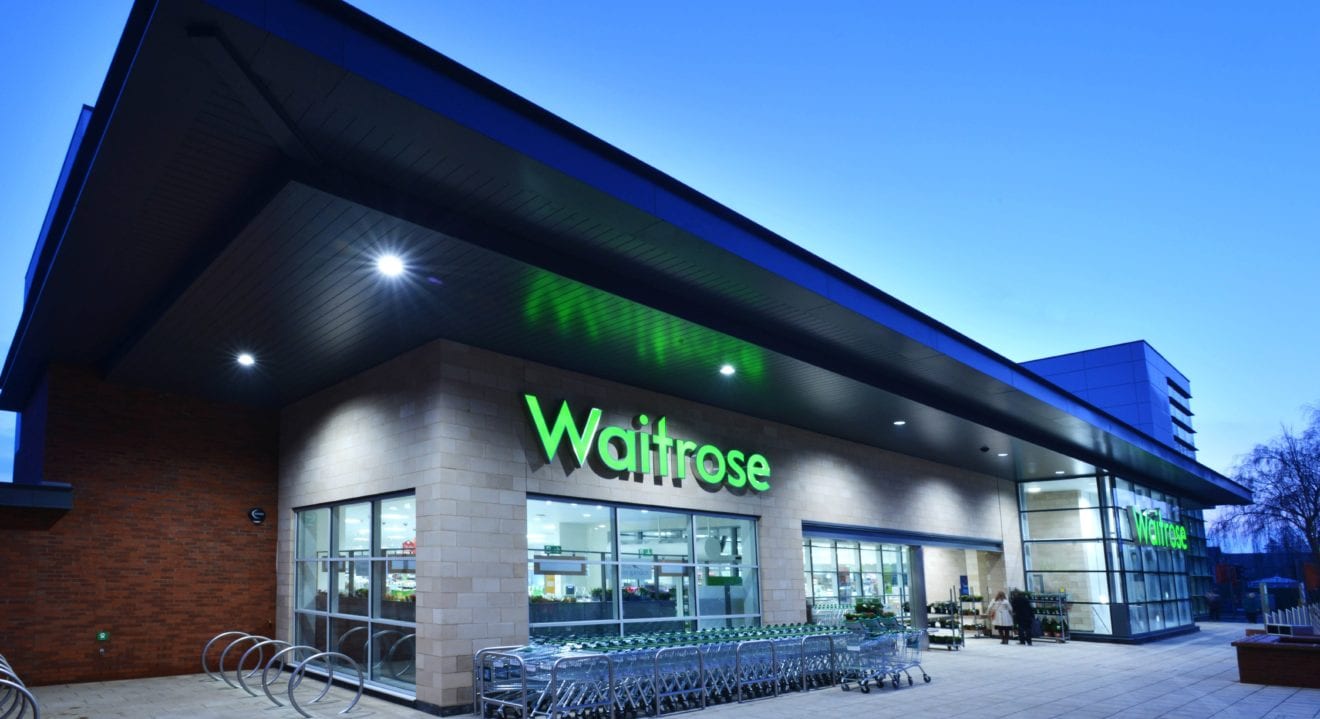
    Upmarket British grocery chain Waitrose has broken new ground in a deal with online marketplace Alibaba, opening the doors for it to export to China.

    Waitrose China will offer products and ranges to buyers across the mainland exclusively through theRoyal Mail Store on Tmall Global, Alibaba Group’s online marketplace. Waitrose arranged the deal through Avenue51, which runs Royal Mail’s store on the platform.

    Royal Mail promotes British companies, and Waitrose will be one of its highest-profile brands with a dedicated page on its online store. There will be 30 products initially, including biscuits, cereals, coffee, nuts and tea, plus beauty, baby and organic ranges.

    “The potential for Waitrose in China is huge, and though this is a relatively modest start it’s our ambition to see it become our biggest international business in the next three to five years,” says Waitrose commercial director Mark Williamson.

  • NZ govt teams up with Alibaba to boost Chinese trade

    NZ govt teams up with Alibaba to boost Chinese trade

    New Zealand has joined the likes of other Southern Hemisphere agricultural nations like Australia, Chile and Peru by forming a strategic alliance with the world’s leading online retailer, Alibaba.

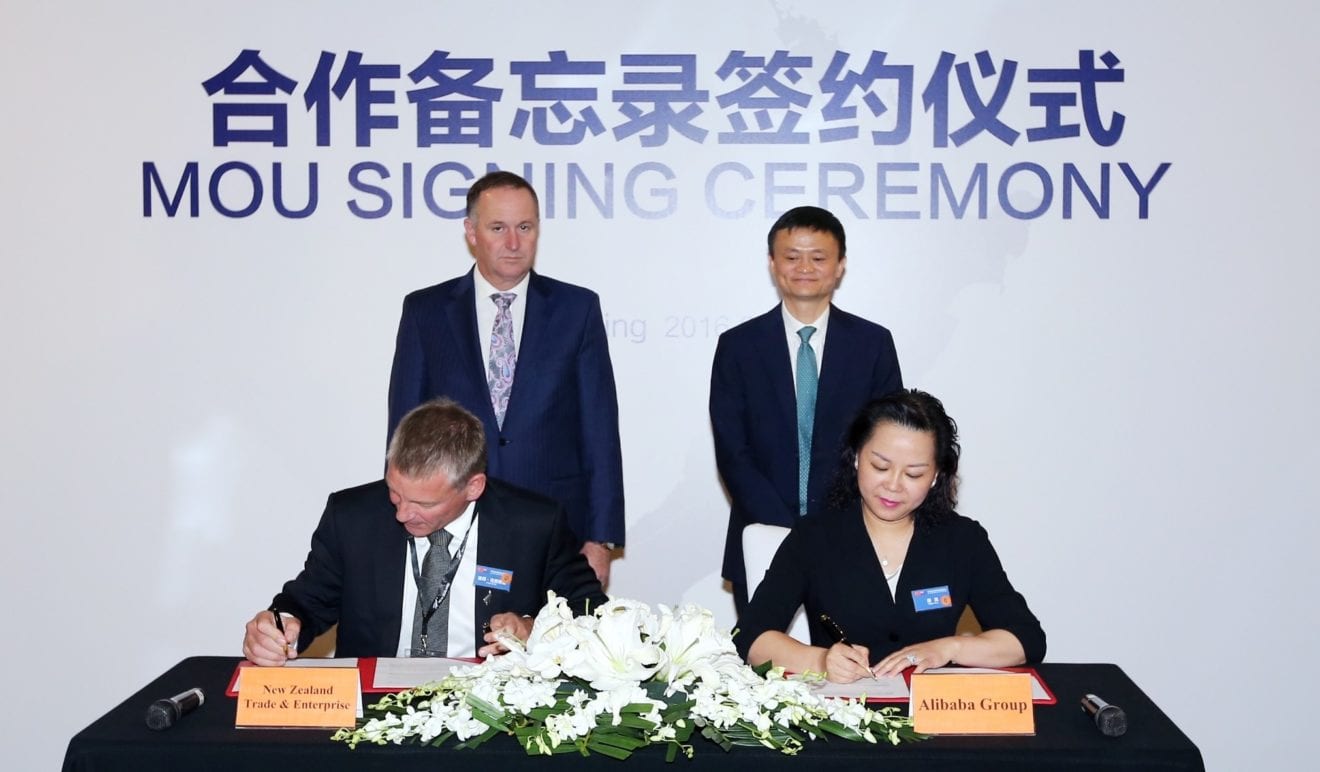
    The Memorandum of Understanding (MOU) between the group and government business development agency New Zealand Trade and Enterprise (NZTE) was signed yesterday to formalize discussions for strengthening trade between the two countries and to support New Zealand brands in China.

    Under the MOU, the parties will explore different collaboration opportunities, including Alibaba providing support for New Zealand companies to enter the Chinese consumer market through its various e-commerce channels, while NZTE will assist local companies to understand and optimize the opportunities Alibaba’s system offers in terms of business growth in China.

    “We are excited to extend our cooperation with the New Zealand Government by collaborating with NZTE to support local businesses to enter China through Alibaba’s platforms,” said Maggie Zhou, Alibaba’s newly appointed managing director for Australia and New Zealand.

    “With our strong networks in China and expertise in e-commerce, we will enable Chinese consumers to benefit from the premium products and fresh foods that New Zealand businesses can offer.

    NZTE chief executive Peter Chrisp said the new arrangement offered significant opportunities for New Zealand businesses to reach more consumers as well as advocating the country’s reputation as a place of “open spaces, open hearts and open minds”.

    “New Zealand businesses are already using Alibaba’s channels to sell a wide range of products including dairy, meat, seafood, fruit, wine, beverage, cereal, skincare and health supplements,” he said.

  • Alibaba entry stirs up Thai e-commerce

    The recent acquisition of Lazada Group by Chinese e-commerce giant Alibaba Group poses a challenge to local online product manufacturers and retailers who anticipate a potential flood of Chinese-made products.

    The move by Alibaba is expected to shake up Thailand’s e-commerce market. It’s also putting more pressure on other e-commerce companies.

    “The number of business-to-consumer e-commerce companies is likely to fall to only two to three over the next three years, down from five, because of fierce competition,” said Punnamas Vichitkulwongsa, chief executive of Ascend Group, a subsidiary of CP Group that operates the iTruemart and weloveshopping websites.

    “But the entry of Alibaba will spur competition in the local e-commerce market, which is likely to benefit Thai consumers and the industry,” he said.

    There are usually two dominant e-commerce players in a country, said Ms Punnamas.

    Pawoot Pongvitayapanu, president of the Thai E-Commerce Association and founder of Tarad.com, said if Alibaba continued using Lazada’s subsidised promotion strategy, the Chinese firm could become a dominant player in Thailand’s e-commerce ecosystem as it has its own payment and logistics systems for websites.

    However, local online product manufacturers, especially those that make IT accessories, consumer electronics and fashion items, will face a greater challenge from cheap Chinese products.

    Paul Srivorakul, group chief executive of aCommerce, believes Alibaba’s entry will create an innovative e-commerce market in Thailand, attracting more foreign investors.

    He expects more mergers and acquisitions in the local e-commerce industry next year as a result.

    Santit Jirawongkraisorn, co-founder of Lalamove Thailand, a Hong Kong-based on-demand delivery app provider, said existing e-commerce companies in Thailand would face intense competition from Alibaba’s presence. But the increased competition can drive consumer gains and promote the overall e-commerce market, he said.

    Alessandro Piscini, chief executive of Lazada Thailand, said Alibaba’s investment reflected the huge potential it saw in e-commerce for the region and the role it expected Lazada to play in the local markets.

    The partnership will bring significant synergies that enhance the online experience for both buyers and sellers in Thailand, he said.

    In a related development, PwC Thailand released its latest report on Global Total Retail 2016: They say they want a revolution which polled some 23,000 online shoppers in 25 countries to track retail consumer trends, including mobile shopping and social media influence.

    The report revealed that 51% of online shoppers in Thailand said they purchase goods directly via a social media channel, outpacing India (32%), Malaysia (31%), and China (27%).

    Fifty-three percent of Thai online shoppers said that customer reviews influenced their buying behaviour.

    The survey also showed that social media influenced 78% of shoppers globally, up from 68% in a similar study last year, with 92% of emerging market shoppers buying products based on social media recommendations.

  • China’s e-pharmacy eyes prescription drug for full-bloom growth

    China’s e-pharmacy eyes prescription drug for full-bloom growth

    China’s e-commerce giants are getting a hand in pharmaceuticals as the government directs prescription drug sales away from hospitals and into retail.

    China’s online pharmacy business has grown from virtually nothing five years ago to more than 7 billion yuan (1.1 billion U.S. dollars) in 2014, accounting for 3 percent of all retail sales of medicine in the country, Boston Consulting Group (BCG) said in a report Thursday.

    But analysts say the boom in online medicine sales is only a preview of explosive growth to come, provided that authorities allow online pharmacies to sell prescription drugs. So far online pharmacy sales consist mostly of over-the-counter medicine, which contributes very little to margins.

    One of the key themes in China’s ongoing medical reform is to reduce hospital reliance on drug sales for revenue. Over the long term this will enable patients to choose between hospitals and retail pharmacies for prescription drug purchases.

    Authorities also consider allowing prescription drugs to be sold online, giving e-commerce firms such as Alibaba and JD.com the opportunities to get involved in the lucrative prescription drug business.

    “E-Pharmacy business is changing very quickly in China with new regulations and different competitors entering the space. Each one is trying to grab a piece of the business,” said John Wong, a partner for BCG’s pharmaceutical practice.

    While regulations are ushering more prescription drug sales toward retail channels, including online pharmacies, the pace of that transition remains uncertain.

    Such uncertainties have forced Alibaba to scrap last week a plan to inject its online pharmacy business into its health subsidiary. Its plan to operate in the country’s medical tracking system also drew backlash from brick-and-mortar pharmacies.

    Online pharmacies are working with hospitals and local governments on separate trial programs to allow patients to buy drugs online with a doctor’s prescriptions.

    Access to prescriptions is the key for online pharmacies to get into prescription drug sales. Some local trials have managed to extend medical insurance coverage to online medicine purchases, an important incentive for patients to buy online.

    But analysts are cautiously optimistic about potential nationwide trials, given that China’s social security system is still managed by fragmented jurisdictions, creating discrepancies in coverage policies across the country.

    Another challenge, says another BCG partner Magen Xia, is for authorities to figure out a way to cap expenditure online. Under the current scheme, the cap for insurance coverage has been maintained by hospitals that prescribe these drugs.

    Regulatory challenge aside, Xia said online pharmacy cannot thrive in the prescription drug sale business alone. Given the importance of access to doctor’s prescription, retailers need to penetrate upstream.

    “Pharmacies can’t just limit themselves to selling drug online. They have to either extend to consultations and diagnosis or find upstream partners that can refer prescriptions to them,” Xia said.

    Unlike the United States where brick-and-mortar pharmacies like CVS and Walgreens holds dominance in retail prescription drug sales, the lack of nationwide pharmacy chains in China puts them in a much weaker position. This creates opportunity for e-commerce to consolidate the fragmented national market through online platforms. And once they gain access to prescription, they can ask local pharmacies to become a distribution channel for prescription drugs.

    “China’s online pharmacy will grow, but whether it grows faster or slower depends on regulation on the separation between drug prescribing and dispensing,” Wong said.

    “Right now hospital still wants money from drugs but as soon as the government says ‘stop’ you will see the industry rapidly, rapidly transform,” Wong said.

  • Expansion Alibaba to Indonesia to Cause Rising Trade Deficit with China?

    Expansion Alibaba to Indonesia to Cause Rising Trade Deficit with China?

    Through the acquisition Alibaba is to have a firmer grip on the online retail business in Southeast Asia, including Indonesia, the region’s largest economy where Internet and smartphone penetration have been developing rapidly in recent years (although coming from a low base). The Southeast Asian nations where Lazada has been operating so far have a combined population of 560 million (of which an estimated 35 percent are online and thus potential online shoppers). However, Southeast Asia is also a challenging environment for online retail firms as the area is characterized by tough logistical issues (partly due to the relatively weak state of infrastructure) and there remains a lack of warehousing outside more advanced markets such as Singapor

    Through the China-ASEAN Free Trade Agreement (CAFTA), effective per 1 January 2010, about 90 percent of imported goods between Indonesia and China are subject to a zero percent tariff. Due to China’s higher developed manufacturing industry and lower logistics costs the implementation of CAFTA has caused a continuously rising flow of Chinese products into Indonesia. This has caused a rising trade deficit and also curtails development of Indonesia’s manufacturing sector (after all it is cheaper and quicker to import products from China than to invest in costly and long-term import-substitution industrialization).

    In 2015 Indonesia imported USD $29.22 billion worth of (non-oil & gas) products from China, while Indonesian exports to China only totaled USD $13.26 billion, implying a trade deficit of nearly USD $16 billion for Indonesia that year. This is in stark contrast to the years before 2008 when Indonesia had the upper hand in trade with China. The table below shows that Indonesia’s trade deficit with China rose significantly after the implementation of CAFTA in early 2010.

    Indonesia-China Trade Balance (non-oil & gas):

     2007  2008  2009  2010  2011  2012  2013  2014  2015
    Export to China
    (in USD billion)
      9.7  11.6  11.5   14.1   21.6   20.9   21.3   16.5   13.3
    Import from China
    (in USD billion)
      8.6  15.3  14.0   19.7   25.5   29.0   29.6   30.5   29.2
    Trade Balance
    (in USD billion)
      1.1  -3.7  -2.5   -5.6   -3.9   -8.1   -8.3  -14.0  -15.9

    Source: Indonesian Trade Ministry

    With Alibaba now owning a controlling stake in e-commerce platform Lazada, which has a rising costumer base in Indonesia, it could cause two developments: (1) due to the stronger ties between Lazada and China it gives rise to an increasing flow of Chinese products into Indonesia putting pressure on Indonesia’s trade balance, and (2) it threatens the position of local Indonesian start-up e-commerce businesses such as Bukalapak or Tokopedia because Lazada is expected to get a capital injection from Alibaba for expansion purposes and has easier access to cheap Chinese products (more competitive).

  • Mei.com & Alibaba Launch the TMALL Luxury Flash-Sale Channel with Star-Studded Live-Streamed Fashion Show

    Mei.com & Alibaba Launch the TMALL Luxury Flash-Sale Channel with Star-Studded Live-Streamed Fashion Show

    A live-streamed fashion show featuring 42 looks has marked the launch of a luxury Tmall flash sales channel via app that makes the styles immediately available to shoppers.

    Alibaba Group’s B2C online marketplace Tmall.com has launched the channel through its mobile-phone app, allowing viewers of the live stream to “scan and buy” the runway looks.

    Soft-launched about three months ago, the Tmall channel is being managed by Mei.com, which since 2010 has run a website in China that provides a flash sales outlet for nearly 300 international luxury brands including Armani, Longchamp, Michael Kors, Tumi and Zegna, through exclusive partnerships.

    Mei.com CEO Thibault Villet with Olivia Palermo and Mei.com President Seamon Shi.

    Mei.com CEO Thibault Villet with Olivia Palermo and Mei.com President Seamon Shi.

    Alibaba invested an undisclosed amount in Mei.com in July, saying the site’s relationships with affordable luxury goods merchants would complement Tmall’s roster of high-end retailers such as Burberry, Coach and Hugo Boss. The new flash-sales channel gives Tmall.com shoppers direct access to discounted luxury goods from more than 3000 retailers and authorised distributors.

    “The launch of the channel will further the variety of brands on Tmall and offer China’s burgeoning middle class a one-stop shopping platform,” says Alibaba Group CMO Chris Tung.

    Millions of consumers across China watched the fashion show. It featured clothing and accessories, including 30 womenswear looks, 10 menswear looks, and a finale including two children’s looks.

    Actor Peter Sheng, famous for his role in the China web series Go Princess Go, made his runway debut in the show wearing a Carven suit. American socialite Olivia Palermo styled one of the runway looks and was a front-row attendee of the show wearing the look herself.
    Trendsetters and tastemakers attending the event also included singer Chris Lee and runway model and pop star Tia Ray, who also performed.