Tag: Alibaba

  • Alibaba introduces IP collaboration platform

    Alibaba introduces IP collaboration platform

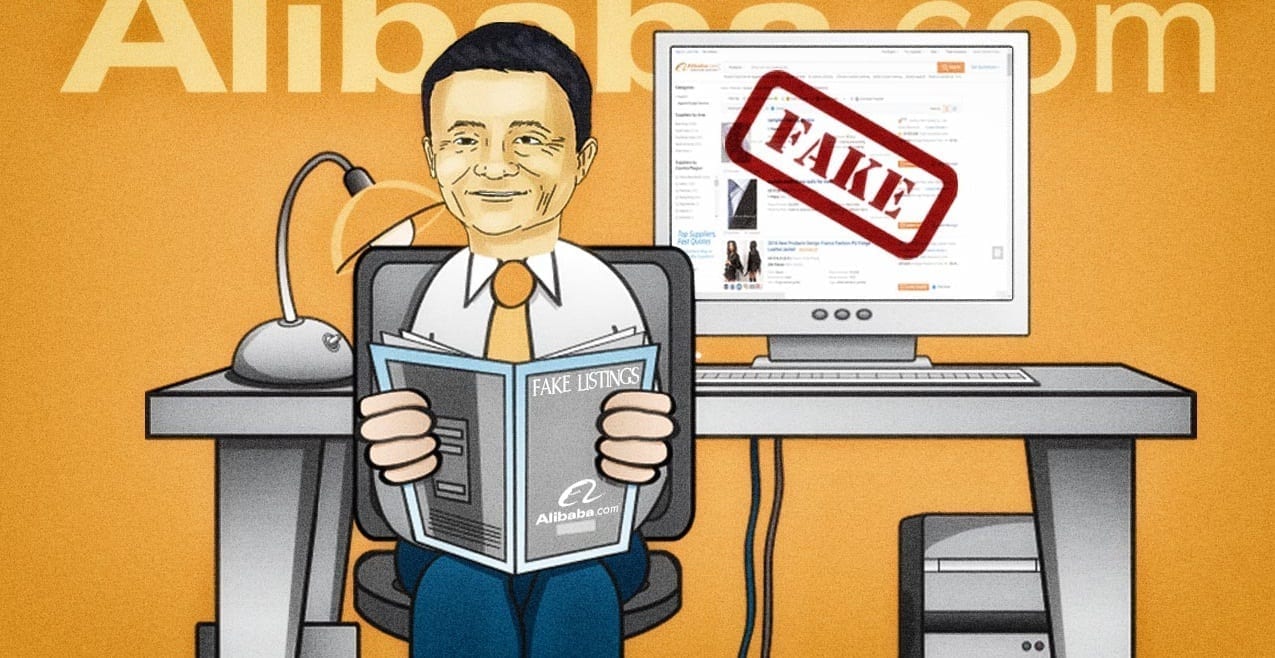
    Alibaba Group has launched an online platform designed to streamline IP-related communications between brands and Alibaba.

    The new IP Joint-Force System aims to build greater and more collaborative working relationships with global brands as the company strengthens its efforts against counterfeits and IP infringement.

    “E-commerce has become a way of life for consumers both in China and around the world. As the internet sector continues to evolve, brands and online marketplaces alike face new IP enforcement challenges,” said Jessie Zheng, chief platform governance officer at Alibaba Group.

    With over a billion products listed across Alibaba Group’s marketplaces at any given time, its data analytics and processing technologies enabled the company to proactively remove more than 120 million infringing product listings from its marketplaces in 2015, which it said is eight times the number of counterfeit products removed based on takedown requests from brands.

    Under the new IP Joint-Force System, each participating brand will be assigned a dedicated online portal and Alibaba account manager to enhance collaboration, heighten transparency around IP enforcement efforts, and reinforce mutual understanding and trust.

    The system will also enable Alibaba to directly and efficiently seek information from rights holders regarding suspected counterfeit product listings, which Alibaba, as a third-party marketplace, is unable to authenticate on its own with full certainty.

    Alibaba will then initiate the Good Faith Takedown process and immediately remove the listing without required subsequent correspondence with the brand.

    Alibaba recently held the inaugural Rights Holders Collaboration Summit to engage international brands and the intellectual property enforcement community to enhance collaboration in the collective fight against IP infringement.

    More than 100 domestic Chinese and international brands and trade associations attended the event, including Louis Vuitton, Burberry, Apple, Mars, Hewlett-Packard, the Chinese-British Business Council (CBBC) and the Quality Brand Protection Committee (QBPC), among others.

    “The Rights Holders Collaboration Summit and new IP Joint-Force System are some of the many ways Alibaba is working closely with rights holders in our efforts to eradicate counterfeits both online and offline,” Zheng said.

  • Alibaba and Kodak team up to fight fakes

    Alibaba and Kodak team up to fight fakes

    Alibaba and Kodak have teamed up in a new business venture using high technology to fight fake goods being traded online.

    The cameras and film that helped build the Eastman Kodak empire, launched in 1888, are long gone, but the company has found new life authenticating products.

    With a history of research and hundreds of patents, Kodak is behind a startup working to combat counterfeiting with a technology that places an invisible, digitally traceable marker on products to ensure they are authentic.

    Targeting eCommerce, the new company is named eApeiron, which comes from the Greek word for everlasting.

    Fake and pirated products globally accounted for almost a half-trillion dollars in 2013, according to a report this year by the Organisation for Economic Cooperation and Development (OECD), with 84 per cent of seized goods originating in China and Hong Kong. As well as losses and brand erosion for companies, counterfeiting can mean lost tax revenue for governments. It also discourages innovation.

    “If you’re in charge of brand protection or you’re a security officer of a major brand, this means you have a new tool,” says Kodak CEO Jeff Clarke.

    Miami-based eApeiron will set up its research, engineering and manufacturing arms within Kodak’s business park in Rochester, New York. Some research will also take place in Shanghai and Tel Aviv.

    With China’s largest eCommerce company Alibaba Group an investor, its president Michael Evans will sit on eApeiron’s board along with Clarke. Its CEO is Charles Fernandez.

    Invisible ink

    Meanwhile, invisible-ink security products are already available, including VerifyMe, which signed a memo of understanding in May with HP’s Israel-based Indigo division, part of its HP Graphics business.

    One of VerifyMe’s anti-counterfeiting pigment technologies lets consumers see visible markings on a product while manufacturers can use devices to see invisible markings to support their supply and distribution-chain security.

    YPB Group in Australia makes scannable markers that are invisible to the eye because they blend into the material of the product they are marking.

    While luxury-goods companies are often targeted by counterfeiters, the OECD report says there are also potentially dangerous faked goods such as drugs, toys and spare parts. Tracing these items through the supply chain could ensure they are not expired or forgeries, Clarke says.

    Beaten by the digital revolution, Kodak filed for bankruptcy in 2012, emerging the following year as a commercial printing business. Kodak has continued to team with young companies on technology research, and its labs have more than 50 scientists and 4000 patents.

  • China’s Growing E-Commerce Addiction

    China’s Growing E-Commerce Addiction

    I am admittedly an Amazon shopping addict, so it was interesting to have a long conversation recently with Chinese colleagues in Nanning about their own growing addictions to online shopping. They are big fans of Taobao, although they also use other e-commerce sites likeJD.com and Suning.com. My colleagues are representative of a larger trend of Chinese consumers shifting partly from brick-and-mortar shopping to online shopping, and expanding online shopping in its own right. E-commerce now represents a high-growth sector.

    Though relatively new to online shopping, Chinese consumers already make up for almost half of global online retail sales, and are only growing in numbers. Online retail sales amounted to $581.61 billion in 2015, surging 33.3% from the previous year. The volume of online sales in China now exceeds that in the US, and online sales are expected to grow 20% annually by 2020. Furthermore, online shoppers represent the vanguard of China’s growth story, since they tend to be young, urban, and highly educated. They have a different attitude toward shopping than older generations, which were shaped as savers by more challenging political and economic circumstances. Younger shoppers are more willing to spend.

    Compared to brick-and-mortar retailing in China, e-commerce sales often experience fewer licensing requirements and quicker customs clearance. As a result, e-commerce is to some extent replacing shopping in physical marketplaces, and will comprise 42% of growth in private consumption by 2020 according to Boston Consulting and AliResearch. For this reason and others, hypermarkets such as Carrefour and Walmart have shut down a number of stores. Online shopping also allows consumers to access products that are not available in stores, including organic foods and some luxury products from overseas.

    As consumers in Tier 1 and Tier 2 cities (think Beijing, Shanghai, but also Chongqing and Chengdu) become increasingly savvy online shoppers, there continues to be large potential for online sales particularly in Tier 3 and 4 cities. E-commerce penetration amounts to 89% in Tier 1 and 2 cities, but only amounts to 62% in Tier 3 and 4 cities, as per the McKinsey iConsumer China 2016 Survey. The online shopper base in Tier 3 and 4 cities is 257 million, a population number that is larger than that of almost all countries in the world (except India, China as a whole, and the United States). That is serious market potential.

    To keep up with increasing demand from smaller urban and rural areas, online retailers are seeking to expand logistics infrastructure and services. For example, Alibaba ’s logistics arm, Cainiao, now owns 180,000 express delivery stations for the shipment of products and has recently expanded its fresh food distribution centers across China. The firm recently completed its first external funding round and is expected to spend $16 billion over the next five to eight years to expand its network. Growth in China’s underdeveloped logistics sector can certainly be expected to accompany the expansion of e-commerce.

    *originally posted by Forbes

  • The seven reasons for Alibaba’s success ; Alibaba’s development and framework

    The seven reasons for Alibaba’s success ; Alibaba’s development and framework

    Alibaba was initially founded in Jack Ma’s apartment in Hangzhou in 1999, before Alibaba.com was launched later that same year. In 2003, as the number of Internet users in China reached 80 million,[1] Taobao.com was launched as an online market. Shortly afterwards, both Alipay and Aliwangwang (instant messenger on Taobao) were launched to complete the purchasing process in Taobao. In 2007, the number of Internet users in China rose to 210 million[2] and Alimama was launched as an advertisement transaction platform. Taobao started to monetize that same year. Tmall was launched in 2008, as Alibaba ran both B2C and C2C platforms. In 2009, Alibaba Cloud computing was founded, illustrating Alibaba’s commitment to prioritize big data as part of its strategy. In 2010, the following three platforms were launched as part of Alibaba’s increasing focus on mobile payment: Juhuasuan (a platform for C2B); AliExpress (a global consumer marketplace) and Mobile Taobao App.

    Alibaba’s framework is based on the three following targets:

    1. Chinese customers: Taobao (online shopping destination), Tmall (brands and retail platform), Juhuasuan (group buying marketplace), 1688.com (Chinese wholesale marketplace).
    2. Customers abroad: AliExpress (global consumer marketplace), Alibaba.com (global wholesale marketplace).
    3. Support platforms: Alipay (online payment service); China smart logistic (logistic information system); Alimama (online marketing services); Alibaba cloud computing (platform for internal and third-party use).
     

    Screenshot 2016-07-19 09.20.09

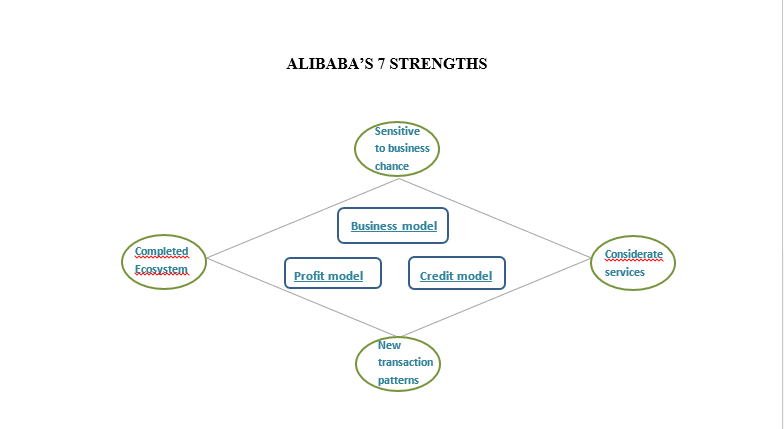
    The three core factors that influence Alibaba are its Business model, Profit model and Credit model. In addition, there are four subsidiary factors namely considerate service, sensitive for business chance, new transaction patterns and completed system supporting Alibaba to gain its success.

    1. Alibaba’s unique business core to provide services mainly to small enterprises and individual defines a unique business opportunity which not only emancipates the productive forces of small enterprises but also offer much more diversified consumption choices for consumers.

    Alibaba’s service offer focuses on small enterprises. Whether we talk about 1688 – a B2B eCommerce platform specifically aimed at wholesale and procurement business – Taobao (including Tmall business shopping mall) – a B2C & C2C eCommerce platform gathering numbers of individual sellers – or YiDaTong (the largest Chinese professional import and export agent) which not only subsidizes small enterprises but also helps them accumulate credit through history data, all three of Alibaba’s core businesses mainly focus on providing services to small enterprises helping them create value which could not be accomplished by any of them individually (such as cost control). Additionally, the three core businesses represent a complete eCommerce ecosystem.

    The focus on small enterprises also leads to a phenomenon whereby a large variety of goods are available to a large variety of target consumer groups (age, profession, wealth, etc.) on the platform. In 2014, the Alibaba platform as a whole experienced a total transaction volume of 2.3bn CNY (close to 330 bn EURO).

    1. Alibaba’s profit model that Alibaba gets profits by charging services in marketing and technical supports rather than by charging admission fee contributes to a large and robust market share made up of loyal customers.

    Alibaba’s profits mainly come from advertisements and keyword bidding within platforms, which in total represents 57% of profits. The second most important source of profits is the variety of technical services based on big data of consumer behaviors, representing 25% of profits. One of the important reasons why Alibaba could beat eBay China can be found in their strive to cultivate the online transaction habit among Chinese customers by allowing sellers to register for free and by removing intermediate fees. EBay China, on the other hand, was in a rush to harvest the Chinese market by charging fees for all transactions completed on the platform. Taobao thus gathered a large number of sellers, thereby encouraging an even larger number of customers to purchase via the Taobao platform. Hence, Alibaba successfully developed a strong and loyal online customer base.

    Nowadays, the Alibaba platform represents more than 0.5bn registered users, among which there are more than 0.23bn active buyers and more than 8m active sellers. The Annual orders already exceed 11bn. [3]Thanks to the large number of customers on the platform, Alibaba can make use of advertisement, keyword bidding and customer’s data for profit. Advertisements on Taobao can generate thousands of clicks for a single brand; the bidding for keywords contributes to the higher ranking of brands in search results; technical services assist sellers in the management of their online store and relationship with customers through analysis of customers’ preferences and feedbacks.

    1. Alibaba’s accurate credit model, which builds a third-party payment platform as a bridge between consumers and e-stores to standardize payment process and to protect consumer’s rights, helps to develop a good and trustworthy reputation among customers.


    • All sellers on the eCommerce platform are requested to pass an online certification test to verify their identity information.

    Such certification ensures the supervision of sellers on the platform at all times and reduces the possibility of illegal transactions.

    • All transactions are recorded and can be traced back by both sellers and customers. Based on the records, Taobao set up a system to measure the degree of integrity of both actors.

    Such a system ensures that any fraudulent behavior is published for everybody to see and can lead to a significant loss in the number of future transactions because of the lack of the other party’s trust. The system protects the legitimacy of each transaction and helps customers chose more reliable sellers.

    • Alipay is an online payment platform, combining ease of use, safety and efficiency. Payments are first transferred to Alipay. Once the buyers have received their product and ensured they are not faulty, the payment is transferred to sellers from Alipay. If the product is faulty or does not meet the expectations of the buyer and returned, so is the payment.

    When eCommerce first appeared in China, the safety of online purchases was the most important problem that concerned customers. Alipay provides a reliable solution which has won the trust of Chinese customers. Because of its convenience, Taobao attracts more and more online shoppers. Nowadays, people can use Alipay to pay for any fees arising in their lives in general. Besides, Alipay allows customers to purchase goods on credit used in the current month and paid back the following month. Up to 2013, the number of users in Alipay approached 0.3bn while the number of transactions reached 900bn CNY (about 128bn EURO) and the active users of the Mobile terminal reached 0.1bn which exceeded the number of users on PayPal.

    • Online feedback is largely encouraged. The more comments a customer writes for products, the more discount coupons he receives.

    Word of mouth can strongly influence customer’s behavior, especially when all information concerning a particular product is more difficult to find. The large amount of comments can guide and encourage customers in their purchasing experience and help them pick out their preferred product, while reducing post-purchasing regrets.

    1. Alibaba’s considerate service offer provides a comfortable purchasing environment and a positive online customer experience leading to high user engagements.

    Based on the analysis of its large customer base, Alibaba always knows how to provide the most suited services for optimal customer satisfaction. It helps sellers to maintain positive interaction with buyers; it offers online business training for various stores; it introduced a special coding system to manage the large number of stores on the platform; it developed its own instant communication tool to improve seller-buyer communication exchange; it enables the reimbursement of any product ensuring payment return within the following seven days, and so on. Those support services help sellers grow their business while helping buyers to find their preferred products, thus generating more and more transactions.

    1. Alibaba excels at identifying and seizing unique business opportunities, thereby positioning itself as a leader and developing customer loyalty.

    In China, two festivals have a major impact on people all over the country: Spring Festival (the Chinese New Year) and ‘Double 11’ (a festival created by Taobao).

    The ‘Double 11’ festival falls on November 11th, just between Chinese National Day and Christmas when people would prefer physical in-store shopping (offline). Although most customers would typically be avoiding shopping during that period, Taobao developed a campaign encouraging consumption, so much so that the day became an actual shopping festival. On that day, various brands offer different discounts and even launch new products. Customers pick out their various preferred products and purchase them online on November 11th. In 2014, ‘Double 11’ generated over 1bn CNY in total trading volume for Tmall within the first three opening minutes. Within the first 14 minutes 2 seconds, volumes exceeded 5bn CNY. Total volume for the day reached 53bn CNY (approximately 7.6bn EURO)! In a single day, Taobao generated revenue of 1.5bn CNY and net profit of more than 0.5bn CNY (approximately 71m EURO).[4]

    The ‘Double 11’ day has successfully developed a new popular shopping event for the majority of customers in China. At such an event, the various Tmall sellers’ needs for advertisement and software services increase largely. Alibaba thus gains enormous profits from the event, while both sellers and buyers rely more on the open platform. Alibaba’s advantage in cloud computing also represents a valuable asset for the shopping festival.

    1. Always keeping an eye on customers’ evolving needs, Alibaba dares to challenge the traditional transaction patterns and explores new ways to create more value for customers.

    C2B transaction model: When customers are in particular predominance for a certain transaction, Alibaba deploys the C2B transaction model to reduce costs in the traditional supply chain and shortens the time required for product turnover, thereby increasing customer satisfaction. On the one hand, Alibaba gathers a large number of scattered customers who express the similar needs to form a powerful purchase group that can buy single products at a wholesale price. On the other hand, Alibaba takes advantage of its massive online customer behavior data to develop products suited to particular customer habits. For example, the analysis may show that customers based in south regions use their dryers more frequently on account of the wet weather and therefore need more resistant machines while other customers may not like vacuum cleaners which require the user to bend down when using it. In that case, Alibaba takes charge of 12 product lines in 12 brands and exerts total control over the production schedule to ensure the production of the selected products which are predicted to be in high demand within shortened production cycles. Lastly, Alibaba integrates the product the production with front-end sales to bring instant personalized products to customers. Within the single day of May 8th 2014, Tianmao sold 180,000 sets of the 12 products which equated the sales volume for a period of 3 months on the internet.

    O2O strategy: In Alibaba’s plan, customers can purchase a product by scanning two-dimensional codes and then receive products with another code which involves the interaction of the instruction and after-sales functions. Customers can also take part in various brand-run initiatives and receive targeted advertisements by scanning corresponding codes. In order to accelerate the plan execution, Alibaba is actively developing its expansion to mobile terminal areas – “Alipay Wallet” represents one such significant trial. “Alipay Wallet” not only provides different ways for payment such as code scan and direct cash-transfer, but also partners with different banks in order to provide an assistance service to customers for managing their many bills and coupons. Along with many other purchased Apps covering other domains including taxi services, maps, weather, music and travel, “Alipay Wallet” aims to transfer the content and activities of customers’ daily lives onto the O2O service.      

    1. Rather than positioning itself as a simple eCommerce company, Alibaba focuses on providing excellent service quality to both sellers and buyers, by introducing easier ways to do business for the former and developing a positive purchasing experience for the latter.

    In order to achieve its goal in terms of positioning, Alibaba keeps expanding its core business to many different domains such as advertising services, logistic network, financial services and mobile terminal services.

    1. Alimama: Alimama is an advertising platform which operates as Alibaba’s B2B system: owners of advertisement positions such as blog owners post the positions in Alimama and advertisers purchase their favorite positions according to their own criteria. Nowadays, Alimama focuses on three dimensions: Big Data, “Taobao Ke” (cost per sale mode) and the combination of video and mobile terminals. Through these dimensions, Alimama aims to help merchants find their specific target customers and help customers achieve their preferred products easily.
    2. Big Data: Besides the massive internet flow, transactions and database that Alimama represents, Ali also integrates comprehensive data resources that cover almost every aspect of customers’ daily lives through the acquisition of software companies in many other domains such as map, weather, taxi, music and travel. The accurate and diversified data can thus help advertisers select the most appropriate website advertising channels and reach customers effectively.
    3. “Taobao Ke” is a group of people dedicated to assisting merchants in the promotion of their products who receive a commission when a transaction is completed (cost per sale billing model). CPS is useful for eCommerce since people who successfully identify customers and convince them to complete a purchase are rewarded by commission.
    4. The combination of video and mobile terminal: In April 2014, Taobao bought 16.5% shares of China’s largest video site, intending to leverage the strengths of video in both PC and mobile to enable the interaction of an advertisement between the two terminals. When the audience watch advertisements during videos, Taobao will send the related information to the mobiles of people in the audience in various forms, including games and coupons to entice clicks from the audience.
    5. Ali micro finance: Ali micro finance mainly provides micro deposits and loans. It uses the data collected directly from the Ali platform: credit data and behavioral data. It translates the online customer behavior data into businesses and categorizes individual credit ratings by small enterprises according to their eligibility to apply for small loans from Ali micro finance (eg. small amount, short-term, momentarily borrow and return), as these small structures usually experience difficulty in obtaining loans in the traditional banking channels. Meanwhile, Ali’s small loan service also attaches great importance to the use of new technologies. It relies a lot on the cloud computing technology to determine whether there is a particular match between a certain buyer and a seller, whether they speculate credits, what rate the risk possibility stands at and so on. This not only ensures the safety and efficiency of the service but also reduces operating costs. In addition, the Internet makes it possible to provide a set of financial services, 24/7, 365 days a year, to large-scale small enterprises at the same time. This meets the major demand for capital resulting from the increasing number of small enterprises being founded in China.
    6. CSN (China Smart Network) project: CSN project was launched by Ali in collaboration with the four most influential logistics companies in China. Ali hopes to achieve the goal of enabling the delivery of products to buyers within 24 hours of ordering via the platform. Different logistic networks belonging to different logistic companies are integrated into forming the single most effective network in terms of parcel turnover for customer delivery. Different logistic companies focus and provide their expertise on specific portions within the network to maximize efficiency. Meanwhile, based on data analysis, Ali selects the most suitable logistic company for different portions of the network and allocates delivery businesses according to performance. As a consequence, logistic companies need to improve service quality and reduce costs, while ensuring continuous delivery. Moreover, customers can choose their favorite types of deliveries such as ‘fastest’, ‘cheapest’, ‘safest’ and ‘best service’ since the CSN can deploy the work capacities of the logistic companies.


    ALI’S FUTURE DEVELOPMENT

    Globalization

    In November 2014, Ali expanded its commercial transaction worldwide for the first time. Since that date, Ali’s global ecosystem consisting of its eCommerce platform, logistic network, cloud computing and big data has been developed further and communicated on publicly. On Tianmao International’s platform, Chinese customers can purchase goods of popular retail brands abroad directly and customers from other countries including Russia, Brazil, the US and Canada can also purchase products from China directly. Due to the reduced amount of procedures required in foreign trades without importers, Ali is able to transfer the profits from the importers to the merchants and thus cut down transaction costs. The CSN network represents a global coverage of countries to increase the convenience for parcel delivery to customers. For example, CSN developed a special supply chain in Russia allowing customers to receive products within 35 days. It also increases the cooperation with banks in other countries to improve the payment system.

    Besides the globalization of its eCommerce activities, Ali is also developing its finance business abroad. Recently, Ali has cooperated with Lending Club – the biggest online loan platform. The cooperation signifies that small American enterprises which get loans from Lending Club can now look for Chinese producers and supply sources on Alibaba’s platform.

    Taobao Village

    Focusing on eCommerce development in rural areas of China is one of Ali’s most important future strategies. In the same way that it always looks for business opportunities among small enterprises and individual customers, Ali fosters the online purchase forces in thousands of villages across China. Taobao village represents the village where active online shops reach more than 10% of local households and trading volume amounts to more than 10m CNY. The high concentration of online shops in these villages makes it possible to form an eCommerce chain made up of producers, suppliers, shops and logistics, thereby facilitating development and economies of scale. Moreover, Taobao village helps to address the problem of local unemployment (Taobao village brings about more than 280,000 jobs and the average income at Taobao village is 2.19 times higher than that found in normal villages); it contributes to the transfer of the environmental advantage into an economic advantage (since the natural and original product is welcomed by customers); and it helps to diminish the purchase gap between urban and rural areas. Up to December 2014, 211 Taobao villages were developed. Ali provides support through credit and loans, talent training and promotion.

    Develop more offers suited to more fields in customers’ daily lives

    Yulebao: An investment platform for television work with approximately 7% annual return on investment. Investors have the opportunities to meet with directors of various TV projects, take part in premieres, travel to the filming locations of certain TV programs, etc. The customer’s preference is better evaluated and will truly influence the Chinese entertainment trends. Besides, it helps high quality projects which do not necessarily have the matching high budget to get investment for production. Yulebao was launched in March 2014.

    Ali future hospital: In August 2014, Ali collaborated with a renowned hospital in Shanghai, installing Alipay to allow patients to complete their own registration process, payment and report-fetching online. Most importantly, Alipay is combined with medical insurance in order to deliver a fully automated service to customers.

    [1] The data comes from  Alibaba’s prospectus: https://www.sec.gov/Archives/edgar/data/1577552/000119312514184994/d709111df1.htm

    [2] The data comes from  Alibaba’s prospectus: https://www.sec.gov/Archives/edgar/data/1577552/000119312514184994/d709111df1.htm

    [3] The data comes from  Alibaba’s prospectus: https://www.sec.gov/Archives/edgar/data/1577552/000119312514184994/d709111df1.htm

    [4] Data comes from “Le single day Chinois bat tous les records de ecommerce”:

    https://www.le-webmarketeur.com/2013/12/10/le-single-day-chinois-bat-tous-les-records-de-e-commerce/


    Author :

    Prof. Xavier Pavie

    Associate Academic Director, MSc in Management, ESSEC Business School

    Director of iMagination Center


    Yixuan Luo

    Master student at ESSEC Business School
  • China’s large retailers report slower growth in 2015

    China’s large retailers report slower growth in 2015

    China’s large retailers registered slower growth last year, with brick-and-mortar stores under continuous pressure due to booming e-commerce, a report showed Thursday.

    The sales volume of the country’s top 100 retailers topped 4.13 trillion yuan ($613.6 billion) in 2015, up 22.4 percent year on year, down by 3.8 percentage points compared with 2014, according to a report released by China General Chamber of Commerce, a retail industrial guild and retail market data provider.

    Among them, brick-and-mortar stores posted a continuous slowdown in growth, with sales only rising 3.2 percent year on year.

    Chinese Internet giant Alibaba’s T-mall e-commerce platform was the top seller last year, followed by JD.com and Suning.com.

    The report pointed out that foreign retailers saw their market share in China decrease further last year, with fewer foreign players making it into the top 100, and slower sales growth.

  • Alibaba launches internet-enabled smart car

    Alibaba launches internet-enabled smart car

    Alibaba Group has announced the launch of OS’Car, the first mass-produced internet car powered by the company’s YunOS smart car operating system.

    The company has developed OS’Car RX5 in collaboration with SAIC Motor Corp. The new car will be supported by a cloud-based platform that enables data streaming, modeling and reporting to augment the driving experience.

    YunOS provides drivers will features such as an intelligent map with accurate location tracking without Wi-Fi or GPS, as well as integrated screens including an intelligent rear-view mirror for safer driving.

    The vehicle supports voice commands – in fact audio is the primary mode for controlling the system. It can automatically recognize the driver through connected smartphones or smart watches and provide personalized services such as greetings or preferred music.

    “What we are creating is not ‘internet in the car’, but a ‘car on the internet’. This is a significant milestone in the automobile industry. Smart operating systems become the second engine of cars, while data is the new fuel,” Alibaba Group chairman Dr Wang Jian said.

    “Going forward, cars will become an important platform for internet services and smart hardware innovation. We will be embracing a world where everything is closely connected.”

    YunOS has been designed as an open platform to support third party hardware and services.

  • Mars China teams with Alibaba

    Mars China teams with Alibaba

    Mars, best known for M&M’s and Snickers candy brands, has become the latest global consumer foods brand to partner with eCommerce giant Alibaba to grow its online presence in China.

    In a joint announcement, Mars China said all of its brands, which also include Dove chocolate and Pedigree and Royal Canin pet foods, will now be available to consumers through Alibaba’s online marketplaces Tmall.com and Rural Taobao. The Virginia-based company added it would leverage Alibaba’s marketing and data capabilities to drive engagement with those consumers, while using Alibaba’s logistics network to extend its reach in the Chinese market.

    Food and beverage giants Mondelēz International and Nestle struck similar agreements with Alibaba in recent months in a bid to expand their business in China. Both companies pointed to eCommerce as an important sales channel in the market given that Chinese consumers are the world’s most prolific online shoppers. And according to market intelligence firm Kantar Health, eCommerce sales of fast-moving consumer goods are growing in China, climbing 37 per cent last year versus 34 per cent in 2013-2014.

    Wrigley China VP and MD Cecilia Li noted the importance of eCommerce in the Mars China strategy as well, but also emphasised the role that shoppers under 35 are playing in the country’s consumer economy.

    “China’s younger generation is the new driving force of consumption,” she said, and “they rely on eCommerce.” Li called the agreement with Alibaba a “significant strategic partnership for Mars.”

    Many of Mars’ products are already selling on Tmall. Wrigley opened its flagship store in 2009, and others have since followed. But the company said that in addition to now having access to all of Mars China’s products, the new tie-up will give consumers a “convenient and international ‘one-stop’ shopping experience” via Alibaba’s platforms. That includes consumers in the rural countryside, whose rising spending power has drawn the attention of companies doing business in China.

    Alibaba will also partner with Mars’ Beijing-based Global Food Safety Center “to enhance food safety management, promote consumer education and share the latest scientific research findings with industry stakeholders.” Launched last year, the center conducts food safety research and training.

  • Alibaba Group Holding Ltd Should Stop Fooling Stakeholders on Counterfeits

    Alibaba Group Holding Ltd Should Stop Fooling Stakeholders on Counterfeits

    On Tuesday, founder and chairman of Alibaba Group Holding Ltd, Jack Ma wrote to its investors, customers, and traders highlighting that his recent words about counterfeited goods was taken out of context and his company has no tolerance for fake goods trading on its e-commerce portal.

    Mr. Ma said in his article: “When Alibaba went public in 2014, I told our customers, employees and investors that what we had earned was trust—in myself, my team, and our company’s mission, vision and values.” Mr. Ma further highlighted that with trust come great responsibility and Alibaba’s responsibility is to protect all of its stakeholders.”

    Last week, Mr. Ma released a statement saying that “counterfeited goods are better than original products,” after which Alibaba came under fire and many foreign brands owners challenged the company’s credibility and its efforts to fight against fakes traded on its e-commerce platform.

    He stated: “The problem is the fake products today are of better quality and better price than the real names. They are exactly the [same] factories; exactly the same raw materials but they do not use the names.”

    Yesterday, Mr. Ma indicated that whatever he said was an observation and has nothing to with the reality. He further added that “Failing to protect original designs, trademarks, and technology is akin to thievery, and it is detrimental not only to innovation but also to the integrity of the marketplace,” and Alibaba will never forgive any act of stealing.

    Last year, several leading foreign brands filed lawsuits against the Chinese e-commerce giant, accusing it of deliberately promoting the counterfeited goods traded on its websites.

    Kering SA, a French luxury goods holding company filed a lawsuit against the Chinese e-commerce giant last year, claiming that Alibaba is directly involved in the promotion of counterfeited goods. However, the company denied all such accusations and later, the case was resolved on mutual consent. Like Kering, many other foreign brands have alleged Alibaba of doing little to stop the trading of fake goods on its leading platforms including Taobao and Tmall.com. Likewise, many of them have even shifted to other e-commerce stores including those of JD.com Inc.

    Last year, Alibaba also narrowly escaped the US black list for notorious goods; however, it received official warning from the US trade officials to quickly resolve the issue and prevent sale of counterfeited goods on its leading online platforms such as Taobao. Mr. Ma saw this escape a huge victory and assured the trade officials that his e-commerce firm is 100% committed to lead the fight against global counterfeiting, both online and offline.

    The Chinese e-commerce giant has invested heavily and devoted significant efforts to develop an unparalleled level of technology to put a stop to this counterfeiting work. The Chinese e-commerce giant takes out full-bodied data processing and analytics to enable real time scanning of nearly 10 million new products a day by looking at key features such as pricing, trademarks, and buyer and seller identity. Despite such aggressive measures the world’s second largest retail network is yet to satisfy customer, trade officials, and most importantly brand owners.

    In his write up, Mr. Ma emphasized on the fact that a cooperation spread globally is needed to fight the counterfeited goods issue. It’s a “long term crusade,” he said, a battle against human greed for which there are no short term fixes and easy way out.

    Mr. Ma’s statement was not welcomed with gratitude by investors, brand owners, and trade officials. According to some analysts by terming the case a long term crusade, Mr. Ma has indicated that the counterfeited goods is likely to continue to trade on Alibaba’s online platform. He said he expected Alibaba to become the “fifth largest global economy” after Japan by 2020. This is likely to happen because China’s middle class consumption has increased massively, and the country’s middle class holds about $4.6 trillion in savings.

    Recently, Security and Exchange Commission (SEC) have inquired Alibaba to present complete details of the company’s accounting policies and for one of its delivery affiliate, after the company was accused of using inappropriate financial measures and not disclosing complete transactions of its delivery affiliate.

    In May, the Chinese e-commerce giant was handed a suspension from International Anti-counterfeiting Coalition (IACC), a supervisory body for retail industry after several leading members threatened to step down against Alibaba’s inclusion. Those members included Tiffany, Gucci America, and Michael Kors.

    Role of Chinese Government

    Though the Chinese e-commerce giant faces tremendous international criticism and pressure from trade officials, the government has done little to tackle the counterfeited goods issue i.e. no more than a few warnings. Even Mr. Ma himself proclaimed that the Chinese government can’t even ban his company for two hours due to its significant economic importance. We believe that there are solid reasons as to why the Chinese government can do very little to take action against Alibaba.

    The following revenue table clearly depicts that Alibaba’s retail business generates significant profits, which is a vital catalyst for growth in China’s deteriorating economy. The country’s GDP growth is at its slowest in the past 25 years, and with crude oil continuously remaining on a lower side, the Chinese government is shifting to services and retail sector to inject growth in the Chinese economy, and Alibaba is the big connection to it.

    It is indicated that Alibaba’s China retail business amounted to nearly 78% of total revenue generated in the quarter, while international retail also surged 15% year-over-year (YoY).

    Its international retail segment growth also highlights the company’s eagerness to expand its footing in the international market. We depicts Alibaba’s international retail revenue for the past six years.

    Though the growth is imminent but many analysts opine that is far below the expectations. As a result of counterfeited goods scandal, the company’s international retail revenue growth has plummeted 41% on average in the past five years.

    At the recent investor’s day conference, the Chinese e-commerce giant also released its annual revenue forecast estimating a 48% YoY surge, mainly driven by the acquisitions of Youku Tudou and Lazada the Asian e-commerce giant. It said: “The Company expects to record 6 trillion yuan ($912 billion) in gross merchandise volume (GMV) in fiscal 2020, nearly double 3.09 trillion yuan in fiscal 2016.”

    Despite achieving significant success, the Chinese e-commerce giant is surrounded by controversies since the past few years. Earlier on Wednesday, it also won the dismissal of a US lawsuit accusing the company of defrauding its stakeholders by “concealing a regulator’s warning about its ability to suppress counterfeiting on its websites.”

    Overall, analysts have been keeping a mix view on whether Alibaba is right or wrong; however, Mr. Ma indicates that his company works hard each day to ensure that its stake holders are protected and its consumers are not fooled by shoddy fake products. However, he asserted that to completely eliminate the issue from the root cause, a time period is required and global assistance is necessary.

    We believe that it is high time now that Alibaba should stop fooling customers and brand owners and should work with sincerity, rather than consoling and giving false hopes. Authenticity of the product is of key importance and Alibaba should return its stakeholders a favorable response or get ready to lose customers. We also believe that the Chinese government should embrace the rule of law. The government should stop promoting double standards and treat both foreign and domestic firms at permissible level. Has it been Amazon Inc or any other foreign e-commerce retail network, the consequences and treatment would have been different.

  • Wal-Mart’s deal with China’s JD.com may be copied by others

    Wal-Mart’s deal with China’s JD.com may be copied by others

    When the world’s largest retailer makes a move, other retailers pay attention. Wal-Mart Stores Inc.’s decision to enter into a strategic alliance with the second largest Chinese e-commerce retailer, JD.com Inc., may inspire others to seek out local partnerships to make inroads in this major market.

    “For some in the industry, this will be a ‘Good Housekeeping’ seal of approval,” said Christian Magoon, chief executive officer of Amplify Investments, which recently launched the Amplify Online Retail ETF IBUY, -0.52% .

    “If Wal-Mart is comfortable and, with their scale, couldn’t crack the Chinese market on their own, it will be a case study for others. It could be a bellwether moment to see if this strategic partnership is the best model.”

    Wal-Mart announced Monday that it will sell its Yihaodian website to JD.com and receive about 5% of the company’s total shares outstanding. Wal-Mart WMT, +0.51% will open a flagship Sam’s Club China store on JD.com JD, +0.33%  and leverage the online retailer’s supply chain assets.

    Wal-Mart has had problems growing in the Chinese market, amid food regulatory and food safety controversies.

    “Wal-Mart was trying to go on its own and I think this is kind of a throwing in the towel,” Magoon said. At the same time, it is an acknowledgment that Wal-Mart needs to grow in China to be in a good position for the future. “If Wal-Mart is going to compete, they’re going to have to go big,” Magoon said.

    To compete in China, retailers have to go online, said Charlie O’Shea, Moody’s lead retail analyst.

    “JD.com has a solid platform online in China, and we know China’s online business is expanding rapidly because they’re not at the level of brick-and-mortar like the U.S.,” said O’Shea.

    JD.com also has a proprietary system that allows them to control the “last mile” with customers, or the final leg of the delivery process that gets merchandise into the buyer’s hands. O’Shea describes the last mile as “critical.”

    Analysts at UBS view the deal as a “good move on many levels,” though Wal-Mart’s share price may not reflect that.

    “While this deal isn’t a needle mover for Wal-Mart shares, it shows the retailer can be shrewd when the opportunity presents itself,” the bank wrote in a Monday note.

    UBS believes there are more opportunities like this one in the retailer’s portfolio, which currently spans 28 countries.

    “Wal-Mart has identified China as its highest potential international growth market,” they wrote. “We believe it remains fully committed to this geography, despite the sale.”

    UBS rates Wal-Mart stock at neutral with a price target of $67.

    Wal-Mart shares were up 0.4% in Tuesday trading, and up 16.5% for the year so far. JD.com shares are down 0.4% in Tuesday trading, and down 35% for the year so far. The S&P 500 is up 2.1% for the year to date.


  • Alibaba expansion plan targets 2 billion

    Alibaba expansion plan targets 2 billion

    Chinese eCommerce pioneer Jack Ma has unveiled an Alibaba expansion plan aiming to quadruple its customer numbers to 2 billion by 2036.

    Alibaba is also aiming for a record 6 trillion yuan (US$912 billion) in gross merchandise volume (GMV) in 2020 from 3.09 trillion yuan this year.

    Ma has also pledged to intensify the fight against counterfeit products and intellectual property rights violation, saying the company is more confident than ever it can solve the problem.

    Alibaba became the world’s largest retailer (by its own definition of retailer) in April, surpassing Walmart. The company says its online trading accounts for 10 per cent of all retailing in China and has generated 15 million jobs.

    Alibaba, whose gross sales totalled $9.3 billion in 2014, hit a record $14.3 billion in sales on Singles’ Day alone last year, a Chinese holiday in November. This is more than double the eCommerce sales in the US from Thanksgiving, Black Friday and Cyber Monday combined.

    The company also holds the title of the biggest IPO in history, raising $25 billion in four days in September 2014, $7 billion more than Visa and $9 billion more than Facebook and General Motors.

  • China online payments tightened

    Service providers and their millions of users are affected by a significant regulatory change to China online payments announced by the Chinese Central Bank.

    From July 1, third-party online payment service providers must ensure that all user accounts bear the real name of the account holder. In addition, accounts will be categorised into three types based on security requirements, capped with maximum annual payments.

    The policy was created with an aim of preventing large deposits of money into third-party payment accounts unprotected from bank deposit insurance.

    China’s third-party mobile payments market reached RMB9.31 trillion (US$1.4 trillion) last year, up 57.3 per cent from 2014. Analysts expect the industry will continue to grow at a fast rate in the coming years, reaching RMB52.11 trillion by 2018.
    Mobile payments have become a useful tool for companies in their China market strategy. The two largest third-party online payment platforms in China are Alipay and WeChat.

    Dominant player

    Dominating with roughly half of the market, Alipay is a subsidiary of Alibaba Holding Group, serving Alibaba’s B2B eCommerce network similar to how PayPal works with Amazon and eBay. Alipay co-operates with Visa and around 65 banks, including the Bank of China, China Construction Bank, the Agricultural Bank of China, and the Industrial and Commercial Bank of China.

    As well as being the primary payment method for Alibaba.com and Taobao, it serves more than 500,000 external merchants, covering online retail, gaming, communications, air tickets, commercial services and utility bill payments.

    Its international version, Alipay Global processes payments in RMB and automatically converts them to the merchant’s currency of choice. It supports 12 currencies, with exchange rates decided by either the Bank of China or China Construction Bank. Alipay Global’s transaction fee is 2 to 3 per cent.

    Account procedure

    To set up a service account with Alipay China, a company must first register an account, providing company information for verification. Once approved, an application can be made and a QR code issued.

    Applicants must provide a business licence, ID card information and public bank account details. If the applicant is not the company’s legal representative, a power of attorney must be provided.

    WeChat Payment was launched by Tencent Holdings in 2013. It is different to Alipay in that it serves as both a payment platform and an instant messaging service. It also differs from Tencent’s TenPay, which is similar to Alipay. WeChat Pay can be used to pay in stores, on websites, WeChat shops and third-party apps, with its payment procedure easier and for both customer and company alike.

    Paying through WeChat has revolutionised how retailers and customers interact, with a huge number of customers depending on its social media and instant messenger service.

    To set up a service account, a company first needs to apply for an official WeChat account, specifying reasons for the application and supplying the category or type of company.

    Applicants need to supply the full name of the contact person, phone number and email address; the website address of the company (not necessary for non-IT companies); full company name; description of the product; customer service number; and company bank account information.

    For non-financial entities such as Alibaba and Tencent to provide third-party online and mobile payment services in China, a payment business licence must first be obtained. Regulations stipulate that the business scope, qualifications and contribution ratio of foreign-invested institutions applying for the licence will be decided by the People’s Bank of China and State Council separately.

    Pile of documents

    Meanwhile, Apple Pay has entered the China market, partnering with China UnionPay and nearly 20 Chinese banks. In its first two days, more than three million bank cards were linked to its service, which uses Near-Field Communication (NFC) contactless payments as opposed to QR codes, which are used by Alipay and WeChat Pay.

    Apple Pay, along with Edenred and Sodexo, is among the few foreign-invested companies with a Chinese payment business licence.

    Applicants for the licence must be companies established in the China and must submit a pile of documents to a local branch of the People’s Bank of China – a written application specifying the name, domicile, registered capital and organisational structure of the applicant business, payment business being sought, a copy of the company’s business licence, articles of association, verification certification, financial and accounting reports audited by an accounting firm, feasibility study report, acceptance materials on anti-laundering measures, certification on technical safety testing and authentication, resumes of senior management personnel, certification that the applicant and senior management personnel are free of criminal records, relevant materials of major capital contributors, and an authenticity statement regarding the application materials.

    Entry into China’s lucrative third-party online payments can unlock huge market potential, but the requirements are strict and the application process and approval is by no means easy.

    In comparison, the process for obtaining an online payment QR code is relatively straightforward, but the recent restrictions imposed on payment account types and security checks might change both the way third-party online payment platforms work as well as consumer behaviour.

    • From China Briefing, published by Dezan Shira & Associates. Dezan Shira is a specialist foreign direct investment practice providing corporate establishment, business advisory, tax advisory and compliance, accounting, payroll, due diligence and financial review services to multinationals investing in China, Hong Kong, India, Vietnam, Singapore and other ASEAN countries.
  • Nestle offers overseas products to Chinese consumers through new partnership with Alibaba

    Nestle offers overseas products to Chinese consumers through new partnership with Alibaba

    Nestlé has strengthened its global capabilities in e-commerce by signing a partnership with Alibaba in China, to grow online sales, build key brands and offer new products to millions of consumers.

    Nestlé has introduced products including Nido milk powder, Damak chocolate and Nescafé Dolce Gusto BMW MINI coffee machines on Tmall.com, China’s largest shopping website for brands and retailers. Using Taobao.com, the country’s largest shopping site overall, Nestlé is expanding its distribution in rural areas.

    Nestlé e-commerce successes to date include the Nespresso online boutique, and the recent global launch of super-premium chocolate brand Cailler using Amazon as the primary retailer.

    Sebastien Szczepaniak, Vice President of Group Sales and eBusiness, said that Nestlé’s online sales are growing more than 25% per year.

    “Moreover, offline purchases are increasingly influenced by what we see online, so brand building has gone beyond having good television advertising and nice packaging. Our ability to build brands on any touchpoint, be it digital or analogue, is vital,” he said.

  • Alibaba makes unconventional strides in Korea

    Alibaba makes unconventional strides in Korea

    Alibaba Group is raising its profile here in a slow, yet unconventional way, as its business strategy is far from that of other companies whose primary goal is to maximize profit.

    China’s largest e-commerce company was not well known to Korean customers before it surprised the world in 2014 with its record-breaking initial public offering at the New York Stock Exchange.

    In the same year, the company made its first noteworthy appearance here, with Chairman Jack Ma visiting Seoul to meet President Park Geun-hye to discuss business collaboration with Korean companies.

    Alibaba and its key affiliates have since formed partnerships with local companies in what critics say is a move to diversify its revenue streams, as other overseas information and communication technology (ICT) giants have done.

    But revenue generation has not been the core of its business and partnerships, given its two-year operations here. The company, instead, has focused on building an environment in which small Korean companies can sell things abroad.

    This is in line with its corporate vision: Making transactions easier anywhere. The Alibaba founder identified the need to build such an environment in China when he established the firm in 1999. He said he wants to apply the same philosophy to other countries, including Korea.

    “Alibaba does not have any plans to directly open an online shopping platform in Korea, as our ultimate goal is to become a company helping other firms to benefit from e-commerce,” he said last year when celebrating the launch of the Korea Pavilion on its business-to-customer (B2C) retail site, Tmall.

    The Korea Pavilion was Alibaba’s first official country pavilion on its website, selling genuine Korean products to Chinese customers.

    He then dispelled concerns that the company may become a potential threat to local e-commerce operators. The Alibaba chief made it clear that Alibaba hopes to become a “facilitator” to help Korea’s e-commerce grow, allowing small companies to sell their products to Chinese customers.

    All of its partnerships in Korea have so far come under this corporate motto.

    Major collaborations include the Korea Exemplary Food Exhibition project, for which the nation’s Ministry of Agriculture, Food and Rural Affairs and 1688.com, Alibaba’s business-to-business (B2B) online trading site in China, joined hands. This was in October 2014, in the e-commerce giant’s bid to introduce Korean food to the Chinese B2B market.

    In May, its cloud-computing affiliate, Alibaba Cloud, partnered with two Korean firms ― SK C&C and Bankware Global. During the announcement, Alibaba allowed its two local partners to announce their visions through the collaboration.

    This symbiotic corporate management policy is part of Alibaba’s efforts to make the company last for more than 100 years, which will cross three centuries, according to the Alibaba chief.

  • Southeast Asian economies lure Alibaba

    Southeast Asian economies lure Alibaba

    Southeast Asian economies are reaching a stage similar to China’s at the end of the last decade, when eCommerce began to take off, according to Alibaba Group executive vice-chairman Joseph Tsai.

    “I don’t blame you guys for having some degree of excitement about Southeast Asia when you look at the economies here,” he has told a Singapore conference staged by Google and local sovereign wealth fund Temasek.

    For example, he said, the per-capita GDP of Indonesia, the world’s fourth most-populous country, was about $2900. “That’s roughly the same as China’s per-capita GDP in 2009 and into 2010, a period when Alibaba’s C2C marketplace Taobao began to soar, adding about $50 billion in gross merchandise volume.”

    This was one reason Alibaba had invested about $1 billion in Singapore-based Lazada Group last month. Launched in 2012, Lazada now has shopping websites in Indonesia, Malaysia, the Philippines, Singapore, Thailand and Vietnam. It began by selling inventory to customers from its own warehouses but now also runs marketplaces for third-party sellers, as well as using its own logistics networks for deliveries.

    “We’re very excited about our investment in Lazada,” Tsai said. “It is starting from a very small base, but the potential is very, very big.”

    By adding marketplaces in Southeast Asia, Alibaba can offer merchants already selling on its platforms a chance to sell into new markets. “It’s very, very helpful to be able to present something that is more of a geographically diverse platform,” Tsai said. Online healthcare and fintech companies such as Alibaba-affiliate Ant Financial, poised for rapid growth in China, could expand their services to Southeast Asia.

    Tsai said he sees promise in the wide use of the mobile internet in Southeast Asia, a trend that typically gives rise to greater engagement and more purchases by online shoppers.

  • Alibaba suspended from counterfeit-fighting group

    Alibaba suspended from counterfeit-fighting group

    After Alibaba had its IACC membership suspended, founder Jack Ma has cancelled his keynote address to the counterfeit-fighting group’s conference.

    Ma was to have been a drawcard speaker at this week’s two-day annual spring conference of the International AntiCounterfeiting Coalition (IACC) in Orlando, Florida, an event that attracts more than 500 leaders from business, law, security and government.

    His move also follows Alibaba Group and the coalition creating the IACC MarketSafe Expansion Program last week. The original program was created by Alibaba and the IACC in 2013 in recognition of the counterfeiting problem being too pervasive and complex for any single company or industry to fight alone.

    Alibaba last month became the world’s first eCommerce company to join the IACC, the largest non-profit organisation dedicated to combating product counterfeiting and piracy. At least three members of the Washington-based coalition, including board member Tiffany & Co, quit the group in protest and others threatened to leave after Alibaba was admitted as a member. The IACC suspended the new category in which Alibaba had been admitted, effectively terminating its membership.

    Alibaba Group president Michael Evans has stepped in to speak at the conference instead.  Alibaba international corporate communications head Jennifer Kuperman repeated that the company is “firmly committed to the protection of ­intel­lectual property rights and combating counterfeits”.

    On the same day Ma cancelled his conference appearance, he had lunch with US President Barack Obama at the White House, telling reporters afterward that the meeting had been “very good”.

    Among the brands that quit the IACC in protest was Michael Kors, which blasted the organisation for providing “cover to our most dangerous and damaging adversary”.

    Michael Kors was followed out by Gucci.

    Alibaba has meanwhile hired an army of employees to weed out fake brands from its website. It has also called for comprehensive changes at the IACC so it can counter trends and new technology in counterfeiting “instead of being held captive by some members’ interests”.