Tag: Alibaba

  • Online sellers turn Southeast Asia retail industry upside down

    Online sellers turn Southeast Asia retail industry upside down

    Here’s how bad it is in Southeast Asia’s retail industry for sellers. 

    They are paying more to borrow money to keep their business going than consumers do to keep buying from them.

    Courts Asia Ltd., which offers shoppers zero percent long-term credit on higher-end products, has seen its Singapore dollar bond yields rise 28 basis points to 4.34 percent in the past six months and is trying to refinance the note ahead of its May repayment, Bloomberg reports.

    The yield on US currency bonds of Parkson Retail Group Ltd., part of a Malaysian retailer which operates across Southeast Asia, has soared 320 basis points to 10.21 percent.

    Sagging global growth and rising household debt is knocking consumer demand across Southeast Asia, with Indonesian phone seller PT Trikomsel Oke in November becoming the first company to default on Singapore dollar bonds since 2009.

    Retailers that borrowed to finance growth are also losing ground to online market places like Alibaba Group Holding Ltd.

    The median debt load of the region’s retailers rose to 1.75 times operating profit in latest filings compared with 1.3 at the end of fiscal 2014.

    “I have been very careful about some local currency corporate bonds,” said Singapore-based Desmond Soon, co-head of investment management for Asia at Western Asset Management Co., which had US$446 billion under management at Sept. 30 and held Courts Asia bonds as of Nov. 30.

    “Bricks and mortar retailers do have an issue,” Soon said.

    Retail store sales in Singapore dropped for a third month in November, falling 2 percent from a year earlier, Department of Statistics data show.

    Meanwhile, online transactions in the region are growing.

    Singapore Post Ltd.’s domestic e-commerce orders in Southeast Asia and Australia rose 384 percent in the 12 months through November, according to a company presentation.

    Courts Asia, which sells goods from electronics to home furniture in Singapore, Malaysia and Indonesia, began meeting investors last week ahead of its scheduled S$125 million (US$87.1 million) repayment of notes in May. It’s looking to raise funds to help refinance and repay the bond, Courts’s Singapore-based spokeswoman Tammy Teo said.


  • Starbucks China plans massive expansion

    Starbucks China plans massive expansion

    Starbucks China is planning to open a further 1400 cafes by 2019, the company has revealed.

    Currently, the US headquartered coffee giant has about 2000 locations in 100 Chinese cities – and it uses Alibaba’s Tmall to sell giftcards and coupons to Chinese customers, at the same time boosting its brandawareness and appeal.

    Starbucks said its Tmall Global virtual store collected 300,000 registered fans in the past month and launched a “social gifting” feature that allows users to send those cards and coupons to friends and family through the Tmall platform. On top of its digital push, Starbucks said it was aiming to boost its overall store count to 3400 by 2019.

    “As Starbucks’ second largest and fastest-growing market globally, China represents the most important and exciting opportunity ahead of us,” Schultz said.

    The news followed a milestone meeting between Starbucks CEO Howard Schultz and Alibaba founder Jack Ma who said afterwards they sought to “redefine the roles and responsibilities of a for-profit public company, one that invests in its people, giving back to the local communities in meaningful ways, and creating unique developmental opportunities for the youths of today.”

    Alibaba and Starbucks share a similar vision, according to the two businessmen: building a company that’s doing more than just generating profits.

    During a speech in Chengdu at an annual Starbucks event celebrating the company’s Chinese employees, Ma emphasised the point by highlighting the important role that young people play at both companies. At Alibaba, the average employee age is 26, while at Starbucks it’s 26.

    “Alibaba hopes to work together with Starbucks to create even more opportunities to develop Chinese youth because they are our future,” Ma said at the Starbucks China Partner-Family Forum, sharing the stage with famed Starbucks CEO Howard Schultz. “All of you at today’s event represent China’s future.”

    The China Partner Family Forum celebrates Starbucks’ 30,000 Chinese employees, reinforcing the company’s commitment to what it calls “conscious capitalism.” The goal is to boost company productivity by enhancing the work experience for those employees.

    Starbucks launched its Tmall Global, store in December. The platform allows foreign companies to sell into China without having a physical presence in the country. Already major brands such as Costco, Macy’s and Nike, Japan’s Uniqlo and Germany’s Metro Group operate stores on the platform. Some of these companies, including Nike and Metro Group, do have physical stores in China, but they are selling through Tmall Global because the continued growth of eCommerce gives them another way of reaching consumers.

  • Louis Vuitton and Chinese dispute

    Louis Vuitton and Chinese dispute

    Luxury retailer Louis Vuitton is suing three individuals in China for selling counterfeit items on Alibaba’s online shopping outlet Taobao.

    Damages of 250,000 RMB ($37,900) are being sought by the LVMH-owned company, says a statement on a Beijing court’s website uploaded yesterday. It says the suits are against a person surnamed Liang and two with the surname Han, who were sentenced in 2014 for selling counterfeit Louis Vuitton clothing, shoes and handbags between 2011 and 2014.

    This move comes nine months after luxury conglomerate Kering pursued legal action over fakes on Alibaba’s platforms. The group sued Alibaba directly, filing the suit in the US rather than China.

    In 2013 LVMH signed a co-operation agreement with Taobao to fight fakes on its platforms. Under the agreement, Taobao agreed to proactively track down and remove listings of counterfeit LVMH items.

    Meanwhile, Alibaba has been working to defend its reputation. It hired a former counterfeit investigator from Apple in December as its new head of global intellectual property enforcement. This followed the American Apparel & Footwear Association calling on the US Trade Representative to add Alibaba back to its blacklist of “notorious markets” for fakes (it was removed in 2012). Alibaba has also hired extra staff to fight fakes and is releasing an English-language version of its intellectual property reporting system.

    The courts’ decisions on the Kering and Louis Vuitton lawsuits could have an impact on the way brands formulate their China anti-counterfeit strategy in the years to come, observes Jing Daily. Kering has challenges with its US lawsuit as the Bank of China has refused to comply with a subpoena to disclose information about counterfeiters’ bank accounts to the New York District Court. The bank is also appealing a $50,000-a-day fine imposed by the court, arguing that the order violates Chinese bank secrecy laws.

  • Alibaba to focus on China’s biggest cities

    Alibaba to focus on China’s biggest cities

    Alibaba Group CEO Daniel Zhang has laid out the eCommerce giant’s strategic direction for 2016, saying Alibaba will be looking to grow its already large operations in China’s biggest cities.

    That change of focus follows a year in which it made global expansion and greater penetration of China’s underserved rural markets priorities during 2015.

    “We are going to consolidate and expand our current market, particularly by enhancing reputation, optimising user experience and increasing our market share in first-tier cities,” Zhang told employees at the company’s campus in Hangzhou.

    Although he provided few details, this refocusing on the country’s wealthy mega-cities was foreshadowed in September when Alibaba announced it would add China’s capital, Beijing, as a second headquarters.

    The company has been bolstering its Beijing operations in areas such as the online sale of groceries and consumer electronics, and plans to use the city as a gateway to better serve some 400 million people in northern China, where penetration and support infrastructure is less developed than it is in the country’s southeastern provinces.

    Outlining a three-prong expansion strategy that he stopped short of calling “Alibaba everywhere,” Zhang said in addition to targeting first-tier Chinese cities, the company in 2016 would continue to promote eCommerce among rural Chinese residents and globally through its international eCommerce websites.

    “Global import, rural eCommerce, and top-tier cities are the three key battlefields for Alibaba in 2016,” he said.

    Zhang last year said the globalisation of Alibaba’s mostly Chinese operations was a top priority. The company hired former top Goldman Sachs executive Michael Evans to oversee international expansion, boosted its presence in Europe and made cross-border online shopping a highlight of its annual 11.11 Shopping Festival.

    This year, Zhang said, the company will continue to build up channels that allow international brands and merchants to sell online to Chinese consumers.

    The focus of this effort will be Alibaba’s Tmall Global, a cross-border shopping solution that provides Western merchants with a simplified channel for selling online in China, and g.taobao.com, a niche channel within the company’s giant Taobao Marketplace that helps consumers discover quality products sourced from around the world.

    “We are going to build our businesses around the two brands, in order to raise their awareness among customers and offer optimal user experience,” Zhang said.

    Meanwhile, the company plans to invest in operations that not only allow to retailers tap the growing purchasing power of rural Chinese consumers, but also in platforms that help farmers in the hinterlands sell and deliver agricultural products to online shoppers in the country’s big cities.

    “In 2016, we are going to ramp up our efforts to bring quality goods to rural buyers, and deliver local produce to urban customers,” Zhang said, “so the rural market can be connected to the whole country and even the whole world.”

    Alibaba has built more than 10,000 village-level service centers that promote eCommerce and provide delivery services in more than 20 provinces.

    Zhang added that Alibaba this year would continue to drive innovation in omnichannel retailing and build up its on-demand services offerings.

  • Alibaba is preparing to do battle with rural China’s terrible roads

    Alibaba is preparing to do battle with rural China’s terrible roads

    Alibaba, China’s e-commerce giant, is hungry to expand its reach into less developed parts of northern China, and it’s prepared to do it even though it’s going to have a tough time delivering its goods to customers there.

    Part of the company’s 2016 strategy involves growing its operations in China’s biggest cities. That includes paying more attention to online grocery and electronic sales in Beijing, a gateway for serving the some 400 million people in the less developed northern territories, the company said.

    It’s being packaged as an “Alibaba everywhere” approach, and hinges on making it easier for rural populations to buy from Alibaba. The company’s slowing growth (paywall) in larger Chinese cities has spurred it to make inroads in untapped regions.

    The problem? Getting “everywhere” is tough. China’s postal system is notoriously unreliable, there are too few distribution centers, and rural roads are in bad shape.

    Total online sales in China are expected to reach $356 billion in 2016, according to the Journal. In large cities, that means millions of packages being delivered by couriers zipping through streets on scooters. In far-flung communities, though, getting deliveries is a more cumbersome venture.

    Customer complaints about lost mail have led China to strip (paywall) more than 100 delivery companies of their permits—a challenge for a country that’s been ranked by the World Bank as 26th in the world for logistics infrastructure, according to the Journal.

    One reason for this is that China has fewer dominant national retail chains that serve consumers than in the US, where big- and medium-sized box stores are sprinkled generously across the 50 states. The US also benefits from the roads built in the late 1800s to accommodate a robust postal system.

    And because China’s retail store networks are less developed, more than 11% of total retail sales take place online, versus 8% in the US, according to Moody’s. That’s expected to increase to just under 16% by the end of this year. That means Alibaba will have its work cut out finding a way to get reliably get packages from online to off-road.

  • How China’s online retail appetite is eating our lunch

    How China’s online retail appetite is eating our lunch

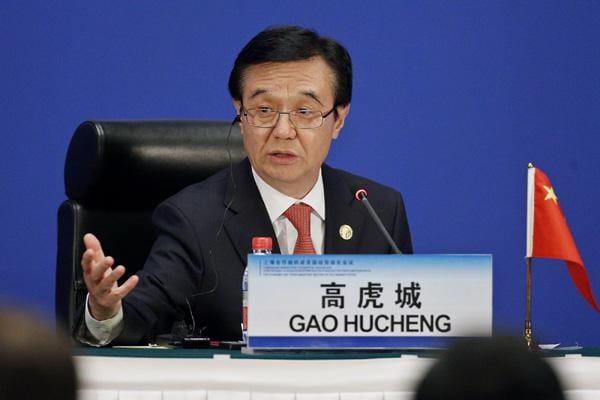
    Commerce Minister Gao Hucheng (pictured) boasts online sales will reach four trillion yuan (US$16 billion) this year.

    China has attained the key targets (outlined in the 12th Five-Year Plan) by the end of 2015 to become a genuine giant trader, Gao said at a national meeting on commerce. As a result it has outpaced its global competitors.

    chinese commerce minister

    China is now home to over 80,000 trade markets and total retail sales of consumer goods would each 30 trillion yuan this year with consumption contributing to about 60 percent of total GDP growth, he added.

    In the past five years, China’s exports of goods grew at an annual average of 6.5%, with its share in the global market rising from 10.4% in 2010 to about 13.2% in 2015, faring much better than major global economies. Service trade grew over 13.6% each year,marking the world’s second largest service trader.

    China’s actual use of foreign capital during the 20102015 period is expected to reach $620billion with the tertiary sector taking over 60% of total foreign capital. Outbound direct investment grew at 14.2 % annually.

    China is expected to receive foreign direct investment worth $135 billion both in financial and non-financial sectors in 2015, according to Gao.

  • All business based online now, says Alibaba CEO

    All business based online now, says Alibaba CEO

    The internet is no longer a business model but rather an essential piece of infrastructure on which all businesses need to operate, says Alibaba CEO Daniel Zhang.

    “All businesses are based on the Internet now,” Zhang told the World Internet Conference in China on Friday, likening it to a basic utility such as water, electricity and gas.

    “It can only transform the future of the business landscape when it’s combined with other industries.”

    About 2000 attendees including world government and business leaders were in Wuzhen, a canal city similar to Venice in eastern China’s Zhejiang Province, for the second annual conference, hosted by the Chinese government, a forum for topics such as cyber security, innovations in technology and developments in eCommerce. Chinese President Xi Jinping opened the conference on Wednesday as its keynote speaker.

    During his speech, Zhang said  the integration of the internet with other industries led to the success last month of Single’s Day, the largest one-day online shopping event in the world. The annual eCommerce bonanza, held every November 11, generated $14.3 billion in total gross merchandise volume because of the ecosystem of businesses that the company has built with its merchant, logistics and data-analysis partners. In comparison, Cyber Monday, the US equivalent of the Single’s Day, brought in just $3.1 billion this year.

    “We have formed a complete chain including a merchandise pool, payment system, membership management and data analytics tools to serve customers and partners that share common goals and standards with Alibaba,” Zhang said.

    Indeed, businesses will further transform as they use “big data” to better serve their customers. Alibaba has long touted itself not just as an eCommerce company but one of data as well. The information collected from the 40 million transactions a day on the company’s online marketplaces – demographic data of buyers, their spending habits – can benefit manufacturers when enhancing product design and help brands grow their businesses in China.

    “Data is becoming energy and blood of the new business landscape,” Zhang said.

    Other Alibaba executives were also in attendance, including executive chairman Jack Ma and Lucy Peng, the CEO of Alibaba-affiliate Ant Financial Services Group.

  • Alibaba and UBM to create O2O trade buying experience

    Alibaba and UBM to create O2O trade buying experience

    Alibaba’s B2B business unit, including Alibaba.com and 1688.com, has teamed with trade exhibition organiser UBM Plc to “unite the online and offline trade buying experience” initially in Asia.

    The two companies have begun exploring opportunities to link the B2B online and face-to-face trading worlds by leveraging their combined strengths, technologies and relationships. The alliance will begin with pilot programs introducing Alibaba B2B business unit’s online secure transactional platforms and business portals for companies participating in select UBM Asia trade fairs.

    Cross promotional marketing, match-making services and audience development of the two company’s brands and networks will be another key aspect in working towards the longer term goal of creating the next generation of on and offline trade experiences.

    Sophie Wu, president of the Alibaba B2B business unit, says collaborating with UBM will offer small and medium-sized enterprises a multichannel B2B trading experience.

    “They can also tap into the abundant and combined expertise of the two industry pioneers for more worldwide trading opportunities.”

    Tim Cobbold, CEO of UBM  says a fundamental element of his company’s ‘Events First’ strategy is its commitment to innovate and to deliver value for customers.

    “We are excited at the opportunity to partner with Alibaba.com, to create the next generation of trade buying experience.”

    Pilot programs for the joint collaboration will begin with UBM Asia’s Malaysia International Furniture Fair (MIFF) to be held on 1-5 March 2016 in Kuala Lumpur, Malaysia, Finefood Shanghai – part of Hotelex Shanghai – to be held 29 March to 1 April 2016 in Shanghai, China; and the co-located Materials Manufacturing & Technology (MM&T) and Fashion Access (FA) fairs to be held 30 March to 1 April 2016 in Hong Kong.

    The collaboration will commence with promotions of the UBM fairs to both parties’ respective trade audiences and Alibaba will begin offering their Trade Assurance service onsite to select exhibitors.

    Alibaba’s Trade Assurance service allows participating suppliers to offer guarantees on order quality standards and on-time shipment.

    Further pilots in the second half of 2016 will include additional business match-making components for other UBM Asia events such as Shanghai International Children Baby Maternity Industry Expo (CBME China) and Sign & LED China fairs.

    James Dong, head of B2B strategy, investment, business development and business intelligence of Alibaba.com, says the eCommerce giant sees great added values for global business traders through the collaboration.

    “Alibaba’s online trading resources and technology complements with the interaction and dialogues in the offline UBM trade shows. Such an alliance not only makes trading more cost-effective but enables higher level of trust between global buyers and sellers,” he said.

    James Dong of Alibaba, left, and Jime Essink of UBM Asia announcing the new partnership.

    Jime Essink, president and CEO of UBM Asia Ltd, says one of the challenges of the trade exhibition industry is continuing the buyer and seller dialogue and experience throughout the year.

    “Meanwhile, the limitation of a pure online trading world is the absence of the physical interaction and development of the personal relationship. With Alibaba and UBM Asia – both prominent players in our respective fields of B2B trade – working together, we see opportunities to change how online and offline trade takes place, providing improved returns and efficiencies for our customers.”

  • Peru to have Tmall Global shopfront

    Peru to have Tmall Global shopfront

    Peru and China have signed an agreement allowing Peruvian products to be sold directly to Chinese consumers online.

    Peruvian producers will set up stores on Alibaba Group’s Tmall Global via a country shopfront, much like Tmall has created with Germany, Australia, the US, Korea, the Netherlands, Thailand and other nations.

    The agreement will take Peruvian exporters closer to Chinese consumers and the value chain of Peruvian products will be fully developed, said VP of the Peruvian Association of Exporters, Eduardo Amorrortu during Monday’s contract signing ceremony.

    “Ecommerce has been developing very rapid. It has had a great impact on the economy and traditional modes of consumption have changed,” said VP of the Association of Chinese Companies in Peru (AECP), Kong Aimin.

  • China ranked first in the world for online retail trade

    China ranked first in the world for online retail trade

    The period from January to October, witnessed China clinching the world no 1 spot for online retail trade, according to the “Internet Development in China over the Last Two Decades” report, which was published on Tuesday.

    The report was published prior to the World Internet Conference to be held in Wuzhen, China, from 16-18 December, according to the people.cn website.

    The total number of netizens in China reached an estimated figure of 668 million — the world’s largest online population. “The four Chinese companies which made it to the list are Alibaba, Tencent, JD.Com and Baidu,” said head of Chinese Academy of Cyberspace, Yang Shuzhen.

    China’s online retail sales skyrocketed at 2.8 trillion yuan in 2014, as reported by the en.people website. But the figures have more than doubled in 2015, with total transaction reaching 2.95 trillion yuan.

    In the month of November, an online shopping sale was conducted by Alibaba which recorded a sale of 91.2 billion yuan, according to the report.

    Internet has been the biggest boon to the Chinese economy, contributing 7% to the GDP.

    According to statistics, the number of people who shop online now is 307 million.

    China’s cross-border retail transactions reached 449.2 billion yuan in 2014 alone, people.cn reported. China has 321 Internet-related companies (listed) whose market value was estimated at 7.85 trillion yuan—equivalent to 25.6% overall stock market value, according to the website.

    Since the last year, online sales in China have increased 44%.

    Mobile internet is also rapidly developing in China. According to statistics, there were 594 million phone users who accounted for 88.9% of all netizens, as reported by people.cn.

    The development of mobile internet services in China has also brought a boost to travel industry, as well as car rental and medical services.

  • Why Alibaba bought the South China Morning Post

    Why Alibaba bought the South China Morning Post

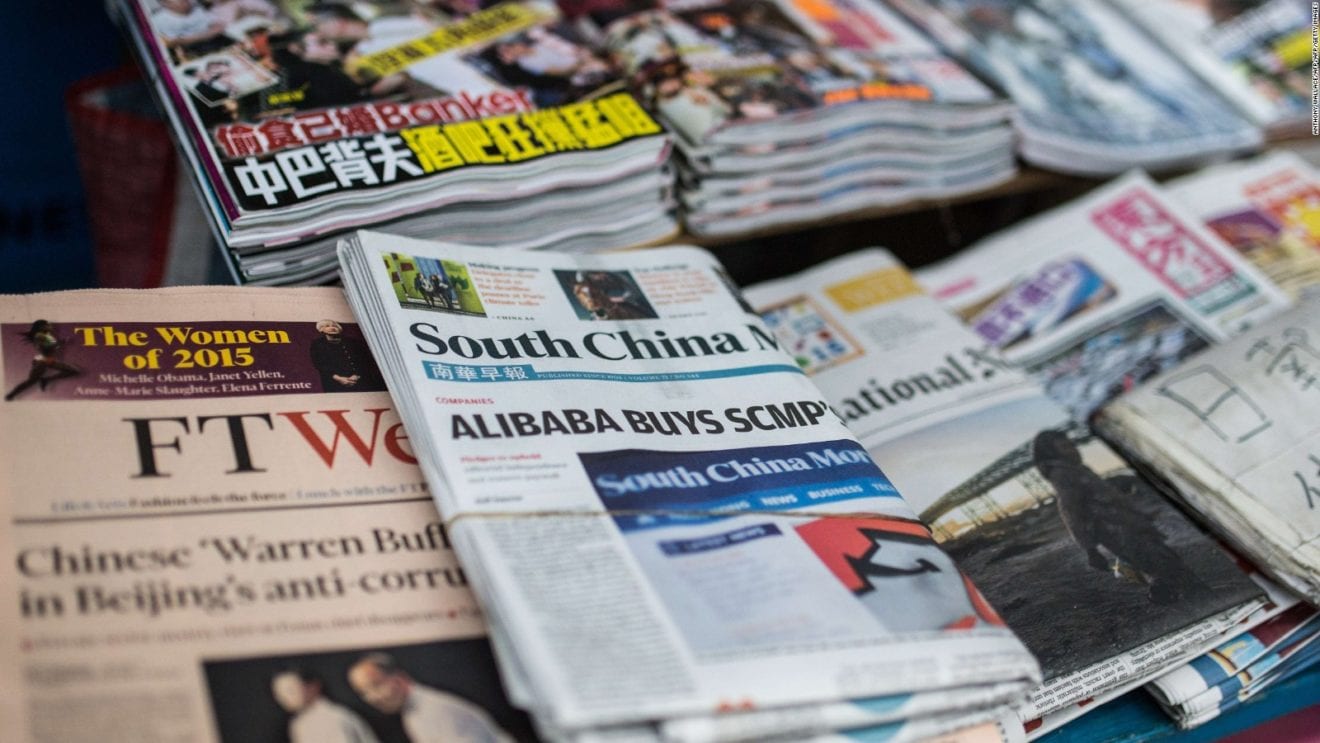
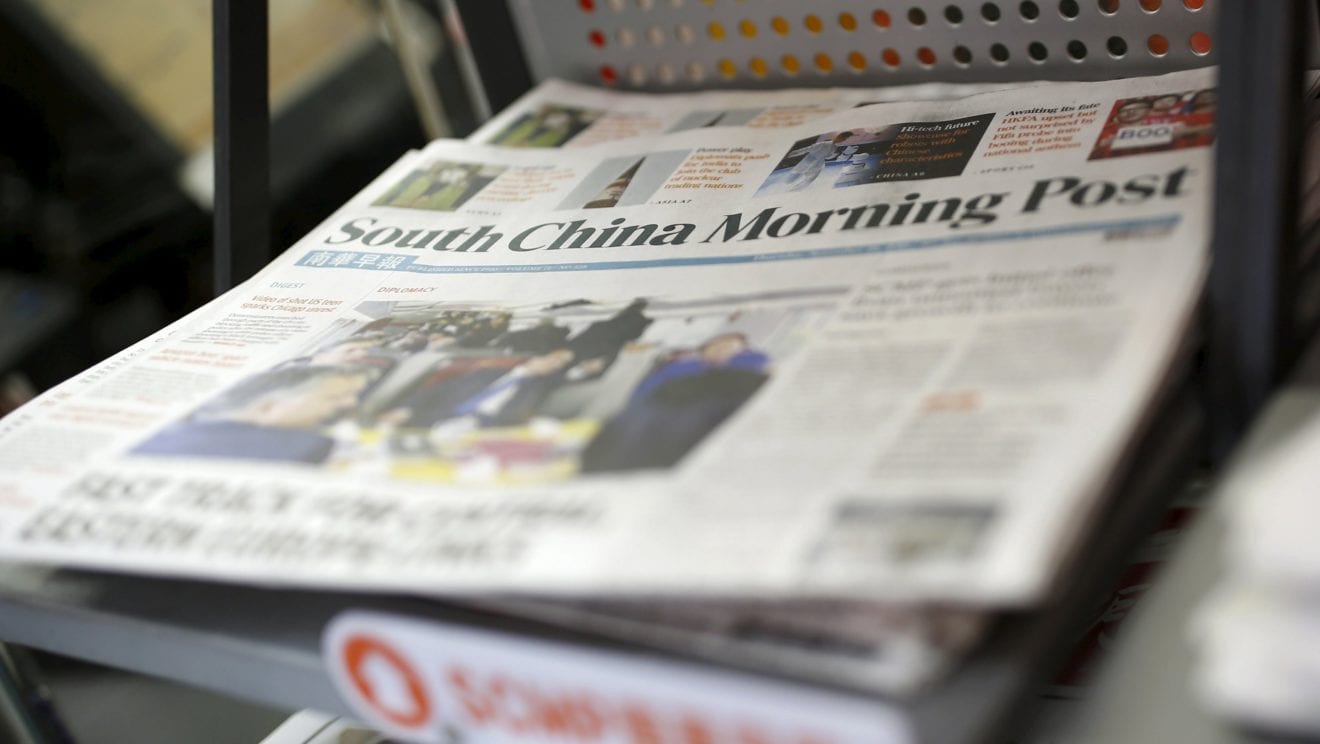
    Alibaba Group has struck a deal to buy Hong Kong’s venerable English-language newspaper, the South China Morning Post, adding a relatively small but influential content provider as the Chinese eCommerce giant expands into online entertainment and information.

    The agreement calls for Alibaba to purchase the media assets of Hong Kong-listed SCMP Group for an undisclosed amount. In addition to the daily newspaper, Alibaba is acquiring other SCMP operations including magazines, outdoor media, recruitment, events and conferences, and education and digital media businesses. Publications involved in the deal include the Sunday Morning Post; SCMP.com and related mobile apps; Chinese websites Nanzao.com and Nanzaozhinan.com; and a portfolio of magazine titles such as Esquire, Elle, Cosmopolitan, The PEAK and Harper’s Bazaar.

    Through the acquisition, Alibaba said it will “combine the heritage and editorial excellence” of the SCMP, which was founded in Hong Kong in 1903, with Alibaba’s digital capabilities “to provide comprehensive and insightful news and analysis of the big stories” in Hong Kong and China. The company plans to use technology to create content more efficiently, and provide resources to expand the SCMP’s audience beyond Hong Kong through digital distribution.

    “The South China Morning Post is unique because it focuses on coverage of China in the English language,” said Joe Tsai, executive vice chairman of Alibaba Group, in a statement. “This is a proposition that is in high demand by readers around the world who care to understand the world’s second-largest economy.”

    With the rise of the Internet, newspapers and magazines have suffered steep declines in readership and advertising revenue while struggling to make a profitable transition from print to digital distribution. In an open letter to the SCMP’s readers, Tsai said some may ask why Alibaba is buying into traditional media “considered by some (to be) a sunset industry.”

    “The simple answer is that we don’t see it that way,” Tsai wrote, calling the acquisition “the perfect opportunity to marry our technology with the deep heritage of the SCMP to create a vision of news for the digital age.”

    To enable greater access to SCMP content on computers and mobile devices anywhere in the world, Tsai said Alibaba intended to make all digital content available for free, eliminating the newspaper’s “pay wall” that requires readers to subscribe to get access to stories posted on the Internet. This change would occur “with enough preparation time after we take over operations,” Tsai wrote.

    SCMP CEO Robin Hu said Alibaba’s “proven expertise especially in mobile Internet” placed the company “in an excellent position to leverage technology to create content more efficiently and reach a global audience”.

    “We welcome Alibaba’s commitment to invest additional resources in its editorial and business operations to make the SCMP even stronger,” Hu said in a statement.

    Alibaba has been pursuing a media strategy that builds on its extensive eCommerce assets and consumer connections – the company’s China marketplaces have 386 million annual active buyers – to bring content to China’s entertainment-hungry masses. Alibaba has rapidly expanded in this area through investments in a variety of traditional and Internet businesses, including film production (Alibaba Pictures), sports (Alibaba Sports Group) and streaming video. Last month Alibaba agreed to buy Youku Tudou, A Chinese version of YouTube, in a multibillion-dollar deal.

    Tsai’s letter to SCMP readers:

    Marrying Heritage and New Technology: a Vision for the Digital Age

    Dear Readers,

    By the time you read this, you will have heard the news that Alibaba Group is acquiring the South China Morning Post.

    With an age difference between the two companies of nearly one hundred years, this is truly a mix of the old and the new. The SCMP is resonant with the history, heritage and culture of the region, just as Alibaba has its place in the new age of digital technology.

    We at Alibaba are both humbled and excited to be the new owner.

    Our Business Case

    So, you’re probably wondering why. Why is Alibaba buying into traditional media, considered by some a sunset industry? The simple answer is that we don’t see it that way.

    The SCMP has iconic status in the region, with a strong reputation internationally for the quality and credibility of its journalism over the years, thanks to its reporters and editors who have worked hard to build this heritage.  Like many print media, however, the SCMP faces challenges amid the dramatic changes in the way news is reported and distributed. But these changes play to Alibaba’s strengths, which is why we believe the two companies complement each other well.

    We see a compelling business case for the acquisition because we believe that Alibaba is best positioned to take the SCMP to the next level. The foundation for this work must be the quality of the content. And what underpins this will be editorial excellence: a clear prerequisite to maintaining readers’ trust and, ultimately, achieving commercial success. Be assured, we get that.

    Yet, the news business is in a state of flux. It has already gone digital and is now moving from online destination to other forms of distribution, in particular social media and mobile. Media now has a global audience and the challenge is to reach it in the most efficient and reader-friendly way. With proven expertise in digital distribution, especially on mobile devices, Alibaba is in an excellent position to leverage technology to create content more efficiently and expand distribution without borders.

    In other words, we see the perfect opportunity to marry our technology with the deep heritage of the SCMP to create a vision of news for the digital age.

    Our Vision

    Our vision is to grow the readership globally. We believe we can do this because the SCMP, from its base in Hong Kong, is uniquely positioned to report on China with objectivity, depth and insight, a proposition that is in high demand by readers around the English-speaking world – from New York to London to its home in Hong Kong – who care to better understand the world’s second largest economy.

    To help achieve our vision, we plan to make the SCMP more readily available. In this spirit, with enough preparation time after we take over operations, the pay wall on SCMP.com will come down, and you will be able to access its content for free on the Internet and on your mobile device.

    We will also invest to strengthen the foundation of editorial excellence. Only through additional resources will the SCMP be able to stay true to its core values of quality, integrity and trust. Further, the SCMP will stay close to its roots, with a strong China focus offering distinctive and informed analysis on trade, business, economy and society while maintaining its status as the paper of record for Hong Kong.

    Editorial Independence

    Some have suggested that ownership by Alibaba will compromise the SCMP’s editorial independence. This criticism reflects a bias of its own, as if to say newspaper owners must espouse certain views, while those that hold opposing views are “unfit.”

    In fact, that is exactly why we think the world needs a plurality of views when it comes to China coverage. China’s rise as an economic power and its importance to world stability is too important for there to be a singular thesis.

    In reporting the news, the SCMP will be objective, accurate and fair. This means having the courage to go against conventional wisdom, and taking care to verify stories, check sources and seek all viewpoints. These day-to-day editorial decisions will be driven by editors in the newsroom, not in the corporate boardroom.

    It’s humbling to assume the responsibility of ownership of such a storied newspaper. We thank the Kuok family who have been tremendous stewards of your trust; we hope Alibaba will have an opportunity to earn your trust.

    Sincerely,

    Joseph C. Tsai

    Executive Vice Chairman

    Alibaba Group Holding Limited

  • China’s internet giants investing in offline retail for growth

    China’s internet giants investing in offline retail for growth

    Alibaba’s purchase of certain media properties has dominated recent headlines, but China’s acquisition-hungry internet giants have moved on plenty of other targets lately, including brick-and-mortar retailers as they expand their commercial ecosystems.

    The triumvirate of Baidu, Alibaba and Tencent has made US$75 billion of investments in strategic partners since 2013, according to HSBC data, and analysts say China’s internet behemoths have the cash to keep on going.

    “Mergers and acquisitions will remain a main feature of China’s internet industry in 2016. We expect Alibaba’s and Tencent’s M&A spend to remain high,” wrote Fitch analyst Kelvin Ho in a recent note.

    The internet firms aren’t just gobbling up other online players. Some US$47 billion has been spent on physical retailers and another US$797 million on logistic providers. Analysts say this reflects the broad adoption of an online-to-offline, or “O2O”, strategy.

    “O2O has become the new growth driver for internet companies, especially e-commerce companies, which have been making efforts to broaden their services and product offerings and to enhance shopping experiences for online shoppers,” HSBC analysts wrote in a report last month.

    Physical distribution capabilities have been on Alibaba’s shopping list. Its partnership with Haier Electronics Group two years ago strengthened its ability to fulfil white goods, and its August investment in Suning Commerce Group is expected do likewise for consumer electronics.

    Competitor JD.com already has delivery capabilities, so its focus is on investing to broaden its product portfolio, by partnering with local supermarkets, convenience stores and pharmaceutical chains. In August it boosted its fresh food business by taking a stake in supermarket chain Yonghui Superstores.

    The impetus for these moves comes from surging online retail sales, which grew at a 57 per cent compound annual growth rate from 2010 to 2014, easily outpacing the 13.7 per cent rate for all retail, as sales from physical outlets were cannibalised.

    “The cashed up internet companies are definitely doing a land grab, in terms of O2O and other assets,” said Chi Tsang, head of Asia internet equity research at HSBC.

    But despite the growth of online retail, it contributed just 11 per cent of all retail sales in 2014. And although it’s expected to grow at a CAGR of 27 per cent up to 2018, according to iResearch, HSBC figures show year-on-year growth is actually decelerating, from 49 per cent in 2014 to 39 per cent in the first half of this year.

    In this context, analysts say it’s critical for the online and offline sides of an O2O partnership to see mutual benefit.

    “By tying up with internet companies, offline retailers can benefit from getting access to their partners’ large online user base, and can better utilise their retail infrastructure (logistics supply chain and store network) by helping online retailers to provide an omni-channel shopping experience to their customers,” HSBC analysts wrote.

    “Conversely, internet companies can further enlarge their market shares by digitalising offline partner’s product offerings and providing just-in-time services to users by utilising offline partners’ retail infrastructure.”

    As an example, Alibaba’s deal with department store operator Intime Retail Group has spawned the Girlfriend Circle programme, which promotes social spending among more than 100,000 members, and the Miao Jie app, which has boosted conversion rates by channelling department store activity for over half a million users.

    “I think of O2O as tapping into the other 90 per cent of retail sales that is not served via online shopping. Nine hundred million people have computers – smartphones – in their pockets so they are already enabled. Just need to supply them with services and payment options,” Tsang said.

    Some O2O strategies don’t involve physical infrastructure or retail premises. Baidu is focused on mobile marketing and services transactions, having invested in online travel agency Ctrip and transport provider Uber. It also targets high-frequency consumer transactions like food takeout and movie ticketing.

    Other players, like consumer electronics giant Gome and grocery retailer Sun Art, are taking a solo approach to combining physical retail and e-commerce. Future partnerships with those firms are possible, although smaller operators like Golden Eagle Retail Group, Wumart Stores or Lianhua Supermarket Holdings could be easier for the big three to swallow.

    “The pure O2O land grab is nearly over, with Meituan.com, Didi and even 58 Home spoken for. But might there might be more retailers or hypermarkets interested in cooperating,” Tsang said.

  • Alibaba acquires Hong Kong’s South China Morning Post

    Alibaba acquires Hong Kong’s South China Morning Post

    Chinese e-commerce giant Alibaba Group announced on Friday that it is acquiring Hong Kong’s English language newspaper South China Morning Post (SCMP) and its other media assets.

    It said the agreement will see Alibaba’s digital expertise being merged with SCMP’s heritage and editorial excellence.

    “This is a proposition that is in high demand by readers around the world who care to understand the world’s second largest economy,” said Joseph Tsai, Executive Vice Chairman of Alibaba Group. “Our vision is to expand the SCMP’s readership globally through digital distribution and easier access to content.”

    Robin Hu, Chief Executive Officer of SCMP, said in a news release that the company welcomes Alibaba’s commitment to invest additional resources in its editorial and business operations to make the SCMP even stronger.

    Apart from the flagship SCMP newspaper, the agreement also includes the acquisition of the magazine, recruitment, outdoor media, events & conferences, education and digital media businesses of SCMP Group Limited.

    Other SCMP titles include the Sunday Morning Post, its digital platforms SCMP.com and related mobile apps, and the two Chinese websites Nanzao.com and Nanzaozhinan.com.

    The acquisition also includes a portfolio of magazine titles, including the Hong Kong editions of Esquire, Elle, Cosmopolitan, The PEAK and Harper’s Bazaar.

    In a letter addressed to SCMP readers, penned by Tsai, the company sought to answer questions on why the e-commerce company is buying into traditional media which many consider as a sunset industry.

    “The simple answer is that we don’t see it that way,” the letter read. “We see a compelling business case for the acquisition because we believe that Alibaba is best positioned to take the SCMP to the next level. The foundation for this work must be the quality of the content. And what underpins this will be editorial excellence: a clear pre-requisite to maintaining readers’ trust and, ultimately, achieving commercial success. Be assured, we get that.”

    The letter also addressed issues on the possible compromise that SCMP’s editorial independence may be compromised by the acquisition and the commercial interest of the new owners.

    “In reporting the news, the SCMP will be objective, accurate and fair,” Tsai assured. “This means having the courage to go against conventional wisdom and taking care to verify stories, check sources and seek all viewpoints. These day-to-day editorial decisions will be driven by editors in the newsroom, not in the corporate boardroom.”

  • India is now Alibaba Group’s second largest market

    India is now Alibaba Group’s second largest market

    For Alibaba.com, the business-to-business arm of the world’s largest e-retailer Alibaba Group India is the second largest market globally.

    “India is the second most important market for Alibaba globally, next only to China for us,” said Timothy Leung, head of global business development, Alibaba. The business-to-business subsidiary of Alibaba Group launched an online platform to provide Indian small and medium enterprises (SMEs) access to global counterparts.

    “India is at a critical point at present and from here we will see sharp upswing in ecommerce. We are very excited in building this consortium for SMEs,”he added.

    The company has 4.5 million registered users from India, with the country accounting for the second-highest paid users on the platform after China. SMEs in India can also avail assistance in terms of financing, logistics (domestic and cross-border), inspections and certifications, technology and SME trade-linked education on this platform. The Chinese company has partnered with enterprises such as ICICI Bank, Kotak Mahindra Bank, Crisil Rating, Tally, Capital Float, Jeena, SGS and Mypacco to help Indian SMEs expand their business.

    “There are at similarities in our experience in Chinese and India markets in terms of population size, kind of SMEs and also the core path in the ecommerce. We are also looking at our experience in the past in China and match it with what is happening in India,” added Leung.

    Citing similarities with the Chinese market Leung said that in China, B2B side of the business spearheaded the growth for Alibaba. The company through its B2B platform brought buyers and suppliers together and then ventured into supporting different aspects of the ecosystem.

    “That’s what we trying to build here. Other than matching buyers and supplier we are trying to develop the ecosystem,” Leung said.

    On the consumer side of the business also the Chinese major and its financial arm Ant Financial have picked up stakes Indian ecommerce companies Paytm and Snapdeal. Founder Jack Ma was in India three times in one year and also met the prime minister.

    The recently launched initiative, known as SMILE, hopes to connect Indian manufacturers with quality Chinese suppliers on Alibaba.com, provide Indian sellers the trading support and facilitate the global sales of Indian products through the platform.

    Talking about the fast growing ecommerce industry in the country, Leung said that 16 years ago when Alibaba started China went from becoming a no-internet country to one of the most advanced ecommerce ecosystems in the world. India is at much advanced stage and growing at a very fast rate when compared to China of those times.

  • Apple Pay China launch slated for February

    Apple Pay China launch slated for February

    Tech giant Apple will launch its mobile payment system Apple Pay in China by early February, according to a report in the Wall Street Journal.

    Citing people familiar with the discussions, the newspaper says Apple has reached agreement with China’s four state-run banks to clear the way for the payment system to be used via its iPhone smartphones.

    The move will place it in direct competition with local online payment platform Alipay, run by Alibaba Group, and its affiliated company Ant Financial, and UnionPay, the state run monopoly credit card system.

    But while the banks are on board, the Wall Street Journal claims Apple may yet face more hurdles before it can launch the service, with banking and eCommerce regulations overseen by a number of government agencies.