Tag: Alibaba

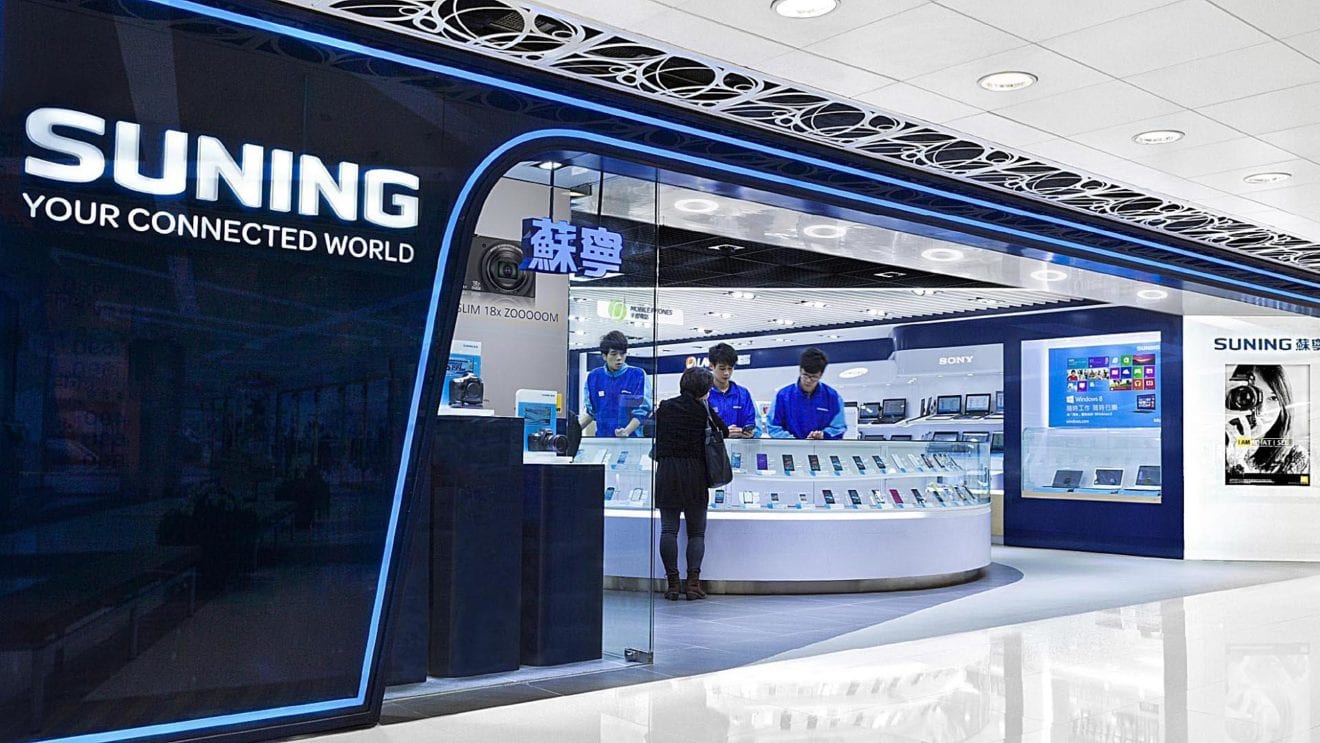
  • Dalian Wanda, Suning plan store rollout

    Dalian Wanda, Suning plan store rollout

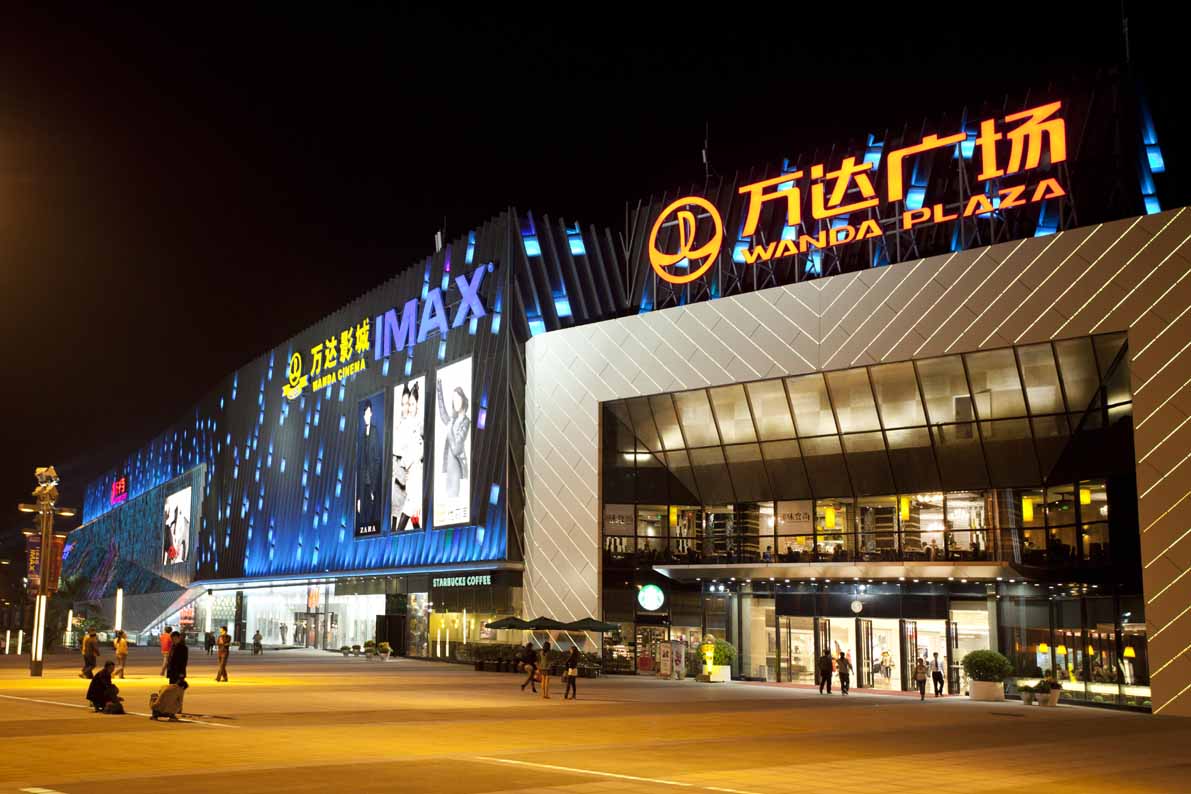
    Mall operator Dalian Wanda Commercial Properties is partnering with Suning to open electronics stores at Wanda Plazas throughout the Mainland.

    The partnership will see 40 stores open by the end of this year with more planned for next year. Suning, now 20 per cent owned by Alibaba Group, currently has a network of 1600 stores throughout China.

    Dalian Wanda has 100 Wanda Plaza shopping centres in China currently and plans to add 35 by the end of this year.

    The company is changing nature from its original model as a department store operator into a services-based company. It recently announced the closure of its Superstar karaoke chain as well as some of its less profitable department stores.

    The company owns the AMC cinema chain in the US, Hoyts in Australia and China’s largest network of movie theatres.

  • ShopClues partners with South Korea to help merchants sell products in India

    ShopClues partners with South Korea to help merchants sell products in India

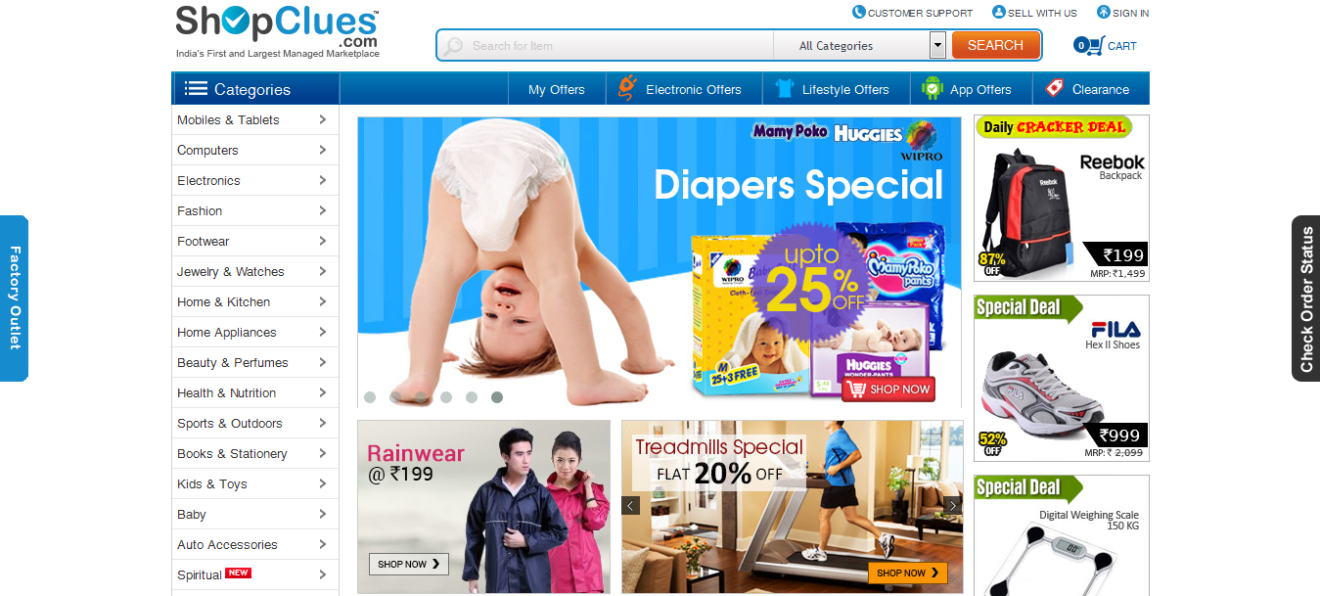
    ShopClues has partnered with a South Korean trade body to enroll 30,000 wholesale merchants, allowing them to sell directly to Indian businesses and consumers through its online marketplace.

    ShopClues will provide cataloguing, delivery payment and customer support to members of the Korean International Trade Association (KITA), similar to the terms of a partnership it stitched with Chinese online B2B platform DHgate in May, opening up the Indian market to wholesalers from southeast Asian countries.

    Indian merchants do not have many options to buy goods directly from overseas ecommerce platforms. Chinese ecommerce giant Alibaba Group has 4.46 million Indian buyers and sellers registered with Alibaba Wholesale.

    But Amazon India’s Global Selling Programme launched in June and eBay’s Powership programme allow only exports by Indian merchants. ShopClues is also in talks with wholesale platforms in Thailand, Malaysia and Indonesia. These alliances are essential for the company to be able to meet its 2015-16 target of $1.5 billion (Rs 10,000 crore) in gross merchandise value, or the total retail price of all the goods sold on its platform.

    In financial year 2015, ShopClues achieved GMV of Rs 2,500 crore. “The merchants on-boarded from DHgate as well as KITA are an overlap between our wholesale marketplace for consumers and small businesses as well as private marketplace for B2B sourcing for the 1.25 lakh merchants registered on Shop Clues,” said Sanjay Sethi, cofounder and CEO of the Tiger Global-backed company.

    “More importantly, it helps smaller merchants and those in Tier 2 and 3 cities who want to stock up certain goods for their physical retail outlets.”

    The Korean merchants will sell products including cosmetics, home and kitchen appliances, electronic goods and car accessories on ShopClues. They will be charged a fee for services provided by ShopClues.

    “We do the payment processing, including exchange services, and charge the merchant for it. Apart from this, the fulfilment services are also charged.Access to the ShopClues platform is free,” said Sethi. The turnaround time will be 14-45 days, depending on the volume of an order and whether the products have to be custommade, Sethi said.

    On plans for enrolling merchants in Thailand, Malaysia and Indonesia, Sethi said, “Currently, we have not built the entire ecosystem for the SE Asian markets to buy or source from Indian merchants, though we will look at exports going ahead.”

  • Alibaba feels China pain as it trims sales forecasts

    Alibaba feels China pain as it trims sales forecasts

    E-commerce giant Alibaba has succumbed to the crisis gripping the Chinese economy a year after the company became the world’s biggest float.

    Founder and former English teacher Jack Ma became an overnight billionaire when Alibaba launched on the New York Stock Exchange in September 2014, as the firm raised a record-breaking $25 billion (£16.3 billion) in a float valuing the company at $186 billion.

    Alibaba is the biggest player in the Chinese e-commerce market — where spending is set to hit $1 trillion by 2019 — accounting for 80% of online sales in China.

    The firm is also among the top picks of UK retail investors, according to fund manager Hargreaves Lansdown.

    But the company admitted today that a weakening Chinese economy has taken its toll on business, as it slashed forecasts for the total value of transactions it expects to take place in the current quarter.

    This will now be “mid-single digits lower” than the giant’s initial estimates for the quarter.

    Alibaba’s head of investor relations, Jane Penner, said consumers were still willing and able to spend but that the company had been seeing a “negative impact of the magnitude of the spending”. Average order values are also lower, Penner added.

    What is Alibaba?

    The latest fears over the e-commerce giant come a month after it reported its slowest growth in transactions for more than three years.

    Shares in the company are now below their $68 float price after a near-5% slump overnight to $60.91. The stock has halved since the end of May, when Alibaba’s shares hit $119 — valuing the company at a staggering $300 billion.

    The latest bad news out of China comes hard on the heels of a dramatic slump in imports — fuelling fears of a hard landing for the world’s second biggest economy — and a month of turmoil in global stock markets following Beijing’s sudden devaluation of the yuan.

    China also cut its official growth estimates for 2015 this week. China has also cut interest rates five times since November and intervened directly to stem plunging stock markets.

    Rathbones investment director Jane Sydenham said: “Investors are beginning to adjust to what was initially quite a shock in terms of the renminbi devaluation, share repurchases — normally those kind of activities on the part of central banks signal something really quite serious.

    “It’s taken some time for investors to adjust to the fact that clearly, growth is slowing, perhaps more than we’d thought.”

    Despite the gloom from Alibaba, shares rallied in China for the second day running on hopes of more government stimulus.

    Asian markets rose on Wednesday

    Shanghai’s main market gained 2.3% after the finance ministry set out plans to boost infrastructure spending and speed up reform of its tax system to support the economy.

    Japan’s Nikkei also saw its biggest single gain in seven years — rising 7.7% — as markers rallied on comments from prime minister Shinzo Abe raising hopes of a corporate tax cut and a new trans-Pacific trade deal.

  • Germany’s Metro, China’s Alibaba in e-commerce tie-up

    Germany’s Metro, China’s Alibaba in e-commerce tie-up

    German retail giant Metro said today it is teaming up with Chinese online retailer Alibaba to tap the potential of the booming e-commerce market in China.

    Metro, which operates more than 80 Cash and Carry wholesale stores in China “is now expanding its channels” by opening an online shop in China offering Metro’s own brands, as well as supplier brands from Germany, it said in a statement.

    “In the first phase, over 100 products in the categories of dairy, canned foods, coffee, and chocolate from Metro Cash & Carry Germany as well as cosmetics goods from Real are to be offered online,” the statement said.

    The product assortment would subsequently be expanded to include more food items from Metro Cash & Carry and non-food from its Real supermarket brand.

    “E-commerce is one of our strategic growth drivers in China,” said chief executive Olaf Koch.

    “Opening the flagship store again shows our clear confidence in the Chinese market. This platform enables us to deliver more quality imported goods and German brands to the Chinese customers,” he said.

    Metro and Alibaba said they would also explore possible cooperation in other areas, such as supply chain and market data.

  • One of China’s top 10 e-retailers grows Q2 revenue 30%

    One of China’s top 10 e-retailers grows Q2 revenue 30%

    September 4, 2015, 10:56 AM

    The Beijing-based web-only retailer’s total net revenues in the second quarter of 2015 were 2,312.3 million yuan ($373.0 million), a 29.8% increase from 1781.65 ($280 million) in the corresponding period in 2014. Net loss for the quarter was 21.2 million yuan ($3.4 million), compared to net income of 28.8 million yuan in the second quarter of 2014, or 1.6% of total net revenue in that quarter.

    “During the second quarter of 2015, we expanded our leading position in China’s books and media market, gained additional share in the baby, children and maternity destination category and continued to enjoy some of the highest conversion rates in the industry,” executive chairwoman of Dangdang Peggy Yu Yu said in a statement accompanying the earnings report.

    Dangdang.com was founded by Chinese book publisher Li Guoqing and his wife Peggy Yu Yu, who says she was inspired by Amazon.com when she studied in the United States.  In terms of sales, Dangdang.com is one of the largest book and media e-retailers in China and the company has gradually expanded into other categories, such as electronics and apparel.

    Dangdang also has invested heavily in serving mobile shoppers. “Mobile orders remained close to record levels at 40% of total orders, and we improved monetization of our mobile platform with a sharp increase in mobile advertising revenue,” Yu said. “Our digital business is gaining momentum, driven by our growing catalog of e-books, including original content.”

    Dangdang’s size is still small compare to leading e-retailers, however its executives contend it can challenge the Chinese e-commerce leaders, Alibaba Group and JD.com.

    “I don’t think the position of those leaders is secure. As we all know, the size of the business is not equal to competitive advantage and competitive threshold.  The market will be settled only if the marketing leaders have some unique edges and generate difficult barriers to entry,” Dangdang cofounder and CEO Li Guoqing said last month in a speech at the One Thousand E-commerce Professionals Seminar in China.  “Alibaba’s sales only account for about 5% of retail sales of China and that is not enough barrier to entry. At same time, JD.com’s electronics sales only represent 2% to 5% sales of electronics products in China. If some companies get a new business model, there are still plenty of chances to beat those leaders.”

    Also, Li said few people knew Vipshop, No. 4 in the Internet Retailer China 500, and Yihaodian, No. 7, three years ago, but now they have become e-commerce leaders in their categories in China. Wal-Mart Stores took full control of Yihaodian in July. Vipshop is a discount fashion retailer.

    • Dangdang.com is No. 10 in the Internet Retailer 2015 China 500. JD.com is No. 1. Alibaba is not ranked in the China 500 because it does not own merchandise but rather provides a platform for more than 8 million merchants to sell. However, the gross merchandise value of goods sold on Alibaba’s online marketplaces totaled $109 billion in the first quarter, while JD.com reported $18.5 billion in GMV. By contrast, Dangdang’s GMV in the second quarter was 1,890.6 million yuan ($304.9 million), a 32.1% increase from the same period in 2014.

    For the second quarter ended June 30, Dangdang reported:

    • The combination of product revenue from its own sales and GMV from marketplace sellers reached 4,130.3 million yuan ($666.2 million) and grew 31.8% year-over-year.
    • Active customers were 9.7 million, an increase of 15% from 8.4 million 2014.
    • Total orders for the second quarter of 2015 were approximately 19.5 million, a 19% increase from 16.4 million in 2014.

    For the first six months of 2015, Dangdang reported:

    • Net revenues were 4093.99 million yuan ($644.30 million), up 18.5% from 3454.25 million yuan ($543.58 million) in the same period of 2014.
    • Net income of 7.62 million yuan ($1.2 million), compared with a $35.1 million yuan ($5.52 million) net loss in same period of 2014.
  • US wine giant Robert Mondavi to launch online in China

    US wine giant Robert Mondavi to launch online in China

    Famed Californian winery Robert Mondavi is to join Alibaba Group’s Tmall.com online shopping marketplace to reach more consumers in China, the world’s largest wine-consuming market.

    Robert Mondavi says its exclusive Tmall flagship store will be the California company’s first and only online sales channel in China. The outlet will sell US-bottled labels such as Robert Mondavi Winery, Robert Mondavi Private Selection, Woodbridge by Robert Mondavi, and Twin Oaks by Robert Mondavi. The Robert Mondavi brand is owned by alcoholic beverage maker Constellation Brands, which bills itself on its website as the world’s top premium wine producer.

    Philip Kingston, senior vice president of international for Constellation Brands, said the company in recent years has “seen a very encouraging uptake in Chinese tourists visiting our wineries in California, as well as wine sales in China.”

    Opening a store on Tmall – China’s largest B2C online marketplace and part of Alibaba Group, whose retail shopping sites in the PRC have 367 million annual active buyers – “allows us to sell our wines to Chinese consumers in a marketplace which we believe will build our brand,” Kingston said in a statement.

    “It also strengthens our presence in China as we expect to benefit from Alibaba’s sophisticated data-analytics capabilities and extensive customer insights.”

    The growth and sheer size of China’s consumer class in recent years has made the country a top market for the world’s vintners. China’s wine consumption in 2014 was more than double that of second placed US, according to data from research firm IWSR.

    Tmall said with the opening of the Robert Mondavi Wines flagship store, it was launching a  “Tmall Vineyard Direct” program, promising to connect with more wineries around the world to allow them to sell directly to Chinese consumers through Tmall. Gary Clubb, head of Tmall international business development, said  “working directly with the winery itself is key to a robust supply chain and allows us to leverage the power of the Alibaba ecosystem to pioneer innovative sales and marketing campaigns to the 367 million buyers on our platforms”.

    Tmall has been aggressively recruiting Western retailers and brands selling products in a range of categories, from fast-moving consumer goods to apparel, to build up Alibaba’s cross-border online sales.

  • SingPost invests in Hong Kong ventures

    SingPost invests in Hong Kong ventures

    SingPost has revealed investments in two Hong Kong companies as it continues its aggregation of interests in eCommerce and logistics businesses in the broader Asian region.

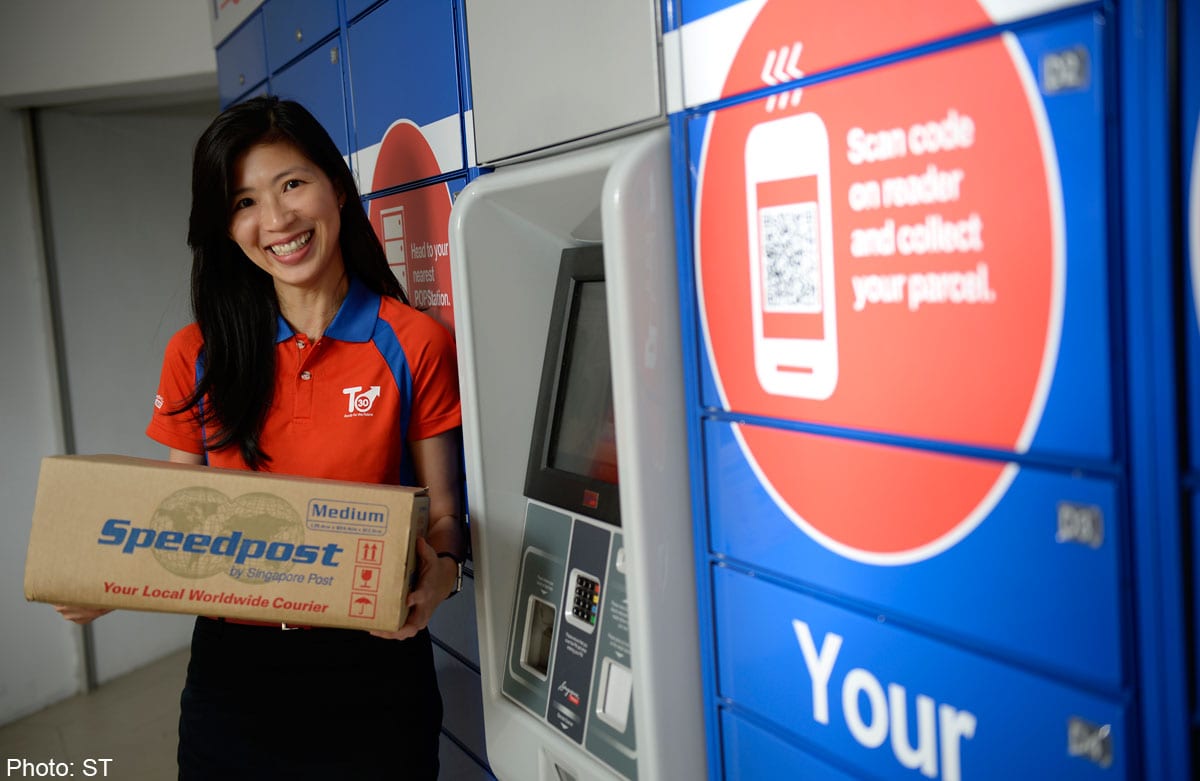
    SingPost subsidiary Quantium Solutions Holdings has spent HK$8 million (about $1.5 million) acquiring 1 million new shares in E Link Station, representing about 50 per cent of the business. Founded last May, E Link Station is creating “a rapidly expanding network of self-collection parcel service points”, a concept with similarities to SingPost’s POPStations across the island state.

    “ELink… is an extension of how we approach parcel deliveries elsewhere in many parts of the world – that is, we give customers flexibility through multiple channels that include locker storage and redemption centres,” explained Dr Wolfgang Baier, group CEO of SingPost.

    The second, larger deal sees SingPost take a 33 per cent stake in Morning Express & Logistics for HK$39.6 million (S$7.2 million). ME provides logistics, documents and parcel delivery services in Hong Kong. The Singaporean company has an option to take a further 33 per cent stake for the same amount if certain terms and conditions are fulfilled.

    “Morning Express gives us a strong last-mile and parcels capability in Hong Kong and extends our eCommerce value chain there, adding on to our warehousing, freight forwarding and front-end eCommerce,” said Baier.

    “As a company, Morning Express has 28 years in the logistics business and they are led by a professional management whose thinking is remarkably similar to ours.”

    Baier said Hong Kong, as a gateway to China, is a priority market for SingPost and a node in its pan-Asian network through which it serves its customers and partners.

    SingPost is 14.51 per cent owned by Chinese eCommerce giant Alibaba Group.

  • Hong Kong mobile operator SmarTone prepares retailers to join the mobile e-commerce bandwagon

    Hong Kong mobile operator SmarTone prepares retailers to join the mobile e-commerce bandwagon

    Mobile network operator SmarTone Telecommunications hopes to roll out its new service called “Kiss” this December as the first batch of retailers in the city have signed up for the ambitious offline-to-online marketing and payments platform.

    “We’ve already started signing up stores, including [those run by] medium-sized retailers. Some bigger retailers are looking at it, too,” Douglas Li, the outgoing chief executive at SmarTone told the South China Morning Post.

    Li, who drove the platform’s two-year development, said SmarTone “should run Kiss for five to seven years to fully realise the value of how uniquely focused the platform is to help retailers”.

    He said there could be an opportunity to license the platform’s technology to telecommunications network operators outside Hong Kong.

    “It’s an internet business so the actual cost of implementation is not huge. The only question is how quickly it can scale up,” Li said. “If it does well in a foreign country, the sky’s the limit.”

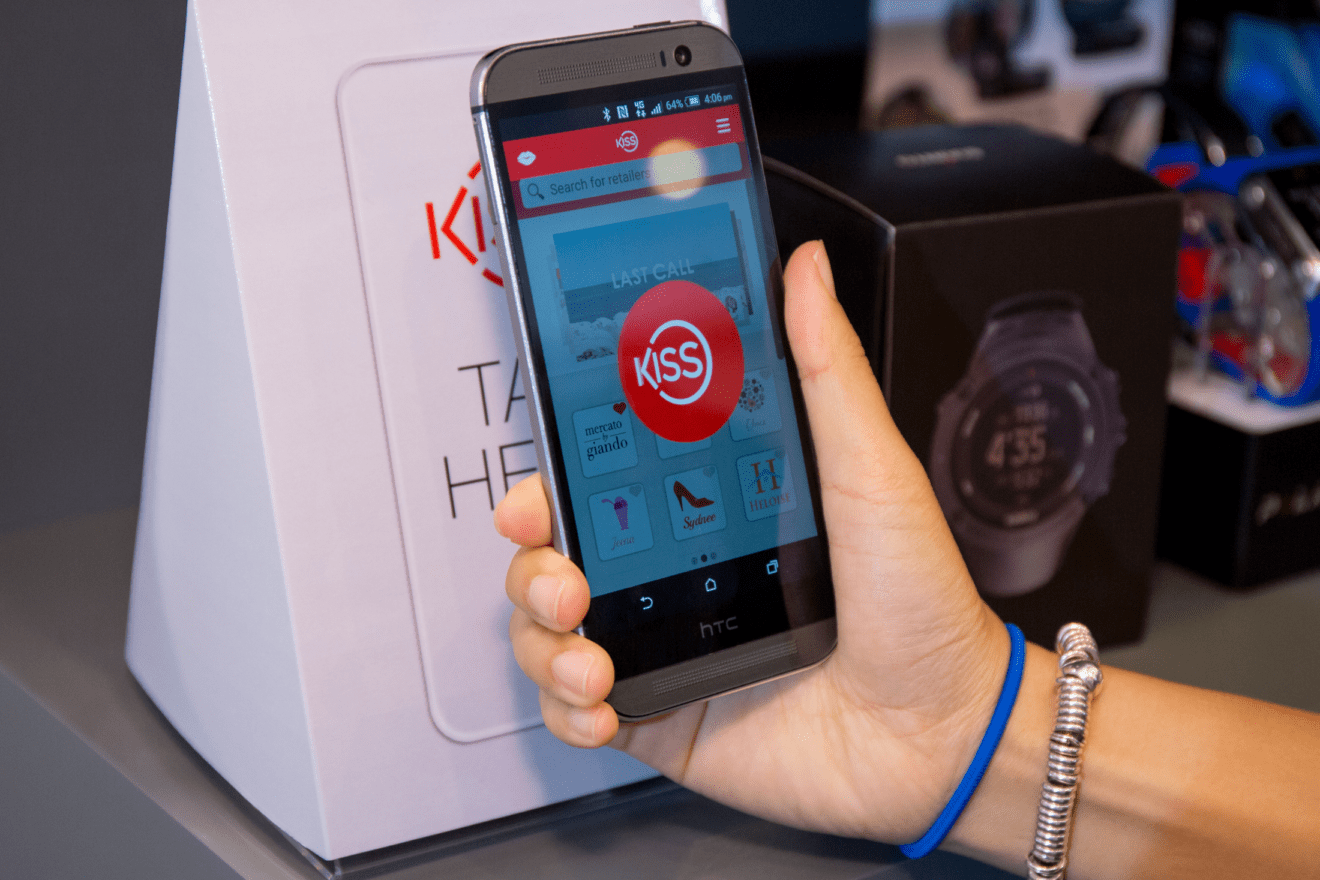
    Launched last month, Kiss enables retailers to connect with consumers through a platform that links digital marketing and loyalty programmes with data analytics and mobile payment.

    Merchants are charged a monthly fee and provided with tools to create their mobile storefronts on the platform, directly message customers and launch targeted campaigns.

    “Retailers need to adapt to new thinking because the world has changed,” Li said. “You need only look across the border to see how online and mobile [e-commerce] are impacting the traditional bricks-and-mortar retailers. We’re offering retailers in Hong Kong a way to get into this [kind of operation].”

    Alibaba Group, JD.com Ctrip.com and Qunar have become China’s leading business-to-consumer e-commerce platform operators by providing convenience, choice and low prices to entice people to buy goods and services online through smartphones and tablets.

    Research firm eMarketer has forecast mobile e-commerce sales to make up 10.9 per cent of total retail sales in China next year and 55.5 per cent of all online retail shopping as the sector grows 51 per cent to US$506 billion, up from an estimated US$334 billion this year.

    “We hope to build a critical mass of connected retailers in Hong Kong so that Kiss will have a strong appeal for consumers,” said SmarTone chief technology officer and recently named interim chief executive Stephen Chau Kam-kun.

    Chau said SmarTone was signing up a mix of merchants with “high-value, low-frequency buyers” and “low priced, high-frequency buyers”.

    Kiss, operated by SmarTone subsidiary Kissco Marketing Services, also includes in its package a single-purpose Android tablet as tap-only mobile payment terminal, capabilities for customer data analytics and a Bluetooth beacon for the store, configured to push greetings and promotions to nearby consumers with the free Kiss app.

    Consumers use the Kiss Wallet feature to store credit card details, retailer cash credits and promotional Kiss Dollars. Kiss Pay is the digital token used for purchases and redeeming rewards.

    UnionPay International is the launch credit card partner for Kiss, although efforts are underway to add Visa and MasterCard.

    Li, , who resigned in April, said he left “a roadmap” to be implemented over the next two years to further develop the Kiss platform.

  • Amazon lures investors back from Alibaba

    Amazon lures investors back from Alibaba

    China is no longer in vogue with e-commerce investors, as money returns to the US and Amazon.com following a brief fling with Alibaba Group Holding and its 367 million customers.

    With a market value of more than US$240 billion, Amazon is once again the world’s most valuable e-commerce company, a spot it lost after Alibaba’s record-setting US$25 billion initial public offering in September. Alibaba’s current market capitalisation is at about US$180 billion, down more than 30 per cent from its peak in November.

    Alibaba reported earnings on Wednesday showing that quarterly sales grew at their slowest pace in three years, with transaction volume falling short of estimates.

    Investors viewed Alibaba as a profitable alternative to the free-spending ways of Jeff Bezos, Amazon’s chief executive officer. Now, concerns are focused on China’s cooling economy and slower consumer spending, as well as Alibaba’s reluctance to aggressively pursue business in the US. Meanwhile, Amazon impressed investors last month when it reported a surprise second-quarter profit, thanks to its fast-growing cloud-computing business and spending discipline.

    “You can’t overlook the China slowdown,” said RJ Hottovy, an analyst at Morningstar Inc. in Chicago. “Chinese consumer spending trends are in a slowdown.”  Among investors, JPMorgan Chase & Co, Wellington Management Group and TIAA-CREF Investment Management reduced their share holdings in Alibaba by an average of 42 per cent in the past three quarters, while increasing their holdings in Amazon by 65 per cent, according to data compiled by Bloomberg.

    For now, the e-commerce giants are mostly steering clear of each other’s home turf. Amazon is focusing its overseas growth ambitions on India after investments in China failed to gain traction. Alibaba in June announced plans to sell its US website 11 Main, and is looking to Russia and Brazil to expand. Rather than sell Chinese goods in the US, Alibaba is focused on encouraging American businesses to sell into China.

    While Alibaba initially benefited from interest in a new investment opportunity at its market debut, Amazon has the advantage of being publicly traded for almost two decades, said Kirthi Kalyanam, director of the Retail Management Institute at Santa Clara University.

    “Familiarity creates a big advantage for Amazon,” Mr Kalyanam said. “This is Wall Street saying, ‘If you think Alibaba is going to come into the US and take on Amazon, think again.’”

  • ‘Trust us’ urges Alibaba.com

    ‘Trust us’ urges Alibaba.com

    Chinese internet giant Alibaba.com has enhanced its vetting of suppliers to boost confidence with its online customers.

    The company says it is adding new features to service designed to reassure buyers – many of them retailers in North America and Europe – that they can trust the sellers offering merchandise on Alibaba.com.

    The Alibaba Trade Assurance program, introduced in January, has been limited to transactions completed via bank transfers, but will soon also cover purchases made with credit cards, Sunny Chhabra, a US-based global marketing and business development executive with Alibaba.com, told delegates to a conference in Las Vegas.

    In addition, the program, which until now will only covered Chinese suppliers selling on the business-to-business Alibaba.com platform, will be extended to other manufacturers and distributors in other countries. India will be the next country added, he said.

    Already 54,000 Chinese suppliers, or about half the number that offer to fill bulk orders on the Alibaba site, participate in Alibaba’s Trade Assurance program. An Alibaba subsidiary called OneTouch vets companies that wish to participate. If a buyer purchases from a participating supplier Alibaba will refund the buyer’s deposit, up to a specified amount, if the goods are not delivered on time or are not of the quality specified.

    “If the supplier is at fault, the buyer gets their money back, Chhabra said. “You’ll be covered by Alibaba. We’ll go after the supplier to recoup our losses.”

    To receive compensation for poor quality, he noted, the buyer will have to engage a service that inspects the goods, either at the factory or at the buyer’s warehouse.

    Buyers now can filter suppliers at Alibaba.com by those participating in Trade Assurance. When a prospective buyer hovers over a participating supplier the amount Alibaba will guarantee appears. That amount varies based on feedback from buyers. If a supplier gets good reports from customers then Alibaba gradually increases the amount it will guarantee.

    When a retailer or other buyer purchases from a participating supplier, the two parties sign a contract on Alibaba.com and the purchase is completed on the site. That’s a departure for Alibaba.com, which, since its introduction in 2003, has served as a way for retailers, wholesalers and other bulk buyers to find mainly Chinese suppliers, but has never been a transactional site. One of the advantages for Alibaba is that now that transactions are completed on the site the Chinese eCommerce giant for the first time gets accurate information about what products companies are buying and how much they are paying, Chhabra said.

    Alibaba executives also said the company has begun allowing some foreign suppliers to sell on 1688.com, a site that until now has enabled Chinese retailers and other companies to buy from Chinese suppliers.

    Alibaba reported that its revenue from international wholesale transactions, mainly Alibaba.com, totaled $201 million, six per cent of revenue and a 12 per cent year on year increase. Revenue from domestic wholesale, mainly 1688.com, was $161 million, five per cent of revenue and a 41 per cent increase over the same period a year ago.

    The bulk of Alibaba’s revenue, more than $2.5 billion, came from its huge online marketplaces in China, primarily Taobao, where some 8.5 million sellers offer products in a wide-open online bazaar, and the more brand-friendly Tmall, which features products from such major Western companies as Nike, Apple, Burberry and Juicy Couture.

    Those Chinese marketplaces, which together account for roughly 80 per cent of online retail sales in China, accounted for 78 per cent of Alibaba’s revenue in the quarter.
  • Global Brands in talks with Alibaba, JD.com

    Global Brands in talks with Alibaba, JD.com

    Global Brands Group is discussing a possible “strategic alliance” with Chinese eCommerce companies Alibaba and JD.com.

    The two e-tailers are declining to comment on the matter, but based on comments by Global Brands CEO Bruce Rockowitz, Bloomberg reports the alliance “could involve online sales of brand-name children’s wear, among other products, through Alibaba’s Tmall and JD.com, and co-operation offline”.

    Rockowitz said a formal announcement is likely later this year.

    “We are working with JD and Alibaba on a strategic alliance, joint venture,” he said. “It’s a relationship or joint venture together that can create a solution online, offline and mobile that none of us can do by ourselves.

    “Both of them want to do something. They don’t have the content, just platforms, but they want to go to the next level.”

    The comments came in the wake of Global Brands’ first full year results announcement earlier this week when it reported stronger margins as it continues to shed non-performing brands in favour of higher end products.

    Last December, Global Brands announced a joint venture with David Beckham and his business partner Simon Fuller. The joint venture, Seven Global, focuses on the continued development of the brand around David Beckham as well as on creating large scale brands in partnership with a select number of high‐profile sports and entertainment icons. The venture will cover all major consumer product categories.

  • Macy’s coming to China via Alibaba

    Macy’s coming to China via Alibaba

    One of America’s most iconic fashion retailers is coming to China.

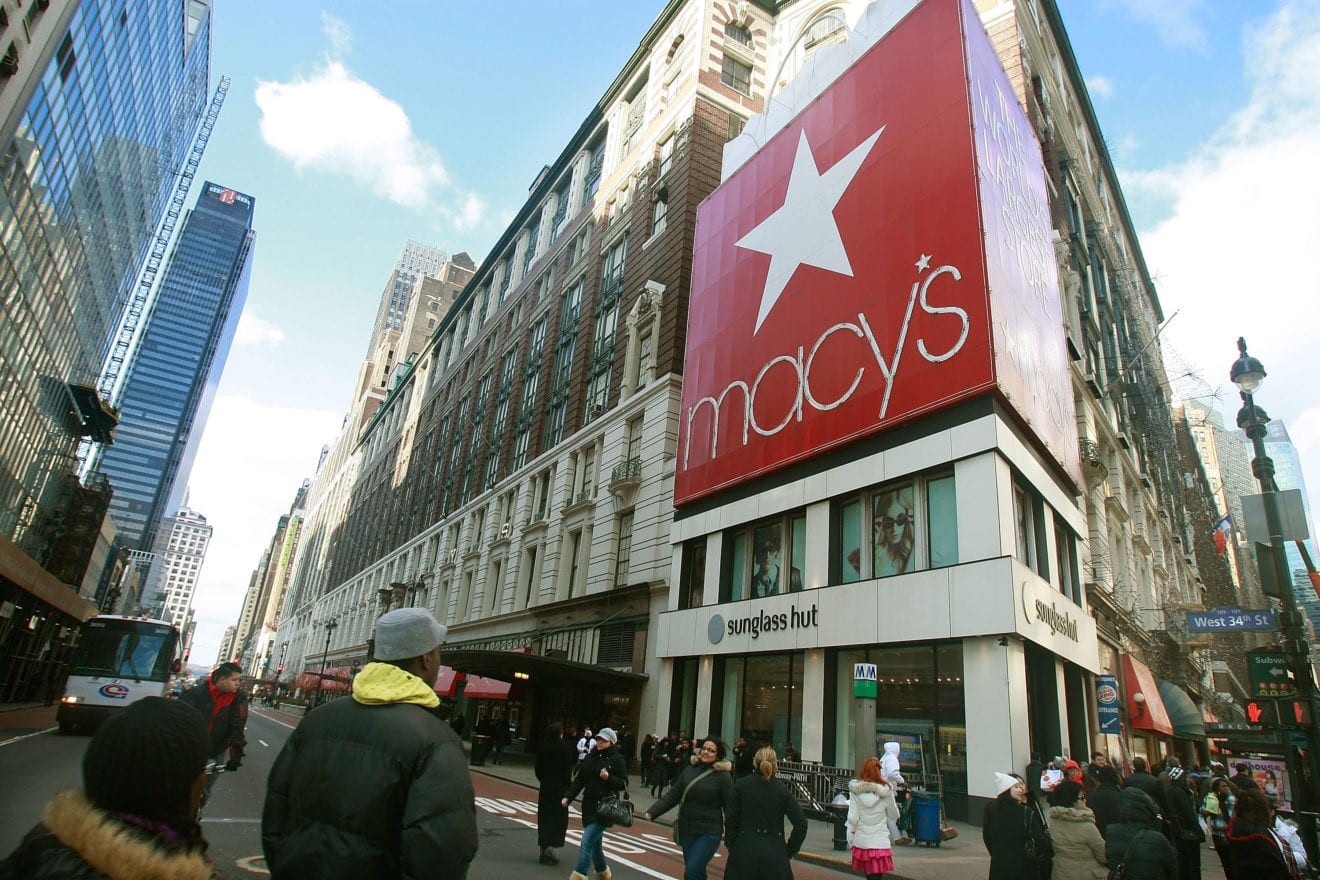
    A new joint venture agreement between Macy’s Inc. and Hong Kong-based Fung Retailing Limited was signed on Tuesday in Hangzhou to form Macy’s China Limited.

    The new company will launch an exclusive online flagship store on Alibaba’s Tmall Global in late 2015., providing authentic, high-quality Macy’s merchandise to shoppers in China. It will be the first US department store to join Alibaba’s Tmall Global.

    Tmall Global, on the other hand, will be the first and only third-party e-commerce platform in China providing apparel, fashion accessories and home products directly from Macy’s to consumers across China.

    “Millions of Chinese tourists have come to know and love Macy’s when they travel to New York, San Francisco, Chicago and other American destinations,” said Terry J. Lundgren, chairman and chief executive officer of Macy’s Inc. “By making Macy’s accessible in China through Alibaba’s Tmall Global, we have an opportunity to deepen our relationship with international customers and to grow sales.”

    Fung Retailing’s chairman, Dr. Victor K. Fung, said that with its affiliates, including LF Logistics, the company will fully support the activities of the Macy’s-Fung Retailing joint venture.

  • Alibaba counterfeit guide launched

    Alibaba counterfeit guide launched

    Alibaba Group has launched an English-language version of its online system for reporting intellectual property (IP) infringements that occur on its giant Chinese e-shopping marketplaces Taobao.com and Tmall.com.

    The system, called TaoProtect, is designed to make it easier for companies to report merchants who are selling counterfeit products on the Taobao and Tmall platforms, facilitating the efficient removal of infringing product listings. Through TaoProtect, companies can also file complaints for other IP violations such as copyright infringement, patent infringement and unfair use of trademarks.

    TaoProtect is similar to another IP-complaint system operated by Alibaba called AliProtect that covers global wholesale marketplace Alibaba.com, global shopping website AliExpress and China wholesale marketplace 1688.com.

    The debut of the English version of TaoProtect will make the system more accessible to Western companies, said Xinghao Wang, Alibaba Group’s U.S.-based senior intellectual property protection manager. “Because the success and integrity of our marketplaces depend on consumer trust, we have comprehensive policies and practices in place to fight IP infringement,” Wang said, including the use of data-analysis technology to monitor the sites for counterfeit-product listings.

    Due to the sheer size of Taobao and Tmall – Alibaba’s China retail platforms host some 10 million active sellers – the company also works with rights holders to make its efforts more effective. That’s where TaoProtect comes in, Wang said. By providing an online system for alerting Alibaba to infringement on Taobao and Tmall, Alibaba is better able to identify suspicious listings that may be missed by the company’s internal countermeasures, he said.

    Wang noted that filing a complaint does not automatically result in takedowns. To safeguard the rights of all parties, the TaoProtect process is set up to determine whether complaints are legitimate, and to ensure that Taobao and Tmall merchants who abide by the platforms’ established rules are not unfairly penalised.

    The reporting system helps serve a larger purpose, too, he said: “Information received through TaoProtect and AliProtect is an essential part of the rule-making effort, and the data in the reporting system may also be used in the monitoring system.”

    In the video, the founder of a US maker of innovative cutting tools explains how he uses AliProtect to keep copycats at bay.

    “The more popular your products are, the higher the likelihood that someone is going to be copying you at some point, that form of flattery that no one really wants,” says TJ Scimone of Slice. By using AliProtect, he says he successfully got knock-offs of his products “shut down (and) off the site.”

  • Ffan: Wanda’s online store goes live

    Ffan: Wanda’s online store goes live

    Nearly a year after three giant Chinese companies teamed up to take on Alibaba, the newly-mintedeCommerce store finally and quietly launched this week.

    The site, Ffan, is the result of a billion-dollar joint venture between Tencent, Baidu, and Wanda Group, a conglomerate best known for its chain of movie theatres and malls.

    The joint venture started with US$814 million in its pocket in August 2014, with Wanda holding a 70 per cent stake, and Tencent and Baidu splitting the remainder evenly. In January, it secured venture capital funding to the tune of US$161 million.

    Local commerce

    The new estore is designed to take on Alibaba’s eCommerce dominance, with a focus on helping people buy local products and services. That’s why visitors to Ffan can choose their city to see local deals.

    Baidu declined to comment on today’s launch and Tencent has yet to reply to Tech in Asia’s inquiry.

    At first glance, Ffan looks odd and rather bare. The only two product categories on the top navigation bar are “food” and “movie tickets.” Browsing through the city-specific food section reveals that most of the products are from retailers at Wanda’s shopping malls across the country. Indeed, users can browse through the Ffan site or accompanying mobile app according to their nearest mall.

    Wanda – a private company which boasted assets of RMB 534.1 billion yuan (US$85.6 billion) in 2014 – has reportedly been plotting a leap from offline retail to ecommerce for several years, but today’s launch doesn’t reveal much that should worry Alibaba or arch-rival JD right now. It’s not a general ecommerce store like Alibaba’s Tmall or JD, and the offerings are slim.

    Sill, Wanda has the reach – across malls, cinemas, hotels, resorts, theme parks, and several other areas – to challenge Alibaba in terms of the fast-growing interest on the web for local, on-demand products and services.

  • Lotte China loses a trillion

    Lotte China loses a trillion

    Reports from Korea suggest Lotte Group has lost more than 1 trillion won (US$853 million) in China in just three years.

    Data assembled by CEO Score shows Lotte China made heavy losses between 2011 and 2014 as South Korea’s fifth largest company struggled to understand the Chinese consumer and build market share.

    Last month, Lotte said it would close four loss-making stores in its Mainland China network – all in in East China’s Shandong Province.

    Lotte is said to be losing market share in Mainland China unable to differentiate itself in the middle ground between local retail chains and the growing power of online retailers such as Alibaba and JD.com.

    CEO Score’s data shows the losses are growing, not narrowing. It started with 92.7 billion won in 2011, reached 250.8 billion won in 2012 and a massive 580.8 billion won in 2014.

    Lotte Mart has 120 stores in China, 116 in Korea, 39 in Indonesia and 10 in Vietnam.

    The company is family owned with the leadership locked in a bitter power struggle and two brothers compete to take control from their 93 year old father.