Tag: Alibaba

  • Tmall global celebrates new partnership again

    Tmall global celebrates new partnership again

    Tmall Global, part of the Alibaba Group B2C Tmall.com business in China is celebrating its relatively new partnership with The Shilla Duty Free and The King Power International Group of Thailand.

    As reported last May, the trio are aiming to enhance the duty free shopping experience for Chinese travellers to these two countries with their newly-launched innovative ‘World Duty Free service’ which is described as the first of its kind in China created to offer consumers and travellers ‘a seamless solution for purchase and pickup of duty free goods’

    The partnership allows Chinese consumers to enjoy more savings and increased convenience by pre-purchasing products and discount vouchers on Tmall Global before they travel, and then collect their purchases or use their discount vouchers at the duty free stores in South Korea and Thailand through their Alipay receipt or barcode from their mobile phones.

    The ‘World Duty Free’ service also allows merchants to target specific consumer groups from China and thereby discover trends and demands of hundreds of millions of Chinese shoppers across Alibaba Group’s China retail marketplaces.

    Alvin Liu, general manager of Tmall Global said: “The World Duty Free service is an important strategic initiative of Alibaba Group’s globalization strategy. This project connects Tmall Global, Alipay and various major duty free retail groups from around the world to create an integrated e-commerce model offering a seamless cross-border shopping experience for Chinese travellers.

    “We want to make the duty free shopping experience as simple and easy as possible for our customers. The new service will save them time in exchanging foreign currency, queuing, product wrapping and tax refunds. In the future, Tmall Global aims to bring more duty free shops onboard to broaden coverage to other popular destinations around the world.”

    Tmall Global claims to be the first and only e-commerce platform in China to partner with a Korean duty-free store chain. To commemorate the launch of this new service, The Shilla Duty Free is offering a promotion of up to 50% off the price of selected items, while King Power is also offering a free RMB500 ($80) coupon for purchases above a certain level.

    Tmall Global now claims to be in discussion with dozens of duty-free companies in other countries to offer this service for Chinese travellers travelling to other destinations. Tmall Global also plans to work with other Alibaba Group businesses such as Alipay and Alitrip to provide an integrated and comprehensive travel and shopping experience to Chinese consumers.

    Around 5,400 overseas brands from 25 countries and regions have opened stores on Tmall Global, which is used by a growing number of brands from the U.S., Germany, Australia, South Korea, Japan, Taiwan and Hong Kong as a stepping-stone into China.

  • China’s Too Large for Retailers to Ignore

    When it comes to online retail markets, China is in a class by itself. The country is already home to the world’s largest e-commerce market, and there’s room for more growth.Chinese consumers are attaining middle class spending power at a historically unprecedented rate and using it to treat themselves to personal luxuries.

    That spending has made the country the world’s fastest growing “vanity goods” market—increasing by 15% year over year—for such purchases as high-end fashion and beauty goods, jewelry, and personal care items.China presents a vast growth opportunity for international retailers, and like any business expansion, requires a considered approach.

    It’s important to understand the market, its nuances and challenges in order to succeed.In 2013, online purchases accounted for 8% of the country’s total retail sales. E-commerce transactions totaled USD $305 billion that year, and Singles Day, the popular online shopping holiday in November, accounted for USD $5.7 billion of that total.

    E-commerce in China already outpaces that in the US, and within 5 years it’s expected to dwarf the combined online retail markets of the US plus the UK, France, Germany, and Japan.That booming growth is due in part to the rise in mobile phone usage among Chinese consumers, which helps them bypass brick-and-mortar shopping obstacles such as distance and traffic.

    It also owes something to Chinese internet-use habits. According to a McKinsey & Company report, Chinese internet users are online for as many as 6 hours more per week than the average US user, giving them more time to search for and purchase products.China is a huge nation with a middle class that will soon top 630 million people—more than 8 times larger than the US “Baby Boomer” generation that was once the world’s leading middle-class consumer demographic.

    According to McKinsey, only 4% of China’s urban residents were middle class as recently as 2000. By 2020, 75% of Chinese urbanites will have middle class status and newfound spending power.In general, Chinese shoppers like international brands and upscale goods, so offshore retailers have a certain cachet. French wines, American electronics, and Italian designer clothing are popular prestige purchases among Chinese shoppers.

    In a competitive market, your company’s “outsider” status can be an asset, especially if it’s backed up by excellent quality control and responsive customer service.Beyond that, experts recommend getting to know particular regions, rather than treating such a populous and diverse nation as a monolithic market. For example, McKinsey reports that certain cities are stronger markets for particular luxury items. By 2025, the firm expects Shanghai and Beijing to be among the top 20 global cities for upscale spirits consumption, while Hong Kong will rank first for luxury beauty goods, with Shenzen, Shanghai, and Beijing also in the top 20 for that category.

    Determine which cities and regions are a good match for your product line, and give serious thought to how you will market to those areas, as the most popular channels may be ones your company is not currently using.

    The McKinsey report on Chinese consumer internet habits makes the point that online video and instant messaging are more popular with Chinese online shoppers than email and search, which are prevalent in the US. Mobile sales accounted for 12% of all Chinese online sales in 2014, so all online efforts should be designed to display well on mobile devices.Promote sales timed to major in-country shopping holidays, such as Singles Day in the fall and the Lunar New Year in the spring.

    Shoppers expect deals at these times and will go elsewhere if your shop doesn’t provide them.As an online merchant, your customers can reach you from anywhere, but as the Australia China Quarterly points out, Chinese shoppers tend to prefer familiar outlets such as Tmall, Alibaba’s B2C platform. (For perspective, US e-tail giant Amazon recently opened a Tmall shop of its own.) If you sell from outside the country or use Tmall, you won’t need a Chinese business license, and that can save you time and money. The potential drawback for small merchants is the fee schedule. For Tmall Global, the fees include a USD $25,000 security deposit, in addition to annual fees and transaction fees.

    In order to save on fees and avoid tying up cash in a security deposit, offshore merchants always have the option to sell independently. To do so successfully, Daria said, “such merchants must seek out a payment services provider that supports multicurrency transactions and has established relationships with in-country banks and with UnionPay, which is the government-backed bankcard and interbank network for all of mainland China.”

    Globally, there are more than 3 billion UnionPay cards in use across 141 countries. A reliable and efficient shipping carrier is a must as well; look for one that can streamline the customs paperwork for your shipments into China.No matter what size your online business is, China is a market worth exploring. Capturing even a small percentage of this large and robust market can yield rewards now and in the future as China’s economy and purchasing power continue to grow.

  • SE Asian consumers switch to ecommerce

    SE Asian consumers switch to ecommerce

    International information technology players have been piling in.

    Japanese telecoms group Softbank has made a string of acquisitions across Asia. It invested $250m in the region’s ride-hailing app GrabTaxi at the end of last year. In Indonesia, it invested $100m in online marketplace Tokopedia and mobile device retailer Trikomsel.

    Singaporean blue-chip companies such as Singapore Press Holdings and MediaCorp, the latter controlled by Temasek Holdings, Singapore’s government-controlled investment company, have also been involved in a raft of deals.

    This month, Temasek said it would partner with United Overseas Bank to set up a venture and debt financing fund of nearly $500m to help finance the growth of ecommerce and other technology and healthcare initiatives around the region.

    Online sales account for only 1 to 2 per cent of total retail sales in many southeast Asian countries, providing ample scope for the kind of breakneck growth that online trade has enjoyed in China — where ecommerce now accounts for 11 per cent of total retail sales, up from 2.5 per cent just five years ago, according to estimates by FT Confidential Research, a Financial Times research service.

    But ecommerce operations in Southeast Asia are often hindered by factors such as high logistics costs and the limitations of online payment systems. In Indonesia, more than 95 per cent of ecommerce transactions are settled in cash on delivery, and more than 90 per cent of visits to ecommerce sites do not result in sales.

    Nevertheless, online retailers Lazada and Zalora, both owned by German tech investor Rocket Internet, have built up robust online sales across the region. They have tackled logistical constraints by investing heavily in their own in-house logistics and supply chain providers.

    Chinese ecommerce giant Alibaba, meanwhile, is expanding its international ecommerce site AliExpress across the Asean region. It recently acquired a 14.5 per cent stake in Singapore Post, which last year announced plans to spend $145m on a regional ecommerce logistics hub. Its rivals in the logistics sector include Singapore-based aCommerce, which is backed by Japan’s NTT Docomo.

    A number of pan-Asean online payment systems are in the process of being established, meanwhile, such as 2C2p and Coda Payments.

    As ecommerce expands, consolidation is set to follow. Many domestic start-ups have focused excessively on building initial sales volume at the expense of profitability. At some point soon, a shake-out appears inevitable.

  • Mobile Accounts for Almost Half of China’s Retail Ecommerce Sales

    Retail sales on tablets, smartphones and other mobile devices will reach $333.99 billion this year in China, according to eMarketer’s latest estimates of retail sales around the world, up 85.1% from 2014. That figure represents 49.7% of all retail ecommerce sales in the country this y

    This estimate puts retail mcommerce sales in China at nearly 450% of those in the US, where such sales are expected to rise 32.2% in 2015. Even more striking, in the US, retail mcommerce sales will represent 22.0% of the retail ecommerce total and just 1.6% of all retail sales this year. That compares with 7.9% of total retail sales in China coming from mobile.

    These figures indicate that China’s retail market is more digital—and specifically, more mobile—than its US counterpart. This speaks to both the power of mobile in China as well as the power of the desktop (and the store) in the US.

    “An overwhelming majority of China’s internet users now regularly access the internet via mobile phones—87.4%, vs. 74.6% of US internet users,” said Monica Peart, eMarketer’s forecasting director. “The sheer number of mobile internet users pushes retail ecommerce activities toward mobile devices in a way that is not yet seen in the US, where desktop computers still factor quite prominently for shopping activities.”

    eMarketer estimates that around the world, digital buyers will spend $1.672 trillion on retail ecommerce sales this year, or 7.3% of total retail sales. By 2019, retail ecommerce will account for 12.4% of total retail sales around the world. eMarketer does not estimate retail mcommerce sales on a global basis.

    eMarketer’s forecasts and estimates are based on an analysis of quantitative and qualitative data from research firms, government agencies, media firms and public companies, plus interviews with top executives at publishers, ad buyers and agencies. Data is weighted based on methodology and soundness. Each eMarketer forecast fits within the larger matrix of all its forecasts, with the same assumptions and general framework used to project figures in a wide variety of areas. Regular re-evaluation of available data means the forecasts reflect the latest business developments, technology trends and economic changes.

  • Alibaba drive perks up China sperm donations

    Alibaba drive perks up China sperm donations

    Alibaba has used the internet to revolutionise China’s retail, banking and transport markets, and now the ecommerce juggernaut has turned its attention to the country’s sperm shortage.

    Amid spiralling infertility rates, sperm banks across China have been running dry. Worsening environmental conditions and hectic work schedules have taken their toll on male fertility in China, experts say.

    According to a 2012 study by the China Population Association, a state agency, 12.5 per cent of Chinese couples are infertile.

    Enter Alibaba, whose Groupon-like website Juhuasuan markets everything from underwear to insurance. The ecommerce group’s move into boosting sperm donation features a banner advertisement with a phallic cartoon candle exploding into a white cloud, bearing the Chinese character for “semen” in bold lettering.

    “Avid concentration” the ad reads, with a pun on the character jing which in Chinese means both mind and sperm. During the donation drive, Alibaba offered payments of up to $800 for successful sperm donations.

    Posted between July 15-17, the campaign garnered 22,000 new registrants for the seven participating provincial sperm banks — equivalent to nearly a year’s worth of traffic for some of the centres.

    “This exceeded all expectations,” said Wang Zhiqiang, director of the state sperm bank for Guanxi province. “On average, we get about 300 donors a year, but during the three days of the Juhuasuan event, more than 1,000 people signed up. Assuming 20 per cent of them will donate, that is 200 new donors.”

    The mismatch in supply and demand for sperm has prompted donation centres to overcome many taboos in tradition-bound China. In April, the shortage had become so dire in Hubei province that the regional sperm bank turned to Weibo, China’s equivalent of Twitter, to broadcast: “Stop wasting all that tissue paper!”

    “Under-achievers! This is your opportunity! Hubei Sperm Bank is badly in need of sperm,” it said.

    The shortage of sperm donations is partly caused by stringent requirements for donors — roughly one in five is acceptable — but mainly because men in China have “shyness about such topics”, according to Mr Wang. “We mainly try to get recruits by passing out flyers and holding awareness seminars, but we do not get enough qualified men.”

    But Alibaba has made a speciality out of taking dysfunctional markets and overcoming everything from supply bottlenecks to onerous government regulations to low demand — it has done so in areas such as finance and taxis.

    Matching sellers with the masses of online traffic is the company’s speciality, usually combining with a bit of fun, marketing savvy, big data and, most importantly in the case of sperm donation, anonymity.

    “People feel shy and embarrassed when we meet them face-to-face,” said Mr Wang. But he said that marketing via the internet added a layer of privacy that makes previously forbidden topics acceptable.

    “Online, when they don’t have to face a human being, they are more comfortable, and this is a major reason why this project is a success,” he said, adding: “We don’t know whether they will actually come in or not.”

  • Walmart to boost its e-commerce investment in China

    Walmart to boost its e-commerce investment in China

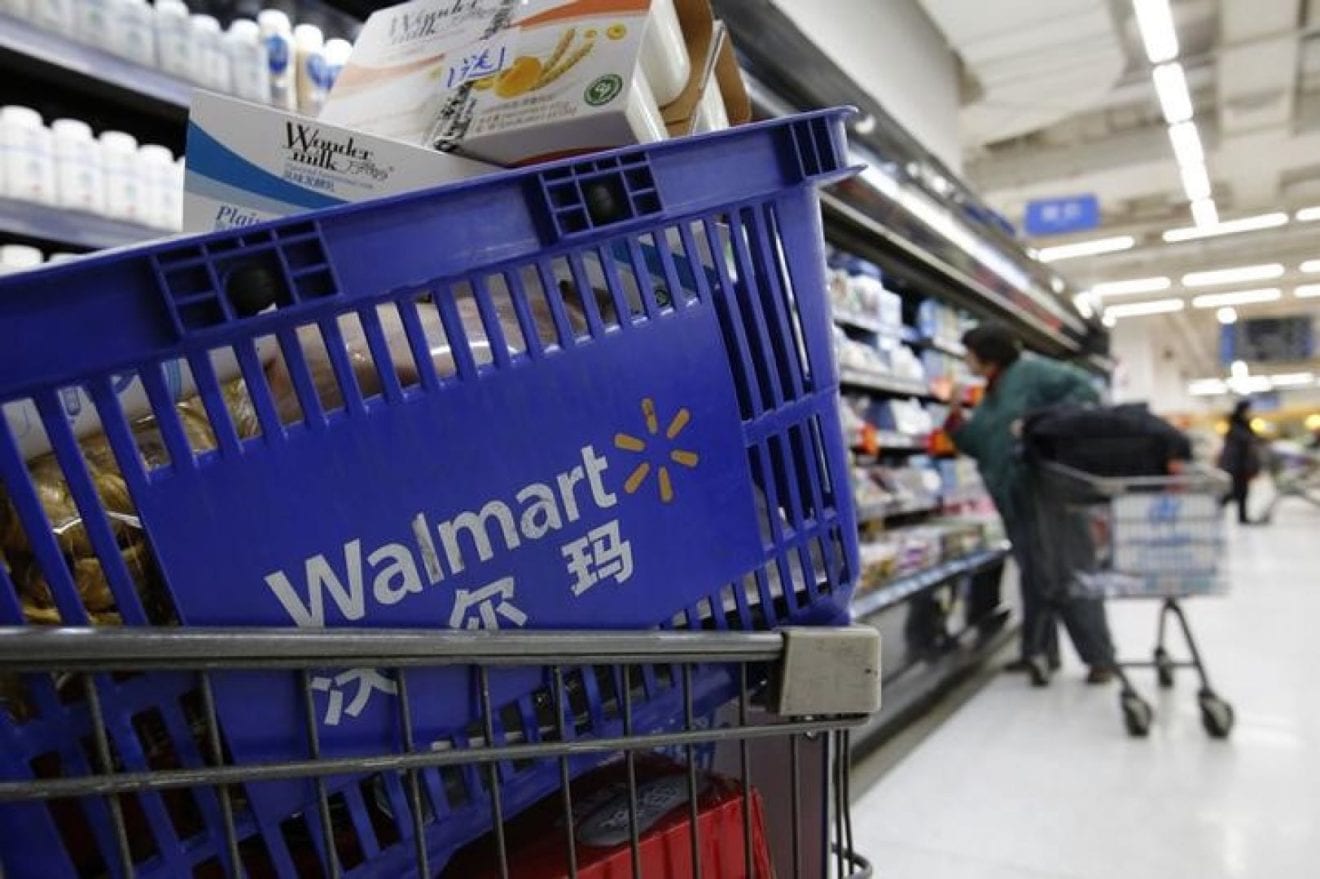
    China’s e-commerce market hasn’t been easy for Walmart to crack, but the U.S. shopping giant isn’t giving up. The company is investing even more in its e-commerce operations there, by taking full control of a Chinese online retailer.
    On Thursday, Walmart bought up the remaining shares of Yihaodian, after previously owning 51 percent in the Chinese company. Financial details were not announced, but the move will accelerate Walmart’s online expansion in China, the U.S. retail giant said.

    Walmart’s move was made possible by the Chinese government’s recent decision to open the e-commerce market to more foreign investment. Last month, a Chinese regulator removed restrictions that barred foreign investors from taking a 100 percent stake in any e-commerce operation in the country. Before that, foreign investors such as Walmart had to enter into joint ventures with local Chinese players.

    Although Walmart’s move could help the U.S. company tap the vast Chinese market, gaining ground against the existing competition will be tough. Other U.S. e-commerce players such as Amazon.com and eBay have all struggled to compete with Alibaba Group, the country’s leading online retailer.

    In China, Alibaba’s Tmall.com site has a 60 percent market share, according to Beijing-based research firm Analysys International. Amazon and Walmart’s Yihaodian site, however, each have about a 1 percent share.

    In spite of Alibaba’s dominance, Walmart’s Yihaodian site has been making gradual progress. It now has 100 million registered users, up from only 4 million back in 2010. Walmart’s goal is to now integrate their physical stores with Yihaodian’s mobile and online services for a better shopping experience.

  • Tmall.com launches massive grocery campaign

    Tmall.com launches massive grocery campaign

    Tmall.com has launched a RMB 1 billion (US$161 million) online grocery promotional campaign targeted at Beijing users.

    The Alibaba eCommerce subsidiary has teamed up with Cainiao, the logistics affiliate of Alibaba Group, to offer same-day delivery services to Beijing city residents.

    Online grocery shopping is a rapidly growing eCommerce segment and a strategic area of interest for Alibaba Group. The convenience of online grocery shopping has already drawn in millions of users. According to Kantar Worldpanel, China’s FMCG (fast moving consumer goods) eCommerce penetration rate was 36 per cent in 2014, while McKinsey says 40 percent of Chinese consumers have bought food online.

    Tmall Supermarket will run its promotion three times a day, allowing Beijing-based Internet users a chance to win ‘red packets’ that subsidise their grocery purchases. The promotion will end on July 31.

    Beijing residents who order from Tmall’s supermarket before 11 am will be eligible for same-day delivery service. In the future, Tmall Supermarket and Cainiao plan to roll-out same-day delivery services to Shanghai and other Chinese cities.

    Jeff Zhang, president of Alibaba Group’s China Retail Marketplaces, said Tmall Supermarket will draw on Alibaba Group’s complete eCommerce ecosystem – including Alibaba’s advantage in logistics, strength in online payments, big data and cloud computing, to bring consumers the most convenient and secure online shopping experience for quality products.

    Tmall Supermarket was established in 2012 and provides a one-stop shopping solution for Chinese users looking to purchase authentic food products, cosmetics, beverages, snacks and imported items. In the past year, Tmall Supermarket’s Beijing area GMV soared more than 700 per cent with 90 per cent of consumers shopping on their mobile phones.

  • Alibaba.com reduces cross-border risk

    Alibaba.com reduces cross-border risk

    Alibaba.com has expanded a free service that offers refunds to disgruntled buyers who use the international wholesale trading platform to purchase goods from overseas suppliers.

    Under the B2B website’s upgraded Trade Assurance program, buyers who make purchases from participating Alibaba.com suppliers will be entitled to full refunds of their deposits, or if applicable the total value of their orders, if suppliers ship products late or if product quality does not meet contract specifications.

    Launched in May, the program initially included only Chinese suppliers with reliable track records of trading on Alibaba.com who volunteered to participate. Within a month, coverage will be expanded to all suppliers who volunteer and are qualified to participate regardless of home country. About 50,000 suppliers have joined the program, according to Alibaba.com, a subsidiary of Hangzhou, China-based Alibaba Group.

    Trade Assurance protects buyers by holding deposits or payments in escrow until they are satisfied that suppliers have lived up to the terms of their sales contracts. The program is designed to reduce risk and foster greater trust and trade among Alibaba.com buyers and suppliers, most of whom conduct business over the Internet and never meet in person. Alibaba.com sells no products itself; the company runs an online marketplace that hosts virtual stores of manufacturers, distributors and other sellers, the majority of them based in China.

    “By providing maximum trade protection, Alibaba.com aims to make cross-border trading easier, therefore empowering small-and medium-sized businesses to engage in global trading,” said Alibaba Group senior VP Wu Min Zhi.

    “By lessening concerns and building trust in international trade, we are committed to introducing more trade opportunities to Alibaba.com members,” Wu said in a statement.

    “As a result, small businesses will not miss out the benefits of international trading due to trust concerns over product quality or payment security.”

    Trade Assurance protection is available to all of Alibaba.com’s millions of global buyers, provided the supplier they want to do business with is approved for the program. To vet suppliers, Alibaba.com uses data analytics to assess past performance and trading histories over six-month periods. The program currently only covers payments made by telegraphic transfer (T/T), but other payment methods will be covered in the future, Alibaba.com said.

    To help make it easier for small businesses to identify reliable trading partners, Alibaba.com encourages suppliers who qualify for the Trade Assurance program to display a Trade Assurance icon on their Alibaba.com virtual storefronts. To further improve transparency, storefronts also display the total number of transactions and total value of deals the supplier has completed over the previous 12 months. In addition, Alibaba.com will show how often and how quickly qualified suppliers respond to customers.

    Meanwhile, Alibaba.com says its “e-Credit Line” service – which provides trade financing to small businesses using Alibaba.com – is now expanded into Australia.

    Through a partnership between Alibaba.com and Australian finance company AUSvance, Australia-based small businesses can apply for loans and lines of credit in under five minutes through a streamlined process and obtain a line of credit from AU$5000 to AU$300,000 to pay suppliers for purchases on Alibaba.com.

    A decision based on an automated credit scoring model will be made within 60 seconds, and full approval can be granted within 24 hours after verification of documentation from the applicants, according to Alibaba.com. The interest rate is as low as 1.15 per cent per month for Alibaba.com customers.

  • Unilever expands Alibaba partnership

    Unilever expands Alibaba partnership

    The partnership began in 2011 when Unilever opened a virtual store on Alibaba’s Tmall.com online shopping portal. Last year it opened a store on Tmall Global, a cross-border solution that allows overseas retailers to sell and deliver goods directly to Chinese consumers online via government-backed FTZs and PRC bonded warehouses.

    Alibaba’s e-commerce “ecosystem” includes China’s retail marketplaces Tmall and Taobao Marketplace as well as logistics and online payment solutions, cloud computing, and a marketing technology platform called Alimama that provides retailers with extensive data analytics.

    Daniel Zhang, Alibaba CEO said the two companies “will jointly innovate in Big Data analytics application, cross-border e-commerce, and supply chain management”. The company will also protect Unilever’s brands by tagging each product with a unique QR code that allows the consumer to verify its authenticity and origin.

    Last year Alibaba began a three to five-year US$1.6 billion program to build 1,000 county-level and 100,000 villaAlibaba Cainiaoge-level Taobao service centers in order to provide e-commerce and logistics services to underdeveloped parts of China.

    The company said its cross-border system gives international retailers greater merchandising flexibility because shipments are made only on demand, reducing the need for sales forecasts and warehouse space in China.

    Online shopping accounted for 10.7 percent of total retail sales in China in 2014, according to the country’s National Bureau of Statistics.

    For the first six months of 2015 Unilever has reported a 12 percent increase in turnover to €27 billion. The operating profit fell 13 percent to €3.8 billion and net profit fell 11 percent to €2.7 billion.

    Unilever CEO Paul Polman noted: “The first half demonstrates again the progress we have made in the transformation of Unilever to deliver consistent, competitive, profitable and responsible growth, now in the seventh year. We plan for another year of volume growth ahead of our markets, steady improvement in core operating margin and strong cash flow,” he added.

    The company has also announced a one-year partnership with the WWF to raise public awareness against deforestation. The program will help protect a million trees by supporting forest protection programs in Brazil and Indonesia. The two countries historically have had the highest rates of deforestation in the world and have some of the largest areas of intact forest globally.

    Polman commented: “Stopping deforestation is an urgent priority in tackling climate change. Forests are second only to the oceans as the largest global store of carbon and support 80 percent of terrestrial biodiversity across the globe. As a business it is crucial that we operate sustainably and take action to help consumers live sustainably. It’s a moral imperative and a business one – to be here for the long term.”

  • E-commerce market in China is big enough for multiple players

    E-commerce market in China is big enough for multiple players

    Cross border e-commerce is gaining traction worldwide, partly because of rising business from China. Despite the rise in global players, US online retailer Amazon is not afraid of the competition.

    Amazon has felt the wind of late comers. Alibaba has brought the war onto Amazon’s home turf, recruiting small US businesses to join its sales network after its debut on the New York Stock Exchange last year.

    Amazon’s senior vice president of international consumer business Diego Piacentini says the market is big enough for multiple players.

    “Business is not sport, where there is one winner. Business has multiple winners,” Piacentini said.

    “The size of the business, particularly e-commerce, would be so large. There is room for global players. Amazon is going to be one of them, absolutely, Alibaba and Tmall is one of them and many others.”

    Besides talking the talk, Amazon has beefed up its operation in China since last year. It opened direct mail to China from six of its global locations. Amazon also set up a Chinese e-commerce website and increased its overseas purchases in China to bolster local sales.

    “For countries like China or India, they are not exposed to many years of modern retail, e-commerce, or mobile commerce. You can expect in the next few years, that the vast majority of retail activities in China and India would happen online,” Piacentini said.

    Last year, 18 million Chinese consumers spent US$213 billion overseas—more than double Amazon’s annual sales. For any global commerce site, such potential is hard to ignore.

  • Unilever to stem China losses with sweeping Alibaba partnership

    Unilever to stem China losses with sweeping Alibaba partnership

    Unilever has formed an exclusive strategic partnership with Alibaba Group on a range of ecommerce initiatives to boost the consumer-goods maker’s sales in China.

    The partnership, announced today, is seen as a significant expansion of cooperation between the two companies. Unilever first opened a virtual store on Alibaba’s Tmall.com online shopping website in 2011 and added a Tmall Global flagship store in 2014. The agreement also appears to be a response to retailers reducing their stocks of the FMCG giant’s products in response to a slowing economy in 2014.

    Unilever’s North Asia president, Marijn Van Tiggelen, said in a press statement that Unilever chose Alibaba over other internet firms in China, as it is the “leading internet company” with “not only an online store, but also a solution platform for online payment, e-finance, and ecommerce logistics”.

    Daniel Zhang, chief executive officer of Alibaba Group, stressed that the Unilever collaboration will go beyond product sales. The companies “will jointly innovate in big data analytics application, cross-border ecommerce, consumer protection and supply-chain management,” said Zhang in a statement.

    More specifically, the duo said they would work together to:

    • Expand Unilever’s distribution channels with an emphasis on giving rural consumers in the country’s less-developed regions more convenient access to Unilever products through Alibaba’s 1,000 county-level and 100,000 village-level Taobao Rural Service Centers and Alibaba’s logistics affiliate, Cainiao.
    • Develop cross-border ecommerce cooperation on Tmall Global that allows Unilever merchandising through government-backed free trade zones and bonded warehouses in China.
    • Optimise Unilever’s digital advertising strategy through Alimama (Alibaba’s marketing technology platform) and reach more consumers through online-offline retail integration.
    • Combat counterfeiting of Unilever’s brands by stepping up the company’s participation in Alibaba’s Blue Stars program, in which each product is tagged with a unique QR code that allows the consumer to verify its authenticity and origin.

    To mark the beginning of the new partnership, Tmall will host a promotion from 22 through 24 July featuring flash sales with 50 per cent discounts on popular Unilever products.

    Alibaba’s vision to build the “future infrastructure of commerce” meets Unilever’s development needs in China, added Van Tiggelen.

    Ecommerce accounted for 10.7 per cent of total retail sales in China in 2014, according to China’s National Bureau of Statistics, with ecommerce set to grow faster than the overall retail market.

    However, despite Unilever’s online storefront presence on Tmall, as well as on Alibaba rival JD.com, it still felt the pain of the slowdown in China last year when sales for two consecutive quarters were down by 20 per cent. This led to bricks-and-mortar retailers and distributors destocking Unilever products. James Allison, Unilever’s head of corporate strategy, described product visibility at the time as “not that great”. Unilever will issue its second-quarter and half-year results Thursday.

  • China dominates global online grocery markets

    China dominates global online grocery markets

    The Chinese online grocery market is set to be worth almost $180 billion by 2020 – nearly five times its current value of $40 billion, according to IGD’s Top 10 Online Grocery Markets report. In other leading markets, online growth is expected to continue at double-digit rates. This makes investment in the channel essential for companies wishing to meet the needs of the rapidly evolving multichannel shopper.

    China’s rapid pace

    Online grocery sales in China are soaring as shopper habits gravitate towards the channel, which is maturing at a much faster rate than we have seen in other markets. Mobile is a key driver of this growth. Most online sales are via digital marketplaces such as Tmall (owned by Alibaba) and JD.com. The scale of these pure-play sites means they can offer an increasingly broad product selection.

    Busy shoppers are increasingly using China’s online marketplaces to seek out imported goods including food, which is seen as an affordable luxury. As more shoppers come online and China’s population increases, we expect this growth to continue.

    New opportunities in leading markets

    Meanwhile, in more mature markets such as the UK (the world’s second-largest online market for grocery), we continue to see strong growth and innovation. The click & collect sub-channel is giving retailers new ways to drive loyalty and reach potential customers on-the-go at remote locations. Last week, Asda opened its first fully automated 24-hour online grocery collection point at Haydock, a concept that is likely to be seen shortly in Walmart’s other markets too.

    Remote collection is also being trialled in Belgium, where Carrefour has introduced an after-work pick-up point for shoppers at an office car park, and Australia, where lockers and drive-thru’ solutions have been introduced by the two major retailers.

    In the UK, 27% of shoppers now shop online on a monthly basis, with 11% citing it as their main way to shop. Loyalty schemes such as delivery passes are helping to drive frequency and overall multichannel spend.

    Maximising opportunities in larger markets

    There are also some exciting developments in larger markets, particularly the US, where Walmart is adding scale to boost online grocery, estimating that online and digital in-store purchases could reach up to 6% of revenue by 2017. Innovation and rapid delivery is a big theme in this market, driving shopper expectations. Here Amazon is particularly active, combining key global growth trends of convenience, mobile and loyalty with new services such as Amazon Prime Now’s one-hour delivery. This is available exclusively on mobile devices to Amazon Prime members in 14 US cities and launched internationally for the first time in London this week. Disruptors such as Instacart and Uber – companies and services innovating across the supply chain or tapping into opportunities created by the increase in the use of technology – are also driving the channel and bridging the gap where retailers are not yet present.

    Meanwhile in Germany, recent research indicates that shoppers are becoming more willing to shop for groceries online and established online retailers such as Rewe are boosting investment in the channel. Discounters Aldi and Lidl are beginning to invest online in specialist areas such as wine and pet food. Together with Amazon, these retailers have the potential to change the German market significantly with their increased investment.

    Where should retailers and suppliers focus their efforts?

    For FMCG retailers and suppliers, the online channel presents many opportunities. In leading markets, retailers are likely to see the majority of growth occurring online over the next five years, so a focus on this fast-moving channel is essential. We can expect new online entries by retailers across the majority of markets, so flexibility will be essential. Understanding sub-channel growth, such as remote click & collect, as well as mobile and wearable technology, will also be key to unlocking new potential.

    Key considerations for retailers and suppliers:

    • What is changing and how will it impact my market/category/shoppers?
    • Do I have the right resource in place?
    • How can I partner with customers on new initiatives / market entries / sub-channel expansion / convenience and personalisation?
    • Which customers / markets present the biggest opportunities for my brand?
    • Is my company adopting a multichannel approach? Does this include mobile?
  • Alibaba boosts stake in SingPost

    Alibaba boosts stake in SingPost

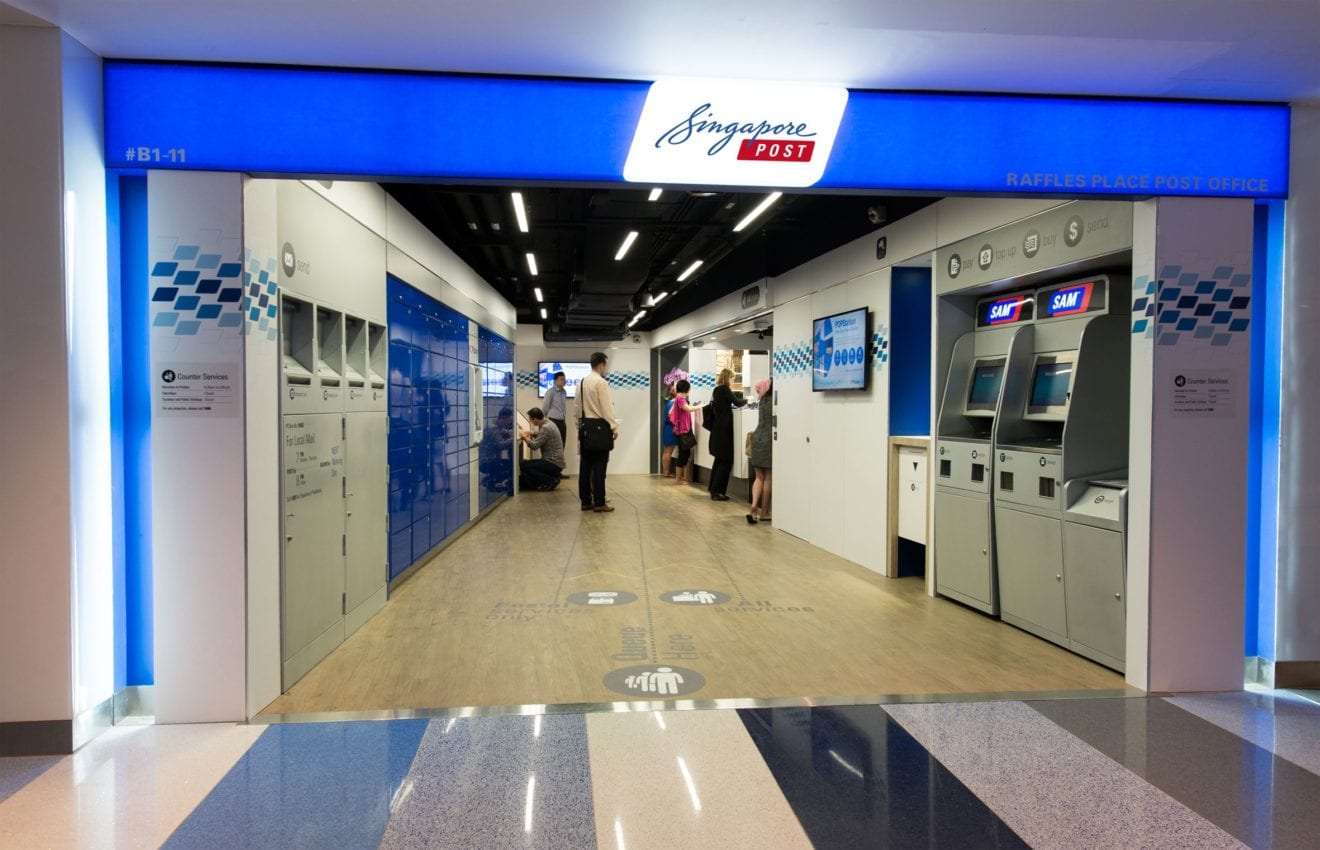
    Alibaba Group has agreed to take a larger stake in Singapore Post and invest in a subsidiary of the publicly traded post office to strengthen their joint development of eCommerce logistics services in the Asia Pacific region.

    The deal, announced today, calls for Alibaba Group to buy an additional five per cent of SingPost shares for $138.6 million, increasing its ownership position in the mail and parcel carrier to 14.51 per cent. Alibaba will also invest $67.85 million in SingPost’s Quantium Solutions International (QSI), which runs a logistics and fulfilment network in more than 10 Asia Pacific countries.

    Alibaba, China’s largest eCommerce company, has been aggressively courting businesses outside the mainland in order to promote cross-border e-commerce, working with companies such as SingPost to reduce some of the barriers to efficient worldwide delivery of small parcels ordered online-impediments such as relatively high shipping costs, lengthy delivery times and complications in getting orders through customs.

    Cross-border online shopping – consumers buying products directly from overseas retailers via the Web – will see compound annual growth of 27 perc ent over the next five years, double the rate of worldwide B2C shopping as a whole, according to a recent report from Accenture and AliResearch, Alibaba’s research arm.  While Alibaba Group currently makes less than five per cent of its revenue outside of China, Jack Ma, the company’s executive chairman, said his goal is for overseas eCommerce to eventually make up half of company revenue.

    Alibaba and SingPost began collaborating last year when Alibaba, through an investment vehicle, acquired an initial stake in SingPost. The deal announced today deepens their relationship, the companies said, with Alibaba taking a 34 per cent stake in QSI, while SingPost will hold 66 per cent.

    Under the agreement, QSI, which offers eCommerce logistics and warehousing across Asia Pacific, will be reorganised as a joint venture between SingPost and Alibaba Group. In addition, QSI will also become a platform for both parties to increase collaboration, with QSI providing eCommerce warehousing, last-mile delivery and other end-to-end eCommerce solutions. Alibaba and SingPost also entered into a joint strategic business development framework to further improve efficiency and integration between the companies, according to a press release.

    Alibaba “started as our customer and then last year became our shareholder and business partner,” said SingPost group executive officer Wolfgang Baier.

    “We are now taking the next step by building a regional e-commerce logistics platform and infrastructure for e-commerce players across Asia Pacific, based on Quantium Solutions.”

    Confronted with dwindling revenue in the digital era, national mail carriers such as SingPost have been increasingly trying to adapt by expanding services into the high-growth e-commerce arena.

    “The pace of transformation at SingPost has been accelerating steadily,” said SingPost chairman Lim Ho Kee. “As a postal service provider, we are on a burning platform, facing a global decline in mail revenue with trends like e-substitution and lifestyle changes.”

    Lim called the partnership with Alibaba “a win-win situation for both of us because we share similar goals and have a natural fit between our operations across Asia”.

    Alibaba Group CEO Daniel Zhang said his company and SingPost have in the past year “devised a series of customized logistics solutions in various markets. With these new initiatives, we hope to further drive synergies to help global brands and merchants with convenient access to China and at the same time help Chinese businesses sell and ship easily around the world.”

    The investment agreement, which must be approved by SingPost shareholders and regulators, calls for Alibaba Group to purchase 107,553,907 existing shares in SingPost, which trades on the Singapore’s stock exchange. Upon completion of the deal, Alibaba’s deemed interest on a fully diluted basis in SingPost will rise from 10.23 percent to 14.51 percent.


    Alibaba Group has agreed to take a larger stake in Singapore Post and invest in a subsidiary of the publicly traded post office to strengthen their joint development of eCommerce logistics services in the Asia Pacific region.

    The deal, announced today, calls for Alibaba Group to buy an additional five per cent of SingPost shares for $138.6 million, increasing its ownership position in the mail and parcel carrier to 14.51 per cent. Alibaba will also invest $67.85 million in SingPost’s Quantium Solutions International (QSI), which runs a logistics and fulfilment network in more than 10 Asia Pacific countries.

    Alibaba, China’s largest eCommerce company, has been aggressively courting businesses outside the mainland in order to promote cross-border e-commerce, working with companies such as SingPost to reduce some of the barriers to efficient worldwide delivery of small parcels ordered online-impediments such as relatively high shipping costs, lengthy delivery times and complications in getting orders through customs.

    Cross-border online shopping – consumers buying products directly from overseas retailers via the Web – will see compound annual growth of 27 perc ent over the next five years, double the rate of worldwide B2C shopping as a whole, according to a recent report from Accenture and AliResearch, Alibaba’s research arm.  While Alibaba Group currently makes less than five per cent of its revenue outside of China, Jack Ma, the company’s executive chairman, said his goal is for overseas eCommerce to eventually make up half of company revenue.

    Alibaba and SingPost began collaborating last year when Alibaba, through an investment vehicle, acquired an initial stake in SingPost. The deal announced today deepens their relationship, the companies said, with Alibaba taking a 34 per cent stake in QSI, while SingPost will hold 66 per cent.

    Under the agreement, QSI, which offers eCommerce logistics and warehousing across Asia Pacific, will be reorganised as a joint venture between SingPost and Alibaba Group. In addition, QSI will also become a platform for both parties to increase collaboration, with QSI providing eCommerce warehousing, last-mile delivery and other end-to-end eCommerce solutions. Alibaba and SingPost also entered into a joint strategic business development framework to further improve efficiency and integration between the companies, according to a press release.

    Alibaba “started as our customer and then last year became our shareholder and business partner,” said SingPost group executive officer Wolfgang Baier.

    “We are now taking the next step by building a regional e-commerce logistics platform and infrastructure for e-commerce players across Asia Pacific, based on Quantium Solutions.”

    Confronted with dwindling revenue in the digital era, national mail carriers such as SingPost have been increasingly trying to adapt by expanding services into the high-growth e-commerce arena.

    “The pace of transformation at SingPost has been accelerating steadily,” said SingPost chairman Lim Ho Kee. “As a postal service provider, we are on a burning platform, facing a global decline in mail revenue with trends like e-substitution and lifestyle changes.”

    Lim called the partnership with Alibaba “a win-win situation for both of us because we share similar goals and have a natural fit between our operations across Asia”.

    Alibaba Group CEO Daniel Zhang said his company and SingPost have in the past year “devised a series of customized logistics solutions in various markets. With these new initiatives, we hope to further drive synergies to help global brands and merchants with convenient access to China and at the same time help Chinese businesses sell and ship easily around the world.”

    The investment agreement, which must be approved by SingPost shareholders and regulators, calls for Alibaba Group to purchase 107,553,907 existing shares in SingPost, which trades on the Singapore’s stock exchange. Upon completion of the deal, Alibaba’s deemed interest on a fully diluted basis in SingPost will rise from 10.23 percent to 14.51 percent.
  • Alibaba’s chairman tells US businesses: ‘You can sell almost anything’ online in China

    Alibaba’s chairman tells US businesses: ‘You can sell almost anything’ online in China

    Jack Ma, chairman of China’s dominant e-commerce company, says Alibaba can help U.S. businesses sell to the more than 500 million consumers expected to make up China’s middle class by 2025.

    Alibaba Group doesn’t want to compete with Amazon.com Inc. for sales inside the United States—rather, the Chinese e-commerce giant wants to help small and medium-sized U.S. businesses sell online in China, Alibaba executive chairman Jack Ma said today in Chicago.

    “We are the e-commerce enabler,” Ma says. “We do not buy and sell like Amazon because we think that SMB’s already know how to sell easily and effectively. We help others do e-commerce, find customers, help with payment and help with logistics.”

    Ma is making a tour of the U.S., following a similar one to Europe last week, seeking to introduce a company that is mainly known in the West for its record-breaking $25 billion stock offering on the New York Stock Exchange in September.

    Ma spoke today with Kenneth Chenault, CEO of American Express, at the Chicago Millennium Knickerbocker Hotel today. No partnership between American Express and Alibaba was announced, although Ma did say “[Alibaba] should leverage and work with global companies like American Express.”

    Ma explained that Alibaba is already helping small U.S. businesses sell to China, and he emphasized the opportunity represented by China’s growing middle class, which he said will number more than 500 million by 2025, Ma said. In 2014, the value of purchases consumers and businesses made on Alibaba’s sites totaled $390 billion. And the 10 million mostly Chinese small and midsized business that sell on Alibaba’s marketplaces, particularly the Taobao and Tmall retail shopping portals, accounted for 95% of those transactions, Ma said. In the next five years, Ma predicts Alibaba’s transaction volume will reach $1 trillion. In 10 years, he hopes 40% of sales will come from businesses outside of China.

    “When you have 120 million people shopping on our site every day, you can sell almost anything,” he said.

    Because China does not have the extensive bricks-and-mortar retail infrastructure of the United States, Chinese consumers rapidly moved to shopping online, Ma said. E-commerce is expected to make up 24.2% of Chinese total consumption by 2020, Alibaba says. As an example of the opportunities open to foreign companies, Ma pointed out that Chinese consumers bought 300,000 “German lake crabs” in one day last year on Alibaba’s site. Farmers from the Pacific Northwest sold 600 tons of cherries through Alibaba last year, after selling 180 tons in 2013, Ma wrote in a column published this week in the Wall Street Journal.

    Ma said that Chinese consumers love American products, and that imports represent a big part of the continued growth of not just Alibaba but also China. His trip to the U.S. follows a recent visit to Europe, in the hopes of enticing foreign companies to sell on Alibaba sites. Ma said his goal is to and turn Alibaba into the largest import platform in the world.

    “In the next 20 years, China will grow to be the largest importer country in the world,” Ma says. “But, Chinese resources like the water, soil and air could never support such a huge demand. I think if China keeps exporting we will never see the blue sky in China. We have to leverage global resources to serve the 1.3 billion people.”

    While Ma downplayed suggestions Alibaba intends to compete with U.S. e-retailers, it has been investing in the United States. That includes taking stakes in Snapchat, a mobile image sharing app; TangoMe Inc., a video call app maker; Quixey Inc., a mobile search provider; and ride-hailing service Lyft Inc.

    Last year, the company also launched 11Main.com, a shopping portal for boutique U.S. retailers.

  • Alibaba chairman: No, seriously, we’re not competing in the US

    Alibaba chairman: No, seriously, we’re not competing in the US

    Ever since Wall Street’s interest in Chinese e-commerce giant Alibaba reached a fever pitch last year, investors and analysts have focused on one major question: When will the company expand into the US and take on Amazon and eBay?

    Jack Ma, Alibaba’s charismatic founder and executive chairman, visited New York this week to try to dispel that notion.

    “When are you going to come to invade America?” Ma joked, during a Tuesday speech before the historic Economic Club of New York at the Waldorf Astoria’s Grand Ballroom. Instead, he countered, “The strategy for us is helping small business in America go to China, sell their products to China.”

    While that pitch to help small businesses sounds positive and uncontroversial, US onlookers and competitors could be excused for not believing Ma. The US retail market remains the largest in the world — with China coming in second — so it’s not a stretch to think Alibaba’s long-term plans could eventually include coming to America. That means Amazon, eBay and others may someday be facing a major, new competitor on their shores and US consumers will get to know the name Alibaba.

    For now, the company has been positioning itself as a partner for US businesses, hoping it can act as a bridge for them to reach the Chinese market and become a more influential global retail player along the way. To do that, though, Alibaba needs to build trust with US retailers and not appear as a rival.

    “I think a lot of this is time frames,” said Scot Wingo, executive chairman of ChannelAdvisor, which provides research and other tools for online retailers. “I think right now [China is] definitely their priority. I think two years from now I’d be shocked if they didn’t have a more direct US presence.”

    Alibaba’s focus on small US businesses makes sense in the short-term, Wingo said, since many retailers using Alibaba’s websites have told his company they don’t have enough inventory of Western goods to meet the surging demand of their Chinese customers. ChannelAdvisor is a partner with Alibaba’s Tmall Global, which helps import products to China.

    Today, Alibaba makes nearly all its revenue in China and has little exposure to the US. The company opened online retail site 11 Main in the US last year and has a handful of investments in US businesses. While that’s not nearly enough to interest most US customers, Wall Street last year swooned for Alibaba — the largest e-commerce company in China — when the firm raised $25 billion on the New York Stock Exchange, pulling off the biggest initial public offering ever.

    Ma doesn’t plan to stop there, saying his goal is to make his company bigger than Walmart and eventually generate annual gross merchandise volume — the total value of goods sold on Alibaba’s websites — of $1 trillion. To get there, though, Ma and Alibaba will likely need more partners.

    “We did not come here to compete,” Ma said Tuesday. “We come here to bring the small business.”