Tag: amazon

  • Microsoft said to be prepping its own AirPods challenger

    Microsoft said to be prepping its own AirPods challenger

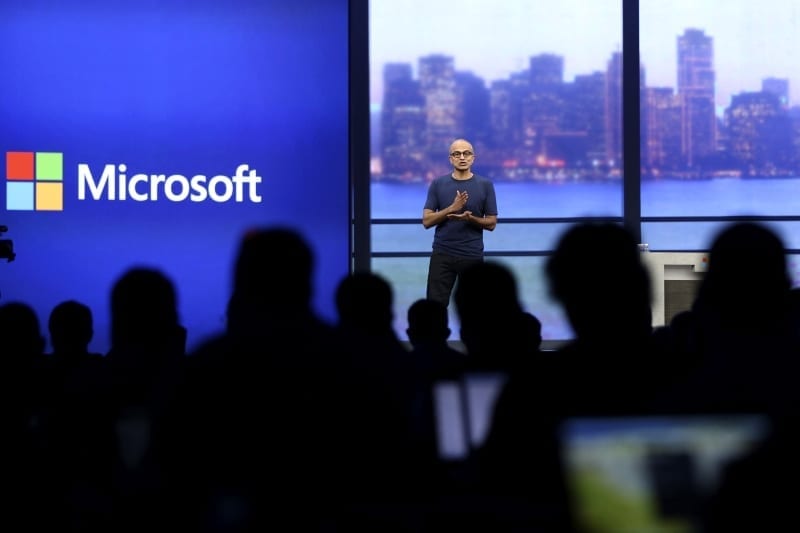
    We know that Amazon is working on a pair of wireless earbuds that are supposed to offer better sound at a cheaper cost than Apple’s very popular AirPods. Now, according to Thurrott, it appears that Microsoft will also take a shot at Apple’s AirPods with its own wireless earbuds that could be named Surface Buds. This information comes from sources familiar with the company’s plans. Just as Apple’s AirPods come with Siri integration, and Amazon’s earbuds will be equipped with the Alexa virtual assistant, the Surface Buds will feature Cortana.

    The project has the code name of Morrison, possibly named after the late Jim Morrison who was the lead singer for The Doors. This won’t be the first set of earbuds to be released by the company. Back when Microsoft sold its Zune music player (its Apple iPod competitor), it sold wired earbuds as an accessory for users of the device. Besides being equipped with Cortana, the Surface Buds are expected to feature noise cancellation and technology that will allow users to more easily read content from their phones. We would expect the product to be compatible with both Android and iOS devices.

    If Microsoft is on the ball, it will have the Surface Buds available in time for the holiday shopping season. Besides Apple’s AirPods and Amazon’s upcoming earbuds, Microsoft will also be competing with the recently launched Samsung Galaxy Buds.

  • Amazon Products Now Available in Australia

    Amazon Products Now Available in Australia

    Amazon has launched another key part of its business in the Australian market – it’s advertising products.

    Amazon Advertising, the part of the company that offers display and video ads and an online tool to programmatically buy ads, launched in Australia on Friday, according to a company blog post.

    This gives businesses a way to reach the millions of unique visitors who land on Amazon’s local website each month, according to figures the company cited from SimilarWeb.

    “With Amazon Advertising, agencies and advertisers – regardless of whether or not they sell on Amazon – can deliver relevant messages to customers on and off Amazon, throughout their customer journey,” the blog post reads.

    The launch comes amid a recent revamp of the US e-commerce giant’s advertising business. In 2017, the company added a new office and 2000 jobs, mostly in advertising, in New York City. It has also introduced self-service buying tools, among other new products, and started providing deeper insights into its enormous customer database.

    These efforts seem to be paying off. Advertising was part of Amazon’s fastest growing business segment last year. Revenue from the company’s “other” category, which includes advertising, grew 115 per cent in 2018, to US$10.1 billion. Research firm Magna estimated that advertising accounted for US$6 billion of that figure.

    Most of this growth has come at the expense of rival digital advertising giant, Google, according to a report last week. 

    The report stated that WPP PLC, the world’s largest ad buyer, spent about US$300 million on Amazon search ads in 2018, and about 75 per cent of that money came from Google search. This was up from the US$100 million to US$150 million it spent on Amazon search ads in 2017, according to sources familiar with the matter.

    Advertising at the point of purchase

    One reason Amazon may be attracting more advertising dollars is that it enables businesses to reach customers much closer to the point of purchase than Google or Facebook, although both tech giants – particularly Facebook, which owns Instagram – have been working to close the gap between the discovery and purchase stages of the customer journey for some time.

    But before retailers completely upend their advertising budgets, they may want to consider the metrics they’re using to allocate budget to begin with. New research from Monash University has revealed that ‘last touchpoint attribution’, a key metric most advertisers use to measure ad effectiveness and allocate budget, is not accurate.

    “At the moment, if a consumer buys a new toy online, Google can look at the search patterns that person has had over the past few days, or whether they’ve received any emails from a department store such as Kmart,” Peter Danaher, head of the department of marketing at Monash Business School, said.

    “They use a method called ‘last touchpoint attribution’. So, if the consumer last opened an email about toys, the email gets the credit. It they last did a Google search on toys before making the purchase, Google gets the credit.

    “The advertising industry has used this method for the past five years because it’s simple and effective. The problem is, this method ignores how long consumers remember an advertisement.”

    According to Danaher, last touchpoint attribution doesn’t take into account the cumulative effect of seeing ads in different places, and allocating budget based on this metric is less effective than allocating budget to maximise profit.
  • Integration will define the 2019 smart home

    Integration will define the 2019 smart home

    IDC says the global market for smart home devices will grow 26.9% year over year in 2019 to 832.7 million units shipped. The analyst predicts consumers to adopt multiple devices within their homes, which will result in 1.6 billion devices shipped by 2023.

    “2018 was all about getting products into consumers’ homes and both Amazon and Google excelled at this through low-cost smart speakers and multiple bundles across device categories,” said Jitesh Ubrani research manager for IDC Mobile Device Trackers. “However, 2019 will be more about tying the various devices together to form a more cohesive experience and more importantly, layering in additional services.”

    The smart home will be dominated by the likes of Amazon and Google, with Apple following suite. The popularity of iOS and macOS devices combined with the availability of Apple apps/services on non-Apple products will help the company slowly entice more consumers into their ecosystem while also attracting third parties to build compatible devices.

    “One important trend to watch is how smart assistants become integrated throughout the home,” said Ramon T. Llamas, research director for IDC’s Consumer IoT Program. “Smart assistants will act as the point of contact with multiple smart home devices and essentially become the cornerstone of the smart home experience. Already we’ve been seeing that with smart speakers and this will eventually move on to appliances, thermostats, and all sorts of video entertainment.”

  • Walmart partners with Google for voice shopping

    Walmart partners with Google for voice shopping

    US retail giant Walmart and tech company Google have collaborated on voice technology to assist customers with grocery shopping.

    Starting this month, Walmart Voice Order will allow consumers to order groceries through Google Assistant by saying, “Hey Google, talk to Walmart”.  Google Assistant will then follow the orders directly and add grocery items to their Walmart Grocery cart.

    “We continue to innovate for the future and look to technology to make great services even better in the future. Introducing: Walmart Voice Order,” said Tom Ward, senior vice president, Digital Operations, Walmart US.

    “With the new voice ordering capabilities we’re building across platforms with partners like Google, we’re helping customers simply say the word to have Walmart help them shop … literally.”

    “Best of all, customers can be extra confident that we can quickly and accurately identify the items they are asking for with the help of information from their prior purchases with us. The more you use it, the better we’ll get,” added Ward.

    When shoppers say “add milk to my cart,” the Google Assistant will add the specific milk brand the customer usually buys, meaning there is no need to continually repeat the brand, volume and whether it’s a low fat or whole milk.

    Shoppers can use Walmart Voice Order on Smart Displays like Google Home Hub, Android phones, iPhones, watches, etc.

    “We know when using voice technology, customers like to add items to their cart one at a time over a few days – not complete their shopping for the week all at once. So, this capability aligns with the way customers shop. We can’t wait to hear what they think about it and how it’s making shopping easier for them,” Ward explained.

    Walmart, Amazon competes in the US grocery sector

    Walmart’s latest move comes in light of Amazon’s plans to slash prices at Whole Foods Market and to give major discounts to Amazon Prime members. Amazon also offers voice-activated shopping using its own Alexa-enabled devices, which dominates the US smart speaker market, with 67 per cent market share in 2018.

    “We still don’t see a lot of people shopping and buying with smart speakers yet, but this may change if more lower-cost models begin to incorporate screens. We’re also likely to see people doing more things with their voice assistants as they find their way into cars and other home-based devices,” said analyst Victoria Petrock.

    There are still a minimum number of shoppers who are using speakers to shop. Voice commerce in 2018 accounted for approximately 0.4 per cent of US e-commerce sales. Analysts expect it to increase in the next few years.

  • Google yanks controversial app from the Play Store

    Google yanks controversial app from the Play Store

    Axios revealed last week that Google has removed the Living Hope Ministries app from the Google Play Store. Those who installed the app could listen to recordings of sermons and view texts of devotionals for men, women, parents and their children. However, despite the Ministry’s denial, the app was also known for offering gay conversion therapy. This is a controversial method that some (including Vice President Mike Pence) believe will convert gay and bisexual men and women to a heterosexual orientation. The conversion is done by a brainwashing-like technique that uses psychology and religious belief to pound messages into subjects over and over again. Some say that this technique is harmful, ineffective, and could lead to depression, drug use and suicide.

    Meanwhile, Google’s action came after 142,212 people signed a petition on Change.org that called for the app’s removal. Several LGBTQ organizations also demanded that the app is removed. But Google did not respond immediately; it took months of protesting before the company finally followed the lead of other tech firms that had already removed the app from their storefronts such as Apple, Microsoft and Amazon.

    “It took months of activism by Truth Wins Out and Change.org, and today Human Rights Campaign, to get Google to pull a conversion therapy app. I called Google out in the press about this in January. They took no action. Credit is due for finally acting — but Google now needs a serious internal audit examining why it delayed so long.”-Sen. Brad Hoylman.

    “After consulting with outside advocacy groups, reviewing our policies, and making sure we had a thorough understanding of the app and its relation to conversion therapy, we’ve decided to remove it from the Play Store, consistent with other app stores.”-Google

    Before the Human Rights Campaign fought for the removal of the app, it had given Google a perfect 100% score for its annual Corporate Equality Index. The score was based on Google’s offering of health benefits for same-sex couples, and for providing health care to Transgender employees. However, the organization pulled its support for Google because it would not originally remove the Living Hope Ministries app.

  • Singapore Fintech Launches Platform for Personal Loans

    Singapore Fintech Launches Platform for Personal Loans

    The new digital platform, which offers lower lending rates and encourages prompt debt repayment, could compete with banks’ personal loan facilities. Singapore fintech company Credit Culture has announced the launch of its moneylending platform, making it the first licensee from a pilot by the Ministry of Law for new business models in the personal loans industry, to do so.

    Promising transparent loan terms with no late interest and no early repayment fees, Credit Culture says its platform allows 24/7 access to personal loans with monthly interest capped at 1 percent, disbursed within only 10 minutes.

    We have seen how inefficiencies have affected the industry for years and the move to use technology to improve the system is long overdue. This is a win-win situation whereby improving the ecosystem, customers will be able to gain better access and management of their finances, said Edmund Sim, founder and CEO of Credit Culture.

    New Models for Loans

    Credit Culture’s credit scoring and application process is simpler, cheaper and more transparent than the manual processes offered by traditional banks. Its platform is built on the Amazon Web Services (AWS) cloud and taps on MyInfo, the central data repository of Singapore citizens’ information to populate loan applications.

    A proprietary credit-scoring engine then uses this data to assess the creditworthiness of a customer instantly. Apart from lower backend costs, the AWS approach is also scalable depending on customer demand, allowing the firm to grow quickly and roll out in new markets with ease.

    The rates charged by Credit Culture are significantly lower than those charged by banks on overdue credit card payments, which average 24 percent per annum, or more than 2 percent per month. However, the effective interest rate could turn out higher than personal loan rates offered by some banks.

    Ministry of Law Pilot

    Credit Culture was founded by a group of banking industry veterans with knowledge of the consumer credit and technology space. In December 2018, the firm was among six selected by the Ministry of Law as part of a pilot to professionalize the personal loans space in Singapore.

  • Volkswagen To Improve Production With Amazon Cloud

    Volkswagen To Improve Production With Amazon Cloud

    Volkswagen on Wednesday said it has teamed up with Amazon Web Services to link up and integrate the data from 122 VW Group plants, machines and systems, as a way to improve its production systems and processes. Amazon will help Volkswagen join up its plants and supply chain with over 30,000 locations and 1,500 suppliers using a data platform known as the “Volkswagen Industrial Cloud”, the company said in a joint press release with Amazon.

    The cloud platform could be made available to other car manufacturers and specific negotiations with major industrial companies interested in migrating to the Volkswagen Industrial Cloud are already underway, VW and Amazon said.

    The cloud helps VW to detect supply bottlenecks and process disruptions early as well as to optimize the operation of machinery and equipment.

    Amazon’s machine learning analytics and production know-how will be extended to the requirements of the auto industry, VW and Amazon Web services said.

  • Walmart is taking on Amazon with its upcoming tablet

    Walmart is taking on Amazon with its upcoming tablet

    Soon, those searching for a cheap Android tablet won’t have to deal with the lack of Google Play Services found on the low-priced Amazon Fire Tablets. The line, powered by a forked version of Android, does not come with core Google apps including the Play Store. Instead, Amazon’s own app storefront is included. A tweet disseminated by XDA’s Mishall Rahman reveals that discount retailer Walmart is prepping an 8-inch Android slate that has Android 9 Pie pre-installed. The device will offer the usual bevy of Google apps and will feature the Google Play Store. Made in China, the tablet will carry Walmart’s own ONN brand, which it uses on low-priced tech accessories like headphones and cables.

    The new tablet, model number ONA19TB002, is expected to be “kid-friendly” according to a subsequent Bloomberg report. The 8-inch display will carry a resolution of 1200 x 800. Other specs included in Rahman’s tweet mention that the tablet will have a quad-core MediaTek MT8163 chipset under the hood, along with 2GB of memory and 16GB of expandable storage. The slate will have a microUSB port, and carry a 3500mAh battery.

    Walmart’s tablet has already received certification from the FCC, and could be priced under $200. A low priced tablet like this will probably not to do much to reverse the decline in shipments of the device. Strategy Analytics says that tablet shipments declined 6.2% last year. The Apple iPad remains the market share leader followed by Samsung and Amazon.

  • 180 degree reversal by YouTube

    180 degree reversal by YouTube

    A report published says that YouTube has decided to do a 180 degree turn and is backing away from producing original programming. The Google-owned video streamer has canceled plans to develop some new comedies and dramas that it would have streamed to paid YouTube Premium subscribers. By doing this, YouTube is admitting defeat in a battle with other video streamers like Netflix and Amazon Prime to reap profits from original shows.

    Netflix has done quite well by showing its own fare like Orange is the New Black, Fuller House, Stranger Things, House of Cards and more, Amazon Prime has had some big hits including The Marvelous Mrs. Maisel. The show, about a married Jewish woman living in New York in the late 1950’s who becomes a stand-up comedian after her husband leaves her, won four Emmy Awards last year including Best Comedy Series.

    Anonymous sources say that YouTube has canceled shows like Origin, a science-fiction program, and comedy Overthinking with Kat & June. In addition, YouTube is no longer listening to pitches for scripted shows that require a huge budget. The report comes on the same day that Apple has unveiled its video streaming service that will include original programming that cost the company over $1 billion to produce. And while Google has enough cash to match Apple when it comes to paying for such programming, YouTube generated more than $15 billion in ad sales last year without offering high-priced original shows.

    The change means that YouTube Premium will turn to music-related content with some programming from established YouTube stars. As a result, the original scripted shows left on YouTube will be available for free, including the one big original hit that YouTube has had, Cobra Kai. This show takes the Daniel LaRusso-Johnny Lawrence feud from 1984’s Karate Kid movie and updates it to modern times. The appeal of the show is helped by the fact that the original actors (Ralph Macchio and William Zabka) recreate their roles as Daniel and Johnny, respectively. There have been two seasons of the show and negotiations are underway for a third season.

  • Majority of online shoppers check brands on Amazon

    Majority of online shoppers check brands on Amazon

    Most online shoppers compare a brand or retailer’s site to Amazon before purchasing something, according to a study released by Episerver.

    Episerver’s third annual Global Consumer Study shows that 87 per cent of online shoppers compare what they find on a brand or retailer’s site to Amazon before completing a purchase. Ninety-seven per cent won’t complete a purchase if they see incorrect or incomplete content on a brand’s website and/or mobile app.

    “Product education, personalised content and site search, purchasing ease, promotions on multiple channels, peer reviews and performance of the site itself can all make a difference,” said Ed Kennedy, senior director of Commerce at Episerver.

    According to Episerver, marketplaces like Amazon reign supreme due to their wide variety of price options, product selections and shipping features.

    The study, which surveyed 4500 online shoppers in eight countries, also showed that nearly half of online consumers, 46 per cent, said having too many options online has prevented them from making any purchase at all.

    Almost half of the people surveyed start their online purchase journey at an online marketplace, Amazon included, Kennedy said.

    Sixty per cent of consumer prefer marketplaces for their price options and over half, 58 per cent, for their product selections.

    “Knowing only a small fraction of customers do not use Amazon to compare products can certainly be a cloud over a retail operation seeking engagement and conversions on their digital properties,” Kennedy said.

    “However, knowing consumers’ mindsets that casual swiping can turn into committed shopping, retailers can drive interest and ultimately, sales, by lessening the burden of choice and doubling down on experience-driven commerce.”

  • Prime members can get Amazon’s Fire tablets at massive discounts

    Prime members can get Amazon’s Fire tablets at massive discounts

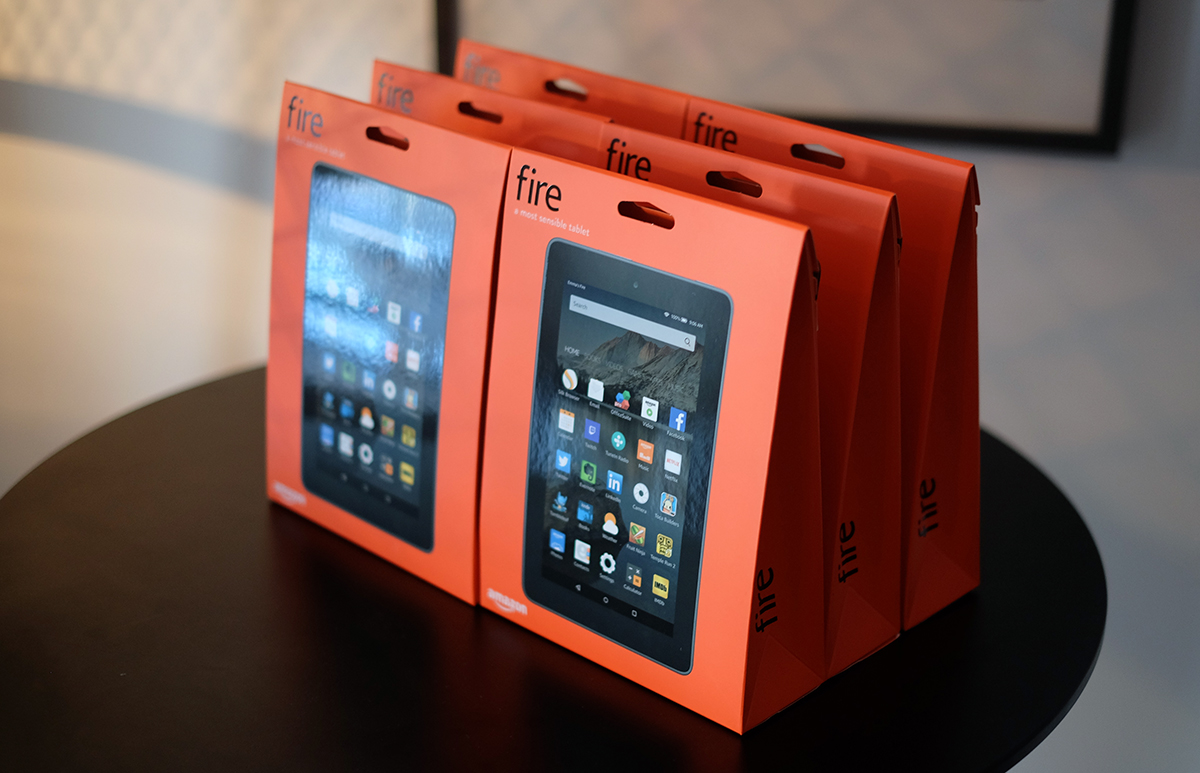
    If you’re in the market for a significantly cheaper tablet than the likes of Apple’s 2018-released iPad Pros or the last two Surface Pro generations, the Amazon Fire 7, Fire HD 8, and Fire HD 10 should be at the top of your wishlists. By no means powerhouses, these three typically deliver some of the best possible bang for your buck starting as low as $50.

    Even better, they’re frequently on sale at hefty discounts, recently reaching as high as 30 percent off the list price of a kid-friendly Fire 7 variant. Unfortunately for parents thinking of introducing their children to mobile technology, the Fire 7, HD 8, and Fire HD 10 Kids Editions are not marked down this time around. But if you’re an Amazon Prime member, you can get the regular Fire HD 10 for a whopping 50 bucks less than usual.

    That represents a 33 percent price reduction that brings the 10-incher down to its lowest retail cost in several months. The same $50 discount applies to the 64GB configuration as it does to the entry-level 32 gig version, both of which pack a respectable 2GB RAM and quad-core processor clocked at up to 1.8 GHz. The 10.1-inch screen delivers decent 1920 x 1200 resolution while helping the battery last an excellent 10 hours of mixed use between charges.

    Naturally, the Amazon Fire HD 8 is both smaller and slightly lower-end, with a slower quad-core chipset, 1.5GB RAM, and 1280 x 800 display in tow, but the same winning 10-hour battery endurance rating. The 8-incher can be had at $30 off with a Prime membership in 16 and 32GB configurations, the former of which is thus discounted by a sweet 37 percent or so.

    Finally, the ultra-low-end Amazon Fire 7 is getting the smallest markdown of the trio, but it’s actually dropping to its lowest ever price, also as an exclusive Prime offer. The $15 discount applies to both 8 and 16GB variants, the latter of which is however listed as “temporarily out of stock” at the time of this writing. The 7-incher comes with a modest screen, 1GB RAM, and only up to 8 hours of battery life, but just like its bigger brothers, it supports hands-free Alexa interaction.

  • BSNL to offer carrier billing for Amazon Prime

    BSNL to offer carrier billing for Amazon Prime

    Mobile technology company Fortumo is providing its Trident Bundling Platform for India’s BSNL to help the state-owned operator distribute Amazon consumer services in the market.

    With the integration, BSNL is offering subscribers one years’ subscription to the Amazon Prime shopping and entertainment platform on certain of its plans.

    The Trident Bundling Platform is designed to allow operators to establish and expand partnerships with OTT service providers by allowing the delivery of digital products packaged with mobile services to support carrier billing.

    OTT companies need only integrate with the platform once, and can then establish multiple bundle partnerships across a variety of potential commercial scenarios.

    Fortumo VP of global business development Andrea Boetti said such operator partnerships are ideal for markets such as India, where smartphone penetration in the country is above 35% but only 3% of the adult population owns a credit card.

    “Interest towards VOD services is today growing the fastest in South-East Asia, Europe and the Middle East. Local telecommunication companies and their marketing capabilities offer the best way for VOD providers to engage this audience,” he said.

    “Fortumo’s Trident supports VOD providers in getting these new users on board as quickly as possible.”

  • Qualcomm’s new line of chips will make smart speakers better than ever

    Qualcomm’s new line of chips will make smart speakers better than ever

    Qualcomm, manufacturer of the popular Snapdragon chips that power billions of devices, is now aiming to dominate another segment of smart products: speakers and displays with voice assistant support. To do that, the company announced today a new family of chips called the QCD400 Series Smart Audio SoCs. The new chips are designed specifically for the needs of smart speakers like the Google HomePod and Home mini, Amazon’s Echo lineup and others. That is why Qualcomm has focused on two main aspects: sound reproduction and voice recognition.

    The QCS400 line promises “truly superior audio performance” that should come not only from Qualcomm’s own technologies, but support for Dolby Atmos and DTS:X as well. The chips will be capable of supporting up to 32 audio channels.

    To make your communication with the voice assistant better, Qualcomm is once again putting AI to use. The AI should help with voice recognition so you can expect fewer misheard words and phrases in the future. The new chips should also allow the device to better separate voices from background noises or music and detect trigger words easier.

    Besides those main capabilities, Qualcomm is also looking to improve a couple more things that are also quite important.The first one is an improvement in power consumption which will come handy for portable Bluetooth speakers and other battery-powered devices. Devices with the new chips are expected to have a significantly longer standby time during which voice wakeup will be available.

    And finally, the new chips will ensure that your smart device is always well connected. Whether that is to the internet via Wi-Fi or to your phone through Bluetooth, Qualcomm has made improvements in any aspect of the smart speaker connectivity.

    The QCD400 chips are four in total, two of them are for audio only. The least powerful is the dual-core QCS 403, followed by a quad-core QCS404. The two chips that come with video capabilities have the Adreno 306 GPU and support HDMI. Only the highest tier chip, the QCS407 supports 32 channel audio, while the rest top up at 12 channels.

    If you’re a frequent user of smart speakers these new developments are good news for you. And if not, well, you’re probably concerned about the fact that soon these pesky always-listening devices will be able to hear you even better. Like them or not, it seems they’re here to stay!

  • Kia Partners With Amazon To Sell Charging Stations For Electric Vehicles

    Kia Partners With Amazon To Sell Charging Stations For Electric Vehicles

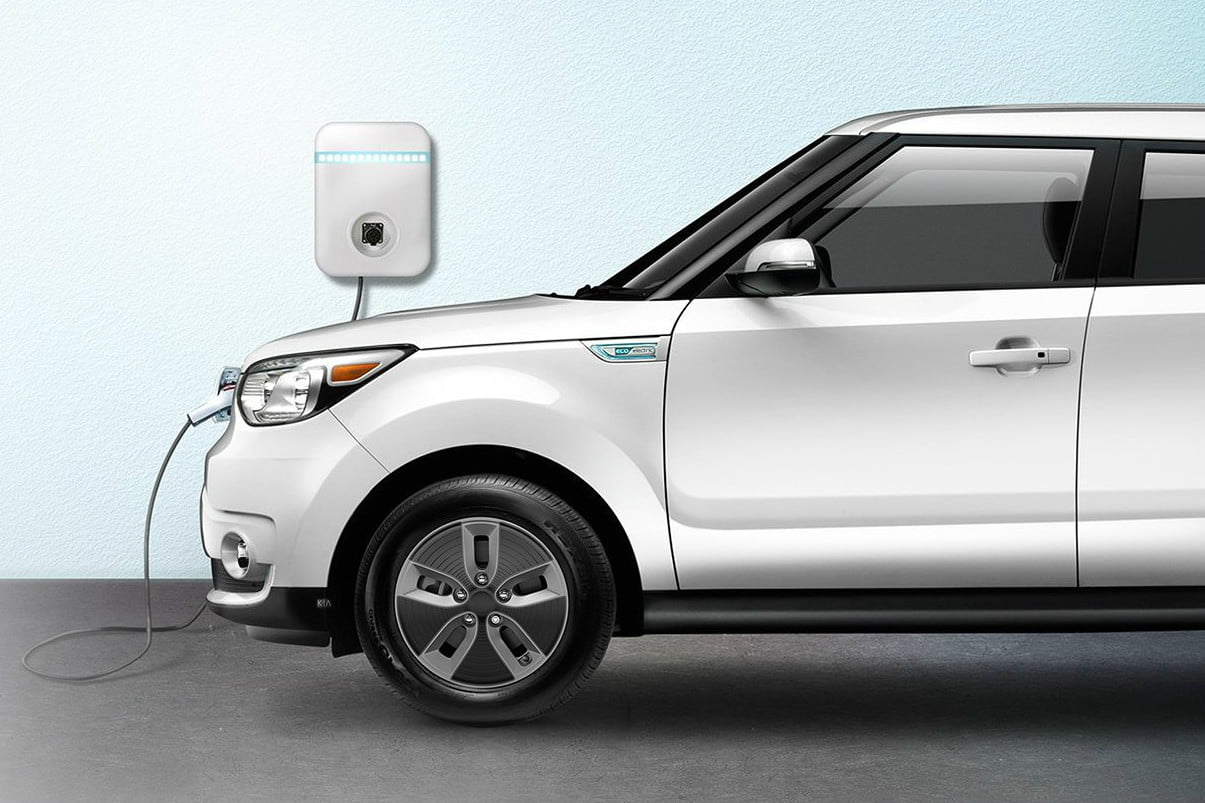
    Kia Motors America (KMA) in partnership with Amazon Home Services has announced a new program for its plug-in vehicle customers. The program will see Amazon sell and install electric vehicle charging stations at the customers house or office. The tie-up makes Kia, the second automaker after Tesla in America to offer the service online with the electric charging network. The manufacturer says the process of purchasing and installing a charging station will be as easy as buying other products on Amazon.

    Speaking about the new initiative, KMA – Car Planning and Telematics, Executive Director, Orth Hedrick said, “Home-charging can’t get any easier than this. Being able to order a Level 2 charger and installation through Amazon further demystifies and simplifies the experience for new Kia EV and PHEV owners. It’s just another example of how we’re constantly striving to provide the very best vehicles and customer experience.”

    Kia Motors has been actively working on improving its charging infrastructure in the US as it adds more electric cars to its portfolio. The company currently retails the Soul EV, Niro EV1, Niro PHEV and Optima PHEV, among other models in the country. Customers will find recommended Level 2 or 240-volt charging units selected by Kia on Amazon, along with information about home charging installation and customer reviews. The site also gives customers the cost for the installation and will schedule a licensed electrician for the same, if needed. The charging stations are backed by Amazon’s Happiness Guarantee plan. Kia’s vehicles in the US are offered with a 10 year/160,000 km warranty cover and roadside assistance.

    Kia and Amazon have set up a new ‘Charge my Kia’ portal for the sale of the electric charging stations. While buyers can purchase the Bosch 40-amp station that is available in partnership with the manufacturer, there are other charging stations available as well from companies like Chargepoint and Juicebox.

  • Amazon’s first-gen Echo well priced for Launch

    Amazon’s first-gen Echo well priced for Launch

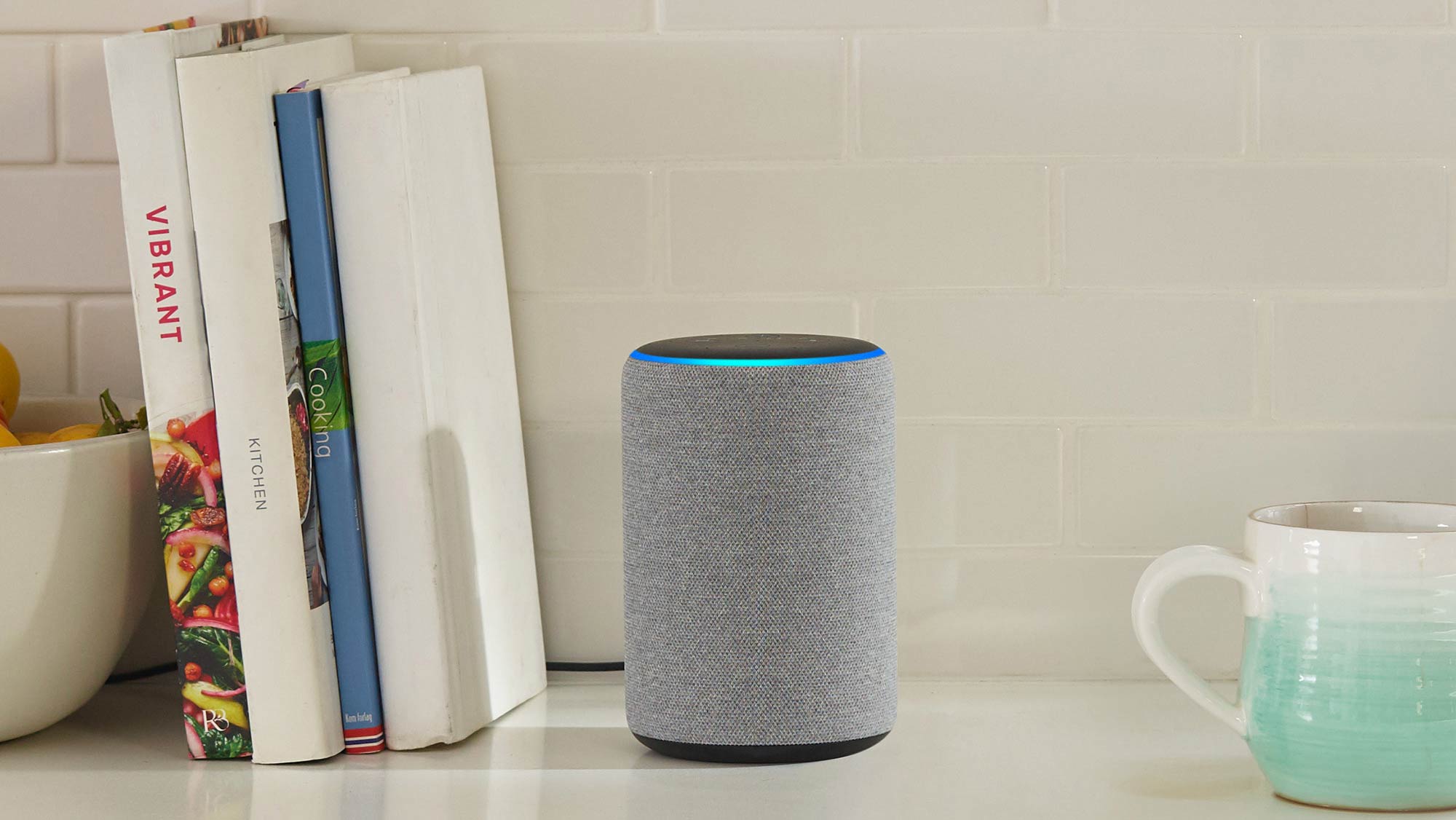
    Smart speakers have become a global phenomenon less than five years after the limited release of Amazon’s original Echo, with an estimated installed base of 66 million units in the US alone as of December 2018, and around 100 million devices in use worldwide, according to a slightly older market report. Naturally, there are now more options than ever for smart speaker buyers, ranging from the ultra-affordable Echo Dot and Google Home Mini to premium Echo Show models with screens.

    But if you can find it, the first-generation Amazon Echo is still a pretty great choice, fetching a significantly lower price than back in the day. We’ve seen this tall and handsome cylinder cost as little as $30 in refurbished condition with a 90-day warranty included last month, and although the newest deal may not look quite as irresistible at first glance, it’s actually better in a way.

    That’s because AT&T appears to sell brand-new Echo units at $50 apiece right now, no doubt throwing in a standard one-year manufacturer warranty. That’s a whopping $129 off the smart speaker’s original list price, as well as $50 less than what the second-gen Echo usually fetches. It’s also pretty much on par with the typical price of a third-gen Echo Dot, which obviously packs significantly less power in a diminutive body.

    Despite its advanced age, the OG “regular” Amazon Echo is largely capable of the same things as all the new Alexa-controlled smart speakers, including hands-free music streaming, smart home management (with compatible accessories), setting alarms, timers, and reminders, reading the news, answering the most diverse and complex questions, and even making voice calls, as well as sending and receiving messages. There are also loads of new Alexa skills added every day, all of which are supported on the full range of Echo devices.