Tag: amazon

  • Reliance has true potential to evolve into India’s Amazon or Alibaba

    Reliance has true potential to evolve into India’s Amazon or Alibaba

    A week after Reliance Industries (RIL) reported a 8.82 percent rise in consolidated net profit for its third quarter at Rs 10,251 crore, global financial services firm UBS on Thursday said the Mukesh Ambani-led RIL has the true potential to evolve from an integrated energy company into a consumer giant like Amazon or Alibaba.

    In a comprehensive 100-page report, UBS said RIL can become a market leader in telecom and media, while gaining a significant share in retail/e-commerce.

    “Its success could be built on an ecosystem or bundling strategy, and a home-court advantage, similar to Alibaba’s success in China, beyond explicit or implicit policy support,” noted the report.

    RIL posted a net profit of Rs 9,420 crore in the corresponding quarter of 2017-18. The company’s consolidated revenue from operations during the quarter in consideration at Rs 1,60,299 crore jumped a massive 56.38 per cent over Rs 1,02,500 crore earned in the October-December quarter of FY18.

    According to the UBS report, its China Internet analyst, Jerry Liu, has listed some comparables between Alibaba and Reliance such as pursuing an ecosystem or a bundling strategy in a high-growth fragmented retail sector with lower online penetration and home-turf advantage.

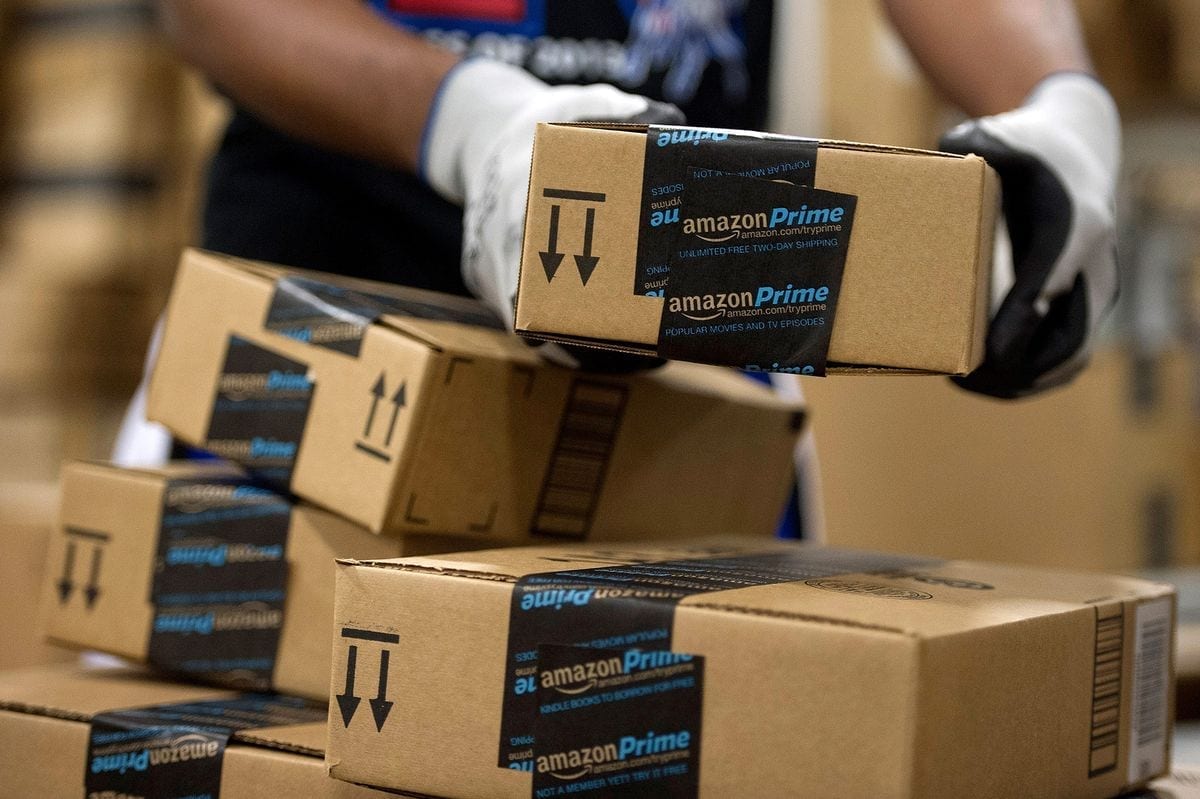
    “Similarly, Eric Sheridan, our US internet analyst, thinks Amazon’s core value proposition to customers is its Prime subscription, which offers free shipping and video and music content,” the report noted.

    “Our assessment of the capital framework, regulations, business positioning and emerging trends in each of its consumer-facing business indicates RIL can lead in telecom and media and gain significant share in retail/ecommerce,” it added.

    The report found another similarity RIL shares with Amazon and Alibaba – an ecosystem strategy.

    “The biggest difference is that the Chinese and American internet platforms do not own telecom networks.

    “But based on the success of Amazon Prime, and similar memberships such as Alibaba’s 88VIP and JD’s Plus in China, we believe bundling of products and services is a tried and true strategy, and this should play to Reliance’s advantage,” the report highlighted.

    Addressing the “Vibrant Gujarat Global Summit 2019” on January 18, Reliance Industries Chairman and Managing Director Mukesh Ambani announced that Reliance would double its investment and employment numbers over the next decade.

    He said Reliance Jio and Reliance Retail would soon launch a new commerce platform for small retailers — a mega mission which will first be launched in Gujarat and then across the country, urging Prime Minister Narendra Modi to lead a fight against ‘data colonisation’.

  • Walmart, Amazon India seek extension of Jan 31 deadline on e-commerce compliance

    Walmart, Amazon India seek extension of Jan 31 deadline on e-commerce compliance

    There is trouble in paradise. The Government’s drastic intervention in e-commerce at the behest of vested domestic interests and the powerful traders lobby has created consternation in the bulge bracket world of e-commerce in India. With the big players having reached out to the Government to give them breathing space on the new compliance measures beyond the January 31 deadline, the Industry ministry has not responded, leading to panic attacks across the board.

    Powerful stakeholders led by Walmart and Amazon from the e-commerce eco system have sought a six-month extension since lakhs of sellers – small and medium-sized – in the market place need to be educated, IT-enabled and connected to meet the statutory audit requirements. Moreover, contracts have to be re-negotiated so that the compliance measures remain ongoing with time being of the essence.

    It is believed that the DIPP or Industry Secretary Ramesh Abhishek, who was earlier encouraging the major players to ramp up their investments in India, has not responded to their pleas and petitions.

    The situation has become precarious primarily because the clarification to press note 2 was even more confusing. On a granular level, the market place cannot have any equity in the seller.

    Hence, Amazon which has five percent equity in Shoppers Stop has to comply with the new standards. The new government directive does not allow private labels, nor does it allow big brands to have commercial tie-ups with the market place. Basically, the rules of engagement have been turned on their head.

    Bain Capital reckons that the heavy lifting e-com players have generated three lakh jobs in India. Over and above this, there are lakhs of vendors.

    Further, the eco system has multiple spin-offs like advertisements, courier companies, logistics companies, supports innumerable manufacturing operations and caters to large scale supply chains. Flipkart has 80,000 employees, 80 fulfilment centres (warehouses), nearly one lakh plus sellers and artisans of all hues across the land. Ditto for Amazon, which has similar numbers across its business spectrum.

    Walmart paid US$ 14 billion for Flipkart stock with a promise of an additional US$ 2 billion in physical structure investment. So, there is a lot riding on these heavy lifters for both know that this is the last frontier in terms of a consumption market, since India consumes 67 percent of its own US$ 2.6 trillion GDP. Interestingly, Walmart runs Flipkart as a stand-alone entity.

    For Walmart this is a priority market and it is keen that the January 31 compliance window deadline is extended. Its commitment to the Indian market can be gauged from the fact that it recently got 100 acres in Bengal for warehousing as a pivot to the northeast market. Hence the size of the commitment is seeing enlargement almost daily.

    It is on the verge of closing another 100 acre fulfilment centre in Telengana to service the southern market. Remarkably, the Indian retail market is estimated to be US$ 650 billion, of which 90 percent is the kirana stores while nearly eight per cent is made up of Indian retail players and only two percent is e-commerce. However, since the biggies in e-com are global behemoths, impediments are being placed in their path.

    At the kernel of the government notification and clarificatory statement is the targeting of e-commerce giants who are quick to retort that they helping small sellers with a channel that is tech-enabled to put their products on the marketplace.

    At the time same time, even as they try and get the government to listen to their litany of woes on immediate compliance, the process of evaluation of sellers will continue and remain ongoing so that they are effectively compliant every single day. The government’s intervention is perceived to be through a non-consultative process and the global giants want more time for compliance and enhanced level of dialogue.

    The audit requirement on the sellers by opening their books to the marketplace in such a short time is reminiscent of the haste in the launch of GST, which threw small businesses out of gear.

    Many of the sellers will now have design IT systems and the marketplace cannot be liable for this. In parallel, there is no clarification on how to conduct the private label business.

  • India’s Reliance to take on Walmart and Amazon online

    India’s Reliance to take on Walmart and Amazon online

    South Asia’s richest man Mukesh Ambani is establishing an e-commerce platform to compete with Walmart and Amazon in India. The Reliance Industries chairman will roll out services in Gujarat before extending them nationwide. “Jio and Reliance Retail will launch a unique new commerce platform to empower and enrich our 1.2 million small retailers and shopkeepers in Gujarat,” said Ambani.

    Reliance introduced the 4G Jio network in September 2016, a market disruptor with its free voice calls and cheap data plans. Its move into e-commerce will aggravate an already cut-throat battle between market leader Flipkart, owned by Walmart, and Amazon’s services in the territory.

  • Flipkart secures more funding to face competition

    Flipkart secures more funding to face competition

    Indian e-commerce firm Flipkart has received US$201 million funding for its wholesale business from its Singapore-incorporated parent. The investment comes during a period of intensifying competition between the firm and its Amazon-backed competitor in a market estimated to be worth $18 billion. It signals a prioritising of sales growth by the retailer since its acquisition by Walmart.

    A report last year indicated that Flipkart has seen a more than 80-per-cent increase in transactions in recent months, prompting the company to expand into new business lines such as furniture and groceries over the next three years.

    Separate reports show that Amazon also looks to invest significant funds into the market in order to challenge Flipkart’s present lead in the territory.

  • Amazon offers Vietnamese products route to global market

    Amazon offers Vietnamese products route to global market

    Amazon is collaborating with Vietnam’s trade ministry to sell the country’s products on its system globally. Vu Ba Phu, director of the Ministry of Industry and Trade’s Trade Promotion Agency, said while announcing news of the collaboration that the U.S. e-commerce company would help especially small and medium-sized enterprises (SMEs) develop their brands on its website.

    It would also train Vietnamese firms in e-commerce and selling on its system, he said. Vietnamese businesses would be able to reach over 300 million users of the world’s largest online retailer by participating in Amazon Global Selling, he added.

    Bernard Tay, Amazon’s regional director for Southeast Asia, said Vietnam is among the top countries in the region in terms of capability to export via Amazon.

    It has strengths in household products, textile, footwear, and handicrafts, items that sell well on Amazon, he said.

    Vietnamese firms need to make products adopted to global trends and improve their English and branding skills, Tay added.

    Phu said Vietnamese SMEs would have to meet the high standards in many markets.

    “Big markets like the E.U., U.S. and Japan all have strict regulations on product quality and origin, and Vietnamese exports will have to comply with them.”

    Last year Amazon had organized a number of training programs for Vietnamese SMEs on how to sell on its system.

    Chinese e-commerce behemoth Alibaba is also interested in Vietnamese sellers. It started looking for sellers on its AliExpress website last July, saying it wanted to enable them to reach over 200 markets around the world.

    Vietnam’s e-commerce market grew by 25 percent in 2017, according to the Vietnam E-commerce Association (VECOM), which expects this rate to continue until 2020.

  • Amazon to soon deliver packages right in customer’s garage

    Amazon to soon deliver packages right in customer’s garage

    To enhance its in-home delivery service, Amazon has launched new products and tools within its ‘Key by Amazon’ offering for Prime members, beginning with the US. The online retail giant unveiled ‘Key for Garage’ that will allow customers to monitor and control their garage door via the Key app. “In addition to receiving deliveries at home and in your car, eligible Amazon Prime members will soon be able to get deliveries in their garage,” Amazon said in a statement on Tuesday.

    ‘Key for Garage’ is made possible by integrating Key with CGI’s proprietary ‘myQ-connected’ technology.

    “We started with the idea of in-home package delivery and quickly learned that our customers found peace of mind from the control Key gives them over their most important place – their homes – even when they aren’t there themselves,” said Rohit Shrivastava, GM of Key by Amazon.

    The online retail giant unveiled ‘Key for Garage’ that will allow customers to monitor and control their garage door via the Key app

    Amazon launched ‘Key’ in 2017 and the in-car delivery facility later. The new delivery services are available to Prime customers in some markets at no additional cost.

    Other offerings include the new Schlage Encode Smart Wi-Fi Deadbolt — the first WiFi-enabled smart lock for Key.

    The smart lock offers an innovative option for any customer who wants to experience the magic of a keyless life without any additional hub or hardware.

    “Even with all the advancements in the category, we recognized there was still a gap in simple, secure, high performance and cost-effective, all-in-one access solutions,” said Lee Odess, Vice President, Solutions Providers Business at Allegion, maker of Schlage locks.

    ‘Key for Business’ is a smart fob for drivers delivering Amazon packages to commercial and residential properties.

    “The technology allows building owners and managers to give controlled access to delivery drivers to drop off Amazon packages to their residents, and eliminate the need for building staff to manually give access each time deliveries are made,” said amazon.

    The Schlage Encode Smart Wi-Fi Deadbolt is available for pre-order for US$ 249.99 or US$ 299.99 when bundled with an Amazon Cloud Cam. It will begin shipping to the US customers on March 5.

    Key for Garage will be available in the US in the second quarter.

  • Carousell Expands Executive Team to Strengthen Operations and Leadership

    Carousell Expands Executive Team to Strengthen Operations and Leadership

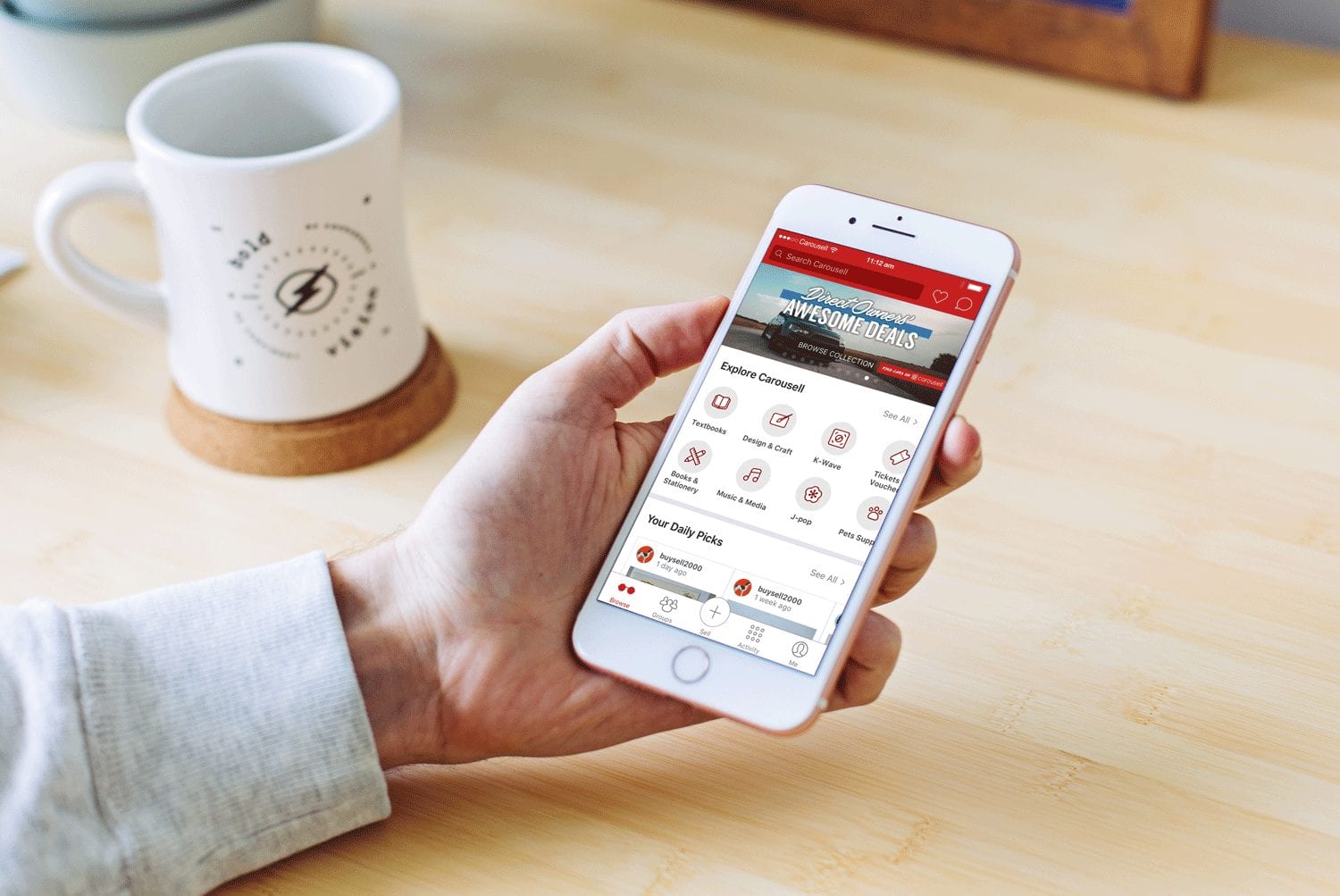
    Carousell, one of the world’s largest and fastest growing classifieds, announced the appointment of industry veteran Su Lin Tan as Vice President of Operations, while Colin Bryar has taken on an advisory role. The new additions reflect the company’s steadfast commitment to solidify its market-leading position in the classifieds industry and to continuously improve user experience of our marketplace in the region.

    “We are always on the lookout for world-class talent who shares our values and passion for solving meaningful problems with technology, and we are tremendously fortunate to have found that in Su Lin and Colin,” said Siu Rui Quek, Carousell Co-founder and CEO. “Their collective experience and proven track record in transforming organisations amidst complex digital environments will be invaluable as we power through our next chapter of growth. It is an absolute privilege and I look forward to learning from them as we continue to innovate classifieds in an AI-first world.”

    Su Lin, previously Deputy Chief Marketing Officer and Senior Vice President of Sales Strategy and Operations at Singapore Press Holdings (SPH), brings over two decades of leadership experience in digital strategy, marketing and the classified space to Carousell. Having overseen sizable advertising sales and digital organisations and working across complex organisational eco-systems, she was most recently associated with the launch of Singapore’s first and only digital publisher alliance, the Singapore Media Exchange, Su Lin serves as the Vice President of Operations to lead the teams in scaling up operations in Singapore and across the region. In her new role at Carousell, she reports to Co-founder and CEO, Siu Rui Quek.

    “I am deeply honoured and humbled at the chance to work alongside Carousell’s visionary founding team. I knew they were destined to achieve great things from the first time we met back when they had first started the company,” said Su Lin. “Despite their incredible success in a short span of six years, the leadership team’s deep commitment and mission-driven values to make an impactful change in the world have never wavered. Their humility and willingness to learn and grow, not only themselves but also their people, moved me. I am excited for the opportunity to help make the founders’ dream come true so that we might show the world what Singapore born and bred
    companies are capable of.”

    In his new advisory role to Carousell’s executive leadership team, Colin will focus on identifying opportunities for faster growth and providing a world-class customer experience for users across the region. Colin has successfully led digital platform businesses in all stages of evolution for over 25 years in various senior leadership roles at Amazon, IMDb and Alibaba-owned RedMart. He also served two years as Technical Advisor to Jeff Bezos. This unique blend of experience makes Colin a great fit for the next phase of Carousell’s growth.

    Colin shares his excitement for tackling new challenges at Carousell, “In my many years of working with major tech companies, the potential I saw in Carousell and the impact it can bring to many more millions of users around the world is something really special. I have profound admiration and respect for the founders and their vision for the company. It’s an exciting time to be part of a team that is aggressively expanding its capabilities to bring simpler and more trusted solutions to help people discover new possibilities when buying, selling and connecting with one another.”

  • Amazon Kicks Off the New Year with Head Start on Chinese New Year Festivities

    Amazon Kicks Off the New Year with Head Start on Chinese New Year Festivities

    Amazon announced the kick-off of the Chinese New Year season for Amazon Prime members in Singapore, offering new expanded local selection and great deals and free samplings to help usher in the Year of the Pig with ease. Amazon Prime Now will offer customers a one-stop shop for everything Chinese New Year related — from eight-pack red packets to traditional pineapple tarts and barbequed pork slices (bak kwa).  Anyone in Singapore can join Amazon Prime for S$2.99 a month or start a 30-day free trial at www.amazon.com.sg and download the Prime Now App.

    “We’re excited to jump into the Chinese New Year season, helping Prime members in Singapore get ready for the Year of the Pig with our expanded selection of popular holiday goodies–abalone, traditional pineapple tarts and handmade BBQ pork slice,” said Kourosh Kaghazian, Country Manager, Amazon Singapore. “From cleaning supplies to groceries, we’ve got Prime members covered this new year with the convenience of tens of thousands of items, including a variety of local favorites, and ultra-fast two-hour delivery right to their door.”

    New this season, Amazon is offering some must-have Chinese New Year goodies, including:

    • Kele: Traditional Pineapple Tarts and other festive cookies
    • Kim Joo Guan: Traditional Handmade BBQ Pork Slice
    • Crystal Jade: Almond Puff Cookies and Bo Lo Pineapple Tarts
    • New Moon: Abalone

    Amazon has also expanded its Reunion and steamboat selection for customers in time for their holiday dinner preparations with frozen and fresh sliced meats, noodles and tofu and a wide variety of fresh and frozen seafood, including pomfret, grouper, threadfin, scallops, crabmeat, mussels, squid as well as seasonal fresh vegetables and fruits.

    Amazon has also created specially curated selections according to Chinese New Year themes, such as Readying the House, Spring Cleaning and Organization, Stocking Up on Groceries, Shop Fresh Food/Reunion and Last-Minute Shopping. Prime members will be able to take advantage of the free two-hour delivery on orders of S$40 or more, especially helpful for heavy and bulky items like soft drinks. In addition, Prime members will also be able to shop millions of items on the international selection via the Prime Now App with free delivery in 7-9 business days on orders of S$60 or more.

    Prime Now will offer delivery from 10:00 a.m. to 6:00 p.m. on 4 February, Chinese New Year Eve as well as both public holidays 5 February and 6 February. Leading up to Chinese New Year, Amazon Prime Now will offer regular delivery from 10:00 a.m. to 10:00 p.m.

    Prime members in Singapore have access to millions of items via the Prime Now App. Amazon Prime in Singapore is currently available for S$2.99 per month. Prime membership benefits in Singapore include:

    • Free Two-Hour Delivery on Tens of Thousands of Items: Ultra-fast delivery on tens of thousands of items with free two-hour delivery on orders over S$40, between 10am and 10pm daily.  Items range from groceries to electronics, including a variety of new brands added to Prime Now since the launch such as Yakult, Dell, Tefal, Sambucol, Bausch & Lomb and Pinkfong, as well as new categories including fresh flowers, organic fruits and international foods.
    • Free International Shipping on more than 7 Million of Items: Unlimited free shipping in 7 to 9 business days on orders over S$60 from International Selection via the Prime Now App on more than 7 million international products shipped directly to you from Amazon US. Products include a wide selection of top brands such as Leap Frog, Calvin Klein, Rubbermaid, Zojirushi, BCB Generation, The Children’s Space, Pet Safe, Rebecca Minkoff, and Melissa and Doug.
    • Amazon Prime Video: Prime members can stream or download popular and award-winning Prime Original series like The Grand Tour, Golden Globe and Emmy award winner The Marvelous Mrs. Maisel, Tom Clancy’s Jack Ryan starring John Krasinski, Homecoming starring Julia Roberts, and many more. Prime members can watch anytime, anywhere via the Prime Video App on Android and iOS phones and tablets, smart TVs, game consoles or online at www.primevideo.com.
    • Twitch Prime: Prime members enjoy a selection of free games every month, free in-game loot for the world’s most popular games, a free broadcaster subscription every 30 days, exclusive chat emotes, and more at https://www.twitch.tv.
  • Amazon to expand Whole Foods, open more stores

    Amazon to expand Whole Foods, open more stores

    Nearly a year-and-a-half after Amazon acquired Whole Foods for approximately US US $13.5 billion, things are about to start changing. Amazon is planning to expand its Whole Foods Market portfolio by adding more stores to put more customers within its two-hour delivery service range, The Wall Street Journal reported this week. The report says Amazon has been scouting locations for bigger Whole Foods stores in states and regions where they don’t currently have any stores at all–places like Idaho, south­ern Utah and Wyoming, along with many other suburban areas.

    The report goes on to say that these stores will be approximately 45,000 sq. ft. in size and the extra space is intended to accommodate Amazon delivery and pickup from online orders.

    According to WSJ, the world’s largest online retailer also plans to expand its two-hour delivery service, Prime Now, to nearly all of its roughly 475 Whole Foods stores in the United States.

  • Amazon sees ‘record breaking’ holiday season

    Amazon sees ‘record breaking’ holiday season

    Global online marketplace Amazon has announced a record-breaking holiday season, with customers shopping en-masse across both the Christmas and Boxing Day sales events on the storefront. “This season was our best yet… we are thrilled that in the U.S. alone, more than one billion items shipped for free this holiday with Prime,” Amazon chief executive of worldwide consumer Jeff Wilke said.

    While the online store didn’t provide sales figures, Australian purchases saw a love of gaming push sales of the Nintendo Switch and New 3DS XL consoles dominate the holiday period, as well as Sandisk memory cards and various video games compatible with the systems themselves.

    Fashion brands Birkenstocks, Bonds, Champion, Nike, Tommy Hilfiger and Puma were also noted as being “particularly popular” through the period.

    “We were delighted to see so many Australian consumers shopping across all categories on Amazon.com.au in the run up to Christmas [and] during our Boxing Day Sale Event,” Amazon Australia country manager Rocco Braeuniger said.

    “Our first year in Australia saw us increase selection five-fold to over 100 million products and introduce many new products and services for customers to enjoy, [and] we look forward to bringing much more to Australian consumers in 2019.”

    In the lead up to the event, research from PayPal noted that it expected a quarter of Australian shoppers to head online on Boxing Day, with 70 per cent of those surveyed stating that online shopping is less stressful.

    “Australians are looking for the best deals, not the stress that’s traditionally associated with heading out to the shops for the Boxing Day sales,” PayPal shopping expert Liz Lefort said.

    “Increasingly those deals, or better deals can be found online, and Aussie shoppers are taking heed of that.”

  • New E-Comm Rules: Flipkart India for broad market-driven framework

    New E-Comm Rules: Flipkart India for broad market-driven framework

    India’s largest online marketplace Flipkart has requested New Delhi that a broad, market-driven framework for the e-commerce industry be put in place after consultations with the relevant stakeholders. The request came a day after the federal government announced changes in the foreign direct investment (FDI) policy for the sector. On Wednesday, New Delhi took a series of measures to tighten the norms for e-commerce companies, such as Flipkart and Amazon, barring them from selling products of the entities in which they have a stake. The altered norms also restrict them from mandating any seller to sell products exclusively on their respective platforms.

    Flipkart said that the e-commerce ecosystem has created thousands of jobs apart from fostering innovations in MSME manufacturing, supply chain, warehousing, packaging, and digital payments.

    “Government policy changes will have long-term implications for the evolution of the promising sector and the whole ecosystem. It is important that a broad, market-driven framework through the right consultative process be put in place in order to drive the industry forward,” the Bengaluru-based online retail giant said in a statement.

    Flipkart was acquired by the US retail giant Walmart for $16 billion earlier this year in what was the country’s largest acquisition and the world’s biggest purchase of an ecommerce company.

    Amazon’s India unit said that the company was still evaluating the policy changes. The new policy aims to restrict any kind of control on inventory by an e-commerce marketplace entity, thus impacting Flipkart and Amazon as they have structured their group companies in a way that would help retain control on pricing and inventory.

    “For Amazon and Flipkart, this policy change brings massive challenges. They have to not only make changes into the business model and structure of how they are selling goods, but this will also affect the profitability due to limitations on private label products,” said Satish Meena, senior forecast analyst at Forrester Research.

    “Apart from this, the planned investment in the offline channel is going to be recalibrated after this change. All these will have an impact on how they scale up the business in India,” Meena added.

  • Amazon-go to open more stores in the airports

    Amazon-go to open more stores in the airports

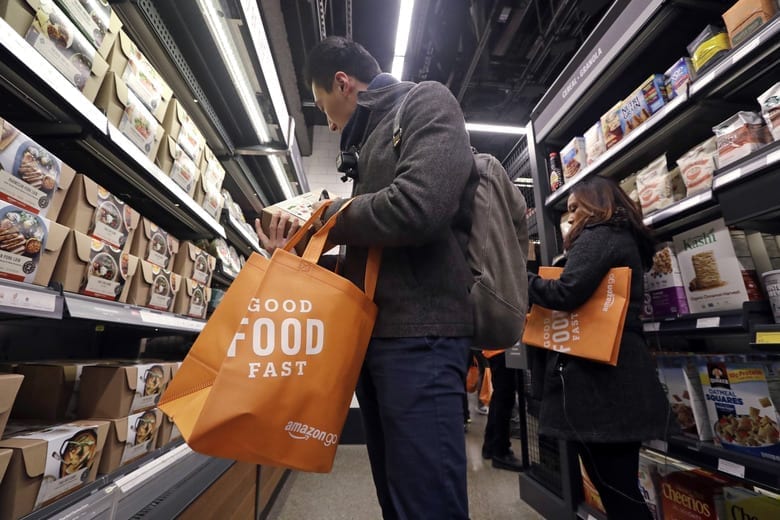
    Online giant Amazon is looking to expand the reach of its automated bricks-and-mortar Amazon Go offer by opening stores in airports, according to a report by Reuters. The retailer’s Go stores utilise myriad cameras which are able to identify customers as they enter, see what they pick up and leave with, and subsequently charge the customer’s Amazon account without the need for any staff interaction – a natural fit for customers needing to get from gate to gate in a short amount of time.

    According to emails obtained by Reuters, Amazon requested a meeting with staff from several airports, including Los Angeles International and San Jose International, referencing Amazon Go as “one of many possibilities we can discuss”.

    Beyond the meetings, which took place in June, officials from both airports confirmed they have had no further correspondence with the business, and that it would need to undergo a competitive bid process in order to acquire the locations necessary.

    The move would put Amazon in front of the more than 350 million people who boarded flights from the country’s top 12 airports last year, according to data from the US Department of Transportation.

    Amazon has been slowly expanding its physical retail offering through numerous Whole Foods, seven Amazon Go stores, and three reviews-driven Amazon 4-star stores, spread across the US, though efforts to bring these offers internationally are reportedly heating up.

    Telegraph UK has learned that Amazon is planning to open an Amazon Go store near Oxford Circus in London, with the location serving as a flagship store for the UK.

  • What is Amazon’s Japan bestseller fashion?

    What is Amazon’s Japan bestseller fashion?

    Amazon Japan has revealed its most popular items sold on the online retailer’s platform in the last twelve months, with basics and sportswear taking the top spot in both fashion and accessories, and footwear categories. According to the ‘Amazon Ranking Grand Prize 2018’, the United Athle 5.6 Ounce High Quality T-shirt took first place in the clothing and accessories category. In a classic design, the affordable fashion item was followed in popularity by the brand’s crew neck t-shirt, which came in second place.

    Looking at the top 20 apparel brands, Champion gained five spots in the report, while in the womenswear section, casual tops by And It_ sat high in the rankings.

    Asics’ running shoes won both first and second place in footwear, while Anello’s poly-canvas mini bag proved popular in the bag category.

    In watches, Casio’s G-Shock shock-resistant smart-watch continued to gain popularity, with the Casio brand featuring 11 times in the Amazon Japan top 20. In the jewellery ranking, products by Tiffany & Co. gained in popularity too, said the report.

    The “Amazon Ranking Grand Prize 2018” ranked the U.S. e-commerce giant site’s most popular products by category for the period beginning in November 13, 2017, and ending on October 31, 2018.

    In the last twelve months, retail expenditure has continued to grow in Japan.

    In September, the archipelago nation recorded its 11th consecutive month of retail revenue growth, with sales up 2.1% on the same period last year, according to data by the Japanese trade ministry.

    Specifically, online shopping is at the forefront of this drive with the Japanese love for online shopping helped by the trend to online shop using mobile phones.

    In the latest Criteo survey, mobile devices accounted for 55% of all EC transactions in Japan, up 4 points on the year.

    Transactions through smartphones increased 9%, and tablets 3%, but purchases by PC were down 9%, said the report.

  • Amazon in advance stage to buy stake in Future Retail

    Amazon in advance stage to buy stake in Future Retail

    Online retailer Amazon is in advanced stage of talks to buy around 9.5 percent stake in Kishore Biyani-led Future Retail, according to sources. According to a report: A final shape to an agreement between the two parties is expected to take place within the next 10 days, the sources said although in case of last minute hurdles the deal could be announced as late as January 2019.

    When contacted, Amazon declined to comment while messages sent to Future Group Founder and Group CEO Kishore Biyani remained unanswered by the time of filing story.

    According to a media report, the Amazon-Future Group deal is initially estimated to be around Rs 2,000 crore executed under foreign portfolio investor (FPI).

    The agreement could also include Amazon buying out Biyani and promoter group’s entire holding in future subject to applicable regulations in India.

    As of September 2018, promoter and promoter group had 46.51 percent share of Future Retail Ltd, which operates hypermarket and supermarket under brands which include- Big Bazaar, Easyday, Foodhall, HyperCity, FBB, Heritage fresh, ezone and WH Smith.

    It has presence in 250 cities across the country.

    Leading e-commerce major Amazon, which is looking to expand its presence in India, already has stake in Shoppers Stop and More.

    If the deal is through, this would be the third investment by the US-based company in the Indian brick-and-mortar retail ecosystem.

    Last year, retail major Shoppers Stop had announced raising Rs 179.26 crore from Amazon through an issue of equity shares on preferential basis. The deal with Amazon.com Investment Holdings LLC translated into just over 5 per cent shareholding for Amazon in Shoppers Stop.

    In September this year, Amazon said it has co-invested in Witzig Advisory Services, the entity that is acquiring Aditya Birla Retail’s ‘more’ chain of stores in India.

    According to market watchers, this deal is expected to help Amazon strengthen its play in the Indian retail market that is still dominated by offline retailers.

    The move would also intensify competition further between Amazon and Walmart-backed Flipkart that are locked in an intense battle for leadership in the Indian e-commerce market.

    The US’ largest retailer Walmart had picked up 77 percent stake in Flipkart for US$ 16 billion, the largest deal in the Indian e-commerce space so far.

    Both Amazon and Flipkart are pumping in millions of dollars towards building infrastructure, and expanding operations in the country.

  • Alibaba breaks record Singles Day sales

    Alibaba breaks record Singles Day sales

    E-commerce giant Alibaba has reported a 27 per cent increase in the gross merchandise value of goods sold during yesterday’s 11.11 shopping festival. Total GMV of Singles Day sales settled through Alipay reached RMB213.5 billion (US$30.7 billion), setting a much-anticipated record – with more than 40 per cent of consumers buying through international brands. Last year’s event brought in $25.3 billion in GMV.

    According to Alibaba, RMB6.9 billion ($992 million) of GMV was settled in the first one minute and 25 seconds, and RMB69.3 billion ($9.967 billion) in one hour and 48 seconds.

    Comparatively, Amazon’s recent Prime Day sales were estimated to have reached approximately US$4.2 billion by Wedbush Securities analyst Michael Pachter.

    Australia, Japan, the US, South Korea and Germany were among the top countries selling in the event, with 230 markets having participated.

    Australian supplement retailer Swisse ranked as the top brand imported into China through the promotion.

    “Today we witnessed the strength and rise of China’s consumption economy, and consumers’ continued pursuit to upgrade their everyday lifestyles,” Alibaba Group CEO Daniel Zhang said.

    “Participation from the entire Alibaba ecosystem enabled our brand and merchant partners to engage with consumers like never before.”

    According to Texas A&M University’s Professor Venkatesh Shankar, customers globally want to buy both online and in-store, from any device and through any payment method, while getting a high level of customisation and service.

    Singles Day’s popularity across the world suggests a new chapter of computer-enhanced shopping experiences has begun..

    As the Chinese middle-class grows, retailers around the world are offering their own Singles Day offering in order to service a burgeoning market.

    “The global retail market is adjusting to China’s rising economic power, and Chinese customer’s desire for AI-enhanced mobile shopping experiences,” Shankar wrote.