Tag: amazon

  • Snapdeal trims losses for FY18, exudes confidence on hitting profits

    Snapdeal trims losses for FY18, exudes confidence on hitting profits

    E-commerce firm Snapdeal has narrowed its consolidated losses substantially to Rs 613 crore for FY2017-18, as per regulatory documents. According to a report: The company, which competes with larger rivals like Amazon and Flipkart, had posted a consolidated loss of Rs 4,647.1 crore in FY2016-17, documents filed with the Corporate Affairs Ministry showed.

    The consolidated revenue from operations declined to Rs 436.1 crore for 2017-18 as against Rs 903.8 crore in the previous financial year.

    On standalone basis too, Snapdeal trimmed its losses to Rs 440.7 crore in 2017-18 from Rs 4,638.9 crore in the year-ago period. Total revenue was at Rs 514.6 crore in FY18 as against Rs 1,105.7 crore in the previous fiscal.

    Snapdeal, in its filing said, the company had embarked on its journey towards profitability last year.

    “This year, we continued on this path and focused on building a leaner and more capital efficient business. We substantially reduced our costs, both variable and fixed overheads,” it added.

    The company said it reduced its business promotion expense by 88 percent year-on-year, whereas fulfilment expenses were lower by 67 percent y-o-y.

    “We optimised the team structure and leveraged technology more efficiently, which was critical in trimming our employee expenses by 68 per cent y-o-y. While all of this has come at the expense of lower top line, your company is extremely proud of its achievements over the year and is absolutely confident that it is heading in the right direction to achieve profitability,” it said.

    When contacted, a Snapdeal spokesperson said, “Our prime focus last year was to maximize the operating efficiency of the marketplace ahead of implementing our planned growth initiatives. We are extremely pleased to see the incredible results from our disciplined execution with losses reducing by 88 percent”.

    In addition, parts of the revenue, which were disproportionately loss-making, were identified and curtailed during the year in order to realign the business for growth with healthy margins, the spokesperson added.

    Snapdeal, which had seen its business being impacted severely by the intense competition in the e-commerce segment, had last year dumped the US$ 950-million takeover offer from rival, Flipkart.

    It was then that Snapdeal Co-founders, Kunal Bahl and Rohit Bansal had said the company will pursue a fresh strategy in the Indian market.

  • Korean Air shifting most of its data to Amazon’s AWS

    Korean Air shifting most of its data to Amazon’s AWS

    Korean Air Lines said Tuesday it will transfer most of its data and applications to Amazon’s cloud computing platform as it overhauls its IT infrastructure over the next three years. The planned data migration to Amazon Web Services (AWS) is part of Korean Air’s broader plan to invest 200 billion won ($178 million) over the next 10 years to accelerate the company’s digital innovation and transformation, Korean Air said in a statement.

    “Leveraging cloud technologies means we will be able to provide faster and more efficient services that are tailored to the needs of our customers,” Korean Air President Walter Cho said in the statement.

    Cho, AWS Managing Director Ed Lenta and LG CNS Chief Executive Kim Young-seob signed a data center outsourcing agreement. LG CNS, one of Korea’s leading IT outsourcing providers, will help Korean Air move its data to the AWS system.

  • Flipkart, Amazon see bumper in India festive sale

    Flipkart, Amazon see bumper in India festive sale

    With festive sales drawing to a close, e-tailing giants Amazon and Flipkart have claimed bumper sale on their platforms, and that they were ahead of the competition, as they received orders from customers from over 99 percent of the pin codes in the country.

    According to a report: Citing a survey by Kantar IMRB and other reports, Amazon India Senior Vice President and Country Head Amit Agarwal said Amazon emerged as “the most visited and transacted shopping destination in India this festive season” (October 10-15, October 24-28 and November 2-5).

    “With 99.3 percent of pin codes placing at least one order, 89 percent of new customers coming from smaller towns, almost 70,000 small and medium businesses getting at least one order and new Prime memberships growing by nearly 2X, we are humbled that India trusts us to find, discover and buy anything online,” he said in a release.

    Asked about another report stating that Flipkart cornering 51 percent share of the festive sale between October 9-14, Agarwal said, “we don’t comment on reports that are based on non-scientific methodologies”.

    The said industry report had stated that Amazon.in had a 32 per share in the first leg of the festive sale before Dusshera.

    Both Walmart-backed Flipkart and Amazon have claimed record-breaking sales numbers across categories like smartphones, large appliances and fashion during their festive sales.

    “The current sale (November 1-5) is already more than 2X of our Big Billion Days sale this year. We were the clear leaders in the fashion category… we had all brands (of smartphones) except one…competition is no where close to that,” Smrithi Ravichandran, Head of Growth, Flipkart said.

    She added that customers on an average spent Rs 7,500 on various purchases during this festive sale and that its gross merchandise value (GMV) was up 90 percent over last year.

  • Rakuten  and Seiyu to partner in online grocery service

    Rakuten and Seiyu to partner in online grocery service

    Japanese online retail company Rakuten is partnering with Walmart-owned supermarket Seiyu to launch an online grocery service. Spokespeople from the companies say about 20,000 products will be available on the site, drawn from the Seiyu range, including fresh food. Orders will be fulfilled from stores, restricting the service – for now – to about 16 Japanese suburbs, however a warehouse has been opened near Tokyo to serve the capital.

    “We can tap into Rakuten’s 99 million-strong membership base,” said Seiyu executive officer Tamae Takeda. “[Rakuten’s] advantage is in technology, so we can combine our strengths.”

    The new online grocery service will compete with one launched by Amazon in April last year, as well as those offered by larger Japanese supermarket chains.

    Seiyu and Rakuten plan to offer free delivery on orders over a set threshold, or $4 for those under it.

  • Shinsegae plans ‘Korean Amazon’

    Shinsegae plans ‘Korean Amazon’

    Shinsegae has secured investment worth 1 trillion won ($877.8 million) to build a separate company dedicated to its online business, finally giving wings to Vice Chairman Chung Yong-jin’s ambitious plan to create a “Korean version of Amazon.”

    Shinsegae said Wednesday that it succeeded in attracting funds worth 1 trillion won from two global private equity firms, BlueRun Ventures and Affinity Equity Partners, to launch a separate company that will comprehensively handle the retail giant’s online business.

    The investment plan was revealed in January, but the detailed conditions have been finalized after nine months of negotiation.

    “Shinsegae Department Store and Emart have led growth within the group until now,” said Chung. “But from now on, the new entity dedicated to online business will lead growth. All capacity within the group will be concentrated on the online business.”

    The retailer will spin off the online business from Shinsegae and Emart and merge them into a separate entity. Shinsegae is mainly in charge of its department store business while Emart is in charge of the eponymous discount chain and warehouse-style mart Traders, among others.

    Of the 1 trillion won investment, 700 billion won will be used to establish the new company, which is scheduled to launch in the first quarter of 2019. The name of the new entity hasn’t been decided. The remaining 300 billion won investment will follow at a later date.

    “Shinsegae’s new online business-dedicated entity is expected to help it grow into a core company in Korea’s e-commerce industry,” the company said in a statement.

    Shinsegae has been running an integrated online platform called SSG.com, which encompasses several online malls such as Shinsegae Mall, Shinsegae Department Store, Emart Mall and Traders, all either run by Shinsegae or its discount chain affiliate Emart.

    The soon-to-launch company will operate these online malls.

    “A complete integration of the online platform will enable comprehensive investment, simplified decision making and enhanced proficiency,” the company said.

    Shinsegae plans to concentrate investment in the online mall’s logistics service and infrastructure to begin with. It said it plans to invest 1.7 trillion won in logistics centers and related technology and achieve revenue of 10 trillion won for the online business by 2023.

    Shinsegae currently runs two logistics centers dedicated to online malls in Bojeong and Gimpo in Gyeonggi. The retailer is building a third one in Gimpo, which is scheduled to start operating by the latter half of next year.

    SSG.com launched as an integrated site in 2014 and has been recording an average 20 to 30 percent growth each year. It reached 2 trillion won in revenue last year and turned to profit making in the first half of this year

  • Amazon reports US$ 56.6 bn revenue in Q3

    Amazon reports US$ 56.6 bn revenue in Q3

    Riding on its Cloud business, retail giant Amazon.com saw its net sales increasing 29 percent to US$ 56.6 billion in the third quarter this year, compared with US$ 43.7 billion in third quarter of 2017. Operating income increased to US$ 3.7 billion in the third quarter, compared with operating income of US$ 347 million in the third quarter of 2017.

    Net income increased to US$ 2.9 billion in the third quarter, or US$ 5.75 per diluted share, compared with net income of US$ 256 million, or US$ 0.52 per diluted share, in the third quarter of 2017.

    “Amazon Business has now reached a US$ 10 billion annual sales run rate and is serving millions of private and public-sector organisations in eight countries,” said Jeff Bezos, Founder and CEO, Amazon.

    “We’re not slowing down — Amazon Business is adding customers rapidly, including large educational institutions, local governments, and more than half of the Fortune 100,” Bezos said in a statement.

    Amazon gave fourth-quarter revenue guidance in the range of US$ 66.5 billion and US$ 72.5 billion.

    Amazon Web Services (AWS) announced several new customer commitments and major migrations during the quarter.

    In the third quarter, Amazon introduced a new family of Echo smart home speaker devices.

    Amazon also introduced the all-new Fire HD 8 tablet, featuring an 8-inch HD display, a quad-core processor, 16 GB of internal storage with support for up to 400 GB more via microSD, up to 10 hours of mixed use battery life, and hands-free access to Alexa.

    The number of Alexa-compatible smart home devices has quintupled year to date to more than 20,000 devices from over 3,500 brands.

    Through new tools, including updated Alexa Smart Home Skill APIs and the Alexa Connect Kit, developers and device makers can enable voice control of any device and feature with Alexa.

    Amazon India also announced the launch of Amazon.in in Hindi.

    Amazon Business is generating US$ 10 billion in annual sales, serving hundreds of thousands of business sellers and millions of customers across eight countries.

  • Flipkart corners more than 50 pc share in India festive sale: RedSeer Consulting

    Flipkart corners more than 50 pc share in India festive sale: RedSeer Consulting

    Increased buying in smartphones and fashion verticals helped Walmart-backed Flipkart corner over 50 percent share during the first leg of the festive sale, according to research firm RedSeer Consulting. As per RedSeer’s latest report, Flipkart had a 51 percent share, while Amazon India had 32 percent share of the festive sale from October 9-14.

    “Flipkart accounted for more than half of GMV for the entire industry. Between Flipkart and Amazon, the share was 62-38. Higher share for Flipkart was driven by higher sales in both mobiles and fashion verticals,” RedSeer said.

    An Amazon spokesperson termed the report as ‘speculative’ that ‘lack robust and credible methodology’.

    “We received an overwhelming response to the Great Indian festival, with first 36 hours nearly surpassing the entire first wave last year and the entire wave growing by 96 percent versus last year…the festive season so far has exceeded our most aggressive plans,” the spokesperson said.

    Other players like Snapdeal, Paytm Mall and ShopClues also ran their festive offers and accounted for 17 percent share of the sales.

    Flipkart in a statement said the company “pushed the boundaries on many fronts and hit some of our biggest-ever numbers during its Big Billion Days (BBD).

    “We maintained a clear leadership in deep-penetrated and high ASP categories,” it added.

    As per the RedSeer report, the fashion and smartphone verticals grew by 78 percent and 70 percent, respectively.

    However, consumer electronics grew by only 45 percent despite large investments by both players in supply chain and affordability initiatives like debit card EMIs, it added.

    RedSeer said its report is based on interview with experts from supply chain, banking ecosystem and brands, seller views, customer surveys and other research.

    The report said Day 2 of the five-day sale was the biggest in terms of gross merchandise value (GMV) as it saw the launch of multiple new exclusives in mobile phones and offers on other platforms as well.

    Post second day, the growth of GMV stalled a bit with last three days accounting for only 42 percent of sales compared to 60 percent in the first two days, it added.

  • Amazon.in announces wave 2 of it’s biggest celebration ‘Great Indian Festival’

    Amazon.in announces wave 2 of it’s biggest celebration ‘Great Indian Festival’

    Amazon.in has announced the return of its biggest festive celebration ‘Great Indian Festival’. Wave 2 of the ‘Great Indian Festival’ will start at 12 midnight on October 24, 2018 and end at 11:59 pm on October 28, 2018. Customers can look forward to getting some of India’s bestselling mobile phones at their lowest ever prices including the Redmi 6A which will go on a flash sale every day at 12 noon; up to 90 percent off and extra 15 percent cashback on Amazon Fashion; up to 80 percent off and extra 10 percent cashback on Home & Kitchen products; up to 60 percent off on TVs; up to 80 percent off on appliances and more.

    Amazon Devices – Fire TV Stick and Echo 3rd generation devices will be available at great discounts. Customers can get up to 70 percent off on Alexa built-in devices with exciting new product launches under speakers and headphones. Kindle eBook bestsellers will start at Rs 19 and Kindle Unlimited will be available for Rs 1,499.

    Customers shopping during the Great Indian Festival can save more by getting extra 10 percent back on ICICI and Citi cards. Customers can get ready for the celebration by topping up Amazon Pay balance with Rs 5,000 or more in advance and get extra Rs 250 back. Customers can shop for more than 5 crore products with no-cost EMI using Bajaj Finserv EMI card, select Credit and Debit Cards.

    “After an overwhelming wave 1 of our Great Indian Festival, we are excited to usher in wave 2 for all customers. We will continue to offer the best selection and biggest deals on our entire selection – from the most sought after smartphones, TVs, appliances to fashion, home & kitchen products, consumer electronics and more.” said Manish Tiwary, Vice President – Category Management, Amazon India.

    During Amazon.in’s Great Indian Festival, customers can avail special benefits with No-cost EMI on Bajaj Finserv EMI card and Debit and Credit cards, fast delivery and installation of appliances, exchange of mobile phones and large appliances, instant bank discounts, exciting cashback and lots more. Customers in Bengaluru, Delhi NCR, Mumbai and Hyderabad can enjoy ultra-fast delivery in 2-hours on popular deals on the Prime Now app.

    Furthermore, customers can unlock Amazon Pay offers of up to Rs 2,000 back on select Amazon Pay partner merchants like Swiggy, MakeMyTrip, Freshmenu and Eazydiner by shopping on the Amazon shopping app and paying through any online payment method.

  • Amazon is preparing its private lingerie label

    Amazon is preparing its private lingerie label

    Inside the Aerie pop-up shop in Soho, the body positive, post-Victoria’s Secret message that has become the brand’s calling card since it released its first photoshop-free campaign in early 2014 is perfectly packaged up and displayed on walls covered in bralettes or one-piece bathing suits. “No Retouching. No Makeup. No Problems,” reads one sign, next to a cushion-covered banquette.

    By the checkout counter, pins reading “Keep it Real!” and “Can’t Retouch This” fill colourful buckets. They are free to shoppers who donate to the National Eating Disorders Association.

    Aerie, just a small slice of parent company American Eagle’s overall business, is resonating with a consumer base that’s growing tired of traditional, sexy lingerie brands like Victoria’s Secret.

    Aerie grew sales revenue by 20 percent year-over-year in 2015 and 23 percent year-over-year in 2016.

    Meanwhile, Victoria’s Secret — the goliath which still dominates the lingerie market, worth at least $12 billion in the US alone — has struggled to maintain momentum.

    Sales decreased 13 percent in March, year-over-year, as the company continues to feel the impact of discontinuing its non-athletic apparel and swimwear ranges in 2016.

    The business has since been reorganised around three buckets — lingerie, the Gen Z-targeted Pink range and beauty — and pulled back on promotions.

    As Victoria’s Secret has stumbled, a series of disruptive niche lingerie brands — such as Lively, Naja, Negative Underwear and Third Love — have also entered the playing field, peddling a new kind of inclusive, female-centric identity that’s more about the wearer and less about who might be looking at her.

    They also offer a broader swath of nude shades — serving a wider range of ethnicities — and aim to undercut competitors on price with direct-to-consumer distribution.

    Mass market brands like Aerie and Madewell, which launched intimates in February, have taken notice.

    In March, Phillips Van Heusen acquired True & Co, a vertically integrated online brand that prides itself on fit, for an undisclosed amount.

    “The category has been so overlooked for so long,” says Michelle Cordeiro Grant, founder of direct-to-consumer niche brand Lively, who previously worked at Victoria’s Secret. “It still is run by old-school retailers.”

    Now, Amazon is entering the market with a private label lingerie brand. The line, called Iris & Lilly has already launched in the UK with a limited assortment of sizes and colours.

    Amazon has several advantages. The sophistication level of its data operation allows the company to birth and swiftly iterate its private labels in response to market feedback. And once a label gets traction, Amazon’s scale means it can negotiate the lowest prices from suppliers.

    The company is already offering bras costing as low as $8 while competitor Target’s offerings average about $15 and Victoria’s Secret’s average around $40.

    Amazon also has an estimated 63 million registered Prime member households, a group dominated by households earning over $112,000 a year meaning its lines have the potential to gain market share fast.

    The question becomes: will Amazon disrupt lingerie’s disruptors before they have a chance to reach significant scale? And what are they doing to defend themselves?

    “It’s something we talk about every day,” says Aerie global brand president Jennifer Foyle. “The Aerie Real platform has certainly set us apart and there are so many ways to utilise that platform.”

    For one, Aerie is doubling down on physical stores, aiming to have a total of 200 standalone locations by the end of the year as a way to further differentiate itself from online-only players — including Amazon.

    Still, 40 percent of Aerie’s sales take place online.

    “I think what’s important today is to really leverage this omni-channel customer… The nice thing about a fit intensive category, like intimates, is that a lot of women do want to go into the store and get the experience,” says Foyle.

    Fit is just one of the many challenges of both making and selling lingerie, specifically bras — the more structured of which can have anywhere from 18 to 25 components.

    “Because lingerie is such a technical product… you can’t just take a mold from a size 36D and scale it up and think that it’s going to hold,” explains explains Catalina Girald, chief executive and co-founder of Naja.

    Predicting demand across the range is another challenge. “We would love to carry a broader range of sizes, but from an inventory management perspective… the capital costs of carrying that much investors at once are prohibitive,” she says.

    The popularity of bralettes has come at a great time for lingerie retailers looking to appease price-conscious shoppers.

    For one, they often come in traditional sizes of small, medium, large, reducing complexity.

    “They are a more value-oriented product, sort of cheap and cheerful, fun fashion,” says Aerie’s Foyle.

    Cordeiro Grant says the bralette category is here to stay, but that current growth will plateau at some point. “Skinny jeans are a mainstay, not a trend,” she says. “I think bralettes are the same way.”

    Amazon has a history of tackling complicated and expensive categories, but will the particular challenges of lingerie prove tricky?

    “People do tend to want a level of service or insight or knowledge or instruction around lingerie,” says Kit Yarrow, a consumer psychologist and professor at Golden Gate University in San Francisco.

    “Women are willing to pay for solutions that are comfortable and are going to last with quality,” says senior vice president of marketing Kimberly Grabel. The retailer, which carried third-party brands and private label, is parent company Chico’s healthiest business.

    “Aerie is a brand that we’re proud of, and when you think about Amazon, they probably couldn’t have an Aerie Real campaign and stand for something,” adds Foyle
  • Some of Amazon’s brand-new Mercedes delivery vans are facing mechanical failures

    Some of Amazon’s brand-new Mercedes delivery vans are facing mechanical failures

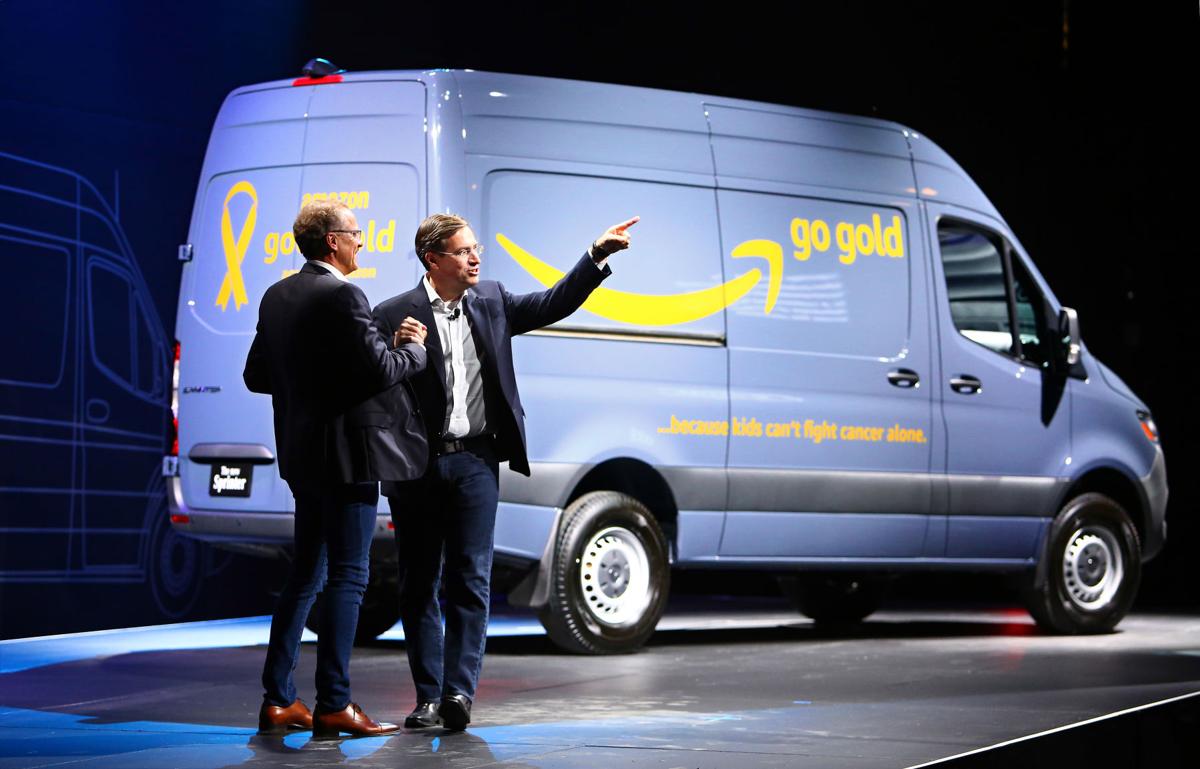
    Mercedes-Benz has identified a power-steering problem plaguing its highly touted Sprinter vans. The cause of the problem is a fluid leak that can make it difficult to turn the wheel of the vehicle, a Mercedes-Benz spokeswoman, Catherine Gebhardt. It has affected Amazon, which recently became Daimler AG’s biggest buyer of Mercedes-Benz Sprinter vans with an order of 20,000 vehicles — up from a previous order of 5,000 — for its growing last-mile-delivery program. The program enables courier companies to lease the vans, which are emblazoned with the Prime logo, for Amazon package deliveries.

    One Amazon delivery service provider has encountered the power-steering problem in about a quarter of the 40 Mercedes-Benz vans that the company received at a delivery station in early September, according to an employee of the company, who asked to remain anonymous. This person said Mercedes-Benz had since repaired the affected vehicles.

    Mercedes-Benz notified Amazon’s delivery service partners of the issue on September 18 and asked them to schedule an on-site inspection of the power-steering system with their local Mercedes-Benz dealer, Gebhardt said.

    “This is being done as a proactive measure to minimize downtime,” she said, adding that the vehicles can still be driven safely in the event of a leak.

    “If there is a leak in the power-steering system, the power assist (especially at a standstill) may be greatly reduced,” Gebhardt said. “When driving at slow speeds it will require some additional steering effort, but again, the van can still be controlled.”

    It’s likely that other Mercedes-Benz Sprinter customers in addition to Amazon have been affected by the issue. Mercedes-Benz declined to comment on other customers and on how many vehicles have been impaired by the power-steering issue overall.

    Amazon announced its bulk order of the Prime-branded vans at a joint press conference with Mercedes-Benz in September celebrating the opening of the automaker’s new factory in North Charleston, South Carolina, which specializes in making Sprinter vans.

    The vans can be leased to Amazon’s existing delivery service partners, some of which have worked for Amazon since 2015, as well as partners that have been recruited through the new program.

  • Amazon, Flipkart clock Rs 15,000 crore in just 5 days of festive sale

    Amazon, Flipkart clock Rs 15,000 crore in just 5 days of festive sale

    E-commerce companies in the country are estimated to have raked in sales worth Rs 15,000 crore in about five days of their festive sales with giants like Amazon India and Flipkart claiming stellar show across categories like smartphones, large appliances and fashion.

    RedSeer Consulting in its report said e-tailers had a better “sales performance over the five festive days from October 9-14”, generating about Rs 15,000 crore (around US$ 2 billion) in sales. This translates into about 64 per cent year-on-year growth compared to US$ 1.4 billion (around Rs 10,325 crore) generated in the 2017 edition.

    “The industry witnessed a higher growth this time compared to the last year. This was driven by multiple drivers, key being a larger shopper base from tier II (and beyond) cities. Affordability and loyalty schemes introduced by e-tailing players also played a huge role in converting the visitors into shoppers,” RedSeer said.

    Amazon India Senior Vice President and Country Head Amit Agarwal said their ‘Great Indian Festival’ sale in the first 36 hours alone nearly surpassed the numbers it registered during the same period last year.

    “The event exceeded our most aggressive plans across all the categories…more than 80 per cent of the new customers came from small towns, and we received orders from 99 percent of the serviceable pin-codes in the country in just four days,” he further said.

    He added that smartphone sales accounted for the largest portion in terms of value, while fashion was the biggest in terms of the units shipped.

    “Fashion was also the biggest category in terms of acquiring new customers with 63 percent orders coming from Tier II and III cities… We also saw 2 out of 3 customers using schemes like exchange, EMIs and bank offers,” he said.

    Interestingly, Amazon’s Hindi Website, which was launched recently, saw 2.4 times new customers coming and shopping on the platform as compared to a non-sales day.

    Arch rival Flipkart said its latest edition of the Big Billion Days sale has “smashed all the existing records to set new benchmarks for the entire Indian retail industry”.

    “Flipkart has recorded over 70 percent share of entire Indian e-commerce market in the 5 day-BBD’18 sale, matching scale with global marquee retail events…Gross merchandise value (GMV) grew 80 percent over the last year, whereas units grew by close to 2X year-on-year,” a Flipkart spokesperson said.

    Walmart-backed Flipkart claimed to be cornered 85 percent share in online fashion market and 75 percent share in large appliances category during the sale, while three-in-four smartphones bought between October 10-15 in India were on Flipkart.

    The spokesperson said there was almost 50 percent growth in number of new customers coming in, while one out of two shoppers used payment schemes like EMIs and bank offers.

    Flipkart pointed out that it saw close to 25 million people visiting its app on one of the sale days. This is the first mega shopping event being organised by Flipkart after Walmart acquired 77 percent stake in the company in a US$ 16 billion deal earlier this year.

    Paytm Mall, which is backed by investors like Alibaba and SoftBank, said over 12 million items were sold on its platform, led by categories like mobile phones, consumer electronics, fashion and groceries.

    It added that it had registered five times increase in transactions and sales compared to regular days with over 60 million visitors coming to the platform during the week-long sale. Also, over 2 lakh shopkeepers participated in the sale. ShopClues, which crossed the 1.5 million-order mark, said over 75 percent of its orders came in from tier III and IV towns, especially, from states like Karnataka, Kerala, Tamil Nadu, Assam, Gujarat, and Punjab.

    For Snapdeal, new buyers account for about 38 percent of all the orders placed during the sale so far. Paytm Mall kicked off its festive sale from October 9, while the others began a day later. While the first leg of the sale ended on these platforms on Sunday and Monday, more offers are expected to be rolled out as Diwali approaches.

  • E-commerce majors see strong growth in apparel, large appliances as festive sale kicks off

    E-commerce majors see strong growth in apparel, large appliances as festive sale kicks off

    E-commerce giants Flipkart and Amazon India have seen a strong start to their festive sale with categories like apparel and large appliances driving record transactions and new customers coming on board.

    According to a PTI report: These companies have put in months of preparation in ramping up selection, setting up warehouses and strengthening delivery network ahead of the festive sale to ensure a smooth shopping experience for customers, with demand being much higher than on non-festive days.

    Players like Flipkart, Amazon India and Paytm Mall kick-started their festive sale from October 10 that will continue for the next 5-6 days. More offers are expected to be rolled out over the next many days leading up to Diwali.

    “The scale of Big Billion Days (festive sale of Flipkart) has only grown with each passing year and this year too, we expect the trend to continue. While each category sees manifold growth, we expect smartphones, large appliances and apparel to be phenomenally big categories,” Kalyan Krishnamurthy, CEO, Flipkart said.

    He, however, declined to comment on the volume of business expected to be generated, saying “its early to speculate as the growth always end up surprising us”.

    Amit Agarwal, Senior Vice President and Country Head at Amazon India, said the first day of the Great Indian Festival 2018 has been the biggest day ever with record-breaking sales across categories.

    “We are off to a great start and have seen phenomenal numbers during early access and first day that is still on. Three out of four phones sold in the country were on our platform. We saw record sales in large appliances category like TVs, washing machines and refrigerators,” he said, adding that there has been 2.7X growth in number of new customers shopping on Amazon.in compared to previous year’s Diwali.

    Agarwal said Xiaomi, on its platform, sold more than a million devices in a day, while OnePlus has seen record bookings worth Rs 400 crore.

    “More customers bought fashion products than any other, as Amazon fashion saw its biggest day ever more than doubling its growth over last year,” he further said.

    About 20 million people are expected to shop on various e-commerce platforms during the festive sale, translating into sales of around US$ 3 billion for players like Amazon and Flipkart, according to a report by research firm RedSeer.

    The report states that the share of items like electronics and furniture during the sale could be higher this year due to various affordability initiatives being undertaken by the e-commerce players. Mobile phones currently account for a lion’s share of sales on the two leading e-commerce platforms.

  • Amazon, Alibaba seek Vietnamese sellers

    Amazon, Alibaba seek Vietnamese sellers

    E-commerce giants Amazon and Alibaba are looking to sign up more Vietnamese sellers for their online marketplace.

    U.S.-owned Amazon last month collaborated with the Vietnam E-commerce Association (VECOM) to organize a workshop called Selling Globally on Amazon in Hanoi and Ho Chi Minh City.

    The events attracted over 2,000 people each.

    Since March Amazon has been partnering with VECOM to host a number of training courses and workshops for sellers.

    It has launched a website and an official Facebook fanpage in Vietnamese to connect with individuals and businesses who want to sell their products on its network.

    Park Joonmo, CEO of Amazon Global Selling Korea and Southeast Asia, said there is an increasing number of Vietnamese sellers on Amazon, including manufacturers, brand owners and startups.

    They have started selling globally through Amazon to reach millions of potential customers all over the world, he said in a statement.

    Around 200 Vietnamese businesses are selling on Amazon, according to the Ministry of Industry and Trade.

    Experts said this number could rise greatly since Vietnam is a major exporter of items such as agriculture produce, foods and furniture.

    China’s Alibaba has also been looking for Vietnamese sellers on its AliExpress website since July.

    AliExpress executive Yang Ninh said Vietnam is one of the most diverse manufacturers in the world, and its growth makes it an important destination for Alibaba.

    AliExpress wants to open the door for Vietnam to over 200 markets around the world, he added.

    Vietnam’s e-commerce market grew by 25 percent last year, according to VECOM, which forecasts this rate to continue until 2020.

  • Amazon, Samara Capital buy India’s retail chain More

    Amazon, Samara Capital buy India’s retail chain More

    Samara Capital, a private equity company, has teamed with Amazon to buy Indian grocery retailer More from Aditya Birla Retail.

    While the value of the deal has not been disclosed, it is reported a person close to the transaction putting it at around ₹4,200 crore (US$584 million).

    It is believed Amazon’s stake in the business will be capped at 49 per cent to comply with Indian foreign investment regulations. The balance will be held by Samara Capital, which is an Indian entity founded by former Citigroup executives.

    Amazon has already committed US$500 million to build its food retailing business in India, where it sees massive opportunity for growth.

    Analysts say that by investing in More, Amazon can build both online and offline food retailing operations simultaneously and find ways to marry the two. But it faces intense competition from Walmart which spent $16 billion acquiring Flipkart in a deal completed last month.

    More operates more than 500 supermarkets and 20 hypermarkets, ranking it fourth among Indian grocery retailers.

  • Amazon joins Apple in trillionaire’s club

    Amazon joins Apple in trillionaire’s club

    Amazon briefly became the second US company to join the trillionaires club overnight.

    Like Apple just one month ago, Amazon’s market capitalisation has exceeded US$1 trillion.

    Neil Saunders, MD of GlobalData Retail, described the achieved as “extraordinary” after just 24 years in business.

    “That Amazon has achieved this demonstrates its dramatic advancement in both the retail and technology sectors, as well as the influence it now wields over large parts of the consumer landscape. Amazon is a very customer-centric retailer that has earned and deserves its success.”

    The e-commerce behemoth posted losses for many years when it launched in the relative infancy of the online shopping industry. But in recent times its growth has been stellar, based on creating a subscription platform (Amazon Prime), developing smart devices like the Alexa and acquiring and opening retail businesses to expand its reach offline, including upmarket grocer Whole Foods and its cashierless Amazon Go format currently in trial phase.

    Saunders said the valuation reflects the forward potential of the company. “Despite its size and scale, there is still something young about Amazon. It might be mature in a sector like books and media, but in categories like grocery and home furnishings, Amazon is really only just getting started. The same applies to geographic expansion – there are many global pockets of demand that Amazon has yet to fully tap into.”

    Saunders has no doubt Amazon will make the most of all of those opportunities.

    “We also believe it will move more heavily into new areas like pharmacy and healthcare. Its future success will be predicated on the same basis as its past victories: finding innovative ways of delivering on customer’s needs and identifying unique ways of solving their problems.”

    Apple was not the world’s first trillionaires club member: Chinese government-controlled company PetroChina briefly reached a stock market value of about $1.1 trillion in 2007, however it is now worth only about $200 million.