Tag: amazon

  • Missha and Disney launched make-up collection

    Missha and Disney launched make-up collection

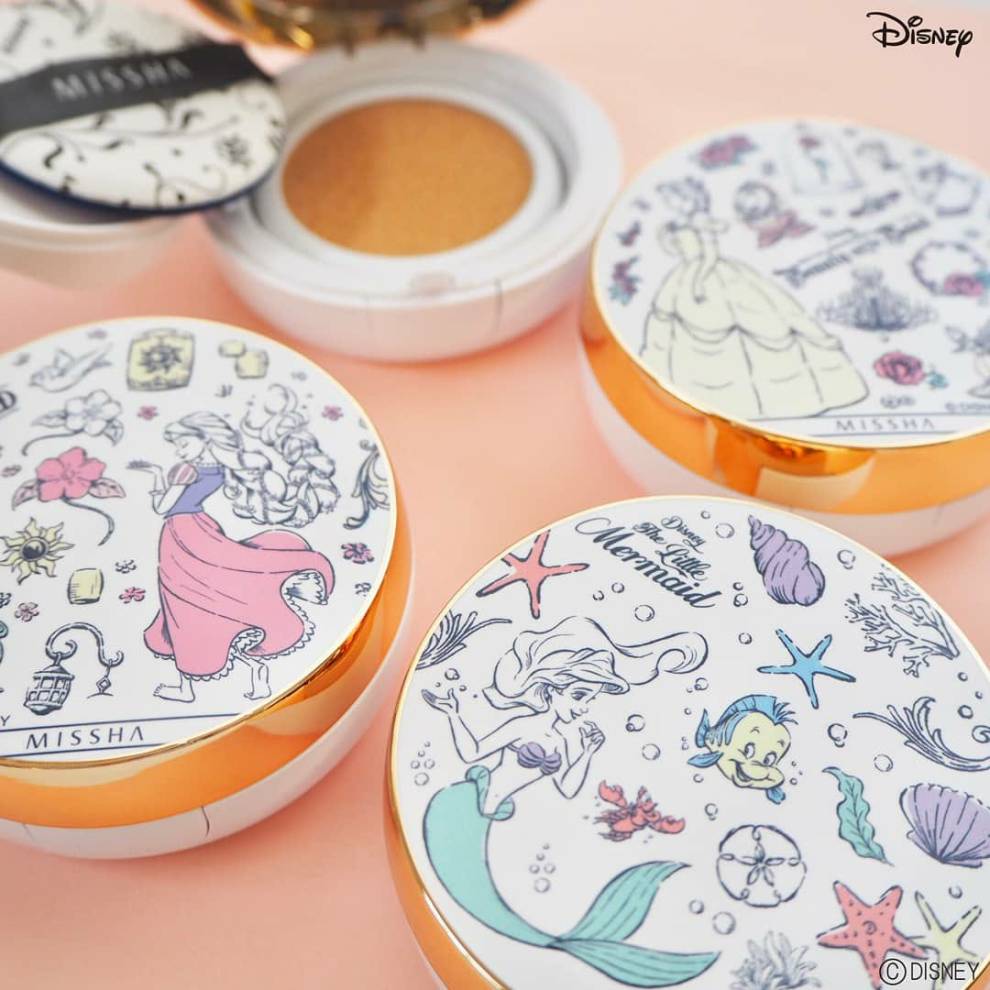
    Missha and Disney have teamed up to create a Princess-inspired collection “It’s Demo Missha x Disney Makeup”.

    The collection includes four princess designs – Belle, Rapunzel, Ariel or Snow White – for both cushion BB creams and the eight-shade FAB eyeshadow palettes.


    The collection is only available in Korea stores and the company only ships online to the US. However, customers can purchase via third-sellers on Amazon.

  • China’s Xiaomi expands into France and Italy

    China’s Xiaomi expands into France and Italy

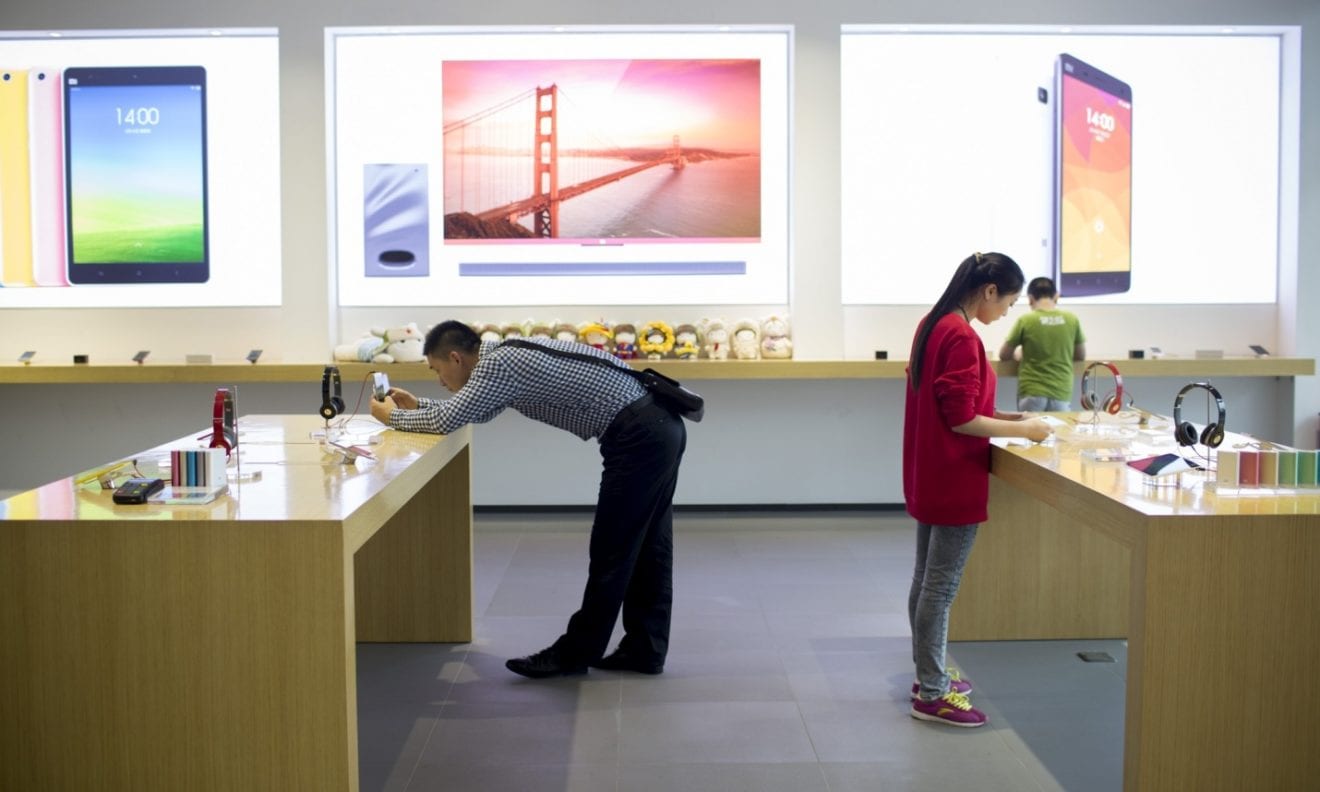
    Chinese smartphone maker Xiaomi Corp, which is planning to raise US$10 billion in a Hong Kong public listing, says it has launched sales in France and will enter the Italian market tomorrow.

    In France, Xiaomi is selling through its first Mi Store in Paris, via its own e-commerce platform Mi.com, and on other online and offline platforms including Amazon and Cdiscount. To date, the Beijing company has established a presence in 74 markets and has agreements with telecoms carriers in France, including Bouygues, Free, Orange and SFR.

    Smartphone shipments in western Europe fell 13.9 per cent in the first quarter, according to market research firm Canalys. Shipments to France dropped 23.2 per cent.

    However, Xiaomi shipments rose by more than 999 per cent, while Samsung and Apple saw 15.4 and 5.4 per cent declines respectively.

  • Amazon looks to expand check-out free concept without cashier

    Amazon looks to expand check-out free concept without cashier

    Amazon appears set to open its second and third queue free grocery stores in Chicago and San Francisco, a sign that the e-commerce giant is ready to start scaling up its wildly successful supermarket concept.

    After launching its first Amazon Go store in Seattle earlier this year the company has begun posting job openings for store managers in both cities, US media reported overnight.

    An Amazon spokesperson confirmed to Geekwire that the company is opening the locations, although no timetable was provided.

    The grocery concept garnered global attention when it was unveiled in late 2016, primarily because the store has no check-out and instead uses a range of intelligent cameras to charge customers automatically when they pick up items and walk out of the store.

    It has been dubbed as Amazon’s attempt to re-invent the supermarket amid the company’s ongoing efforts to claim a greater share of the global grocery pie.

    Expansion is a signal that Amazon believes it is ready to start scaling up the concept after navigating a range of technical challenges to open the store in 2017.

    Last year the Seattle-based business purchased grocery giant Whole Foods in the US to supercharge its efforts in the category, but it appears the Go concept is being kept separate from that investment.

  • Amazon looks to UK grocery acquisition

    Amazon looks to UK grocery acquisition

    Amazon’s aim to conquer retail’s largest category, grocery, through the acquisition of bricks-and-mortar supermarkets has been further illuminated by its reported attempt to initiate takeover talks with the upmarket chain, Waitrose, in the UK.

    A recent report in The Sunday Times has suggested that one of Amazon’s most senior executives in Britain, vice president of special projects Ajay Kavan, had several “enormously informal” conversations with a director of the John Lewis Partnership, Waitrose’s parent company, about a possible deal last November. However, a request for a formal meeting was apparently shut down by the board.

    Citing an unnamed source, The Sunday Times reported that Amazon’s interest in the 350-store supermarket chain was known to the partnership’s executive team, including Waitrose’s boss Rob Collins, group finance director Patrick Lewis and head of John Lewis department stores Paula Nickolds, but chairman of the board Sir Charlie Mayfield denied the report.

    “These times are ripe for speculation, but there has been no approach to the partnership by Amazon regarding Waitrose, and nor would I expect there to be,” Mayfield told.

    Analysts have speculated that Amazon could buy a British grocery chain since it launched its online grocery delivery service, Amazon Fresh, in the market two years ago. Morrisons, Sainsbury’s and Waitrose reportedly were all considered potential targets.

    The recent £14 billion merger between Sainsbury’s and Asda has been cast as a move in part to ward off Amazon’s broader move into grocery, which many see as ramping up since the company’s US$13.7 billion acquisition of Whole Foods last summer.

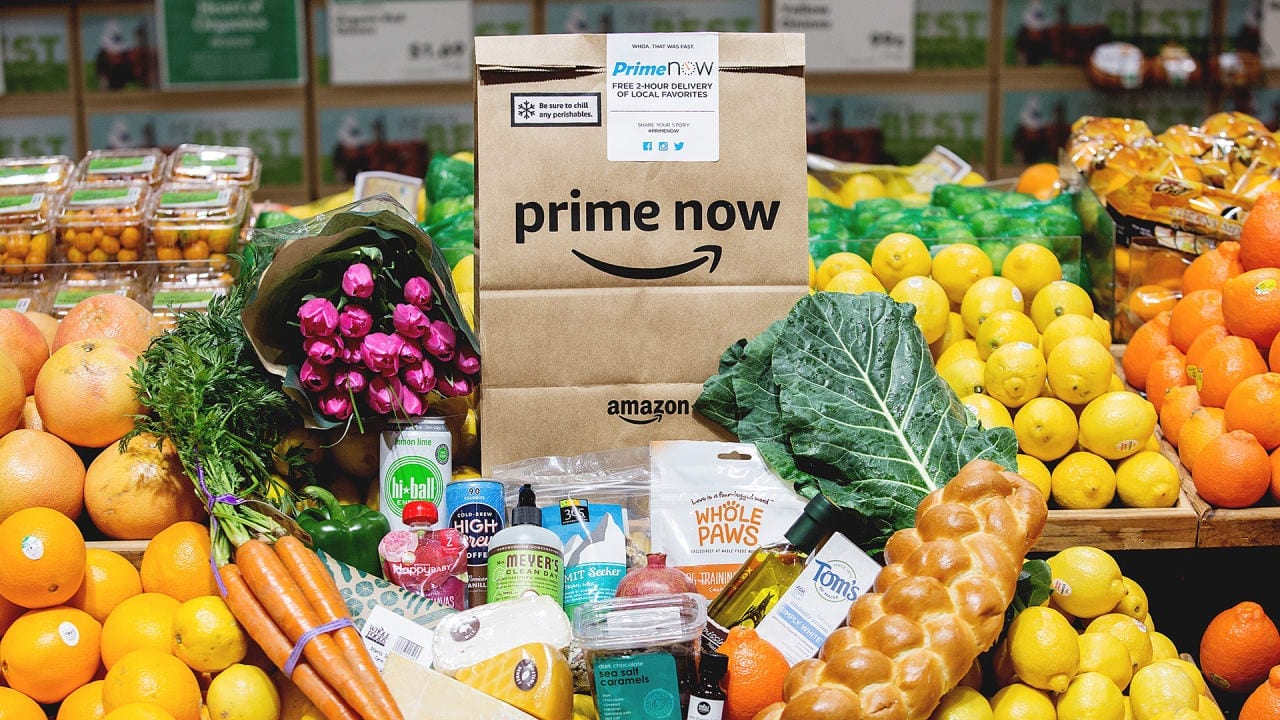
    Since taking over Whole Foods’ 470 stores in the US, Canada and UK, Amazon has cut prices on staples and rolled out free two-hour delivery for online grocery orders in several cities across the US.

  • Amazon opens another fulfilment centre in Sydney

    Amazon opens another fulfilment centre in Sydney

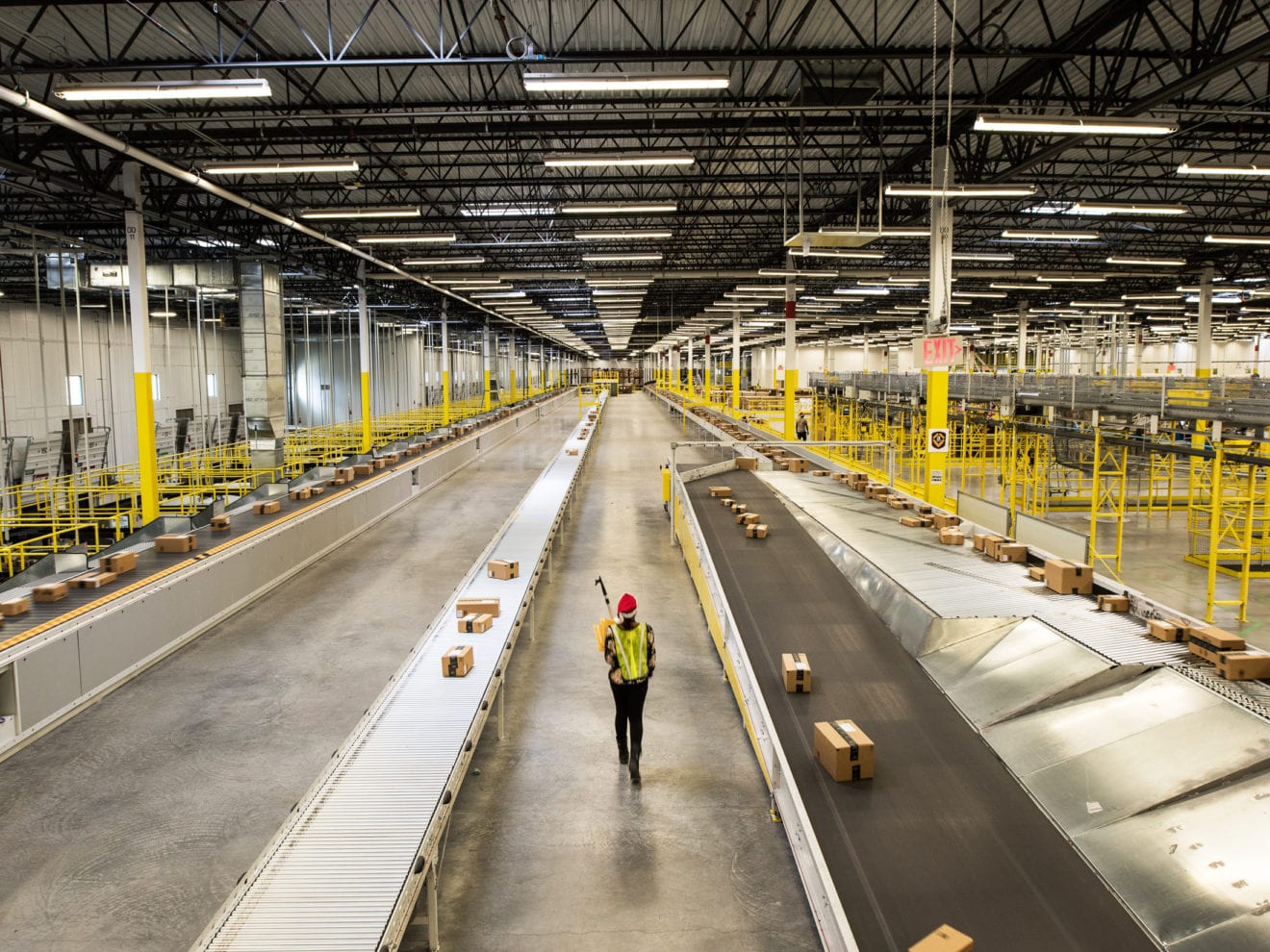
    Amazon is opening a second fulfilment centre to speed up delivery to customers across Australia, as the US-based company expands its e-commerce business Down Under.

    The 43,000sqm fulfilment centre in Moorebank, South West Sydney, is planned to start operations in the second half of 2018.

    “We are thrilled to be establishing our next fulfilment centre in Sydney and working with incredible people in the local community around Moorebank,” said Robert Bruce, Amazon Australia’s operations director.

    “Sydney represents another important development for our growth strategy in Australia, following a steady and progressive increase in customer demand.”

    Together with Amazon’s Dandenong South fulfilment centre, which opened in December 2017, the second warehouse, located within easy access to the M5 and M7 motorways, will allow Amazon to handle current and future customer demand and speed up delivery to customers across the country.

    “This investment will benefit both customers and the local economy by generating new jobs and providing small and medium sized Australian businesses who sell on amazon.com.au and use our Fulfilment by Amazon program, with an opportunity to more easily access millions of customers across the country,” Bruce said.

    Amazon will begin recruiting immediately for a range of roles including operations, support and technical specialists, adding to the more than 1,200 people it currently employs in Australia.

    Since launching its online retail offering in Australia late last year, Amazon has since released new products into the market, including Alexa and Amazon Echo, Amazon Music Unlimited as well as Fulfilment by Amazon, which allows Australian sellers to outsource their pick, pack and shipping process to Amazon logistics.

    Amazon Prime is expected to launch in Australia in mid-2018.

  • Amazon expands tech hub

    Amazon expands tech hub

    Amazon is creating an additional 2,000 technology jobs in fields such as machine learning, speech science, cloud computing and robotics engineering, as it looks to ramp up its Alexa offering.

    The new jobs will be based in the company’s Boston technology hub, one of more than a dozen Amazon tech hubs in the US, where 1,200 software developers and scientists primarily focus on Alexa, Audible and Amazon Web Services.

    In particular, the Boston team contributes to the Alexa customer experience, leading the industry in its shift toward conversational artificial intelligence through cutting-edge research and development in machine learning.

    “Amazon is excited to create 2,000 more jobs in greater Boston,” said Amazon’s vice president and head scientist of Amazon Alexa, Rohit Prasad, who is based in the Boston area.

    “In just a few years, we’ve grown from a handful of software developers and scientists to a team of more than 1,200, inventing new capabilities and products on behalf of millions of customers around the world.”

    To accommodate the new job creation, Amazon will be expanding into 430,000 square feet (approximately 40,000sqm) in the WS Development in Boston’s waterfront Seaport district. The new space, which will open in 2021, will allow the company to double its tech workforce in the region.

    Amazon is committed to strengthening the talent pipeline for careers in the technology sector, and the construction of the facility is expected to generate additional funding for job training programs in Boston.

    The company offers a wide range of programs to support job seekers in gaining skills for jobs of the future, from paid cloud computing apprenticeships specifically designed for military veterans, to a technical academy that helps employees gain fundamental coding and problem skills for software engineering roles.

    Amazon’s customer fulfilment associates can also take advantage of its Career Choice initiative, which prepays 95 percent of the cost of tuition to pursue continuing education courses in certain in-demand fields. To date, more than 16,000 of Amazon’s 566,000 employees worldwide have taken advantage of its job-retraining programs.

  • Amazon’s profit doubles

    Amazon’s profit doubles

    Amazon has reported a 43 per cent increase in net sales in the first quarter to US$51 billion, compared with $35.7 billion in the first quarter 2017, topping analysts’ expectations of $49.8 billion and boosting its share price 6 per cent in extended trading.

    Excluding the $1.6 billion favourable impact from year-over-year changes in foreign exchange rates throughout the quarter, the e-commerce giant’s revenue increased 39 per cent compared with first quarter 2017.

    The results were driven by Amazon’s profitable cloud computing business, strong advertising sales and better-than-expected retail performance, particularly in the US, where the acquisition of Whole Foods boosted sales in that segment 46 per cent year-on-year to $30.7 billion in the quarter, according to Brian Olsavsky, Amazon’s chief financial officer, on a call with analysts.

    The company could see further gains from its US retail business, after announcing Thursday that it plans to increase the annual price of Prime memberships from $99 to $119 in May. Amazon CEO Jeff Bezos recently revealed there are more than 100 million Prime members worldwide.

    The e-commerce giant increased its operating cash flow 4 per cent to $18.2 billion for the trailing twelve months, compared with $17.5 billion for the trailing twelve months ended March 31, 2017.

    Operating income increased 92 per cent to $1.9 billion in the first quarter, compared with operating income of $1 billion in first quarter 2017. And net income was $1.6 billion in the first quarter, or $3.27 per diluted share, compared with net income of $724 million, or $1.48 per diluted share, in first quarter 2017.

    Looking ahead, the retail giant expects net sales in the current quarter to be between $51 billion and $54 billion, which would be 34 to 42 per cent higher than net sales in the second quarter 2017. This guidance anticipates a favorable impact of approximately $1.2 billion or 320 basis points from foreign exchange rates.

    Operating income is expected to be between $1.1 billion and $1.9 billion, compared with $628 million in second quarter 2017, assuming, among other things, that no additional business acquisitions, investments, restructurings, or legal settlements are concluded.
  • Amazon offering deliveries to parked vehicles

    Amazon offering deliveries to parked vehicles

    Expanding on its Amazon Key, which enables access for in-home deliveries, Amazon has started offering deliveries to vehicles.

    With Amazon Key-in-Car, Prime members with compatible vehicles can have packages delivered to the boots and back seats of their cars when parked at home or in public areas.

    Customers need to have a compatible vehicle from Buick, Cadillac, Chevrolet, GMC or Volvo, reports The Verge.

    Free for Prime members, the service is so far available in 37 US cities following beta tests in California and Washington State for the past six months. Amazon is using multiple layers of verification to secure the in-car deliveries.

    The Amazon Key app also shares notifications with users throughout the four-hour delivery-time window, such as when the delivery is on its way, when the package was delivered and when the car was relocked.

    The service expands on the Amazon Key program, a lock-and-camera service that enables Prime members to receive packages directly inside their homes.

  • Amazon Australia unveils new Echo product

    Amazon Australia unveils new Echo product

    A week after showcasing Alexa to over 10 thousand local industry members, Amazon has moved to further expand its voice capabilities in Australia, making its latest Echo product available for pre-order.

    Echo Spot differs to Amazon’s other Echo products in that it has a small screen, enabling the voice assistant to display corresponding graphics to its various functions.

    It comes as Amazon embarks on a national marketing push for Alexa in Australia, including outdoor and digital assets.

    Pre-orders begin on 26 April and will set customers back $199, more expensive than the $149 base echo product, but less expensive than the $229 Echo Plus.

    The Spot features many of the same features that Amazon’s other Echo products do, including access to the 15,000 local ‘skills’ (applications) available through Amazon and other third parties.

    “Echo Spot combines the popular small design of Echo Dot with the added benefit of a display, and the features you love about Alexa into a stylish and compact device,” said Sylvia Ding, Alexa Australia and New Zealand Country Manager. “See the weather, watch video news briefings, glance at your alarm clock, make video calls, and more—we think customers in Australia will find lots of places for Echo Spot in their homes.”

    Amazon is hoping that Alexa will be a cornerstone of its Australian ambitions, helping to complete the closed loop model that’s made it so successful in its other markets such as the United States.

    Yesterday in the states Amazon chief Jeff Bezos took the company’s next step towards increasing Amazon’s presence in American living rooms, inking a deal with Best Buy to retail Amazon’s range of smart TVs in stores.

  • Amazon shopping app launches with a brand new ‘International Experience’

    Amazon shopping app launches with a brand new ‘International Experience’

    Amazon has launched what it calls “the International Shopping Experience” within its Shopping App, allowing customers to browse and shop more than 45 million eligible items that can be shipped to their country from the US.

    The new service works only on mobile browsers and within the Amazon shopping app for iOS and Android devices.

    It comes in five languages, including Simplified Chinese and English and the ability to shop in 25 currencies.

    Amazon says the International Shopping Experience displays clear pricing, shipping costs, and import duty estimates, with Amazon coordinating with courier services for customs clearance on behalf of the customer so there are no surprises at the time of purchase or delivery.

    Customers will be able to browse and shop for products across categories including electronics, books, clothing, shoes and toys. They can choose from different shipping options and delivery speeds, depending on how quickly they want their package to arrive.

    “We are always innovating on behalf of our customers, and with today’s launch, we are making the shopping experience on mobile devices even better and more convenient for our customers who live outside the US,” said Samir Kumar, VP of Amazon exports and expansion. “Customers have been asking for a way to easily find and shop only for products available to be shipped to them. The International Shopping Experience solves this customer need and makes it simple to browse, shop and ship more than 45 million products to over a hundred countries around the world.”

    Customers who download the Amazon Shopping App from the Apple App Store or Google Play Store will automatically be placed into the International Shopping Experience. Customers who already have the Amazon Shopping App need to go into their settings within the app, choose the ‘Country & Language’ option and select ‘International Shopping’ in the country picker.

    Customers can then set their language and currency of preference to enjoy a customised shopping experience, and can change their location at any time to automatically see products that are eligible to be shipped to their selected delivery location.

  • We need to look beyond the dollars and assets to value Amazon, Facebook correct

    We need to look beyond the dollars and assets to value Amazon, Facebook correct

    Investors and business people usually value companies based on the balance of assets and debts at the end of a financial year. But our research found they should be valuing their employees’ ability to innovate while using their existing physical assets.

    This is what actually creates value for our economy. For example manufacturing, an example of using assets to create value, is on the decline in Australia. Contrast this to services, using the skills of employees, which are increasing.

    We came up with a modified way to predict the value of companies, removing the emphasis on assets and instead using measures of spending on research and development and copyrights.

    We tested this revised model with accounting data from companies in countries like China, Malaysia, Russia, South Africa and Turkey. We also tested it with companies in more developed countries like Australia, Austria, Netherlands, Singapore and Sweden.

    Research and development was positively associated with return on assets in Australia, Austria, the Netherlands, Singapore, Sweden, China, South Africa and Turkey, according to the model. This means that companies in these developed and emerging economies use their resources more efficiently because of their investments in research and development and copyrights.

    For some of the biggest technology companies like Amazon and Facebook, the unique combination of their people, their invented systems and processes, and their physical presence creates value for the company and their investors.

    If we can improve how we predict potential economic value, we can help companies and our economy to grow and become more efficient.

    Traditional accounting methods

    Today, the traditional accounting system has lost its relevance, because many of the resources companies use to do business cannot be owned and become an asset.

    Traditionally companies calculate how much they own (assets) and subtract how much they owe (liabilities). The remaining amount, or book value, is what the company is worth.

    But people are a key resource in any company, yet companies do not own people. The wages paid to them are an expense, but their value cannot be recorded in the company’s accounts.

    Similarly, accounting rules state that most research and development is expensed when it occurs, meaning it is counted as a cost immediately. The problem is that investments in people and research and development may not pay off until the future.

    What this means for long-term investments

    Amazon, for example, is spending billions of dollars on research and development. This would involve spending money on intangible resources such as copyrights, market research, branding and designing systems and processes. It will also invest in marketing to potential customers, training staff and hiring managers.

    According to current accounting rules, most of these costs are treated as expenses now. It is only physical assets such as buildings, computers, furniture and equipment that are counted as a cost over time.

    However, Amazon’s investment in its new distribution network is likely to reap significant returns in the future. The fact that accounting reports analyse the past year, six months or quarter, shows how accounting is too focused on the short term. In the long term, Amazon is actually worth about 25 times more than accounting suggests.

    Because investors are interested in the future returns from their investments, not what was spent in the past, the stock market values most modern companies at several times their book value. This makes modern accounting even less relevant in explaining economic value.

    A new approach

    Our research found that to understand how economic value is created, you need to look at what businesses are spending on long term resources such as research and development and copyright and treat it as an investment, rather than a cost.

    Even if a company is not making a profit because it is investing in research and development in the short term, this does not mean it is not capable of making money in the long term.

    Many companies like Amazon never made a profit in their early years as they burned cash to create their foothold in the market. But their investors were convinced these companies would create economic value by way of profits and increased share prices in the future.

    If we look beyond the book value of companies, we can truly understand how they create economic value.

  • Amazon now claims a third of all online sales in the UK

    Amazon now claims a third of all online sales in the UK

    Amazon accounted for £4 of every £100 spent in the UK last year and is now the fifth biggest retail business in the market, topping some of its highest profile department stores, GlobalData analysis has found.

    Increasing its retail revenue by an estimated 22.5 per cent in the UK last year, Amazon is outpacing wider online market growth of 8.4 per cent by a factor of 2.6 and now accounts for more than a third (33.5 per cent) of all spending online.

    As the fifth largest player in the market now it is only topped by Tesco, Sainsbury’s Asda and Morrisons.

    It is bigger than the likes of John Lewis, Marks & Spencer, Aldi, Alliance Boots and Dixons Carphone.

    “Amazon is soaring up the ranks of UK retail with the online behemoth only held off the top spot by the big four grocers in 2017,” GlobalData’s senior retail analyst Sofie Willmott said.

    Globaldata

    “Its dominance in the retail market considering it primarily sells non-essential items in comparison to the grocers who benefit from selling indispensable, everyday goods, and that it does not have any physical stores in the UK, is evidence of how Amazon has continually innovated and succeeded in meeting consumer needs, in terms of both product range and shopping experience.’’

    Amazon is this year celebrating its 20th year in the UK, one of its biggest markets outside of the US and the growing point from which it has embarked on its broader European expansion over the last decade.

  • Is there any Alexa advantage?

    Is there any Alexa advantage?

    The Australian market is approaching 5 months since Amazon launched its highly anticipated marketplace service, and by many accounts its entry hasn’t been all it was cracked up to be.

    While Amazon has said that Australia brought in its higher launch day volumes in the company’s history, the overwhelming market response to its immediate impact has been a shrug and a sigh of relief.

    In his second public appearance since taking the reigns of Amazon in Australia yesterday company veteran Rocco Brauniger conceded that he and his team still have a lot of work to do as the business moves towards a launch of the Prime loyalty program locally.

    “There’s still a long way to go,” he said. “We’re really working hard to bring a lot of innovation here.”

    Brauniger faces an interesting challenge. Amazon is estimated to account for more than 50 per cent of total e-commerce sales in the US, but the business is far from an early mover in the online or marketplace space in Australia – local retailers have had years to learn from the mistakes of their international peers.

    But those trying to go toe-to-toe with Amazon’s e-commerce platform could be in for a surprise.

    Earlier this year Amazon’s voice assistant Alexa launched locally with its suite of accompanying echo products to little fanfare, which is interesting given founder Jezz Bezos’ clear focus on the service.

    “Our 2017 projections for Alexa were very optimistic, and we far exceeded them. We don’t see positive surprises of this magnitude very often — expect us to double down,” he said when Amazon reported fourth quarter earnings in February.

    The Alexa advantage

    Bezos isn’t the only one excited about Alexa either, Brauniger has two echo devices in his home and uses Alexa every day to do everything from getting the headlines to checking the surf at his local beach.

    Despite only being a few months into its Australian life, Alexa has more than 15,000 ‘skills’ (applications) available on its platform, providing customers with voice access to movie tickets, pizza, news, public transport and banking.

    A myriad of local brands is already on board, from Qantas to National Australia Bank, Domino’s and Hoyts.

    In a presentation yesterday, Alexa’s recently hired managing director of Alexa skills in ANZ, former Intel Australia MD Kate Burleigh, said that voice interaction was a game changer that will take the Australian market by storm.

    “It is the biggest leap forward we’ve seen in a number of years and we can do it now because its technically possible,” she told a crowd of thousands gathered in Sydney.

    “Voice is how we like to interact, it’s the most natural way for all of us to communicate with each other … and bring our ideas to life.”

    Alexa is an important part of Amazon’s end-to-end customer strategy in the US, embedding Amazon into the living rooms of consumers that have been turning to voice shopping in droves.

    In Australia voice shopping is still relatively under-developed but is expected to take off in the next few years, with a recent survey conducted by Salmat finding that as many as 46 per cent of Aussies are excited to take voice shopping for a spin.

    For Amazon it represents an opportunity to ground floor and catch many otherwise prepared Australian competitors off guard – Alexa could be the key to cementing its presence in the local market.

    Competitors responding

    Amazon’s closest local competitors are already responding though, with Ebay one upping its rival late last year by launching voice shopping in partnership with Google’s voice assistant. Amazon shopping is still not available to Australian Alexa users.

    Meanwhile, Ruslan Kogan is looking to launch his range of own-branded smart speakers with Google Assistant built in and Catch Group is actively looking into the channel.

    “Voice will be the future of search, there’s no doubt about that,” Catch’s head of marketing Ryan Gracie has said.

    But for traders outside of the marketplace space voice is a tricky proposition. Voice lends itself to convenient product searches that are light on detail about things like brand or preferred seller, raising the possibility that Amazon, which also sells its own products, could gate-keep shopper queries.

    Alexa in the home – completing the closed loop

    Burleigh, who will be working on implementing Alexa’s voice shopping capabilities locally, didn’t delve into the details of Amazon’s plans on Tuesday, but outlined Amazon’s ambition to put the voice assistant at the heart of the Australian household.

    “We’ve already had such excitement in the marketplace around the potential that Alexa can bring into our homes,” she said.

    In the US, where Alexa now has more than 30,000 skills, large appliance businesses such as LG are embedding Alexa into their products.

    “You can build your own devices and solutions and embed Alexa’s voice service,” Burleigh explained.

    Aside from its hope that Alexa can become part of millions of Australian homes, it will also form a cornerstone of the infamous closed-loop model it has implemented in the US, synergising with its forthcoming Prime loyalty program by enabling exclusive deals for subscribers.

    The highly anticipated loyalty program is expected to launch later this year and is expected to deliver a step-change for Amazon’s Australian plans as it expands its fulfilment capabilities here.

  • A lot of work for Amazon in Australia

    A lot of work for Amazon in Australia

    Amazon’s second public outing since launching in Australia last December was light on new detail about its plans for the local market but heavy on ambition for what it believes it can achieve here.

    Drawing thousands to a concert-sized auditorium in Sydney on Tuesday morning, the e-commerce giant flew in top brass from the states to underline their excitement about enabling Australian businesses to expand their horizons locally and abroad.

    SVP of international consumer Russ Grandinetti, one of Amazon’s first 200 employees, was quick to combat the prevailing narrative that the company’s local launch fell short, saying that its first day order volumes were the highest in the company’s history.

    “[Country manager Rocco Brauinger] and the team here have done a great job, I’m super proud of them,” he said.

    But appearing on a brief panel alongside Grandinetti, Brauniger conceded that there’s still a lot of work to do to make Amazon as compelling to Australians as it is elsewhere in the world.

    “There’s still a long way to go,” he said in his second public event since taking his role last August.

    “We’re really working hard to bring a lot of innovation here, expanding the selection and making the customer experience for Australian shoppers much better.”

    Since launching Amazon has endured a barrage of criticism from prominent retailers and analysts, some of whom have dismissed concerns that the US-based business would have an adverse impact on the Australian market.

    “Working hard” on Prime

    The Innovation Day, which also included a “metropolis of the future” exhibition, comes at a crucial time for the business Down Under as it looks to build out the various aspects of its complete offer that have made it so successful in the United States.

    Fulfilment by Amazon (FBA) and voice assistant Alexa both launched locally earlier this year and while the services are still in relative infancy locally they are important pre-cursors for the Amazon Prime loyalty program, which is expected to launch later this year.

    “I don’t have any news to report about Prime other than we’re working hard on it and it will come soon,” Grandinetti said, dashing any hope that Amazon would detail its plans for the program locally.

    The launch of Prime is thought to be a potential turning point for the business that rounds out its end-to-end customer strategy, similarly to what it has done in the US where an estimated two-thirds of households are Prime members.

    Cross border contribution

    The prospect of Prime in Australia also continues to face questions about whether its signature two-day free delivery model would work in a market with such sparse population density, but Grandinetti explained that the program has always been about making a difficult commitment.

    “Prime is all about making a hard promise and keeping it as often as possible,” he said. “Telling customers they can subscribe to get free two day shipping is easy, doing it .. is much harder.”

    But, as Grandinetti noted, the fully-fledged Amazon experience is already a reality for many Australian businesses selling on the company’s platforms internationally.

    A growing number of local retailers are turning to the e-commerce giant to decrease the cost of international expansion, with the likes of Showpo recently revealing that they are in talks with the giantto supercharge their growth in the US.

    “Among the most enduring contributions [we make] will be helping Australian businesses around the world,” Grandinetti contended, underscoring Amazon’s focus on cross-border e-commerce.

    As was repeatedly stressed though, Amazon is playing a long game and is content with being “misunderstood” in the local market for the time being as it lines up its ducks for a fully-fledged assault.

    Brauniger said the Australian Amazon team was busy iterating its offer, trying new things on local shoppers to glean a better view into what works here.

    “We’re fine making decisions with 60 per cent of the information, not being experimental means you’re not being innovative,” Brauniger said of his leadership philosophy on Tuesday.

  • AWS launches Aurora via Singapore cloud region

    AWS launches Aurora via Singapore cloud region

    Amazon Web Services has announced the availability of Amazon Aurora in the AWS Asia Pacific (Singapore) region.

    Amazon Aurora is a MySQL and PostgreSQL compatible database engine for the Amazon Relational Database Service (Amazon RDS) that aims to combine the speed and availability of high-end commercial databases with the simplicity and cost-effectiveness of open source databases.

    Amazon Aurora provides up to five times better performance than the typical MySQL and is three times faster than standard PostgreSQL databases. Customers pay a simple hourly charge for each Amazon Aurora database instance they use and Amazon Aurora can automatically scale storage capacity with no downtime or performance degradation.

    “Historically, customers have had to choose between performance and price when evaluating database solutions. Our customers have consistently told us that they wished for an easier way to get the performance of commercial databases, at the price of open source engines,” said Nick Walton, Managing Director, ASEAN, AWS.

    “Amazon Aurora is a database engine that gives customers the best of both worlds – the performance and availability of the highest-grade commercial databases at a cost more commonly associated with open source.”

    Amazon Aurora automatically replicates data across multiple Availability Zones and continuously backs up data to Amazon Simple Storage Service (Amazon S3), which is designed for 99.999999999% durability without performance impact.

    Amazon Aurora is designed to offer greater than 99.99% availability, and to automatically detect and recover from most database failures in less than 60 seconds, without crash recovery or the need to rebuild database caches. Amazon Aurora continually monitors instance health and if there is a failure, it will automatically failover to a read replica without loss of data.