Tag: amazon

  • Is Amazon ready to dominate cosmetics market?

    Is Amazon ready to dominate cosmetics market?

    Reading through recent headlines about Amazon disrupting the beauty industry, one would think that it is time for Sephora and Ulta to panic and rethink their strategies.

    However,  beauty needs retailers to provide compelling customer experiences and a sense of community to succeed.

    According to a report by 1010data, Amazon’s marketplace captures 21.1% of the U.S. market share, with Macy’s coming in second with 17.4% and Sephora in third place with 15%.

    Amazon is clearly making strides to increase their presence in beauty by partnering with cosmetic giants like Coty to launch their “Let’s Get Ready” skill for Amazon Echo Show, a company that made headlines with Amazon last year for banning third-party platforms like Amazon from selling their prestige products.

    Prestige beauty brands like Coty and the Estee Lauder Cos have tended to stay clear of selling their products on Amazon supposedly because it lacks the cachet of traditional luxury beauty retailers. While that may be somewhat true, I also think it is because luxury brands are terrified of the lack of control on Amazon – the possibility of consumers unknowingly purchasing knockoffs from China or older products at a discount.

    If prestige brands are so bothered about being sold under the same roof as mass market, why are luxury brands like Lancome, Benefit, and MAC pleased as punch to be top-sellers at Ulta, where mass market rules? Because brands can work with retailers like Ulta to ensure consumers get the right experience and right product for that matter.

    While virtual reality and augmented reality are becoming key technologies for helping beauty consumers make informed decisions, it doesn’t mean these technologies can replace the brick-and-mortar experience.

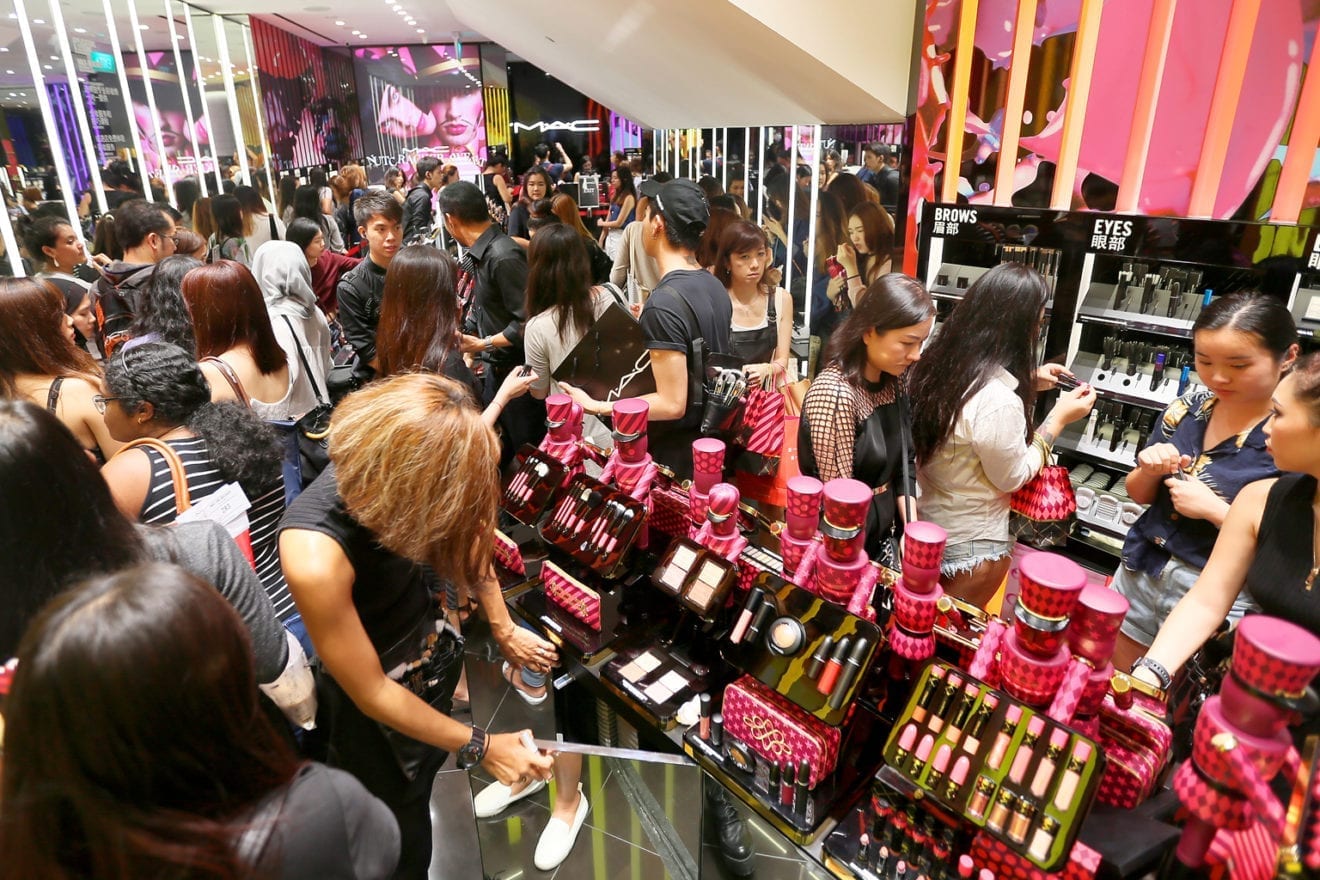
    Sephora and Ulta continue to drive foot traffic and sales with innovative in-store experiences and workshops, making visiting their brick-and-mortars more of a fun encounter than an errand.

    Seeing how a lipstick looks via an augmented reality app is novel but it cannot replace actually trying it on to feel its texture or test if it bleeds. Testing a cream on the back of your hand to see how it makes your skin look and feel is something that even Amazon can’t duplicate without a brick-and-mortar.

    Building a sense of community like its competitors in the beauty space will also be an uphill battle for Amazon. Sephora launched their Beauty Insiders Community last August, offering multiple channels for consumers to find each other, discuss beauty, post and view photos, and unlock shopping benefits through usage.

    While Amazon may have a comprehensive rating and review system, the e-tailer giant also has a bad reputation for bot reviews, which doesn’t lend well to a sense of community.

    While Amazon will probably continue to dominate in online sales, Amazon is going to have a tough time dominating the beauty industry until they can grab the brick-and-mortar traffic too.
  • Alibaba and Kroger in talks

    Alibaba and Kroger in talks

    Looking to fight back against Amazon’s move into the grocery business, Cincinnati-based Kroger is reportedly eyeing an alliance with the Seattle juggernaut’s nemesis: China’s Alibaba.

    Industry speculation has Kroger exploring everything from a technology alliance to an outright acquisition by the Hangzhou-based tech company. Such an epic takeover – which could easily top $50 billion – would be four times larger than last year’s acquisition of Whole Foods by Amazon that sent traditional grocers scrambling to boost their digital capabilities.

    Senior Kroger executives met with senior Alibaba officials last month in China, the New York Post and Reuters reported, citing unnamed sources. While details of a potential partnership were not revealed, an arrangement of some type was disclosed by of all sources, China’s Ministry of Commerce.

    “Alibaba has teamed up with Kroger … to speed up the integration of online and off-line sales,” the Chinese agency said in a statement on Jan. 13.

    Kroger shares rose Thursday as investors pondered the merits of a pact or a takeover of Kroger by Alibaba. Kroger stock climbed as high as $30.46 on Thursday, up 3.3 percent. Shares closed at $30.26, up 2.7 percent.

    Alibaba at the least could provide a digital payment platform to create stores that would not need cashiers or checkout stations. That’s something it has done in China and which Amazon introduced earlier this week in Seattle with a new Amazon Go store.

    With 2,800 stores across the U.S., Kroger could provide Alibaba a massive American platform to compete against Amazon. The Cincinnati-based grocer is the U.S.’s largest supermarket chain. Further, Kroger could direct some business to Alibaba’s site for general merchandise, sources told the paper.

    But while Alibaba’s annual sales last year were only $25 billion versus Kroger’s more than $100 billion, it has pockets nearly as deep as Amazon. The company is worth 10 times Kroger. If Alibaba wants to enter Western markets via an acquisition, it could make a credible offer.

    Wall Street analysts were intrigued at the possibility of a takeover, but seemed to think a partnership was more likely to result from the talks.

    “If these articles are in fact true, we applaud Kroger for thinking outside the box – because a Kroger/Alibaba partnership would be a superior solution… and would meaningfully alter the competitive landscape in the US,” wrote Barclays analyst Karen Short in a Thursday note to investors. “Alibaba could certainly provide Kroger with the most – if not all – of the e-commerce solutions.”

    Wells Fargo analyst Edward Kelly also leaned toward a possible alliance.

    “A partnership with a player like Alibaba would seem to make a lot of sense, as it could provide an attractive opportunity to advance Kroger’s technology platform and digital knowledge without significant upfront cost,” Kelly wrote in a Thursday note to investors.

    Andy Stout, managing director of investments at Simply Money in Symmes Township, said a takeover might be hard to pull off as regulators might resist a foreign ownership for a Fortune 500 company. He noted regulators early this year helped kill the acquisition of Moneygram by Alibaba subsidiary Ant Financial.

    “Regulators would look very closely at a Chinese company buying the third-largest retailer in the US,” Stout said. “In this age of populism, I think regulators probably would not allow Alibaba to buy Kroger.”

    Kroger officials declined to comment Thursday, labeling the reports “rumor or speculation.”

    Speculation of possible Kroger acquisitions or partnerships are in overdrive this month with news outlets suggesting the grocer was eyeing potential takeovers of digital wholesaler Boxed as well as online retailer Overstock.com. The common thread to all these reports besides unnamed sources and Kroger silence was avenues for the retailer to beef up its digital abilities.c


  • Amazon Go, a high-tech version of a 7-Eleven, finally opened on Monday

    Amazon Go, a high-tech version of a 7-Eleven, finally opened on Monday

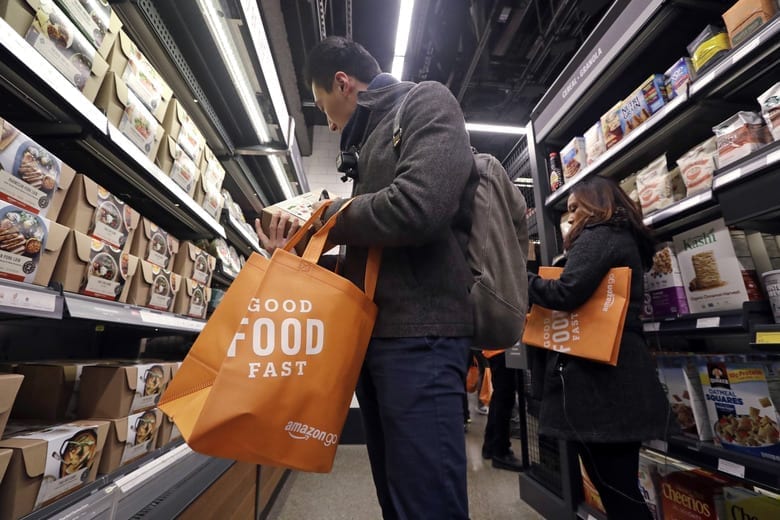
    No cashiers, no lines, no registers – this is how Amazon sees the future of in-store shopping.

    The online retailer opened its Amazon Go concept store to the public on Monday, selling milk, potato chips and other items typically found at a convenience shop. Amazon employees have been testing the store, which is at the bottom floor of the company’s Seattle headquarters, for about a year.

    The public opening is another sign that Amazon is serious about expanding its physical presence. It has opened more than a dozen bookstores, taken over space in some Kohl’s department stores and bought Whole Foods last year, giving it 470 grocery stores.

    But Amazon Go is unlike its other stores. Shoppers enter by scanning the Amazon Go smartphone app at a turnstile. When they pull an item of the shelf, it’s added to their virtual cart. If the item is placed back on the shelf, it is removed from the virtual cart. Shoppers are charged when they leave the store.

    The company says it uses computer vision, machine learning algorithms and sensors to figure out what people are grabbing off its store shelves.

    Amazon says families can shop together with just one phone scanning everyone in. Anything they grab from the shelf will also be added to the tab of the person who signed them in. But don’t help out strangers: Amazon warns that grabbing an item from the shelf for someone else means you’ll be charged for it.

    At about 167 square metres, the store will also sell ready-to-eat breakfasts, lunches and dinners. Items from the Whole Foods 365 brand are also stocked, such as cookies, popcorn and dried fruit.

    The company had announced the Amazon Go store in December 2016 and said it would open by early 2017, but it delayed the debut while it worked on the technology and company employees tested it out.

  • Is Amazon threatening luxury?

    Is Amazon threatening luxury?

    Amazon has been struggling to recruit luxury brands to sell their good on its platform, but there is one way that it could make its marketplace more of a destination for shoppers looking for certain tiers of luxury products.

    Amazon could launch vertically integrated, mass-customized brands of its own that use technology to smooth the customer shopping process, similar to Indochino.

    While Amazon is not likely to get catalog coverage from many of the ultra-luxury brands, it does have the ability to make a number of mid-level luxury brands less relevant to large segments of Amazon customers, replacing those brands through the merchandising of its own private-label luxury brands at prices that encourage even the slightly price-sensitive luxury products customer to consider a cheaper alternative, available directly from Amazon.

    There will always be customers who want nothing other than the $10,000 handbag with that special brand name, or the $3,000 suit from Armani or Gucci. Yet for millions of Amazon Prime customers, the prospects of “affordable luxury” becomes available through something like an Indochino model.

    Brands like Brooks Brothers, Hugo Boss, Zac Posen, Tom Ford and Burberry that may today be aspirational for millions of Amazon customers could be replaced with Amazon’s own mid-level luxury brands, made at comparable quality with perfect custom fitting and a much lower price. Such a model has the potential to wipe out much of the apparel advantage Stitchfix has created for itself over past few years.

    Indochino is a direct-to-consumer manufacturer of custom suits for shirts for men. While production is based out of China, it offers U.S. customers the opportunity to get sized either through a measurement process online using videos, or in a limited number of storefronts based in major metropolitan locations throughout the United States. For under $400, Indochino is able to manufacture a custom-fitted garment and shrip it to the U.S. or Canadian customer within 3 weeks.

    Comparable pricing for a U.S.-tailored suit including luxury brands would range from $1,500-$3,000. While a luxury U.S. brand in the U.S. is likely to require 2-3 weeks for custom tailoring of an off-the-rack suit, the custom-made Indochino suit sells for a fraction and promises a better fit because it was made using the customer’s body measurements.

    Let’s say Amazon bought Indochino, or built its own comparable model, and expanded it into women’s clothing too.

    Then Amazon uses some variant of technology from its new acquisition Body Labs to develop a system for measuring customers’ dimensions. With such technology onsite at a range of retail studios across the country, Amazon now would have the dimensions of millions of Prime customers, and would be able to offer them its own custom-fit luxury-quality brands.

    Using pin-point merchandising, Amazon could target these brands to specific customers that have searched for comparable luxury brands on Amazon already. Amazon’s scale and ability to accept low margins would quickly turn the mid-luxury brand customer towards Amazon, and away from so many of the luxury brands that have declined to distribute their products on Amazon.

    With any decent scale, Amazon would have competitive manufacturing costs, the ability to up-sell and cross-sell all sorts of other items (apparel and non-apparel), all the while being comfortable with much lower margins than a typical luxury brand. With an already generous returns policy, Amazon could offer customers the opportunity to buy lower-priced custom-made items, returning whatever items the customer did not like. I do not know of any other apparel brand that could compete effectively with such a model.

    The prospect that Amazon could win part of the customer’s wallet that today goes to luxury brand purchases externally should be on the radar of mid-tier luxury brands, and a ray of hope that more consumers will be able to afford a luxury look at lower prices.

  • Amazon goes shopping

    Amazon goes shopping

    All sorts of rumors are out there talking up potential Amazon acquisitions.

    First, it was Kohl’s that was going to be bought by Amazon. It seemed reasonable; after all, they are already selling some of the Amazon electronic equipment like Alexa. Kohl’s also agreed to take back Amazon merchandise from customers.

    It was a good idea for Amazon to initiate brick and mortar returns. At the same time, Kohl’s is counting on gaining more customer traffic

    Then, technology analyst Gene Munster of Loup Ventures wrote that Target was a candidate to be purchased by Amazon. The locations of Target stores are appealing and would provide a great opportunity for the sales of Amazon hardware. Moreover, the fashion appeal of Target’s 1,834 stores makes this an interesting candidate.

    As long as we are guessing who the next candidate might be, Walmart could be a great candidate. It has stores in every state of the U.S.A., a significant global presence, and is a fierce competitor to Amazon. All the more since Mark Lore has intensified online sales, so eliminating competition could enrich Jeff Bezos’s coffers. However, Walmart has 11,650 stores worldwide.

    Here is another option. Forbes contributor and Columbia University Professor Mark Cohen’s belief that Costco could be the most likely candidate has merit since I believe both the food and non-food sections of Costco continue to function well and generate higher revenues and earnings every quarter.

    Many Costco customers stay loyal to the company because of the quality of Costco’s offerings and value of every product they sell. And, membership renewals are very high. This acquisition would also strengthen Amazon’s presence in the food business. Amazon’s 2017 acquisition of Whole Foods Markets was a spectacular move.

    Amazon is an amazing company – hated by the industry but loved by its customers. Their next acquisition is most likely going to be a ready-to-wear retailer that will intensify its fashion presentation. Kohl’s fits that description. Maybe J.C. Penney, but that company has too much debt. So what about Macy’s? Dillard’s?

    The industry is fighting for survival. Amazon recognizes the opportunities and may act. However, this is still just a guessing game. Amazon will choose if and when to act when it’s ready, so we can just wait and watch as none of this is going to accelerate what Amazon will do.

  • Amazon : AR will change how we shop

    Amazon : AR will change how we shop

    Amazon saw its biggest holiday shopping season yet, as the draw of its Prime membership program seemed to kick into overdrive, with consumers around the world buying at record levels, the nation’s largest online retailer said.

    Over the course of one week, more than four million people either started free Prime trials, or purchased a membership outright, wooed by benefits such as free two-day, one-day or same-day shipping, as well as one-hour and two-hour delivery perks.

    The retailer’s holiday findings hint at what is poised to propel retail sales next year and beyond — from merchandise purchased via voice commerce to furniture shopping aided by the magic of augmented reality.

    Alexa-enabled Amazon devices such as the Echo Dot and Fire TV Stick with Alexa Voice Remote were not only top selling Amazon items, but also the best-selling products from any manufacturer in any product category and brand sold on the site, according to the e-tailer.

    Amazon additionally scored a hit with its Echo voice-assistant devices, as the Echo Spot, Echo Dot and Echo Buttons sold out. At the same time, the Echo Dot, Fire TV Stick with Alexa Voice Remote and TP-Link Smart Plug Mini ranked as the most popular items purchased by voice.

    Amid a $2.3 trillion global ecommerce market, Amazon shipped more than one million customer packages in a single day in North America and Europe alone, with 19 December 2017 marking the mega load for picking, packing and shipping at its 10 fulfillment centers.

    To meet that demand, the retailer increased the size of its fulfillment and shipping network by more than 30% worldwide this year.

    Just as holiday 2017 is poised to go down in the retail record books as a tipping point for mobile shopping, consumer purchases on Amazon’s app soared nearly 70% this season, the retailer said.

    To take that out of the abstract, more than 1,400 electronics products were ordered per second on the site via a mobile device this holiday.

    “The mobile phone is the new mall, and how a brand looks on a smartphone replaces the physical store window,” according to Oliver Chen, retail analyst with Cowen, in a research note.

    Meanwhile, Amazon shoppers can now see how a sofa would look in their own living room via its AR View feature.

    Shoppers are beginning to give AR more attention on the site, particularly when viewing function-driven, feature rich, high-consideration purchase, such as furniture. Top categories viewed via AR included furniture, toys, Amazon devices, kitchen items and consumer electronics, with the retailer’s black chair with ottoman getting the most views.

    In its Future 100 report, J. Walter Thompson’s Innovation Group files this trend under the “transcendent retail” category, as shopping is “ leaping on the screen and morphing into a more immersive experience,” said Lucie Greene, Director of JWT Innovation, in a press statement on the report.

    Voice technology, augmented reality, and artificial intelligence are transforming the retail industry “to make buying products quicker, easier and more enjoyable.”

  • Aeon Group to invest into digital space

    Aeon Group to invest into digital space

    Major Japanese retailer Aeon Group plans to invest ¥500 billion (US$4.4 billion) in online retail over the next three years.

    Representing a 150 per cent spike in its online investments, the plan has been revealed in a new midterm business plan.

    Openings of tenant stores in Japanese shopping malls have shrunk by 30 per cent in the past year, a Nikkei survey shows. Stores are also closing faster than they are opening, and malls are struggling to find replacements.

    Aeon has spent 18 months mapping out its new strategy, which is intended to ensure its long-term survival. The midterm plan will be in effect until fiscal 2020.

    “We will spend more on things other than brick-and-mortar stores,” Aeon president Motoya Okada said after unveiling the plan in Tokyo.

    Aeon’s massive investment in technologies and services to raise its online retailing profile reflects the challenges it faces along with other traditional merchants.

    Okada said the company also plans to double its investment for boosting its online business beginning in fiscal 2021.

    He also said “old-fashioned” retailers have learned much from Amazon.

  • JD.com will open hundreds of unmanned convenience stores

    JD.com will open hundreds of unmanned convenience stores

    Following a trial at its Beijing headquarters, online retail giant JD.com plans to open hundreds of unmanned convenience stores.

    This effectively dwarfs Amazon’s plans to open checkout-free stores, as reported.

    JD.com’s stores will use facial recognition and other technology to identify products and record payments so customers do not need to wait in a checkout line. Ceiling cameras will track shopper movements and generate heat maps to monitor activity and traffic flow, product choice and customer preferences.

    This will all help store owners to stock efficiently, says the company, while facial recognition will allow for customised advertising based on an individual’s shopping behaviour.

    “From helping small-store owners streamline their supply chains and increase stocking efficiency, to speeding up check out, this is a massive jump beyond anything in use today,” says JD.com VP Song Ma.

    As well as plans to eventually license its store technology to third parties, the online retailer is also considering driverless vehicles with pre-programmed routes as well as secure lockers for deliveries. In May, JD.com said it planned to develop heavy-duty drones for long-distance deliveries.

    Also earlier this year, Amazon announced its intention to roll out Amazon Go, a checkout-free, cashless store.

  • Be ready with ‘more convenience’ app from 7-Eleven US

    Be ready with ‘more convenience’ app from 7-Eleven US

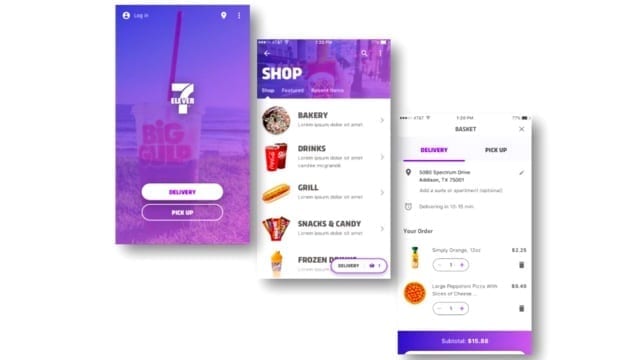
    7‑Eleven US is trialling on-demand ordering for delivery or in-store pickup at selected Dallas stores via its new 7‑ElevenNow smartphone app, ahead of a national roll-out.

    The new service is being tested in 10 downtown and uptown 7‑Eleven stores, and the convenience retail company says it will introduce the program into other locations in the US next year.

    Dallas customers who enroll in the new app – which runs on both Google and Apple platforms – will receive free delivery on their first order.

    “With more locations than any other convenience retailer in the world, 7‑Eleven has a corner on convenient, in-store shopping,” said 7‑Eleven US chief digital officer Gurmeet Singh.

    “As we undergo a significant digital transformation, we continue to look for ways to expand and enhance the company’s shopping footprint – and consumers’ digital shopping experience – outside its stores as well.”

    Singh said today’s digitally savvy consumer expects a wide range of options right at their fingertips.

    “We continuously ask our consumers how we can make their lives better, and 7‑ElevenNow is a proprietary solution to their on-demand needs. The app will enable our customers to get the products they want, when and where they want them, quickly and conveniently. This is redefining convenience.”

    When ordering items through 7‑ElevenNow, customers can choose to receive direct delivery to their location or pick up their prepared order at the participating store of their choice within the 7‑ElevenNow footprint. A wide selection of snacks, cosmetics, gift cards, home goods, beverages and hundreds of other products are available for purchase on the app.

    To use the app, shoppers choose the delivery or pick-up option. If delivery is selected, the app will auto-locate the nearest participating store and, once the order is placed, send it to a courier service. The courier then picks up the customer’s prepped products at the store and delivers them to the customer’s location. If shoppers choose pick-up, they select the items they want as well as the store they prefer for pick-up. The order will be waiting for them at the register. Customers can pay for both delivery and pickup via the app.

    “7‑Eleven has a legacy of innovation,” said 7‑Eleven US president and CEO Joe DePinto. “We have been pioneering new trends in the convenience industry for 90 years. Our company was the first to offer coffee in to-go cups, operate 24/7 and provide a self-serve soda fountain.

    7-Eleven, Inc. is testing on-demand ordering for delivery or in-store pickup at select Dallas stores with its new 7-ElevenNOW smartphone app. Currently being tested in 10 downtown and uptown 7-ElevenÆ stores, 7-ElevenNOW is expected to roll out to other U.S. locations in 2018. (PRNewsfoto/7-Eleven, Inc.)

    7‑Eleven will always look for innovative ways to reach and excite our customers and maintain our leadership position in convenience retailing. Today, that means redefining convenience through digital innovation.”

    7‑Eleven US’ digital team is working on a “full-stack digital transformation,” which includes the technology customers experience, as well as the technology that works behind the scenes to ensure seamless and effortless interactions.

    Other recent digital releases include the expansion of the 7Rewards app-based customer loyalty program, now available on a wider range eligible purchases, and the launch of 7‑Eleven Bot on Messenger, which allows millions of 7‑Eleven customers to engage with the brand from within Facebook.

    7‑Eleven US has also expanded the availability of Amazon Lockers for in-store package pickup, added Amazon Cash to over 8000 locations, and BillPay – an app powered by PayNearMe to help cash users pay for a variety of bills at 7‑Eleven stores.

  • Amazon secret recipe to save the physical store

    Amazon secret recipe to save the physical store

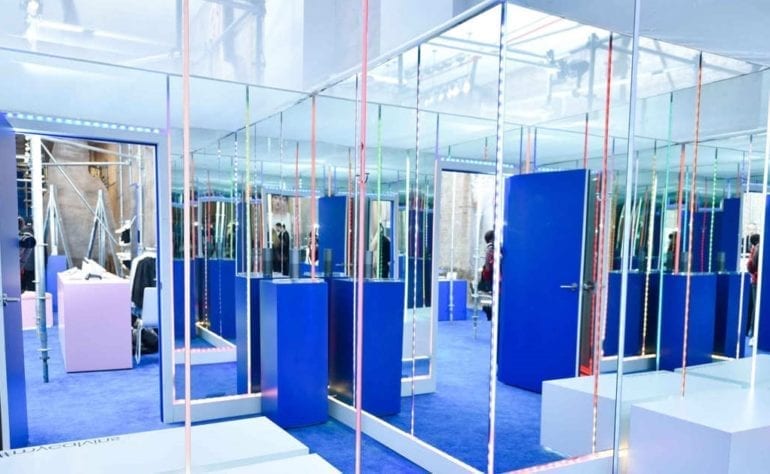
    The Amazon-Calvin Klein pop-up stores in New York City and Los Angeles may be just what brick-and-mortar retailers need to bring online shoppers back to the real world, Morgan Stanley’s Brian Nowak said.

    Amazon is banking on its loyalty with consumers who rely on the company for the best prices, Nowak said. When it comes to brick-and-mortar, that transparency “could encourage more people to shop in store rather than online,” he said.

    The key way it does this is by having consumers experience dynamic pricing while at the shop, prompting shoppers to scan the barcodes of items in order to see the ever-changing prices. The prices will match what’s on Amazon.com, which is often the lowest price, Nowak said.

    The Amazon-Calvin Klein pop-up also offers free personalization and customization of basic items, such as underwear, the mainstay of Calvin Klein’s brand. It is also offering exclusive merchandise, which can only be found in the store or at the ‘My Calvins’ online brand store on Amazon.com.

    “This phone scanning and dynamic pricing combination is another example of Amazon’s attempt to change consumer behavior/expectations in the offline world in a way to build trust with consumers that they are always getting the lowest price,” Nowak wrote in a note.

    Amazon’s outsized influence as an ecommerce giant has retailers scrambling to stay relevant as it eats away at brick-and-mortars’ market share, particularly in-store sales. When Amazon announced a partnership with Nike in June, it hit Dick’s, Under Armour, Foot Locker and other competitors with many retailers reporting dismal third-quarter earnings.

    The company’s attempts at providing a different shopping experience in brick-and-mortar stores may be what saves the retail industry and brings shoppers back to physical stores.

    Amazon’s stock is trading at $1,133.97 a share and was up 50.39% up for the year. PVH Corp, the parent of Calvin Klein, is trading at $134.28 a share and is up 47.64% for the year.

  • Retailers brace as Amazon launches in Australia

    Retailers brace as Amazon launches in Australia

    U.S. internet giant Amazon launched in Australia Tuesday in time for Christmas, with retailers scrambling to cut costs and boost their online offerings as they brace for an expected shake-up of the sector.

    The arrival of the behemoth — which has grown from an online bookstore to one of the world’s largest firms — poses a threat to a market already grappling with weak consumer confidence amid tepid wages growth.

    The American giant is offering “millions” of products from well-known Australian brands, as well as small and medium-sized Australian businesses selling on Amazon Marketplace.

    They will be shipped from a warehouse in Melbourne.

    Online shopping only accounts for between 8-13 percent of total sales in Australia, leaving room for growth in a sector estimated to be worth more than Aus$300 billion ($227 billion) annually.

    “We believe Amazon’s full entry into Australia will likely be a success,” UBS analysts said in a note ahead of the launch, adding that Australia was an “attractive market where online is under-penetrated”.

    “Australian online shoppers spend the third-most globally of Amazon’s markets.”

    Retail categories most likely to be hurt by Amazon’s entry include electrical, appliances, apparel and cosmetics, UBS added.

    Faces challenges

    The U.S. firm was likely to absorb losses initially to boost its market share, IBISWorld senior analyst Kim Do said, pressuring the profitability and margins of its competitors.

    Several top Australian retailers have recently succumbed to pressure from foreign giants such as Japan’s Uniqlo and Sephora of France, while others have cut back on bricks-and-mortar stores.

    But Australian Retailers Association executive director Russell Zimmerman welcomed Amazon’s arrival, saying it provided an additional platform to boost sales.

    “With over 300 million active users already on Amazon’s Marketplace, the majority of Australian retailers view Amazon’s platform as a supplementary channel to their current retail offering,” he said.

    Some analysts warned Amazon would face challenges, such as low access to broadband and the large size of the island continent.

    “A key reason why Australia lags behind its peers (in the development of the e-commerce sector) is the low access to broadband,” BMI Research, Fitch Group’s research arm, said in a note.

    Broadband subscriptions in Australia stand at 57.3 per 100 people, rising to a forecast 60 in 2021, in contrast to markets like Singapore which is projected to have subscriptions of 75.3 per 100 that year, BMI said.

    “Slower delivery speeds due to the large geographic size of the country and as a result, more costly delivery services… will not bode well for the success of an e-commerce company.”

    Retail analyst Brian Walker said according to his research, Amazon was “producing a positive return” in just one-third of the countries it was operating in outside of the U.S.

    “The rest are still in the various stages of growing. And that is the point about Amazon,” Walker told AFP. “They will take in our view of somewhere between two to five years to hit any form of scale in Australia.”

    Amazon, a Seattle-based company, has expanded far beyond its roots as a digital bookstore, moving into the groceries and other retail sectors as well as cloud computing, streaming video, artificial intelligence and more.

    It has become one of the most valuable companies on the planet alongside U.S. tech rivals Apple, Facebook and Google parent Alphabet, and in October reported third-quarter profits of $256 million.

  • Retailers in South East Asia brace as Amazon makes debut in Australia

    Retailers in South East Asia brace as Amazon makes debut in Australia

    U.S. internet giant Amazon launched in Australia on Tuesday with retailers scrambling to cut costs and boost their online offerings as they brace for an expected shake-up of the sector.

    The arrival of the behemoth — which has grown from being an online bookstore to one of the world’s largest firms — poses a threat to a market already grappling with weak consumer confidence amid tepid wage growth.

    “Focusing on customers and the long term are key principles in Amazon’s approach to retailing,” Amazon Australia country manager Rocco Braeuniger said in a statement. “By concentrating on providing a great shopping experience and by constantly innovating on behalf of customers, we hope to earn the trust and the custom of Australian shoppers in the years to come.”

    The American giant is offering millions of products from well-known Australian brands as well as small and medium-size Australian businesses selling on Amazon Marketplace.

    Online shopping only accounts for 8 to 13 percent of total sales in Australia, leaving room for growth in a sector estimated to be worth more than 300 billion Australian dollars ($227 billion) annually.

    “We believe Amazon’s full entry into Australia will likely be a success,” UBS analysts said in a note ahead of the launch, adding that Australia was an “attractive market where online is under-penetrated.”

    “Australian online shoppers spend the third-most globally of Amazon’s markets,” UBS said.

    Retail categories most likely to be hurt by Amazon’s entry include electrical, appliances, apparel and cosmetics, UBS added.

    Amazon might also be willing to absorb losses initially to boost its market share, IBISWorld senior analyst Kim Do said, pressuring the profitability and margins of its competitors.

    Several top Australian retailers have recently succumbed to pressure from foreign giants, including Japan’s Uniqlo and Sephora of France, while others have cut back on brick-and-mortar stores.

    But Australian Retailers Association executive director Russell Zimmerman welcomed Amazon’s arrival, saying it provides an additional platform to boost sales.

    “With over 300 million active users already on Amazon’s Marketplace, the majority of Australian retailers view Amazon’s platform as a supplementary channel to their current retail offering,” he said.

    Some analysts warned that Amazon will face challenges such as low access to broadband and the large size of the island continent.

    “A key reason why Australia lags behind its peers (in the development of the e-commerce sector) is the low access to broadband,” BMI Research, Fitch Group’s research arm, said in a note.

    Broadband subscriptions in Australia stand at 57.3 per 100 people, rising to a forecast 60 in 2021, in contrast to markets like Singapore which is projected to have subscriptions of 75.3 per 100 that year, BMI said.

    “Slower delivery speeds due to the large geographic size of the country and as a result, more costly delivery services … will not bode well for the success of an e-commerce company.”

    Retail analyst Brian Walker said that according to his research, Amazon is “producing a positive return” in just one-third of the countries it is operating in outside of the U.S.

    “The rest are still in the various stages of growing. And that is the point about Amazon,” Walker said. “They will take in our view of somewhere between two and five years to hit any form of scale in Australia.”

    Amazon, a Seattle-based company, has expanded far beyond its roots as a digital bookstore, moving into the groceries and other retail sectors as well as cloud computing, streaming video, artificial intelligence and more.

    It has become one of the most valuable companies on the planet alongside U.S. tech rivals Apple, Facebook and Google parent Alphabet, and in October reported third-quarter profits of $256 million.

  • Amazon India to support female entrepreneurs

    Amazon India to support female entrepreneurs

    Amazon India has launched an exclusive online store for women entrepreneurs.

    It is rolling out it Amazon Saheli initiative in partnership with non-government social-service entities Impulse Social Enterprise and Self-Employed Women Association (Sewa). The store will enable women entrepreneurs to sell their products online (“saheli” is Hindi for “women’s friend”).

    “Through Amazon Saheli we aim to bring a change in the lives of thousands of women entrepreneurs with the help of our partners,” says Amazon India director/GM seller services Gopal Pillai.

    Sewa founder and social worker Reema Nanavati says the partnership will not only provide women entrepreneurs access to millions of new customers and become economically secure, but will also generate employment opportunities for many more young women.

    The store will feature exclusive products like handicrafts, apparel, handbags and home-decor items made by women entrepreneurs.

    Meanwhile, Amazon India has been running workshops across the country to familiarise women entrepreneurs with the benefits of e-commerce.

    For the Saheli store, the e-commerce firm is offering women vendors such benefits as subsidised product cataloguing, imaging, packaging and courier services, as well as basic online training.

    Pillai says he expects the workshop program to reach about 20,000 women entrepreneurs over the next few months.

    The program will eventually be expanded to empower women through other programs offered by Amazon India like ATES (Amazon-Trained E-commerce Specialists), IHS (I Have Space,) SPN (Service Provider Network) and Udaan.

  • Amazon seizes half of all online Black Friday sales

    Amazon seizes half of all online Black Friday sales

    Amazon is dominating — again.

    Black Friday sales and promotions have helped the company claim between 45% and 50% of all online Black Friday sales, according to a new report from GBH Insights. GBH called the results “eye-popping.”

    This new number, combined with online sales figure estimates for the same timeframe from other analytics firms, shows Amazon’s sales are well over $1 billion for the last 24 hours or so.

    This heralds another blockbuster holiday for Amazon, with estimates that it will take half of all online sales throughout the holiday. It will need to fend off an aggressive Walmart to do so. Walmart has pumped its resources into its new online offerings to make them more competitive and likely had its most ambitious online Black Friday this year.

    Still, Amazon Prime subscriber growth — in terms of both numbers and how much they spend — sets Amazon up well for the rest of the year.

    “Customers purchased millions of Amazon’s Alexa-enabled devices , and Alexa devices were the top sellers across all of Amazon,” David Limp, Amazon’s head of devices, said in a press statement.

    The Echo Dot, Amazon’s cheapest device with its voice assistant, Alexa, was Amazon’s best-seller globally across all categories — and it was on sale over the weekend for $30, the cheapest it has ever been.

    Other best-sellers included the new Fire TV Stick, the new Amazon Echo, and the Fire 7 tablet, the company said.

    The device sales propelled Amazon to a strong Thanksgiving weekend overall.

    Amazon accounted for 45% of online transactions among 50 top retailers on Thanksgiving and 55% on Black Friday, an analysis by Hitwise found. As of Monday, Amazon was on track to take about half of all online sales over Thanksgiving weekend, according to research by GBH Insights.

    People spent a record $6.59 billion online on Cyber Monday, $5.03 billion on Black Friday, and $2.87 billion on Thanksgiving Day, according to estimates from Adobe Analytics. Given these figures, it’s not hard to make a rough guess about the billions Amazon raked in over the holiday weekend.

  • Tech leads Wall St higher, Amazon and retail stocks gain

    Tech leads Wall St higher, Amazon and retail stocks gain

    Technology stocks led the S&P 500 and Nasdaq to record high closes on Black Friday, while Amazon and retail stocks got a boost from signs of a strong start to the holiday shopping season.

    The benchmark S&P 500 and the blue-chip Dow Jones industrials posted weekly gains for the first time in three weeks while the Nasdaq Composite posted its best weekly performance since the week to Sept. 1.

    The stock markets closed early on Black Friday, a day after Thanksgiving, the start of the holiday shopping season that accounts for as much as 40 percent of retailers’ annual sales.

    Turnout at U.S. retailers was relatively subdued on Black Friday, with many shoppers flocking to stores to eye items in person while waiting to do their actual bargain hunting online.

    On Thanksgiving, U.S. shoppers spent more than $2.87 billion online, according to Adobe Analytics. Adobe said Black Friday online sales were up 18.4 percent at $640 million as of 10 a.m. ET and would rise to a record of $5 billion.

    The S&P retail index rose 0.63 percent and had hit a record high, led by Amazon’s 2.61 percent gain.

    The online retail giant touted its sales for Cyber Monday, one of the biggest days for online shopping, and said shoppers using its digital assistant Alexa could score deals as early as Sunday.

    “In the retail environment, Amazon is extremely important – the fact that Amazon continued to soar bodes well for the fourth-quarter holiday shopping season and it bodes well for Wall Street,” said Adam Sarhan, chief executive of 50 Park Investments.

    Brick-and-mortar stores, which have been boosting their online presence, also fared well.

    Macy’s closed up 2.1 percent. The department store operator’s chief executive told CNBC the company was better off this year than last and was seeing very robust online demand.

    Kohl’s, Gap and J.C. Penney were up between 1.6 percent and 1 percent.

    Target ended 2.8 percent lower, with analysts noting that it closed its stores for several hours overnight while rivals stayed open. Wal-Mart inched up 0.2 percent.

    The Dow rose 31.81 points, or 0.14 percent, to 23,557.99, while the S&P gained 5.34 points, or 0.21 percent, to 2,602.42. The Nasdaq added 21.80 points, or 0.32 percent, to 6,889.16.

    The CBOE Volatility index, known as Wall Street’s fear gauge, was down 0.21 points to 9.67. It had hit a record low of 8.56.

    Eight of the 11 major S&P sectors were higher, led by the technology sector’s 0.54 percent rise.

    The energy index and the materials index were boosted by rising commodities prices.

    U.S. oil prices jumped to a more than two-year high as North American markets tightened on the partial closure of a key pipeline linking Canada and the United States.

    About 2.68 billion shares changed hands in U.S. exchanges in the shortened session. The daily average over the last 20 full sessions is 6.48 billion shares. Last year, volume during the session after Thanksgiving was about 3 billion.

    Advancing issues outnumbered declining ones on the NYSE by a 1.61-to-1 ratio; on Nasdaq, a 1.31-to-1 ratio favored advancers.

    The S&P posted 35 new 52-week highs and 1 new low; the Nasdaq recorded 120 new highs and 21 new lows.