Tag: amazon

  • Brussels to hit Amazon with large tax bill

    Brussels to hit Amazon with large tax bill

    Online retail giant Amazon will reportedly be slapped with a tax bill worth several hundred million euros following a lengthy EU investigation into a sweetheart tax deal with Luxembourg.

    The EU’s competition commissioner Margrethe Vestager is expected to issue her decision on Wednesday following a near three-year investigation into whether Amazon’s tax affairs complied with state aid rules, according to the Financial Times, which cited sources.

    The probe, which was launched in October 2014, looked at a 2003 tax agreement between Luxembourg and the retailer that saw most of Amazon’s European profits recorded in the country, but not fully taxed.

    Both Amazon and the European Commission declined to comment.

    It would be the latest EU regulatory decision to affect a major US firm, with Vestager putting the tax affairs of a number of high-profile targets including Amazon under the microscope in recent years.

    The EU Commission last year hit US tech giant Apple with a 13 billion euro ($A20 billion) tax bill in the wake of an investigation which found that Apple paid 50 euro in tax for every one million of profit made outside the US in 2014.

    The government and Apple are both appealing against the decision.

    McDonald’s is also facing fire from EU antitrust officials who are investigating claims that the fast food giant avoided more than 1 billion euro in tax through the use of a royalties loophole in Luxembourg.

    When it launched its investigation in 2015, the European Commission said the European arm of McDonald’s had paid virtually no corporation tax in Luxembourg or the US since 2009, despite making significant profits in the division.

    McDonald’s subsequently announced this past December that it was moving its non-US tax base to the UK, as it battled EU regulators over its tax affairs.

  • Amazon Global Selling to take Korean products everywhere

    Amazon Global Selling to take Korean products everywhere

    Amazon has revealed plans to help South Korean sellers make international sales via its Amazon Global Selling program.

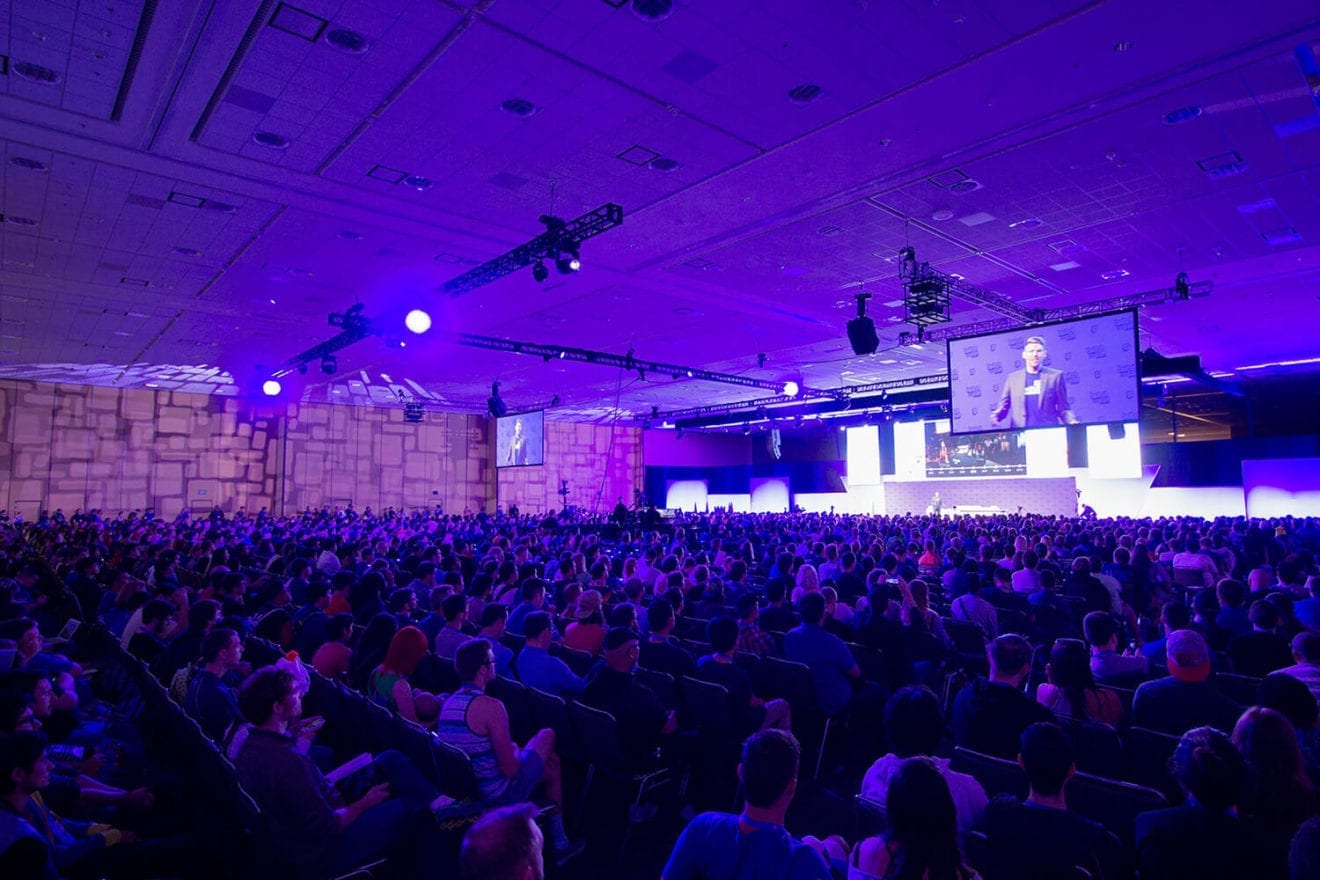
    Amazon laid out its plans during its first press conference in South Korea dubbed the ‘Global Selling Conference’, which was held at COEX this week. The international shopping giant discussed its global selling service, ‘Amazon Global Selling,’ which allows sellers to sell items to other countries without the help of a customer service center or local distribution centre.

    According to the company, using its global selling platform can enable South Korean sellers to reach up to 300 million people in 185 countries across the world. Amazon Global Selling not only provides sellers with access to the international market but also provides help in dealing with common problems such as refunds, returns, and issues surrounding international delivery.

    Using Fulfillment by Amazon, a one-stop order processing service, sellers can use the distribution center owned by the shopping giant from which the rest of the selling process will be handled by Amazon.

    “Though domestic online sales are common, international online sales are still at an early stage in South Korea. We plan to actively help South Korean companies maximise their sales during the most eventful days of the year such as Black Friday, Cyber Monday and the Christmas season,” a company spokesperson said.

    Amazon Global Selling was first launched in 2015, and now the international company is set to begin the Korean language service of its portal ‘Seller Central’, as well as providing education programs for South Korean sellers.

    During the press conference, which was held in the presence of more than 1000 officials ranging from business partners and government officials to people interested in working with Amazon, Cindy Tai, the head of Amazon Global Selling-Asia, explained the conference was held two years after the global selling service was launched in the country, as an active community has been built only recently.

    Amazon’s move to help South Korean online sellers is set to see competition intensify in the online sales market, as similar services are already being operated by the likes of GMarket and 11street.

    With the growing number of people who wish to sell their products online in the international market in South Korea, some industry sources believe Amazon’s decision to introduce localised support programs for online sales is part of their effort to boost their competitiveness by training online businesses with potential and encouraging them to use their platform.

  • Amazon reviews site over bomb-making tips

    Amazon reviews site over bomb-making tips

    Amazon.com says it’s reviewing its website after an investigation found that it could help users buy the ingredients to make a bomb using its “Frequently bought together” and “Customers who bought this also bought” features.

    Britain’s Channel 4 News found the online retailer’s algorithm was suggesting items that could be bought together to produce explosives on Monday, days after an apparently home-made bomb was detonated on the London Underground network.

    The ingredients, which are legal to purchase, were included in a “Frequently bought together” section in the listings for chemicals, the broadcaster said.

    Other materials that could be used in bomb making, such as ball bearings, ignition systems and remote detonators, were available on the site, and some of them were suggested on the same page as the chemicals in the “Customers who bought this item also bought” section, Channel 4 said.

    “All products sold on Amazon must adhere to our selling guidelines and we only sell products that comply with UK laws,” the company said in a statement on Wednesday.

    “In light of recent events, we are reviewing our website to ensure that all these products are presented in an appropriate manner.”

    The company said it would also continue to work closely with police and law enforcement agencies when circumstances arise where we can assist their investigations.

    The explosion of what appeared to be a home-made bomb on a London Underground train on Friday injured 30 people.

    Pictures on social media after the attack showed what appeared to be a device contained in a white plastic bucket. It engulfed the railway carriage in flames, although it appeared that it did not fully explode.

  • Retailers don’t have strategy in place to combat Amazon

    Retailers don’t have strategy in place to combat Amazon

    Shoppers may be ready for Amazon, but 78 per cent of Australian retailers still don’t have a strategy in place to combat the global retail giant, Commonwealth Bank’s latest Retail Insights research showed.

    Jerry Macey, Commonwealth Bank national manager for retail, said it seemed Australian shoppers are ready for Amazon but many of the country’s retailers are still at the drawing board.

    “Although Amazon’s arrival is reportedly weeks, not months, away, it will have a staged entry,” Macey said. “So there is time to put plans in place, but that window is closing.”

    Macey said there is still one quarter of retailers concerned about Amazon who not only don’t have a plan, they aren’t working on one.

    Retail Insights also found an unexpected generational split among Australian shoppers.

    The older a person is, the more likely they are to be aware of Amazon. But older shoppers show the least inclination to buy from Amazon. In contrast, younger shoppers are more likely to buy from Amazon, despite having the least awareness of it.

    “Savvy retailers will be looking to better understand their target market and provide a relevant experience for that group,” Macey said. “For instance, younger generations want a more engaging experience in-store to prevent them drifting online.”

    The report also revealed almost three quarters (73 per cent) of consumers are comfortable buying Amazon branded-products. A third are likely to subscribe to Amazon Prime for extra benefits, likely to include unlimited free delivery and access to video streaming, for a fee.

    “Shoppers are clearly indicating their willingness to buy from Amazon and flagging a high degree of trust in the brand – before it has even arrived in the local market,” Macey said.

    Almost nine out of ten retailers are aware of Amazon’s plans to enter the local market, a rise of 27 per cent over the past six months, the study shows. Of these, the majority (52 per cent) now perceive Amazon as a threat, up from 47 per cent at the beginning of 2017. The proportion of those considering Amazon’s entry as an opportunity remained flat over the past six months at 13 per cent.

    Despite heightened awareness, the number of merchants who perceive Amazon as a threat and also have a plan to compete has only grown moderately, from 14 per cent to 25 per cent. A further 50 per cent of retailers are working on a strategy.

    According to Macey, with so many retailers planning for Amazon’s arrival, the country will be seeing merchants ramp up activity.

    “Those excited about expanding their channels will be learning the ropes of Amazon Marketplace, and those concerned will be considering their overall strategy including products, categories, pricing and distribution,” he said. “So even if you don’t think Amazon will impact your business directly, you need to be ready for an increase in competitor activity.”

    Shoppers said their purchases from Amazon are likely to include the categories of books, gaming, music and media (47 per cent) followed by consumer electronics/computers (35 per cent) and household appliances (32 per cent).

  • Amazon Find offers fresh fast-fashion challenge

    Amazon Find offers fresh fast-fashion challenge

    The new Amazon Find fashion collection features a 500-piece womenswear offering plus 200 items for men.

    It is the online retailer’s challenge to fast-fashion giants like H&M, Uniqlo and Zara that are being slow to optimise their online offerings.

    Already being noticed on Facebook and Instagram, Find taps on fast-fashion professionals like Frances Russell (Amazon’s own-label VP and former Marks & Spencer head of womenswear), designer Karen Peacock and Glen George (former buyer for Primark).

    Also new is the Amazon Echo Look camera that works alongside its voice-controlled assistant Alexa. It enables customers to take fashion selfies their mobile app, which will then show them similar clothing items available from Amazon.

  • Amazon China on recruitment drive

    Amazon China on recruitment drive

    Amazon China appears to be ramping up business with nearly 400 mainland jobs listed on its careers website, plus another 900-odd on LinkedIn.

    The US company’s China-centred recruitment drive includes senior content executives to acquire and manage content, a leader for its Amazon Lending program and a head for its storefront on Alibaba’s Tmall.

    While the Seattle company still sells goods from abroad to Chinese consumers, the country’s e-commerce market is dominated by Alibaba and JD.Com, and the government places limits on foreign companies.

    Meanwhile, Amazon is encouraging its more than 2 million merchants to expand their horizons to embrace international markets. To streamline the process, it offers language translation services, currency conversion and tariff services.

    Amazon’s sales in China represented just 1.1 per cent of the nation’s online gross merchandise value in 2015, and by last year that figure had dropped to 0.8 per cent, according to iResearch figures.

    However, in last year’s fourth quarter, Amazon controlled 7 per cent of the China’s cross-border commerce, according to ICBC. For the first quarter this year, its cross-border sales were 11 times above their level two years earlier.

    Amazon this year started hiring HR executives for a new regional “shared-services hub” in Beijing, and a new office in Hangzhou – Alibaba’s home territory – is hiring sales team leaders empowered to headhunt more staff.

  • Twitch creators to sell Amazon products

    Twitch creators to sell Amazon products

    Twitch is the world’s leading video platform and community for gamers with more than 45 million gamers gathering every month to broadcast, watch and chat.

    Twitch today is introducing a suite of tools called Twitch Extensions that will allow its streamers to customize their channel pages with interactive features, including polls, leaderboards, tickers, schedules, overlays and even virtual pets, among other things.

    Beyond simply personalizing their channel to make it more engaging to fans, the extensions in some cases will help streamers generate additional revenue.

    In particular, one extension called “Gear on Amazon” allows Twitch creators to show off their favorite Amazon products.

    If a viewer clicks through to purchase, the creator will earn a commission through the Amazon Associates program.

    This extension will be available to both Twitch Partners and Affiliates, and is the first time that Twitch’s streamers have been invited to join the program, even though Amazon owns Twitch.

    To create their list of suggested products, streamers will be able to sign up as an Amazon Affiliate, then browse the Amazon catalog and pick their favorite products, right from their Twitch dashboard, the company says.

    This follows another recent move from Amazon to help video creators make money by promoting Amazon products, as it turns out.

    Last week, Amazon opened up its social media “Influencers” program to YouTube stars, allowing video creators to build their own curated shop, with its own short and memorable URL. It only makes sense that Amazon would enable something similar for its Twitch streamers, as well.

    However, the Amazon extension is only one of many that will be available at launch. There are currently over 20 extensions available, including some game-specific ones like OP.gg for League of Legends by OP.gg, Innkeeper: Interactive Hearth Overlay by Curse, and MasterOverwatch by Master Network.

    Others are designed for more general use, like Streamlabs’ Loyalty, Music, Polls & Games, or Muxy’s Overlay and Leaderboard, for example.

    At launch, extensions will be free, but Twitch tells us that monetization details are soon to come. More information about this will be announced at Twitch’s developer conference, TwitchCon’s Developer Day next month.

    Twitch had planned to make the extensions available to streamers tonight, but that’s been pushed back at the last minute. Instead, the company now says the extensions will be “coming soon.”

  • Fulfilment by Amazon ‘unlikely’ for initial launch

    Fulfilment by Amazon ‘unlikely’ for initial launch

    Almost one month after Amazon confirmed the location of its first fulfilment centre in Australia, the e-commerce giant remains tight-lipped about the date and scope of its launch of Marketplace Down Under.

    But sources within the retail sector have told that a late-September, early-October launch is very likely. They have also said Fulfilment by Amazon (FBA) will not be part of the initial launch.

    “It will more than likely not be a full-service that will be launching. They might not have all their categories. They might not have all the FBA service,” said Ray Ridgeway, managing director of World First, a company that helps sellers on Amazon, Ebay and other global marketplaces transfer funds overseas.

    FBA allows sellers to outsource their entire logistics process – warehousing, fulfilment, returns and customer service – to Amazon for a fee. While the exact fee depends on the weight of the item, among other factors, sellers using FBA can expect to pay somewhere between 25-30 per cent of the sale to Amazon. This includes the 15 per cent fee Amazon charges to sell on Marketplace.

    Most people in the industry agree that FBA is the key to Amazon’s success, underpinning its delivery offering and differentiating it from competitors like Ebay. (The alternative is FBM, or Fulfilment by Merchant.)

    Qing Yuan Zhou, venture partner at Goat Consulting, a US-based Amazon consulting firm, previously told that her company almost always recommends FBA to sellers, since they are more likely to get a favourable page ranking and a shortcut for customers to add their products to cart. As a result, Zhou said, sellers may see sales go up by at least 20 per cent.

    But according to sources who have been given access to a beta version of ‘Seller Central’, Amazon’s seller portal, FBA is not currently supported in Australia. This is unsurprising given the fact that Amazon has only recently secured its first local warehouse and the general consensus that Marketplace will launch in time for Christmas trading.

  • Amazon to open new fulfilment centre in Ohio

    Amazon to open new fulfilment centre in Ohio

    Amazon announced plans to open a new fulfilment centre in North Randall, Ohio, which will create more than 2,000 full-time associate roles with benefits and opportunities to engage with Amazon Robotics in a highly technological workplace.

    “Our ability to expand in Ohio is the result of two things: incredible customers and an outstanding workforce in the state,” said Sanjay Shah, Amazon’s vice president of North American Customer Fulfilment. “We very much appreciate the state and local elected leaders who have supported Amazon’s arrival in North Randall and look forward to bringing more jobs and investment in the coming months.”

    Amazon currently employs more than 4,500 full-time hourly associates at its two existing Ohio fulfilment centres in Etna and Obetz.

    “Along with Team NEO and the Village of North Randall, the Cleveland Port Authority, and the Greater Cleveland Partnership, we are pleased to partner with Amazon to revitalize and bring jobs back to a property that has stood vacant for too long,” said JobsOhio president and chief investment officer John Minor. “Amazon’s investment at a site where the nation’s largest shopping mall once stood will now support digital retail jobs.”

    Amazon employees at the more than 855,000-square-foot fulfillment center will pick, pack and ship smaller customer items such as electronics, toys and books.

    “Words cannot begin to express what Amazon’s commitment to the development of its fulfillment center means for the Village of North Randall,” said Mayor David Smith. “This is a generational project that not only redefines the future of our community but the future of more than 2,000 Cuyahoga County residents who will be employed at the facility.”

    Full-time employees at Amazon receive highly-competitive pay, health insurance, disability insurance, retirement savings plans and company stock starting on day one. The company offers up to 20 weeks of paid leave and innovative benefits such as Leave Share and Ramp Back, which give new parents flexibility with their growing families. Amazon also offers hourly employees its Career Choice program which helps train employees for in-demand jobs at Amazon and other companies so they can prepare for the future and take full advantage of the nation’s innovation economy. The program pre-pays 95% of tuition for courses in in-demand, high-wage fields, regardless of whether the skills are relevant to a future career at Amazon. Over 10,000 employees have participated in Career Choice and more are signing up every day.

  • Amazon’s Wholefoods takeover gets regulatory green light

    Amazon’s Wholefoods takeover gets regulatory green light

    Amazon’s Wholefoods takeover has received regulatory approval, clearing the way for the biggest retail deal of the year to proceed.

    The Federal Trade Commission, charged with ensuring business acquisitions do not impact customer choice, has given the green light to the US$13.7 billion deal,  shortly after Whole Foods shareholders voted in favour of it.

    The FTC said in a statement that it was satisfied the deal would not substantially lessen competition or constitute unfair competition and had opted not to continue its investigation further.

    But it effectively sent a warning to the US’ largest online retailer that it “always has the ability to investigate anticompetitive conduct” should it believe it has grounds to in the future.

    GlobalData senior analyst Molly Johnson-Jones said the shareholder vote “consolidates the threat of Amazon repeating the damage on the grocery market it has ravaged on mainstream supermarket territory”.

    “Amazon is the ultimate disrupter in retail, but for a long time it has only been on the periphery for the food retailers. Amazon’s vision of being a one-stop-shop for all of a consumer’s needs is (now) one step closer to being a reality.”

    Analysts did not expect the FTC to intervene given Amazon has little involvement in the retail grocery market at present, and Whole Foods’ share of that market is small.

  • Trump attacks Amazon on Twitter over tax and jobs

    Trump attacks Amazon on Twitter over tax and jobs

    Having a large market share is not illegal in the US – but that hasn’t stopped ill-informed US president Donald Trump from launching an extraordinary attack on Amazon on Twitter.

    In a new tweet on Wednesday, Trump said Amazon was causing “great damage to tax-paying retailers,” and costing jobs.

    “Towns, cities and states throughout the US are being hurt – many jobs being lost!” Trump tweeted.

    The unexplained attack, which appeared to have no contextual relevance, follows earlier attacks during the election campaign during which he promised to pursue the company for antitrust violations should he be elected.

    “Believe me, if I become president, do they have problems. They’re going to have such problems,” Trump said in February 2016.

    But, as Bloomberg points out, in the US it is not illegal to have a large market share. While online retailing is growing in volume and in share of the total retail industry in the US, Amazon accounts for 30 per cent of e-commerce sales. Every other retailer in the US has the opportunity to sell online and Walmart, especially, is mounting an aggressive challenge to Amazon’s market share. Other online retailers have 70 per cent of the market.

    In short: shoppers are spending less in physical stores and more online. They are not shifting from malls to Amazon, per se, as Trump appears to be stating. Furthermore, Amazon is expanding offline, starting to open physical stores. It has also acquired Whole Foods Market and plans to expand that business.

    Trump has clearly not researched Amazon’s effect on the economy, either, before tweeting. Firstly, Amazon is collecting sales tax in every state where it is levied – just like every brick-and-mortar retailer (although third-party sales over its platform, accounting for about 50 per cent of sales through its portals, remain exempt via a loophole).

    Secondly, Amazon has promised to hire more than 100,000 new staff in the US by 2018, countering some of the jobs lost through America’s shrinking ranks of retail stores.

    “In some cases, fired department store workers are ending up at Amazon fulfillment centres,” observed.

  • SoftBank invests $2.5b in Flipkart to stop Amazon

    SoftBank invests $2.5b in Flipkart to stop Amazon

    SoftBank has just announced its biggest investment in India: a whopping US$2.5 billion in Indian ecommerce company Flipkart.

    With this latest funding round, Flipkart boasts of over US$4 billion in cash on its balance sheet and SoftBank has become its largest shareholder.
    It’s the biggest ever private investment in an Indian technology company. “This is a monumental deal for Flipkart and India,” said Binny Bansal and Sachin Bansal, co-founders of Flipkart in an announcement made today.

    Neither SoftBank nor Flipkart disclosed the exact amount of funding which came from SoftBank Vision Fund, but sources said it is a little over US$2.5 billion.
    Last week, Tech in Asia reported that SoftBank was in talks with Flipkart for an investment after rival company Snapdeal, whose biggest investor is SoftBank, walked out of a distress sale to Flipkart. The deal was being negotiated for months.
    SoftBank is the largest investor in Snapdeal and Paytm, India’s two other homegrown ecommerce leaders. It made a solo investment of US$1.4 billion into Paytm earlier this year. “India is a land of vast opportunity.

    We want to support innovative companies that are clear winners in India because they are best positioned to leverage technology and help people lead better lives,” said Masayoshi Son, founder, chairman, and CEO of SoftBank.
    Last year, Jeff Bezos announced an additional investment of US$3 billion in Amazon India, on top of an initial US$2 billion back in 2014.

    The investment by SoftBank is part of the April funding round in which Flipkart had raised US$1.4 billion in capital from Tencent, Ebay, and Microsoft.

    The latest capital infusion by SoftBank – a mix of primary and secondary capital – will give Flipkart enough ammunition to fight the giant Amazon further.

    Launched in October 2007, Flipkart is India’s biggest homegrown ecommerce marketplace and has raised nearly US$5 billion in capital.

  • Amazon confirms first Aussie fulfilment centre

    Amazon confirms first Aussie fulfilment centre

    Online retail giant Amazon will open its first Australian distribution warehouse in Melbourne’s south eastern suburbs, in a move the company says will create hundreds of jobs.

    Amazon has announced it will open a 24,000 square metre fulfilment centre in Dandenong South at the M2 industrial park.

    The company’s Australian director of operations Robert Bruce said “this is just the start” for Amazon.

    “Over time, we will bring thousands of new jobs to Australia and millions of dollars of investment as well as opening up the opportunity for thousands of Australian businesses to sell at home and abroad through Amazon Marketplace,” he said.

    He promised hundreds of thousands of products would be stocked at the new warehouse at low prices for Australian consumers.

    The new centre is located in the Pellicano’s M2 Industry Park in Dandenong South, which Amazon said provides easy access to the South Gippsland Highway, Monash Highway and Eastlink. The building is also in close proximity to a wide range of amenities for employees. The lease of the centre was facilitated by CBRE’s Industrial & Logistics business.

    Victorian Industry Minister Wade Noonan said it was the latest global company to choose the state for its Australian operations.

    “The company’s decision to locate its centre in Dandenong South will create hundreds of local jobs and open up retail opportunities for thousands of local businesses,” Noonan said.

    The international giant has already started to recruit staff including operations managers, pickers, packers, systems technicians and HR specialist.

    The company already has 1000 employees in Australia.

    Recently, Amazon reported a jump in retail sales but its profits took a big hit as the e-commerce giant continues investing in a number of costly areas, including video, fulfilment centers and international expansion within fast-growing economies such as India.

    The world’s largest online retailer has reported a 77 per cent slump in quarterly income and forecast a potential operating loss in the current quarter, $US300 million ($A376 million) to a loss of $400 million.

    Nine in ten Australians said they will purchase from Amazon Australia if it delivers on its lofty promises, according to a study commissioned by parcel delivery service, CouriersPlease.

    The results of an independent survey of 1,001 Australian adults who have shopped online at least three times in the last six months showed 90 per cent of Australian online shoppers think they will purchase from the e-commerce giant if it fulfils its promise to deliver low prices, vast selection and fast delivery.

    However, other research from finder.com.au says Australians are showing mixed reactions to the arrival of retail giant Amazon in Australia.

    According to finder’s research, half of the population, about 47 per cent, indicated they are excited about the retailer coming to Australia, hanging out for cheaper deals, a bigger range of products and fast delivery.

    But 53 per cent aren’t so keen, preferring to shop at brick and mortar stores, or worried about its impact on local business.

    Bessie Hassan, money expert at finder.com.au, said while Amazon appeals to many shoppers, some would take some convincing.

    “While it is certainly grabbing a lot of headlines in Australia, Amazon needs to prove what all the fuss is about before most consumers will change their buying habits,” Hassan said.

    Euromonitor senior research analyst, Bettina Kurnik, said Amazon watchers have had a busy month, ever since the global e-commerce giant announced its planned acquisition of US grocer Whole Foods. Yet the developments are not restricted to the company’s domestic market, and news of its aggressive expansion globally spans across the Asia-Pacific region.

    “Amazon’s launch in Singapore, for instance, was much publicised due to its offering Prime Now two-hour delivery on all purchases, and having to enlist the services of taxi, Uber and Grab drivers to make good on the promise,” she said. Meanwhile Amazon India has just announced that it will set up three more fulfilment centres, taking the total number of such facilities within the country to 41 by October 2017.

    “With the confirmation that Amazon is setting up a fulfilment centre in Dandenong South we can add Australia to that list, hopefully ending the speculation around the company’s arrival to Australian shores and providing a more concrete vision of what’s in store for Australian retailers in the near future.”

  • Amazon’s huge profit drop

    Amazon’s huge profit drop

    Amazon has reported a jump in retail sales but its profits took a big hit as the e-commerce giant continues investing in a number of costly areas, including video, fulfilment centers and international expansion within fast-growing economies such as India.

    The world’s largest online retailer has reported a 77 per cent slump in quarterly income and forecast a potential operating loss in the current quarter, $US300 million ($A376 million) to a loss of $400 million.

    The company posted second-quarter revenue of $38 billion, up 25 per cent from the previous corresponding period.

    Operating cash flow increased 37 per cent to $17.9 billion for the trailing twelve months, compared with $13.0 billion for the trailing twelve months ending June 30, 2016. Free cash flow increased to $9.7 billion for the trailing twelve months, compared with $7.7 billion for the trailing twelve months ended June 30, 2016.

    Operating income decreased 51 per cent to $628 million in the second quarter, compared with the operating income of $1.3 billion in second quarter 2016.

    “Our teams remain heads-down and focused on customers,” said Jeff Bezos, Amazon founder and CEO.

    “It’s energising to invent on behalf of customers, and we continue to see many high-quality opportunities to invest.”

    According to Neil Saunders, managing director of GlobalData Retail, Amazon’s breakneck growth stood in contrast to the fate of many brick-and-mortar rivals, who have struggled to find their footing as more people shop online.

    “While many other retailers are bumping along the bottom in terms of growth, Amazon increased its sales line by almost a quarter,” Saunders said. “In real terms, this means the online behemoth took some $7.5 billion more in revenue this quarter than during the same period last year. By any standards, this is an impressive performance – but it is doubly so for a company of the size and scale of Amazon.”

    “Worryingly for other retailers, Amazon shows no signs of slowing down.”

    Saunders said Amazon’s growth this quarter was sequentially better than last. Even in a mature market like North America, Amazon still managed to grow its sales line by 26.6 per cent.

    “And all of this comes before the sales benefits of Whole Foods, which will boost future growth rates by around 12 percentage points. All in all, it is clear that Amazon is not only increasing its dominance but is doing so at an ever-faster pace,” he said.

    Saunders said, however, that as good as Amazon is at generating sales, it is far less successful in turning those sales into profits.

    “To be fair, much of this is deliberate: Amazon chooses to reinvest in its business and to sacrifice profits to boost its market share and dominance,” he said. “However, such a strategy shows up in a weak set of bottom line numbers. Indeed, in its latest quarter, Walmart made more net profit in a week than Amazon did during the entire three-month period.”

    “As we predicted in our last note, Amazon’s profitability is getting worse rather than better,” Saunders said. “However, it all adds up to one thing: Amazon is buying sales at the expense of the bottom line.”

    He said in their view, this is a sustainable position both because Amazon is cash generative and is not losing money; nevertheless, it takes some of the shine off Amazon’s success.

    “The unfortunate truth for other retailers is that Amazon’s growth and success will force them to reduce margins, especially if they want to grow in e-commerce,” he said. “And While Amazon is comfortable operating with relatively low profitability, many other retailers – and their investors – are not. This is something that will create some significant pain points over the coming years.”

    Bezos’ wealth skyrockets

    Bezos also briefly became the world’s richest man in Forbes magazine’s tracking of wealth, as stock in his e-commerce company hit an all-time high.

    Microsoft founder Bill Gates reclaimed the lead by Thursday afternoon, as Amazon’s stock fell nearly 1 per cent for the day to $US1046.

    Amazon shares have been trading at a record high. They hit $US1083.31 at about noon on Thursday. According to securities filings, Bezos owns about 80 million shares, or 17 per cent; those shares were valued at more than $US87 billion ($A109 billion) at the peak. Bezos also owns The Washington Post through a holding company.

    Forbes said Bezos’ net worth was about $US90.6 billion when the market opened on Thursday. Gates had $US90.1 billion. Forbes said Gates would have been the undisputed leader had he not given billions of dollars away to various philanthropic causes. Bezos issued a request for philanthropic ideas in a tweet in June, just before Amazon announced a $US13.7 billion deal for organic grocer Whole Foods.

  • Amazon launches Prime Now in Singapore

    Amazon.com has today formally announced the launch of Prime Now in Singapore, following an industry tip yesterday the service was about to be introduced.

    Prime Now offers free two-hour delivery on tens of thousands of items right that can be ordered via smartphone app. These include eggs, beer, ice cream, baby strollers, toys, consumer electronics.

    Also available are local favourites such as MamyPoko diapers, Milo, Scotch-Brite and Tiger Balm, as well as products from such brands as L’Oreal, Pampers and Samsung.

    Free two-hour delivery is offered for orders of S$40 (US$30) or more.

    Singapore Economic Development Board assistant MD Kiren Kumar says Amazon has launched a new operating model for the service, using data and technology to achieve greater efficiency.

    “With Prime Now, Amazon will also play a key role in training and equipping our local ecosystem and workforce with cross-disciplinary digital capabilities. This is an excellent example of a global technology company contributing to Singapore’s ambition to be a smart nation where businesses can innovate and create new value for the world.”

    While Prime Now is an exclusive service for members of Amazon Prime, a membership program to launch in Singapore soon, for a limited time consumers can try it without membership. Also for a limited time, shoppers using a Visa credit card will receive $20 off their first Prime Now order. There is a promotional code for other customers to receive a $10 discount on their first order.

    Since launching in New York in December 2014, Prime Now has expanded to more than 50 cities in nine countries, including Tokyo. The Prime Now app is available for Android and iOS devices.