Tag: amazon

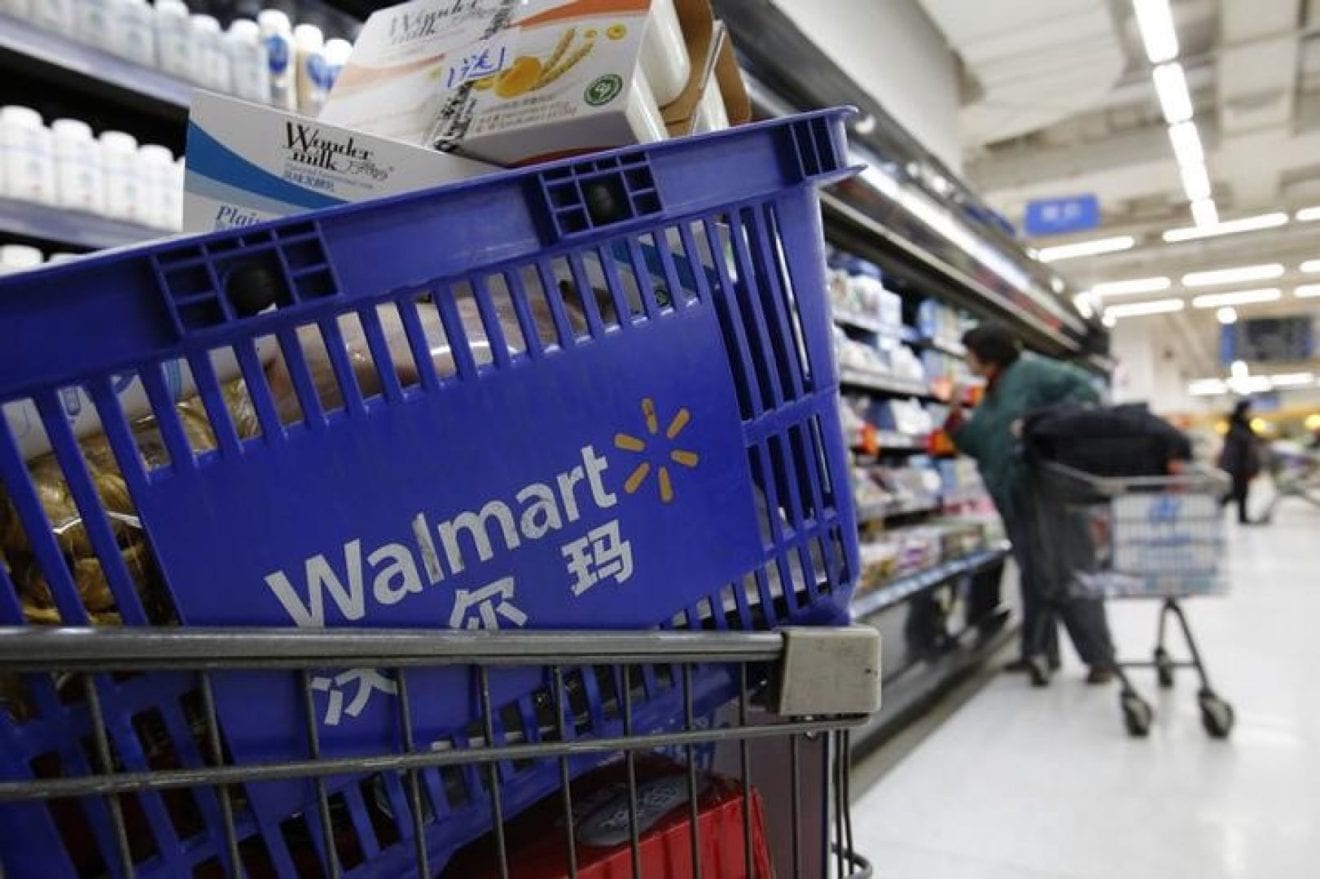
  • Walmart Is Crushing Amazon in China

    Walmart Is Crushing Amazon in China

    Shares of Walmart gained more than 3% on Thursday after the company posted better-than-expected earnings results. Despite a brutal industry landscape, America’s largest brick-and-mortar retailer is thriving thanks to its success in key segments.

    One of the biggest takeaways from Walmart’s latest report is the growth of its e-commerce unit. In an effort to catch up to internet behemoth Amazon.com, Walmart has been pouring money into e-commerce, and it seems to be working. The company said that its e-commerce business saw gross merchandise volume skyrocket 69% in the first quarter.

    Of course, Walmart can never hope to overtake Amazon as the e-commerce king. Amazon has had that crown for over a decade, and although Walmart’s recent online push has been a success, it was basically a do-or-die situation if the company wanted to maintain any legitimacy as a retail giant.

    However, there are still several key emerging markets for e-commerce, and Walmart may just be dominating Amazon in the biggest of them all: China.

    Sure, China isn’t really an emerging market anymore, and the country is no stranger to e-commerce. If anything, its domestic online retailers, such as Alibaba, present a threat to Walmart and Amazon as they move into Western markets.

    Nevertheless, China is a relatively fresh market for American online retailers, and Amazon is really just starting to get a foothold in the nation of nearly 1.4 billion. In fact, Amazon Prime debuted in the country only seven months ago. At launch, Prime members in China could expect to get there packages in about 5 to 9 days.

    And after Walmart’s earnings call earlier today, it looks like Amazon’s efforts in China might be futile.

    According to Walmart chief executive Doug McMillon, the company recently started offering one-hour delivery service from 80 stores in China. The service is an extension of Walmart’s existing partnership with JD.com —the two companies previously debuted a two-hour delivery service last year.

    “We can see the benefits of omni-channel retail even more clearly in China than any other country where we operate. Given the urban density and automobile traffic challenges, stores serve the triple purpose of in-store shopping, pickup and delivery most effectively,” said

    JD.com falls behind Alibaba in terms of size, making it the second-largest Chinese e-commerce company. The Walmart-JD partnership was announced last summer, and JD now controls all of Walmart’s e-commerce operations in the country.

    Interestingly enough, Walmart does not currently offer a one-hour delivery service anywhere in the U.S. Amazon does have a pretty well-established same-day delivery network, but it will be interesting to see if Walmart’s success in China inspires the company to make a similar play here on its home turf.
  • Amazon, channel for Vietnam’s apparel to enter EU

    Amazon, channel for Vietnam’s apparel to enter EU

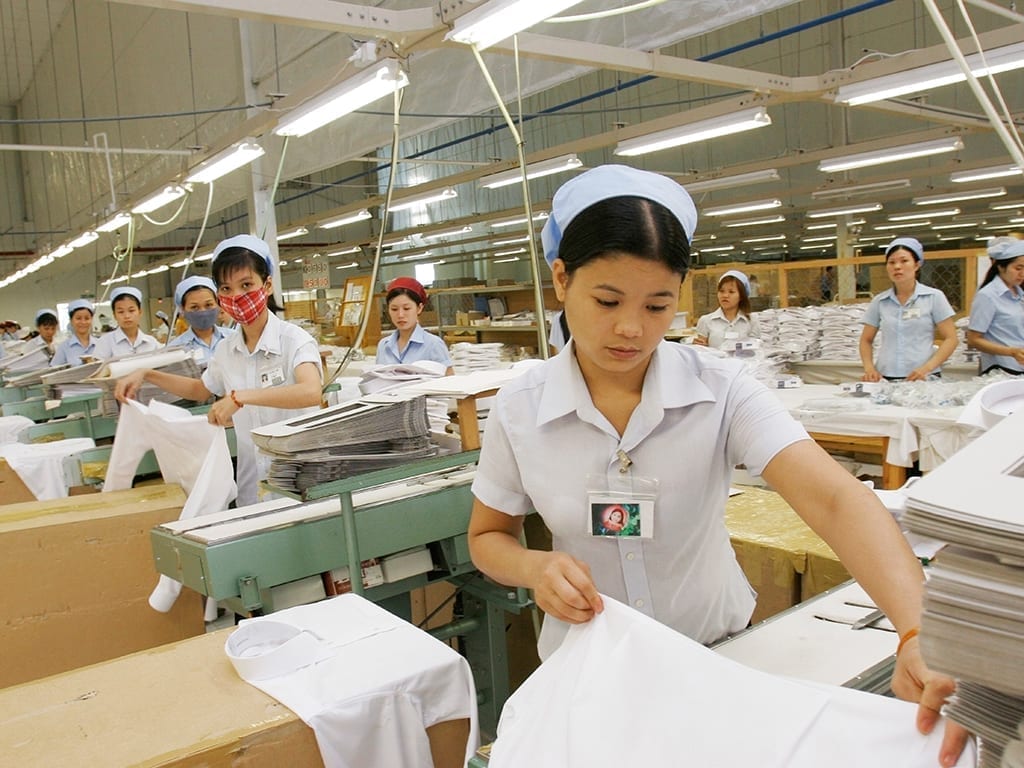
    Amazon, leading online shopping channel, has the potential to become a window for Vietnamese textile and garment products to gain access to European Union market. This was stated in Hanoi at a seminar, organised by Vietnam Textile and Apparel Association. Vietnamese businesses got advice on e-commerce by experts from Germany’s Vorwarts company at the event.

    Vorwarts CEO André M. Åslund said the quality of Vietnam’s garment products satisfied EU consumers. Many enterprises in Vietnam and Asia were selling their products to the EU via intermediaries or outlets. However, if products are sold on Amazon, intermediaries will not be needed, leading to reduction in cost and improvement in Vietnamese apparel’s competitiveness in EU markets, according to Vietnamese media reports.

    Up to 76 per cent of consumers use mobile phones to shop online, and 50 per cent of mobile phone users shop via Amazon, Åslund said.

    Noting that consumers’ behaviours were changing, he said instead of solely depending on products’ prestige, their interest and trust were now also framed by other factors such as product review and description, and other consumers’ assessment, the reports said.

    Therefore, businesses should pay more attention to quality information provision and product quality to get good assessments. Those evaluations will encourage EU consumers to buy Vietnamese products, Åslund said.

    However, businesses must comply with regulations of EU markets and improve product design to meet consumers’ taste. Once consumers are satisfied, they will introduce products to others, he said.

  • Amazon provides ideal channel for Vietnam’s apparel sale in EU

    Amazon provides ideal channel for Vietnam’s apparel sale in EU

    At the event, held by the Vietnam Textile and Apparel Association, Vietnamese businesses were provided with advice about e-commerce trends via Amazon by experts from Germany’s Vorwarts GmbH company.

    Vorwarts GmbH CEO André M. Åslund cited statistics that up to 76 percent of consumers use mobile phones to shop online, and 50 percent of mobile phone users shop via Amazon.

    He said the quality of Vietnam’s garment products completely satisfies EU consumers. Many enterprises in Vietnam and Asia often sell their products to the EU via intermediaries or outlets. However, they can cut down this intermediary step if products are sold on Amazon, thereby reducing cost and improving Vietnamese apparel’s competitiveness in EU markets.

    Consumers’ behaviours have changed much, he noted, elaborating that instead of being solely based on the prestige, their trust in a product is now based on many other tools such as the product review and description, or other consumers’ assessment.

    Therefore, businesses should pay more attention to quality information provision and product quality so as to increase good assessments. Those evaluations will in turn encourage EU consumers to buy Vietnamese products, Åslund said.

    He also noted some challenges facing businesses when they want to sell goods via Amazon. He asked them to comply with regulations of EU markets and improve product design to meet consumers’ taste.

    Once consumers are satisfied, they will introduce products they bought to others, making Vietnamese goods known more widely, the German expert added.

  • Amazon Retail confirmed for Australia

    Amazon Retail confirmed for Australia

    The online retail giant will officially be making its way to Australia, providing the outlet with its first official statement about its expansion into the region.

    Amazon said, “Amazon Web Services launched an Australian region in 2012, we launched a Kindle Store on Amazon.com.au in 2013, and we now have almost 1,000 employees in the country,” the statement reads.

    “The next step is to bring a retail offering to Australia, and we are making those plans now. We are excited to bring thousands of new jobs to Australia, millions of dollars in additional investment, and to empower small Australian businesses through Amazon Marketplace.”

    “We are optimistic that by focusing on the things we believe customers value most – low prices, vast selection, and fast delivery – over time we’ll earn the business of Australian customers.”

    Amazing made its Amazon Prime content available in December last year, kicking off rumours of a retail expansion into Australia.

  • Amazon shutting down unprofitable Quidsi unit

    Amazon shutting down unprofitable Quidsi unit

    Amazon on Wednesday confirmed that it is shutting down its Quidsi unit, which runs websites Diapers.com and Soap.com, due to a persistent lack of profitability there.

    Quidsi was an Amazon rival in the US before the online retail made a $545 million deal in late 2010 to buy the startup.

    “We have worked extremely hard for the past seven years to get Quidsi to be profitable, and unfortunately we have not been able to do so,” an Amazon spokesperson said in an email reply to an AFP inquiry.

    “Quidsi has great brand expertise and they will continue to offer selection on Amazon.com; the software development team will focus on building technology for AmazonFresh.”AmazonFresh lets people shop online for grocery store goods, including pet, baby and beauty supplies.

    Quidsi co-founder Marc Lore went on to create another online commerce company, Jet.com, which was bought last year by Walmart for about $3 billion in a move aimed at competing with Amazon.

  • Amazon Ready to Launch in the Philippines

    Amazon Ready to Launch in the Philippines

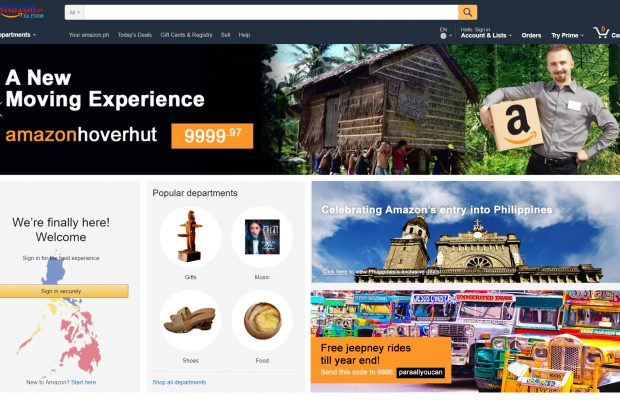
    Amazon with exclusive affiliate partner iPrice Philippines premieres the first screenshots of the all new and exciting online shopping platform: Amazon.ph. Slated to be launched late 2017, millions of local and international products will be made available to Filipinos with same-day delivery service throughout the nation.  Maintaining the ethos of Amazon, the new e-commerce platform in the Philippines will be guided by four principles: customer obsession rather than competitor focus, passion for invention, commitment to operational excellence, and long-term thinking.

    Partnering Amazon in this new endeavor is iPrice, a meta-search website in seven major countries in Southeast Asia as Amazon’s prime affiliate partner. With similar values and vision for ecommerce in Southeast Asia, iPrice’s partnership with Amazon will empower the Seattle based company with the needed marketing channels to aggressively market its products and services to the competitive ecommerce sector.

    Further details of Amazon’s affiliate partnership with iPrice will be revealed at the annual AWS Summit on 20th of April 2017 at the Marriott Hotel Grand Ballroom in Manila. Here is an exclusive screenshot of Amazon.ph.

    The Baguio Barrel Man

    Often seen as the souvenir of choice of most travelers, the Barrel Man offers more than just it’s barrel. Handcrafted from tropical wood unique only to the Philippines, the Barrel Man is a figure that is built of quality material and has the magical powers suited to relieve men of their physiological and psychological barriers.

    Amazon.ph and the Baguio Barrel Man was reviewed by test audiences prior to launch. It assisted in saving a marriage, and restoring one’s manhood.

  • Amazon buys Middle East marketplace Souq.com

    Amazon buys Middle East marketplace Souq.com

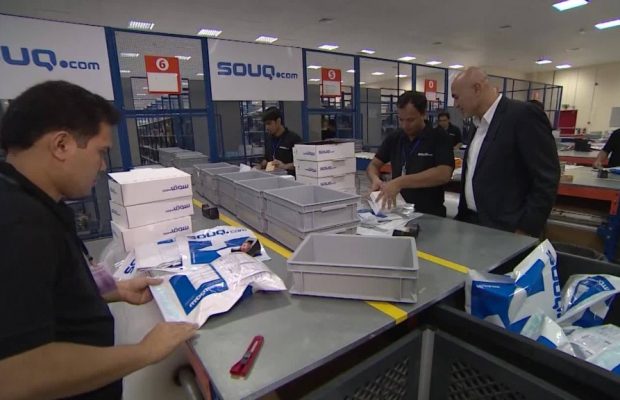
    US e-commerce business Amazon has bought the leading online marketplace in the Middle East, Souq.com.

    “Joining the Amazon family will enable Souq.com to continue growing while working with Amazon to bring even more products and offerings to customers worldwide,” the US company said in a statement.

    Souq.com is the largest online retail and marketplace platform in the Arab world, featuring more than 8.4 million products across 31 categories such as consumer electronics, fashion, health and beauty, household goods, and baby. The site attracts more than 45 million visits per month, with localised operations in the KSA, UAE and Egypt.

    “Amazon and SOUQ.com share the same DNA – we’re both driven by customers, invention, and long-term thinking,” said Russ Grandinetti, Amazon senior VP, international consumer. “Souq.com pioneered e-commerce in the Middle East, creating a great shopping experience for their customers. We’re looking forward to both learning from and supporting them with Amazon technology and global resources. And together, we’ll work hard to provide the best possible service for millions of customers in the Middle East.”

    Souq.com co-founder and CEO Ronaldo Mouchawar described the deal as “a critical next step in growing our e-commerce presence on behalf of customers across the region”.

    “By becoming part of the Amazon family, we’ll be able to vastly expand our delivery capabilities and customer selection much faster, as well as continue Amazon’s great track record of empowering sellers.”

    Subject to conditions, the acquisition is expected to close in 2017.

  • Amazon Japan adopts UnionPay to attract Chinese shoppers

    Amazon Japan adopts UnionPay to attract Chinese shoppers

    Amazon.com Inc.’s website in Japan will start accepting UnionPay cards, as the web retailer steps up efforts to sell more merchandise to Chinese shoppers across Asia.

    China UnionPay Co., with more than 6 billion cards in circulation, is now a key rival to Visa Inc., Mastercard Inc. and other issuers and has become an important way for retailers around the globe to attract Chinese tourists and consumers. UnionPay can now be used across Amazon Japan’s website from Wednesday, the Seattle-based company said.

    Amazon, which debuted in Japan in 2000, rolled out a Simplified Chinese-language version of its website last year to cater to booming demand by shoppers seeking everything from Japanese books and music to cosmetics and baby products. The number of online customers from the mainland rose fivefold since early 2016, according to Jasper Cheung, president of Amazon Japan. Amazon’s revenue in the country rose 31 percent to $10.8 billion in 2016.

    “We continue to drive more selection available for export, and we’ve increased it by 50 percent,” Cheung said. “The biggest-selling categories have been books, health and beauty, baby products and kitchen appliances.”

    Amazon Japan is catering to an emerging class of consumers who are willing to shop online within Asia, and offers reduced shipping rates to homes and businesses in mainland China, Macau, Hong Kong, Taiwan and South Korea. E-commerce demand from China to Japan alone is projected to almost triple to 2.34 trillion yen ($22.5 billion) in 2019, according to Japan’s Ministry of Economy, Trade and Industry.

    Chinese tourists, now a constant presence in Tokyo’s stores, often stock up on authentic Made-in-Japan products during their visits to the archipelago. The number of Chinese tourists in Japan rose 28 percent last year to 6.4 million visitors.

  • Amazon Japan is second biggest foreign market after Germany

    Amazon Japan is second biggest foreign market after Germany

    Online retail giant Amazon has revealed Germany was its biggest market outside the U.S. in 2016. However, Japan, coming in second for total country sales, experienced the most percentage growth last year, up double-digits on the back of heavy investment in distribution and the increase of China-focused tactics.

    On a US dollar basis, Amazon Japan sales leapt 30% in 2016 to US$10.7 billion (¥1.16 trillion). Amazon Germany gained just under 20% and the UK by 5.6%. US sales rose 28%. As a result Japan has moved ahead of the UK to become the U.S. giant’s second biggest overseas market.

    It’s also the first time a foreign firm has surpassed ¥1 trillion in Japan, making Amazon the most successful international retailer to operate in the archipelago nation.

    While Yahoo and Rakuten serve as rival platforms in the local market, Amazon Japan’s strong investment in its own distribution centre network is paying off. Amazon Japan has 12 centres and four Prime Now centres, making it easy for the e-tailer to sell directly via its marketplace vendors.

    Amazon Japan has also managed to poach talent from other consumer goods businesses, since its debut in 2000.

    On a consumer level globally, the Amazon brand sits favourably. Some 67% of Amazon’s sales came from direct sourcing last year and 17% from third party vendors on Amazon Marketplace, according to a recent survey.

    And Amazon is winning across lifestyle and fashion categories.

    “The biggest-selling categories have been books, health and beauty, baby products and kitchen appliances,” Jasper Cheung, president of Amazon Japan, told Bloomberg.

    Cheung was speaking to media as Amazon revealed this week its website in Japan will start accepting UnionPay cards, in an effort to sell more merchandise to Chinese shoppers across Asia. In 2016, Amazon Japan launched a Simplified Chinese-language version of its website, as the volume of mainland Chinese shoppers continues to rise in Japan, up 500%, according to Cheung.

    Meanwhile, e-commerce demand from China to Japan alone is projected to almost triple to 2.34 trillion yen ($22.5 billion) in 2019, according to Japan’s Ministry of Economy, Trade and Industry.

  • India’s Flipkart closes $1 billion funding round

    India’s Flipkart closes $1 billion funding round

    Indian e-commerce giant Flipkart has closed a US$1 billion funding round, with plans to raise an equal amount over the next few months.

    Investors who have contributed to this round include eBay, Microsoft and Tencent Holdings, Bloomberg reports.
    The funding comes at a valuation of $10 billion, up from $5.39 billion when its minority investor and the mutual fund managed by Morgan Stanley slashed Flipkart valuation by 3 per cent last month. Its peak valuation was $15.5 billion in 2015.

    Launched in 2007, Flipkart was one of the first Indian tech companies to enter the global Unicorn startups club. It had an invincible run until Amazon entered India in 2012.

    In 2014, Flipkart raised $1 billion, a record amount for an Indian company, from investors including Accel Partners, Russia-based DST Global and Tiger Global, whose former MD Kalyan Krishnamurthy has joined Flipkart as CEO.

  • Lazada launching website to sell Taobao products to Singapore shoppers

    Lazada launching website to sell Taobao products to Singapore shoppers

    Alibaba’s bringing its teeming Taobao internet marketplace to Singapore.

    Alibaba Group Holding and Lazada Group are teaming up to sell select Taobao products direct to shoppers in the affluent island-state, striking their first partnership since the Chinese company took control of Southeast Asia’s largest e-commerce operator a year ago.

    Lazada is launching a dedicated website that links directly to Alibaba’s largest shopping platform, said Alexis Lanternier, chief executive officer of Lazada Singapore. To start with, the new site will add 400,000 Taobao products that aren’t available now to an existing lineup of about 5 million products, he said.

    In linking Taobao with Lazada, the two are trying to ease a process that’s gained momentum in recent years. Bargain hunters in Singapore already buy directly from Alibaba’s Chinese marketplace, an eBay-like online bazaar where small merchants and individuals hawk items from electronics to bed-sheets. Its items often go for a fraction of retail prices in Singapore, the world’s most expensive city according to the Economist Intelligence Unit.

    Many people however buy through agents who help with English translations, payments and deliveries – for a fee. That’s led to problems with returns, Lanternier said. Scams may be another issue: Taobao re-joined the Notorious Markets list last year, a name-and-shame pool of global markets the US Trade Representative considers rife with counterfeits.

    Taobao can be difficult to police because it’s an open marketplace, but Lazada will take swift action to protect consumers if it’s notified of fakes, Lanternier said.

    “We want to solve those difficulties, enabling an effortless way for them to shop,” Lanternier said, sharing the new initiative for the first time. “Now it’s all translated into English and you don’t have to worry about shipping options, payment method, returning. You are going to be able to track your order end-to-end.”

    The move is another small step abroad for Alibaba, which has ambitions to expand beyond a slowing Chinese home market. The company and Lazada are now preparing to deepen their operations in the fast-growing region, anticipating Amazon.com’s entry this year.

  • E-commerce firms struggle to gain profits

    E-commerce firms struggle to gain profits

    Large international e-commerce firms such as Amazon and Alibaba only began making profits after 10 first years of operation. The big losses of Vietnam’s e-commerce firms were foreseeable.

    Before it was taken over by Alibaba in 2016, Lazada Group reported loss of $334 million in 2015, twice as much as the loss the year before. VNG’s latest financial report showed the company has incurred a VND100 billion loss since it began injecting money into Tiki.vn in 2016.

    Analysts pointed out that orders from clients must be dealt with through tens of different stages before goods can reach clients, and each stage can gobble up one part of investors’ earnings.

    Investors, for example, have to spend big money on storehouses. It is estimated that Lazada and Tiki have to spend no less than VND1 billion just to run one storehouse in HCMC. As such, with three operational storehouses, they have to spend no less than VND48 billion a year.

    With tens of thousands of orders each day, e-commerce firms will need high numbers of deliverymen, thus bearing high financial cost. Both Lazada and Tiki have to employ deliverymen and outsource the service.

    Lazada Vietnam has 200 workers in Lazada Express, but it still has to join forces with Giaohangnhanh, VNPost and Viettel Post to fulfill orders.

    Besides, the expenses on marketing are also enormous which eat up investors’ profits. Lazada Vietnam had to spend big money on ads in the first years of operation to lure more customers. Some sources said the firm once spent up to $2 million a month on ad campaigns.

    Chotot.vn also reportedly spent billions of dong on the ad clips with the play of comic actors. Meanwhile, Shopee.vn offers free delivery to clients nationwide applied to orders with bills of VND150,000 and higher. With more than 10,000 orders a day, Shopee.vn had to pay nearly VND1 billion on the program.

    E-commerce firms not only have to pay high for input costs and marketing campaigns, but also have to cut selling prices to compete with others. A branding expert who asked to be anonymous said some firms accept to sell goods at a loss of 10-20 percent in order to lure customers. In peak promotion season, the figure could be up to 50 percent.

    The highest risk for e-commerce firms is that they may lose orders because of the COD (cash on delivery) payment method. Customers can cancel orders at the last minute, though firms have to pay expenses to deal with the orders.

  • Rakuten drone network under development

    Rakuten drone network under development

    US company AirMap is helping develop technology to manage a Rakuten drone network in Japan.

    Rakuten, Japan’s giant online retail platform, and AirMap hope drones will be allowed to be used at low altitude.

    Rakuten set a world record early this year for the longest drone delivery, flying a container of hot soup 12 km to surfers on a beach.

    CEO Hiroshi “Mickey” Mikitani expects drones to revolutionise the delivery sector. “The capacity in the skies above us is far greater than in the roads beneath our feet,” he has written in a blog post.

    Global rival Amazon is also making a push into drone deliveries.

    With more than 14,000 employees and revenue last year of more than ¥781.9 billion (US$6.8 billion), it is pushing to become a tech giant on the scale of Alibaba or Google.

    So committed is Mikitani to going global that he made English the official company language in 2010. This helped the company dispense with the honorifics and deference of Japanese, and also made it easier to hire foreigners, reports CNN Tech.

    Rakuten takes Japan’s “high-quality, really customer-oriented service mind” and mixes it “with the Silicon Valley, little bit techie, dynamic culture,” says Mikitani.

    A household name in Japan, Rakuten spent $900 million to buy messaging app Viber in 2014, and has also invested in startups such as US transportation company Lyft and Pinterest.

  • Alibaba-controlled Lazada Readies Itself To Battle Amazon

    Alibaba-controlled Lazada Readies Itself To Battle Amazon

    For now, eMarketer pointed out, Lazada Group dominates the eCommerce activity and web traffic in the markets it serves, which includes mainly in Indonesia, Malaysia, the Philippines, Singapore, Thailand and Vietnam.

    Last December, Lazada’S online properties attracted the largest number of page views among B2C retail sites in Thailand, Indonesia, Singapore, Malaysia and Vietnam, data from SimilarWeb confirmed.

    However, eCommerce estimates point to an expected growth by double digits for online B2C spending in Southeast Asia through 2020, which is sure to attract more competitors for Lazada.

    Amazon is reportedly considering a launch in Southwest Asia sometime this year, eMarketer stated, starting with Singapore.

    Chinese companies are also setting their sights on Southeast Asia as a new market for growth, especially considering the region is home to nearly 620 million people.

    According to a report last year, companies like Alibaba, Tencent, Didi Chuxing and JD.com, are expanding in Southeast Asia, moving beyond the slowing economy in China.

    WSJ noted Alibaba and Tencent have led deals with a value of $1 billion combined to expand their businesses in Southeast Asia, which is the third-largest region for technology mergers and acquisitions by Chinese technology companies in 2016. The deal values combined were $1.9 billion compared to $193 million in the year earlier, WSJ reported, citing data from Dealogic. What’s more, industry watchers said in the report they think that investments on the part of Chinese tech companies will accelerate next year.

    “What we have learned in China, we can apply the fastest in Southeast Asia,” Poshu Yeung, Tencent’s vice president of its international business, said in the report. “Everything in Southeast Asia, particularly in Indonesia, you will experience a pretty good growth rate.”

    EMarketer is projecting that the number of smartphone users will surpass 257 million by 2020, presenting a big opportunity for companies. What’s more, the incomes in the region are growing at the same time smartphone ownership is, noted the report.

  • Amazon Languishing in China Online Retail Market after More than 10 Years

    Amazon Languishing in China Online Retail Market after More than 10 Years

    It has been more than decade since Amazon entered China but, despite being in the country for such a long time, Amazon has struggled to make its mark in one of the largest online retail markets in the world. According to e-marketer, China is expected to overtake United States as the world’s largest retail market, and the gap is expected to grow even wider in the next few years.

    But Amazon has not even made a dent in the Chinese market, which is completely dominated by the homegrown Amazon clone, Alibaba.

    To be fair to the Chinese e-commerce giant, Alibaba services the same online retail market, but follows a completely different model for its e-tail operations. Alibaba is more of a technology platform that facilitates transactions between buyers and sellers, and assumes the role of a supervisor when it comes logistics.

    Amazon is more of a hands-on retail player with strong buying and selling activities of its own. The result: Alibaba’s operating margin keeps crossing 30% every now and then, while Amazon hardly ever gets close to 5%.

    As you can see from the chart above, despite having the best e-commerce technology in the world, Amazon only has a 0.8% share of the Chinese market to show for it. Tmall, Alibaba’s B2C portal, controls more than half the market. Along with its competitor, JD.com, they control nearly 80% of the market, leaving very little for any other player.

    One big advantage of e-tail is that once you get the lead, it’s very hard to topple you from that place. And it becomes even harder if you are the kind of company that keeps pushing the boundaries. Alibaba may have copied a lot of Amazon’s moves, but it changed the model to fit its needs, and its platform has evolved nicely over the years.

    In the United States, despite big box retailers pouring billions of dollars every year into e-commerce initiatives, nobody is able to come close to Amazon. And one of the reasons for that is the huge lead that the e-commerce giant has over every other retailer. Since Amazon has the bulk of online shoppers, it’s natural that sellers gravitate to them, making Amazon even stronger in the process.

    The more the GMV (Gross Merchandise Volume) moves, the higher Amazon’s margins go. Amazon then reinvests even more into its business, transferring some of the benefits to its customers, who are more than happy to keep ordering. It’s a self-feeding cycle that keeps Amazon at the top of the e-tail industry in United States.

    Now, replace Amazon with Alibaba and the United States with China in this scenario, and add an extremely favorable government to the mix, and it’s easy to see why Alibaba sits at the top of the e-commerce pile in the People’s Republic – and why Amazon has to be satisfied with a sliver of market share.

    In the world of online retail, those who play catch-up will always play catch-up, or so it would seem.