Retail News CRM

Tag: amazon

  • A $5 Billion South Korean Startup Is Beating Amazon At Its Own Game

    A $5 Billion South Korean Startup Is Beating Amazon At Its Own Game

     Jeff Bezos has no interest in bringing Amazon to the 51 million people in South Korea, and Bon Kim is the reason for that. Kim is the CEO of Coupang, the fastest growing e-commerce site of all time in South Korea. The startup, founded in 2010, grossed nearly $300 million in 2014 and is expected to show it quadrupled that amount in 2015, when those numbers are available. Last summer, Coupang raised $1.3 billion in funding. Kim has a 19% stake in the company, which gives him a net worth of $950 million.

    Kim and Coupang have mastered something Jeff Bezos and Amazon are still trying to figure out. Coupang offers on-demand e-commerce with same-day delivery. Amazon is trying to offer this to its bajillion customers, but so far, hasn’t been able to make the margins work. It is either too expensive for the consumer or for Amazon and often for both. Remember, Coupang was founded in 2010, the company has managed to do this in remarkably less time in business than Amazon.

    Bon Kim didn’t set out to become the e-commerce king of South Korea. He was born in Seoul and from the age of seven, he spent much of his life abroad. At 13, he went to boarding school in Massachusetts. He was a varsity athlete in track and wrestling. When it came time for college, Kim stayed local and went to Harvard, where he started a student magazine called the Current. Newsweek took the magazine over in 2001, a year after Kim graduated. He also interned at the New Republic.
    DENIS CHARLET/AFP/Getty Images

    Kim enrolled in Harvard Business School in 2010, but dropped out a year later. He had been bitten by the e-commerce bug and wanted to start a business in Seoul. At the time, Groupon was a hot commodity and Kim set his sights on the daily deal model. Coupang became the 30th Groupon clone in South Korea. Kim registered as a limited liability corporation in the U.S. to make it easier to raise money from American investors. He spent nearly a million on advertising. However, he soon learned that daily deals are a lousy business model. Customer retention is nearly nil.

    By the summer of 2013, Kim had transformed Coupang into an e-Bay style site while experimenting with true e-commerce. Two years later, Coupang had $400 million in capital from Silicon Valley behemoths Sequoia Capital and BlackRock and had made a big commitment to its own inventory. Kim made a more than billion dollar investment in logistics infrastructure.

    Remember, Kim spent many years in the U.S. and Coupang’s structure reflects that. The company’s head of marketing is a former Zappos employee whom Kim convinced to move to Seoul with his family last year. Kim wanted Coupang to have a Western perspective to e-commerce. Coupang has more than 200 non-Koreans on its staff, including former Amazon executives, consultants, and engineers fresh from Silicon Valley. Kim hired a battalion of translators to act as translators for its American employees and as mediators for its Korean employees.

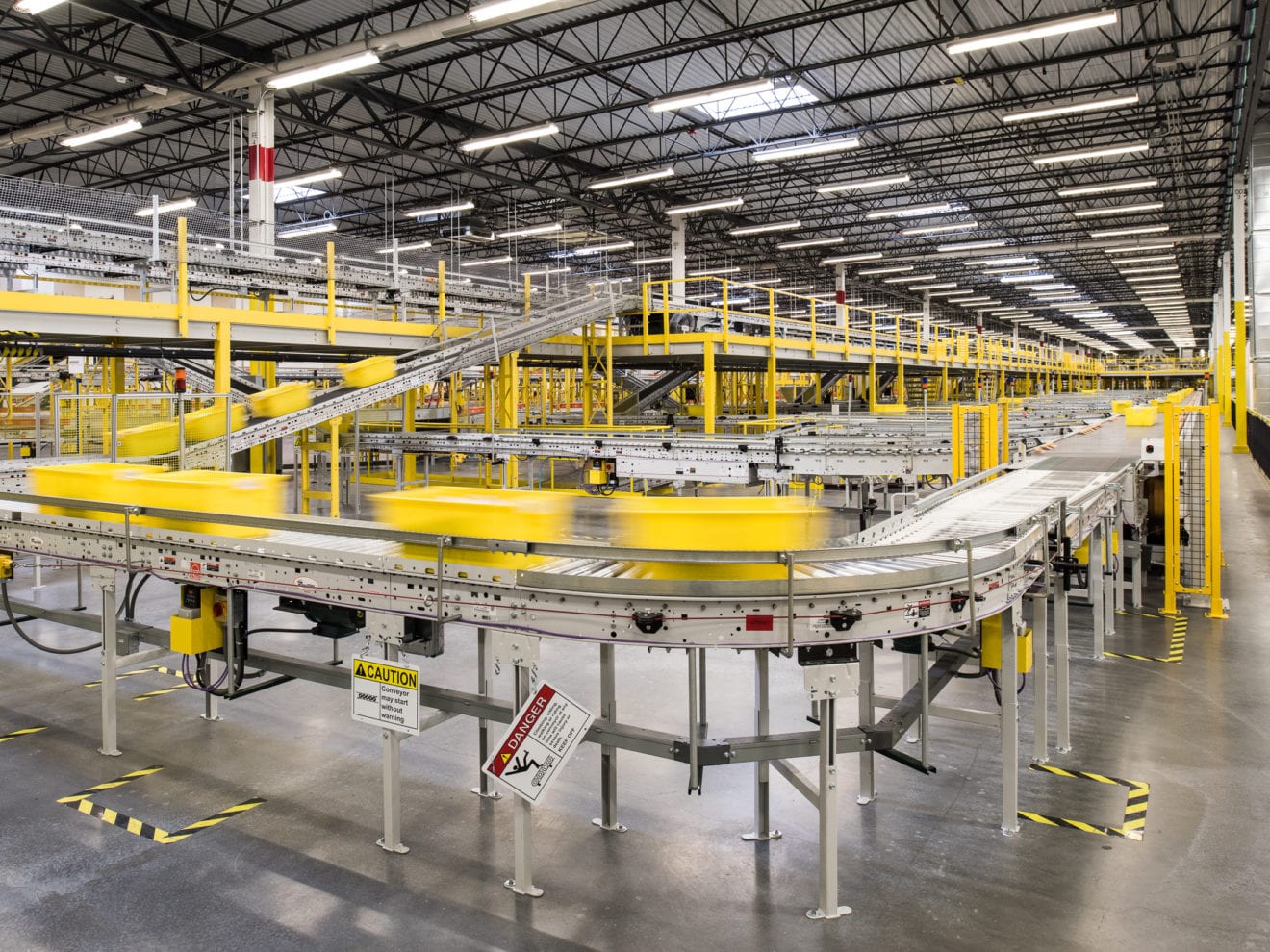
    In just the past two years, Coupang has built a network of customized delivery truck, warehouses controlled by an algorithm that allows it to be the fastest delivery in Korea. The company’s algorithms allow it to inform employees on which stock to move where, so that the most frequently purchased items are closest to the people buying them. Deliveries are made by 3,600 “Coupangmen,” who hand out balloons and candy to kids and text customers pictures of their boxes when delivered, if they are not home to receive them. The average Coupang driver delivers 120 packages each during a 10-hour shift. In South Korea, other retail establishments take two to three days to deliver their goods. Coupang is blowing the competition completely out of the water by delivering in a day or less. Customers can even cancel a shipment already on its way. Oh, and by the way, they don’t charge for delivery.

    South Korea has the second largest GDP in Asia. Almost everyone is on a smartphone and a high-speed network. Half of the country’s population lives in and around Seoul, making it easier for Coupang to deliver on their impressive promise of same day delivery. In South Korea, 15 cents of every retail dollar is spent online. In the U.S. that figure is nine cents.

    Bon Kim has become the e-commerce king of Korea and beaten Jeff Bezos at his own game. Amazon currently operates in 13 countries. Alibaba dominates China and Rakuten is the leader in Japan. Kim is content to keep his business running in Korea alone. At least for now.

  • AWS to be anchor customer for Hawaiki cable

    AWS to be anchor customer for Hawaiki cable

    In March, the Hawaiki cable project announced its contract with TE Subcom had come into force. They had raised the necessary funds to kick off the construction phase, and yesterday we learned where some of those funds came from.

    Amazon’s AWS division has stepped up for a large chunk of capacity on the system, becoming a high profile anchor customer on a submarine cable system for the first time.

    The Hawaiki cable is the latest project aimed at hooking up Australia and New Zealand directly with the west coast of the USA, stopping in Hawaii and branching off to American Samoa with options to reach several more.

    It’s a route dominated today by the longstanding Southern Cross cable system, and one on which we have seen several failed attempts to build an alternative – especially by partisans on the New Zealand side. This is the first time the money has finally added up though. As currently planned, the cable will stretch 14,000km and deliver as much as 30Tbps of capacity.

    Amazon AWS joins Vodafone, REANZ, and American Samoa Telecom as anchor customers. It’s Amazon’s first foray into the world of submarine cable systems, but surely not its last.

    The cloud giant is merely joining its tech brethren like Google, Facebook, and Microsoft in taking an active role in the underlying infrastructure they all depend on, taking up some of the slack as global telecommunications operators themselves continue to shy away from undersea investments in favor of wireless and terrestrial fiber.

  • How big brands can make online marketplaces work

    How big brands can make online marketplaces work

    Online marketplaces, those giant shopping sites like eBay and Amazon Marketplace, can be a mixed blessing for brands and merchants.

    Marketplaces offer retailers broad exposure to millions of consumers, as well as delivery, payment and other solutions. Still, most marketplaces leave merchants wanting in one very important aspect: brand control. While the platforms provide virtual shelf space for listing products, merchants are generally limited to one-size-fits-all templates for their online storefronts—thus restricting their ability to set themselves apart from rivals with brand-building presentations and content.

    Not all marketplaces are created equal, however. In China, where marketplaces are overwhelmingly favored by online shoppers, e-commerce leader Alibaba Group has been returning branding power to merchants through the company’s Tmall.com B2C marketplace.

    Tmall, which positions itself as China’s top online destination for domestic and foreign branded merchandise, has developed a suite of tools that allows merchants to customize their Tmall.com storefronts with the logos, fonts and colors for which they’re known the world over, as well as with videos, interactive features and other content. Moreover, merchants can combine these tools with Alibaba’s trove of data on shopping behavior to tailor their storefronts to individual consumers visiting their e-shops at any given moment.

    This approach gives merchants far more than a place on the internet to list and sell products. It offers them the ability to present their brands as effectively as they do on their company-run websites, boosting their opportunity to reach consumers among Alibaba’s 400-million-plus active buyers and build lasting customer relationships. Merchants “have total control,” said Paul Fu, the San Mateo, California-based head of Alibaba’s User Experience Design team.

    This is a significant departure from the “one webpage to serve them all” marketplace model. Tmall offers as many as 55,000 different storefront templates across about 30 different business sectors for merchants to choose from. Another 3,000 templates exist for product pages, and there are a thousand designs for marketing material such as e-mails and SMS alerts, according to Fu. If these packaged solutions don’t satisfy certain merchants, they can design their own right down to the page breaks and <p> tags, and then upload the code to Tmall.

    Major international brands have used this enhanced flexibility to build unique and engaging Tmall storefronts. For example, GoPro, the U.S.-based maker of wearable video cameras, produced a series of videos that appear on its storefront showing GoPro cameras being used in extreme situations, such as geologists staring into the mouth of a volcano or snowboarders doing double backflips as they race down a mountain.

    The Tmall storefronts of other household names such as Starbucks, L’Oreal, Maserati and Zara also offer fully branded experiences that experiences that mirror the look and feel of their corporate e-commerce sites, including multipage navigation according to product category and even full brand histories. Still others take the experience a step further in an attempt to boost the time consumers spend on their pages. Case in point: L’Oreal in the past has given consumers easy-to-follow guides and tips for using its beauty products.

    L’Oreal engaged consumers with hair-coloring tips posted on the company’s Tmall storefront.

    Fu says that Tmall storefronts are based on so-called “responsive” design, which means they look as good on mobile devices as they do on the web. But customization options for Tmall storefronts go even deeper.

    Using consumer data collected by Tmall, merchants can present not just personalized product recommendations based on shopping history to storefront visitors, they can also offer different homepages tailored to particular types of shoppers. For example, German personal-care brand Nivea displays three different storefronts on Tmall depending on whether a shopper is a first-time visitor, new buyer or loyal fan. First-time visitors are shown low-cost products that may tempt them to experiment with the brand. Fans, meanwhile, see sets of higher-value products bundled together as a way to boost their total purchase.

    Three different customers, three different mobile presentations. First-time visitors, new buyers and loyal fans all see products tailored specifically to them when they visit Nivea’s Tmall site.

    By making it possible for merchants to tag and manage their customers by attributes and personalize storefronts for each visitor, individual customers are exposed to highly relevant content, which drives higher conversion rates. Fu said after Nivea implemented personalized storefronts, “the data showed that the browsing conversion rate was improved by 70 percent and transactions increased by 150 percent—more than double the previous number of purchases,” he said. Browsing conversion is the rate at which shoppers click through to find out more about a product.

    Fu says Alibaba analyzes buyers based on five different behaviors: attention, interest, decision, action and sharing, all of which are part of the Tmall shopping cycle. A certain product may draw the attention of a shopper, which prompts him or her to click through to the seller’s store where they can learn more about the item. Then they decide whether or not to bookmark it or add it to their shopping cart; a purchase constitutes action. Sharing comes after, once a consumer tells a friend about their purchase or leaves a review on a merchant’s Tmall store.

    “We provide this capability for the seller to do these kinds of very sophisticated analyses,” Fu said. “Later, because we opened up this technology and data [to merchants], the seller can come up with their own model to do the analysis.”

    Still more tools are to come. Merchants currently log into a content-management system of sorts that lets them set up and manage their storefronts, including text, photos and slide show placement. They can also choose the products they want displayed as recommendations when a shopper is viewing, say, hand cream or razors or a sweater. Up next is a tool that will allow merchants to create banner advertisements on the fly, rather than turning to a designer to handle what is often a time-consuming task. That’s expected this quarter.

    Tmall also helps merchants synch their online stores with their bricks-and-mortar outlets. Fu said the goal is to make sure all points of sale are linked up, including mobile, desktop and offline. One key advantage for merchants to this so-called “omnichannel” approach is the ability to manage inventory across physical and virtual sales channels. Another is the ability to know a buyer’s location so that the nearest warehouse is used for shipping, which speeds up delivery.

    “All areas of the ecosystem are working together for merchants,” Fu said. “Before they had to figure this out on their own. But now we’ve come up with a system, and built the right tools to help them.”

    * Originally published by Alizila.com – the independent, but Alibaba Group-funded website of news about the Chinese eCommerce giant.

  • Amazon Q1 profits surge

    Amazon Q1 profits surge

    E-commerce giant Amazon.com posted its fourth straight profitable quarter, boosted by a 28 per cent sales increase and a surging growth in its Amazon Web Services division.

    Amazon reported a net income of $513 million for the first quarter, or $1.07 per share, compared with the net loss of $57 million, or $0.12 per diluted share, in first quarter 2015.

    The Seattle online retailer saw a 28 per cent increase in its net sales for the first quarter compared with the $22.7 billion in the previous corresponding period. Excluding the $210 million unfavourable impact from year-over-year changes in foreign exchange rates throughout the quarter, net sales increased 29 per cent compared to first quarter 2015.

    “Amazon devices are the top selling products on Amazon, and customers purchased more than twice as many Fire tablets than first quarter last year,” said Jeff Bezos, founder and CEO of Amazon.com.

    “Earlier this week, the $39 Fire TV Stick became the first product ever — from any manufacturer — to pass 100,000 customer reviews, including over 62,000 five star reviews, also more than any other product ever sold on Amazon. Echo too is off to an incredible start, and we can’t yet manage to keep it in stock despite all efforts,” Bezos said.

    Bezos added they are building premium products at non-premium prices, and they are thrilled many customers are responding to their approach.

    Amazon’s retail business saw a 31 per cent increase for the quarter to $20.5 billion, up from the $15.6 billion from the previous corresponding period.

    Amazon Web Services, with customers that include Netflix, Airbnb, Yelp and Expedia, saw a 63 per cent increase to $2.6 billion, up from the $1.6 billion from the same period the previous year.

    For the second quarter of 2016, the company expects its net sales to be between $28.0 billion and $30.5 billion, or to grow between 21 per cent and 32 per cent compared with the previous corresponding period. Operating income is expected to be between $375 million and $975 million, compared with the previous period’s $464 million.

  • AWS still dominates cloud infrastructure market

    AWS still dominates cloud infrastructure market

    Amazon Web Services (AWS) continues to dominate the cloud infrastructure services market with a 31% worldwide market share, dwarfing the chasing pack, according to new Q1 data from Synergy Research Group.

    The big three followers – Microsoft, IBM and Google – in aggregate accounted for 22% of the market, while the next 20 top-ranked cloud providers accounted for another 27%. The good news for Microsoft and Google is that they both achieved growth rates of well over 100% so they are at least slowly gaining some ground on the market leader.

    Outside of the big four, the next 20 cloud providers are growing at an average 41% per year, but in a market that is growing at over 50% that means that most of them are losing market share.

    The next 20 providers include Alibaba, CenturyLink, Fujitsu, HPE, NTT, Oracle, Orange, Rackspace, Salesforce, and Vmware.

    With most of the major operators having now released their earnings data for Q1, Synergy estimates that quarterly cloud infrastructure service revenues (including IaaS, PaaS and private & hybrid cloud) have now comfortably passed the $7 billion milestone.

    Growth rates remain somewhat similar across the major regions meaning that the United States continues to account for around half of the worldwide market.

    “This is a market that is so big and is growing so rapidly that companies can be growing by 10-30% per year and might feel good about themselves and yet they’d still be losing market share,” said John Dinsdale, a Chief Analyst and Research Director at Synergy Research Group.

    “The big question for them is whether or not they are building a sustainable and profitable business. This can be done by focusing on specific regions or specific services, but the bulk of the market demands huge scale, a broad footprint, very deep pockets and a long-term corporate focus.”

  • Telstra to launch Cloud Gateway in June

    Telstra to launch Cloud Gateway in June

    Australia’s largest operator Telstra will launch a product for businesses needing to connect to multiple cloud environments.

    The company has also added Amazon Web Services (AWS) to its list of supported cloud platforms. The service, named Cloud Gateway, will launch in June 2016.

    Cloud Gateway aims to provide private and secure connectivity directly into multiple public cloud platforms. This one-to-many “gateway” model connects an IP network service to the cloud with data carriage, cross connect in the hosting data center, configuration and support.

    Organizations are expected to be able to access their chosen cloud platform from around the world simply and securely, with increased application performance via Telstra’s IP network.

    Initially, Cloud Gateway will offer customers around the world connectivity to AWS and IBM SoftLayer, while Australian customers can also connect to Microsoft Azure, Office365 and VMware vCloud Air. More infrastructure and SaaS platforms are expected to join over time.

    Telstra executive director for global products and solutions Philip Jones said Cloud Gateway aims to help customers take full advantage of multiple cloud-based workloads.

    “Most organizations don’t realize the full value of cloud out of a single service. Instead, our customers are investing in sophisticated hybrid cloud environments, which come with their own range of fragmented networking challenges,” said Jones.

    “These include managing multiple vendors, portals and contracts, while trying to maintain a high level of security, performance and operational efficiency. We believe that just because these solutions are sophisticated, doesn’t mean that they should also be complex. Cloud Gateway is Telstra’s simple way to connect multiple clouds, and create hybrid environments.”

  • Amazon Payments goes global

    Amazon Payments goes global

    Amazon has launched a new global program designed to allow merchants worldwide to offer Amazon Payments to their customers.

    The Amazon Payments Partner Program offers tools and services to help retail partners grow their merchant business by offering easy integration with Amazon Payments.

    The program includes solution pre-integration and best practices to help ensure that merchants receive the most effective solutions. Merchants will be eligible to receive benefits and services from the program such as knowledge-sharing and ‘white glove integration services’. The program is free to participate in and available by invitation in the US, Germany, the UK and Japan.

    Patrick Gauthier, VP, Amazon Payments, said the company is working across geographies and industries to help merchants adopt its system.

    Members of the Amazon Payments Partner Program are eligible to receive account management, planning support, technical resources and training, a partner directory listing, partner designation with exclusive logos, and some partners may also be eligible for co-marketing activities.

    “The convenience and trust that Amazon Payments provides customers already attracts lots of our merchants. We are honored to participate in the Amazon Payments Partner Program,” said Yuko Hoshino, President of Future Shop.

    “Together, we will support the growth of our merchant business and contribute to the revitalisation of the eCommerce industry in Japan by combining the capabilities of FutureShop2 with the convenience of Amazon Payments.”

    “Amazon Payments extends the trusted and familiar experience of Amazon to our merchants across Europe and the US,” said Corinne Lejbowicz, CEO PrestaShop SA.

    “Our merchants want to offer their customers a payment solution that is trusted, easy and familiar,” added Brennan Loh, director of business development at Shopify.

  • K-beauty spreads worldwide

    K-beauty spreads worldwide

    The ‘K-beauty’ market is expanding its sphere of influence beyond Asia, and reaching out to other global markets.

    According to Aju News, a Korean newspaper, Korean cosmetics brands are exploring new markets worldwide. As the global interest in K-pop and K-dramas is rising, women all over the world are now looking at K-cosmetics.

    Amore Pacific has been eyeing the international market since the 1990s. After establishing factories in France and China, the company continued to expand its influence worldwide, with products now being sold in the U.S., Malaysia, Indonesia, Vietnam, Canada, Thailand, the Philippines, Singapore, Myanmar, and Japan, generating global sales of 1.26 trillion won.

    Able C&C’s cosmetics brand Missha is following the lead, spreading K-beauty all over the world. Missha stores can now be found in Brazil, Germany, Mexico, Venezuela, Turkey and Spain. The Brazilian market in particular is expected to generate strong sales growth, as reports show that the local cosmetics market is the fourth largest in the world.

    LG Household & Health Care’s The Face Shop is focusing on the Middle Eastern market, opening 55 stores in five countries – Jordan, Saudi Arabia, UAE, Oman and Armenia.

    Cosmetics brands are using a number of different marketing strategies to aggressively target overseas markets.

    In areas where natural ingredients and safety are important, such as Europe and the US, businesses are attracting customers with their ‘natural’ brands. Some brands promote elements of Korean tradition to attract western consumers. Many are ‘blending in’ with the locals through collaboration with local businesses.

    To boost overseas expansion, the Korea Trade Promotion Corporation (Kotra) is taking steps to boost sales of Korean cosmetics through American and Chinese online shopping sites.

    Kotra will host a ‘K-beauty summit’ to help Korean cosmetics brands export their products. The agency’s ‘online export incubating program’ will be introduced, and is expected to help businesses sell their products through Amazon.

    Kotra is also seeking to secure new trading opportunities in China in collaboration with the online shopping site TaoBao, operated by Chinese eCommerce behemoth Alibaba. The two parties plan to host a K-beauty expo in China during the first half of the year.

    Innisfree store in Shanghi

    The cooperation with TaoBao is only the start, as Kotra is also planning to work with other online shopping portals such as JD.com.

    Officials at Kotra emphasise the importance of making inroads in the American and Chinese markets to prolong the popularity of the K-beauty trend. They expect to draw the attention of young consumers who are sensitive to fashion and style trends and familiar with online shopping.

  • New Balance India return

    New Balance India return

    New Balance India is to make a comeback – and says it aims to open about 50 stores within the next few years.

    The US sports shoes brand’s first foray into India was in the early 2000s, but it shut its shops after a few years. Now its VP for Asia Pacific Darren Tucker says it plans outlets across shopping malls and high streets in Delhi, National Capital Region (NCR), Mumbai and Bengaluru.

    “We were ahead of time,” says Tucker. “We did not have such a wide brand presence globally then, and the retailing experience was poor. Now, the market looks more mature.”

    Its first store this time around opened yesterday – an 1100 sqft (102 sqm) New Balance Athletic Shoes standalone outlet at DLF Mall of India in Noida, near New Delhi. The company has a distribution agreement with The Major Brands Group in Mumbai for retailing New Balance products in India.

    “It’s not about the number of stores,” says Tucker. “We would prefer to have a profitable retail presence and grow at a relatively slower pace this time.

    “All our global competitors are here. The market is built. We know our competitors, and that’s an advantage.”

    With an average selling price of Rs.7000 (US$105) for shoes, New Balance will be a premium offering. Tucker says apparel is a promising segment, so lifestyle will be a focus area. The company has also tied up with online retailer Jabong for e-etailing, and is negotiating with global partner Amazon for the Indian market.

    “Considering the growth of eCommerce in India, that’s a must,” says Tucker. The company will continue to leverage its global marketing properties across sports and athletics, and plans to develop local properties. “For India, it’s going to be cricket first.”

    At the moment, the sports shoe and apparel market in India is dominated by Adidas, Nike, Puma and Reebok. Japan’s Asics Corp. opened its first standalone store in Delhi last July.

    A report by Images F&R Research estimates India’s active sportswear market at Rs.6000 crore, growing at 13 per cent a year.

    New Balance, which reported $3.3 billion in sales worldwide in 2014, was founded in 1906 by British immigrant William J. Riley to sell arch supports to police officers and waiters. The company was bought by Jim Davis, the son of a Greek immigrant, in 1972 and from its base in Boston now sells athletic shoes, apparel and accessories for men, women and children across 5000 outlets worldwide under brands such as Aravon, Brine, Dunham, PF Flyers and Warrior Sports.

  • JD.com Dominating The Rapidly Growing Chinese Online Retail Market

    JD.com Dominating The Rapidly Growing Chinese Online Retail Market

    Rapidly Growing Online Retail Market

    There are multiple dimensions through which the Chinese online retail market is growing such as growing Internet users and expanding middle class. Unlike developed countries with largest online retail markets such as the UK, the US, and Germany, the penetration of online retail is fairly low at a meager 12.9% (2015) of the country’s overall retail sector. Despite that, China is the largest e-commerce market in the world, which is also growing rapidly. Chinese consumers spent 33.3% more on online shopping last year. And the expanding middle class is making the market lucrative for e-commerce players in the B2C segment, which was an unprofitable prospect a few years ago due to unscalability. This is where the two fiercest competitors JD and Alibaba’s Tmall are fighting to capture a larger chunk of the growing pie.

    JD.com or Jingdong is the second-largest e-commerce player in China, only behind Alibaba. BABA provides marketplaces for businesses (Alibaba.com), consumers (Taobao), and brands (Tmall), along with technological support and services; it generates revenues primarily through advertising and commissions. On the other hand, JD is more of an online retail pure-play with a lion’s share of revenues generated from direct sales; however, it also hosts third-party sellers. JD operates in the B2C segment and directly competes with BABA’s Tmall.

    Why Invest In JD.com?

    Largest logistics infrastructure

    This is the key differentiator between the two. JD operates its own logistics network while BABA provides these services to its merchants through a group of logistics service providers called Cainiao. JD has been aggressively investing to expand the largest fulfilment network operated by an e-commerce company in China. Its last mile delivery distinguishes it even from Amazon, resulting in the fastest and reliable delivery as evident from the nearly 80% orders fulfilled on the same day. While BABA has stepped up its efforts in building several large-scale logistics centre, it would still rely on third-party delivery personnel. Even though the strategy is better in terms of its less labour-intensive nature, it lacks control on the quality of service.

    Rising revenues in non-core areas

    One of the reasons JD started building its logistics network in 2007 was to attract third-party sellers. Its strategy has been successful as evident from the y-o-y jump of 101% in revenues from marketplace fees, ads, and logistics services. Third-party sellers find JD more attractive as the company doesn’t ask for exclusivity, unlike Tmall. Additionally, the company has seen strong growth in the apparels and shoes segment. JD was a consumer electronics and home appliances focused retailer, but the segment’s 66% growth was outpaced by the 92% y-o-y growth in general merchandise/other segment during Q4 2015.

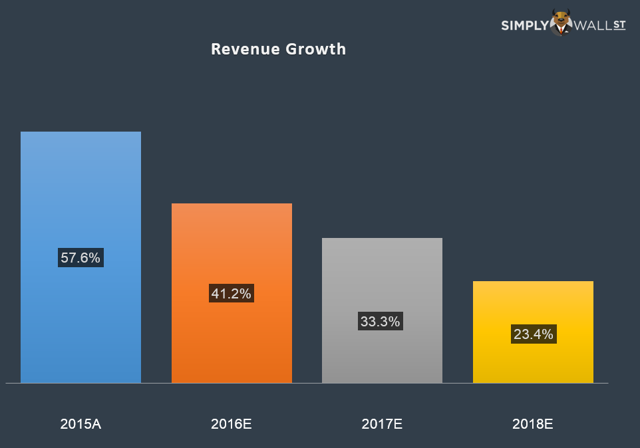
    Increasing market share

    JD’s revenue growth of 57.6% (in US dollars) during 2015 was well above the industry’s growth rate (33.3%). It indicates that the company increased its market share which accounted for the incremental growth. During early 2015, analysts at William Blair highlighted that during Q4 2014, JD gained 5% market share in GMV compared to a 2% decline experienced by Tmall. During the first three quarters of 2015, JD’s market share increased to 23.2% from 18.6% at the start of the year compared to Tmall’s contraction to 54% from 61.4%.

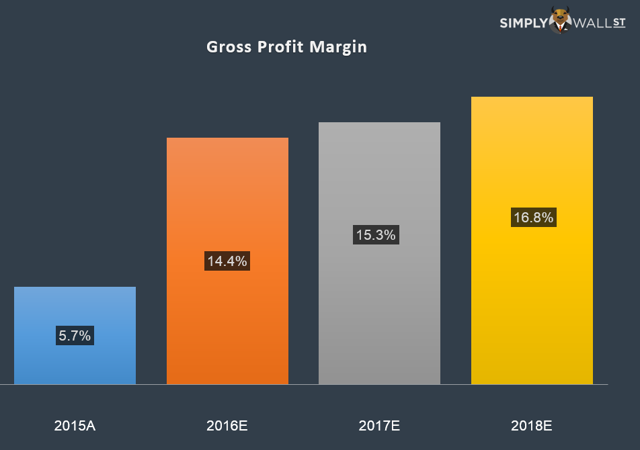
    Improving gross margin

    Source: Simply Wall St

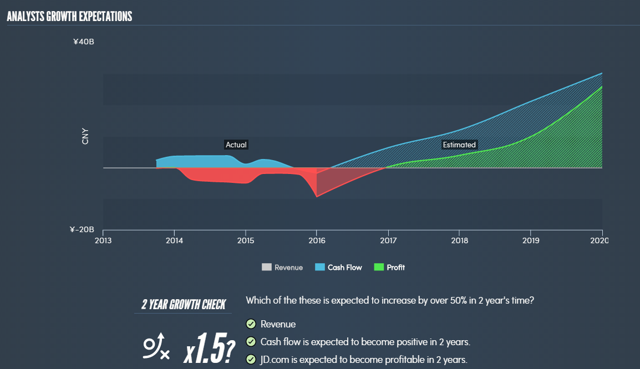
    JD was unprofitable last year. More than 85% of the loss was related to impairment charges (Paipai platform) and acquisitions; however, the company is expected to deliver positive earnings in 2016 and sizable earnings growth thereafter. JD’s improved utilization of infrastructure – growth in marketplace, ads, logistic services revenues – and increase in higher-margin product mix – general merchandise/other segment – will start reflecting in improved gross margin. Its loss doesn’t come as a surprise, as the management clearly stated in early 2015 that it is in investment mode, and this year’s target was to grow its market share and expand infrastructure.

    Source: Simply Wall St

    Smart money and the strategic partnership

    As per Bloomberg, the hedge fund holdings in the company increased from less than 4% at the start of 2015 to over 18% at the end of Q2. Q3 saw a decline, but the smart money increased its stake by nearly 7% during Q4. One of the key reasons behind hedge funds’ interest was JD’s strategic partnership with Tencent, the operator of China’s largest messaging service: WeChat. This has allowed JD to tap into the fastest-growing customer network as evident from the 61.4% sales coming from mobile devices during 2015 compared to nearly 36% in Q4 2014.

    Source: Simply Wall St

    Source: SEC 13-F filings, National Bureau of Statistics China, company fillings, S&P Capital IQ, WSJ.com, Simply Wall St

  • Coupang losses mount

    Coupang losses mount

    Coupang, the leading South Korean eCommerce operator, is expected to reveal mounting operating losses for 2015 as big investments in logistics capacity weighed on the financials of the startup company, industry sources said Thursday.

    Coupang is expected to log over 400 billion won (US$326.9 million) in  losses when it files its 2015 audit report in mid-April due to rising costs in building new logistics centres and hiring new staff, they say.

    The online retailer’s sales were estimated to have jumped more than four-fold last year from 348.5 billion won in 2014 after its same-day delivery service helped attract more customers in online marketplaces.

    While market watchers questioned the sustainability of its business model, Coupang said the deficit is an inevitable result of aggressive investment to get ahead in the highly competitive market.

    “The operating deficit was already being expected because we are making big investments to establish a nationwide logistics network and hire more staff,” a spokesperson said.

    “The investment is aimed at the long-term goal of making a strong foothold in the market. It is expected to take some time to make a turnaround as several projects are currently underway.”

    In November, Coupang said it will invest 1.5 trillion won in expanding logistics capacity by 2017 to step up its same-day delivery service, just months after it won a US$1 billion investment from Japanese telecommunications giant  Corp. Coupang launched an ultra-fast delivery service called “Rocket Delivery” in March 2014 by establishing its own logistics system and employing couriers, joining the global wave of delivery wars led by online retail behemoth Amazon.

    Coupang said it will hire 4000 more staff in the delivery and logistics sector by next year, in addition to 3500 full-time delivery staff, and have 21 logistics centres across the nation. In addition to the same-day delivery competition, Coupang has recently launched a cut-throat price war, advertising that its diapers and powdered milk are the cheapest in South Korea.

    As a result of aggressive marketing, Coupang’s market share in the local online market has steadily risen from 2.3 per cent in 2013 to 5.6 per cent in 2015. Mobile devices also accounted for 9.8 per cent of its transactions last year, according to industry data.

  • Virtual reality in retail stores

    Virtual reality in retail stores

    Virtual Reality, as a concept, has been around for over 50 years.

    In the beginning, it was literally the stuff of science fiction.  Then in the early 90’s it actually became reality, when physical prototypes were developed, using the modern technology of the era.  The results were underwhelming – imagine pixelated graphics and heavy, nausea inducing headsets. The concept lay dormant for 20 years before anyone thought to revisit its feasibility.

    That person was Palmer Luckey, the young inventor and founder of Oculus VR. What he discovered is that without anyone realising it, technology had quietly caught up with the requirements of VR. There were now low-latency head orientation sensors and small, high-refresh rate OLED displays which didn’t exist just five years ago.

    Using these off the shelf parts, he constructed a rudimentary hardware proof-of-concept which delivered an immersive experience far beyond what had been seen before.

    From this initial prototype, Oculus was founded, bringing on board many high profile experts in the field of computer graphics, alongside millions of dollars in funding. Their inaugural consumer VR product is about to be released to the public, and many smart people consider this to be a watershed moment.

    Will this be the event that introduces practical VR to the masses?

    Oculus (now owned by Facebook) is leading the way, but Apple, Google, Microsoft and Sony are all working on their own implementations of VR. There’s a full-on VR technology arms race happening, with the usual suspects involved.  They recognise the huge potential of the medium, and the unique ways it can complement their existing product offerings.

    VR 2.0

    This new generation of VR technology is in its infancy, and as with any nascent platform, pundits try to predict the types of experiences it will enable. Stereotypically, new mediums are often projected (interpreted) through the lens of the incumbent platforms which precede it.

    The first automobile was considered a “horseless carriage”. The first motion picture content was essentially just televised theatre. Simply re-imagining the experience of an old medium through a new one may be the path of least of resistance, but it ignores the unique elements of the new.

    So the theory goes, in order to fulfill its true potential, a new medium needs to abandon previous biases and embrace the characteristics and constraints which are unique to it.

    But does this calculus apply to VR? Perhaps not. Unlike all previous mediums, it is has no baked-in constraints. It is not simply a proxy for storytelling or communication. Its ambition is to replicate the reality we natively experience. It is, by design, the last medium.

    The obvious question becomes, what are the scenarios for which diving into an alternate reality becomes preferable to the “real” reality someone is experiencing. As mature as the underlying technology becomes, VR, for the foreseeable future, will forever be chasing the tail of “real life”.

    So what is the individual incentive to temporarily replace what we already (if we’re so lucky) get for free? Understanding the motivations that drive these virtual experiences can uncover the opportunities and jobs to be done of the medium.

    Applications

    In the context of VR, the virtual “reality” is simply “content”. As with all previous mediums, the success of this one will be intrinsically tied to the abundance and quality of content created for it. In this respect, authors and the tools they use to create with will be just as important as the technology that audiences use to consume with.

    These creation tools are also nascent, and consist of both hardware and software solutions.  Let’s explore a potential use-case for this technology within the realm of current domains.

    Virtual reality in retail: eCommerce and virtual stores

    A common current trend in the eCommerce space is the realisation that an online presence alone is not enough to deliver the ideal consumer experience. Even Amazon, the largest pure-play online commerce company has recently opened a “bricks and mortar” physical presence near its headquarters in Seattle.

    What is the impetus for taking this step “backwards” into the 20th century? Well, these companies have discovered that even with an (essentially) limitless online catalogue, the experience of browsing their catalogues online doesn’t compare to the act of literally walking down the aisles of a physical store. It is no substitute for the physical discovery process we take for granted.

    This applies not only to the type of merchandise that Amazon became famous for, like books, but especially so for more visual products like clothing and fashion. There is no substitute for the tactile experience of wandering through a curated store.

    But providing a physical presence requires sacrificing one of the key advantages of online commerce; having an effectively infinite reach, with the ability to target any consumer, wherever they are, independent of their physical location. Reaching global penetration at this physical scale is beyond the reach of all but the largest retailers.

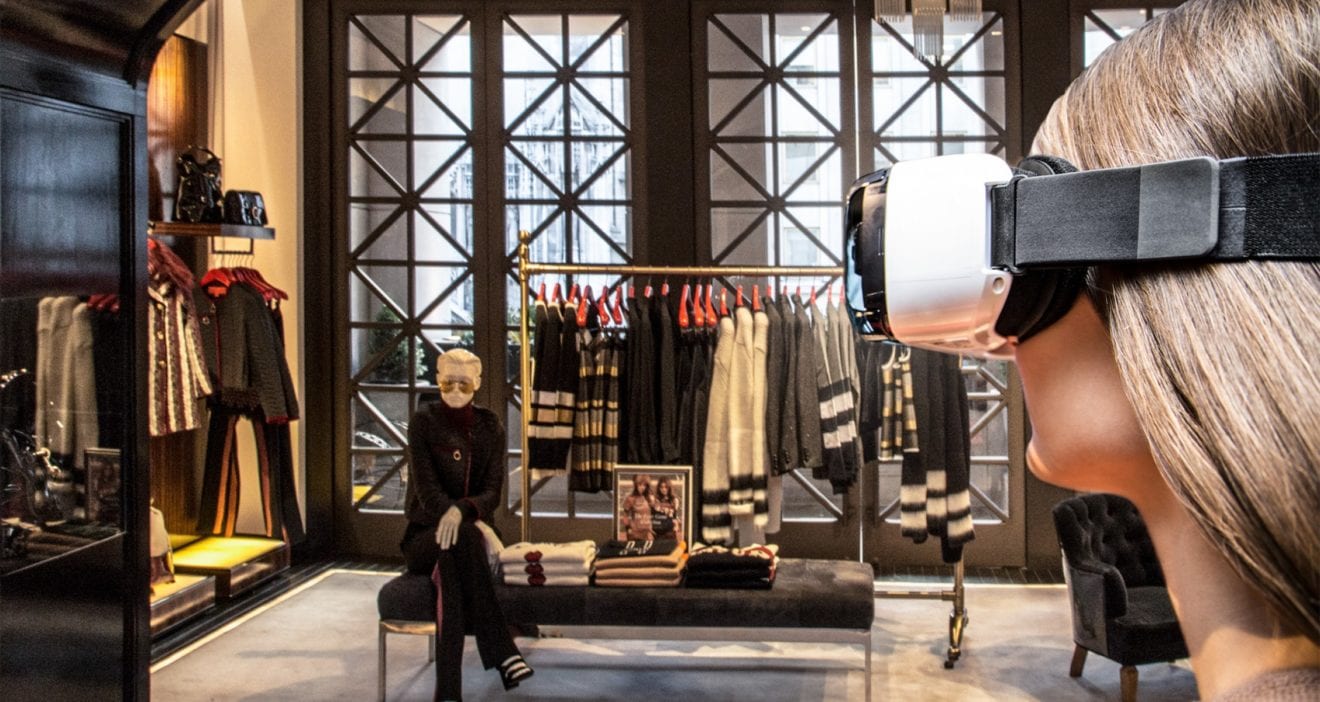
    Imagine consumers using VR to browse a virtual physical store, representing the catalogue (or a subset of) the online inventory. Even brands that have an existing physical retail footprint would benefit from the ability to amplify this bricks-and-mortar experience across markets they don’t have the scale or reach to address.

    Sizing has been an eternal struggle for online clothing retailers and consumers alike. How to know if the shirt you’re purchasing online will actually fit properly when it arrives?  Sizing charts are not standardised, and even if they were, there is no single reference body type to target a perfect fit.

    So how do you try before you buy? A virtual fitting room could come very close to replicating the experience of trying on clothes in a real physical fitting room. Imagine associating detailed physical dimensions of your body with your online shopping persona.

    Using this information, alongside similarly detailed sizing information for the individual clothing items could let you try on pieces of clothing in a virtual mirror. As you raise your arms or tilt your hips, you could see the fabric as it contours and hangs off your virtual body.

    Future opportunities

    This is just one creative application of VR hardware and virtual environments. The potential is almost limitless, and there isn’t a field or industry that won’t be touched in some way by this technology.

    While the incumbent hardware/software companies have all planted their stakes in the ground, there will be massive opportunities for all players in the ecosystem, especially content creators who understand how to create experiences on this new canvas.

    Once again, this illustrates the competitive advantage which exists for companies who can master the intersection of design and technology. Organisations who successfully combine these two disciplines will be in a unique position to benefit from the enormous future demand for virtual experiences.

    written by Marc Lamothe, Technical Director at Start Hong Kong

  • Amazon shores up logistics in China as its global delivery business

    Amazon shores up logistics in China as its global delivery business

    Amazon is expanding its logistics services into mainland China and other major shipping hubs to reduce logistics costs as it seeks to expand into the cross-border e-commerce market.

    This would see it take on domestic market leader Alibaba Group in the global cross-border e-commerce market, which is projected to reach US$1 trillion by 2020, according to data supplied by Accenture and AliResearch.

    However, its ambitions may be grander yet. One rumour doing the rounds this month maintains that Amazon has even begun leasing planes – under the radar, so to speak – to further its ambitions that may extend to taking on its current delivery partners like FedEx and the United Parcel Service.

    Seattle-based e-commerce juggernaut Amazon filed an application with the Shanghai Shipping Exchange last year that would allow its Chinese subsidiary, Beijing Century Joyo Courier Service, to serve as a shipping broker to countries in Europe, Japan and the United States.

    A broker takes care of cargo and customs issues on behalf of merchants so make sure goods reach their final destination.

    Amazon submitted a similar application to the US Federal Maritime Commission in November, allowing it to serve as a middleman for ocean freight services to other US-based companies that wish to export to other countries.

    These moves suggest the company is one step closer to becoming a transnational logistics and fulfilment hub, as outlined in a 2013 proposal to senior executives at the company, Bloomberg reported.

    Although Amazon deals with e-commerce, it does not hold its own inventory, similar to Chinese online retailer JD.com. Amazon largely taps merchants who wish to sell their products on its own platform.

    Merchants can choose to list their products and sell to customers directly from the site, or ship their goods to Amazon, which then fulfils orders on their behalf.

    By serving as a middleman in ocean freight, Amazon can tap the growing e-commerce cross-border market in China and the US by consolidating large volumes of cargo from merchants there.

    “The licenses that Amazon have received not only strengthens its own position as a fulfilment channel for its own cross border trade, but also allows it to act as a potential competitor to the likes of DHL, Fedex and UPS in delivery services,” said Michael Yeo, analyst at market research firm IDC.

    Amazon’s strategy in logistics is similar to that of its cloud computing business unit, Amazon Web Services. AWS was launched with the aim of fulfilling Amazon’s cloud computing needs but has since expanded into providing cloud services for other companies.

    “Much like how Amazon Web Services now provides cloud services to others, we can assume that Amazon has larger plans for its logistics services than simply for goods that are purchased directly on Amazon,” said Yeo.

    Amazon’s logistics strategy puts it head-to-head with Alibaba Group, which has also been aggressively expanding its logistics subsidiary Cainiao.

    Cainiao has struck partnerships with domestic and international logistics partners such as Singapore’s SingPost and the United States Postal Service for its cross-border logistics solutions.

    Meanwhile, Alibaba’s Tmall leads the retail e-commerce sector in China, wielding 58.6 per cent market share in the first quarter of 2015, according to data by iResearch.

    In contrast, Amazon China only held 1.1 per cent of the market, despite having its hand in the game since 2004, four years ahead of Alibaba’s Tmall launch.

    Doug Gurr, president of Amazon China, said the company was chasing areas where it has “unique competitive advantages” in satisfying local appetites for imported products.

    “We want to help Chinese customers gain easy access to high quality and authentic international products at fair prices around the world … and help sellers from China to grow their business globally,” he said.

  • Criteo notes eCommerce spike

    Criteo notes eCommerce spike

    In the two weeks leading up to the Chinese New Year, eCommerce sales in Asia grew by 40 per cent with 25 per cent more consumers shopping online.

    Three in 10 transactions were completed on a mobile device, according to performance marketing technology company Criteo in Hong Kong. Its findings are based on an analysis of 174 million online transactions in Hong Kong, Malaysia, Singapore, Taiwan and Vietnam.

    “Because of the traditional practice of wearing new clothes to symbolise a new beginning, consumers are doing a tremendous amount of online shopping two weeks before Chinese New Year,” says Criteo South-east Asia/Hong Kong/India/Taiwan MD Yuko Saito. “Based on 2015 data, sales on mobile devices in particular have hit record numbers.”

    In its eCommerce Industry Outlook 2016, Criteo cites three trends impacting Asian shoppers during the Chinese New Year season…

    Smartphone shopping will keep gaining ground: Smartphones are the first point of internet access or brand interaction for many consumers. In South-east Asia, Hong Kong, India and Taiwan, on aggregate, more than 45 per cent of online transactions are happening on mobile devices, compared to 29 per cent in the second quarter of last year. Indonesia was the highest at 56 per cent, followed by Singapore at 45 per cent.

    Retailers will see a high web influence on their in-store sales: Most consumers are researching online before or while visiting a store. According to Google, 80 per cent of 10 shoppers use a smartphone inside the store to help them with product research and price comparisons. Criteo says retailers can acquire a better view of customer behaviour by connecting with them via branded apps or beacon technology, before matching each customer’s email ID with loyalty programs at in-store POS terminals.

    Instant delivery services will become common: Order fulfilment will be a big focus for retailers this year, with many offering delivery options to match Amazon’s Prime Now service. Both online and “click-and-brick” retailers will be trying this strategy through specialised third-party eCommerce logistics providers. Faster delivery at lower charges will also drive growth of cross-border shopping.

    “During special occasions like Chinese New Year, we observe instances of intensive, last-minute shopping, where consumers take less time to consider a purchase and require products to be delivered on short notice for personal use or gift-giving,” says Saito. “Taking a three pronged approach – engaging consumers on the mobile web or on mobile apps, leveraging consumers’ web-browsing data to deliver personalised in-store and mobile shopping experiences, and investing in instant delivery services will be crucial to increasing sales conversions.”

  • Amazon sales hits $100 billion

    Amazon sales hits $100 billion

    With total revenue growth of 22 per cent during its final quarter, Amazon has emerged as one of the clear winners in the battle for holiday spend.

    Even in its more mature home market, Amazon sales rose by 24 per cent, making it responsible for 22.6 per cent of all online retail spend in the US over the final quarter of the year.

    These impressive figures are accompanied by another achievement: Amazon has now comfortably passed the $100 billion annual sales mark. Taking some $107 billion in its latest fiscal year confirms Amazon’s status as an online behemoth.

    Fortunately for Amazon, this stellar topline performance has been joined by a continued improvement in profitability – something that has previously eluded the group. Across the year as a whole operating income was up by an impressive 1154 per cent, which helped turn a net loss of $241 million in the prior year into a net profit of $596 million this time around.

    That noted, by comparative retail standards Amazon’s level of profitability is still painfully weak. For every dollar the company takes, it makes just 0.75 of a cent in profit. However, this is a conscious decision by a company that uses a large chunk of its revenues to invest back into generating future growth. Clearly this is a strategy that is working, and it is one that is accepted by the market. That it is, makes life much more challenging for traditional players like Walmart which are much more constrained in terms of the degree to which they can erode profitability in order to boost their own online operations.

    Once again, one of the standout areas for Amazon has been Prime, where membership continues to grow strongly. In addition to the direct revenue it brings via the associated membership fees, Prime has also proved to be an important way of locking in customer loyalty. This is important because while Amazon is still a destination of choice for many online shoppers, it faces increasing levels of competition from both traditional retailers moving more aggressively into eCommerce and from new online startups. This is something underlined by the fact that despite its strong growth, Amazon’s share of all eCommerce sales in the US has fallen over the past five years.

    Creating an ecosystem of services and benefits, which include free delivery and access to special discounts and promotions, keeps Amazon top of mind by making it an integrated part of consumers lives. Arguably it also gives the company a whole host of ways in which it can increase its share of wallet from consumers, including via the sale of digital content and services.

    Despite its high share of online across many of the geographies in which it is established, Amazon’s actual share of many individual categories remains fairly low. This is especially so for areas such as grocery where, in share terms, Amazon remains an extremely small player. This demonstrates the extent to which Amazon has significant future headroom for growth, especially as it deepens its expertise and offer across key products.

    The warning for other retailers is that even as it passes the $100 billion milestone, Amazon is still only getting started.