Retail News CRM

Tag: amazon

  • ShopClues partners with South Korea to help merchants sell products in India

    ShopClues partners with South Korea to help merchants sell products in India

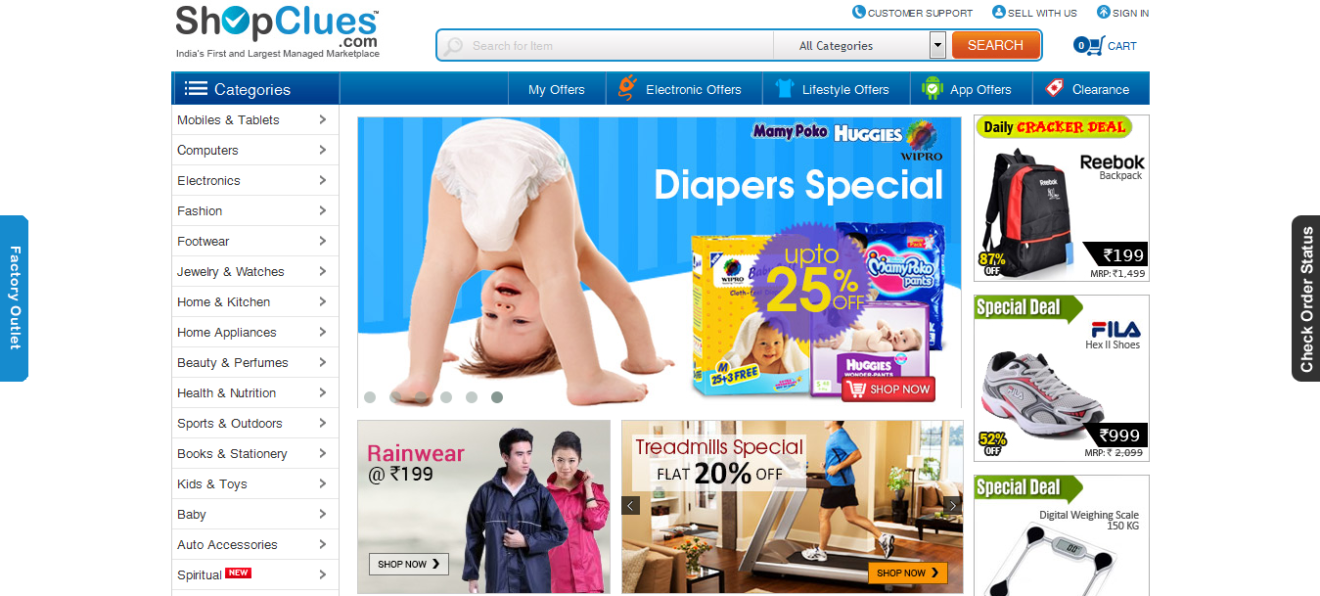
    ShopClues has partnered with a South Korean trade body to enroll 30,000 wholesale merchants, allowing them to sell directly to Indian businesses and consumers through its online marketplace.

    ShopClues will provide cataloguing, delivery payment and customer support to members of the Korean International Trade Association (KITA), similar to the terms of a partnership it stitched with Chinese online B2B platform DHgate in May, opening up the Indian market to wholesalers from southeast Asian countries.

    Indian merchants do not have many options to buy goods directly from overseas ecommerce platforms. Chinese ecommerce giant Alibaba Group has 4.46 million Indian buyers and sellers registered with Alibaba Wholesale.

    But Amazon India’s Global Selling Programme launched in June and eBay’s Powership programme allow only exports by Indian merchants. ShopClues is also in talks with wholesale platforms in Thailand, Malaysia and Indonesia. These alliances are essential for the company to be able to meet its 2015-16 target of $1.5 billion (Rs 10,000 crore) in gross merchandise value, or the total retail price of all the goods sold on its platform.

    In financial year 2015, ShopClues achieved GMV of Rs 2,500 crore. “The merchants on-boarded from DHgate as well as KITA are an overlap between our wholesale marketplace for consumers and small businesses as well as private marketplace for B2B sourcing for the 1.25 lakh merchants registered on Shop Clues,” said Sanjay Sethi, cofounder and CEO of the Tiger Global-backed company.

    “More importantly, it helps smaller merchants and those in Tier 2 and 3 cities who want to stock up certain goods for their physical retail outlets.”

    The Korean merchants will sell products including cosmetics, home and kitchen appliances, electronic goods and car accessories on ShopClues. They will be charged a fee for services provided by ShopClues.

    “We do the payment processing, including exchange services, and charge the merchant for it. Apart from this, the fulfilment services are also charged.Access to the ShopClues platform is free,” said Sethi. The turnaround time will be 14-45 days, depending on the volume of an order and whether the products have to be custommade, Sethi said.

    On plans for enrolling merchants in Thailand, Malaysia and Indonesia, Sethi said, “Currently, we have not built the entire ecosystem for the SE Asian markets to buy or source from Indian merchants, though we will look at exports going ahead.”

  • Amazon lures investors back from Alibaba

    Amazon lures investors back from Alibaba

    China is no longer in vogue with e-commerce investors, as money returns to the US and Amazon.com following a brief fling with Alibaba Group Holding and its 367 million customers.

    With a market value of more than US$240 billion, Amazon is once again the world’s most valuable e-commerce company, a spot it lost after Alibaba’s record-setting US$25 billion initial public offering in September. Alibaba’s current market capitalisation is at about US$180 billion, down more than 30 per cent from its peak in November.

    Alibaba reported earnings on Wednesday showing that quarterly sales grew at their slowest pace in three years, with transaction volume falling short of estimates.

    Investors viewed Alibaba as a profitable alternative to the free-spending ways of Jeff Bezos, Amazon’s chief executive officer. Now, concerns are focused on China’s cooling economy and slower consumer spending, as well as Alibaba’s reluctance to aggressively pursue business in the US. Meanwhile, Amazon impressed investors last month when it reported a surprise second-quarter profit, thanks to its fast-growing cloud-computing business and spending discipline.

    “You can’t overlook the China slowdown,” said RJ Hottovy, an analyst at Morningstar Inc. in Chicago. “Chinese consumer spending trends are in a slowdown.”  Among investors, JPMorgan Chase & Co, Wellington Management Group and TIAA-CREF Investment Management reduced their share holdings in Alibaba by an average of 42 per cent in the past three quarters, while increasing their holdings in Amazon by 65 per cent, according to data compiled by Bloomberg.

    For now, the e-commerce giants are mostly steering clear of each other’s home turf. Amazon is focusing its overseas growth ambitions on India after investments in China failed to gain traction. Alibaba in June announced plans to sell its US website 11 Main, and is looking to Russia and Brazil to expand. Rather than sell Chinese goods in the US, Alibaba is focused on encouraging American businesses to sell into China.

    While Alibaba initially benefited from interest in a new investment opportunity at its market debut, Amazon has the advantage of being publicly traded for almost two decades, said Kirthi Kalyanam, director of the Retail Management Institute at Santa Clara University.

    “Familiarity creates a big advantage for Amazon,” Mr Kalyanam said. “This is Wall Street saying, ‘If you think Alibaba is going to come into the US and take on Amazon, think again.’”

  • Store’s e-receipts pay off with cash-saving extras

    Store’s e-receipts pay off with cash-saving extras

    Shinsegae Department Store is set to launch a new smartphone app that offers online and offline shoppers e-receipts with extras.

    While the electronic receipt app avoids the hassle of scraps of paper receipts, it can also provide discount coupons and make it easier for customers to park cars.

    Scheduled to launch on Friday, the retailer said the app will help it engage with customers and potentially learn consumer shopping habits from the digital records, and make exchanges or returns easier.

    Retailers outside of Korea have already adopted e-receipts, but local shops have been slow to utilize the system.

    Global marketing company Epsilon International said the e-receipt is “an innovative communications vehicle for retailers that offer limitless marketing possibilities, providing deeper insight into consumer shopping habits, which can lead to more targeted advertising mailers, promotions and emails.”

    On top of offering e-receipts, the platform will provide information about different sales events and discount coupons, the department store chain said.

    The Shinsegae app will also help the store’s parking service. If a customer registers a car number, they can check the length of time they have spent in the parking lot.

    In the Gangnam and Incheon branch, customers can confirm their parking locations on the app and also get their parking ticket validated for free parking.

    The company said that users are allowed to log in with cell phone numbers instead of having to create IDs and passwords.

    Starting in September, users of the app can also receive a list of bestselling products. In addition to the new features – an upgrade to the old app which gave basic store information – Shinsegae said it will add other services to the platform.

    The retailer also unveiled a pickup service that allows online users to pick up their orders at Shinsegae Department Store.

    The new service is part of “omni-channel retailing” which is used by retail giant Amazon, which is a marketing strategy aimed at bridging the gap between online and offline stores.

    “The boundary between online and offline shopping is getting blurry,” said Hong Jeong-pyo, director at the marketing strategy division at Shinsegae. “Shinsegae launched the services that combine the advantages of online and offline shopping.”

    The release is the latest digital service offered by Shinsegae. The group introduced a new mobile payment system called SSG Pay, where consumers can pay with the app at Shinsegae affiliates, including Shinsegae Department Store and E-Mart, WithMe convenience stores, Starbucks, Premium Outlet and SSG.com.


  • Korea’s GearX finds favour online

    Korea’s GearX finds favour online

    Korean underwear brand GearX says sales of its functional sportswear online is booming – especially in Japan, China, Southeast Asia and America.

    While not revealing actual sales figures the company says its online mall is succeeding because the brand is building popularity by maintaining reasonable prices for products that boast excellent functions, “contrary to a number of global functional wear brands that started out as offline businesses and formed high price range”.

    Now, Lee is planning to expand GearX’s product range to include functional yoga outfits, running and cycling apparel.

    GearX is running its shopping mall in multiple languages including English, Chinese, andJapanese using the Global Service of cafe24, Korea’s largest shopping mall solution provider. GearX’s products are also available on global online shopping malls such as Amazon.com of America and Qoo10 of Singapore.

    GearX’s products include base layer, rash guard, and underwear; all of them offer fast-drying, UV blocking, and antibacterial features. GearX applies a seamless sewing technique on the clothing to achieve excellent flexibility. Thus, all of GearX products fit the body without extreme tightness.

    “From the very beginning, we focused on developing a highly functional fabric that relieves heat, maintains coolness, and repels insects. As a result, we have become Korea’s first, and only, functional clothing manufacturer to acquire a patent for the fabric,” said Sang-hun Lee, president of GearX.

    “After successfully developing the fabric, he had also developed and introduced a sewing technique that would not irritate the skin considering the the fact that the product is in direct contact with the skin.”

  • Amazon India launches Beauty Store

    Amazon India launches Beauty Store

    Amazon India has launched a luxury Beauty Store on its eCommerce portal.

    “We are excited to offer a wide selection of handpicked luxury beauty products. Customers can now order their favorite luxury beauty brands from the comfort of their homes with Amazon.in,” said Samir Kumar, director of category management with Amazon India.

    The store will offer products from 17 luxury brands covering hair, skin and body treatments.

    The brands include L’Occitane, Crabtree & Evelyn, Kama Ayurveda, Forest Essentials, Davidoff, Calvin Klein, Dermalogica, Ren, Temple Spa, Leighton Denny, Jo Hansford, Shaze, Dr. Lipp, Eve Snow, Pangea Organics and The Camel Soap Factory.

    It targets both men and women.

  • China’s Too Large for Retailers to Ignore

    When it comes to online retail markets, China is in a class by itself. The country is already home to the world’s largest e-commerce market, and there’s room for more growth.Chinese consumers are attaining middle class spending power at a historically unprecedented rate and using it to treat themselves to personal luxuries.

    That spending has made the country the world’s fastest growing “vanity goods” market—increasing by 15% year over year—for such purchases as high-end fashion and beauty goods, jewelry, and personal care items.China presents a vast growth opportunity for international retailers, and like any business expansion, requires a considered approach.

    It’s important to understand the market, its nuances and challenges in order to succeed.In 2013, online purchases accounted for 8% of the country’s total retail sales. E-commerce transactions totaled USD $305 billion that year, and Singles Day, the popular online shopping holiday in November, accounted for USD $5.7 billion of that total.

    E-commerce in China already outpaces that in the US, and within 5 years it’s expected to dwarf the combined online retail markets of the US plus the UK, France, Germany, and Japan.That booming growth is due in part to the rise in mobile phone usage among Chinese consumers, which helps them bypass brick-and-mortar shopping obstacles such as distance and traffic.

    It also owes something to Chinese internet-use habits. According to a McKinsey & Company report, Chinese internet users are online for as many as 6 hours more per week than the average US user, giving them more time to search for and purchase products.China is a huge nation with a middle class that will soon top 630 million people—more than 8 times larger than the US “Baby Boomer” generation that was once the world’s leading middle-class consumer demographic.

    According to McKinsey, only 4% of China’s urban residents were middle class as recently as 2000. By 2020, 75% of Chinese urbanites will have middle class status and newfound spending power.In general, Chinese shoppers like international brands and upscale goods, so offshore retailers have a certain cachet. French wines, American electronics, and Italian designer clothing are popular prestige purchases among Chinese shoppers.

    In a competitive market, your company’s “outsider” status can be an asset, especially if it’s backed up by excellent quality control and responsive customer service.Beyond that, experts recommend getting to know particular regions, rather than treating such a populous and diverse nation as a monolithic market. For example, McKinsey reports that certain cities are stronger markets for particular luxury items. By 2025, the firm expects Shanghai and Beijing to be among the top 20 global cities for upscale spirits consumption, while Hong Kong will rank first for luxury beauty goods, with Shenzen, Shanghai, and Beijing also in the top 20 for that category.

    Determine which cities and regions are a good match for your product line, and give serious thought to how you will market to those areas, as the most popular channels may be ones your company is not currently using.

    The McKinsey report on Chinese consumer internet habits makes the point that online video and instant messaging are more popular with Chinese online shoppers than email and search, which are prevalent in the US. Mobile sales accounted for 12% of all Chinese online sales in 2014, so all online efforts should be designed to display well on mobile devices.Promote sales timed to major in-country shopping holidays, such as Singles Day in the fall and the Lunar New Year in the spring.

    Shoppers expect deals at these times and will go elsewhere if your shop doesn’t provide them.As an online merchant, your customers can reach you from anywhere, but as the Australia China Quarterly points out, Chinese shoppers tend to prefer familiar outlets such as Tmall, Alibaba’s B2C platform. (For perspective, US e-tail giant Amazon recently opened a Tmall shop of its own.) If you sell from outside the country or use Tmall, you won’t need a Chinese business license, and that can save you time and money. The potential drawback for small merchants is the fee schedule. For Tmall Global, the fees include a USD $25,000 security deposit, in addition to annual fees and transaction fees.

    In order to save on fees and avoid tying up cash in a security deposit, offshore merchants always have the option to sell independently. To do so successfully, Daria said, “such merchants must seek out a payment services provider that supports multicurrency transactions and has established relationships with in-country banks and with UnionPay, which is the government-backed bankcard and interbank network for all of mainland China.”

    Globally, there are more than 3 billion UnionPay cards in use across 141 countries. A reliable and efficient shipping carrier is a must as well; look for one that can streamline the customs paperwork for your shipments into China.No matter what size your online business is, China is a market worth exploring. Capturing even a small percentage of this large and robust market can yield rewards now and in the future as China’s economy and purchasing power continue to grow.

  • Goxip mixes fashion, celebrities and shopping

    Goxip mixes fashion, celebrities and shopping

    Star-gazers – those who focus on the celebrities, that is – now have an app they can use to find fashion matching what their idols are wearing.

    A Hong Kong startup has launched an app called Goxip which uses social media, photo recognition technology and news feeds to connect fashion lovers with online retailers.

    So when 25 year old Tina in a downtown Hong Kong cafe sees Fan Bingbing wearing a stunning new dress on a red carpet stroll she can copy the image on Goxip, crop the photo and wait while the app digitally searches online stores around the world for something similar.

    The app’s creators – Juliette Gimenez and YC Lau – hope Goxip will become “the commerce layer, in between the world of [celebrity news] content and the retailers,” according to an interview.

    It’s aimed at ‘ordinary people’ who cannot afford to splurge $5000 on designer rags worn by a Hollywood superstar – but want something as similar as they can. Meanwhile, fast fashion apparel brands are constantly studying catwalks and red carpets to spot new trends and cuts they can incorporate into their next weekly or fortnightly release.

    Goxip helps the two parties meet – hopefully resulting in online sales for the retailer.

    Behind the app is a system constantly searching for new trends and celebrity revelations.

    “When you read the news, you can go straight to the article. Or you can shop. We have a snap and crop function. I like this dress, so I crop. I like this red dress for my cocktail party. I crop, take a photo, type the style and a list of clothing that matches your desire is listed,”.

    Gimenez, Goxip’s CEO, worked with group-buying startup uBuyiBuy.com in 2010 which was later acquired by Groupon. Lau, Goxip’s head of product, is an investor and adviser for Chinese language web forum HKGolden.com, which boasts 6 million daily page views.

    Goxip already has relationships with over 40 retailers (including Amazon, Shopbop, Zalora, Bloomingdales and TopShelf) and estimates it already has about 1 million clothing items in its database.

  • Walmart to boost its e-commerce investment in China

    Walmart to boost its e-commerce investment in China

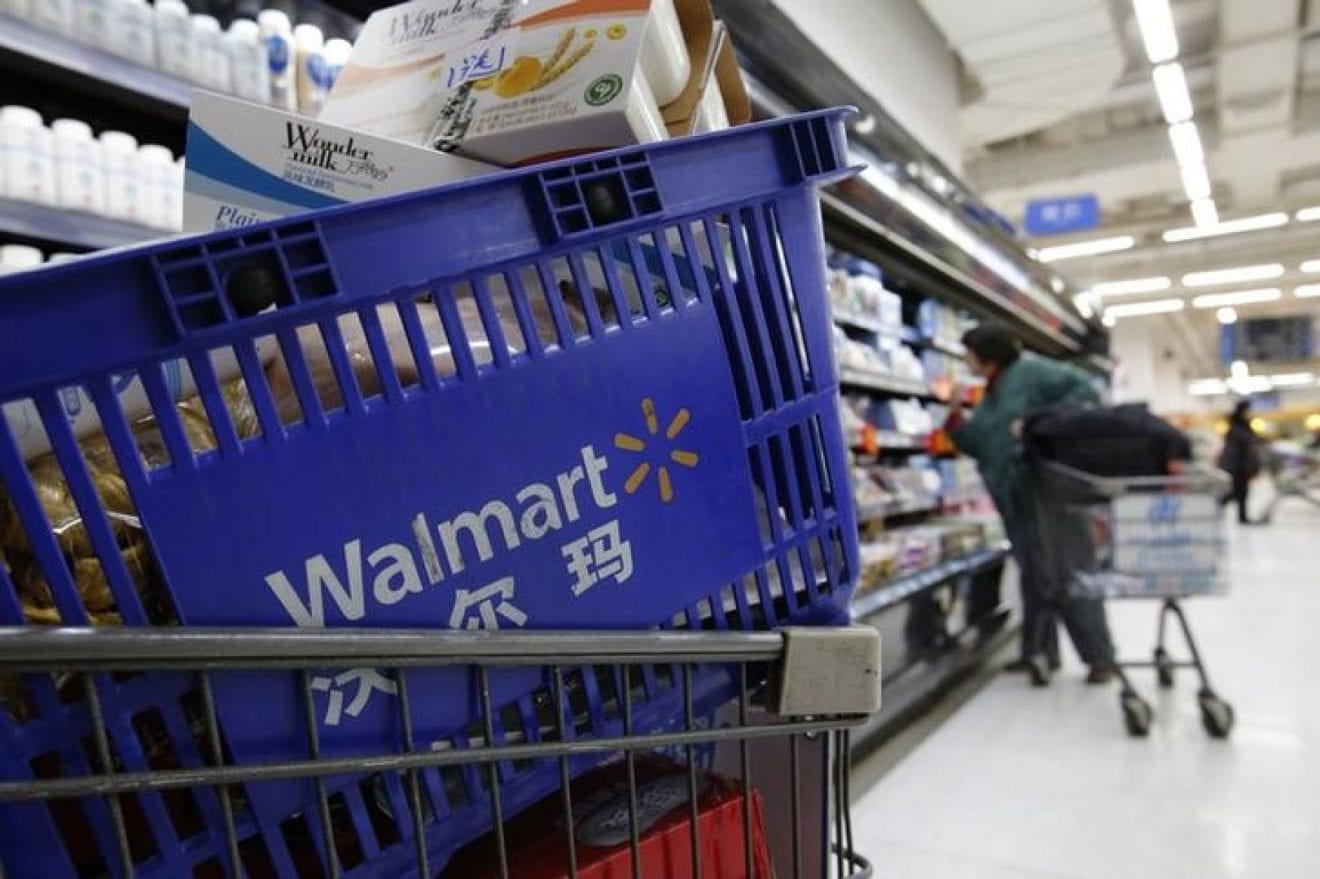
    China’s e-commerce market hasn’t been easy for Walmart to crack, but the U.S. shopping giant isn’t giving up. The company is investing even more in its e-commerce operations there, by taking full control of a Chinese online retailer.
    On Thursday, Walmart bought up the remaining shares of Yihaodian, after previously owning 51 percent in the Chinese company. Financial details were not announced, but the move will accelerate Walmart’s online expansion in China, the U.S. retail giant said.

    Walmart’s move was made possible by the Chinese government’s recent decision to open the e-commerce market to more foreign investment. Last month, a Chinese regulator removed restrictions that barred foreign investors from taking a 100 percent stake in any e-commerce operation in the country. Before that, foreign investors such as Walmart had to enter into joint ventures with local Chinese players.

    Although Walmart’s move could help the U.S. company tap the vast Chinese market, gaining ground against the existing competition will be tough. Other U.S. e-commerce players such as Amazon.com and eBay have all struggled to compete with Alibaba Group, the country’s leading online retailer.

    In China, Alibaba’s Tmall.com site has a 60 percent market share, according to Beijing-based research firm Analysys International. Amazon and Walmart’s Yihaodian site, however, each have about a 1 percent share.

    In spite of Alibaba’s dominance, Walmart’s Yihaodian site has been making gradual progress. It now has 100 million registered users, up from only 4 million back in 2010. Walmart’s goal is to now integrate their physical stores with Yihaodian’s mobile and online services for a better shopping experience.

  • E-commerce market in China is big enough for multiple players

    E-commerce market in China is big enough for multiple players

    Cross border e-commerce is gaining traction worldwide, partly because of rising business from China. Despite the rise in global players, US online retailer Amazon is not afraid of the competition.

    Amazon has felt the wind of late comers. Alibaba has brought the war onto Amazon’s home turf, recruiting small US businesses to join its sales network after its debut on the New York Stock Exchange last year.

    Amazon’s senior vice president of international consumer business Diego Piacentini says the market is big enough for multiple players.

    “Business is not sport, where there is one winner. Business has multiple winners,” Piacentini said.

    “The size of the business, particularly e-commerce, would be so large. There is room for global players. Amazon is going to be one of them, absolutely, Alibaba and Tmall is one of them and many others.”

    Besides talking the talk, Amazon has beefed up its operation in China since last year. It opened direct mail to China from six of its global locations. Amazon also set up a Chinese e-commerce website and increased its overseas purchases in China to bolster local sales.

    “For countries like China or India, they are not exposed to many years of modern retail, e-commerce, or mobile commerce. You can expect in the next few years, that the vast majority of retail activities in China and India would happen online,” Piacentini said.

    Last year, 18 million Chinese consumers spent US$213 billion overseas—more than double Amazon’s annual sales. For any global commerce site, such potential is hard to ignore.

  • Amazon AWS launches in India

    Amazon AWS launches in India

    Amazon Net Providers is to open an infrastructure area in India for its cloud computing platform in 2016.

    “Tens of hundreds of consumers in India are utilizing AWS from considered one of AWS’s 11 international infrastructure areas outdoors of India. A number of of those clients, together with many potential new clients, have requested us to find infrastructure in India to allow them to take pleasure in even decrease latency to their finish customers in India and fulfill any knowledge sovereignty necessities they could have,” stated Andy Jassy, senior VP of AWS.

    “We’re excited to share that Indian clients will have the ability to use the world’s main cloud computing platform (AWS) in India in 2016 – and we consider India can be considered one of AWS’s largest areas over the long run.”

    Clients in India similar to Hike, PayTM, Zedo, Freshdesk, Inmobi, Capillary Applied sciences, HackerEarth, Getit, Ferns N Petals, redBus, Druva, Vserv, Hungama, Tata Motors, Jubilant Meals Works, STAR India, Future Group, Manipal International Schooling, Classle, NDTV, Dalmia Bharat Sugar, Usha Worldwide, Macmillan India, Apeejay Stya and Svran Group are already utilizing AWS to drive value financial savings, speed up innovation, velocity time-to-market, and broaden geographic attain in minutes.

    Amongst Amazon’s Indian AWS clients is Ferns N Petals is a number one flower and retailer with 194 retailers in 74 cities and supply throughout 156 nations worldwide. Previous to utilizing AWS, Ferns N Petals was operating its IT infrastructure in a standard datacenter. The corporate turned to AWS within the yr 2014 when their enterprise grew quickly and determined to maneuver their complete on-line enterprise to AWS. Since shifting to AWS, they’re able to handle speedy progress of their customers’ visitors that peaks at 80 per cent in the course of the festive seasons.

    “Our expertise with AWS over the previous yr has been wonderful. AWS is now the cornerstone in our progress technique,” stated Manish Saini, VP of on-line enterprise for Ferns N Petals.

    “We’ve got just lately launched two new companies that embrace new abroad enlargement which might be all operating on AWS. We at the moment are capable of spend extra time and assets in areas that matter to our clients reminiscent of new cellular app improvement that may improve their shopping for expertise.”

    Launched in 2006, Amazon Net Providers presents a totally featured know-how infrastructure platform within the cloud comprised of a broad set of compute, storage, database, analytics, software, and deployment providers from knowledge middle places within the US, Australia, Brazil, China, Germany, Eire, Japan, and Singapore.

  • How Chinese language store on-line

    How Chinese language store on-line

    Spend a while with Chinese language shoppers and also you shortly realise how totally different their purchasing habits are in contrast with these of Westerners.

    As an American who has been dwelling in China for greater than 10 years, I’ve come to understand simply how important eCommerce has turn into to my fellow Shanghainese. I ask my buddies the place they discovered these cute footwear, or that imported ingredient, and the reply is all the time the identical: “I discovered it on-line”.

    Whereas in America and different nations eCommerce is primarily a way to an finish, for a rising variety of Chinese language individuals, on-line purchasing has develop into a part of a life-style that defines how they see themselves. And for me, browsing Taobao, China’s largest C2C market, has grow to be a routine exercise that permits me to refill on necessities, in addition to hard-to-find reminders of house for my rising household. Listed here are 4 of my private observations on why individuals have adopted Taobao as a part of their day by day lives:

    Personalisation.

    It’s not simply the altering graphics on Taobao’s entrance web page, harking back to Google Doodles. Frequent Taobao customers discover that their buying experiences appear to be tailor-made to their wants. That’s no coincidence. Ding Xi, director of Taobao Market’s consumer expertise division, says that cultivating a “character” is a vital function of Taobao’s platform.

    With so many extra customers on Taobao than on websites like Amazon, Ding says his division “can analyse shopper conduct and perceive its clients in a way more in depth method,” which permits the location to configure itself to go well with particular person buyers. From login, the location makes use of in depth knowledge to pick advertisements, merchandise and Taobao outlets in accordance with profiles developed for customers so that every finds what they’re in search of quicker.

    Cellular Commerce.  

    Some 300 million cellular purchasing customers (that’s virtually your complete inhabitants of the US) spent greater than US$1.6 trillion on on-line purchases in China final yr, in line with China eCommerce market analyst Enfodesk.

    At present almost one out of each two on-line purchasing transactions are finished on cellular units in China and that quantity is rising quick because it turns into more and more handy to browse and pay for items utilizing smartphones.

    Jessie Chen, a younger Shanghai skilled, says she makes use of Taobao on each pc and cellular, however provides that the cellular platform is properly suited to her wants when she’s away from her desk.

    “Once I verify my package deal supply standing, or once I’m out, I often verify on cellular,” Chen says.

    Partnerships between offline retailers like Walmart and e-payments supplier Alipay is even making it attainable to make use of telephones to pay for purchases in bodily shops.

    Individual to Individual.

    Chinese language tradition locations a excessive worth on guanxi, or private connections, and you may expertise that firsthand on Taobao.

    The location’s Aliwangwang prompt messenger is a closely used function that permits consumers and sellers to speak by way of actual time chats earlier than and after purchases. Due to cellular integration, response time is quick and conversations can transcend the constraints of 9-5 enterprise hours. Current college graduate Yashan Zhao says Aliwangwang is as a lot a social software as it’s a enterprise software.

    “Chatting or flirting with the sellers and clients service is nice enjoyable,” she says. Interactions may be unusually intimate. Many sellers tackle their potential clients as “pricey” which contributes to a extra private environment. And to ensure each buyer and vendor are glad, cost is made by means of Alipay, which ensures that no cash modifications palms until each events are completely satisfied.

    Taobao consumers take it a step additional, crowdsourcing info by way of purchaser critiques. Evaluations often function detailed feedback that embrace a number of pictures and details about how the package deal arrived, how properly the product matched the photographs within the product description, and whether or not sizes match nicely.

    “I’ll often verify the consumers’ feedback first earlier than I purchase something on Taobao,” says 20-something on-line shopper Pan Hu. “My pal’s opinion will probably be a key cause for me to purchase it or not.” 

    Window Purchasing.

    Browsing round on Taobao can reveal gadgets on the market that you simply’d by no means see on websites like Amazon or eBay. With services obtainable from automobiles and airplanes to canine walkers to farm recent produce, buying on Taobao might be pure leisure.

    “In addition to the issues I want, there are a number of issues in Taobao which are artistic,” says Pan. “It’s all the time enjoyable to dig round. There is perhaps surprises.”

    Many Chinese language internet buyers wish to browse to see what’s fashionable as an alternative of simply looking for the merchandise they need. Due to the depth of product choices, consumers additionally use Taobao and sister buying website Tmall.com to match costs with retail outlets. The websites’ vertical integration features like an enormous on-line mall, with consumers capable of effectively select between discount items and brand-name merchandise.

  • Bullish on ‘Make in India’, Amazon opens international e-comm markets to exporters

    Bullish on ‘Make in India’, Amazon opens international e-comm markets to exporters

    Amazon on Tuesday introduced the launch of its International Promoting Program in India, opening doorways for Indian companies to export to e-commerce markets of the world.

    Amazon is extending two of its pioneering merchandise – Promoting On Amazon (SOA) and Achievement By Amazon (FBA) – to companies of all sizes and scale from throughout the nation to go international and showcase their “Made in India” creations and merchandise to tons of of hundreds of thousands of consumers, beginning with the US and the UK, by itemizing it on  Amazon.com and Amazon.co.uk .

    Producers and native manufacturers can export merchandise within the Attire, Residence Furnishing (together with Indian Handicrafts), Jewelry, Books, Collectibles, Sporting Items, Purses, Footwear and Well being & Magnificence merchandise classes.

    Decreasing obstacles

    “Amazon at this time presents companies unprecedented attain to clients across the globe. Not are they sure by geography with entry to Amazon’s 270 million-plus lively clients worldwide. Actually, sellers on Amazon from greater than 100 totally different nations all over the world have fulfilled orders to clients in 185 nations utilising our FBA service.

    “Our International Promoting Program in India is designed to help Indian producers & companies to develop their enterprise by leveraging Amazon’s state-of-the-art know-how, world class logistics infrastructure and customer support experience,” stated Chad Goelzer, Director International Gross sales for Amazon.

    Native options

    To allow companies take Indian creations to the world, Amazon will present native enablement options by means of verified third social gathering service suppliers. These initiatives embrace logistics companions, tax consultants and compliance specialists to make the method of worldwide promoting clean and friction-free.

    Amazon’s international promoting group additionally helps them perceive native demand patterns, whereas additionally serving to sellers enhance the discoverability of their merchandise on every market. Hidesign, one among India’s hottest high-end trend manufacturers, has efficiently leveraged the Amazon International Promoting program to increase its attain within the US and the UK.

    Value efficient

    Vikas Kapur, CEO of Hidesign America Inc, says, “International Promoting is a incredible alternative for Indian manufacturers and producers as a result of it permits us to sidestep the distributor and promote on to clients across the globe and at a lot decrease costs.”

    Amit Deshpande, Director Vendor Providers, Amazon India, stated, “We sit up for serving to companies navigate by means of the complexities of promoting globally and develop a world footprint by leveraging the big demand for his or her merchandise throughout borders and thus rework the best way India makes and sells.”

  • How China And India Are Taking On Amazon

    How China And India Are Taking On Amazon

    China is no longer the Happy Meal toy making economy it used to be. It has a much bigger vision. And part of that vision includes taking what it’s learned from Western entrepreneurs and beating them at their own game. Few companies represent this better than Alibaba, which is teaming up with Indian start-ups to take on Amazon and the more established domestic e-commerce player Flipkart.

    Together, China and India tech will absolutely be a force to be reckoned with in the West.

    It all starts with Alibaba’s investment firm, Ant Financial, pumping $500 million for a 25% stake into five year old Indian e-commerce company Paytm. Paytm stands for Pay-through-Mobile. It’s run by Vijay Shekhar Sharma, the man who founded Paytm back in 2010. He and Alibaba’s founder Jack Ma, one of China’s richest men, met earlier last year and had a dream: take China’s e-commerce know-how and the Alibaba brand and go after rivals in India’s $20 billion online retail market.  That market is important to all e-commerce firms. India’s online retail business is likely to grow 15-fold to $300 billion by 2030, according to Goldman Sachs.

    The two entrepreneurs are not only symbolic of how India and China now have aligned economic interests, but also a sign of things to come. Asian entrepreneurs, led by the Chinese, are going to disrupt the status quo of many Western powers who were first to arrive on the scene. The new kids on the block are smart, ambitious, and numerous. Very, very numerous.

    Since February, executives from Paytm and Alibaba have been travelling between Hangzhou, China and Noida, India where Paytm is based. They’ve been busy developing synergies and strategies to take on Amazon and industry leader Flipkart. “It’s as if Jack Ma is conducting an executive MBA for Paytm executives,” says Vijay Shekhar Sharma, founder, One97 Communications which runs Paytm. “Ma tells us we should build a company that is worth a Nobel Prize,” he told The Economic Times on Tuesday.

    Alibaba is also sharing know-how on the challenges of “product discovery” on smartphones and the ability to handle complexity that scale brings. The ET likened relationship between Alibaba and Paytm to a military alliance, both preparing to take large chunks of market share in a rapidly changing industry where future disruptors are getting millions thrown at them in far away places — namely Silicon Valley.

    Paytm may be young and a somewhat late entrant to the e-commerce market in India, but industry insiders told the ET that Sharma is the real deal. ”Paytm is a dominant wallet in the country. It has the power to disrupt,” adds Rajesh Sawhney, founder, GSF Accelerator. “I can see Paytm becoming the biggest app in the world with about half-a-billion users.”

    Everyone already knows that Alibaba is no joke. It is Amazon’s biggest rival and Jeff Bezos, Amazon’s billionaire CEO knows it. He’s seen what Alibaba can do to other e-commerce players.

    In 2002, eBay had seven years of success under its belt in the U.S. and was now setting up shop in China. It was heady days of the commodity boom. China was growing by double digits. Chinese consumers were buying Prada shoes and smart phones, Buicks and apartment buildings. E-Bay looked unstoppable. It launched in China in 2003. By 2005, FORBES estimated that eBay had 50% of China’s puny $1 billion e-commerce market. ” A bunch of small competitors are nipping at our heels,”  said eBay CEO Meg Whitman at the time. Alibaba was one of them. It was being run by Ma in an apartment building. He was focused on business-to-business and launched the eBay rival Taobao to go after consumers. Here’s what’s happened since…

    Since the launching of Taobao, China’s e-commerce market has evolved into a vast ocean, writes the authors of the new book “No Ordinary Disruption: The Four Global Forces Breaking All Trends.”  They call Alibaba the great white shark at the top of the food chain. In 2006 , Taobao overtook eBay’s consumer-to-consumer market share and has doubled in size since. Buying a 25% stake in Paytm is par for the course, and a sign of what that shark will take a bite out of next. By the end of 2014, ALibaba’s market cap was $270 billion, four times that of eBay’s.

    India is becoming more important to Chinese entrepreneurs. There will be more such allegiances.

    As it is, Alibaba gets less than 16% of its revenue from outside China, while Amazon gets about 40% from outside North America. Both are trying to capture global market share and India is the easiest big market to stake a claim in. That’s because there is not one dominant player in the country yet. While Flipkart is the market leader, it still faces stiff competition from Amazon, eBay, Snapdeal and Paytm.

    Paytm has 50 million people using its digital wallet product. And it has Sharma running things. “I am a fan Vijay,” says Google’s managing director in India, Rajan Anandan. “He is an incredible entrepreneur with deep understanding of users, markets. He is persistent and has a lot of agility. He is trying to build a company like Alibaba.”

    Of course, Sharma won’t be the only Indian entrepreneur to set its sights on traditional rivals. Even though the next big product breakthrough will probably be made in California, India and China have an advantage. Although that advantage depends greatly on their home countries keeping the lid on any brain drain loss to the U.S., it is clear that the U.S. does not have the global skill set at home to do what it wants as easily as it would like, say the McKinsey Global Institute authors behind ”No Ordinary Disruption.” About 30% of U.S. companies say they haven’t exploited international opportunities because they don’t have enough people with the tech skills, let alone the international competencies.

    According to the National Science Foundation, using data from 2012, graduation rates in science in technology were three times higher in China than they are in the U.S., though it is worth noting that those numbers are arguably Chinese private schools in the tier one cities. If anyone is to truly believe that bulk of Chinese humanity living on a mere $10,000 a year is going to the equivalent of a U.S. public school in the midwest is probably an inaccuracy. Moreover, many wealthy Chinese and Indians are moving to Canada and the U.S. to study and work at start up and established tech firms.  Still, many of these elites will return to China and India simply because this is where the growth is. And there is no place like home…

    Indian companies have long surpassed the scale of their developed world counterparts. Indian telecom giant Bahrti Airtel has over 270 million wireless customers worldwide. AT&T, which has been at this business much longer and has better tech has under 120 million wireless customers globally, according to both companies annual reports. The Tata Group, the parent of the Tata companies from automotive to IT has over 580,000 employees worldwide. It is now one of the largest private sector employers in the U.K., employing over 50,000. Tata Consultancy Services has basically defeated IBM’s consultancy services and its biggest rivals now are mostly all Indian.

    China money, Indian start-ups, and a growing tech savvy consumer base in Asia is now a breeding ground for new entrepreneurs, and new brands, that will go head to head with the big boys. Who knows, a Chinese or Indian brand could one day take one of the existing players out of the market through acquisition, or other untimely exit.

  • Amazon Fresh expands into China

    Amazon Fresh expands into China

    Online retail giant Amazon has expanded its fresh food offer – Amazon Fresh – into China through partnerships with local distributors and suppliers.

    The new platform will offer fruit and vegetables for home delivery, alongside other groceries including meat, seafood and confectionary across a total of 600 fresh food SKUs, news outlet Tech in Asia and retail commentator IGD retail analysis have both reported.

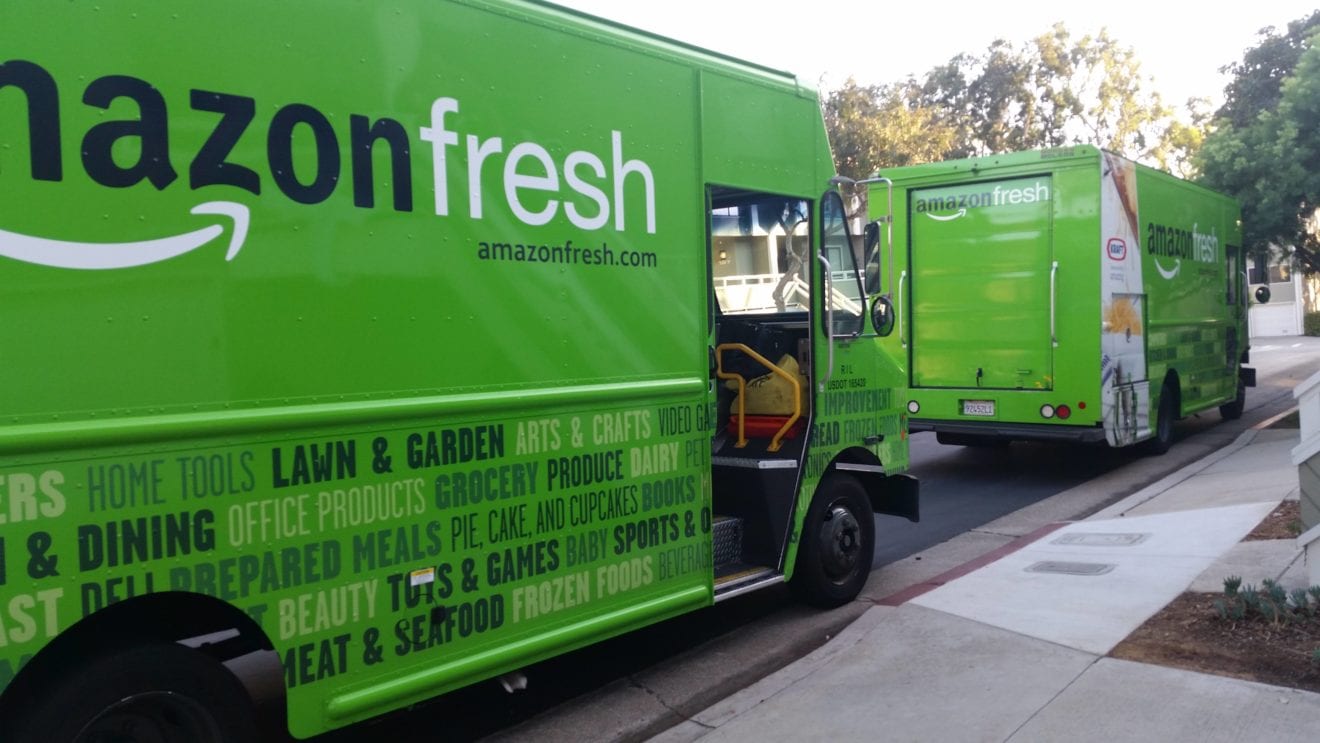
    Unlike Amazon Fresh in the US, Amazon is not handling the logistics or using its own refrigerated vans for the fresh produce in China, Tech in Asia said, but instead will rely on suppliers to do this.

    Amazon’s larger e-commerce rivals in the country – such as Alibaba’s Tmall, JD, and Walmart’s Yihaodian – have been offering fresh produce for home delivery for some time.

  • Alibaba signs Equinix deal to take on Amazon’s cloud

    Alibaba signs Equinix deal to take on Amazon’s cloud

    Equinix deal gives Alibaba a better cloud story for multi-nationals wanting to do business in the U.S. and China. It might also be worrisome to U.S. cloud powers who want that business.

    Chinese retail giant Alibaba is going bigger in cloud thanks to a new partnership with Equinix, which operates more than 105 data centers around the world.

    The stated goal is to make it easier for multi-national corporations in the U.S. to conduct business in China and vice versa. Aliyun, is Alibaba’s cloud computing arm, just as Amazon Web Services is Amazon’s the cloud computing arm. Initially, Alibaba’s cloud services will be offered via Equinix Cloud Exchange facilities in Hong Kong and Silicon Valley, with additional rollouts planned for other Equinix sites worldwide, said Chris Sharp, vice president of innovation for Equinix, Redwood Shores, Calif.

    There is plenty of headroom for expansion in this deal. Equinix has data centers in 33 countries and many other interconnection points where different providers can hook into each others’ services. Even cloud providers that run their own data centers plug into Equinix interconnection facilities so they can offer fast links to outside services. Equinix will also gain 40 more data centers across Europe via its recently announced plan to acquire Telecity for $3.6 billion.

    U.S.-based cloud giants, especially Amazon, will doubtless watch the Alibaba-Equinix news carefully. Alibaba dominates the market in China, much as Amazon does in the U.S. In March, Aliyun opened its first stateside data center stateside at an undisclosed Silicon Valley site while Amazon opened up its first data center in China in late 2013.

    Alibaba and Alyun could be viewed as mirror images of Amazon and AWS so it’ s not hard to predict growing contention between the two camps as AWS pushes more into China via its new Beijing region and Aliyun does likewise in the U.S.

    Per its IPO filing last year, Alibaba claimed more than 980,000 “direct and indirect” cloud computing customers at the end of 2013. Last November, Amazon said AWS has more than a million “active” users.

    For its fourth quarter ending March 31, 2015, Alibaba’s cloud revenue came in at $63 million, up 82% from the year-ago quarter. For the full fiscal year, cloud revenue was $205 million, up 64% from last year.

    Amazon, which has been in the cloud business for nine years, broke out cloud results for the first time in its first quarter, also ending March 31. It logged $1.57 billion in cloud revenue, up 49% from the previous year. Operating income was $265 million for the quarter, up from $245 million a year ago. Chairman and CEO Jeff Bezos claimed the cloud represented a fast-growing $5 billion-a-year annual business.

    As for whether Amazon should be worried about Alibaba/Alyun’s incursion on its home turf, Ariel Tseitlin, a former Netflix executive who worked a lot with AWS, doesn’t think so. “AWS just has so many feature and services. Right now, the biggest threats to AWS are number one Microsoft and number two Google” he noted.

    More generally, the entrance of another viable contender in cloud is a good thing for customers, said Tseitlin, who is now a partner with Scale Venture Partners, a Foster City, Calif. based VC firm.