Retail News CRM

Tag: amazon

  • The guy who built the Kindle is leading Amazon’s retail plans

    The guy who built the Kindle is leading Amazon’s retail plans

    Amazon’s long-time executive Steve Kessel is in charge of running the company’s new retail business, according to a report by Re/code’s Jason Del Ray.

    Kessel joined Amazon in 1999 and was part of the team that built the original Kindle. He’s known to be close with Amazon CEO Jeff Bezos, as he was one of the 10 people who directly reported to him before leaving for a sabbatical in 2012.

    In early 2015, Kessel returned to Amazon, but his role has been unclear until now. Re/code says he’s been working on this project secretly for a long time.

    Amazon’s retail ambitions were first revealed in November 2015 when it opened its first brick-and-mortar bookstore in downtown Seattle.

    Aside from the bookstore, Kessel’s team is also planning to open physical stores that sell things other than books, although it’s unclear what they will be. Another idea it’s testing is a store without a payments gateway, allowing the customer to pay with a smartphone app instead.

    Amazon is planning to open a new bookstore in Southern California, based on the job listings spotted by Re/code. One of the jobs says it’ll be in La Jolla or San Diego, the report said.

    The news comes on the heels of a report that said Amazon could soon open 300 to 400 additional bookstores. Although the mall CEO who made those statements backpedaled Wednesday, saying his comments were “not intended to represent Amazon’s plan,” it’s seems clear that Amazon is getting serious about the retail space.

  • Alibaba and Amazon China gear up for the Chinese New Year

    Alibaba and Amazon China gear up for the Chinese New Year

    Feb. 8 will be the most important holiday this year in China, as it marks the Chinese New Year. Family members will come together to celebrate with holiday feasts and most workers will enjoy a one-week vacation, many returning to their rural homes from big cities for the festivities. A lack of delivery personnel during this period is leading many sellers on China’s biggest e-commerce marketplaces to shut down, but Amazon China says it will keep delivering in big cities.

    Many merchants on Alibaba Group Holding Ltd.’s marketplaces Taobao and Tmall have announced that they will stop taking orders Feb. 4-Feb. 14 because shipping companies are unable to deliver orders.

    But Alibaba, whose online marketplaces account for more than three-quarter of online retail purchases in China, organized a major promotion in advance of the New Year’s vacation, the Ali Chinese New Year Shopping Festival, which lasted from Jan. 17-23.

    Alibaba reports consumers purchased 2.1 billion holiday items from its websites during the sale, mostly food and gifts. 15% of the orders came from rural residents, a focus of the promotion, and sales at the 12,000 Taobao service centers in rural areas were 331% higher than average, the company says.

    “By hosting this online shopping event, we enabled rural customers to access an extensive range of New Year goods from home and abroad, while making agriculture products from rural China more available among urban customers.” Alibaba Group CEO Daniel Zhang said at the event kickoff meeting.

    Meanwhile, Amazon China, No. 5 in the Internet Retailer 2015 China 500, says it will continue to fulfill orders during the holiday period in 20 big Chinese cities, including Beijing, Tianjin and Shanghai. In fact, the largest overseas e-retailer operating in China says it will extend delivery hours to midnight during the holiday in order to allow Chinese online shoppers to get their orders on time.

    Amazon China operates 13 fulfillment centers in China and employs its own fulfillment staff. The subsidiary of Amazon.com Inc. offers same-day delivery in 123 Chinese cities and second-day delivery in over 1,400 Chinese cities and towns.

    For a fuller report on the openings for foreign companies to sell online in China, see “Open Door Policy” in the November 2015 issue of Internet Retailer magazine.

  • Retail in India, The opportunities and challenges retailers can expect

    Retail in India, The opportunities and challenges retailers can expect

    The country presents retailers with growth opportunities, including some advantages that can’t be found in China

    Lately there’s been much talk and worry about China’s long-term growth prospects and what that means for retailers counting on expanding in the country. Certainly, China seems to be in a time of transition, in which consumption seems destined to fall after years of strong and steady surges.

    Meanwhile, India also presents retailers with growth opportunities, including some advantages that can’t be found in China.

    Already, American brands constitute a large 35% of all foreign brands in India, followed by U.K. brands, at 12%, Italian and French brands at 8% each, and Japanese, Swiss, and German brands at 5% each, according to a 2015 Indian retail report from London-based real estate consultancy Knight Frank.

    In fact, Apple Inc. just last week confirmed that it has applied to India’s Department of Industrial Policy and Promotion to open and run its own stores there, a sign that it sees potential in the country.

    “I expect to see a lot of action in the next 10 years in India,” Venkat Viswanathan, founder-CEO of LatentView Analytics Corporation, told Retail Dive. “I believe we are still at a very early stage of realizing the potential of a market the size of India, and that it’s only a matter of time that India becomes an equally big part of the [business] ecosystem.”

    Language, just the beginning

    English is an official language in India, and serves as a common language for many of the sub-populations there. Therefore, language isn’t the barrier for businesses doing business there, including retailers selling to Indian consumers.

    Furthermore, while in China there’s a Chinese equivalent to Facebook, Twitter, and other social media platforms, the most widely used ones in India are the very ones that are widely used in the U.S. India gives Facebook its second-largest membership base, after the U.S. That means brands have one less barrier to bust through when reaching Indian consumers.

    And, while the Indian government’s official statistics aren’t quite as credible as those released by U.S. government agencies, says Viswanathan, they’re deemed by most as more solid than numbers released by the Chinese government, which are widely seen as untrustworthy and even confusing. (Something that has only served to increase the level of uncertainty and worry about China’s future.) India’s equivalent of the Federal Reserve is considered highly credible, says Viswanathan, and what he calls the “reasonably strong English press,” a strong judiciary, and the open and democratic parliamentary system that supports questioning and debate—plus the strength of the private sector—all help give companies doing business in India some solid ground to build on.

    Growth potential

    But above all, our experts say, India, with a population that includes a large young, mobile-first generation and a growing middle class, presents a lot of growth potential for retailers.

    A study from the Internet and Mobile Association of India last year found that there were 52 million new internet users there in the first six months of 2015, bringing the country’s total user base to 352 million as of June. And of those, 213 million, more than 60% accessed the web through their mobile devices.

    As internet and mobile use has exploded, not surprisingly, so has e-commerce. India’s top 25 retail websites took some 62% of all traffic there, according to digital market intelligence company SimilarWeb. While e-commerce is still a small fraction of retail in India—some 4% to 6%—it’s growing rapidly and expected to scale up exponentially in coming years.

    How Amazon is changing the game

    Amazon, as it has done here, is giving retailers in India fits. India’s best known online marketplace, Flipkart, looks like it’s being overtaken by Amazon, even though Amazon India wasn’t established there until two years ago. In December, for example, Amazon India registered 163.1 million monthly web visits (mobile plus desktop) compared to Flipkart’s 122.8 million, according to SimilarWeb. However, Flipkart still dominates via its mobile app, which is installed on 35% of mobile devices in India, according to SimilarWeb, at least for now.

    “Amazon is giving all the India players a run for their money,” says Viswanathan. “Step by step they’ve introduced all the new concepts have in the U.S., including Prime, which this year is expected to change the way all these marketplaces operate.”

    Challenges in India

    While many startups in India have garnered attention and money, Viswanathan says that some of that will ease up as investors get pickier about where they put their money (a smaller version of the tech bubble that many expect will burst before long, or at least deflate).

    But a more concrete challenge for retailers is the reality that, while mobile is well established and e-commerce is growing, the physical infrastructure needed to get goods from point A to point B is in need of further development, says Viswanathan.

    While retailers are used to being able to offer two-day shipping to just about anywhere in the U.S. or Europe, he says, that’s just not possible in many parts of India.

    “Many retailers assume such things exist in India and then have to completely reinvent their logistics,” he says. “Anyone with physical goods will encounter the real India, and have to adapt to the logistics realities in India.”

    However, that could also mean that state-of-the-art fulfillment capabilities like drones could do well there, especially as demand for such goods heats up.

  • Amazon China Registers As Ocean Freight Forwarder

    Amazon China Registers As Ocean Freight Forwarder

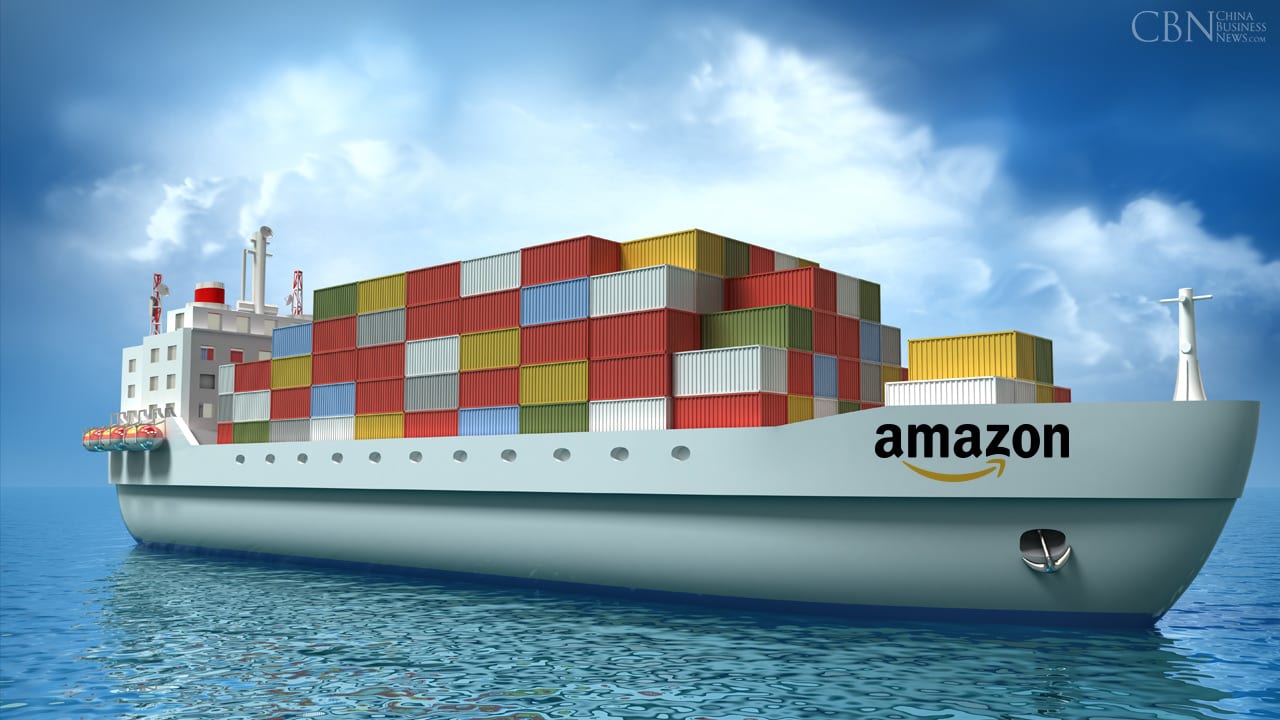
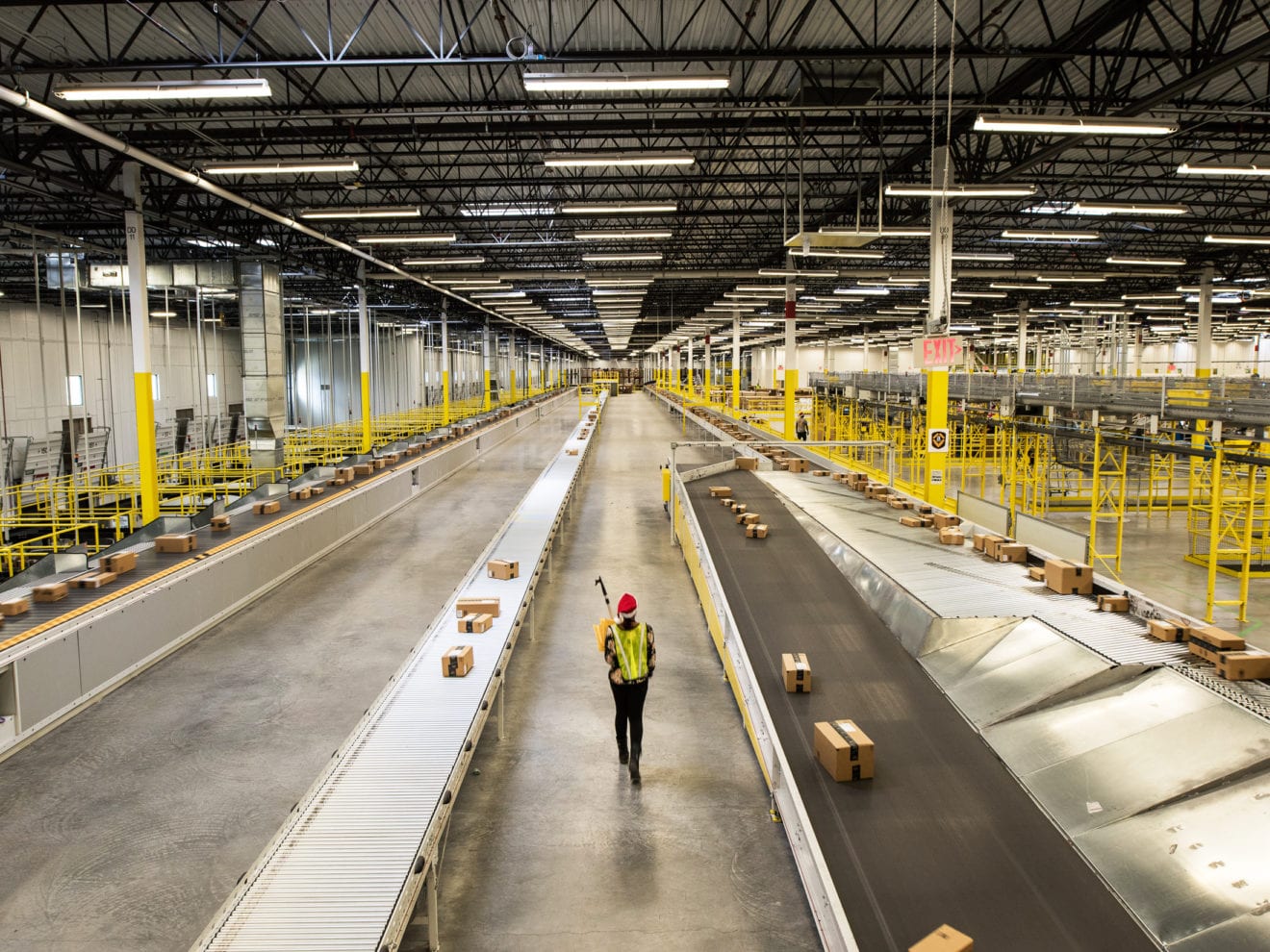
    Online retail giant Amazon has registered its China arm as an ocean freight forwarder, the US Federal Maritime Commission has announced.

    The move will give the retailer more control over shipping goods from its factories in China to customers.

    By expanding its logistics operations in this way, the retailer can cut costs with the possibility of being in a position to offer third-party logistics services at a later stage.

    In response to the news, Sian Hopwood, senior vice president for B2B operations at supply chain software supplier Kewill, commented, “Delivering products direct from manufacturers to consumers is not a new concept, but this is the first time we have seen this ‘drop shipping’ model on a global scale.”

    Retailers wanting to regain market share will have to step up their efforts to ensure they are able to respond more flexibly and responsively to demand – “importing stock as it is ordered rather than having to predict stockpiling requirements and risk warehousing unwanted items”, added Hopwood.

    “By removing the middleman, retailers can reduce costs and provide customers with an always-on, always-available shopping experience which traditional models can’t sustain.”

    With the retail environment still being in a state of flux with the rise of digital and mobile shopping, a key part of making this system work is visibility.

    “If companies are to retain customer trust, they will need to have supply chain management solutions in place to ensure shoppers know exactly what’s happening to their shipment.”

  • Is Amazon moving into the ocean freight business?

    Is Amazon moving into the ocean freight business?

    Amazon has garnered a lot of attention recently for its moves to muscle into nearly all miles of delivery, and this development shows it’s apparently willing to log nautical miles as well.

    An ocean freight forwarder organizes shipments from suppliers to far-flung receivers, which Flexport calls a $350 billion market. An entry into the ocean freight forwarding market could be significant because it could allow Chinese factories a more direct path to American consumers, Flexport CEO Ryan Petersen noted.

    In fact, while Amazon could smooth logistics or make them cheaper for its Marketplace sellers, those sellers aren’t likely to take Amazon up on that. That’s because they’re unlikely to be willing to give Amazon, a rival retailer, the kind of information that an ocean freight company would be privy to, Petersen said. And it’s likely that any full-blown development of Amazon’s ocean freight forwarding capabilities is still months, if not years, away.

    Still, the move could be a boon to Chinese sellers interested in reaching the American market as well as Amazon’s other markets globally, especially considering the expectation that Amazon would keep costs down.

    “I don’t think people realize how threatening this is for their U.S.-based merchants, who are making money selling goods from Chinese factories,” Petersen told Retail Dive. “It makes sense for Amazon, for a company so focused on driving down costs. But considering that 40% of their business comes from their Marketplace, it would have to be a graceful transition and managed really well.”

    The registration means that Amazon China can provide freight forwarding services to Chinese companies looking to move products directly into Fulfillment by Amazon warehouses, or “even cross-docking the goods for direct injection into Amazon’s courier network,” according to Petersen.

    While some may think that Amazon has Alibaba in its sights with such a move, Petersen believes it may, if anything, be an answer to Wish, a mobile e-commerce platform that has built much of its fortunes so far on bringing Chinese sellers to customers in the U.S. and elsewhere.

    “We think we’re going to be the second or third trillion-dollar-a-year marketplace,” Wish CEO Peter Szulczewsk. “We think Alibaba will be first and then it’s either us or potentially Amazon depending on how quickly, or if, they win in India.”

    Taking on the ocean freight market “to create a streamlined, vertically-integrated system for Chinese factories to sell directly through Amazon would be a classic Bezos response to Wish’s threat,” Petersen said, predicting that “Amazon’s ocean freight offering could be a huge hit for Chinese merchants.

  • Amazon opens web services in Korea

    Amazon opens web services in Korea

    Amazon Web Services has reported the opening of its twelfth geographic locale in Korea bringing the number of accessibility zones to 32. There are two new accessibility zones accessible in Seoul giving Korean clients the power alternative that they have been asking for quite a while.  The new zones bolsters Amazon EC2 , T2, M4, C4, I2, D2, and R3 occurrences . Other services incorporate Amazon Elastic Block Store (EBS), Amazon Virtual Private Cloud, Auto Scaling, and Elastic Load Balancing. A full posting is accessible in a site by Jeff Barr, Chief Evangelist at Amazon Web Services.

    The service is accessible now and developers can get to the zone details from https://aws.amazon.com. Itemized data relating to the zones was not made accessible but rather every zone comprises of one or more server farms. For Korean clients these will convey low dormancy arrangements anyplace in Korea, conveying under 10 millisecond service the nation over, something that was not accessible before to Amazon clients.

    The Act on the Development of Cloud Computing and Protection of Users (Korean Cloud Act) came into action on 28th September 2015 and was the first Cloud processing law to be passed in the world. With two zones accessible, adaptation to internal failure and failover between the two zones inside of the single national fringe is additionally ensured. The accessibility zones have been produced to be profoundly adaptable so that if request develops AWS will have the capacity to meet it.

    Andy Jassy, Senior Vice President, Amazon Web Services remarked: “Customers continue to choose AWS as their infrastructure technology platform because we have a lot more functionality than any other cloud provider, a significantly larger partner and customer ecosystem built around AWS, and unmatched maturity, security, and performance.”

  • Amazon is Secretly Testing Air Cargo Operations

    Amazon is Secretly Testing Air Cargo Operations

    Amazon.com, Inc. has been conducting secret trial flights that have carried thousands of packages to and from its fulfillment centers in the United Kingdom. Evening Standard reports that the tech-giant has chartered a Boeing 737 aircraft, which has been flying on routes between Poland, Germany, and England since mid-November.

    The online-retail giant has reportedly chartered the aircraft from DB Schenker, a German logistics company. Five weekly flights have been determined so far, on which the planes travel first from Katowice, Poland to Kassel, Germany. Katowice and Kassel are both significant stops, as the airports in these towns are within close proximity of the e-commerce giant’s huge warehouses in the two countries, respectively.

    The flight then continues from Germany to England, where the plane finally lands at one of the airports in Luton, Doncaster or East Midlands. The packages are dispatched from these airports to Amazon’s various fulfillment centers, including its biggest one at Dunfermline and another in Hemel Hempstead. The company is also rumored to extend the trials by chartering more planes and include its centers in Italy and Spain in this network.

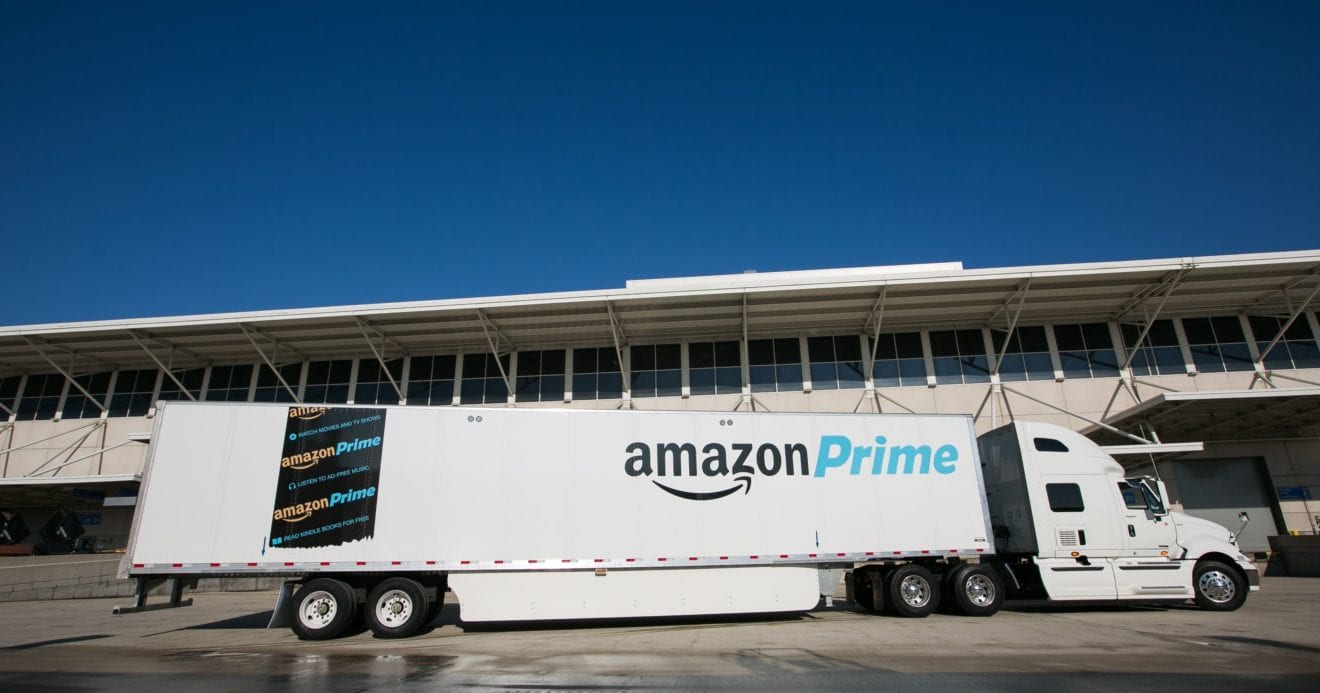
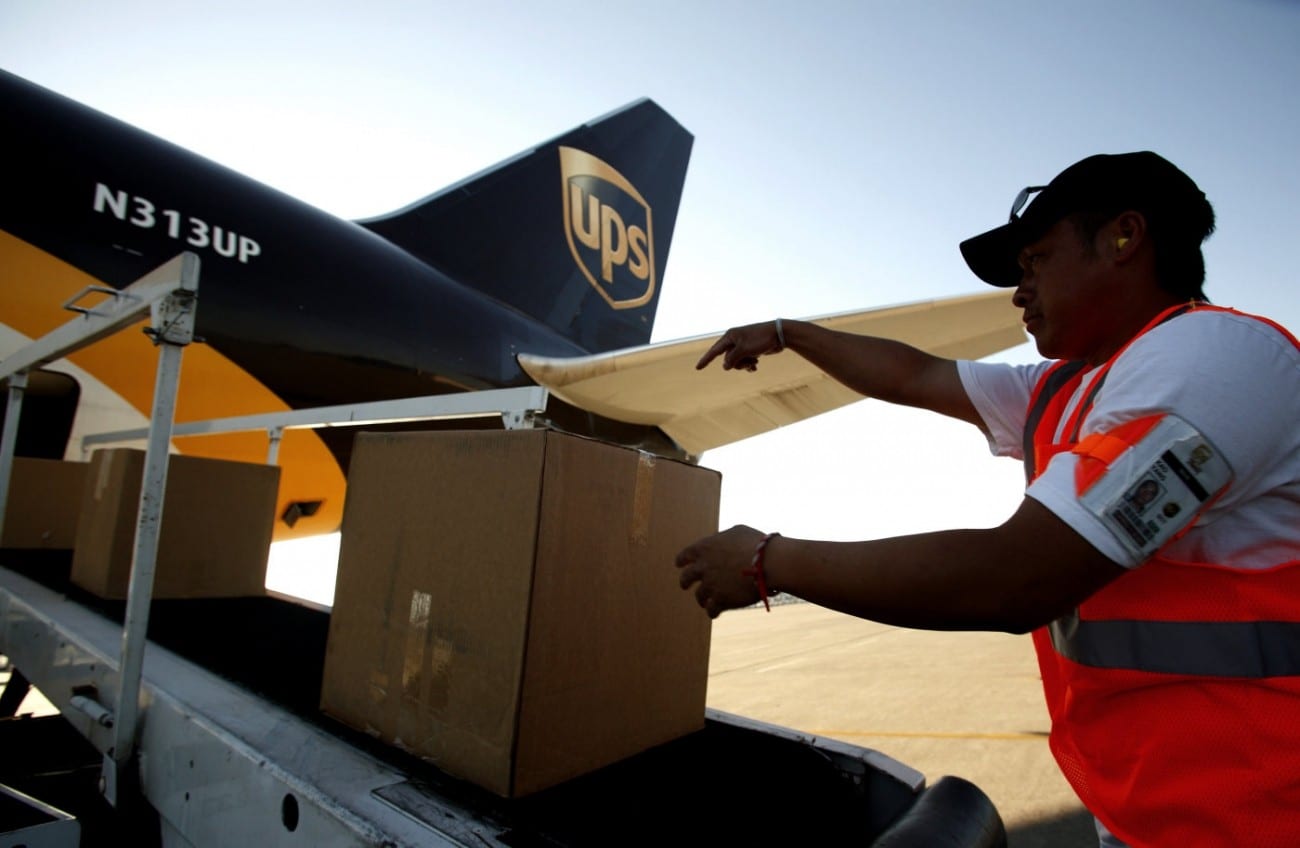
    The move highlights Amazon’s urgency to limit reliance on traditional courier firms. The company has already built its own van delivery fleet in the UK this year, after one of its couriers, CityLink, went bankrupt. On a global-scale, the company has locked horns with its chief carrier UPS. Amazon provides business worth around $1 billion to UPS, but its dissatisfaction has risen due to the increasing shipment charges. Shipping cost has increased 10.4% in a year, compared to revenues growth of 11.7% in the same period.

    This means generating higher revenues did not have the expected positive impact on earnings, if supply chain costs had been further streamlined. Amazon was further unhappy with UPS services, when during last two Christmas periods the courier services was unable to deliver consumer packages on schedule, due to delivery overload. Consequentially, the e-commerce giant has sought to build its own distribution network to restrict costs, and have more control over its distribution network.

    Even within the US, recent reports suggest Amazon is looking to lease 20 Boeing 767 freight aircrafts. While these are positive cost control strategies for the online-retail firm, its air cargo expansion spells trouble for traditional freight carriers such as UPS, FedEx, and DHL. These couriers will likely lose a great chunk of business when Amazon starts carrying its own inter and intra-continental freight.

    An Amazon spokesman was quite tight-lipped when the Evening Standard asked for a comment over the European flights, and did not reveal information beyond the fact that the retail-firm employs various distribution and fulfillment modes, including air transport. No other official statement was made by the company.

  • Amazon China and Baidu join hands

    Amazon China and Baidu join hands

    The two Internet giants in China, Baidu and Amazon have reached in an agreement to strengthen their respective positions in the strong Chinese market.. The two companies, digital heavyweights, formalized the agreement Thursday, December 3, 2015 in a press release.

    As an element of partnership Baidu search engines will be installed by default on Kindle ebook reader produced by Amazon, as well as the Fire tablets that are sold in China. In return, Amazon will be included into the mobile application store of Baidu. Amazon will also be incorporated in Baidu’s online video platform iQIYI. This announcement was made following the release of Youku Tudou by Alibaba, another heavyweight of the Chinese web.

    Baidu is growing in the music industry online with Baidu Music by merging its activities in this sector with Taihe Entertainment Group, covering China as well as Taiwan and Hong Kong. The company has a catalog of 10,000- 700,000 compositions and recordings. Baidu Music is attempting to enter into a direct competition with QQ Music (Tencent) and especially Apple, which offers Apple Music. The latter was launched in China in September 2015. Baidu has also signed a partnership with Ctrip and Qunar in October.

  • 7-Eleven Taiwan in MyDay eCommerce partnership

    7-Eleven Taiwan in MyDay eCommerce partnership

    Taiwan’s largest convenience store chain, 7-Eleven, says it will work with local shopping website MyDay to have online purchases from overseas delivered to its 5000-plus stores around Taiwan.

    The convenience store introduced the delivery service on Wednesday (November 25), allowing shoppers on the MyDay website to have their purchases delivered from Japan, the US and South Korea in as little as five days.

    Myday has over 10 years’ experience in cross-border eCommerce services and also partners with other sites such as Amazon in the US, Rakuten in Japan, and Gmarket in South Korea, said 7-Eleven.

    7-Eleven is the second convenience store chain in Taiwan to offer such a service, following FamilyMart, which established a similar partnership with the Japanese shopping site Tenso in September.

    Registered members of Tenso can have their purchases delivered to FamilyMart stores in Taiwan in about six days.

    Over 43 per cent of online shoppers in Taiwan buy products on overseas sites six times per year on average, according to a 2013 survey by the Market Intelligence & Consulting Institute under the Institute for Information Industry.

  • iTrueMart Grows 1000% with the Help of AWS e-commerce Platform

    iTrueMart Grows 1000% with the Help of AWS e-commerce Platform

    iTrueMart, a leading e-commerce destination for quality brands for home appliances, electronic products, and best value merchandises, announced its expansion throughout all 10 ASEAN countries. The online retailer is one of the fastest growing e-commerce websites with 1000% growth in 2014. iTrueMart has been able to double its online users every 3 months this year and has grown from 100,000 users per month during its inception to its current 1.6 million users per month.

    iTrueMart runs its e-commerce platform using Amazon Web Services (AWS), which provides a low cost set-up with flexibility and full capacity to serve customers. With AWS as its partner, iTrueMart is able to focus on delivering better services to happier customers. AWS allows the online retailer to grow exponentially by cutting the development process by 2-3 months and running daytime campaigns at 400% of its normal capacity in just a few hours. iTrueMart can additionally handle a 10-fold increase or more in customer visits during promotional periods while easily adding new features and functions to the website whenever they are needed. The AWS framework allows iTrueMart to maximize its use of cloud technology while maintaining the use of older technologies and platforms. Chief Technology Officer (CTO), Chaiwat Ratanaprateepporn, said, “Our developers have been able to evolve more in the deployment process and DevUp culture, and they can now deploy features faster and take better care of their services.”

    With the ease of AWS and its e-commerce platform, iTrueMart is committed to growing and expanding in Southeast Asia. iTrueMart is currently planning other services, such as offering an e-payment business as well.

    For more information about iTrueMart’s use of Amazon Web Services (AWS) e-commerce platforms, please visit

  • Amazon Building New Data Centers in South Korea for Cloud Unit

    Amazon Building New Data Centers in South Korea for Cloud Unit

    Amazon.com Inc. in 2016 will open a new cluster of data centers in South Korea, as the Web retailer pushes deeper into Asia to compete with other cloud-computing providers such as Microsoft Corp. and Google.

    The facilities are for the machines that power Amazon Web Services, the business that rents data storage and computing power to other companies, rather than its online retail operations. They are being built in response to requests from customers, including Samsung Electronics Co. and various gaming companies, Seattle-based Amazon announced Wednesday. The data centers will also let Amazon serve new clients, including government agencies and large enterprises that need to keep data exclusively in South Korea.

    Some nations mandate that certain data, such as health records, can’t leave their country of origin, prohibiting cloud providers without data centers located in those countries from certain kinds of business. Proximity to customers also decreases response times for those running Internet-based cloud applications.

    Amazon’s cloud-computing division serves customers such as Pinterest Inc. and Netflix Inc. South Korea will be the fifth AWS region in Asia, and Amazon has committed to building a second cluster of data centers in China and is also planning one in India. The company will have 12 data regions worldwide when South Korea is built in early 2016.

    Amazon didn’t disclose the size of its investment.

  • Cash boost for Amazon India

    Cash boost for Amazon India

    Amazon India has received a massive $189 million cash injection from its US parent.

    It marks the biggest capital inflow into Amazon Seller Services in India since the brand made its debut in the nation in 2013.

    Five months ago the parent invested a $177 million taking the total to $460 million.

    “We are very excited by our growth and continue to invest in technology, especially mobile, infrastructure and logistics to support seller capability in order to deliver value to our customers,” an Amazon spokesman said.

    Amazon founder Jeff Bezos is on record saying he was prepared to invest up to $2 billion into Amazon India because he is confident about the eCommerce giant’s future prospects in the fast-developing market.

    The company now has 21 fulfilment centres, the newest near Pune City boasting 55,000 sqft.

    Rival Flipkart plans to raise $1 billion from investors, following a $700 million funding round in July. And Snapdeal reportedly raised $500 million in collaboration with Alibaba.

  • A Singapore Post drone delivers a test package

    A Singapore Post drone delivers a test package

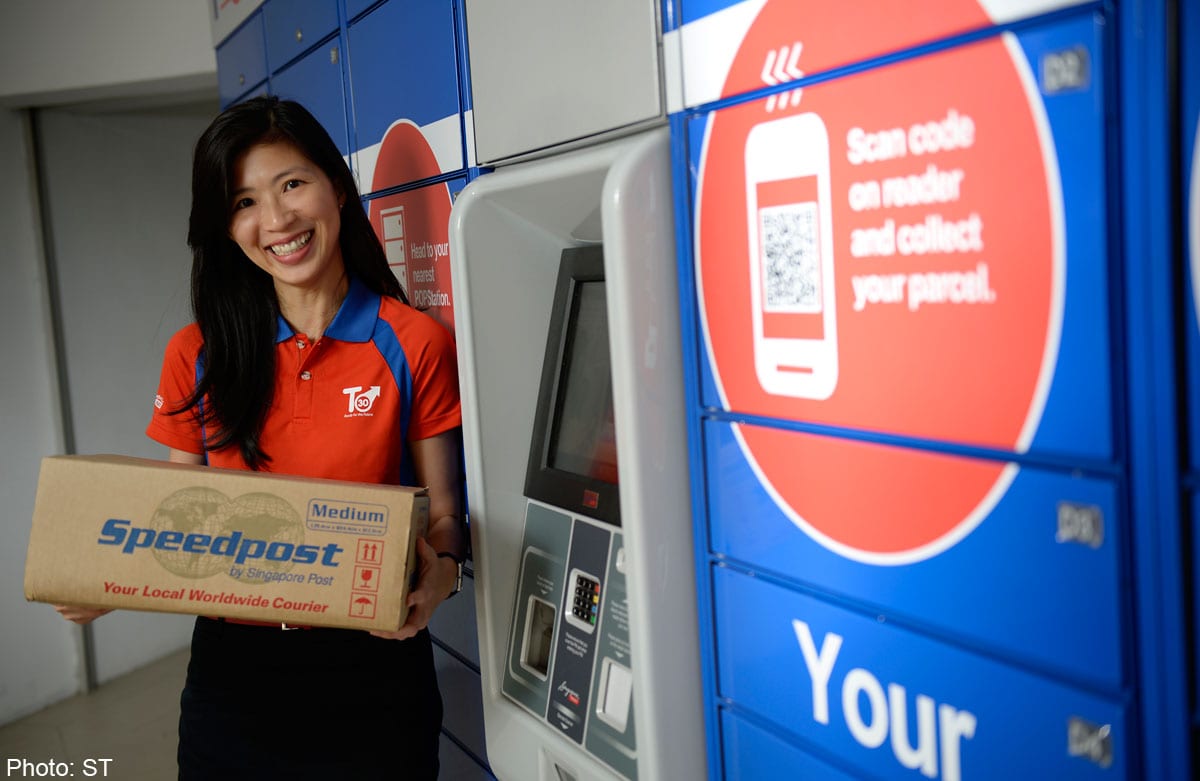
    Singapore Post Ltd. is testing package delivery by drone, echoing attempts by Amazon.com Inc. to extend the commercial capabilities of unmanned aerial vehicles.

    The company known as SingPost said a drone it developed with the Infocomm Development Authority of Singapore carried a packet containing a letter and T-shirt on a five-minute, two-kilometer (1.2 miles) flight. This marks the first time any postal service has successfully used a drone for “point-to-point recipient-authenticated mail delivery,” it said in a statement Thursday.

    SingPost is looking to such unmanned aircraft as online transactions increase in the Asia-Pacific region and as Singapore plans to develop itself into a so-called Smart Nation through technology usage. There is “immense potential” in drone technology for last-mile mail and e-commerce delivery, Bernard Leong, SingPost’s head of digital services, said in the statement.

    E-commerce companies such as Amazon, No. 1 in the Internet Retailer 2015 Top 500 Guide, have been pressing for permission to deliver packages by drone in the U.S., but have run up against proposed regulations that would require operators to remain within sight of their vehicles at all times. In April, Amazon received a waiver from the Federal Aviation Administration allowing it to run tests in the U.S.

    Singapore passed a law regulating the use of drones earlier this year. The drone used by SingPost is equipped with safety features, and is complemented by a prototype application with security and verification features to make sure the mail reaches its intended recipient, according to the release.

  • Daraz targets frontier Asian markets

    Daraz targets frontier Asian markets

    Online retailer Daraz is investing $56 million into creating beachheads on so-called ‘frontier markets’ in Asia: Myanmar, Pakistan and Bangladesh.

    Daraz is the leader in online retail in all three markets, selling apparel, accessories, shoes and beauty products for men and women, as well as a wide variety of electronics and general merchandise.

    The company is part of the Rocket Internet group which also owns Zalora and Foodpanda.

    It is planning a ‘mega sale’ on November 27, something like Amazon’s Black Friday in the US, offering a slew of special deals in the three Asian nations.

    Bangladesh, where it is putting most of its focus currently, will get the majority of the marketing spend, where it is partnering with local apparel brands such as Bata, Yellow and Ecstasy, as well as tech partners.

    Daraz Bangladesh chairman Sumeet Singh says the local site is attracting around 2 million visitors a month.

  • India eCommerce to lead BRICs

    India eCommerce to lead BRICs

    India – not China – is set to become the fastest growing B2C eCommerce market of the BRIC countries in the next five years.

    A new publication by Germany-based secondary market research expert yStats.com India B2C eCommerce Market 2015 also reveals the main challenges faced by online retail in this country, including underdeveloped logistics and low credit card penetration.

    The rapid growth of B2C eCommerce in India is driven by a combination of its vast population, increasing internet penetration and the scarcity of organised retail – especially in small towns and rural areas.

    “Next year, India is predicted to top the USA to become the second largest country worldwide in terms of the number of Internet users, behind China. While China has been the leader among the BRIC markets in terms of online retail growth in the five years to 2014, during the next five-year period India is predicted to take over this position,” says the report.

    Online retail in India has much room for growth. B2C eCommerce share of total retail sales was estimated at less than one per cent in 2014, while the share of internet users making purchases online was below one quarter. Another sign of immaturity is the high share of online travel in total eCommerce sales, reaching close to two-thirds according to some estimates. Furthermore, Internet penetration on the 1.3 billion population in India was relatively low in 2014, although showing an improvement from a single digit figure in 2010.

    “The spread of mobile Internet is expected to especially benefit the state of connectivity in this country, while also driving mCommerce sales up,” said the report.

    Apart from low Internet penetration, some major challenges faced by B2C eCommerce in India include underdeveloped logistics infrastructure and low credit card penetration. Online merchants’ profitability suffers from the necessity of accepting cash on delivery and offering free shipping.

    The top three eCommerce companies in the country – Flipkart, Snapdeal and Amazon India – developed their own logistics capabilities using recently obtained investment. Other eCommerce players that benefited from investment pouring into the Indian market include marketplace operator ShopClues, online classifieds website Quikr and online accommodation booking website Oyo Rooms.