Tag: android

  • Smartfren Telecom Launches Andromax Q Smartphone in Indonesia

    Smartfren Telecom Launches Andromax Q Smartphone in Indonesia

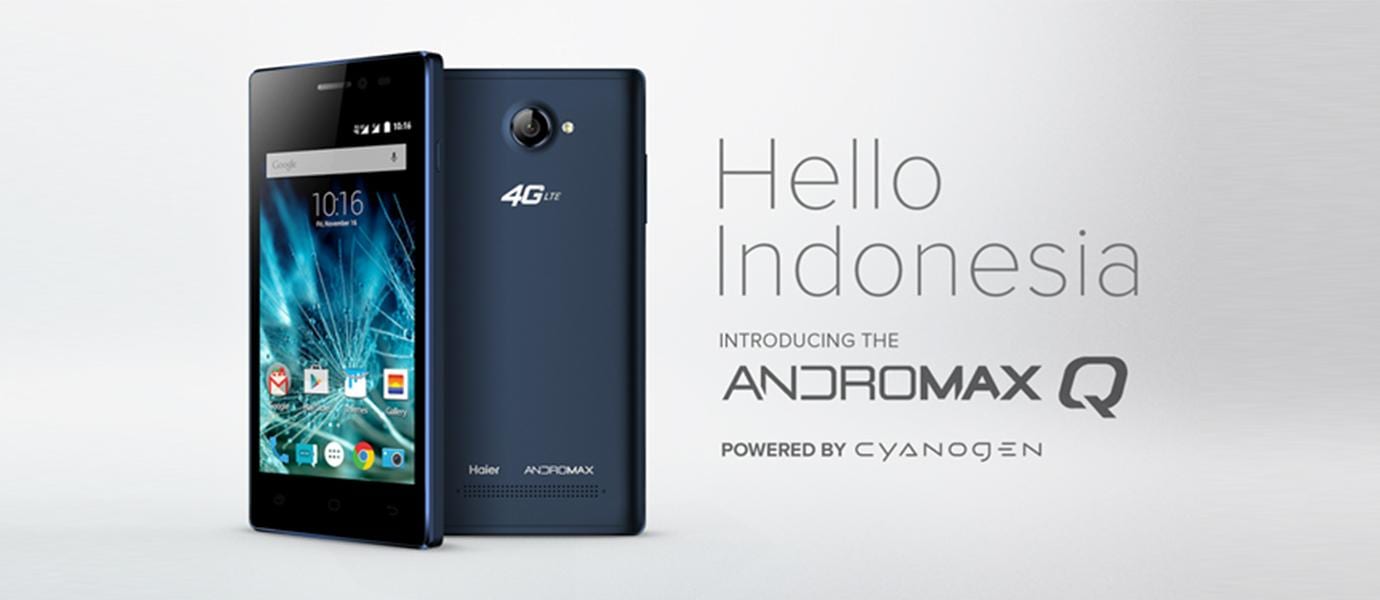
    Cyanogen wants to challenge the dominion Google has in the mobile market by taking Android from under its wing bit by bit. And one way for Cyanogen to ensure this happens is to put its custom ROMs on more and more phones.

    The startup already partnered up with several device makers like Micromax Yu, OnePlus or BLU, but today we bring you word of a new handset running the platform.

    This time, Cyanogen is doing business with Indonesian telecom operator Smartfren Telecom, and together they have launched the Cyanogen OS 12-powered Adromax Q.

    The phone has actually been manufactured by China’s Qingdao Haier Telecom and will become shortly available on the market in Indonesia.

    The Andromax Q brings basic specs

    The phone is apparently part of the new Adromax family of 4G LTE smartphones and will be sold for a super affordable price tag of $97 / €86.

    Naturally, for this amount of money, you shouldn’t be expecting anything too spectacular in terms of specifications. The Andromax Q is an entry-level flagship that arrives into the wild with a 4.5-inch FWVGA (854 x 480 pixel resolution) display and a Snapdragon 410 SoC clocked at 1.2GHz under the hood.

    Smartfren Telecom also throws in 1GB of RAM, 8GB of internal storage (expandable via microSD card slot), dual-SIM support and 4G LTE. The handset relies on a 2,000 mAh battery to maintain the juices flowing.

    Last but not least, the phone also offers the services of a 5MP primary camera with LED flash and a 2MP secondary shooter.

    If you didn’t know until now, Smartfren Telecom happens to be an investor in Cyanogen Inc, and this partnership birthed the Andromax Q model. And as a Smartfren executive confirms, this means we should be expecting to see more Cyanogen OS smartphones launch in the near future, under the carrier’s banner.

    Customers looking to purchase a Cyanogen OS smartphone in Indonesia also have the option of picking up the OnePlus One handset.
  • Erajaya to Start Making Smartphones in August

    Erajaya to Start Making Smartphones in August

    Erajaya Swasembada, a listed handset device distributor, is set to launch operations on its assembly plant in East Jakarta by August as part of the company’s plan to start producing mobile phones in a bid to reduce costs from imports amid a projection of slowing sales.

    “We will begin doing assembly, starting from our own brand, Venera. We’re currently also talking to other local brands for assembly,” said Hasan Aula, chief executive officer of Erajaya Group, to reporters in Jakarta on Thursday.

    Still, he declined to provide more details, such as the name of the other brands and the plant’s investment cost.

    The plant, which is expected to assemble 100,000 units per month, is operated by Erajaya’s newly acquired subsidiary, Axioo International Indonesia.

    The handset distributor acquired a 51 percent stake in Axioo International Indonesia from Exa Nusa Persada for Rp 5.1 billion ($392,000) last month.

    Exa Nusa Persada still holds the remaining 49 percent stake in Axioo International Indonesia.

    Jeremy Sim, a director at Erajaya Swasembada, said that the company’s plan is in line with the government’s initiative for smartphone importers to boost their investment in the country.

    “This supply chain is important. On top of complying with the government, this is an opportunity for the group to launch an end-to-end business strategy,” he added.

    Erajaya Swasembada launched last year its first plant in Batam under one of its subsidiaries — Teletama Artha Mandiri — which assembles approximately 30,000 units of its Venera brand per month.

    The handset distributor aims to boost net income by 4 percent to about Rp 363 billion this year — compared to 38 percent growth between 2013 and 2014 — while sales are targeted to grow by 6 percent to Rp 15.4 trillion, according to Jeremy.

    “We’re more conservative this year. That’s why we’ve set the sales target at 6 percent. This is mainly due to the economy, currency and government regulations,” he said.

    Indonesia’s economy grew by 4.7 percent in the January-March period, booking its slowest growth in five years.

    At the same time, the local currency has been trading at its lowest level since 1998 for over two months. The rupiah weakened to 13,065 against the US dollar on Thursday from 13,040 the day before, declining by 5 percent since the beginning of the year, data from Bank Indonesia showed.

    Erajaya Swasembada booked Rp 75 billion in net income in the first quarter, down 6.3 percent from the same period last year, amid rising costs. Sales climbed 30 percent to Rp 3.9 trillion.

  • Google unveils 2 affordable smartphones in Philippines

    Google unveils 2 affordable smartphones in Philippines

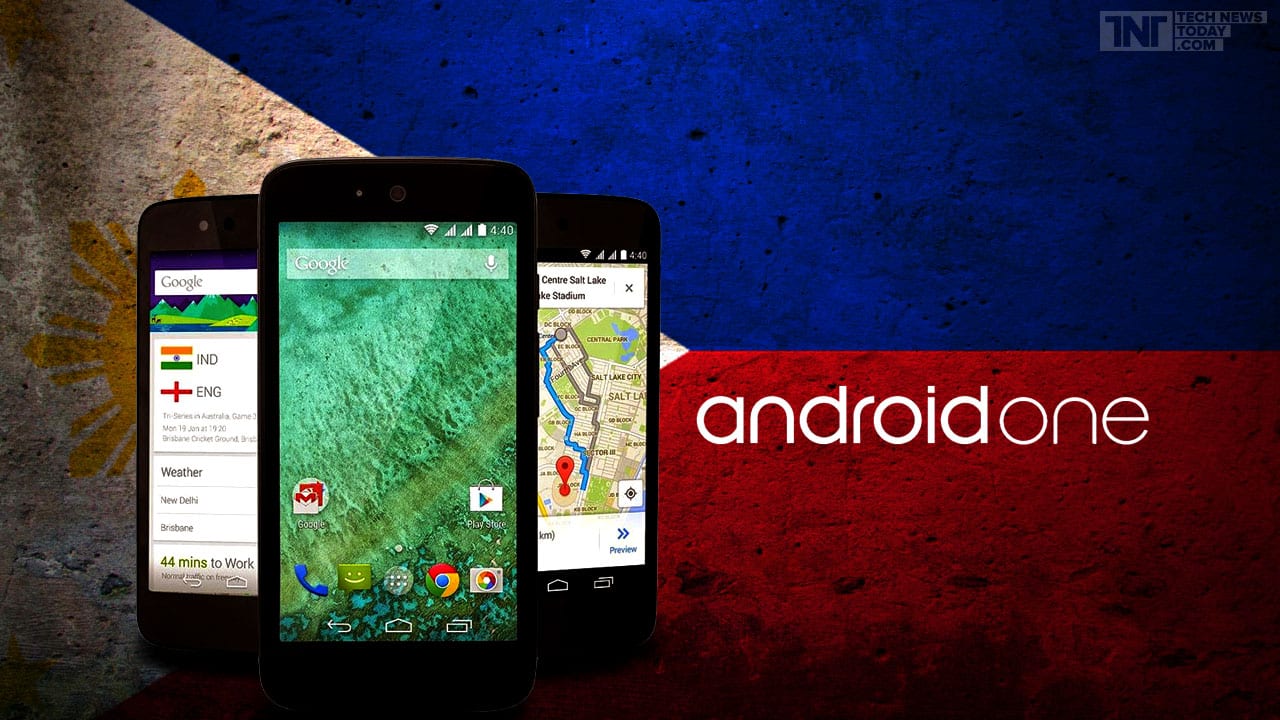
    Google unveiled two affordable smartphones in the Philippines built from the Android One program, a global initiative to bring high-quality smartphones to emerging markets.

    The two phones, developed by local manufacturers Cherry Mobile and MyPhone, will retail for PHP5,000 (USD113.4) in the coming weeks.

    Caesar Sengupta, Vice President, Product Management, Google, said the Philippines is the sixth country in Asia where the Android One program was rolled out, after India, Bangladesh, Nepal, Sri Lanka and Indonesia.

    Android One phones come with the latest version of Android Lollipop and the two phones that will sell in the Philippines will both have 4.5” FWVGA display, Cortex A7 1.3 GHz Quad-Core processor, 1GB RAM, 2 SIM card slots, and front and rear facing cameras and 4GB and 8GB storage (expandable to 32GB).

    Sengupta said Google is also working to reduce data costs for Android One users in the Philippines. For one, the data compression feature on the Android One Chrome browser helps compress the amount of data flowing between the phone and the Internet.

    The Philippines is one of the few countries where YouTube users can take videos offline to watch later during periods of low or no Internet connectivity.

    Telecommunications companies Smart Communications Inc, and Sun Celluar are pitching in effort to make the mobile experience better for users through free over-the-air (OTA) updates to the Android operating system and certain amounts of app downloads from Google Play for the first six months.

    Globe Telecom, on the other hand will be working with Android One users to better access the Internet through its network.

    Ken Lingan, Google’s Country Manager for the Philippines, said during the launch that the country now has over 44 million Internet users. The projection is that by 2016 there would be 66 million Filipinos online.

    “Currently, the Philippines is already the second largest Internet market in Southeast Asia, the 6th largest in Asia. The numbers are growing. There is a massive potential that we see for e-commerce and growing content online because as we see more Filipinos going to the Internet primarily through a mobile device,” he said.

    Sengupta said that it is part of Google’s mission to help connect the four billion or so people around the world who still do not have access to smartphones and are not yet online, mostly in emerging markets like the Philippines.

    “There are lots of first smartphone users do not really get a very nice experience with their gadgets, the software are pretty old and connectivity is expensive and the bandwidth limited,” Sengupta added. “We put together this programming called Android One as an integrated approach to try to solve these problems.”

    Mobile Internet in the Philippines is growing 112 percent year-on-year. By the end of this year, Google expects 50 percent of the population with smartphones. This growth is largely being powered by Android.

  • Smartphones boost Indonesian ecommerce

    Smartphones boost Indonesian ecommerce

    Smartphone shipments to Indonesia will grow 20 percent during 2015 and will give a boost to the country’s ecommerce industry, according to a new forecast from research firm IDC. Some 24.8 million smartphones were shipped in 2014.