Tag: apple pay

  • Affirm Debuts Brick-And-Mortar Financing Option, Integrates With Apple Pay

    Affirm Debuts Brick-And-Mortar Financing Option, Integrates With Apple Pay

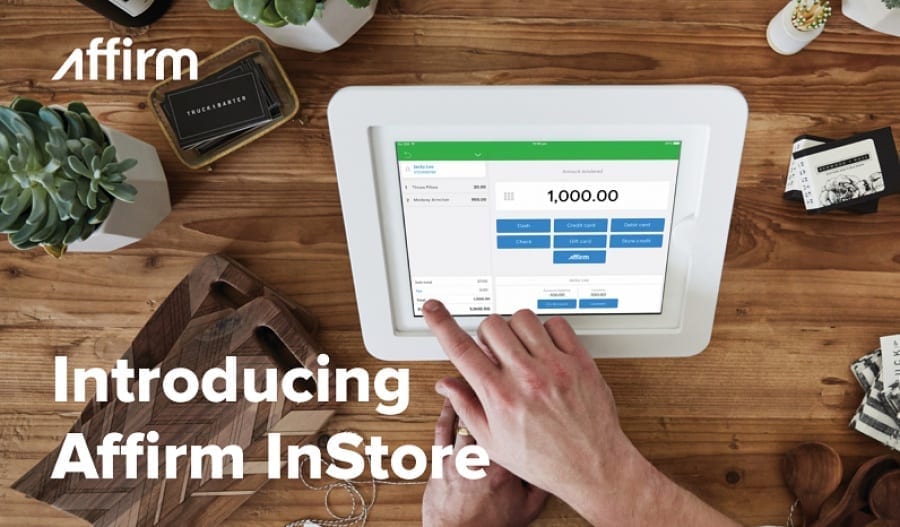
    Affirm, a startup that offers instant loans for online purchases, is expanding its financing services to brick-and-mortar retail. Shoppers can use Affirm InStore in physical locations, secure credit approval and pay for their purchase in fixed monthly installments.

    Additionally, the company revealed that consumers can instantly add a newly issued Affirm virtual card to Apple Pay, via the Affirm mobile app. The platform gives merchants two options to support the service: they can integrate the Affirm InStore API with their POS system or use the expanded virtual card experience.

    The in-store integration method is virtually identical to the online and mobile product experience, according to a company statement. To apply, shoppers complete a five-field application for a real-time credit decision. Once approved, the consumer enters the amount they wish to spend and selects a payment plan — usually three, six, 12, 18 or 24 months. Affirm pays the merchant in full at the time of settlement and takes on all fraud risk for the purchase.Affirm highlighted Apple reseller Simply Mac as a successful use case for the service in a press release. Afterswitching from offering a traditional private label credit card to Affirm InStore in its stores, Simply Mac saw average order values (AOV) increase 20%, credit applications per store boost 63% and credit approvals per store boost 34%.

    Affirm raised $200 million in Series E funding in December 2017, with Singapore-based sovereign wealth fund GIC leading the way. Khosla Ventures, Lightspeed Venture Partners, Founders Fund, Spark Capital, Caffeinated Capital, Ribbit Capital and others participated in the round.

    Affirm’s valuation is estimated to be between $1.5 billion and $2 billion. The company’s continued growth comes at a time when consumers are becoming increasingly wary of accumulating credit card debt, compound interest or late fees, and are often skeptical of traditional store-branded or private label credit cards that offer “too-good-to-be-true” financing options.

  • Apple Pay for HSBC Cardholders in Singapore

    Apple Pay for HSBC Cardholders in Singapore

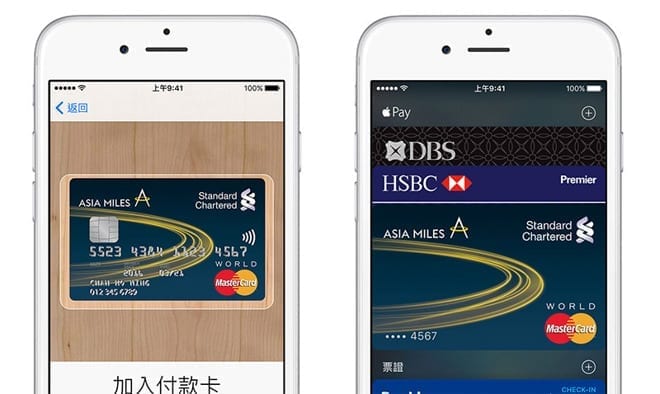
    HSBC Singapore is treating its HSBC Visa and MasterCard credit cardholders with Apple Pay, according to a statement sent on Monday. Customers using iPhone SE, iPhone 6 to higher versions, and Apple Watch can use Apple Pay in stores with Visa payWave or MasterCard contactless payment terminals in Singapore and overseas.

    As a kick off treat, HSBC customers will be given $5 off for every Apple Pay transaction with their HSBC credit cards, with a minimum spend of $10 per transaction. This promo will be on until January 15 next year.

    «Our findings show that awareness of contactless mobile payment is high amongst Singapore consumers (89 percent) and over half indicated interest to try this new payment method. We believe the security, privacy and convenience Apple Pay brings will appeal to all our customers, especially those who are also active users of our digital banking services,» Anurag Mathur, HSBC Singapore head of retail banking and wealth management said.

  • HSBC enables Apple Pay for Singapore cardholders

    HSBC enables Apple Pay for Singapore cardholders

    Customers can enjoy $5 off every transaction as a kick off promo. HSBC Singapore is treating its HSBC Visa and MasterCard credit cardholders with Apple Pay.

    Customers using iPhone SE, iPhone 6 to higher versions, and Apple Watch can use Apple Pay in stores with Visa payWave or MasterCard contactless payment terminals in Singapore and overseas.

    As a kick off treat, HSBC customers will be given $5 off for every Apple Pay transaction with their HSBC credit cards, with a minimum spend of $10 per transaction. This promo will be on until January 15 next year.

    Commenting on the launch, HSBC Singapore head of retail banking and wealth management Anurag Mathur said going digital is part of the banks strategy as technology and mobility are changing how our customers do banking.

    “Our findings show that awareness of contactless mobile payment is high amongst Singapore consumers (about 89%) and over half indicated interest to try this new payment method. We believe the security, privacy and convenience Apple Pay brings will appeal to all our customers, especially those who are also active users of our digital banking services,” he said.

  • 7-Eleven Singapore ups its game

    7-Eleven Singapore ups its game

    7-Eleven Singapore convenience stores are about to have a makeover, with some of them being enlarged by 30 per cent to offer freshly prepared meals and seating.

    COO Steven Lye says the chain will stock premium products, introduce seating areas and create a range of fresh-chilled, ready-to-eat meals delivered to the store daily.

    7-eleven-singapore

    “We want to convey the message that we are no longer just a place for small needs. We want to be at the top of our customers’ minds,” says Lye.

    As well as the ready-to-eat meals, the expanded and elevated product range includes lifestyle items and even IT gadgets. The stores are also adding 7-Connect lockers, self-collection stations where parcels from online shopping can be picked up, and cash-withdrawal machines.

    In July, 7-Eleven invested S$350,000 (US$247,384) in a branding campaign with the tagline “There’s Always 7-Eleven”, seeking to shift customer perception of its outlets from that of a stop for basic needs to a one-stop shop for groceries, toiletries, bill payments, cash withdrawals and more.
    “To accommodate the extensive additions, future 7-Eleven stores will have an area of about 800 sqft [74 sqm] where possible.”

    Vary by location

    He says the items sold at each store will depend on its location. Those in tourist areas such as Marina Bay and Orchard Road will stock backpacks, suitcases and souvenirs while its Marine Parade outlet near East Coast Park will sell kites.

    Tech developments are also in the pipeline, says Lye. One is a loyalty app, 7-Rewards, set to roll out next year. Another new service is the 7-Connect Kiosk, a self-help machine for quicker bill payments. Also, 7-Eleven counters will accept wave-payment methods such as Android Pay, Apple Pay and Visa Paywave.

    “As a brand, we understand the importance of keeping up with the times and constantly evaluating the needs of customers, hence we have made a conscious effort to innovate,” says Lye.
    He says the new range of meals, prepped and delivered upon order to ensure freshness, will replace the store’s frozen-thaw meals by the first quarter of next year.

    “The tech behind the fresh-chilled meals is a strong value proposition we are introducing to the market,” says Lye. “Over the past 18 months we have embarked on a strategy to take these ready-to-eat meals to a whole new level.”

    Flavours will include Hainanese chicken rice, braised duck rice, butter chicken biryani as well as three flavours of Japanese pastas. By next year there will be more than 40 choices.

    Run by Dairy Farm Group, 7-Eleven Singapore has a network of more than 430 outlets.

  • Chinese shoppers lead way in digital commerce

    Chinese shoppers lead way in digital commerce

    While digital commerce is strong in the world’s two largest economies, Chinese shoppers use smartphones and tablets more than shoppers in the US.

    This is shown in a new study from IAB (Interactive Advertising Bureau) and IAB China, Understanding Digital Commerce in the US and China. Conducted by consulting firm Hypothesis Group, the research shows that both China and the US have achieved near-full adoption of digital commerce, with 89 per cent of Chinese digital users aged from 18 years upward and 84 per cent of US digital users in the same age bracket saying they had bought a product or service digitally over the previous 12 months.

    When it comes to mobile commerce, China leads the way in several areas:

    • 67 per cent of Chinese digital users had made a mobile purchase over the previous 12 months vs 34 per cent of US digital users.
    • 24 per cent of Chinese mobile shoppers purchase via mobile every day vs 15 per cent of US mobile shoppers.
    • 89 per cent of Chinese mobile shoppers are interested in making a mobile purchase over the next month vs 78 per cent of U.S. mobile shoppers.
    • 59 per cent of all monthly purchases in China are digital compared to 42 per cent in the US. Of those purchases, 48 per cent are made via mobile in China, while mobile commerce accounts for 26 per cent in the US.

    Plentiful cross-channel opportunities are available in both markets, says the report, with a similar percentage of Chinese and US digital shoppers using both digital and offline channels when deciding on a purchase (31 per cent in China vs 29 per cent in the US).

    Digital research

    Chinese shoppers are more likely to research and compare prices digitally while within a physical store, with 38 per cent saying they do so all the time or most of the time, while 23 per cent of US shoppers do the same. They are also more likely to use more than one digital device over the course of the purchase process (67 per cent China vs 43 per cent US).

    Americans tend to favour multi-product retailers when buying digitally, with 72 per cent of US digital shoppers buying from one of these outlets compared to 61 per cent of Chinese shoppers. Meanwhile, Chinese digital shoppers are more likely to buy from sites or apps that highlight discounts (63 per cent China vs 37 per cent US) or that let them compare prices from different sites or apps (51 per cent China vs 29 per cent US).

    Chinese shoppers are also more likely to make a purchase via a messaging app (29 per cent China vs 16 per cent US), while US shoppers are more likely to buy via auction sites (33 per cent US vs 25 per cent China).

    When it comes to making a purchase, American shoppers are much more likely to use a credit or debit card (63 per cent US vs 34 per cent China on computer; 37 per cent US vs 6 per cent China on mobile). In China, payment is much more likely to be through a digital payment service like PayPal or WePay (47 per cent China vs 15 per cent US on computer; 36 per cent China vs 17 per cent US on mobile) or a mobile wallet service like Apple Pay (21 per cent China vs 2 per cent  US).

    Security concerns

    While these numbers indicate strong adoption of digital shopping, obstacles still remain, says the report. The main concern is security, with only 13 per cent of Chinese digital shoppers and 30 per cent of US digital shoppers feeling completely safe shopping digitally. While American shoppers are mainly concerned about information safety and privacy, Chinese shoppers fear digital fraud and scams.

    The top benefits of digital shopping are listed as including convenience, ease of use, price and selection.

    “This study confirms that mobile is a crucial and growing part of the eCommerce experience,” says IAB senior VP/GM mobile and video, Anna Bager. “While China has always been a mobile-first culture, as its initial adoption of the internet was driven by mobile devices, we are now seeing tremendous year-over-year upticks in terms of mobile growth in the US. We expect to see that trend extend to US mobile commerce going forward.”

    IAB China head Chen Yong, who is also secretary-general of the Interactive Internet Advertising Committee of China (IIACC), says it is vital to note how much commerce happens on small screens.

    “Marketers who want to reach Chinese shoppers need to follow their lead by investing in mobile advertising so they can bring their messages to the right people at the right time and right location.”

    The IAB comprises more than 650 media and technology companies responsible for selling, delivering and optimising digital advertising or marketing campaigns.

  • JCB to offer Apple Pay in Japan

    JCB to offer Apple Pay in Japan

    JCB, the only international payments brand based in Japan, today announced that it brings its customers Apple Pay when it launches in October, an easy, fast and secure way to make mobile payments that is private and convenient with iPhone 7, iPhone 7 Plus, Apple Watch Series 2 throughout their day, including in stores, within apps and on the web.

    Since its establishment in 1961, JCB has been a pioneer in the Japanese payment industry, providing attractive products and services to meet the emerging needs and expectations of Japanese consumers. As part of this initiative, JCB introduced the contactless payment solution QUICPay in 2005, playing a leading role for mobile payments in Japan.

    The QUICPay acceptance network can now be used for Apple Pay transactions, enabling everyday use at places such as convenience stores, supermarkets and drug stores. By supporting Apple Pay, we will be bringing a convenient and secure customer experience to an even broader range of consumers.

    The newly released JCB Token Platform (JTP) will play an important role in the technology for secure mobile payments by replacing the original card number with a unique device specific number for Apple Pay users.

    Apple Pay is easy to set up and you will continue to receive rewards and benefits offered by your credit cards. Customers can also use JCB Card to pay for Suica on Apple Pay including recharging Suica balance.

    In stores, you can pay with Apple Pay with iPhone 7, iPhone 7 Plus and Apple Watch Series 2 anywhere QUICPay is accepted. Just tell the cashier you would like to pay with QUICPay, then simply place your iPhone 7, iPhone 7 Plus near the contactless reader, and with the touch of a finger on Touch ID, the payment is complete. When paying with your Apple Watch Series 2, double-click the side button before holding it near the reader.

    For JCB cardholders, online shopping in apps and on websites accepting Apple Pay is as simple as the touch of a finger on Touch ID, so there’s no need to manually fill out lengthy account forms or repeatedly type in shipping and billing information. When paying for goods and services on the go in apps or Safari, Apple Pay works with iPhone 6 and later, iPad Pro, iPad Air 2, and iPad mini 3 and later. You can also use Apple Pay in Safari on any Mac introduced in or after 2012 running macOS Sierra, and confirm the payment with iPhone 6 or later or Apple Watch.

    “The payment industry is rapidly evolving with diversifying consumer needs and technological advancements. The simple and intuitive user experience that Apple Pay provides, together with JCB’s unique position in Japan as an issuer, acquirer and payment system, will help create a new payment lifestyle that is both secure and convenient for everyday use,” said Ichiro Hamakawa, President and CEO, JCB Co., Ltd. “Apple Pay represents another giant step towards the realization of a cashless society. As a global brand and a pioneer in the payment industry, we are committed to supporting this trend in both Japan and abroad through our network.”

    Security and privacy is at the core of Apple Pay. If your iPhone, iPad or Apple Watch is ever lost, you can use Find My iPhone to put your device in Lost Mode to suspend Apple Pay, or you can wipe your device clean completely. You can also stop the ability to make payments with Apple Pay on iCloud.com.

    When you use a credit card with Apple Pay, the actual card numbers are not stored on the device, nor on Apple servers. Instead, a unique Device Account Number is assigned, encrypted and securely stored in the Secure Element on your device. When you use Apple Pay, your credit card number will not be shared with the merchant.

  • Apple Pay, Android Pay purchases may hit $8b by 2018

    Apple Pay, Android Pay purchases may hit $8b by 2018

    In-app purchases and website retail payments are projected to drive annual spend via Apple Pay and Android Pay up to $8 billion in 2018, up from $540 million this year, Juniper Research reveals.

    The company also projects that the value of digital and physical goods purchased through mobile ‘OS-Pay’ platforms will increase by fifteen times in the next two years.

    Meanwhile, despite the continued contraction of the consumer tablet market, more than 85% of remote goods payments are forecast to be made using mobile devices in 2021.

    The new study, “Mobile & Online Remote Payments for Digital & Physical Goods: Opportunities & Forecasts 2016-2021,” found that the integration of OS-Pay into apps will be standard for developers looking to reduce buyer friction, where password entry on smartphones remains cumbersome.

    “It is clear that even in markets where PCs and laptops have a high installed base, the smartphone is playing an increasingly important role where remote goods purchases are concerned,” noted research author Steffen Sorrell. “For merchants, this means that the buyer experience must be made as frictionless as possible – from product search and discovery to purchase.”

    Apple has recently signalled its intent to offer Apple Pay to online merchants by the end of 2016, offering a similar payment mechanism to PayPal. Juniper anticipates that this move will be welcomed by most merchants as long as integration into their storefronts is made simple and rates are competitive.

    The research firm also expects the entry of Android Pay into this space as it expands to more countries. This will no doubt boost the market further in terms of merchants who may have been undecided where Apple Pay is concerned.

    Juniper believes that these OS-Pay solutions are likely to pose a threat to PayPal’s Western dominance, although it said it does not anticipate that combined sales via Apple Pay and Android Pay will approach those via PayPal within the next five years at least.

  • Carrefour China concentrating on convenience

    Carrefour China concentrating on convenience

    Carrefour China says it will concentrate on convenience store development for the rest of this year.

    The French-headquartered retailer has been losing market share in the hypermarket segment and has closed about 30 stores during the past three years. It is trying to find a new growth model for the competitive Chinese model according to IGD analyst Catherine Ellwood and IGD Singapore program director Shirley Zhu.

    Hypermarkets will still play a role for Carrefour, particularly in western and central China, they say. The retailer is changing focus because of the increasing challenges for hypermarkets.

    Carrefour reportedly plans to open 40 to 50 convenience stores in Shanghai as well as about 15 Carrefour Easy stores by the end of the year.

    Rapid urbanisation, smaller families and rising affluence levels mean Chinese shoppers are demanding more convenient solutions, says the IDG team.

    “Convenience stores present a huge growth opportunity, but winning in this sector under rising costs and fierce competition is not an easy task.”

    However, Carrefour does have the advantage of existing sourcing and supply-chain capability for fresh products. Daily delivery from its own fresh distribution centre ensures availability and quality.

    A typical Carrefour Easy store has a floor size of 250 to 300 sqm with plenty of room for fresh produce displays. The stores act as pick-up locations for online shopping, and have kiosks to provide various services. There is also free Wi-Fi and charging devices in-store.

    For mobile payment alone, the stores accept Alipay, Apple Pay, Samsung Pay and WechatPay.

    Carrefour opened an extra distribution centre in June. The 21,000 sqm centre, in Dongguan, Guangdong province, will help with expansion in south China. Carrefour aims to have six distribution centres by the end the year.

  • Apple Pay makes its debut in Hong Kong

    Apple Pay makes its debut in Hong Kong

    Visa, MasterCard and American Express have all introduced support for Apple Pay in Hong Kong.

    Holders of credit and debit cards from the three companies issued by Bank of China, DBS Bank, HSBC, Standard Chartered, and Hang Seng Bank are now able to take advantage of the mobile contactless payment service.

    Apple’s Hong Kong website states that support for Bank of East Asia and Tap & Go cards is also “coming soon.”

    17613-15292-160719-Apple_Pay-HK-l

    In Hong Kong, Apple Pay is currently available in Apple’s own stores, as well as those from 39 other major chains, including 7-Eleven, APITA, KFC, McDonalds, Starbucks and Genki Sushi. It is also supported by a number of apps including Cathay Pacific, Deliveroo and Foodpanda. Support for Uber is coming soon.

    Apple Pay’s contactless payment technology aims to improve security by not storing credit card numbers on the device or sending credit card details to merchants. Payments can be authorized using the Touch ID fingerprint authentication system.

    Apple Pay is supported by the iPhone 6s and newer, the Apple Watch paired with an iPhone 5 or newer, as well as the iPad Pro, iPad Air 2 and iPad mini 3 and 4.

    “In Hong Kong contactless payments have become a necessity for everyday life, consumers and retailers realize the greater convenience and faster checkouts for busy people on the go,” Visa Hong Kong and Macau country manager Caroline Ada said.

    She said research from the company shows that 77% of respondents are willing to try out or adopt new ways of paying, and 78% are ready to use smartphones as the device for making everyday payments.

  • Apple Pay Launched in Hong Kong With American Express, Mastercard Support

    Apple Pay Launched in Hong Kong With American Express, Mastercard Support

    Apple Pay has arrived in Hong Kong, allowing the Apple users to use the company’s mobile payment system.

    Apple’s payment system has been rolled out to American Express, Visa and MasterCard cardholders in Hong Kong. Other participating banks are Standard Chartered, DBS, Hang Seng Bank, HSBC, Bank of East Asia, and BOC Credit Card, a subsidiary of Bank of China (Hong Kong). Apple’s website notes that the system would be compatibile with BEA and HKT touchless payment network Tap & Go in the future, as reported.

    Apple users can add their cards to Apple Pay by just tapping “Add Credit or Debit Card” option in the Wallet app on devices running the iOS 8.1 or higher. Hong Kong’s Apple Pay works fine with the iPhone 6, iPhone 6s, iPhone 6 Plus, iPhone 6s Plus, and iPhone SE. It is also available on the iPad Air 2, iPad mini 3, iPad mini 4, and both iPad Pro models. However, iPhone 5, 5c, and 5s users need an Apple Watch to make Apple Pay work.

    Greg Hingston, the head of retail banking and wealth management at HSBC in Hong Kong, said the number of HSBC’s active mobile banking customers has increased by almost 50 percent over the past three years, according to the South China Morning Post.

    “We expect this to rise as customers continue to migrate to digital banking and as we roll out innovative offerings such as Apple Pay. Digital is an integral part of our strategy as technology and mobility are changing the way our customers access information, products and services,” Hingston said.

    In Hong Kong, Apple Pay can be used where contactless payment is accepted and at a wide range of retail partners, including 7-Eleven, KFC, McDonald’s, Pizza Hut, Pacific Coffee, Su-Pa-De-Pa, Taste, ThreeSixty, Uny, and more.

    The Cupertino-based company’s payment system has also debuted in France, which is compatible with Mastercard and Visa credit and debit cards issued by Carrefour Banque and Ticket Restaurant as well as Banque Populaire and Caisse d’Epargne, an assemblage that includes France’s second largest banking group.

    Apple Pay is now available in nine countries including the United States, the United Kingdom, China, Australia, Canada, Switzerland, and Singapore. In addition, Apple plans to launch Apple Pay to Spain through a partnership with American Express later this year.

  • Visa, Amex to launch Apple Pay in HK

    Visa, Amex to launch Apple Pay in HK

    Visa and American Express have both revealed plans to support mobile payment service Apple Pay in Hong Kong starting this summer.

    Customers in the region with American Express and Visa cards will be able to use Apple Pay to pay for purchases where contactless payments from the credit or charge cards are accepted.

    Apple Pay supports the iPhone 6s, iPhone 6s Plus, iPhone 6, iPhone 6 Plus, iPhone SE and Apple Watch for in-store payments, and these devices plus the iPad Air 2, iPad mini 3, iPad mini 4 and iPad Pro for payments from within apps.

    The platform uses the Visa Token Service to ensure card numbers are not stored on the device or on Apple servers.

    Instead a unique device account number is assigned, encrypted and securely stored in the Secure element on a user’s device device. Each transaction is authorized with a one-time unique dynamic security code. Customers can use Apple’s TouchID fingerprint authentication system to approve payments.

    “Visa is proud to support issuers in Hong Kong who want to launch Apple Pay to bring their customers a more secure and convenient way to pay. In Hong Kong contactless payments have become a necessity for everyday life,” commented Caroline Ada, country manager for Visa Hong Kong and Macau.

    “American Express was the first card issuer to bring Apple Pay to Card Members in the Asia Pacific region. Our customers love the ease and security of Apple Pay in their daily spending, dining and leisure activities,” added American Express VP and general manager for card services for Hong Kong and Taiwan Susanna Lee.

  • China online payments tightened

    Service providers and their millions of users are affected by a significant regulatory change to China online payments announced by the Chinese Central Bank.

    From July 1, third-party online payment service providers must ensure that all user accounts bear the real name of the account holder. In addition, accounts will be categorised into three types based on security requirements, capped with maximum annual payments.

    The policy was created with an aim of preventing large deposits of money into third-party payment accounts unprotected from bank deposit insurance.

    China’s third-party mobile payments market reached RMB9.31 trillion (US$1.4 trillion) last year, up 57.3 per cent from 2014. Analysts expect the industry will continue to grow at a fast rate in the coming years, reaching RMB52.11 trillion by 2018.
    Mobile payments have become a useful tool for companies in their China market strategy. The two largest third-party online payment platforms in China are Alipay and WeChat.

    Dominant player

    Dominating with roughly half of the market, Alipay is a subsidiary of Alibaba Holding Group, serving Alibaba’s B2B eCommerce network similar to how PayPal works with Amazon and eBay. Alipay co-operates with Visa and around 65 banks, including the Bank of China, China Construction Bank, the Agricultural Bank of China, and the Industrial and Commercial Bank of China.

    As well as being the primary payment method for Alibaba.com and Taobao, it serves more than 500,000 external merchants, covering online retail, gaming, communications, air tickets, commercial services and utility bill payments.

    Its international version, Alipay Global processes payments in RMB and automatically converts them to the merchant’s currency of choice. It supports 12 currencies, with exchange rates decided by either the Bank of China or China Construction Bank. Alipay Global’s transaction fee is 2 to 3 per cent.

    Account procedure

    To set up a service account with Alipay China, a company must first register an account, providing company information for verification. Once approved, an application can be made and a QR code issued.

    Applicants must provide a business licence, ID card information and public bank account details. If the applicant is not the company’s legal representative, a power of attorney must be provided.

    WeChat Payment was launched by Tencent Holdings in 2013. It is different to Alipay in that it serves as both a payment platform and an instant messaging service. It also differs from Tencent’s TenPay, which is similar to Alipay. WeChat Pay can be used to pay in stores, on websites, WeChat shops and third-party apps, with its payment procedure easier and for both customer and company alike.

    Paying through WeChat has revolutionised how retailers and customers interact, with a huge number of customers depending on its social media and instant messenger service.

    To set up a service account, a company first needs to apply for an official WeChat account, specifying reasons for the application and supplying the category or type of company.

    Applicants need to supply the full name of the contact person, phone number and email address; the website address of the company (not necessary for non-IT companies); full company name; description of the product; customer service number; and company bank account information.

    For non-financial entities such as Alibaba and Tencent to provide third-party online and mobile payment services in China, a payment business licence must first be obtained. Regulations stipulate that the business scope, qualifications and contribution ratio of foreign-invested institutions applying for the licence will be decided by the People’s Bank of China and State Council separately.

    Pile of documents

    Meanwhile, Apple Pay has entered the China market, partnering with China UnionPay and nearly 20 Chinese banks. In its first two days, more than three million bank cards were linked to its service, which uses Near-Field Communication (NFC) contactless payments as opposed to QR codes, which are used by Alipay and WeChat Pay.

    Apple Pay, along with Edenred and Sodexo, is among the few foreign-invested companies with a Chinese payment business licence.

    Applicants for the licence must be companies established in the China and must submit a pile of documents to a local branch of the People’s Bank of China – a written application specifying the name, domicile, registered capital and organisational structure of the applicant business, payment business being sought, a copy of the company’s business licence, articles of association, verification certification, financial and accounting reports audited by an accounting firm, feasibility study report, acceptance materials on anti-laundering measures, certification on technical safety testing and authentication, resumes of senior management personnel, certification that the applicant and senior management personnel are free of criminal records, relevant materials of major capital contributors, and an authenticity statement regarding the application materials.

    Entry into China’s lucrative third-party online payments can unlock huge market potential, but the requirements are strict and the application process and approval is by no means easy.

    In comparison, the process for obtaining an online payment QR code is relatively straightforward, but the recent restrictions imposed on payment account types and security checks might change both the way third-party online payment platforms work as well as consumer behaviour.

    • From China Briefing, published by Dezan Shira & Associates. Dezan Shira is a specialist foreign direct investment practice providing corporate establishment, business advisory, tax advisory and compliance, accounting, payroll, due diligence and financial review services to multinationals investing in China, Hong Kong, India, Vietnam, Singapore and other ASEAN countries.
  • Samsung Pay e-wallet to launch in Singapore on June 16

    Samsung Pay e-wallet to launch in Singapore on June 16

    Samsung Pay, the Korean electronics giant’s e-wallet system, will launch in Singapore on June 16.

    At launch, those holding Visa and MasterCard credit or debit cards issued by POSB Bank, DBS Bank, OCBC Bank, Standard Chartered Bank and Citibank will be able to use a compatible Samsung phone to pay at almost all retail outlets that accept credit cards.

    Singapore will be only the fifth country to have Samsung Pay. It was launched in South Korea last August, followed by the United States in September. In March this year, Samsung Pay made its debut in China, while it was launched in Spain just earlier this month.

    “We are excited to bring this service to Singapore consumers and we hope to introduce value-added services to drive and lead innovation in mobile commerce,” said Mr Thomas Ko, vice-president and global general manager of Samsung Pay.

    Samsung Pay allows users to register their credit card details on selected Samsung smartphones with Near-Field Communication (NFC) wireless technology. Once registered, users can tap the phones for payment on almost all credit card payment terminals here.

    This is because Samsung Pay uses a proprietary Magnetic Secure Transmission (MST) technology that works with both traditional magnetic-stripe credit-card terminals and NFC contactless payment terminals.

    Unlike other contactless payment methods that are limited to transactions of $100 or less, Samsung Pay does not have this limit due to its MST technology.

    Four Samsung Galaxy smartphones – the S6 edge+, Note 5, S7 and S7 edge – are compatible with Samsung Pay at launch. Fingerprint authentication is required for each transaction.

    As of February this year, Samsung Pay has over five million registered users and recorded more than US$500 million (S$672 million) worth of transactions globally.

    Rival mobile payment service Apple Pay was launched in April with support for American Express-issued cards only. But as of last month, Apple Pay also accepts Visa and MasterCard credit and debit cards issued in Singapore from five major banks – POSB, DBS Bank, OCBC Bank, UOB Bank and Standard Chartered Bank.

    Apple Pay only works with contactless NFC payment terminals. This limits Apple Pay to only around 30,000 payment terminals in Singapore.

    It also has a $100 cap for most transactions. But UOB has lifted this limit for some merchants, such as Singapore Petroleum Company, Caltex, Metro and The Coffee Bean & Tea Leaf.

  • Five major banks lined up to support Apple Pay launch in Singapore

    Five major banks lined up to support Apple Pay launch in Singapore

    Five major banks, representing 80% of Visa and MasterCard credit and debit cards issued in Singapore, have signed up to Apple Pay, extending the use of the mobile wallet beyond a limited earlier release for AmEx cardholders.

    MasterCard says it is working with DBS, OCBC, POSB, Standard Chartered and UOB, to enable iPhone and Apple watch users to make purchases in stores equipped with contactless readers.Recent figures from MasterCard indicate that consumers in Singapore are supportive of the idea of adopting contactless payments. Singaporeans are among Asia’s top three adopters of digital wallets and interest has been climbing steadily with one in four likely to use a digital wallet compared to just one in 20 three years ago.

    Apple Pay’s launch comes just a month after Samsung announced plans to roll out its rival mobile wallet with the support of DBS/POSB, OCBC Bank and Standard Chartered. Previously, Apple Pay had only been available for American Express cardholders in Singapore.

  • Lotte L Pay takes on Apple and Samsung

    Lotte L Pay takes on Apple and Samsung

    South Korea’s retail conglomerate Lotte Group is ratcheting up efforts to promote its own mobile payment platform, L Pay, industry watchers said Wednesday, as such services gained popularity over previous months amid the rising number of smartphone users.

    Lotte Group chairman Shin Dong-bin was recently quoted as saying by corporate officials that L Pay is an “important asset” for the business group, adding that Lotte should expand the scope and quality of the services provided by the L Pay platform.

    1201_epay_pcShin also highlighted the importance of expanding business partnerships to garner a larger slice of users in the market.

    The business group has been making efforts to establish “omnichannel” solutions, which refer to bringing together online and offline shopping platforms.

    L Pay is significant as it allows users to manage their mileage at shops and restaurants operated by Lotte Group, including Lotte Cinema, 7-Eleven and Lotte Department Store.

    The service has been forging ties with eight South Korean credit card firms and is also in talks with Samsung Electronics Co. to have L Pay applied to Samsung Pay.