Tag: apple

  • Apple working on bringing glucose monitoring to the Apple Watch

    Apple working on bringing glucose monitoring to the Apple Watch

    It is hardly a secret that health-related features are one of the main selling points of the Apple Watch. From monitoring heart rate, though blood oxygen, to sleeping time, Apple’s wearable can be an indispensable ally for health-conscious users.

    The Cupertino company understands this very well, which is why it is continuously working on improving said functionality and implementing more health-related features. According to Bloomberg’s Mark Gurman, Apple has hit ‘major milestones’ in the development of a blood glucose monitoring technology that could eventually make its way to the Apple Watch.

    Through a process called optical absorption spectroscopy a precise measurement of glucose levels is possible even without a blood sample. Currently, the prototype device is ‘about the size of an iPhone’ according to Gurman, so more work will be needed before the technology becomes usable in wearables.

    Nevertheless, Apple is determined to ‘eventually bring glucose monitoring to the market’. Such a feature would be a game changer and could make the Apple Watch invaluable to many suffering from diabetes and other related conditions.

    By now, the Apple Watch has existed for the better part of a decade and, during this lengthy time frame, its purpose has been redefined on a number of occasions. Initially, the Cupertino company wanted to design an ‘iPhone-killer’, a device that could replace your smartphone.

    Subsequently, they attempted to transform the Apple Watch into a luxury piece, similar to conventional jewelry. Now, the Apple Watch is officially a health-oriented device above all else. Tim Cook has mentioned that Apple’s greatest contribution to mankind could end up being digital health.

    It seems Apple’s CEO had something in mind when he made that statement. It is precisely through such technologies that Apple could consolidate its place in history. It will take time, but, with such vast resources, the Cupertino company might well succeed.

  • Apple has sharply reduced the size of the order it has with TSMC

    Apple has sharply reduced the size of the order it has with TSMC

    Taiwan Semiconductor Manufacturing Co. Ltd., better known as TSMC, is the world’s largest foundry. Only TSMC and Samsung currently mass-produce chips using their respective 3nm process nodes (which use different types of transistors, as we will explain later). Apple is TSMC’s largest customer and is believed to account for a quarter of the company’s revenue (that’s 25% for you numerical types).

    With the overall weakness of the global economy and the hangover from last year’s chip shortage, some major brands have been canceling orders placed earlier with TSMC. And believe it or not, that goes for Apple as well. You know that we often cite Twitter tipsters and check out social media posts from Weibo writers for the sake of alliteration. Weibo is a Chinese social media site and one subscriber, whose user name translates to something like @CellPhoneChipExpert posted some big Apple news.

    The tipster, who allegedly gets news directly from the semiconductor industry, says that Apple has reduced its orders with TSMC by as many as 120,000 wafers. The canceled orders were for chips that would be made using TSMC’s N7, N5, N4, and even some N3 nodes. Rumors call for the A17 Bionic, which is expected to be found under the hoods of the iPhone 15 Pro and iPhone 15 Ultra, to be produced using TSMC’s N3 (3nm) process node. Apple’s M2 Ultra and M3 chips might also use the same node.

    Digitimes reports that TSMC has been able to beat out Samsung Foundry when it comes to signing up customers. Samsung’s 3nm node uses Gate-All-Around (GAA) transistors that allow the gate to come into contact with the channel on all sides resulting in less current leakage and higher drive current compared to the FinFET transistors used by TSMC for its 3nm node. GAA features vertically placed horizontal nanosheets while FinFET uses horizontally placed vertical “fins.” TSMC is expected to go to GAA for its 2nm production in 2025-2026.

    Despite sticking with FinFET for 3nm production, TSMC still has a pretty full-order book with big names like Qualcomm, MediaTek, and Nvidia reserving production capacity for 2023 and 2024. Samsung, though, has been handicapped in its efforts to secure more business due to low yields. That means that a higher percentage of the chips it cuts from wafers fail to pass quality control.

    The report says that in order to give Apple most of the 3nm production capacity later this year, Intel agreed to change its roadmap and delay receipt of its 3nm orders. TSMC’s enhanced 3nm process node (N3E) could be launched this year even though there might not be a big rush for orders considering the cost.

    Digitimes points out that wafer prices have skyrocketed with 90nm wafers selling for about $2,000 in 2004. By 2016, 10nm wafers cost $6,000 and that price hit $16,000 for 5nm which debuted on consumer electronics in 2020. Wafer prices for 3nm chips are priced in the $20,000 area.

    Intel has said that it will take process leadership from TSMC and Samsung by 2025 thanks to two developments. It will use RibbonFET transistors which is another term for the Gate-All-Around (GAA) transistors already employed by Samsung. And it will use a feature known as PowerVia or backside power delivery. This allows transistors to obtain power from one side of a chip while using the other side to connect to data communication links.

    Today’s chip designs have transistors trying to handle both functions from the same side which makes the process more complicated and limits the use of miniaturization. Intel will also be the first to use high numeric aperture Extreme Ultraviolet Lithography (EUV). This machine will etch higher-resolution circuitry patterns on wafers which could reduce the time it takes to add additional features to a pattern.

  • Apple releases software updates for three mobile devices

    Apple releases software updates for three mobile devices

    Apple released updates for some of its mobile devices today including iOS 16.3.1 for the iPhone, iPadOS 16.3.1 for the iPad, and watchOS 9.3.1 for the Apple Watch. Which should we start with? Let’s begin with iOS 16.3.1. Apple’s release notes indicate that the update will exterminate a bug that caused iCloud settings to be unresponsive. Another issue fixed by the update is one that prevented Siri users requesting the Find My app from having that app open on the screen.

    The iOS 16.3.1 update also adds some optimizations to Car Crash Detection on the iPhone 14 Pro and iPhone 14 Pro Max. Hopefully, this will stop the feature from getting set off by roller coaster riders, skiers, and others experiencing sharp movements unrelated to a car accident. Car Crash Detection uses sensors in the iPhone to detect when there has been an accident and rings an alarm. If the user fails to respond to the alert, Emergency SOS is triggered and emergency help is summoned.

    To download and install iOS 16.3.1, go to Settings > General > Software Update and follow the directions.
    Next, let’s take a look at the iPadOS 16.3.1 update. The changelist here includes a couple of the bug fixes included in iOS 16.3.1:
    • A bug that caused iCloud settings to be unresponsive is exterminated.
    • An issue that prevented Safari from opening the Find My app is fixed.
    To download and install the update on your compatible iPad, go to Settings > General > Software Update.

    Lastly, we now take a look at the watchOS 9.3.1 update for the Apple Watch. There isn’t much to discuss since the changelist merely says, “bug fixes and important security updates for your Apple Watch.” What bug fixes? Apple doesn’t say. What security vulnerabilities were patched? Again, we don’t know.

    To download and install the update directly from your timepiece, go to Settings > General > Software Update. If a software update is available, tap install and then follow the  instructions on-screen.
    Or, you can open the Apple Watch app on your phone. Tap My Watch, go to General > Software Update, then, if an update is available, tap Download and Install.
    Even though there aren’t any amazing features being added to your iPhone, iPad, and Apple Watch, it’s always good to have the latest versions of the appropriate operating system installed.
  • iPhone 15 Ultra looks so chic in fan-made renders

    iPhone 15 Ultra looks so chic in fan-made renders

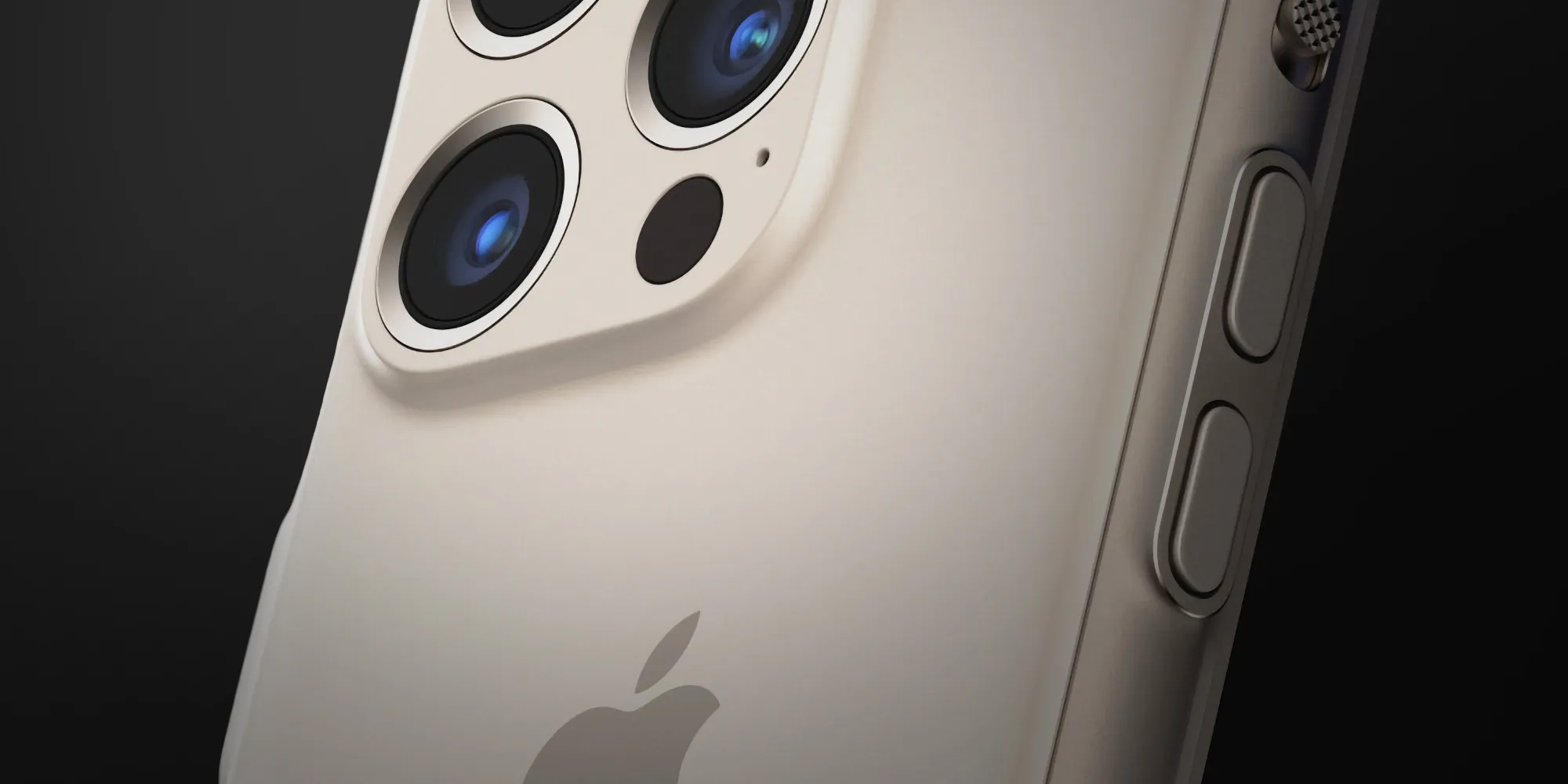
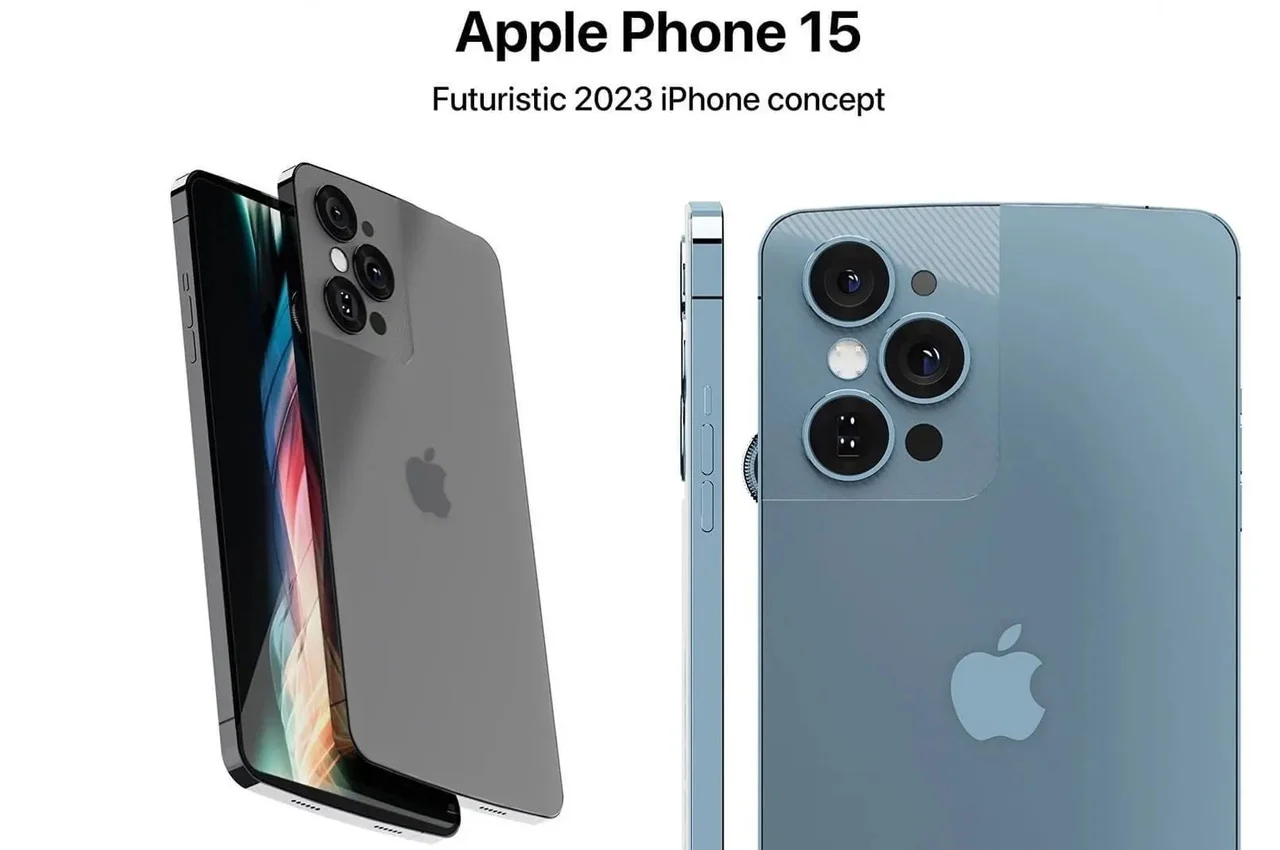
    The highest-end iPhone 15 model is expected to be a huge step up from the iPhone 14 Pro Max and to reflect those changes, Apple may call it the iPhone 15 Ultra. The company already uses this moniker for some premium products, including the Apple Watch Ultra. A digital artist has whipped up some renders to show us what the phone may look like.

    The iPhone 15 Ultra will have curved edges, titanium chassis, and thinner bezels than the iPhone 14 Pro Max, per rumors.

    Designer Jonas Daehnert has made some iPhone 15 Ultra renders. He says that the images are not based on leaks and he created them just for fun. The design crosse the iPhone 14 Pro and the Apple Watch Ultra.

    One rumor has already hinted that the iPhone 15 series will have an Apple Watch-like flat display and curved edges, so it’s not outlandish to assume that the iPhone 15 Ultra could have some elements of the Watch Ultra.

    The renders, as shown in the header and below, look gorgeous and envision an iPhone 15 Ultra with an Apple Watch Ultra-like orange button and port with orange accents. The volume, ringer, and side buttons are more raised than ones on the iPhone 14 Pro and the screen has raised rims and rounded corners.

    Although this design is unlikely to materialize, it looks very cool and the little touches give the phone more of a personality than just a boxy, bland iPhone.

    The iPhone 15 Ultra is highly likely to feature a periscope camera with 6x optical zoom. It’s expected to have the rumored A17 Bionic under the hood and a USB port instead of the lightning jack. The device could also feature solid-state buttons.

    Apple is also said to be working on an ultra-premium model for 2024 that might be a lot pricier than the iPhone 14 Pro Max.

  • Apple and Google asked to ban TikTok over national security concerns

    Apple and Google asked to ban TikTok over national security concerns

    Michael Bennet — Colorado senator, also a democrat and a member of Senate Intelligence Committee — wrote a letter to Google and Apple this Thursday, pleading for them to ban TikTok due to concerns over national security.

    The New York Times reports that the letter has been addressed to the chief executives of the companies — so, Tim Cook for Apple and Sundar Pichai for Google — and in it, Michael Bennet basically states that it’s not okay for the Chinese government to have access to this much data or the ability to curate media for a third of US population.

    The senator elaborated further, stating that he sees the current situation as irresponsible. From his point of view, this is an opportunity for Big Tech to step in on the debate and show where they stand.

    TikTok spokesperson Brooke Oberwetter commented on Michael Bennet’s letter, expressing concern over its subjectivity and how it may be misleading. She stated that the report “totally ignored” the company’s plan — called Project Texas — to assure all of its users in data transparency and security integrity.

    TikTok maintains the stance that data is in no way, shape or form, being transferred to the Chinese government. The company submitted a plan back in August, detailing how it intends to prevent China’s access to US data. The social platform is even willing to let the US government oversee its operations in an attempt to prove its claim.

    From a political stance, this is yet another sign of a democrat joining in on a typically republican-led battle. This entire ordeal harkens back to 2020 and Trump’s own efforts to get TikTok banned, along with WeChat — another popular Chinese app.

    Google and Apple have yet to respond to the senator’s letter, but they may have to. After all, this ordeal marks a point at which over 24 states have chimed in to support the movement to have TikTok banned

    Without going too much into detail, the entire thing revolves around a Chinese law loophole, which basically allows the Chinese government to get their hands on data in secret. With the discussion being on the rise, it will be interesting to see if the company manages to prove that it has prevention plans for such a scenario.

  • Apple Music Rewind 2023 is available for those subs who can’t help but track everything

    Apple Music Rewind 2023 is available for those subs who can’t help but track everything

    Apple Rewind. Like Spotify Wrapped, right? No, not really. Spotify keeps things under wraps and surprises you with stats at the end of the year, while Apple Rewind is a feature that lets you check what you are listening to most at all times.

    Redundant, since you’d be doing it in real time, but hey — remember that you can do it for the entire year! As in, if you feel like checking your playlist history from months ago, through this feature you can do that, so it’s not that surface level.

    And if that got you interested in checking it out, you can do that right now. Apple Rewind for 2023 is live now, and it allows you to check what you expect: top songs, albums, artists and so forth. But it also starts automatically drafting you a playlist with your most played songs of the year, which is always neat.

    If you want to check out your own playlist, you can open your Apple Music app under the Listen Now tab. At the very bottom, you should be able to see all of the yearly playlist that the service has drafted for you, ever since you were a subscriber and as far back as 2015, when Apple Music initially launched.

    At the end of the year, however, Apple will give you a quick hit of dopamine and release a more in-depth overview of your musical journey. If you’d like to follow how the entire process is going, you can check back with the website every Monday, as usually the data is refreshed every Sunday.

    You’ve had to have reached a certain threshold of listening activity in order for the feature to kick in for your account. In other words: If you aren’t seeing anything by next Monday, you might want to add “Listen to more music” to your list of goals to achieve in 2023.

  • Apple’s latest HomePod is smarter

    Apple’s latest HomePod is smarter

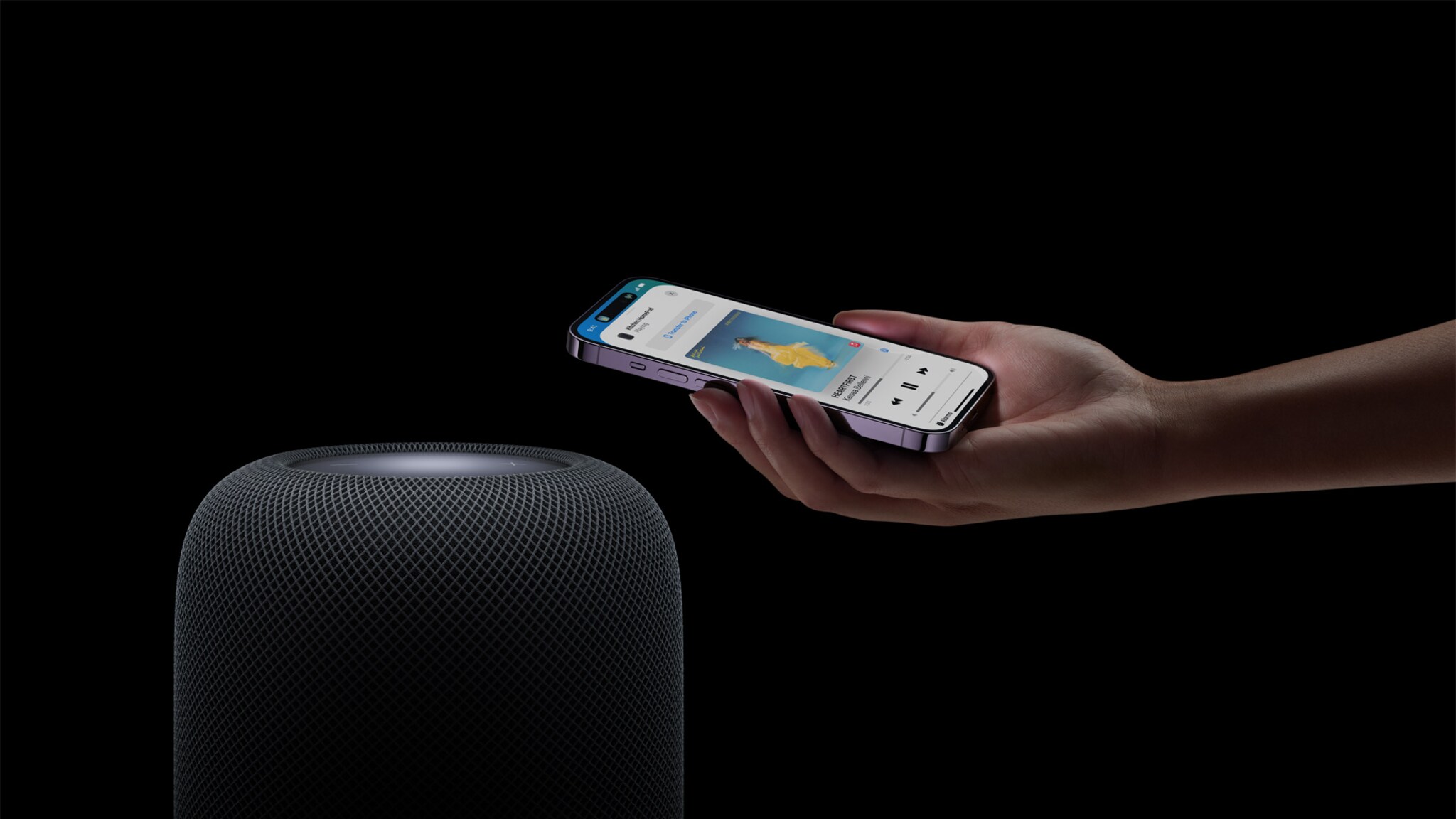
    Today, Apple announced its latest, second generation HomePod. The futuristic-looking smart speaker not only makes major advancements in acoustics, but is also packed with innovations, ranging from advanced Siri capabilities and computational audio to smart home management and automation.

    Pre-order now in either White or Midnight, available for just $299! Enabled to work with spatial-audio, capable of executing advanced voice-activated tasks and comes Matter-enabled for your Smart Home setup.
    Having Siri on board of the HomePod allows for hands-free control over as many features as you can probably imagine, ranging from smart home control to media playback and navigation. But the HomePod is also smart enough to listen even when you are not around, and send you a notification if it hears something odd, like a smoke alarm for example.

    As a smart speaker, the HomePod sounds like being capable of delivering exceptional audio quality. Its equipped with custom parts, like a high-excursion woofer and an array of beamforming tweeters, which allow it to achieve impressive acoustics.

    The smart speaker is equipped with Apple’s S7 processing chip, which in turn is based on the A13 Bionic chip that was on the iPhone 11 from 2019. This allows the HomePod to run advanced software, enabling it push the limits of advanced audio computation.
    Among the unique features, which is available on the second generation HomePod, is support for Spatial Audio. Did you know that Apple Music had over a hundred million tracks, that come with Spatial Audio? You can listen to those on the new HomePod, and not just your AirPods 3, but while also having Voice Control through Siri to access search, filters and lyrics on Apple Music.

    This also means that connecting multiple HomePods together makes more sense than ever, as it can also offer a stereo experience. Same goes for connecting it to your Smart TV, to give it a bit of extra oomph to its soundscape.

    You can connect a previous generation HomePod or a HomePod mini to the latest HomePod too. Linking is easy as ever, too, as they can all become linked with a quick voice command or by bringing the speakers close together physically.
    The Apple HomePod is capable of sensing the room and adjusting its sound accordingly, as to utilize sound reflections to improve sound and remove distortions. All of this happens automatically and it real time, with a precision capable of truly immersing listeners in an impressive, rich soundscape.
    Now, both smart speaker linking and room-awareness aren’t groundbreaking features. Not only do competitors have them, but so does the HomePod Gen 1. The primary difference with the latest Apple HomePod is that it does it faster and with a more impressive sound quality, while offering new smart features.
    Apple’s latest smart speaker will be available in White or a gray-ish Midnight variant, which is made with 100% recycled mesh fabric. Both speakers’ fabric is slightly transparent, while the touch panel on top is completely backlit, from edge to edge.

    The latest HomePod is already available for order in the AppleStore app for $299, but the smart speaker and home hub will become officially available as soon as February 3. If you are in the market for a new smart speaker that seamlessly fits with Apple’s ecosystem, you might’ve just found what you were looking for. Oh, and the HomePod is Matter-enabled, so it can play nice with all sorts of other Smart Home gadgets too.

  • Apple South Korea’s sales up 3.3 percent to $5.9 billion

    Apple South Korea’s sales up 3.3 percent to $5.9 billion

    Data showed Monday that Apple Korea’s sales rose slightly to 7.3 trillion won ($5.9 billion) last year.

    The Korean unit of U.S. tech giant Apple Inc. logged 7.3 trillion won in sales from Oct. 1, 2021, to Sept. 30, 2022, up from 7.1 trillion won the previous one-year period, according to its audit report filing.

    Net income for the cited period stood at 112.9 billion won, down slightly from a net profit of 124.3 billion won the previous year.

    The company’s operating profit dropped 23 percent on-year to 86.1 billion won from 111.5 billion won over the cited period, with an operating profit margin of 1.2 percent.

    A total 124.3 billion won in dividends was given to its U.S. headquarters and other overseas units, according to the filings.

    Apple Korea paid 50.3 billion won in corporate taxes for the fiscal year ending Sept. 30 last year.

  • Apple adds a new useful parking feature to the Maps app

    Apple adds a new useful parking feature to the Maps app

    Apple Maps has come a long way since the app was first released in September 2012. At first, Maps was an unmitigated disaster with some roadways and even countries unlabeled or missing their names. A few places were incorrectly identified and Apple uncharacteristically released an apology with Tim Cook telling iPhone users to use Google Maps or other mapping and navigation apps until Apple Maps was fixed. A company-wide shakeup ensued resulting in the dismissal of longtime software chief Scott Forstall.
    Apple went back to the drawing board and started collecting its own data so that it could build a new mapping and navigation platform from the ground up. And today, Apple Maps is a solid mapping and navigation platform that Apple continues to work on. Apple has teamed up with digital parking marketplace SpotHero to deliver information to Apple Maps users on 8,000 parking locations across the U.S. and Canada.
    For example, let’s say that you’ve got tickets to see the New York Knicks or the Rangers play at Madison Square Garden and you want to reserve a parking spot; go to Apple Maps and look up Madison Square Garden in New York City. On the listing, tap the three-dot “More” button on the right side. A pop-up menu will appear with Parking as the first option at the top of the list. Tap it and you’ll be taken to the appropriate SpotHero page without ever having to leave Apple Maps.

    Besides appearing on the iOS Apple Maps app, the partnership with SpotHero will also allow Mac users to reserve parking spots. This added feature is another step in the right direction for Apple Maps which still has to battle Google Maps on the iPhone for iOS for navigation app supremacy.

  • Apple files patent application for a third-generation Apple Pencil

    Apple files patent application for a third-generation Apple Pencil

    The late Steve Jobs introduced the touchscreen Apple iPhone in January 2007 by famously saying, “Who wants a stylus? You have to get them and put them away and you lose them. Yuck! Nobody wants a stylus.” But in 2015, the Apple Pencil was unveiled for the iPad Pro. Of course, the Apple Pencil is much more advanced than the simple stylus that Jobs was familiar with back in the day. Three years later, Apple’s second-generation Pencil was announced.

    And now Apple appears ready to take its digital writing instrument to another level. According to Patently Apple, the company recently filed patent application number US 20220413636 A1 with the US Patent & Trademark Office for an optical sensor that would be used with the next-generation Apple Pencil. The sensor would allow the pencil to copy the texture and the color found on the surface of an item. It also would be able to wirelessly send this data to a laptop so it could be used with a drawing program.

    According to the patent application, the pencil would contain a light sensor and a light emitter which would help the device “sample” the color and texture of a surface. Yanko Design created some renders showing what the Apple Pencil would look like with the optical sensors included in the design of the new digital stylus.
    Apple has applied for or received a patent for other ideas and innovations related to the Apple Pencil. In 2021, it received a patent for an Apple Pencil with interchangeable nibs (the writing tip on the end of the accessory). The nib can be changed to replace one that is worn down, or could be changed to change the capabilities of the nib based on “a color, a shape, a thickness, a size, a brightness, or an opacity.” While you can currently replace a worn-out tip, it doesn’t add any new features to the accessory.
    Nearly three years ago, Apple filed a patent application for an Apple Pencil with a biometric security feature, a method to use the number of times the pencil is tapped on the screen as  an input that could be used to initiate a copy function, a paste function, an undo function, and/or a redo function.” Other possible additions to the Apple Pencil that we’ve seen mentioned in a patent application include “a speaker, a rotary input device, a microphone, an on/off button, a mute button, a biometric sensor, a camera, a force and/or touch-sensitive trackpad, and so on.”
    If we do see a new Apple Pencil, it might not be until the 2024 iPad Pro is introduced, which could be the first iPad to sport an OLED display. When you think about it, that might be the perfect time to offer a new digital stylus with the ability to sample colors and textures lifted by the pencil, and include features such as a microphone and a camera.
    Just because you see something in a patent application or even a patent, it doesn’t mean you should expect it to be used in a consumer device right away. In fact, of the large number of patents that Apple receives every year,  many are never used. So we can’t say for certain that the technology covered in a patent application or a patent will be used by the company. However, it does make sense that Apple would want to keep improving the capabilities of the Apple Pencil.
    In 2021, a tipster shared a video of what he claimed was the third-gen Apple Pencil and it showed a glossy body with a magnetic flat edge for charging. A new Apple Pencil would be expected to offer longer battery life and improvements in latency and precision.
  • Apple’s Crash Detection sent 71 notifications to one 911 center last weekend

    Apple’s Crash Detection sent 71 notifications to one 911 center last weekend

    Last September, a new feature was introduced for these devices while unveiling the iPhone 14 series, the Apple Watch Series 8, the Apple Watch Ultra, and the Apple Watch SE (2022). Any of these products will detect when you have been in a severe car, SUV, or pickup truck crash. Unless you shut down the process with a tap, after 10 seconds the phone will contact your emergency contacts and give them your current location.
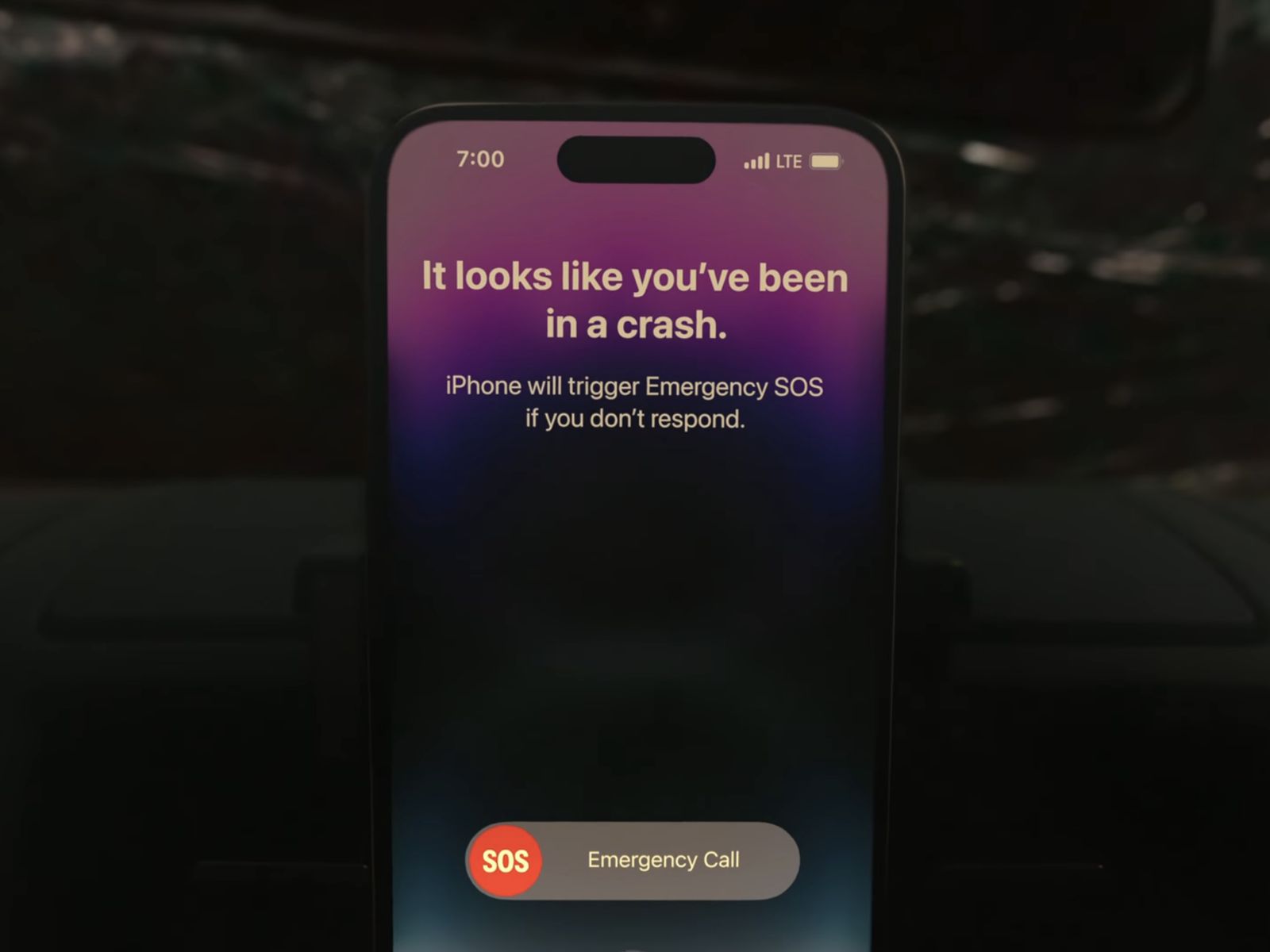
    Two days after introducing the feature, Apple turned Crash Detection into an ad for the new iPhone 14 line that shows an iPhone flying through the air amid a shower of broken glass. “It looks like you’ve been in a crash,” says the screen. “iPhone will trigger Emergency SOS if you don’t respond.” Apple states that the Crash Detection feature is driven (no pun intended) by advanced Apple-designed motion algorithms trained with over a million hours of real-world driving and crash record data.”
    We should point out that a similar feature was made available to the Google Pixel line in 2019. Regardless, while this sounds like a useful, helpful, and potentially life-saving feature, technology can backfire every now and then. For example, at the Summit County 911 Center, dispatchers received an incredible 71 automated crash notifications this past weekend from skiers carrying an iPhone or wearing one of the three newest Apple Watch models.
    The notifications came in from the area’s four ski areas but none of the notifications received had to do with a real emergency. Skiers making quick stops and falling into the snow set off the Crash Detection feature even though there was not one true emergency in the bunch. And if Crash Detection wasn’t set off by a fall into the snow, the Apple Watch’s fall detection feature, which essentially has a similar process to run through when someone wearing the timepiece hits the ground, was responsible for unnecessary notifications.
    None of the 71 notifications could be disregarded. And if the device owner did not respond to a return call, a special operations deputy had to contact ski patrol to visit the location where the impact happened to make sure no one was seriously hurt. This was a time-consuming activity but had to be done.
    Trina Dummer, the interim director of the Summit County 911 Center, said, “We are not in the practice of disregarding calls,. These calls involve a tremendous amount of resources, from dispatchers to deputies to ski patrollers. And I don’t think we’ve ever had an actual emergency event.” All 71 notifications were set off by an impact…into the soft snow.
    And since calls are handled by the 911 Center based on the time the call is received, a bogus accident that sends out a notification from an Apple device could delay the arrival of medical help to a real emergency in the area. Dummer notes that “We are absolutely diverting essential resources away from people who need it toward a feature on a phone.” A comment worded like that sounds like someone is upset with Apple.
    Another 911 Center, this one in Pitkin County, receives 15 to 20 calls a day from Apple’s Crash Detection feature that come from the county’s four main ski areas. The 911 Center’s director, Brett Loeb, says every notification generates a return call although sometimes a skier’s phone is too deep inside a coat pocket for the user to hear it ringing. At that point, the ski patrol has to check out the area which delays things.
    Similar to what happened in Summit County, in Pitkin County not one notification from Apple’s Crash Detection was the result of a real emergency.
  • Apple stock plunges the most since the financial crisis on iPhone production woes

    Apple stock plunges the most since the financial crisis on iPhone production woes

    While production lead times of the iPhone 14 Pro models have started to normalize after the pandemic lockdown scare that prevented Foxconn from assembling enough units to meet demand not long ago, the iPhone 14 series production schedule and sales as a whole are not where investors would want them to be.

    As a result, Apple’s stock took another nosedive and is now down 12.4% just in the month of December alone. Not only that, but juggernauts like Apple and Tesla are now sharing the unenviable position of experiencing some of their worst stock plunges ever. For Tesla, that’s the biggest drop on record, while for Apple’s stock this year will mark the biggest plunge since the 2008 financial crisis and the subsequent freefall in stock indexes.

    Apple is on the verge of closing below $130 a share, erasing all gains accumulated since mid-2021, while for the whole 2022 its stock has dropped a whopping 27%. The Federal Reserve’s interest rate rise push has something to do with it, of course, as it sent investors scouring for safe havens and out of riskier bets like tech stocks, resulting in a nearly 34% drop of the Nasdaq this year.

    Still, last quarter Apple grabbed the jaw-dropping 42% of the global phone revenue and while the last quarter of the year may be negatively affected by the COVID surge in China after the country’s reopening, its revenue may very well hit record again, riding on the higher average selling price of its iPhone 14 series which is heavily skewed in favor of the more expensive iPhone 14 Pro and iPhone 14 Pro Max models.
  • Apple to start MacBook production in Vietnam next year

    Apple to start MacBook production in Vietnam next year

    Apple’s MacBooks are set to be produced in Vietnam starting next year for the first time, the latest of several Apple products that will be shifted to the country.

    Apple has tapped its top supplier, Taiwan’s Foxconn, to start making the laptops in Vietnam as early as around May, sources said.

    “After the MacBook production shifts, all of Apple’s flagship products basically will have one more production location beyond China … iPhones in India and MacBooks, the Apple Watch and iPads in Vietnam,” one person with direct knowledge of the matter said.

    “What Apple wants now is an ‘out of China’ option for at least part of production for all of its products.”

    The company has been working on plans to move some MacBook manufacturing to Vietnam for nearly two years, and has set up a test production line in the country, the Japanese news outlet reported earlier.

    Vietnam will make 65% of Apple wireless AirPods by 2025 as the U.S. tech giant continues to shift its production away from China, JP Morgan analysts have forecast.

    The country would also reportedly account for 20% of iPad and Apple Watch output and 5% of MacBook.

    Foxconn, a key supplier, in August leased 50.5 hectares of land in Bac Giang Province and plans to build a $300-million factory there, employing 30,000 workers.

    Vietnam has been one of the fastest growing markets for Apple products this year, with especially high demand for iPhones.

  • Apple still reluctant to introduce iMessage interoperability

    Apple still reluctant to introduce iMessage interoperability

    Few things are as dreadful to an Apple user as the green bubbles that appear when their messages hit a non-iPhone recipient. The lack of iMessage interoperability has been a pet peeve for quite some time, with Apple refusing to cave into the demands of users.

    Nevertheless, even as the Cupertino company is forced to make concessions in the face of mounting legislation, cross-platform support for iMessage remains unlikely in the foreseeable future. For now, Apple will not be integrating RCS, the standard which could potentially enable interoperability.

    This information was first brought forward by Bloomberg in a dedicated article, which was subsequently. The original source stipulates that Apple has not decided on how to open up iMessage to third-party services.

    Love it or hate, however, the Apple ecosystem works. Well, maybe not for all Apple consumers, but rather for the Cupertino company itself. The figurative ‘bubble’ (pun intended) in which most users are placed tends to be one of the most significant sources of revenue for the American tech giant.

    But so is Europe, and the EU in particular. But the latter has found ways to challenge some of Apple’s business strategies. Earlier this year, a law was passed which threatens the proprietary Lightning port. If Apple does not comply, and fails to transition to USB-C, the iPhone might be kicked out of the European market.

    But hardware is only one part of Apple’s monopoly over its users. A much more disconcerting aspect is the software side of the equation as demonstrated by the iMessage conundrum.

    Luckily, legislators throughout the world are working on that front as well. According to the original report by Bloomberg, Apple has committed to allowing third-party app stores to function alongside its own App Store. Whether that is only the beginning remains to be seen.

  • Apple, Ericsson kiss and make up while signing a new licensing deal

    Apple, Ericsson kiss and make up while signing a new licensing deal

    Apple and Ericsson have agreed to settle a patent battle between the two which started in 2015 when both companies sued each other claiming that they each had patents infringed on by the other. Also part of the legal issues were disagreements that both sides had relating to licensing their 2G, 3G, and 4G technologies.

    Both companies buried the hatchet, and peace reigned until October 2021 when Ericsson sued Apple over 5G patent licensing. Two months later, Apple sued Ericsson and accused the networking and telecom firm of using “strong-arm tactics” to renew licensing over expired patents.

    Today’s deal means that Apple and Ericsson shook hands, ending a legal fight over royalty payments for using 5G wireless patents in the iPhone. Ericsson said that the settlement includes granting a global patent license to Apple and global cross-licenses for standard-essential cellular technology patents. Standard-essential patents are required in order for a licensee to meet certain industry standards and as a result, they are licensed using royalty terms that are Fair, Reasonable, And Non-Discriminatory (FRAND).
    In a statement, Ericsson said, “The settlement ends all ongoing patent-related legal disputes between the parties.” The battle between Apple and Ericsson intensified when negotiations on a new seven-year licensing contract covering telecom patents broke down. But that is all in the past after today’s announcement and Ericsson noted that the settlement will “strengthen their technology and business collaboration,” meaning, of course, partnerships between Apple and Ericsson.

    If you’re wondering how Apple ended up owning some intellectual property related to mobile wireless modems, you might recall that during the summer of 2019 the company purchased Intel’s modem business for $1 billion. The transaction gave Apple ownership of some industry standard-essential patents.

    Including the effects of the settlement with Apple, Ericsson forecasts fourth-quarter intellectual property rights (IPR) licensing revenues of $530.3 million-$578.5 million. Besides today’s agreement with Apple, that figure includes intellectual property rights with other licensees.
    You may have experienced some deja-vu when reading this news because it might have reminded you of the last-minute settlement Apple and Qualcomm signed off on back in 2019 just as opening arguments were wrapping up for a trial between the two tech giants. Apple paid Qualcomm a chunk of cash and both firms agreed to a six-year licensing agreement with a two-year option. And both sides signed a multi-year chipset supply contract.
    Apple has been working on its own modem chips which were expected to debut in next year’s iPhone 15 line. But issues surrounding two patents owned by Qualcomm mean that the latter will continue to supply the vast majority of iPhone 15 handsets with the important component. Had Apple been able to use its own modem chip, Qualcomm’s share of modem chips used on the iPhone 15 series would have been reduced to 20%.
    But this goes to show how important licensing intellectual property is to Apple, even when it plans on producing its own modem chip. Certain key technologies could be covered by patents and licensing them, even when dealing with the complex licensing arrangements that Qualcomm demands (remember, “no license, no chips”) can make or break a big project. Even a company like Apple can be stymied by a patent.
    Eventually, Apple and Qualcomm will reach an agreement, or Apple will figure out a way to design its modem chips without having to license certain patents from Qualcomm. But for now, it is Qualcomm’s modems that you’ll find inside the iPhone including 2023’s iPhone 15 family.