Tag: apple

  • US becomes biggest buyer of Vietnam smartphones

    US becomes biggest buyer of Vietnam smartphones

    The U.S. has surpassed China to become the biggest buyer of smartphones and parts from Vietnam in the first six months with a purchase value of $6.61 billion, up nearly 54 percent year-on-year.

    It was followed by China at $6.45 billion, up nearly 17 percent, according to Vietnam Customs.

    Exports of smartphones and parts to the EU fell 7.7 percent to $3.3 billion.

    Vietnam’s top import market of smartphones and parts was South Korea at $5.1 billion, up 28 percent year-on-year.

    It was followed by China at $4.2 billion, down 0.1 percent.

    Vietnam’s exports of these items to all markets reached $29.17 billion in the first six months, up 16.4 percent year-on-year.

  • Apple looking to further diversify chip suppliers, reportedly finding new partner for the iPhone 14 Pro

    Apple looking to further diversify chip suppliers, reportedly finding new partner for the iPhone 14 Pro

    Apple is gearing up for the launch of the iPhone 14 series (which is inching ever so closely as we approach the fall), and it now seems Cupertino is set on not allowing any supply chain shortages to create issues. Reputable industry insider Ming-Chi Kuo now reports that Apple is looking to further expand its suppliers for the iPhone 14 series and has now added a new partner.

    According to Kuo, SG Micro (headquartered in China) has now passed quality certification for chips for the higher-end iPhone 14 models (meaning the iPhone 14 Pro and Pro Max). The company is likely to take orders for PMICs (power management integrated circuitry – basically a chip to manage power) in the second half of this year for the upcoming iPhones.

    This is the first time that said company would supply components for higher-end iPhones. According to the industry insider, this partnership will continue in the future, so that Apple can avoid future supply chain risks.
    Recently, Kuo said that some iPhone 14 display panel suppliers, as well as memory suppliers, have had supply issues; however, he doesn’t believe this will make a big impact on mass production. It seems that, at least according to Kuo, Apple is on track with the iPhone 14 production.
    As a quick recap, this year we expect there to be a more significant gap between the non-Pro iPhone models and the Pro versions. The iPhone 14 Pro and the iPhone 14 Pro Max are expected to be the only models to come with Apple’s latest processor (the A16), while the non-Pro variants are said to come with this year’s iPhone 13 chip.

    On top of that, the Pro iPhone 14 models will come with a new design for the Face ID sensors and the selfie camera, getting rid of the notch which will remain for the non-Pro iPhone 14 and iPhone 14 Max. We also expect the Pros to come equipped with an always-on display.

    The four phones are to be unveiled sometime in the fall, probably September.

  • Apple Music introduces new, exclusive live features

    Apple Music introduces new, exclusive live features

    Music streaming services like Spotify, YouTube Music, Deezer, TIDAL are often adding new features to try to improve their offering further. Apple Music is no exception, so if you’re considering the service, you’ll be happy to know that it’s getting new, exclusive live features.

    Called Apple Music Sessions, these exclusive live releases will feature some of the world’s most famous artists, as well as emerging artists. More importantly, Apple Music users will be able to listen to these exclusive live releases in Spatial Audio.

    All Apple Music Sessions are recorded out of Apple Music’s studios around the world. Interesting enough, these are also filmed, which makes the combination of Spatial Audio tracks and companion live performance music videos more appealing.

    If you’re already paying for Apple Music, then you’ll want to know that Apple Music Sessions is already available with releases from Carrie Underwood and Tenille Townes, recorded out of Apple Music’s new studios in Nashville, Tennessee.

  • Vietnam benefits from manufacturing exodus from China

    Vietnam benefits from manufacturing exodus from China

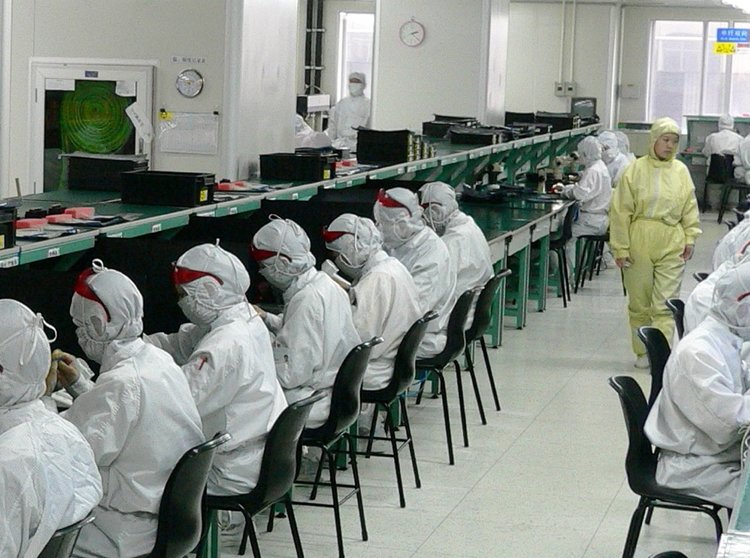
    Apple, Samsung and Xiaomi have moved their assembly lines out of China to Vietnam, as they seek to reduce dependence on the country.

    The country offers manufacturers access to the 10-member Association of Southeast Asian Nations (ASEAN) free trade bloc and preferential trade pacts with countries throughout Asia and the EU as well as the U.S., according to Nikkei Asia.

    Apple Inc. has 11 factories run by its Taiwanese partners in Vietnam.

    Four of them, Foxconn, Luxshare, Pegatron, and Wistron, are expanding.

    Apple would consider using more Vietnamese suppliers, CEO Tim Cook said during a meeting with visiting PM Pham Minh Chinh on May 17. A few weeks later Apple moved its iPad production out of China and to Vietnam, marking the first time the iconic tablet was assembled in Vietnam.

    Its AirPods Pro 2 wireless earbuds may also be produced in Vietnam by mid-2022, analyst Ming-Chi Kuo told Apple Insider.

    Apple is not the only smart device manufacturer expanding operations in Vietnam following China’s Covid-19 lockdowns.

    South Korea’s Samsung has just completed construction of a US$220-million research and development center in Hanoi, its largest in Southeast Asia.

    Its flagship phones Galaxy Z Fold and Z Flip are produced in the country.

    Last year Samsung reported $74.2 billion sales for its Vietnam branch, up 14 percent from 2020. They included exports of $65.5 billion, up 16 percent.

    China’s Xiaomi also moved part of its production to Vietnam, with the first batch of its ‘made-in-Vietnam’ devices debuting Tuesday.

    They are made by DBG Technology, a subsidiary of Hong Kong’s DBG Electronics Investment Limited, at a newly built $80-million factory in the northern Thai Nguyen Province.

    Delivery and logistics costs, driven up by the pandemic, were hindering Xiaomi’s Southeast Asia production, a spokesperson said.

    Comparatively cheap labor is one of Vietnam’s most prominent advantages, pointing out that Chinese workers earn CNY7,000 ($1,044) a month, twice as much as Vietnamese.

    But Vietnam’s land cost advantage is diminishing, while factories are relying on parts and raw materials from China.

    Industrial land rent in HCMC surged to a record high of $198 per square meter followed by Hanoi at $140 and Da Nang City at $80, according to a report by real estate consultancy Cushman Wakefield.

    Average land rentals in southern industrial parks in the first quarter was $120 per square meter, a 9 percent increase from a year earlier, commercial real estate services company Jones Lang Lasalle reported in May.

    Earlier this year Vietnam’s production was by supply chain delays due to China’s pandemic lockdowns.

    Yang Zhongwei, production manager at a Chinese router parts maker’s subsidiary in Vietnam, told Nikkei that clients had threatened to cancel orders as shipments from China were delayed.

    Vietnam’s weak industrial base and higher costs are other hurdles, and so while his company is considering switching to local suppliers it has yet to manage to do so, he said.

    Carbon taps for printers cost 21 yuan per roll in Vietnam, three times the price on Alibaba’s Taobao in China, he pointed out.

  • Apple receives patent for technology that helps iPhone users type in the rain

    Apple receives patent for technology that helps iPhone users type in the rain

    Apple has just been awarded a new patent from the U.S. Patent and Trademark Office called “Modifying functionality of an electronic device during a moisture exposure event” that could make it easier to use an iPhone in the rain. Sure, your phone is probably built to withstand some moisture, but that doesn’t make it easy to type on a wet display or with wet fingers.

    Apple plans to have the iPhone screen adjust to the moisture whether it is light rain, a steady drenching, or if the handset is being used underwater. False taps on the screen generated by the liquid will be detected by the technology listed in the patent and eliminated. On-screen controls could change accordingly with buttons growing larger while also moving farther apart from other buttons to improve the accuracy of pressing the right button when the screen is wet.

    At the same time, the capacitive iPhone display would automatically change to a pressure-sensitive screen similar to Apple’s no longer used Force Touch and 3D Touch technologies. To prevent rain drops or liquid from accidentally setting off touch inputs, Apple would require these finger presses to have more force than a dynamic threshold that would change depending on the kind of moisture event (light rain, heavy rain, for example) that is making the touch screen hard to accurately type on.

    An image in the patent documentation shows an iPhone camera app offering settings for “dry,” “wet,” and “underwater” modes. Depending on the mode, changes are made to the camera UI. For example, in wet mode, some features are removed from the UI while in underwater mode, some controls are replaced with extra-large buttons. They are easier to activate underwater but have restricted functionality.
    The phone’s display will show the current depth of the device in order for the user to keep it within the limits of the handset’s water resistance. Apple will have to take care with the size expansion and the location changes of camera UI buttons to make sure that users do not get confused.
    Apple receives so many patents over the course of a year and not every one results in new technology that is implemented right away. It is not clear whether Apple will be interested in implementing this patent right away.
  • Apple Eyes Fuel Purchases From Dashboard As It Revs Up Car Software

    Apple Eyes Fuel Purchases From Dashboard As It Revs Up Car Software

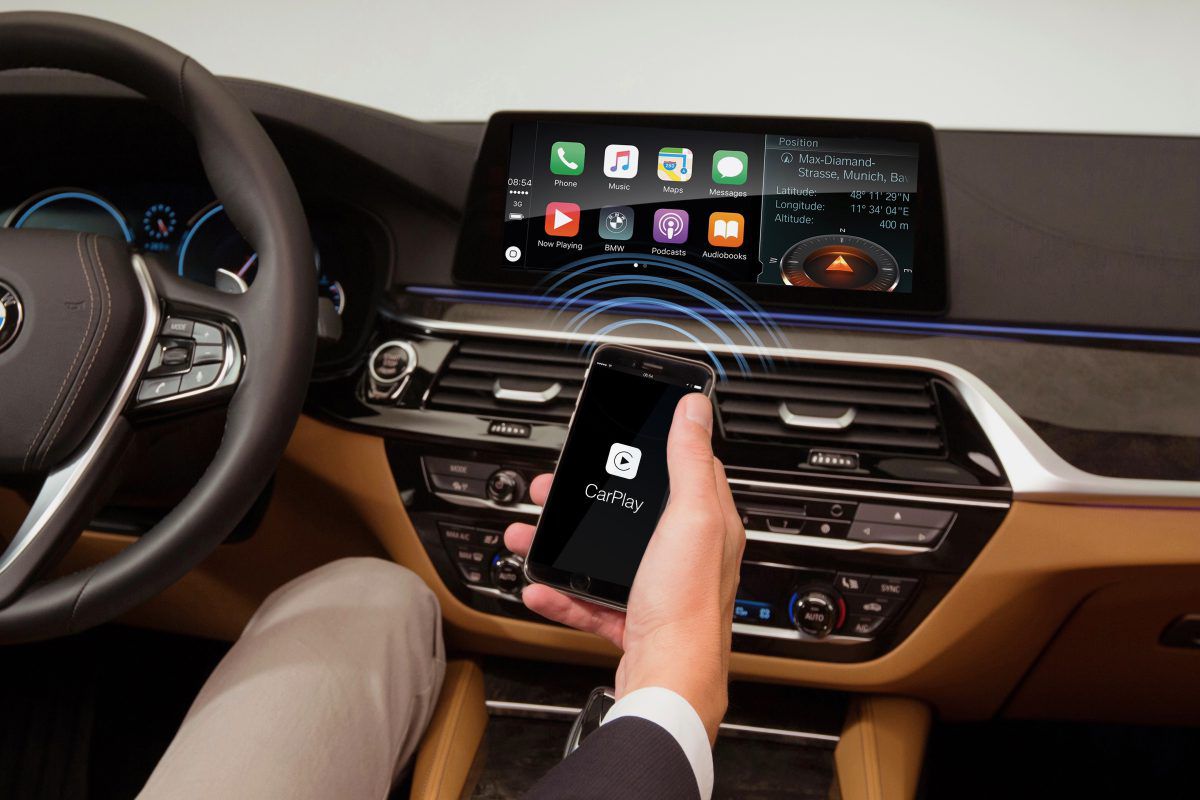
    Apple Inc wants you to start buying gas directly from your car dashboard as early as this fall, when the newest version of its CarPlay software rolls out, accelerating the company’s push to turn your vehicle into a store for goods and services.

    A new feature quietly unveiled at Apple’s developer conference this month will allow CarPlay users to tap an app to navigate to a pump and buy gas straight from a screen in the car, skipping the usual process of inserting or tapping a credit card. Details of Apple’s demo for developers have not previously been reported.

    But Dallas-based HF Sinclair, which markets its gasoline at 1,600 stations in the United States, told Reuters that it plans to use the new CarPlay technology and will announce details in coming months.

    “We are excited by the idea that consumers could navigate to a Sinclair station and purchase fuel from their vehicle navigation screen,” said Jack Barger, the company’s senior vice president of marketing.

    Fuel apps are just the latest in a sustained push by Apple to make it possible to tap to buy from the navigation screen. It has already opened up CarPlay to apps for parking, electric vehicle charging and ordering food, and it also is adding driving task apps such as logging mileage on business trips.

    Fuel is a major expense for car owners. The U.S. Energy Information Administration estimated in April that the average U.S. household will spend about $2,945 on gasoline in 2022, or about $455 more than last year.

    Apple currently does not charge automakers, developers or users for CarPlay; the business interest is putting Apple at the forefront as cars transform into rolling computers, said Horace Dediu, an analyst with Asymco and founder of Micromobility Industries. The new feature will hit hundreds of car models already compatible with CarPlay when Apple releases software updates this fall.

    “Forget about Apple Car – Apple CarPlay is a bigger deal,” Dediu said. “It’s very likely to scale to millions and millions of cars, if not hundreds of millions.”

    To use the new CarPlay feature this fall, iPhone users will need to download a fuel company’s app to their phone and enter payment credentials to set up the app. After the app is set up, users will be able to tap on their navigation screen to activate a pump and pay.

    “It’s a massive marketplace, and consumers really want to take friction out of payments,” said Donald Frieden, chief executive officer of Houston-based P97 Networks, which makes the digital plumbing that many fuel companies will use to connect their apps to cars.

    Frieden said he has fielded calls from oil companies that are interested to make their apps work with CarPlay. BP, Shell and Chevron Corp did not respond to requests for comment about whether they plan to make their iPhone apps work with CarPlay.

    Apple’s latest move is likely to increase tensions with automakers that have their own ambitions for commerce in the car.

    For example, vehicle makers have tried – and failed – to popularize gasoline purchasing from the car before. General Motors Co rolled out a system for doing so in 2017, but shuttered it earlier this year “due to a supplier exiting the business,” GM told Reuters in a statement.

    Beyond apps for fuel and other purchases, Apple is also seeking to expand CarPlay further into the car’s driving systems by accessing speed and fuel gauge data.

    But automakers are not likely to hand over that data to Apple without making demands of their own in talks that analysts  believe are likely already under way.

    Speaking at the Reuters Automotive Europe conference in Munich on Wednesday, Mercedes Benz CEO Ola Kaellenius said the company’s goal “is to have a complete, holistic, Mercedes experience.”

    Kallenius said Mercedes would not seek to reinvent every category of app, but that “when interacting with companies that are in this digital domain … anything and everything that crosses into product liability relevance, we would be very cautious.”

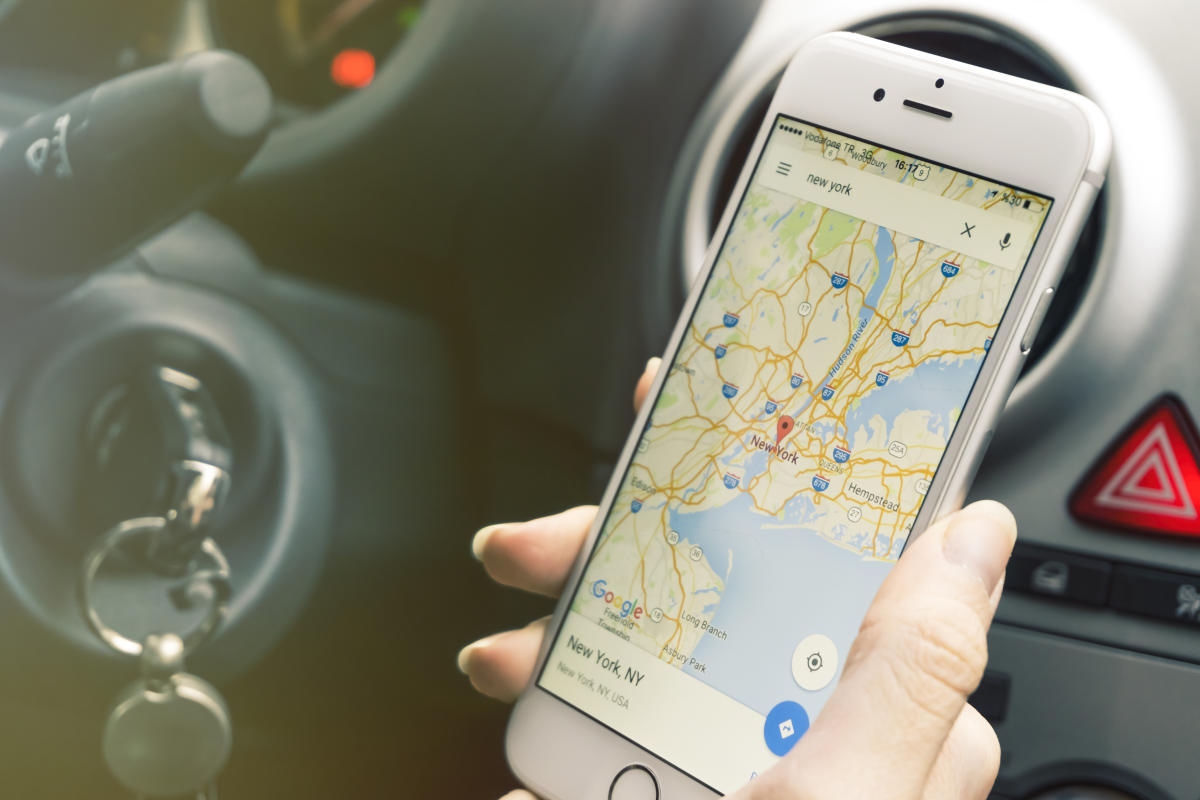
  • Apple Maps could get a feature that Google Maps doesn’t have

    Apple Maps could get a feature that Google Maps doesn’t have

    Apple Maps has come a long way since it was first released in 2012 as a replacement for Google Maps. The latter was still made available for iPhone users in the App Store (along with YouTube which also was dropped as a native app with iOS 6). At first, Apple Maps was an unmitigated disaster. Some city streets and even countries were labeled with the wrong name and some weren’t named at all. Faulty directions sent users into dangerous areas like the Australian Outback filled with poisonous snakes, very little water, triple-digit temperatures, and scarce mobile phone reception.

    As a result of the Apple Maps fiasco, iOS chief Scott Forstall departed Apple after failing to sign an official apology related to the feature. As a result, the company’s chief designer, Jony Ive, ended up with the task of redesigning iOS 7 the next year. Forstall’s days at Apple might have been numbered anyway once Steve Jobs passed in 2011. Forstall and Ive reportedly would not work together and had differing opinions about the continued use of skeuomorphic designs for iOS.

    Skeuomorphic designs are those familiar designs that were used on the first generation of Apple’s native apps so that users knew instantly what a particular app was all about. For example, the use of an old black and white television console for the YouTube app would be an example as would a legal pad for the Notes app. Forstall (and Steve Jobs) both were into Skeuomorphic design while Ive preferred more of a modern approach.

    Apple decided to scrap the third-party mapping platforms it was using for Apple Maps and decided to build its own literally from the ground up. In 2018 it started sending out specially equipped vans with special sensors and cameras that sent data to an iPad located inside the van. The result has been a much improved Apple Maps that has reduced the gap with Google Maps.
    A tweet disseminated by iOS developer Steve Moser reveals that he has found some code in the Apple Maps app that suggests that Apple might offer Apple Maps navigation for E-Bikes along with optimized routes and estimated times of arrival (ETA) for those who drive them.
    It isn’t clear what the difference will be in the directions for non-electric and electric bikes although one possibility is that the latter will include steeper paths that are more likely not to be an obstacle for a motorized vehicle. If it turns out that Apple Maps will include navigation for E-Bikes, that would give it an advantage over Google Maps which doesn’t optimize routes for E-Bikes compared to ordinary bikes that need to be pedaled. But Google Maps does show users where they can rent an E-Bike, the expected time of their E-Bike journey, and the ETA.
  • Samsung rumored to begin mass production of 3nm chips next week

    Samsung rumored to begin mass production of 3nm chips next week

    Right now there are only two independent foundries that are able to manufacture cutting-edge chips. The companies are TSMC and Samsung Foundry. Independent foundries take chip designs created by other firms and build the actual chips off of that design. Both TSMC and Samsung are working on building chips using their 3nm process nodes. The smaller the process node used, the larger the number of transistors found inside a chip.
    This is important because the more transistors employed in a chip, the more powerful and energy-efficient that chip can be. Every two years or so, the process node gets smaller and more transistors fit inside an integrated circuit. This is the famous “Moore’s Law” that you’ve heard about, named after Intel and Fairchild semiconductor co-founder Gordon Moore. Remember, this is not an actual law and as smaller and smaller components are being built, this “observation” no longer can be fully counted on to double the transistor count every other year.
    Still, over time, you can see how “Moore’s Law” has forecast the incredible increase in processing capabilities over the years. Let’s take the iPhone X, which was released in November 2017 powered by the Apple A10 Bionic chipset. The latter carried 4.3 billion transistors in each chip. Now let’s move ahead to the 2021 iPhone 13 series which sports the A15 Bionic chipset. The A15 Bionic contains 15 billion transistors, up 27.1% from the 11.8 billion transistors employed by the A14 Bionic chip.
    So now Samsung and TSMC are battling for supremacy in the business of building chips for third-parties. TSMC is number one in most metrics and its customer list includes top tech firms such as Apple (its number one customer), MediaTek, Nvidia, Qualcomm, and others. But it appears, according to ExtremeTech, that Samsung will soon beat out TSMC by starting mass production of chips made using its 3nm process node next week with TSMC starting 3nm mass production later this year.
    Additionally, Samsung is going to use a new transistor structure on its 3nm chips called GAA or gate-all-around. With this structure, the flow of current is controlled by gates that contact the transistor on all four sides. TSMC will continue to use the FinFET structure which has been in place since the 22nm process node debuted. TSMC will finally scrap FinFET for GAA when it starts shipping 2nm chips in 2026.
    Samsung’s GAA design is called Multi-Bridge Channel Field Effect Transistor (MBCFET) also known as nanowires. This is one of only two different gate-all-around designs currently available with the second one known as GAAFET or nanowire.
    The report cites a major Korean news agency that says Samsung is expected to make a major announcement about its 3nm chip production shortly. It also notes that the move to gate-all-around from FinFet will reduce the area of a chip by 45% to help deliver a performance bump of 30% while reducing energy consumption by 50%. However, there is a big problem. Samsung was reportedly getting yields of only 10% to 20% at 3nm meaning that the vast majority of its 3nm chip dies cut from a wafer could not pass quality control.
    Back in February, a report indicated that Samsung’s yield on 4nm production was only 35% resulting in Samsung losing some business from chip designer Qualcomm. The latter supposedly moved some of those orders to TSMC. However, if Samsung Foundry is about to announce the start of high volume manufacturing (HVM) at the 3nm process node, one could come to the conclusion that Samsung Foundry has improved its 3nm yield.
    Speaking of 3nm, TSMC’s major customers such as AMD, Apple, Broadcom, Intel, MediaTek, Nvidia, and Qualcomm, have started to queue up for 3nm capacity. And next on the horizon, of course, is the 2nm process node that both TSMC and Samsung are working on. Another name is expected to join TSMC and Samsung on the list of  cutting-edge foundries. Intel Chief Executive Pat Gelsinger has announced that the American company will regain process leadership from Samsung and TSMC by 2025.


  • Netflix is adding a cheaper plan for those who want a lower price and will watch ads

    Netflix is adding a cheaper plan for those who want a lower price and will watch ads

    During an interview at the Cannes Lion advertising festival, the CEO of Netflix Ted Sarandos gave the most direct indication that it will launch a cheaper, ad-supported subscription tier to the embattled streaming service.

    In essence, Mr. Sarandos said that the company will be “adding an ad tier; we’re not adding ads to Netflix as you know it today.” After the pandemic boost wore out, Netflix hit the skids in terms of subscriber count as people spent less time watching TV shows and movies.

    At the same time, new streaming services from juggernauts like HBO, Disney, or Apple, grew to rival Netflix, all the while it kept spending borrowed billions on content creation. Well, that crazy content spending was curtailed, a lot of shows were cancelled, and now Netflix will try and boost subscriber numbers by going downmarket.

    Currently, the Netflix plans start from the Basic one at $9.99 per month with SD (up to 480p) picture quality, followed by the Standard $15.49 a month plan that offers 1080p definition, and go up to the Premium Netflix tier at $19.99 per month which includes 4K UHD quality streaming on up to four devices.

    Besides cracking down on password sharing, Netflix will likely introduce the new ad-supported subscription tier at something close to the Apple TV+ $4.99 subscription price and will try to recuperate the difference with ad revenue. Or, as Ted Sarandos eloquently puts it:


  • New CarPlay Update Is Classic Apple Before It Invades A New Product Category

    New CarPlay Update Is Classic Apple Before It Invades A New Product Category

    The funny thing about Apple’s World Wide Developer Conference (WWDC) was that the most interesting piece of software the Cupertino-based giant showcased may not reach the hands of consumers till 2024. And no, it isn’t the much-talked-about VR and augmented reality headset it has been working on. It is the new expanded version of CarPlay it showed off which showcased a wild new interface for cars that extended beyond the infotainment screen to the instrument cluster.

    Apple says that this new CarPlay will show up in partner cars in late 2023. It lined up a show of force with brands like Mercedes Benz, Volvo, Volkswagen, Audi, Porsche,  Honda, Ford, Jaguar Land Rover and Renault. But when some of these brands were asked independently, it seemed that they didn’t know much about what Apple was doing and sounded cagey about confirming or denying that Apple’s new CarPlay would show up in their product line in the future.

    Apple’s gambit is also one that is predicated on the iPhone remaining the centre of the experience. The Volkswagen group on some level has made a tacit admission that its clientele is an iPhone crowd. That’s why the deep integration with Apple Music has been added to Porsche and Audi models while audio streaming services like Spotify and YouTube Music have been left behind in the dust. But this is also a scary proposition for auto companies as it creates a layer of dependence on a tech giant like Apple which seemingly has unlimited resources.

    Tesla has famously left both Apple and Google out of its infotainment experience. But then there is pragmatism at places like Ford and Volvo who have wholeheartedly adopted Google’s Android Automotive embedded OS for cars. They believe that Google is better at software and they could save the extra cash as they spend the next decade during a once-in-a-lifetime power train transition towards electric.

    However, in the case of Google, Android Automotive is at the heart of the car and is not beamed off an Android phone. OEMs get a say in what apps are being approved. For instance, the Vivaldi browser is on Renault and Polestar cars with Android Automotive but not in the Volvo XC40 Recharge.

    Apple’s interface doesn’t look just gorgeous and simple – more so than what Google has cooked up, but it will be also very private following one of the principles of the Tim Cook-led gadget-making titan. This would scare the bejesus out of an automaker as not a lot of data would be forthcoming. Apple could leverage the App Store on the iPhone to extend apps to the car via CarPlay which would help it create a bigger and better store faster. This would entrench a carmaker’s dependence on Apple.

    Already CarPlay and Android Auto have become table-stakes as phone beaming technologies. But they also visually break the experience one has in the car. Even with the latest lot that features digital instrument gauges – even on the best of the best – the Mercedes S-Class, you see MBUX that looks like something from the mid-2000s designed for Windows and then when you turn on CarPlay you see a simple and functional UI. Apple extends that elegance with the new CarPlay with gauge clusters designed using the ideas from the Apple Watch complications and widgets for iOS.

    Siri may not be as good as the Google Assistant but remains light years ahead of anything an automaker has including the “Hey Mercedes” voice command in the new C-Class and S-Class. Apple will certainly be able to enhance Siri and basically help decimate any of these software ventures that Mercedes and some of the European automakers are developing. No wonder, Mercedes hasn’t come out wholeheartedly and said that “we are adopting the new CarPlay”.

    Apple hasn’t revealed much about any specific hardware requirements. In fact, Apple says that this new system can scale to multiple screens and sizes seamlessly. Apple has shown a penchant for supporting multiple screen sizes and resolutions better than Google with less fragmentation in the user experience, but it will come with some strict hardware requirements something the company isn’t talking about right now. This is a technical eventuality.

    All of this also is also in line with how Apple enters a new product space. It does a taster. It launched iTunes before the iPod. It partnered with Motorola for the iPod phone before the iPhone. It spent more than a decade perfecting its own designed semiconductors before it added it to the Mac a year and a half ago. Likely, it will do the same with AR and VR with iOS and all of its platforms being ready for the technology for now more than five years since when AR Kit was launched.

    It is perhaps the auto industry’s worst-kept secret that Apple has been developing an electric self-driving car. It has been a rocky journey which has a number of executives coming in and leaving the tech giant. Now with operations of the Apple Car being under the care of John Giannandrea and Kevin Lynch – the leads for AI and Apple Watch, the new CarPlay shows signs of their touch quite succinctly.

    But with an actual Apple Car still, years away or perhaps a pipe dream like the so-called Apple TV that many expected after the death of Steve Jobs, this new CarPlay is certainly a way for Apple gets a hang of the auto industry – what works, what doesn’t. It also gets a consumer touch point and potentially it could be another hook for revenues either by licensing this interface to automakers or through App Store fees or both.

    It also flexes why Apple’s software chops are far beyond any automaker perhaps outside of Tesla. If this works – everyone wins – but in the long run, if Apple is able to get its self-driving car project off the rails, then this could also mean trouble for everyone who adopts it. But automakers also don’t have much choice here – they aren’t as good as Apple or Google with software and nor are remote as cash-rich as the two. At the same time, their lunch is being had by Tesla quarter by quarter as the world increasingly moves towards electric cars, so they can best hope – Apple doesn’t have their breakfast, lunch and dinner with this invasion via CarPlay.

    And oh, while this happens, Apple is continuing to develop the basic phone beaming CarPlay. So either way, Apple wins and the iPhone remains the centre of yet another experience.

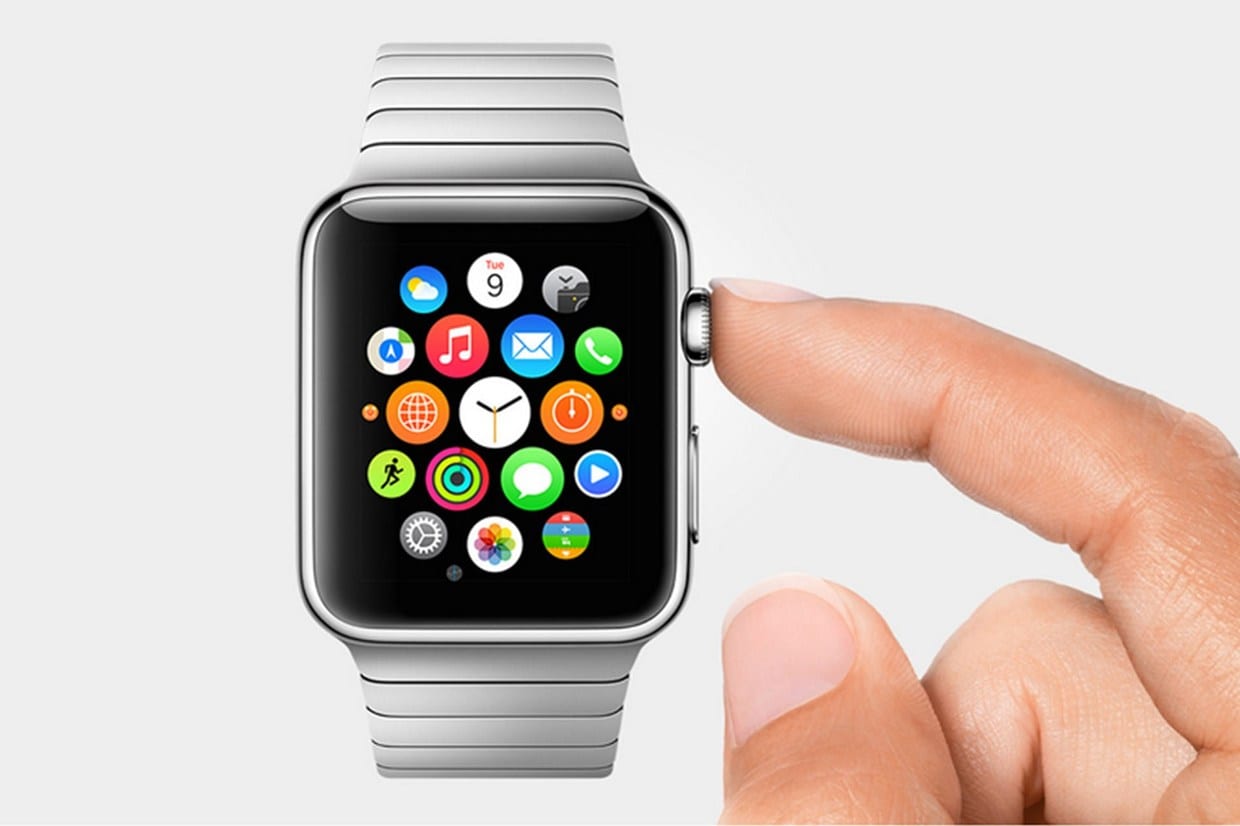
  • Apple Watch will soon help patients with Parkinson’s

    Apple Watch will soon help patients with Parkinson’s

    The Apple Watch might be one of the most popular wearables out there, and there’s no denying that it actually makes people’s lives better. You can say whatever you want about Apple and its gadgets but all the success stories surrounding the Apple Watch deserve some attention.

    Now there’s another potential use case for the wearable, as the FDA has granted approval for the Apple Watch to be used to monitor Parkinson’s patients. The approval has been granted to Rune Labs – a San Francisco-based health startup – to run a special software on the watch to track symptoms of Parkinson’s.

    The software in question can discern and track common symptoms of the disease such as tremors, involuntary or slow movement, rigidity and poor balance, etc. Apple added hard-fall detection software to its Watch Series 4 back in 2018, and subsequently released the software as a part of its open-source ResearchKit.

    This allowed developers to use the Movement Disorder API to create watchOS apps and solutions to track various diseases that manifest themselves with symptoms that involve movement abnormalities.

    Using wearables to track such disorders isn’t new but Rune Lab’s solution is the first designed for commercial applications. The idea is to track the patient’s condition over a certain period and give physicians and medical specialists access to this data.

    Of course, the app has its limitations but it is designed to serve as a supplement to the regular full-blown in-person medical exam. This isn’t the first Apple Watch feature to be cleared by the FDA – earlier this month the administration approved the watchOS’s AFib History feature, allowing people 22 and older to use the watch to monitor their heart condition.

  • Apple suppliers competing for workers in Vietnam

    Apple suppliers competing for workers in Vietnam

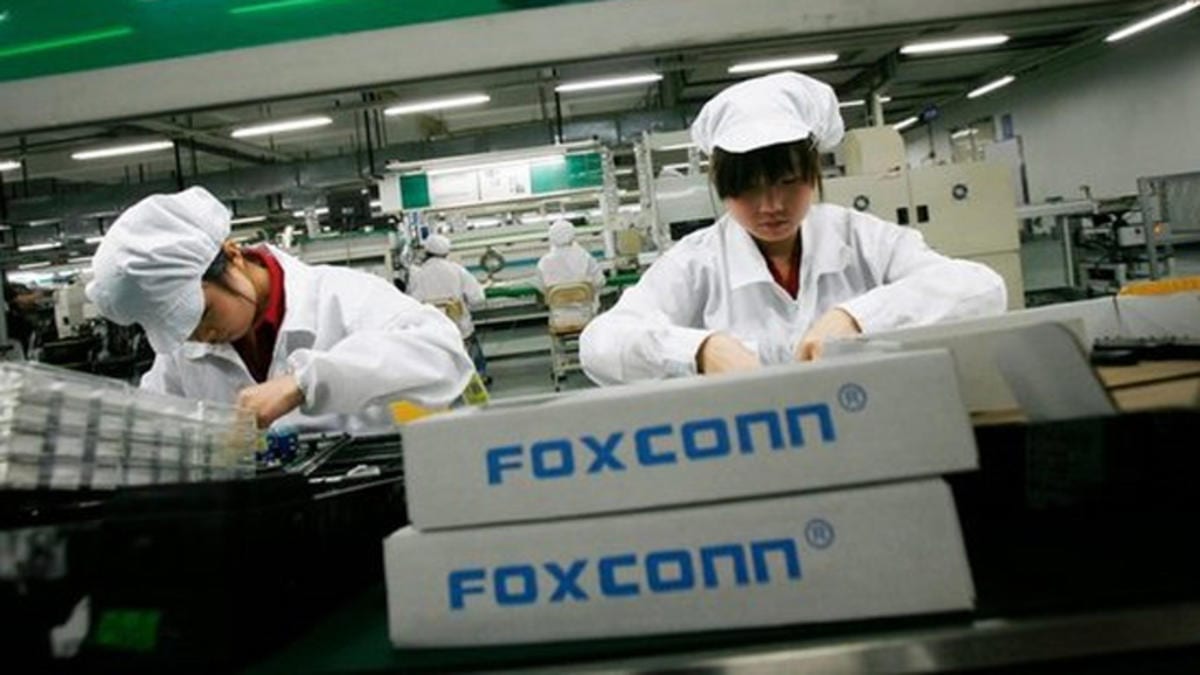
    Apple’s major Chinese suppliers are competing for Vietnamese workers as they seek to expand operations outside their country.

    Young Liu, chairman of Foxconn’s flagship unit Hon Hai Precision Industry Co., told reporters in Taipei Saturday that his firm’s Chinese competitors have set up operations near its facilities in Vietnam just to poach workers.

    “The move should not be condoned,” he said without naming any companies.

    In recent years Foxconn’s competitors like Luxshare, GoerTek and BYD have flocked to Vietnam to avoid U.S. tariffs.

    Foxconn employs around 60,000 workers in Vietnam, which is its largest manufacturing base outside China.

    Liu said Foxconn would “significantly” increase the numbers of employees in Vietnam over the next one to two years.

    Earlier reports said Apple would mass produce its iPads for the first time in Vietnam as part of efforts to diversify its supply chain and reduce dependence on China.

  • Apple Maps Have Now Improved Driving And Navigation Functions

    Apple Maps Have Now Improved Driving And Navigation Functions

    Apple Maps have also received small update at WWDC 2022. Apple announced that its mapping service will soon support multi-stop trips and users will be able to plan their route on the Mac version of the app and send it to their iPhone. Apple has also announced that the Maps app will get an updated look in a number of cities providing a 3D view.

    Apple revealed at WWDC that multi stop routing lets you plan up to 15 stops in advance. There is also Siri integration that makes it easy to add stops to the route when you’re already on the road.

    There are new public transit features as well in iOS 16. Now more than the fare, users will be able to add transit cards to the Apple Wallet. Users can also reload the transit card balance without leaving the Maps app.

    The redesigned maps app debuted first in 11 countries first in 2021. Now another 11 countries are being added which include France, Switzerland, New Zealand, but there is no India in the updated list.

    The redesigned 3D City feature offers more detailed roads, landmarks and other locations. Apple is adding Las Vegas, but is also adding Miami, Chicago and Sydney.

    Apple is offering an application programming interface which will allow third party apps to integrate its maps. Apple showed off how Zillow had integrated the new immersive view while browsing homes.

    Apart from this, Apple announced a major update for CarPlay which now supports multiple screen sizes and multiple screens going beyond the infotainment system adding support for the functions of the instrument cluster. Apple announced that cars by big automakers like Renault, Ford, Mercedes, Volvo and Honda will be launching vehicles based on this system later next year.

  • Data shows an iOS 15 adoption rate close to 90%

    Data shows an iOS 15 adoption rate close to 90%

    With Apple’s Worldwide Developers Conference (WWDC) set to kick off on Monday, we will soon get a look at what to expect from the newest builds of Apple’s operating systems such as iOS, iPadOS, watchOS, and the others. Speaking of iOS, 250 days after the release of iOS 15, we have the latest look at the operating system’s adoption rate from business analytical company Mixpanel.

    The data shows that close to 90% of those with an iPhone that supports iOS 15 have indeed installed the software on their handset. Over the last ten weeks, iOS 15 adoption has risen 10%. Keep in mind that Mixpanel gets the data it uses by keeping track of the number of visits made to apps and websites that use its analytical software development kit (SDK); thus the figures discussed are not official numbers computed or released by Apple.

    The latest official iOS 15 adoption numbers were released by Apple in January of this year and it showed that 72% of iPhone models launched over the previous four years were running iOS 15. At that time, 26% were running iOS 14 and 2% had an earlier OS build installed.
    When iOS 15 was first released on September 24th of last year, there were quite a few bugs including one that falsely told users that their storage was almost full. Some had issues with audio when iOS 15 was first launched. The bugs kept some iPhone users from updating their handsets to iOS 15. Eventually, many of these iPhone users did make the switch.
    Some of the new features found on iOS 15 include Focus which is designed to allow iOS users to focus on work and the task at hand without getting distracted by the phone. Live Text allows phone numbers printed on a business card or scribbled on a note to be recognized and a call to that number can be made. Similarly, Maps will be able to show you directions to an address found on a business card, written on a post-it note, or seen on a street sign.
    According to Bloomberg’s Mark Gurman, iOS 16 will feature new widgets that might allow users to customize them. There also will be new ways for users to interact with the operating system, possibly a refresh to the look of Apple’s own iOS apps,” and a new updated notifications system.
    WWDC starts Monday, June 6th, at 10 am PT (1 pm ET) and you can stream it on YouTube, view it via the Apple Developer app in the App Store, or watch it from the Apple.com website on your browser.
  • Apple to cut working hours for retail staff, Microsoft open to unionisation

    Apple to cut working hours for retail staff, Microsoft open to unionisation

    Apple has agreed to make work schedules at its retail stores more flexible, according to employees with knowledge of the plans, part of a push to improve conditions in the face of unionisation efforts.

    The company informed staff at some stores that scheduling changes will take effect in the coming months, according to the workers, who asked to not to be identified because the plans aren’t public.

    Some retail employees have voiced their frustrations with managers and labour groups about their schedules, and Apple’s retail chief recently signaled that changes could be coming.

    “I am deeply committed to making Apple the best it could be for you, from scheduling to pay and benefits to development to the experience and environment in the stores,” Deirdre O’Brien told staff in a recent video message.

    The company is planning the following changes, according to the employees: A minimum of 12 hours in between shifts, an increase from the current minimum of 10 hours.

    A maximum of three days per week when employees can work past 8 pm, unless they choose to work late shifts.