Tag: apple

  • Apple releases minor updates that could fix major iPhone and Apple Watch issues

    Apple releases minor updates that could fix major iPhone and Apple Watch issues

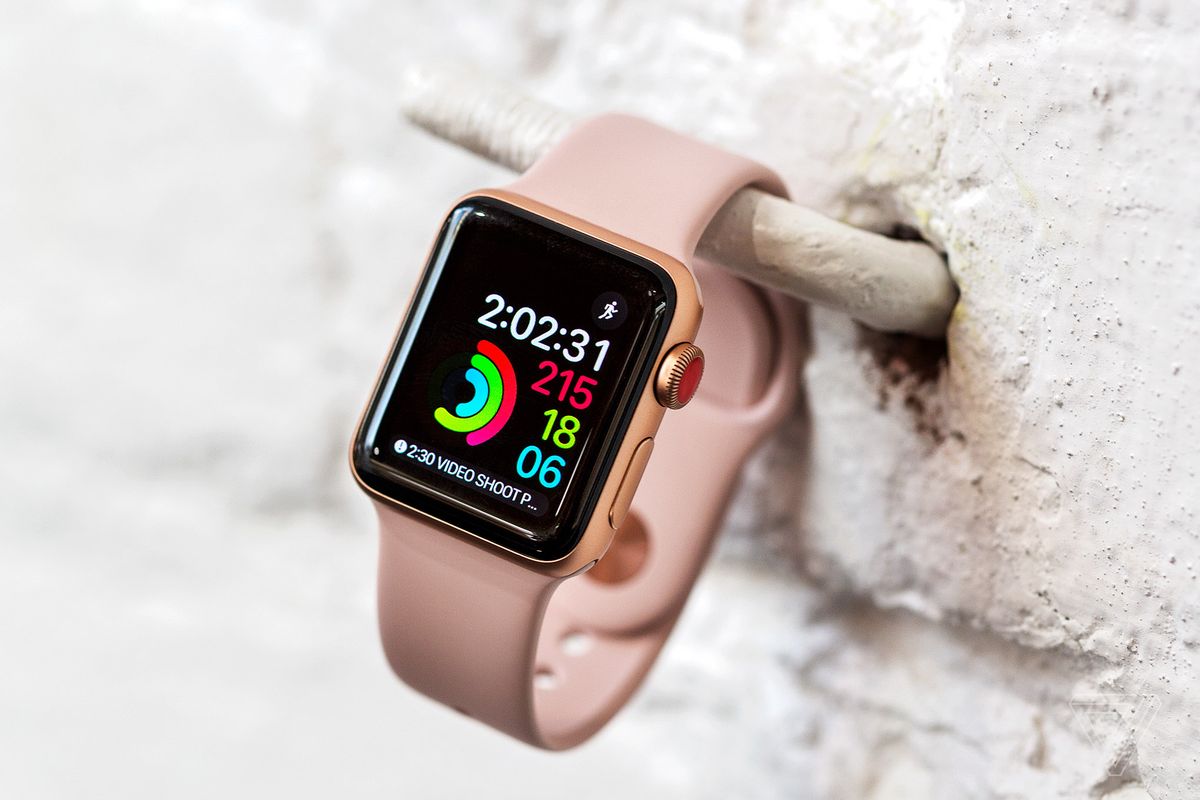
    Two weeks after updating iOS to 15.4, iPadOS to 15.4, watchOS to 8.5, and tvOS to 15.4, Apple dropped a minor update meant to exterminate bugs on the iPhone, iPad, the Apple Watch, and Apple TV. Right off the bat, we can think of some bugs that might be exterminated by these updates including one for the Apple Watch that broke fast charging on the Series 7 timepiece once watchOS 8.5 was installed.

    Apple iPhone users complained about the battery on their phones draining rapidly after iOS 15.4 was downloaded and installed. Naturally, we would expect Apple to fix this issue with a software update as fast as possible. Apple made some huge improvements to the battery life on the iPhone 13 Pro and iPhone 13 Pro Max, but the batteries went from hero to zero after iOS 15.4 was installed on these models. So once you have iOS 15.4.1 driving your iPhone, you might want to check to see if your battery life has returned to normal.

    Another problem that iOS 15.4.1 might repair is one that affects the quality of webcam images from Apple’s Studio Display. As many have noticed, the Studio Display runs a full version of iOS 15.4 which means that problems with Apple’s expensive display can be fixed with a software update. That certainly beats lugging the product on the subway and taking it back to the store to fix the hardware.

    With the updates, the build number for iOS and iPadOS moves from 19E241 to 19E258. The build for watchOS goes from 19T242 to 19T252, and with tvOS, the OS build goes to 19L452 from 19L440.

    To update your iPhone or iPad go to Settings > General >Software Update. To update the Apple Watch, open the Watch app and go to Settings > General > Software Update. Most updates will automatically be taken care of overnight which is when typical Apple Watch users have their timepieces on the charger.

    To install tvOS on Apple TV, follow these directions:

    • Click on the Settings app from your Apple TV Home screen.
    • Click on System.
    • Click on Software Update.
    • Click on Update Software.
    • Click on Download and Install.
    • Click on Update Now.
    • Wait for your Apple TV to finish the update.

    Hopefully, the major issues affecting the iPhone and the Apple Watch are now a thing of the past. Let us know by dropping your comments in the box below.
  • Apple’s new iOS 15 privacy features have advertisers on edge

    Apple’s new iOS 15 privacy features have advertisers on edge

    After Apple created chaos in the advertising industry last year with the App Tracking Transparency (ATT) feature, experts in the field are concerned that Apple will continue offering more privacy features and put a larger crimp into the business of selling products to consumers who depend heavily on their mobile devices.

    Two recent features that advertisers are concerned about are Private Relay and Hide My Email, both released in iOS 15. The latter allows you to create a random email address that will automatically forward emails to your personal inbox. You can read and reply to those emails but your personal email address will be hidden by the randomly created address.

    Apple points out that it doesn’t read any of the content in emails that go through Hide My Email except to filter out spam. Apple says that it needs to do this to “maintain our status as a trusted email provider.” All email messages going through the Hide My Email platform are deleted from Apple’s relay servers after they are delivered to you, a process that usually takes only seconds.

    Hide My Email tricks advertisers who normally collect your email address from online forms you’ve filled out and then send spam to that address. However, with Hide My Email, the marketers no longer have access to your real email address.

    To enable Hide My Email, go to Settings > Tap your name at the top of the screen. From the new screen, go to iCloud > Hide My Email. From there, go to Create New Address. A random address that ends with @iCloud.com will be created which will forward to your personal inbox. If you’re not happy with the random address, you can press the button that says  “Use Different Address to see a new one.” If you’re happy with the address, tap on “Continue.”

    The next screen will allow you to create a note next to the new address so that you can remember what you used it for. Hit “Next” in the upper right corner and it’s all over; you’ve created your fake email address. To delete it, go to Settings > iCloud > Hide My Email to see a list of your randomly generated email addresses and where mail to that address is getting forwarded to.

    To delete any of those addresses, tap on Deactivate Email Address at the bottom of the screen. A pop-up screen will ask you to confirm which address you want to 86, Tap on it and press the “Deactivate” button. That’s it.

    What we should tell you is that for you to sign up for Hide My Email, you must subscribe to a premium iCloud tier of service. This doesn’t have to put you in the poorhouse as 50GB of additional cloud storage is only 99 cents a month. 200GB of iCloud storage is $2.99 per month, and a whopping 2TB of iCloud storage will cost you $9.99 monthly.

    Another feature scaring Ad executives is Private Relay which also requires an iCloud subscription. It acts like a VPN blocking your IP address while encrypting traffic on the web. To turn it on, go to Settings > Tap your name at the top of the screen > iCloud > Private Relay.

    Private Relay blocks workarounds developed by companies to get around ATT and Hide My Email prevents online marketing firms from knowing the real email addresses of their customers preventing them from being targeted for follow-up purchases. Both features are devastating to marketers who have been using IP addresses (blocked by Private Relay) and email addresses (hidden by Hide My Email) to workaround App Tracking Transparency.

    Grant Simmons, a vice president at ad performance tracking firm Kochava, says of Apple’s continued war against third-party marketers, “It’s got the industry holding their collective breath.”

  • New Apple patents hint at a better pressure sensor technology

    New Apple patents hint at a better pressure sensor technology

    Force Touch, also called 3D Touch, was a technology that Apple used for some years but then suddenly replaced with Haptic Touch. With 3D Touch, iPhone users had the ability to access more menus by simply applying different pressures to their iPhone display.

    Although it’s a tiny possibility, it appears that Apple might again introduce a newer and improved version of its previous 3D Touch technology. The US Patent & Trademark Office published a few new patents from Apple for various future Apple devices, and all of them are for new force-pressure sensors.

    One of these patents is for force-pressure sensors built into the Apple Watch and small form factor devices such as the AirPods. According to the patent,  Apple’s new pressure-sensitive surface would utilize microelectromechanical fluid pressure sensors. These sensors would be smaller, have better force sensitivity, and be more durable than conventional pressure sensors.

    To get a better idea of how the new pressure sensor technology could be implemented into the Apple Watch, Apple has shown in its patent a picture of an Apple Watch with a pressure-sensitive side instead of a physical button.

    Another Apple patent shows how Apple’s new pressure sensor technology could be utilized in Apple Watch bands, creating so-called smart bands. Thanks to the new technology, these smart bands would be able to detect blood pressure, heart rate, and pulse wave velocity.

    Apple’s patents show that Apple’s new sensor tech could be utilized in the iPhone. The image below, for example, shows how Apple could put multiple small pressure sensor modules in the iPhone instead of a single component.

    Now, it should be noted that companies often patent technologies that they never implement into real consumer products. But if Apple decides to use this new pressure sensor technology, it could mean that we may just receive 3D Touch 2.0 in some future iPhone generation.

  • EU wants to force iMessage and WhatsApp to be able to chat with smaller chat apps

    EU wants to force iMessage and WhatsApp to be able to chat with smaller chat apps

    In the last couple of years, lawmakers, especially in the European Union, have been scrutinizing big tech companies. The latest proposal this time is related to instant messaging apps like iMessage, WhatsApp, and Facebook Messenger. The EU wants to make those apps forced to send and receive messages, calls, videos, and files from smaller chat apps.

    As you can see, this is a part of the European Union’s attempts to give space to competition in the tech world, as the EU Parliament has several antitrust proposals going on right now that address this issue. This rule is actually a part of a larger proposal for legislation that is called the Digital Markets Act (DMA) that we’ve reported on previously.

    Interestingly enough, the DMA wants major messaging platforms (like the ones we listed above) to allow their services to work with smaller messaging platforms – pretty much like Google Messages and iMessage can receive and send texts between Android and iPhone users.

    This rule, if the DMA gets accepted and turned into law, would apply to any company that sports at least 45 million monthly active users, and 10,000 annually active corporate users. Of course, this is only going to apply in Europe.

    And, when we’re talking about legislation, it’s also key to address what happens to companies that choose not to comply with it (if it becomes law). Pretty much, companies like Apple and Meta, among other tech giants, could be fined up to 10% of their global annual turnover if they fail to comply. If they continue to not comply, the fine can get up to a staggering 20% for repeated violations.

    Okay, that’s all fine but you may be asking yourself how can an interoperable platform like that address the issue of security. Well, the European Union thinks that this can be done safely, at least so does Andreas Schwab, the European Parliament’s Rapporteur for the file believes.

    He stated that the Parliament had always envisioned interoperability for messaging. He adds that if the Telecoms Regulators say that it is not possible to deliver end-to-end encrypted group chats within a certain time frame, it will come as soon as it becomes possible. Basically, the EU is willing to wait until end-to-end encryption is put in place to ensure the security of different messaging apps when they exchange messages, photos, videos, and files.

    But, as many of you may know, the DMA is not only about messaging. It would also force platforms to give users choice in terms of web browsers, search engines, and even virtual assistants that they use on their devices.

    So far, the DMA has not been made final yet. However, it is progressing to becoming law. The act is now awaiting approval for the legal text by the European Parliament and Council, and so far, there is no concrete timeline for when the messaging changes we mentioned above would occur.

    In 2020, the EU Parliament invited tech giants such as Apple and Google to participate in talks about the Digital Markets Act.

    All in all, the DMA aims to fight against anti-competitive practices that limit innovation and aims to give smaller developers more chances in competing with the big boys. Another thing that the legislation suggests is for Apple to allow alternate app stores on iPhones and iPads, again, for the sake of fair competition.

    Recently, there were expectations that the DMA will make it into reality by the end of March. We might be seeing what will happen and if the proposal will become law pretty soon.

  • Apple’s plan to allow alternative payment platforms for Dutch dating apps is reportedly rejected

    Apple’s plan to allow alternative payment platforms for Dutch dating apps is reportedly rejected

    Apple could be fined this coming week by the Netherlands’ ACM (Authority for Consumers and Markets) for continuing to take a cut of 15% to 30% of in-app payments for dating apps in the country that are downloaded from Apple’s App Store. Apple does not allow developers to offer alternative payment platforms for their apps and any developer that does faces expulsion, along with their related apps, from the App Store.

    By failing to fully comply with the ACM, Apple currently owes over 45 million euros ($49 million) in penalties. The watchdog agency has charged Apple 5 million euros weekly since January for continuing to block alternative payment platforms for dating apps from the App Store. This past week was the ninth that saw Apple fined for failing to follow the order and once the amount Apple owes reaches 50 million euros, subsequent fines could be higher.

    Reuters reports that Apple submitted a new proposal to the ACM last week hoping to get the weekly fines halted. However, an unnamed official at the ACM told the news agency that Apple’s proposal does not comply with its order. Earlier this month Apple told the agency that it was following the agency’s request by telling developers of Dutch dating apps that they could provide users with a third-party in-app payment platform.

    However, Apple wants the developers to essentially create a separate app for the Dutch App Store and another for the App Stores used in other countries. Apple felt that this request was fair and would make sure “that Apple complies with its legal obligations in the Netherlands while at the same time having the ability to maintain its standard terms and conditions in the rest of the world.”

    The ACM begged to differ responding that Apple’s plan created an unnecessary barrier. Back in 2019, the watchdog agency started an investigation to determine whether Apple was abusing its dominant market position. That investigation was later reduced in scope to cover dating apps only, including Tinder.

    Apple, according to the agency, abuses its domination of the market and has been ordered to revise its ban on third-party App Store payment platforms. Apple says that it does not abuse its position in the marketplace.

    Last week we told you that if the Digital Markets Act (DMA) becomes law in the EU, Apple may be forced to allow iPhone users to sideload apps from third-party app stores which is a practice it currently does not allow anywhere due to security concerns.

    If the DMA does become law in the EU, Apple will also have to allow alternative payment platforms to collect in-app payments in the App Stores found in member countries. EU’s antitrust chief, Margrethe Vestager says that the Act could become law as soon as this coming October, or it could take until 2023 to pass.

    Apple is also caught up in Epic’s appeal of the aforementioned court case that saw Judge Yvonne Gonzalez Rogers release a 185-page decision that said Apple is not a monopoly, and that the company cannot be punished for being successful. The judge did order an injunction that prevents Apple from blocking the use of third-party app payment platforms, but the tech giant won a last second stay blocking that injunction from the Ninth U.S. Circuit Court of Appeals.

    So for now, at least in the U.S., Apple can continue to block alternative app payment platforms from entering the walled garden. In other regions of the world, Apple might have to make some changes.

  • Ads on Facebook are starting to recover from Apple’s App Tracking Transparency effect

    Ads on Facebook are starting to recover from Apple’s App Tracking Transparency effect

    Recently, Facebook has been struggling with its market share as it predicted a $10 billion loss in revenue due to Apple’s App Tracking Transparency. However, the company might be starting to recover its ad revenue.

    For those of you who don’t know, with iOS 14.5, Apple introduced a feature dubbed App Tracking Transparency (ATT), which allowed iPhone and iPad users to opt-out of tracking of their activity for targeted ads. Before this change, apps could track you across websites in order to offer you relevant ads, but Apple’s feature prevented that. And, as you can imagine, a vast majority of iOS users decided they didn’t want to be tracked.

    Facebook was among the companies that vocally disagreed with ATT, accusing Apple of harming small businesses with the move. And, as we could see later, Facebook ended up suffering quite a lot from ATT, and its ad revenue dropped significantly.

    As nothing is without consequence in this world, Facebook’s share value then plummeted because investors started selling their Facebook stock.

    However, things seem to be starting to improve, at least according to some small businesses owners on Facebook or Instagram. Many small businesses are claiming that their ads are performing better than usual. The reason for this change is… surprise, surprise – unknown at the moment.

    Earlier, Meta stated that it is working on adapting its advertisement systems to the new situation, so they can maximize the performance of ads. At the same time, many advertisers are reportedly still skeptical, but Meta seems to be working hard to maintain the improvement.

  • Apple services were down, some have been restored

    Apple services were down, some have been restored

    Bloomberg reports that Apple services outage was caused by domain name system (DNS) issues. These usually are caused by human errors and happen when a server is unable to connect to an internet protocol address.

    The problem unsurprisingly didn’t just impact at-home consumers, but also those who work from home and retail workers. As noted by the outlet, such massive outages are rare for Apple. Amazon, Google, and some wireless carriers also faced similar issues around the same time, but not of this magnitude.

    Update (1): All the services are now back up. It appears that the problem lasted more than 3 hours and it’s not known what led to it.

    The original story continues below:

    If you are having a problem accessing Apple services, it’s not just you, as many of the Cupertino giant’s services, including iCloud are down currently. A quick look at Apple’s System Status page shows multiple services, including App Store, Apple Arcade, Apple Fitness+, and Podcasts are experiencing outages.

    Apple is actively working to resolve the issues, and a number of services that were previously affected have been restored. These include, but are not limited to, Device Enrollment Program, Find My, iCloud Account & Sign In, and most Maps-related functions.

    Per site status tracking platform Downdetector, over 4,000 users have reported problems with Apple Music so far, and around 4,000 said they faced problems with iCloud.

  • Apple India partner plans 75 new stores

    Apple India partner plans 75 new stores

    Apple premium reseller Unicorn Infosolutions is planning to set up 75 stores in the next three years, a senior company official said on Friday.

    Unicorn Infosolutions director Baljinder Paul Singh said the company is planning to open stores in north and west India, and if iPhone maker Apple recommends then stores will be opened in the southern and eastern region of the country as well.

    “Apple is growing. There is a great aspiration to buy Apple products in the country. We planned flagships two years back. It is just one after the other three flagships have been opened in the last one year. Today we are at 33 stores, then there is a horizon of bold ambition to get to 75 stores in the next 3 years,” Singh said.

    He was speaking at an event to launch the Apple Premium Reseller flagship store for Apple products at CyberHub in Gurugram.

    “This is our first flagship store in the city. Our customers will get to experience a wide range of Apple’s latest products and services and receive technical support from experts,” Singh said.

  • Apple brings its streaming service to Comcast devices in the US

    Apple brings its streaming service to Comcast devices in the US

    The partnership between Apple and Comcast enters a new era, as the Cupertino-based giant is bringing its streaming service to Comcast’s customers. In a joint statement earlier this week, the companies revealed that Apple TV+ will be available Comcast’s various platforms in the US.

    Starting this week, Apple TV+ will be available on Xfinity X1, Xfinity Flex, and XClass TV, but all eligible devices will be getting the streaming service in the coming days. The move follows Apple TV+’s launch on Sky devices like Sky Q and Sky Glass in the UK and Europe back in December.

    Furthermore, Comcast announced that between March 15 and March 21, its customers will benefit from a special offer, as Apple will provide Xfinity users with a preview of some of its most popular Apple TV+ original series and films across X1, Flex and Stream, no sign-up or sign-in required.

    Additionally, Xfinity customers will be able to watch the first seasons of many of Apple TV+’s popular shows, as well as the Apple Original film “Greyhound.”

    It’s worth noting that Xfinity customers who aren’t Apple TV+ subscribers are eligible for a three-month free trial of Apple TV+ when they sign-up via their Xfinity device by April 25.

    The newly added Apple TV+ service can be accessed by Xfinity customers by saying “Apple TV+” into the voice remote or by saying the name of a desired title from the streaming service.

  • The next Apple event is set for March 8, and the first 5G iPhone SE is expected

    The next Apple event is set for March 8, and the first 5G iPhone SE is expected

    It’s finally happening, ladies and gents, and although invitations didn’t go out quite as early as some may have expected, the next Apple event is indeed taking place when Bloomberg’s Mark Gurman predicted it would almost a month ago.

    If you like affordable iPhones and mid-sized iPads with non-Pro specifications, you might want to circle March 8 in your calendars… or simply bookmark and set a reminder for the YouTube live stream embedded below.

    Naturally, this (not so) mysterious “special Apple Event” will be broadcast in real-time starting at 10 a.m. PST next Tuesday, allowing the entire world to tune in and check out the first live demonstrations of the 5G-enabled iPhone SE 3 and fifth-gen iPad Air.

    If you’re the least bit familiar with how the Cupertino-based tech giant operates ahead of these shindigs, you won’t be shocked to hear that those two devices haven’t been confirmed, teased at, or alluded to in any official capacity yet.

    You should also not expect any revealing or exciting buzz-building material between today and March 8. Then again, there’s certainly plenty of (unofficial) buzz surrounding the iPhone SE (2022) anyway. This has been long and widely expected to add 5G speeds to an already hugely popular budget-friendly equation including a lot of raw power and a terribly outdated design.

    Unfortunately, that latter part is pretty much etched in stone after the latest reports from a number of trustworthy sources, insiders, and publications no matter how badly you want to believe in the accuracy of those sketchy renders leaked back in January.

    Instead of going down the notch path this year, it looks like Apple will opt to keep the iPhone 8 memory alive with yet another set of massive bezels surrounding a tiny (by 2022 standards) 4.7-inch screen. The good news is that might allow the company to also keep the $399 base price unchanged despite the aforementioned 5G upgrade and a predictable but more than welcome bump from A13 Bionic to A15 Bionic “peek performance.”

    Curiously enough, Apple’s next big tablet has yet to show its face (or rear, or sides) in any renders or prematurely revealed real-life photographs. That can only mean one thing, and it’s actually the thing that also explains the absence of (legit) visual iPhone SE 3 leaks.

    That’s right, we fully expect the iPad Air (2022) to look virtually identical to its 2020 predecessor on the outside while hiding a hot new Apple A15 Bionic chip and (optional) 5G modem under its undoubtedly premium aluminum hood.

    Obviously, the 5G-capable fifth-gen iPad Air won’t come cheap, as suggested by the $649 and up iPad mini (2021) with next-gen cellular connectivity on deck. That thing is 150 bucks costlier than its entry-level Wi-Fi-only counterpart, which probably means the first-ever 5G iPad Air will also start at $150 more than a non-cellular-enabled variant likely to fetch around $600.

    At $750 or so, the 5G iPad Air 5 would be just 50 bucks pricier than a Wi-Fi-only Galaxy Tab S8, which sounds like a battle Samsung can never in a million years win. Of course, the 10.9-inch iPad Air (2022) is likely to start at 64 rather than 128 gigs of internal storage space, with no microSD card slot in tow… or complimentary stylus.

    Like the sixth-gen 8.3-inch iPad mini, this bad boy could rock a 12MP front-facing camera with Center Stage functionality, and like its 10.9-inch forerunner, the fifth-gen iPad Air will probably rely on a top-mounted fingerprint scanner for biometric recognition instead of joining the iPad Pro (2021) duo in the hip Face ID club.

  • Apple VR headset may come with Micro LED display, M1 chip

    Apple VR headset may come with Micro LED display, M1 chip

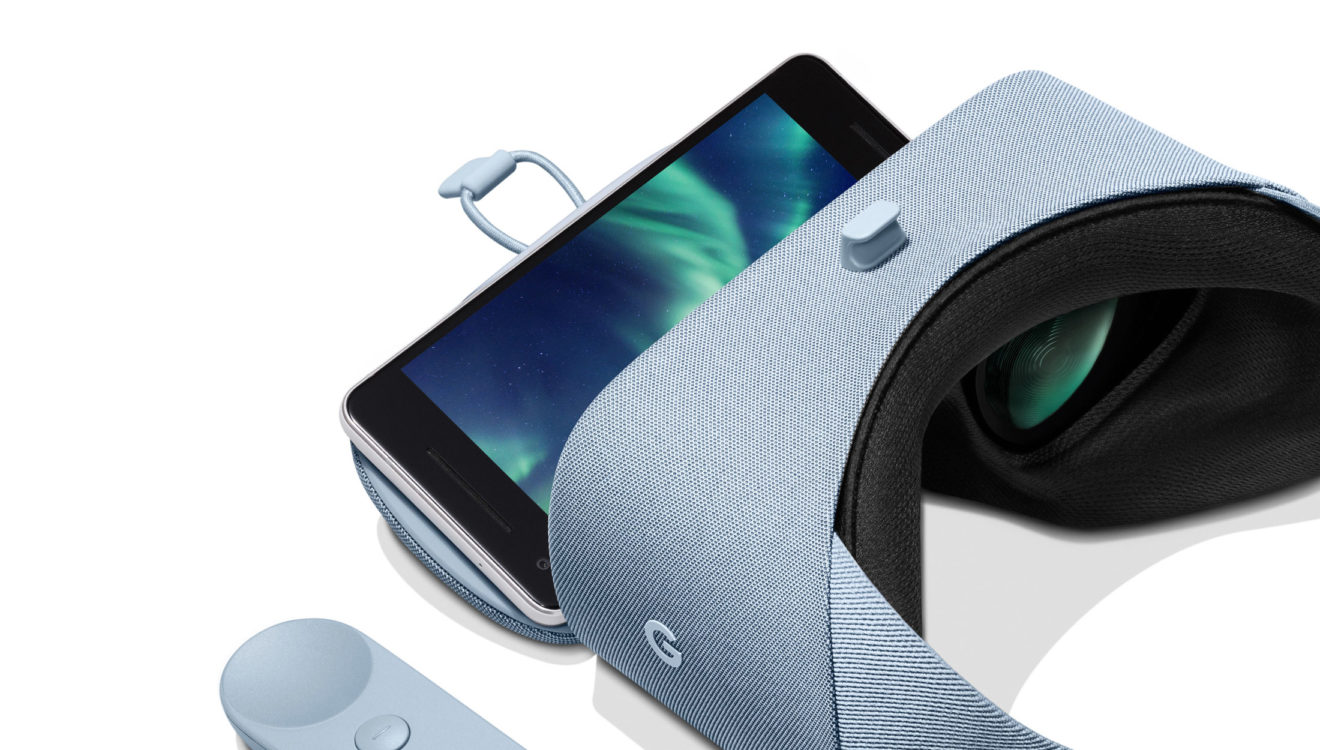
    Apple’s VR headset’s due date at the end of the year is inching ever closer, and the rumors surrounding the new device have been flowing in at a faster rate than usual. A mysterious new tip has made its way to us today, supposedly revealing details about the headset’s display and processing chip.

    The leak comes from Korean tech site ET News, and claims it has insider info that Apple is developing a Micro OLED chip for the device with TSMC:

    The parts industry expects Apple to release virtual reality (VR) headset terminal for the metaverse market as early as this year. It was understood that the performance test for VR headset production has been recently completed. Apple VR devices are equipped with micro-organic light-emitting diode (OLED) displays.

    Apple cooperated with Taiwan’s TSMC with developing OLED displays for VR devices. Micro OLED displays do not require color filters since OLEDs are deposited directly on the chip wafer. Micro OLED is smaller, thinner, and more efficient.

    The same article also states that Apple is equipping the VR headset with an M1 chip, which also powers Apple’s latest iPads and MacBooks.

    Although the ET News leak has made its way into the tech mainstream media, it wouldn’t be too fast to put much stock in it. It further claims that Apple will be using the iPhone’s iOS operating system for the headset, despite an earlier fairly credible GitHub code leak showing clear references to a separate “Reality OS” operating system that the company is developing.

    The M1 chipset claim is slightly more credible, as we know that the device has already been tested with the processor Apple designed to replace Intel components on certain Mac models. In power, the M1 processor is comparable to the 5nm-node A14 Bionic chip that powers the iPhone 12 series but is complete with all of 16 billion transistors for maximum compact power and efficiency.

  • The Apple Glasses AR/VR headset completes engineering tests for a possible 2022 launch

    The Apple Glasses AR/VR headset completes engineering tests for a possible 2022 launch

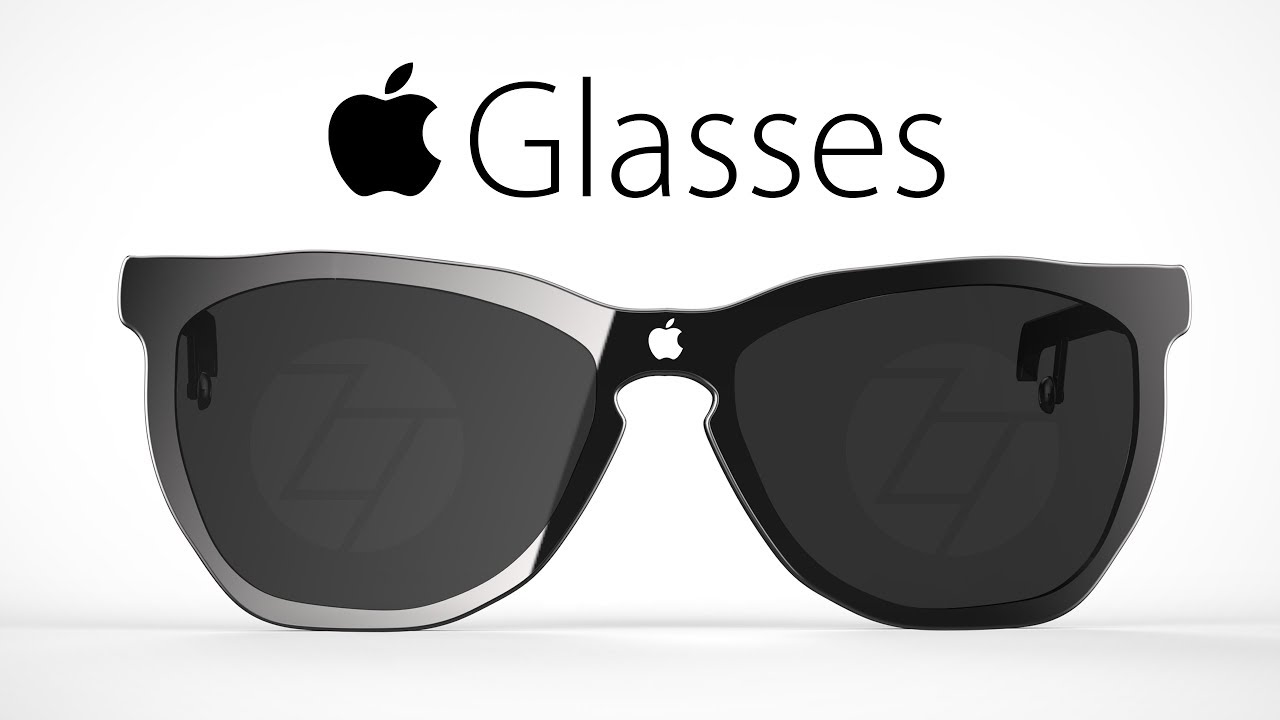
    According to sources from the Taiwanese supply chain, Apple has already finished the last of the Engineering Validation Tests (EVT2) of its future Glass AR headset that is expected to be launched this year.

    Next in line for the upcoming virtual reality wearable with a fruit logo is reportedly the design validation test (DVT) stage which, if passed successfully, could mean an Apple Glasses release in 2022, despite that recently Mark Gurman, a Bloomberg analyst, predicted that the headgear won’t be landing before 2023 rolls in.

    With Apple Glasses price rumored to be around $3000 for a set of two 8K resolution displays and the necessary Apple Silicon chips needed to process all the visual information in a standalone manner that doesn’t need to be hooked up to a computer.

    Industry insiders out of Korea have tipped that LG Innotek, the company that supplied the cameras for LG’s Android handsets of yesteryear, will be supplying the 3D time of flight (ToF) module that Apple plans to use for their virtual reality headset.

    According to another storied Apple analyst, Ming-Chi Kuo, the Apple Glasses headset specs will include Wi-Fi 6E connectivity in order to provide the huge bandwidth needed to stream all these bits and bytes it will be generating.

    That’s also not hard to believe, given that there already exists virtual reality gear with Wi-Fi 6 connectivity out there, in the form of Facebook’s Oculus Quest, which allows it to stream at up to 120Hz refresh rates.

    Mr Kuo also claims that three major companies – Apple, Meta, and Sony – will have high-end mixed reality headgear with Wi-Fi 6/6E chips inside, perhaps having in mind the PlayStation VR2 model that is expected to land this year as well.

    If the tentatively named Apple Glasses mixed reality headset is released in 2022, it may have to battle against Facebook (aka Meta)’s own such gear that is rumored to be launched this year as well. The Apple headset will also be “pricey,” according to Bloomberg’s Mark Gurman in his PowerOn Apple-themed newsletter edition, and that price is said to be in the realm of $2999.

    Still, Apple has been talking about the possibilities that mixed reality offers for so long ago, adapting its products and programming SDK packages for a major AR/VR push, that a dedicated augmented reality headset could very well be a gamechanger for the industry, if and when it falls down from that rumored $3000 Apple Glasses price tag.

  • Apple wins lawsuit оver copyright infringement on multiracial emojis

    Apple wins lawsuit оver copyright infringement on multiracial emojis

    It’s safe to say that Apple can now put another lawsuit win under its belt. The Cupertino company just won a copyright lawsuit launched by Cub Club Investment (CCI), the developer of the iDiversicons app, which enables you to use racially diverse emojis. CCI accused Apple of copying its app idea and emojis and infringing on its intellectual property rights.

    Before making his decision, Vince Chhabria, the lawsuit judge, compared Apple’s emojis with CCI’s emojis and concluded that, overall, the emojis weren’t similar enough for Apple to infringe. Chhabria also stated, “Copyright law does not forbid all copying. To survive a motion to dismiss, a plaintiff must allege that the defendant copied enough of the protected expression … to establish unlawful appropriation.”

    According to Vince Chhabria, CCI didn’t manage to prove that Apple had infringed on anything that was under copyright protection; therefore, Apple had only copied CCI’s idea, and ideas are not subject to copyright law.

    In the document about his decision, Chhabria said, “There aren’t many ways that someone could implement this idea. After all, there are only so many ways to draw a thumbs up.” In this regard, Chhabria stated that CCI’s emojis are ‘entitled to only thin copyright protection against virtually identical copying.’

    In the lawsuit document, Cub Club shared that the iDiversicons app was founded in 2013 by CCI CEO Katrina Parrott. According to Parrott, the app was the first in the world to offer emojis with diverse skin tones. CCI also said that in 2014, Parrott discussed a possible partnership with Apple, but Apple declined the partnership and instead created its own diverse skin-tone emojis.

  • Apple Arcade’s latest games are ridiculously fun and charming

    Apple Arcade’s latest games are ridiculously fun and charming

    If you’re using an iPhone or iPad and like to play games, Apple Arcade is the best bang for your buck. For just $5 per month, you get a collection of carefully curated games that have no ads or in-game purchase, so you can experience the full content without having to worry about hidden costs or MTX (micro-transactions).

    Apple Arcade adds new games every month, and many of the games already available for subscribers are getting updated with new content all the time. Although this is a very busy month for gamers, as many highly-anticipated titles have been set to release in February (Dying Light 2, Sifu, Lost Ark, Horizon Forbidden West, Total War: Warhammer 3, Elden Ring), there’s always time to fit a short gameplay session on your favorite iPhone or iPad.

    Four new games are joining Apple Arcade’s library in February, and while I’ve played a few of them, knowing how good the curation process is, I can’t not recommend all of them. But let’s start with the first game that joined Apple Arcade on February 4, Bridge Constructor+.

    A physics-based simulation-puzzle game initially launched on PC more than 10 years ago, Bridge Constructor+ is the dream of any wannabe engineer. Jokes aside, Bridge Constructor is quite faithful to the engineering and architecture of bridges, so you’ll be able to express your ingenuity designing and creating complex bridges for cars and trucks to cross over.

    On the plus side, the iOS version of the game includes all of the content, updates and DLC already released on PC, without any in-app purchases. The folks at Headup also revealed that their game has “several different settings and over 100 levels to master the art of bridge-building by using different materials and constructions to make sure they won’t buckle and break under the weight of ongoing traffic.”

    Moving on to the second game coming to Apple Arcade on February 18, Wylde Flowers is a non-combat game inspired by The Sims and FarmVille, but with a “witchy twist.” That’s no surprise at all considering that Studio Drydock, a new development team HQ-ed in Australia, was founded by two industry veterans with a combined 20-year previous experience at EA working on titles like The Sims.

    The best way to describe Wylde Flowers is “cozy life and farming sim,” so if you like to grind a little bit before going to sleep or while commuting, this seems like the perfect game. Wylde Flowers promises a charming world of diverse folks and magical spells, which set the stage for the game’s big mystery.

    Although during the day you’ll be tending crops, care for animals, fish, craft, and perform other farm-related activities, by night, you’ll be nurturing your inner witch as you learn to fly your broomstick, brew potions, control the weather and seasons or even transform into a cat. This sounds like an interesting twist from the typical FarmVille game, yet I can’t shake the feeling that the game should have been called Farming Adventures of Sabrina.

  • Bug allowed some iPhone users to have Siri interactions shared with Apple despite opting out

    Bug allowed some iPhone users to have Siri interactions shared with Apple despite opting out

    Back in the summer of 2019, both Amazon, Google, and Apple were hit with charges claiming that their Alexa, Google Assistant, and Siri digital assistants were recording personal conversations and having them transcribed by third-party firms. All three companies admitted that these recordings were being made to improve the performance of the digital assistants. In Siri’s case, some of the recordings collected by Apple included couples having sex, or speaking frankly with their Doctors about private medical problems.

    At the time, both Amazon and Google allowed users to opt-out while Apple didn’t. But these days, customers of all three firms can opt-out of having their convos used to help train Alexa, Google Assistant, or Siri.

    However, the release of iOS 15 beta 2 fixes a bug that ZDNet says might have been used to record some iPhone users’ interactions with Siri. Once you update your iPhone to iOS 15.4 (it’s still currently in beta), you will be asked if you want to help improve Siri and dictation by allowing Apple to review recordings of your interactions with the digital assistant. Opting out would prevent your voice interactions with Siri and the iPhone’s voice-dictation feature from being recorded and sent to Apple.

    But as it turns out, a bug found in iOS 15 enabled the feature even for those who opted out. So while you might have thought that your flirting with Siri was between you and the digital assistant, Apple was still able to listen to some users’ private or even X-rated conversations.

    In iOS 15.2, after Apple discovered the bug, it disabled the setting that allowed Apple to make these recordings and also got rid of the bug that automatically allowed the recordings to be made even when the user opted out. Commenting on the situation, Apple said, “With iOS 15.2, we turned off the Improve Siri & Dictation setting for many Siri users while we fixed a bug introduced with iOS 15.”

    Apple added, “This bug inadvertently enabled the setting for a small portion of devices. Since identifying the bug, we stopped reviewing and are deleting audio received from all affected devices.”

    When stories about Apple keeping recordings of customers’ interactions with Siri first made the rounds over two years ago, Apple said less than 1% of Siri activations were passed along to third-party contractors whose job it was to determine whether the assistant was activated by the user, or was accidentally summoned. Siri was also graded on whether it responded appropriately to the user’s query.

    The initial reports cited information from a whistleblower who worked for one of the contractors hired by Apple. The source said that Siri would sometimes mistakenly activate because the assistant would think that the “Hey Siri” wake word was said when in reality it was not. In a bizarre admission, the whistleblower said that the sound of a zipper would sometimes activate Siri.

    The anonymous whistleblower pointed out that most false Siri activations came from the Apple Watch and the HomePod smart speaker. He also left a quote that gives us a good idea about some of the content that the contractors were listening to while trying to grade Siri.

    “The regularity of accidental triggers on the watch is incredibly high. The watch can record some snippets that will be 30 seconds – not that long but you can gather a good idea of what’s going on…you can definitely hear a doctor and patient, talking about the medical history of the patient,” said the whistleblower.

    “Or you’d hear someone, maybe with car engine background noise – you can’t say definitely, but it’s a drug deal … you can definitely hear it happening. And you’d hear, like, people engaging in sexual acts that are accidentally recorded on the pod or the watch.”

    Hopefully, with the bug squashed in iOS 15.2, when iOS 15.4 comes along and you’re asked whether to opt in or opt out of the program to improve Siri (using your personal conversations), your toggle switch remains on disabled if that is indeed the option you choose.