Retail News CRM

Tag: ar

  • Bonjour to embrace digital technologies, live streaming used to battle profits

    Bonjour to embrace digital technologies, live streaming used to battle profits

    Bonjour, the Hong Kong-headquartered beauty retailer, says it plans to reduce its reliance on brick-and-mortar stores and focus on developing e-commerce and in-store digitalization.

    It will modify some of its existing stores adding technology that it anticipates will attract and engage customers and create a better shopping experience while also improving operational efficiency.

    The plans were revealed by the chairman and executive director Chen Jianwen along with the company’s results for the half-year to June 30, which included a loss attributable to shareholders of US$17.93 million on sales down 59.7 percent to $42.93 million. The decline was due to the borders being all but closed to foreigners due to the Covid-19 pandemic, including the ranks of mainlanders who traditionally head to the territory for shopping.

    Chen said the company has responded to the absence of tourist spending by diversifying its product portfolio to appeal more to local consumers.

    But the main focus moving forward is on transforming from a traditional retail model to New Retail, he said.

    “Digitalisation of the operating system and business model will help the group to better understand customers’ needs and wants and build a long-term relationship with the customers. Starting with training our frontline staff to broadcast product information online, the group will grasp the market opportunity and further develop the e-commerce platforms.”

    Already, frontline Bonjour staff are being trained in live-streaming skills to become influencers and interact with customers online.

    “At the same time, the group has also established its foothold at major online platforms spanning across 16 countries, including ShopShops, Tmall Global, Kaola.com, JD, Facebook, Youtube, Instagram, and Haitao.com, as well as establishing a WeChat store to connect with VIP users,” said Chen.

    In stores, the company is embracing digital transformation, backed by a new retail innovation center with a broadcast studio and testing self-service equipment, planned for launch into physical stores soon.

    In the future, customers will be able to scan the QR code of a product to learn information before they make a purchase and self-service kiosks will be installed at physical stores so that customers can check out by themselves.

    “With the rise of augmented reality and virtual reality, the group will keep an open mind to embrace new technology that helps customers to virtually try the products on which to help them to explore the most suitable products,” said Chen.

    Meanwhile, Bonjour will continue to review its store network, closing underperforming outlets and negotiating rent discounts with landlords.

  • JD and Sony testing AR foot-measurement tool for online shoppers

    JD and Sony testing AR foot-measurement tool for online shoppers

    Chinese online e-commerce platform JD and Sony Semiconductor Solutions are working together to develop AR technology to measure foot size online.

    The JD and Sony solution requires customers to use their smartphone equipped with a distance-detecting camera and scan the front and sides of their feet in order to take an accurate measurement. The camera works by calculating the time it takes for a signal to bounce off the foot and return to the sensor.

    JD launched an AR feature on its app earlier this year for online customers to virtually try on shoes, a function is now available for more than 1000 sneaker SKUs on the platform and which is also available to external partners as a service, along with the firm’s other AR applications.

    “We hope to use innovations in technology to give all consumers equal access to efficient and convenient purchase and service,” said JD’s head of AR/VR Mingqiang Ye.

    “JD will continue to promote innovations in the area of AR and benefit both our customers and industry partners.”

    The firm is now planning to further develop its AR offerings in additional scenarios such as AR skin evaluation and AR live streaming.

  • Apple AR headset being tested with HTC Vive-like controller

    Apple AR headset being tested with HTC Vive-like controller

    Apple may be one of the most valuable companies in the world but it very rarely enters new product categories. Yet on the odd occasion that it chooses to do so, the company often shakes up the entire industry in the process. Examples of this include the iPhone, iPad, and Apple Watch which transformed the smartphone, tablet, and smartwatch segments respectively. Soon, the growing AR/VR industry could join the list.

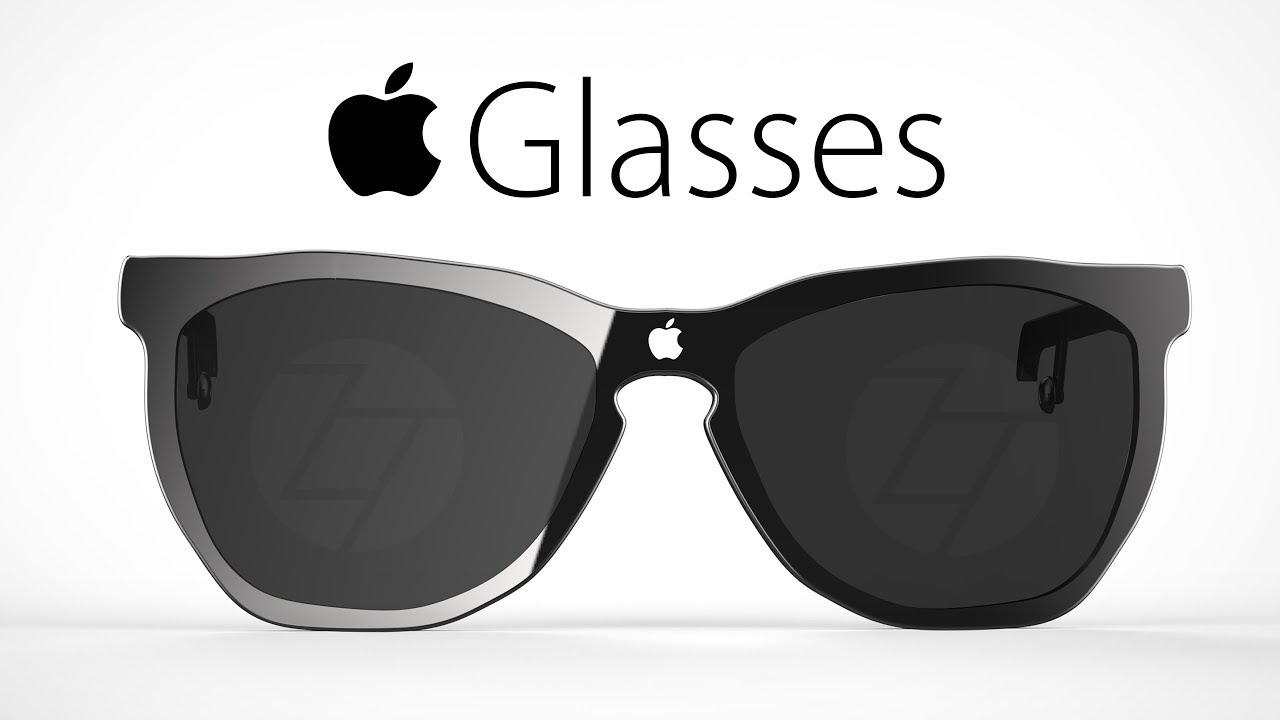
    As reported several times in the past, Apple is developing a headset, possibly called Apple Glasses, that combines both AR and VR technologies for release in either 2021 or 2022. The controller in question, which is probably being used solely for internal testing purposes, resembles those shipped with HTC Vive Focus headsets. In fact, it seems to be a modified version of the HTC controller.

    This isn’t that surprising considering Bloomberg reported back in 2017 that Apple engineers were using HTC Vive headsets for internal testing, but the striking resemblance between the two controllers does suggest the two companies could be working closely together on AR & VR technology.

    Regardless of whether Apple and HTC are collaborating, though, it’s safe to say the final controller will probably boast a more polished design that is the better adapter to Apple’s headset software.

    In terms of functionality, the iOS 14 evidence uncovered by MacRumors strongly suggests Apple is using a dedicated augmented reality app codenamed “Gobi” and QR codes to test the extensive range of headset features.

    Apparently, each QR code triggers a different experience for the users. Some of these include experiences related to the Apple Watch, Mac Pro, Apple Store, Starbucks, and even a random movie poster.

    One of the more interesting experiences is QR code that triggers a “crosswalk bowling game.” This presumably allows Apple engineers to roll a virtual bowling ball across the crosswalk to knock down the virtual bowling pins on the other side.

    It likely acts as a pastime while waiting for the pedestrian light to change from stop to go. If ever released to public, users would probably be able to continue the game at different crosswalks and perhaps even play with friends.

    The version Apple is currently testing seems to be limited to one intersection near an Apple office known as “Mathilda 3” at 555 N Mathilda Ave in Sunnyvale, California. That could be where internal testing for the headset is taking place. As revealed in a patent application published today, everything mentioned above could be accompanied by virtual assistants that highlight useful information or offer tips to users during certain events or after a particular trigger.

    In the patent, which is titled “Contextual Computer-Generated Reality (CGR) Digital Assistants,” Apple gives a few examples based on what the user is seeing. One of these includes the possibility of a virtual dog being used to run over to a restaurant and fetch the relevant information for the user in question.

    Other ideas described include a pod of dolphins being used for AR navigation or a cat that guides users to an interesting place. A balloon could be used to show users where an AR-leveraging AirTag is too.

    The possibility of experiencing other virtual assistants through other senses, such as hearing, was also mentioned.

  • Burberry delivers AR technology to Google Search

    Burberry delivers AR technology to Google Search

    International luxury brand Burberry has launched an Augmented Reality (AR) shopping tool using Google Search that allows consumers to visualize its products within their immediate surroundings.

    The app embeds 3D images of the products in users’ environments as captured via their smartphone cameras, allowing them to “see” their prospective purchases as if they were right in front of them.

    Consumers searching for Burberry products on Google will be able to access the AR images so as to have a clearer conceptualization of the product before purchase. The tool is intended to enhance the inspiration phase of the decision to purchase, which is now thought to be becoming increasingly important for luxury consumers.

    The tool is currently available within searches for the brand’s Black TB bag or Arthur Check Sneaker conducted within the US or UK, with plans for global rollout for a variety of products over the coming months.

  • New Digi partnership introduces VR experiential tourism using 5G

    New Digi partnership introduces VR experiential tourism using 5G

    Visitors to the launch enjoyed a 360-degree view of Gunung Machinchang, one of the island’s most popular mountains and tourist destinations, using a cable car gondola and a virtual reality (VR) experiential zone.

    A camera that was installed at the Langkawi Skycab middle station enabled the event to be live-streamed from 20 kilometers away.

    The Digi 5G showcase, part of the 5G Demonstration Projects, have been made successful thanks to the tireless efforts of the Malaysian Communications and Multimedia Commission (MCMC) to encourage, develop and organize 5G use cases in a live but controlled environment.

    Digi’s CEO Albern Murty explained that the Langkawi 5G virtual tourism pilot is part of the telco’s objective in creating a 5G ecosystem with the support of its partners.

    “We are excited at the possibilities of 5G bringing next-gen virtual tourism to many other local destinations and connect more people to experiences that matter most to them. In partnership with Malaysia Airports and Panorama, we are pleased to bring a piece of Langkawi’s heritage to tourists from the moment they arrive at the airport,” Murty said.

    Panorama Langkawi acting COO Ir. Abu Hashim Abdul Rahman said, “We believe that 5G has the potential to deliver new and engaging digital activities that can improve tourist experiences and enhance the appeal of Langkawi and Malaysia in the eyes of foreign tourists.”

  • Apple patents technology for AR audio headphones

    Apple patents technology for AR audio headphones

    Imagine listening to a conference call on a headset and knowing the position of everyone in the room just by listening to the sound. Apple apparently is planning on developing AR audio headphones and has just received a patent covering related technology from the U.S. Patent and Trademark Office. Called Intelligent augmented audio conference calling using headphones, the patent mentions how augmented reality headsets take metadata generated from audio signals and “associates each of the audio signals with a spatial position in a virtual representation of the conference call.”

    As Apple explained in the patent documentation “Multiparty conference calls often have callers participating from different locations which may be all over the world. In situations without video feedback, it is especially difficult to identify a speaker. Often, when callers can’t be identified or heard, interaction during such conference calls may be awkward. Embodiments discussed herein aim to provide a more intuitive, clear teleconference experience.” If a conference call is made up of callers from different locations, a virtual room is created and a position in the room is assigned to each person as they join the call. If the listener on a conference call turns his head toward someone in the virtual conference room, the audio will adjust to match how it would have sounded had the listener really been in the room.

    In the patent, Apple mentions something it calls “the ‘Cocktail Party’ mechanism in the listener’s brain.” The company explains that this is “a key psychoacoustic process enabling an improved sound source segregation.” Apple continues by mentioning the advantages to the listener and says, “It is therefore advantageously possible to more easily identify individual talkers and to increase speech intelligibility, without the need for visual cues or the need for a caller to state a name before talking during the conference call. Furthermore, it is advantageously possible to provide a virtual audio environment that is more natural sounding as compared to conventional technologies.” The company believes that knowing who is speaking and where that person is in a room makes it easier to participate in such a call. It will also help the listener understand what is being said during an audio-only conference call. And even if a listener cannot recognize the voice of the person talking, he still can tell who it is based on the speaker’s position in the room.

    In one scenario mentioned in the patent documentation, Apple envisions that a caller being assigned to a position in a virtual conference room is placed in a group that could be made up of family members or based on the geographic location of the caller or even the strength of the caller’s signal. In a situation where there are two different and separate groups, one might be “placed” to the left of the listener while callers from the other group are “placed” to the right of the listener.

    It’s an intriguing technology that if commercialized, could help Apple sell a ton of AR headphones to corporations. And there might even be some use for the technology by consumers listening to podcasts, streaming radio (including audio-based news apps) and more. This technology could eventually be used with video games. Or, as Apple points out on all of its patents, the patented technology might never see the light of day. Not that Apple isn’t high on AR; it is. Earlier this month we told you that the company reportedly plans on offering a mixed reality headset in 2022 with the long-awaited AR glasses to appear the following year.

    The patent was originally filed back in June 2017 and was previously published last December before being awarded to Apple.

  • AR will become very important to retailers

    AR will become very important to retailers

    Although take-up has been patchy so far, there is a bit of a buzz around augmented reality (AR) in the retail sector, and it is definitely getting louder.

    Kate Ancketill, the CEO and founder of GDR Creative Intelligence is something of an evangelist on the subject of AR in retail and the benefits of connecting the physical retail experience with the digital one. With 5G on the horizon, she is certain that AR’s importance is going to grow even faster, and she has some advice for retailers who want to implement AR.

    “I think AR is very important and becoming more important,” says Ancketill. “AR is relatively inexpensive to implement and it is getting cheaper all the time, and with 5G, when it comes on board we’ll have no latency issues.”

    Ancketill thinks AR is going to bring all the best advantages of browsing the web into the physical environment, and that means cracking the omnichannel.

    “A company that cracks omnichannel basically wins, and AR is a big part of that.”

    Ancketill lists retailers Show Fields, Beta, Neighbourhood Goods, and Storey, which she describes as a new generation of department store arriving mostly in the US, as examples of the trend.

    “Places like all of these have something in common, which department stores have been sadly lacking in. That something is frequent newness and uniqueness of the product. They have products that are never seen anywhere else in the physical world and are only available online.

    “So you basically have to go there if you want to physically experience them. They’re usually concession based so there’s a frequent turnover and they’re usually very high tech, so you get great data if you are the seller.”

    The idea of going somewhere where you see things that you’ve never seen before, cannot find anywhere else, will be changed in a month’s time and will have lots of experience-based activities going on makes for a compelling offer says Ancketill.

    “It is not rocket science that it is more appealing to today’s consumer with a very short attention span.”

    But to win with AR as a retailer, you need to reduce your portfolio by at least 30 per ce, nt, she says, and make sure what you keep is in high footfall areas in places where people have money to spend.

    “Make it different every month, make it highly experiential, and make sure you fully connect the physical with the digital experience,” says Ancketill.

  • A-listers sign up to Hong Kong VR startup Sandbox

    A-listers sign up to Hong Kong VR startup Sandbox

    Hong Kong immersive Virtual Reality startup Sandbox VR has won investment from several A-list celebrities, including Katy Perry and Will Smith.

    The firm has raised US$11 million from the Hollywood names, together with venture capital firm Craft Venture, to put towards its cable-free escape room VR experience that features full-body motion capture technology. Players in the VR rooms can battle aliens or submerge themselves in a pirate experience.

    The virtual reality market has developed slowly since hyped predictions made five years ago fell flat in the face of slow consumer pick-up of the technology. In an interview, Sandbox founder Steve Zhao blames the lackluster consumer response on a clunky user experience that fails to let the user see her own body or move freely.

    “When I looked into the consumer VR headset, I tried it and I was sitting down and was tethered to a computer, and I’m holding two controllers,” said Zhao. “No, this is not VR!”

    Sandbox launched its first store in the US last year and plans to roll out 16 locations by the end of next year, having partnered with mall operators such as Westfield. The Hillsdale Shopping Center location experiences 90-per-cent occupancy during peak hours, prompting the firm to expand its lease.

    “We found out that over 80 percent of our customers had never visited the mall in the past year, and for 60 percent of them it was their first visit to Hillsdale Shopping Centre,” Zhao said. “They came because of Sandbox, and I think the landlords are incredibly excited about that.”

    Zhao said the firm will certainly look to expand in Asia, with China and Japan presenting compelling opportunities.

    “We believe that VR is finally ready to take off as a mass-market phenomenon in malls, where it can be optimized for a social experience,” said Craft Ventures co-founder and general partner David Sacks. “We chose the Sandbox team because of their background in game design. Their VR experiences have a level of interactivity – with both the VR world and other players – that we couldn’t find elsewhere. We believe that Sandbox VR is poised to become the first VR experience for millions of consumers around the world.”

    Sandbox’s Hollywood investors are expected to open doors to future potential collaborations that could lead to movie-themed experiences – a Star Trek project is already underway following a deal with CBS, and should be released later this year.

    “Their support is a vote of confidence that our platform will o

  • Apple AR glasses launch in 2020 reiterated as more details emerge

    Apple AR glasses launch in 2020 reiterated as more details emerge

    Apple is betting heavily on augmented reality is the next big thing and a new report by Bloomberg suggests the public could soon see the results of years of development.

    According to Mark Gurman, Apple is targeting next year for the release of its highly anticipated AR glasses. These will reportedly feature a pair of holographic displays and synchronize with the user’s iPhone to display useful information such as text, emails, or the weather. Rumors also suggest Apple Maps integration will be supported in addition to multiple games. The latter means Apple Arcade subscribers may be able to play a range of AR-backed titles while wearing the glasses.

    Apple is said to be hiring experts in both graphics and game development to ensure a range of titles are available at launch. This should help position the glasses as the instant leader in the category and hopefully replicate the long-term success of the Apple Watch. Speaking of which, Apple is reportedly considering a dedicated App Store for its AR glasses similar to the one that was recently launched for its smartwatch. From here, owners of the glasses will be able to download the range of compatible games in addition to a long list of other apps

    Like Gurman, analyst Ming-Chi Kuo believes Apple’s AR glasses will arrive next year, although he goes one step further by predicting a release halfway through 2020. This means the official announcement may happen in early 2020, perhaps alongside the iPhone SE 2 and iPad Pro (2020).

    Long-term, Apple hopes its AR glasses will eventually replace the iPhone, but in the meantime, it’ll focus on pushing its AR technologies through its other devices. Specifically, the next-gen iPad Pro is reportedly going to include a dedicated 3D sensor for AR content while next year’s iPhone 12 Pro series is expected to follow suit in September with the same sensor.

  • Instagram enables augmented reality shopping through its mobile app

    Instagram enables augmented reality shopping through its mobile app

    Instagram continues to add new tools to its app to enable users to interact in different ways with the content it provides. The latest updated tackles augmented reality, a technology that many other companies have already implemented in their products.

    Starting today, several brands that are using Instagram to sell their products will now be able to add a new augmented reality feature that lets customers try their products before they buy it.

    The new feature is meant to help Instagram users to preview certain products they plan to buy and see what they look like on their face. To try out these new AR-compatible products, Instagram users must first find these specific products that brands are tagging in a post. Then, simply choose the option to try out the product using an augmented reality filter before adding it to the cart.

    But the new feature is not only meant to shop easier, as Instagram users can share these AR experiences in Stories, which will also link to the original product so that other users can try it out and, eventually, buy it.

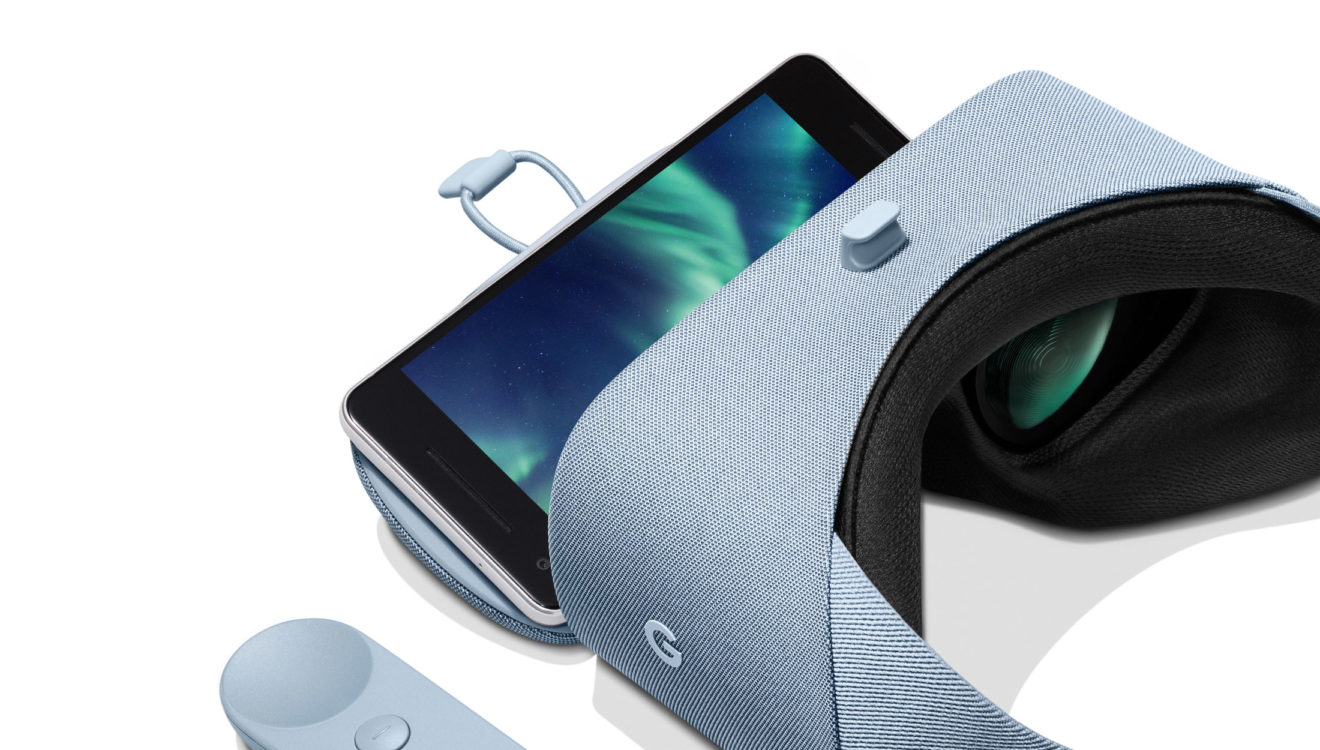
  • Google’s Daydream VR platform is probably dead

    Google’s Daydream VR platform is probably dead

    The Daydream VR platform doesn’t seem to be as popular as Google expected. The Mountain View company has acknowledged the problem and has started to redirect resources to other projects. After shutting down the Play Movies and TV app a few months ago, Daydream VR platform is losing more content providers.

    Variety reports Hulu confirmed it has removed Daydream support from its Android app in recent weeks, so if you’re wondering why you can access Daydream VR content any longer, that’s the reason.

    There’s a workaround that will allow Daydream VR users to continue to watch Hulu content, but that requires them to downgrade to the previous version of the Android app if they’ve already updated to the latest iteration.

    The VR experience with Google Daydream is no longer supported for Android mobile devices running version 3.55 or newer of the Hulu app. That said, it is still available on Daydream-capable Android devices running version 3.54.1 or older of the Hulu app.

    One of Google’s original partners for Daydream VR, Hulu still offers VR content on other headsets like Oculus Go, Samsung Gear VR, Oculus Rift, and PlayStation VR. It’s also worth mentioning that Hulu is the second major video streaming service that drops support for Daydream VR after HBO Now and HBO Go VR.

  • Apple’s rumored mixed-reality headset could use gloves as a controller

    Apple’s rumored mixed-reality headset could use gloves as a controller

    By now, many of you know that Apple’s next big thing is NOT going to be the HomePod. Actually, for a few years now, analysts have been expecting Apple to introduce AR glasses as soon as 2020-2021. There have been two schools of thought here; one is that this will be a standalone device while others, including reliable TF International analyst Ming-Chi Kuo, expect your iPhone to carry the brains of the headset. Kuo, in fact, says that production on the Apple Glasses will start no later than the second quarter of next year.

    A couple of patent applications filed by Apple reveals a pair of features that the company is apparently working on for the headset which has been dubbed Apple Glasses. The patent applications were submitted with the U.S. Patent and Trademark Office (USPTO) in February. The first one, titled Scanning Mirror Display Devices, discusses the technology that uses lasers and mirrors to project images directly into the eyes of the person wearing the glasses in lieu of a display. This could be done in a way to support Augmented Reality (AR) by allowing the images to be overlayed over a real-world view. The patent application says that this technology might be used to replace “overly complex, bulky, and uncomfortable to wear” head-mounted displays.

    The second patent application, Magnetic Sensor Based Proximity Sensing, uses magnetic sensing technology to detect the position of a user wearing a special glove on his or her hand. This could be used to control VR or AR features on the Apple Glasses through the use of hand gestures. A person wearing the headset would also don the gloves which have special material on the fingertips.

    Last month, a report stated that Apple had decided to terminate the Apple Glasses project, but that might not have been the case based on subsequent reports. In fact, just 10 days after that story made the rounds, a huge leak revealed that the tech giant was working on a mixed-reality headset supporting both AR and VR. The glasses will supposedly offer 8K resolution of  7680×4320 for each eye. The device has a codename of T288, according to this leak, and uses a newly developed operating system called rOS for reality Operating System. A 5nm chip will reportedly power the glasses and TSMC is expected to start producing components using this process starting next year.

    The same report said that Apple’s headset would also include eyebrow and jaw sensors to determine the expression being made by the user, hand sensors (which might include the technology found in the second patent that we discussed in this article), sensors to track the eyes and left and right cameras. Many of these features were also discovered in a patent that Apple filed with the USPTO this past March.

    Back in June of 2017, analyst Gene Munster, now with Loup Ventures, said that the Apple Glasses would end up being bigger than the iPhone. At the time, Munster said, “In 10 years we expect the iPhone will be around, but be a much smaller part of Apple’s business as Apple Glasses slowly gains market adoption.” The analyst originally expected the glasses to launch in 2020, but changed that forecast to December 2021 back in May. Munster forecasts that 10 million Apple Glasses will be rung up during the device’s first year on the market.

  • Commune launches high-tech AR app in Singapore

    Commune launches high-tech AR app in Singapore

    Furniture-design and lifestyle-brand Commune in Singapore has unveiled a cloud-based, omni-channel furniture retail solution and mobile augmented-reality (AR) app.

    Commune: In Motion is designed to transform the shopping experience and reduce the time taken to serve customers by about 70 per cent. It is the product of a design development process underway since 2016 to discover new values and growth in the evolving digital landscape.

    “The retailers who thrive in the next decade will be those who reimagine and redefine their stores for the digital age,” said CEO Joshua Koh. “Brick-and-mortar retailers have enormous opportunity to leverage the distinct benefits of ‘old fashioned, in-person shopping’ in ways that digital sites can only dream about. The winners of tomorrow will be those who are able to transport the digital world into their stores in a manner that delights customers, builds loyalty and generates brand value,” he said.

    The app enables the integration of online and offline data across various touch points – for example, customers’ browsing behaviour and the management of purchase and delivery orders in real-time – to provide a personalised shopping experience for homeowners and furniture enthusiasts.

    “Commune: In Motion exemplifies Services 4.0 where next-generation services are end to end, frictionless and anticipatory to customers’ needs,” said development partner Infocomm Media’s executive Jane Lim. “Commune has shown us how retail businesses can meet changing customer needs quickly in the digital age by effectively harnessing emerging technology and data.”

    Some of these initiatives undertaken by Commune in Singapore include the development of a VR and 3D space planner, implementation of an e-learning portal for in-house training, and the participation in overseas business missions.

    For Commune, the system aims to further improve business operations and speed up customer-service efficiencies, as well as provide a platform whereby the company can build a better relationship with its customers.

    Commune in Singapore has a vision is to create a seamless, online-offline shopping experience that is more immersive, fun and explorative while encouraging other companies in the industry to embark on similar journeys.

  • Refinitiv Launches Cloud-Based Data Access in Asia

    Refinitiv Launches Cloud-Based Data Access in Asia

    Major financial data provider Refinitiv has launched a new service providing real-time data through cloud-based delivery in Asia, leveraging Amazon Web Services.

    The service, named Elecktron, is designed to simplify access to real-time price information and eliminate the need to invest in physical infrastructure. In addition, delivery through Amazon Web Services enables greater flexibly in how the data is used.

    «It’s clear to us that Asia-based firms are starting to aggressively accelerate their cloud plans as they realize how leveraging the cloud across their market data infrastructure can help them move faster, grow their business, reduce their costs and better manage their risks,» said Alfred Lee, APAC managing director at Refinitiv.

    According to a Refinitiv survey with senior tech and market data managers, investments in the public cloud are expected to increase with 86 percent of firms in Asia claiming to use it for the majority of market data needs in less than four years.

    The initial success of our Elektron real-time cloud delivery shows the benefits of combining high quality data with simple access across a broad range of innovative use cases,» added Brennan Carley, global head of enterprise at Refinitiv, which is onboarding an increasing number of clients in the region including Hong Kong-based global payments and FX platform Currenxie.

    We believe the cloud is transformational for how the financial community consumes data.

  • Google Maps AR navigation is rolling out in beta on Android and iOS

    Google Maps AR navigation is rolling out in beta on Android and iOS

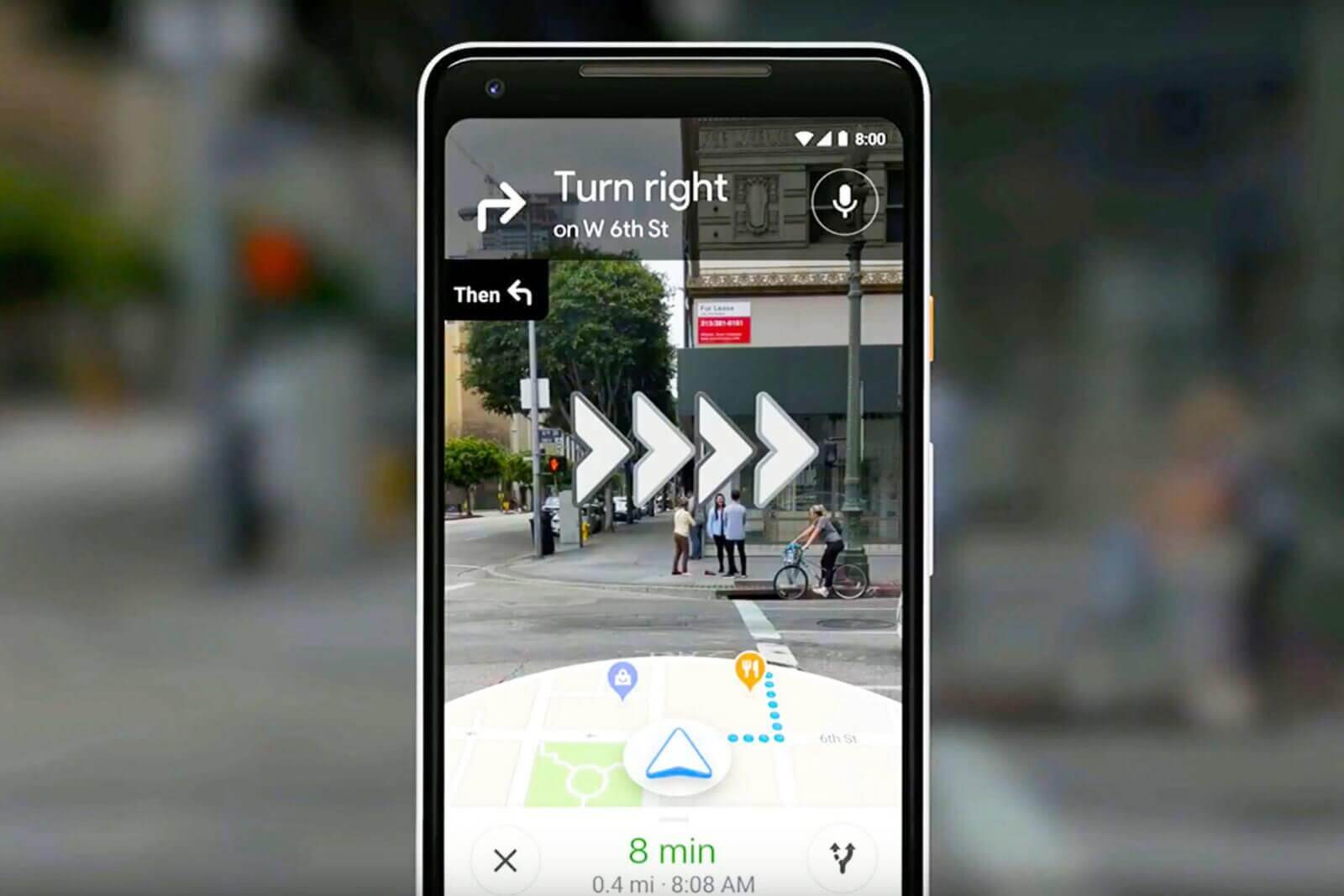
    Google Maps Live View—a new AR navigation mode that uses imagery from your phone’s camera—will be rolling out in beta on Android and iOS in the coming weeks. Live View takes advantage of your phone’s camera and Google Maps’ vast database to deliver a unique AR (augmented reality) navigation experience that layers the Maps interface over a real-time feed from the camera. It was previously demoed last year, and has been available to Google Local Guides level 5 and up, as well as Pixel phone owners, but it’s about te see a broader release later this month.

    To use Google Maps Live View, you’ll need a phone that supports ARKit, in the case of iPhones, and ARCore, in the case of Android devices. Of course, Live View is also going to be available only in regions where Street View is available, TechCrunch reports.

    To use Live View, you’ll need to tap the “Start AR” button and hold up your phone like a viewfinder. This brings up a screen that’s quite reminiscent of a video game, in that you’ll see the world around you, but with virtual elements (like arrows and signs) layered over your surroundings.

    To pinpoint your coordinates, Maps uses your phone’s rough GPS location and Street View’s vast image database to determine exactly where you are. To achieve this, the app takes a series of images, which have a known location, and analyzes them for key visual features (like the outlines of buildings and bridges), in order to create a large-scale index of these features. Then, to localize you, the system compares features in the database to imagery from the live camera feed. Using machine learning, it is able to discern between transient features, such as dynamic lighting and construction work, and the permanent features of the scene.

    Google warns that using Live View in Maps will lead to slightly increased battery and mobile data consumption. The feature is expected to roll out in beta on Android and iOS in the coming weeks.