Retail News CRM

Tag: ar

  • Zara Stratford flagship store pioneers new approach to integrating stores and online

    Zara Stratford flagship store pioneers new approach to integrating stores and online

    A new Zara flagship unveiled in London this week gives an insight into its new global direction.

    High in technology, compact in footprint, Zara believes the new Westfield Stratford store concept will “transform the customer shopping experience at its heart”, integrating online and in-store shopping.

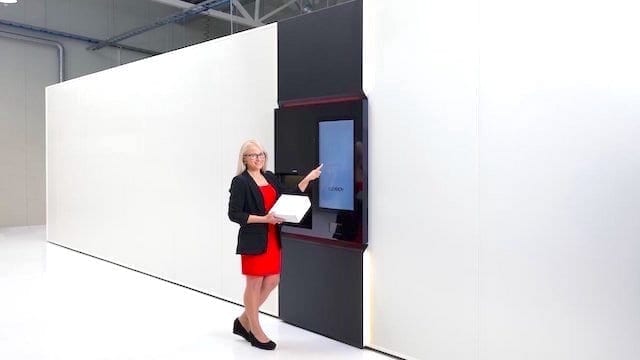
    It is the Spanish fast-fashion retailer’s first store in the world to introduce a fourth section after women’s, men’s and kid’s: online. A separate area has been designed to house two automated order collection points.

    The system’s optical barcode reader scans QR or Pin codes that customers receive when they place orders online. Behind the pick-up point, a robotic arm collects trays and organises the packages optimally according to their size, delivering orders for customers to collect in seconds. The system can handle 2400 orders simultaneously, enabling shoppers to collect purchases made through Zara’s e-commerce platforms. Online orders are available in store on the same day if made before 2pm, or the next day if made in the afternoon.

    Gallery of New Zara Stratford flagship can be viewed below :

    Zara says the customer service features go beyond integrating online and offline shopping. The new store aims to create a “seamless, convenient and enjoyable shopping experience”. Interactive mirrors equipped with RFID readers can detect the garment a customer is holding, enabling customers to see what a complete outfit will look like in the mirror.

    Zara staff will use iPads to advise customers and accept payments on the shop floor. Customers can pay using their mobile phones via the Zara app or the Inditex Group app, InWallet.

    And to complement the regular cashier desks, there is a self-checkout area with a system that automatically identifies garments being purchased. Customers can simply confirm their items on a screen at the self-checkout before paying with their cards or mobile phones.

    The 4500sqm store has been under renovation since January and was temporarily replaced with the brand’s first pop-up store for the purchase and collection of online orders only, some of the features of which are replicated in the Zara flagship.

    Inditex chairman and CEO Pablo Isla described the reopening of the Zara flagship as an important moment for the company.

    “We are in a unique position as we enjoy a global sales platform that fully integrates stores and online. In recent years we have invested in the most advanced technology and optimised our stores for this aim. Our business model combines stores and digital seamlessly, and we are ready for the opportunities that this brings with current and new customers,” he said.

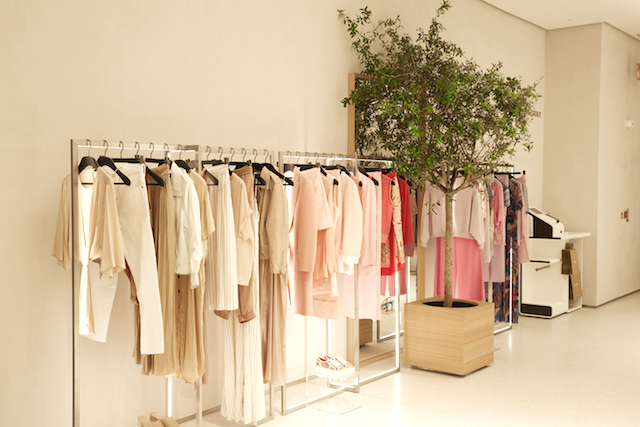
    From a design perspective, the store has a two-storey facade without shop windows on the first floor, providing a transparent view of the store’s interior architectural features and collections.

    The refurbishment of the Zara flagship follows the brand’s introduction of an augmented reality experience at 120 flagship stores worldwide for a fortnight earlier this year.
  • Embracing body diversity, Asos invests in virtual fit tech

    Embracing body diversity, Asos invests in virtual fit tech

    Online fashion giant, Asos, is making it easier for consumers to see how items of clothing fit different body types and saving time and money on photography in the process.

    The retailer recently started working with Israeli tech startup Zeekit, which uses augmented reality (AR) to digitally ‘map’ the same item of clothing on various models using existing photographs of the item and models.

    A customer noticed the change while shopping on the site last month, eliciting a response from Asos that the new feature will be rolling out across the app soon.

    In a statement, Asos explained, “We’re always testing new technology that can make our customers’ experience even better.

    “In this case, we’re experimenting with AR to show product on different size models, so customers can get a better sense of how something might fit their body shape.”

    The race to solve the fit problem

    Fit is one of the biggest sticking points for online clothing retailers, which still by and large rely on size-8 models. With the average Australian woman being closer to a size 14, most consumers are left to guess how an item will fit and look in real life.

    A study by global research firm, IHL, pegs the annual cost of preventable returns at US$642.6 billion globally, and while it is difficult to pinpoint the average return rate for online purchases, (one analyst suggested 17-25 per cent is normal, it is decidedly higher than for items purchased in-store.

    Solving the fit – and return – problem becomes even more important for online retailers that offer free shipping, delivery and returns, which consumers have come to expect in the age of Amazon.

    A number of digital startups have sprung up in this space in recent years, such as Virtusize, which helps customers compare the measurements of an item they want to purchase with a garment they already own, and Fit.me and Metail, which let customers create 3D models to virtually ‘try on’ clothes.

    Asos struck a deal with Virtusize – which lacks a visualisation component – in 2013. The partnership with Zeekit crucially enables customers to also see how an item will fit.

    Zeekit differs from existing players, since it digitally maps garments onto the bodies of real models, not virtual avatars or faceless mannequins, which not only creates a more seamless shopping experience for customers, but also potentially saves Asos an enormous amount of time and money on photographing different size garments on different size models.

  • Zara AR experience unveiled in over 100 stores

    Zara AR experience unveiled in over 100 stores

    Spanish fast-fashion retailer Zara will unveil an augmented-reality experience for two weeks in 120 flagship stores globally.

    Aimed at encouraging customers both outside and inside the store to shop and share, the innovative concept superimposes technology on the retail environment via the Zara AR app. The activation plays out at three different sites: store windows, central podiums and atop e-commerce boxes.

    When smartphones focus on the signs, models Lea Julian and Fran Summers seemingly come to life in seven- to 12-second sequences on the phone’s screen. They pose, move around and even speak while dressed in the SS18 Zara Studio collection. Their clothes and accessories can be bought instantly through a single touch on the app, as well as in store.

    The experience will have high visibility from the street, with store windows appearing completely empty aside from bold signs encouraging people to access the Zara AR app. Downloading is easy by connecting to a dedicated Wi-Fi network, or by QR code, via iTunes and Google Play, or through the link on Zara.com or the app.

    As well as the shopping feature, a social-media sharing feature invites people to take and send photos alongside the holograms, establishing a virtual connection. To maximise the limited-time experience, different sequences of new looks will be introduced after the first week.

    Zara’s AR venture is the conception of Paris-based creative director Ezra Petronio, who developed the app with French technology company Holooh and research partner Inria (the French national Institute for computer science and applied mathematics). The 12 dynamic sequences were captured as holograms in a 170sqm studio involving 68 cameras, among the largest recording systems of its type in the world.

  • Storefront partners with Obsess to create virtual reality stores

    Storefront partners with Obsess to create virtual reality stores

    Storefront is pushing the boundaries of the retail industry by giving brands for the first time ever the opportunity to rent Virtual Reality pop-up stores right on its platform.

    Retailers and e-commerce brands can now launch a virtual, fully customisable store powered by Obsess’ VR technology, featuring their own inventory and choosing any layout, decor and style.

    The ‘Future of Retail’ is retail everywhere, according to Storefront

    Storefront is making retail accessible to anyone in the world by now giving customers a unique selling and buying experience through Virtual Reality, in addition to its current retail space offerings. Now, anyone has the ability to experience a physical store with the ease of online shopping.

    “We see this Virtual Reality pop-up store as creating a new category between e-commerce and a physical retail space. It’s a great in between,” says Joy Fan, Storefront’s CCO.

    Get a taste of (virtual) reality

    With this new partnership with Obsess, brands and retailers can now easily book space through a New York City, Los Angeles, or San Francisco themed virtual store.

    Now with this virtual pop-up store, e-commerce brands can get a branded store environment without the need to invest in a physical space – just yet.

    “Our goal is to bring the visual merchandising and curation of retail stores into online shopping to make it a more guided and enjoyable experience,” explains Obsess founder and CEO Neha Singh.

    By booking this virtual reality experience, brands will be able to increase digital engagement, reduce costs, create more traffic and acquire new data.

    A unique initiative that allows Storefront to open all doors to all ideas.

    About Storefront

    Storefront is the world’s largest marketplace for short-term retail space rental, making it possible for brands to sell their idea anywhere; for space owners to activate their space with a click and for consumers to buy local; globally.

    Storefront’s platform powers more than 10,000 listings, which represent more than 30 millionsqft of retail space. The company offers greater access to spaces in leading retail cities around the world, including Hong Kong, New York, Paris, London, Milan, Amsterdam, Los Angeles and San Francisco.

    Since its launch in 2013, it has helped thousands of brands all over the world, including Google, Samsung, L’Oréal, Everlane, Shopify, Indiegogo; open temporary retail stores.

  • FamilyMart Taiwan launches digital prototype, including VR

    FamilyMart Taiwan launches digital prototype, including VR

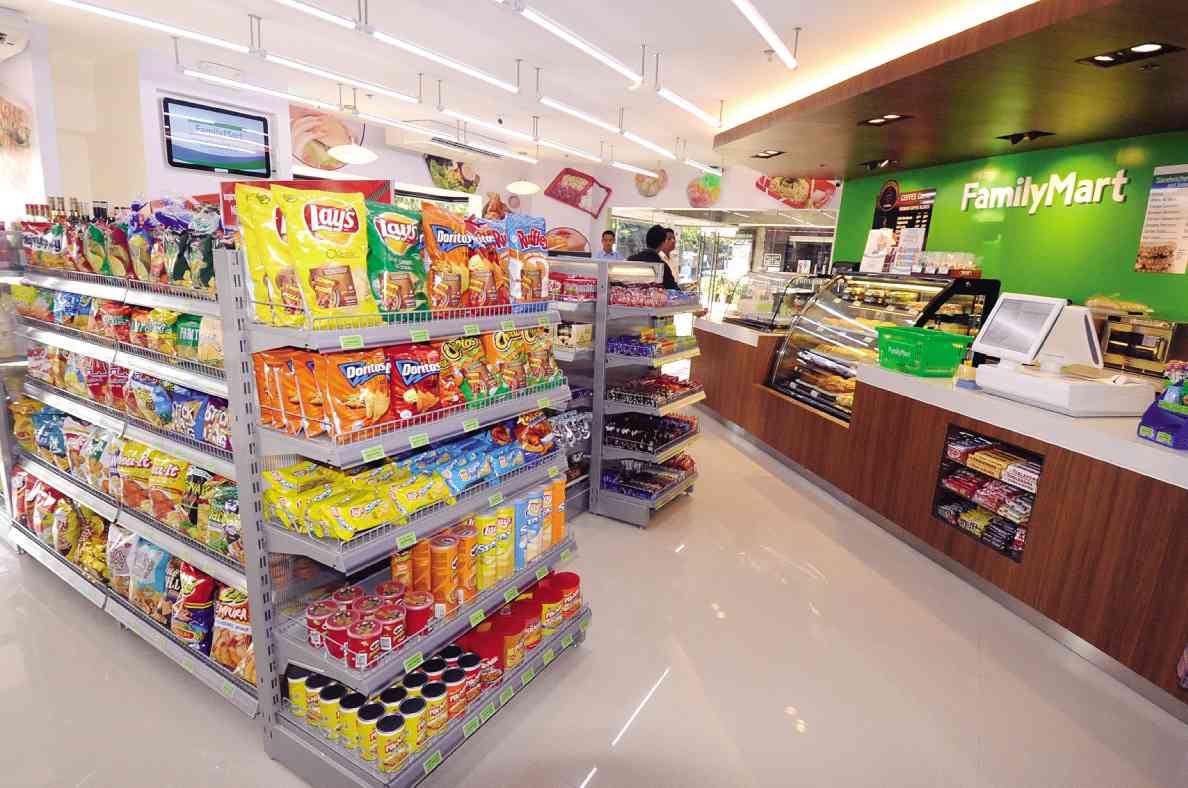
    FamilyMart Taiwan has launched a pilot convenience store concept that incorporates a range of digital technology including robots, VR interfaces, interactive projection screens, smart shelves and blockchain applications.

    A Fujitsu Robopin communication robot is stationed at the entrance to highlight offers and in-store events, while video content about products is projected on to the doors of freezer units.

    Electronic price tags interact with POS registers to update automatically, and product information is available through QR codes and NFC(5) technology built into the price tags.

    FamilyMart says it will study the results of the prototype store with a view to rolling out the technology to other stores.

    FamilyMart Taiwan chairman Yeh Jung-ting says convenience stores need to be modernised according to the world around them, as well in preparation for workforce shortages.

    He says Family Mart still wants locations to be personable, and while there will be fewer staff, the new stores will not be devoid of staff like some 7-Eleven outlets. The idea is to add efficiency to shopping for both customers and staff.

    One of the greatest advantages will be eliminating the time spent ordering stock. Previously ordering goods took around two hours, whereas smart shelves whittle down that time to seconds.

    Ultimately, there will be 17 technological upgrades made by possible by 15 new partnerships.

  • Alibaba teams up with Singapore university on AI

    Alibaba teams up with Singapore university on AI

    Chinese tech giant has set up a joint research facility at Singapore’s Nanyang Technological University to develop artificial intelligence-based technologies in retail, transportation and healthcare

    Chinese e-commerce and technology giant Alibaba has partnered Singapore’s Nanyang Technological University (NTU) in a joint research facility aimed at harnessing artificial intelligence (AI) to solve societal issues such as Singapore’s ageing population.

    The first of its kind outside China, the Alibaba-NTU Singapore Joint Research Institute will bring together NTU’s AI capabilities, including efforts to develop an artificial companion for the elderly, and Alibaba’s expertise in natural language processing, machine learning and cloud computing.

    The multimillion-dollar partnership between Alibaba and NTU is expected to involve 50 scientists and engineers from both parties over five years. Besides addressing the needs of ageing societies, they will also develop AI technologies in areas such as retail, urban transport and healthcare.

    For example, NTU’s expertise in healthcare research and Alibaba’s knowhow in AI to diagnose and prevent diseases will be pooled to achieve breakthroughs in health-related AI. Both parties will also conduct research to improve urban mobility and reduce Singapore’s carbon footprint.

    Alibaba said its contribution to the research facility will come from a $15bn fund earmarked for its Damo research and development (R&D) programme, which includes establishing research labs across the globe, including one in Singapore.

    The joint research institute is located on the NTU campus, but it is open to researchers and academics worldwide. Alibaba will also build a crowdsourcing platform to connect researchers and industry practitioners in an AI-focused R&D community.

    Jeff Zhang, Alibaba’s chief technology officer, said the AI technology developed by the institute will first be rolled out in NTU, followed by other parts of Singapore and Southeast Asia at a later date.

    “By launching our first joint research institute in Singapore, we hope to work with talent in Singapore and researchers worldwide to explore technology innovation that can address common issues faced by the society at large,” said Zhang.Alibaba’s efforts to develop AI capabilities in Singapore follows the recent launch of Chinese facial recognition specialist Yitu’s regional headquarters in Singapore that will mainly serve as a sales, marketing and operations outfit for now.

    Yitu said plans are also in the pipeline to establish R&D capabilities in the city-state by the end of 2018.

    In May 2017, Singapore’s National Research Foundation said it would invest up to S$150m (US$107m) over five years in a programme called AI.SG to drive adoption of AI to solve business problems.

    To nurture a local AI community, AI.SG will also work with startups and corporate laboratories through new facilities that will provide software tools, anonymised datasets and high-performance computing resources.

  • Retailer spending on AI to rise, says Juniper Research

    Retailer spending on AI to rise, says Juniper Research

    Juniper Research predicts global retailer spending on AI will reach US$7.3 billion a year by 2022, up from an estimated $2 billion for this year.

    Its report AI in Retail: Disruption, Analysis and Opportunities: 2018-2022 says retailers will heavily invest in AI tools that let them differentiate and improve customer services. These range from automated marketing platforms that generate tailored, timely offers to chatbots that provide instant responses to customers.

    Juniper found that spending will be strongest in customer service and sentiment analytics, where AI can be applied to understand reactions to purchased products and service received.

    It predicts retailer spending share in 2022 as:

    1. Customer service/sentiment analytics, 54 per cent
    2. AI-based automated marketing, 30 per cent
    3. Demand forecasting, 16 per cent.

    Juniper predicts retailers will use AI insights to design product ranges as well as create targeted promotional offers.

    “Retailers are looking to replicate the success of Amazon in making AI a core part of their business,” says research author Nick Maynard.

    He says retailers will increasingly turn to tactics such as AI-optimised pricing and discounting, as well as demand forecasting.

    With the advent of specific days for shopping, such as the Black Friday phenomena, understanding customer demand and planning appropriately is more important than ever, says the report.

    Juniper says retailers need to invest in this area in order to stay competitive, particularly in low-margin retail segments. Also, the cost of AI tools, now uneconomical for many players, will drop by 8 per cent over the next four years, helping realise 300 per cent growth in software spend.

  • Amazon : AR will change how we shop

    Amazon : AR will change how we shop

    Amazon saw its biggest holiday shopping season yet, as the draw of its Prime membership program seemed to kick into overdrive, with consumers around the world buying at record levels, the nation’s largest online retailer said.

    Over the course of one week, more than four million people either started free Prime trials, or purchased a membership outright, wooed by benefits such as free two-day, one-day or same-day shipping, as well as one-hour and two-hour delivery perks.

    The retailer’s holiday findings hint at what is poised to propel retail sales next year and beyond — from merchandise purchased via voice commerce to furniture shopping aided by the magic of augmented reality.

    Alexa-enabled Amazon devices such as the Echo Dot and Fire TV Stick with Alexa Voice Remote were not only top selling Amazon items, but also the best-selling products from any manufacturer in any product category and brand sold on the site, according to the e-tailer.

    Amazon additionally scored a hit with its Echo voice-assistant devices, as the Echo Spot, Echo Dot and Echo Buttons sold out. At the same time, the Echo Dot, Fire TV Stick with Alexa Voice Remote and TP-Link Smart Plug Mini ranked as the most popular items purchased by voice.

    Amid a $2.3 trillion global ecommerce market, Amazon shipped more than one million customer packages in a single day in North America and Europe alone, with 19 December 2017 marking the mega load for picking, packing and shipping at its 10 fulfillment centers.

    To meet that demand, the retailer increased the size of its fulfillment and shipping network by more than 30% worldwide this year.

    Just as holiday 2017 is poised to go down in the retail record books as a tipping point for mobile shopping, consumer purchases on Amazon’s app soared nearly 70% this season, the retailer said.

    To take that out of the abstract, more than 1,400 electronics products were ordered per second on the site via a mobile device this holiday.

    “The mobile phone is the new mall, and how a brand looks on a smartphone replaces the physical store window,” according to Oliver Chen, retail analyst with Cowen, in a research note.

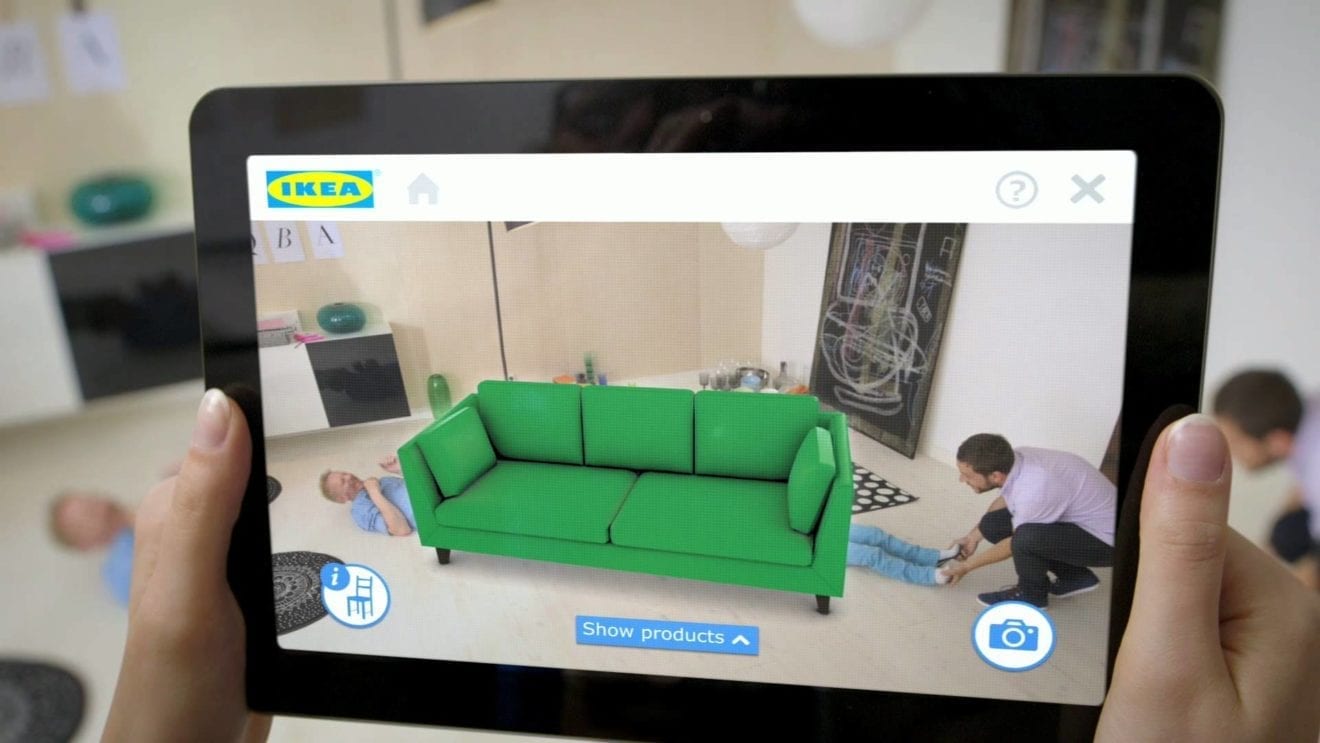
    Meanwhile, Amazon shoppers can now see how a sofa would look in their own living room via its AR View feature.

    Shoppers are beginning to give AR more attention on the site, particularly when viewing function-driven, feature rich, high-consideration purchase, such as furniture. Top categories viewed via AR included furniture, toys, Amazon devices, kitchen items and consumer electronics, with the retailer’s black chair with ottoman getting the most views.

    In its Future 100 report, J. Walter Thompson’s Innovation Group files this trend under the “transcendent retail” category, as shopping is “ leaping on the screen and morphing into a more immersive experience,” said Lucie Greene, Director of JWT Innovation, in a press statement on the report.

    Voice technology, augmented reality, and artificial intelligence are transforming the retail industry “to make buying products quicker, easier and more enjoyable.”

  • DHL shows how smart glasses can help improve warehouse operations

    DHL shows how smart glasses can help improve warehouse operations

    Augmented reality (AR) is increasingly finding its way into the enterprise. For instance, DHL Supply Chain completed its AR pilots earlier this year in a bid to improve efficiency and productivity in its warehouses, Keya Chaturvedi, Trend Research Manager at DHL, told delegates at the recent Tech Summit 2017 in Singapore.

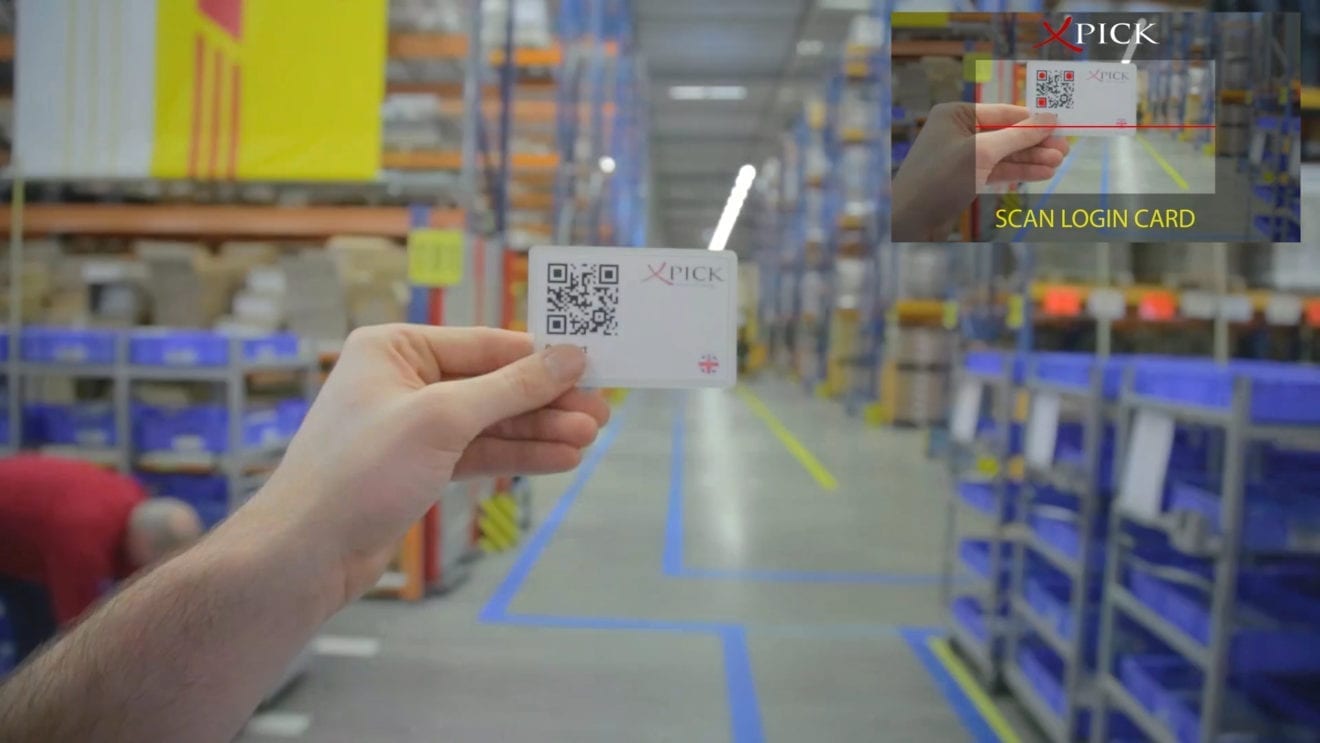
    Since the wearable provided visual displays of order picking instructions along with information on where the items are located and where they need to be placed on a cart, pickers no longer needed to rely on paper instructions. This enabled higher accuracy rates, and productivity to improve by an average of 15 percent, said Chaturvedi.

    In addition, the pickers were pleased with how the smart glasses has made the now hands-free picking process more comfortable and efficient , she added.

    Driven by the positive outcome, DHL has expanded the use of smart glasses to more warehouses around the world.

    Chaturvedi also anticipates that smart glasses will be of greater use in other areas of her business such as being used to scan and identify delivery vans. With smart glasses, it will be easier to record critical information, such as cargo temperature and security threats on the road which may affect delivery conditions, she explained.

  • Magna joins BMW-Intel self-driving car project

    Magna joins BMW-Intel self-driving car project

    Canadian auto parts producer Magna International Inc said on Tuesday it had joined a consortium including BMW and Intel Corp to develop a self-driving vehicle platform for the use of auto makers by 2020.

    The move comes as automakers are increasingly seeking alliances to share the high costs of developing self-driving vehicle technology, which requires extensive research and development and software expertise outside the traditional domain of carmakers.

    Magna is the latest addition to the BMW-Intel alliance, which aims to develop new technology that could put self-driving cars on the road by around 2021. (reut.rs/2y9llha)

    The consortium also includes Mobileye, Fiat Chrysler and auto suppliers Delphi Automotive and Continental AG.

    Earlier this year, Intel bought Mobileye, the world’s largest supplier of systems used in automotive collision detection systems, for $15 billion.

    Magna will also help automakers industrialize the platform designed by the consortium, the Canadian company in a statement.

  • Tata Comms trials live 360-degree video streaming

    Tata Comms trials live 360-degree video streaming

    Tata Communications and Formula 1 have conducted a test of truly live 360-degree video streaming at the 2017 Formula 1 Singapore Airlines Singapore Grand Prix.

    To-date, any 360-degree video experiments in sports have been hampered by a 30-second delay between the 360-degree video and live TV feeds, preventing a widespread adoption of the technology.

    This proof-of-concept by Tata Communications and Formula 1 is the first time when the live 360-degree video feeds and TV broadcast have been shown in complete sync.

    There were two 360-degree cameras at the Marina Bay Street Circuit in Singapore in the trackside and paddock to show how viewers at home could immerse themselves in the world of F1 and experience these exclusive areas through a virtual reality (VR) like environment via the Official F1 App.

    For example, during a Grand Prix build-up, fans could use their tablet to access a live 360-degree video feed from the paddock and see the biggest names in the sport. Or, during a race, as a driver pulls into the pits for a tyre change, fans could complement the action on TV with a 360-degree view of everything that is happening in the pit lane in real-time.

    The live video feeds from the two cameras were distributed from the Marina Bay Street Circuit in Singapore back to Europe using Tata Communications’ Media Ecosystem. This includes the Video Connect service, which brings together traditional video contribution and IP connectivity globally in the cloud, underpinned by Tata Communications’ global network.

    “Eliminating the delay in 360-degree video means that, for the first time, it’s possible to offer fans truly live 360-degree video experiences on a global scale,” said Mehul Kapadia, managing director of Tata Communications’ F1 Business.

    “This will enable sports and entertainment organisations to engage with their audiences in new ways and generate new revenue streams – helping the 360-degree video and VR market achieve its $60 billion potential,” said Kapadia.

  • Redbubble adds augmented reality to mobile app

    Redbubble adds augmented reality to mobile app

    Global online art marketplace, Redbubble, has this week released a new feature in its mobile app, which lets users see products in their own home before buying.

    The feature is powered by Apple’s augmented reality (AR) toolkit, which Ikea has also harnessed for its recently-released augmented reality app.

    Customers can now place virtual pillows on couches and chairs, view fabric texture up close, see how items interact with lighting and compare colours and size to surrounding objects.

    The feature is only available to those who have downloaded Redbubble’s app on an Apple mobile device running iOS 11.

    Redbubble plans to add AR support for three more objects before Christmas and will continue to add support for other categories where it makes sense.

    The marketplace currently offers 65 everyday objects, which customers can print over 11 million different designs onto. The range extends across apparel, stationery, homewares, bags, wall art and other categories.

    “At the moment, we are focused on home décor. We know it’s a product range that people want to see in their home [before buying]. It provides value,” Alex Lunnon, Redbubble’s product manager for mobile.

    “We may take AR to every category, but it won’t be overnight. We’re really trying to understand the problem space around specific categories first,” he said.

    For instance, customers could create and rearrange a gallery wall of various artworks using AR, or see how several different sticker designs look together on a laptop case.

    Redbubble wants to be Pinterest for e-commerce

    It took just a few weeks for Redbubble’s mobile development team to build the tool, according to Lunnon.

    “The framework itself is provided by Apple, so they take care of the complexity of understanding flat surfaces and the actual scale, so we can place a pillow in a way that reflects its actual size in real life,” he said.

    Redbubble needed to create a 3D model of the pillow and overlays that show texture, light and shadows and other details to make the object appear as it does in real life.

    The company has a team of 60 developers who are primarily based in Melbourne. Eight people are dedicated specifically to the company’s mobile app, which launched globally in May of this year.

    The app has had almost one million downloads so far.

    Lunnon said AR supports the app’s purpose to be more of a browsing and discovery tool, rather than a transactional one.

    “What we’re trying to create with the Redbubble app is an experience similar to Pinterest for self-express and exploration,” he said.

    Redbubble listed on the ASX in May 2016. It has offices in the US and Germany, and last year launched German, French and Spanish language versions of its website.

  • Ikea ventures into augmented reality

    Ikea ventures into augmented reality

    Swedish furniture chain, Ikea, has launched an augmented reality application that allows consumers to experiment with products in situ at scale.

    The new app automatically scales products – based on room dimensions – with 98 per cent accuracy, with Ikea asserting the AR technology is so precise that textures of fabrics, as well as how light and shadows are hit furnishings, can be seen.

    “Ikea Place makes it easier to make buying decisions in your own place, to get inspired and try many different products, styles and colours in real-life settings with a swipe of your finger,” said Michael Valdsgaard, leader digital transformation at Inter Ikea Systems.

    “Augmented reality and virtual reality will be a total game changer for retail in the same way as the internet. Only this time, much faster. ARKit gives us the opportunity to help shape the development of AR as an accessible tool for real-life decision making,” said Valdsgaard.

    Ikea has built the app on Apple’s new ARKit technology, which Cass Hall, customer experience manager, Ikea Australia, said is an important innovation for the global company.

    “Ikea is one of the first home furnishing brands in the world to bring this technology to people, which will shift the way we purchase furniture in the future,” he said.

    Over 2,000 products are available in the app at launch, and in the future will play a “key role in the launch of new product lines”.

    Tiffany Buckins, head of interior design for Ikea Australia said the furniture retailer “understands that the world is changing and that technology is impacting the way we live at home, especially in the living room”.

    Ikea will present the new AR technology to the Australian Centre for the Moving Image (ACMI) in Melbourne in October launching the Make Room for Life exhibition.

    “Through the Make Room for Life Exhibition we will draw on our understanding of how people live at home, combining sensory elements, AR technology, inspiration and our home furnishing expertise to inspire people to design their living room for what’s most important to them”,” said Buckins.

    Ikea said the new app will be available to download from the App Store “soon”.

  • Renault-Nissan to set up new China JV with Dongfeng Motor for electric cars

    Renault-Nissan to set up new China JV with Dongfeng Motor for electric cars

    Nissan Motor and its alliance partner Renault are setting up a new joint venture in China with Dongfeng Motor Group to design and build electric cars, joining a list of global automakers aiming to make such vehicles in China.

    The automakers are attempting to tap into a boom for such cleaner “new energy” vehicles in the world’s biggest auto market and gearing up to meet its anticipated stringent plug-in car quotas.

    Ford Motor Co announced earlier this month it was exploring setting up a joint venture with car maker Anhui Zotye Automobile Co to build electric vehicles in China under a new brand.

    Tesla, Daimler AG and General Motors have already announced plans for making electric vehicles in China, which wants electric and plug-in hybrid cars to make up at least a fifth of the country’s auto sales by 2025.

    The new joint venture, called eGT New Energy Automotive Co, will be owned 25 percent each by Nissan and Renault with Dongfeng owning 50 percent, Nissan and Renault said in a statement on Tuesday.

    They said eGT will design a new electric vehicle on a subcompact crossover SUV platform of the Renault-Nissan alliance.

    “The establishment of the new joint venture with Dongfeng confirms our common commitment to develop competitive electric vehicles for the Chinese market,” Carlos Ghosn, chairman and chief executive officer of the Renault-Nissan alliance, said in the statement.

    The statement did not give details of financial commitments of the joint venture partners or say by when the vehicles will be launched. Dongfeng already partners Nissan in China.

    Both Nissan and Renault already market electric cars. Nissan’s Leaf compact hatchback has become the world’s top-selling electric car since its launch in 2010, while Renault began selling its Zoe model in 2012.

    The game changer for global automakers, many of whom until recently have resisted an industry shift to heavily electrified vehicles, is China – an auto market with strong potential for growth where stringent policies favoring cleaner energy cars are being aggressively pursued.

    Under China’s latest proposals, electric vehicle sales quotas, which are expected to take effect as early as 2018, are due to require 8 percent of automakers’ sales to be battery electric or plug-in hybrid vehicles by next year, rising to 10 percent in 2019 and 12 percent in 2020.

  • Myanmar’s startups map past, shape future with virtual reality

    Myanmar’s startups map past, shape future with virtual reality

    Few countries in the world have experienced such rapid discovery of technology than Myanmar.  Gasps echo across the hall as the Myanmar school kids trial virtual reality goggles, marveling at a device that allows some of Asia’s poorest people to walk on the moon or dive beneath the waves.

    “In Myanmar we can’t afford much to bring students to the real world experience,” beamed Hla Hla Win, a teacher and tech entrepreneur taking virtual reality into the classroom.

    “If they’re learning about animals we can’t take them to the zoo… 99 percent of parents don’t have time, don’t have money, don’t have the means,” she added.

    Few countries in the world have experienced such rapid discovery of technology than Myanmar which has leapfrogged from the analogue to the digital era in just a few years.

    During the decades of outright junta rule, which ended in 2011, it was one of the world’s most isolated nations, a place where a mobile phone sim card could cost up to $3,000.

    For half a century its paranoid generals cut off the country, restricting sales of computers, heavily censoring the Internet and blocking access to foreign media reports.

    But today phone towers are springing up around the country and almost 80 percent of the population have access to the Internet through smartphones, according to telecoms giant Telenor.

    Budding startups

    Tech startups are emerging around the commercial capital Yangon, many seeking to improve the lives of rural people, most of whom still live without paved roads or electricity.

    “The increase in activity from last year till now — new startups, more people determined to become entrepreneurs and working in the tech sector in general — is significant,” said Jes Kaliebe Peterson, CEO of community hub Phandeeyar.

    Virtual reality is the latest advance to cause a stir, with a handful of entrepreneurs embracing tech for projects including preserving ancient temple sites to shaping young minds of the future.

    The Phandeeyar incubator works with more than 140 startups. Among them Hla Hla Win’s virtual reality social enterprise 360ed which is using affordable cardboard VR goggles attached to smartphones to break down barriers in Myanmar’s classrooms.

    She founded the non-profit last year after 17 years working in the woefully underfunded education system in a bid to bring learning to life.

    “I see it as an empathy machine where we can teleport ourselves to another place right away,” she told.

    And it’s not just school children who benefit from stepping into places they could only ever dream of visiting.

    360ed has used virtual reality to help Myanmar teachers attend training courses in Japan and Finland and is working on setting up deals with schools in India, Pakistan, China and Bangladesh.

    “With VR there’s no divider, there’s no distance,” Hla Hla Win said.