Retail News CRM

Tag: ar

  • Samsung brings new messaging feature, more AR Emoji options to Galaxy S9/S9+

    Samsung brings new messaging feature, more AR Emoji options to Galaxy S9/S9+

    More than a year after the release of the Galaxy S9/S9+, Samsung continues to bring new features and important improvements to its last year flagship. The month of July comes with one new feature aimed at Samsung fans and more customization options for AR Emoji.

    These changes come in addition to the July security patch, which is now rolling out to Galaxy S9 and S9+ devices across the world. The update weighs in at 533MB and includes a new feature – Call and Message Continuity. Call and Message Continuity is meant for customers who own not just a Samsung smartphone, but a tablet as well.

    With the new feature, those using Galaxy tablets will be able to accept calls and read their messages from their slate as long as they are logged in to the same Samsung account as their Galaxy phone. The new feature uses either Wi-Fi or mobile data connection, so your phone doesn’t have to be close by to be able to take calls from the tablet. You can find the new feature in the Connections menu.

    Furthermore, the latest update brings the Galaxy S9/S9+ closer to the newest Galaxy S10 series by adding a couple of new customization options for AR Emoji. Also, the UI has been updated to be cleaner and easier to use.

    For the time being, the update is only available in Germany, but Exynos-powered Galaxy S9/S9+ units all over the world should get it as well in the coming weeks.

  • Porsche To Use Holoride’s Virtual Reality Tech To Keep Rear Passengers Entertained

    Porsche To Use Holoride’s Virtual Reality Tech To Keep Rear Passengers Entertained

    Porsche has collaborated with Munich-based entertainment firm Holoride to come out with a special Virtual Reality (VR) based entertainment device for rear passengers. Recently unveiled at the Start-up Autobahn Expo Day, the immersive virtual entertainment tech uses a VR headset with sensors, which is paired to the vehicle so that its content can be adapted to the car’s driving movements in real-time. With this new tech, the German luxury and sports carmaker is trying to show what entertainment could be like in the future for the backseat passenger in a Porsche.

    How this device essentially works is, suppose the car is being driven around the curve, the virtual vehicle that the passenger is traveling in, let’s say, for example, a space shuttle, will also change direction. The company says that this results in a highly immersive experience, which significantly reduces the symptoms of motion sickness. Although still in prototype stage, Porsche says In future, the system will also, for example, be able to evaluate navigation data to adapt the length of a VR game to the calculated duration of the journey. This technology can be used to integrate other entertainment services such as watching a film or even virtual conferences, the applications are many. Also, as Holoroid has an open platform approach, car manufacturers and content producers can customize the content to adapt to driving time, motion, and context.

    Nils Wollny, CEO of Holoride founded the entertainment tech start-up at the end of 2018 with his partners, Marcus Kuhne and Daniel Profendiner. Using the Start-up Autobahn platform, the up-and-coming company has now shown that their “holoride” software works seamlessly with manufacturers’ vehicle data for motion-synchronized, real-time generation of virtual reality (VR) and cross-reality (XR) content.

    Porsche will have the new VR technology on display and to experience at the upcoming Frankfurt Motor Show, from September 20, 2019. Under the motto “Next Visions. Change the Game – Create tomorrow”, Porsche is inviting innovators and partners to the motor show to discuss the future of mobility.

  • Apple Buys Self-Driving Car Startup Drive.ai

    Apple Buys Self-Driving Car Startup Drive.ai

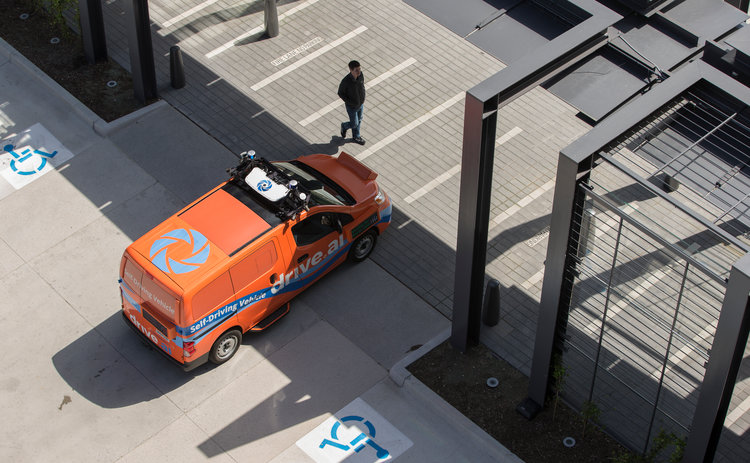
    Apple Inc on Tuesday confirmed that it has acquired self-driving shuttle firm Drive.ai.

    Technology news website The Information reported earlier this month that the iPhone maker was considering acquiring the firm as a move to bring aboard some of its engineering talent to boost Apple’s own self-driving efforts.

    One of hundreds of startups pursuing autonomous vehicles, Drive.ai had been running a small fleet of test shuttles in Texas, The Information reported. But the startup told California regulators that it plans to lay off 90 people in a permanent closure. The San Francisco Chronicle earlier reported the closure.

    In Silicon Valley, it is common for larger companies to acquire struggling startups primarily to hire their engineers, a move known in the industry as an “acqui-hire.”

    Apple is vying against rivals such as Alphabet Inc’s Waymo to develop self-driving vehicles. In the past year, Apple has revamped its efforts, bringing former Tesla Inc engineering chief Doug Field to oversee the operation, which includes more than 5,000 workers.

    Apple is also working on key components such as sensors in addition to holding talks with potential suppliers.

  • New Facebook Portal devices are launching this year

    New Facebook Portal devices are launching this year

    New versions of Facebook’s Portal home smart speakers are coming out this year, while the first-gen models that launched in November 2018 will be making their way outside of the US. The Portal product lineup is the social network’s attempt to grab a piece of the smart home speaker market, where competition from Amazon and Google is stiff. Facebook’s take on the gadget is very camera-centric and allows users to make encrypted video calls through Messenger, while Portal’s camera follows them around.

    At the Code Conference in Scottsdale, Arizona, Facebook’s Vice President of AR/VR, Andrew “Boz” Bosworth, announced that the next-gen Portal speakers are coming “this fall.” There will be “new form factors” available as well, Bosworth said, though he didn’t elaborate on what this means, exactly. “Hardware is coming to the home, and we want to make sure that human connection, connection between two people, is a first-party experience on that hardware,” Bosworth added.

    Since one of the product’s differentiating features is the camera tracking, it’s not going anywhere, but the new models might make it even more prominent. According to rumors over the past months, Facebook may be working on a considerably smaller device than the first-gen Portals—pretty much just a camera—that can be attached to TV sets. This will also make the device cheaper and allow people to use their TVs as smart displays.

    The success of Facebook Portal was questioned ever since the company announced it. On the heels of some big privacy scandals over the past couple of years, having doubts over a Facebook-branded tracking camera isn’t all that far fetched. However, at the conference in Scottsdale, the company reassured that the first generation of Portal smart speakers sold “very well,” although the claim wasn’t backed by official numbers.

  • Kiehl’s pop up opens at Sha Tin, using AR to engage

    Kiehl’s pop up opens at Sha Tin, using AR to engage

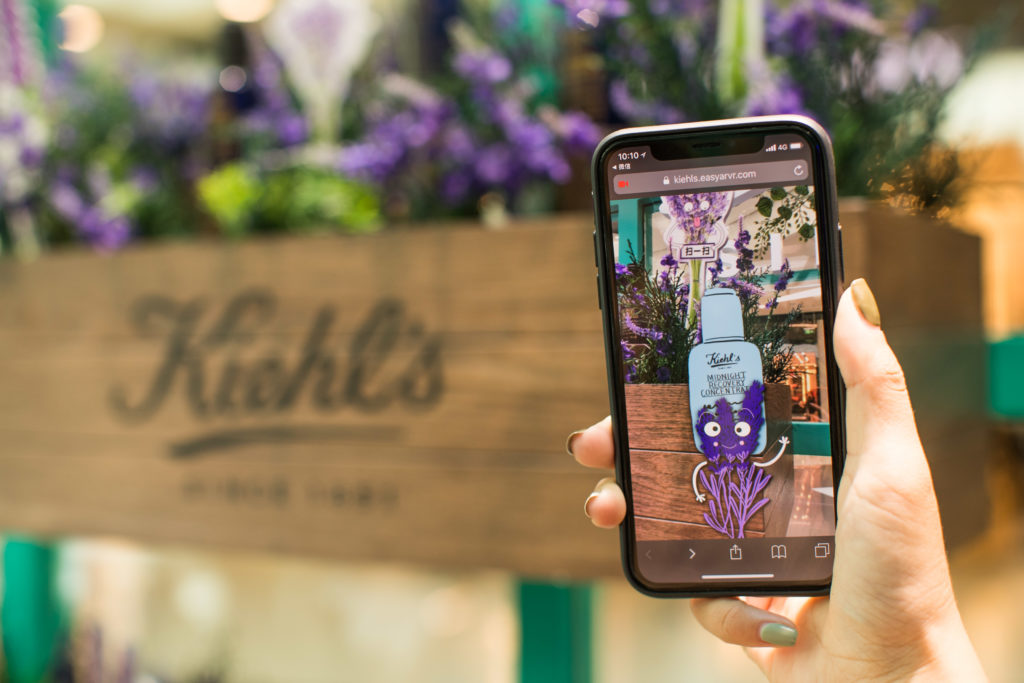
    A Kiehl’s pop up at Sha Tin features an AR gaming app to engage with shoppers.

    The beauty products retailer’s short-term store at the New Town Plaza in Sha Tin has been launched to promote Kiehl’s Calendula Serum-Infused Water Cream, and displays a giant 3D Calendula flower in the centre of the atrium that is only visible through visitors’ mobile phones.

    Visitors who upload images from the pop-up to their social media can redeem a special cosmetics product. Other product samples and a skin analysis are available for customers browsing the store.

    Kiehl’s has also designed an AR game that can be used at its regular stores after the pop-up closes, which will be playable until June 30. The game has collected 8000 registrations over the course of the campaign.

  • Volvo Cars and Varjo Launch Mixed Reality Application For Car Development

    Volvo Cars and Varjo Launch Mixed Reality Application For Car Development

    Volvo Cars and Varjo, the maker of high-end augmented reality headsets, have created a world-first mixed reality approach to evaluating prototypes, designs and active safety technologies. The collaboration will be further strengthened by the Volvo Cars Tech Fund’s decision to invest in Varjo. With these new augmented reality headsets, it will be possible for the first time to drive a real car while wearing a mixed reality headset, adding virtual elements or complete features that seem real to both the driver and the car’s sensors, for development purposes.

    The Varjo XR-1 headset, provides photorealistic mixed or virtual reality at a high-definition resolution and the big claim is that it’s better than anything out there in the market currently. With the XR-1 Volvo Cars can radically reduce development timeframes by creating the new ability to evaluate features and designs almost immediately. Volvo Cars designers and engineers will be able to ‘drive’ future cars and evaluate all features in a simulation environment many years before they exist, enabling the company to develop the safest cars as also a refined user experience.

    Henrik Green, Chief Technology Officer, Volvo Cars, said, “With this mixed reality approach, we can start evaluating designs and technologies while they are literally still on the drawing board. Instead of the usual static way of evaluating new products and ideas, we can test concepts on the road immediately. This approach offers considerable potential cost savings by identifiying priorities and clearing bottlenecks much earlier in the design and development process.”

    With the XR-1 Volvo engineers will be able to develop and evaluate active safety solutions much easier. Safety experts are able to drive real cars while wearing the XR-1 headset at Volvo’s research facilities in Sweden, testing virtual active safety systems imposed via augmented reality on the real-life environment. Highly accurate eye-tracking technology embedded inside the XR-1 makes it easy to assess how drivers use a new functionality and whether they are distracted in any way. This technology-based approach to measuring distraction levels ensures that Volvo Cars can develop new features without causing additional distraction.

  • CES 2019 Gadgets that will define the online casinos of tomorrow

    CES 2019 Gadgets that will define the online casinos of tomorrow

    Consumer Electronics Show or CES serves as the best time of the year when manufacturers and developers all over the world get to showcase their greatest and latest technologies. And none of them disappointed this time around as well, especially with regard to the developments in the augmented in virtual reality technologies, and their application in the gaming industry of tomorrow.

    Right from the latest VR headsets to the system peripherals that are going to completely transform the way we interact with our surroundings in virtual reality, there were all kinds of impressive offerings in the CES 2019. You could very well see how the future of online slots and various other online casino games is going to unfold in the times to come. Let’s take you through some of the best AR and VR tech products that were showcased in this year’s edition of CES.

    Oculus Quest

    Nothing denying the fact that Oculus Rift is an excellent option for virtual reality enthusiasts, but we all know that it needs continuous tethering to a PC to be able to enjoy it. Oculus Quest does away with that requirement. It’s an all-in-one gaming headset which is absolutely wireless, enabling players to enjoy the VR games to the fullest, even while being on the move.

    Once you set up Oculus Quest with the help of the oculus mobile app, it can start tracking your movements without the need of any external cameras. It instead uses the camera situated on the headset’s front, implying that you’ll be able to play anywhere you like as long as the place has room for the two controllers and the headset. It’s not without a reason that Time.com has called Oculus Quest the Virtual Reality’s best bet yet.  Furthermore, you can operate Oculus Quest both from the sitting and standing positions. Although it lacks the power of Vive or Rift, the PC-powered headsets, the Quest still supports some of the highly popular VR games, including The Climb and Moss.

    Vivo Pro Eye

    This one’s a premium VR headset which is a version better than the earlier one, after integrating the Tobii eye-tracking technology. With Vivo Pro Eye headset you can enjoy an even more immersive VR experience, and get to navigate menus and execute all kinds of functions using nothing but your gaze. The headset is already being used in popular apps such as Major League Baseball’s Home Run Derby VR. It’s also expected to make it easier for businesses to use eye-tracking technology with minimum resources.

    3D Rudder for Playstation VR

    With PlayStation VR you can explore your virtual environment in 360° and PlayStation has done an excellent job in making this experience very realistic. However, people felt that something was slightly off as they were unable to use their feet in this environment. The 3D Rudder for PlayStation VR is meant to fix this problem, and allow the players to apply pressure, spin or tilt using their feet, and move around freely inside their favourite VR environments.


  • Nokia, FAW Group to use 5G to transform China’s automotive sector

    Nokia, FAW Group to use 5G to transform China’s automotive sector

    Nokia has signed a strategic MoU with FAW Group, the Chinese state-owned automotive manufacturing company, to carry out joint research in smart connected cars, industrial IoT (IIoT), smart manufacturing and digital transformation.

    Nokia will deploy a 5G trial network on FAW’s campus in Changchun, the capital of northeast China’s Jilin province, to support R&D in autonomous driving and connected car applications.

    As well as the commercial 5G solution, Nokia will provide security, big data, cloud and 5G slicing technology to accelerate FAW’s digital transformation, according to a company statement.

    In addition, Nokia will provide end-to-end system integration, helping FAW to implement smart manufacturing with automation solutions, such as autonomous AGVs, AR/VR machine vision, and AI-enhanced quality inspection.

    FAW Group is one of the biggest automakers in China. Through collaboration with Nokia, the company intends to maintain its dominant position in the market by using digital technologies to enable autonomous driving, IoT and smart manufacturing.

    FAW, together with eight automobile OEMs including Guangzhou Automobile Group and Dongfeng Motor Group, has recently acquired a combined 31.2% in Smart Connection Technology, the Internet of Vehicle unit of China Unicom.

  • Fitbit partners with Snapchat to make Apple Watch owners jealous

    Fitbit partners with Snapchat to make Apple Watch owners jealous

    Fitbit may have joined the “true” smartwatch game a bit late compared to Samsung or Apple, but after a somewhat slow start in this potential-brimming market, the Versa seems to have put the company on the right track. The world’s second-largest smartwatch vendor took quite a risk by developing its wearable software from scratch rather than adopting Google’s Wear OS, but this proprietary platform continues to grow at a healthy pace in terms of capabilities and ease of use.

    Of course, everyone needs high-profile partners to boost the appeal and trendiness of today’s wearable devices, and Fitbit’s newest ally in its fight against Apple and Samsung is as high-profile as they come. We’re talking about Snap, the company behind one of the world’s most popular social networks.

    Snapchat users who just so happen to own a Fitbit Versa, Versa Lite, or Ionic as well can now connect their Bitmoji account to their smartwatch to display their “personal emoji” on their wrist. For those unfamiliar with the Bitmoji app, we should probably mention the experience is very similar to what Apple offers with Memoji and Animoji on iPhones and Samsung’s own AR Emoji experiments for recent high-end Galaxy handsets.

    Obviously, the main difference is you can have fun with Bitmoji on both Android and iOS, as well as on Fitbit devices starting today. Your cartoon avatar will show up on the “first-ever” Bitmoji clock face (once you download it from the Fitbit App Gallery, that is), aiming to motivate you to be more active, help you create healthier habits, and celebrate personal achievements.

    While unlikely to be as expressive as its smartphone counterpart, your wrist Bitmoji promises to support more than 50 fun clock face variations, changing throughout your day to reflect your activity and progress towards your fitness goals. For instance, your personal emoji will wave hello to start your day, dance with your alarm clock to annoy help you wake up in a better mood, throw confetti after you hit your daily step objective, meditate when you’re totally relaxed and zen, carry an umbrella if there’s a chance of rain, and much more.

    That definitely sounds like something Apple Watch and Samsung Galaxy Watch owners could also appreciate, but for the time being, all we can do is wait and see if there are any Memoji or AR Emoji expansions planned for the near future.

  • SK Telecom streams AR dragon in Korean stadium

    SK Telecom streams AR dragon in Korean stadium

    SK Telecom has announced it has used augmented reality to simulate a fire-breathing dragon at a sports stadium as part of its ongoing development of new 5G-powered services.

    Using augmented reality technology, the large fire-breathing wyvern was streamed flying around the SK Happy Dream Park during the opening day of the Korea Baseball Organization.

    The dragon was streamed both to the LED baseball scoreboard installed at the stadium and via sports broadcasting channels for fans watching the game on TV and smartphones.

    To achieve large scale augmented reality streaming, SK Telecom used its self-developed augmented and virtual reality technologies including the eSpace and T real Platform solutions.

    The demonstration arose from SK Telecom’s focus on the development of 5G-based services to support its commercial network, which launched in December last year. Augmented and virtual reality are a key area of focus for the company.

  • AR version of Angry Birds comes to iOS this spring

    AR version of Angry Birds comes to iOS this spring

    Remember when Angry Birds was the most popular mobile game around? Many of you who played religiously ended up moving on to more graphically complex games. Maybe Rovio’s characters, which the company once said would make it the next Disney, suffered from overexposure with licensing deals. The fowl foul had their faces plastered all over the place from Band Aids to board games to underwear.

    You can’t say that Rovio hasn’t tried to keep up with the times. VR versions of Angry Birds are available for Oculus Rift and Vive, and an AR variant of the game can be played on the Magic Leap headset. And today, the company has announced that Angry Birds AR: Isle of Pigs will soon be available for certain Apple iPhone and Apple iPod models. Using Apple’s ARKit, a flat surface like a coffee table is overlaid with different stages while the phone itself becomes the slingshot.

    Players can walk around each stage, looking for hidden items and areas where the pigs might be most vulnerable to attack. Rovio is offering the game for free in partnership with Resolution Games, although we are pretty sure that there will be some in-app purchasers that players can make.

    “We’re delighted to bring the beloved physics-based gameplay of Angry Birds to life through augmented reality. It’s an especially timely moment to bring our avian friends to mobile AR for the first time, as this year marks the tenth anniversary since the release of the first Angry Birds game.”-Kati Levoranta, CEO, Rovio Entertainment

    “This game evokes the core of what makes AR gameplay truly AR. With its engaging characters, classic Angry Birds slingshot gameplay and ability to move around the structures, it utilizes the unique elements of Apple’s ARKit and showcases what AR gameplay is capable of, which is pretty amazing when you see it come to life.”- Tommy Palm, Resolution Games.

    Angry Birds AR: Isle of Pigs is available today to pre-order from iTunes and it will be released in the late spring of 2019. Don’t expect to see an AR version of Angry Birds for Android anytime soon since the phone version of the new AR Angry Birds game is an Apple exclusive for now.

    For those familiar with the old Angry Birds games, the rules are the same. You try to knock down as many pigs as possible by using a slingshot to propel one of the Angry Birds toward the swine. One difference is that now you see the slingshot from a first-person perspective. Fling back on your phone to send the Angry Bird flying toward its target. Originally, there will be as many as 40 different levels in the game.

    Angry Birds AR: Isle of Pigs is compatible with all iPhone models dating back to the iPhone 6s, all iPad Pro models, iPad fifth and sixth generation, and the new iPad Air and iPad Mini tablets introduced yesterday.

  • Consumers are in control and searching for Experiences

    Consumers are in control and searching for Experiences

    Retailers must recognise consumers are in control and they are looking for experiences above all else, according to US trend expert Tom Mirabile.

    Speaking at the International Housewares Association’s annual show in Chicago, Mirabile said housewares suppliers and retailers need to focus all their efforts on what the consumer wants, how the consumer sees themselves, and how the industry can help create solutions for them.

    “We need to stop looking at objects and start looking at what those objects deliver,” he said. “People aren’t buying objects, they’re buying experiences.”

    Mirabile began his presentation with an overview of generational distinctions and key “need-to-knows” about each generation right now. Generation Z is on track to be the most well-educated generation (according to Pew Research), with a liberal set of attitudes and openness to emerging social trends. They also may be the first generation where cooking is truly no longer a gendered task, viewing “cooking as a craft or a skill,” according to Mirabile. This generation skews more toward traditional life cycles, with many saying they want to start a family and own a home.

    A much less traditional generation, millennials prefer staying home over going out. But they’re less likely to eat around the kitchen table; many eat in their bedrooms and even bathrooms. They also report replacing one meal a day with snacks.

    Another way of bucking the norms: “Millennials don’t see a brand as religion,” said Mirabile. “Loyalty does exist, but you have to constantly earn it.”

    Generation X is smaller in numbers but is entering its prime earning years. Thirty-one percent of discretionary spending in the US right now is coming from this generation, Mirabile said.

    Gen X is very self-sufficient and does more product research than any other generation. They’re also a true shopping hybrid; they still enjoy a trip in-store but have fully embraced online shopping.

    Many Baby Boomers are retiring, moving or remodeling their homes, which means they will be buying more items for their homes. Many are also in a period of personal reinvention. “Boomers are still looking to Millennials and Generation Z to see what they want to be,” Mirabile said.

    As for seniors, many are still economically active but much of their consumption has shifted to experiences and healthcare. By 2035, one in three US households (versus today’s one in five) will be headed by someone over 65 years old.

    Next up, Mirabile shared some key tenets that are important for housewares suppliers and retailers as they adjust to the quickly-changing marketplace where consumers hold all the control. He tied them to the acronym ‘FASTR’:

    F – Be flexible, be fun, be fearless. Change is constant, but even the most established brands can reinvent themselves. Mirabile cited Ikea and KitchenAid as examples. He also cited recent amusing commercials from Skittles, Wayfair and Geico, “(Brands) who can have fun and make fun of themselves send a message of self-confidence,” Mirabile said. And be fearless – don’t be afraid to take a stand or do something different from the norm. It helps make your brand feel authentic and helps you stand out from the crowd.

    A – Be addictive, be aware, be aspirational. American adults spend more than 11 hours per day listening to, watching, reading or generally interacting with media, according to the Nielsen Total Audience Report. The challenge is in hooking them in. Be aware: there’s a tremendous amount of information out there, but “you’ve got to be self-educated, you’ve got to be a culture vulture,” said Mirabile, and keep up with what consumers want. Be aspirational: “Today’s consumer doesn’t dream of owning, but of becoming,” said Mirabile. “Stop telling the customer who you are and start telling them you know who they are.”

    S – Be surprising, be shareable, be simple. The subscription e-commerce market has grown by more than 100 per cent a year over the past five years, said Mirabile. A reason? They deliver boxes of surprising items a consumer may never had found on their own (or without a lot of time and effort). Be shareable: these days, this doesn’t simply mean sharing an image, though that still does have value. It’s more about inspiring people to physically share something, such as the opportunity for a family to cook and eat a meal together. And be simple: “Instead of big claims, sometimes it’s about the little obsessions,” was a finding shared from PHD Worldwide.

    T – Be true, be transparent, be trustworthy. Consumer trust levels are at an all-time low, whether it comes to government institutions, businesses or media. Be transparent: This is important whether you’re talking about ingredients, labor usage, or product materials. Significant numbers of people across all generations will pay more money for eco-friendly materials, said Mirabile. Be true: this often starts within your own company culture and then rises through the ranks of everything you do.

    R – Be real world, be responsible, be reactive. “To me, this is all about looking at real-world problems people are having, and how you’re going to solve them for them,” said Mirabile. Be responsible: a large part of this has to do with sustainability, a key issue for many generations of consumers these days. Be reactive: getting negative reviews? You must be quick to react, explain and make things right online. eMarketer data finds that roughly two-thirds of US internet users reference product reviews at least often before making a purchase.

  • Singtel, Optus complete international 5G AR video call

    Singtel, Optus complete international 5G AR video call

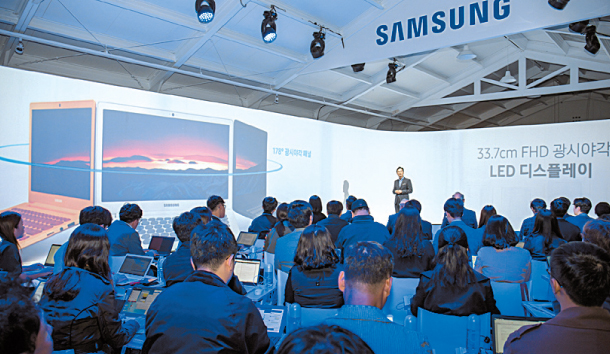
    Singtel and its wholly-owned Australian subsidiary Optus have completed a 5G augmented reality video call between Singapore and Australia as part of their preparations for the introduction of the next generation mobile technology.

    The joint trial was conducted using Ericsson networking equipment as well as OPPO 5G test devices running on Qualcomm’s inaugural Snapdragon 5G chipset.

    Augmented reality technology was used to provide instant on-screen annotations during a call conducted at the operators’ respective live 5G sites.

    According to the companies, the technology has the potential to open up a range of new possibilities for enterprises, such as the ability to deliver live on-the-job training and remote assistance.

    In the consumer space, augmented reality communications use cases will include holographic calls and the ability to deliver a virtual tactile shopping experience.

    “This call is a significant marker in our journey to 5G as we develop a robust 5G ecosystem to ensure that our enterprise and consumer customers will enjoy an enhanced connectivity experience,” Singtel group CTO Mark Chong said.

    “5G is a key enabler that will bring the future of augmented reality, autonomous vehicles and smart cities closer to reality.”

    Singtel and Ericsson launched a 5G Centre of Excellence in Singapore in 2017, and recently opened the first live 5G facility in the market in collaboration with Singapore Polytechnic.

  • Tech startup Blinq to focus on Southeast Asia

    Tech startup Blinq to focus on Southeast Asia

    Tech startup Blinq is targeting Southeast Asia with software which allows users to virtually try on and purchase designer apparel and accessories from online luxury and contemporary fashion retailers globally. “Blinq uses AR and algorithmic patterns to provide users with the latest trends and personalised fittings from their digital devices,” explains entrepreneur and Blinq founder Bob Chua.

    “It also allows users to choose how they would like to consume fashion, which may not necessarily be to buy, but to also rent, subscribe, or pay later for latest luxury designs from major and upcoming brands across Southeast Asia.”

    A rental-subscription model provides users the option of renting designer apparel and accessories, while the back-end automated warehousing operation enables brands to fulfil their products throughout the Asia-Pacific region.

    Citing McKinsey’s global fashion report, Chua says the personal luxury market is predicted to grow to US$500 billion by next year, with close to 44 per cent coming from Asia.

    “There is clear retail disruption happening everywhere, and e-commerce adoption in the luxury space is growing at a staggering rate here in Asia. We see a major opportunity.

    “In a way we are fusing the successful models of Asos, Farfetch, Rent-the-Runway and The Real Real into a single platform, while targeting affluent Asians.”

    Chua says the company plans to monetise its platform by white-labelling its virtual changing room AR features to other e-commerce sites, which will ultimately reduce returns and increase purchasing propensity for retailers.

    He says Blinq has secured significant seed funding and is currently en route to a next fundraising round.

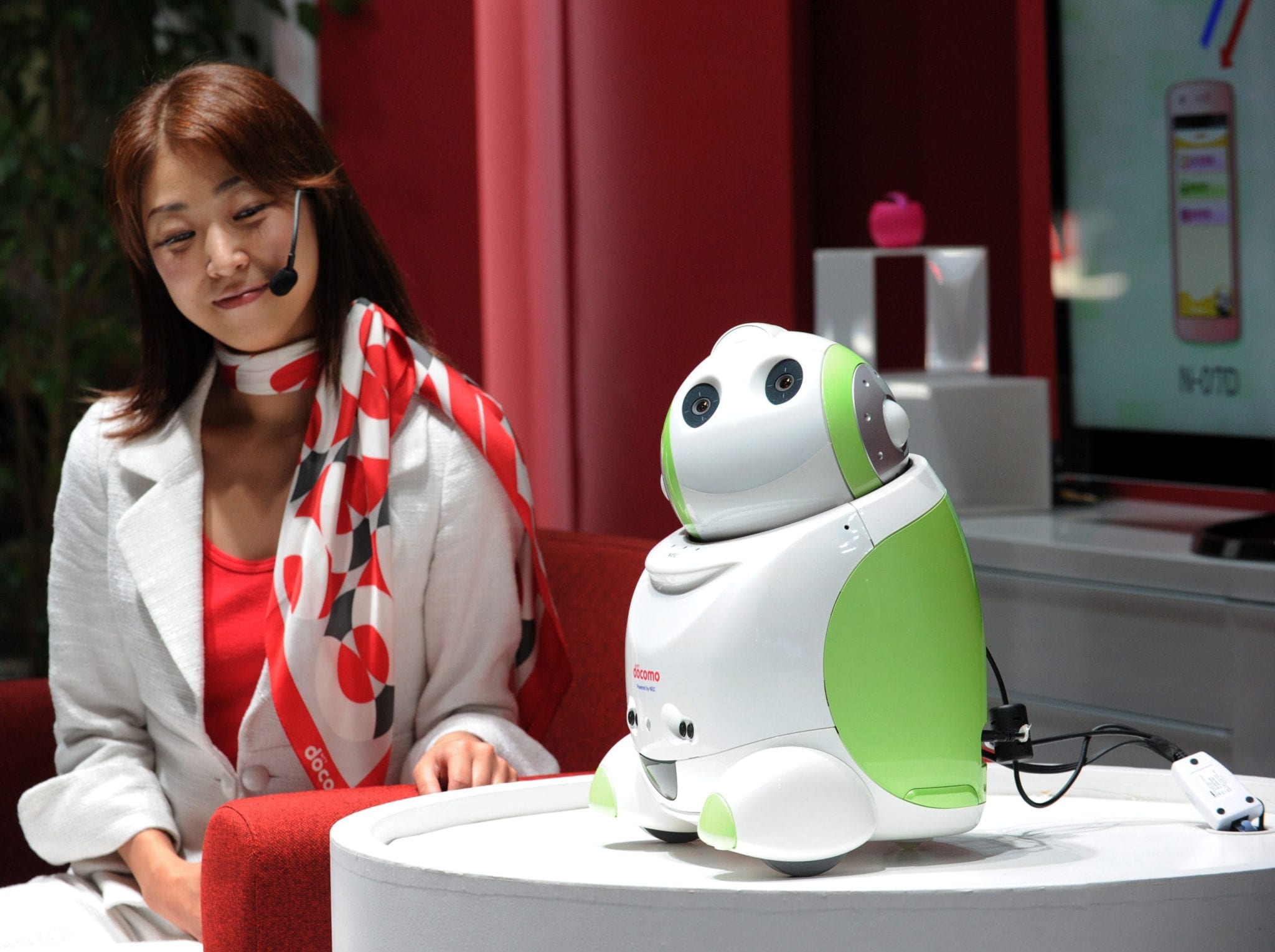
  • Docomo invests in semiconductor startup QD Laser

    Docomo invests in semiconductor startup QD Laser

    Japanese mobile giant NTT Docomo, through its subsidiary NTT Docomo Ventures, has invested in QD Laser for an undisclosed amount.

    QD Laser – which was founded in 2006 as an offshoot of Fujitsu Ltd with funding from Mitsui Ventures – develops and manufactures semiconductor lasers, retinal scanning laser eyewear, and other products based on quantum dot laser technology.

    By leveraging its nanocrystal technology, the Kanagawa-based firm achieved mass production of quantum dot lasers capable of operating stably even at high temperature.

    In 2018, QD Laser applied its technology to incorporate a compact laser projector with extremely small output into a spectacle-type device, and commercialized what was claimed to be the world’s first retinal scanning laser eyewear that directly projects an image onto the user’s retina for image display.

    The technology for projecting a direct image onto the retina using a laser does not require the user to focus their eyes to see an image, so it is expected to improve the quality of life of patients with ametropia or corneal opacity and weak-sighted individuals.

    The technology can also be applied for realizing natural-looking augmented reality (AR) that people with normal vision can experience.

    Docomo said it has high expectations for potentials of the retinal scanning laser eyewear developed by QD Laser for resolving various social issues and contribute to creating new services through AR.